Basics of Corrosion in Reinforced Concrete
From JPCL, August 2015
By Fred Goodwin and Frank Apicella
BASF Construction Chemicals
© iStockphoto.com/Flashworks
Photos courtesy of the authors unless otherwise noted.
Concrete, in some fashion, has existed for thousands of years. Reinforced concrete began to make an appearance in
various structures in Europe and the United States in the mid-1800s, which is also when many of our current problems
with concrete began.
Steel used for reinforcing concrete wants to corrode. It begins as iron ore and a great deal of energy is required to reduce
the ore to form iron, which is then used to produce steel. This process results in a material at an elevated energy state
which is basically unstable, and which wants to return to its original lower-energy state causing corrosion. Fortunately,
concrete initially has a high pH which creates a passivating layer on steel in contact with concrete, preventing corrosion
from occurring. But, unfortunately, this passivating layer can be destroyed by a reduction in pH of the concrete, through
the presence of chloride or other ions, by an electrical charge imposed on the steel, or a combination of these factors.
This article will discuss the properties of concrete, the causes of concrete damage and deterioration, issues related to
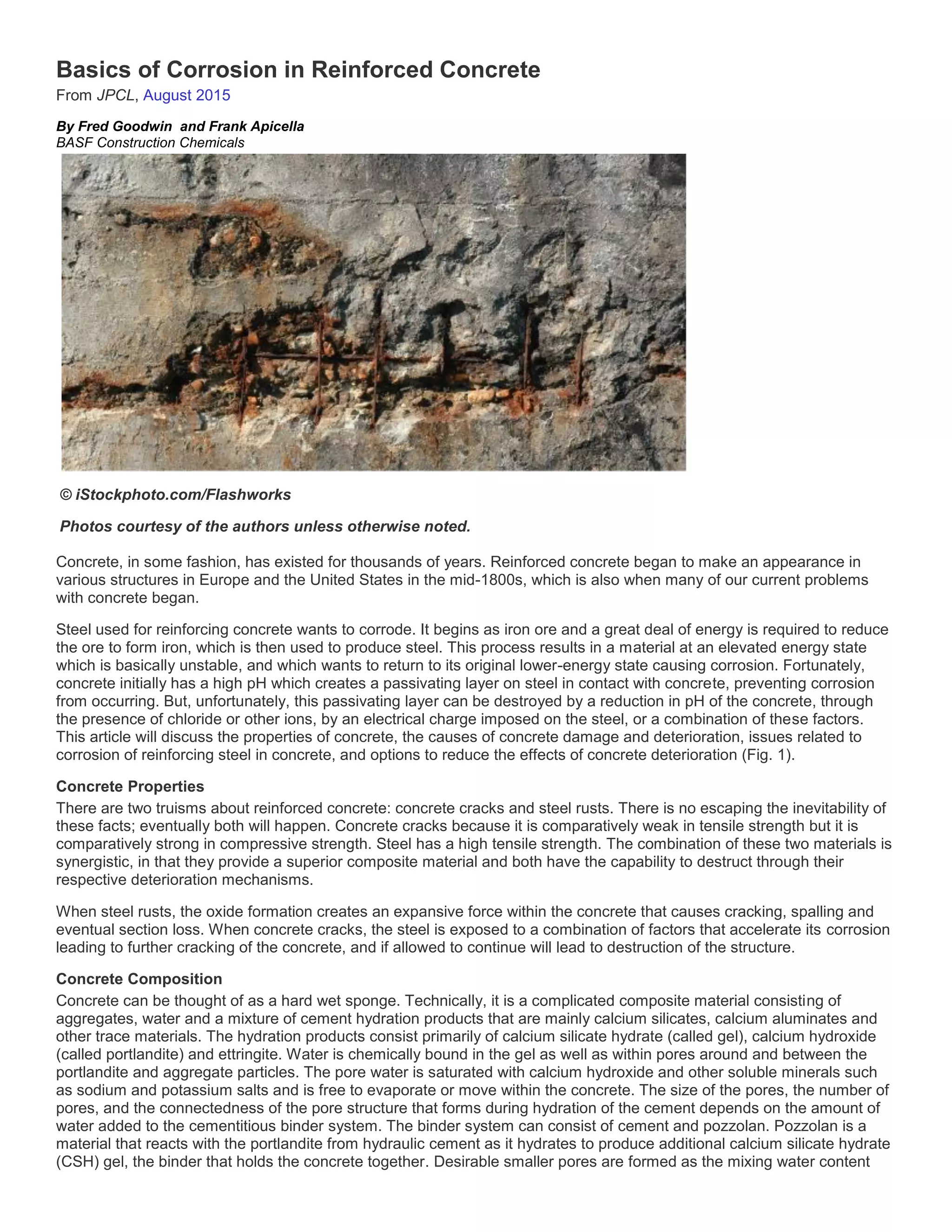
corrosion of reinforcing steel in concrete, and options to reduce the effects of concrete deterioration (Fig. 1).
Concrete Properties
There are two truisms about reinforced concrete: concrete cracks and steel rusts. There is no escaping the inevitability of
these facts; eventually both will happen. Concrete cracks because it is comparatively weak in tensile strength but it is
comparatively strong in compressive strength. Steel has a high tensile strength. The combination of these two materials is
synergistic, in that they provide a superior composite material and both have the capability to destruct through their
respective deterioration mechanisms.
When steel rusts, the oxide formation creates an expansive force within the concrete that causes cracking, spalling and
eventual section loss. When concrete cracks, the steel is exposed to a combination of factors that accelerate its corrosion
leading to further cracking of the concrete, and if allowed to continue will lead to destruction of the structure.
Concrete Composition
Concrete can be thought of as a hard wet sponge. Technically, it is a complicated composite material consisting of
aggregates, water and a mixture of cement hydration products that are mainly calcium silicates, calcium aluminates and
other trace materials. The hydration products consist primarily of calcium silicate hydrate (called gel), calcium hydroxide
(called portlandite) and ettringite. Water is chemically bound in the gel as well as within pores around and between the
portlandite and aggregate particles. The pore water is saturated with calcium hydroxide and other soluble minerals such
as sodium and potassium salts and is free to evaporate or move within the concrete. The size of the pores, the number of
pores, and the connectedness of the pore structure that forms during hydration of the cement depends on the amount of
water added to the cementitious binder system. The binder system can consist of cement and pozzolan. Pozzolan is a
material that reacts with the portlandite from hydraulic cement as it hydrates to produce additional calcium silicate hydrate
(CSH) gel, the binder that holds the concrete together. Desirable smaller pores are formed as the mixing water content
decreases, provided there is sufficient binder to coat and fill the spaces between the aggregate particles.
Concrete needs water for the cement to hydrate to form these minerals; however, water in excess of the amount required
for proper hydration dilutes the performance properties of the hardened material. Admixtures are additives that are added
to freshly mixed concrete to modify both the hardened and unhardened concrete. These can include pozzolans that react
with the portlandite to reduce the porosity of the concrete, water reducers that reduce porosity through improvement of the
dispersion of ingredients, and corrosion inhibitors that help stabilize the passivating layer between the reinforcing steel
and the concrete to extend the time until corrosion begins.
In addition to these improvements in the concrete properties, how deeply the reinforcing steel is embedded within the
concrete is a significant factor in the amount of time before corrosion begins. This is called “cover.” Cover is necessary for
the composite action of steel within the concrete to properly function as designed. Furthermore, cover insulates the steel
from exposure to fire and deterioration from aggressive materials in the external environment. Two of the most common
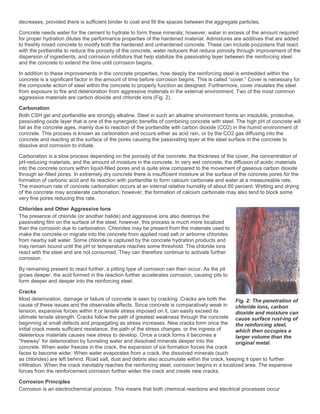
aggressive materials are carbon dioxide and chloride ions (Fig. 2).
Carbonation
Both CSH gel and portlandite are strongly alkaline. Steel in such an alkaline environment forms an insoluble, protective,
passivating oxide layer that is one of the synergistic benefits of combining concrete with steel. The high pH of concrete will
fall as the concrete ages, mainly due to reaction of the portlandite with carbon dioxide (CO2) in the humid environment of
concrete. This process is known as carbonation and occurs either as acid rain, or by the CO2 gas diffusing into the
concrete and reacting at the surface of the pores causing the passivating layer at the steel surface in the concrete to
dissolve and corrosion to initiate.
Carbonation is a slow process depending on the porosity of the concrete, the thickness of the cover, the concentration of
pH-reducing materials, and the amount of moisture in the concrete. In very wet concrete, the diffusion of acidic materials
into the concrete occurs within liquid-filled pores and is quite slow compared to the movement of gaseous carbon dioxide
through air-filled pores. In extremely dry concrete there is insufficient moisture at the surface of the concrete pores for the
formation of carbonic acid and its reaction with portlandite to form calcium carbonate and water at a measureable rate.
The maximum rate of concrete carbonation occurs at an internal relative humidity of about 60 percent. Wetting and drying
of the concrete may accelerate carbonation; however, the formation of calcium carbonate may also tend to block some
very fine pores reducing this rate.
Chlorides and Other Aggressive Ions
The presence of chloride (or another halide) and aggressive ions also destroys the
passivating film on the surface of the steel; however, this process is much more localized
than the corrosion due to carbonation. Chlorides may be present from the materials used to
make the concrete or migrate into the concrete from applied road salt or airborne chlorides
from nearby salt water. Some chloride is captured by the concrete hydration products and
may remain bound until the pH or temperature reaches some threshold. The chloride ions
react with the steel and are not consumed. They can therefore continue to activate further
corrosion.
By remaining present to react further, a pitting type of corrosion can then occur. As the pit
grows deeper, the acid formed in the reaction further accelerates corrosion, causing pits to
form deeper and deeper into the reinforcing steel.
Cracks
Most deterioration, damage or failure of concrete is seen by cracking. Cracks are both the
cause of these issues and the observable effects. Since concrete is comparatively weak in
tension, expansive forces within it or tensile stress imposed on it, can easily exceed its
ultimate tensile strength. Cracks follow the path of greatest weakness through the concrete
beginning at small defects and propagating as stress increases. New cracks form once the
initial crack meets sufficient resistance, the path of the stress changes, or the ingress of
deleterious materials causes new stress to develop. Once a crack forms it becomes a
“freeway” for deterioration by funneling water and dissolved minerals deeper into the
concrete. When water freezes in the crack, the expansion of ice formation forces the crack
faces to become wider. When water evaporates from a crack, the dissolved minerals (such
as chlorides) are left behind. Road salt, dust and debris also accumulate within the crack, keeping it open to further
infiltration. When the crack inevitably reaches the reinforcing steel, corrosion begins in a localized area. The expansive
forces from the reinforcement corrosion further widen the crack and create new cracks.
Corrosion Principles
Corrosion is an electrochemical process. This means that both chemical reactions and electrical processes occur
Fig. 2: The penetration of
chloride ions, carbon
dioxide and moisture can
cause surface rust-ing of
the reinforcing steel,
which then occupies a
larger volume than the
original metal.
simultaneously. Usually, the electrical process involves ions changing their valence state (gaining and losing electrons,
also known as oxidation and reduction or redox reactions). Chemical reactions form new chemical compounds.
For corrosion to occur, four components must be present: an anode, a cathode, an electrical path and an ionic path. In
reinforcing steel, rust forms at the anode where electrons move away and oxidation occurs. An equal reaction must also
be present at the cathode where the electrons are attracted and reduction occurs. The electrons formed at the anode
travel through an electrical path to the cathode, in this case the reinforcing steel. External sources of current, such as from
dissimilar metal corrosion of more noble metals in contact with the steel, or stray current leakage, can also drive
reinforcing steel corrosion reactions. Likewise, ions migrate through an electrolyte, in this case the water in the concrete
pores. Steel is a very good conductor of electrons, and concrete can readily conduct ions if it is moist, with many pores, or
poorly if it has low internal relative humidity and a very dense pore structure (such as from a low water to cementitious
material ratio and the use of pozzolanic materials). The anode and cathode in a corrosion cell may be adjacent to each
other, have different surface areas, or be widely separated. Both the anode and cathode are free to move to different
locations depending on the conditions of the reaction. The ratio of the anode area to the area of the cathode is also very
important in the rate of the corrosion reaction, with small anodes and large cathodes creating a much more intense
oxidation of the steel in a small area. Like most other chemical reactions, elevated temperatures accelerate the reaction
and greater concentrations of materials such as chlorides, moisture and oxygen also increase the rate of corrosion. Ionic
movement essentially ceases during freezing and corrosion therefore stops.
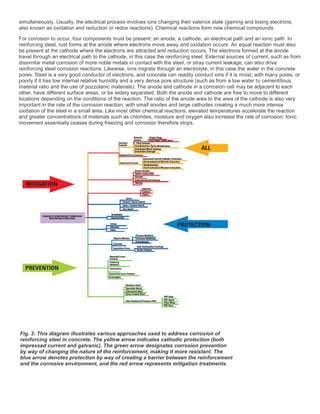
Fig. 3: This diagram illustrates various approaches used to address corrosion of
reinforcing steel in concrete. The yellow arrow indicates cathodic protection (both
impressed current and galvanic). The green arrow designates corrosion prevention
by way of changing the nature of the reinforcement, making it more resistant. The
blue arrow denotes protection by way of creating a barrier between the reinforcement
and the corrosive environment, and the red arrow represents mitigation treatments.
Anti-Corrosion Treatments
Interruption or restriction of any of these four corrosion components will slow
down the rate of corrosion and this is the basis for all of our treatments which
address corrosion of reinforcing steel in concrete (Fig. 3, p. 62).
Alternative Reinforcement
The most effective method in addressing reinforcing steel corrosion is to
substitute a reinforcement material that is less prone to corrosion than mild steel,
such as stainless steel or other specialty alloy bars or fiber reinforced polymer
(FRP) materials. With no material to corrode, the root cause of corrosion is
removed. Far too often, the steel that is used for reinforcing concrete is already
significantly corroded or has sufficient residual mill scale from manufacturing to
create cathodic and anodic areas before installation. While a light surface rusting
on reinforcing steel is usually not detrimental, heavy rusting gives corrosion a
head start.
Electrochemical Treatments
An external source of electrical power can reverse the corrosion reaction by changing the direction of electron flow
through the steel to reverse the flow of ions from the anode to the cathode. This is the principle of both galvanic and
impressed current cathodic protection.
In galvanic cathodic protection, a competing corrosion reaction is used to outpace the oxidation of the steel through the
use of a sacrificial anodic material that makes the steel the cathode. Galvanic cathodic protection comes in many forms,
from discrete galvanic anodes which provide localized protection from changes in the anode and cathode locations
caused by repairs (also known as the incipient anode, ring anode or halo effect), from distributed galvanic anodes where a
mesh (or other form) of galvanic anode material is installed next to the reinforcing steel, or metallization where a galvanic
material is sprayed onto the surface of the concrete to sacrificially corrode (Fig. 4). In all cases the galvanic material must
be in electrical contact with the reinforcing steel as well as an electrolyte being present to permit the passage of ions
between the anode and the resultant cathodically protected steel. With galvanic systems corroding due to many of the
same factors influencing the corrosion rate of the reinforcing steel, these systems, although consumable, are relatively
maintenance-free throughout their lifecycles.
In impressed current cathodic protection (ICCP), an external electrical source of direct current is applied to anodes to
force the steel to become cathodic. The voltage and current of this process may also be optimized to repel chlorides from
the steel (known as electrochemical chloride extraction) or generate alkaline conditions at the steel to reform the naturally
occurring passivating layer (known as electrochemical re-alkalization). ICCP systems must be connected to all metallic
objects in the concrete to prevent them from corroding. They must be designed to produce a relatively uniform current
distribution throughout the concrete structure in changing environmental conditions or otherwise some areas of steel may
corrode and other areas experience issues from excessive current flow (such as anode consumption or excessive
alkalinity). The ICCP systems must be robust to remain operational throughout the lifetime of the structure. For these
reasons, ICCP systems must be designed, installed, maintained and monitored correctly to ensure that corrosion is
prevented or controlled and are somewhat expensive throughout their operation.
Surface Treatments
Most deterioration mechanisms of concrete involve the presence of water such as freeze/thaw deterioration, alkali
aggregate reaction, sulfate attack and corrosion. Materials may be applied to dry the concrete and increase the resistance
to ion flow (characterized as resistivity) followed by application of penetrating sealers or breathable coatings, to prevent
further water ingress. Because chlorides move through the concrete with liquid water, further ingress of these deleterious
ions also slows as the concrete dries and further water penetration is inhibited. Barrier materials such as waterproofing
membranes and anti-carbonation coatings may also be used to stop water or carbon dioxide from penetrating into the
concrete, but may also be sensitive to the amount of moisture present in the concrete during application. Non-breathable
barrier materials may trap water in the concrete leading to deterioration from other causes. Any sealer, coating or
membrane is subject to deterioration and should have an inspection and maintenance program to ensure continued
effectiveness.
Corrosion Inhibitors
Inhibitors may be added to the concrete either as admixtures when the concrete is placed or surface-applied to the steel
reinforcing bar to make the passivating film on the steel surface more resistant to chloride attack, dissipation from
carbonation or otherwise more durable in adverse conditions. The inhibitor concentration required for effectiveness is
often dependent on the extent of corrosive conditions for the steel.
Fig. 4: This figure shows a
corrosion cell generated from the
ring anode/incipient anode/halo
effect. The originally corroding area
was repaired with a chloride-free
repair material causing the anode to
shift from its original site to an area
immediately adjacent to the repair
after the repaired area became
cathodic.
Reinforcing Steel Coatings
Coatings may also be applied to the reinforcing steel to create a barrier between the steel and the concrete. If perfectly
applied over the entire steel surface these materials can be quite effective. However even a small defect in the coating
can create strongly concentrated corrosion from the small anode to large cathode area ratio, causing rapid deterioration.
The same situation exists with reinforcement coatings applied during repairs where the reinforcement continues through
the repair into the original concrete. Corrosion in this case may be accelerated at the bond line of the repair material to the
original concrete, further enhancing the ring anode effect.
Oxygen Availability
Lack of oxygen availability can also inhibit corrosion such as in deeply immersed structures or where treatments are
applied to the reinforcement surface, or can completely encapsulate the concrete. Once the available oxygen is
consumed by corrosion, the rate of the reaction will reduce and be controlled by the ingress of oxygen. However, areas
immediately adjacent to these inhibited areas may experience accelerated corrosion, since the oxygen- depleted areas
are cathodic compared to the exposed sections that become anodic.
Conclusion
In summary, sound practices using low- permeability concrete, proper cover in new construction and maintaining existing
structures to mitigate corrosion before significant deterioration occurs are well known. However since corrosion develops
years after a structure goes into service ignoring the problem until it is too late is likely to continue.
About the Authors
Fred Goodwin, fellow scientist, product development, BASF Construction Chemicals, is a chemist with over
30 years of experience in the construction chemicals industry, including cement manufacture, research,
develop-ment and technical support of grouts, adhesives, coatings, shotcrete, stucco, flooring and concrete
repair materials. He has been with BASF and its predecessors for 25 years and is an active member of
ICRI, ACI, ASTM, NACE, SDC and SSPC. Goodwin is a fellow of ACI and ICRI; an Honorary Member of
ASTM C1 and C9; current chair of the ICRI Technical Activities Committee (TAC), ACI 515 Protective
Systems, ASTM C09.41 Cement Based Grouts, SSPC 8.3 Commercial Floor Coatings; and a member of
ACI TAC. Goodwin was awarded the JPCL Editors’ Award in 2006, 2010 and 2012 as well as the ACI 2011
Delmar Bloem Distinguished Service Award. He holds multiple patents and was named a Top Thinker in JPCL’s Annual
Bonus Issue of 2012. Goodwin also frequently speaks at national conventions.
Frank Apicella is the research and development manager for inorganic chemistry at BASF Construction
Chemicals. He has over 25 years of experience in the development of hydraulic and polymer-based
protection and repair products for the construction industry. Apicella has served on ICRI’s Technical
Activities Committee and currently serves on the Board of the Strategic Development Council of ACI. He
holds multiple patents and is an active member of the ACI, SSPC, NACE and ICRI.JPCL
JPCL© 2015 Technology Publishing Company

Corrosion in-reinforced-concrete-basf paper

  • 1.
    Basics of Corrosionin Reinforced Concrete From JPCL, August 2015 By Fred Goodwin and Frank Apicella BASF Construction Chemicals © iStockphoto.com/Flashworks Photos courtesy of the authors unless otherwise noted. Concrete, in some fashion, has existed for thousands of years. Reinforced concrete began to make an appearance in various structures in Europe and the United States in the mid-1800s, which is also when many of our current problems with concrete began. Steel used for reinforcing concrete wants to corrode. It begins as iron ore and a great deal of energy is required to reduce the ore to form iron, which is then used to produce steel. This process results in a material at an elevated energy state which is basically unstable, and which wants to return to its original lower-energy state causing corrosion. Fortunately, concrete initially has a high pH which creates a passivating layer on steel in contact with concrete, preventing corrosion from occurring. But, unfortunately, this passivating layer can be destroyed by a reduction in pH of the concrete, through the presence of chloride or other ions, by an electrical charge imposed on the steel, or a combination of these factors. This article will discuss the properties of concrete, the causes of concrete damage and deterioration, issues related to corrosion of reinforcing steel in concrete, and options to reduce the effects of concrete deterioration (Fig. 1). Concrete Properties There are two truisms about reinforced concrete: concrete cracks and steel rusts. There is no escaping the inevitability of these facts; eventually both will happen. Concrete cracks because it is comparatively weak in tensile strength but it is comparatively strong in compressive strength. Steel has a high tensile strength. The combination of these two materials is synergistic, in that they provide a superior composite material and both have the capability to destruct through their respective deterioration mechanisms. When steel rusts, the oxide formation creates an expansive force within the concrete that causes cracking, spalling and eventual section loss. When concrete cracks, the steel is exposed to a combination of factors that accelerate its corrosion leading to further cracking of the concrete, and if allowed to continue will lead to destruction of the structure. Concrete Composition Concrete can be thought of as a hard wet sponge. Technically, it is a complicated composite material consisting of aggregates, water and a mixture of cement hydration products that are mainly calcium silicates, calcium aluminates and other trace materials. The hydration products consist primarily of calcium silicate hydrate (called gel), calcium hydroxide (called portlandite) and ettringite. Water is chemically bound in the gel as well as within pores around and between the portlandite and aggregate particles. The pore water is saturated with calcium hydroxide and other soluble minerals such as sodium and potassium salts and is free to evaporate or move within the concrete. The size of the pores, the number of pores, and the connectedness of the pore structure that forms during hydration of the cement depends on the amount of water added to the cementitious binder system. The binder system can consist of cement and pozzolan. Pozzolan is a material that reacts with the portlandite from hydraulic cement as it hydrates to produce additional calcium silicate hydrate (CSH) gel, the binder that holds the concrete together. Desirable smaller pores are formed as the mixing water content
  • 2.
    decreases, provided thereis sufficient binder to coat and fill the spaces between the aggregate particles. Concrete needs water for the cement to hydrate to form these minerals; however, water in excess of the amount required for proper hydration dilutes the performance properties of the hardened material. Admixtures are additives that are added to freshly mixed concrete to modify both the hardened and unhardened concrete. These can include pozzolans that react with the portlandite to reduce the porosity of the concrete, water reducers that reduce porosity through improvement of the dispersion of ingredients, and corrosion inhibitors that help stabilize the passivating layer between the reinforcing steel and the concrete to extend the time until corrosion begins. In addition to these improvements in the concrete properties, how deeply the reinforcing steel is embedded within the concrete is a significant factor in the amount of time before corrosion begins. This is called “cover.” Cover is necessary for the composite action of steel within the concrete to properly function as designed. Furthermore, cover insulates the steel from exposure to fire and deterioration from aggressive materials in the external environment. Two of the most common aggressive materials are carbon dioxide and chloride ions (Fig. 2). Carbonation Both CSH gel and portlandite are strongly alkaline. Steel in such an alkaline environment forms an insoluble, protective, passivating oxide layer that is one of the synergistic benefits of combining concrete with steel. The high pH of concrete will fall as the concrete ages, mainly due to reaction of the portlandite with carbon dioxide (CO2) in the humid environment of concrete. This process is known as carbonation and occurs either as acid rain, or by the CO2 gas diffusing into the concrete and reacting at the surface of the pores causing the passivating layer at the steel surface in the concrete to dissolve and corrosion to initiate. Carbonation is a slow process depending on the porosity of the concrete, the thickness of the cover, the concentration of pH-reducing materials, and the amount of moisture in the concrete. In very wet concrete, the diffusion of acidic materials into the concrete occurs within liquid-filled pores and is quite slow compared to the movement of gaseous carbon dioxide through air-filled pores. In extremely dry concrete there is insufficient moisture at the surface of the concrete pores for the formation of carbonic acid and its reaction with portlandite to form calcium carbonate and water at a measureable rate. The maximum rate of concrete carbonation occurs at an internal relative humidity of about 60 percent. Wetting and drying of the concrete may accelerate carbonation; however, the formation of calcium carbonate may also tend to block some very fine pores reducing this rate. Chlorides and Other Aggressive Ions The presence of chloride (or another halide) and aggressive ions also destroys the passivating film on the surface of the steel; however, this process is much more localized than the corrosion due to carbonation. Chlorides may be present from the materials used to make the concrete or migrate into the concrete from applied road salt or airborne chlorides from nearby salt water. Some chloride is captured by the concrete hydration products and may remain bound until the pH or temperature reaches some threshold. The chloride ions react with the steel and are not consumed. They can therefore continue to activate further corrosion. By remaining present to react further, a pitting type of corrosion can then occur. As the pit grows deeper, the acid formed in the reaction further accelerates corrosion, causing pits to form deeper and deeper into the reinforcing steel. Cracks Most deterioration, damage or failure of concrete is seen by cracking. Cracks are both the cause of these issues and the observable effects. Since concrete is comparatively weak in tension, expansive forces within it or tensile stress imposed on it, can easily exceed its ultimate tensile strength. Cracks follow the path of greatest weakness through the concrete beginning at small defects and propagating as stress increases. New cracks form once the initial crack meets sufficient resistance, the path of the stress changes, or the ingress of deleterious materials causes new stress to develop. Once a crack forms it becomes a “freeway” for deterioration by funneling water and dissolved minerals deeper into the concrete. When water freezes in the crack, the expansion of ice formation forces the crack faces to become wider. When water evaporates from a crack, the dissolved minerals (such as chlorides) are left behind. Road salt, dust and debris also accumulate within the crack, keeping it open to further infiltration. When the crack inevitably reaches the reinforcing steel, corrosion begins in a localized area. The expansive forces from the reinforcement corrosion further widen the crack and create new cracks. Corrosion Principles Corrosion is an electrochemical process. This means that both chemical reactions and electrical processes occur Fig. 2: The penetration of chloride ions, carbon dioxide and moisture can cause surface rust-ing of the reinforcing steel, which then occupies a larger volume than the original metal.
  • 3.
    simultaneously. Usually, theelectrical process involves ions changing their valence state (gaining and losing electrons, also known as oxidation and reduction or redox reactions). Chemical reactions form new chemical compounds. For corrosion to occur, four components must be present: an anode, a cathode, an electrical path and an ionic path. In reinforcing steel, rust forms at the anode where electrons move away and oxidation occurs. An equal reaction must also be present at the cathode where the electrons are attracted and reduction occurs. The electrons formed at the anode travel through an electrical path to the cathode, in this case the reinforcing steel. External sources of current, such as from dissimilar metal corrosion of more noble metals in contact with the steel, or stray current leakage, can also drive reinforcing steel corrosion reactions. Likewise, ions migrate through an electrolyte, in this case the water in the concrete pores. Steel is a very good conductor of electrons, and concrete can readily conduct ions if it is moist, with many pores, or poorly if it has low internal relative humidity and a very dense pore structure (such as from a low water to cementitious material ratio and the use of pozzolanic materials). The anode and cathode in a corrosion cell may be adjacent to each other, have different surface areas, or be widely separated. Both the anode and cathode are free to move to different locations depending on the conditions of the reaction. The ratio of the anode area to the area of the cathode is also very important in the rate of the corrosion reaction, with small anodes and large cathodes creating a much more intense oxidation of the steel in a small area. Like most other chemical reactions, elevated temperatures accelerate the reaction and greater concentrations of materials such as chlorides, moisture and oxygen also increase the rate of corrosion. Ionic movement essentially ceases during freezing and corrosion therefore stops. Fig. 3: This diagram illustrates various approaches used to address corrosion of reinforcing steel in concrete. The yellow arrow indicates cathodic protection (both impressed current and galvanic). The green arrow designates corrosion prevention by way of changing the nature of the reinforcement, making it more resistant. The blue arrow denotes protection by way of creating a barrier between the reinforcement and the corrosive environment, and the red arrow represents mitigation treatments.
  • 4.
    Anti-Corrosion Treatments Interruption orrestriction of any of these four corrosion components will slow down the rate of corrosion and this is the basis for all of our treatments which address corrosion of reinforcing steel in concrete (Fig. 3, p. 62). Alternative Reinforcement The most effective method in addressing reinforcing steel corrosion is to substitute a reinforcement material that is less prone to corrosion than mild steel, such as stainless steel or other specialty alloy bars or fiber reinforced polymer (FRP) materials. With no material to corrode, the root cause of corrosion is removed. Far too often, the steel that is used for reinforcing concrete is already significantly corroded or has sufficient residual mill scale from manufacturing to create cathodic and anodic areas before installation. While a light surface rusting on reinforcing steel is usually not detrimental, heavy rusting gives corrosion a head start. Electrochemical Treatments An external source of electrical power can reverse the corrosion reaction by changing the direction of electron flow through the steel to reverse the flow of ions from the anode to the cathode. This is the principle of both galvanic and impressed current cathodic protection. In galvanic cathodic protection, a competing corrosion reaction is used to outpace the oxidation of the steel through the use of a sacrificial anodic material that makes the steel the cathode. Galvanic cathodic protection comes in many forms, from discrete galvanic anodes which provide localized protection from changes in the anode and cathode locations caused by repairs (also known as the incipient anode, ring anode or halo effect), from distributed galvanic anodes where a mesh (or other form) of galvanic anode material is installed next to the reinforcing steel, or metallization where a galvanic material is sprayed onto the surface of the concrete to sacrificially corrode (Fig. 4). In all cases the galvanic material must be in electrical contact with the reinforcing steel as well as an electrolyte being present to permit the passage of ions between the anode and the resultant cathodically protected steel. With galvanic systems corroding due to many of the same factors influencing the corrosion rate of the reinforcing steel, these systems, although consumable, are relatively maintenance-free throughout their lifecycles. In impressed current cathodic protection (ICCP), an external electrical source of direct current is applied to anodes to force the steel to become cathodic. The voltage and current of this process may also be optimized to repel chlorides from the steel (known as electrochemical chloride extraction) or generate alkaline conditions at the steel to reform the naturally occurring passivating layer (known as electrochemical re-alkalization). ICCP systems must be connected to all metallic objects in the concrete to prevent them from corroding. They must be designed to produce a relatively uniform current distribution throughout the concrete structure in changing environmental conditions or otherwise some areas of steel may corrode and other areas experience issues from excessive current flow (such as anode consumption or excessive alkalinity). The ICCP systems must be robust to remain operational throughout the lifetime of the structure. For these reasons, ICCP systems must be designed, installed, maintained and monitored correctly to ensure that corrosion is prevented or controlled and are somewhat expensive throughout their operation. Surface Treatments Most deterioration mechanisms of concrete involve the presence of water such as freeze/thaw deterioration, alkali aggregate reaction, sulfate attack and corrosion. Materials may be applied to dry the concrete and increase the resistance to ion flow (characterized as resistivity) followed by application of penetrating sealers or breathable coatings, to prevent further water ingress. Because chlorides move through the concrete with liquid water, further ingress of these deleterious ions also slows as the concrete dries and further water penetration is inhibited. Barrier materials such as waterproofing membranes and anti-carbonation coatings may also be used to stop water or carbon dioxide from penetrating into the concrete, but may also be sensitive to the amount of moisture present in the concrete during application. Non-breathable barrier materials may trap water in the concrete leading to deterioration from other causes. Any sealer, coating or membrane is subject to deterioration and should have an inspection and maintenance program to ensure continued effectiveness. Corrosion Inhibitors Inhibitors may be added to the concrete either as admixtures when the concrete is placed or surface-applied to the steel reinforcing bar to make the passivating film on the steel surface more resistant to chloride attack, dissipation from carbonation or otherwise more durable in adverse conditions. The inhibitor concentration required for effectiveness is often dependent on the extent of corrosive conditions for the steel. Fig. 4: This figure shows a corrosion cell generated from the ring anode/incipient anode/halo effect. The originally corroding area was repaired with a chloride-free repair material causing the anode to shift from its original site to an area immediately adjacent to the repair after the repaired area became cathodic.
  • 5.
    Reinforcing Steel Coatings Coatingsmay also be applied to the reinforcing steel to create a barrier between the steel and the concrete. If perfectly applied over the entire steel surface these materials can be quite effective. However even a small defect in the coating can create strongly concentrated corrosion from the small anode to large cathode area ratio, causing rapid deterioration. The same situation exists with reinforcement coatings applied during repairs where the reinforcement continues through the repair into the original concrete. Corrosion in this case may be accelerated at the bond line of the repair material to the original concrete, further enhancing the ring anode effect. Oxygen Availability Lack of oxygen availability can also inhibit corrosion such as in deeply immersed structures or where treatments are applied to the reinforcement surface, or can completely encapsulate the concrete. Once the available oxygen is consumed by corrosion, the rate of the reaction will reduce and be controlled by the ingress of oxygen. However, areas immediately adjacent to these inhibited areas may experience accelerated corrosion, since the oxygen- depleted areas are cathodic compared to the exposed sections that become anodic. Conclusion In summary, sound practices using low- permeability concrete, proper cover in new construction and maintaining existing structures to mitigate corrosion before significant deterioration occurs are well known. However since corrosion develops years after a structure goes into service ignoring the problem until it is too late is likely to continue. About the Authors Fred Goodwin, fellow scientist, product development, BASF Construction Chemicals, is a chemist with over 30 years of experience in the construction chemicals industry, including cement manufacture, research, develop-ment and technical support of grouts, adhesives, coatings, shotcrete, stucco, flooring and concrete repair materials. He has been with BASF and its predecessors for 25 years and is an active member of ICRI, ACI, ASTM, NACE, SDC and SSPC. Goodwin is a fellow of ACI and ICRI; an Honorary Member of ASTM C1 and C9; current chair of the ICRI Technical Activities Committee (TAC), ACI 515 Protective Systems, ASTM C09.41 Cement Based Grouts, SSPC 8.3 Commercial Floor Coatings; and a member of ACI TAC. Goodwin was awarded the JPCL Editors’ Award in 2006, 2010 and 2012 as well as the ACI 2011 Delmar Bloem Distinguished Service Award. He holds multiple patents and was named a Top Thinker in JPCL’s Annual Bonus Issue of 2012. Goodwin also frequently speaks at national conventions. Frank Apicella is the research and development manager for inorganic chemistry at BASF Construction Chemicals. He has over 25 years of experience in the development of hydraulic and polymer-based protection and repair products for the construction industry. Apicella has served on ICRI’s Technical Activities Committee and currently serves on the Board of the Strategic Development Council of ACI. He holds multiple patents and is an active member of the ACI, SSPC, NACE and ICRI.JPCL JPCL© 2015 Technology Publishing Company