Anastasia Psarra
                                    Oana Stefancu
                                     Oliver Bailey
                          Ioana Ruxandra Mindruta


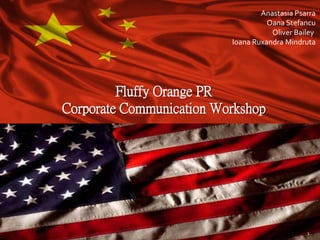
         Fluffy Orange PR
Corporate Communication Workshop


                                               1
Fluffy Orange PR
Understanding Cross-cultural management

                  • Cultural knowledge
                  • Corporate culture stereotypes
                  • Appropriateness of management style
                  • Cultural dimensions
                  • Non verbal communication
                  • How to avoid conflicts
                  • Conflicting cultures
                  • Psychological barriers of expatriates


                                                            2
History of PR in China

1980 Western PR


  1980 - 1985 ‘Ms PR’


1986 – 1989 Beginning of PR professionalism


     1989 – 1992 ‘Rethinking period’


          1992 – 2000 Declining of PR


              2000 - 2011 PR revitalized
                                                 3
History of PR in America

1980 600 University PR
       courses


   1999 CPRE report
        release


    2003 Over 20,000 PR
         students


        2004 – 2011 PR
          dominance
                                                 4
Corporate culture
  “Corporate culture is a pattern of
assumptions, invested, discovered, or
  developed by a given group, as it
  leans to cope with the problem of
    external adaption and internal
  integration, that has worked well
enough to be considered valid, and be
   taught to new members, as the
 correct way to perceive, think, and
 feel in relations to these problems.”      (Thompenaars and Hampden – Turner, 2004)

                    Schein (2004 : 21)
                                                                                5
International variation in preferred
                                  corporate cultures

                 Incubator – Person culture                   Guided missile – Task culture
                                   • sco                                                            • fin
                           • mex                                     • nzl
                                        • mal                                         • can • nor
                                   • aus                                                              • swe
                                                            • irl            • us    • uk   • bra
Egalitarianism


                                                                                                    • ger

                                                                  • ita       • fr          • swi
                                                • spa
                                    • chi         • jap   • pol
                                                                      • bel
                                                                                       • por         • den
                                        • ind
                 • cub

                    Family – Power culture                        Eiffel Tower – Role culture
                                                   Informalism

                                                              (Thompenaars and Hampden – Turner, 2004)
                                                                                                              6
Areas influenced by corporate cultures

                         Use of                 Effect
                         money                 change

    Management                                              Develop staff
       style                                                 and leaders


   Power
                                  Corporate                          Assess
orientation                                                       improvement
                                   culture

  Source of
  cohesion                                                          Reward staff


                 Principle of                     Definition of
                   control                         excellence

                                   Attract,
                                  retain and
                                   motivate
                                    talent                                         7
Different approach in Chinese and
 American organizational culture
                                         Effect change
              Key power to respected “insiders” |Spontaneous self organization
                                      Definition of excellence
                      High level of social influence | Achieve desired results

                                       Principle of control
                         Deeply respected persons | Integrity of own solutions
                                         Power orientation
                             Powerful personalities | “Knowledge is power”
                                           Motivate talent
                        Loyalty and trusted “insider” | Effective solutions
                                            Reward staff
                                       Deep respect | Admiration
                                         Management style
                                Depth of mutuality | Team objectives and goals
                                           Use of money
                                A token of respect | Symbol of success

                                                                              8
Management styles
The seven key methods of managing successfully across cultures
                                                  • Hierarchy
                                                  •Group focus
                                                  • Relationships
                                                  • Communication
                                                  • Time orientation
                                                  • Change tolerance
                                                  • Motivation


                                                                    9
Cultural dimensions


                      Power
                     distance


Long term                              Masculinity
 vs. short
   term
                                          vs.
orientation                            femininity


                                Individualis
       Uncertainty
                                    m vs.
        avoidance
                                collectivism


                                                          10
Psychological barriers of expatriates


                Psychological
                 adjustment


                Unwillingness
Psychological
                  to learn,      International
  barriers to                     adjustment
 adjustment     embrace and
                   adapt


                Socio-cultural
                 adjustment


                                                        11
Conflict in cultures
‘Sharing the same bed,
  but having different
        dreams’

                            Differences in Origins, Values, Norms


                         Differences in Expectations, Objectives, Strategy


                                                                        12
How to avoid conflict


Use humour        Mimic body      Better follow,
 carefully         language         than lead


        Learn a few
         words in         Be punctual
         Chinese


                                                   13
Non Verbal Communication


  “The most important thing in
communication is to hear what isn’t
           being said.”
                    Peter F. Drucker


                                       14
Practical tips I
1                      3


      2


4                          5


                               15
Practical tips II


        Avoid prolonged eye
              contact


Use moderate             Silence- viewed as
  gesturing                    restful


               Chinese
        High-context culture

                                              16
What to wear


               17
Thank you for attending


      Questions?


                          18

Corporate communication workshop

  • 1.
    Anastasia Psarra Oana Stefancu Oliver Bailey Ioana Ruxandra Mindruta Fluffy Orange PR Corporate Communication Workshop 1
  • 2.
    Fluffy Orange PR UnderstandingCross-cultural management • Cultural knowledge • Corporate culture stereotypes • Appropriateness of management style • Cultural dimensions • Non verbal communication • How to avoid conflicts • Conflicting cultures • Psychological barriers of expatriates 2
  • 3.
    History of PRin China 1980 Western PR 1980 - 1985 ‘Ms PR’ 1986 – 1989 Beginning of PR professionalism 1989 – 1992 ‘Rethinking period’ 1992 – 2000 Declining of PR 2000 - 2011 PR revitalized 3
  • 4.
    History of PRin America 1980 600 University PR courses 1999 CPRE report release 2003 Over 20,000 PR students 2004 – 2011 PR dominance 4
  • 5.
    Corporate culture “Corporate culture is a pattern of assumptions, invested, discovered, or developed by a given group, as it leans to cope with the problem of external adaption and internal integration, that has worked well enough to be considered valid, and be taught to new members, as the correct way to perceive, think, and feel in relations to these problems.” (Thompenaars and Hampden – Turner, 2004) Schein (2004 : 21) 5
  • 6.
    International variation inpreferred corporate cultures Incubator – Person culture Guided missile – Task culture • sco • fin • mex • nzl • mal • can • nor • aus • swe • irl • us • uk • bra Egalitarianism • ger • ita • fr • swi • spa • chi • jap • pol • bel • por • den • ind • cub Family – Power culture Eiffel Tower – Role culture Informalism (Thompenaars and Hampden – Turner, 2004) 6
  • 7.
    Areas influenced bycorporate cultures Use of Effect money change Management Develop staff style and leaders Power Corporate Assess orientation improvement culture Source of cohesion Reward staff Principle of Definition of control excellence Attract, retain and motivate talent 7
  • 8.
    Different approach inChinese and American organizational culture Effect change Key power to respected “insiders” |Spontaneous self organization Definition of excellence High level of social influence | Achieve desired results Principle of control Deeply respected persons | Integrity of own solutions Power orientation Powerful personalities | “Knowledge is power” Motivate talent Loyalty and trusted “insider” | Effective solutions Reward staff Deep respect | Admiration Management style Depth of mutuality | Team objectives and goals Use of money A token of respect | Symbol of success 8
  • 9.
    Management styles The sevenkey methods of managing successfully across cultures • Hierarchy •Group focus • Relationships • Communication • Time orientation • Change tolerance • Motivation 9
  • 10.
    Cultural dimensions Power distance Long term Masculinity vs. short term vs. orientation femininity Individualis Uncertainty m vs. avoidance collectivism 10
  • 11.
    Psychological barriers ofexpatriates Psychological adjustment Unwillingness Psychological to learn, International barriers to adjustment adjustment embrace and adapt Socio-cultural adjustment 11
  • 12.
    Conflict in cultures ‘Sharingthe same bed, but having different dreams’ Differences in Origins, Values, Norms Differences in Expectations, Objectives, Strategy 12
  • 13.
    How to avoidconflict Use humour Mimic body Better follow, carefully language than lead Learn a few words in Be punctual Chinese 13
  • 14.
    Non Verbal Communication “The most important thing in communication is to hear what isn’t being said.” Peter F. Drucker 14
  • 15.
    Practical tips I 1 3 2 4 5 15
  • 16.
    Practical tips II Avoid prolonged eye contact Use moderate Silence- viewed as gesturing restful Chinese High-context culture 16
  • 17.
  • 18.
    Thank you forattending Questions? 18