Corebankingsolutions inIndia
Introduction
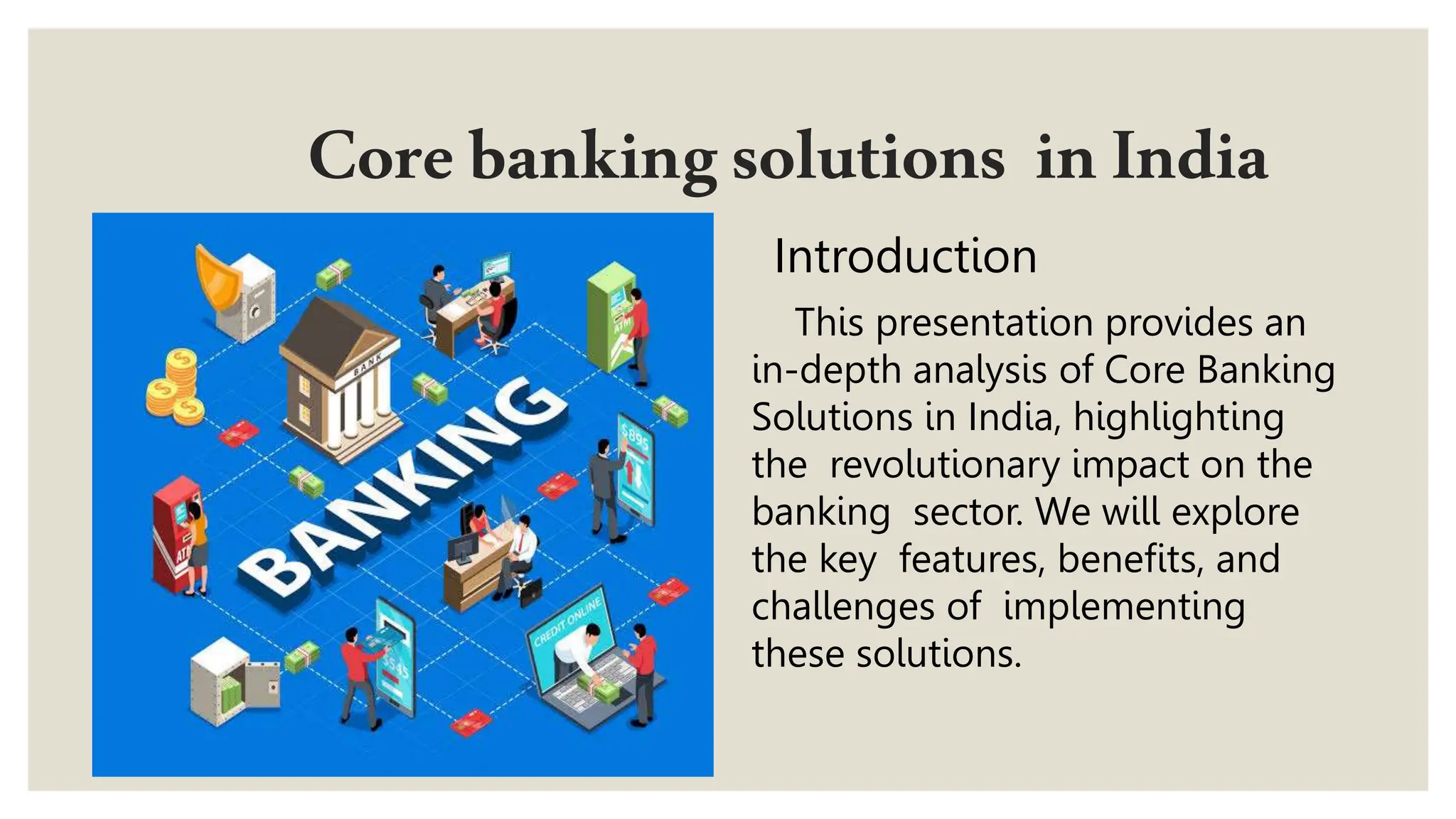
This presentation provides an
in-depth analysis of Core Banking
Solutions in India, highlighting
the revolutionary impact on the
banking sector. We will explore
the key features, benefits, and
challenges of implementing
these solutions.
Evolution of banking in India
There are several key milestone
1. Pre independence : Banking in India began with the establishment
of the bank of Hindustan in 1770.
2. Imperial bank of India : In 1921, these three presidency bank (
bank of Bengal, bank of Bombay and bank of Madras) were merged to
form a imperial Bank of India which later became the state bank of
India.
3. Independence and Nationalization: Post-independence, the
Reserve Bank of India (RBI) was established in 1935 as the central
bank.
4. Liberalization and Reforms : The early 1990s brought
significant reforms in the banking sector. Liberalization
policies allowed private and foreign banks to operate in
India, fostering competition and improving services.
5. Technology and Digitalization: Banks embraced technological
advancements, introducing ATMs, online banking, mobile
banking, and digital payment systems. The focus shifted
towards financial inclusion, with initiatives like Jan Dhan Yojan
to provide access to banking services for all.
6. Regulatory changes: The RBI implemented various
regulations and guidelines to enhance transparency, risk
management, and governance in banks, aiming to strengthen
the sector's stability and credibility.
Understanding core banking solutions
An in-depth understanding of
Core Banking Solutions is
crucial for comprehending
their impact. This slide will
elucidate the concept,
components, and
functionalities of modern core
banking systems.
Advantages of core banking solutions
1. Centralized operation
2. Integrated Services
3. Real time Transactions
4. Efficient Customer service
5. Enhanced Security and Risk Management
6. Scalability and Flexibility
7. Cost effectiveness
Challenges and implementation Roadmap
Implementation Roadmap
1. Assessment and planning
2. Infrastructure Roadliness
3. Vendor Selection
4. Phased Implementation
5. Data migration and Testing
6. Monitoring and Support
Challenges
1. Legacy Systems
2. Infrastructure and
Connectivity
3. Data Security and Privacy
4. Training and changes
Management
5. Customization and
Integration
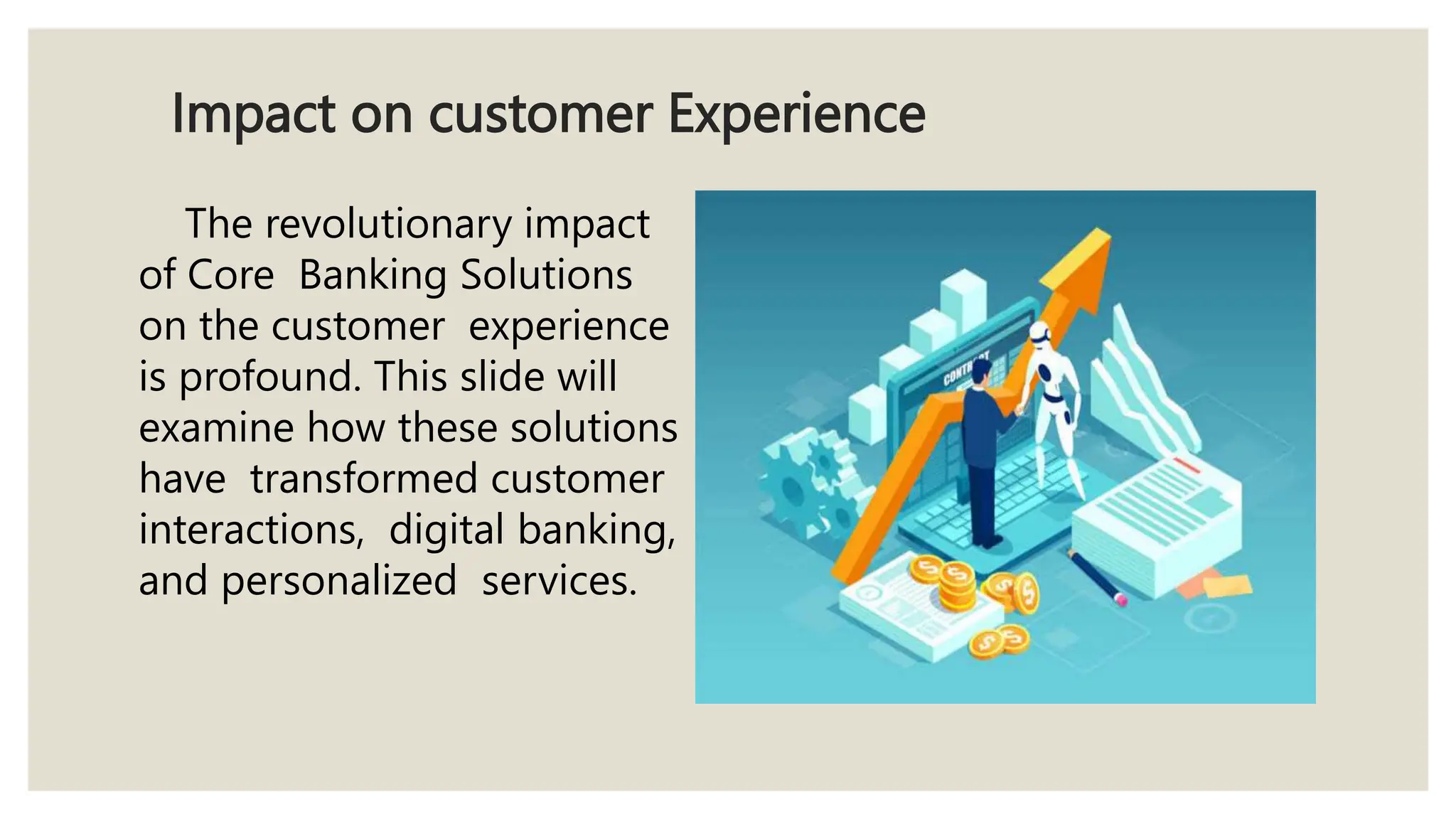
Impact on customer Experience
The revolutionary impact
of Core Banking Solutions
on the customer experience
is profound. This slide will
examine how these solutions
have transformed customer
interactions, digital banking,
and personalized services.
Regulatory compliance consideration
The regulatory landscape plays
a pivotal role in shaping the
implementation and operation
of Core Banking Solutions.
This slide will address the
regulatory and compliance
considerations that banks
must navigate in the context of
these solutions.
Future Trends and innovation
The future of Core Banking
Solutions in India is characterized
by continuous innovation and
technological advancements. This
slide will explore emerging
trends, such as AI-powered
banking and blockchain
integration, shaping the future of
banking.
Case study and Success Stories
Real world case studies and success stories demonstrate
the transformative impact of Core Banking Solutions.
This slide will showcase notable examples of banks in
India that have successfully leveraged these solutions to
achieve operational excellence and customer satisfaction.
Conclusion
In conclusion, the revolutionizing impact of Core
Banking Solutions in India is evident, reshaping the banking
landscape and enhancing operational efficiency. As banks
continue to embrace digital transformation, the role of these
solutions will be instrumental in driving sustainable growth
and delivering superior customer experiences.
core banking solutions in india.pptx

core banking solutions in india.pptx

  • 1.
    Corebankingsolutions inIndia Introduction This presentationprovides an in-depth analysis of Core Banking Solutions in India, highlighting the revolutionary impact on the banking sector. We will explore the key features, benefits, and challenges of implementing these solutions.
  • 2.
    Evolution of bankingin India There are several key milestone 1. Pre independence : Banking in India began with the establishment of the bank of Hindustan in 1770. 2. Imperial bank of India : In 1921, these three presidency bank ( bank of Bengal, bank of Bombay and bank of Madras) were merged to form a imperial Bank of India which later became the state bank of India. 3. Independence and Nationalization: Post-independence, the Reserve Bank of India (RBI) was established in 1935 as the central bank.
  • 3.
    4. Liberalization andReforms : The early 1990s brought significant reforms in the banking sector. Liberalization policies allowed private and foreign banks to operate in India, fostering competition and improving services. 5. Technology and Digitalization: Banks embraced technological advancements, introducing ATMs, online banking, mobile banking, and digital payment systems. The focus shifted towards financial inclusion, with initiatives like Jan Dhan Yojan to provide access to banking services for all. 6. Regulatory changes: The RBI implemented various regulations and guidelines to enhance transparency, risk management, and governance in banks, aiming to strengthen the sector's stability and credibility.
  • 4.
    Understanding core bankingsolutions An in-depth understanding of Core Banking Solutions is crucial for comprehending their impact. This slide will elucidate the concept, components, and functionalities of modern core banking systems.
  • 5.
    Advantages of corebanking solutions 1. Centralized operation 2. Integrated Services 3. Real time Transactions 4. Efficient Customer service 5. Enhanced Security and Risk Management 6. Scalability and Flexibility 7. Cost effectiveness
  • 6.
    Challenges and implementationRoadmap Implementation Roadmap 1. Assessment and planning 2. Infrastructure Roadliness 3. Vendor Selection 4. Phased Implementation 5. Data migration and Testing 6. Monitoring and Support Challenges 1. Legacy Systems 2. Infrastructure and Connectivity 3. Data Security and Privacy 4. Training and changes Management 5. Customization and Integration
  • 7.
    Impact on customerExperience The revolutionary impact of Core Banking Solutions on the customer experience is profound. This slide will examine how these solutions have transformed customer interactions, digital banking, and personalized services.
  • 8.
    Regulatory compliance consideration Theregulatory landscape plays a pivotal role in shaping the implementation and operation of Core Banking Solutions. This slide will address the regulatory and compliance considerations that banks must navigate in the context of these solutions.
  • 9.
    Future Trends andinnovation The future of Core Banking Solutions in India is characterized by continuous innovation and technological advancements. This slide will explore emerging trends, such as AI-powered banking and blockchain integration, shaping the future of banking.
  • 10.
    Case study andSuccess Stories Real world case studies and success stories demonstrate the transformative impact of Core Banking Solutions. This slide will showcase notable examples of banks in India that have successfully leveraged these solutions to achieve operational excellence and customer satisfaction.
  • 11.
    Conclusion In conclusion, therevolutionizing impact of Core Banking Solutions in India is evident, reshaping the banking landscape and enhancing operational efficiency. As banks continue to embrace digital transformation, the role of these solutions will be instrumental in driving sustainable growth and delivering superior customer experiences.