COOMB’S TEST
PREPARED BY
FATIMA TAHIR
MLT FINAL YEAR
DEFINITION :
COOMBS TEST IS AN IMMUNOLOGICAL TEST (Ag-AB REACTION) WHICH IS USED TO
DETECT THE PRESENCE OF ANTI RBC ANTIBODIES BY USING COOMBS REAGENT.
FORMATION OF COOMBS REAGENT
 IN AIHA,BODY PRODUCES ANTIBODIES THAT ARE DIRECTED AGAINST ANTIGEN ON RED CELL
SURFACE.
 BLOOD IS TAKEN OUT OF THE BODY OF HUMAN HAVING AUTO ANTIBODIES AND SERUM IS
SEPARATED AND ADDED TO AN ANIMAL(RABBIT).
 IMMUNE SYSTEM OF ANIMAL RECOGNIZE THESE ANTIBODIES AS FOREIGN AND PRODUCE ITS OWN
ANTIBODIES AGAINST IT.
 THE ANTIBODIES MADE BY THE ANIMAL ARE SEPARATED AND THEY ARE CALLED COOMBS REAGENT.
DIFFERENCE BETWEEN MONOCLONAL AND POLY CLONAL
ANTIBODIES
MONOCLONAL
 Monoclonal antibodies refer to
homogenous population of antibodies
which are produced by a single clone of
plasma B cells.
 Produced by same clone of plasma B
cells
 Homogenous antibody production
 Interact with particular antigen/epitope
 Expensive to produce
POLYCLONAL
 Polyclonal antibodies refer to the
mixture of immunoglobulins which are
secreted against a particular
antigen ;each antibody recognize
different epitope
 Produced by multiple clones of plasma B
cells
 Heterogenous antibody production
 Interact with different epitopes on same
antigen
 Less expensive to produce
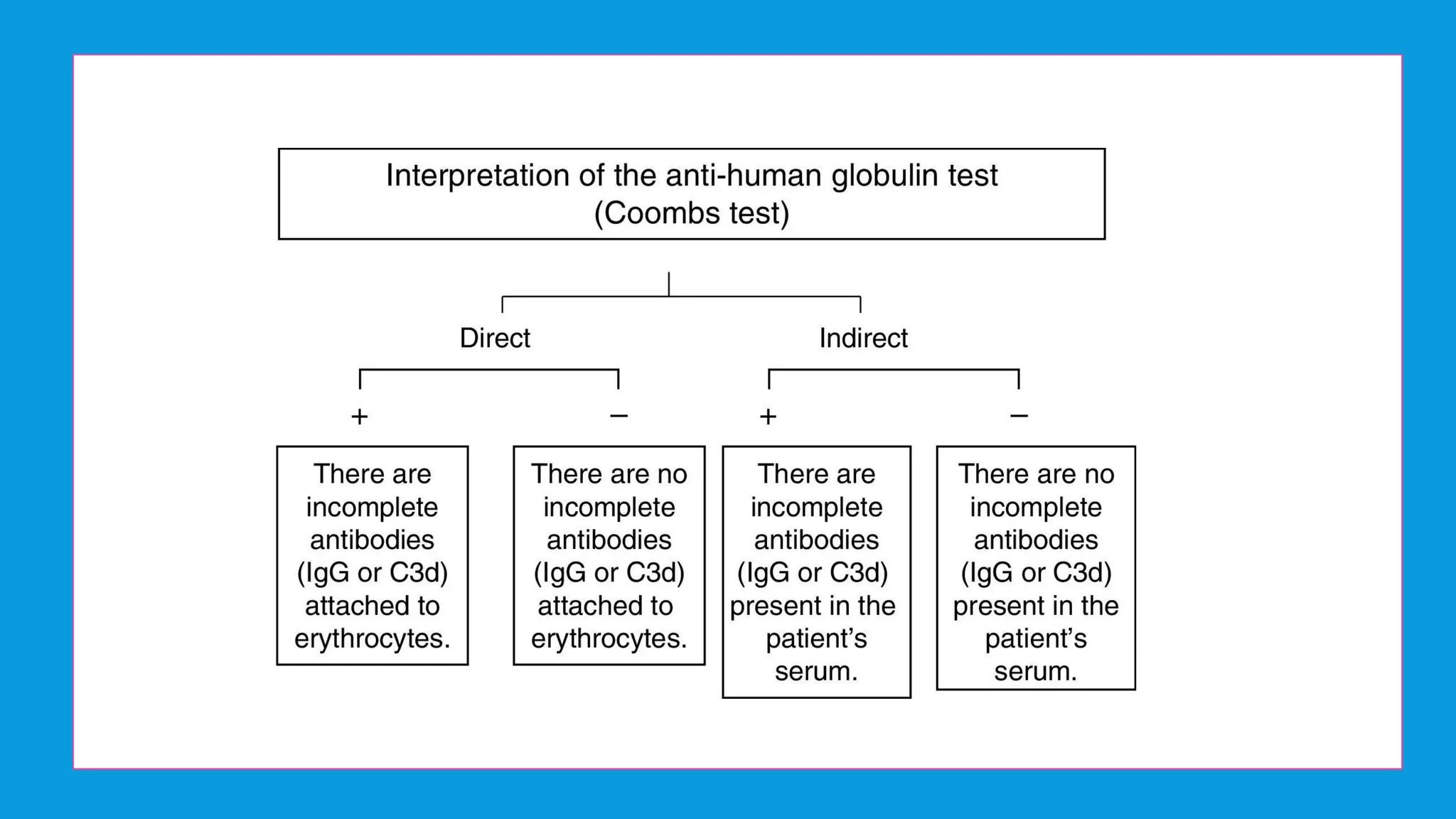
TYPES OF COOMB’S TEST
1-DIRECT ANTIGLOBULIN TEST(DAT)
2-INDIRECT ANTIGLOBULIN TEST (IAT)
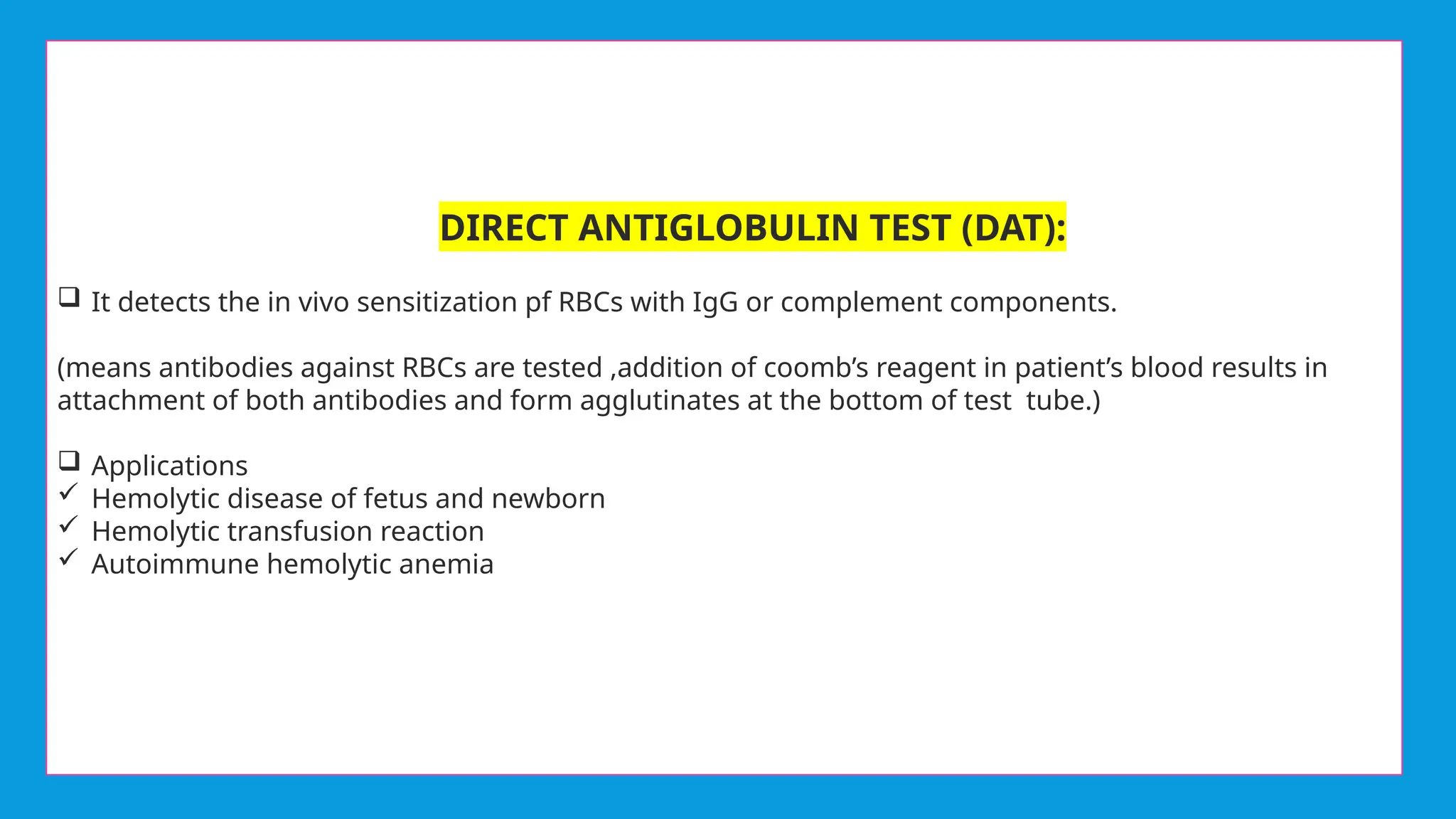
DIRECT ANTIGLOBULIN TEST (DAT):
 It detects the in vivo sensitization pf RBCs with IgG or complement components.
(means antibodies against RBCs are tested ,addition of coomb’s reagent in patient’s blood results in
attachment of both antibodies and form agglutinates at the bottom of test tube.)
 Applications
 Hemolytic disease of fetus and newborn
 Hemolytic transfusion reaction
 Autoimmune hemolytic anemia
Procedure:
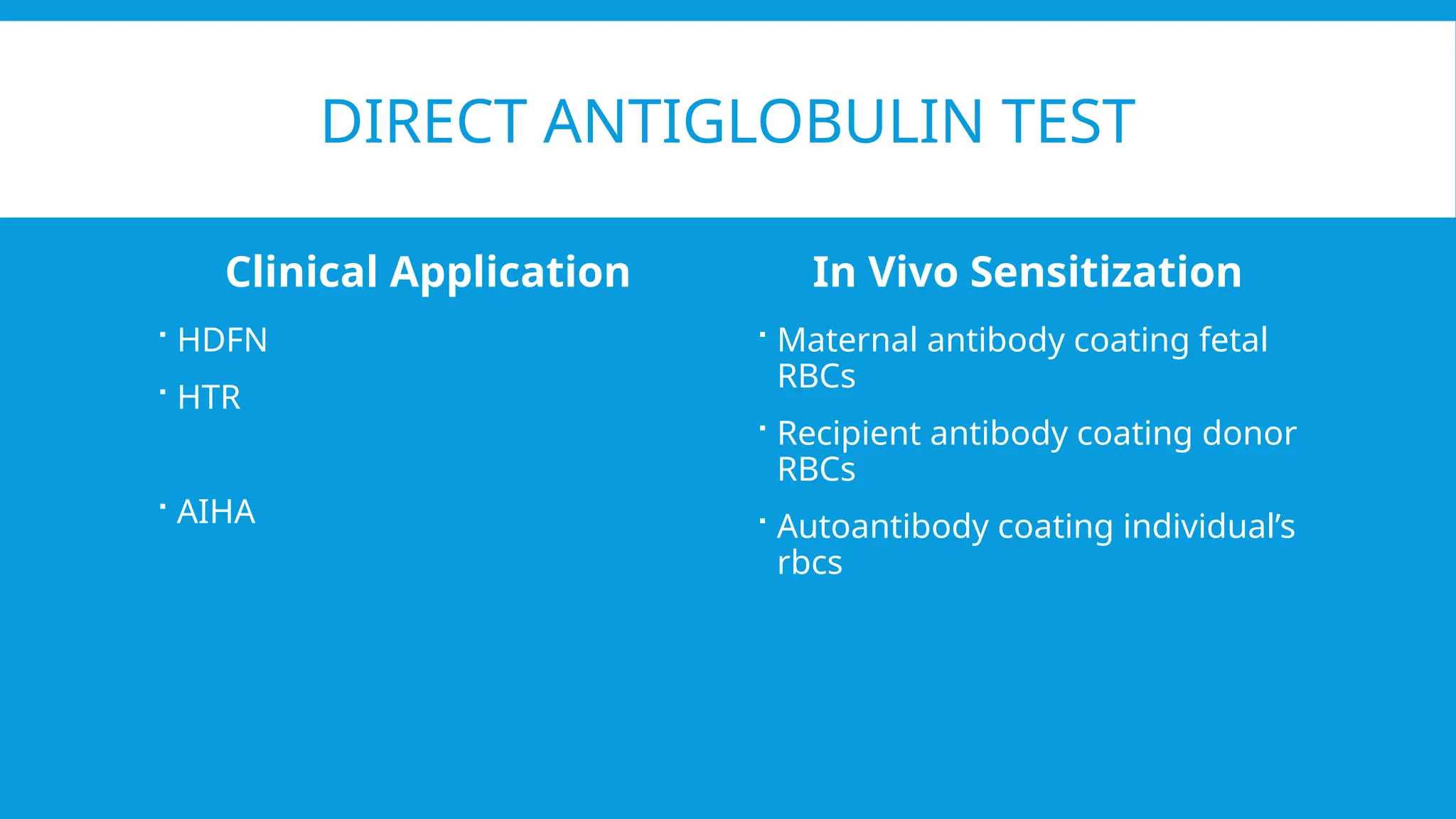
DIRECT ANTIGLOBULIN TEST
Clinical Application
 HDFN
 HTR
 AIHA
In Vivo Sensitization
 Maternal antibody coating fetal
RBCs
 Recipient antibody coating donor
RBCs
 Autoantibody coating individual’s
rbcs
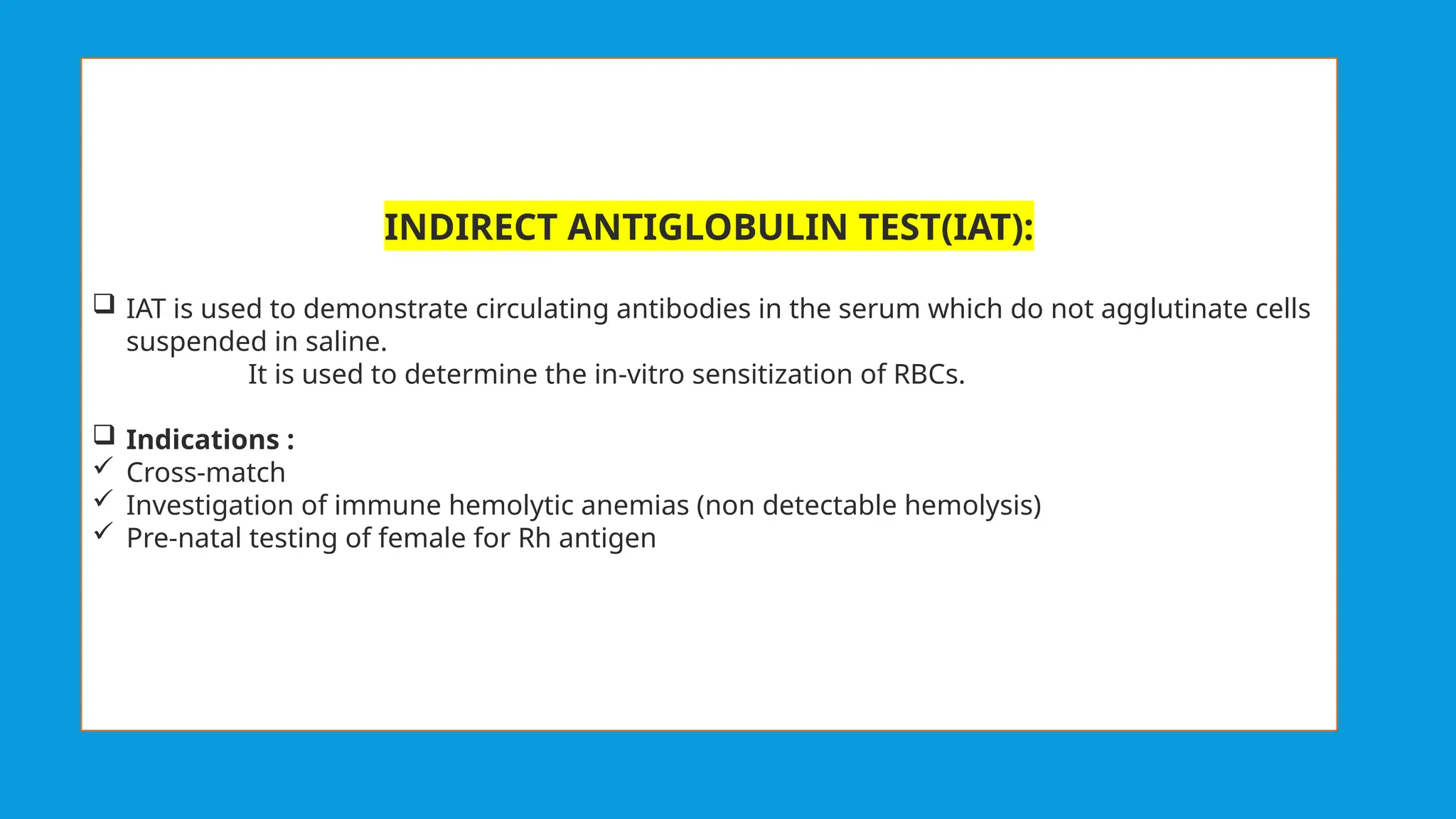
INDIRECT ANTIGLOBULIN TEST(IAT):
 IAT is used to demonstrate circulating antibodies in the serum which do not agglutinate cells
suspended in saline.
It is used to determine the in-vitro sensitization of RBCs.
 Indications :
 Cross-match
 Investigation of immune hemolytic anemias (non detectable hemolysis)
 Pre-natal testing of female for Rh antigen
PRE-NATAL SCREENING OF FEMALE FOR Rh ANTIGEN
 In Rh negative females ,having Rh positive baby ,mother and fetus’s blood comes in contact and
mother develops anti -Rh antibodies against fetus RBCs.
 During 2nd
pregnancy ,these autoantibodies cross placenta and destroy fetal RBCs.
 Antibodies are present in serum ,so we separate serum by centrifugation of blood.
 Addition of Rh positive cells in that serum will result in combining of those antibodies with RBCs
antigen.
 Adding the coomb’s reagent will react with that Ag-Ab complex and form agglutinates.
RESULT
NEGATIVE
RESULT :
No clumping of
cells is seen (no
agglutination)
POSITIVE
RESULT:
Clumping of
cells is seen
(agglutination is
observed )
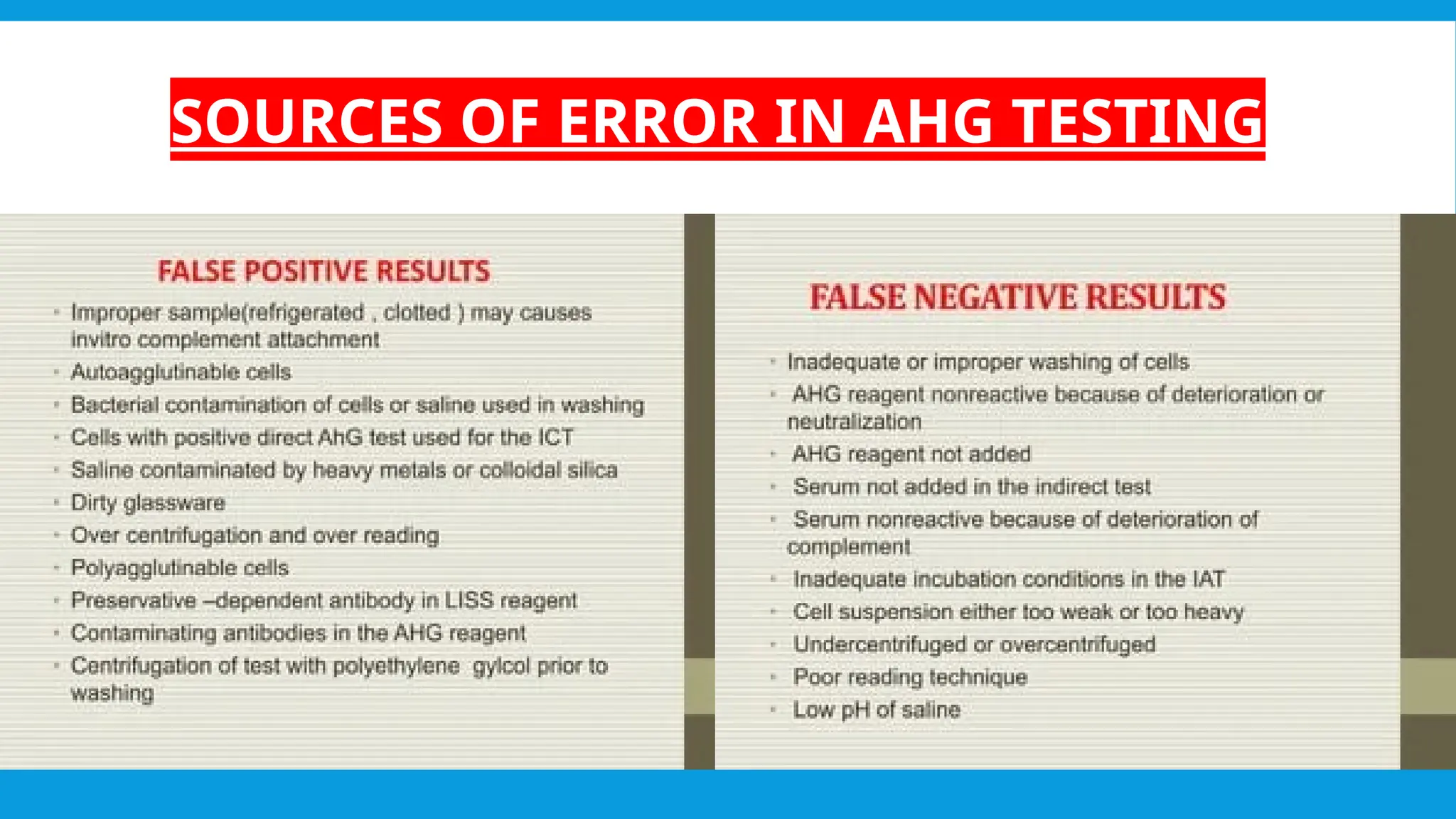
SOURCES OF ERROR IN AHG TESTING
COOMB’S TEST presentation medical laboratory.pptx

COOMB’S TEST presentation medical laboratory.pptx

  • 1.
  • 2.
    DEFINITION : COOMBS TESTIS AN IMMUNOLOGICAL TEST (Ag-AB REACTION) WHICH IS USED TO DETECT THE PRESENCE OF ANTI RBC ANTIBODIES BY USING COOMBS REAGENT.
  • 3.
    FORMATION OF COOMBSREAGENT FORMATION OF COOMBS REAGENT  IN AIHA,BODY PRODUCES ANTIBODIES THAT ARE DIRECTED AGAINST ANTIGEN ON RED CELL SURFACE.  BLOOD IS TAKEN OUT OF THE BODY OF HUMAN HAVING AUTO ANTIBODIES AND SERUM IS SEPARATED AND ADDED TO AN ANIMAL(RABBIT).  IMMUNE SYSTEM OF ANIMAL RECOGNIZE THESE ANTIBODIES AS FOREIGN AND PRODUCE ITS OWN ANTIBODIES AGAINST IT.  THE ANTIBODIES MADE BY THE ANIMAL ARE SEPARATED AND THEY ARE CALLED COOMBS REAGENT.
  • 4.
    DIFFERENCE BETWEEN MONOCLONALAND POLY CLONAL ANTIBODIES MONOCLONAL  Monoclonal antibodies refer to homogenous population of antibodies which are produced by a single clone of plasma B cells.  Produced by same clone of plasma B cells  Homogenous antibody production  Interact with particular antigen/epitope  Expensive to produce POLYCLONAL  Polyclonal antibodies refer to the mixture of immunoglobulins which are secreted against a particular antigen ;each antibody recognize different epitope  Produced by multiple clones of plasma B cells  Heterogenous antibody production  Interact with different epitopes on same antigen  Less expensive to produce
  • 5.
    TYPES OF COOMB’STEST 1-DIRECT ANTIGLOBULIN TEST(DAT) 2-INDIRECT ANTIGLOBULIN TEST (IAT)
  • 6.
    DIRECT ANTIGLOBULIN TEST(DAT):  It detects the in vivo sensitization pf RBCs with IgG or complement components. (means antibodies against RBCs are tested ,addition of coomb’s reagent in patient’s blood results in attachment of both antibodies and form agglutinates at the bottom of test tube.)  Applications  Hemolytic disease of fetus and newborn  Hemolytic transfusion reaction  Autoimmune hemolytic anemia
  • 7.
  • 8.
    DIRECT ANTIGLOBULIN TEST ClinicalApplication  HDFN  HTR  AIHA In Vivo Sensitization  Maternal antibody coating fetal RBCs  Recipient antibody coating donor RBCs  Autoantibody coating individual’s rbcs
  • 9.
    INDIRECT ANTIGLOBULIN TEST(IAT): IAT is used to demonstrate circulating antibodies in the serum which do not agglutinate cells suspended in saline. It is used to determine the in-vitro sensitization of RBCs.  Indications :  Cross-match  Investigation of immune hemolytic anemias (non detectable hemolysis)  Pre-natal testing of female for Rh antigen
  • 10.
    PRE-NATAL SCREENING OFFEMALE FOR Rh ANTIGEN  In Rh negative females ,having Rh positive baby ,mother and fetus’s blood comes in contact and mother develops anti -Rh antibodies against fetus RBCs.  During 2nd pregnancy ,these autoantibodies cross placenta and destroy fetal RBCs.  Antibodies are present in serum ,so we separate serum by centrifugation of blood.  Addition of Rh positive cells in that serum will result in combining of those antibodies with RBCs antigen.  Adding the coomb’s reagent will react with that Ag-Ab complex and form agglutinates.
  • 12.
    RESULT NEGATIVE RESULT : No clumpingof cells is seen (no agglutination) POSITIVE RESULT: Clumping of cells is seen (agglutination is observed )
  • 14.
    SOURCES OF ERRORIN AHG TESTING