CONTACTLESS
PAYMENTS
Presenter: Hanzala Shaikh
Date: February 28, 2022
Agenda
• Introduction
• What is Contactless payment and
overview?
• Global Scenario after COVID 19
• Benefits of contactless payments
• Facts and current market
opportunities
• Risk Involved
• How does the technology work?
• Applications
• Drawbacks
• What DIGIPAY offers
• Conclusion
• Q&A
Cashless
● Cheque/DD
● Net banking
● Card Swipe
● Gift Cards
● Mobile Wallets
● NFC Payments
● HCE
● QR Payments
● Biometrics
What are contactless
payments?
• Require no physical contact
between the consumer payment
device and the physical point-of-sale
(POS) terminal.
• User pay through card or device
• Close proximity (less than 2-4
inches)
• The payment account information is
communicated wirelessly (via radio
frequency (RF)
Generally used
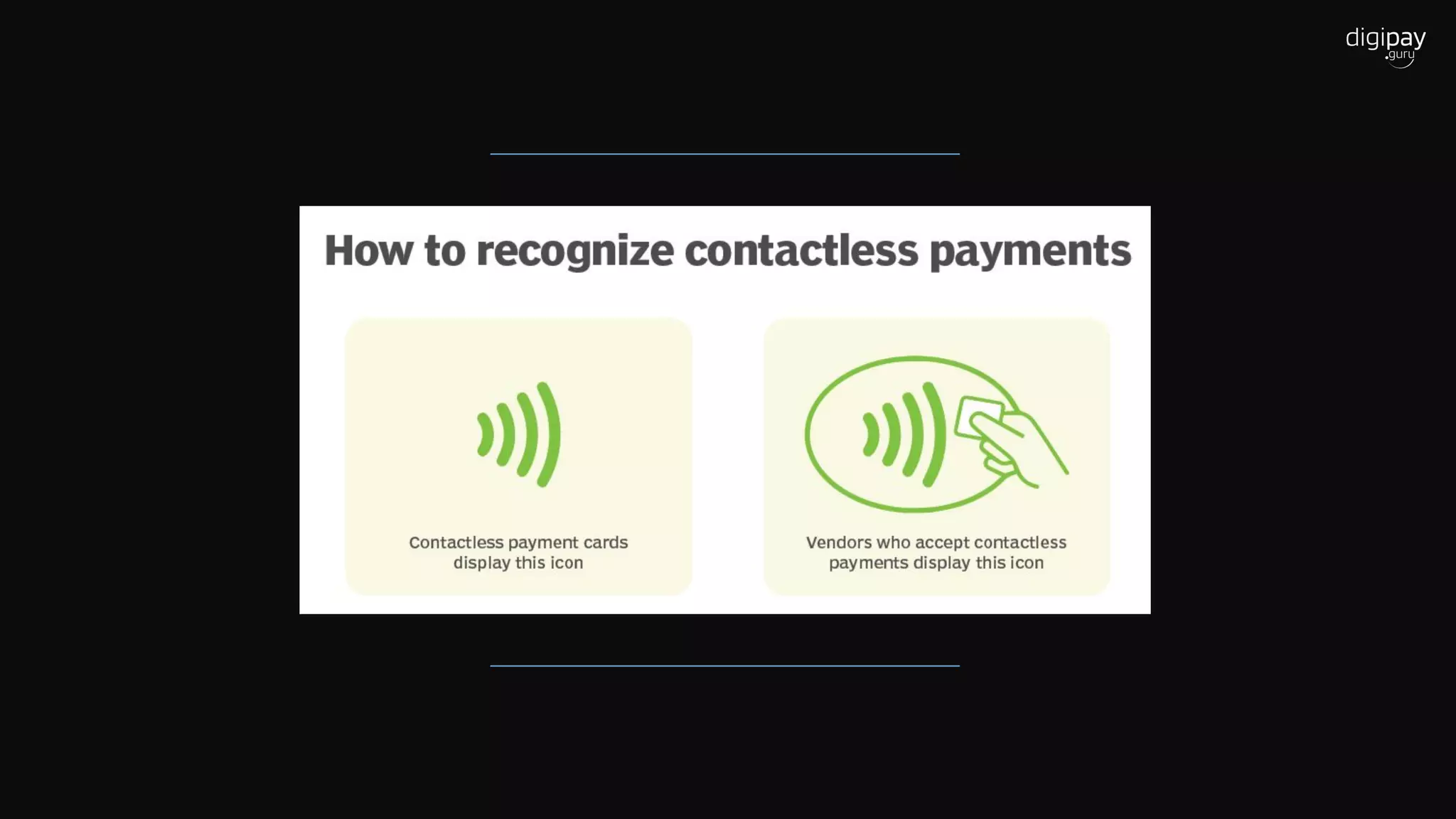
logo/symbols for
Contactless
payments
Contactless Payments - NFC vs QR
Moving Cashless
“We know that money often passes from hand to
hand and can collect all kinds of bacteria and
viruses. We advise people to wash their hands
after handling banknotes and try not to touch
their face. Wherever possible, it is advisable to
use contactless payments to reduce the risk of
the infection spreading.” - WHO
The World Health Organization recommends
ditching cash in favor of contactless payments to
prevent the spread of COVID-19.
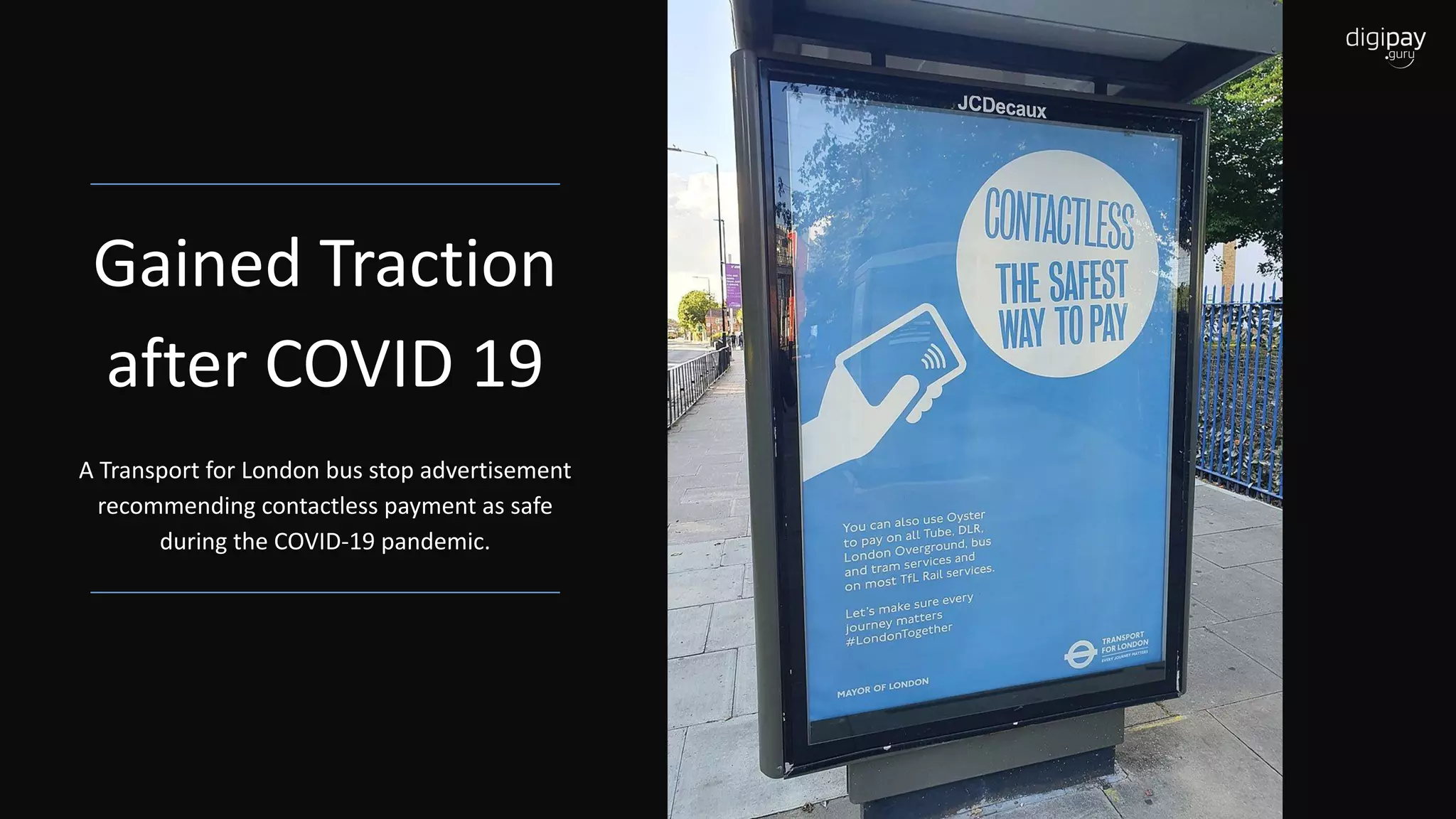
Gained Traction
after COVID 19
A Transport for London bus stop advertisement
recommending contactless payment as safe
during the COVID-19 pandemic.
Benefits
Contactless payments are secure payment
transactions that don’t require physical
contact between the payment device,
such as a dual-interface EMV chip card,
NFC-enabled mobile phone or wearable,
and the acceptance device.
• Improved Transaction Speeds
• Consistent Consumer Experience
• Additional Payment Devices
• Strong Security
• Reduced Cash Handling
• Increased transactions volume
• Convenience for Merchants
• Contactless payments use the international
standard ISO/IEC14443 for contactless
communications that is being adopted
worldwide for financial payments and
leverage the existing payments
infrastructure.
• “Cool” Factor -
https://www.youtube.com/watch?v=yA1Gr
oP6xBI
About 38% of consumers now
see contactless as a basic need
or feature of payments, up
from 30% a year ago.
Source: The Futurist Group
What Study relates?
The facts
• Globally, there was a 40% growth in contactless transactions
• 74% of retailers state they will continue to use contactless
post-pandemic
• 94% of retailers expect touchless payments to increase over
the next 18 months
• 82% of consumers view contactless as the cleaner way to pay
• Contactless cards are up to 10 times faster than other
payment methods
• 80% of contactless transactions are under $25
• 43.9% of consumers use Apple Pay as opposed to other
mobile payments options
Source: Radiant
Contactless Payments - Cardholder Verification Limit (CVM))
Authorities, banks & card networks in many countries have set higher transaction limits for contactless payments.
Risk Involved
• RFID tags can be attached to cash, clothing, and
possessions, or implanted in people, the possibility
of obtaining personally-linked information.
• Remotely steal money from bank cards equipped
with RFID chips using self-made contactless readers,
capable of scanning such bank cards.
• Criminals can extract card numbers and expiration
dates from these cards. From here, they will be able
to carry out transactions and fabricate a clone with
a magnetic stripe without the consent of the bank
account’s owner.
• Crime Expectation research : Cybercriminals will
steal an estimated 33 billion records in 2023.
`
FACTS
HOW DOES
THE
TECHNOLOGY
WORKS?
What’s the
technology behind
contactless
payments?
Contactless cards
1
2
E-wallets
3
HCE enable Devices (Mobile,
Tablets, POS etc.)
The Overview
The contactless connection between the
devices is conducted via radio signal
(Radio Frequency Identification
technology). NFC-chip uses a special
radio frequency (13.56 MHz), which
works only if the devices are close to
each other.
Enabled by NFC chips that are found in most
modern smartphones and tablets, as well as in
many smartwatches and smart bracelets.
Chips can transfer encrypted data from a
customer’s bank card to another chip, for
example, in a POS terminal at a store.
The data exchange takes 1-2 seconds,
followed by a successful payment.
STEP 1
STEP 2
STEP 3
MODES OF
PAYMENT
Banking cards supporting contactless
technologies (for example, MasterCard
PayPass/ Visa PayWave).
1
2
Mobile devices - HCE enabled(Apple Pay,
Android Pay, Samsung Pay).
3
Wearable devices - Apple, Samsung, Mondaine
and Swatch watches with an embedded NFC chip.
Application of
Contactless Payments
NFC allows user to make payments at
various places, out of which few of
them are:
• Fuel pumps
• Parking garages
• Movie tickets
• Tollbooth
• Merchant payments
• Rewards
• Banks cards
• Transit tickets
Source: MobilePaymentsToday
Amazon Go
Brings 50% more profit than
traditional stores
Palm Payments
Patented initiative by Amazon
Example of Current Providers
Walletmor - https://walletmor.com/
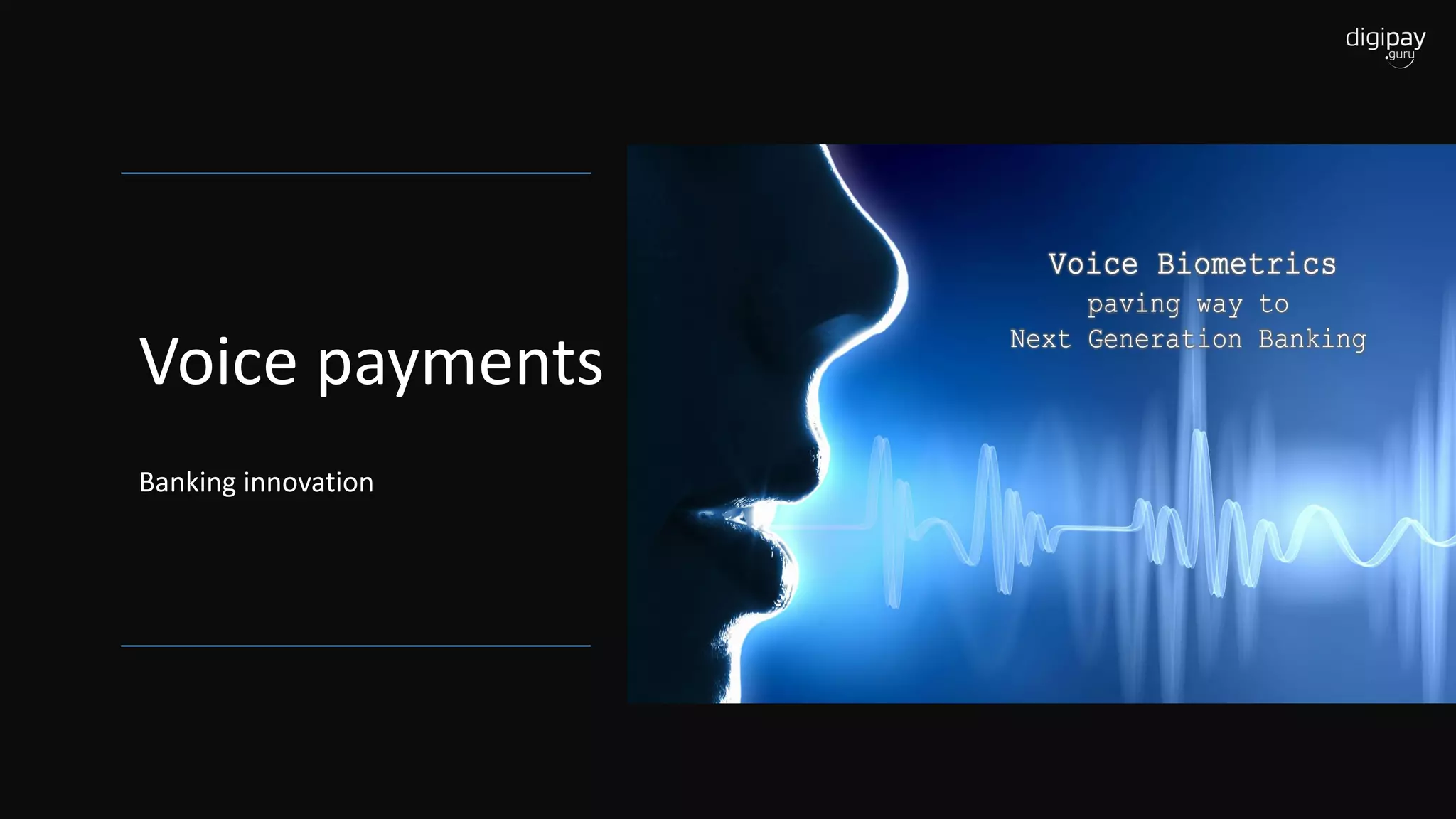
Voice payments
Banking innovation
Drawbacks of
NFC
payments
• Too Expensive
• Security and compliance limits
• Availability of providers
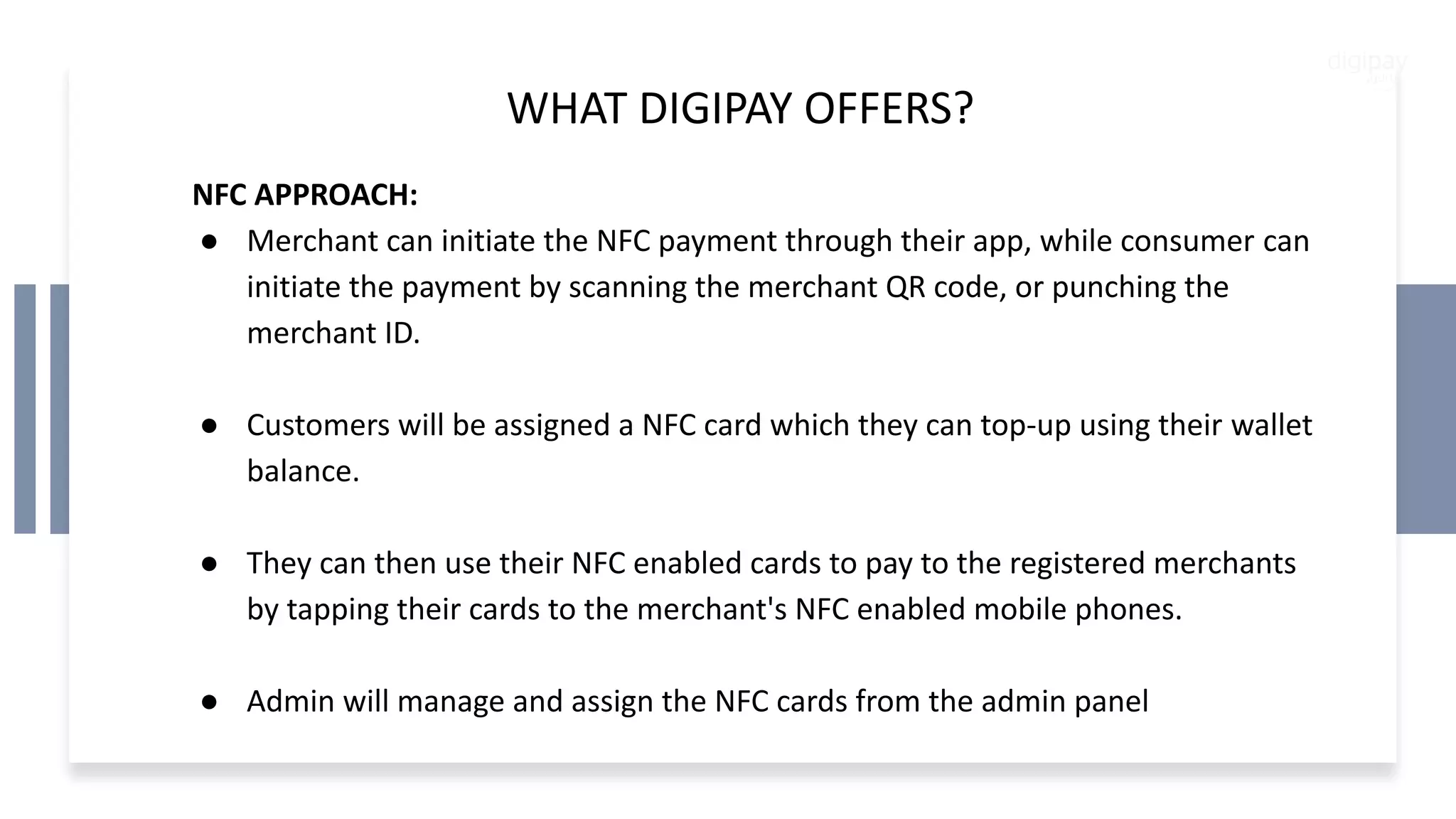
WHAT DIGIPAY OFFERS?
NFC APPROACH:
● Merchant can initiate the NFC payment through their app, while consumer can
initiate the payment by scanning the merchant QR code, or punching the
merchant ID.
● Customers will be assigned a NFC card which they can top-up using their wallet
balance.
● They can then use their NFC enabled cards to pay to the registered merchants
by tapping their cards to the merchant's NFC enabled mobile phones.
● Admin will manage and assign the NFC cards from the admin panel
● In coming days, we might see
acceleration in the adoption of
contactless payments.
● This might also result in rapid
innovations in the contactless
technology that might
encourage FinTech startups
and enterprises to heavily
disrupt the financial sector.
Concluding lines
“As more competition grips the market, we as a
technology provider committed to innovate our tech
with the upcoming payment trends”
Any Questions?
hanzala.s@digipay.guru www.digipay.guru +91 9662992262

Contactless payments

  • 1.
  • 2.
    Agenda • Introduction • Whatis Contactless payment and overview? • Global Scenario after COVID 19 • Benefits of contactless payments • Facts and current market opportunities • Risk Involved • How does the technology work? • Applications • Drawbacks • What DIGIPAY offers • Conclusion • Q&A
  • 3.
    Cashless ● Cheque/DD ● Netbanking ● Card Swipe ● Gift Cards ● Mobile Wallets ● NFC Payments ● HCE ● QR Payments ● Biometrics
  • 4.
    What are contactless payments? •Require no physical contact between the consumer payment device and the physical point-of-sale (POS) terminal. • User pay through card or device • Close proximity (less than 2-4 inches) • The payment account information is communicated wirelessly (via radio frequency (RF)
  • 5.
  • 7.
  • 9.
    Moving Cashless “We knowthat money often passes from hand to hand and can collect all kinds of bacteria and viruses. We advise people to wash their hands after handling banknotes and try not to touch their face. Wherever possible, it is advisable to use contactless payments to reduce the risk of the infection spreading.” - WHO The World Health Organization recommends ditching cash in favor of contactless payments to prevent the spread of COVID-19.
  • 10.
    Gained Traction after COVID19 A Transport for London bus stop advertisement recommending contactless payment as safe during the COVID-19 pandemic.
  • 11.
    Benefits Contactless payments aresecure payment transactions that don’t require physical contact between the payment device, such as a dual-interface EMV chip card, NFC-enabled mobile phone or wearable, and the acceptance device. • Improved Transaction Speeds • Consistent Consumer Experience • Additional Payment Devices • Strong Security • Reduced Cash Handling • Increased transactions volume • Convenience for Merchants • Contactless payments use the international standard ISO/IEC14443 for contactless communications that is being adopted worldwide for financial payments and leverage the existing payments infrastructure. • “Cool” Factor - https://www.youtube.com/watch?v=yA1Gr oP6xBI
  • 13.
    About 38% ofconsumers now see contactless as a basic need or feature of payments, up from 30% a year ago. Source: The Futurist Group
  • 14.
    What Study relates? Thefacts • Globally, there was a 40% growth in contactless transactions • 74% of retailers state they will continue to use contactless post-pandemic • 94% of retailers expect touchless payments to increase over the next 18 months • 82% of consumers view contactless as the cleaner way to pay • Contactless cards are up to 10 times faster than other payment methods • 80% of contactless transactions are under $25 • 43.9% of consumers use Apple Pay as opposed to other mobile payments options Source: Radiant
  • 15.
    Contactless Payments -Cardholder Verification Limit (CVM)) Authorities, banks & card networks in many countries have set higher transaction limits for contactless payments.
  • 16.
    Risk Involved • RFIDtags can be attached to cash, clothing, and possessions, or implanted in people, the possibility of obtaining personally-linked information. • Remotely steal money from bank cards equipped with RFID chips using self-made contactless readers, capable of scanning such bank cards. • Criminals can extract card numbers and expiration dates from these cards. From here, they will be able to carry out transactions and fabricate a clone with a magnetic stripe without the consent of the bank account’s owner. • Crime Expectation research : Cybercriminals will steal an estimated 33 billion records in 2023.
  • 17.
  • 18.
  • 19.
    What’s the technology behind contactless payments? Contactlesscards 1 2 E-wallets 3 HCE enable Devices (Mobile, Tablets, POS etc.)
  • 20.
    The Overview The contactlessconnection between the devices is conducted via radio signal (Radio Frequency Identification technology). NFC-chip uses a special radio frequency (13.56 MHz), which works only if the devices are close to each other. Enabled by NFC chips that are found in most modern smartphones and tablets, as well as in many smartwatches and smart bracelets. Chips can transfer encrypted data from a customer’s bank card to another chip, for example, in a POS terminal at a store. The data exchange takes 1-2 seconds, followed by a successful payment.
  • 21.
  • 22.
    MODES OF PAYMENT Banking cardssupporting contactless technologies (for example, MasterCard PayPass/ Visa PayWave). 1 2 Mobile devices - HCE enabled(Apple Pay, Android Pay, Samsung Pay). 3 Wearable devices - Apple, Samsung, Mondaine and Swatch watches with an embedded NFC chip.
  • 23.
    Application of Contactless Payments NFCallows user to make payments at various places, out of which few of them are: • Fuel pumps • Parking garages • Movie tickets • Tollbooth • Merchant payments • Rewards • Banks cards • Transit tickets Source: MobilePaymentsToday
  • 24.
    Amazon Go Brings 50%more profit than traditional stores
  • 25.
  • 26.
    Example of CurrentProviders Walletmor - https://walletmor.com/
  • 27.
  • 28.
    Drawbacks of NFC payments • TooExpensive • Security and compliance limits • Availability of providers
  • 29.
    WHAT DIGIPAY OFFERS? NFCAPPROACH: ● Merchant can initiate the NFC payment through their app, while consumer can initiate the payment by scanning the merchant QR code, or punching the merchant ID. ● Customers will be assigned a NFC card which they can top-up using their wallet balance. ● They can then use their NFC enabled cards to pay to the registered merchants by tapping their cards to the merchant's NFC enabled mobile phones. ● Admin will manage and assign the NFC cards from the admin panel
  • 30.
    ● In comingdays, we might see acceleration in the adoption of contactless payments. ● This might also result in rapid innovations in the contactless technology that might encourage FinTech startups and enterprises to heavily disrupt the financial sector.
  • 31.
    Concluding lines “As morecompetition grips the market, we as a technology provider committed to innovate our tech with the upcoming payment trends”
  • 32.