CONSTRUCTIVIST
CURRICULUM
Reporter:
( P i a g e t a n d V y g o t s k y )
Liza Mae D. Ambrocio
Objectives
01
02
03
Encourage students to actively engage with the concept.
Develop students ability to analyze, evaluate, and
synthesize information.
Facilitate collaborative learning experiences where
students work together to solve problems, discuss ideas,
and share perspectives.
•Constructivism is a learning theory that
emphasizes the active role of learners in
building their own understanding. Two key
figures in constructivist theory are Jean
Piaget and Lev Vygotsky, each offering
unique perspectives on how learning occurs.
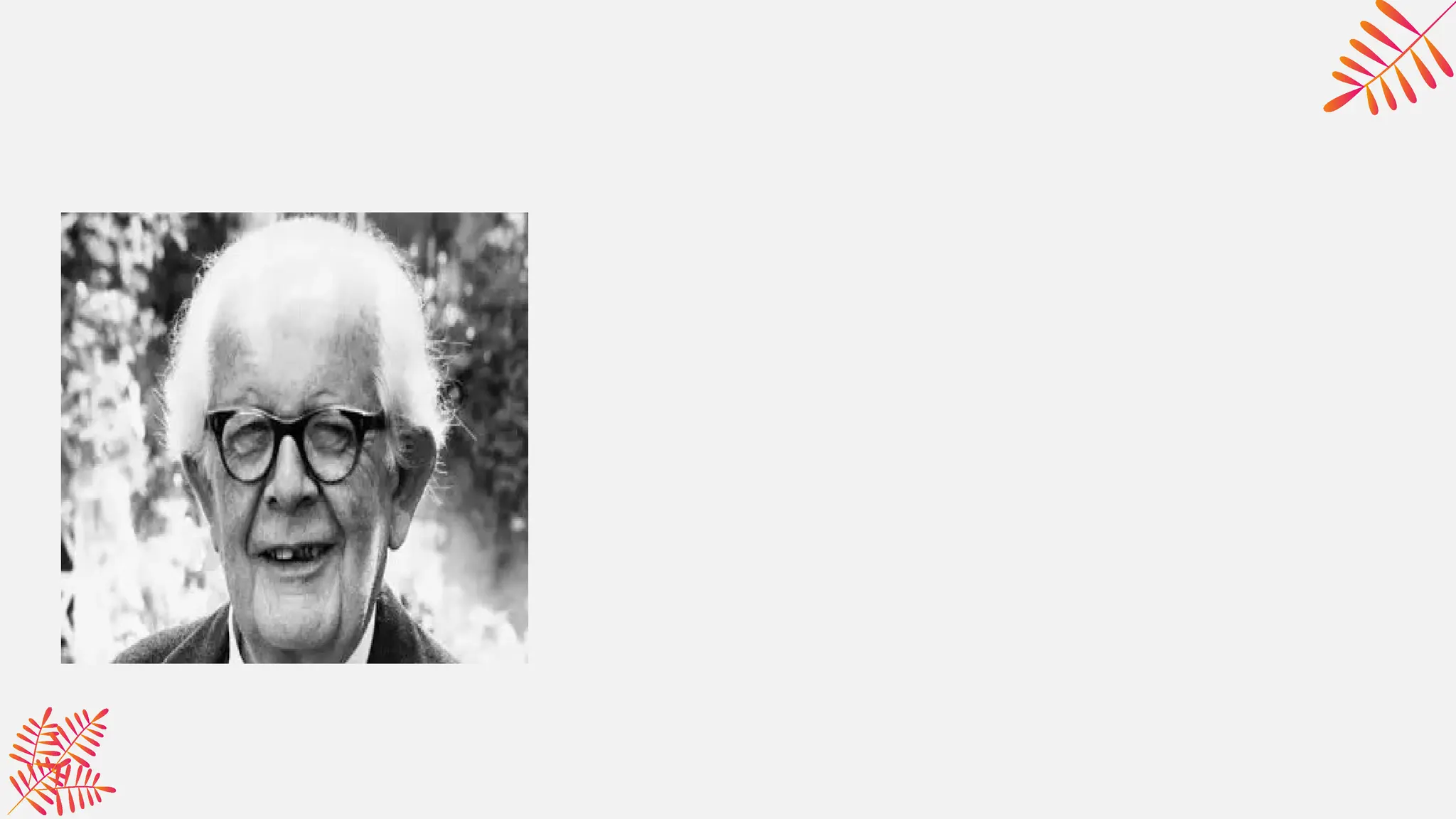
Jean Piaget’s Cognitive Constructivism
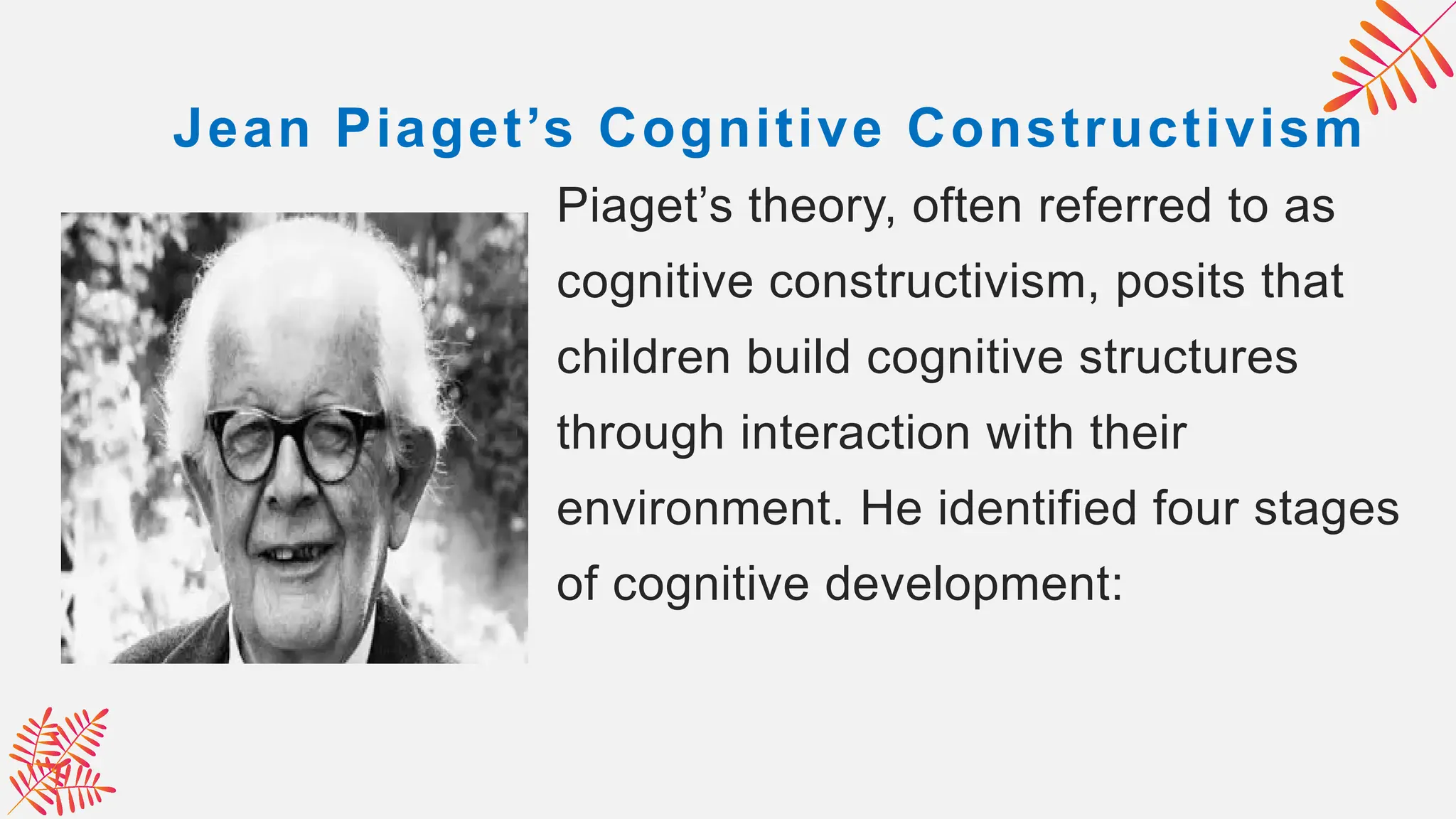
Piaget’s theory, often referred to as
cognitive constructivism, posits that
children build cognitive structures
through interaction with their
environment. He identified four stages
of cognitive development:
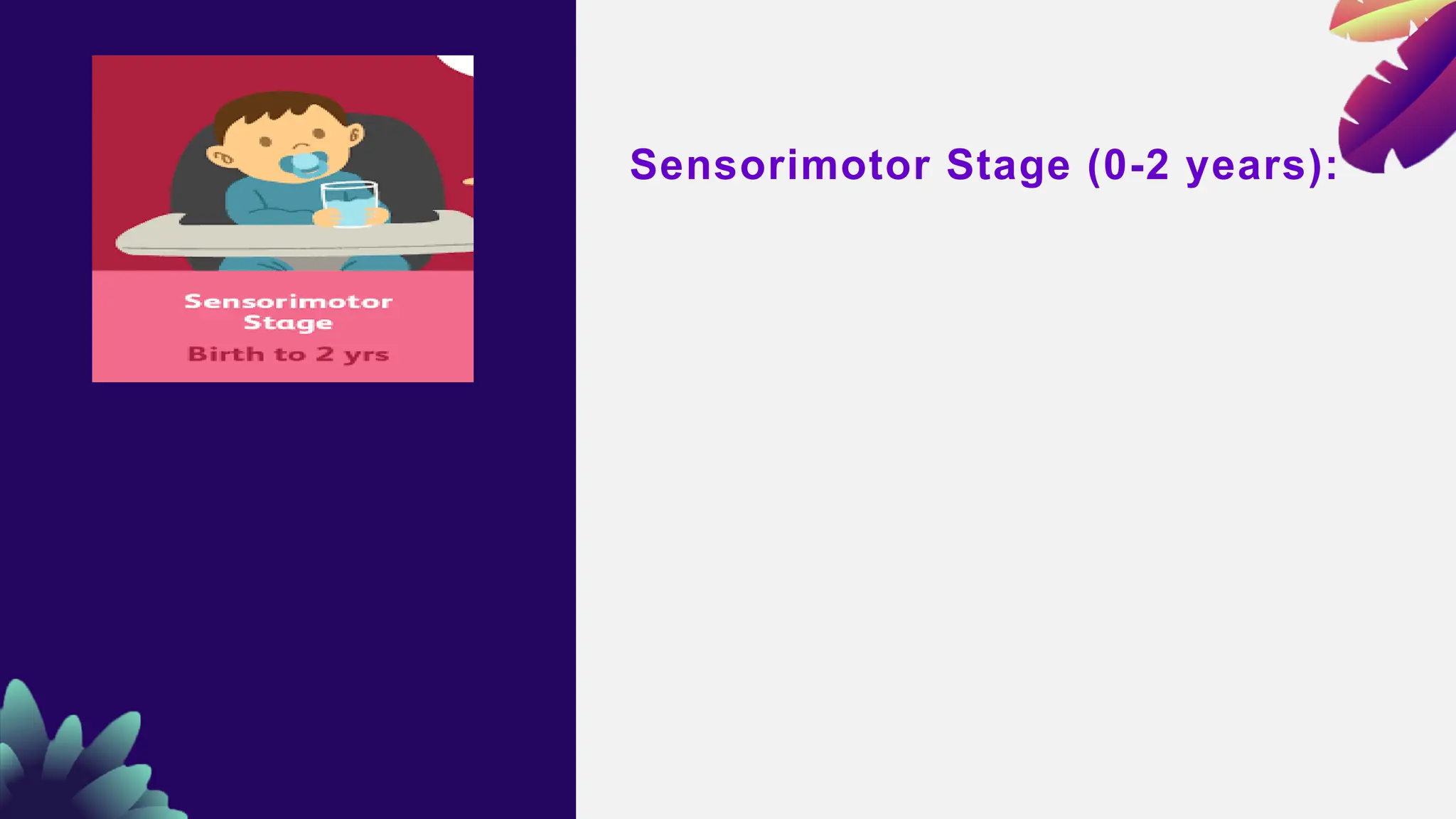
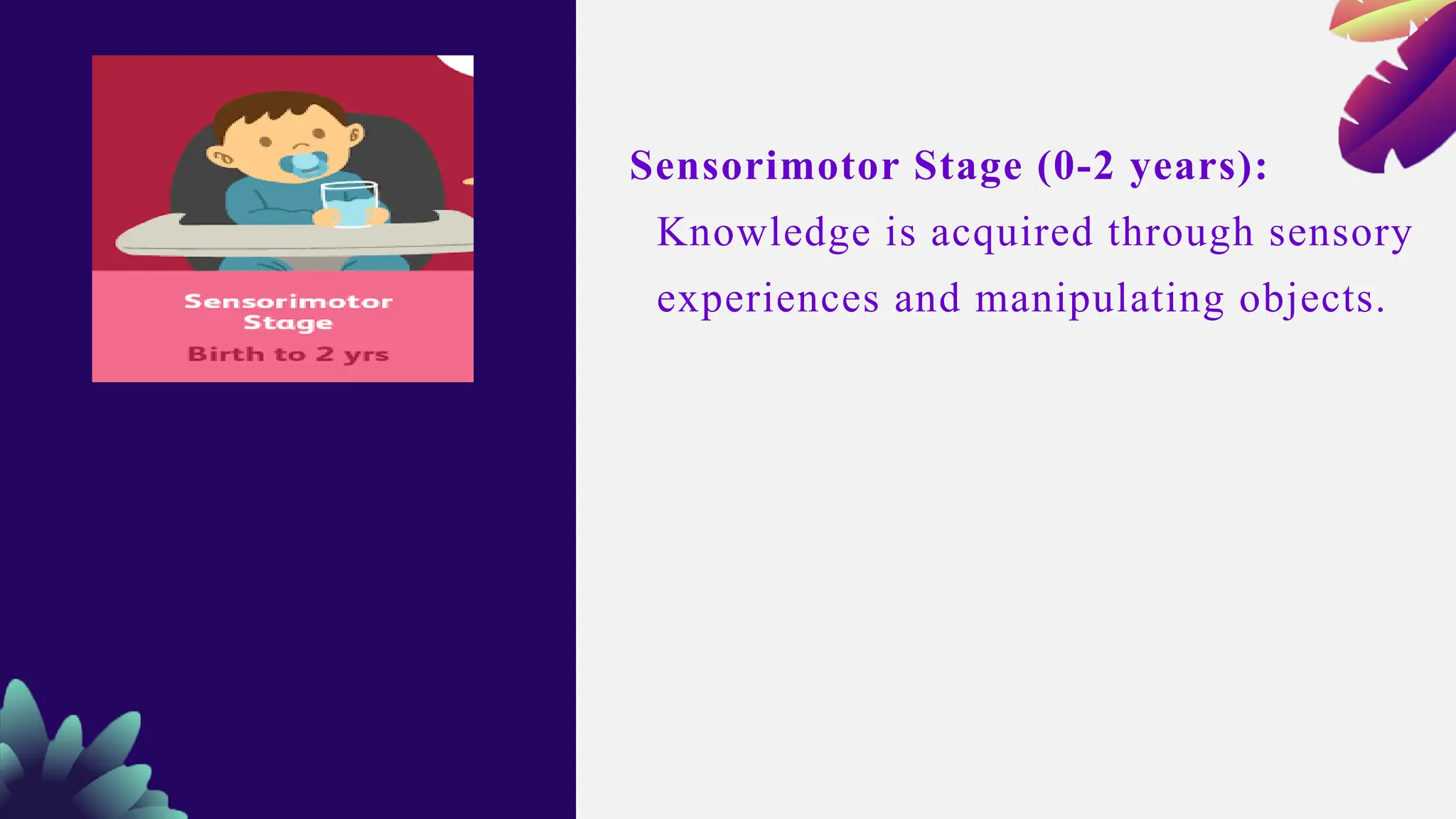
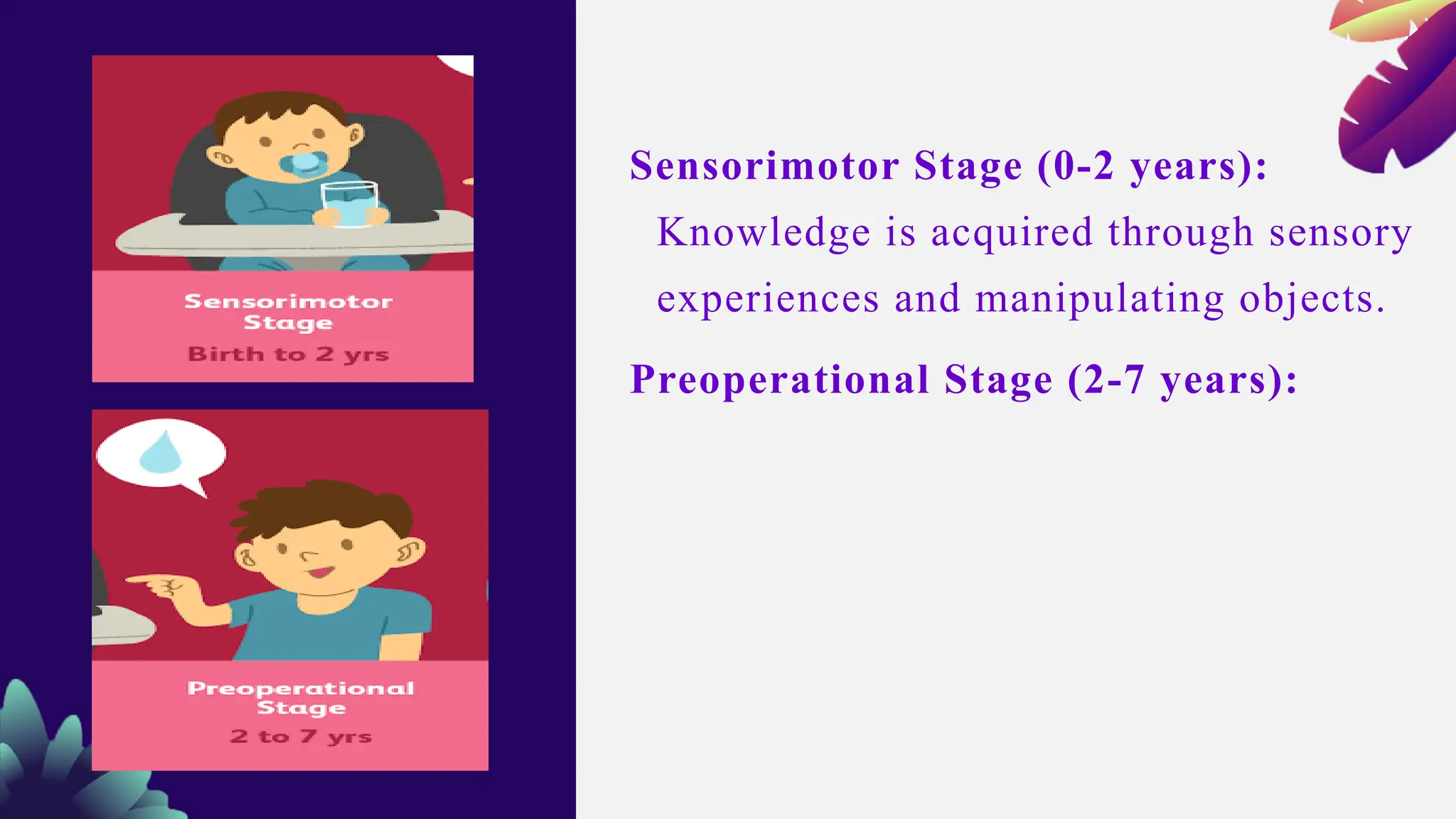
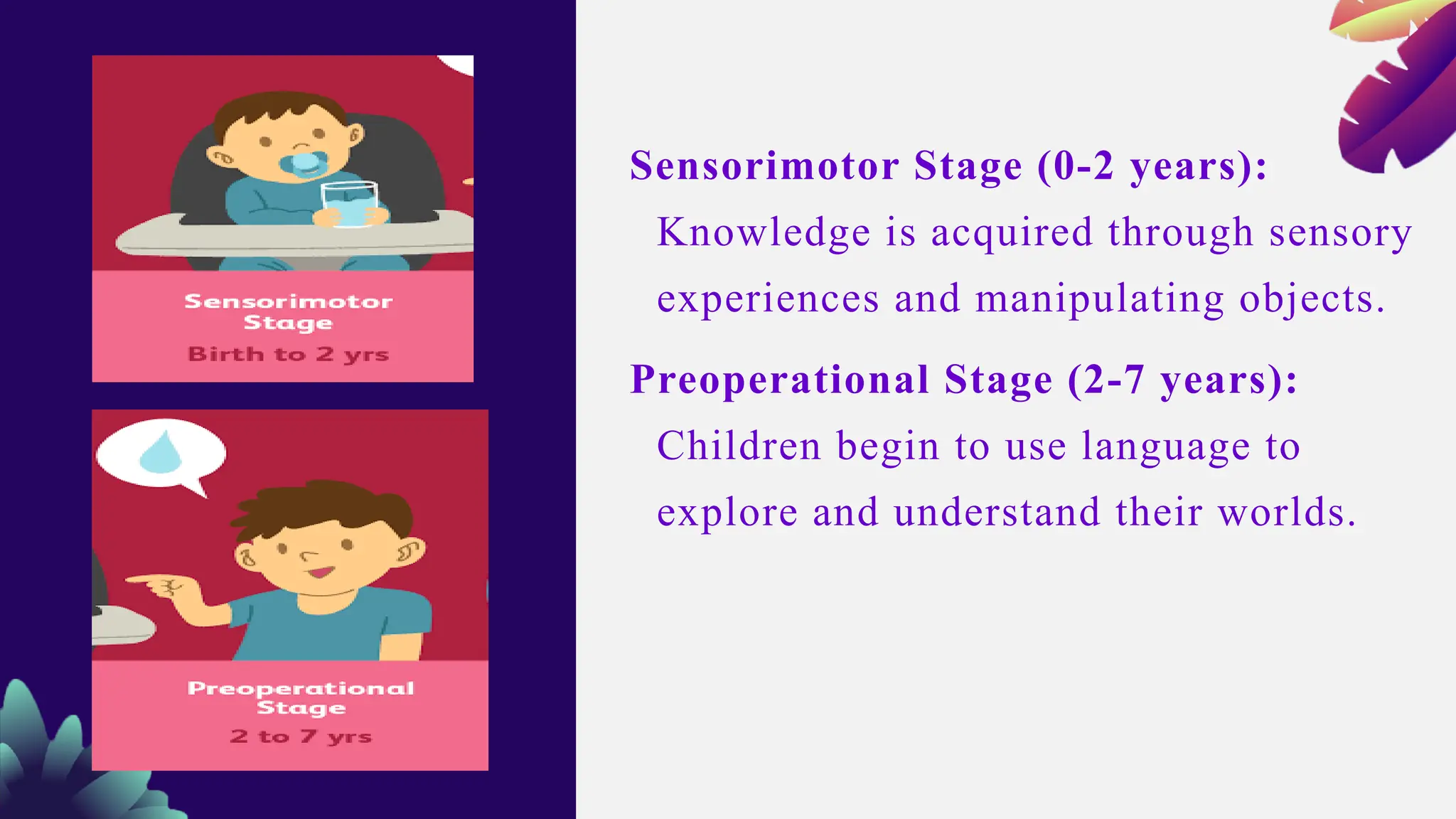
Sensorimotor Stage (0-2 years):
Knowledge is acquired through sensory
experiences and manipulating objects.
Sensorimotor Stage (0-2 years):
Knowledge is acquired through sensory
experiences and manipulating objects.
Preoperational Stage (2-7 years):
Sensorimotor Stage (0-2 years):
Knowledge is acquired through sensory
experiences and manipulating objects.
Preoperational Stage (2-7 years):
Children begin to use language to
explore and understand their worlds.
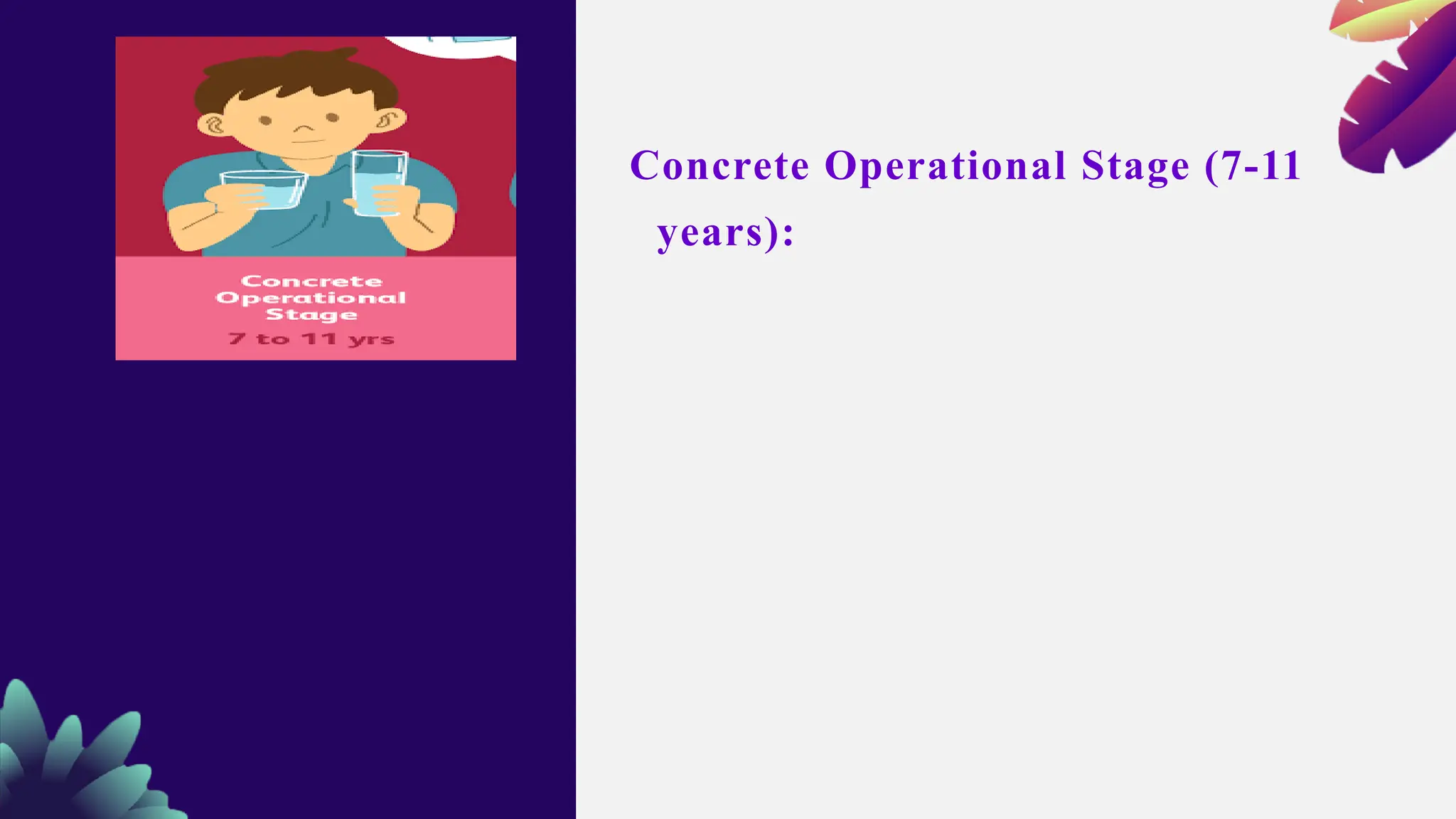
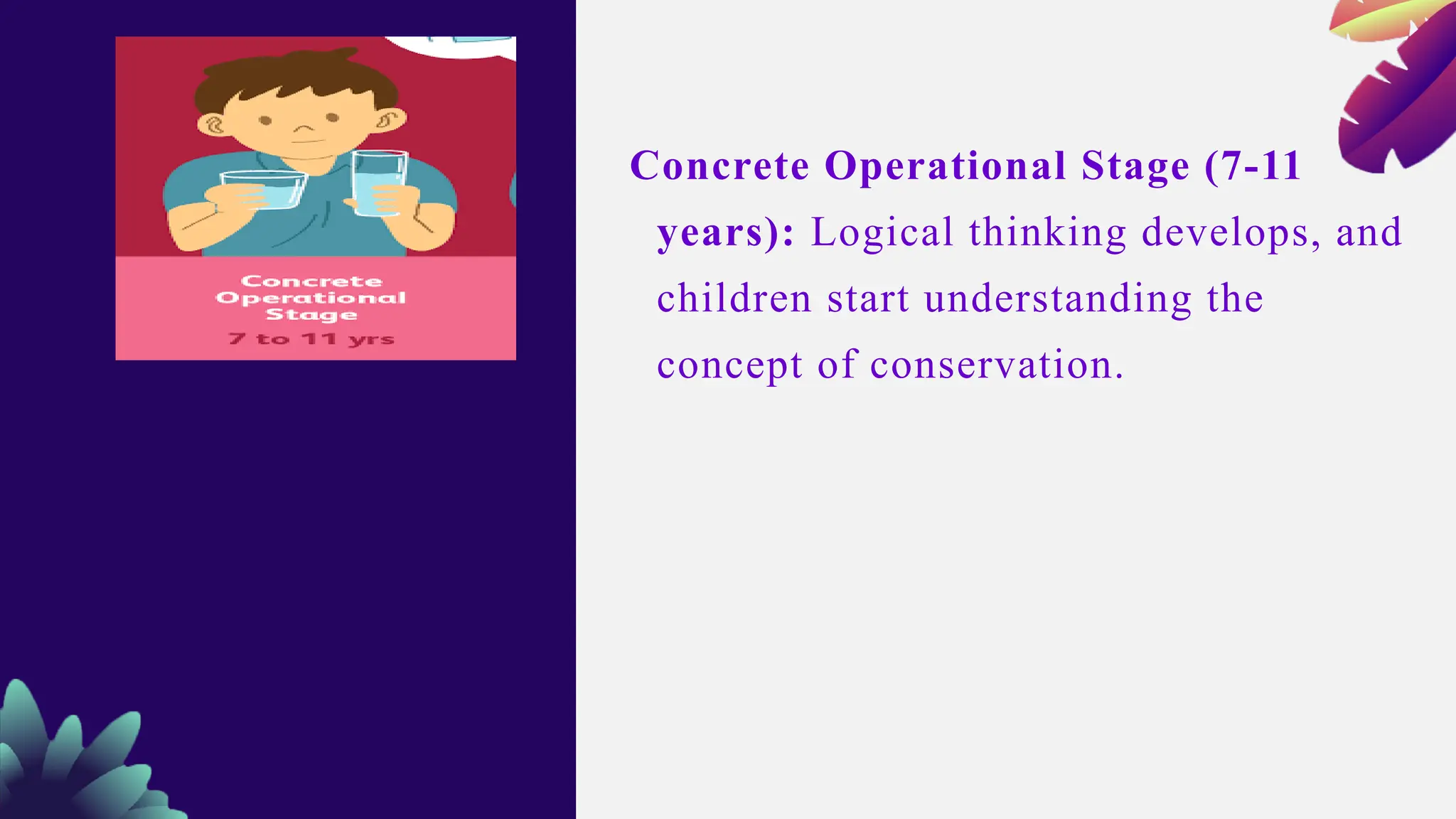
Concrete Operational Stage (7-11
years):
Concrete Operational Stage (7-11
years): Logical thinking develops, and
children start understanding the
concept of conservation.
Concrete Operational Stage (7-11
years): Logical thinking develops, and
children start understanding the
concept of conservation.
Formal Operational Stage (12 years
and up):
Concrete Operational Stage (7-11
years): Logical thinking develops, and
children start understanding the
concept of conservation.
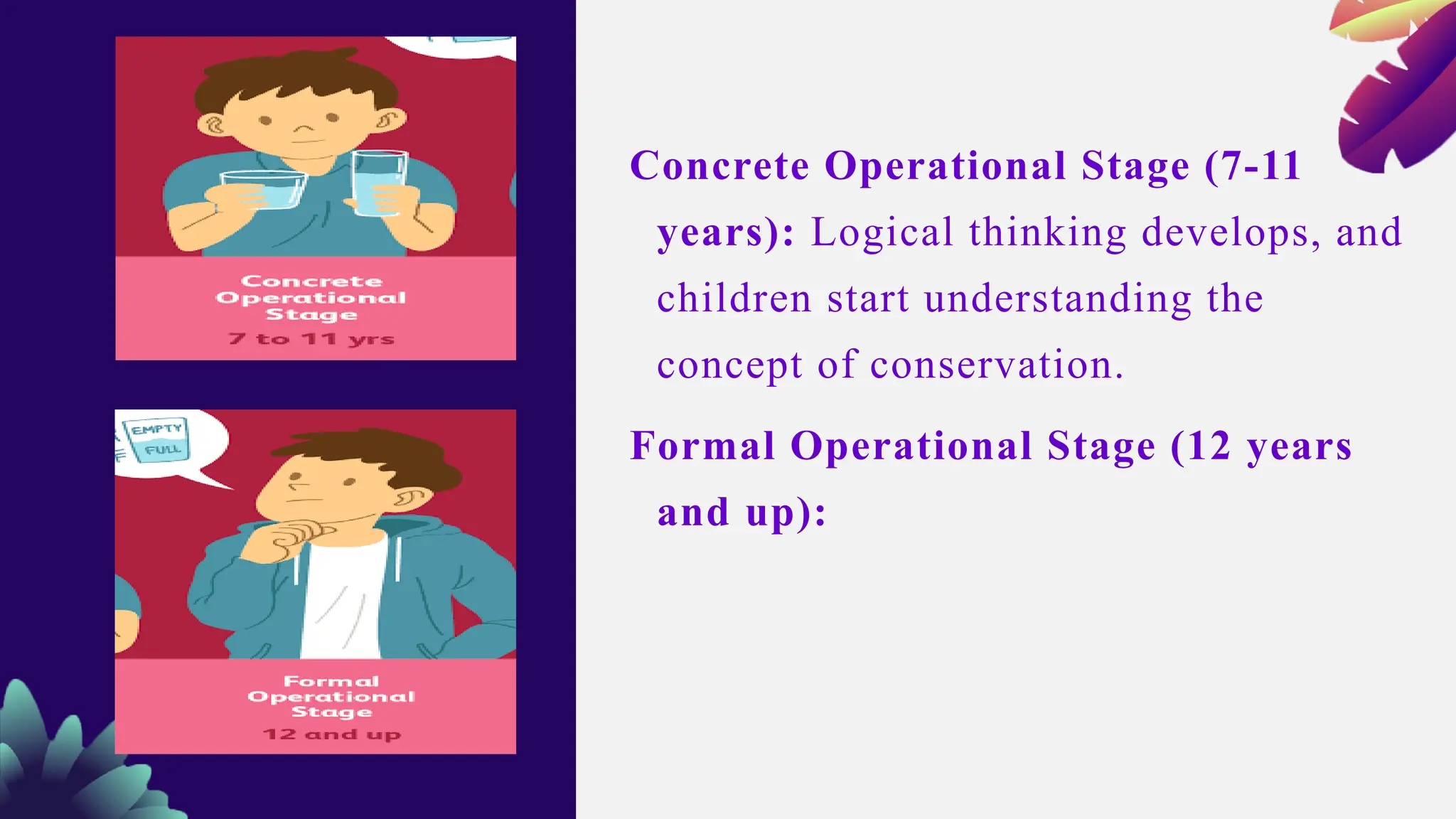
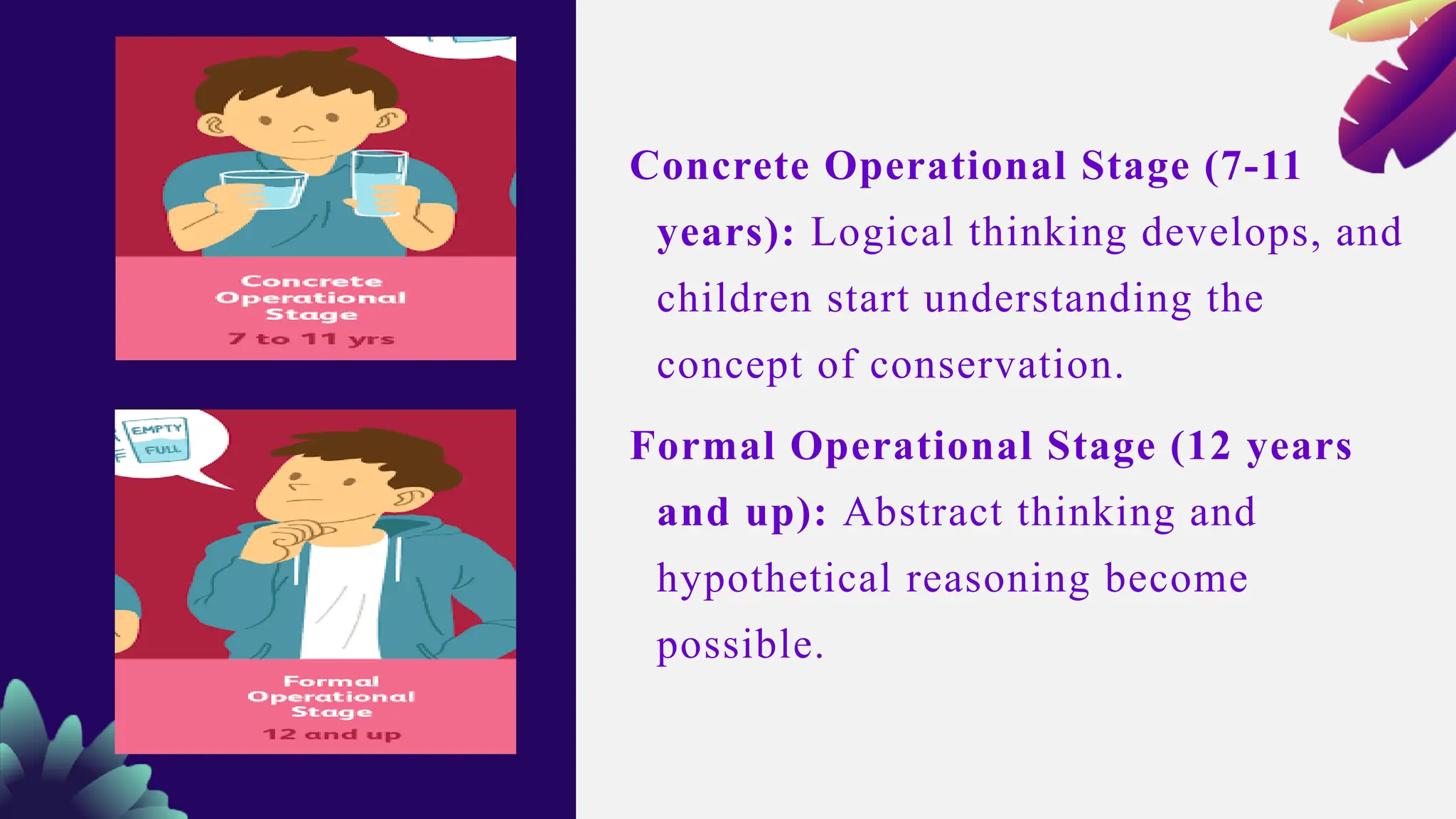
Formal Operational Stage (12 years
and up): Abstract thinking and
hypothetical reasoning become
possible.
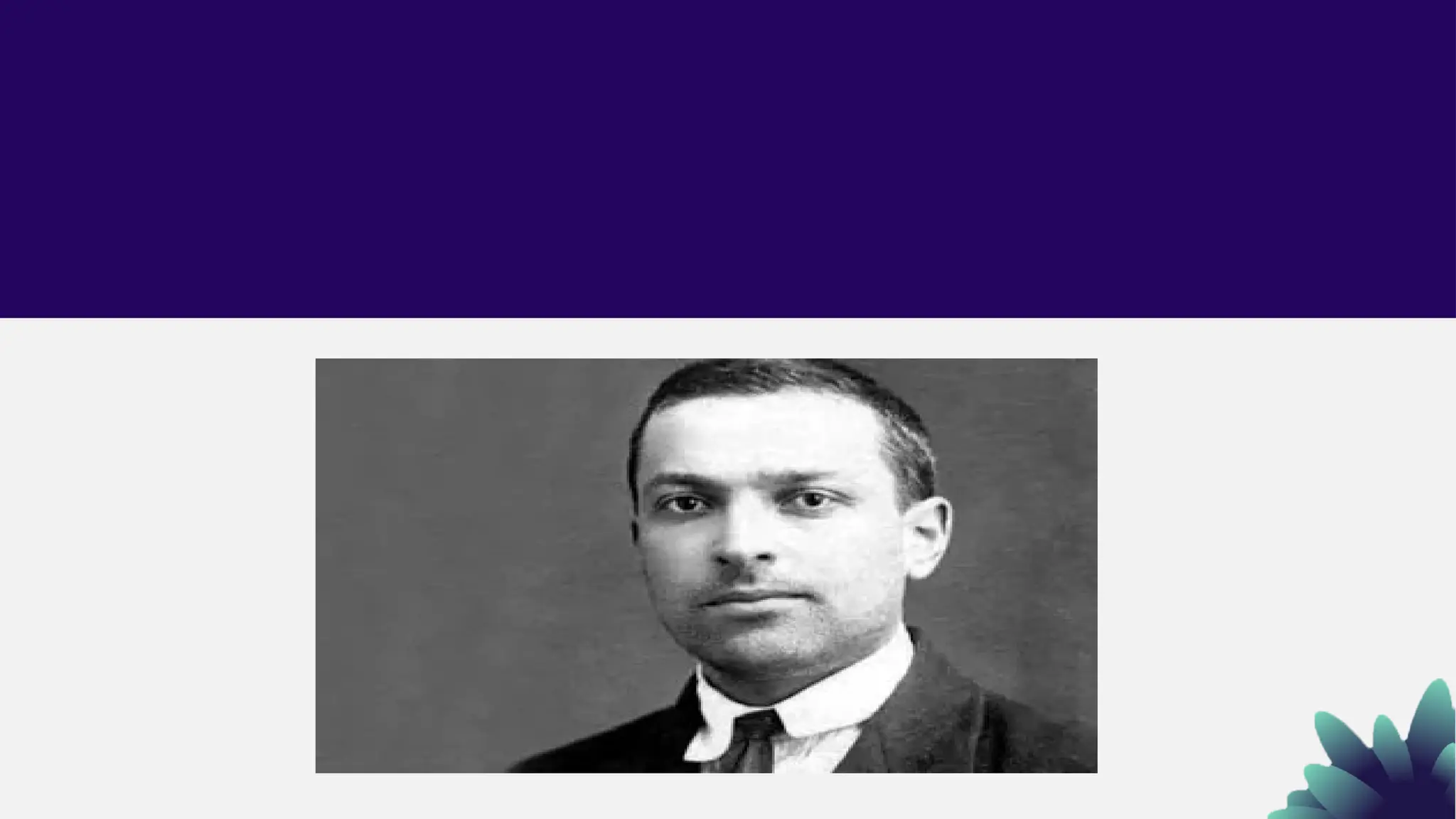
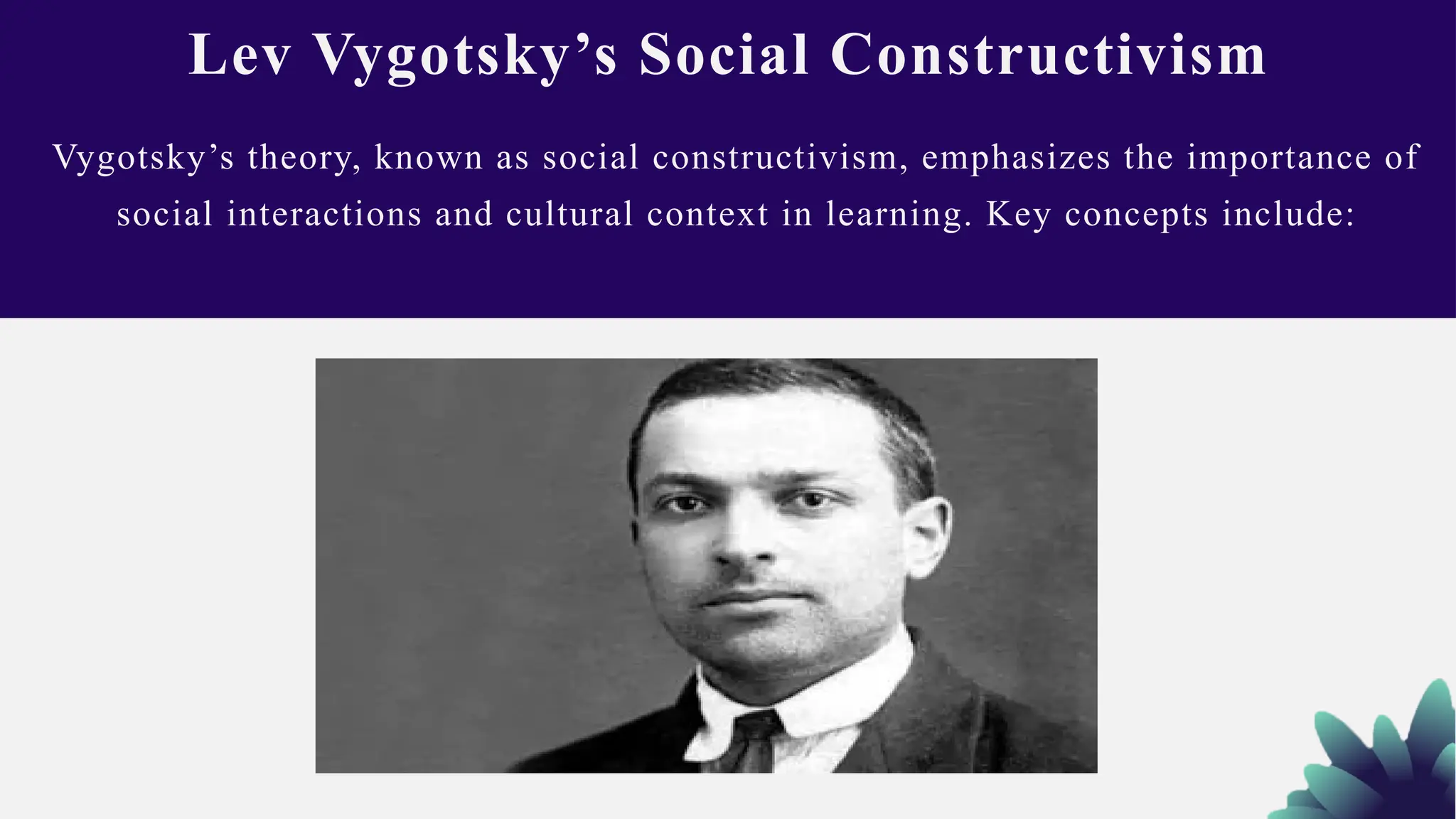
Vygotsky’s theory, known as social constructivism, emphasizes the importance of
social interactions and cultural context in learning. Key concepts include:
Lev Vygotsky’s Social Constructivism
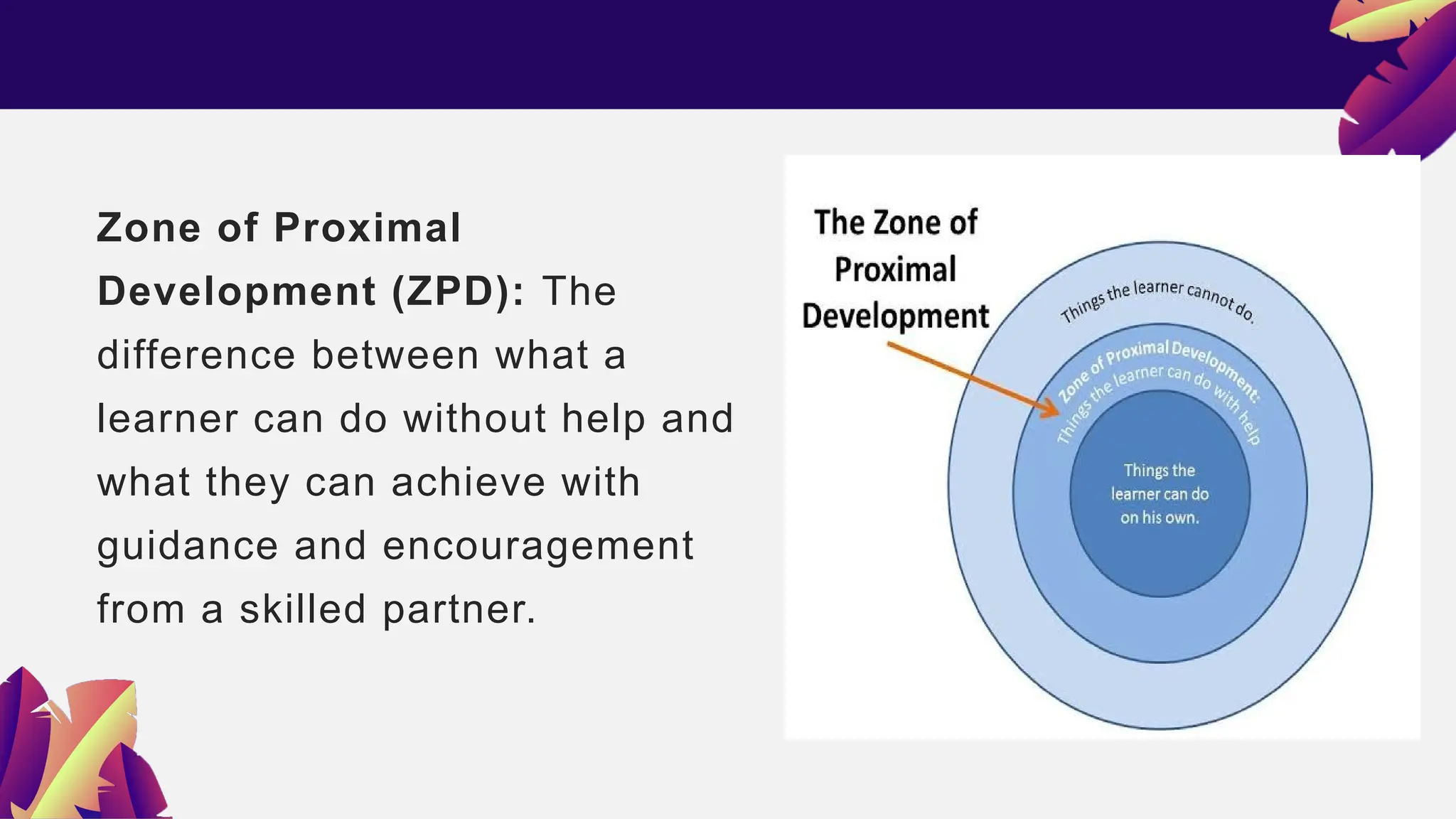
Zone of Proximal
Development (ZPD): The
difference between what a
learner can do without help and
what they can achieve with
guidance and encouragement
from a skilled partner.
Scaffolding: Temporary
support provided by a
teacher or more
knowledgeable other to
help the learner achieve
tasks within their ZPD.
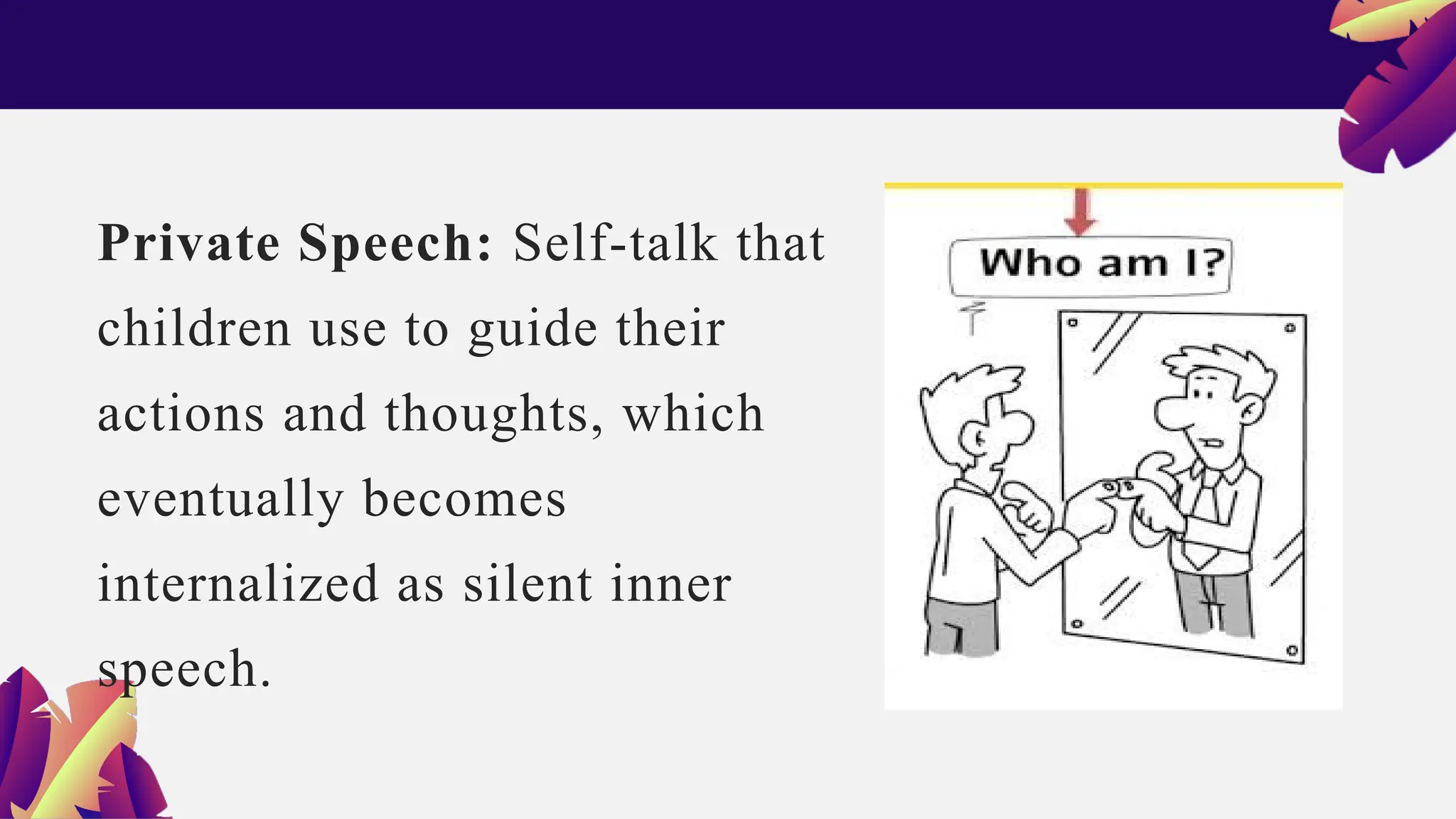
Private Speech: Self-talk that
children use to guide their
actions and thoughts, which
eventually becomes
internalized as silent inner
speech.
Integrating Piaget and
Vygotsky in Curriculum
A constructivist curriculum inspired by Piaget
and Vygotsky would:
• Encourage hands-on,
experiential learning
activities.
• Encourage hands-on,
experiential learning
activities.
• Promote social
interaction and
collaboration among
students.
• Encourage hands-on,
experiential learning
activities.
• Promote social
interaction and
collaboration among
students.
• Adapt to the developmental
stages of learners, providing
appropriate challenges and
support.
• Encourage hands-on,
experiential learning
activities.
• Promote social
interaction and
collaboration among
students.
• Adapt to the developmental
stages of learners, providing
appropriate challenges and
support.
• Foster an environment where
students can construct their
own understanding through
exploration and guided
discovery.
Backward Design
(Wiggins and McTighe)
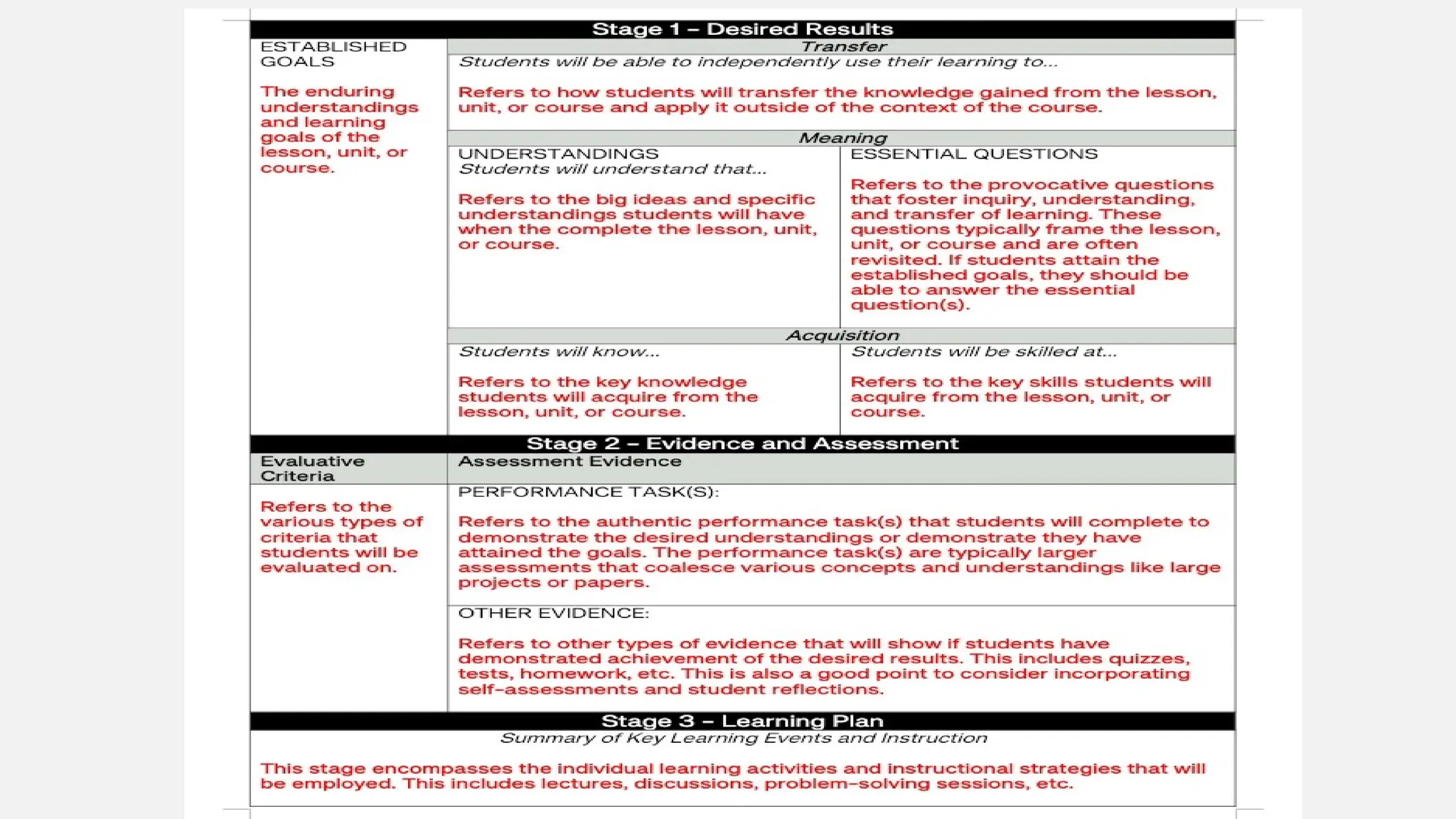
Backward Design is a framework for curriculum planning
developed by Grant Wiggins and Jay McTighe, detailed in
their book Understanding by Design. This approach
emphasizes starting with the end goals in mind and
planning backward from those goals to ensure that all
instructional activities align with desired learning
outcomes.
Key Stages of Backward Design
• Identify Desired Results: Determine what students
should know, understand, and be able to do by the
end of the unit or course. This involves setting clear
learning goals and objectives.
• Determine Acceptable Evidence: Decide how you will
assess whether students have achieved the desired
results. This includes designing assessments and
performance tasks that provide evidence of student
learning.
• Determine Acceptable Evidence: Decide how you will
assess whether students have achieved the desired results.
This includes designing assessments and performance
tasks that provide evidence of student learning.
• Plan Learning Experiences and Instruction: Develop the
instructional activities, lessons, and resources that will help
students achieve the learning goals. This stage involves
planning the teaching methods and materials that will best
support student learning.
Benefits of Backward Design
• Focus on Learning
Outcomes: Ensures that all
instructional activities are
aligned with the learning goals,
leading to more coherent and
effective teaching.
Benefits of Backward Design
• Focus on Learning
Outcomes: Ensures that all
instructional activities are
aligned with the learning goals,
leading to more coherent and
effective teaching.
• Intentional Planning:
Encourages teachers to think
critically about the purpose of
each
activity and how it contributes
to student learning.
Benefits of Backward Design
• Focus on Learning
Outcomes: Ensures that all
instructional activities are
aligned with the learning goals,
leading to more coherent and
effective teaching.
• Intentional Planning:
Encourages teachers to think
critically about the purpose of
each
activity and how it contributes
to student learning.
• Improved Assessment: Helps
in designing assessments that
truly measure whether students
have met the learning
objectives
Thank you!

CONSTRUCTIVIST-WPS_Office1.ppt.........x

  • 1.
    CONSTRUCTIVIST CURRICULUM Reporter: ( P ia g e t a n d V y g o t s k y ) Liza Mae D. Ambrocio
  • 2.
    Objectives 01 02 03 Encourage students toactively engage with the concept. Develop students ability to analyze, evaluate, and synthesize information. Facilitate collaborative learning experiences where students work together to solve problems, discuss ideas, and share perspectives.
  • 3.
    •Constructivism is alearning theory that emphasizes the active role of learners in building their own understanding. Two key figures in constructivist theory are Jean Piaget and Lev Vygotsky, each offering unique perspectives on how learning occurs.
  • 5.
    Jean Piaget’s CognitiveConstructivism Piaget’s theory, often referred to as cognitive constructivism, posits that children build cognitive structures through interaction with their environment. He identified four stages of cognitive development:
  • 6.
  • 7.
    Sensorimotor Stage (0-2years): Knowledge is acquired through sensory experiences and manipulating objects.
  • 8.
    Sensorimotor Stage (0-2years): Knowledge is acquired through sensory experiences and manipulating objects. Preoperational Stage (2-7 years):
  • 9.
    Sensorimotor Stage (0-2years): Knowledge is acquired through sensory experiences and manipulating objects. Preoperational Stage (2-7 years): Children begin to use language to explore and understand their worlds.
  • 10.
  • 11.
    Concrete Operational Stage(7-11 years): Logical thinking develops, and children start understanding the concept of conservation.
  • 12.
    Concrete Operational Stage(7-11 years): Logical thinking develops, and children start understanding the concept of conservation. Formal Operational Stage (12 years and up):
  • 13.
    Concrete Operational Stage(7-11 years): Logical thinking develops, and children start understanding the concept of conservation. Formal Operational Stage (12 years and up): Abstract thinking and hypothetical reasoning become possible.
  • 15.
    Vygotsky’s theory, knownas social constructivism, emphasizes the importance of social interactions and cultural context in learning. Key concepts include: Lev Vygotsky’s Social Constructivism
  • 16.
    Zone of Proximal Development(ZPD): The difference between what a learner can do without help and what they can achieve with guidance and encouragement from a skilled partner.
  • 17.
    Scaffolding: Temporary support providedby a teacher or more knowledgeable other to help the learner achieve tasks within their ZPD.
  • 18.
    Private Speech: Self-talkthat children use to guide their actions and thoughts, which eventually becomes internalized as silent inner speech.
  • 19.
    Integrating Piaget and Vygotskyin Curriculum A constructivist curriculum inspired by Piaget and Vygotsky would:
  • 20.
  • 21.
    • Encourage hands-on, experientiallearning activities. • Promote social interaction and collaboration among students.
  • 22.
    • Encourage hands-on, experientiallearning activities. • Promote social interaction and collaboration among students. • Adapt to the developmental stages of learners, providing appropriate challenges and support.
  • 23.
    • Encourage hands-on, experientiallearning activities. • Promote social interaction and collaboration among students. • Adapt to the developmental stages of learners, providing appropriate challenges and support. • Foster an environment where students can construct their own understanding through exploration and guided discovery.
  • 24.
  • 25.
    Backward Design isa framework for curriculum planning developed by Grant Wiggins and Jay McTighe, detailed in their book Understanding by Design. This approach emphasizes starting with the end goals in mind and planning backward from those goals to ensure that all instructional activities align with desired learning outcomes.
  • 26.
    Key Stages ofBackward Design • Identify Desired Results: Determine what students should know, understand, and be able to do by the end of the unit or course. This involves setting clear learning goals and objectives.
  • 27.
    • Determine AcceptableEvidence: Decide how you will assess whether students have achieved the desired results. This includes designing assessments and performance tasks that provide evidence of student learning.
  • 28.
    • Determine AcceptableEvidence: Decide how you will assess whether students have achieved the desired results. This includes designing assessments and performance tasks that provide evidence of student learning. • Plan Learning Experiences and Instruction: Develop the instructional activities, lessons, and resources that will help students achieve the learning goals. This stage involves planning the teaching methods and materials that will best support student learning.
  • 29.
    Benefits of BackwardDesign • Focus on Learning Outcomes: Ensures that all instructional activities are aligned with the learning goals, leading to more coherent and effective teaching.
  • 30.
    Benefits of BackwardDesign • Focus on Learning Outcomes: Ensures that all instructional activities are aligned with the learning goals, leading to more coherent and effective teaching. • Intentional Planning: Encourages teachers to think critically about the purpose of each activity and how it contributes to student learning.
  • 31.
    Benefits of BackwardDesign • Focus on Learning Outcomes: Ensures that all instructional activities are aligned with the learning goals, leading to more coherent and effective teaching. • Intentional Planning: Encourages teachers to think critically about the purpose of each activity and how it contributes to student learning. • Improved Assessment: Helps in designing assessments that truly measure whether students have met the learning objectives
  • 33.