Constitutional reforms in Sri
Lanka (Part II)
F.Z.F. Amna
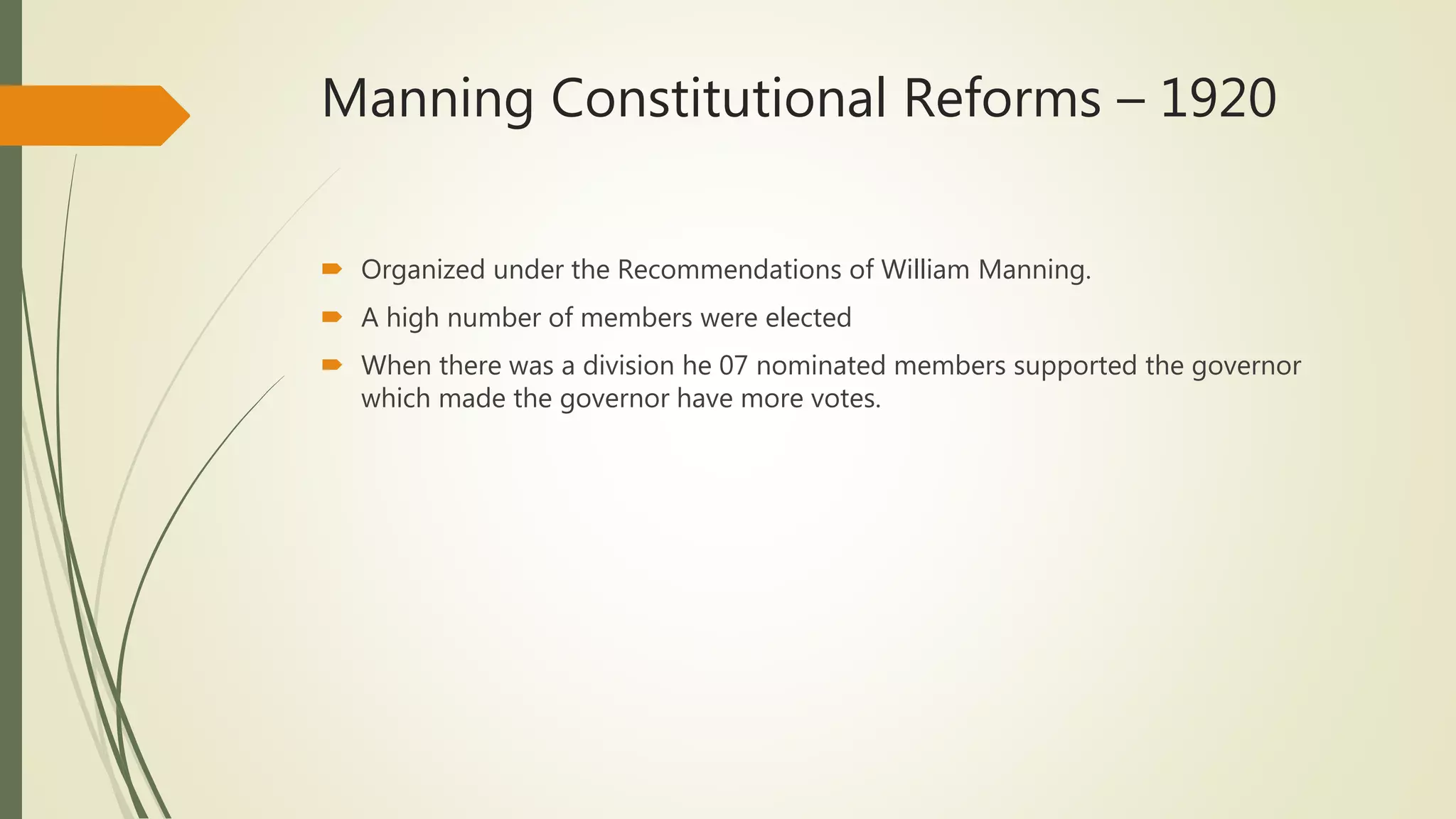
Manning Constitutional Reforms – 1920
 Organized under the Recommendations of William Manning.
 A high number of members were elected
 When there was a division he 07 nominated members supported the governor
which made the governor have more votes.
Manning Constitutional Reforms (Cont.)
Questions
 Manning Constitutional Reforms
 What are the significant features of the Manning Constitutional Reforms?
 Draw the organizational structure of the Manning Constitutional Reform.
Manning – Devonshire Constitutional
Reforms – 1924
 This reform was introduced as a result of a promise made by the governor to the
national congress.
 Reforms were designed by the Colonial Secretary Devonshire
 Recommendations were done by the Governor William Manning
 The Sri Lankans were dissatisfied over the fact that to become a voter a person
should have the ability to read and write. This eligibility factor limited the number
of voters.
Manning – Devonshire Const. Reforms (Cont.)
Legislative Council
49
Official
12
Unofficial 37
Through Voting
29
Provinicial
Voting
23
Communal Basis
06
By Nomination
08
Questions
 Manning – Devonshire Cons. Reforms
 Why did the British Governor promised to bring this reform?
 Who introduced this reform?
 Why were the Lankans dissatisfied over the 1920 and 1924 constitutions?
 Draw the structure of the Manning – Devonshire Reforms.
Donoughmore Constitutional Reforms –
1931
 Since Sri Lankans got many the majority of seats in the legislative council under
Manning – Devonshire Reforms the governor had to act very strategically.
 As per the request of the colonial secretary, A commission under Lord
Donoughmore arrived in Sri Lanka.
State council
61
From territorial constituencies
50
State officers
03
State secretory Legal secretoryFinance secretory
Nominated by the governor
08
Donoughmore Constitutional Reforms – 1931(Cont.)
 The chair of the state council went to the speaker who was elected by the members
of the council. The first speaker was A.F. Molamure.
 The term of office was 05 years.
 Significant features of the Donoughmore Constitutional Reforms.
 Granting of Universal Franchise
 Establishment of executive committees
 The governor and the three state officers
 Abolishing of communal representation system
Questions
 Donoughmore Constitutional Reforms
 Who was the first speaker under the Donoughmore Constitution?
 What are the significant features of the Donoughmore constitution?
 Draw the hierarchy of the Donoughmore Constitution.
Soulbury Constitutional Reforms – 1947
 Protests against the Donoughmore reforms :
 Granting the Lankans the powers of the ministries that had been assigned to the
state officers
 Increasing the powers that had been given to the Lankan ministers
 Getting a system of cabinet established instead of the executive council system.
 When the British needed the support of Lankans during the World War II, the
board of ministers extended help to the British. While the war was happening
the ministers of Sri Lanka had conducted a close relationship with the British
officers. So the British had developed a flexible attitude towards the political
requests of the people.
Soulbury Constitutional Reforms –(Cont.)
 In May 1943 the Governor of Ceylon issued a statement. According to the statement the
British were making arrangements to introduce reforms through which the Lankans would
be given the responsibility of handling internal affairs. The board of ministers were given
the job of drafting a suitable constitution. The ministers took the help of Sir Ivor Jennings,
was an expert in constitutional law.
 Draft was completed in February 1944
 The Soulbury Commission was appointed under the leadership od Lord Soulbury in July
1944
 Soulbury commission arrived in Sri Lanka in December 1944
 The study report was issued in 1945
 The Soulbury Constitutional Reforms were implemented in 1947.
Soulbury Cons. Reforms – 1947 (Cont.)
 Key Features of the Soulbury Constitution
 Abolishing the office of Governor and establishing the office of Governor General
 Establishing a bicameral parliament (House of commons+Senate)
 Establishing a cabinet of Ministers headed by the prime minister
 Establishing the public service Commission and the Judicial Service Commision
Soulbury Cons. Reforms – 1947 (Cont.)
 Governor General – The Queen was the head of Ceylon and Governor General
represents the queen. A Nominal position since he had to act under the advice of
the prime minister.
 Parliament – The Legislative responsible for making laws. Was also called a
bicameral parliament (House of common + senate)
 The Cabinet of Ministers headed by the Prime Minister –
 The member who won the majority of members votes named as the Prime Minister by
the office of Governor General
 The Governor General appointed the Cabinet of Ministers
Soulbury Cons. Reforms – 1947 (Cont.)
 Public Service Commission - Appointment of Public officials of the highest ranks.
Ex: Attorney General , Auditor General, Permanent Secretary ,
 Judicial Service Commission - For the purpose of appointing judges to the lower
courts and for removing and taking disciplinary acts regarding such judges.
Questions
 Soulbury Constitutional Reforms
 What were the protests erupted against Donoughmore Reforms?
 How did they won the Governors heart during the time period of World War II?
 What are the key features of the Soulbury Constitutional Reforms?
Constitutional Reforms in Sri Lanka (Part II)

Constitutional Reforms in Sri Lanka (Part II)

  • 1.
    Constitutional reforms inSri Lanka (Part II) F.Z.F. Amna
  • 2.
    Manning Constitutional Reforms– 1920  Organized under the Recommendations of William Manning.  A high number of members were elected  When there was a division he 07 nominated members supported the governor which made the governor have more votes.
  • 3.
  • 4.
    Questions  Manning ConstitutionalReforms  What are the significant features of the Manning Constitutional Reforms?  Draw the organizational structure of the Manning Constitutional Reform.
  • 5.
    Manning – DevonshireConstitutional Reforms – 1924  This reform was introduced as a result of a promise made by the governor to the national congress.  Reforms were designed by the Colonial Secretary Devonshire  Recommendations were done by the Governor William Manning  The Sri Lankans were dissatisfied over the fact that to become a voter a person should have the ability to read and write. This eligibility factor limited the number of voters.
  • 6.
    Manning – DevonshireConst. Reforms (Cont.) Legislative Council 49 Official 12 Unofficial 37 Through Voting 29 Provinicial Voting 23 Communal Basis 06 By Nomination 08
  • 7.
    Questions  Manning –Devonshire Cons. Reforms  Why did the British Governor promised to bring this reform?  Who introduced this reform?  Why were the Lankans dissatisfied over the 1920 and 1924 constitutions?  Draw the structure of the Manning – Devonshire Reforms.
  • 8.
    Donoughmore Constitutional Reforms– 1931  Since Sri Lankans got many the majority of seats in the legislative council under Manning – Devonshire Reforms the governor had to act very strategically.  As per the request of the colonial secretary, A commission under Lord Donoughmore arrived in Sri Lanka. State council 61 From territorial constituencies 50 State officers 03 State secretory Legal secretoryFinance secretory Nominated by the governor 08
  • 9.
    Donoughmore Constitutional Reforms– 1931(Cont.)  The chair of the state council went to the speaker who was elected by the members of the council. The first speaker was A.F. Molamure.  The term of office was 05 years.  Significant features of the Donoughmore Constitutional Reforms.  Granting of Universal Franchise  Establishment of executive committees  The governor and the three state officers  Abolishing of communal representation system
  • 10.
    Questions  Donoughmore ConstitutionalReforms  Who was the first speaker under the Donoughmore Constitution?  What are the significant features of the Donoughmore constitution?  Draw the hierarchy of the Donoughmore Constitution.
  • 11.
    Soulbury Constitutional Reforms– 1947  Protests against the Donoughmore reforms :  Granting the Lankans the powers of the ministries that had been assigned to the state officers  Increasing the powers that had been given to the Lankan ministers  Getting a system of cabinet established instead of the executive council system.  When the British needed the support of Lankans during the World War II, the board of ministers extended help to the British. While the war was happening the ministers of Sri Lanka had conducted a close relationship with the British officers. So the British had developed a flexible attitude towards the political requests of the people.
  • 12.
    Soulbury Constitutional Reforms–(Cont.)  In May 1943 the Governor of Ceylon issued a statement. According to the statement the British were making arrangements to introduce reforms through which the Lankans would be given the responsibility of handling internal affairs. The board of ministers were given the job of drafting a suitable constitution. The ministers took the help of Sir Ivor Jennings, was an expert in constitutional law.  Draft was completed in February 1944  The Soulbury Commission was appointed under the leadership od Lord Soulbury in July 1944  Soulbury commission arrived in Sri Lanka in December 1944  The study report was issued in 1945  The Soulbury Constitutional Reforms were implemented in 1947.
  • 13.
    Soulbury Cons. Reforms– 1947 (Cont.)  Key Features of the Soulbury Constitution  Abolishing the office of Governor and establishing the office of Governor General  Establishing a bicameral parliament (House of commons+Senate)  Establishing a cabinet of Ministers headed by the prime minister  Establishing the public service Commission and the Judicial Service Commision
  • 14.
    Soulbury Cons. Reforms– 1947 (Cont.)  Governor General – The Queen was the head of Ceylon and Governor General represents the queen. A Nominal position since he had to act under the advice of the prime minister.  Parliament – The Legislative responsible for making laws. Was also called a bicameral parliament (House of common + senate)  The Cabinet of Ministers headed by the Prime Minister –  The member who won the majority of members votes named as the Prime Minister by the office of Governor General  The Governor General appointed the Cabinet of Ministers
  • 15.
    Soulbury Cons. Reforms– 1947 (Cont.)  Public Service Commission - Appointment of Public officials of the highest ranks. Ex: Attorney General , Auditor General, Permanent Secretary ,  Judicial Service Commission - For the purpose of appointing judges to the lower courts and for removing and taking disciplinary acts regarding such judges.
  • 16.
    Questions  Soulbury ConstitutionalReforms  What were the protests erupted against Donoughmore Reforms?  How did they won the Governors heart during the time period of World War II?  What are the key features of the Soulbury Constitutional Reforms?