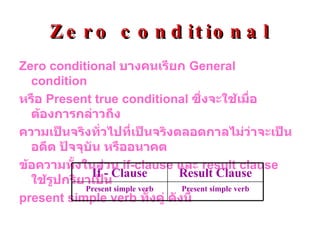
Zero conditional Zeroconditional บางคนเรียก General condition หรือ Present true conditional ซึ่งจะใช้เมื่อต้องการกล่าวถึง ความเป็นจริงทั่วไปที่เป็นจริงตลอดกาลไม่ว่าจะเป็นอดีต ปัจจุบัน หรืออนาคต ข้อความทั้งในส่วน if-clause และ result clause ใช้รูปกริยาเป็น present simple verb ทั้งคู่ ดังนี้ Present simple verb Present simple verb Result Clause If - Clause
3.
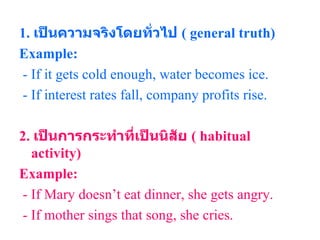
1. เป็นความจริงโดยทั่วไป ( general truth ) Example: - If it gets cold enough, water becomes ice. - If interest rates fall, company profits rise. 2. เป็นการกระทำที่เป็นนิสัย ( habitual activity ) Example: - If Mary doesn’t eat dinner, she gets angry. - If mother sings that song, she cries.
4.
3. เป็นการสั่งการ ( give a command ) Example: - If someone calls, take a message please. - Write to me if you go away.
5.
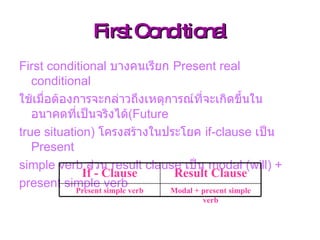
First Conditional Firstconditional บางคนเรียก Present real conditional ใช้เมื่อต้องการจะกล่าวถึงเหตุการณ์ที่จะเกิดขึ้นในอนาคตที่เป็นจริงได้ (Future true situation) โครงสร้างในประโยค if-clause เป็น Present simple verb ส่วน result clause เป็น modal (will) + present simple verb Modal + present simple verb Present simple verb Result Clause If - Clause
6.
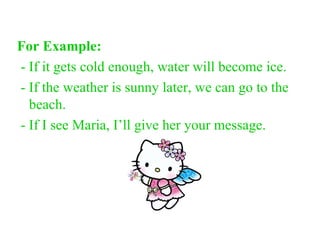
For Example: -If it gets cold enough, water will become ice. - If the weather is sunny later, we can go to the beach. - If I see Maria, I’ll give her your message.
7.
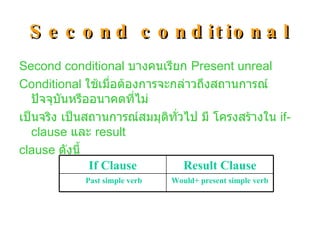
Second conditional Secondconditional บางคนเรียก Present unreal Conditional ใช้เมื่อต้องการจะกล่าวถึงสถานการณ์ปัจจุบันหรืออนาคตที่ไม่ เป็นจริง เป็นสถานการณ์สมมุติทั่วไป มี โครงสร้างใน if-clause และ result clause ดังนี้ Would+ present simple verb Past simple verb Result Clause If Clause
8.
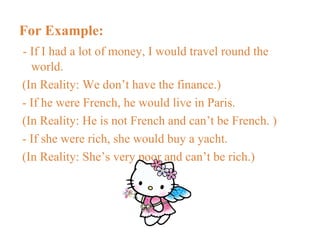
For Example: -If I had a lot of money, I would travel round the world. (In Reality: We don’t have the finance.) - If he were French, he would live in Paris. (In Reality: He is not French and can’t be French. ) - If she were rich, she would buy a yacht. (In Reality: She’s very poor and can’t be rich.)
9.
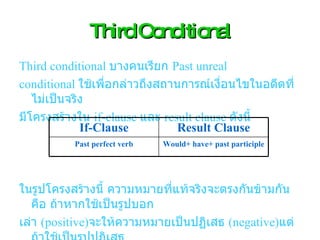
Third Conditional Thirdconditional บางคนเรียก Past unreal conditional ใช้เพื่อกล่าวถึงสถานการณ์เงื่อนไขในอดีตที่ไม่เป็นจริง มีโครงสร้างใน if-clause และ result clause ดังนี้ ในรูปโครงสร้างนี้ ความหมายที่แท้จริงจะตรงกันข้ามกัน คือ ถ้าหากใช้เป็นรูปบอก เล่า ( positive ) จะให้ความหมายเป็นปฏิเสธ ( negative ) แต่ถ้าใช้เป็นรูปปฏิเสธ จะให้ความหมายเป็นบอกเล่า Would+ have+ past participle Past perfect verb Result Clause If-Clause
10.
For Example: -If I had seen her, I would have spoken to her. ( Means: I didn’t see her, and I didn’t speak to her. ) - She wouldn’t have succeeded if she worked hard. (Means: She succeeded, and she worked hard.) - If the interview hadn’t gone well, they wouldn’t have given me a job. (Means: The interview went well, and they gave me a job.)
11.
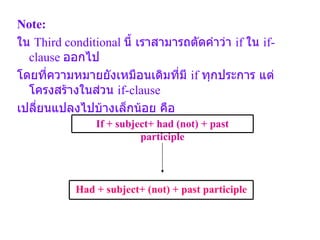
Note: ใน Third conditional นี้ เราสามารถตัดคำว่า if ใน if-clause ออกไป โดยที่ความหมายยังเหมือนเดิมที่มี if ทุกประการ แต่โครงสร้างในส่วน if-clause เปลี่ยนแปลงไปบ้างเล็กน้อย คือ If + subject+ had (not) + past participle Had + subject+ (not) + past participle
12.
For Example: - If the company had developed good marketing strategies, it would have made larger profits. Had the company developed good marketing strategies, it would have made larger profits. (Means: The company didn’t develop good marketing strategies, so it didn’t make larger profits.)