Concentrated
Electrolytes
EDUCATION team
Concentrated
Electrolytes :
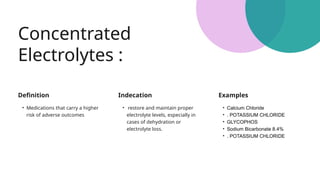
• Medications that carry a higher
risk of adverse outcomes
Definition
• Calcium Chloride
• . POTASSIUM CHLORIDE
• GLYCOPHOS
• Sodium Bicarbonate 8.4%
• . POTASSIUM CHLORIDE
Examples
• restore and maintain proper
electrolyte levels, especially in
cases of dehydration or
electrolyte loss.
Indecation
1 Dispensing the diluted form from
the central pharmacy
2 It shall be distinguished by an
orange lable
3 Administration of High
concentrated electrolytes with
double checking
General
Instructions
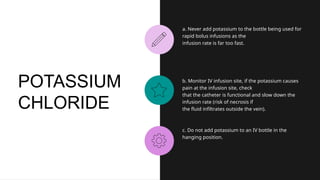
a. Never add potassium to the bottle being used for
rapid bolus infusions as the
infusion rate is far too fast.
b. Monitor IV infusion site, if the potassium causes
pain at the infusion site, check
that the catheter is functional and slow down the
infusion rate (risk of necrosis if
the fluid infiltrates outside the vein).
c. Do not add potassium to an IV bottle in the
hanging position.
POTASSIUM
CHLORIDE
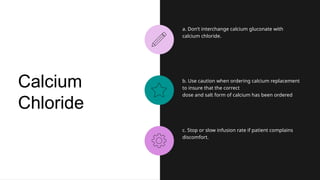
a. Don’t interchange calcium gluconate with
calcium chloride.
b. Use caution when ordering calcium replacement
to insure that the correct
dose and salt form of calcium has been ordered
c. Stop or slow infusion rate if patient complains
discomfort.
Calcium
Chloride
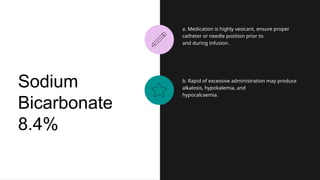
a. Medication is highly vesicant, ensure proper
catheter or needle position prior to
and during infusion.
b. Rapid of excessive administration may produce
alkalosis, hypokalemia, and
hypocalcaemia.
Sodium
Bicarbonate
8.4%
a. Sodium phosphate must be diluted before being
administered to a patient.
GLYCOPHOS
Concentrated
Electrolyte
Post-Test
Institution:
Location:
Name of Degree / Major or Minor:
Graduation Year:
Relevant Honors or Awards:
Institution:
Location:
Name of Degree / Major or Minor:
Graduation Year:
Relevant Honors or Awards:
Institution:
Location:
Name of Degree / Major or Minor:
Graduation Year:
Relevant Honors or Awards:
1. What is a key precaution when administering
concentrated calcium electrolytes
intravenously?
the Answer:
Slow infusion to avoid cardiac complications
2. How should nurses administer concentrated
calcium electrolytes to minimize the risk of
tissue irritation?
the Answer:
Dilute before intravenous infusion
3. What is a potential adverse effect associated
with rapid intravenous administration of
concentrated potassium?
the Answer:
Cardiac arrhythmias
4. Which of the following conditions requires
careful monitoring when administering
concentrated magnesium electrolytes?
the Answer:
Renal failure
5. Why is it important to monitor renal function
before and during magnesium administration?
the Answer:
To avoid hypomagnesemia, especially in patients
with impaired kidney function
6. What potential adverse effect should nurses
observe for when administering concentrated
magnesium?
the Answer:
respiratory depression
7. How should healthcare professionals
approach the administration of hypertonic
saline to minimize the risk of phlebitis or
irritation at the infusion site?
the Answer:
infuse via a central venous catheter
8. Sodium bicarbonate administration be
approached with caution due to the risk of:
the Answer:
alkalosis
9. Do not infuse phosphate in the same
intravenous line with:
the Answer:
calcium& parenteral nutrition
10. What is the Color of the Concentrated
Electrolyte Label?
the Answer:
Orange

Thanks

Concentrated Electrolytes Presention.pptx

  • 1.
  • 2.
    Concentrated Electrolytes : • Medicationsthat carry a higher risk of adverse outcomes Definition • Calcium Chloride • . POTASSIUM CHLORIDE • GLYCOPHOS • Sodium Bicarbonate 8.4% • . POTASSIUM CHLORIDE Examples • restore and maintain proper electrolyte levels, especially in cases of dehydration or electrolyte loss. Indecation
  • 3.
    1 Dispensing thediluted form from the central pharmacy 2 It shall be distinguished by an orange lable 3 Administration of High concentrated electrolytes with double checking General Instructions
  • 4.
    a. Never addpotassium to the bottle being used for rapid bolus infusions as the infusion rate is far too fast. b. Monitor IV infusion site, if the potassium causes pain at the infusion site, check that the catheter is functional and slow down the infusion rate (risk of necrosis if the fluid infiltrates outside the vein). c. Do not add potassium to an IV bottle in the hanging position. POTASSIUM CHLORIDE
  • 5.
    a. Don’t interchangecalcium gluconate with calcium chloride. b. Use caution when ordering calcium replacement to insure that the correct dose and salt form of calcium has been ordered c. Stop or slow infusion rate if patient complains discomfort. Calcium Chloride
  • 6.
    a. Medication ishighly vesicant, ensure proper catheter or needle position prior to and during infusion. b. Rapid of excessive administration may produce alkalosis, hypokalemia, and hypocalcaemia. Sodium Bicarbonate 8.4%
  • 7.
    a. Sodium phosphatemust be diluted before being administered to a patient. GLYCOPHOS
  • 8.
    Concentrated Electrolyte Post-Test Institution: Location: Name of Degree/ Major or Minor: Graduation Year: Relevant Honors or Awards: Institution: Location: Name of Degree / Major or Minor: Graduation Year: Relevant Honors or Awards: Institution: Location: Name of Degree / Major or Minor: Graduation Year: Relevant Honors or Awards:
  • 9.
    1. What isa key precaution when administering concentrated calcium electrolytes intravenously? the Answer: Slow infusion to avoid cardiac complications
  • 10.
    2. How shouldnurses administer concentrated calcium electrolytes to minimize the risk of tissue irritation? the Answer: Dilute before intravenous infusion
  • 11.
    3. What isa potential adverse effect associated with rapid intravenous administration of concentrated potassium? the Answer: Cardiac arrhythmias
  • 12.
    4. Which ofthe following conditions requires careful monitoring when administering concentrated magnesium electrolytes? the Answer: Renal failure
  • 13.
    5. Why isit important to monitor renal function before and during magnesium administration? the Answer: To avoid hypomagnesemia, especially in patients with impaired kidney function
  • 14.
    6. What potentialadverse effect should nurses observe for when administering concentrated magnesium? the Answer: respiratory depression
  • 15.
    7. How shouldhealthcare professionals approach the administration of hypertonic saline to minimize the risk of phlebitis or irritation at the infusion site? the Answer: infuse via a central venous catheter
  • 16.
    8. Sodium bicarbonateadministration be approached with caution due to the risk of: the Answer: alkalosis
  • 17.
    9. Do notinfuse phosphate in the same intravenous line with: the Answer: calcium& parenteral nutrition
  • 18.
    10. What isthe Color of the Concentrated Electrolyte Label? the Answer: Orange
  • 19.