Threats and Attacks
Threats

A potential for violation of security, which exists when
there is a circumstance, capability, action, or event that could
breach security and cause harm.

That is, a threat is a possible danger that might exploit
vulnerability.
Attacks
An assault on system security that derives from an intelligent
threat; that is, an intelligent act that is a deliberate attempt
(especially in the sense of a method or technique) to evade
security services and violate the security policy of a system.
• Security attack – Any action that compromises
the security of information owned by an
organization.
• Security mechanism – A mechanism that is
designed to detect, prevent or recover from a
security attack
• Security service – A service that enhances the
security of the data processing systems and
the information transfers of an organization.
• Security Attacks
• A passive attack attempts to learn or make
use of information from the system but does
not affect system resources.
• An active attack attempts to alter system
resources or affect their operation.
• Passive Attacks
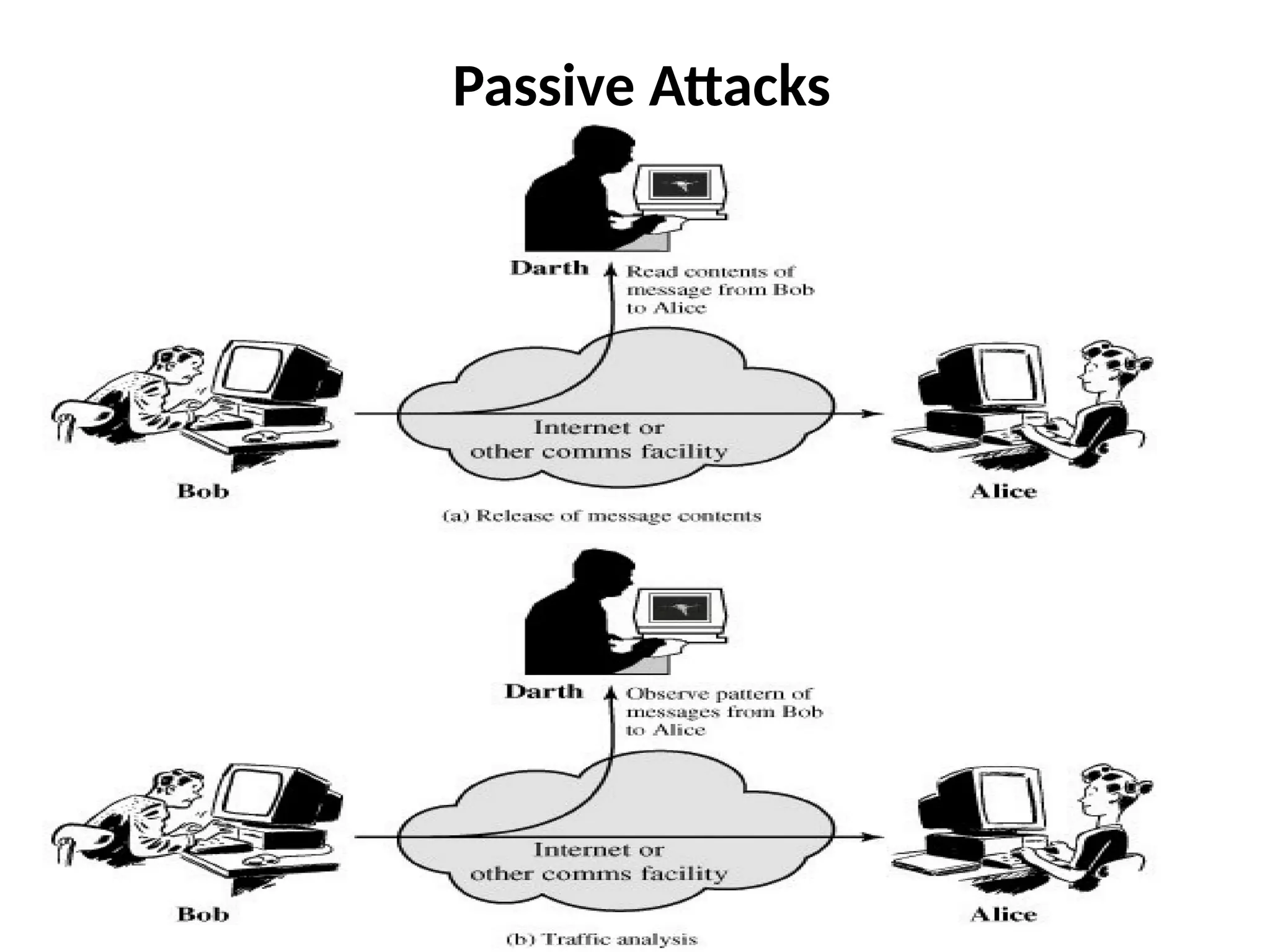
• Passive attacks are in the nature of eavesdropping on,
or monitoring of, transmissions. The goal of the
opponent is to obtain information that is being
transmitted.
• Two types of passive attacks are release of message
contents and traffic analysis. The release of message
contents is easily understood (Figure a).
• A telephone conversation, an electronic mail
message, and a transferred file may contain sensitive
or confidential information. We would like to prevent
an opponent from learning the contents of these
transmissions.
Passive Attacks
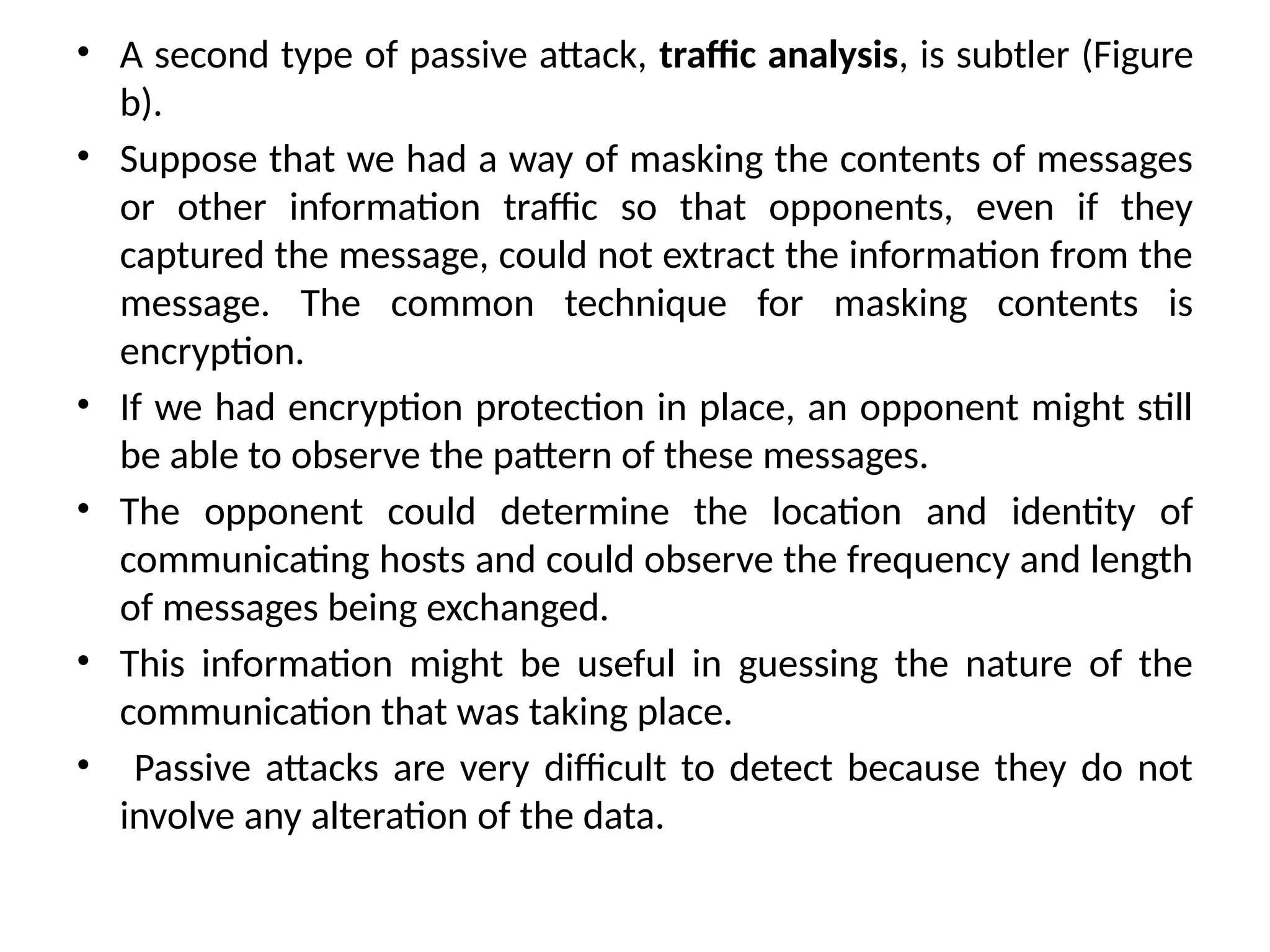
• A second type of passive attack, traffic analysis, is subtler (Figure
b).
• Suppose that we had a way of masking the contents of messages
or other information traffic so that opponents, even if they
captured the message, could not extract the information from the
message. The common technique for masking contents is
encryption.
• If we had encryption protection in place, an opponent might still
be able to observe the pattern of these messages.
• The opponent could determine the location and identity of
communicating hosts and could observe the frequency and length
of messages being exchanged.
• This information might be useful in guessing the nature of the
communication that was taking place.
• Passive attacks are very difficult to detect because they do not
involve any alteration of the data.
• Active Attacks
• Active attacks involve some modification of the data
stream or the creation of a false stream and can be
subdivided into four categories: masquerade, replay,
modification of messages, and denial of service.
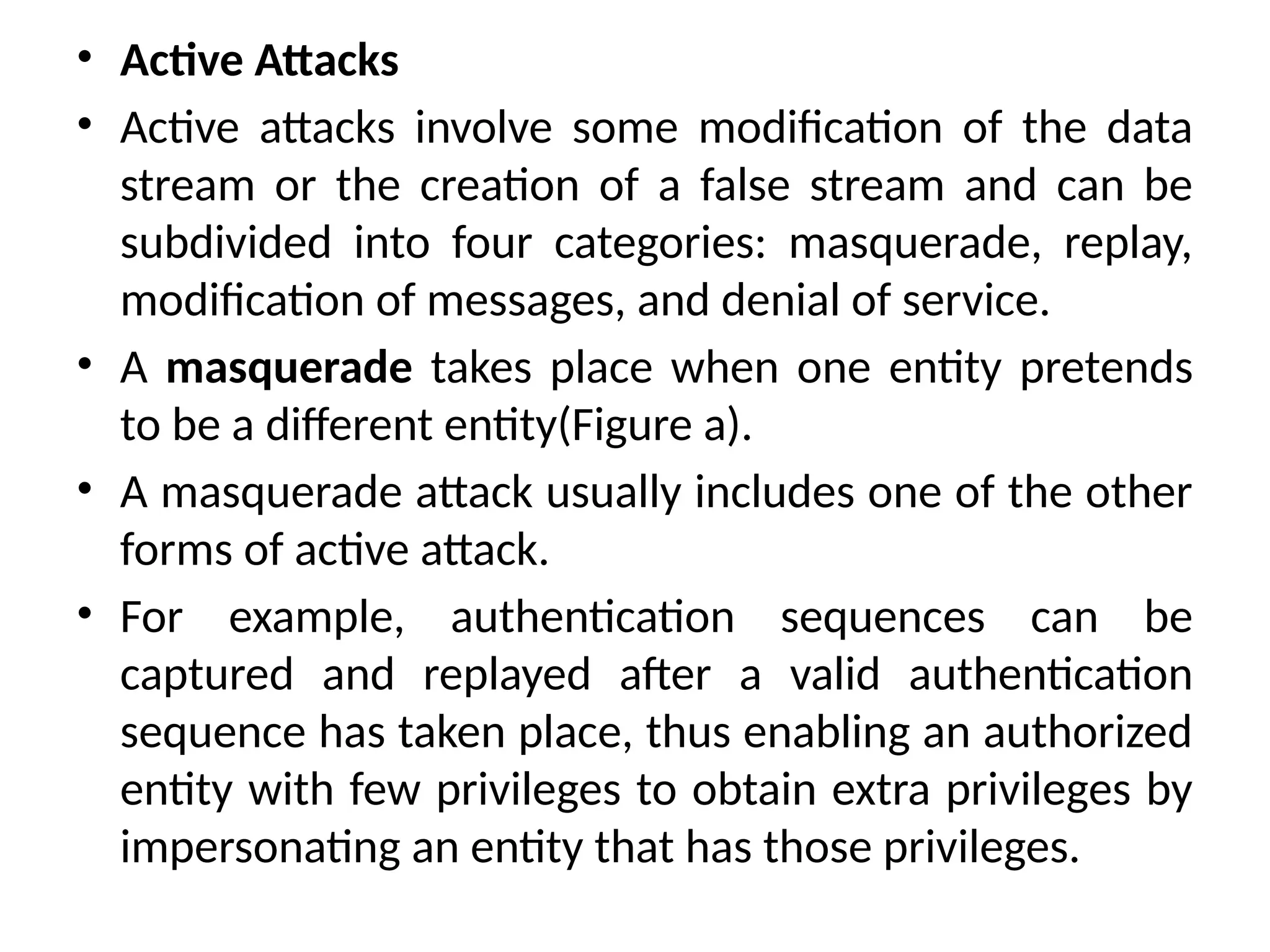
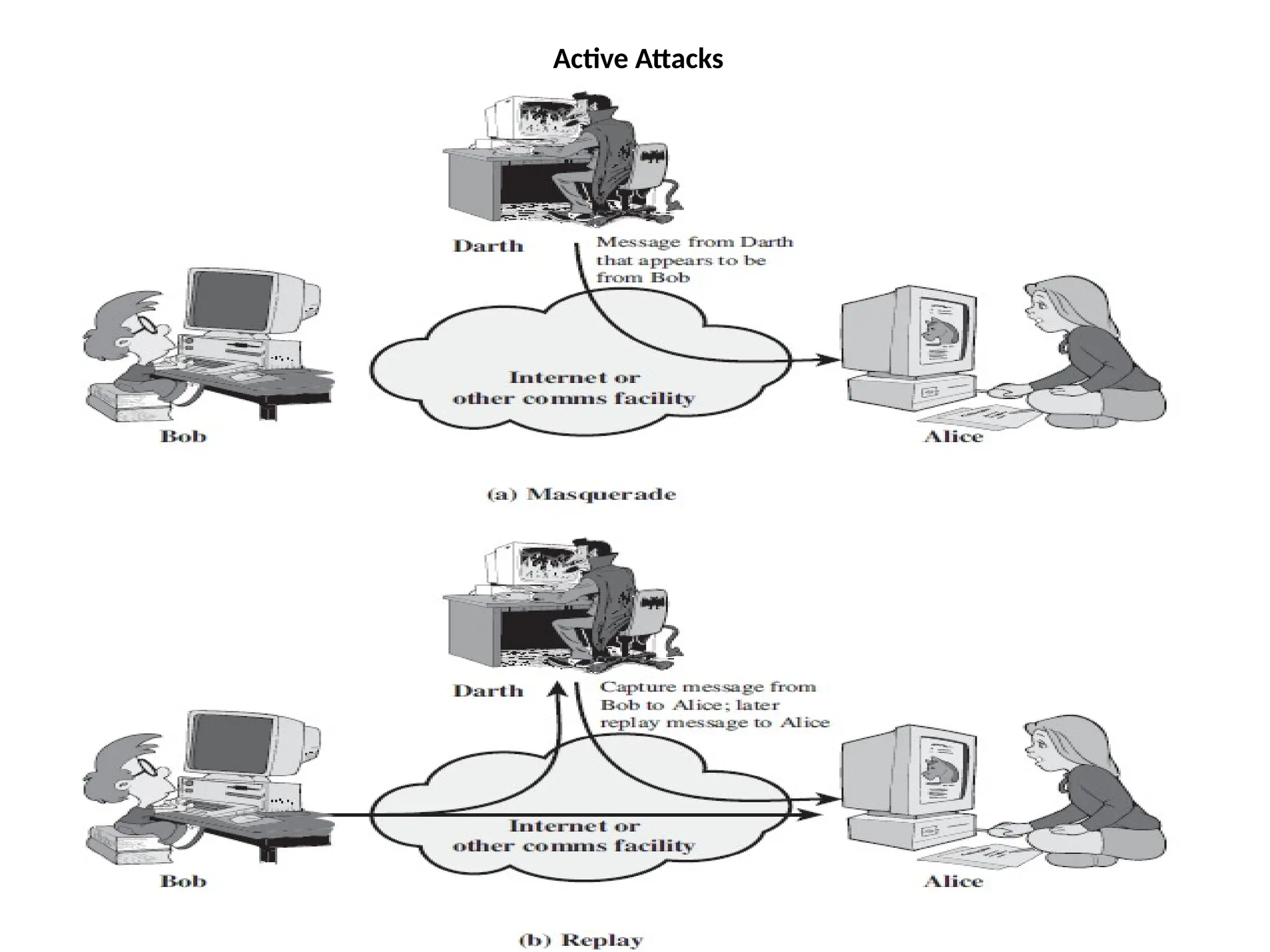
• A masquerade takes place when one entity pretends
to be a different entity(Figure a).
• A masquerade attack usually includes one of the other
forms of active attack.
• For example, authentication sequences can be
captured and replayed after a valid authentication
sequence has taken place, thus enabling an authorized
entity with few privileges to obtain extra privileges by
impersonating an entity that has those privileges.
Active Attacks
• Replay involves the passive capture of a data unit
and its subsequent retransmission to produce an
unauthorized effect (Figure b).
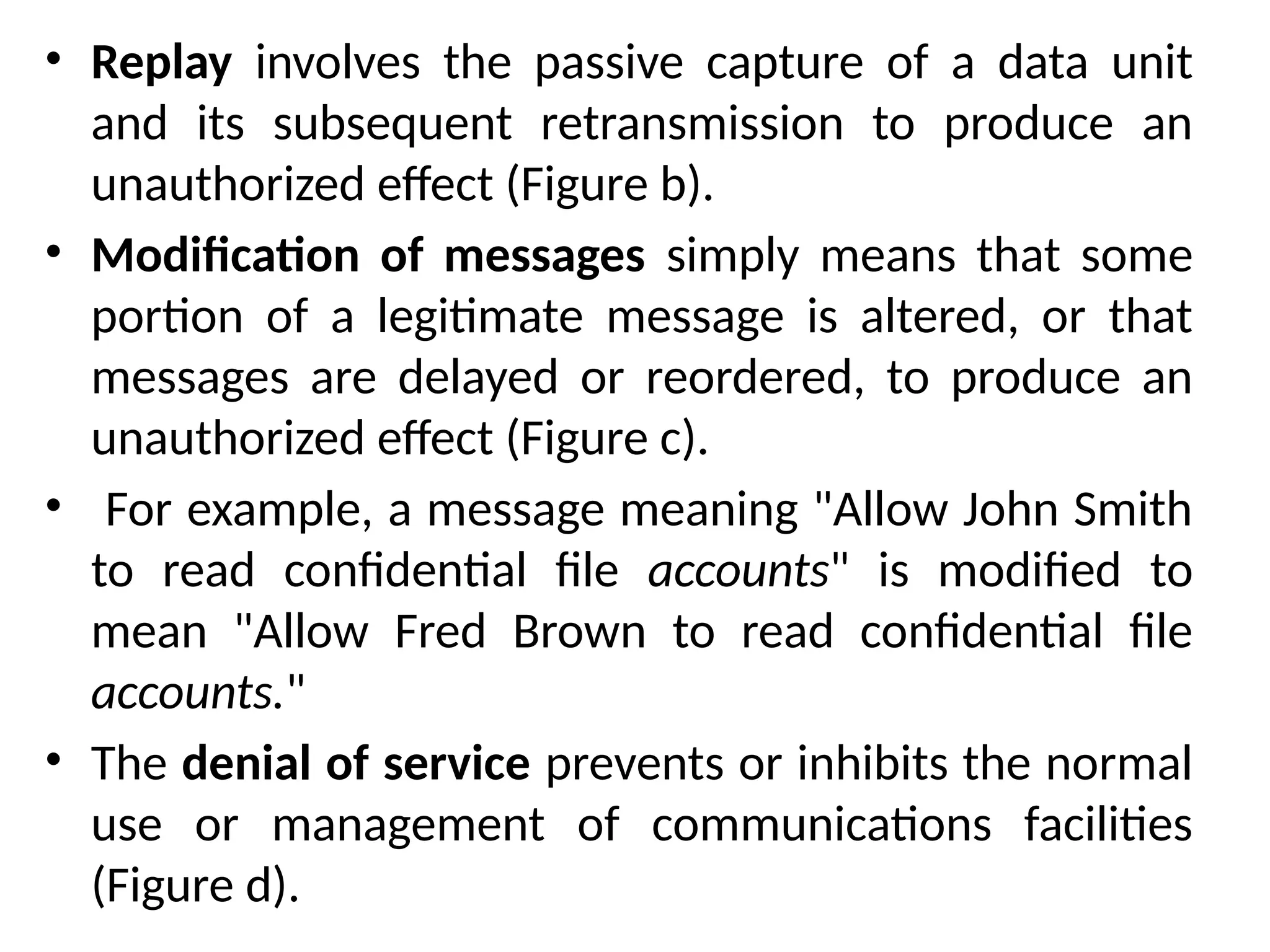
• Modification of messages simply means that some
portion of a legitimate message is altered, or that
messages are delayed or reordered, to produce an
unauthorized effect (Figure c).
• For example, a message meaning "Allow John Smith
to read confidential file accounts" is modified to
mean "Allow Fred Brown to read confidential file
accounts."
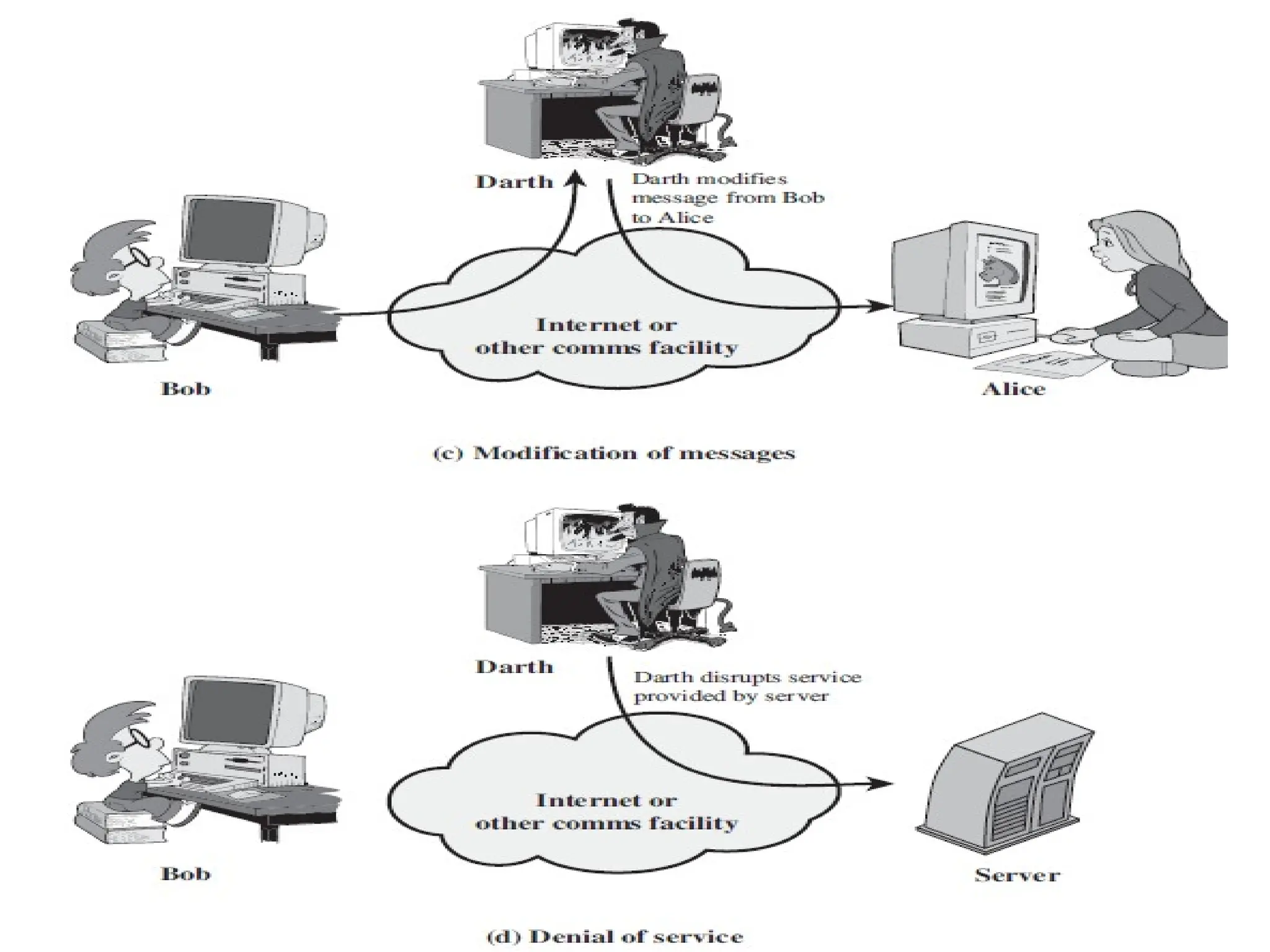
• The denial of service prevents or inhibits the normal
use or management of communications facilities
(Figure d).
computer network Security attacking.pptx

computer network Security attacking.pptx

  • 1.
    Threats and Attacks Threats  Apotential for violation of security, which exists when there is a circumstance, capability, action, or event that could breach security and cause harm.  That is, a threat is a possible danger that might exploit vulnerability. Attacks An assault on system security that derives from an intelligent threat; that is, an intelligent act that is a deliberate attempt (especially in the sense of a method or technique) to evade security services and violate the security policy of a system.
  • 2.
    • Security attack– Any action that compromises the security of information owned by an organization. • Security mechanism – A mechanism that is designed to detect, prevent or recover from a security attack • Security service – A service that enhances the security of the data processing systems and the information transfers of an organization.
  • 3.
    • Security Attacks •A passive attack attempts to learn or make use of information from the system but does not affect system resources. • An active attack attempts to alter system resources or affect their operation.
  • 4.
    • Passive Attacks •Passive attacks are in the nature of eavesdropping on, or monitoring of, transmissions. The goal of the opponent is to obtain information that is being transmitted. • Two types of passive attacks are release of message contents and traffic analysis. The release of message contents is easily understood (Figure a). • A telephone conversation, an electronic mail message, and a transferred file may contain sensitive or confidential information. We would like to prevent an opponent from learning the contents of these transmissions.
  • 5.
  • 6.
    • A secondtype of passive attack, traffic analysis, is subtler (Figure b). • Suppose that we had a way of masking the contents of messages or other information traffic so that opponents, even if they captured the message, could not extract the information from the message. The common technique for masking contents is encryption. • If we had encryption protection in place, an opponent might still be able to observe the pattern of these messages. • The opponent could determine the location and identity of communicating hosts and could observe the frequency and length of messages being exchanged. • This information might be useful in guessing the nature of the communication that was taking place. • Passive attacks are very difficult to detect because they do not involve any alteration of the data.
  • 7.
    • Active Attacks •Active attacks involve some modification of the data stream or the creation of a false stream and can be subdivided into four categories: masquerade, replay, modification of messages, and denial of service. • A masquerade takes place when one entity pretends to be a different entity(Figure a). • A masquerade attack usually includes one of the other forms of active attack. • For example, authentication sequences can be captured and replayed after a valid authentication sequence has taken place, thus enabling an authorized entity with few privileges to obtain extra privileges by impersonating an entity that has those privileges.
  • 8.
  • 9.
    • Replay involvesthe passive capture of a data unit and its subsequent retransmission to produce an unauthorized effect (Figure b). • Modification of messages simply means that some portion of a legitimate message is altered, or that messages are delayed or reordered, to produce an unauthorized effect (Figure c). • For example, a message meaning "Allow John Smith to read confidential file accounts" is modified to mean "Allow Fred Brown to read confidential file accounts." • The denial of service prevents or inhibits the normal use or management of communications facilities (Figure d).