9.Technology shaping the Future of Fashion Industry -
Design To Merchandising
• The fashion sector is also one of the largest industries in the global economy with the $2.2T
• Today, fashion technology is growing at a faster pace than ever:
 From robots that sew and cut fabric, to
 AI algorithms that predict style trends, to
 VR mirrors in dressing rooms, technology is automating, personalizing, and speeding up
every aspect of fashion.
1 17/07/2024
Mulat A ABTEW (PhD)
2 17/07/2024
Next session
 Computer Aided Manufacture (CAM) (store design, lay planning, spreading, cutting, sewing, finishing and
pressing technologies)
 Electronic Point-of-Sale (EPOS) (Fashion forecasting, sales transactions and stock levels monitoring).
 Computer Aided Administration (CAA) (Marketing, distribution and retailing, sales order processing and stock
control)
 Computer Aided Engineering (CAE): (computer software for engineering Apparel Machineries, Abaqus, Solid
Work, etc.)
3 17/07/2024
10. Computer Aided Manufacture (CAM)
 Uses computer software to control machine tools and machinery in the manufacturing process.
 It is the software code behind the machines that manufacture the products.
 Also, assist in all operations of a manufacturing plant:
 Planning,
 Management
 Transportation and storage.
 Its primary purpose includes:
 Create a faster production process and components
 Tooling with more precise dimensions and material consistency (uses only the required
amount of raw material (thus minimizing waste) and reducing energy consumption).
4 17/07/2024
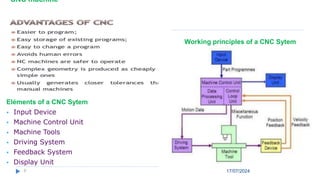
CNC machine
Eléments of a CNC Sytem
 Input Device
 Machine Control Unit
 Machine Tools
 Driving System
 Feedback System
 Display Unit
Working principles of a CNC Sytem
5 17/07/2024
Fabric spreading
 Main operation in garment industry
 Unwinding large fabric rolls onto long, wide tables
in for cutting each piece of garment
During Spreading –
 Alignement of plies,
 Elimination of fabric defects/flaws,
 Correct ply direction,
 Correct ply tension and
 Make fabrics flat and,
crinkle & crease free
Different Fabric spreading
6 17/07/2024
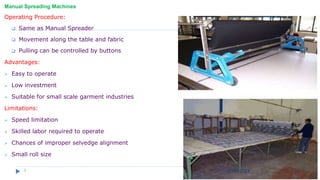
Manual Spreading Machines
Operating Procedure:
 Same as Manual Spreader
 Movement along the table and fabric
 Pulling can be controlled by buttons
Advantages:
 Easy to operate
 Low investment
 Suitable for small scale garment industries
Limitations:
 Speed limitation
 Skilled labor required to operate
 Chances of improper selvedge alignment
 Small roll size
7 17/07/2024
Semi-Automatic Spreading Machines
Operating Procedure:
 Same as Manual Spreader
 Movement along the table and fabric
 pulling can be controlled by buttons
Advantages:
 Fast and economical
 Proper selvedge alignment
 Ease to operate with electronic clutch
Limitations:
 Fabric roll loading, cutting is still manual
 Not suitable for large scale manufacturing houses
 Small roll size
8 17/07/2024
Fully Automatic Spreading Machines
 Automatic loading/unloading device for fabric rolls
 Automatic roll turning arrangement for face to backlay
 Automatic leveling device for fabric edge alignment.
 Automatic cutting device at the end of a run
 Automatic tensioning device to control fabric tension
 Automatic lay height sensing elevator
 Programmable lay length, ply height and step-laying
 Spreading seeds up to 140 m/min
9 17/07/2024
Fabric cutting machine
Manual Cutting
( scissors, cutters)
Semi-Automatic
(Round knife cutter,
straight knife, band knife)
Automatic
(CNC, Laser, Plasma, water-jet)
10 17/07/2024
Advantages of CNC fabric cutting machine
 Most accurate fabric cutting
 Flexible enough for penetration and movements of knife
 Create a vaccum to hold the fabric firmly and reduce the hieght of the lay
 Ideal for notch making with the required depth
Component of CNC fabric cutting machine
 Bristle bed
 Vaccum system
 Pre-sealer (Polyethylene sheets)
 Perforated paper
 Automatic sharpening of Blades
 CNC programming
11 17/07/2024
Sewing machine
Two types of sewing machines (Based on operating system)
 Manually operated sewing machines :
Driven by physical energy.
Used for domestic and tailoring purposes.
Less production, but more laborious.
Low cost.
 Electrically operated or Industrial sewing machines
(Semi-automatic electrical or Computerized sewing
machines):
Usually driven by electric power.
High productivity.
Used in garments industry.
Cost is high.
12 17/07/2024
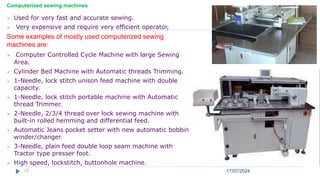
Computerized sewing machines
 Used for very fast and accurate sewing.
 Very expensive and require very efficient operator,
Some examples of mostly used computerized sewing
machines are:
 Computer Controlled Cycle Machine with large Sewing
Area.
 Cylinder Bed Machine with Automatic threads Trimming.
 1-Needle, lock stitch unison feed machine with double
capacity.
 1-Needle, lock stitch portable machine with Automatic
thread Trimmer.
 2-Needle, 2/3/4 thread over lock sewing machine with
built-in rolled hemming and differential feed.
 Automatic Jeans pocket setter with new automatic bobbin
winder/changer.
 3-Needle, plain feed double loop seam machine with
Tractor type presser foot.
 High speed, lockstitch, buttonhole machine.
13 17/07/2024

cOMPUTER Aided Manaufacturing (CAM).pptx

  • 1.
    9.Technology shaping theFuture of Fashion Industry - Design To Merchandising • The fashion sector is also one of the largest industries in the global economy with the $2.2T • Today, fashion technology is growing at a faster pace than ever:  From robots that sew and cut fabric, to  AI algorithms that predict style trends, to  VR mirrors in dressing rooms, technology is automating, personalizing, and speeding up every aspect of fashion. 1 17/07/2024
  • 2.
    Mulat A ABTEW(PhD) 2 17/07/2024
  • 3.
    Next session  ComputerAided Manufacture (CAM) (store design, lay planning, spreading, cutting, sewing, finishing and pressing technologies)  Electronic Point-of-Sale (EPOS) (Fashion forecasting, sales transactions and stock levels monitoring).  Computer Aided Administration (CAA) (Marketing, distribution and retailing, sales order processing and stock control)  Computer Aided Engineering (CAE): (computer software for engineering Apparel Machineries, Abaqus, Solid Work, etc.) 3 17/07/2024
  • 4.
    10. Computer AidedManufacture (CAM)  Uses computer software to control machine tools and machinery in the manufacturing process.  It is the software code behind the machines that manufacture the products.  Also, assist in all operations of a manufacturing plant:  Planning,  Management  Transportation and storage.  Its primary purpose includes:  Create a faster production process and components  Tooling with more precise dimensions and material consistency (uses only the required amount of raw material (thus minimizing waste) and reducing energy consumption). 4 17/07/2024
  • 5.
    CNC machine Eléments ofa CNC Sytem  Input Device  Machine Control Unit  Machine Tools  Driving System  Feedback System  Display Unit Working principles of a CNC Sytem 5 17/07/2024
  • 6.
    Fabric spreading  Mainoperation in garment industry  Unwinding large fabric rolls onto long, wide tables in for cutting each piece of garment During Spreading –  Alignement of plies,  Elimination of fabric defects/flaws,  Correct ply direction,  Correct ply tension and  Make fabrics flat and, crinkle & crease free Different Fabric spreading 6 17/07/2024
  • 7.
    Manual Spreading Machines OperatingProcedure:  Same as Manual Spreader  Movement along the table and fabric  Pulling can be controlled by buttons Advantages:  Easy to operate  Low investment  Suitable for small scale garment industries Limitations:  Speed limitation  Skilled labor required to operate  Chances of improper selvedge alignment  Small roll size 7 17/07/2024
  • 8.
    Semi-Automatic Spreading Machines OperatingProcedure:  Same as Manual Spreader  Movement along the table and fabric  pulling can be controlled by buttons Advantages:  Fast and economical  Proper selvedge alignment  Ease to operate with electronic clutch Limitations:  Fabric roll loading, cutting is still manual  Not suitable for large scale manufacturing houses  Small roll size 8 17/07/2024
  • 9.
    Fully Automatic SpreadingMachines  Automatic loading/unloading device for fabric rolls  Automatic roll turning arrangement for face to backlay  Automatic leveling device for fabric edge alignment.  Automatic cutting device at the end of a run  Automatic tensioning device to control fabric tension  Automatic lay height sensing elevator  Programmable lay length, ply height and step-laying  Spreading seeds up to 140 m/min 9 17/07/2024
  • 10.
    Fabric cutting machine ManualCutting ( scissors, cutters) Semi-Automatic (Round knife cutter, straight knife, band knife) Automatic (CNC, Laser, Plasma, water-jet) 10 17/07/2024
  • 11.
    Advantages of CNCfabric cutting machine  Most accurate fabric cutting  Flexible enough for penetration and movements of knife  Create a vaccum to hold the fabric firmly and reduce the hieght of the lay  Ideal for notch making with the required depth Component of CNC fabric cutting machine  Bristle bed  Vaccum system  Pre-sealer (Polyethylene sheets)  Perforated paper  Automatic sharpening of Blades  CNC programming 11 17/07/2024
  • 12.
    Sewing machine Two typesof sewing machines (Based on operating system)  Manually operated sewing machines : Driven by physical energy. Used for domestic and tailoring purposes. Less production, but more laborious. Low cost.  Electrically operated or Industrial sewing machines (Semi-automatic electrical or Computerized sewing machines): Usually driven by electric power. High productivity. Used in garments industry. Cost is high. 12 17/07/2024
  • 13.
    Computerized sewing machines Used for very fast and accurate sewing.  Very expensive and require very efficient operator, Some examples of mostly used computerized sewing machines are:  Computer Controlled Cycle Machine with large Sewing Area.  Cylinder Bed Machine with Automatic threads Trimming.  1-Needle, lock stitch unison feed machine with double capacity.  1-Needle, lock stitch portable machine with Automatic thread Trimmer.  2-Needle, 2/3/4 thread over lock sewing machine with built-in rolled hemming and differential feed.  Automatic Jeans pocket setter with new automatic bobbin winder/changer.  3-Needle, plain feed double loop seam machine with Tractor type presser foot.  High speed, lockstitch, buttonhole machine. 13 17/07/2024