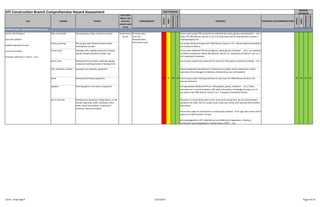
Task HAZARD CAUSES
TOP EVENT
What is the
harm the
hazard could
cause
CONSEQUENCES
PEOPLE
ASSET
ENVIROMENT
REPUTATION
CONTROLS COMMENTS /RECOMMENDATIONS
PEOPLE
ASSET
ENVIROMENT
REPUTATION
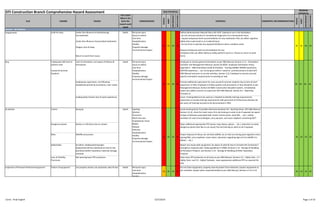
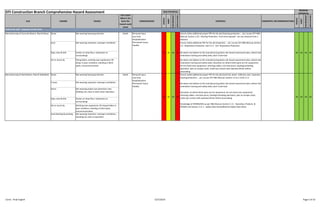
Impairment Unfit for duty Under the influence of Alcohol/drugs
(recreational)
Under the influence of prescribed medication
Fatigue, lack of sleep
Return to work from injury
Death Personal injury
Injury to others
Lost time
Hospitalization
Fatality
Property damage
Environmental impact
5C 5D 2D 4C
Follow Administration Manual Policy AD-2707: Substance use in the Workplace
- do not consume alcohol or recreational drugs prior to or during work hours
- request temporary work accommodation for any medication that can affect cognitive
ability that could result in an incident/injury
- do not drive or operate any equipment/devices when condition exists
Request temporary work accommodation for any
limitations that can affect ability to safely perform work (i.e. fitness to return to work
form)
2C 2C 2D 2D
Lack of orientation, not aware of Policies &
Procedures
Employee to receive general orientation as per H&S Manual, Section 2.2.1 - Orientation
Checklist and Management Manual, section 02-0035: Employee Orientation Policy,
Appendix C - H&S Orientation Guide & Checklist. Training (OH&S/ WHMIS awareness,
WATCM awareness ... etc.) to be given within 1 week of commencement of work (DTI
H&S Manual and prior to on-site activities, Section 2.2), Employee to receive any task
specific orientation required prior to working on task
inadequate supervision, not following
established policies & procedures, near misses
Provide additional supervision for new casuals & summer students due to lack of work
experience in field, Employee to follow policies and procedures or face discipline as per
Management Manual, Section 02-0020: Constructive Discipline System , immediately
report any safety concerns to supervisor (DTI H&S Manual, Section 8.1 - Reporting
Procedur e)
Inadequately trained, lack of work experience, Const. Training Matrix to be used as a checklist to identify training requirements,
Supervisors to review training requirements with personnel at Performance Review (2x
per year), all training received to be documented in HRIS
Insects Stung by Avoid working alone if possible otherwise develop CoP - Working Alone (DTI H&S Manual,
Section 3.4.2), check for insect nests, first aid training on what to do if exposed, be aware
of signs of diseases associated with certain insects (Lyme, west Nile ... etc.), advise
members of crew of any allergies, carry epi-pen, use insect repellent containing DEET
Dangerous plants Rashes or infections due to contact Wear additional appropriate PPE (pants, long sleeves, gloves … etc.), education on what
dangerous plants look like so can avoid, first aid training on what to do if exposed
Bites Wildlife encounters Proper disposal of refuse, do not feed wildlife, be on look out during peat migration times
(spring/fall), carry repellant, noise maker, education regarding signs of sick wildlife (i.e.
Rabies … etc.)
Spills/Leaks Accident, inadequate/improper
equipment/vehicle maintenance and on-site
petroleum/other hazardous materials storage
methods
Report any issues with equipment, be aware of what & how to activate the Contractor's
emergency response plan, follow guidelines in EMM, Sections 5.13 - Storage & Handling
of Petroleum Products and Section 5.14 - Storage & Handling of Other Hazardous
Products
Lack of Visibility
Punctures
Not wearing basic PPE protection Wear basic PPE protection at all times as per H&S Manual, Sections 2.4 - Safety Hats , 2.5 -
Safety Vests and 2.6 - Safety Footwear, wear appropriate additional PPE as required for
task
Inspection of Personal Protective Equipment Failure of equipment not properly stored, not inpsected, wear & tear Death Personal injury
Lost time
Hospitalization
Fatality
5D 1D 1D 4C
Do not share equipment, properly store & protect from elements, inpsect equipment as
per schedule, replace when required/needed as per H&S Manual, Sections 2.3 to 2.10 2D 1D 1D 2D
2D 2D 2D 2D
At jobsites Death Swelling
Stitches
Punctures
Work time loss
Anaphylactic shock
Rabies
Disease
Infection
Hospitalization
Fatality
Property damage
Environmental impact
5C 2D 2D 4C
5D 2D 4C
DTI Construction Branch Comprehensive Hazard Assessment RISK POTENTIAL
RESIDUAL
POTENTIAL
General - All Positions
Any Inadequate skill level to
perform task
Casuals & Summer
Students
Death Personal injury
Injury to others
Lost time
Hospitalization
Fatality
Property damage
Environmental impact
5C 2D 2D
2D 2D
Const - Final English 5/27/2019 Page 1 of 10
Task HAZARD CAUSES
TOP EVENT
What is the
harm the
hazard could
cause
CONSEQUENCES
PEOPLE
ASSET
ENVIROMENT
REPUTATION
CONTROLS COMMENTS /RECOMMENDATIONS
PEOPLE
ASSET
ENVIROMENT
REPUTATION
DTI Construction Branch Comprehensive Hazard Assessment RISK POTENTIAL
RESIDUAL
POTENTIAL
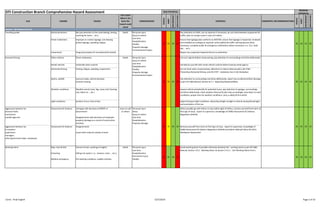
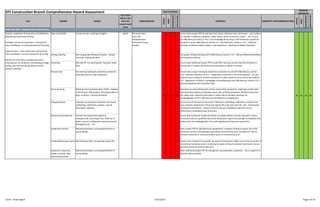
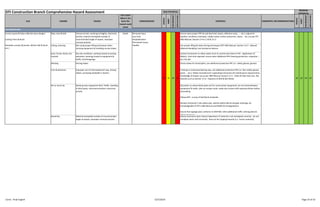
Distracted drivers Not pay attention to the road (talking, texting,
reaching for items … etc.)
Pay attention to traffic, use an observer if necessary, do not stand between equipment &
traffic, plan an escape route in case of incident
Driver inattention Improper or unclear signage, not obeying
posted signage, speeding, fatigue
Ensure that signage plan conforms to WATCM, ensure that signage is inspected, reviewed
and modified accordingly as required, enlist additional traffic calming devices when
necessary, complete public & emergency notifications where necessary ( i.e. 511, radio
ads ... etc.)
Impairment Drugs (prescription & recreational) & alcohol Report any suspected impaired drivers to authorities
Other vehicles Driver inattention Use turn signals before maneuvering, pay attention to surroundings and drive defensively
Rental vehicles Unfamiliar dash controls Familiarize yourself with rental vehicle controls before leaving rental agency
Distracted driving Texting, fatigue, speeding, impairment Do not drive when compromised, adherence to Admin Manual policy AD 2706 -
Preventing Distracted Driving and AD 2707 - Substance Use in the Workplace
Debris, wildlife Insecure loads, vehicle disrepair,
animals crossing
Pay attention to surroundings and drive defensively, report any accidents/vehicle damage
as per DTI H&S Manual, Section 8.1.1 - Reporting Responsibilities
Weather conditions Weather events (rain, fog, snow, hail, freezing
rain, black ice … etc.)
Inspect vehicle periodically for potential issues, pay attention to signage, surroundings
and drive defensively, check weather forecast & plan trips accordingly, slow down to road
conditions, proper tires for weather conditions, carry a safety & first aid kit
Light conditions location of sun, time of day Adjust driving to light conditions: dawn/day (bright sunlight vs dark & cloudy)/dusk/night
and orientation of the sun
Aggressive behavior by:
General Public
Contractors
outside agencies
Harassment & Violence Unhappy with decisions of NBDTI or
Government
Disagreements with decisions of employee
property damage as a result of construction
activities
When possible go with others or stay within sight of others, remove yourself from harm at
first sign of issue, report to supervisor, knowledge of OH&S Harassment & Violence
Regulation 2018-82
Aggressive behavior by:
Co-workers
supervisors
managers
other government dept. employees
Harassment & Violence Disagreements
Issues both inside & outside of work
Remove yourself from harm at first sign of issue, report to supervisor, knowledge of
OH&S Harassment & Violence Regulation 2018-82 and Admin Manual Policy AD 2913-
Workplace Harassment
Working alone Slips, trips & falls
Drowning
Medical emergency
Uneven terrain, working at heights
Falling into water ( i.e.. streams, rivers … etc.),
Pre-existing conditions, sudden sickness
Death Personal injury
Lost time
Hospitalization
Permanent injury
Fatality
5C 2D 2D 4C
Avoid working alone if possible otherwise develop CoP - working alone as per DTI H&S
Manual, Section 3.4.2 - Working Alone & Section 3.4.2.1 - CoP Working Alone Form )
2D 2D 2D 2D
2D 2D 2D
Injury to self
or others
Personal injury
Stress
Injury to others
Lost time
Hospitalization
Property damage
4C 3D 2D 2D 2D 2D 2D 1D
Personal Driving Death Personal injury
Injury to others
Lost time
Hospitalization
Fatality
Property damage
Environmental impact
5C 5D 2D 4C 2D
General - All Positions (Con't)
Travelling public Death Personal injury
Injury to others
Lost time
Hospitalization
Fatality
Property damage
Environmental impact
5C 5D 2D
2D 4C 2D 2D 2D
Const - Final English 5/27/2019 Page 2 of 10
Task HAZARD CAUSES
TOP EVENT
What is the
harm the
hazard could
cause
CONSEQUENCES
PEOPLE
ASSET
ENVIROMENT
REPUTATION
CONTROLS COMMENTS /RECOMMENDATIONS
PEOPLE
ASSET
ENVIROMENT
REPUTATION
DTI Construction Branch Comprehensive Hazard Assessment RISK POTENTIAL
RESIDUAL
POTENTIAL
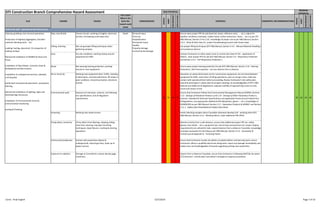
Extreme Cold:
Hypothermia, frost bite
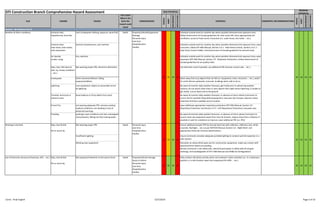
Lack of adequate clothing, exposure, wind chill, Schedule outside work for another day when possible otherwise limit exposure time,
follow Government of Canada guidelines for cold, wind chill, dress appropriately for
conditions, access to heat source if practical (i.e. scale house, site trailer … etc.)
Extreme Heat:
heat stress, heat stroke,
heat exhaustion
Extreme temperatures, over exertion Schedule outside work for another day when possible otherwise limit exposure time, wear
sunscreen, follow DTI H&S Manual, Section 3.4.1 - Heat Stress Control, Section 3.4.1.1 -
Heat Stress Control Tables and Government of Canada guidelines for extreme heat
Air Quality:
smoke, smog
Fire, pollution Schedule outside work for another day when possible otherwise limit exposure time, wear
respirator (DTI H&S Manual, Section 2.9 - Respirator Protection ), follow Government of
Canada guidelines for air quality index
Slips, trips, falls (due to
wet, icy, snowy conditions
… etc.)
Not wearing proper PPE, electronic distraction Use alternate route if possible, use additional PPE (traction control aids … etc.)
Earthquake Earth movement/failure, falling
equipment/debris
Move away from any objects that can fall (i.e. Equipment, trees, structures … etc.), watch
for earth failures upheavals, evacuate buildings when safe to do so
Lightning near equipment, objects or personally struck
by lightning
Be aware & monitor daily weather forecasts, get inside prior to advancing weather
systems, do not stand under trees or near objects that might attract lightning, if unable to
get inside, crouch down low to the ground
Tornado, Hurricane or
extreme wind
loose balance or hit by debris from wind Be aware & monitor daily weather forecasts, in advance of storm advise Contractor to
secure site for possible flying debris/equipment, evacuate site if proper advance notice
otherwise find best available secure location
Forest Fire not wearing adequate PPE, worsens existing
medical conditions, not heeding or lack of
advanced warnings
wear additional appropriate respiratory protection (DTI H&S Manual, Section 2.9 -
Respiratory Protection and Section 3.5.3 - CoP Respiratory Protection), evacuate area
Flooding working in wet conditions and near overtopped
rivers/streams, falling into fast moving water
Be aware & monitor daily weather forecasts, in advance of storm advise Contractor to
secure move site equipment away from rivers & streams, inspect areas from a distance if
possible or wait for conditions to improve, wear additional PPE (i.e. PFD)
Not wearing proper PPE Ensure additional proper PPE for the job (hard hat with reflectors, reflective vest, white
coveralls, flashlight … etc.) as per WATCM Manual, Section 2.6 - Night Work and
appropriate Particular Contract Specifications.
Insufficient Lighting Ensure Contractor provides adequate portable lighting to conduct work & inspection in a
safe manner.
Working near equipment Education on where blind spots are for construction equipment, make eye contact with
operator/driver before proceeding,
Review Contractor's site safety plan, attend & participate in safety talks & tail gate
meetings, be knowledgeable of DTI's H&S Manual and OH&S Act & Regulations
Use of Electronic Devices (cell phones, GPS … etc.) Slips, trips & falls
Hit or struck by
Not paying full attention to the task at hand Death Property/Vehicle damage
Injury to others
Personal injury
Lost time
Hospitalization
Fatality
5C 2D 2D 4C
Only conduct cell phone activity when not involved in other activities (i.e.: in a stationary
position, in a safe location away from equipment & traffic … etc.)
2D 2D 2D 2D
2D 2D
General - All Positions (Con't)
Weather & Other conditions Death Property/Vehicle/Equipment
Damage
Personal injury
Lost time
Hospitalization
Fatality
5C 5D 2D
Working in the Dark Slips, trips & falls
Hit or struck by
Death Personal injury
Lost time
Hospitalization
Fatality
5C 5D 2D 4C
2D 4C 2D 2D 2D
2D 2D
Const - Final English 5/27/2019 Page 3 of 10
Task HAZARD CAUSES
TOP EVENT
What is the
harm the
hazard could
cause
CONSEQUENCES
PEOPLE
ASSET
ENVIROMENT
REPUTATION
CONTROLS COMMENTS /RECOMMENDATIONS
PEOPLE
ASSET
ENVIROMENT
REPUTATION
DTI Construction Branch Comprehensive Hazard Assessment RISK POTENTIAL
RESIDUAL
POTENTIAL
Ergonomic - repetitive
work
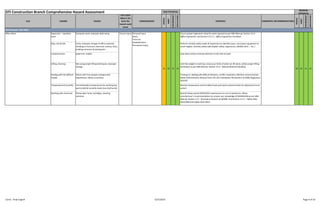
Computer work, improper desk setup Ensure proper ergonomic setup for work required as per H&S Manual, Section 3.4.4 -
Office Ergonomics and Section 3.4.1.1 - Office Ergonomics Factsheet
Slips, trip & falls Cords, improper storage of office materials,
climbing on furniture, electronic activity, stairs,
building entrances & parking lots
Perform monthly safety audits & inspections to identify issues, use proper equipment to
reach heights, monthly safety talks (ladder safety, ergonomics, WHMIS 2015 ... etc.)
Cuts/punctures papercuts, staples slow down actions and pay attention to the task at hand
Lifting, straining Not using proper lifting techniques, improper
storage
Limit the weight in each box, know your limits of what can lift alone, utilize proper lifting
techniques as per H&S Manual, Section 3.4.5 - Manual Material Handling
Dealing with the difficult
People
Phone calls from people unhappy with
Department, fellow co-workers
Training on: dealing with difficult behavior, conflict resolution, effective communication,
follow Administrative Manual Policy AD-2913 Workplace Harassment & OH&S Regulation
2018-82
Temperature & humidity Uncomfortable temperatures for working (too
warm/cold) & humidity levels (too dry/humid)
Monitor temperature and humidity levels and report extreme levels for adjustment to air
system
Working with chemicals Photocopier toner cartridges, cleaning
solutions
Read & follow posted MSDS/SDS material prior to use of substances, follow
manufacturer's recommendations on proper use, knowledge of WHMIS/SDS as per H&S
Manual, Section 2.11 - Hazardous Products & WHMIS and Section 2.11.1 - Safety Data
Sheet/Material Safety Data Sheet
HO Personnel - Non Field
Office Work Person injury Personal injury
Stress
Time loss
Hospitalization
Permanent Injury
3C 1D 1E
1E 1E 2D 1E 1E
Const - Final English 5/27/2019 Page 4 of 10
Task HAZARD CAUSES
TOP EVENT
What is the
harm the
hazard could
cause
CONSEQUENCES
PEOPLE
ASSET
ENVIROMENT
REPUTATION
CONTROLS COMMENTS /RECOMMENDATIONS
PEOPLE
ASSET
ENVIROMENT
REPUTATION
DTI Construction Branch Comprehensive Hazard Assessment RISK POTENTIAL
RESIDUAL
POTENTIAL
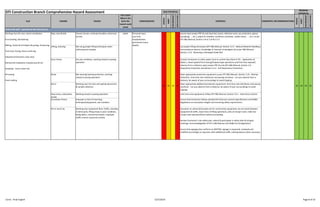
Noise Not wearing hearing protection Ensure utilize additional proper PPE for the job (hearing protection … etc.) as per DTI H&S
Manual, Section 2.10 - Hearing Protection , limit time exposed - can you observe from a
distance
Dust Not wearing respirator, improper ventilation Ensure utilize additional PPE for the job (respirator … etc.) as per DTI H&S Manual, Section
2.9 - Respiratory Protection and 3.5.3 - CoP Respiratory Protection
Slips, trips & falls Clutter on shop floor, inattention to
surroundings
Be aware and adhere to the manufacturing plants site hazard assessment plan, attend site
orientation training and safety talks, don't multi-task
Hit or struck by Flying debris, working near equipment, lift
straps in poor condition, standing in blind
spots, miscommunication
Be aware and adhere to the manufacturing plants site hazard assessment plan, attend site
orientation training and safety talks, Education on where blind spots are for equipment,
do not stand near equipment, stressing cables, concrete pours, loading/unloading
operation, plan an escape route, make eye contact with operator/driver before
proceeding
Noise Not wearing hearing protection
Fumes Not wearing respirator, improper ventilation
Burns Not wearing proper eye protection near
welding, too close to steel cutter operation
Slips, trips & falls Clutter on shop floor, inattention to
surroundings
Hit or struck by Working near equipment, lift straps/cables in
poor condition, standing in blind spots,
miscommunication
Sand blasting & painting Not wearing respirator, improper ventilation,
standing too close to operation
Manufacturing of Steel Beams, Pipe & Multiplate Death Personal injury
Loss time
Hospitalization
Permanent injury
Fatality
5C 3D 2D 2D
4C
Ensure utilize additional proper PPE for the job (hard hat, boots, reflective vest, respirator,
hearing protection … etc.) as per DTI H&S Manual, Section 2.4 to 2.10 & 3.5.3
Be aware and adhere to the manufacturing plants site hazard assessment plan, attend site
orientation training and safety talks, don't multi-task
Education on where blind spots are for equipment, do not stand near equipment,
stressing cables, concrete pours, loading/unloading operation, plan an escape route,
make eye contact with operator/driver before proceeding
Knowledge of WHMIS/SDS as per H&S Manual, Section 2.11 - Hazardous Products &
WHMIS and Section 2.11.1 - Safety Data Sheet/Material Safety Data Sheet
2D 2D 2D
Field & HO staff - Inspection & Site Visits
Manufacturing of Concrete Beams, Pipe & Boxes Death Personal injury
Loss time
Hospitalization
Permanent injury
Fatality
5C 3D 2D 4C 2D 2D 2D 2D
Const - Final English 5/27/2019 Page 5 of 10
Task HAZARD CAUSES
TOP EVENT
What is the
harm the
hazard could
cause
CONSEQUENCES
PEOPLE
ASSET
ENVIROMENT
REPUTATION
CONTROLS COMMENTS /RECOMMENDATIONS
PEOPLE
ASSET
ENVIROMENT
REPUTATION
DTI Construction Branch Comprehensive Hazard Assessment RISK POTENTIAL
RESIDUAL
POTENTIAL
Slips, trips & falls Uneven terrain, working at heights Ensure wear proper PPE for job (hard hat, boots, reflective vests, harnesses ... etc.), adjust
for weather conditions (rainwear, rubber boots, winter protection, cleats ... etc.) as per
DTI H&S Manual, Section 2.4 to 2.10, knowledge & training on Fall Protection systems &
equipment as per H&S Manual, Section 2.3 - Fall Protection Systems, 2.3.1 - Guide for
Working on Elevated Work Surface s and Appendix C - Working at Heights Flowchart
Lifting, straining Not using proper lifting techniques: testing
concrete, making cylinders
Use proper lifting techniques (DTI H&S Manual, Section 3.4.5 - Manual Material Handling )
and assistance devices
Drowning Not tied off, not wearing pfd, improper safety
lines
Ensure wear additional proper PPE for job (PFD, harness), ensure that the Contractor's
rescue plan is in-place and know what procedure to follow if accident
Noise & dust Not wearing hearing & respiratory protection,
working around or near equipment
Ensure wear proper hearing & respiratory protection for job (DTI H&S Manual, section
2.10 - Hearing Protection & 3.5.3 - Respiratory Protection ), limit time exposed - can you
observe from a distance, Contact Contractor to utilize water truck to control dust (Item #
191 - Application of Water), knowledge of sandblasting as per H&S Manual, Section 3.5.5 -
Abrasive Blasting with Crystalline Silica
Hit or struck by Working near equipment &/or Traffic, standing
in blind spots, falling debris, lift straps/cables in
poor condition, miscommunication
Education on where blind spots are for construction equipment, make eye contact with
operator/driver before proceeding, stand clear of lifting operations, Review Contractor's
site safety plan, attend & participate in safety talks & tail gate meetings, be
knowledgeable of DTI's H&S Manual and OH&S Act & Regulations
Collapse/failure Improper construction: falsework, formwork,
scaffolding, cofferdams, trestles, crane &
excavation collapses …
Ensure that all Contractor's formwork, falsework, scaffolding, cofferdams, trestles have
been properly designed by a PEng and signed off as per Spec Item No. 956 - Construction
Drawings & Calculations , advise Contractor & your immediate supervisor of any
deficiencies immediately upon discovery.
Electrocution/explosion Contact with powerlines (above &
underground), natural gas lines, hook up of
power sources, inadequate temporary panels,
damaged cords ... Etc.
Ensure that Contractor locates all utilities on jobsite before commencing work, ensure
Contractor utilizes a qualified electrician doing work, report any damage immediately and
isolate area, be knowledgeable of hazards regarding working near powerlines
Suspension trauma Miscommunication, not paying attention to
surroundings
Wear proper PPE for job (fall arrest equipment), complete training in proper use of fall
protection harness including leg straps before commencing work, be aware of how to
activate Contractor's rescue procedure prior to commencing work
Confined/hazardous space Not following SWP, not wearing proper PPE Inspect from a distance if possible, be aware of Contractor's SWP, ensure that air quality is
checked by Contractor prior to entering, be aware of how to activate Contractor's rescue
procedure prior to commencing work.
Exposure to injury by:
plastic concrete, field
painting operations
Miscommunication, not paying attention to
surroundings
Wear additional proper PPE for Job (gloves, eye protection, respirator … etc.), inspect at a
distance when possible
2D 2D
Field & HO staff - Inspection & Site Visits (Con't)
Trestles, Installation & Excavation of Cofferdams,
dewatering, pile/caisson driving
Footings, Columns & Cap beams - formwork &
rebar installation, concrete placements & testing
Superstructure - beam placement, formwork &
rebar installation, concrete placement & testing
Removal of Concrete or existing Structures
including but not limited to: shot blasting, bridge
jacking, jack hammering, grinding concrete
surfaces, painting
Death Personal injury
Loss time
Hospitalization
Permanent injury
Fatality
5C 5C 4C 4C 2D 2D
Const - Final English 5/27/2019 Page 6 of 10
Task HAZARD CAUSES
TOP EVENT
What is the
harm the
hazard could
cause
CONSEQUENCES
PEOPLE
ASSET
ENVIROMENT
REPUTATION
CONTROLS COMMENTS /RECOMMENDATIONS
PEOPLE
ASSET
ENVIROMENT
REPUTATION
DTI Construction Branch Comprehensive Hazard Assessment RISK POTENTIAL
RESIDUAL
POTENTIAL
Slips, trips & falls Uneven terrain, working at heights, electronic
activity, not keeping scale steps clear
Ensure wear proper PPE for job (hard hat, boots, reflective vests, ... etc.), adjust for
weather conditions (rainwear, rubber boots, winter protection, cleats ... etc.) as per DTI
H&S Manual, Section 2.4 to 2.10 , knowledge of proper use as per H&S Manual, Section
3.3.2 - Chain & Clear Saw Us , proper housekeeping around scale house steps
Lifting, straining Not using proper lifting techniques when
gathering samples,
Use proper lifting techniques (DTI H&S Manual, Section 3.4.5 - Manual Material Handling )
and assistance devices
Dust Dry site conditions, working closely around
equipment & traffic
Contact Contractor to utilize water truck to control dust (Item # 191 - Application of
Water), wear proper PPE for job (DTI H&S Manual, Section 2.9 - Respiratory Protection
and Section 3.5.3 - CoP Respiratory Protection )
Noise Not wearing hearing protection, working
around or near equipment
Ensure wear proper hearing protection for job (DTI H&S Manual, Section 2.10 - Hearing
Protection ), limit time exposed - can you observe from a distance
Hit or struck by Working near equipment &/or Traffic, standing
in blind spots, concrete placement, lift straps in
poor condition, miscommunication, electronic
activity
Education on where blind spots are for construction equipment, do not stand between
equipment & traffic, stand clear of lifting operations, plan an escape route, make eye
contact with operator/driver before proceeding, Review Contractor's site safety plan,
attend & participate in safety talks & tail gate meetings, be knowledgeable of DTI's H&S
Manual and OH&S Act & Regulations, adquate visibility of approaching trucks to scale
house and means of exit
Environmental spills Exposure to chemicals, solvents, not following
env specifications, Acts & Regulation
requirements
Ensure that Contractor follows the Environmental Management Manual (EMM), Sections
5.13 - Storage of Petroleum Product s and 5.14 - Storage of Other Hazardous Product s,
Contract Standard & Particular Specifications and applicable Provincial and Federal Acts
& Regulations, use appropriate additional PPE (Respirator, gloves ... etc.), knowledge of
WHMIS/SDS as per H&S Manual, Section 2.11 - Hazardous Products & WHMIS and Section
2.11.1 - Safety Data Sheet/Material Safety Data Sheet
Drowning Working near watercourses Avoid collecting samples alone if possible otherwise develop CoP - working alone (DTI
H&S Manual, Section 3.4.2 - Working Alone ), wear additional PPE (PFD)
Flying debris, buried by Hit by debris from Blasting, chipping, falling
trees from clearing, improper trenching
techniques, slope failures, crushing & clearing
operations
Monitor activity from a safe distance, ensure that additional proper PPE (ex: safety
glasses, face shield … etc.), equipment (ex: trench box) and practices (ex: proper sloping
requirements) are utilized for task, inspect/observe from a distance if possible, knowledge
of proper excavation & trenching as per H&S Manual, Section 3.3.5 - Excavation &
Trenchin g and Appendix B - Trenching Poster
Electrocution/explosion Contact with powerlines (above &
underground), natural gas lines, hook up of
power sources
Ensure that Contractor locates all utilities on jobsite before commencing work, ensure
Contractor utilizes a qualified electrician doing work, report any damage immediately and
isolate area, be knowledgeable of hazards regarding working near powerlines
Exposure to radiation Damage to Consultant's nuclear density gage
machinery
Inspect from a distance if possible, ensure that Contractor is following WATCM, be aware
of Contractor's and Nuclear Consultant's emergency response procedure
Field & HO staff - Inpection & Site Visits (Con't)
Clearing, grubbing, tree removal operations
Production of Highway Aggregates, Shoulder
material, blending sand ... etc.
Loading, hauling, placement & compaction of
Subbase & Base
Removal & installation of Wildlife & Chain Link
Fence
Installation of Pipe (Plastic, Concrete, Steel &
Multiplates) and Box Culverts
Installation of underground services, sidewalk,
curb & gutter
Soil & Rock Excavation & placement, compaction,
ditching
Removal & installation of Lighting, Signs and
Overhead Sign Structures
Installation of Environmental Controls,
environmental monitoring
Scaling & Checking
Death Personal injury
Time loss
Hospitalization
Permanent injury
Fatality
Property damage
Environmental damage
5C 5D 2D
4C 4C 2D 2D 2D
Const - Final English 5/27/2019 Page 7 of 10
Task HAZARD CAUSES
TOP EVENT
What is the
harm the
hazard could
cause
CONSEQUENCES
PEOPLE
ASSET
ENVIROMENT
REPUTATION
CONTROLS COMMENTS /RECOMMENDATIONS
PEOPLE
ASSET
ENVIROMENT
REPUTATION
DTI Construction Branch Comprehensive Hazard Assessment RISK POTENTIAL
RESIDUAL
POTENTIAL
Slips, trips & falls Uneven terrain, minimal shoulders, electronic
activity
ensure wear proper PPE for job (hard hat, boots, reflective vests, ear protection, gloves
(sampling) ... etc.), adjust for weather conditions (rainwear, rubber boots, ... etc.) as per
DTI H&S Manual, Section 2.4 to 2.10 & 3.5.3
Lifting, straining Not using proper lifting techniques when
collecting test samples
use proper lifting techniques (DTI H&S Manual, Section 3.4.5 - Manual Material Handling )
and assistance devices, knowledge of removal of damaged rail as per H&S Manual.
Section 3.3.6 - Removing a Damaged Guide Rail
Dust, fumes Dry site conditions, working closely to paving
operation
Contact Contractor to utilize water truck to control dust (Item # 191 - Application of
Water ), stand upwind from Paving/Chipseal type operations and limit time exposed,
observe from a distance, wear proper PPE for job (DTI H&S Manual, Section 2.9 -
Respiratory Protection and Section 3.5.3 - CoP Respiratory Protection)
Noise Not wearing hearing protection, working
closely to paving operation
Wear appropriate protective equipment as per DTI H&S Manual, Section 2.10 - Hearing
Protection , limit time near distributor and paving machines - can you observe from a
distance, be aware of your surroundings to avoid tripping.
Burns Working near hot tack and asphalt placement
& sample collection
Wear appropriate additional protective equipment, limit time near distributor and paving
machines - can you observe from a distance, be aware of your surroundings to avoid
tripping
Heat stress, exhaustion,
stroke
Working closely to paving operation Limit time near equipment, follow DTI H&S Manual, Section 3.4.1 - Heat Stress Control
Excavation failure Improper or lack of trenching
techniques/equipment, soil condition
Ensure that Contractor follows standard & Particular contract Specifications and OH&S
Regulations on excavation heights and trenching safety requirements
Hit or struck by Working near equipment &/or Traffic, standing
in blind spots, lifting straps in poor condition,
flying debris, miscommunication, improper
traffic control, electronic activity
Education on where blind spots are for construction equipment, do not stand between
equipment & traffic, stand clear of lifting operations, plan an escape route, make eye
contact with operator/driver before proceeding
Review Contractor's site safety plan, attend & participate in safety talks & tail gate
meetings, be knowledgeable of DTI's H&S Manual and OH&S Act & Regulations
Ensure that signage plan conforms to WATCM, signage is inspected, reviewed and
modified accordingly as required, enlist additional traffic calming devices when necessary
Field & HO staff - Inpection & Site Visits (Con't)
Ditching, farm & cross-culvert installation
Fine Grading, Shouldering
Milling, Partial & Full Depth Recycling, Pulverizing
Tack Coat, Paving, Micro surfacing
Chipseal (Contractors crew only)
Removal & installation of guide post & rail
Sampling - Cores, loose mix
IRI testing
Crack sealing
death Personal injury
Loss time
hospitalization
permanent injury
fatality
5C 4D 3D 4C 2D 2D 2D 2D
Const - Final English 5/27/2019 Page 8 of 10
Task HAZARD CAUSES
TOP EVENT
What is the
harm the
hazard could
cause
CONSEQUENCES
PEOPLE
ASSET
ENVIROMENT
REPUTATION
CONTROLS COMMENTS /RECOMMENDATIONS
PEOPLE
ASSET
ENVIROMENT
REPUTATION
DTI Construction Branch Comprehensive Hazard Assessment RISK POTENTIAL
RESIDUAL
POTENTIAL
Slips, trips & falls Housekeeping, clutter, electronic activity Ensure wear proper PPE protection for job (hard hat, boots, gloves, eye protection ... etc.)
as per DTI H&S Manual, Section 2.4 to 2.10, keep area clear of anything that can pose a
tripping/slipping risk
Lifting, straining Not using proper lifting techniques when
handling test samples
Use proper lifting techniques (DTI H&S Manual, Section 3.4.5 - Manual Material Handling )
and assistance devices
Fumes, dust Applying sulfur capping compound, heating
asphalt samples, grinding cylinder caps
Ensure wear additional PPE for job (gloves, safety glasses, respirator ... etc.), use overhead
ventilation equipment, follow H&S Manual, Section 2.9 - Respiratory Protection and 3.5.3 -
CoP Respiratory Protection
Burns, heat Working with hot asphalt, applying capping
compound, working closely to heating ovens
Ensure wear proper heat protection for job (oven milts, gloves, protective clothing ... etc.)
Cuts, abrasions, pinches Improper use of guards, equipment Follow equipment manufacturer's instructions on proper use & maintenance, advise
supervisor of any damage to machinery & discontinue use until repaired
Noise Working with testing equipment Ensure wear proper hearing protection for job as per DTI H&S Manual, Section 2.10 -
Hearing Protection
Splashes Cleaning agents, lime water curing tanks Use appropriate additional PPE (ex: safety glasses, gloves, respirator ... etc.), follow
manufacturer's recommendations, SDS sheet information, knowledge of proper use of
eye wash as per H&S Manual, Section 3.4.3 - Emergency Eyewash & Shower
Hit or struck by Working near equipment, flying debris, on-site
sample collecting, Traffic, standing in blind
spots, miscommunication, compression
machines, electronic activity
Education on where blind spots are for construction equipment, do not stand between
equipment & traffic, plan an escape route, make eye contact with operator/driver before
proceeding
Ensure that cages are closed prior to compressing cylinders. If no cage, then ensure stand
away from machine while running.
Be knowledgeable of DTI's H&S Manual and OH&S Act & Regulations, Testing &
certification manuals/guidelines, standard specs, SWP's ... etc.
Field & HO staff - Inpection & Site Visits (Con't)
District Lab Testing of:
Concrete cylinders
Asphalt briquettes & cores
Loose mix samples
Granular materials (i.e. sieves … etc.)
Severe burns
& cuts
Personal injury
Loss time
Hospitalization
Permanent Injury
4C 3D 2D
2D 2D 2D 2D 2D
Const - Final English 5/27/2019 Page 9 of 10
Task HAZARD CAUSES
TOP EVENT
What is the
harm the
hazard could
cause
CONSEQUENCES
PEOPLE
ASSET
ENVIROMENT
REPUTATION
CONTROLS COMMENTS /RECOMMENDATIONS
PEOPLE
ASSET
ENVIROMENT
REPUTATION
DTI Construction Branch Comprehensive Hazard Assessment RISK POTENTIAL
RESIDUAL
POTENTIAL
Slips, trips & falls Uneven terrain, working at heights, electronic
activity, material stockpiled outside of
recommended angle of repose, improper
removal practice
Ensure wear proper PPE for job (hard hat, boots, reflective vests, ... etc.), adjust for
weather conditions (rainwear, rubber boots, winter protection, cleats ... etc.) as per DTI
H&S Manual, Section 2.4 to 2.10 & 3.5.3
Lifting, straining Not using proper lifting techniques when
carrying equipment & installing survey stakes
Use proper lifting & stake driving techniques (DTI H&S Manual, Section 3.4.5 - Manual
Material Handling ) and assistance devices
Dust, fumes, Noise, bio
hazards
Dry site conditions, working closely to paving
operation, working closely to equipment &
traffic, bird droppings
Contact Contractor to utilize water truck to control dust (Item # 191 - Application of
Water), limit time exposed, ensure wear additional PPE (hearing protection, respirator ...
etc.) for job
Blinding Driving stakes Check stakes for knots/splits, use additional protective PPE (i.e. safety glasses, gloves)
Cuts & abrasions Improper use of chainsaw/brush saw, driving
stakes, surveying stockpiles in domes
Training on chainsaw/clearing saw, use additional protective PPE (i.e. face shield, gloves,
pants ... etc.), follow manufacturer's operating instructions & maintenance requirements,
knowledge of proper use as per H&S Manual, Section 3.3.2 - Chain & Clear Saw Use, Bio-
hazards such as Section 3.5.6 - Exposure to Bird & Bat Waste
Hit or struck by Working near equipment &/or Traffic, standing
in blind spots, miscommunication, electronic
activity
Education on where blind spots are for construction equipment, do not stand between
equipment & traffic, plan an escape route, make eye contact with operator/driver before
proceeding
Follow SOP - survey of Salt/Sand stockpiles
Review Contractor's site safety plan, attend safety talks & tail gate meetings, be
knowledgeable of DTI's H&S Manual and OH&S Act & Regulations
Ensure that signage plan conforms to WATCM, enlist additional traffic calming devices
when necessary
Buried by Material stockpiled outside of recommended
angle of repose, improper removal practice
Advise Contractor &/or District Operations if material is not stockpiled correctly - do not
complete work until corrected, look out for tripping hazards (i.e.: frozen material),
2D 2D
Surveying Duties
Survey Layout & Data collection (pre-design)
Cutting Trees & Brush
Stockpile surveys (Granular, Winter Salt & Sand …
etc.)
Death Personal injury
Loss time
Hospitalization
Permanent injury
Fatality
5C 3D 2D 4C 2D 2D
Const - Final English 5/27/2019 Page 10 of 10
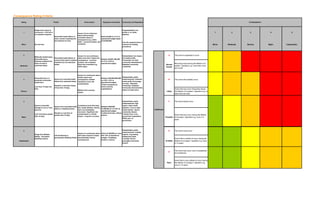
Consequence Rating Criteria
Rating Environment Equipment and Assets Community and Reputation
1
Single minor injury to
one person. First aid or
no treatment required.
Unsubstantiated, low
profile or no media
attention.
1 2 3 4 5
Minor No lost time.
One-off complaint which is
resolved via existing
procedures.
Minor Moderate Serious Major Catastrophic
2 A The event is expected to occur
Moderate
Almost
Certain
Recurring event during the lifetime of a
project / operation e.g. more than once
per month
3
Issues of a continuous nature -
limited impact and
consequence. Incident
resulting in some site
contamination.
B The event will probably occur
Serious
Medium term recovery
impact.
Likely
Event that may occur frequently during
the lifetime of a project / operation e.g. at
least once per year
4 C The event should occur
Major Possible
Event that may occur during the lifetime
of a project / operation e.g. once in 3
years
5 D The event could occur
Catastrophic Unlikely
Event that is unlikely to occur during the
lifetime of a project / operation e.g. once
in 10 years
E
The event may occur only in exceptional
circumstances
Rare
Event that is very unlikely to occur during
the lifetime of a project / operation e.g.
once in 15 years
Single &/or Multiple
fatality. Permanent
disabling injuries.
Life threatening or
permanently disabling illness.
Issues of a continuous nature
with major long-term impact
and potentially serious
consequences.
Above $1,000,000 (or more
than 10% of operational
budget). Escalating
threats or actions.
Substantiated, public
embarrassment, multiple
impacts, long lasting
widespread media
coverage. Severe,
prolonged community
dissent.
Severe irreversible
damage to one or more
persons.
Lost Time Injury greater
than 10 days.
Severe and irreversible health
effects or disabling illness.
Results in a lost time of
greater than 10 days
Compliance issue with large
fine, media attention. Serious
harm not immediately
recovered. Significant site
contamination or off-site
impact. Long term recovery.
Between $500,000-
$1,000,000 (or 3.5-10% of
operational budget).
Confirmed threats, without
actions.
Substantiated, public
embarrassment, high
impact, major media
attention. Local or state
media interest. Severe
community dissent.
Criticism from a non-
government organisation
(NGO) and / or
government.
Reversible injury or
moderate irreversible
impairment.
Less than 10 days lost
time.
Severe but reversible health
effects &/or restricted duties.
Results in a lost time illness
of less than 10 days.
Between $50,000-$500,000
(or 0.5%- 3.5% of
operational budget).
Threat to property by
known extreme
organisations.
Substantiated, public
embarrassment, moderate
media profile (front page,
one day). Repeated
community complaint.
Community demonstration.
Impact on share price.
Likelihood
Medically treated injury.
Reversible injury.
Requires treatment but
does not lead to
restricted duties.
Reversible health effects of
concern that result in medical
treatment but not restricted
duties.
Issues of a non-continuous
nature and minor impact and
consequence. Low-level
incident, site contained.
Short term reversible (e.g.
within days).
Between $5,000- $50,000
(or 0.1%- 0.5% of
operational budget).
Substantiated, low impact,
low media profile.
Unresolved, low level
community dissatisfaction.
Repeated community
complaints.
People Consequence
Reversible health effects of
minor concern requiring first
aid treatment at most.
Issues of non-continuous
nature with promptly
reversible impact or
consequence (e.g. within
shift). Low-level incident, site
contained.
Below $5,000 (or 0.1% of
operational budget based
at 50,000,000).

ComprehensiveHazardAssessment-e.pdf

  • 1.
    Task HAZARD CAUSES TOPEVENT What is the harm the hazard could cause CONSEQUENCES PEOPLE ASSET ENVIROMENT REPUTATION CONTROLS COMMENTS /RECOMMENDATIONS PEOPLE ASSET ENVIROMENT REPUTATION Impairment Unfit for duty Under the influence of Alcohol/drugs (recreational) Under the influence of prescribed medication Fatigue, lack of sleep Return to work from injury Death Personal injury Injury to others Lost time Hospitalization Fatality Property damage Environmental impact 5C 5D 2D 4C Follow Administration Manual Policy AD-2707: Substance use in the Workplace - do not consume alcohol or recreational drugs prior to or during work hours - request temporary work accommodation for any medication that can affect cognitive ability that could result in an incident/injury - do not drive or operate any equipment/devices when condition exists Request temporary work accommodation for any limitations that can affect ability to safely perform work (i.e. fitness to return to work form) 2C 2C 2D 2D Lack of orientation, not aware of Policies & Procedures Employee to receive general orientation as per H&S Manual, Section 2.2.1 - Orientation Checklist and Management Manual, section 02-0035: Employee Orientation Policy, Appendix C - H&S Orientation Guide & Checklist. Training (OH&S/ WHMIS awareness, WATCM awareness ... etc.) to be given within 1 week of commencement of work (DTI H&S Manual and prior to on-site activities, Section 2.2), Employee to receive any task specific orientation required prior to working on task inadequate supervision, not following established policies & procedures, near misses Provide additional supervision for new casuals & summer students due to lack of work experience in field, Employee to follow policies and procedures or face discipline as per Management Manual, Section 02-0020: Constructive Discipline System , immediately report any safety concerns to supervisor (DTI H&S Manual, Section 8.1 - Reporting Procedur e) Inadequately trained, lack of work experience, Const. Training Matrix to be used as a checklist to identify training requirements, Supervisors to review training requirements with personnel at Performance Review (2x per year), all training received to be documented in HRIS Insects Stung by Avoid working alone if possible otherwise develop CoP - Working Alone (DTI H&S Manual, Section 3.4.2), check for insect nests, first aid training on what to do if exposed, be aware of signs of diseases associated with certain insects (Lyme, west Nile ... etc.), advise members of crew of any allergies, carry epi-pen, use insect repellent containing DEET Dangerous plants Rashes or infections due to contact Wear additional appropriate PPE (pants, long sleeves, gloves … etc.), education on what dangerous plants look like so can avoid, first aid training on what to do if exposed Bites Wildlife encounters Proper disposal of refuse, do not feed wildlife, be on look out during peat migration times (spring/fall), carry repellant, noise maker, education regarding signs of sick wildlife (i.e. Rabies … etc.) Spills/Leaks Accident, inadequate/improper equipment/vehicle maintenance and on-site petroleum/other hazardous materials storage methods Report any issues with equipment, be aware of what & how to activate the Contractor's emergency response plan, follow guidelines in EMM, Sections 5.13 - Storage & Handling of Petroleum Products and Section 5.14 - Storage & Handling of Other Hazardous Products Lack of Visibility Punctures Not wearing basic PPE protection Wear basic PPE protection at all times as per H&S Manual, Sections 2.4 - Safety Hats , 2.5 - Safety Vests and 2.6 - Safety Footwear, wear appropriate additional PPE as required for task Inspection of Personal Protective Equipment Failure of equipment not properly stored, not inpsected, wear & tear Death Personal injury Lost time Hospitalization Fatality 5D 1D 1D 4C Do not share equipment, properly store & protect from elements, inpsect equipment as per schedule, replace when required/needed as per H&S Manual, Sections 2.3 to 2.10 2D 1D 1D 2D 2D 2D 2D 2D At jobsites Death Swelling Stitches Punctures Work time loss Anaphylactic shock Rabies Disease Infection Hospitalization Fatality Property damage Environmental impact 5C 2D 2D 4C 5D 2D 4C DTI Construction Branch Comprehensive Hazard Assessment RISK POTENTIAL RESIDUAL POTENTIAL General - All Positions Any Inadequate skill level to perform task Casuals & Summer Students Death Personal injury Injury to others Lost time Hospitalization Fatality Property damage Environmental impact 5C 2D 2D 2D 2D Const - Final English 5/27/2019 Page 1 of 10
  • 2.
    Task HAZARD CAUSES TOPEVENT What is the harm the hazard could cause CONSEQUENCES PEOPLE ASSET ENVIROMENT REPUTATION CONTROLS COMMENTS /RECOMMENDATIONS PEOPLE ASSET ENVIROMENT REPUTATION DTI Construction Branch Comprehensive Hazard Assessment RISK POTENTIAL RESIDUAL POTENTIAL Distracted drivers Not pay attention to the road (talking, texting, reaching for items … etc.) Pay attention to traffic, use an observer if necessary, do not stand between equipment & traffic, plan an escape route in case of incident Driver inattention Improper or unclear signage, not obeying posted signage, speeding, fatigue Ensure that signage plan conforms to WATCM, ensure that signage is inspected, reviewed and modified accordingly as required, enlist additional traffic calming devices when necessary, complete public & emergency notifications where necessary ( i.e. 511, radio ads ... etc.) Impairment Drugs (prescription & recreational) & alcohol Report any suspected impaired drivers to authorities Other vehicles Driver inattention Use turn signals before maneuvering, pay attention to surroundings and drive defensively Rental vehicles Unfamiliar dash controls Familiarize yourself with rental vehicle controls before leaving rental agency Distracted driving Texting, fatigue, speeding, impairment Do not drive when compromised, adherence to Admin Manual policy AD 2706 - Preventing Distracted Driving and AD 2707 - Substance Use in the Workplace Debris, wildlife Insecure loads, vehicle disrepair, animals crossing Pay attention to surroundings and drive defensively, report any accidents/vehicle damage as per DTI H&S Manual, Section 8.1.1 - Reporting Responsibilities Weather conditions Weather events (rain, fog, snow, hail, freezing rain, black ice … etc.) Inspect vehicle periodically for potential issues, pay attention to signage, surroundings and drive defensively, check weather forecast & plan trips accordingly, slow down to road conditions, proper tires for weather conditions, carry a safety & first aid kit Light conditions location of sun, time of day Adjust driving to light conditions: dawn/day (bright sunlight vs dark & cloudy)/dusk/night and orientation of the sun Aggressive behavior by: General Public Contractors outside agencies Harassment & Violence Unhappy with decisions of NBDTI or Government Disagreements with decisions of employee property damage as a result of construction activities When possible go with others or stay within sight of others, remove yourself from harm at first sign of issue, report to supervisor, knowledge of OH&S Harassment & Violence Regulation 2018-82 Aggressive behavior by: Co-workers supervisors managers other government dept. employees Harassment & Violence Disagreements Issues both inside & outside of work Remove yourself from harm at first sign of issue, report to supervisor, knowledge of OH&S Harassment & Violence Regulation 2018-82 and Admin Manual Policy AD 2913- Workplace Harassment Working alone Slips, trips & falls Drowning Medical emergency Uneven terrain, working at heights Falling into water ( i.e.. streams, rivers … etc.), Pre-existing conditions, sudden sickness Death Personal injury Lost time Hospitalization Permanent injury Fatality 5C 2D 2D 4C Avoid working alone if possible otherwise develop CoP - working alone as per DTI H&S Manual, Section 3.4.2 - Working Alone & Section 3.4.2.1 - CoP Working Alone Form ) 2D 2D 2D 2D 2D 2D 2D Injury to self or others Personal injury Stress Injury to others Lost time Hospitalization Property damage 4C 3D 2D 2D 2D 2D 2D 1D Personal Driving Death Personal injury Injury to others Lost time Hospitalization Fatality Property damage Environmental impact 5C 5D 2D 4C 2D General - All Positions (Con't) Travelling public Death Personal injury Injury to others Lost time Hospitalization Fatality Property damage Environmental impact 5C 5D 2D 2D 4C 2D 2D 2D Const - Final English 5/27/2019 Page 2 of 10
  • 3.
    Task HAZARD CAUSES TOPEVENT What is the harm the hazard could cause CONSEQUENCES PEOPLE ASSET ENVIROMENT REPUTATION CONTROLS COMMENTS /RECOMMENDATIONS PEOPLE ASSET ENVIROMENT REPUTATION DTI Construction Branch Comprehensive Hazard Assessment RISK POTENTIAL RESIDUAL POTENTIAL Extreme Cold: Hypothermia, frost bite Lack of adequate clothing, exposure, wind chill, Schedule outside work for another day when possible otherwise limit exposure time, follow Government of Canada guidelines for cold, wind chill, dress appropriately for conditions, access to heat source if practical (i.e. scale house, site trailer … etc.) Extreme Heat: heat stress, heat stroke, heat exhaustion Extreme temperatures, over exertion Schedule outside work for another day when possible otherwise limit exposure time, wear sunscreen, follow DTI H&S Manual, Section 3.4.1 - Heat Stress Control, Section 3.4.1.1 - Heat Stress Control Tables and Government of Canada guidelines for extreme heat Air Quality: smoke, smog Fire, pollution Schedule outside work for another day when possible otherwise limit exposure time, wear respirator (DTI H&S Manual, Section 2.9 - Respirator Protection ), follow Government of Canada guidelines for air quality index Slips, trips, falls (due to wet, icy, snowy conditions … etc.) Not wearing proper PPE, electronic distraction Use alternate route if possible, use additional PPE (traction control aids … etc.) Earthquake Earth movement/failure, falling equipment/debris Move away from any objects that can fall (i.e. Equipment, trees, structures … etc.), watch for earth failures upheavals, evacuate buildings when safe to do so Lightning near equipment, objects or personally struck by lightning Be aware & monitor daily weather forecasts, get inside prior to advancing weather systems, do not stand under trees or near objects that might attract lightning, if unable to get inside, crouch down low to the ground Tornado, Hurricane or extreme wind loose balance or hit by debris from wind Be aware & monitor daily weather forecasts, in advance of storm advise Contractor to secure site for possible flying debris/equipment, evacuate site if proper advance notice otherwise find best available secure location Forest Fire not wearing adequate PPE, worsens existing medical conditions, not heeding or lack of advanced warnings wear additional appropriate respiratory protection (DTI H&S Manual, Section 2.9 - Respiratory Protection and Section 3.5.3 - CoP Respiratory Protection), evacuate area Flooding working in wet conditions and near overtopped rivers/streams, falling into fast moving water Be aware & monitor daily weather forecasts, in advance of storm advise Contractor to secure move site equipment away from rivers & streams, inspect areas from a distance if possible or wait for conditions to improve, wear additional PPE (i.e. PFD) Not wearing proper PPE Ensure additional proper PPE for the job (hard hat with reflectors, reflective vest, white coveralls, flashlight … etc.) as per WATCM Manual, Section 2.6 - Night Work and appropriate Particular Contract Specifications. Insufficient Lighting Ensure Contractor provides adequate portable lighting to conduct work & inspection in a safe manner. Working near equipment Education on where blind spots are for construction equipment, make eye contact with operator/driver before proceeding, Review Contractor's site safety plan, attend & participate in safety talks & tail gate meetings, be knowledgeable of DTI's H&S Manual and OH&S Act & Regulations Use of Electronic Devices (cell phones, GPS … etc.) Slips, trips & falls Hit or struck by Not paying full attention to the task at hand Death Property/Vehicle damage Injury to others Personal injury Lost time Hospitalization Fatality 5C 2D 2D 4C Only conduct cell phone activity when not involved in other activities (i.e.: in a stationary position, in a safe location away from equipment & traffic … etc.) 2D 2D 2D 2D 2D 2D General - All Positions (Con't) Weather & Other conditions Death Property/Vehicle/Equipment Damage Personal injury Lost time Hospitalization Fatality 5C 5D 2D Working in the Dark Slips, trips & falls Hit or struck by Death Personal injury Lost time Hospitalization Fatality 5C 5D 2D 4C 2D 4C 2D 2D 2D 2D 2D Const - Final English 5/27/2019 Page 3 of 10
  • 4.
    Task HAZARD CAUSES TOPEVENT What is the harm the hazard could cause CONSEQUENCES PEOPLE ASSET ENVIROMENT REPUTATION CONTROLS COMMENTS /RECOMMENDATIONS PEOPLE ASSET ENVIROMENT REPUTATION DTI Construction Branch Comprehensive Hazard Assessment RISK POTENTIAL RESIDUAL POTENTIAL Ergonomic - repetitive work Computer work, improper desk setup Ensure proper ergonomic setup for work required as per H&S Manual, Section 3.4.4 - Office Ergonomics and Section 3.4.1.1 - Office Ergonomics Factsheet Slips, trip & falls Cords, improper storage of office materials, climbing on furniture, electronic activity, stairs, building entrances & parking lots Perform monthly safety audits & inspections to identify issues, use proper equipment to reach heights, monthly safety talks (ladder safety, ergonomics, WHMIS 2015 ... etc.) Cuts/punctures papercuts, staples slow down actions and pay attention to the task at hand Lifting, straining Not using proper lifting techniques, improper storage Limit the weight in each box, know your limits of what can lift alone, utilize proper lifting techniques as per H&S Manual, Section 3.4.5 - Manual Material Handling Dealing with the difficult People Phone calls from people unhappy with Department, fellow co-workers Training on: dealing with difficult behavior, conflict resolution, effective communication, follow Administrative Manual Policy AD-2913 Workplace Harassment & OH&S Regulation 2018-82 Temperature & humidity Uncomfortable temperatures for working (too warm/cold) & humidity levels (too dry/humid) Monitor temperature and humidity levels and report extreme levels for adjustment to air system Working with chemicals Photocopier toner cartridges, cleaning solutions Read & follow posted MSDS/SDS material prior to use of substances, follow manufacturer's recommendations on proper use, knowledge of WHMIS/SDS as per H&S Manual, Section 2.11 - Hazardous Products & WHMIS and Section 2.11.1 - Safety Data Sheet/Material Safety Data Sheet HO Personnel - Non Field Office Work Person injury Personal injury Stress Time loss Hospitalization Permanent Injury 3C 1D 1E 1E 1E 2D 1E 1E Const - Final English 5/27/2019 Page 4 of 10
  • 5.
    Task HAZARD CAUSES TOPEVENT What is the harm the hazard could cause CONSEQUENCES PEOPLE ASSET ENVIROMENT REPUTATION CONTROLS COMMENTS /RECOMMENDATIONS PEOPLE ASSET ENVIROMENT REPUTATION DTI Construction Branch Comprehensive Hazard Assessment RISK POTENTIAL RESIDUAL POTENTIAL Noise Not wearing hearing protection Ensure utilize additional proper PPE for the job (hearing protection … etc.) as per DTI H&S Manual, Section 2.10 - Hearing Protection , limit time exposed - can you observe from a distance Dust Not wearing respirator, improper ventilation Ensure utilize additional PPE for the job (respirator … etc.) as per DTI H&S Manual, Section 2.9 - Respiratory Protection and 3.5.3 - CoP Respiratory Protection Slips, trips & falls Clutter on shop floor, inattention to surroundings Be aware and adhere to the manufacturing plants site hazard assessment plan, attend site orientation training and safety talks, don't multi-task Hit or struck by Flying debris, working near equipment, lift straps in poor condition, standing in blind spots, miscommunication Be aware and adhere to the manufacturing plants site hazard assessment plan, attend site orientation training and safety talks, Education on where blind spots are for equipment, do not stand near equipment, stressing cables, concrete pours, loading/unloading operation, plan an escape route, make eye contact with operator/driver before proceeding Noise Not wearing hearing protection Fumes Not wearing respirator, improper ventilation Burns Not wearing proper eye protection near welding, too close to steel cutter operation Slips, trips & falls Clutter on shop floor, inattention to surroundings Hit or struck by Working near equipment, lift straps/cables in poor condition, standing in blind spots, miscommunication Sand blasting & painting Not wearing respirator, improper ventilation, standing too close to operation Manufacturing of Steel Beams, Pipe & Multiplate Death Personal injury Loss time Hospitalization Permanent injury Fatality 5C 3D 2D 2D 4C Ensure utilize additional proper PPE for the job (hard hat, boots, reflective vest, respirator, hearing protection … etc.) as per DTI H&S Manual, Section 2.4 to 2.10 & 3.5.3 Be aware and adhere to the manufacturing plants site hazard assessment plan, attend site orientation training and safety talks, don't multi-task Education on where blind spots are for equipment, do not stand near equipment, stressing cables, concrete pours, loading/unloading operation, plan an escape route, make eye contact with operator/driver before proceeding Knowledge of WHMIS/SDS as per H&S Manual, Section 2.11 - Hazardous Products & WHMIS and Section 2.11.1 - Safety Data Sheet/Material Safety Data Sheet 2D 2D 2D Field & HO staff - Inspection & Site Visits Manufacturing of Concrete Beams, Pipe & Boxes Death Personal injury Loss time Hospitalization Permanent injury Fatality 5C 3D 2D 4C 2D 2D 2D 2D Const - Final English 5/27/2019 Page 5 of 10
  • 6.
    Task HAZARD CAUSES TOPEVENT What is the harm the hazard could cause CONSEQUENCES PEOPLE ASSET ENVIROMENT REPUTATION CONTROLS COMMENTS /RECOMMENDATIONS PEOPLE ASSET ENVIROMENT REPUTATION DTI Construction Branch Comprehensive Hazard Assessment RISK POTENTIAL RESIDUAL POTENTIAL Slips, trips & falls Uneven terrain, working at heights Ensure wear proper PPE for job (hard hat, boots, reflective vests, harnesses ... etc.), adjust for weather conditions (rainwear, rubber boots, winter protection, cleats ... etc.) as per DTI H&S Manual, Section 2.4 to 2.10, knowledge & training on Fall Protection systems & equipment as per H&S Manual, Section 2.3 - Fall Protection Systems, 2.3.1 - Guide for Working on Elevated Work Surface s and Appendix C - Working at Heights Flowchart Lifting, straining Not using proper lifting techniques: testing concrete, making cylinders Use proper lifting techniques (DTI H&S Manual, Section 3.4.5 - Manual Material Handling ) and assistance devices Drowning Not tied off, not wearing pfd, improper safety lines Ensure wear additional proper PPE for job (PFD, harness), ensure that the Contractor's rescue plan is in-place and know what procedure to follow if accident Noise & dust Not wearing hearing & respiratory protection, working around or near equipment Ensure wear proper hearing & respiratory protection for job (DTI H&S Manual, section 2.10 - Hearing Protection & 3.5.3 - Respiratory Protection ), limit time exposed - can you observe from a distance, Contact Contractor to utilize water truck to control dust (Item # 191 - Application of Water), knowledge of sandblasting as per H&S Manual, Section 3.5.5 - Abrasive Blasting with Crystalline Silica Hit or struck by Working near equipment &/or Traffic, standing in blind spots, falling debris, lift straps/cables in poor condition, miscommunication Education on where blind spots are for construction equipment, make eye contact with operator/driver before proceeding, stand clear of lifting operations, Review Contractor's site safety plan, attend & participate in safety talks & tail gate meetings, be knowledgeable of DTI's H&S Manual and OH&S Act & Regulations Collapse/failure Improper construction: falsework, formwork, scaffolding, cofferdams, trestles, crane & excavation collapses … Ensure that all Contractor's formwork, falsework, scaffolding, cofferdams, trestles have been properly designed by a PEng and signed off as per Spec Item No. 956 - Construction Drawings & Calculations , advise Contractor & your immediate supervisor of any deficiencies immediately upon discovery. Electrocution/explosion Contact with powerlines (above & underground), natural gas lines, hook up of power sources, inadequate temporary panels, damaged cords ... Etc. Ensure that Contractor locates all utilities on jobsite before commencing work, ensure Contractor utilizes a qualified electrician doing work, report any damage immediately and isolate area, be knowledgeable of hazards regarding working near powerlines Suspension trauma Miscommunication, not paying attention to surroundings Wear proper PPE for job (fall arrest equipment), complete training in proper use of fall protection harness including leg straps before commencing work, be aware of how to activate Contractor's rescue procedure prior to commencing work Confined/hazardous space Not following SWP, not wearing proper PPE Inspect from a distance if possible, be aware of Contractor's SWP, ensure that air quality is checked by Contractor prior to entering, be aware of how to activate Contractor's rescue procedure prior to commencing work. Exposure to injury by: plastic concrete, field painting operations Miscommunication, not paying attention to surroundings Wear additional proper PPE for Job (gloves, eye protection, respirator … etc.), inspect at a distance when possible 2D 2D Field & HO staff - Inspection & Site Visits (Con't) Trestles, Installation & Excavation of Cofferdams, dewatering, pile/caisson driving Footings, Columns & Cap beams - formwork & rebar installation, concrete placements & testing Superstructure - beam placement, formwork & rebar installation, concrete placement & testing Removal of Concrete or existing Structures including but not limited to: shot blasting, bridge jacking, jack hammering, grinding concrete surfaces, painting Death Personal injury Loss time Hospitalization Permanent injury Fatality 5C 5C 4C 4C 2D 2D Const - Final English 5/27/2019 Page 6 of 10
  • 7.
    Task HAZARD CAUSES TOPEVENT What is the harm the hazard could cause CONSEQUENCES PEOPLE ASSET ENVIROMENT REPUTATION CONTROLS COMMENTS /RECOMMENDATIONS PEOPLE ASSET ENVIROMENT REPUTATION DTI Construction Branch Comprehensive Hazard Assessment RISK POTENTIAL RESIDUAL POTENTIAL Slips, trips & falls Uneven terrain, working at heights, electronic activity, not keeping scale steps clear Ensure wear proper PPE for job (hard hat, boots, reflective vests, ... etc.), adjust for weather conditions (rainwear, rubber boots, winter protection, cleats ... etc.) as per DTI H&S Manual, Section 2.4 to 2.10 , knowledge of proper use as per H&S Manual, Section 3.3.2 - Chain & Clear Saw Us , proper housekeeping around scale house steps Lifting, straining Not using proper lifting techniques when gathering samples, Use proper lifting techniques (DTI H&S Manual, Section 3.4.5 - Manual Material Handling ) and assistance devices Dust Dry site conditions, working closely around equipment & traffic Contact Contractor to utilize water truck to control dust (Item # 191 - Application of Water), wear proper PPE for job (DTI H&S Manual, Section 2.9 - Respiratory Protection and Section 3.5.3 - CoP Respiratory Protection ) Noise Not wearing hearing protection, working around or near equipment Ensure wear proper hearing protection for job (DTI H&S Manual, Section 2.10 - Hearing Protection ), limit time exposed - can you observe from a distance Hit or struck by Working near equipment &/or Traffic, standing in blind spots, concrete placement, lift straps in poor condition, miscommunication, electronic activity Education on where blind spots are for construction equipment, do not stand between equipment & traffic, stand clear of lifting operations, plan an escape route, make eye contact with operator/driver before proceeding, Review Contractor's site safety plan, attend & participate in safety talks & tail gate meetings, be knowledgeable of DTI's H&S Manual and OH&S Act & Regulations, adquate visibility of approaching trucks to scale house and means of exit Environmental spills Exposure to chemicals, solvents, not following env specifications, Acts & Regulation requirements Ensure that Contractor follows the Environmental Management Manual (EMM), Sections 5.13 - Storage of Petroleum Product s and 5.14 - Storage of Other Hazardous Product s, Contract Standard & Particular Specifications and applicable Provincial and Federal Acts & Regulations, use appropriate additional PPE (Respirator, gloves ... etc.), knowledge of WHMIS/SDS as per H&S Manual, Section 2.11 - Hazardous Products & WHMIS and Section 2.11.1 - Safety Data Sheet/Material Safety Data Sheet Drowning Working near watercourses Avoid collecting samples alone if possible otherwise develop CoP - working alone (DTI H&S Manual, Section 3.4.2 - Working Alone ), wear additional PPE (PFD) Flying debris, buried by Hit by debris from Blasting, chipping, falling trees from clearing, improper trenching techniques, slope failures, crushing & clearing operations Monitor activity from a safe distance, ensure that additional proper PPE (ex: safety glasses, face shield … etc.), equipment (ex: trench box) and practices (ex: proper sloping requirements) are utilized for task, inspect/observe from a distance if possible, knowledge of proper excavation & trenching as per H&S Manual, Section 3.3.5 - Excavation & Trenchin g and Appendix B - Trenching Poster Electrocution/explosion Contact with powerlines (above & underground), natural gas lines, hook up of power sources Ensure that Contractor locates all utilities on jobsite before commencing work, ensure Contractor utilizes a qualified electrician doing work, report any damage immediately and isolate area, be knowledgeable of hazards regarding working near powerlines Exposure to radiation Damage to Consultant's nuclear density gage machinery Inspect from a distance if possible, ensure that Contractor is following WATCM, be aware of Contractor's and Nuclear Consultant's emergency response procedure Field & HO staff - Inpection & Site Visits (Con't) Clearing, grubbing, tree removal operations Production of Highway Aggregates, Shoulder material, blending sand ... etc. Loading, hauling, placement & compaction of Subbase & Base Removal & installation of Wildlife & Chain Link Fence Installation of Pipe (Plastic, Concrete, Steel & Multiplates) and Box Culverts Installation of underground services, sidewalk, curb & gutter Soil & Rock Excavation & placement, compaction, ditching Removal & installation of Lighting, Signs and Overhead Sign Structures Installation of Environmental Controls, environmental monitoring Scaling & Checking Death Personal injury Time loss Hospitalization Permanent injury Fatality Property damage Environmental damage 5C 5D 2D 4C 4C 2D 2D 2D Const - Final English 5/27/2019 Page 7 of 10
  • 8.
    Task HAZARD CAUSES TOPEVENT What is the harm the hazard could cause CONSEQUENCES PEOPLE ASSET ENVIROMENT REPUTATION CONTROLS COMMENTS /RECOMMENDATIONS PEOPLE ASSET ENVIROMENT REPUTATION DTI Construction Branch Comprehensive Hazard Assessment RISK POTENTIAL RESIDUAL POTENTIAL Slips, trips & falls Uneven terrain, minimal shoulders, electronic activity ensure wear proper PPE for job (hard hat, boots, reflective vests, ear protection, gloves (sampling) ... etc.), adjust for weather conditions (rainwear, rubber boots, ... etc.) as per DTI H&S Manual, Section 2.4 to 2.10 & 3.5.3 Lifting, straining Not using proper lifting techniques when collecting test samples use proper lifting techniques (DTI H&S Manual, Section 3.4.5 - Manual Material Handling ) and assistance devices, knowledge of removal of damaged rail as per H&S Manual. Section 3.3.6 - Removing a Damaged Guide Rail Dust, fumes Dry site conditions, working closely to paving operation Contact Contractor to utilize water truck to control dust (Item # 191 - Application of Water ), stand upwind from Paving/Chipseal type operations and limit time exposed, observe from a distance, wear proper PPE for job (DTI H&S Manual, Section 2.9 - Respiratory Protection and Section 3.5.3 - CoP Respiratory Protection) Noise Not wearing hearing protection, working closely to paving operation Wear appropriate protective equipment as per DTI H&S Manual, Section 2.10 - Hearing Protection , limit time near distributor and paving machines - can you observe from a distance, be aware of your surroundings to avoid tripping. Burns Working near hot tack and asphalt placement & sample collection Wear appropriate additional protective equipment, limit time near distributor and paving machines - can you observe from a distance, be aware of your surroundings to avoid tripping Heat stress, exhaustion, stroke Working closely to paving operation Limit time near equipment, follow DTI H&S Manual, Section 3.4.1 - Heat Stress Control Excavation failure Improper or lack of trenching techniques/equipment, soil condition Ensure that Contractor follows standard & Particular contract Specifications and OH&S Regulations on excavation heights and trenching safety requirements Hit or struck by Working near equipment &/or Traffic, standing in blind spots, lifting straps in poor condition, flying debris, miscommunication, improper traffic control, electronic activity Education on where blind spots are for construction equipment, do not stand between equipment & traffic, stand clear of lifting operations, plan an escape route, make eye contact with operator/driver before proceeding Review Contractor's site safety plan, attend & participate in safety talks & tail gate meetings, be knowledgeable of DTI's H&S Manual and OH&S Act & Regulations Ensure that signage plan conforms to WATCM, signage is inspected, reviewed and modified accordingly as required, enlist additional traffic calming devices when necessary Field & HO staff - Inpection & Site Visits (Con't) Ditching, farm & cross-culvert installation Fine Grading, Shouldering Milling, Partial & Full Depth Recycling, Pulverizing Tack Coat, Paving, Micro surfacing Chipseal (Contractors crew only) Removal & installation of guide post & rail Sampling - Cores, loose mix IRI testing Crack sealing death Personal injury Loss time hospitalization permanent injury fatality 5C 4D 3D 4C 2D 2D 2D 2D Const - Final English 5/27/2019 Page 8 of 10
  • 9.
    Task HAZARD CAUSES TOPEVENT What is the harm the hazard could cause CONSEQUENCES PEOPLE ASSET ENVIROMENT REPUTATION CONTROLS COMMENTS /RECOMMENDATIONS PEOPLE ASSET ENVIROMENT REPUTATION DTI Construction Branch Comprehensive Hazard Assessment RISK POTENTIAL RESIDUAL POTENTIAL Slips, trips & falls Housekeeping, clutter, electronic activity Ensure wear proper PPE protection for job (hard hat, boots, gloves, eye protection ... etc.) as per DTI H&S Manual, Section 2.4 to 2.10, keep area clear of anything that can pose a tripping/slipping risk Lifting, straining Not using proper lifting techniques when handling test samples Use proper lifting techniques (DTI H&S Manual, Section 3.4.5 - Manual Material Handling ) and assistance devices Fumes, dust Applying sulfur capping compound, heating asphalt samples, grinding cylinder caps Ensure wear additional PPE for job (gloves, safety glasses, respirator ... etc.), use overhead ventilation equipment, follow H&S Manual, Section 2.9 - Respiratory Protection and 3.5.3 - CoP Respiratory Protection Burns, heat Working with hot asphalt, applying capping compound, working closely to heating ovens Ensure wear proper heat protection for job (oven milts, gloves, protective clothing ... etc.) Cuts, abrasions, pinches Improper use of guards, equipment Follow equipment manufacturer's instructions on proper use & maintenance, advise supervisor of any damage to machinery & discontinue use until repaired Noise Working with testing equipment Ensure wear proper hearing protection for job as per DTI H&S Manual, Section 2.10 - Hearing Protection Splashes Cleaning agents, lime water curing tanks Use appropriate additional PPE (ex: safety glasses, gloves, respirator ... etc.), follow manufacturer's recommendations, SDS sheet information, knowledge of proper use of eye wash as per H&S Manual, Section 3.4.3 - Emergency Eyewash & Shower Hit or struck by Working near equipment, flying debris, on-site sample collecting, Traffic, standing in blind spots, miscommunication, compression machines, electronic activity Education on where blind spots are for construction equipment, do not stand between equipment & traffic, plan an escape route, make eye contact with operator/driver before proceeding Ensure that cages are closed prior to compressing cylinders. If no cage, then ensure stand away from machine while running. Be knowledgeable of DTI's H&S Manual and OH&S Act & Regulations, Testing & certification manuals/guidelines, standard specs, SWP's ... etc. Field & HO staff - Inpection & Site Visits (Con't) District Lab Testing of: Concrete cylinders Asphalt briquettes & cores Loose mix samples Granular materials (i.e. sieves … etc.) Severe burns & cuts Personal injury Loss time Hospitalization Permanent Injury 4C 3D 2D 2D 2D 2D 2D 2D Const - Final English 5/27/2019 Page 9 of 10
  • 10.
    Task HAZARD CAUSES TOPEVENT What is the harm the hazard could cause CONSEQUENCES PEOPLE ASSET ENVIROMENT REPUTATION CONTROLS COMMENTS /RECOMMENDATIONS PEOPLE ASSET ENVIROMENT REPUTATION DTI Construction Branch Comprehensive Hazard Assessment RISK POTENTIAL RESIDUAL POTENTIAL Slips, trips & falls Uneven terrain, working at heights, electronic activity, material stockpiled outside of recommended angle of repose, improper removal practice Ensure wear proper PPE for job (hard hat, boots, reflective vests, ... etc.), adjust for weather conditions (rainwear, rubber boots, winter protection, cleats ... etc.) as per DTI H&S Manual, Section 2.4 to 2.10 & 3.5.3 Lifting, straining Not using proper lifting techniques when carrying equipment & installing survey stakes Use proper lifting & stake driving techniques (DTI H&S Manual, Section 3.4.5 - Manual Material Handling ) and assistance devices Dust, fumes, Noise, bio hazards Dry site conditions, working closely to paving operation, working closely to equipment & traffic, bird droppings Contact Contractor to utilize water truck to control dust (Item # 191 - Application of Water), limit time exposed, ensure wear additional PPE (hearing protection, respirator ... etc.) for job Blinding Driving stakes Check stakes for knots/splits, use additional protective PPE (i.e. safety glasses, gloves) Cuts & abrasions Improper use of chainsaw/brush saw, driving stakes, surveying stockpiles in domes Training on chainsaw/clearing saw, use additional protective PPE (i.e. face shield, gloves, pants ... etc.), follow manufacturer's operating instructions & maintenance requirements, knowledge of proper use as per H&S Manual, Section 3.3.2 - Chain & Clear Saw Use, Bio- hazards such as Section 3.5.6 - Exposure to Bird & Bat Waste Hit or struck by Working near equipment &/or Traffic, standing in blind spots, miscommunication, electronic activity Education on where blind spots are for construction equipment, do not stand between equipment & traffic, plan an escape route, make eye contact with operator/driver before proceeding Follow SOP - survey of Salt/Sand stockpiles Review Contractor's site safety plan, attend safety talks & tail gate meetings, be knowledgeable of DTI's H&S Manual and OH&S Act & Regulations Ensure that signage plan conforms to WATCM, enlist additional traffic calming devices when necessary Buried by Material stockpiled outside of recommended angle of repose, improper removal practice Advise Contractor &/or District Operations if material is not stockpiled correctly - do not complete work until corrected, look out for tripping hazards (i.e.: frozen material), 2D 2D Surveying Duties Survey Layout & Data collection (pre-design) Cutting Trees & Brush Stockpile surveys (Granular, Winter Salt & Sand … etc.) Death Personal injury Loss time Hospitalization Permanent injury Fatality 5C 3D 2D 4C 2D 2D Const - Final English 5/27/2019 Page 10 of 10
  • 11.
    Consequence Rating Criteria RatingEnvironment Equipment and Assets Community and Reputation 1 Single minor injury to one person. First aid or no treatment required. Unsubstantiated, low profile or no media attention. 1 2 3 4 5 Minor No lost time. One-off complaint which is resolved via existing procedures. Minor Moderate Serious Major Catastrophic 2 A The event is expected to occur Moderate Almost Certain Recurring event during the lifetime of a project / operation e.g. more than once per month 3 Issues of a continuous nature - limited impact and consequence. Incident resulting in some site contamination. B The event will probably occur Serious Medium term recovery impact. Likely Event that may occur frequently during the lifetime of a project / operation e.g. at least once per year 4 C The event should occur Major Possible Event that may occur during the lifetime of a project / operation e.g. once in 3 years 5 D The event could occur Catastrophic Unlikely Event that is unlikely to occur during the lifetime of a project / operation e.g. once in 10 years E The event may occur only in exceptional circumstances Rare Event that is very unlikely to occur during the lifetime of a project / operation e.g. once in 15 years Single &/or Multiple fatality. Permanent disabling injuries. Life threatening or permanently disabling illness. Issues of a continuous nature with major long-term impact and potentially serious consequences. Above $1,000,000 (or more than 10% of operational budget). Escalating threats or actions. Substantiated, public embarrassment, multiple impacts, long lasting widespread media coverage. Severe, prolonged community dissent. Severe irreversible damage to one or more persons. Lost Time Injury greater than 10 days. Severe and irreversible health effects or disabling illness. Results in a lost time of greater than 10 days Compliance issue with large fine, media attention. Serious harm not immediately recovered. Significant site contamination or off-site impact. Long term recovery. Between $500,000- $1,000,000 (or 3.5-10% of operational budget). Confirmed threats, without actions. Substantiated, public embarrassment, high impact, major media attention. Local or state media interest. Severe community dissent. Criticism from a non- government organisation (NGO) and / or government. Reversible injury or moderate irreversible impairment. Less than 10 days lost time. Severe but reversible health effects &/or restricted duties. Results in a lost time illness of less than 10 days. Between $50,000-$500,000 (or 0.5%- 3.5% of operational budget). Threat to property by known extreme organisations. Substantiated, public embarrassment, moderate media profile (front page, one day). Repeated community complaint. Community demonstration. Impact on share price. Likelihood Medically treated injury. Reversible injury. Requires treatment but does not lead to restricted duties. Reversible health effects of concern that result in medical treatment but not restricted duties. Issues of a non-continuous nature and minor impact and consequence. Low-level incident, site contained. Short term reversible (e.g. within days). Between $5,000- $50,000 (or 0.1%- 0.5% of operational budget). Substantiated, low impact, low media profile. Unresolved, low level community dissatisfaction. Repeated community complaints. People Consequence Reversible health effects of minor concern requiring first aid treatment at most. Issues of non-continuous nature with promptly reversible impact or consequence (e.g. within shift). Low-level incident, site contained. Below $5,000 (or 0.1% of operational budget based at 50,000,000).