Composting:
the rotten truth
Anne Kolaczyk
Purdue University Master Gardener
©2006Anne Kolaczyk
Composting
Composting is the transformation of
organic material (plant matter) through
decomposition into a soil-like material
called compost.
Invertebrates (insects and earthworms),
and microorganisms (bacteria and fungi)
help in this transformation.
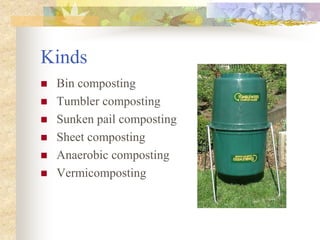
Kinds
 Bin composting
 Tumbler composting
 Sunken pail composting
 Sheet composting
 Anaerobic composting
 Vermicomposting
Why do it
 Environmentally responsible
 Keeps biodegradable waste out of
landfills and sewage plants
 Alternative to burning
 Gives you a vibrant garden
without chemical fertilizers
 Saves money
 Learning tool
What it involves
 Adding ingredients
 Maintaining proper temperature
 Turning
 Maintaining moisture
 Harvesting
Bin composting
“backyard composting”
Composting bins
 Ready made
 Homemade
 Bin-less pile
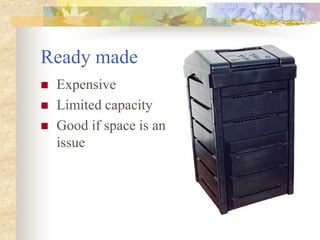
Ready made
 Expensive
 Limited capacity
 Good if space is an
issue
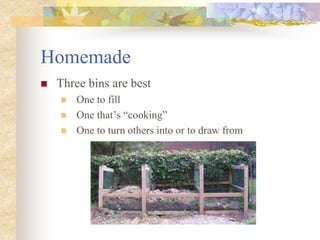
Homemade
 Three bins are best
 One to fill
 One that’s “cooking”
 One to turn others into or to draw from
Bin-less pile
 Just a pile with no partitions
 Hard to maintain sufficient depth to
achieve high enough temperatures
 Easy and nothing to build
 Moveable
What you can compost
 Yard waste
 Kitchen scraps
 Newspaper
 Cardboard
What not to compost
 Meat scraps
 Bones
 Dairy products
 Pet waste
 Diseased plants
 Invasive weeds
C:N ratio
 Should be 30 parts carbon to 1 part
nitrogen by weight
 Grass Clippings 19:1
 Leaves 40:1
 Equal weight of each would give you
approximately 30:1 ratio for pile
What’s what
 Brown (Carbon)
 Leaves
 Dirt
 Grocery bags
 Bird seed hulls
 Wood chips
 Green (Nitrogen)
 Grass clippings
 Plant clippings
 Fertilizer
 Coffee grounds
C:N ratio, my take
Whatever!
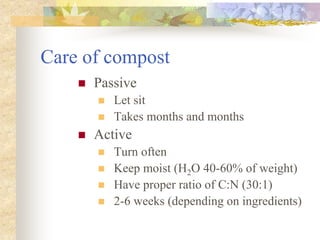
Care of compost
 Passive
 Let sit
 Takes months and months
 Active
 Turn often
 Keep moist (H2O 40-60% of weight)
 Have proper ratio of C:N (30:1)
 2-6 weeks (depending on ingredients)
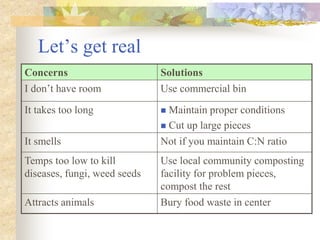
Let’s get real
Concerns Solutions
I don’t have room Use commercial bin
It takes too long  Maintain proper conditions
 Cut up large pieces
It smells Not if you maintain C:N ratio
Temps too low to kill
diseases, fungi, weed seeds
Use local community composting
facility for problem pieces,
compost the rest
Attracts animals Bury food waste in center
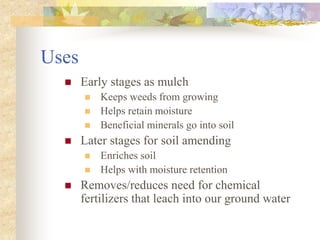
Uses
 Early stages as mulch
 Keeps weeds from growing
 Helps retain moisture
 Beneficial minerals go into soil
 Later stages for soil amending
 Enriches soil
 Helps with moisture retention
 Removes/reduces need for chemical
fertilizers that leach into our ground water
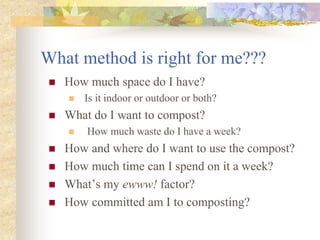
What method is right for me???
 How much space do I have?
 Is it indoor or outdoor or both?
 What do I want to compost?
 How much waste do I have a week?
 How and where do I want to use the compost?
 How much time can I spend on it a week?
 What’s my ewww! factor?
 How committed am I to composting?
Resources
 Purdue Extension office
 Library
 Internet
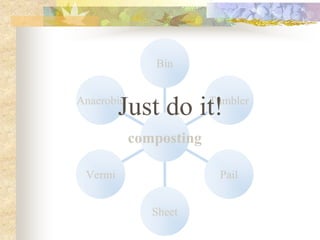
Anaerobic
Vermi
Sheet
Pail
Tumbler
Bin
composting
Just do it!

Compost (1).ppt

  • 1.
    Composting: the rotten truth AnneKolaczyk Purdue University Master Gardener ©2006Anne Kolaczyk
  • 2.
    Composting Composting is thetransformation of organic material (plant matter) through decomposition into a soil-like material called compost. Invertebrates (insects and earthworms), and microorganisms (bacteria and fungi) help in this transformation.
  • 3.
    Kinds  Bin composting Tumbler composting  Sunken pail composting  Sheet composting  Anaerobic composting  Vermicomposting
  • 4.
    Why do it Environmentally responsible  Keeps biodegradable waste out of landfills and sewage plants  Alternative to burning  Gives you a vibrant garden without chemical fertilizers  Saves money  Learning tool
  • 5.
    What it involves Adding ingredients  Maintaining proper temperature  Turning  Maintaining moisture  Harvesting
  • 6.
  • 7.
    Composting bins  Readymade  Homemade  Bin-less pile
  • 8.
    Ready made  Expensive Limited capacity  Good if space is an issue
  • 9.
    Homemade  Three binsare best  One to fill  One that’s “cooking”  One to turn others into or to draw from
  • 10.
    Bin-less pile  Justa pile with no partitions  Hard to maintain sufficient depth to achieve high enough temperatures  Easy and nothing to build  Moveable
  • 11.
    What you cancompost  Yard waste  Kitchen scraps  Newspaper  Cardboard
  • 12.
    What not tocompost  Meat scraps  Bones  Dairy products  Pet waste  Diseased plants  Invasive weeds
  • 13.
    C:N ratio  Shouldbe 30 parts carbon to 1 part nitrogen by weight  Grass Clippings 19:1  Leaves 40:1  Equal weight of each would give you approximately 30:1 ratio for pile
  • 14.
    What’s what  Brown(Carbon)  Leaves  Dirt  Grocery bags  Bird seed hulls  Wood chips  Green (Nitrogen)  Grass clippings  Plant clippings  Fertilizer  Coffee grounds
  • 15.
    C:N ratio, mytake Whatever!
  • 16.
    Care of compost Passive  Let sit  Takes months and months  Active  Turn often  Keep moist (H2O 40-60% of weight)  Have proper ratio of C:N (30:1)  2-6 weeks (depending on ingredients)
  • 17.
    Let’s get real ConcernsSolutions I don’t have room Use commercial bin It takes too long  Maintain proper conditions  Cut up large pieces It smells Not if you maintain C:N ratio Temps too low to kill diseases, fungi, weed seeds Use local community composting facility for problem pieces, compost the rest Attracts animals Bury food waste in center
  • 18.
    Uses  Early stagesas mulch  Keeps weeds from growing  Helps retain moisture  Beneficial minerals go into soil  Later stages for soil amending  Enriches soil  Helps with moisture retention  Removes/reduces need for chemical fertilizers that leach into our ground water
  • 19.
    What method isright for me???  How much space do I have?  Is it indoor or outdoor or both?  What do I want to compost?  How much waste do I have a week?  How and where do I want to use the compost?  How much time can I spend on it a week?  What’s my ewww! factor?  How committed am I to composting?
  • 20.
    Resources  Purdue Extensionoffice  Library  Internet
  • 21.