Nutritive Value of Meat
Dr. R. K. Jaiswal
Asstt. Prof.-cum-Jr. Scientist
Dept. of Livestock Products Technology
Bihar Veterinary College
Bihar Animal Sciences University
Patna-800014 (Bihar)
Introduction
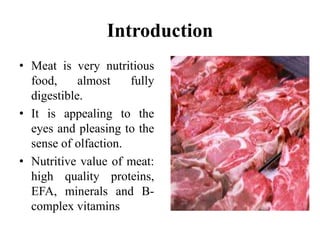
• Meat is very nutritious
food, almost fully
digestible.
• It is appealing to the
eyes and pleasing to the
sense of olfaction.
• Nutritive value of meat:
high quality proteins,
EFA, minerals and B-
complex vitamins
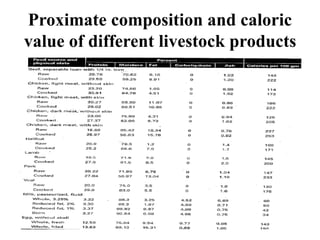
Proximate composition and caloric
value of different livestock products
Meat Proteins
• Meat is a concentrated source of proteins, superior to
the plant proteins.
• Most lean meat cuts contain 16.5 to 20% proteins.
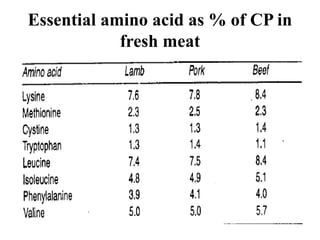
• Meat proteins are rich in essential amino acids.
• Myofibrillar and sarcoplasmic proteins are of very
high quality because they contain enough of essential
amino acids.
• Connective tissue proteins have lower levels of
tryptophan and sulphur containing amino acids.
• Collagen is essentially poor in lysine content.
Essential amino acid as % of CP in
fresh meat
Meat fats
• Ample amount of essential fatty acids (EFA)-
intramuscular fat.
• Calorific value of fat in meat is attributed to fatty
acids in triglycerides.
• Number of calories from lean meat is frequently less
than those derived from equal weights of many other
foods.
• Calorific value of particular meat depends on the
amount of fat in the meat cuts.
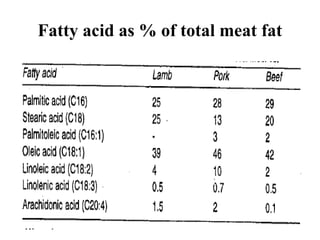
• Fatty acid in meat fat: oleic acid > palmitic acid >
stearic acid.
• EFA in human diets are linoleic, linolenic, and
arachidonic acids.
• Pork and organ meats are relatively good sources of
linoleic and linolenic acids.
• Excess dietary linoleic acid is converted to
arachidonic acid in human body to meet its demand.
• Meat fat always contains some quantity of cholesterol
• Organ meats have remarkable high cholesterol
content as compared to skeletal meat.
Fatty acid as % of total meat fat
Minerals
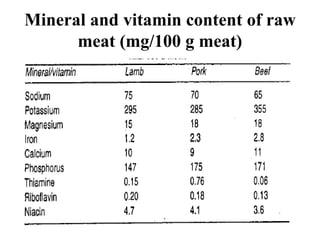
• Meat is a good source of all minerals except calcium.
• Potassium is most abundant followed by phosphorus.
• Meat is a good source of iron, which is required for
the synthesis of haemoglobin, myoglobin, etc.
• Since human body has a very limited capacity to store
iron, mainly in liver, it has to be a part of regular
dietary intake.
• Meat provides this important mineral in a form that is
easily absorbed in the system.
Vitamins
• Lean meat is an excellent source of B-complex group
of vitamins.
• Fat-soluble vitamin found in meat is associated with
body fat.
• Vitamin C is almost absent in lean meat, although
certain organs contain it in minor quantities.
• Among the B-complex group of vitamins thiamine,
riboflavin and niacin are present in high
concentrations .
• Lean pork has 5-10 times more thiamine than other
meats.
• Several organ meats have slightly less protein and fat
than skeletal meats.
• However, these are quite often more economical
sources of protein and vitamins than retail cuts of
skeletal meats.
• Liver is a rich source of iron, riboflavin, niacin and
vitamin.
Mineral and vitamin content of raw
meat (mg/100 g meat)

Composition and Nutritive-value-of-Meat-1.pptx

  • 1.
    Nutritive Value ofMeat Dr. R. K. Jaiswal Asstt. Prof.-cum-Jr. Scientist Dept. of Livestock Products Technology Bihar Veterinary College Bihar Animal Sciences University Patna-800014 (Bihar)
  • 2.
    Introduction • Meat isvery nutritious food, almost fully digestible. • It is appealing to the eyes and pleasing to the sense of olfaction. • Nutritive value of meat: high quality proteins, EFA, minerals and B- complex vitamins
  • 3.
    Proximate composition andcaloric value of different livestock products
  • 4.
    Meat Proteins • Meatis a concentrated source of proteins, superior to the plant proteins. • Most lean meat cuts contain 16.5 to 20% proteins. • Meat proteins are rich in essential amino acids. • Myofibrillar and sarcoplasmic proteins are of very high quality because they contain enough of essential amino acids. • Connective tissue proteins have lower levels of tryptophan and sulphur containing amino acids. • Collagen is essentially poor in lysine content.
  • 5.
    Essential amino acidas % of CP in fresh meat
  • 6.
    Meat fats • Ampleamount of essential fatty acids (EFA)- intramuscular fat. • Calorific value of fat in meat is attributed to fatty acids in triglycerides. • Number of calories from lean meat is frequently less than those derived from equal weights of many other foods. • Calorific value of particular meat depends on the amount of fat in the meat cuts.
  • 7.
    • Fatty acidin meat fat: oleic acid > palmitic acid > stearic acid. • EFA in human diets are linoleic, linolenic, and arachidonic acids. • Pork and organ meats are relatively good sources of linoleic and linolenic acids. • Excess dietary linoleic acid is converted to arachidonic acid in human body to meet its demand. • Meat fat always contains some quantity of cholesterol • Organ meats have remarkable high cholesterol content as compared to skeletal meat.
  • 8.
    Fatty acid as% of total meat fat
  • 9.
    Minerals • Meat isa good source of all minerals except calcium. • Potassium is most abundant followed by phosphorus. • Meat is a good source of iron, which is required for the synthesis of haemoglobin, myoglobin, etc. • Since human body has a very limited capacity to store iron, mainly in liver, it has to be a part of regular dietary intake. • Meat provides this important mineral in a form that is easily absorbed in the system.
  • 10.
    Vitamins • Lean meatis an excellent source of B-complex group of vitamins. • Fat-soluble vitamin found in meat is associated with body fat. • Vitamin C is almost absent in lean meat, although certain organs contain it in minor quantities. • Among the B-complex group of vitamins thiamine, riboflavin and niacin are present in high concentrations .
  • 11.
    • Lean porkhas 5-10 times more thiamine than other meats. • Several organ meats have slightly less protein and fat than skeletal meats. • However, these are quite often more economical sources of protein and vitamins than retail cuts of skeletal meats. • Liver is a rich source of iron, riboflavin, niacin and vitamin.
  • 12.
    Mineral and vitamincontent of raw meat (mg/100 g meat)