Medical and Neurological Complications
of Ischemic Stroke
Experience From the RANTTAS Trial
Karen C. Johnston, MD; Jiang Y. Li, MS; Patrick D. Lyden, MD; Sandra K. Hanson, MD;
Thomas E. Feasby, MD; Robert J. Adams, MD; R. Edward Faught, Jr, MD; E. Clarke Haley, Jr, MD;
for the RANTTAS InvestigatorsV
Background and Purpose—Medical and neurological complications after acute ischemic stroke may adversely impact outcome and
in some cases may be preventable. Limited data exist regarding the frequency of such complications occurring in the first days
after the ictus and the relationship of these complications to outcome. Our objective was to identify the types, severity, and
frequency of medical and neurological complications following acute ischemic stroke and to determine their role in mortality
and functional outcome.
Methods—Rates of serious (life-threatening) and nonserious medical and neurological complications and mortality were derived
from the placebo limb of the Randomized Trial of Tirilazad Mesylate in Acute Stroke (RANTTAS) database (nϭ279).
Complications were correlated with clinical outcome using logistic regression techniques.
Results—Of all patients, 95% had at least one complication. The most common serious medical complication was pneumonia (5%),
and the most common serious neurological complication was new cerebral infarction or extension of the admission infarction
(5%). The 3-month mortality was 14%; 51% of these deaths were attributed primarily to medical complications. Outcome was
significantly worse in patients with serious medical complications, after adjustment for baseline imbalances, as measured by the
Barthel Index (odds ratio [OR], 6.1; 95% confidence interval [CI], 2.5 to 15.1) and by the Glasgow Outcome Scale (OR, 11.6;
95% CI, 4.3 to 30.9). After death was discounted, serious medical complications were associated with severe disability at 3
months as determined by the Glasgow Outcome Scale (OR, 4.4; 95% CI, 1.3 to 14.8).
Conclusions—Medical complications that follow ischemic stroke not only influence mortality but may influence functional
outcome. (Stroke. 1998;29:447-453.)
Key Words: complications Ⅲ stroke Ⅲ stroke, acute Ⅲ stroke outcome
Ischemic stroke remains the third leading cause of death after
heart disease and cancer in the United States.1
Mortality rates
have declined over the last several decades1
and are now consis-
tently reported to be approximately 20%,2–5
although this rate
varies from 15% to 58% depending on stroke subtype.3
Medical
complications are also known to be common in stroke patients,
although the implications of these complications have less fre-
quently been studied. Davenport et al6
retrospectively reported
complication rates in 597 stroke patients (ischemic and hemor-
rhagic). They found 59% had complications and 23% died in the
hospital. Silver et al3
reported that approximately 40% of deaths
were from medical complications in a series of nearly 1000
ischemic stroke patients. They also noted that while most deaths
occurring in the first week were due to brain edema associated
with stroke, most deaths in the second and third weeks after stroke
could be attributed to medical complications.3
In a retrospective
autopsy review from 1966 to 1975, Bounds et al7
found that
Ͼ50% of deaths occurred secondary to medical complications.
Kalra et al8
reported medical complications occurring in 60% of
the 245 patients involved in a stroke rehabilitation program.
The relationship between serious medical complications and
functional outcome has not been systematically examined. The
purpose of this study was to describe the rates of medical and
neurological complications in an acute ischemic stroke cohort
and then to investigate the impact of these complications on
functional outcome and mortality.
Subjects and Methods
Our study population included the 279 fully eligible, vehicle-treated
stroke patients from the Randomized Trial of Tirilazad Mesylate in
Received September 22, 1997; final revision received November 18, 1997; accepted December 1, 1997.
From the Departments of Neurology (K.C.J., E.C.H.) and Neurosurgery (J.Y.L., E.C.H.), University of Virginia (Charlottesville); the Department of
Neurology, University of California at San Diego (P.D.L.); Park Nicollet Medical Foundation, St Louis Park, Minn (S.K.H.); Foothills Hospital, Calgary,
Alberta, Canada (T.E.F.); the Department of Neurology, Medical College of Georgia (Augusta) (R.J.A.); and the Department of Neurology, University of
Alabama (Birmingham) (R.E.F.).
V
The investigators and participating centers are listed in the Appendix.
This work was presented in part at the 49th Annual Meeting of the American Academy of Neurology, April 17, 1997.
Correspondence to Karen C. Johnston, MD, Department of Neurology, Box 394, University of Virginia Health Sciences Center, Charlottesville, VA 22908.
E-mail kj4v@virginia.edu
© 1998 American Heart Association, Inc.
447 by guest on February 5, 2016http://stroke.ahajournals.org/Downloaded from
Patients with Acute Stroke (RANTTAS).9
This was a multicenter,
randomized, double-blinded, vehicle-controlled trial that evaluated
the efficacy and safety of intravenous tirilazad mesylate in patients with
acute ischemic stroke. Patients were selected based on eligibility
criteria (see below) from all patients with acute ischemic stroke
admitted to each of 27 participating North American centers from
May 1993 through December 1994. The protocol was approved by
each center’s institutional review board.
Eligible patients included those who had a serious neurological
deficit due to focal ischemia, could be treated within 6 hours of stroke
onset, were 18 years of age or older, were not pregnant if female, and
from whom informed consent could be obtained (patient and/or
representative). Subjects were excluded if they had sensory loss, ataxia,
or dysarthria alone; coma due to mass effect by CT scan; severe
hypertension (mean arterial pressure of Ͼ160 mm Hg); seizure at
onset; stroke as a complication of a medical or surgical procedure (not
including cardiac catheterization or cerebral angiography); hemor-
rhage on initial CT scan; or severe concomitant medical, neurological,
or psychiatric illness. The most frequent reasons for exclusion included
stroke onset Ͼ6 hours (36%) and transient deficit (12%). Further
details of the study population have been described previously.9
Each
patient who met eligibility criteria was randomly assigned to receive
either tirilazad mesylate or vehicle (sodium citrate) diluted with
sodium chloride (recommended concentration, 0.9% or 0.45%) for a
total volume of 250 mL administered as a rapid intravenous infusion
over 10 to 30 minutes. A head CT scan without contrast was required
before administration of subsequent doses. If each component of the
complete evaluation (including laboratory work, CT scan, and clinical
examination) obtained before the second dose met the eligibility
criteria, then the patient was allowed to continue participation in the
study as a fully eligible patient. Only the fully eligible patients received
subsequent doses (250 mL per dose or an alternatively lower volume
[based on weight] for patients with central lines or who could not
tolerate the total volume) of study drug or vehicle every 6 hours for
11 additional doses (12 doses total).
Patients in the RANTTAS study were managed in an acute-care area
with current 1990s medical therapy according to standard practice in each
center. Treatment with corticosteroids and the calcium channel blockers
nicardipine and nimodipine, or any experimental stroke therapy (includ-
ing thrombolytic therapy at that time), was prohibited. Allowed medical
therapies included heparin, antiplatelet agents, volume expansion, vaso-
pressors, mannitol, anticonvulsants, and all antihypertensive agents except
for nicardipine and nimodipine. Emergency surgery was also allowed if
judged to be clinically indicated.
The frequency of complications and death was monitored continu-
ously and prospectively by the investigators and coordinators at each site
during the trial. A standardized medical event coding guide based on the
COSTART medical dictionary was used to code complication events.10
This dictionary includes both symptoms and diagnoses. Specific diagnoses
are used when known; however, the system allows a default to a symptom
when the diagnosis is unknown. Adverse events were only reported if
clinically significant. Data on serious complications (ie, those that were
immediately life-threatening, prolonged or resulted in hospitalization, or
resulted in death) were collected by investigators and coordinators at each
site for 3 months. Data on nonserious complications were collected for
the first 7 to 10 days only. Neurological complications included those that
occurred in the nervous system, whereas medical complications were all
other events reported. Clinical outcome was measured at 7 to 10 days,
discharge, and at 3 months according to the BI,11
the GOS,12
and the
NIHSS.13
Primary and contributing causes of death and disability were
designated by the treating investigator based on clinical judgment. New
infarction and extension of infarction were combined for the analysis due
to the somewhat arbitrary assignment of the event in some cases of limited
information.
Statistical Analysis
Poor outcome was defined as severe disability (a BI score of Ͻ6014
or a
GOS rating of severe disability or vegetative survival) or death at 3
months. For patients who were dead at 3 months, the worst possible score
(BIϭ0, GOSϭ5) was assigned. Logistic regression analysis15
was used to
evaluate the association between (1) serious events and poor outcome
(severe disability and death) and (2) serious events and severe disability.
Each analysis was adjusted for admission NIHSS score, patient age, and
the presence of diabetes mellitus, since each of these factors was indepen-
dently associated with outcome in the RANTTAS trial.9
Results
From May 1993 through December 1994, trial subjects were
selected by eligibility criteria from a total of 3853 patients admitted
within 12 hours of stroke onset registered in the combined stroke
logs of the centers. A total of 660 patients (329 vehicle-treated and
331 tirilazad-treated) were randomized. Of those who received
treatment, 556 (280 vehicle and 276 tirilazad) were fully eligible
and 104 (49 vehicle and 55 tirilazad) were subsequently excluded.
Of the 280 fully eligible, vehicle-treated group, 1 patient was
determined to not have a stroke but to have a conversion disorder,
and this patient was excluded from this analysis. The fully eligible,
vehicle-treated stroke group used for this analysis included 279
patients. Patients in the tirilazad-treated group were excluded
because this is not considered standard stroke care, and the
possibility that some of the events were drug related could not be
excluded. Patient characteristics are summarized in Table 1. The
median time from onset of symptoms to admission to the
emergency department was slightly more than 1 hour. The mean
age was 69 years, most patients were white with a slight male
preponderance, and the median NIHSS score reflected a moder-
ate deficit with a minimum NIHSS score of 1 and a maximum of
30. Over 60% of patients had a history of hypertension, over 50%
had a history of cardiac disease, and less than one quarter had a
history of prior transient ischemic attack or stroke. Over 90% of
patients were able to lead a full and independent life before the
presenting stroke. The rates of antiplatelet and anticoagulant
treatment prescribed for these patients, both in the first 10 days
and at the 3-month follow-up are reflected in Table 2. Nearly half
of patients were treated with aspirin in the first 10 days, and a
slightly lower proportion were taking aspirin at 3 months.
Intravenous heparin was used in 40% of patients in the first 10
days. Warfarin therapy was prescribed in approximately one third
of patients in the first 10 days and at 3 months.
Table 3 shows the ischemic stroke subtypes as determined by the
investigator at 7 to 10 days using the Trial of Org 10172 in Acute
Stroke Treatment (TOAST) criteria.16
Cardioembolic stroke was the
most common subtype, accounting for nearly a third of strokes.
Small-vessel occlusive disease and large-vessel atherosclerosis each
accounted for approximately one quarter of the strokes.
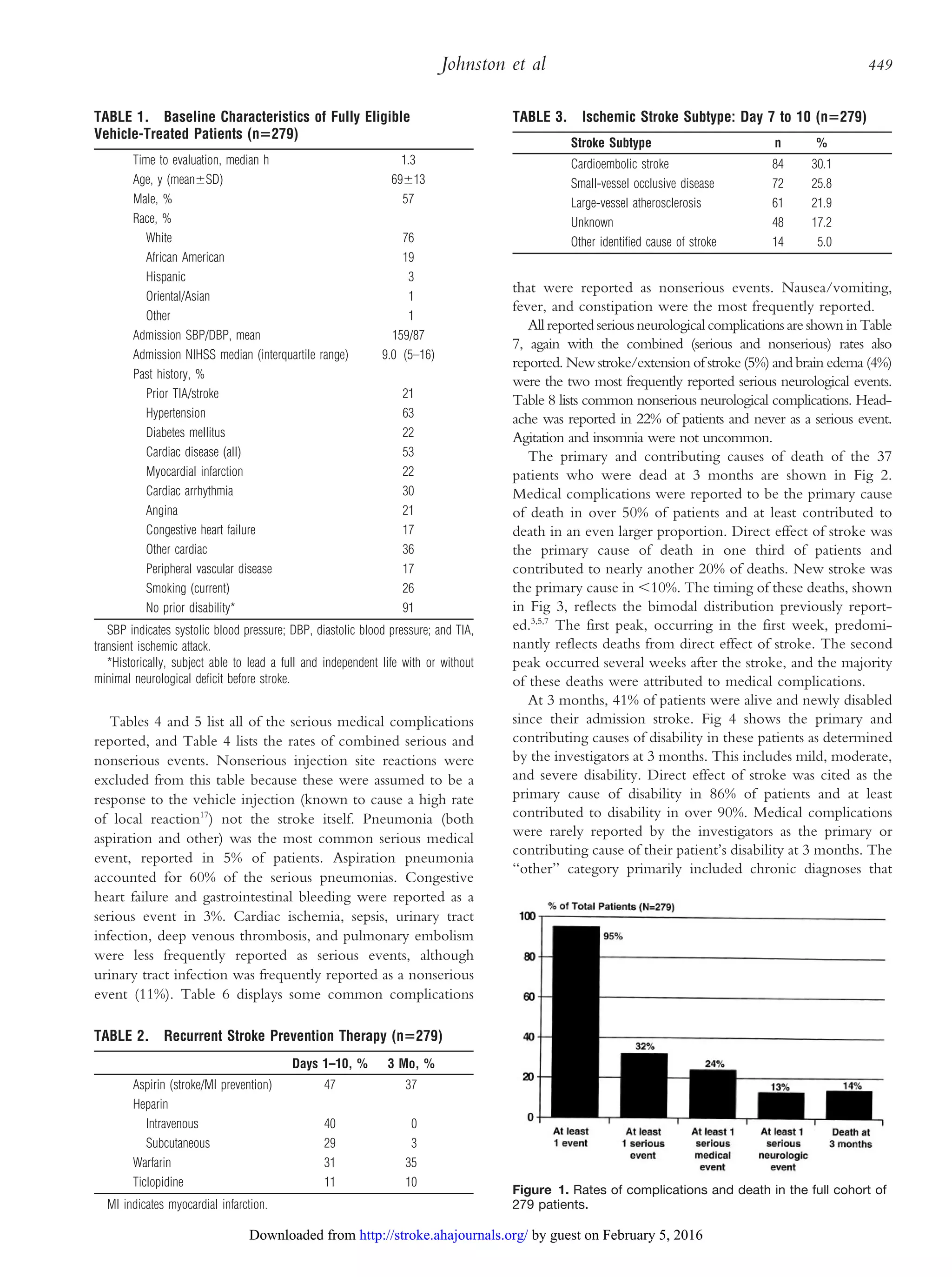
Fig 1 displays the rates of complications and death in the full
cohort of 279 patients. Ninety-five percent of patients had at
least one event, 32% had at least one serious event, and 14% of
patients were dead at 3 months.
Selected Abbreviations and Acronyms
BI ϭ Barthel Index
CI ϭ confidence interval
GOS ϭ Glasgow Outcome Scale
NIHSS ϭ National Institutes of Health Stroke Scale
OR ϭ odds ratio
RANTTAS ϭ Randomized Trial of Tirilazad Mesylate in Acute
Stroke
448 Complications of Stroke
by guest on February 5, 2016http://stroke.ahajournals.org/Downloaded from
Tables 4 and 5 list all of the serious medical complications
reported, and Table 4 lists the rates of combined serious and
nonserious events. Nonserious injection site reactions were
excluded from this table because these were assumed to be a
response to the vehicle injection (known to cause a high rate
of local reaction17
) not the stroke itself. Pneumonia (both
aspiration and other) was the most common serious medical
event, reported in 5% of patients. Aspiration pneumonia
accounted for 60% of the serious pneumonias. Congestive
heart failure and gastrointestinal bleeding were reported as a
serious event in 3%. Cardiac ischemia, sepsis, urinary tract
infection, deep venous thrombosis, and pulmonary embolism
were less frequently reported as serious events, although
urinary tract infection was frequently reported as a nonserious
event (11%). Table 6 displays some common complications
that were reported as nonserious events. Nausea/vomiting,
fever, and constipation were the most frequently reported.
All reported serious neurological complications are shown in Table
7, again with the combined (serious and nonserious) rates also
reported. New stroke/extension of stroke (5%) and brain edema (4%)
were the two most frequently reported serious neurological events.
Table 8 lists common nonserious neurological complications. Head-
ache was reported in 22% of patients and never as a serious event.
Agitation and insomnia were not uncommon.
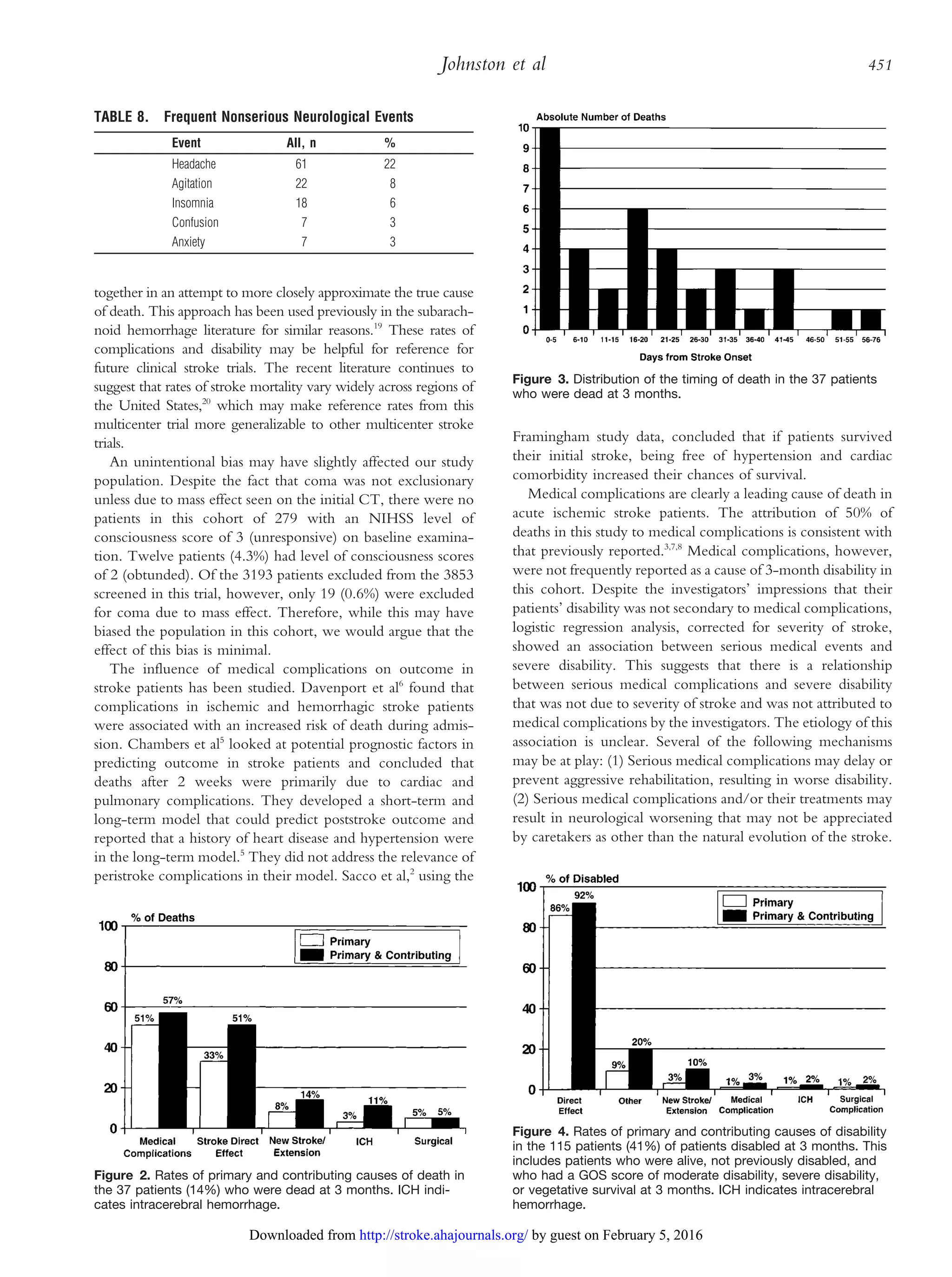
The primary and contributing causes of death of the 37
patients who were dead at 3 months are shown in Fig 2.
Medical complications were reported to be the primary cause
of death in over 50% of patients and at least contributed to
death in an even larger proportion. Direct effect of stroke was
the primary cause of death in one third of patients and
contributed to nearly another 20% of deaths. New stroke was
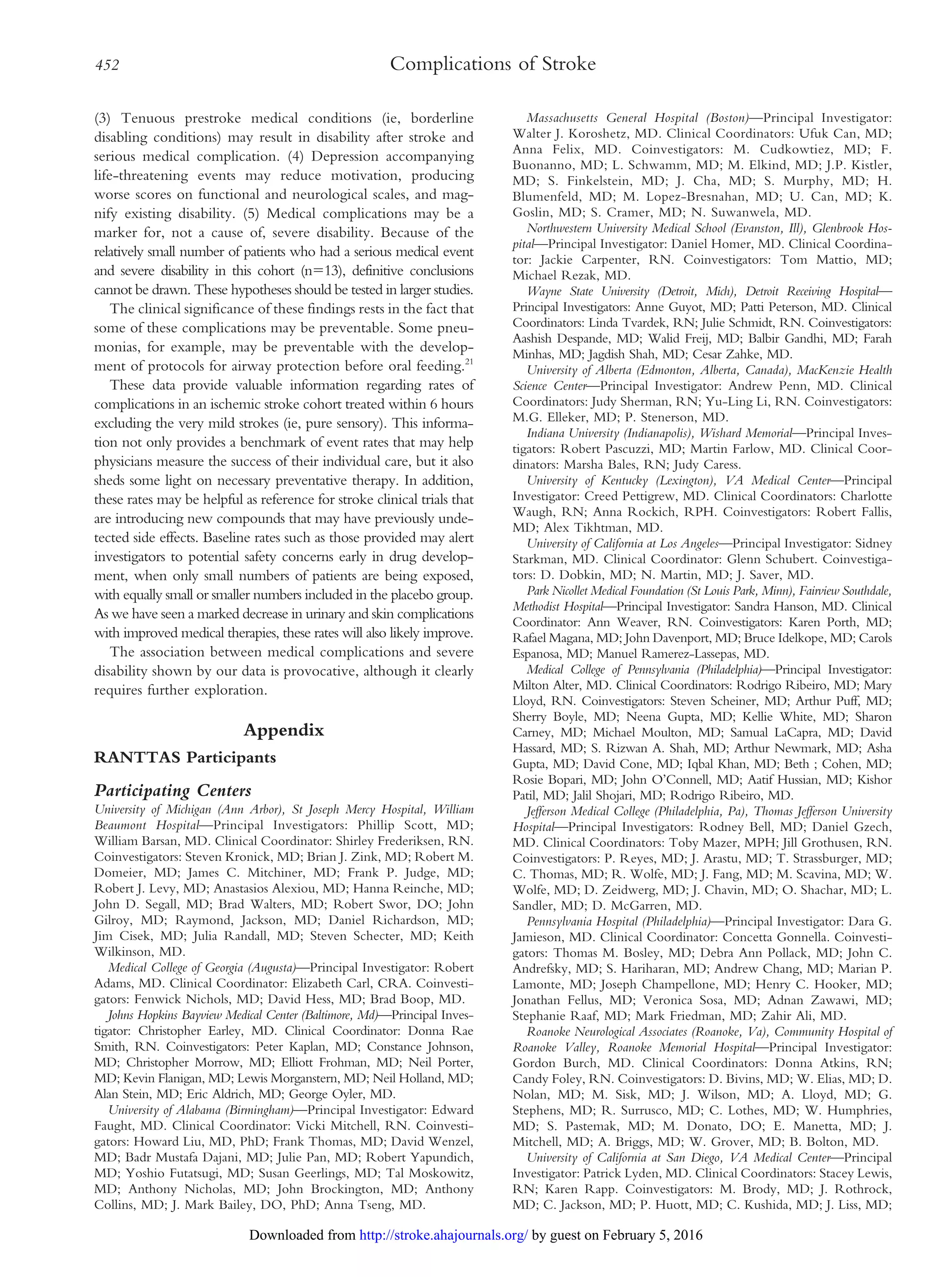
the primary cause in Ͻ10%. The timing of these deaths, shown
in Fig 3, reflects the bimodal distribution previously report-
ed.3,5,7
The first peak, occurring in the first week, predomi-
nantly reflects deaths from direct effect of stroke. The second
peak occurred several weeks after the stroke, and the majority
of these deaths were attributed to medical complications.
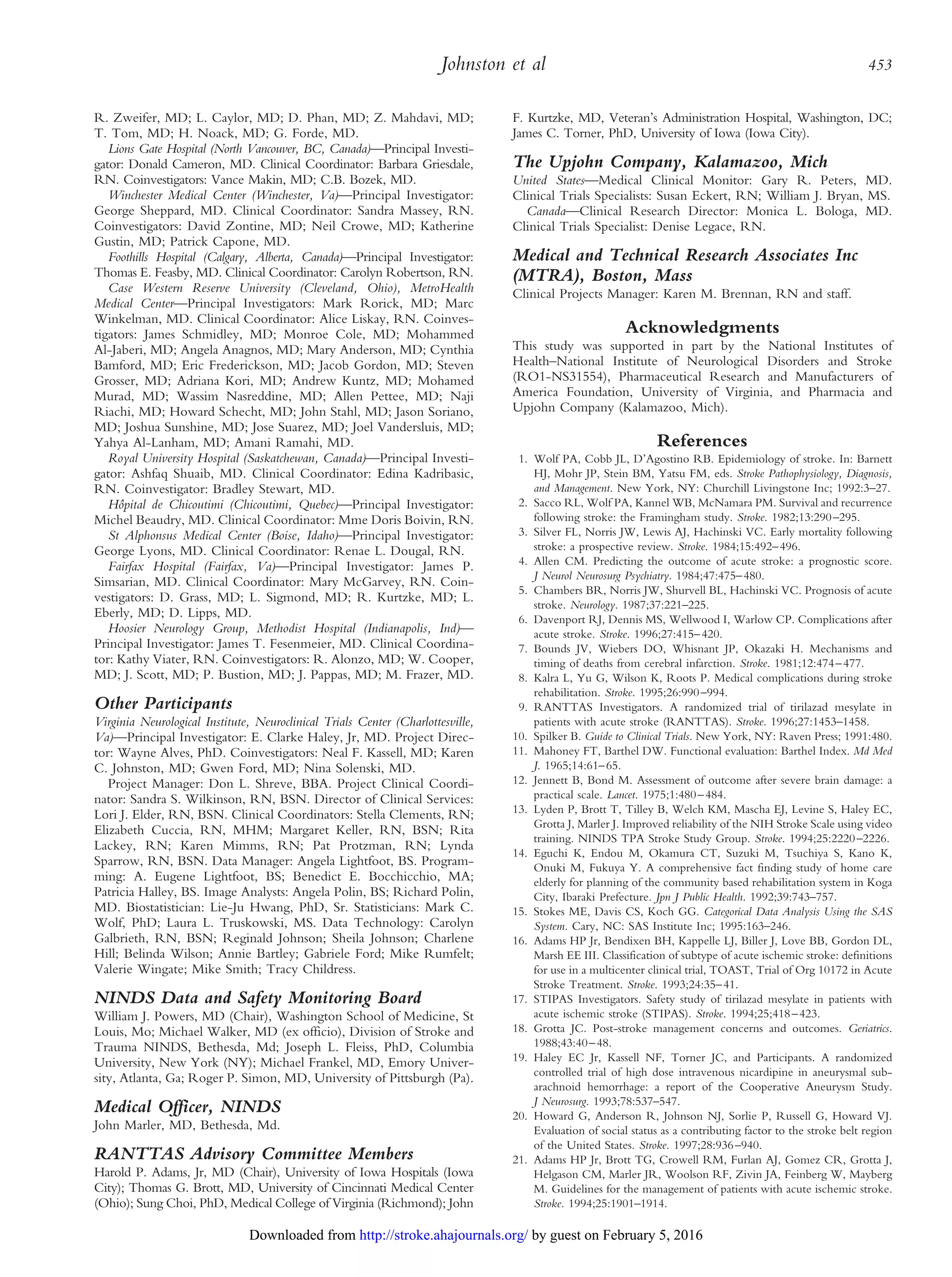
At 3 months, 41% of patients were alive and newly disabled
since their admission stroke. Fig 4 shows the primary and
contributing causes of disability in these patients as determined
by the investigators at 3 months. This includes mild, moderate,
and severe disability. Direct effect of stroke was cited as the
primary cause of disability in 86% of patients and at least
contributed to disability in over 90%. Medical complications
were rarely reported by the investigators as the primary or
contributing cause of their patient’s disability at 3 months. The
“other” category primarily included chronic diagnoses that
Figure 1. Rates of complications and death in the full cohort of
279 patients.
TABLE 2. Recurrent Stroke Prevention Therapy (n‫)972؍‬
Days 1–10, % 3 Mo, %
Aspirin (stroke/MI prevention) 47 37
Heparin
Intravenous 40 0
Subcutaneous 29 3
Warfarin 31 35
Ticlopidine 11 10
MI indicates myocardial infarction.
TABLE 3. Ischemic Stroke Subtype: Day 7 to 10 (n‫)972؍‬
Stroke Subtype n %
Cardioembolic stroke 84 30.1
Small-vessel occlusive disease 72 25.8
Large-vessel atherosclerosis 61 21.9
Unknown 48 17.2
Other identified cause of stroke 14 5.0
TABLE 1. Baseline Characteristics of Fully Eligible
Vehicle-Treated Patients (n‫)972؍‬
Time to evaluation, median h 1.3
Age, y (meanϮSD) 69Ϯ13
Male, % 57
Race, %
White 76
African American 19
Hispanic 3
Oriental/Asian 1
Other 1
Admission SBP/DBP, mean 159/87
Admission NIHSS median (interquartile range) 9.0 (5–16)
Past history, %
Prior TIA/stroke 21
Hypertension 63
Diabetes mellitus 22
Cardiac disease (all) 53
Myocardial infarction 22
Cardiac arrhythmia 30
Angina 21
Congestive heart failure 17
Other cardiac 36
Peripheral vascular disease 17
Smoking (current) 26
No prior disability* 91
SBP indicates systolic blood pressure; DBP, diastolic blood pressure; and TIA,
transient ischemic attack.
*Historically, subject able to lead a full and independent life with or without
minimal neurological deficit before stroke.
Johnston et al 449
by guest on February 5, 2016http://stroke.ahajournals.org/Downloaded from
were not previously disabling but became the primary cause of
disability after stroke. This category included such diagnoses as
arthritis, dementia, and alcohol use.
Logistic regression analysis, adjusted for admission NIHSS
score, age, and history of diabetes mellitus, demonstrated that
serious medical and serious neurological events were each
associated with poor outcome at 3 months. For patients with a
serious medical event, the OR for a poor outcome as measured
by the BI was 6.1 (95% CI, 2.5 to 15.1); by the GOS it was
11.6 (95% CI, 4.3 to 30.9). The OR in patients with serious
neurological complications was 11.3 (95% CI, 3.8 to 33.4) for
the BI and 9.4 (95% CI, 3.2 to 27.4) for the GOS.
Because this analysis included mortality as poor outcome, and
to clarify whether death was driving the association, the associa-
tion between serious events and severe disability alone was
examined, excluding the patients who were dead at 3 months.
Serious medical events were associated with severe disability as
determined by the GOS (OR, 4.4; 95% CI, 1.3 to 14.8) but not
the BI (OR, 1.2; 95% CI, 0.3 to 4.4). For comparison, serious
neurological complications were associated with severe disability
as measured by the BI (OR, 6.1; 95% CI, 1.4 to 26.1) and the
GOS (OR, 4.6; 95% CI, 1.2 to 17.8).
Discussion
This study provides prospectively collected multicenter data on
medical and neurological complications in an acute ischemic
stroke cohort admitted within 6 hours of onset of symptoms. It
furnishes the prospective data suggested by Davenport et al6
for a
fixed period of time after stroke. The frequency of complications
in this series is higher than previously reported. We speculate that
this is a result of the rigorous, acute, and prospective method used
for collection of complication data. The detailed safety data
collection used in this clinical trial was necessary for potential
registration of a new compound, and it likely provides a more
complete representation of complication events than previously
reported rates. The mortality rate in this cohort is similar to those
previously reported for ischemic stroke.2–5
The frequency of
severe disability (nonambulatory and totally dependent) has been
reported to be from 7% to 19%,18
which is consistent with the
16% severe disability rate in this study. Primary as well as primary
and contributing cause of death or disability were reported
because the cause of death or disability in this population is often
multifactorial, and the primary cause may be chosen arbitrarily.
We therefore report primary alone and primary and contributing
TABLE 5. Uncommon (<1%) Serious Medical Events
Back pain Respiratory failure
Wound infection Respiratory arrest
Hypertension Abdominal pain
Ventricular extrasystole Intestinal gangrene
Atrial fibrillation Gastrointestinal carcinoma
Hypotension Thrombotic thrombocytopenic purpura
Ventricular tachycardia Ruptured spleen
Bowel infarct Septic joint
Syncope Bursitis
Cardiac thrombus Urinary retention
Bronchitis Hematuria
Hemoptysis Prostate cancer
Laryngeal edema Acute renal failure
Lung hemorrhage Uterine hemorrhage
TABLE 6. Frequent Nonserious Medical Events
Event Total, n %
Nausea/vomiting 54 19
Fever 45 16
Constipation 44 16
Hypokalemia 31 11
Hyperglycemia 30 11
Bradycardia 18 6
Dysphagia 15 5
Skin rash 14 5
Urinary incontinence 14 5
Diarrhea 8 3
Anemia 8 3
Dyspepsia 7 3
TABLE 7. All Serious Neurological Events
Event Serious, n %
All,
n %
New infarct/extension 14 5 49 18
Brain edema 10 4 21 8
Intraparenchymal hemorrhage 6 2 12 4
Carotid stenosis 6 2 9 3
Brain herniation 6 2 7 3
Diminished level of consciousness 2 1 13 5
Seizure 2 1 8 3
Dizziness 1 Ͻ1 6 2
Depression 1 Ͻ1 4 1
Transient ischemic attack 1 Ͻ1 2 1
Hydrocephalus 1 Ͻ1 2 1
Acute toxic encephalopathy 1 Ͻ1 1 Ͻ1
Hallucination 1 Ͻ1 1 Ͻ1
Intracranial hypertension 1 Ͻ1 1 Ͻ1
TABLE 4. Most Common Serious Medical Events
Event Serious, n % Total, n %
Sepsis 3 1 3 1
Cellulitis 2 1 5 2
Congestive heart failure 7 3 30 11
Cardiac arrest 5 2 5 2
Angina/MI/cardiac ischemia 4 1 16 6
Deep venous thrombosis 3 1 6 2
Pulmonary embolism 3 1 4 1
Peripheral vascular disorder 2 1 2 1
Pneumonia (all) 13 5 27 10
Aspiration pneumonia alone 8 3 16 6
Dyspnea 3 1 11 4
Pulmonary edema 3 1 9 3
Gastrointestinal bleed 7 3 15 5
Dehydration 3 1 6 2
Hypoxia 2 1 8 3
Urinary tract infection 3 1 30 11
MI indicates myocardial infarction.
450 Complications of Stroke
by guest on February 5, 2016http://stroke.ahajournals.org/Downloaded from
together in an attempt to more closely approximate the true cause
of death. This approach has been used previously in the subarach-
noid hemorrhage literature for similar reasons.19
These rates of
complications and disability may be helpful for reference for
future clinical stroke trials. The recent literature continues to
suggest that rates of stroke mortality vary widely across regions of
the United States,20
which may make reference rates from this
multicenter trial more generalizable to other multicenter stroke
trials.
An unintentional bias may have slightly affected our study
population. Despite the fact that coma was not exclusionary
unless due to mass effect seen on the initial CT, there were no
patients in this cohort of 279 with an NIHSS level of
consciousness score of 3 (unresponsive) on baseline examina-
tion. Twelve patients (4.3%) had level of consciousness scores
of 2 (obtunded). Of the 3193 patients excluded from the 3853
screened in this trial, however, only 19 (0.6%) were excluded
for coma due to mass effect. Therefore, while this may have
biased the population in this cohort, we would argue that the
effect of this bias is minimal.
The influence of medical complications on outcome in
stroke patients has been studied. Davenport et al6
found that
complications in ischemic and hemorrhagic stroke patients
were associated with an increased risk of death during admis-
sion. Chambers et al5
looked at potential prognostic factors in
predicting outcome in stroke patients and concluded that
deaths after 2 weeks were primarily due to cardiac and
pulmonary complications. They developed a short-term and
long-term model that could predict poststroke outcome and
reported that a history of heart disease and hypertension were
in the long-term model.5
They did not address the relevance of
peristroke complications in their model. Sacco et al,2
using the
Framingham study data, concluded that if patients survived
their initial stroke, being free of hypertension and cardiac
comorbidity increased their chances of survival.
Medical complications are clearly a leading cause of death in
acute ischemic stroke patients. The attribution of 50% of
deaths in this study to medical complications is consistent with
that previously reported.3,7,8
Medical complications, however,
were not frequently reported as a cause of 3-month disability in
this cohort. Despite the investigators’ impressions that their
patients’ disability was not secondary to medical complications,
logistic regression analysis, corrected for severity of stroke,
showed an association between serious medical events and
severe disability. This suggests that there is a relationship
between serious medical complications and severe disability
that was not due to severity of stroke and was not attributed to
medical complications by the investigators. The etiology of this
association is unclear. Several of the following mechanisms
may be at play: (1) Serious medical complications may delay or
prevent aggressive rehabilitation, resulting in worse disability.
(2) Serious medical complications and/or their treatments may
result in neurological worsening that may not be appreciated
by caretakers as other than the natural evolution of the stroke.
Figure 2. Rates of primary and contributing causes of death in
the 37 patients (14%) who were dead at 3 months. ICH indi-
cates intracerebral hemorrhage.
Figure 3. Distribution of the timing of death in the 37 patients
who were dead at 3 months.
Figure 4. Rates of primary and contributing causes of disability
in the 115 patients (41%) of patients disabled at 3 months. This
includes patients who were alive, not previously disabled, and
who had a GOS score of moderate disability, severe disability,
or vegetative survival at 3 months. ICH indicates intracerebral
hemorrhage.
TABLE 8. Frequent Nonserious Neurological Events
Event All, n %
Headache 61 22
Agitation 22 8
Insomnia 18 6
Confusion 7 3
Anxiety 7 3
Johnston et al 451
by guest on February 5, 2016http://stroke.ahajournals.org/Downloaded from
(3) Tenuous prestroke medical conditions (ie, borderline
disabling conditions) may result in disability after stroke and
serious medical complication. (4) Depression accompanying
life-threatening events may reduce motivation, producing
worse scores on functional and neurological scales, and mag-
nify existing disability. (5) Medical complications may be a
marker for, not a cause of, severe disability. Because of the
relatively small number of patients who had a serious medical event
and severe disability in this cohort (nϭ13), definitive conclusions
cannot be drawn. These hypotheses should be tested in larger studies.
The clinical significance of these findings rests in the fact that
some of these complications may be preventable. Some pneu-
monias, for example, may be preventable with the develop-
ment of protocols for airway protection before oral feeding.21
These data provide valuable information regarding rates of
complications in an ischemic stroke cohort treated within 6 hours
excluding the very mild strokes (ie, pure sensory). This informa-
tion not only provides a benchmark of event rates that may help
physicians measure the success of their individual care, but it also
sheds some light on necessary preventative therapy. In addition,
these rates may be helpful as reference for stroke clinical trials that
are introducing new compounds that may have previously unde-
tected side effects. Baseline rates such as those provided may alert
investigators to potential safety concerns early in drug develop-
ment, when only small numbers of patients are being exposed,
with equally small or smaller numbers included in the placebo group.
As we have seen a marked decrease in urinary and skin complications
with improved medical therapies, these rates will also likely improve.
The association between medical complications and severe
disability shown by our data is provocative, although it clearly
requires further exploration.
Appendix
RANTTAS Participants
Participating Centers
University of Michigan (Ann Arbor), St Joseph Mercy Hospital, William
Beaumont Hospital—Principal Investigators: Phillip Scott, MD;
William Barsan, MD. Clinical Coordinator: Shirley Frederiksen, RN.
Coinvestigators: Steven Kronick, MD; Brian J. Zink, MD; Robert M.
Domeier, MD; James C. Mitchiner, MD; Frank P. Judge, MD;
Robert J. Levy, MD; Anastasios Alexiou, MD; Hanna Reinche, MD;
John D. Segall, MD; Brad Walters, MD; Robert Swor, DO; John
Gilroy, MD; Raymond, Jackson, MD; Daniel Richardson, MD;
Jim Cisek, MD; Julia Randall, MD; Steven Schecter, MD; Keith
Wilkinson, MD.
Medical College of Georgia (Augusta)—Principal Investigator: Robert
Adams, MD. Clinical Coordinator: Elizabeth Carl, CRA. Coinvesti-
gators: Fenwick Nichols, MD; David Hess, MD; Brad Boop, MD.
Johns Hopkins Bayview Medical Center (Baltimore, Md)—Principal Inves-
tigator: Christopher Earley, MD. Clinical Coordinator: Donna Rae
Smith, RN. Coinvestigators: Peter Kaplan, MD; Constance Johnson,
MD; Christopher Morrow, MD; Elliott Frohman, MD; Neil Porter,
MD; Kevin Flanigan, MD; Lewis Morganstern, MD; Neil Holland, MD;
Alan Stein, MD; Eric Aldrich, MD; George Oyler, MD.
University of Alabama (Birmingham)—Principal Investigator: Edward
Faught, MD. Clinical Coordinator: Vicki Mitchell, RN. Coinvesti-
gators: Howard Liu, MD, PhD; Frank Thomas, MD; David Wenzel,
MD; Badr Mustafa Dajani, MD; Julie Pan, MD; Robert Yapundich,
MD; Yoshio Futatsugi, MD; Susan Geerlings, MD; Tal Moskowitz,
MD; Anthony Nicholas, MD; John Brockington, MD; Anthony
Collins, MD; J. Mark Bailey, DO, PhD; Anna Tseng, MD.
Massachusetts General Hospital (Boston)—Principal Investigator:
Walter J. Koroshetz, MD. Clinical Coordinators: Ufuk Can, MD;
Anna Felix, MD. Coinvestigators: M. Cudkowtiez, MD; F.
Buonanno, MD; L. Schwamm, MD; M. Elkind, MD; J.P. Kistler,
MD; S. Finkelstein, MD; J. Cha, MD; S. Murphy, MD; H.
Blumenfeld, MD; M. Lopez-Bresnahan, MD; U. Can, MD; K.
Goslin, MD; S. Cramer, MD; N. Suwanwela, MD.
Northwestern University Medical School (Evanston, Ill), Glenbrook Hos-
pital—Principal Investigator: Daniel Homer, MD. Clinical Coordina-
tor: Jackie Carpenter, RN. Coinvestigators: Tom Mattio, MD;
Michael Rezak, MD.
Wayne State University (Detroit, Mich), Detroit Receiving Hospital—
Principal Investigators: Anne Guyot, MD; Patti Peterson, MD. Clinical
Coordinators: Linda Tvardek, RN; Julie Schmidt, RN. Coinvestigators:
Aashish Despande, MD; Walid Freij, MD; Balbir Gandhi, MD; Farah
Minhas, MD; Jagdish Shah, MD; Cesar Zahke, MD.
University of Alberta (Edmonton, Alberta, Canada), MacKenzie Health
Science Center—Principal Investigator: Andrew Penn, MD. Clinical
Coordinators: Judy Sherman, RN; Yu-Ling Li, RN. Coinvestigators:
M.G. Elleker, MD; P. Stenerson, MD.
Indiana University (Indianapolis), Wishard Memorial—Principal Inves-
tigators: Robert Pascuzzi, MD; Martin Farlow, MD. Clinical Coor-
dinators: Marsha Bales, RN; Judy Caress.
University of Kentucky (Lexington), VA Medical Center—Principal
Investigator: Creed Pettigrew, MD. Clinical Coordinators: Charlotte
Waugh, RN; Anna Rockich, RPH. Coinvestigators: Robert Fallis,
MD; Alex Tikhtman, MD.
University of California at Los Angeles—Principal Investigator: Sidney
Starkman, MD. Clinical Coordinator: Glenn Schubert. Coinvestiga-
tors: D. Dobkin, MD; N. Martin, MD; J. Saver, MD.
Park Nicollet Medical Foundation (St Louis Park, Minn), Fairview Southdale,
Methodist Hospital—Principal Investigator: Sandra Hanson, MD. Clinical
Coordinator: Ann Weaver, RN. Coinvestigators: Karen Porth, MD;
Rafael Magana, MD; John Davenport, MD; Bruce Idelkope, MD; Carols
Espanosa, MD; Manuel Ramerez-Lassepas, MD.
Medical College of Pennsylvania (Philadelphia)—Principal Investigator:
Milton Alter, MD. Clinical Coordinators: Rodrigo Ribeiro, MD; Mary
Lloyd, RN. Coinvestigators: Steven Scheiner, MD; Arthur Puff, MD;
Sherry Boyle, MD; Neena Gupta, MD; Kellie White, MD; Sharon
Carney, MD; Michael Moulton, MD; Samual LaCapra, MD; David
Hassard, MD; S. Rizwan A. Shah, MD; Arthur Newmark, MD; Asha
Gupta, MD; David Cone, MD; Iqbal Khan, MD; Beth ; Cohen, MD;
Rosie Bopari, MD; John O’Connell, MD; Aatif Hussian, MD; Kishor
Patil, MD; Jalil Shojari, MD; Rodrigo Ribeiro, MD.
Jefferson Medical College (Philadelphia, Pa), Thomas Jefferson University
Hospital—Principal Investigators: Rodney Bell, MD; Daniel Gzech,
MD. Clinical Coordinators: Toby Mazer, MPH; Jill Grothusen, RN.
Coinvestigators: P. Reyes, MD; J. Arastu, MD; T. Strassburger, MD;
C. Thomas, MD; R. Wolfe, MD; J. Fang, MD; M. Scavina, MD; W.
Wolfe, MD; D. Zeidwerg, MD; J. Chavin, MD; O. Shachar, MD; L.
Sandler, MD; D. McGarren, MD.
Pennsylvania Hospital (Philadelphia)—Principal Investigator: Dara G.
Jamieson, MD. Clinical Coordinator: Concetta Gonnella. Coinvesti-
gators: Thomas M. Bosley, MD; Debra Ann Pollack, MD; John C.
Andrefsky, MD; S. Hariharan, MD; Andrew Chang, MD; Marian P.
Lamonte, MD; Joseph Champellone, MD; Henry C. Hooker, MD;
Jonathan Fellus, MD; Veronica Sosa, MD; Adnan Zawawi, MD;
Stephanie Raaf, MD; Mark Friedman, MD; Zahir Ali, MD.
Roanoke Neurological Associates (Roanoke, Va), Community Hospital of
Roanoke Valley, Roanoke Memorial Hospital—Principal Investigator:
Gordon Burch, MD. Clinical Coordinators: Donna Atkins, RN;
Candy Foley, RN. Coinvestigators: D. Bivins, MD; W. Elias, MD; D.
Nolan, MD; M. Sisk, MD; J. Wilson, MD; A. Lloyd, MD; G.
Stephens, MD; R. Surrusco, MD; C. Lothes, MD; W. Humphries,
MD; S. Pastemak, MD; M. Donato, DO; E. Manetta, MD; J.
Mitchell, MD; A. Briggs, MD; W. Grover, MD; B. Bolton, MD.
University of California at San Diego, VA Medical Center—Principal
Investigator: Patrick Lyden, MD. Clinical Coordinators: Stacey Lewis,
RN; Karen Rapp. Coinvestigators: M. Brody, MD; J. Rothrock,
MD; C. Jackson, MD; P. Huott, MD; C. Kushida, MD; J. Liss, MD;
452 Complications of Stroke
by guest on February 5, 2016http://stroke.ahajournals.org/Downloaded from
R. Zweifer, MD; L. Caylor, MD; D. Phan, MD; Z. Mahdavi, MD;
T. Tom, MD; H. Noack, MD; G. Forde, MD.
Lions Gate Hospital (North Vancouver, BC, Canada)—Principal Investi-
gator: Donald Cameron, MD. Clinical Coordinator: Barbara Griesdale,
RN. Coinvestigators: Vance Makin, MD; C.B. Bozek, MD.
Winchester Medical Center (Winchester, Va)—Principal Investigator:
George Sheppard, MD. Clinical Coordinator: Sandra Massey, RN.
Coinvestigators: David Zontine, MD; Neil Crowe, MD; Katherine
Gustin, MD; Patrick Capone, MD.
Foothills Hospital (Calgary, Alberta, Canada)—Principal Investigator:
Thomas E. Feasby, MD. Clinical Coordinator: Carolyn Robertson, RN.
Case Western Reserve University (Cleveland, Ohio), MetroHealth
Medical Center—Principal Investigators: Mark Rorick, MD; Marc
Winkelman, MD. Clinical Coordinator: Alice Liskay, RN. Coinves-
tigators: James Schmidley, MD; Monroe Cole, MD; Mohammed
Al-Jaberi, MD; Angela Anagnos, MD; Mary Anderson, MD; Cynthia
Bamford, MD; Eric Frederickson, MD; Jacob Gordon, MD; Steven
Grosser, MD; Adriana Kori, MD; Andrew Kuntz, MD; Mohamed
Murad, MD; Wassim Nasreddine, MD; Allen Pettee, MD; Naji
Riachi, MD; Howard Schecht, MD; John Stahl, MD; Jason Soriano,
MD; Joshua Sunshine, MD; Jose Suarez, MD; Joel Vandersluis, MD;
Yahya Al-Lanham, MD; Amani Ramahi, MD.
Royal University Hospital (Saskatchewan, Canada)—Principal Investi-
gator: Ashfaq Shuaib, MD. Clinical Coordinator: Edina Kadribasic,
RN. Coinvestigator: Bradley Stewart, MD.
Hoˆpital de Chicoutimi (Chicoutimi, Quebec)—Principal Investigator:
Michel Beaudry, MD. Clinical Coordinator: Mme Doris Boivin, RN.
St Alphonsus Medical Center (Boise, Idaho)—Principal Investigator:
George Lyons, MD. Clinical Coordinator: Renae L. Dougal, RN.
Fairfax Hospital (Fairfax, Va)—Principal Investigator: James P.
Simsarian, MD. Clinical Coordinator: Mary McGarvey, RN. Coin-
vestigators: D. Grass, MD; L. Sigmond, MD; R. Kurtzke, MD; L.
Eberly, MD; D. Lipps, MD.
Hoosier Neurology Group, Methodist Hospital (Indianapolis, Ind)—
Principal Investigator: James T. Fesenmeier, MD. Clinical Coordina-
tor: Kathy Viater, RN. Coinvestigators: R. Alonzo, MD; W. Cooper,
MD; J. Scott, MD; P. Bustion, MD; J. Pappas, MD; M. Frazer, MD.
Other Participants
Virginia Neurological Institute, Neuroclinical Trials Center (Charlottesville,
Va)—Principal Investigator: E. Clarke Haley, Jr, MD. Project Direc-
tor: Wayne Alves, PhD. Coinvestigators: Neal F. Kassell, MD; Karen
C. Johnston, MD; Gwen Ford, MD; Nina Solenski, MD.
Project Manager: Don L. Shreve, BBA. Project Clinical Coordi-
nator: Sandra S. Wilkinson, RN, BSN. Director of Clinical Services:
Lori J. Elder, RN, BSN. Clinical Coordinators: Stella Clements, RN;
Elizabeth Cuccia, RN, MHM; Margaret Keller, RN, BSN; Rita
Lackey, RN; Karen Mimms, RN; Pat Protzman, RN; Lynda
Sparrow, RN, BSN. Data Manager: Angela Lightfoot, BS. Program-
ming: A. Eugene Lightfoot, BS; Benedict E. Bocchicchio, MA;
Patricia Halley, BS. Image Analysts: Angela Polin, BS; Richard Polin,
MD. Biostatistician: Lie-Ju Hwang, PhD, Sr. Statisticians: Mark C.
Wolf, PhD; Laura L. Truskowski, MS. Data Technology: Carolyn
Galbrieth, RN, BSN; Reginald Johnson; Sheila Johnson; Charlene
Hill; Belinda Wilson; Annie Bartley; Gabriele Ford; Mike Rumfelt;
Valerie Wingate; Mike Smith; Tracy Childress.
NINDS Data and Safety Monitoring Board
William J. Powers, MD (Chair), Washington School of Medicine, St
Louis, Mo; Michael Walker, MD (ex officio), Division of Stroke and
Trauma NINDS, Bethesda, Md; Joseph L. Fleiss, PhD, Columbia
University, New York (NY); Michael Frankel, MD, Emory Univer-
sity, Atlanta, Ga; Roger P. Simon, MD, University of Pittsburgh (Pa).
Medical Officer, NINDS
John Marler, MD, Bethesda, Md.
RANTTAS Advisory Committee Members
Harold P. Adams, Jr, MD (Chair), University of Iowa Hospitals (Iowa
City); Thomas G. Brott, MD, University of Cincinnati Medical Center
(Ohio); Sung Choi, PhD, Medical College of Virginia (Richmond); John
F. Kurtzke, MD, Veteran’s Administration Hospital, Washington, DC;
James C. Torner, PhD, University of Iowa (Iowa City).
The Upjohn Company, Kalamazoo, Mich
United States—Medical Clinical Monitor: Gary R. Peters, MD.
Clinical Trials Specialists: Susan Eckert, RN; William J. Bryan, MS.
Canada—Clinical Research Director: Monica L. Bologa, MD.
Clinical Trials Specialist: Denise Legace, RN.
Medical and Technical Research Associates Inc
(MTRA), Boston, Mass
Clinical Projects Manager: Karen M. Brennan, RN and staff.
Acknowledgments
This study was supported in part by the National Institutes of
Health–National Institute of Neurological Disorders and Stroke
(RO1-NS31554), Pharmaceutical Research and Manufacturers of
America Foundation, University of Virginia, and Pharmacia and
Upjohn Company (Kalamazoo, Mich).
References
1. Wolf PA, Cobb JL, D’Agostino RB. Epidemiology of stroke. In: Barnett
HJ, Mohr JP, Stein BM, Yatsu FM, eds. Stroke Pathophysiology, Diagnosis,
and Management. New York, NY: Churchill Livingstone Inc; 1992:3–27.
2. Sacco RL, Wolf PA, Kannel WB, McNamara PM. Survival and recurrence
following stroke: the Framingham study. Stroke. 1982;13:290–295.
3. Silver FL, Norris JW, Lewis AJ, Hachinski VC. Early mortality following
stroke: a prospective review. Stroke. 1984;15:492–496.
4. Allen CM. Predicting the outcome of acute stroke: a prognostic score.
J Neurol Neurosurg Psychiatry. 1984;47:475–480.
5. Chambers BR, Norris JW, Shurvell BL, Hachinski VC. Prognosis of acute
stroke. Neurology. 1987;37:221–225.
6. Davenport RJ, Dennis MS, Wellwood I, Warlow CP. Complications after
acute stroke. Stroke. 1996;27:415–420.
7. Bounds JV, Wiebers DO, Whisnant JP, Okazaki H. Mechanisms and
timing of deaths from cerebral infarction. Stroke. 1981;12:474–477.
8. Kalra L, Yu G, Wilson K, Roots P. Medical complications during stroke
rehabilitation. Stroke. 1995;26:990–994.
9. RANTTAS Investigators. A randomized trial of tirilazad mesylate in
patients with acute stroke (RANTTAS). Stroke. 1996;27:1453–1458.
10. Spilker B. Guide to Clinical Trials. New York, NY: Raven Press; 1991:480.
11. Mahoney FT, Barthel DW. Functional evaluation: Barthel Index. Md Med
J. 1965;14:61–65.
12. Jennett B, Bond M. Assessment of outcome after severe brain damage: a
practical scale. Lancet. 1975;1:480–484.
13. Lyden P, Brott T, Tilley B, Welch KM, Mascha EJ, Levine S, Haley EC,
Grotta J, Marler J. Improved reliability of the NIH Stroke Scale using video
training. NINDS TPA Stroke Study Group. Stroke. 1994;25:2220–2226.
14. Eguchi K, Endou M, Okamura CT, Suzuki M, Tsuchiya S, Kano K,
Onuki M, Fukuya Y. A comprehensive fact finding study of home care
elderly for planning of the community based rehabilitation system in Koga
City, Ibaraki Prefecture. Jpn J Public Health. 1992;39:743–757.
15. Stokes ME, Davis CS, Koch GG. Categorical Data Analysis Using the SAS
System. Cary, NC: SAS Institute Inc; 1995:163–246.
16. Adams HP Jr, Bendixen BH, Kappelle LJ, Biller J, Love BB, Gordon DL,
Marsh EE III. Classification of subtype of acute ischemic stroke: definitions
for use in a multicenter clinical trial, TOAST, Trial of Org 10172 in Acute
Stroke Treatment. Stroke. 1993;24:35–41.
17. STIPAS Investigators. Safety study of tirilazad mesylate in patients with
acute ischemic stroke (STIPAS). Stroke. 1994;25;418–423.
18. Grotta JC. Post-stroke management concerns and outcomes. Geriatrics.
1988;43:40–48.
19. Haley EC Jr, Kassell NF, Torner JC, and Participants. A randomized
controlled trial of high dose intravenous nicardipine in aneurysmal sub-
arachnoid hemorrhage: a report of the Cooperative Aneurysm Study.
J Neurosurg. 1993;78:537–547.
20. Howard G, Anderson R, Johnson NJ, Sorlie P, Russell G, Howard VJ.
Evaluation of social status as a contributing factor to the stroke belt region
of the United States. Stroke. 1997;28:936–940.
21. Adams HP Jr, Brott TG, Crowell RM, Furlan AJ, Gomez CR, Grotta J,
Helgason CM, Marler JR, Woolson RF, Zivin JA, Feinberg W, Mayberg
M. Guidelines for the management of patients with acute ischemic stroke.
Stroke. 1994;25:1901–1914.
Johnston et al 453
by guest on February 5, 2016http://stroke.ahajournals.org/Downloaded from
for the RANTTAS Investigators
J. Adams, R. Edward Faught, Jr and E. Clarke Haley, Jr
Karen C. Johnston, Jiang Y. Li, Patrick D. Lyden, Sandra K. Hanson, Thomas E. Feasby, Robert
RANTTAS Trial
Medical and Neurological Complications of Ischemic Stroke: Experience From the
Print ISSN: 0039-2499. Online ISSN: 1524-4628
Copyright © 1998 American Heart Association, Inc. All rights reserved.
is published by the American Heart Association, 7272 Greenville Avenue, Dallas, TX 75231Stroke
doi: 10.1161/01.STR.29.2.447
1998;29:447-453Stroke.
http://stroke.ahajournals.org/content/29/2/447
World Wide Web at:
The online version of this article, along with updated information and services, is located on the
http://stroke.ahajournals.org//subscriptions/
is online at:StrokeInformation about subscribing toSubscriptions:
http://www.lww.com/reprints
Information about reprints can be found online at:Reprints:
document.Permissions and Rights Question and Answerprocess is available in the
Request Permissions in the middle column of the Web page under Services. Further information about this
Once the online version of the published article for which permission is being requested is located, click
can be obtained via RightsLink, a service of the Copyright Clearance Center, not the Editorial Office.Strokein
Requests for permissions to reproduce figures, tables, or portions of articles originally publishedPermissions:
by guest on February 5, 2016http://stroke.ahajournals.org/Downloaded from

Complications of stroke

  • 1.
    Medical and NeurologicalComplications of Ischemic Stroke Experience From the RANTTAS Trial Karen C. Johnston, MD; Jiang Y. Li, MS; Patrick D. Lyden, MD; Sandra K. Hanson, MD; Thomas E. Feasby, MD; Robert J. Adams, MD; R. Edward Faught, Jr, MD; E. Clarke Haley, Jr, MD; for the RANTTAS InvestigatorsV Background and Purpose—Medical and neurological complications after acute ischemic stroke may adversely impact outcome and in some cases may be preventable. Limited data exist regarding the frequency of such complications occurring in the first days after the ictus and the relationship of these complications to outcome. Our objective was to identify the types, severity, and frequency of medical and neurological complications following acute ischemic stroke and to determine their role in mortality and functional outcome. Methods—Rates of serious (life-threatening) and nonserious medical and neurological complications and mortality were derived from the placebo limb of the Randomized Trial of Tirilazad Mesylate in Acute Stroke (RANTTAS) database (nϭ279). Complications were correlated with clinical outcome using logistic regression techniques. Results—Of all patients, 95% had at least one complication. The most common serious medical complication was pneumonia (5%), and the most common serious neurological complication was new cerebral infarction or extension of the admission infarction (5%). The 3-month mortality was 14%; 51% of these deaths were attributed primarily to medical complications. Outcome was significantly worse in patients with serious medical complications, after adjustment for baseline imbalances, as measured by the Barthel Index (odds ratio [OR], 6.1; 95% confidence interval [CI], 2.5 to 15.1) and by the Glasgow Outcome Scale (OR, 11.6; 95% CI, 4.3 to 30.9). After death was discounted, serious medical complications were associated with severe disability at 3 months as determined by the Glasgow Outcome Scale (OR, 4.4; 95% CI, 1.3 to 14.8). Conclusions—Medical complications that follow ischemic stroke not only influence mortality but may influence functional outcome. (Stroke. 1998;29:447-453.) Key Words: complications Ⅲ stroke Ⅲ stroke, acute Ⅲ stroke outcome Ischemic stroke remains the third leading cause of death after heart disease and cancer in the United States.1 Mortality rates have declined over the last several decades1 and are now consis- tently reported to be approximately 20%,2–5 although this rate varies from 15% to 58% depending on stroke subtype.3 Medical complications are also known to be common in stroke patients, although the implications of these complications have less fre- quently been studied. Davenport et al6 retrospectively reported complication rates in 597 stroke patients (ischemic and hemor- rhagic). They found 59% had complications and 23% died in the hospital. Silver et al3 reported that approximately 40% of deaths were from medical complications in a series of nearly 1000 ischemic stroke patients. They also noted that while most deaths occurring in the first week were due to brain edema associated with stroke, most deaths in the second and third weeks after stroke could be attributed to medical complications.3 In a retrospective autopsy review from 1966 to 1975, Bounds et al7 found that Ͼ50% of deaths occurred secondary to medical complications. Kalra et al8 reported medical complications occurring in 60% of the 245 patients involved in a stroke rehabilitation program. The relationship between serious medical complications and functional outcome has not been systematically examined. The purpose of this study was to describe the rates of medical and neurological complications in an acute ischemic stroke cohort and then to investigate the impact of these complications on functional outcome and mortality. Subjects and Methods Our study population included the 279 fully eligible, vehicle-treated stroke patients from the Randomized Trial of Tirilazad Mesylate in Received September 22, 1997; final revision received November 18, 1997; accepted December 1, 1997. From the Departments of Neurology (K.C.J., E.C.H.) and Neurosurgery (J.Y.L., E.C.H.), University of Virginia (Charlottesville); the Department of Neurology, University of California at San Diego (P.D.L.); Park Nicollet Medical Foundation, St Louis Park, Minn (S.K.H.); Foothills Hospital, Calgary, Alberta, Canada (T.E.F.); the Department of Neurology, Medical College of Georgia (Augusta) (R.J.A.); and the Department of Neurology, University of Alabama (Birmingham) (R.E.F.). V The investigators and participating centers are listed in the Appendix. This work was presented in part at the 49th Annual Meeting of the American Academy of Neurology, April 17, 1997. Correspondence to Karen C. Johnston, MD, Department of Neurology, Box 394, University of Virginia Health Sciences Center, Charlottesville, VA 22908. E-mail kj4v@virginia.edu © 1998 American Heart Association, Inc. 447 by guest on February 5, 2016http://stroke.ahajournals.org/Downloaded from
  • 2.
    Patients with AcuteStroke (RANTTAS).9 This was a multicenter, randomized, double-blinded, vehicle-controlled trial that evaluated the efficacy and safety of intravenous tirilazad mesylate in patients with acute ischemic stroke. Patients were selected based on eligibility criteria (see below) from all patients with acute ischemic stroke admitted to each of 27 participating North American centers from May 1993 through December 1994. The protocol was approved by each center’s institutional review board. Eligible patients included those who had a serious neurological deficit due to focal ischemia, could be treated within 6 hours of stroke onset, were 18 years of age or older, were not pregnant if female, and from whom informed consent could be obtained (patient and/or representative). Subjects were excluded if they had sensory loss, ataxia, or dysarthria alone; coma due to mass effect by CT scan; severe hypertension (mean arterial pressure of Ͼ160 mm Hg); seizure at onset; stroke as a complication of a medical or surgical procedure (not including cardiac catheterization or cerebral angiography); hemor- rhage on initial CT scan; or severe concomitant medical, neurological, or psychiatric illness. The most frequent reasons for exclusion included stroke onset Ͼ6 hours (36%) and transient deficit (12%). Further details of the study population have been described previously.9 Each patient who met eligibility criteria was randomly assigned to receive either tirilazad mesylate or vehicle (sodium citrate) diluted with sodium chloride (recommended concentration, 0.9% or 0.45%) for a total volume of 250 mL administered as a rapid intravenous infusion over 10 to 30 minutes. A head CT scan without contrast was required before administration of subsequent doses. If each component of the complete evaluation (including laboratory work, CT scan, and clinical examination) obtained before the second dose met the eligibility criteria, then the patient was allowed to continue participation in the study as a fully eligible patient. Only the fully eligible patients received subsequent doses (250 mL per dose or an alternatively lower volume [based on weight] for patients with central lines or who could not tolerate the total volume) of study drug or vehicle every 6 hours for 11 additional doses (12 doses total). Patients in the RANTTAS study were managed in an acute-care area with current 1990s medical therapy according to standard practice in each center. Treatment with corticosteroids and the calcium channel blockers nicardipine and nimodipine, or any experimental stroke therapy (includ- ing thrombolytic therapy at that time), was prohibited. Allowed medical therapies included heparin, antiplatelet agents, volume expansion, vaso- pressors, mannitol, anticonvulsants, and all antihypertensive agents except for nicardipine and nimodipine. Emergency surgery was also allowed if judged to be clinically indicated. The frequency of complications and death was monitored continu- ously and prospectively by the investigators and coordinators at each site during the trial. A standardized medical event coding guide based on the COSTART medical dictionary was used to code complication events.10 This dictionary includes both symptoms and diagnoses. Specific diagnoses are used when known; however, the system allows a default to a symptom when the diagnosis is unknown. Adverse events were only reported if clinically significant. Data on serious complications (ie, those that were immediately life-threatening, prolonged or resulted in hospitalization, or resulted in death) were collected by investigators and coordinators at each site for 3 months. Data on nonserious complications were collected for the first 7 to 10 days only. Neurological complications included those that occurred in the nervous system, whereas medical complications were all other events reported. Clinical outcome was measured at 7 to 10 days, discharge, and at 3 months according to the BI,11 the GOS,12 and the NIHSS.13 Primary and contributing causes of death and disability were designated by the treating investigator based on clinical judgment. New infarction and extension of infarction were combined for the analysis due to the somewhat arbitrary assignment of the event in some cases of limited information. Statistical Analysis Poor outcome was defined as severe disability (a BI score of Ͻ6014 or a GOS rating of severe disability or vegetative survival) or death at 3 months. For patients who were dead at 3 months, the worst possible score (BIϭ0, GOSϭ5) was assigned. Logistic regression analysis15 was used to evaluate the association between (1) serious events and poor outcome (severe disability and death) and (2) serious events and severe disability. Each analysis was adjusted for admission NIHSS score, patient age, and the presence of diabetes mellitus, since each of these factors was indepen- dently associated with outcome in the RANTTAS trial.9 Results From May 1993 through December 1994, trial subjects were selected by eligibility criteria from a total of 3853 patients admitted within 12 hours of stroke onset registered in the combined stroke logs of the centers. A total of 660 patients (329 vehicle-treated and 331 tirilazad-treated) were randomized. Of those who received treatment, 556 (280 vehicle and 276 tirilazad) were fully eligible and 104 (49 vehicle and 55 tirilazad) were subsequently excluded. Of the 280 fully eligible, vehicle-treated group, 1 patient was determined to not have a stroke but to have a conversion disorder, and this patient was excluded from this analysis. The fully eligible, vehicle-treated stroke group used for this analysis included 279 patients. Patients in the tirilazad-treated group were excluded because this is not considered standard stroke care, and the possibility that some of the events were drug related could not be excluded. Patient characteristics are summarized in Table 1. The median time from onset of symptoms to admission to the emergency department was slightly more than 1 hour. The mean age was 69 years, most patients were white with a slight male preponderance, and the median NIHSS score reflected a moder- ate deficit with a minimum NIHSS score of 1 and a maximum of 30. Over 60% of patients had a history of hypertension, over 50% had a history of cardiac disease, and less than one quarter had a history of prior transient ischemic attack or stroke. Over 90% of patients were able to lead a full and independent life before the presenting stroke. The rates of antiplatelet and anticoagulant treatment prescribed for these patients, both in the first 10 days and at the 3-month follow-up are reflected in Table 2. Nearly half of patients were treated with aspirin in the first 10 days, and a slightly lower proportion were taking aspirin at 3 months. Intravenous heparin was used in 40% of patients in the first 10 days. Warfarin therapy was prescribed in approximately one third of patients in the first 10 days and at 3 months. Table 3 shows the ischemic stroke subtypes as determined by the investigator at 7 to 10 days using the Trial of Org 10172 in Acute Stroke Treatment (TOAST) criteria.16 Cardioembolic stroke was the most common subtype, accounting for nearly a third of strokes. Small-vessel occlusive disease and large-vessel atherosclerosis each accounted for approximately one quarter of the strokes. Fig 1 displays the rates of complications and death in the full cohort of 279 patients. Ninety-five percent of patients had at least one event, 32% had at least one serious event, and 14% of patients were dead at 3 months. Selected Abbreviations and Acronyms BI ϭ Barthel Index CI ϭ confidence interval GOS ϭ Glasgow Outcome Scale NIHSS ϭ National Institutes of Health Stroke Scale OR ϭ odds ratio RANTTAS ϭ Randomized Trial of Tirilazad Mesylate in Acute Stroke 448 Complications of Stroke by guest on February 5, 2016http://stroke.ahajournals.org/Downloaded from
  • 3.
    Tables 4 and5 list all of the serious medical complications reported, and Table 4 lists the rates of combined serious and nonserious events. Nonserious injection site reactions were excluded from this table because these were assumed to be a response to the vehicle injection (known to cause a high rate of local reaction17 ) not the stroke itself. Pneumonia (both aspiration and other) was the most common serious medical event, reported in 5% of patients. Aspiration pneumonia accounted for 60% of the serious pneumonias. Congestive heart failure and gastrointestinal bleeding were reported as a serious event in 3%. Cardiac ischemia, sepsis, urinary tract infection, deep venous thrombosis, and pulmonary embolism were less frequently reported as serious events, although urinary tract infection was frequently reported as a nonserious event (11%). Table 6 displays some common complications that were reported as nonserious events. Nausea/vomiting, fever, and constipation were the most frequently reported. All reported serious neurological complications are shown in Table 7, again with the combined (serious and nonserious) rates also reported. New stroke/extension of stroke (5%) and brain edema (4%) were the two most frequently reported serious neurological events. Table 8 lists common nonserious neurological complications. Head- ache was reported in 22% of patients and never as a serious event. Agitation and insomnia were not uncommon. The primary and contributing causes of death of the 37 patients who were dead at 3 months are shown in Fig 2. Medical complications were reported to be the primary cause of death in over 50% of patients and at least contributed to death in an even larger proportion. Direct effect of stroke was the primary cause of death in one third of patients and contributed to nearly another 20% of deaths. New stroke was the primary cause in Ͻ10%. The timing of these deaths, shown in Fig 3, reflects the bimodal distribution previously report- ed.3,5,7 The first peak, occurring in the first week, predomi- nantly reflects deaths from direct effect of stroke. The second peak occurred several weeks after the stroke, and the majority of these deaths were attributed to medical complications. At 3 months, 41% of patients were alive and newly disabled since their admission stroke. Fig 4 shows the primary and contributing causes of disability in these patients as determined by the investigators at 3 months. This includes mild, moderate, and severe disability. Direct effect of stroke was cited as the primary cause of disability in 86% of patients and at least contributed to disability in over 90%. Medical complications were rarely reported by the investigators as the primary or contributing cause of their patient’s disability at 3 months. The “other” category primarily included chronic diagnoses that Figure 1. Rates of complications and death in the full cohort of 279 patients. TABLE 2. Recurrent Stroke Prevention Therapy (n‫)972؍‬ Days 1–10, % 3 Mo, % Aspirin (stroke/MI prevention) 47 37 Heparin Intravenous 40 0 Subcutaneous 29 3 Warfarin 31 35 Ticlopidine 11 10 MI indicates myocardial infarction. TABLE 3. Ischemic Stroke Subtype: Day 7 to 10 (n‫)972؍‬ Stroke Subtype n % Cardioembolic stroke 84 30.1 Small-vessel occlusive disease 72 25.8 Large-vessel atherosclerosis 61 21.9 Unknown 48 17.2 Other identified cause of stroke 14 5.0 TABLE 1. Baseline Characteristics of Fully Eligible Vehicle-Treated Patients (n‫)972؍‬ Time to evaluation, median h 1.3 Age, y (meanϮSD) 69Ϯ13 Male, % 57 Race, % White 76 African American 19 Hispanic 3 Oriental/Asian 1 Other 1 Admission SBP/DBP, mean 159/87 Admission NIHSS median (interquartile range) 9.0 (5–16) Past history, % Prior TIA/stroke 21 Hypertension 63 Diabetes mellitus 22 Cardiac disease (all) 53 Myocardial infarction 22 Cardiac arrhythmia 30 Angina 21 Congestive heart failure 17 Other cardiac 36 Peripheral vascular disease 17 Smoking (current) 26 No prior disability* 91 SBP indicates systolic blood pressure; DBP, diastolic blood pressure; and TIA, transient ischemic attack. *Historically, subject able to lead a full and independent life with or without minimal neurological deficit before stroke. Johnston et al 449 by guest on February 5, 2016http://stroke.ahajournals.org/Downloaded from
  • 4.
    were not previouslydisabling but became the primary cause of disability after stroke. This category included such diagnoses as arthritis, dementia, and alcohol use. Logistic regression analysis, adjusted for admission NIHSS score, age, and history of diabetes mellitus, demonstrated that serious medical and serious neurological events were each associated with poor outcome at 3 months. For patients with a serious medical event, the OR for a poor outcome as measured by the BI was 6.1 (95% CI, 2.5 to 15.1); by the GOS it was 11.6 (95% CI, 4.3 to 30.9). The OR in patients with serious neurological complications was 11.3 (95% CI, 3.8 to 33.4) for the BI and 9.4 (95% CI, 3.2 to 27.4) for the GOS. Because this analysis included mortality as poor outcome, and to clarify whether death was driving the association, the associa- tion between serious events and severe disability alone was examined, excluding the patients who were dead at 3 months. Serious medical events were associated with severe disability as determined by the GOS (OR, 4.4; 95% CI, 1.3 to 14.8) but not the BI (OR, 1.2; 95% CI, 0.3 to 4.4). For comparison, serious neurological complications were associated with severe disability as measured by the BI (OR, 6.1; 95% CI, 1.4 to 26.1) and the GOS (OR, 4.6; 95% CI, 1.2 to 17.8). Discussion This study provides prospectively collected multicenter data on medical and neurological complications in an acute ischemic stroke cohort admitted within 6 hours of onset of symptoms. It furnishes the prospective data suggested by Davenport et al6 for a fixed period of time after stroke. The frequency of complications in this series is higher than previously reported. We speculate that this is a result of the rigorous, acute, and prospective method used for collection of complication data. The detailed safety data collection used in this clinical trial was necessary for potential registration of a new compound, and it likely provides a more complete representation of complication events than previously reported rates. The mortality rate in this cohort is similar to those previously reported for ischemic stroke.2–5 The frequency of severe disability (nonambulatory and totally dependent) has been reported to be from 7% to 19%,18 which is consistent with the 16% severe disability rate in this study. Primary as well as primary and contributing cause of death or disability were reported because the cause of death or disability in this population is often multifactorial, and the primary cause may be chosen arbitrarily. We therefore report primary alone and primary and contributing TABLE 5. Uncommon (<1%) Serious Medical Events Back pain Respiratory failure Wound infection Respiratory arrest Hypertension Abdominal pain Ventricular extrasystole Intestinal gangrene Atrial fibrillation Gastrointestinal carcinoma Hypotension Thrombotic thrombocytopenic purpura Ventricular tachycardia Ruptured spleen Bowel infarct Septic joint Syncope Bursitis Cardiac thrombus Urinary retention Bronchitis Hematuria Hemoptysis Prostate cancer Laryngeal edema Acute renal failure Lung hemorrhage Uterine hemorrhage TABLE 6. Frequent Nonserious Medical Events Event Total, n % Nausea/vomiting 54 19 Fever 45 16 Constipation 44 16 Hypokalemia 31 11 Hyperglycemia 30 11 Bradycardia 18 6 Dysphagia 15 5 Skin rash 14 5 Urinary incontinence 14 5 Diarrhea 8 3 Anemia 8 3 Dyspepsia 7 3 TABLE 7. All Serious Neurological Events Event Serious, n % All, n % New infarct/extension 14 5 49 18 Brain edema 10 4 21 8 Intraparenchymal hemorrhage 6 2 12 4 Carotid stenosis 6 2 9 3 Brain herniation 6 2 7 3 Diminished level of consciousness 2 1 13 5 Seizure 2 1 8 3 Dizziness 1 Ͻ1 6 2 Depression 1 Ͻ1 4 1 Transient ischemic attack 1 Ͻ1 2 1 Hydrocephalus 1 Ͻ1 2 1 Acute toxic encephalopathy 1 Ͻ1 1 Ͻ1 Hallucination 1 Ͻ1 1 Ͻ1 Intracranial hypertension 1 Ͻ1 1 Ͻ1 TABLE 4. Most Common Serious Medical Events Event Serious, n % Total, n % Sepsis 3 1 3 1 Cellulitis 2 1 5 2 Congestive heart failure 7 3 30 11 Cardiac arrest 5 2 5 2 Angina/MI/cardiac ischemia 4 1 16 6 Deep venous thrombosis 3 1 6 2 Pulmonary embolism 3 1 4 1 Peripheral vascular disorder 2 1 2 1 Pneumonia (all) 13 5 27 10 Aspiration pneumonia alone 8 3 16 6 Dyspnea 3 1 11 4 Pulmonary edema 3 1 9 3 Gastrointestinal bleed 7 3 15 5 Dehydration 3 1 6 2 Hypoxia 2 1 8 3 Urinary tract infection 3 1 30 11 MI indicates myocardial infarction. 450 Complications of Stroke by guest on February 5, 2016http://stroke.ahajournals.org/Downloaded from
  • 5.
    together in anattempt to more closely approximate the true cause of death. This approach has been used previously in the subarach- noid hemorrhage literature for similar reasons.19 These rates of complications and disability may be helpful for reference for future clinical stroke trials. The recent literature continues to suggest that rates of stroke mortality vary widely across regions of the United States,20 which may make reference rates from this multicenter trial more generalizable to other multicenter stroke trials. An unintentional bias may have slightly affected our study population. Despite the fact that coma was not exclusionary unless due to mass effect seen on the initial CT, there were no patients in this cohort of 279 with an NIHSS level of consciousness score of 3 (unresponsive) on baseline examina- tion. Twelve patients (4.3%) had level of consciousness scores of 2 (obtunded). Of the 3193 patients excluded from the 3853 screened in this trial, however, only 19 (0.6%) were excluded for coma due to mass effect. Therefore, while this may have biased the population in this cohort, we would argue that the effect of this bias is minimal. The influence of medical complications on outcome in stroke patients has been studied. Davenport et al6 found that complications in ischemic and hemorrhagic stroke patients were associated with an increased risk of death during admis- sion. Chambers et al5 looked at potential prognostic factors in predicting outcome in stroke patients and concluded that deaths after 2 weeks were primarily due to cardiac and pulmonary complications. They developed a short-term and long-term model that could predict poststroke outcome and reported that a history of heart disease and hypertension were in the long-term model.5 They did not address the relevance of peristroke complications in their model. Sacco et al,2 using the Framingham study data, concluded that if patients survived their initial stroke, being free of hypertension and cardiac comorbidity increased their chances of survival. Medical complications are clearly a leading cause of death in acute ischemic stroke patients. The attribution of 50% of deaths in this study to medical complications is consistent with that previously reported.3,7,8 Medical complications, however, were not frequently reported as a cause of 3-month disability in this cohort. Despite the investigators’ impressions that their patients’ disability was not secondary to medical complications, logistic regression analysis, corrected for severity of stroke, showed an association between serious medical events and severe disability. This suggests that there is a relationship between serious medical complications and severe disability that was not due to severity of stroke and was not attributed to medical complications by the investigators. The etiology of this association is unclear. Several of the following mechanisms may be at play: (1) Serious medical complications may delay or prevent aggressive rehabilitation, resulting in worse disability. (2) Serious medical complications and/or their treatments may result in neurological worsening that may not be appreciated by caretakers as other than the natural evolution of the stroke. Figure 2. Rates of primary and contributing causes of death in the 37 patients (14%) who were dead at 3 months. ICH indi- cates intracerebral hemorrhage. Figure 3. Distribution of the timing of death in the 37 patients who were dead at 3 months. Figure 4. Rates of primary and contributing causes of disability in the 115 patients (41%) of patients disabled at 3 months. This includes patients who were alive, not previously disabled, and who had a GOS score of moderate disability, severe disability, or vegetative survival at 3 months. ICH indicates intracerebral hemorrhage. TABLE 8. Frequent Nonserious Neurological Events Event All, n % Headache 61 22 Agitation 22 8 Insomnia 18 6 Confusion 7 3 Anxiety 7 3 Johnston et al 451 by guest on February 5, 2016http://stroke.ahajournals.org/Downloaded from
  • 6.
    (3) Tenuous prestrokemedical conditions (ie, borderline disabling conditions) may result in disability after stroke and serious medical complication. (4) Depression accompanying life-threatening events may reduce motivation, producing worse scores on functional and neurological scales, and mag- nify existing disability. (5) Medical complications may be a marker for, not a cause of, severe disability. Because of the relatively small number of patients who had a serious medical event and severe disability in this cohort (nϭ13), definitive conclusions cannot be drawn. These hypotheses should be tested in larger studies. The clinical significance of these findings rests in the fact that some of these complications may be preventable. Some pneu- monias, for example, may be preventable with the develop- ment of protocols for airway protection before oral feeding.21 These data provide valuable information regarding rates of complications in an ischemic stroke cohort treated within 6 hours excluding the very mild strokes (ie, pure sensory). This informa- tion not only provides a benchmark of event rates that may help physicians measure the success of their individual care, but it also sheds some light on necessary preventative therapy. In addition, these rates may be helpful as reference for stroke clinical trials that are introducing new compounds that may have previously unde- tected side effects. Baseline rates such as those provided may alert investigators to potential safety concerns early in drug develop- ment, when only small numbers of patients are being exposed, with equally small or smaller numbers included in the placebo group. As we have seen a marked decrease in urinary and skin complications with improved medical therapies, these rates will also likely improve. The association between medical complications and severe disability shown by our data is provocative, although it clearly requires further exploration. Appendix RANTTAS Participants Participating Centers University of Michigan (Ann Arbor), St Joseph Mercy Hospital, William Beaumont Hospital—Principal Investigators: Phillip Scott, MD; William Barsan, MD. Clinical Coordinator: Shirley Frederiksen, RN. Coinvestigators: Steven Kronick, MD; Brian J. Zink, MD; Robert M. Domeier, MD; James C. Mitchiner, MD; Frank P. Judge, MD; Robert J. Levy, MD; Anastasios Alexiou, MD; Hanna Reinche, MD; John D. Segall, MD; Brad Walters, MD; Robert Swor, DO; John Gilroy, MD; Raymond, Jackson, MD; Daniel Richardson, MD; Jim Cisek, MD; Julia Randall, MD; Steven Schecter, MD; Keith Wilkinson, MD. Medical College of Georgia (Augusta)—Principal Investigator: Robert Adams, MD. Clinical Coordinator: Elizabeth Carl, CRA. Coinvesti- gators: Fenwick Nichols, MD; David Hess, MD; Brad Boop, MD. Johns Hopkins Bayview Medical Center (Baltimore, Md)—Principal Inves- tigator: Christopher Earley, MD. Clinical Coordinator: Donna Rae Smith, RN. Coinvestigators: Peter Kaplan, MD; Constance Johnson, MD; Christopher Morrow, MD; Elliott Frohman, MD; Neil Porter, MD; Kevin Flanigan, MD; Lewis Morganstern, MD; Neil Holland, MD; Alan Stein, MD; Eric Aldrich, MD; George Oyler, MD. University of Alabama (Birmingham)—Principal Investigator: Edward Faught, MD. Clinical Coordinator: Vicki Mitchell, RN. Coinvesti- gators: Howard Liu, MD, PhD; Frank Thomas, MD; David Wenzel, MD; Badr Mustafa Dajani, MD; Julie Pan, MD; Robert Yapundich, MD; Yoshio Futatsugi, MD; Susan Geerlings, MD; Tal Moskowitz, MD; Anthony Nicholas, MD; John Brockington, MD; Anthony Collins, MD; J. Mark Bailey, DO, PhD; Anna Tseng, MD. Massachusetts General Hospital (Boston)—Principal Investigator: Walter J. Koroshetz, MD. Clinical Coordinators: Ufuk Can, MD; Anna Felix, MD. Coinvestigators: M. Cudkowtiez, MD; F. Buonanno, MD; L. Schwamm, MD; M. Elkind, MD; J.P. Kistler, MD; S. Finkelstein, MD; J. Cha, MD; S. Murphy, MD; H. Blumenfeld, MD; M. Lopez-Bresnahan, MD; U. Can, MD; K. Goslin, MD; S. Cramer, MD; N. Suwanwela, MD. Northwestern University Medical School (Evanston, Ill), Glenbrook Hos- pital—Principal Investigator: Daniel Homer, MD. Clinical Coordina- tor: Jackie Carpenter, RN. Coinvestigators: Tom Mattio, MD; Michael Rezak, MD. Wayne State University (Detroit, Mich), Detroit Receiving Hospital— Principal Investigators: Anne Guyot, MD; Patti Peterson, MD. Clinical Coordinators: Linda Tvardek, RN; Julie Schmidt, RN. Coinvestigators: Aashish Despande, MD; Walid Freij, MD; Balbir Gandhi, MD; Farah Minhas, MD; Jagdish Shah, MD; Cesar Zahke, MD. University of Alberta (Edmonton, Alberta, Canada), MacKenzie Health Science Center—Principal Investigator: Andrew Penn, MD. Clinical Coordinators: Judy Sherman, RN; Yu-Ling Li, RN. Coinvestigators: M.G. Elleker, MD; P. Stenerson, MD. Indiana University (Indianapolis), Wishard Memorial—Principal Inves- tigators: Robert Pascuzzi, MD; Martin Farlow, MD. Clinical Coor- dinators: Marsha Bales, RN; Judy Caress. University of Kentucky (Lexington), VA Medical Center—Principal Investigator: Creed Pettigrew, MD. Clinical Coordinators: Charlotte Waugh, RN; Anna Rockich, RPH. Coinvestigators: Robert Fallis, MD; Alex Tikhtman, MD. University of California at Los Angeles—Principal Investigator: Sidney Starkman, MD. Clinical Coordinator: Glenn Schubert. Coinvestiga- tors: D. Dobkin, MD; N. Martin, MD; J. Saver, MD. Park Nicollet Medical Foundation (St Louis Park, Minn), Fairview Southdale, Methodist Hospital—Principal Investigator: Sandra Hanson, MD. Clinical Coordinator: Ann Weaver, RN. Coinvestigators: Karen Porth, MD; Rafael Magana, MD; John Davenport, MD; Bruce Idelkope, MD; Carols Espanosa, MD; Manuel Ramerez-Lassepas, MD. Medical College of Pennsylvania (Philadelphia)—Principal Investigator: Milton Alter, MD. Clinical Coordinators: Rodrigo Ribeiro, MD; Mary Lloyd, RN. Coinvestigators: Steven Scheiner, MD; Arthur Puff, MD; Sherry Boyle, MD; Neena Gupta, MD; Kellie White, MD; Sharon Carney, MD; Michael Moulton, MD; Samual LaCapra, MD; David Hassard, MD; S. Rizwan A. Shah, MD; Arthur Newmark, MD; Asha Gupta, MD; David Cone, MD; Iqbal Khan, MD; Beth ; Cohen, MD; Rosie Bopari, MD; John O’Connell, MD; Aatif Hussian, MD; Kishor Patil, MD; Jalil Shojari, MD; Rodrigo Ribeiro, MD. Jefferson Medical College (Philadelphia, Pa), Thomas Jefferson University Hospital—Principal Investigators: Rodney Bell, MD; Daniel Gzech, MD. Clinical Coordinators: Toby Mazer, MPH; Jill Grothusen, RN. Coinvestigators: P. Reyes, MD; J. Arastu, MD; T. Strassburger, MD; C. Thomas, MD; R. Wolfe, MD; J. Fang, MD; M. Scavina, MD; W. Wolfe, MD; D. Zeidwerg, MD; J. Chavin, MD; O. Shachar, MD; L. Sandler, MD; D. McGarren, MD. Pennsylvania Hospital (Philadelphia)—Principal Investigator: Dara G. Jamieson, MD. Clinical Coordinator: Concetta Gonnella. Coinvesti- gators: Thomas M. Bosley, MD; Debra Ann Pollack, MD; John C. Andrefsky, MD; S. Hariharan, MD; Andrew Chang, MD; Marian P. Lamonte, MD; Joseph Champellone, MD; Henry C. Hooker, MD; Jonathan Fellus, MD; Veronica Sosa, MD; Adnan Zawawi, MD; Stephanie Raaf, MD; Mark Friedman, MD; Zahir Ali, MD. Roanoke Neurological Associates (Roanoke, Va), Community Hospital of Roanoke Valley, Roanoke Memorial Hospital—Principal Investigator: Gordon Burch, MD. Clinical Coordinators: Donna Atkins, RN; Candy Foley, RN. Coinvestigators: D. Bivins, MD; W. Elias, MD; D. Nolan, MD; M. Sisk, MD; J. Wilson, MD; A. Lloyd, MD; G. Stephens, MD; R. Surrusco, MD; C. Lothes, MD; W. Humphries, MD; S. Pastemak, MD; M. Donato, DO; E. Manetta, MD; J. Mitchell, MD; A. Briggs, MD; W. Grover, MD; B. Bolton, MD. University of California at San Diego, VA Medical Center—Principal Investigator: Patrick Lyden, MD. Clinical Coordinators: Stacey Lewis, RN; Karen Rapp. Coinvestigators: M. Brody, MD; J. Rothrock, MD; C. Jackson, MD; P. Huott, MD; C. Kushida, MD; J. Liss, MD; 452 Complications of Stroke by guest on February 5, 2016http://stroke.ahajournals.org/Downloaded from
  • 7.
    R. Zweifer, MD;L. Caylor, MD; D. Phan, MD; Z. Mahdavi, MD; T. Tom, MD; H. Noack, MD; G. Forde, MD. Lions Gate Hospital (North Vancouver, BC, Canada)—Principal Investi- gator: Donald Cameron, MD. Clinical Coordinator: Barbara Griesdale, RN. Coinvestigators: Vance Makin, MD; C.B. Bozek, MD. Winchester Medical Center (Winchester, Va)—Principal Investigator: George Sheppard, MD. Clinical Coordinator: Sandra Massey, RN. Coinvestigators: David Zontine, MD; Neil Crowe, MD; Katherine Gustin, MD; Patrick Capone, MD. Foothills Hospital (Calgary, Alberta, Canada)—Principal Investigator: Thomas E. Feasby, MD. Clinical Coordinator: Carolyn Robertson, RN. Case Western Reserve University (Cleveland, Ohio), MetroHealth Medical Center—Principal Investigators: Mark Rorick, MD; Marc Winkelman, MD. Clinical Coordinator: Alice Liskay, RN. Coinves- tigators: James Schmidley, MD; Monroe Cole, MD; Mohammed Al-Jaberi, MD; Angela Anagnos, MD; Mary Anderson, MD; Cynthia Bamford, MD; Eric Frederickson, MD; Jacob Gordon, MD; Steven Grosser, MD; Adriana Kori, MD; Andrew Kuntz, MD; Mohamed Murad, MD; Wassim Nasreddine, MD; Allen Pettee, MD; Naji Riachi, MD; Howard Schecht, MD; John Stahl, MD; Jason Soriano, MD; Joshua Sunshine, MD; Jose Suarez, MD; Joel Vandersluis, MD; Yahya Al-Lanham, MD; Amani Ramahi, MD. Royal University Hospital (Saskatchewan, Canada)—Principal Investi- gator: Ashfaq Shuaib, MD. Clinical Coordinator: Edina Kadribasic, RN. Coinvestigator: Bradley Stewart, MD. Hoˆpital de Chicoutimi (Chicoutimi, Quebec)—Principal Investigator: Michel Beaudry, MD. Clinical Coordinator: Mme Doris Boivin, RN. St Alphonsus Medical Center (Boise, Idaho)—Principal Investigator: George Lyons, MD. Clinical Coordinator: Renae L. Dougal, RN. Fairfax Hospital (Fairfax, Va)—Principal Investigator: James P. Simsarian, MD. Clinical Coordinator: Mary McGarvey, RN. Coin- vestigators: D. Grass, MD; L. Sigmond, MD; R. Kurtzke, MD; L. Eberly, MD; D. Lipps, MD. Hoosier Neurology Group, Methodist Hospital (Indianapolis, Ind)— Principal Investigator: James T. Fesenmeier, MD. Clinical Coordina- tor: Kathy Viater, RN. Coinvestigators: R. Alonzo, MD; W. Cooper, MD; J. Scott, MD; P. Bustion, MD; J. Pappas, MD; M. Frazer, MD. Other Participants Virginia Neurological Institute, Neuroclinical Trials Center (Charlottesville, Va)—Principal Investigator: E. Clarke Haley, Jr, MD. Project Direc- tor: Wayne Alves, PhD. Coinvestigators: Neal F. Kassell, MD; Karen C. Johnston, MD; Gwen Ford, MD; Nina Solenski, MD. Project Manager: Don L. Shreve, BBA. Project Clinical Coordi- nator: Sandra S. Wilkinson, RN, BSN. Director of Clinical Services: Lori J. Elder, RN, BSN. Clinical Coordinators: Stella Clements, RN; Elizabeth Cuccia, RN, MHM; Margaret Keller, RN, BSN; Rita Lackey, RN; Karen Mimms, RN; Pat Protzman, RN; Lynda Sparrow, RN, BSN. Data Manager: Angela Lightfoot, BS. Program- ming: A. Eugene Lightfoot, BS; Benedict E. Bocchicchio, MA; Patricia Halley, BS. Image Analysts: Angela Polin, BS; Richard Polin, MD. Biostatistician: Lie-Ju Hwang, PhD, Sr. Statisticians: Mark C. Wolf, PhD; Laura L. Truskowski, MS. Data Technology: Carolyn Galbrieth, RN, BSN; Reginald Johnson; Sheila Johnson; Charlene Hill; Belinda Wilson; Annie Bartley; Gabriele Ford; Mike Rumfelt; Valerie Wingate; Mike Smith; Tracy Childress. NINDS Data and Safety Monitoring Board William J. Powers, MD (Chair), Washington School of Medicine, St Louis, Mo; Michael Walker, MD (ex officio), Division of Stroke and Trauma NINDS, Bethesda, Md; Joseph L. Fleiss, PhD, Columbia University, New York (NY); Michael Frankel, MD, Emory Univer- sity, Atlanta, Ga; Roger P. Simon, MD, University of Pittsburgh (Pa). Medical Officer, NINDS John Marler, MD, Bethesda, Md. RANTTAS Advisory Committee Members Harold P. Adams, Jr, MD (Chair), University of Iowa Hospitals (Iowa City); Thomas G. Brott, MD, University of Cincinnati Medical Center (Ohio); Sung Choi, PhD, Medical College of Virginia (Richmond); John F. Kurtzke, MD, Veteran’s Administration Hospital, Washington, DC; James C. Torner, PhD, University of Iowa (Iowa City). The Upjohn Company, Kalamazoo, Mich United States—Medical Clinical Monitor: Gary R. Peters, MD. Clinical Trials Specialists: Susan Eckert, RN; William J. Bryan, MS. Canada—Clinical Research Director: Monica L. Bologa, MD. Clinical Trials Specialist: Denise Legace, RN. Medical and Technical Research Associates Inc (MTRA), Boston, Mass Clinical Projects Manager: Karen M. Brennan, RN and staff. Acknowledgments This study was supported in part by the National Institutes of Health–National Institute of Neurological Disorders and Stroke (RO1-NS31554), Pharmaceutical Research and Manufacturers of America Foundation, University of Virginia, and Pharmacia and Upjohn Company (Kalamazoo, Mich). References 1. Wolf PA, Cobb JL, D’Agostino RB. Epidemiology of stroke. In: Barnett HJ, Mohr JP, Stein BM, Yatsu FM, eds. Stroke Pathophysiology, Diagnosis, and Management. New York, NY: Churchill Livingstone Inc; 1992:3–27. 2. Sacco RL, Wolf PA, Kannel WB, McNamara PM. Survival and recurrence following stroke: the Framingham study. Stroke. 1982;13:290–295. 3. Silver FL, Norris JW, Lewis AJ, Hachinski VC. Early mortality following stroke: a prospective review. Stroke. 1984;15:492–496. 4. Allen CM. Predicting the outcome of acute stroke: a prognostic score. J Neurol Neurosurg Psychiatry. 1984;47:475–480. 5. Chambers BR, Norris JW, Shurvell BL, Hachinski VC. Prognosis of acute stroke. Neurology. 1987;37:221–225. 6. Davenport RJ, Dennis MS, Wellwood I, Warlow CP. Complications after acute stroke. Stroke. 1996;27:415–420. 7. Bounds JV, Wiebers DO, Whisnant JP, Okazaki H. Mechanisms and timing of deaths from cerebral infarction. Stroke. 1981;12:474–477. 8. Kalra L, Yu G, Wilson K, Roots P. Medical complications during stroke rehabilitation. Stroke. 1995;26:990–994. 9. RANTTAS Investigators. A randomized trial of tirilazad mesylate in patients with acute stroke (RANTTAS). Stroke. 1996;27:1453–1458. 10. Spilker B. Guide to Clinical Trials. New York, NY: Raven Press; 1991:480. 11. Mahoney FT, Barthel DW. Functional evaluation: Barthel Index. Md Med J. 1965;14:61–65. 12. Jennett B, Bond M. Assessment of outcome after severe brain damage: a practical scale. Lancet. 1975;1:480–484. 13. Lyden P, Brott T, Tilley B, Welch KM, Mascha EJ, Levine S, Haley EC, Grotta J, Marler J. Improved reliability of the NIH Stroke Scale using video training. NINDS TPA Stroke Study Group. Stroke. 1994;25:2220–2226. 14. Eguchi K, Endou M, Okamura CT, Suzuki M, Tsuchiya S, Kano K, Onuki M, Fukuya Y. A comprehensive fact finding study of home care elderly for planning of the community based rehabilitation system in Koga City, Ibaraki Prefecture. Jpn J Public Health. 1992;39:743–757. 15. Stokes ME, Davis CS, Koch GG. Categorical Data Analysis Using the SAS System. Cary, NC: SAS Institute Inc; 1995:163–246. 16. Adams HP Jr, Bendixen BH, Kappelle LJ, Biller J, Love BB, Gordon DL, Marsh EE III. Classification of subtype of acute ischemic stroke: definitions for use in a multicenter clinical trial, TOAST, Trial of Org 10172 in Acute Stroke Treatment. Stroke. 1993;24:35–41. 17. STIPAS Investigators. Safety study of tirilazad mesylate in patients with acute ischemic stroke (STIPAS). Stroke. 1994;25;418–423. 18. Grotta JC. Post-stroke management concerns and outcomes. Geriatrics. 1988;43:40–48. 19. Haley EC Jr, Kassell NF, Torner JC, and Participants. A randomized controlled trial of high dose intravenous nicardipine in aneurysmal sub- arachnoid hemorrhage: a report of the Cooperative Aneurysm Study. J Neurosurg. 1993;78:537–547. 20. Howard G, Anderson R, Johnson NJ, Sorlie P, Russell G, Howard VJ. Evaluation of social status as a contributing factor to the stroke belt region of the United States. Stroke. 1997;28:936–940. 21. Adams HP Jr, Brott TG, Crowell RM, Furlan AJ, Gomez CR, Grotta J, Helgason CM, Marler JR, Woolson RF, Zivin JA, Feinberg W, Mayberg M. Guidelines for the management of patients with acute ischemic stroke. Stroke. 1994;25:1901–1914. Johnston et al 453 by guest on February 5, 2016http://stroke.ahajournals.org/Downloaded from
  • 8.
    for the RANTTASInvestigators J. Adams, R. Edward Faught, Jr and E. Clarke Haley, Jr Karen C. Johnston, Jiang Y. Li, Patrick D. Lyden, Sandra K. Hanson, Thomas E. Feasby, Robert RANTTAS Trial Medical and Neurological Complications of Ischemic Stroke: Experience From the Print ISSN: 0039-2499. Online ISSN: 1524-4628 Copyright © 1998 American Heart Association, Inc. All rights reserved. is published by the American Heart Association, 7272 Greenville Avenue, Dallas, TX 75231Stroke doi: 10.1161/01.STR.29.2.447 1998;29:447-453Stroke. http://stroke.ahajournals.org/content/29/2/447 World Wide Web at: The online version of this article, along with updated information and services, is located on the http://stroke.ahajournals.org//subscriptions/ is online at:StrokeInformation about subscribing toSubscriptions: http://www.lww.com/reprints Information about reprints can be found online at:Reprints: document.Permissions and Rights Question and Answerprocess is available in the Request Permissions in the middle column of the Web page under Services. Further information about this Once the online version of the published article for which permission is being requested is located, click can be obtained via RightsLink, a service of the Copyright Clearance Center, not the Editorial Office.Strokein Requests for permissions to reproduce figures, tables, or portions of articles originally publishedPermissions: by guest on February 5, 2016http://stroke.ahajournals.org/Downloaded from