LIQUEFIED PETROLEUM GAS MARKET
REGULATION IN ECUADOR
SUPERINTENDENCY FOR MARKET POWER CONTROL
Patricio Pozo Vintimilla
Pablo Carrasco Torrontegui
Paris – 6 december 2019
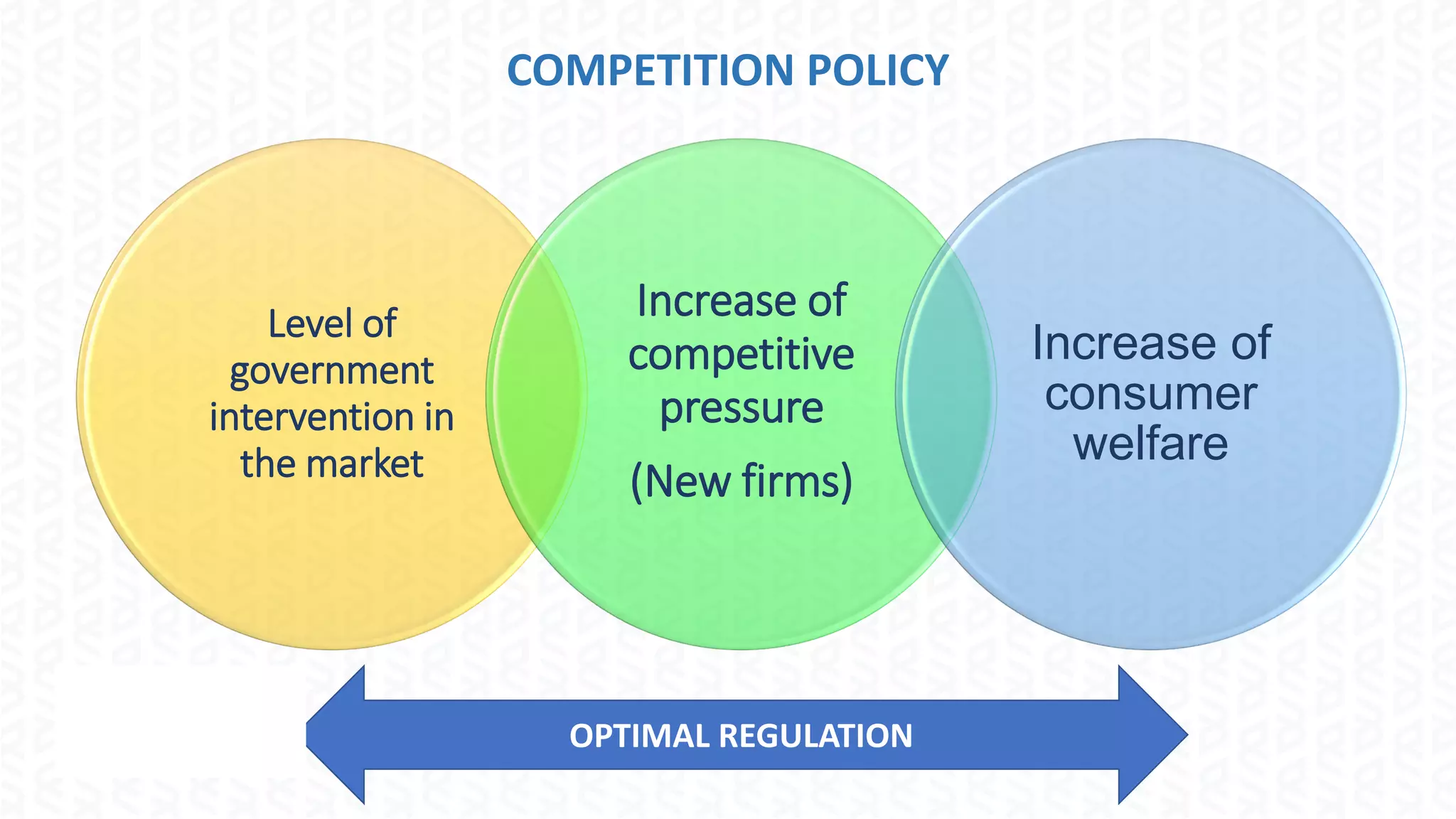
COMPETITION POLICY
Level of
government
intervention in
the market
Increase of
competitive
pressure
(New firms)
Increase of
consumer
welfare
OPTIMAL REGULATION
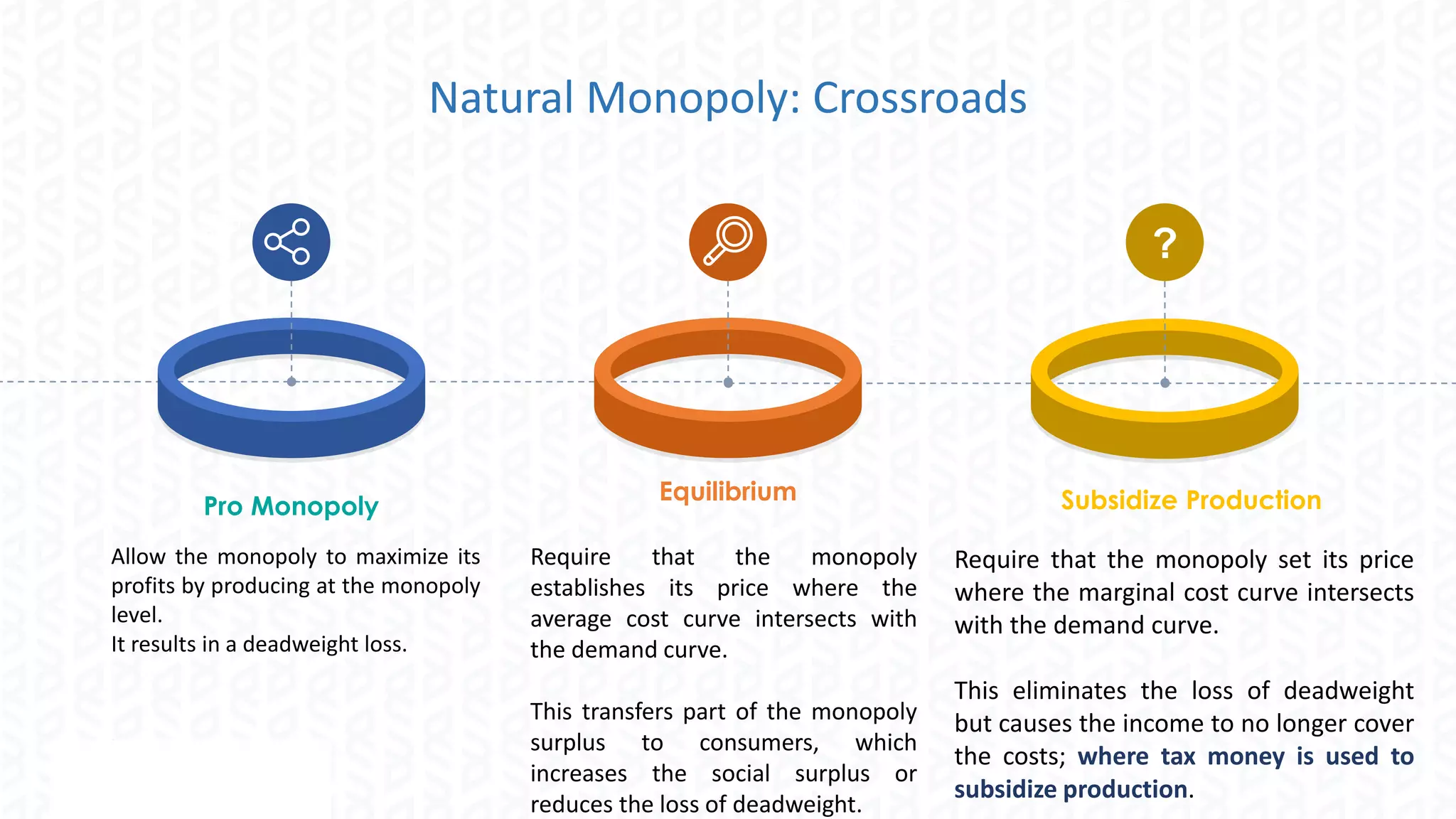
Natural Monopoly: Crossroads
Pro Monopoly
?
Allow the monopoly to maximize its
profits by producing at the monopoly
level.
It results in a deadweight loss.
Equilibrium
Require that the monopoly
establishes its price where the
average cost curve intersects with
the demand curve.
This transfers part of the monopoly
surplus to consumers, which
increases the social surplus or
reduces the loss of deadweight.
Subsidize Production
Require that the monopoly set its price
where the marginal cost curve intersects
with the demand curve.
This eliminates the loss of deadweight
but causes the income to no longer cover
the costs; where tax money is used to
subsidize production.
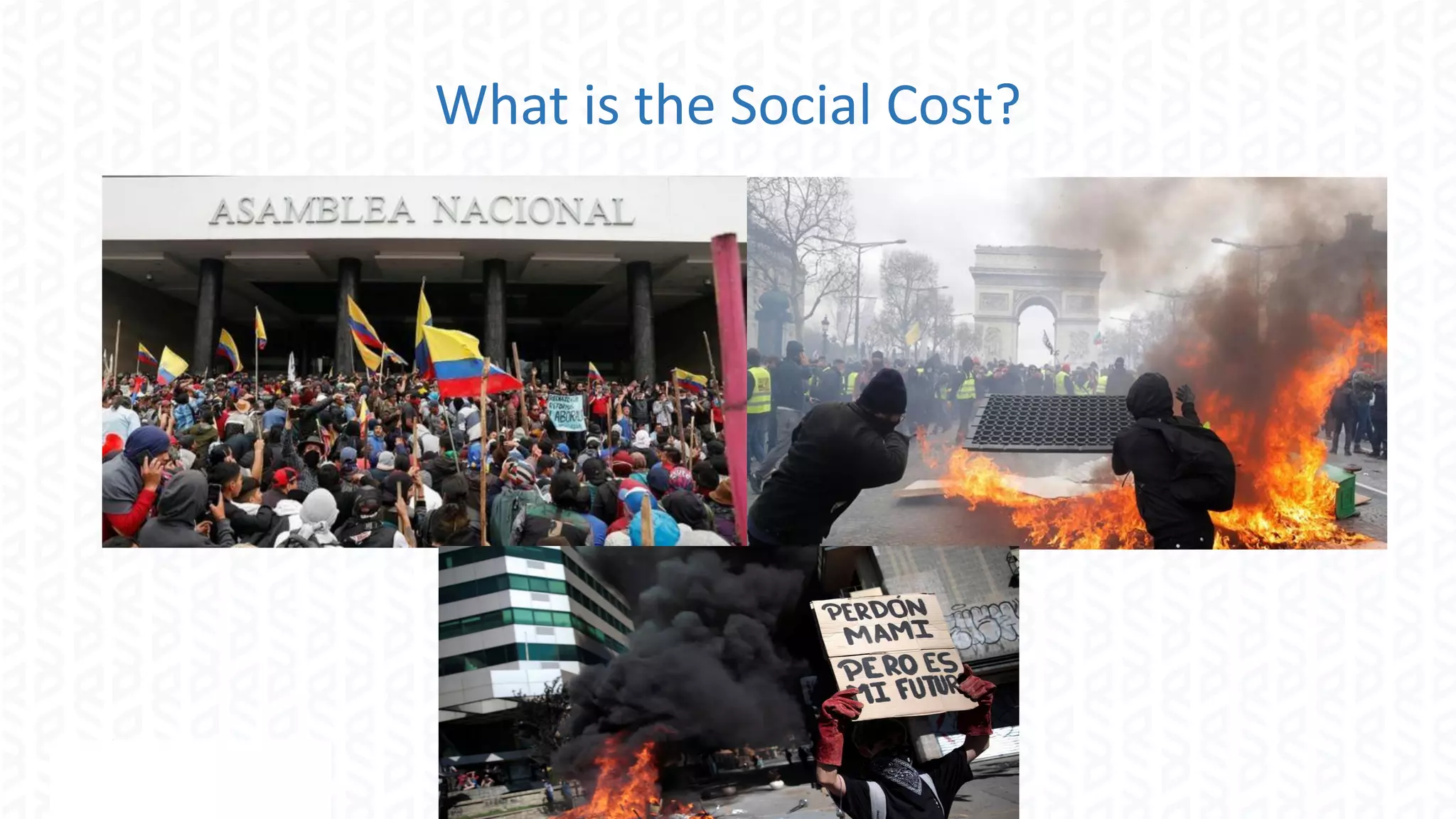
What is the Social Cost?
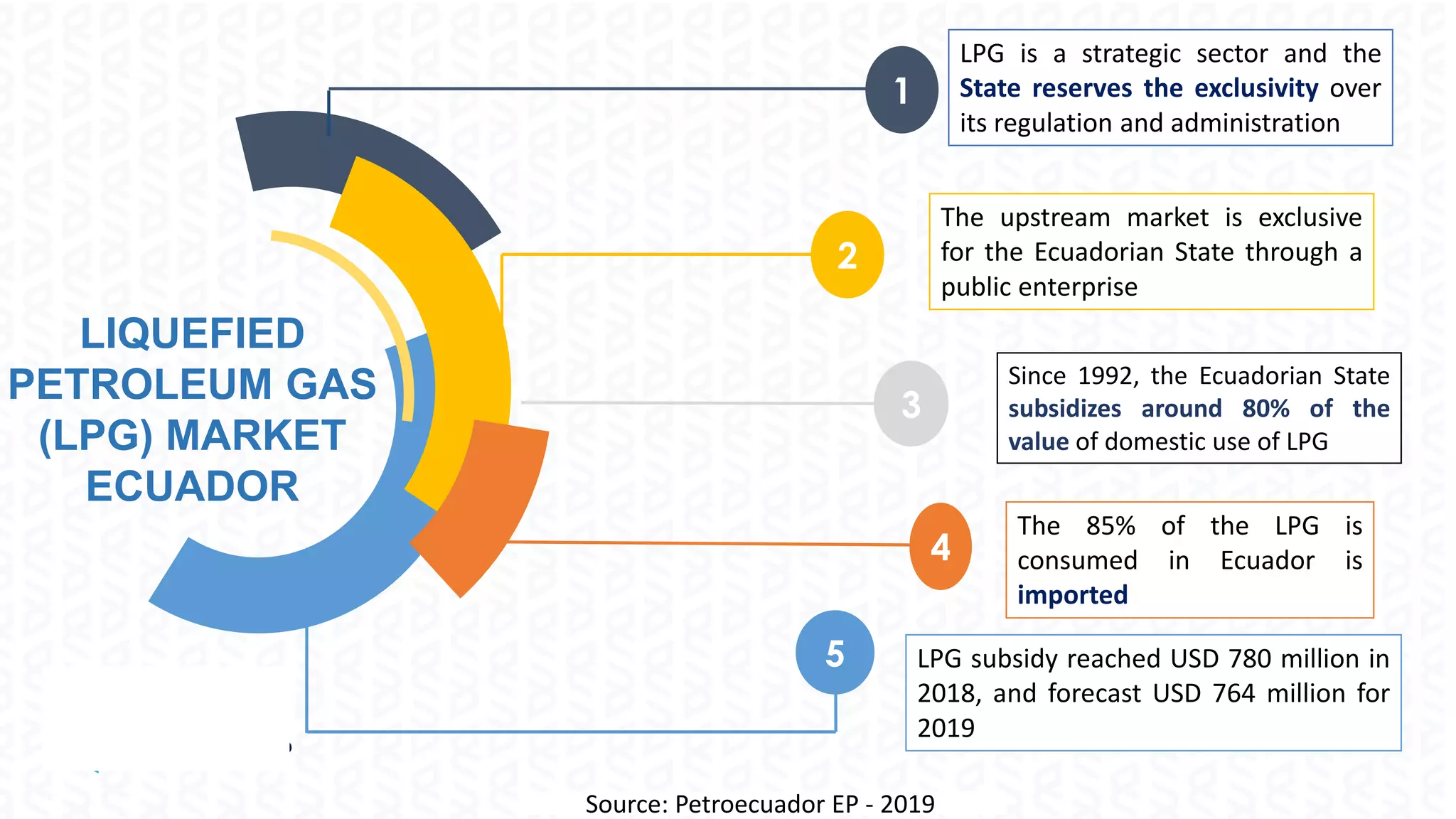
LPG is a strategic sector and the
State reserves the exclusivity over
its regulation and administration
LPG subsidy reached USD 780 million in
2018, and forecast USD 764 million for
2019
Since 1992, the Ecuadorian State
subsidizes around 80% of the
value of domestic use of LPG
3
2
1
LIQUEFIED
PETROLEUM GAS
(LPG) MARKET
ECUADOR
5
4
The 85% of the LPG is
consumed in Ecuador is
imported
The upstream market is exclusive
for the Ecuadorian State through a
public enterprise
Source: Petroecuador EP - 2019S
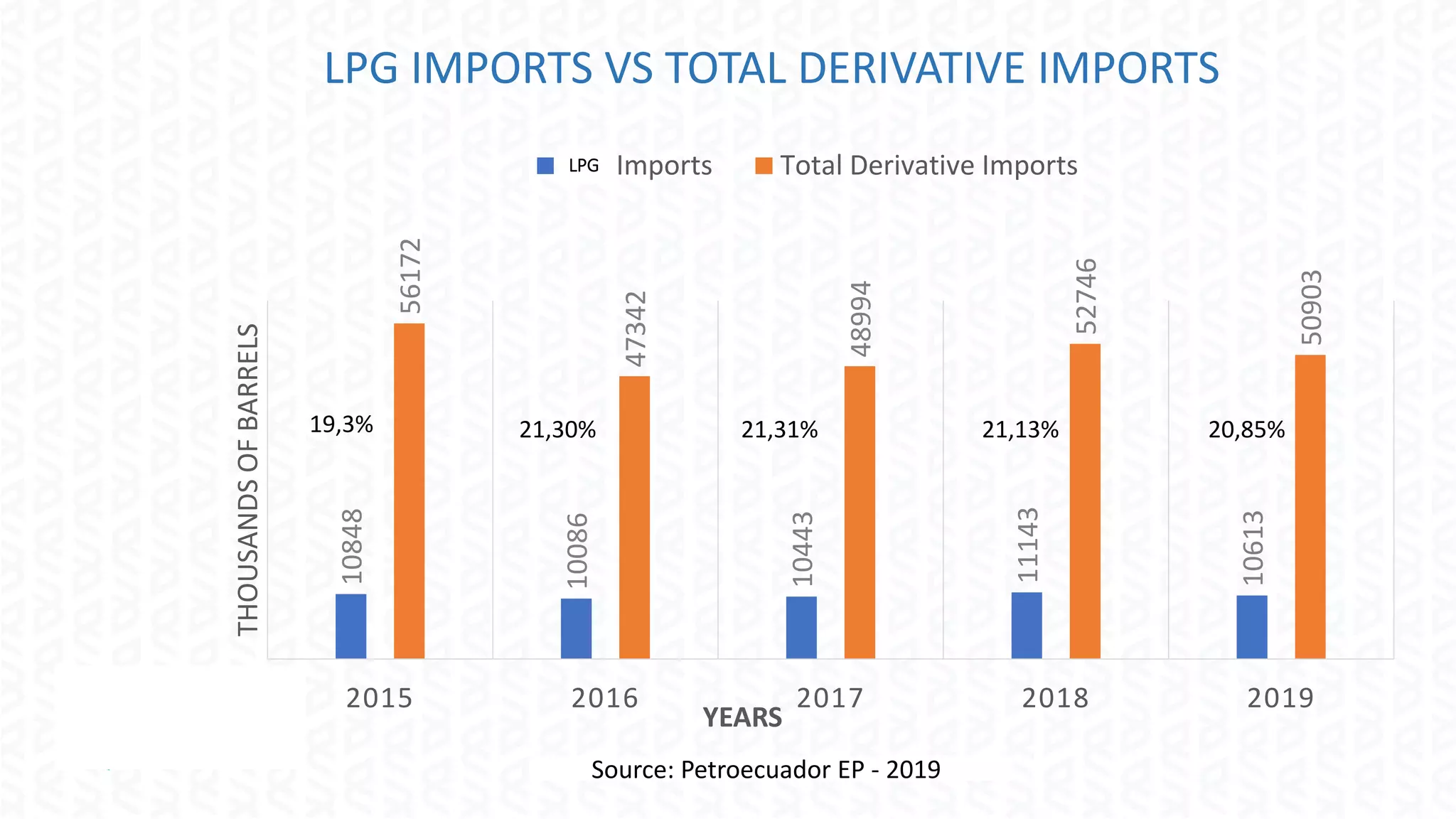
LPG IMPORTS VS TOTAL DERIVATIVE IMPORTS
10848
10086
10443
11143
10613
56172
47342
48994
52746
50903
2015 2016 2017 2018 2019
THOUSANDSOFBARRELS
YEARS
GLP Imports Total Derivative Imports
19,3% 21,30% 21,31% 21,13% 20,85%
LPG
Source: Petroecuador EP - 2019S
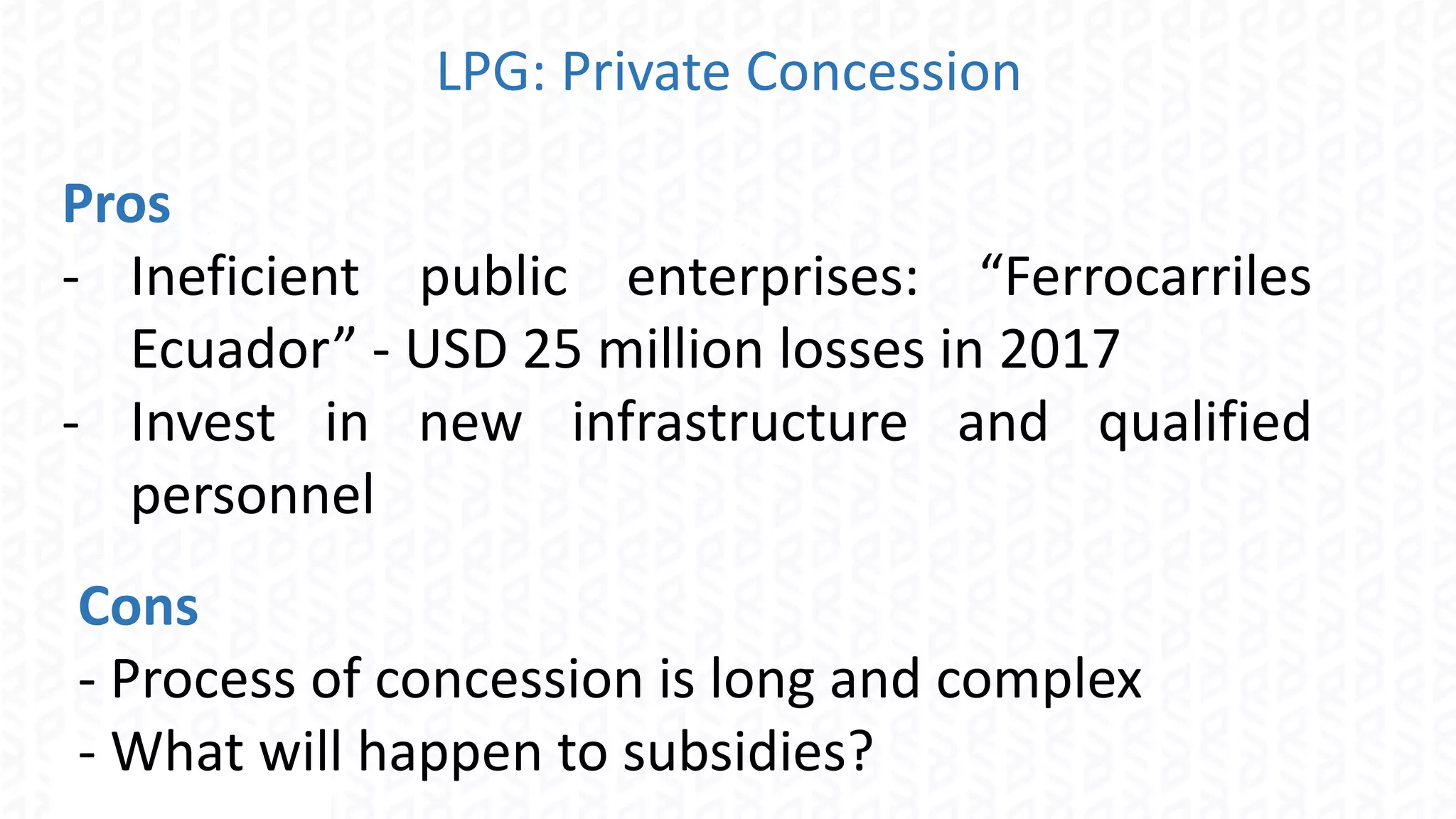
LPG: Private Concession
Pros
- Ineficient public enterprises: “Ferrocarriles
Ecuador” - USD 25 million losses in 2017
- Invest in new infrastructure and qualified
personnel
Cons
- Process of concession is long and complex
- What will happen to subsidies?
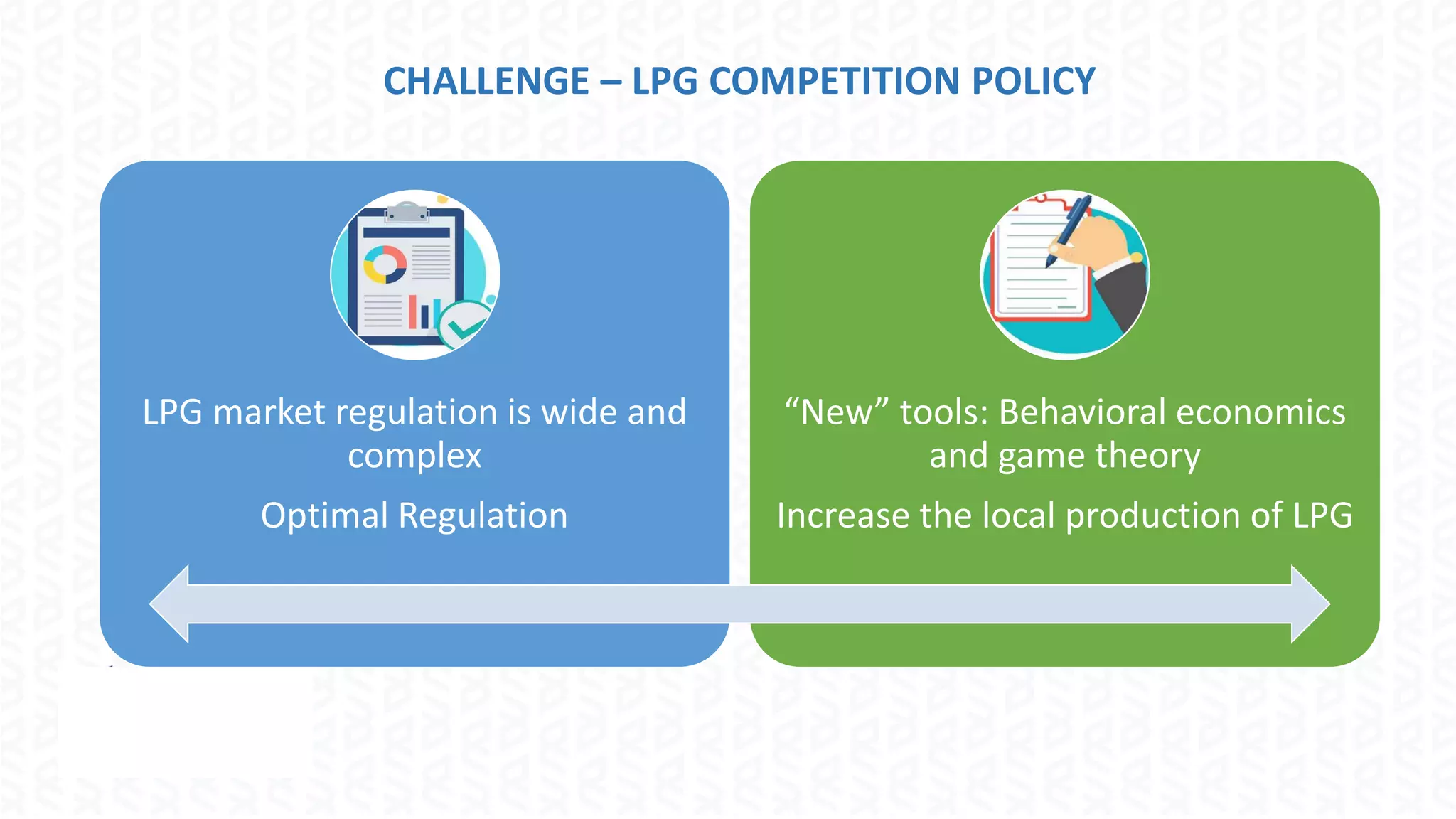
CHALLENGE – LPG COMPETITION POLICY
LPG market regulation is wide and
complex
Optimal Regulation
“New” tools: Behavioral economics
and game theory
Increase the local production of LPG
Thank you
More information:
(593) 2 3956-010 ext. 1257
Av. de los Shyris N44-93 y Río Coca, Building “Ocaña”
www.scpm.gob.ec
Competition for-the-market

Competition for-the-market

  • 1.
    LIQUEFIED PETROLEUM GASMARKET REGULATION IN ECUADOR SUPERINTENDENCY FOR MARKET POWER CONTROL Patricio Pozo Vintimilla Pablo Carrasco Torrontegui Paris – 6 december 2019
  • 2.
    COMPETITION POLICY Level of government interventionin the market Increase of competitive pressure (New firms) Increase of consumer welfare OPTIMAL REGULATION
  • 3.
    Natural Monopoly: Crossroads ProMonopoly ? Allow the monopoly to maximize its profits by producing at the monopoly level. It results in a deadweight loss. Equilibrium Require that the monopoly establishes its price where the average cost curve intersects with the demand curve. This transfers part of the monopoly surplus to consumers, which increases the social surplus or reduces the loss of deadweight. Subsidize Production Require that the monopoly set its price where the marginal cost curve intersects with the demand curve. This eliminates the loss of deadweight but causes the income to no longer cover the costs; where tax money is used to subsidize production.
  • 4.
    What is theSocial Cost?
  • 5.
    LPG is astrategic sector and the State reserves the exclusivity over its regulation and administration LPG subsidy reached USD 780 million in 2018, and forecast USD 764 million for 2019 Since 1992, the Ecuadorian State subsidizes around 80% of the value of domestic use of LPG 3 2 1 LIQUEFIED PETROLEUM GAS (LPG) MARKET ECUADOR 5 4 The 85% of the LPG is consumed in Ecuador is imported The upstream market is exclusive for the Ecuadorian State through a public enterprise Source: Petroecuador EP - 2019S
  • 6.
    LPG IMPORTS VSTOTAL DERIVATIVE IMPORTS 10848 10086 10443 11143 10613 56172 47342 48994 52746 50903 2015 2016 2017 2018 2019 THOUSANDSOFBARRELS YEARS GLP Imports Total Derivative Imports 19,3% 21,30% 21,31% 21,13% 20,85% LPG Source: Petroecuador EP - 2019S
  • 7.
    LPG: Private Concession Pros -Ineficient public enterprises: “Ferrocarriles Ecuador” - USD 25 million losses in 2017 - Invest in new infrastructure and qualified personnel Cons - Process of concession is long and complex - What will happen to subsidies?
  • 8.
    CHALLENGE – LPGCOMPETITION POLICY LPG market regulation is wide and complex Optimal Regulation “New” tools: Behavioral economics and game theory Increase the local production of LPG
  • 9.
    Thank you More information: (593)2 3956-010 ext. 1257 Av. de los Shyris N44-93 y Río Coca, Building “Ocaña” www.scpm.gob.ec