Competition and Regulation in
Professions and Occupations
10 June 2024
Secretariat Presentation
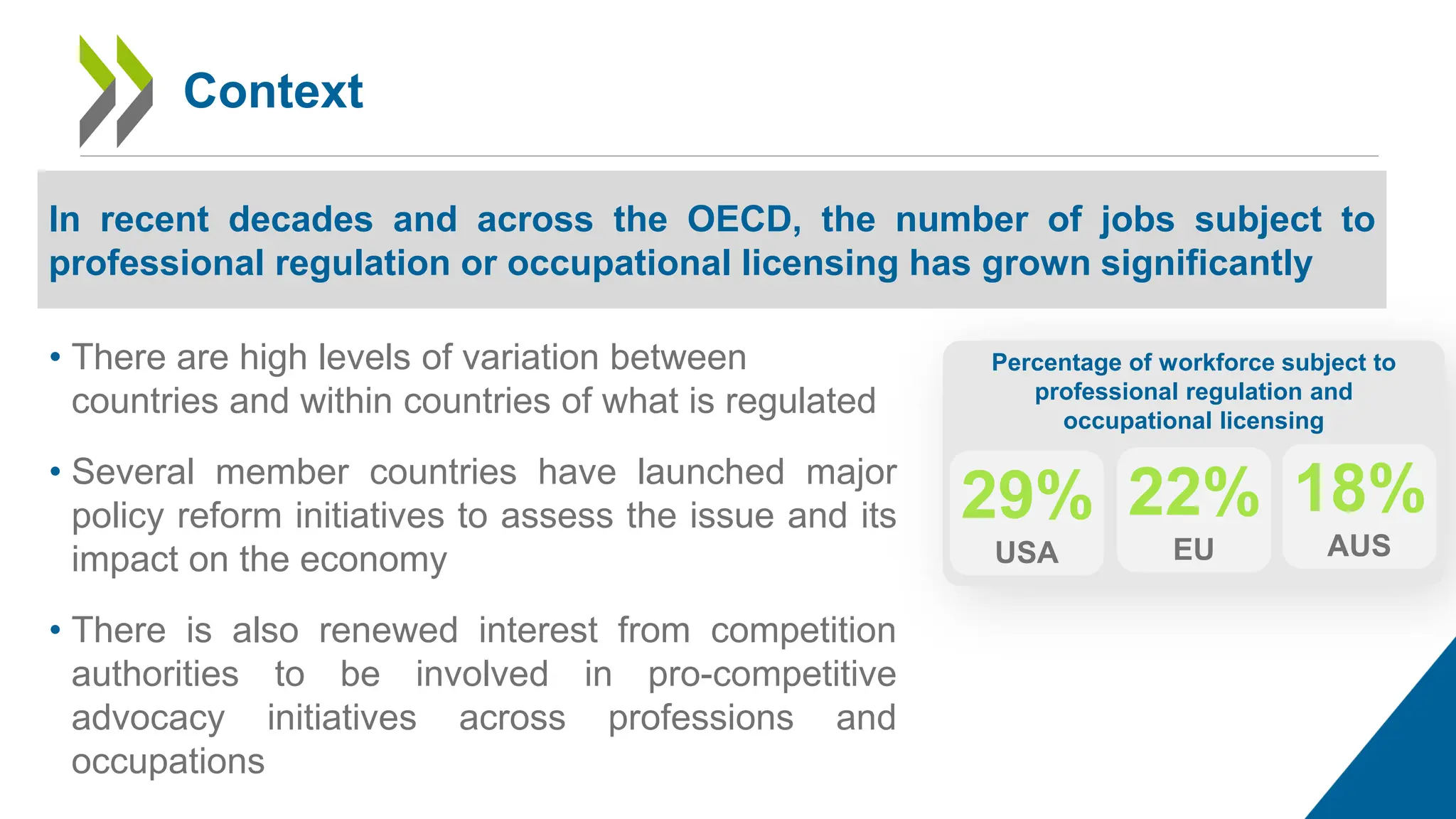
Percentage of workforce subject to
professional regulation and
occupational licensing
Context
• There are high levels of variation between
countries and within countries of what is regulated
• Several member countries have launched major
policy reform initiatives to assess the issue and its
impact on the economy
• There is also renewed interest from competition
authorities to be involved in pro-competitive
advocacy initiatives across professions and
occupations
In recent decades and across the OECD, the number of jobs subject to
professional regulation or occupational licensing has grown significantly
29%
USA
22%
EU
18%
AUS
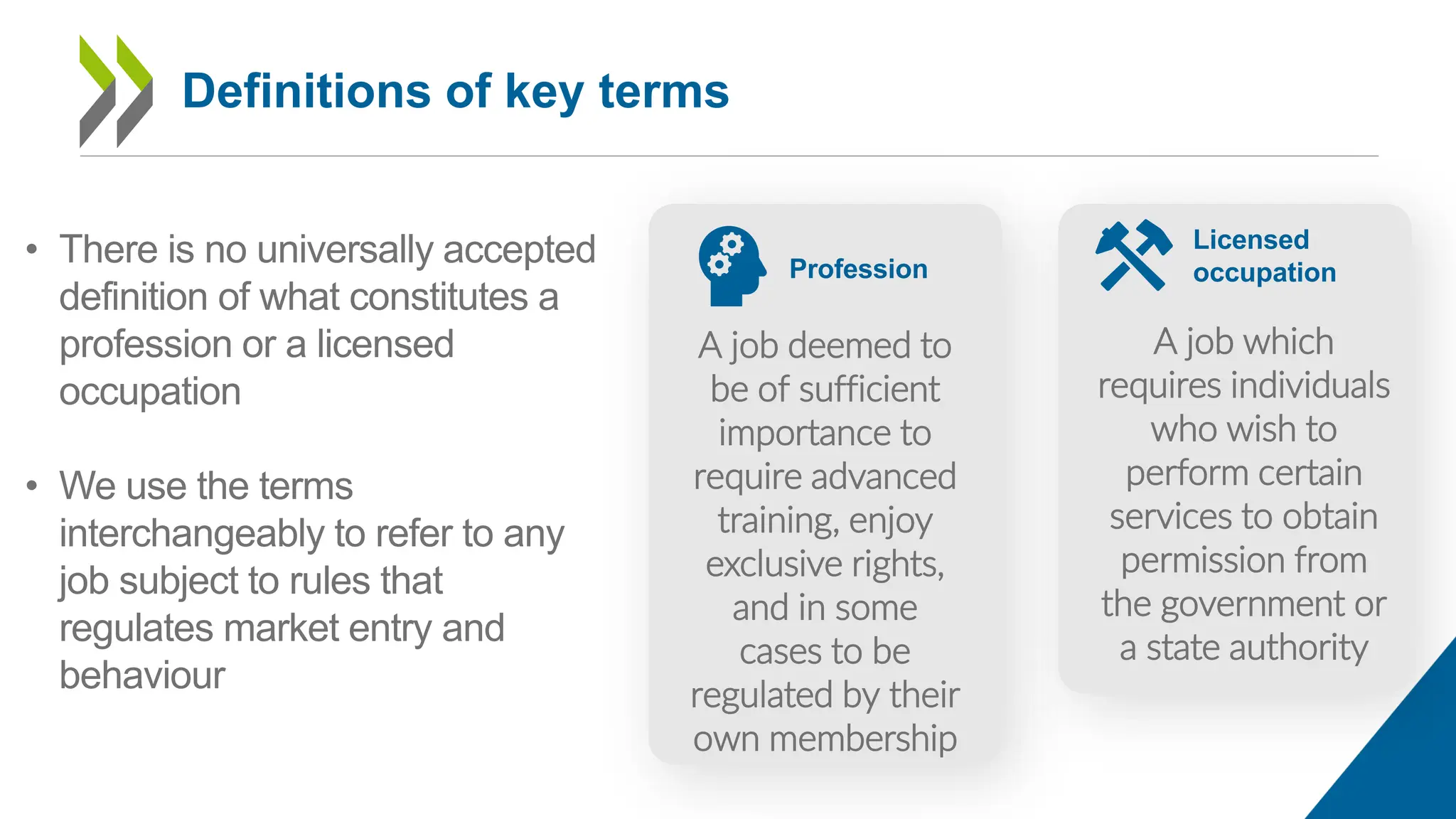
Profession
A job deemed to
be of sufficient
importance to
require advanced
training, enjoy
exclusive rights,
and in some
cases to be
regulated by their
own membership
Licensed
occupation
A job which
requires individuals
who wish to
perform certain
services to obtain
permission from
the government or
a state authority
• There is no universally accepted
definition of what constitutes a
profession or a licensed
occupation
• We use the terms
interchangeably to refer to any
job subject to rules that
regulates market entry and
behaviour
Definitions of key terms
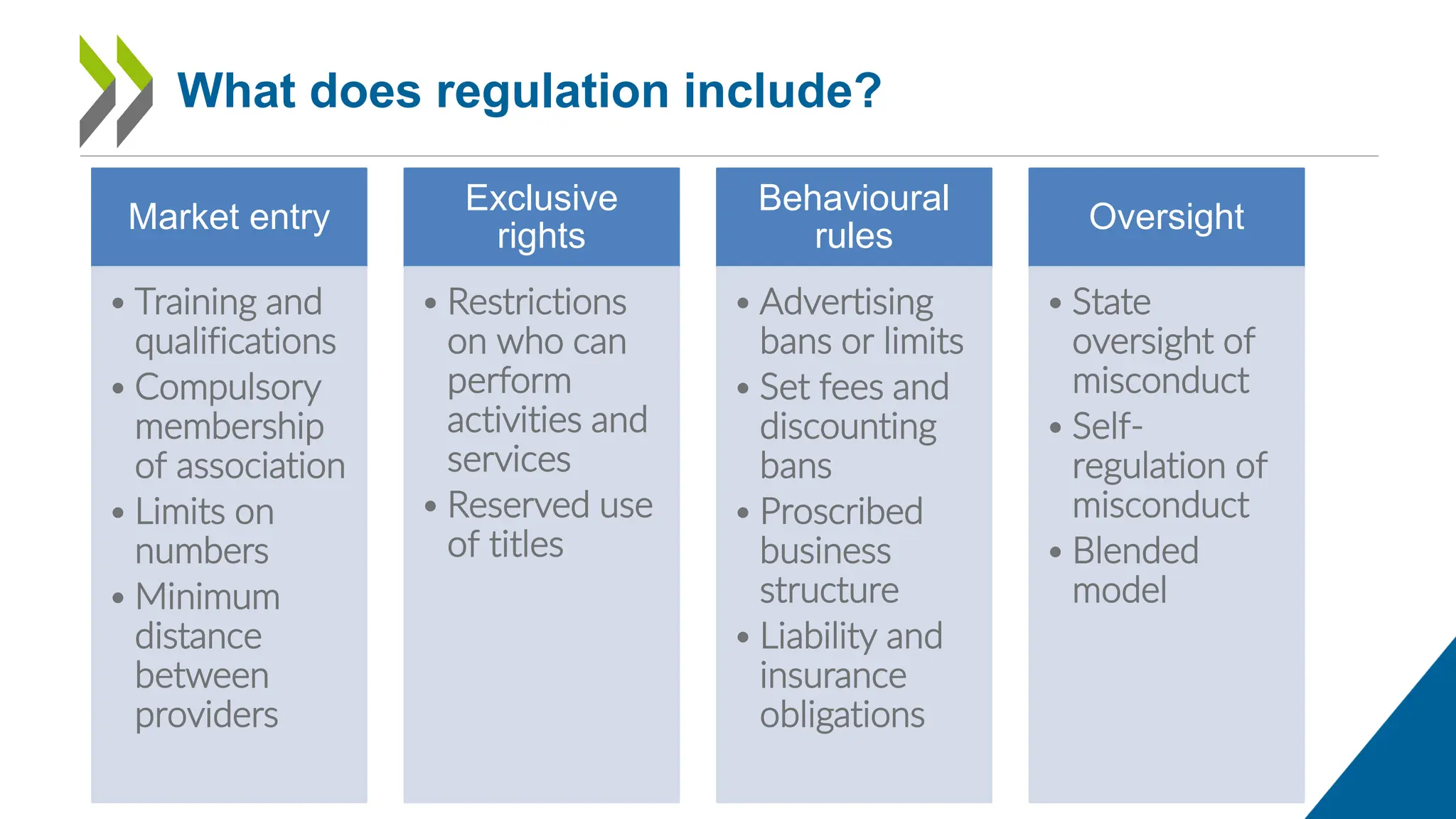
What does regulation include?
Market entry
• Training and
qualifications
• Compulsory
membership
of association
• Limits on
numbers
• Minimum
distance
between
providers
Exclusive
rights
• Restrictions
on who can
perform
activities and
services
• Reserved use
of titles
Behavioural
rules
• Advertising
bans or limits
• Set fees and
discounting
bans
• Proscribed
business
structure
• Liability and
insurance
obligations
Oversight
• State
oversight of
misconduct
• Self-
regulation of
misconduct
• Blended
model
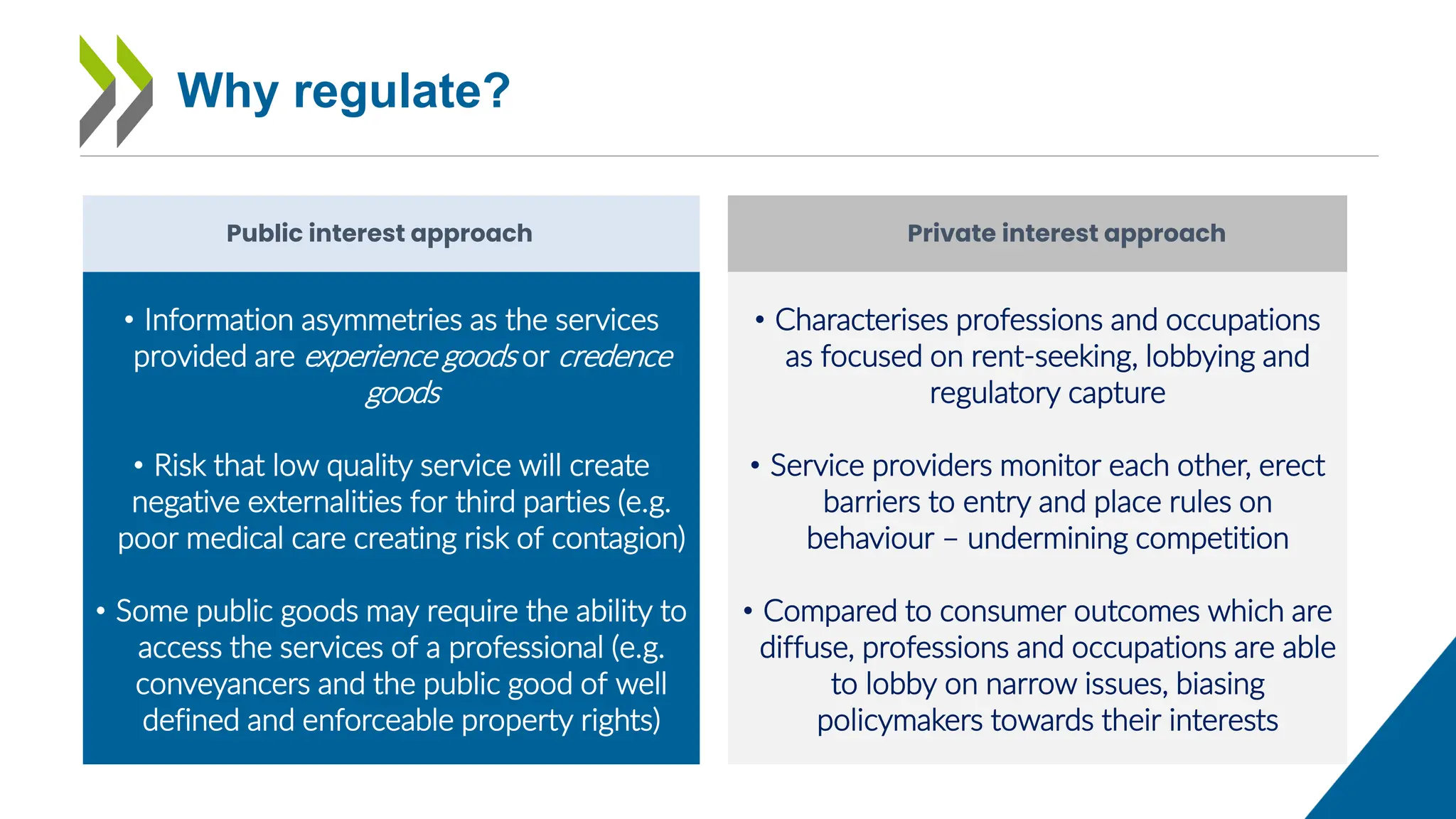
Why regulate?
• Characterises professions and occupations
as focused on rent-seeking, lobbying and
regulatory capture
• Service providers monitor each other, erect
barriers to entry and place rules on
behaviour – undermining competition
• Compared to consumer outcomes which are
diffuse, professions and occupations are able
to lobby on narrow issues, biasing
policymakers towards their interests
• Information asymmetries as the services
provided are experience goods or credence
goods
• Risk that low quality service will create
negative externalities for third parties (e.g.
poor medical care creating risk of contagion)
• Some public goods may require the ability to
access the services of a professional (e.g.
conveyancers and the public good of well
defined and enforceable property rights)
Public interest approach Private interest approach
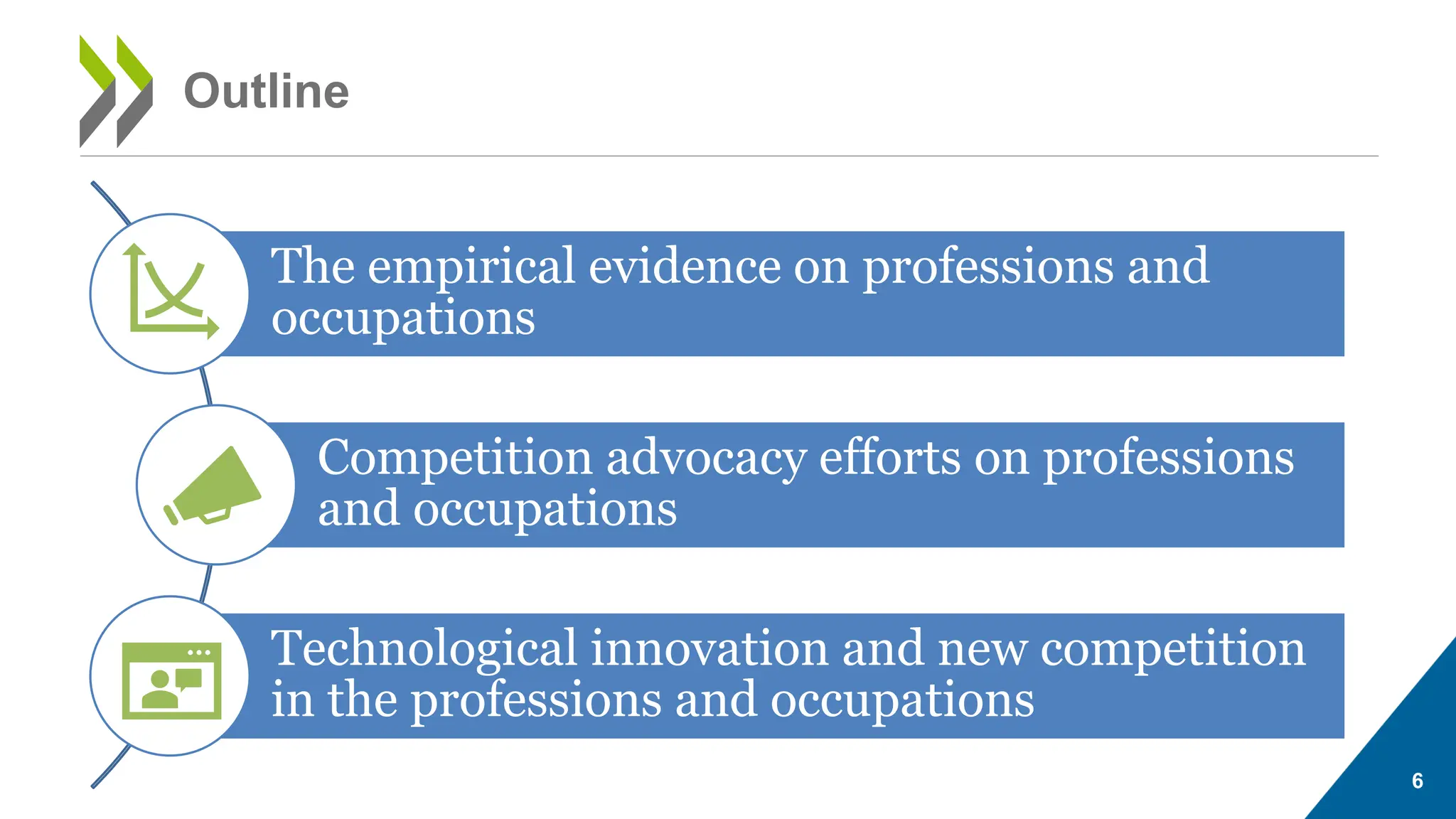
Outline
6
The empirical evidence on professions and
occupations
Competition advocacy efforts on professions
and occupations
Technological innovation and new competition
in the professions and occupations
Scan the QR code to read the background paper

Competition and Regulation in Professions and Occupations – OECD – June 2024 OECD discussion

  • 1.
    Competition and Regulationin Professions and Occupations 10 June 2024 Secretariat Presentation
  • 2.
    Percentage of workforcesubject to professional regulation and occupational licensing Context • There are high levels of variation between countries and within countries of what is regulated • Several member countries have launched major policy reform initiatives to assess the issue and its impact on the economy • There is also renewed interest from competition authorities to be involved in pro-competitive advocacy initiatives across professions and occupations In recent decades and across the OECD, the number of jobs subject to professional regulation or occupational licensing has grown significantly 29% USA 22% EU 18% AUS
  • 3.
    Profession A job deemedto be of sufficient importance to require advanced training, enjoy exclusive rights, and in some cases to be regulated by their own membership Licensed occupation A job which requires individuals who wish to perform certain services to obtain permission from the government or a state authority • There is no universally accepted definition of what constitutes a profession or a licensed occupation • We use the terms interchangeably to refer to any job subject to rules that regulates market entry and behaviour Definitions of key terms
  • 4.
    What does regulationinclude? Market entry • Training and qualifications • Compulsory membership of association • Limits on numbers • Minimum distance between providers Exclusive rights • Restrictions on who can perform activities and services • Reserved use of titles Behavioural rules • Advertising bans or limits • Set fees and discounting bans • Proscribed business structure • Liability and insurance obligations Oversight • State oversight of misconduct • Self- regulation of misconduct • Blended model
  • 5.
    Why regulate? • Characterisesprofessions and occupations as focused on rent-seeking, lobbying and regulatory capture • Service providers monitor each other, erect barriers to entry and place rules on behaviour – undermining competition • Compared to consumer outcomes which are diffuse, professions and occupations are able to lobby on narrow issues, biasing policymakers towards their interests • Information asymmetries as the services provided are experience goods or credence goods • Risk that low quality service will create negative externalities for third parties (e.g. poor medical care creating risk of contagion) • Some public goods may require the ability to access the services of a professional (e.g. conveyancers and the public good of well defined and enforceable property rights) Public interest approach Private interest approach
  • 6.
    Outline 6 The empirical evidenceon professions and occupations Competition advocacy efforts on professions and occupations Technological innovation and new competition in the professions and occupations
  • 7.
    Scan the QRcode to read the background paper