
E X P O S T A S S E S S M E N T O F
M E R G E R R E M E D I E S :
A N E X P O S T A S S E S S M E N T !
O E C D R O U N D T A B L E : 8 D E C E M B E R 2 0 2 3
G L O B A L F O R U M O N C O M P E T I T I O N
A M E L I A F L E T C H E R
C E N T R E F O R C O M P E T I T I O N P O L I C Y
U N I V E R S I T Y O F E A S T A N G L I A , U K
N.B. I am a Non-Executive Director at the CMA. Views are personal and do not necessarily reflect the position of the CMA.
TO COVER
 Why is the ex post assessment of merger remedies so important?
 What have we learned?
 Some final thoughts
2
WHY SO IMPORTANT? (1)
 Remedies are critical to the success of merger policy.
 Ineffective remedies = allowing anti-competitive mergers!
3
WHY SO IMPORTANT? (2)
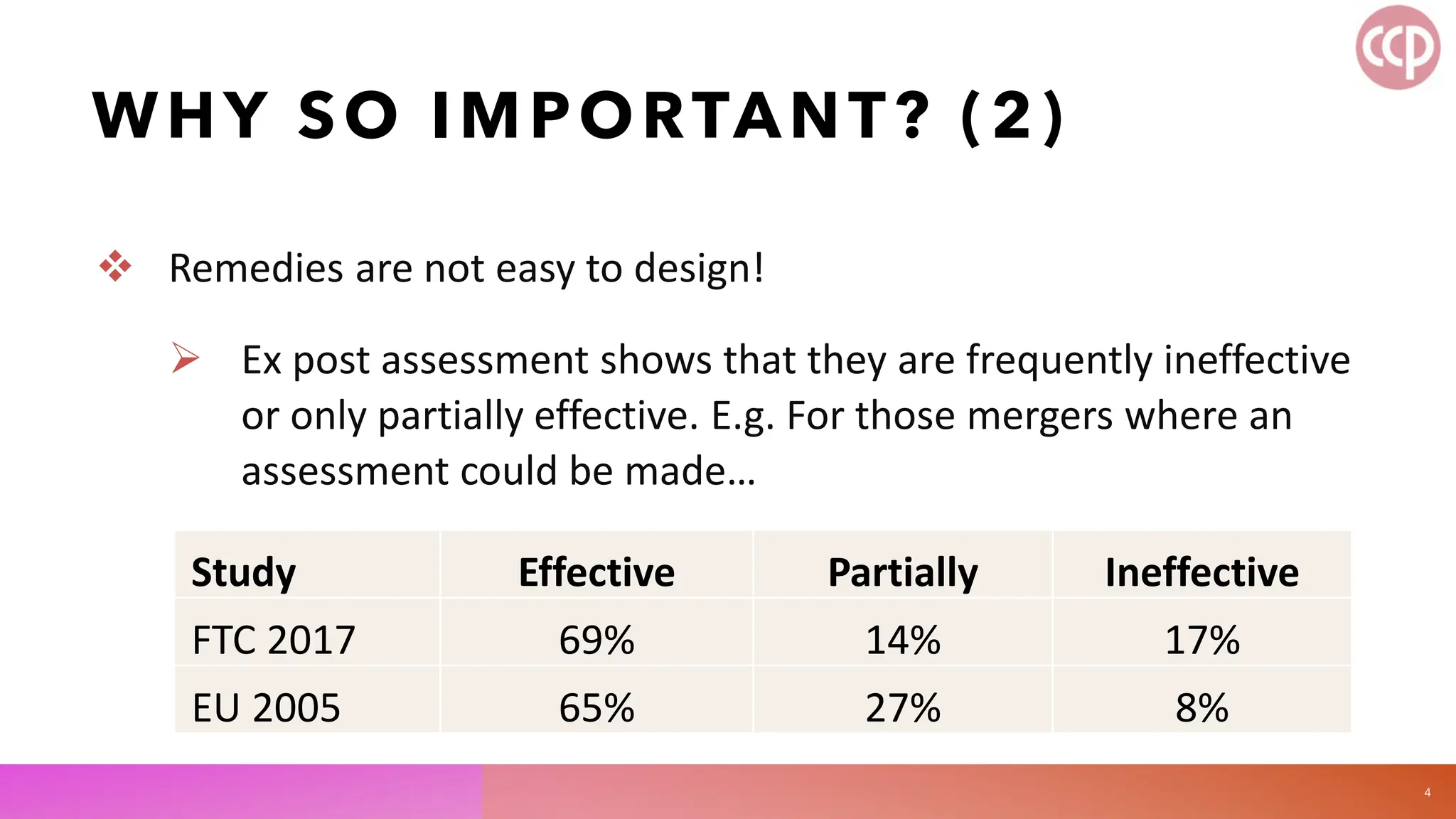
 Remedies are not easy to design!
 Ex post assessment shows that they are frequently ineffective
or only partially effective. E.g. For those mergers where an
assessment could be made…
4
Study Effective Partially Ineffective
FTC 2017 69% 14% 17%
EU 2005 65% 27% 8%
WHY SO IMPORTANT? (3)
 Authorities (and parties) need to know how to design them as
effectively as possible.
 Remedy assessments generate important lessons
 (arguably more valuable across jurisdictions than standard ex
post merger assessments – so valuable to share learnings)
 Authorities also need to know when to say no!
5
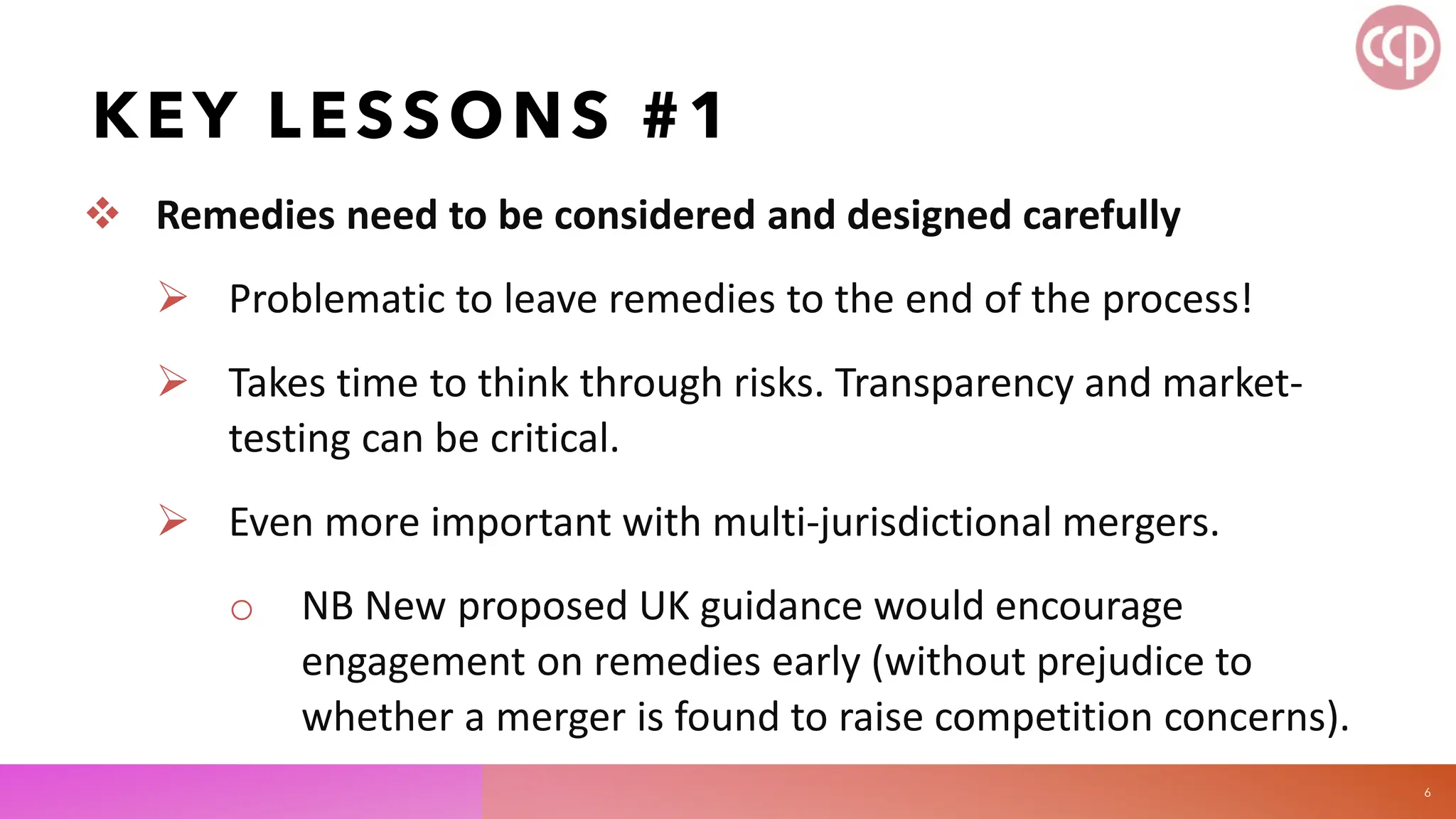
KEY LESSONS #1
 Remedies need to be considered and designed carefully
 Problematic to leave remedies to the end of the process!
 Takes time to think through risks. Transparency and market-
testing can be critical.
 Even more important with multi-jurisdictional mergers.
o NB New proposed UK guidance would encourage
engagement on remedies early (without prejudice to
whether a merger is found to raise competition concerns).
6
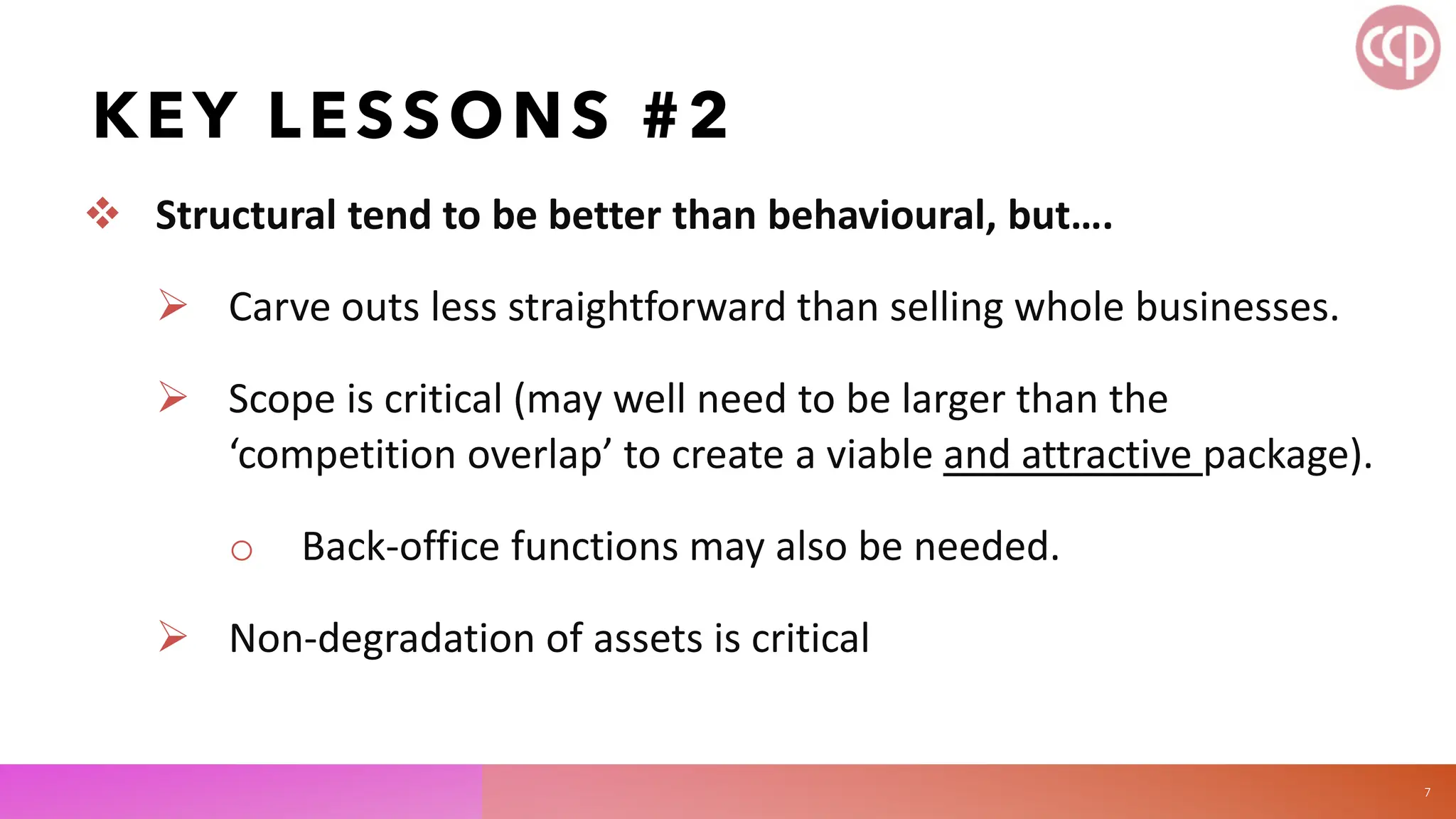
KEY LESSONS #2
 Structural tend to be better than behavioural, but….
 Carve outs less straightforward than selling whole businesses.
 Scope is critical (may well need to be larger than the
‘competition overlap’ to create a viable and attractive package).
o Back-office functions may also be needed.
 Non-degradation of assets is critical
7
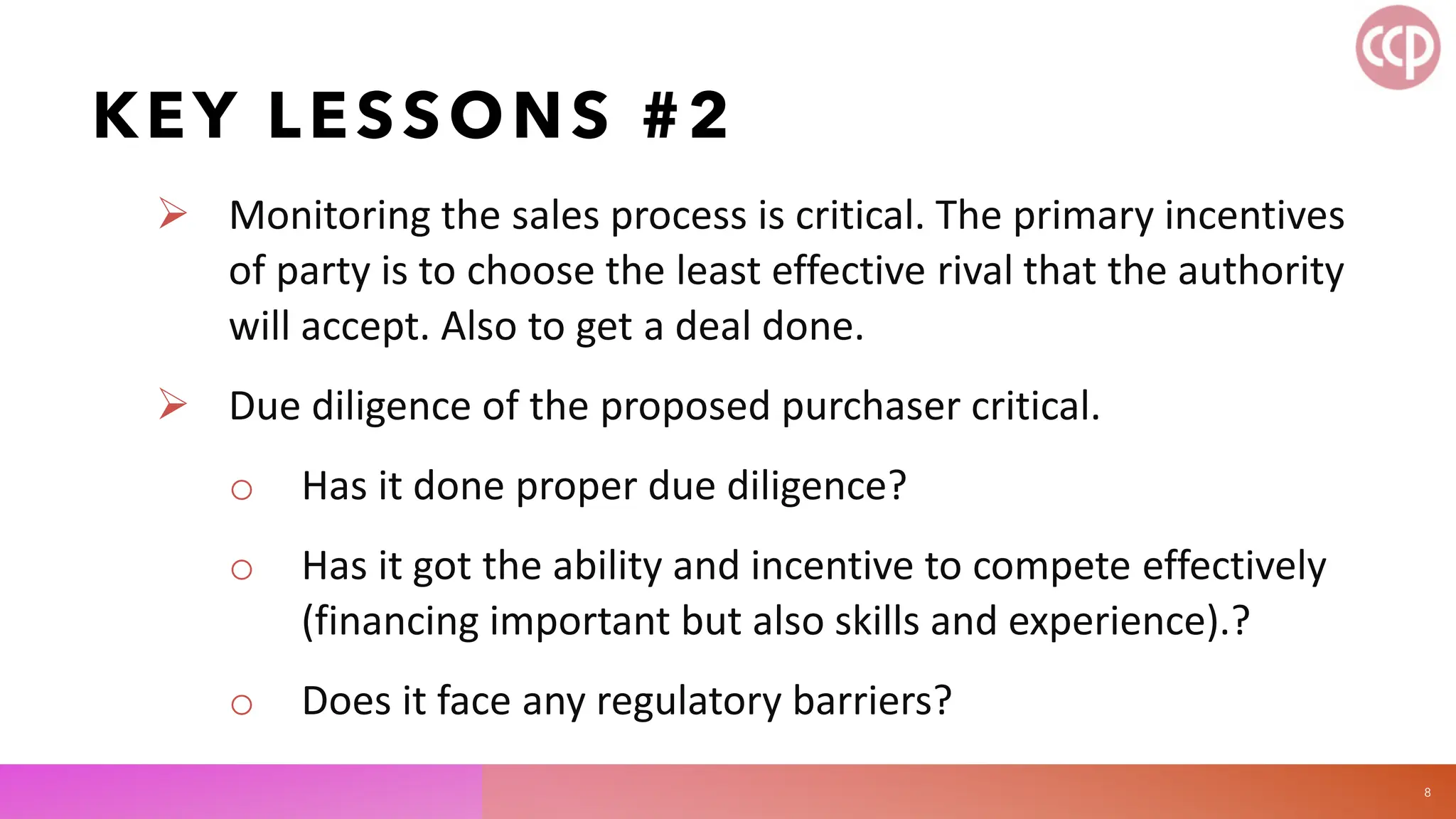
KEY LESSONS #2
 Monitoring the sales process is critical. The primary incentives
of party is to choose the least effective rival that the authority
will accept. Also to get a deal done.
 Due diligence of the proposed purchaser critical.
o Has it done proper due diligence?
o Has it got the ability and incentive to compete effectively
(financing important but also skills and experience).?
o Does it face any regulatory barriers?
8
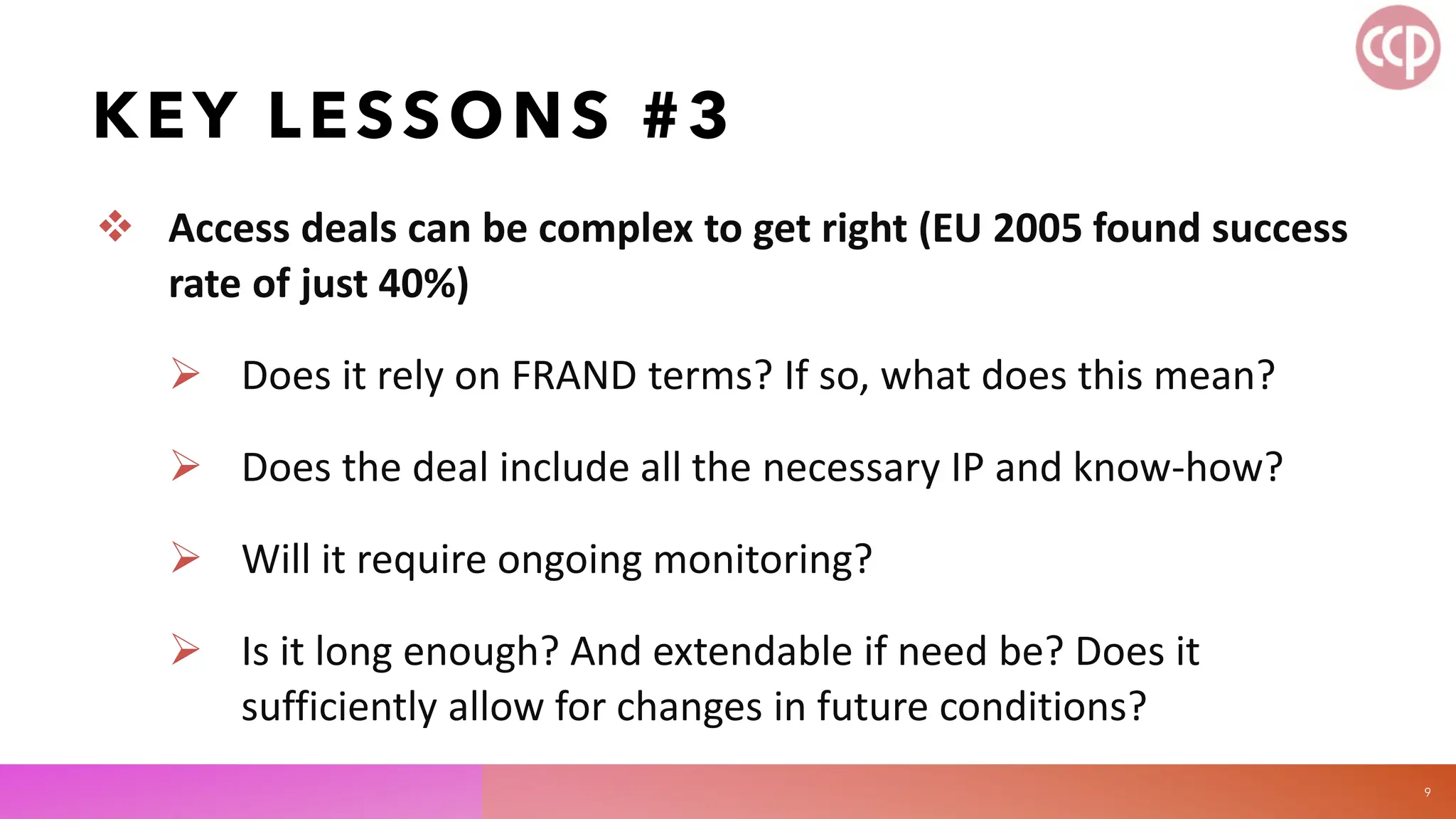
KEY LESSONS #3
 Access deals can be complex to get right (EU 2005 found success
rate of just 40%)
 Does it rely on FRAND terms? If so, what does this mean?
 Does the deal include all the necessary IP and know-how?
 Will it require ongoing monitoring?
 Is it long enough? And extendable if need be? Does it
sufficiently allow for changes in future conditions?
9
KEY LESSONS #4
 ‘Back-up’ remedies may be justified.
 These are more intrusive but there if needed.
 NB. By the time it is clear that a remedy is not working as
intended, it is typically too late to unwind the merger. Or would
be disproportionate.
10
SOME FINAL THOUGHTS (1)
 In digital ecosystem markets, we may expect to see a push for
more behavioural remedies.
 Early evaluation of these will be super-important for learning
how well they are working.
11
SOME FINAL THOUGHTS (2)
 Are behavioural insights likely to be relevant?
 How much does a remedy’s success depends on consumer
behaviour?
 What about workers (divested as part of the deal)
 Is there a risk that either could be ‘steered’ by the merging
firm?
12
SOME FINAL THOUGHTS (3)
 Could there be room for outcome-based remedies mergers?
 eg “measures must be enforced in a way that promotes
effective competition”?
13

Ex-post Assessment of Merger Remedies – FLETCHER – December 2023 OECD discussion

  • 1.
    E X PO S T A S S E S S M E N T O F M E R G E R R E M E D I E S : A N E X P O S T A S S E S S M E N T ! O E C D R O U N D T A B L E : 8 D E C E M B E R 2 0 2 3 G L O B A L F O R U M O N C O M P E T I T I O N A M E L I A F L E T C H E R C E N T R E F O R C O M P E T I T I O N P O L I C Y U N I V E R S I T Y O F E A S T A N G L I A , U K N.B. I am a Non-Executive Director at the CMA. Views are personal and do not necessarily reflect the position of the CMA.
  • 2.
    TO COVER  Whyis the ex post assessment of merger remedies so important?  What have we learned?  Some final thoughts 2
  • 3.
    WHY SO IMPORTANT?(1)  Remedies are critical to the success of merger policy.  Ineffective remedies = allowing anti-competitive mergers! 3
  • 4.
    WHY SO IMPORTANT?(2)  Remedies are not easy to design!  Ex post assessment shows that they are frequently ineffective or only partially effective. E.g. For those mergers where an assessment could be made… 4 Study Effective Partially Ineffective FTC 2017 69% 14% 17% EU 2005 65% 27% 8%
  • 5.
    WHY SO IMPORTANT?(3)  Authorities (and parties) need to know how to design them as effectively as possible.  Remedy assessments generate important lessons  (arguably more valuable across jurisdictions than standard ex post merger assessments – so valuable to share learnings)  Authorities also need to know when to say no! 5
  • 6.
    KEY LESSONS #1 Remedies need to be considered and designed carefully  Problematic to leave remedies to the end of the process!  Takes time to think through risks. Transparency and market- testing can be critical.  Even more important with multi-jurisdictional mergers. o NB New proposed UK guidance would encourage engagement on remedies early (without prejudice to whether a merger is found to raise competition concerns). 6
  • 7.
    KEY LESSONS #2 Structural tend to be better than behavioural, but….  Carve outs less straightforward than selling whole businesses.  Scope is critical (may well need to be larger than the ‘competition overlap’ to create a viable and attractive package). o Back-office functions may also be needed.  Non-degradation of assets is critical 7
  • 8.
    KEY LESSONS #2 Monitoring the sales process is critical. The primary incentives of party is to choose the least effective rival that the authority will accept. Also to get a deal done.  Due diligence of the proposed purchaser critical. o Has it done proper due diligence? o Has it got the ability and incentive to compete effectively (financing important but also skills and experience).? o Does it face any regulatory barriers? 8
  • 9.
    KEY LESSONS #3 Access deals can be complex to get right (EU 2005 found success rate of just 40%)  Does it rely on FRAND terms? If so, what does this mean?  Does the deal include all the necessary IP and know-how?  Will it require ongoing monitoring?  Is it long enough? And extendable if need be? Does it sufficiently allow for changes in future conditions? 9
  • 10.
    KEY LESSONS #4 ‘Back-up’ remedies may be justified.  These are more intrusive but there if needed.  NB. By the time it is clear that a remedy is not working as intended, it is typically too late to unwind the merger. Or would be disproportionate. 10
  • 11.
    SOME FINAL THOUGHTS(1)  In digital ecosystem markets, we may expect to see a push for more behavioural remedies.  Early evaluation of these will be super-important for learning how well they are working. 11
  • 12.
    SOME FINAL THOUGHTS(2)  Are behavioural insights likely to be relevant?  How much does a remedy’s success depends on consumer behaviour?  What about workers (divested as part of the deal)  Is there a risk that either could be ‘steered’ by the merging firm? 12
  • 13.
    SOME FINAL THOUGHTS(3)  Could there be room for outcome-based remedies mergers?  eg “measures must be enforced in a way that promotes effective competition”? 13