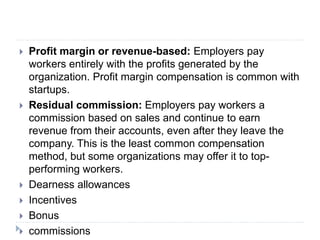
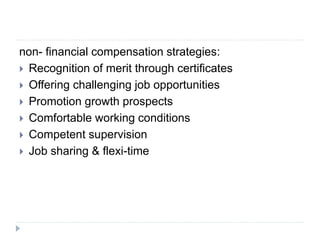
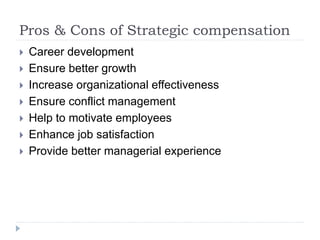
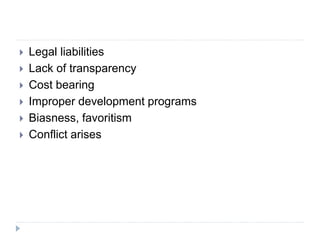
This document discusses strategic compensation management. It defines compensation strategy as how an organization offers pay and benefits to employees, including salary ranges, raises, bonuses, and additional benefits. An effective strategy should reflect the organization's needs, culture, and market trends. It is important because compensation impacts the ability to attract top talent, reduce turnover, and boost performance. Common compensation strategies include straight salary, salary plus commission, commission only, team commissions, and profit/revenue-based pay. Non-financial strategies include recognition, career development opportunities, and comfortable working conditions. Benefits of strategic compensation include attracting job seekers, boosting morale, and reducing turnover, while drawbacks can include costs, lack of transparency, and potential for bias