Topic: Compatibility
Submitted By Safdar Ali
Submitted To Dr. Waqar Ashraf
Compatibility
What is compatibility?
A state in which two things are able to exist or occur together without problems or conflict.
1) Blood Grouping (Forward & Reverse Grouping)
2) Cross-Match ( Donor Red with Patient Serum)
Purpose of Compatibility:
 PURPOSE Compatibility (i.e. Pre-transfusion) testing is performed to select
red cells that will
 i) not cause harm to recipient
 ii) have acceptable function in recipient
 iii) have acceptable survival in recipient
ABO Antigens:
ABO Antigens ABO antigens can be found on:
Red Blood Cells surface
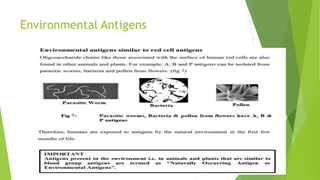
Environment
Secretions
ABO Antigens on Red Cell Surface :
 The ABO blood group antigens are:
 I. A
 II. B
 III. H
Environmental Antigens
Formation of Antibodies:
 Formation of Antibodies against Red Cell Antigens Patients are transfused with
donor red blood cells.
 These donor red cells are different from recipients (patients) red blood cells
and thus are recognized by the recipient’s immune system as non-self i.e.
foreign for the recipient, like bacteria.
 Thus the body makes antibodies against these foreign antigens present on the
donor red cells which are absent in the recipient.
 Environmental Exposure.
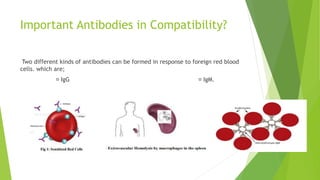
Important Antibodies in Compatibility?
Two different kinds of antibodies can be formed in response to foreign red blood
cells. which are;
IgG IgM.
Secretions:
 Substance Some human body fluids contain soluble glycoproteins which have
antigenic determinants identical with red cell antigens. When antigens are in
solution, the term substance is applied.
 Thus there are A and B antigens on red cells, A and B substances present in
saliva and in other body fluids.
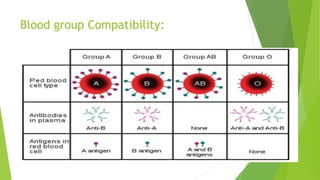
Blood group Compatibility:
Compatibility Testing (Cross-Match)
 Compatibility Testing Performed on Patient’s serum and Donor’s cells. For the final
confirmation of compatibility, patient’s serum is tested with donor red blood cells.
 This procedure is called Crossmatching, because patient’s serum is tested with the
donor red cells.
 There are three phases through which crossmatching have to be taken through.
 The three phases include:
 1) Immediate spin; Is performed to demonstrate ABO compatibility and to detect
IgM antibodies
 2) At 37 o C / Albumin (Enhancement media); This is performed to demonstrate
clinically significant IgG antibodies present in recipient serum to corresponding
antigen on donor cells.
 3) Antihuman Globulin (AHG) Phase: To demonstrate IgG antibodies in recipient
serum that may cause destruction of donor’s red cells.
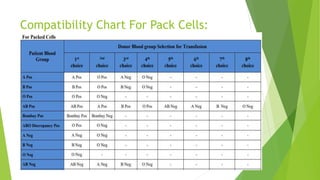
Compatibility Chart For Pack Cells:
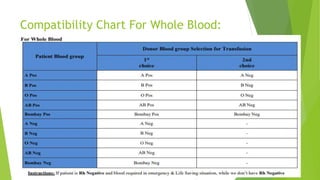
Compatibility Chart For Whole Blood:
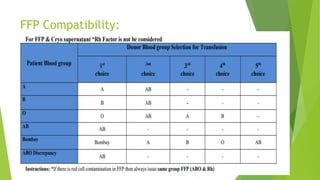
FFP Compatibility:
compatibility (3).pptx

compatibility (3).pptx

  • 1.
    Topic: Compatibility Submitted BySafdar Ali Submitted To Dr. Waqar Ashraf
  • 2.
    Compatibility What is compatibility? Astate in which two things are able to exist or occur together without problems or conflict. 1) Blood Grouping (Forward & Reverse Grouping) 2) Cross-Match ( Donor Red with Patient Serum)
  • 3.
    Purpose of Compatibility: PURPOSE Compatibility (i.e. Pre-transfusion) testing is performed to select red cells that will  i) not cause harm to recipient  ii) have acceptable function in recipient  iii) have acceptable survival in recipient
  • 4.
    ABO Antigens: ABO AntigensABO antigens can be found on: Red Blood Cells surface Environment Secretions
  • 5.
    ABO Antigens onRed Cell Surface :  The ABO blood group antigens are:  I. A  II. B  III. H
  • 6.
  • 7.
    Formation of Antibodies: Formation of Antibodies against Red Cell Antigens Patients are transfused with donor red blood cells.  These donor red cells are different from recipients (patients) red blood cells and thus are recognized by the recipient’s immune system as non-self i.e. foreign for the recipient, like bacteria.  Thus the body makes antibodies against these foreign antigens present on the donor red cells which are absent in the recipient.  Environmental Exposure.
  • 8.
    Important Antibodies inCompatibility? Two different kinds of antibodies can be formed in response to foreign red blood cells. which are; IgG IgM.
  • 9.
    Secretions:  Substance Somehuman body fluids contain soluble glycoproteins which have antigenic determinants identical with red cell antigens. When antigens are in solution, the term substance is applied.  Thus there are A and B antigens on red cells, A and B substances present in saliva and in other body fluids.
  • 10.
  • 11.
    Compatibility Testing (Cross-Match) Compatibility Testing Performed on Patient’s serum and Donor’s cells. For the final confirmation of compatibility, patient’s serum is tested with donor red blood cells.  This procedure is called Crossmatching, because patient’s serum is tested with the donor red cells.  There are three phases through which crossmatching have to be taken through.  The three phases include:  1) Immediate spin; Is performed to demonstrate ABO compatibility and to detect IgM antibodies  2) At 37 o C / Albumin (Enhancement media); This is performed to demonstrate clinically significant IgG antibodies present in recipient serum to corresponding antigen on donor cells.  3) Antihuman Globulin (AHG) Phase: To demonstrate IgG antibodies in recipient serum that may cause destruction of donor’s red cells.
  • 12.
  • 13.
  • 14.