
![Contact Info Mark Bell [email_address] SL: Typewriter Tackleberry Twitter: typewriter Facebook, LinkedIn ICA 2009 Comparing Real and Virtual Quality of Life Data Using a Virtual Assisted Self-Interview Method](https://image.slidesharecdn.com/castronovawagnerbell09ss-090526133727-phpapp02/85/Comparing-Real-and-Virtual-Quality-of-Life-Data-Using-a-Virtual-Assisted-Self-Interview-Method-16-320.jpg)

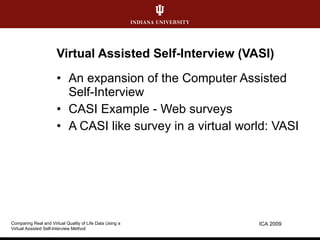
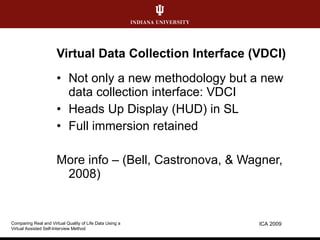
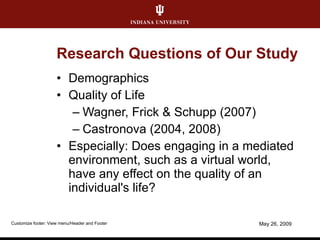
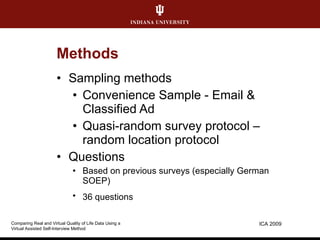
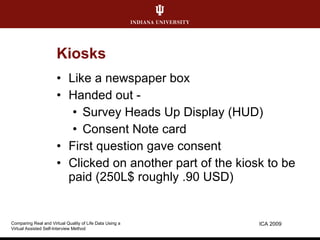
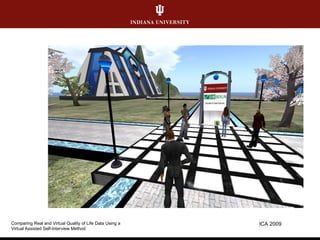
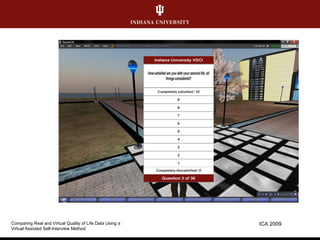
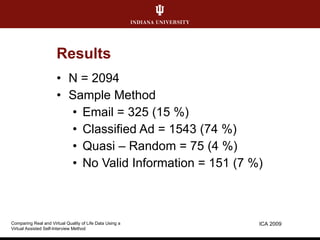
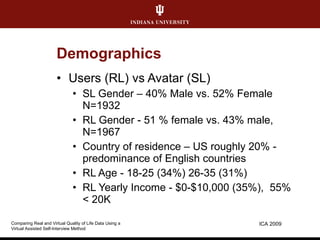
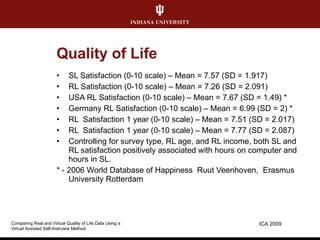
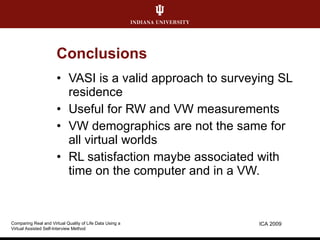
This study introduces a Virtual Assisted Self-Interview (VASI) method to compare real and virtual quality of life data, utilizing a virtual environment funded by the German government. The research, which gathered data from 2,094 participants, found that individuals' satisfaction levels were positively associated with time spent in virtual worlds, particularly highlighting differences in demographics and satisfaction metrics between real-life and virtual settings. The conclusions suggest that VASI is a valid tool for measuring quality of life in virtual environments, offering insights into the relationship between computer usage and satisfaction levels.


