Monica Melendez
                                 EEX 3243-
Teaching Exceptional Adolescents and Adults
                                Spring 2013
 Description of student-
The student is in the 6th grade. This student has a hearing
impairment. He/she has a hearing aid that can be directly
linked to a microphone the teacher has and an interpreter is
provided. The student also displays some behavior
management issues.
 How Disability Affects Performance-
Despite the resources provided the student often missed
things said by the teacher. This can affect how much
information the student receives on a topic. The student’s
misbehavior would also interrupt the flow of the lesson.
Because of this, I decided to focus on the behavioral
problem. I informally assessed the student on how many
times he/she interrupted the class. The student had about
2-3 interruptions per class period.
Plan
Goal:
Student will actively participate in class with 1 or less
interruptions per class period.
Standards:
 HE.6.B.2.3: Demonstrate effective conflict management
  and/or resolution strategies.
 HE.6.B.2.1: Determine strategies to improve effective verbal
  and nonverbal communication skills to enhance health.
Assessment of progress: Student will be observed daily to
determine the number of interruptions. (Interruptions
include: asking a question that has already been answered,
speaking out of turn, getting off task, and disrupting other
students’ learning) Praise of students on task, private
interventions, and preparation of materials were all used to
address this problem
What I Learned
 I learned so much about deaf culture and how
 instruction is provided for these students. I learned
 how hard it was for the interpreters to find the signs
 for certain content area words, something I had never
 thought of before. I also learned how these students
 are exactly like their non-disabled peers. They have the
 same hopes and fears, they simply need to be given the
 right care and encouragement. I also learned that
 because these students can miss information due to
 their hearing, it can lead to behavioral problems. For
 my future classroom I want to ensure a safe and happy
 learning environment. I will make sure strive to make
 sure that the needs of every learner are met.
Conclusion
 This experience helped me in many ways. I had never
 experienced a secondary exceptional classroom before.
 I had always done service learning at the elementary
 level. This opened my eyes to the many different
 factors that come into play at the secondary level. By
 having to move from class to class instead of
 remaining in the same room, these students face new
 challenges. I am so grateful for the chance to see many
 of the principles we have talked about such as co-
 teaching applied in the real classroom. This was a
 wonderful experience and I look forward to future
 service learning opportunities.
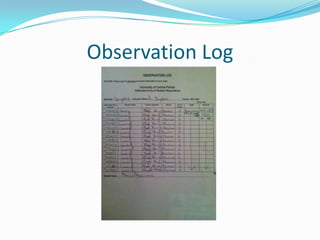
Observation Log

Community connections

  • 1.
    Monica Melendez EEX 3243- Teaching Exceptional Adolescents and Adults Spring 2013
  • 2.
     Description ofstudent- The student is in the 6th grade. This student has a hearing impairment. He/she has a hearing aid that can be directly linked to a microphone the teacher has and an interpreter is provided. The student also displays some behavior management issues.  How Disability Affects Performance- Despite the resources provided the student often missed things said by the teacher. This can affect how much information the student receives on a topic. The student’s misbehavior would also interrupt the flow of the lesson. Because of this, I decided to focus on the behavioral problem. I informally assessed the student on how many times he/she interrupted the class. The student had about 2-3 interruptions per class period.
  • 3.
    Plan Goal: Student will activelyparticipate in class with 1 or less interruptions per class period. Standards:  HE.6.B.2.3: Demonstrate effective conflict management and/or resolution strategies.  HE.6.B.2.1: Determine strategies to improve effective verbal and nonverbal communication skills to enhance health. Assessment of progress: Student will be observed daily to determine the number of interruptions. (Interruptions include: asking a question that has already been answered, speaking out of turn, getting off task, and disrupting other students’ learning) Praise of students on task, private interventions, and preparation of materials were all used to address this problem
  • 4.
    What I Learned I learned so much about deaf culture and how instruction is provided for these students. I learned how hard it was for the interpreters to find the signs for certain content area words, something I had never thought of before. I also learned how these students are exactly like their non-disabled peers. They have the same hopes and fears, they simply need to be given the right care and encouragement. I also learned that because these students can miss information due to their hearing, it can lead to behavioral problems. For my future classroom I want to ensure a safe and happy learning environment. I will make sure strive to make sure that the needs of every learner are met.
  • 5.
    Conclusion  This experiencehelped me in many ways. I had never experienced a secondary exceptional classroom before. I had always done service learning at the elementary level. This opened my eyes to the many different factors that come into play at the secondary level. By having to move from class to class instead of remaining in the same room, these students face new challenges. I am so grateful for the chance to see many of the principles we have talked about such as co- teaching applied in the real classroom. This was a wonderful experience and I look forward to future service learning opportunities.
  • 6.