Communications
Objectives
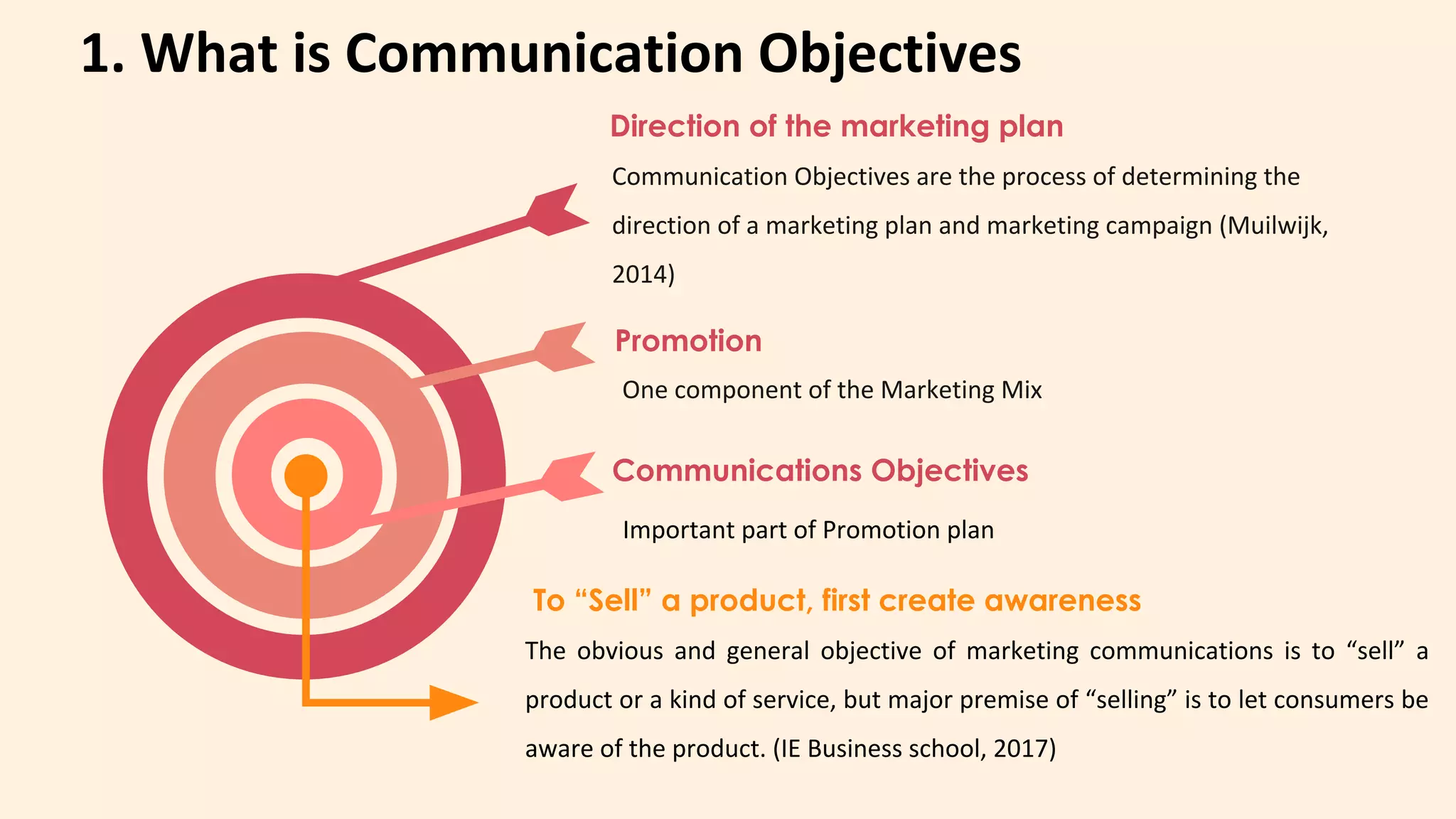
1. What is Communication Objectives
The obvious and general objective of marketing communications is to “sell” a
product or a kind of service, but major premise of “selling” is to let consumers be
aware of the product. (IE Business school, 2017)
To “Sell” a product, first create awareness
Direction of the marketing plan
Communication Objectives are the process of determining the
direction of a marketing plan and marketing campaign (Muilwijk,
2014)
Promotion
One component of the Marketing Mix
Communications Objectives
Important part of Promotion plan
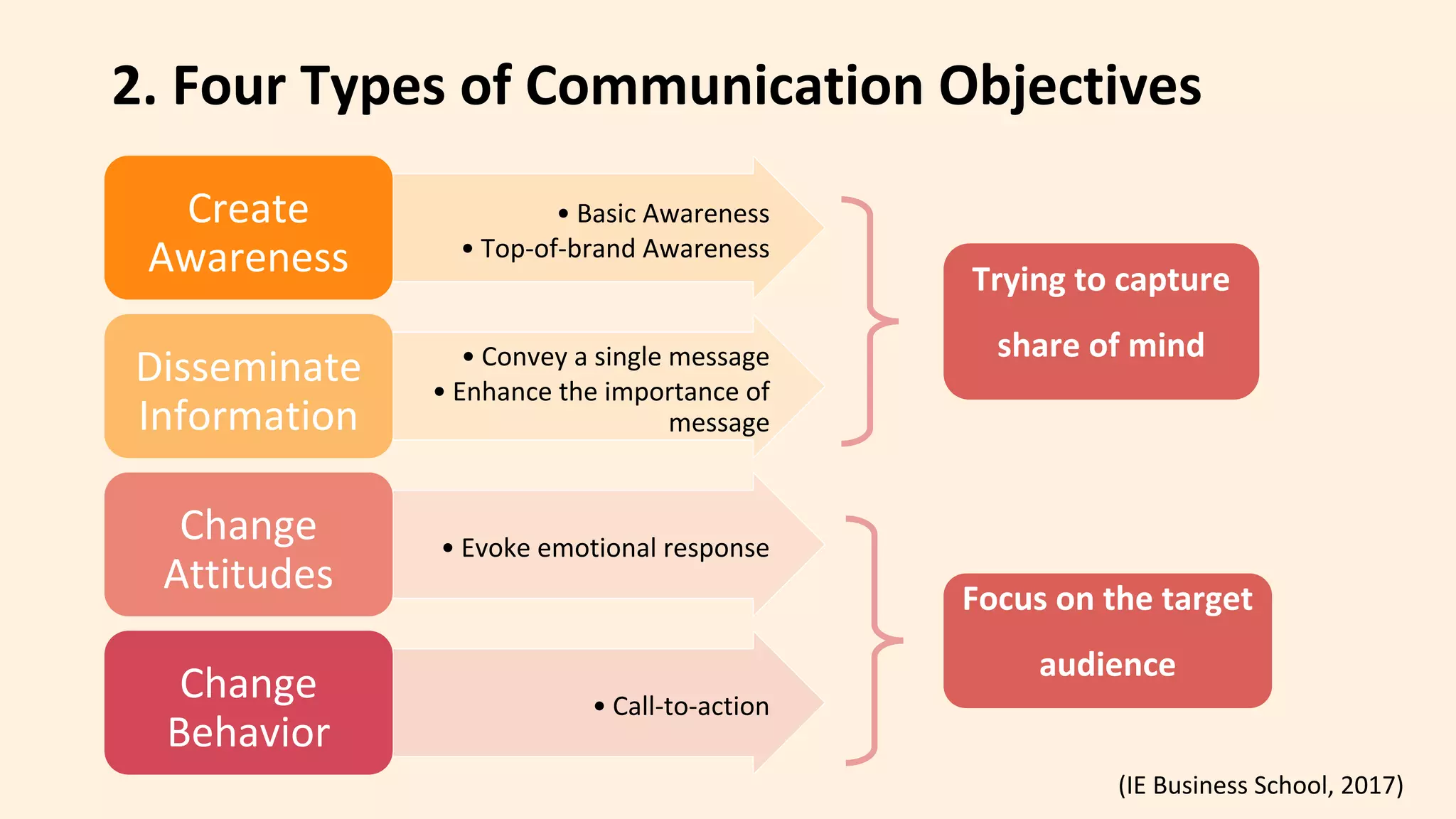
2. Four Types of Communication Objectives
• Basic Awareness
• Top-of-brand Awareness
Create
Awareness
• Convey a single message
• Enhance the importance of
message
Disseminate
Information
• Evoke emotional response
Change
Attitudes
• Call-to-action
Change
Behavior
Trying to capture
share of mind
Focus on the target
audience
(IE Business School, 2017)
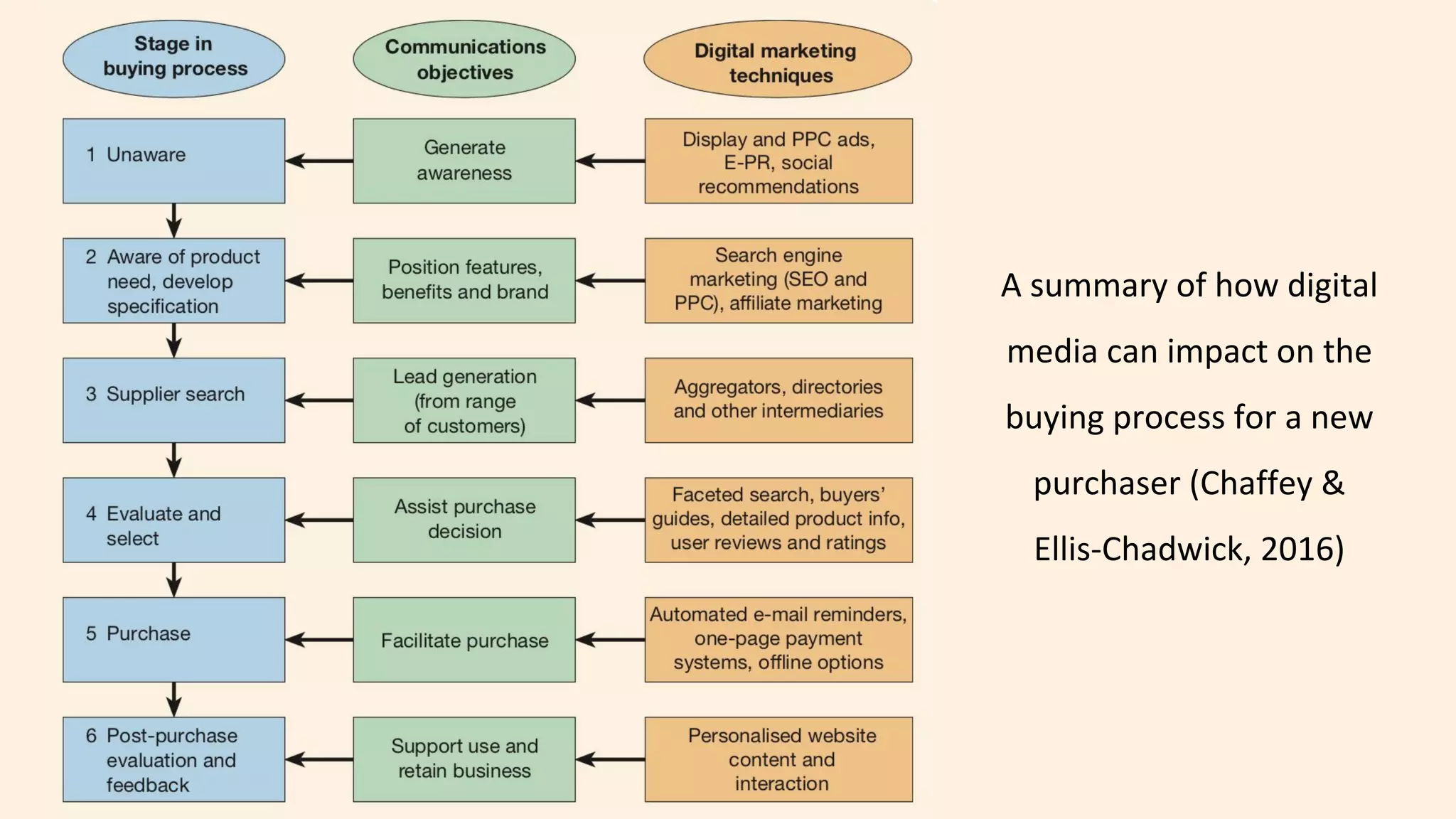
A summary of how digital
media can impact on the
buying process for a new
purchaser (Chaffey &
Ellis-Chadwick, 2016)
Significant is that before starting formulating a marketing campaign, organizations
should thoroughly determine its communications objectives. Simply asking
“what do we want consumers to think, feel, and do after knowing our
products/ services/ brands” and
“What are the goals that we want to achieve after letting consumers know
about us”.
In order to achieve the goals, the communications objectives should be SMART.
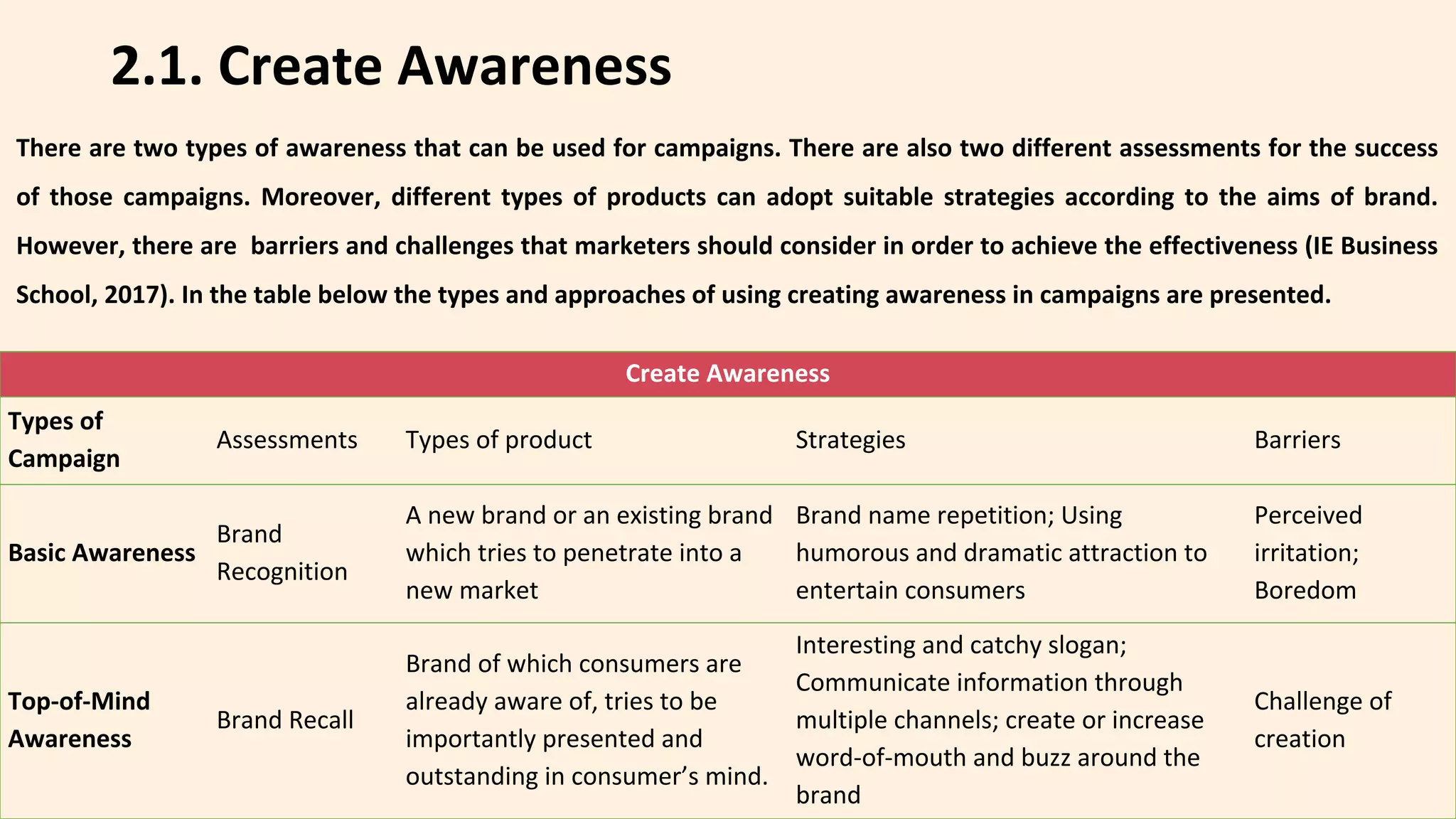
2.1. Create Awareness
Create Awareness
Types of
Campaign
Assessments Types of product Strategies Barriers
Basic Awareness
Brand
Recognition
A new brand or an existing brand
which tries to penetrate into a
new market
Brand name repetition; Using
humorous and dramatic attraction to
entertain consumers
Perceived
irritation;
Boredom
Top-of-Mind
Awareness
Brand Recall
Brand of which consumers are
already aware of, tries to be
importantly presented and
outstanding in consumer’s mind.
Interesting and catchy slogan;
Communicate information through
multiple channels; create or increase
word-of-mouth and buzz around the
brand
Challenge of
creation
There are two types of awareness that can be used for campaigns. There are also two different assessments for the success
of those campaigns. Moreover, different types of products can adopt suitable strategies according to the aims of brand.
However, there are barriers and challenges that marketers should consider in order to achieve the effectiveness (IE Business
School, 2017). In the table below the types and approaches of using creating awareness in campaigns are presented.
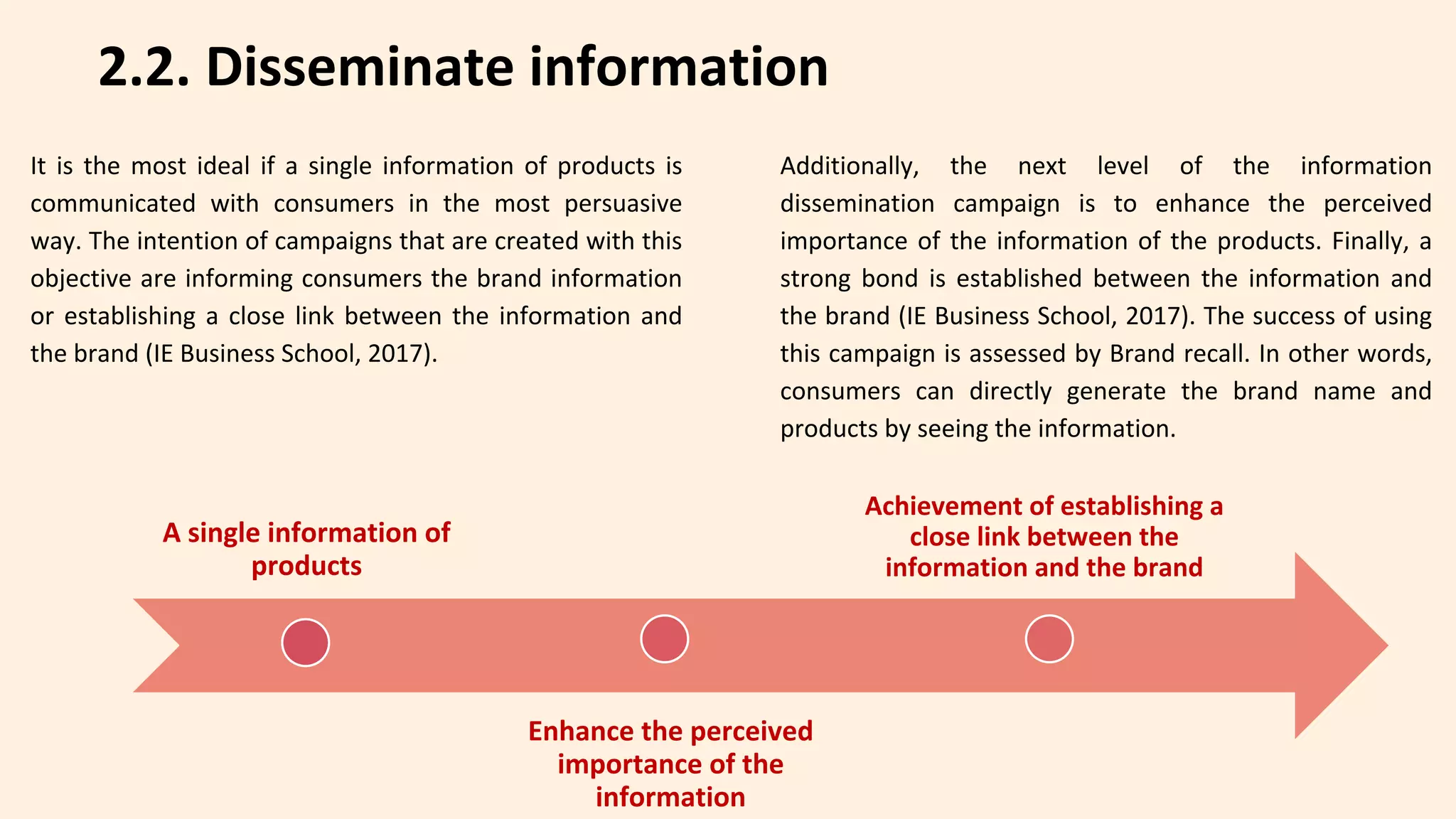
2.2. Disseminate information
A single information of
products
Enhance the perceived
importance of the
information
Achievement of establishing a
close link between the
information and the brand
It is the most ideal if a single information of products is
communicated with consumers in the most persuasive
way. The intention of campaigns that are created with this
objective are informing consumers the brand information
or establishing a close link between the information and
the brand (IE Business School, 2017).
Additionally, the next level of the information
dissemination campaign is to enhance the perceived
importance of the information of the products. Finally, a
strong bond is established between the information and
the brand (IE Business School, 2017). The success of using
this campaign is assessed by Brand recall. In other words,
consumers can directly generate the brand name and
products by seeing the information.
A successful example of using information dissemination campaign is Walmart and its
longstanding motto “Always low prices”. Walmart increased its sales by 8.3%
year-on-year growth in 2008 when the economy downturn (The Economist, 2008). This
motto, since 2005, has associated “Walmart” with “low prices”, which reminds
consumers to be more price conscious. Most retailers try to avoid this and it implies
that the quality is generally the same, giving or taking a few dollar.
Successful case of using “Disseminate information”
2.3. Change Attitude
Capture a share of
consumer's mind
Change attitude
Communication
focuses on target
audience
Protect brand against
competitors
Strengthen brand
positions
Awareness
Brand information
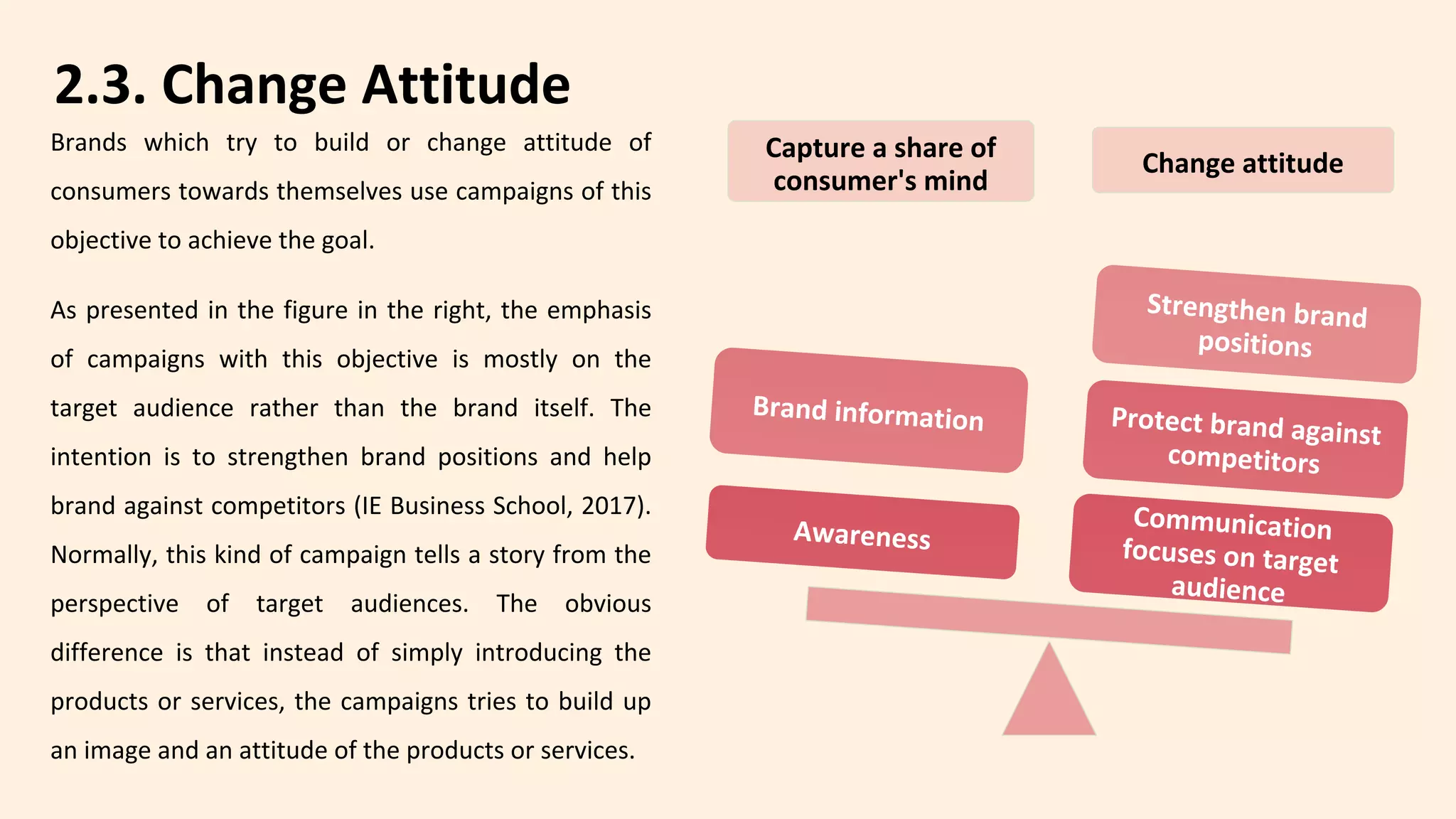
Brands which try to build or change attitude of
consumers towards themselves use campaigns of this
objective to achieve the goal.
As presented in the figure in the right, the emphasis
of campaigns with this objective is mostly on the
target audience rather than the brand itself. The
intention is to strengthen brand positions and help
brand against competitors (IE Business School, 2017).
Normally, this kind of campaign tells a story from the
perspective of target audiences. The obvious
difference is that instead of simply introducing the
products or services, the campaigns tries to build up
an image and an attitude of the products or services.
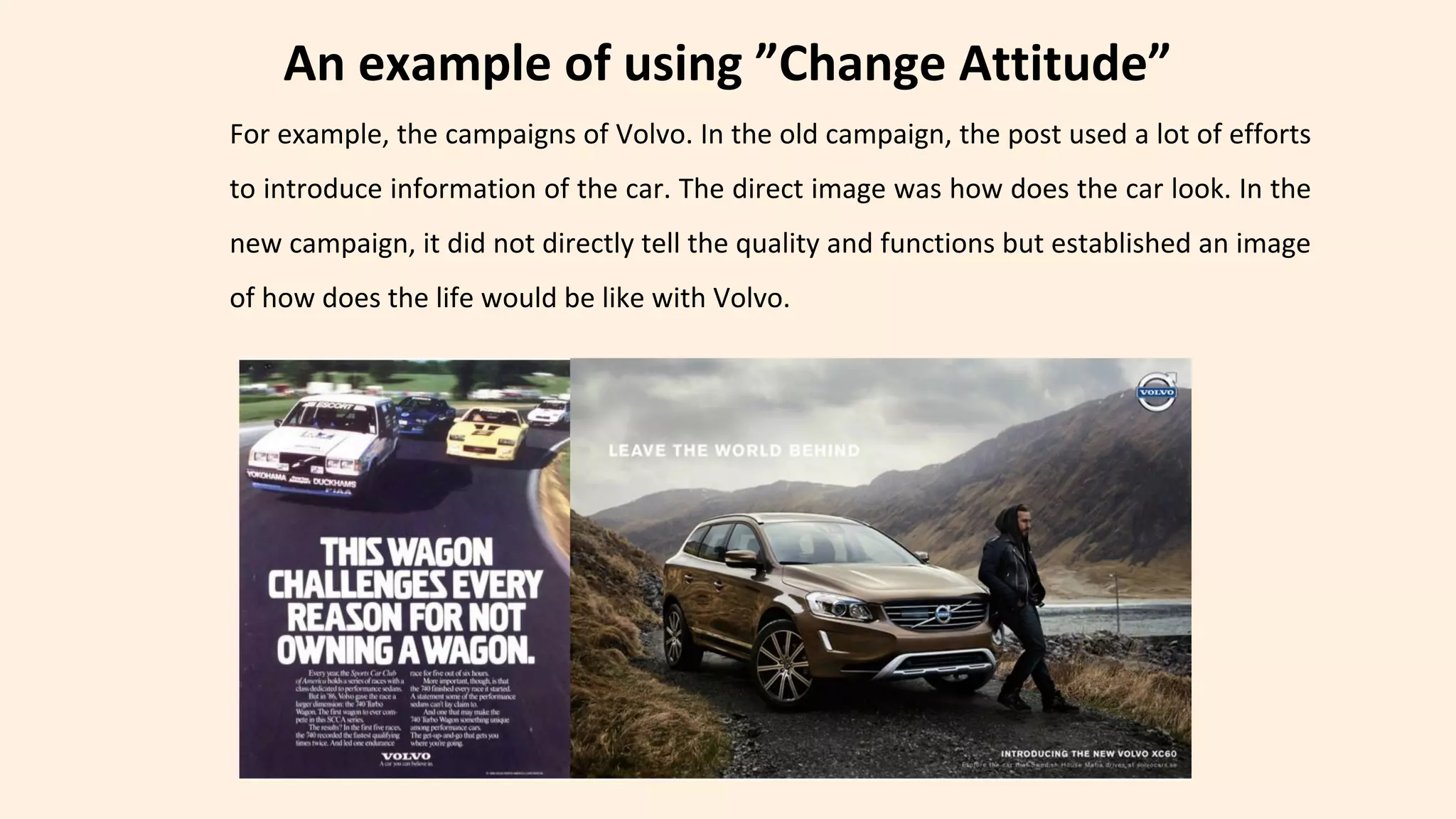
An example of using ”Change Attitude”
For example, the campaigns of Volvo. In the old campaign, the post used a lot of efforts
to introduce information of the car. The direct image was how does the car look. In the
new campaign, it did not directly tell the quality and functions but established an image
of how does the life would be like with Volvo.
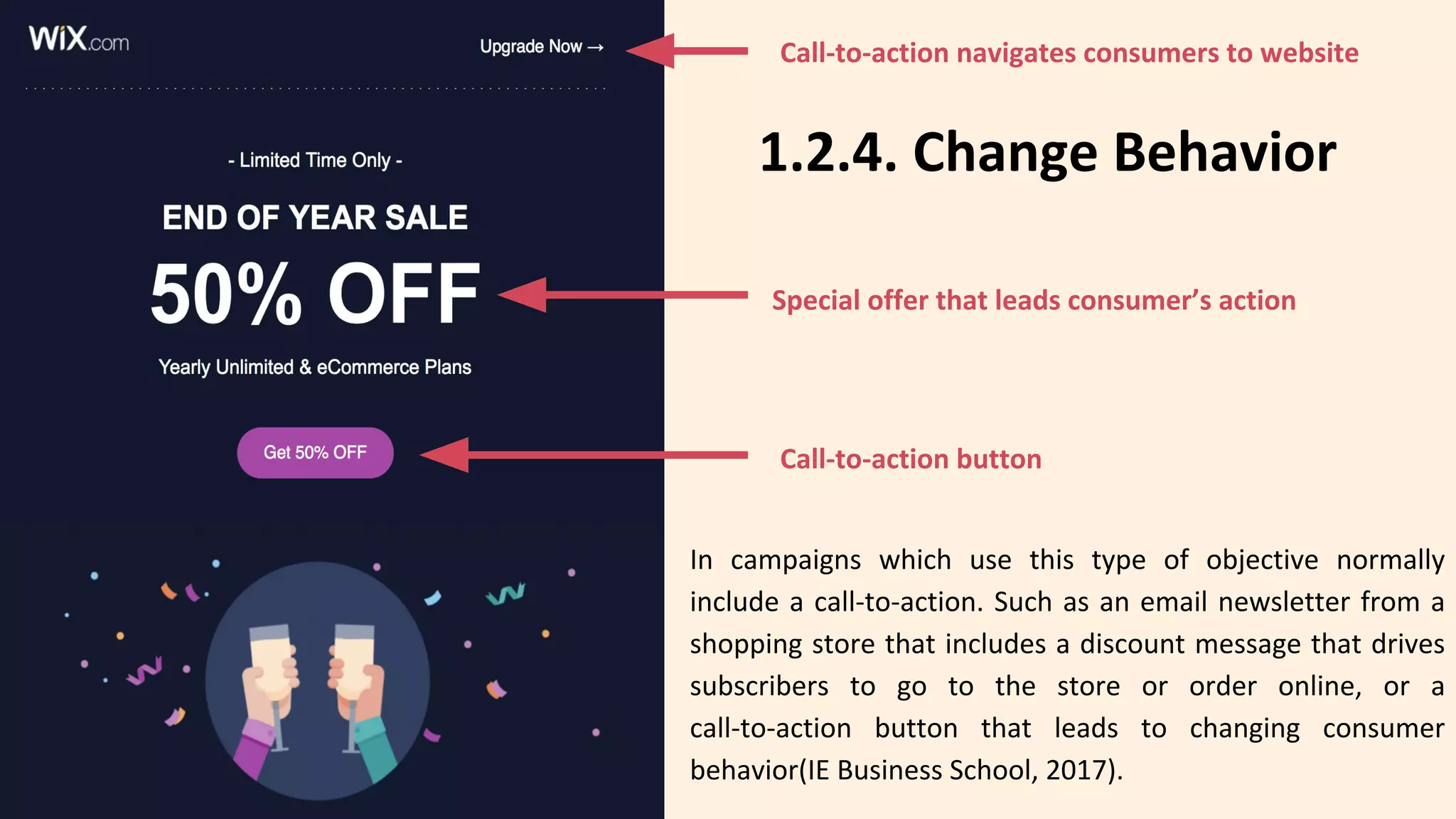
1.2.4. Change Behavior
In campaigns which use this type of objective normally
include a call-to-action. Such as an email newsletter from a
shopping store that includes a discount message that drives
subscribers to go to the store or order online, or a
call-to-action button that leads to changing consumer
behavior(IE Business School, 2017).
Call-to-action navigates consumers to website
Special offer that leads consumer’s action
Call-to-action button
Thank You For Your Attention
Please contact our ProAd team if you want to know
more knowledge about digital media marketing

Communications objectives (for post 7 not for final presentation)

  • 1.
  • 2.
    1. What isCommunication Objectives The obvious and general objective of marketing communications is to “sell” a product or a kind of service, but major premise of “selling” is to let consumers be aware of the product. (IE Business school, 2017) To “Sell” a product, first create awareness Direction of the marketing plan Communication Objectives are the process of determining the direction of a marketing plan and marketing campaign (Muilwijk, 2014) Promotion One component of the Marketing Mix Communications Objectives Important part of Promotion plan
  • 3.
    2. Four Typesof Communication Objectives • Basic Awareness • Top-of-brand Awareness Create Awareness • Convey a single message • Enhance the importance of message Disseminate Information • Evoke emotional response Change Attitudes • Call-to-action Change Behavior Trying to capture share of mind Focus on the target audience (IE Business School, 2017)
  • 4.
    A summary ofhow digital media can impact on the buying process for a new purchaser (Chaffey & Ellis-Chadwick, 2016)
  • 5.
    Significant is thatbefore starting formulating a marketing campaign, organizations should thoroughly determine its communications objectives. Simply asking “what do we want consumers to think, feel, and do after knowing our products/ services/ brands” and “What are the goals that we want to achieve after letting consumers know about us”. In order to achieve the goals, the communications objectives should be SMART.
  • 6.
    2.1. Create Awareness CreateAwareness Types of Campaign Assessments Types of product Strategies Barriers Basic Awareness Brand Recognition A new brand or an existing brand which tries to penetrate into a new market Brand name repetition; Using humorous and dramatic attraction to entertain consumers Perceived irritation; Boredom Top-of-Mind Awareness Brand Recall Brand of which consumers are already aware of, tries to be importantly presented and outstanding in consumer’s mind. Interesting and catchy slogan; Communicate information through multiple channels; create or increase word-of-mouth and buzz around the brand Challenge of creation There are two types of awareness that can be used for campaigns. There are also two different assessments for the success of those campaigns. Moreover, different types of products can adopt suitable strategies according to the aims of brand. However, there are barriers and challenges that marketers should consider in order to achieve the effectiveness (IE Business School, 2017). In the table below the types and approaches of using creating awareness in campaigns are presented.
  • 7.
    2.2. Disseminate information Asingle information of products Enhance the perceived importance of the information Achievement of establishing a close link between the information and the brand It is the most ideal if a single information of products is communicated with consumers in the most persuasive way. The intention of campaigns that are created with this objective are informing consumers the brand information or establishing a close link between the information and the brand (IE Business School, 2017). Additionally, the next level of the information dissemination campaign is to enhance the perceived importance of the information of the products. Finally, a strong bond is established between the information and the brand (IE Business School, 2017). The success of using this campaign is assessed by Brand recall. In other words, consumers can directly generate the brand name and products by seeing the information.
  • 8.
    A successful exampleof using information dissemination campaign is Walmart and its longstanding motto “Always low prices”. Walmart increased its sales by 8.3% year-on-year growth in 2008 when the economy downturn (The Economist, 2008). This motto, since 2005, has associated “Walmart” with “low prices”, which reminds consumers to be more price conscious. Most retailers try to avoid this and it implies that the quality is generally the same, giving or taking a few dollar. Successful case of using “Disseminate information”
  • 9.
    2.3. Change Attitude Capturea share of consumer's mind Change attitude Communication focuses on target audience Protect brand against competitors Strengthen brand positions Awareness Brand information Brands which try to build or change attitude of consumers towards themselves use campaigns of this objective to achieve the goal. As presented in the figure in the right, the emphasis of campaigns with this objective is mostly on the target audience rather than the brand itself. The intention is to strengthen brand positions and help brand against competitors (IE Business School, 2017). Normally, this kind of campaign tells a story from the perspective of target audiences. The obvious difference is that instead of simply introducing the products or services, the campaigns tries to build up an image and an attitude of the products or services.
  • 10.
    An example ofusing ”Change Attitude” For example, the campaigns of Volvo. In the old campaign, the post used a lot of efforts to introduce information of the car. The direct image was how does the car look. In the new campaign, it did not directly tell the quality and functions but established an image of how does the life would be like with Volvo.
  • 11.
    1.2.4. Change Behavior Incampaigns which use this type of objective normally include a call-to-action. Such as an email newsletter from a shopping store that includes a discount message that drives subscribers to go to the store or order online, or a call-to-action button that leads to changing consumer behavior(IE Business School, 2017). Call-to-action navigates consumers to website Special offer that leads consumer’s action Call-to-action button
  • 12.
    Thank You ForYour Attention Please contact our ProAd team if you want to know more knowledge about digital media marketing