by Sara Sheffield
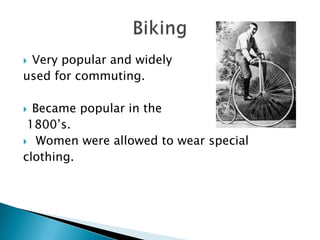
Very popular and widely
used for commuting.

 Became popular in the
 1800’s.
 Women were allowed to wear special
clothing.
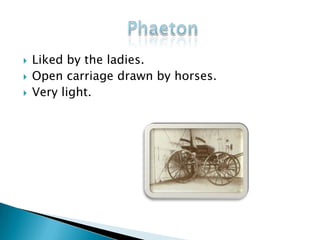
   Liked by the ladies.
   Open carriage drawn by horses.
   Very light.
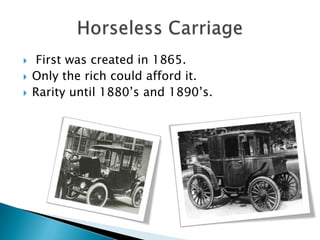
   First was created in 1865.
   Only the rich could afford it.
   Rarity until 1880’s and 1890’s.
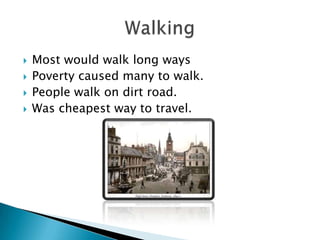
   Most would walk long ways
   Poverty caused many to walk.
   People walk on dirt road.
   Was cheapest way to travel.
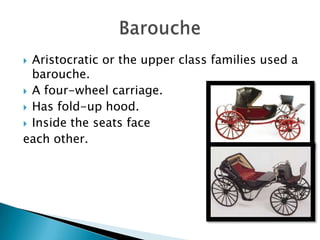
 Aristocratic or the upper class families used a
  barouche.
 A four-wheel carriage.
 Has fold-up hood.
 Inside the seats face
each other.
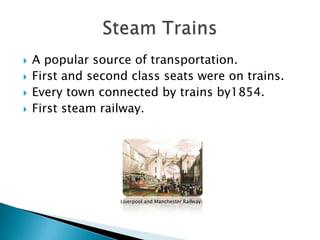
   A popular source of transportation.
   First and second class seats were on trains.
   Every town connected by trains by1854.
   First steam railway.


                   Liverpool and Manchester Railway.
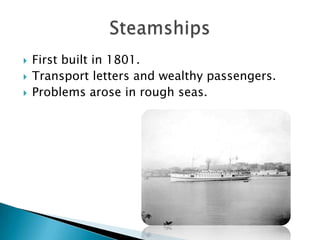
   First built in 1801.
   Transport letters and wealthy passengers.
   Problems arose in rough seas.
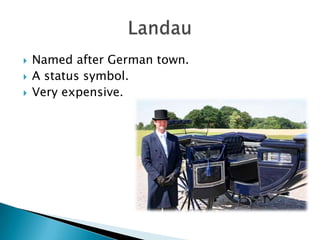
   Named after German town.
   A status symbol.
   Very expensive.

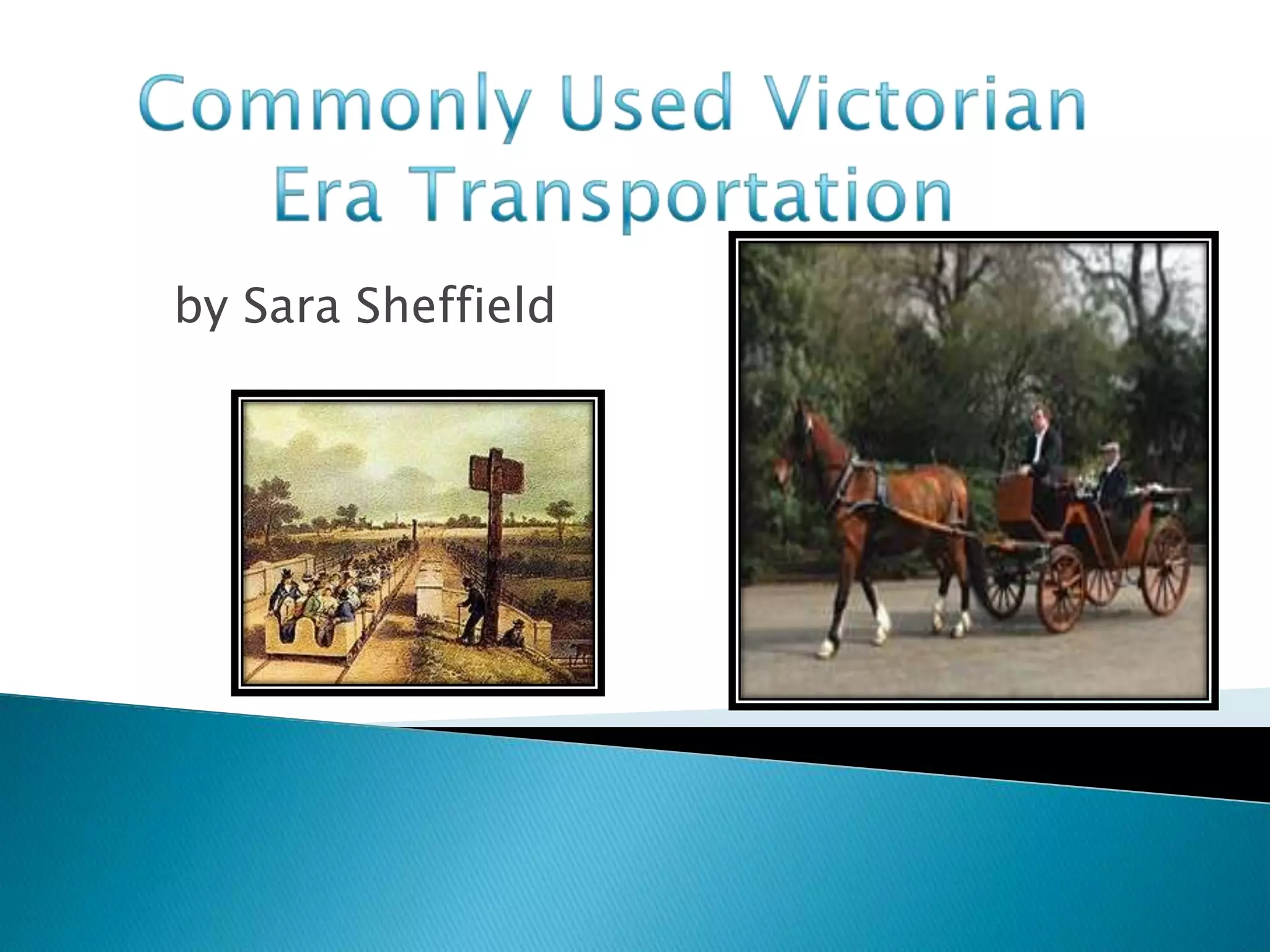
Commonly used victorian era transportation

  • 1.
  • 2.
    Very popular andwidely used for commuting.  Became popular in the 1800’s.  Women were allowed to wear special clothing.
  • 3.
    Liked by the ladies.  Open carriage drawn by horses.  Very light.
  • 4.
    First was created in 1865.  Only the rich could afford it.  Rarity until 1880’s and 1890’s.
  • 5.
    Most would walk long ways  Poverty caused many to walk.  People walk on dirt road.  Was cheapest way to travel.
  • 6.
     Aristocratic orthe upper class families used a barouche.  A four-wheel carriage.  Has fold-up hood.  Inside the seats face each other.
  • 7.
    A popular source of transportation.  First and second class seats were on trains.  Every town connected by trains by1854.  First steam railway. Liverpool and Manchester Railway.
  • 8.
    First built in 1801.  Transport letters and wealthy passengers.  Problems arose in rough seas.
  • 9.
    Named after German town.  A status symbol.  Very expensive.