Heli Here
Common Risk Management
Mistakes to Avoid Now!
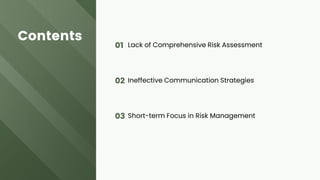
Contents
01 Lack of Comprehensive Risk Assessment
Ineffective Communication Strategies
02
Short-term Focus in Risk Management
03
Lack of Comprehensive Risk
Assessment
01
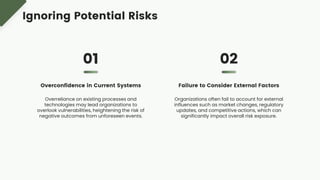
01 02
Overconfidence in Current Systems
Overreliance on existing processes and
technologies may lead organizations to
overlook vulnerabilities, heightening the risk of
negative outcomes from unforeseen events.
Failure to Consider External Factors
Organizations often fail to account for external
influences such as market changes, regulatory
updates, and competitive actions, which can
significantly impact overall risk exposure.
Ignoring Potential Risks
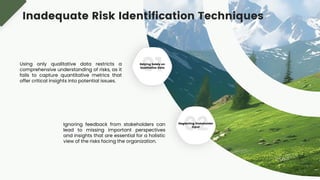
Relying Solely on
Qualitative Data
Neglecting Stakeholder
Input
Using only qualitative data restricts a
comprehensive understanding of risks, as it
fails to capture quantitative metrics that
offer critical insights into potential issues.
Ignoring feedback from stakeholders can
lead to missing important perspectives
and insights that are essential for a holistic
view of the risks facing the organization.
Inadequate Risk Identification Techniques
Ineffective Communication Strategies
02
Insufficient Updates on Risk Status
Regular updates on risk
assessments are crucial, yet many
organizations fail to communicate
these effectively, leading to
confusion and mismanagement of
potential threats.
Lack of Clarity in Reporting
When reports are vague or
convoluted, recipients struggle to
understand critical information,
resulting in poor decision- making
and overall communication
breakdown.
Poor Information Sharing
Neglecting to involve essential departments in decision- making
can create gaps in perspective and knowledge, preventing the
organization from leveraging diverse expertise and insights.
Excluding Key Departments
Frontline employees often possess firsthand knowledge about
operational challenges; overlooking their input can stifle
innovation and result in missed opportunities for improvement.
Ignoring Frontline Employees' Insights
Not Engaging All Relevant Parties
Short-term Focus in Risk
Management
03
Making Decisions Based on Immediate Benefits
Choosing options that offer quick gains can lead
to neglect of potential long- term risks, causing
organizations to face bigger challenges later on.
Overlooking Future Trends and Developments
A narrow focus on present circumstances may
result in missing important trends that could
affect the organization’s position and strategy in
the future.
Underestimating Long-term Consequences
Regular risk audits are crucial for
identifying vulnerabilities; failure to
perform them may allow risks to
accumulate unnoticed and
unaddressed.
Failing to Conduct Regular Risk Audits
Ignoring the need for flexible risk
management practices can leave
organizations unprepared for
unforeseen events or shifts in their
environment.
Lack of Adaptation to Changing Circumstances
Inconsistent Review Processes
Eby Heli Here
Thanks

Common Risk Management Mistakes to Avoid Now!.pdf

  • 1.
    Heli Here Common RiskManagement Mistakes to Avoid Now!
  • 2.
    Contents 01 Lack ofComprehensive Risk Assessment Ineffective Communication Strategies 02 Short-term Focus in Risk Management 03
  • 3.
    Lack of ComprehensiveRisk Assessment 01
  • 4.
    01 02 Overconfidence inCurrent Systems Overreliance on existing processes and technologies may lead organizations to overlook vulnerabilities, heightening the risk of negative outcomes from unforeseen events. Failure to Consider External Factors Organizations often fail to account for external influences such as market changes, regulatory updates, and competitive actions, which can significantly impact overall risk exposure. Ignoring Potential Risks
  • 5.
    Relying Solely on QualitativeData Neglecting Stakeholder Input Using only qualitative data restricts a comprehensive understanding of risks, as it fails to capture quantitative metrics that offer critical insights into potential issues. Ignoring feedback from stakeholders can lead to missing important perspectives and insights that are essential for a holistic view of the risks facing the organization. Inadequate Risk Identification Techniques
  • 6.
  • 7.
    Insufficient Updates onRisk Status Regular updates on risk assessments are crucial, yet many organizations fail to communicate these effectively, leading to confusion and mismanagement of potential threats. Lack of Clarity in Reporting When reports are vague or convoluted, recipients struggle to understand critical information, resulting in poor decision- making and overall communication breakdown. Poor Information Sharing
  • 8.
    Neglecting to involveessential departments in decision- making can create gaps in perspective and knowledge, preventing the organization from leveraging diverse expertise and insights. Excluding Key Departments Frontline employees often possess firsthand knowledge about operational challenges; overlooking their input can stifle innovation and result in missed opportunities for improvement. Ignoring Frontline Employees' Insights Not Engaging All Relevant Parties
  • 9.
    Short-term Focus inRisk Management 03
  • 10.
    Making Decisions Basedon Immediate Benefits Choosing options that offer quick gains can lead to neglect of potential long- term risks, causing organizations to face bigger challenges later on. Overlooking Future Trends and Developments A narrow focus on present circumstances may result in missing important trends that could affect the organization’s position and strategy in the future. Underestimating Long-term Consequences
  • 11.
    Regular risk auditsare crucial for identifying vulnerabilities; failure to perform them may allow risks to accumulate unnoticed and unaddressed. Failing to Conduct Regular Risk Audits Ignoring the need for flexible risk management practices can leave organizations unprepared for unforeseen events or shifts in their environment. Lack of Adaptation to Changing Circumstances Inconsistent Review Processes
  • 12.