Common Cardiac Medications


Anticoagulants
(Also known as Blood Thinners)

Commonly prescribed include:
Dalteparin (Fragmin)
Danaparoid (Orgaran)
Enoxaparin (Lovenox)
Heparin (various)
Tinzaparin (Innohep)
Warfarin (Coumadin)

What the medication does:
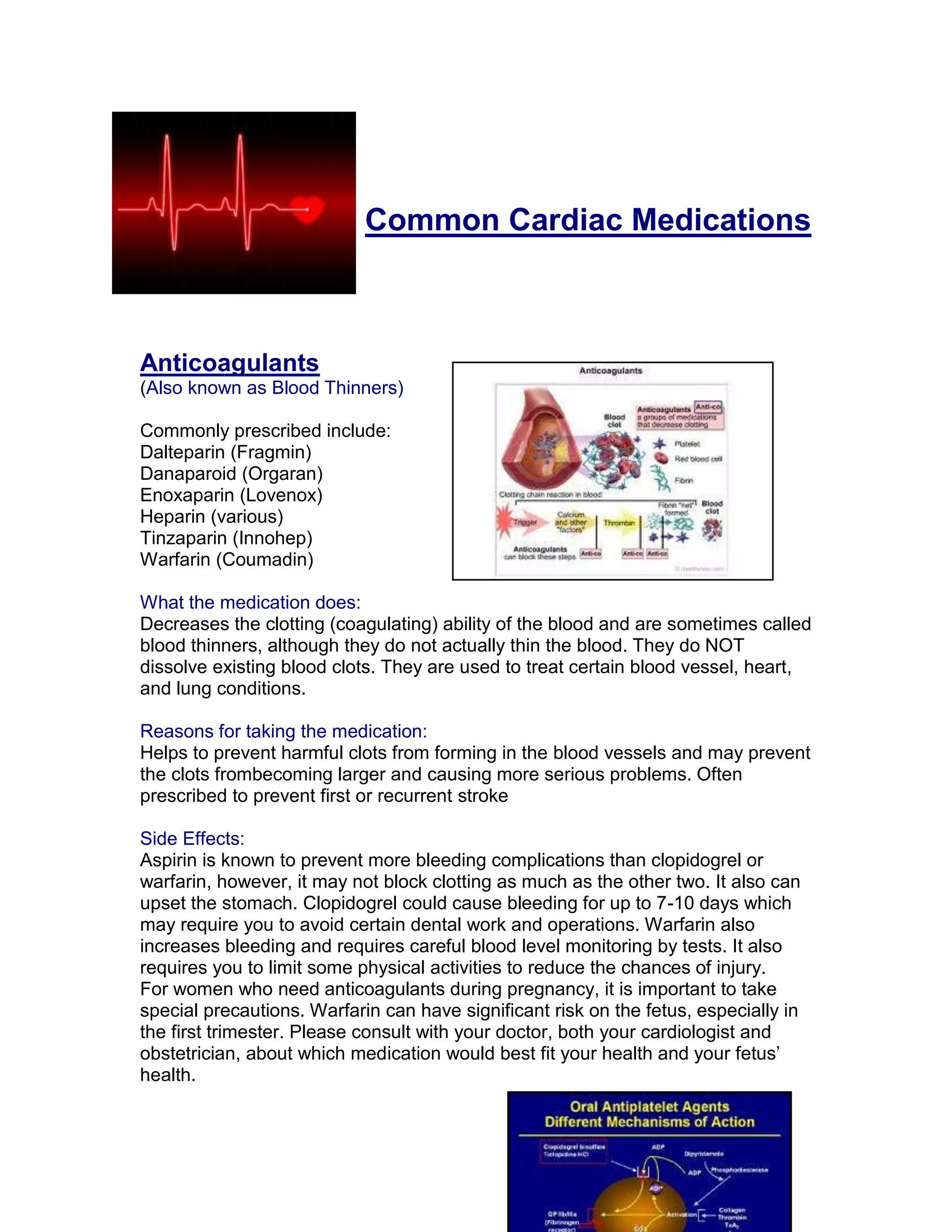
Decreases the clotting (coagulating) ability of the blood and are sometimes called
blood thinners, although they do not actually thin the blood. They do NOT
dissolve existing blood clots. They are used to treat certain blood vessel, heart,
and lung conditions.

Reasons for taking the medication:
Helps to prevent harmful clots from forming in the blood vessels and may prevent
the clots frombecoming larger and causing more serious problems. Often
prescribed to prevent first or recurrent stroke

Side Effects:
Aspirin is known to prevent more bleeding complications than clopidogrel or
warfarin, however, it may not block clotting as much as the other two. It also can
upset the stomach. Clopidogrel could cause bleeding for up to 7-10 days which
may require you to avoid certain dental work and operations. Warfarin also
increases bleeding and requires careful blood level monitoring by tests. It also
requires you to limit some physical activities to reduce the chances of injury.
For women who need anticoagulants during pregnancy, it is important to take
special precautions. Warfarin can have significant risk on the fetus, especially in
the first trimester. Please consult with your doctor, both your cardiologist and
obstetrician, about which medication would best fit your health and your fetus’
health.
Antiplatelet Agents

Commonly prescribed include:
Aspirin
Ticlopidine
Clopidogrel
Dipyridamole

What the medication does:
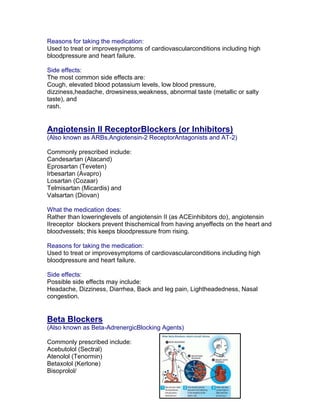
Antiplatelet Agents keep blood clots from formingby preventing blood
plateletsfrom stickingtogether.

Reasons for taking the medication:
Helps prevent clotting in patientswho have had a heart attack,unstable angina,
ischemicstrokes, TIA (transient ischemicattacks, or “little strokes”) andother
forms of cardiovasculardisease. Usually prescribedpreventively, when plaque
buildupis evident but there is not yet alarge obstruction in the artery.

Side effects:
The most common minor side effects are bloating or gas. These problems
usually go away as the body adjusts to the drug and do not require medical
treatment.


Angiotensin-ConvertingEnzyme (ACE) Inhibitors

Commonly prescribed include:
Benazepril (Lotensin)
Captopril (Capoten)
Enalapril (Vasotec)
Fosinopril (Monopril)
Lisinopril (Prinivil, Zestril)
Moexipril (Univasc)
Perindopril (Aceon)
Quinapril (Accupril)
Ramipril (Altace) and
Trandolapril (Mavik)

What the medication does:
It expands blood vessels anddecreases resistance by loweringlevels of
angiotensin II. Allowsblood to flow more easily andmakes the heart's work easier
ormore efficient.
Reasons for taking the medication:
Used to treat or improvesymptoms of cardiovascularconditions including high
bloodpressure and heart failure.

Side effects:
The most common side effects are:
Cough, elevated blood potassium levels, low blood pressure,
dizziness,headache, drowsiness,weakness, abnormal taste (metallic or salty
taste), and
rash.


Angiotensin II ReceptorBlockers (or Inhibitors)
(Also known as ARBs,Angiotensin-2 ReceptorAntagonists and AT-2)

Commonly prescribed include:
Candesartan (Atacand)
Eprosartan (Teveten)
Irbesartan (Avapro)
Losartan (Cozaar)
Telmisartan (Micardis) and
Valsartan (Diovan)

What the medication does:
Rather than loweringlevels of angiotensin II (as ACEinhibitors do), angiotensin
IIreceptor blockers prevent thischemical from having anyeffects on the heart and
bloodvessels; this keeps bloodpressure from rising.

Reasons for taking the medication:
Used to treat or improvesymptoms of cardiovascularconditions including high
bloodpressure and heart failure.

Side effects:
Possible side effects may include:
Headache, Dizziness, Diarrhea, Back and leg pain, Lightheadedness, Nasal
congestion.


Beta Blockers
(Also known as Beta-AdrenergicBlocking Agents)

Commonly prescribed include:
Acebutolol (Sectral)
Atenolol (Tenormin)
Betaxolol (Kerlone)
Bisoprolol/
hydrochlorothiazide (Ziac)
Bisoprolol (Zebeta)
Carteolol (Cartrol)
Metoprolol (Lopressor,
Toprol XL)
Nadolol (Corgard)
Propranolol (Inderal)
Sotalol (Betapace) and
Timolol (Blocadren)

What the medication does:
Decreases the heart rate andcardiac output, which lowersblood pressure and
makes theheart beat more slowly and withless force.

Reasons for taking the medication:
It is used to lower blood pressure and with therapy for cardiacarrhythmias
(abnormal heartrhythms) and in treating chestpain (angina).It is also used to
prevent future heartattacks in patients who have hada heart attack.

Possible side effects:
Side effects may occur in taking beta blockers, including fatigue, cold hands,
dizziness, and weakness. Beta blockers aren’t used in people with asthma, and
require monitoring for people with diabetes.

Calcium Channel Blockers
(Also known as CalciumAntagonists or Calcium Blockers)

Commonly prescribed include:
Amlodipine (Norvasc, Lotrel)
Bepridil (Vascor)
Diltiazem (Cardizem, Tiazac)
Felodipine (Plendil)
Nifedipine (Adalat, Procardia)
Nimodipine (Nimotop)
Nisoldipine (Sular) and
Verapamil (Calan, Isoptin, Verelan)

What the medication does:
Interrupts the movement of calcium into the cells of the heart and blood vessels
and could decreasethe heart’s pumping strength and relax blood vessels.

Reasons for taking the medication:
It is used to treat high blood pressure, chest pain (angina). This is caused by
reduced blood supply to the heart muscle and some arrhythmias (abnormal heart
rhythms).
Side effects:
The most common side effects of calcium channel blockers included: Abdominal
pain (stomach pain), constipation, drowsiness, fatigue, feelings of a rapidly or
forcefully beating heart (palpitations), flushing or hot flashes, headaches, nausea,
sore throat, and/or swelling or water retention in the hands, feet, or lower legs.


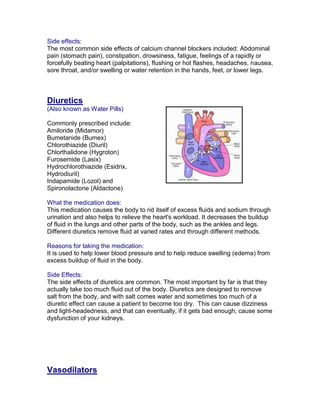
Diuretics
(Also known as Water Pills)

Commonly prescribed include:
Amiloride (Midamor)
Bumetanide (Bumex)
Chlorothiazide (Diuril)
Chlorthalidone (Hygroton)
Furosemide (Lasix)
Hydrochlorothiazide (Esidrix,
Hydrodiuril)
Indapamide (Lozol) and
Spironolactone (Aldactone)

What the medication does:
This medication causes the body to rid itself of excess fluids and sodium through
urination and also helps to relieve the heart's workload. It decreases the buildup
of fluid in the lungs and other parts of the body, such as the ankles and legs.
Different diuretics remove fluid at varied rates and through different methods.

Reasons for taking the medication:
It is used to help lower blood pressure and to help reduce swelling (edema) from
excess buildup of fluid in the body.

Side Effects:
The side effects of diuretics are common. The most important by far is that they
actually take too much fluid out of the body. Diuretics are designed to remove
salt from the body, and with salt comes water and sometimes too much of a
diuretic effect can cause a patient to become too dry. This can cause dizziness
and light-headedness, and that can eventually, if it gets bad enough, cause some
dysfunction of your kidneys.


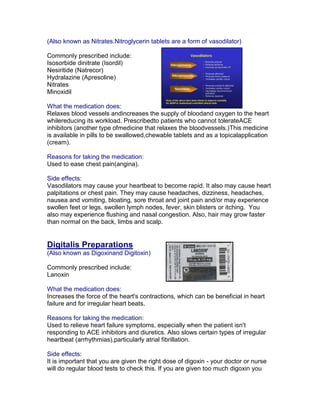
Vasodilators
(Also known as Nitrates.Nitroglycerin tablets are a form of vasodilator)

Commonly prescribed include:
Isosorbide dinitrate (Isordil)
Nesiritide (Natrecor)
Hydralazine (Apresoline)
Nitrates
Minoxidil

What the medication does:
Relaxes blood vessels andincreases the supply of bloodand oxygen to the heart
whilereducing its workload. Prescribedto patients who cannot tolerateACE
inhibitors (another type ofmedicine that relaxes the bloodvessels.)This medicine
is available in pills to be swallowed,chewable tablets and as a topicalapplication
(cream).

Reasons for taking the medication:
Used to ease chest pain(angina).

Side effects:
Vasodilators may cause your heartbeat to become rapid. It also may cause heart
palpitations or chest pain. They may cause headaches, dizziness, headaches,
nausea and vomiting, bloating, sore throat and joint pain and/or may experience
swollen feet or legs, swollen lymph nodes, fever, skin blisters or itching. You
also may experience flushing and nasal congestion. Also, hair may grow faster
than normal on the back, limbs and scalp.


Digitalis Preparations
(Also known as Digoxinand Digitoxin)

Commonly prescribed include:
Lanoxin

What the medication does:
Increases the force of the heart's contractions, which can be beneficial in heart
failure and for irregular heart beats.

Reasons for taking the medication:
Used to relieve heart failure symptoms, especially when the patient isn't
responding to ACE inhibitors and diuretics. Also slows certain types of irregular
heartbeat (arrhythmias),particularly atrial fibrillation.

Side effects:
It is important that you are given the right dose of digoxin - your doctor or nurse
will do regular blood tests to check this. If you are given too much digoxin you
may lose your appetite or develop nausea (feeling sick), headache or blurred /
coloured vision.

Occasionally, high levels of digoxin can cause abnormal heart rhythms which
could make you experience palpitations or black outs - if you have either of
these symptoms you should see your doctor.

Statins

Common types of cholesterolloweringdrugs include
statins,resins and nicotinic acid (niacin)
gemfibrozil
clofibrate.


What the medication does:
Various medications can lower blood cholesterol levels. They may be prescribed
individually orin combination with other drugs. They work in the body in different
ways. Some affect the liver,some work in the intestines and some interrupt the
formation of cholesterol from circulating in theblood. Please
seeamericanheart.org/cholesterol fordetailed information on thesecomplex drugs.

Reasons for taking the medication:
Used to lower LDL (”bad”)cholesterol, raise HDL(”good”) cholesterol and
lowertriglyceride levels.

Side effects:
Most people who take statin drugs tolerate them very well but the most common
side effects include:
Headache, difficulty sleeping, flushing of the skin, tenderness or weakness
(myalgia), drowsiness, diarrhea, dizziness, nausea and/or vomiting, muscle
achesabdominal cramping and/or pain, bloating and/or gas, constipation, and/or
rash.

Statins also carry warnings that memory loss, mental confusion, high blood
sugar, and type 2 diabetes are possible side effects. It's important to remember
that statins may also interact with other medications you take.


http://www.heart.org/idc/groups/heart-public/@wcm/@hcm/documents/downloadable/ucm_304568.pdf

Common Medications

  • 1.
    Common Cardiac Medications Anticoagulants (Alsoknown as Blood Thinners) Commonly prescribed include: Dalteparin (Fragmin) Danaparoid (Orgaran) Enoxaparin (Lovenox) Heparin (various) Tinzaparin (Innohep) Warfarin (Coumadin) What the medication does: Decreases the clotting (coagulating) ability of the blood and are sometimes called blood thinners, although they do not actually thin the blood. They do NOT dissolve existing blood clots. They are used to treat certain blood vessel, heart, and lung conditions. Reasons for taking the medication: Helps to prevent harmful clots from forming in the blood vessels and may prevent the clots frombecoming larger and causing more serious problems. Often prescribed to prevent first or recurrent stroke Side Effects: Aspirin is known to prevent more bleeding complications than clopidogrel or warfarin, however, it may not block clotting as much as the other two. It also can upset the stomach. Clopidogrel could cause bleeding for up to 7-10 days which may require you to avoid certain dental work and operations. Warfarin also increases bleeding and requires careful blood level monitoring by tests. It also requires you to limit some physical activities to reduce the chances of injury. For women who need anticoagulants during pregnancy, it is important to take special precautions. Warfarin can have significant risk on the fetus, especially in the first trimester. Please consult with your doctor, both your cardiologist and obstetrician, about which medication would best fit your health and your fetus’ health.
  • 2.
    Antiplatelet Agents Commonly prescribedinclude: Aspirin Ticlopidine Clopidogrel Dipyridamole What the medication does: Antiplatelet Agents keep blood clots from formingby preventing blood plateletsfrom stickingtogether. Reasons for taking the medication: Helps prevent clotting in patientswho have had a heart attack,unstable angina, ischemicstrokes, TIA (transient ischemicattacks, or “little strokes”) andother forms of cardiovasculardisease. Usually prescribedpreventively, when plaque buildupis evident but there is not yet alarge obstruction in the artery. Side effects: The most common minor side effects are bloating or gas. These problems usually go away as the body adjusts to the drug and do not require medical treatment. Angiotensin-ConvertingEnzyme (ACE) Inhibitors Commonly prescribed include: Benazepril (Lotensin) Captopril (Capoten) Enalapril (Vasotec) Fosinopril (Monopril) Lisinopril (Prinivil, Zestril) Moexipril (Univasc) Perindopril (Aceon) Quinapril (Accupril) Ramipril (Altace) and Trandolapril (Mavik) What the medication does: It expands blood vessels anddecreases resistance by loweringlevels of angiotensin II. Allowsblood to flow more easily andmakes the heart's work easier ormore efficient.
  • 3.
    Reasons for takingthe medication: Used to treat or improvesymptoms of cardiovascularconditions including high bloodpressure and heart failure. Side effects: The most common side effects are: Cough, elevated blood potassium levels, low blood pressure, dizziness,headache, drowsiness,weakness, abnormal taste (metallic or salty taste), and rash. Angiotensin II ReceptorBlockers (or Inhibitors) (Also known as ARBs,Angiotensin-2 ReceptorAntagonists and AT-2) Commonly prescribed include: Candesartan (Atacand) Eprosartan (Teveten) Irbesartan (Avapro) Losartan (Cozaar) Telmisartan (Micardis) and Valsartan (Diovan) What the medication does: Rather than loweringlevels of angiotensin II (as ACEinhibitors do), angiotensin IIreceptor blockers prevent thischemical from having anyeffects on the heart and bloodvessels; this keeps bloodpressure from rising. Reasons for taking the medication: Used to treat or improvesymptoms of cardiovascularconditions including high bloodpressure and heart failure. Side effects: Possible side effects may include: Headache, Dizziness, Diarrhea, Back and leg pain, Lightheadedness, Nasal congestion. Beta Blockers (Also known as Beta-AdrenergicBlocking Agents) Commonly prescribed include: Acebutolol (Sectral) Atenolol (Tenormin) Betaxolol (Kerlone) Bisoprolol/
  • 4.
    hydrochlorothiazide (Ziac) Bisoprolol (Zebeta) Carteolol(Cartrol) Metoprolol (Lopressor, Toprol XL) Nadolol (Corgard) Propranolol (Inderal) Sotalol (Betapace) and Timolol (Blocadren) What the medication does: Decreases the heart rate andcardiac output, which lowersblood pressure and makes theheart beat more slowly and withless force. Reasons for taking the medication: It is used to lower blood pressure and with therapy for cardiacarrhythmias (abnormal heartrhythms) and in treating chestpain (angina).It is also used to prevent future heartattacks in patients who have hada heart attack. Possible side effects: Side effects may occur in taking beta blockers, including fatigue, cold hands, dizziness, and weakness. Beta blockers aren’t used in people with asthma, and require monitoring for people with diabetes. Calcium Channel Blockers (Also known as CalciumAntagonists or Calcium Blockers) Commonly prescribed include: Amlodipine (Norvasc, Lotrel) Bepridil (Vascor) Diltiazem (Cardizem, Tiazac) Felodipine (Plendil) Nifedipine (Adalat, Procardia) Nimodipine (Nimotop) Nisoldipine (Sular) and Verapamil (Calan, Isoptin, Verelan) What the medication does: Interrupts the movement of calcium into the cells of the heart and blood vessels and could decreasethe heart’s pumping strength and relax blood vessels. Reasons for taking the medication: It is used to treat high blood pressure, chest pain (angina). This is caused by reduced blood supply to the heart muscle and some arrhythmias (abnormal heart rhythms).
  • 5.
    Side effects: The mostcommon side effects of calcium channel blockers included: Abdominal pain (stomach pain), constipation, drowsiness, fatigue, feelings of a rapidly or forcefully beating heart (palpitations), flushing or hot flashes, headaches, nausea, sore throat, and/or swelling or water retention in the hands, feet, or lower legs. Diuretics (Also known as Water Pills) Commonly prescribed include: Amiloride (Midamor) Bumetanide (Bumex) Chlorothiazide (Diuril) Chlorthalidone (Hygroton) Furosemide (Lasix) Hydrochlorothiazide (Esidrix, Hydrodiuril) Indapamide (Lozol) and Spironolactone (Aldactone) What the medication does: This medication causes the body to rid itself of excess fluids and sodium through urination and also helps to relieve the heart's workload. It decreases the buildup of fluid in the lungs and other parts of the body, such as the ankles and legs. Different diuretics remove fluid at varied rates and through different methods. Reasons for taking the medication: It is used to help lower blood pressure and to help reduce swelling (edema) from excess buildup of fluid in the body. Side Effects: The side effects of diuretics are common. The most important by far is that they actually take too much fluid out of the body. Diuretics are designed to remove salt from the body, and with salt comes water and sometimes too much of a diuretic effect can cause a patient to become too dry. This can cause dizziness and light-headedness, and that can eventually, if it gets bad enough, cause some dysfunction of your kidneys. Vasodilators
  • 6.
    (Also known asNitrates.Nitroglycerin tablets are a form of vasodilator) Commonly prescribed include: Isosorbide dinitrate (Isordil) Nesiritide (Natrecor) Hydralazine (Apresoline) Nitrates Minoxidil What the medication does: Relaxes blood vessels andincreases the supply of bloodand oxygen to the heart whilereducing its workload. Prescribedto patients who cannot tolerateACE inhibitors (another type ofmedicine that relaxes the bloodvessels.)This medicine is available in pills to be swallowed,chewable tablets and as a topicalapplication (cream). Reasons for taking the medication: Used to ease chest pain(angina). Side effects: Vasodilators may cause your heartbeat to become rapid. It also may cause heart palpitations or chest pain. They may cause headaches, dizziness, headaches, nausea and vomiting, bloating, sore throat and joint pain and/or may experience swollen feet or legs, swollen lymph nodes, fever, skin blisters or itching. You also may experience flushing and nasal congestion. Also, hair may grow faster than normal on the back, limbs and scalp. Digitalis Preparations (Also known as Digoxinand Digitoxin) Commonly prescribed include: Lanoxin What the medication does: Increases the force of the heart's contractions, which can be beneficial in heart failure and for irregular heart beats. Reasons for taking the medication: Used to relieve heart failure symptoms, especially when the patient isn't responding to ACE inhibitors and diuretics. Also slows certain types of irregular heartbeat (arrhythmias),particularly atrial fibrillation. Side effects: It is important that you are given the right dose of digoxin - your doctor or nurse will do regular blood tests to check this. If you are given too much digoxin you
  • 7.
    may lose yourappetite or develop nausea (feeling sick), headache or blurred / coloured vision. Occasionally, high levels of digoxin can cause abnormal heart rhythms which could make you experience palpitations or black outs - if you have either of these symptoms you should see your doctor. Statins Common types of cholesterolloweringdrugs include statins,resins and nicotinic acid (niacin) gemfibrozil clofibrate. What the medication does: Various medications can lower blood cholesterol levels. They may be prescribed individually orin combination with other drugs. They work in the body in different ways. Some affect the liver,some work in the intestines and some interrupt the formation of cholesterol from circulating in theblood. Please seeamericanheart.org/cholesterol fordetailed information on thesecomplex drugs. Reasons for taking the medication: Used to lower LDL (”bad”)cholesterol, raise HDL(”good”) cholesterol and lowertriglyceride levels. Side effects: Most people who take statin drugs tolerate them very well but the most common side effects include: Headache, difficulty sleeping, flushing of the skin, tenderness or weakness (myalgia), drowsiness, diarrhea, dizziness, nausea and/or vomiting, muscle achesabdominal cramping and/or pain, bloating and/or gas, constipation, and/or rash. Statins also carry warnings that memory loss, mental confusion, high blood sugar, and type 2 diabetes are possible side effects. It's important to remember that statins may also interact with other medications you take. http://www.heart.org/idc/groups/heart-public/@wcm/@hcm/documents/downloadable/ucm_304568.pdf