The Learners in the Eyes of the K to 12
Curriculum
Lesson
2:
Understanding
Learners in the
Digital Age
Althia Lleva
Medrano
Presenter
the
Presenter
Vince Joseph
Rudela
Presenter
Introduc
tion
We live in a digital age where
technology is integral to our
lives.
The digital revolution, starting
from the 1950s to the 1970s,
introduced digital computers
and electronic media that
changed society.
The K to 12 Curriculum considers
these changes, especially in how
learners are engaged with
technology.
Influence of
Technology on
Learners
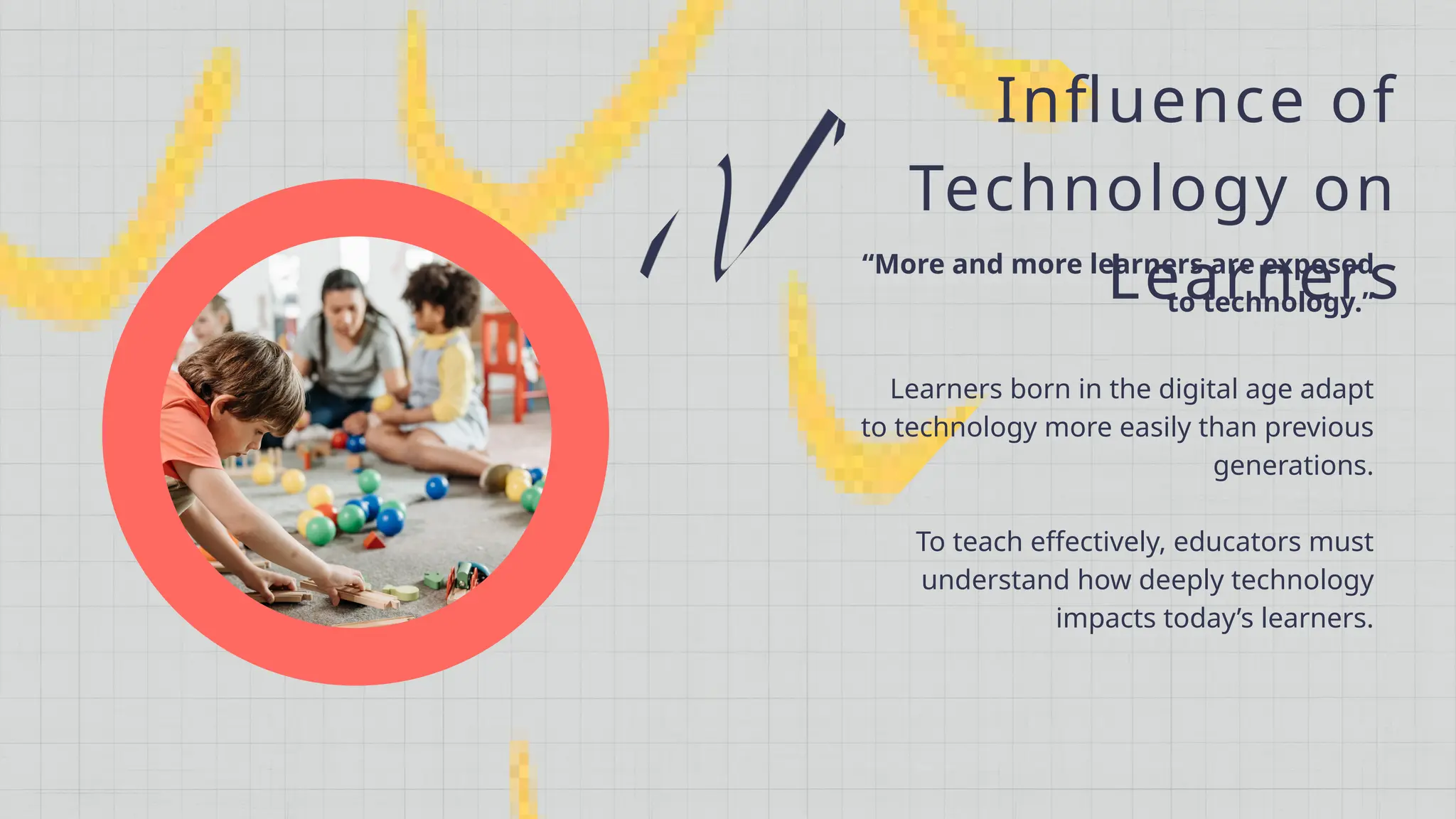
Learners born in the digital age adapt
to technology more easily than previous
generations.
To teach effectively, educators must
understand how deeply technology
impacts today’s learners.
“More and more learners are exposed
to technology.”
Who Are Generation Z
Learners?
They have adapted to using
email, texting, and other
technologies with ease.
Generation Z: Born after
1997; exposed to technology
and social media early.
Prensky (2001) calls them 'digital
natives,' as they have a deep
understanding of technology
from a young age.
A digital native is a person who
grew up with the presence of
digital technology or in the
information age. Having grown
up in IT's presence, digital
natives are comfortable with
and fluent in technology.
Digital Natives vs. Digital
Immigrants
DIGITAL NATIVES
a person who started using digital
technology, computers, the internet,
etc. during their adult life but did not
grow up using them: People age 30 or
older are digital immigrants because
they can never be as fluent in
technology as a native who was born
into it.
Digital Natives vs. Digital
Immigrants
DIGITAL
IMMIGRANTS
Characteristics of Generation Z
Learners
Complex Information:
Can process complex
information but often
lose focus quickly. They
prefer visual and
interactive content
over traditional
methods.
Nonlinear Thinkers:
Prefer to approach
tasks independently.
Multitasking: Handle
multiple tasks at once,
though this can
shorten attention
spans.
Modern classrooms host
learners from diverse
backgrounds, interests,
and perspectives.
Diversity in the Modern
Classroom
Teachers must adapt to
engage these varied
learners.
Each learner may have
different engagement
styles and learning
preferences.
Analytical Learner:
Knowledge-oriented,
focuses on facts and
systematic problem-
solving.
McCarthy’s Four Types of
Learners
TYPE 2
Imaginative Learner:
Reflective, enjoys
discussing ideas, focusing
on 'why.
Dynamic Learner:
Creative, learns through
action, believes they can
influence outcomes.
TYPE 4
TYPE 1
Common-Sense Learner:
Hands-on problem-
solvers, prefer
experimenting and doing.
TYPE 3
Analytical Learners: Focus
on structured, fact-based
learning with independent
tasks.
Teaching Strategies for Different
Learners
Imaginative Learners: Use
discussions,
brainstorming, and
collaborative tasks.
Dynamic Learners:
Encourage creative
problem-solving through
projects and experiments.
Common-Sense Learners:
Provide hands-on
activities, real-world
applications.
Challenges in Teaching
Digital Natives
Technology shapes the way
learners engage with the world.
Shortened attention spans and
multitasking can hinder deep
learning. Teachers must strike a
balance between traditional
methods and integrating
technology effectively.

Colorful-Doodle-Creative-Project-Presentation-1.pptx

  • 1.
    The Learners inthe Eyes of the K to 12 Curriculum Lesson 2: Understanding Learners in the Digital Age
  • 2.
  • 3.
    Introduc tion We live ina digital age where technology is integral to our lives. The digital revolution, starting from the 1950s to the 1970s, introduced digital computers and electronic media that changed society. The K to 12 Curriculum considers these changes, especially in how learners are engaged with technology.
  • 4.
    Influence of Technology on Learners Learnersborn in the digital age adapt to technology more easily than previous generations. To teach effectively, educators must understand how deeply technology impacts today’s learners. “More and more learners are exposed to technology.”
  • 5.
    Who Are GenerationZ Learners? They have adapted to using email, texting, and other technologies with ease. Generation Z: Born after 1997; exposed to technology and social media early. Prensky (2001) calls them 'digital natives,' as they have a deep understanding of technology from a young age.
  • 6.
    A digital nativeis a person who grew up with the presence of digital technology or in the information age. Having grown up in IT's presence, digital natives are comfortable with and fluent in technology. Digital Natives vs. Digital Immigrants DIGITAL NATIVES
  • 7.
    a person whostarted using digital technology, computers, the internet, etc. during their adult life but did not grow up using them: People age 30 or older are digital immigrants because they can never be as fluent in technology as a native who was born into it. Digital Natives vs. Digital Immigrants DIGITAL IMMIGRANTS
  • 8.
    Characteristics of GenerationZ Learners Complex Information: Can process complex information but often lose focus quickly. They prefer visual and interactive content over traditional methods. Nonlinear Thinkers: Prefer to approach tasks independently. Multitasking: Handle multiple tasks at once, though this can shorten attention spans.
  • 9.
    Modern classrooms host learnersfrom diverse backgrounds, interests, and perspectives. Diversity in the Modern Classroom Teachers must adapt to engage these varied learners. Each learner may have different engagement styles and learning preferences.
  • 10.
    Analytical Learner: Knowledge-oriented, focuses onfacts and systematic problem- solving. McCarthy’s Four Types of Learners TYPE 2 Imaginative Learner: Reflective, enjoys discussing ideas, focusing on 'why. Dynamic Learner: Creative, learns through action, believes they can influence outcomes. TYPE 4 TYPE 1 Common-Sense Learner: Hands-on problem- solvers, prefer experimenting and doing. TYPE 3
  • 11.
    Analytical Learners: Focus onstructured, fact-based learning with independent tasks. Teaching Strategies for Different Learners Imaginative Learners: Use discussions, brainstorming, and collaborative tasks. Dynamic Learners: Encourage creative problem-solving through projects and experiments. Common-Sense Learners: Provide hands-on activities, real-world applications.
  • 12.
    Challenges in Teaching DigitalNatives Technology shapes the way learners engage with the world. Shortened attention spans and multitasking can hinder deep learning. Teachers must strike a balance between traditional methods and integrating technology effectively.