COLONIC POLYPS
Dr. Nazim Arain
Consultant Internal Medicine & Gastroenterologist/Hepatologist.
Almana General Hospital, Dammam, KSA
NAZIMARAIN81@HOTMAIL.COM
00966554568810
1
COLONIC POLYPS
• Introduction & local Epidemiological Data.
• Journey from Adenoma to carcinoma.
• Risk Factors
• Diagnostic tools.
• Polypectomy & surveillance .
• Cases from practice .
2
Introduction
• Colorectal cancer (CRC) is the 3rd most diagnosed cancer globally with > 1.9
million incident cases in 2020 .
• Due to the adoption of CRC screening and reduction in risk factors such as
smoking, the global incidence rates have been decreasing in the screening-eligible
age group (50–75)
• There have been global reports of increasing rates in the younger population
(<50), with the highest annual percentage change (APC) among the age group 20–
39 .
• These reports bring the discussion about the appropriate age to initiate the
screening, with some reports advocating for starting at age 45 and others as early
as the age of 40.
3
• Unlike other international studies, The trends of CRC among the Saudi population is critical for
several reasons.
– First, 86% of Saudi population is younger than 50 years old & 35 % of Saudi population fall in age
group between 20–39 years .
– Second, obesity is common among the Gulf Cooperation Council (GCC) countries, and Saudi Arabia is
no exception.
• In 2016, 35% of Saudi adults are considered obese .
• Both, a young population with a high proportion of obesity are characteristics that engender the
development of early-onset CRC.
• Studies from the US, Canada, the UK, Australia, and New Zealand showed an association between
the childhood obesity epidemic and the rise in early-onset CRC .
• For instance, women with BMI ≥ 23 at age 18 had a 63% higher risk of early-onset CRC compared to
women with a BMI of 18.5–20.9.
– Third, there is currently no population-based screening for CRC in Saudi Arabia, leading
to delayed CRC detection, increased late-stage diagnosis, and poor survival across all age
groups .
Introduction
4
• In Saudi Arabia, CRC is the most diagnosed cancer in men and 3rd in
women . representing almost 13% of all diagnosed cancers .
• It is, unknown if the incidence rates have been increasing similarly across
all age groups, and no study has investigated changes in incidence rates by
age at diagnosis.
• While approximately 13% of early-onset CRC develops from germline
mutations in genes causing hereditary CRC syndromes.
• The majority of early-onset CRC are sporadic, poorly differentiated, with
mucinous adenocarcinoma and are diagnosed at late stage .
• On May 18, 2021 and in an effort to detect the disease at early stages, the
United State Preventive Services Task Force (USPSTF) recommended CRC
screening in adults aged 45–49 years with a grade “B” recommendation .
Introduction
5
Saudi population and CRC
• The majority (39%) of the population
is younger than 20 years old.
• about 86% is younger than 50 years
old, and mostly reside in regions of
Riyadh, Makkah, and Eastern
province.
• Almost one-third of the CRC cases
are among age groups 40–54, are
predominantly males, and reside in
the three most populated regions.
• While there has been an increase in
the age-standardized rates across all
age groups, the steepest increase
was among patients age 50 years or
older.
6
What is our experience at Almana General Hospital, Dammam
306
TOTAL COLONOSCOPIES
223 (72.9%)
OTHER INDICATIONS
83(27.1%)
SCREENING COLONOSCOPIES
POLYS,
22, 27%
NORMA
L, 61,
73%
SCREENING COLONOSCOPY
RESULTS
POLYS NORMAL
MALE,
49, 59%
FEMALE
, 34,
41%
SEXUAL %AGE AMONG
SCREENING COLONOSCOPY
MALE FEMALE
ARAMC
O, 79,
95%
CASH,
1, 1%
OTHER ,
3, 4%
SCREENING COLONOSCOPY
INSURANCE COMPANY
ARAMCO
CASH
OTHER
7
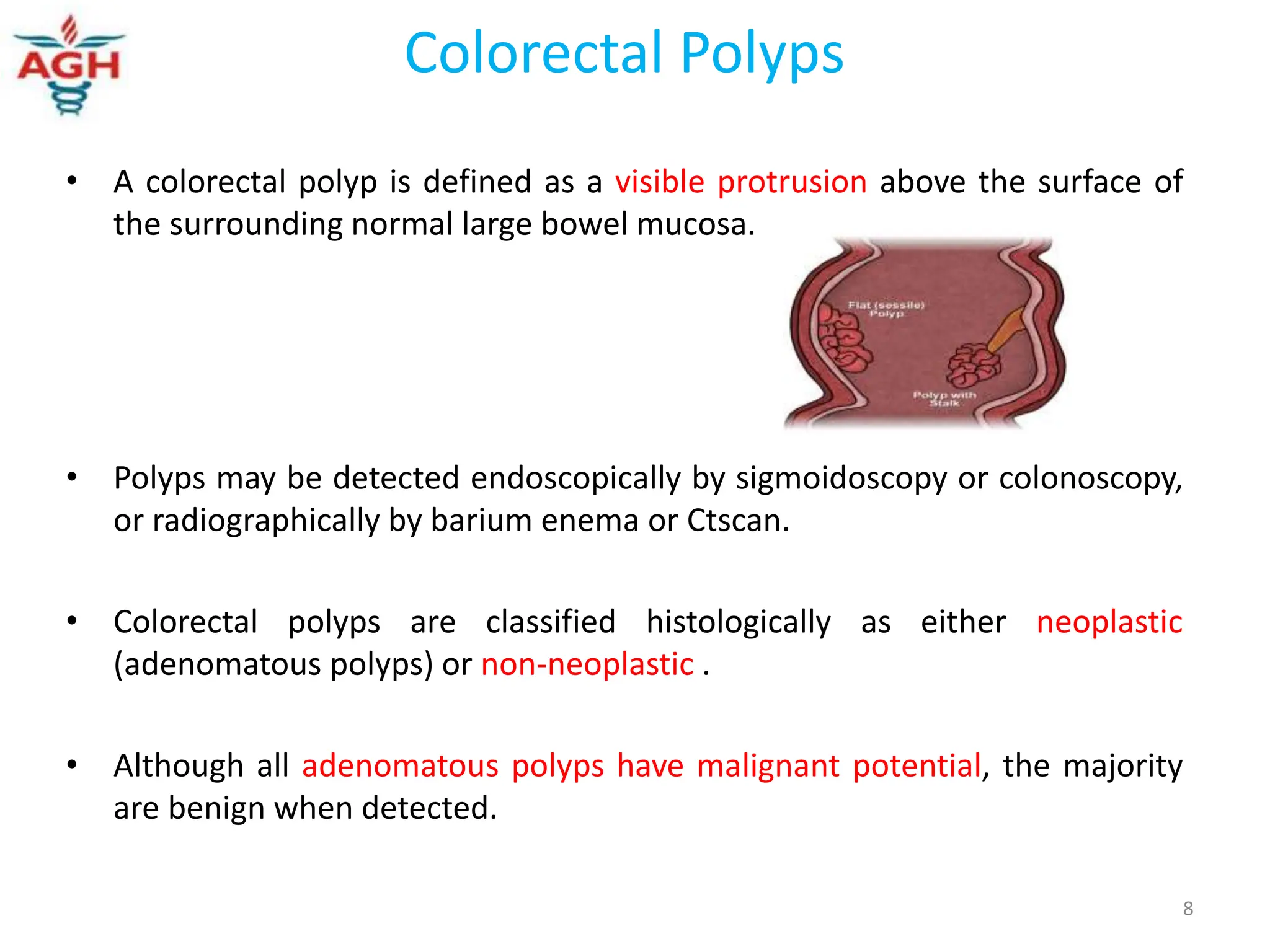
• A colorectal polyp is defined as a visible protrusion above the surface of
the surrounding normal large bowel mucosa.
• Polyps may be detected endoscopically by sigmoidoscopy or colonoscopy,
or radiographically by barium enema or Ctscan.
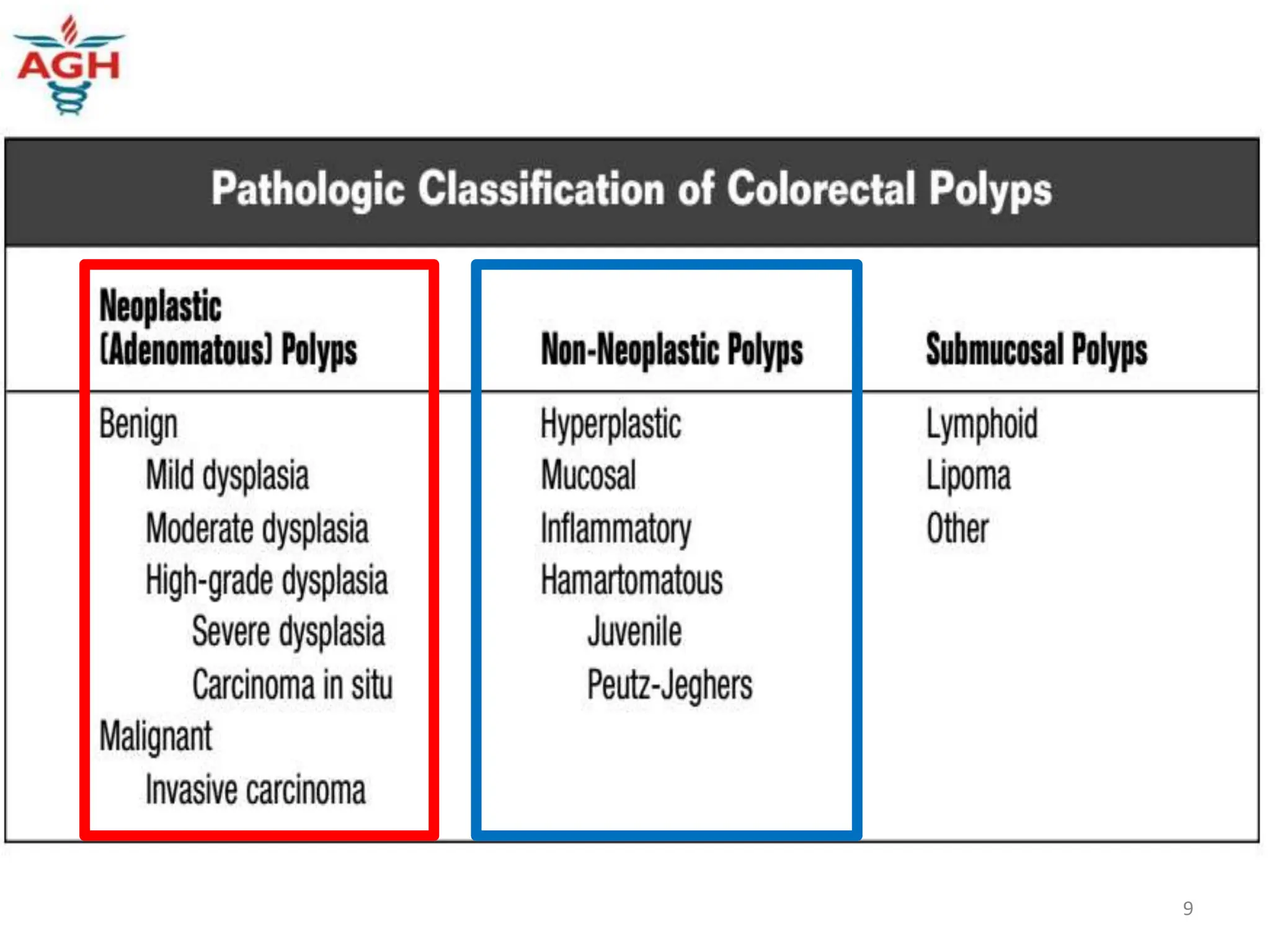
• Colorectal polyps are classified histologically as either neoplastic
(adenomatous polyps) or non-neoplastic .
• Although all adenomatous polyps have malignant potential, the majority
are benign when detected.
Colorectal Polyps
8
9
• Appropriate management of colorectal polyps requires an understanding
of the typical clinical presentation, anatomic distribution, and associated
clinical findings of these variable histologic types.
• Most colorectal polyps occur sporadically, some may be associated with a
hereditary syndrome. such as familial adenomatous such as:
– polyposis (FAP)
– juvenile polyposis
– Peutz-Jeghers
– hereditary nonpolyposis colorectal cancer (HNPCC).
Colorectal Polyps
10
11
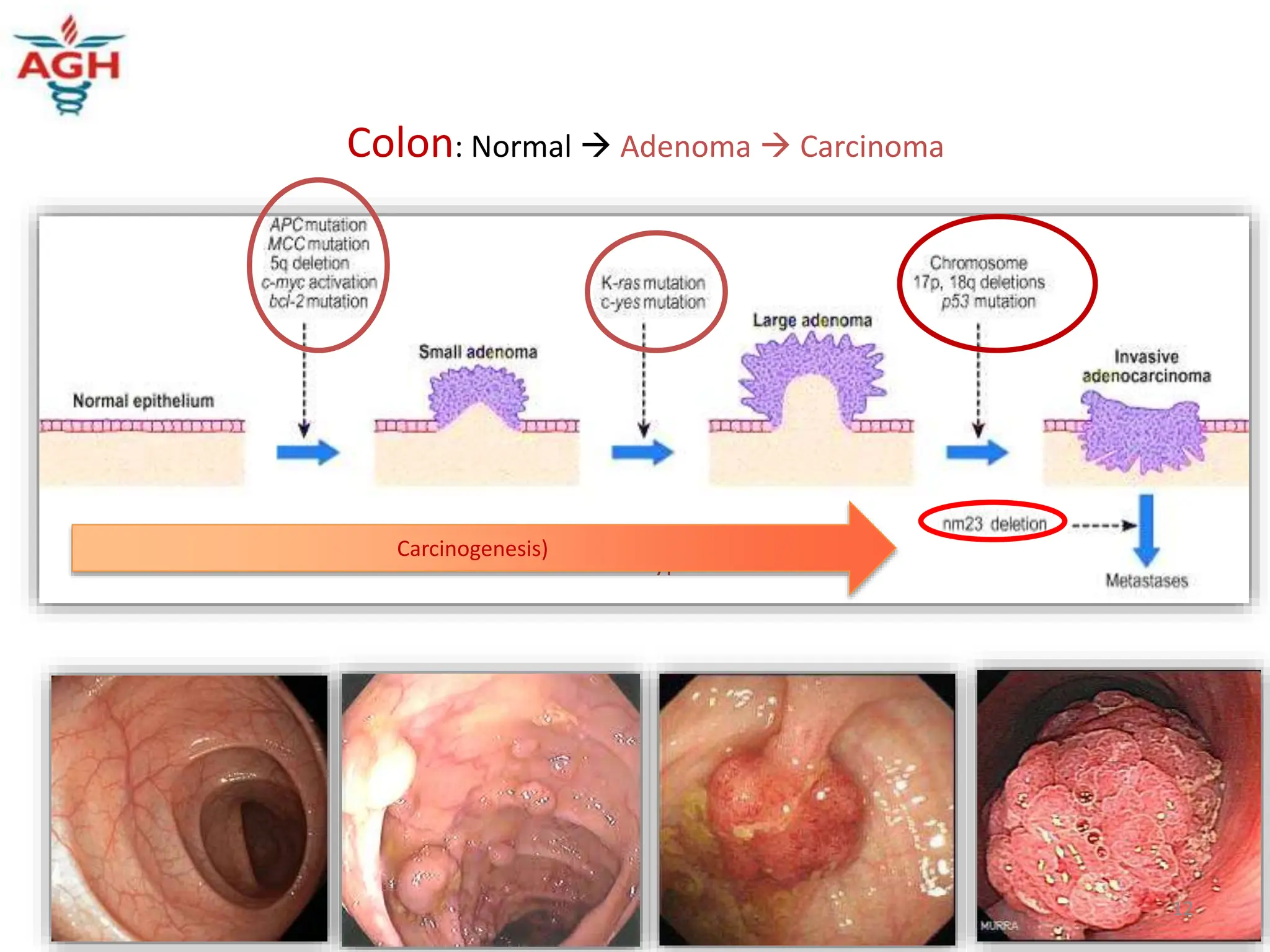
Colon: Normal  Adenoma  Carcinoma
Colon Cancer: Common type - 80%
Carcinogenesis)
12
Adenoma-Carcinoma Sequence
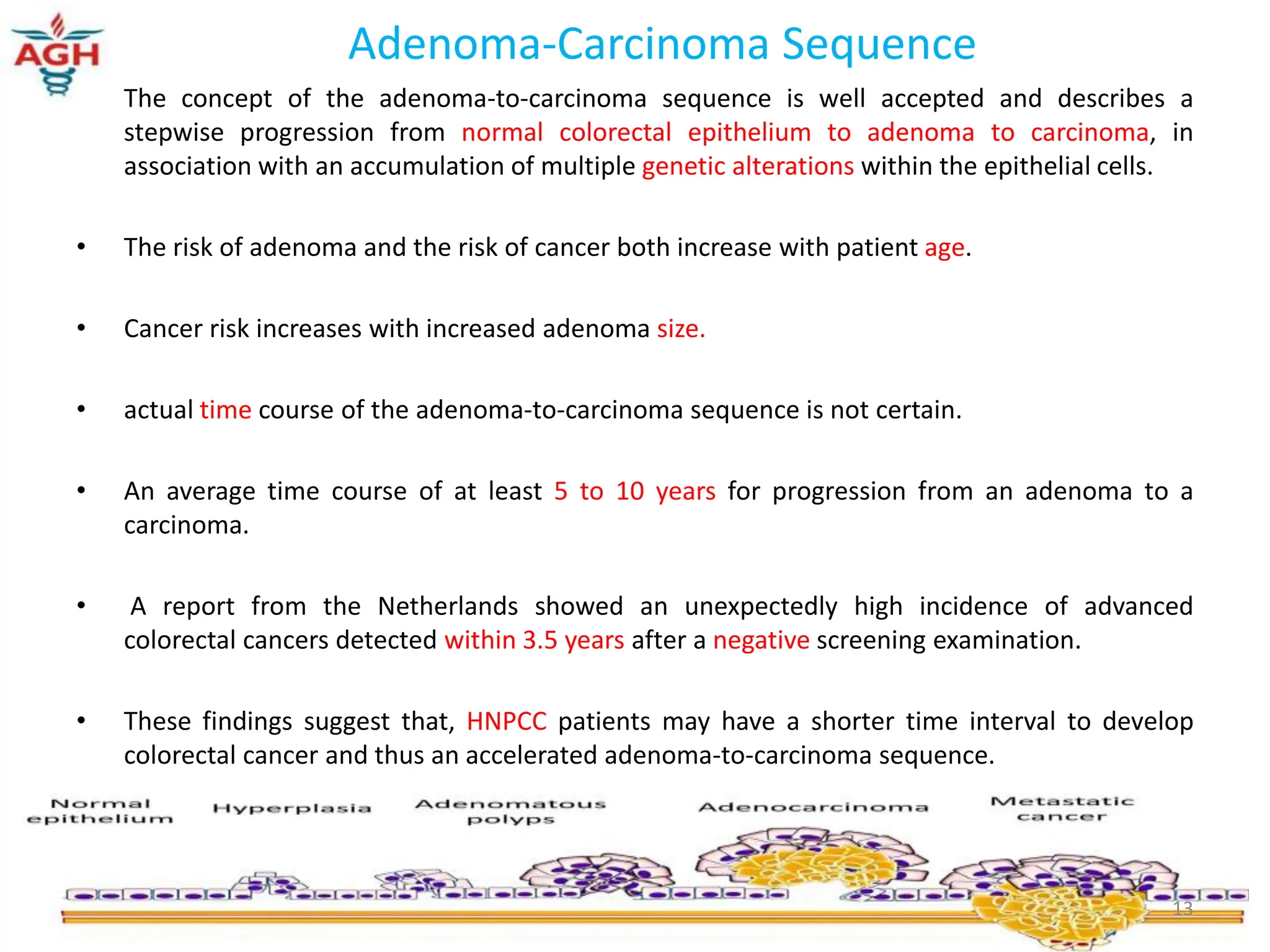
• The concept of the adenoma-to-carcinoma sequence is well accepted and describes a
stepwise progression from normal colorectal epithelium to adenoma to carcinoma, in
association with an accumulation of multiple genetic alterations within the epithelial cells.
• The risk of adenoma and the risk of cancer both increase with patient age.
• Cancer risk increases with increased adenoma size.
• actual time course of the adenoma-to-carcinoma sequence is not certain.
• An average time course of at least 5 to 10 years for progression from an adenoma to a
carcinoma.
• A report from the Netherlands showed an unexpectedly high incidence of advanced
colorectal cancers detected within 3.5 years after a negative screening examination.
• These findings suggest that, HNPCC patients may have a shorter time interval to develop
colorectal cancer and thus an accelerated adenoma-to-carcinoma sequence.
• That’s why the genetic analysis is helpful to define further management .
13
RISK FACTORS
14
15
16
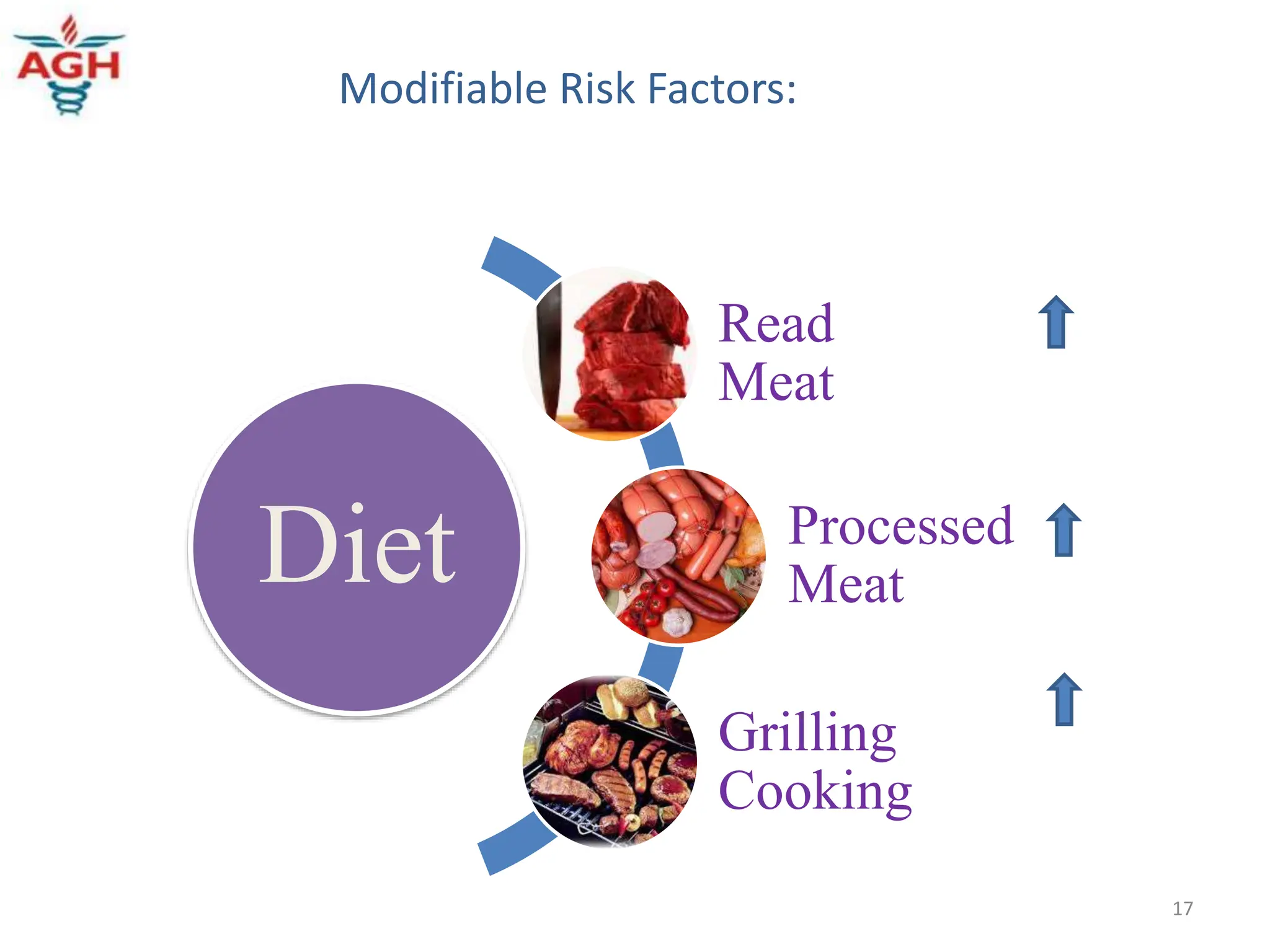
Modifiable Risk Factors:
Diet
Read
Meat
Processed
Meat
Grilling
Cooking
17
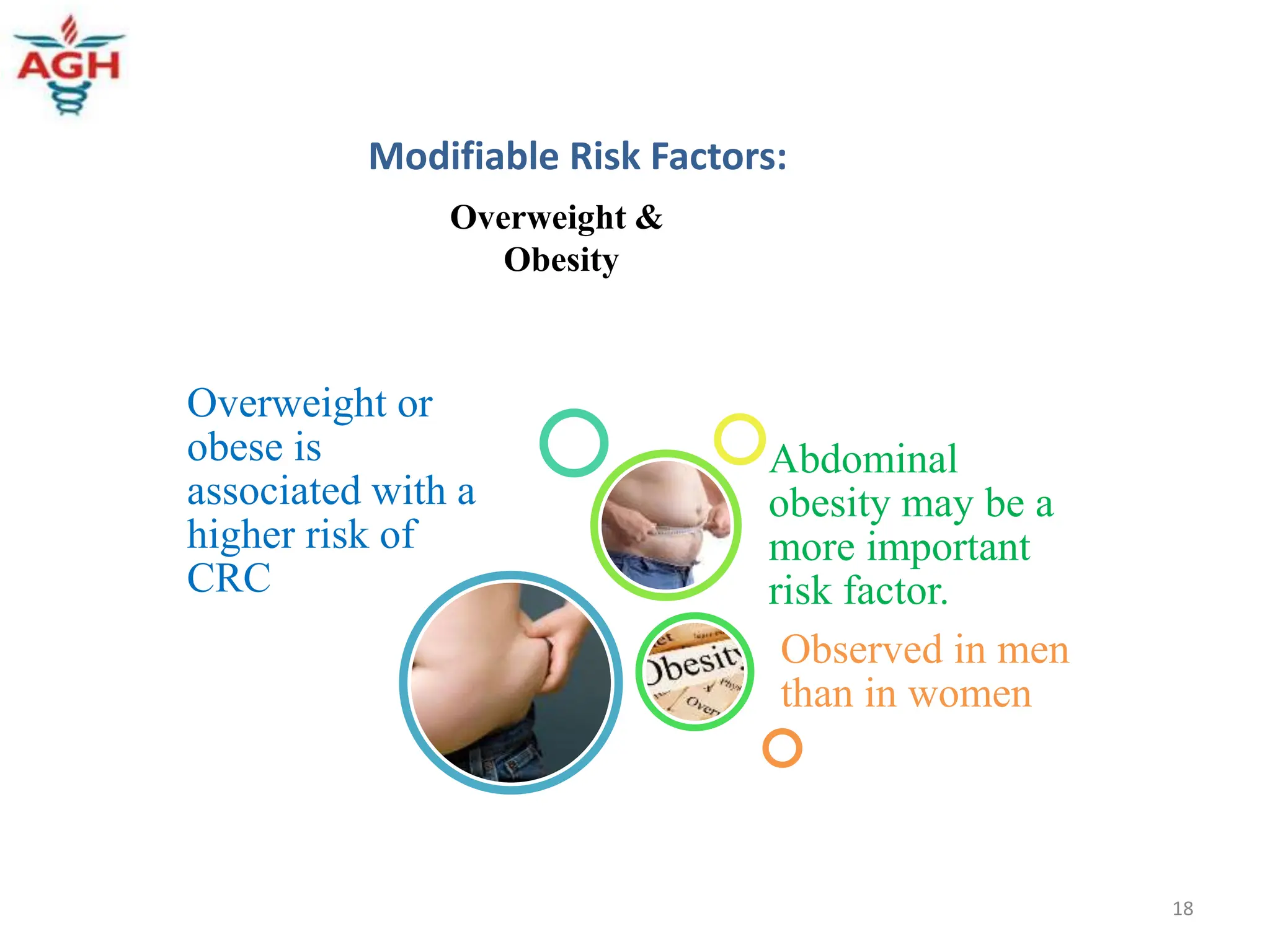
Modifiable Risk Factors:
Overweight or
obese is
associated with a
higher risk of
CRC
Observed in men
than in women
Abdominal
obesity may be a
more important
risk factor.
18
Overweight &
Obesity
Diagnostic tools
• Polyps are predominantly asymptomatic.
• Most of the polyps found on left side of the colon.
19
FOBT COLOGUARD SIGMOIDOSC
OPY
COLONOSCOPY VIRTUAL
COLONOSCOPY
DURATION 1 Yearly 3 Yearly 5 Yearly 10 Yearly 5 Yearly
FIT FOR
WHOME ?
Great Option
For People
Hesitant About
Colonoscopy,
But It Must Be
Performed
Annually
When Patient
Is High Risk
For Sedation .
Most People
Are Good
Candidates.
This Test Is The
Best Way To
Find And
Remove Polyps
Early..
When
Colonsocopy
facility Not
Available
SENSITIVITY 30% 51% 70% >90 90%
SPECIFICITY 95% 95% 95% (Distal
Colon )
99% 90% (>10mm)
Diagnostic tools
20
FOBT COLOGUARD SIGMOIDOSC
OPY
COLONOSCOPY VIRTUAL
COLONOSCOPY
DURATION 1 Yearly 3 Yearly 5 Yearly 10 Yearly 5 Yearly
FIT FOR
WHOME ?
Great Option
For People
Hesitant About
Colonoscopy,
But It Must Be
Performed
Annually
When Patient
Is High Risk
For Sedation .
Most People
Are Good
Candidates.
This Test Is The
Best Way To
Find And
Remove Polyps
Early..
When
Colonsocopy
facility Not
Available
SENSITIVITY 30% 51% 70% >90 90%
SPECIFICITY 95% 95% 95% (Distal
Colon )
99% 90% (>10mm)
Diagnostic tools
21
FOBT COLOGUARD SIGMOIDOSC
OPY
COLONOSCOPY VIRTUAL
COLONOSCOPY
DURATION 1 Yearly 3 Yearly 5 Yearly 10 Yearly 5 Yearly
FIT FOR
WHOME ?
Great Option
For People
Hesitant About
Colonoscopy,
But It Must Be
Performed
Annually
When Patient
Is High Risk
For Sedation .
Most People
Are Good
Candidates.
This Test Is The
Best Way To
Find And
Remove Polyps
Early..
When
Colonsocopy
facility Not
Available
SENSITIVITY 30% 51% 70% >90 90%
SPECIFICITY 95% 95% 95% (Distal
Colon )
99% 90% (>10mm)
Diagnostic tools
22
FOBT COLOGUARD SIGMOIDOSC
OPY
COLONOSCOPY VIRTUAL
COLONOSCOPY
DURATION 1 Yearly 3 Yearly 5 Yearly 10 Yearly 5 Yearly
FIT FOR
WHOME ?
Great Option
For People
Hesitant About
Colonoscopy,
But It Must Be
Performed
Annually
When Patient
Is High Risk
For Sedation .
Most People
Are Good
Candidates.
This Test Is The
Best Way To
Find And
Remove Polyps
Early..
When
Colonsocopy
facility Not
Available
SENSITIVITY 30% 51% 70% >90 90%
SPECIFICITY 95% 95% 95% (Distal
Colon )
99% 90% (>10mm)
Diagnostic tools
23
FOBT COLOGUARD SIGMOIDOSC
OPY
COLONOSCOPY VIRTUAL
COLONOSCOPY
DURATION 1 Yearly 3 Yearly 5 Yearly 10 Yearly 5 Yearly
FIT FOR
WHOME ?
Great Option
For People
Hesitant About
Colonoscopy,
But It Must Be
Performed
Annually
When Patient
Is High Risk
For Sedation .
Most People
Are Good
Candidates.
This Test Is The
Best Way To
Find And
Remove Polyps
Early..
When
Colonsocopy
facility Not
Available
SENSITIVITY 30% 51% 70% >90 90%
SPECIFICITY 95% 95% 95% (Distal
Colon )
99% 90% (>10mm)
Diagnostic tools
American Cancer Society (ACS) ,
US Multi-society Task Force on Colorectal Cancer (USMSTF).
American College of Radiology (ACR)
24
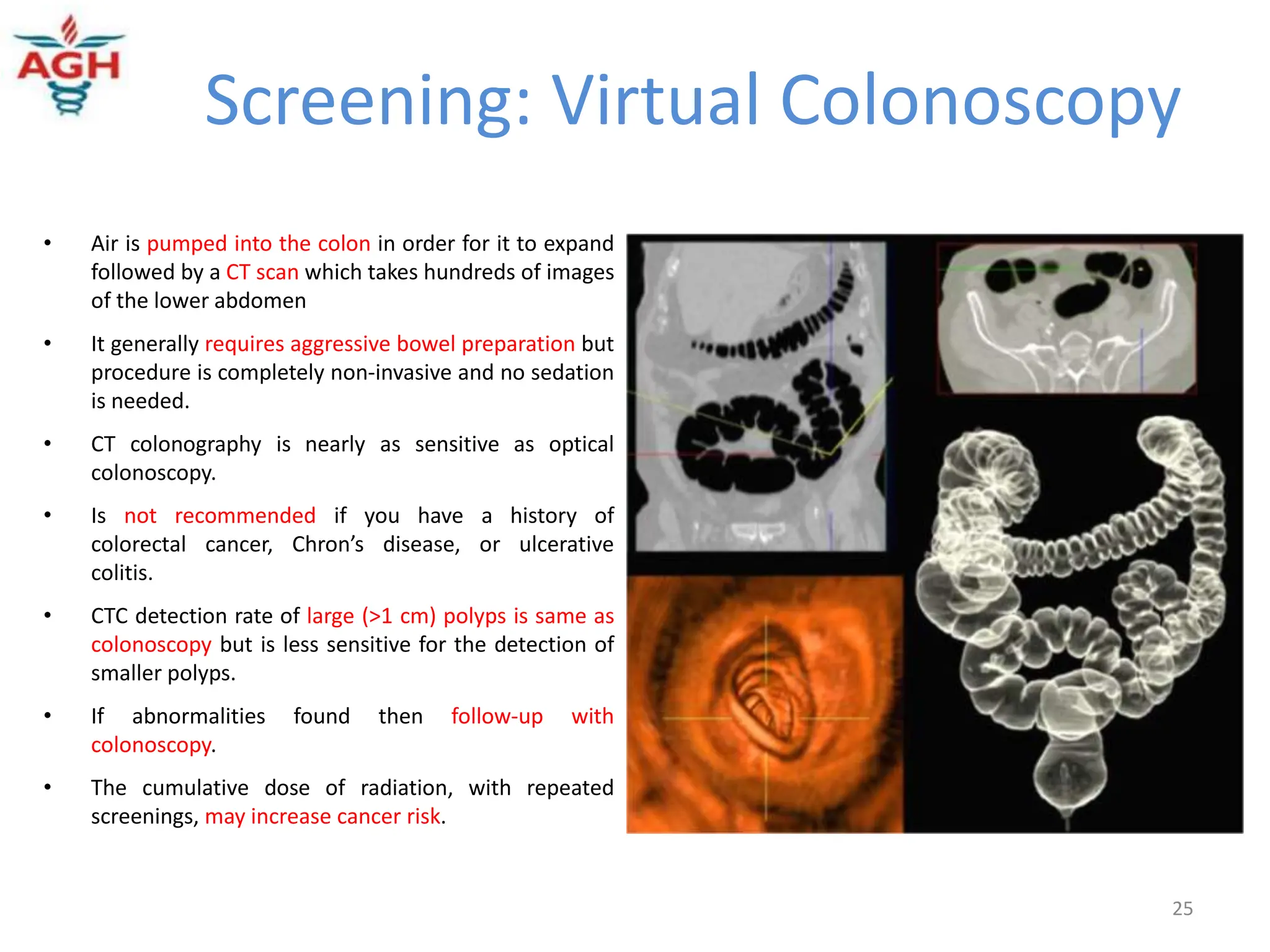
Screening: Virtual Colonoscopy
• Air is pumped into the colon in order for it to expand
followed by a CT scan which takes hundreds of images
of the lower abdomen
• It generally requires aggressive bowel preparation but
procedure is completely non-invasive and no sedation
is needed.
• CT colonography is nearly as sensitive as optical
colonoscopy.
• Is not recommended if you have a history of
colorectal cancer, Chron’s disease, or ulcerative
colitis.
• CTC detection rate of large (>1 cm) polyps is same as
colonoscopy but is less sensitive for the detection of
smaller polyps.
• If abnormalities found then follow-up with
colonoscopy.
• The cumulative dose of radiation, with repeated
screenings, may increase cancer risk.
25
26
Colonoscopic Polypectomy
• Colonoscopic polypectomy is a safe technique with an acceptably low complication
rate.
• Post-polypectomy perforation or major bleeding occurs in approximately 0.1 to 0.2
percent of cases.
• When a polyp is detected at colonoscopy, a polypectomy is performed and sent for
pathologic evaluation.
• Small polyps can be removed with hot biopsy forceps or with snare polypectomy .
• Large sessile polyps with a broad base present more of a challenge to the endoscopist.
• Currently a new technique known as saline-assisted polypectomy may also be used for
large sessile polyps.
• Large sessile polyps that cannot be removed safely or completely by endoscopy may be
referred for surgical resection.
27
Post-polypectomy Surveillance (benign/ malignant)
• Follow-up colonoscopy is usually recommended after removal of one or
more adenomatous polyps to decrease the patient's risk of developing
colorectal cancer.
• After complete colonoscopic resection of an adenoma containing severe
or high-grade dysplasia (carcinoma in situ) a three-year surveillance
interval is recommended.
• In contrast to an adenoma with HGD, cancer cells in a malignant polyp are
no longer limited to the mucosa; therefore, they do have the potential to
metastasize.
• For this reason, after colonoscopic removal of a malignant polyp one must
consider the need for surgical referral.
28
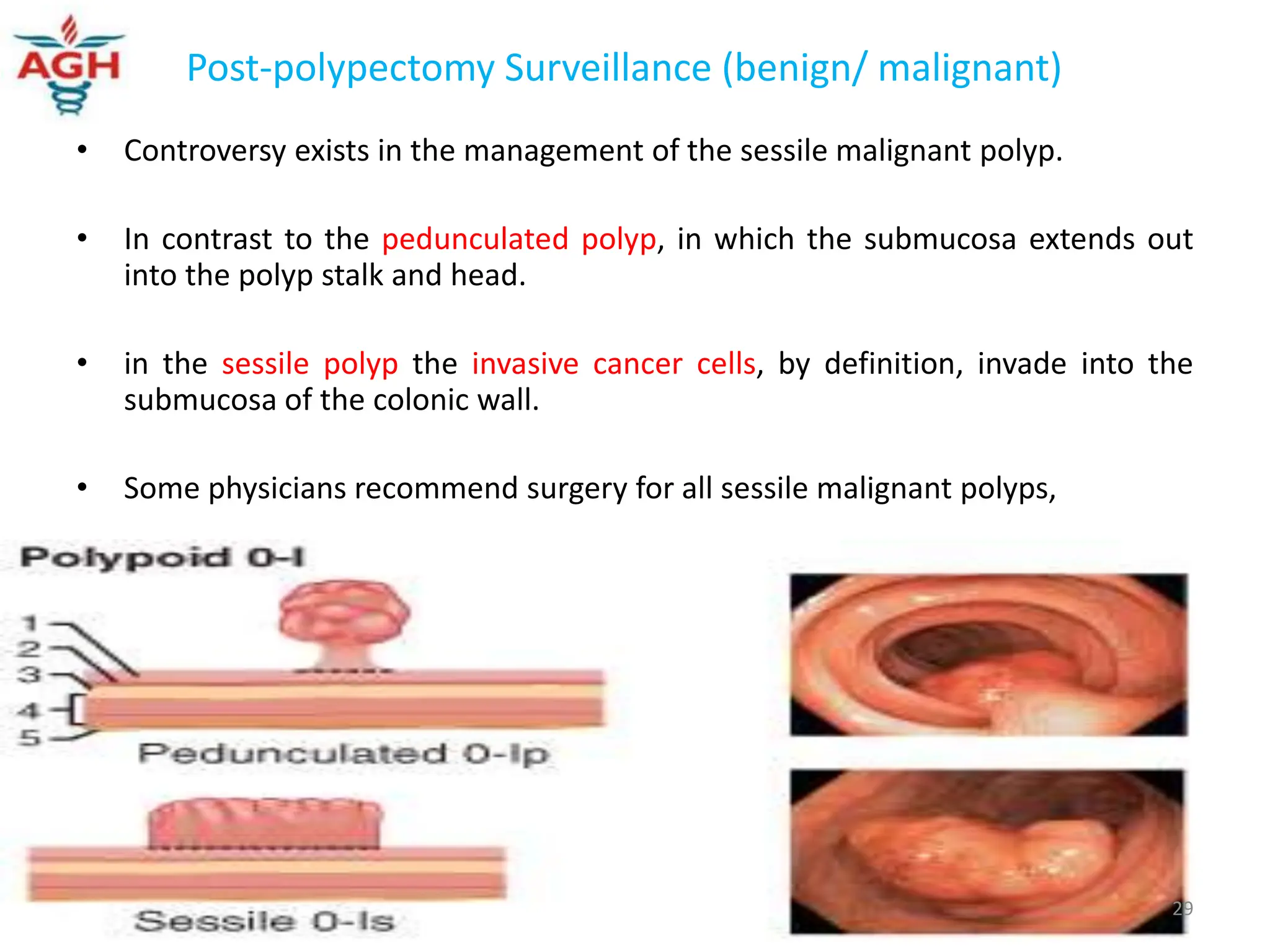
• Controversy exists in the management of the sessile malignant polyp.
• In contrast to the pedunculated polyp, in which the submucosa extends out
into the polyp stalk and head.
• in the sessile polyp the invasive cancer cells, by definition, invade into the
submucosa of the colonic wall.
• Some physicians recommend surgery for all sessile malignant polyps,
Post-polypectomy Surveillance (benign/ malignant)
29
• After colonoscopic removal of a malignant polyp .
• a follow-up colonoscopy is generally performed in about three to six
months to assess the polypectomy site for completeness of removal,
particularly if the polyp was sessile.
• If residual cancer is found, the individual is referred for surgical resection,
• If there is no residual cancer, a one-year follow-up colonoscopy may be
performed, if this examination has negative findings, it may be repeated
again in three years.
• For malignant polyps remember - 3 months, 1 year & 3 years .
Post-polypectomy Surveillance (benign/ malignant)
30
THANKS
31

COLONIC POLYPS AND ITS FOLLOW UP PRESENTATION.pptx

  • 1.
    COLONIC POLYPS Dr. NazimArain Consultant Internal Medicine & Gastroenterologist/Hepatologist. Almana General Hospital, Dammam, KSA NAZIMARAIN81@HOTMAIL.COM 00966554568810 1
  • 2.
    COLONIC POLYPS • Introduction& local Epidemiological Data. • Journey from Adenoma to carcinoma. • Risk Factors • Diagnostic tools. • Polypectomy & surveillance . • Cases from practice . 2
  • 3.
    Introduction • Colorectal cancer(CRC) is the 3rd most diagnosed cancer globally with > 1.9 million incident cases in 2020 . • Due to the adoption of CRC screening and reduction in risk factors such as smoking, the global incidence rates have been decreasing in the screening-eligible age group (50–75) • There have been global reports of increasing rates in the younger population (<50), with the highest annual percentage change (APC) among the age group 20– 39 . • These reports bring the discussion about the appropriate age to initiate the screening, with some reports advocating for starting at age 45 and others as early as the age of 40. 3
  • 4.
    • Unlike otherinternational studies, The trends of CRC among the Saudi population is critical for several reasons. – First, 86% of Saudi population is younger than 50 years old & 35 % of Saudi population fall in age group between 20–39 years . – Second, obesity is common among the Gulf Cooperation Council (GCC) countries, and Saudi Arabia is no exception. • In 2016, 35% of Saudi adults are considered obese . • Both, a young population with a high proportion of obesity are characteristics that engender the development of early-onset CRC. • Studies from the US, Canada, the UK, Australia, and New Zealand showed an association between the childhood obesity epidemic and the rise in early-onset CRC . • For instance, women with BMI ≥ 23 at age 18 had a 63% higher risk of early-onset CRC compared to women with a BMI of 18.5–20.9. – Third, there is currently no population-based screening for CRC in Saudi Arabia, leading to delayed CRC detection, increased late-stage diagnosis, and poor survival across all age groups . Introduction 4
  • 5.
    • In SaudiArabia, CRC is the most diagnosed cancer in men and 3rd in women . representing almost 13% of all diagnosed cancers . • It is, unknown if the incidence rates have been increasing similarly across all age groups, and no study has investigated changes in incidence rates by age at diagnosis. • While approximately 13% of early-onset CRC develops from germline mutations in genes causing hereditary CRC syndromes. • The majority of early-onset CRC are sporadic, poorly differentiated, with mucinous adenocarcinoma and are diagnosed at late stage . • On May 18, 2021 and in an effort to detect the disease at early stages, the United State Preventive Services Task Force (USPSTF) recommended CRC screening in adults aged 45–49 years with a grade “B” recommendation . Introduction 5
  • 6.
    Saudi population andCRC • The majority (39%) of the population is younger than 20 years old. • about 86% is younger than 50 years old, and mostly reside in regions of Riyadh, Makkah, and Eastern province. • Almost one-third of the CRC cases are among age groups 40–54, are predominantly males, and reside in the three most populated regions. • While there has been an increase in the age-standardized rates across all age groups, the steepest increase was among patients age 50 years or older. 6
  • 7.
    What is ourexperience at Almana General Hospital, Dammam 306 TOTAL COLONOSCOPIES 223 (72.9%) OTHER INDICATIONS 83(27.1%) SCREENING COLONOSCOPIES POLYS, 22, 27% NORMA L, 61, 73% SCREENING COLONOSCOPY RESULTS POLYS NORMAL MALE, 49, 59% FEMALE , 34, 41% SEXUAL %AGE AMONG SCREENING COLONOSCOPY MALE FEMALE ARAMC O, 79, 95% CASH, 1, 1% OTHER , 3, 4% SCREENING COLONOSCOPY INSURANCE COMPANY ARAMCO CASH OTHER 7
  • 8.
    • A colorectalpolyp is defined as a visible protrusion above the surface of the surrounding normal large bowel mucosa. • Polyps may be detected endoscopically by sigmoidoscopy or colonoscopy, or radiographically by barium enema or Ctscan. • Colorectal polyps are classified histologically as either neoplastic (adenomatous polyps) or non-neoplastic . • Although all adenomatous polyps have malignant potential, the majority are benign when detected. Colorectal Polyps 8
  • 9.
  • 10.
    • Appropriate managementof colorectal polyps requires an understanding of the typical clinical presentation, anatomic distribution, and associated clinical findings of these variable histologic types. • Most colorectal polyps occur sporadically, some may be associated with a hereditary syndrome. such as familial adenomatous such as: – polyposis (FAP) – juvenile polyposis – Peutz-Jeghers – hereditary nonpolyposis colorectal cancer (HNPCC). Colorectal Polyps 10
  • 11.
  • 12.
    Colon: Normal Adenoma  Carcinoma Colon Cancer: Common type - 80% Carcinogenesis) 12
  • 13.
    Adenoma-Carcinoma Sequence • Theconcept of the adenoma-to-carcinoma sequence is well accepted and describes a stepwise progression from normal colorectal epithelium to adenoma to carcinoma, in association with an accumulation of multiple genetic alterations within the epithelial cells. • The risk of adenoma and the risk of cancer both increase with patient age. • Cancer risk increases with increased adenoma size. • actual time course of the adenoma-to-carcinoma sequence is not certain. • An average time course of at least 5 to 10 years for progression from an adenoma to a carcinoma. • A report from the Netherlands showed an unexpectedly high incidence of advanced colorectal cancers detected within 3.5 years after a negative screening examination. • These findings suggest that, HNPCC patients may have a shorter time interval to develop colorectal cancer and thus an accelerated adenoma-to-carcinoma sequence. • That’s why the genetic analysis is helpful to define further management . 13
  • 14.
  • 15.
  • 16.
  • 17.
  • 18.
    Modifiable Risk Factors: Overweightor obese is associated with a higher risk of CRC Observed in men than in women Abdominal obesity may be a more important risk factor. 18 Overweight & Obesity
  • 19.
    Diagnostic tools • Polypsare predominantly asymptomatic. • Most of the polyps found on left side of the colon. 19
  • 20.
    FOBT COLOGUARD SIGMOIDOSC OPY COLONOSCOPYVIRTUAL COLONOSCOPY DURATION 1 Yearly 3 Yearly 5 Yearly 10 Yearly 5 Yearly FIT FOR WHOME ? Great Option For People Hesitant About Colonoscopy, But It Must Be Performed Annually When Patient Is High Risk For Sedation . Most People Are Good Candidates. This Test Is The Best Way To Find And Remove Polyps Early.. When Colonsocopy facility Not Available SENSITIVITY 30% 51% 70% >90 90% SPECIFICITY 95% 95% 95% (Distal Colon ) 99% 90% (>10mm) Diagnostic tools 20
  • 21.
    FOBT COLOGUARD SIGMOIDOSC OPY COLONOSCOPYVIRTUAL COLONOSCOPY DURATION 1 Yearly 3 Yearly 5 Yearly 10 Yearly 5 Yearly FIT FOR WHOME ? Great Option For People Hesitant About Colonoscopy, But It Must Be Performed Annually When Patient Is High Risk For Sedation . Most People Are Good Candidates. This Test Is The Best Way To Find And Remove Polyps Early.. When Colonsocopy facility Not Available SENSITIVITY 30% 51% 70% >90 90% SPECIFICITY 95% 95% 95% (Distal Colon ) 99% 90% (>10mm) Diagnostic tools 21
  • 22.
    FOBT COLOGUARD SIGMOIDOSC OPY COLONOSCOPYVIRTUAL COLONOSCOPY DURATION 1 Yearly 3 Yearly 5 Yearly 10 Yearly 5 Yearly FIT FOR WHOME ? Great Option For People Hesitant About Colonoscopy, But It Must Be Performed Annually When Patient Is High Risk For Sedation . Most People Are Good Candidates. This Test Is The Best Way To Find And Remove Polyps Early.. When Colonsocopy facility Not Available SENSITIVITY 30% 51% 70% >90 90% SPECIFICITY 95% 95% 95% (Distal Colon ) 99% 90% (>10mm) Diagnostic tools 22
  • 23.
    FOBT COLOGUARD SIGMOIDOSC OPY COLONOSCOPYVIRTUAL COLONOSCOPY DURATION 1 Yearly 3 Yearly 5 Yearly 10 Yearly 5 Yearly FIT FOR WHOME ? Great Option For People Hesitant About Colonoscopy, But It Must Be Performed Annually When Patient Is High Risk For Sedation . Most People Are Good Candidates. This Test Is The Best Way To Find And Remove Polyps Early.. When Colonsocopy facility Not Available SENSITIVITY 30% 51% 70% >90 90% SPECIFICITY 95% 95% 95% (Distal Colon ) 99% 90% (>10mm) Diagnostic tools 23
  • 24.
    FOBT COLOGUARD SIGMOIDOSC OPY COLONOSCOPYVIRTUAL COLONOSCOPY DURATION 1 Yearly 3 Yearly 5 Yearly 10 Yearly 5 Yearly FIT FOR WHOME ? Great Option For People Hesitant About Colonoscopy, But It Must Be Performed Annually When Patient Is High Risk For Sedation . Most People Are Good Candidates. This Test Is The Best Way To Find And Remove Polyps Early.. When Colonsocopy facility Not Available SENSITIVITY 30% 51% 70% >90 90% SPECIFICITY 95% 95% 95% (Distal Colon ) 99% 90% (>10mm) Diagnostic tools American Cancer Society (ACS) , US Multi-society Task Force on Colorectal Cancer (USMSTF). American College of Radiology (ACR) 24
  • 25.
    Screening: Virtual Colonoscopy •Air is pumped into the colon in order for it to expand followed by a CT scan which takes hundreds of images of the lower abdomen • It generally requires aggressive bowel preparation but procedure is completely non-invasive and no sedation is needed. • CT colonography is nearly as sensitive as optical colonoscopy. • Is not recommended if you have a history of colorectal cancer, Chron’s disease, or ulcerative colitis. • CTC detection rate of large (>1 cm) polyps is same as colonoscopy but is less sensitive for the detection of smaller polyps. • If abnormalities found then follow-up with colonoscopy. • The cumulative dose of radiation, with repeated screenings, may increase cancer risk. 25
  • 26.
  • 27.
    Colonoscopic Polypectomy • Colonoscopicpolypectomy is a safe technique with an acceptably low complication rate. • Post-polypectomy perforation or major bleeding occurs in approximately 0.1 to 0.2 percent of cases. • When a polyp is detected at colonoscopy, a polypectomy is performed and sent for pathologic evaluation. • Small polyps can be removed with hot biopsy forceps or with snare polypectomy . • Large sessile polyps with a broad base present more of a challenge to the endoscopist. • Currently a new technique known as saline-assisted polypectomy may also be used for large sessile polyps. • Large sessile polyps that cannot be removed safely or completely by endoscopy may be referred for surgical resection. 27
  • 28.
    Post-polypectomy Surveillance (benign/malignant) • Follow-up colonoscopy is usually recommended after removal of one or more adenomatous polyps to decrease the patient's risk of developing colorectal cancer. • After complete colonoscopic resection of an adenoma containing severe or high-grade dysplasia (carcinoma in situ) a three-year surveillance interval is recommended. • In contrast to an adenoma with HGD, cancer cells in a malignant polyp are no longer limited to the mucosa; therefore, they do have the potential to metastasize. • For this reason, after colonoscopic removal of a malignant polyp one must consider the need for surgical referral. 28
  • 29.
    • Controversy existsin the management of the sessile malignant polyp. • In contrast to the pedunculated polyp, in which the submucosa extends out into the polyp stalk and head. • in the sessile polyp the invasive cancer cells, by definition, invade into the submucosa of the colonic wall. • Some physicians recommend surgery for all sessile malignant polyps, Post-polypectomy Surveillance (benign/ malignant) 29
  • 30.
    • After colonoscopicremoval of a malignant polyp . • a follow-up colonoscopy is generally performed in about three to six months to assess the polypectomy site for completeness of removal, particularly if the polyp was sessile. • If residual cancer is found, the individual is referred for surgical resection, • If there is no residual cancer, a one-year follow-up colonoscopy may be performed, if this examination has negative findings, it may be repeated again in three years. • For malignant polyps remember - 3 months, 1 year & 3 years . Post-polypectomy Surveillance (benign/ malignant) 30
  • 31.