Collaboration in  Rural Regeneration Steve Clare  -DTA Chris Wade –AMT ruralnet Collaboration Convention 2007
Presentation Structure Simple Origins Making Sense of Collaboration through BASIS Shared Geographic Focus and Outcomes Collaboration Principles and Wider Lessons
Simple Origins 13 potentially inter-related bids to BLF BASIS Programme AMT offered to look at relationships to: Increase the understanding and synergies Identify specific ways to interact and improve outcomes at the delivery stage Maximise benefits in rural areas
Introducing the Big Lottery Fund BASIS Programme Infrastructural support for voluntary and community sector National, regional and local bids Two application phases July 2006 to 2007 Winter 2007/08 Two-stage process
Wide Ranging National Bids: Where do we start in collaborating?! A. AMT’s Sustaining Market Towns Programme  B. NCVO’s Policy Skills Development Programme C. NAVCA’s Improving Local Partnerships Project D. CES’ National Outcomes Programme  E. ACRE’s Rural Infrastructure England F. DTA’s Cultivating Enterprise Programme G. Community Alliance Integro Programme H. NCVO Sustainable Funding Programme I.  ACEVO’s  Regional Leadership and Influencing Programme J. CES’ PQASSO (quality mark) Development Project  K. NAVCA’s Local Procurement and Commissioning Project L.  CAN’s  Community Accountancy Services M. CAN’s project to improve support for trustees of local VCS organizations
Making Sense of the BASIS Bids 1 Generic National Issues NCVO’s Policy Skills Development Programme NAVCA’s Improving Local Partnerships Project CES’ National Outcomes Programme  NCVO Sustainable Funding Programme ACEVO’s  Regional Leadership and Influencing Programme CES’ PQASSO Development Project  NAVCA’s Local Procurement and Commissioning Project
Making Sense of the BASIS Bids 2 Geographic Focus AMT’s Sustaining Market Towns Programme  ACRE’s Rural Infrastructure England DTA’s Cultivating Enterprise Programme
Action for Market Towns: Sustaining Market Towns Programme A.  TRAINING….. B.  POLICY….. C.  GOOD PRACTICE…. D.  PROMOTION…. Market Towns Academy Towns Think Tank Towns-4-Towns Exchange National Voice for Market Towns
Focusing on Outcomes: AMT’s Sustaining Market Towns Programme Outcome 1:   The future sustainability of more Market Town Partnerships (MTPs) secured through effective business planning Outcome 2:   Increased opportunities for MTPs to influence policy, strategy and practice  Outcome 3:   The improved sharing of knowledge, skills and good practice in planning, managing and programme delivery Outcome 4:   The development of the necessary national products, services, knowledge and level of resources to support AMT’s work
The Aims of  ACRE’s Rural Infrastructure England Building the capacity for policy influencing and capacity building of rural community infrastructure at regional level Providing infrastructure dedicated to specific functional areas of service delivery crucial to the health and vibrancy of rural communities  Providing an effective national resource for developing and supporting best practice in rural community engagement initiatives.
Outcomes:   DTA’s Cultivating Enterprise Programme Ensuring beneficiary community organisations have the internal capacity to successfully embrace enterprise  Involving established DTA member organisations as mentors/business supporters to cultivate new and potential community enterprises Building capacity through an accredited leadership and management programme
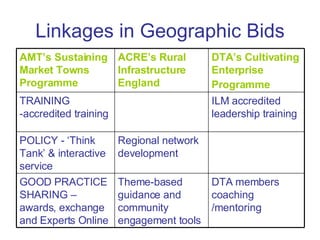
Linkages in Geographic Bids DTA members coaching /mentoring Theme-based guidance and community engagement tools GOOD PRACTICE SHARING –awards, exchange and Experts Online Regional network development POLICY - ‘Think Tank’ & interactive service ILM accredited leadership training TRAINING -accredited training  DTA’s Cultivating Enterprise Programme   ACRE’s Rural Infrastructure England AMT’s Sustaining Market Towns Programme
Specific Collaborative Actions DTA will inform the AMT Academy syllabus and provide additional learning and business support on community enterprise AMT will work closely with ACRE to share approaches to building the capacity of villages and small towns to influence regional policy AMT, ACRE and DTA will work closely with to help share skills and knowledge about service delivery and community engagement amongst villages and small towns Plus further opportunities between geographic & generic bids
Proposed Collaboration Principles Initial exchange will identify shared aims and outcomes to define inter-relationships  Individual organisations will be left to confirm any specific proposals for joint working  There is a broad distinction between geographic and generic but opportunities exist for interaction Generic guidance should be provided as discrete packages that can be embedded within other materials for other programmes
Wider Lessons  and  Discussion Points Must share common vision and values  Need to focus on overall outcomes not competition for funds or own outputs Funders are important in encouraging and supporting ongoing collaboration Linkages between organisations and themes can be endless Collaboration has to be worked at but also needs to have limits
Contacts: Development Trusts Association (DTA) [email_address] www.dta.org.uk Action for Market Towns (AMT) [email_address] www.towns.org.uk

Collaboration in Rural Regeneration

  • 1.
    Collaboration in Rural Regeneration Steve Clare -DTA Chris Wade –AMT ruralnet Collaboration Convention 2007
  • 2.
    Presentation Structure SimpleOrigins Making Sense of Collaboration through BASIS Shared Geographic Focus and Outcomes Collaboration Principles and Wider Lessons
  • 3.
    Simple Origins 13potentially inter-related bids to BLF BASIS Programme AMT offered to look at relationships to: Increase the understanding and synergies Identify specific ways to interact and improve outcomes at the delivery stage Maximise benefits in rural areas
  • 4.
    Introducing the BigLottery Fund BASIS Programme Infrastructural support for voluntary and community sector National, regional and local bids Two application phases July 2006 to 2007 Winter 2007/08 Two-stage process
  • 5.
    Wide Ranging NationalBids: Where do we start in collaborating?! A. AMT’s Sustaining Market Towns Programme B. NCVO’s Policy Skills Development Programme C. NAVCA’s Improving Local Partnerships Project D. CES’ National Outcomes Programme E. ACRE’s Rural Infrastructure England F. DTA’s Cultivating Enterprise Programme G. Community Alliance Integro Programme H. NCVO Sustainable Funding Programme I. ACEVO’s Regional Leadership and Influencing Programme J. CES’ PQASSO (quality mark) Development Project K. NAVCA’s Local Procurement and Commissioning Project L. CAN’s Community Accountancy Services M. CAN’s project to improve support for trustees of local VCS organizations
  • 6.
    Making Sense ofthe BASIS Bids 1 Generic National Issues NCVO’s Policy Skills Development Programme NAVCA’s Improving Local Partnerships Project CES’ National Outcomes Programme NCVO Sustainable Funding Programme ACEVO’s Regional Leadership and Influencing Programme CES’ PQASSO Development Project NAVCA’s Local Procurement and Commissioning Project
  • 7.
    Making Sense ofthe BASIS Bids 2 Geographic Focus AMT’s Sustaining Market Towns Programme ACRE’s Rural Infrastructure England DTA’s Cultivating Enterprise Programme
  • 8.
    Action for MarketTowns: Sustaining Market Towns Programme A. TRAINING….. B. POLICY….. C. GOOD PRACTICE…. D. PROMOTION…. Market Towns Academy Towns Think Tank Towns-4-Towns Exchange National Voice for Market Towns
  • 9.
    Focusing on Outcomes:AMT’s Sustaining Market Towns Programme Outcome 1: The future sustainability of more Market Town Partnerships (MTPs) secured through effective business planning Outcome 2: Increased opportunities for MTPs to influence policy, strategy and practice Outcome 3: The improved sharing of knowledge, skills and good practice in planning, managing and programme delivery Outcome 4: The development of the necessary national products, services, knowledge and level of resources to support AMT’s work
  • 10.
    The Aims of ACRE’s Rural Infrastructure England Building the capacity for policy influencing and capacity building of rural community infrastructure at regional level Providing infrastructure dedicated to specific functional areas of service delivery crucial to the health and vibrancy of rural communities Providing an effective national resource for developing and supporting best practice in rural community engagement initiatives.
  • 11.
    Outcomes: DTA’s Cultivating Enterprise Programme Ensuring beneficiary community organisations have the internal capacity to successfully embrace enterprise Involving established DTA member organisations as mentors/business supporters to cultivate new and potential community enterprises Building capacity through an accredited leadership and management programme
  • 12.
    Linkages in GeographicBids DTA members coaching /mentoring Theme-based guidance and community engagement tools GOOD PRACTICE SHARING –awards, exchange and Experts Online Regional network development POLICY - ‘Think Tank’ & interactive service ILM accredited leadership training TRAINING -accredited training DTA’s Cultivating Enterprise Programme ACRE’s Rural Infrastructure England AMT’s Sustaining Market Towns Programme
  • 13.
    Specific Collaborative ActionsDTA will inform the AMT Academy syllabus and provide additional learning and business support on community enterprise AMT will work closely with ACRE to share approaches to building the capacity of villages and small towns to influence regional policy AMT, ACRE and DTA will work closely with to help share skills and knowledge about service delivery and community engagement amongst villages and small towns Plus further opportunities between geographic & generic bids
  • 14.
    Proposed Collaboration PrinciplesInitial exchange will identify shared aims and outcomes to define inter-relationships Individual organisations will be left to confirm any specific proposals for joint working There is a broad distinction between geographic and generic but opportunities exist for interaction Generic guidance should be provided as discrete packages that can be embedded within other materials for other programmes
  • 15.
    Wider Lessons and Discussion Points Must share common vision and values Need to focus on overall outcomes not competition for funds or own outputs Funders are important in encouraging and supporting ongoing collaboration Linkages between organisations and themes can be endless Collaboration has to be worked at but also needs to have limits
  • 16.
    Contacts: Development TrustsAssociation (DTA) [email_address] www.dta.org.uk Action for Market Towns (AMT) [email_address] www.towns.org.uk