Student-data-driven Learning
Maps & Useful Resources
Cognitive Maps
Gagan Annamreddy
What did we create and why is this important?

•   No personalized Learning maps for each class.

•   Teachers need to create maps for their course and validate the recommendations
    (One time activity for a course)

•   Lots of online resources for every learning path. Which one is good for student ??
    How to make the recommendation personalized??

•   Cognitive resource recommendation based on the search engine and teacher
    feedback. Eg. Search engines can bring all the top videos from KhanAcademy
    ,youtube, wiki pages, other online resources a learning path(Say 5th grade
    Geometry). Teachers evaluates these videos and rank them.


                                           Editable title in the footer   11/29/2012     2
How did we validate the problem?

Research:
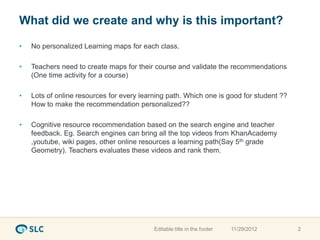
•   Google trend on the word Geometry. Lot of time spent on finding the right helpful
    resource for a learning path.


                                           Editable title in the footer   11/29/2012    3
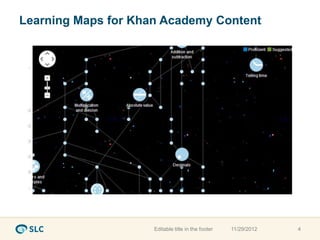
Learning Maps for Khan Academy Content


                     Editable title in the footer   11/29/2012   4
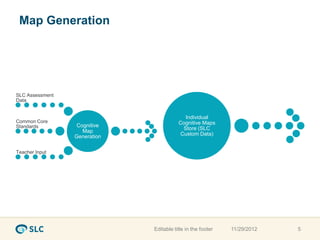
Map Generation


SLC Assessment
Data


                                           Individual
Common Core                              Cognitive Maps
Standards         Cognitive
                                          Store (SLC
                    Map
                 Generation              Custom Data)


Teacher Input


                              Editable title in the footer   11/29/2012   5
Leveraging SLC

•   SLC can help to store the learning maps and useful resources to the student &
    teacher data models.
•   Leverage the existing apis from KhanAcademy , learningregistry.org to pull the meta
    data of the useful resources on the internet.


                                          Editable title in the footer   11/29/2012       6
Demonstration


                Editable title in the footer   11/29/2012   7

Cognitive Maps by Gagan Annamreddy

  • 1.
    Student-data-driven Learning Maps &Useful Resources Cognitive Maps Gagan Annamreddy
  • 2.
    What did wecreate and why is this important? • No personalized Learning maps for each class. • Teachers need to create maps for their course and validate the recommendations (One time activity for a course) • Lots of online resources for every learning path. Which one is good for student ?? How to make the recommendation personalized?? • Cognitive resource recommendation based on the search engine and teacher feedback. Eg. Search engines can bring all the top videos from KhanAcademy ,youtube, wiki pages, other online resources a learning path(Say 5th grade Geometry). Teachers evaluates these videos and rank them. Editable title in the footer 11/29/2012 2
  • 3.
    How did wevalidate the problem? Research: • Google trend on the word Geometry. Lot of time spent on finding the right helpful resource for a learning path. Editable title in the footer 11/29/2012 3
  • 4.
    Learning Maps forKhan Academy Content Editable title in the footer 11/29/2012 4
  • 5.
    Map Generation SLC Assessment Data Individual Common Core Cognitive Maps Standards Cognitive Store (SLC Map Generation Custom Data) Teacher Input Editable title in the footer 11/29/2012 5
  • 6.
    Leveraging SLC • SLC can help to store the learning maps and useful resources to the student & teacher data models. • Leverage the existing apis from KhanAcademy , learningregistry.org to pull the meta data of the useful resources on the internet. Editable title in the footer 11/29/2012 6
  • 7.
    Demonstration Editable title in the footer 11/29/2012 7

Editor's Notes

  • #2 Self IntroductionI represent the Gates Foundation, so I’m here to address the Philanthropy Perspective on education. I’d like to speak with you about the challenges in the classroom today and one of the specific initiatives underway to address it.[Stephen: Need to add some context language about how this fits within the Gates Foundations Next Generation models efforts and overall education initiatives – based on the topic of the presentation it will be expected]