CODES AND CONVENTIONS
OF INTERVIEWS
Kate Pownall
CLOSE UP/MEDIUM CLOSE UP
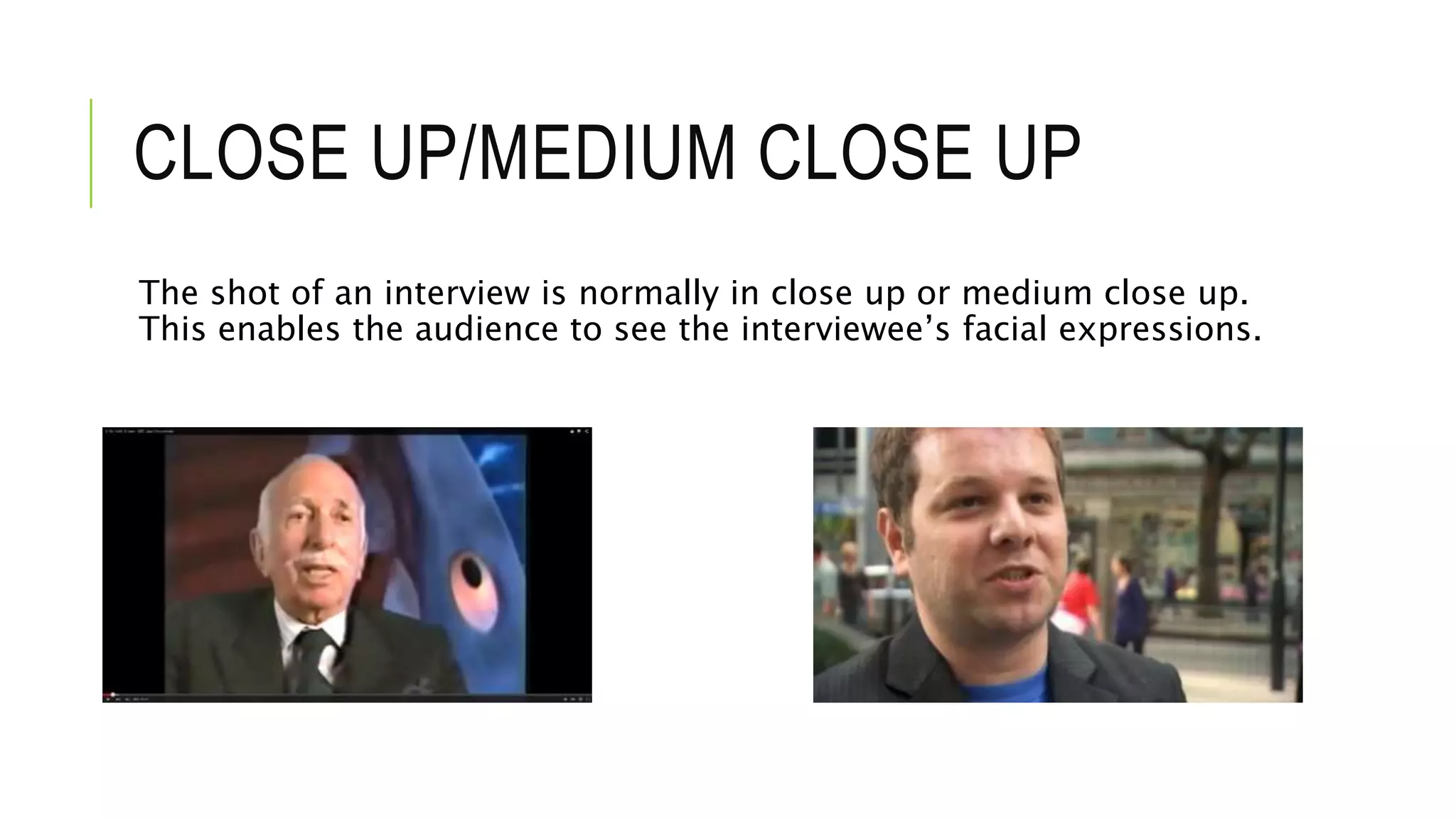
The shot of an interview is normally in close up or medium close up.
This enables the audience to see the interviewee’s facial expressions.
INTERVIEWEE’S POSITIONING
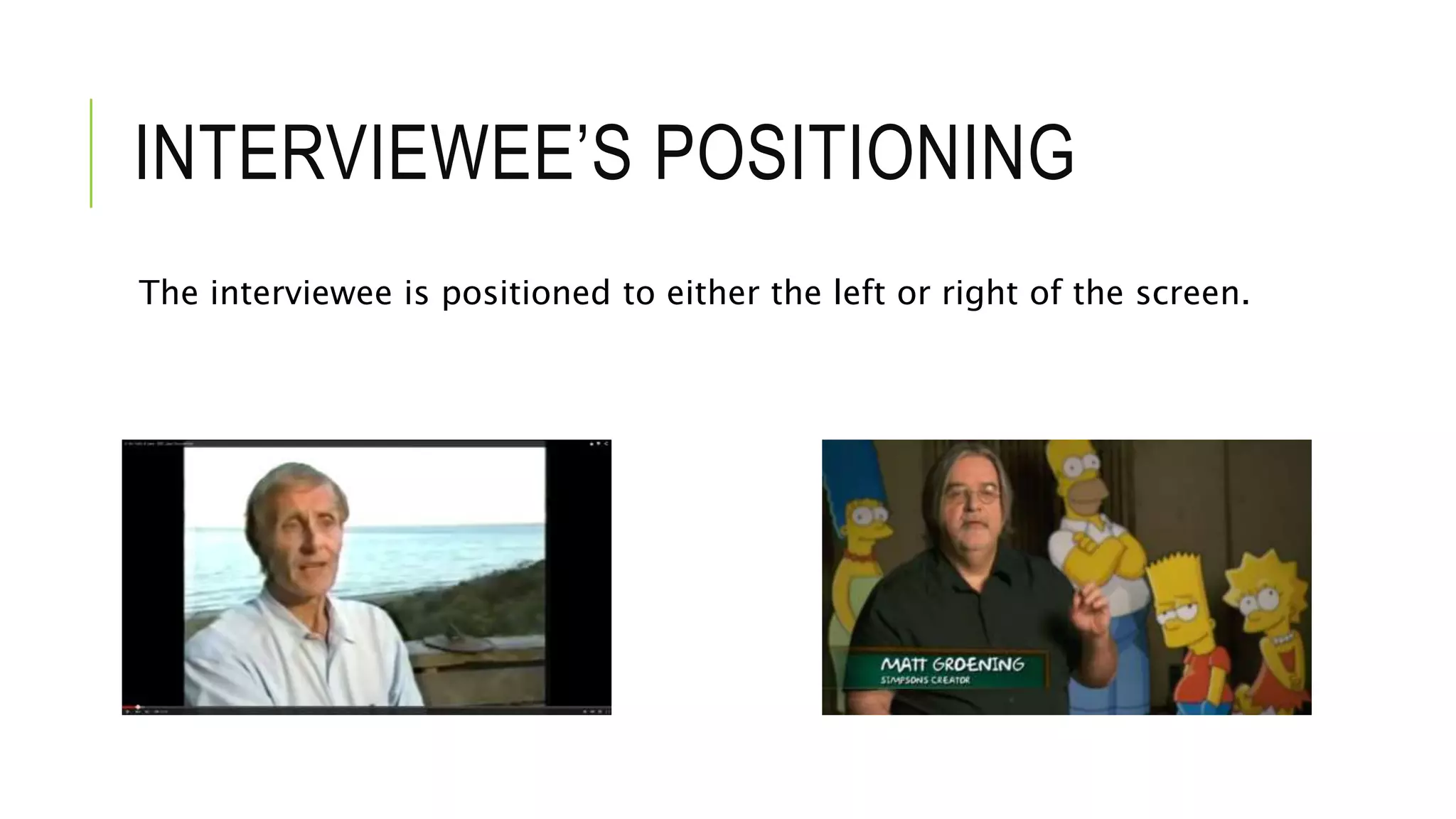
The interviewee is positioned to either the left or right of the screen.
RULE OF THIRDS
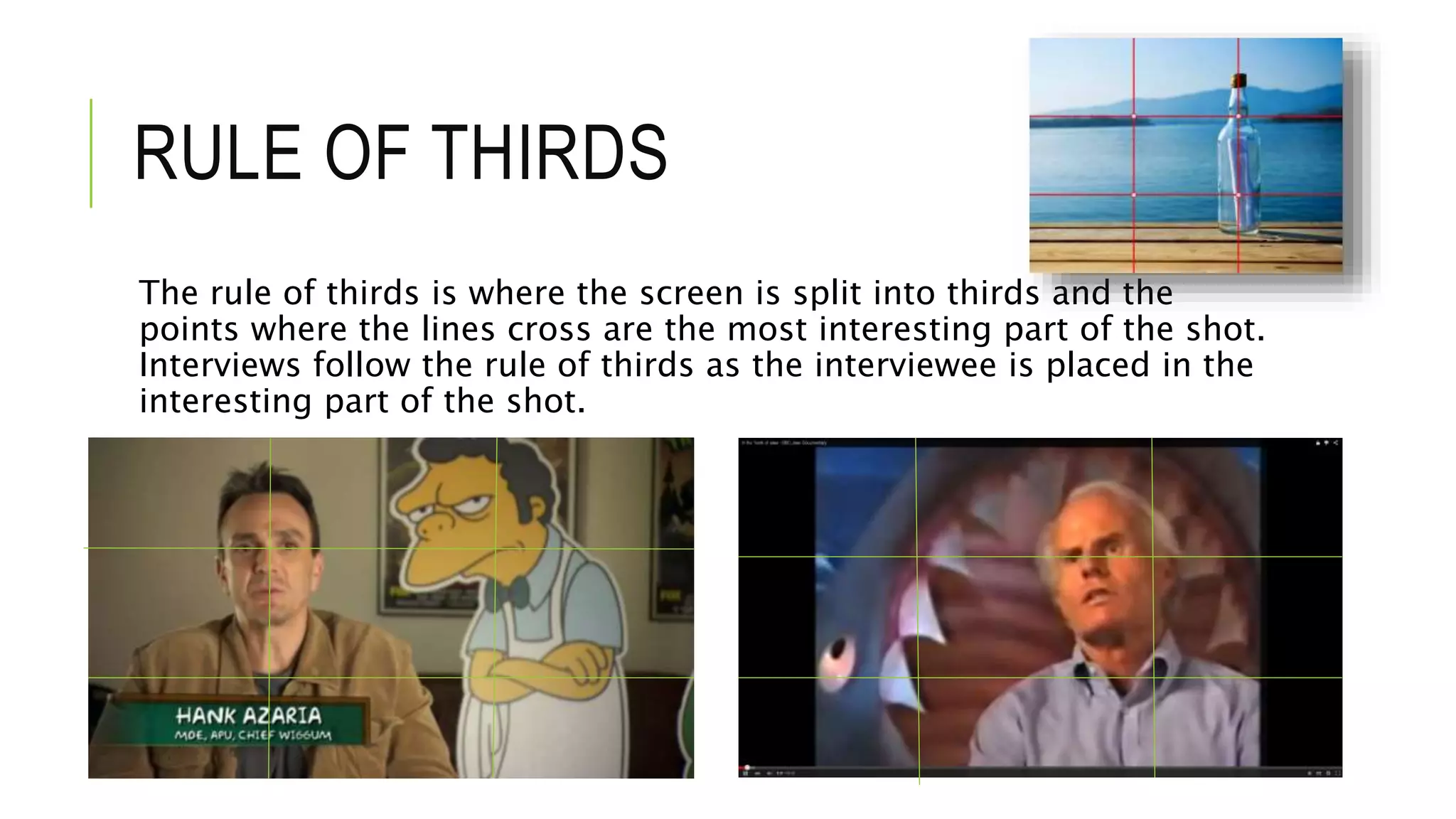
The rule of thirds is where the screen is split into thirds and the
points where the lines cross are the most interesting part of the shot.
Interviews follow the rule of thirds as the interviewee is placed in the
interesting part of the shot.
NO DIRECT ADDRESS
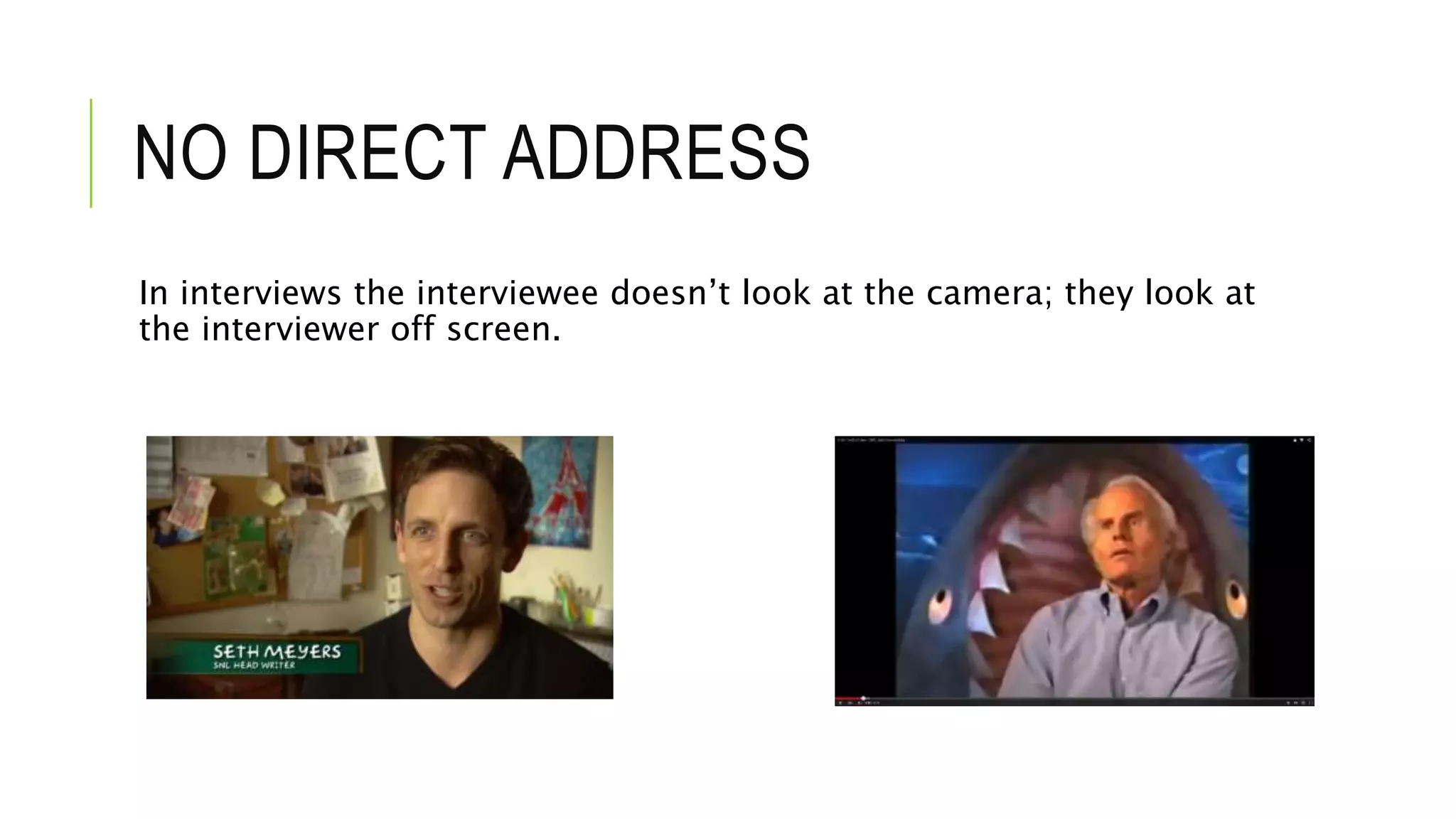
In interviews the interviewee doesn’t look at the camera; they look at
the interviewer off screen.
RELEVANT MISE EN SCENE
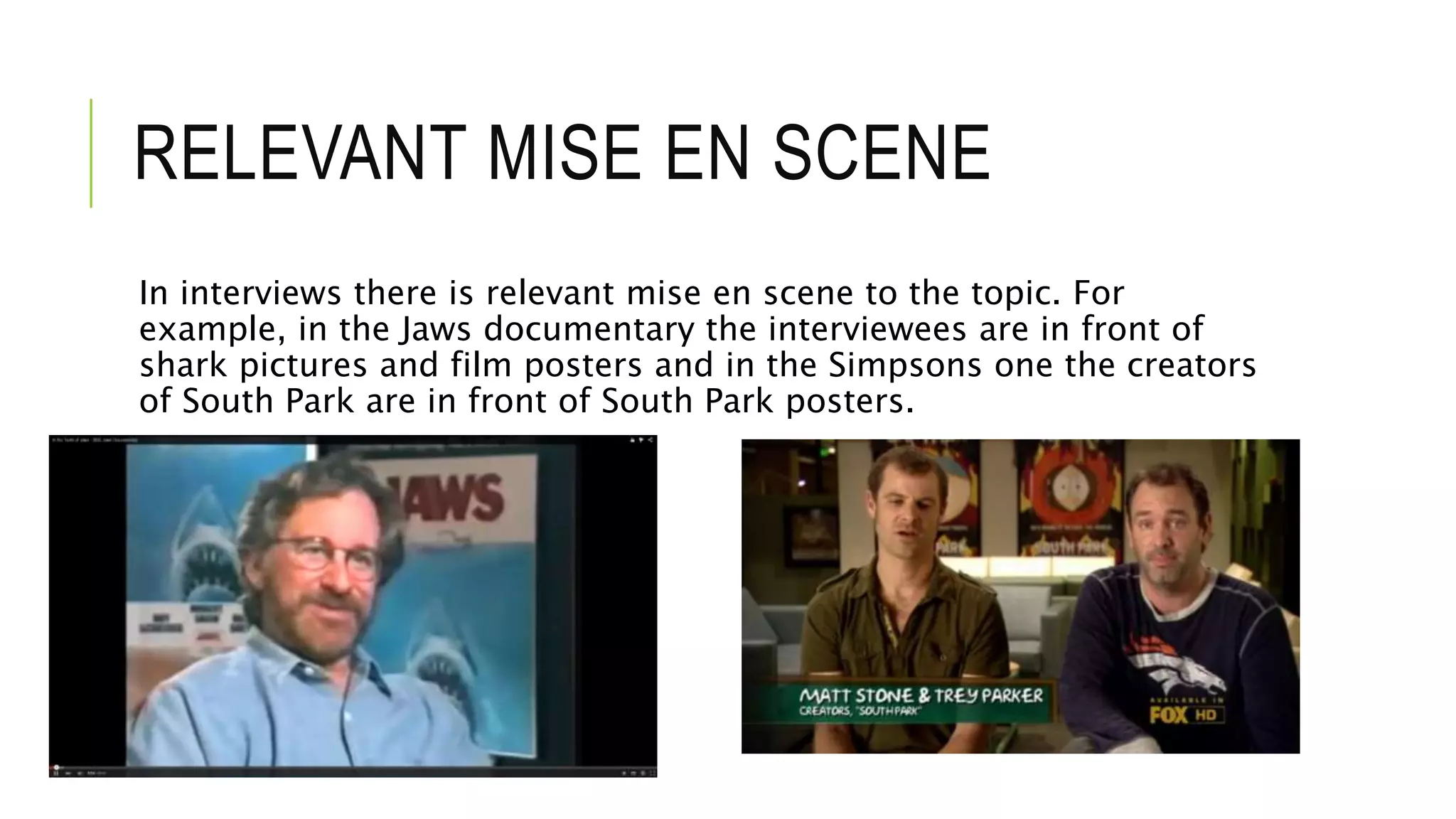
In interviews there is relevant mise en scene to the topic. For
example, in the Jaws documentary the interviewees are in front of
shark pictures and film posters and in the Simpsons one the creators
of South Park are in front of South Park posters.
GRAPHICS
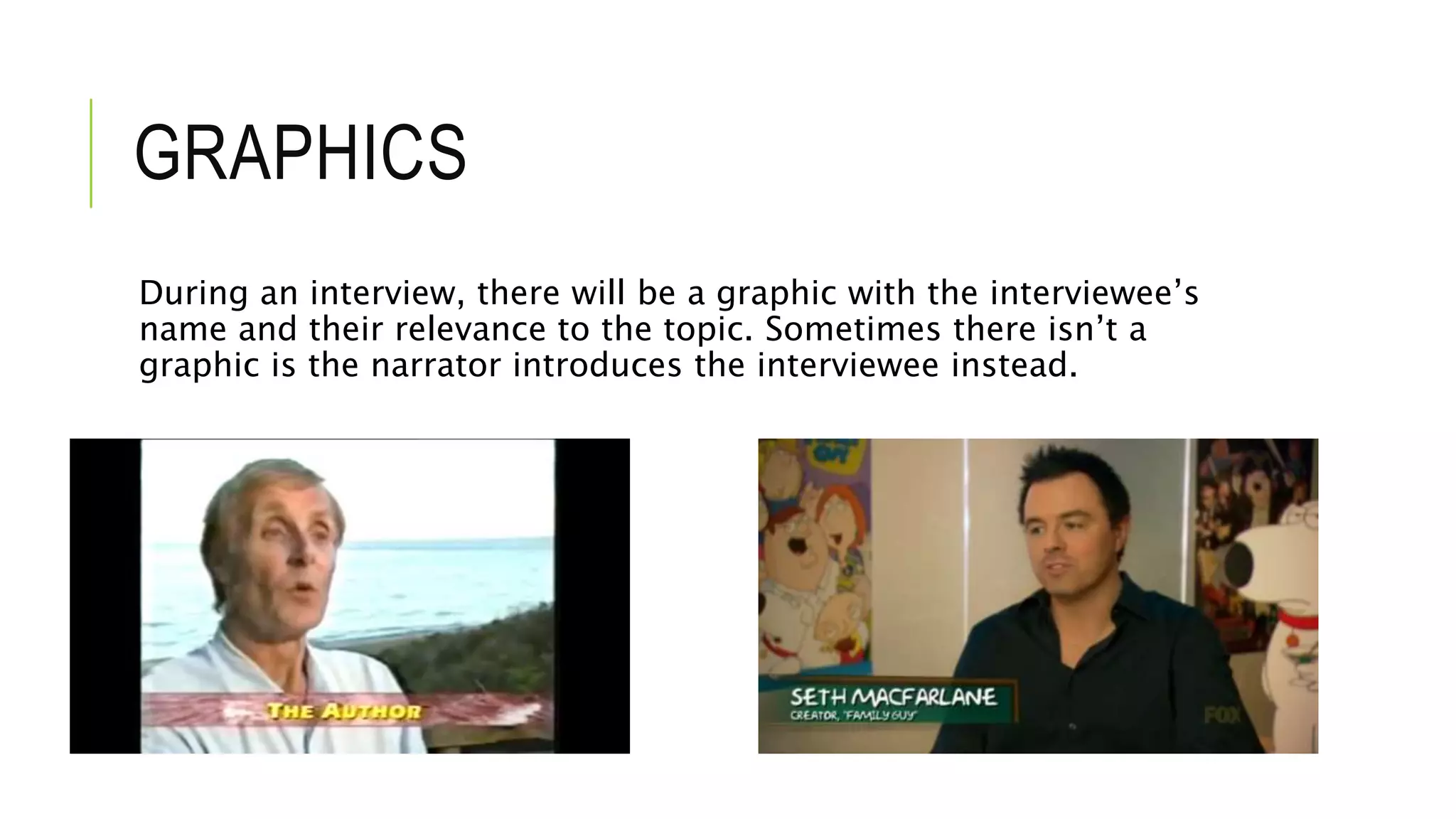
During an interview, there will be a graphic with the interviewee’s
name and their relevance to the topic. Sometimes there isn’t a
graphic is the narrator introduces the interviewee instead.
CAMERA IS STATIC
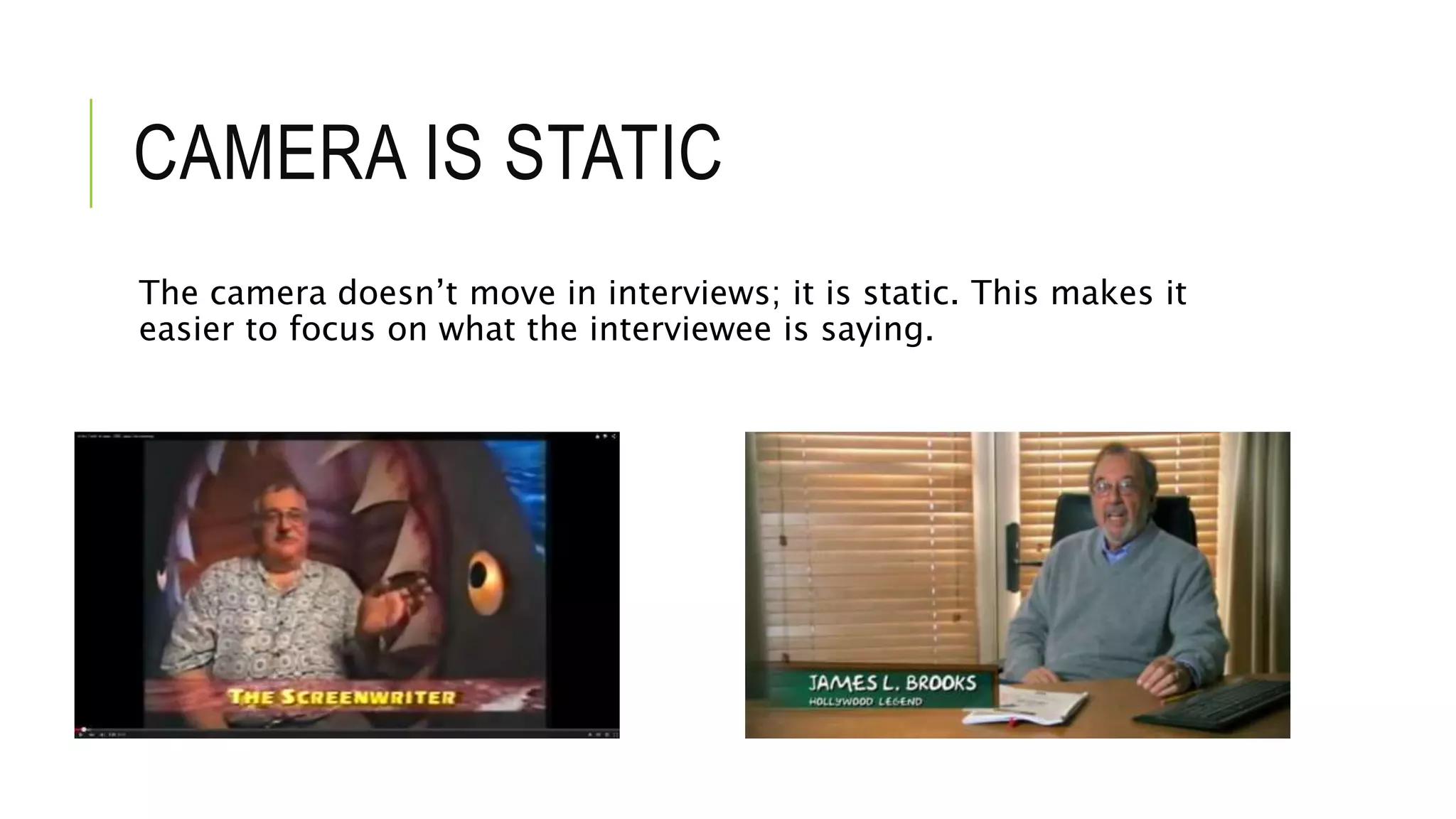
The camera doesn’t move in interviews; it is static. This makes it
easier to focus on what the interviewee is saying.
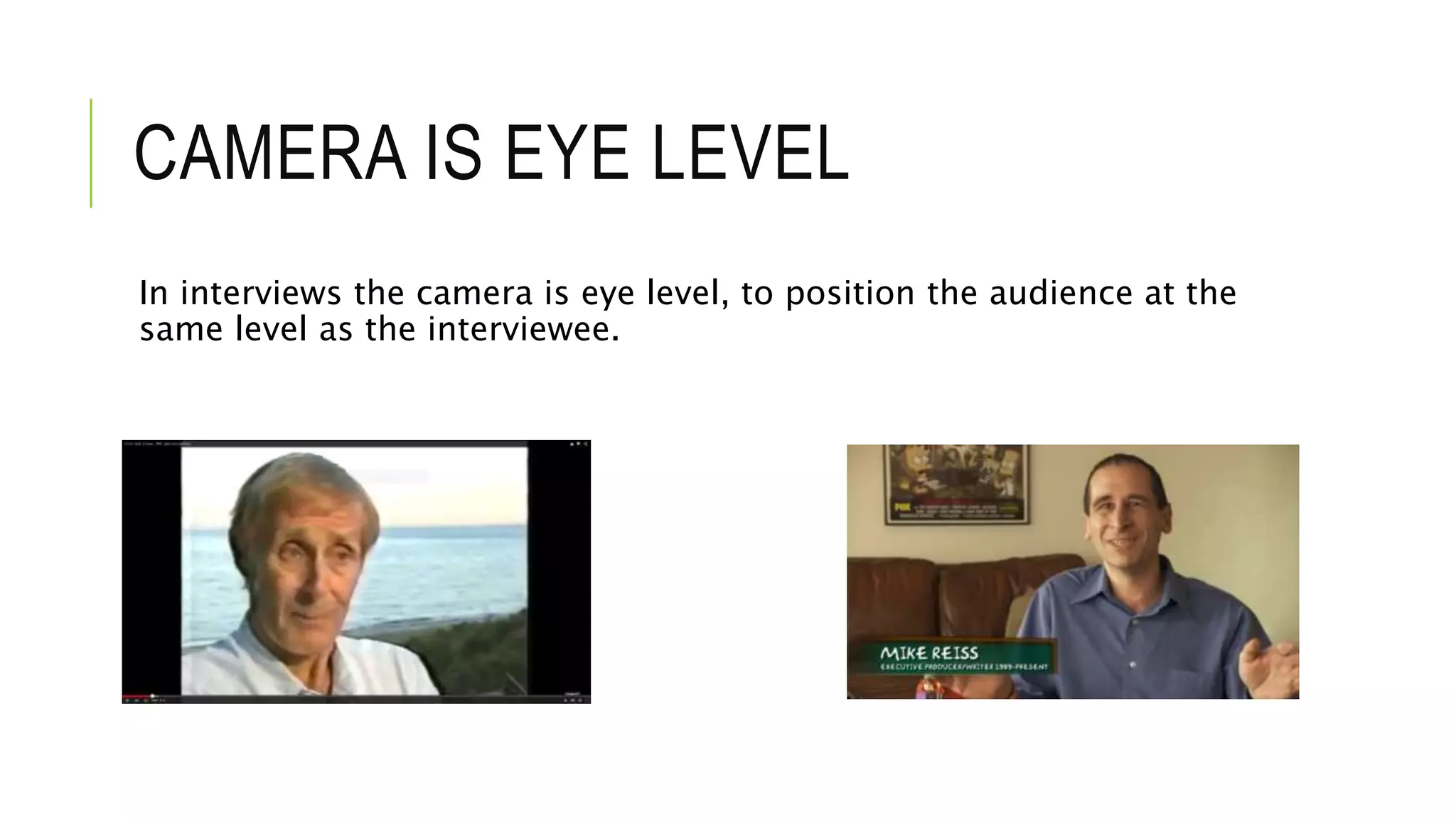
CAMERA IS EYE LEVEL
In interviews the camera is eye level, to position the audience at the
same level as the interviewee.
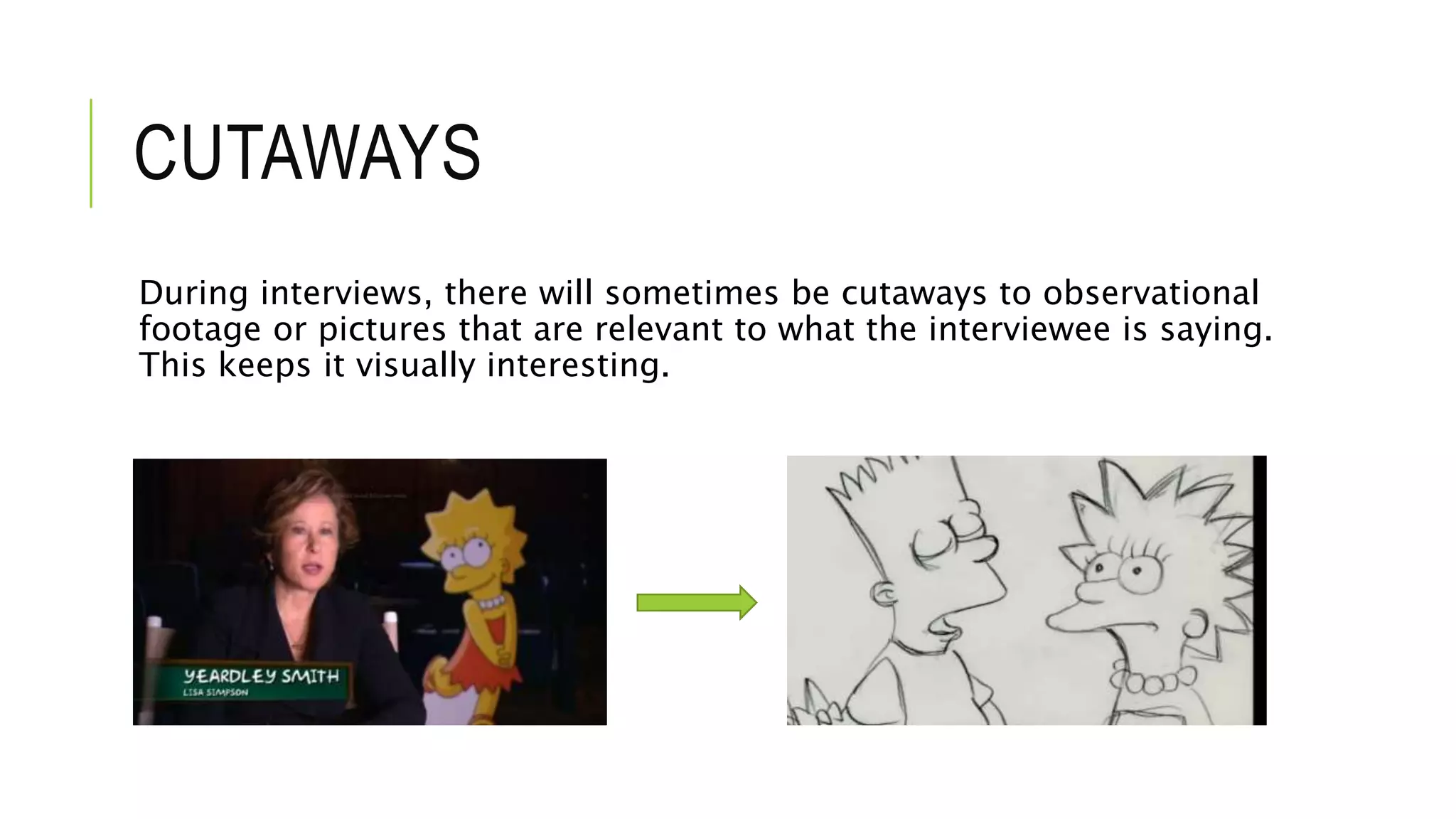
CUTAWAYS
During interviews, there will sometimes be cutaways to observational
footage or pictures that are relevant to what the interviewee is saying.
This keeps it visually interesting.
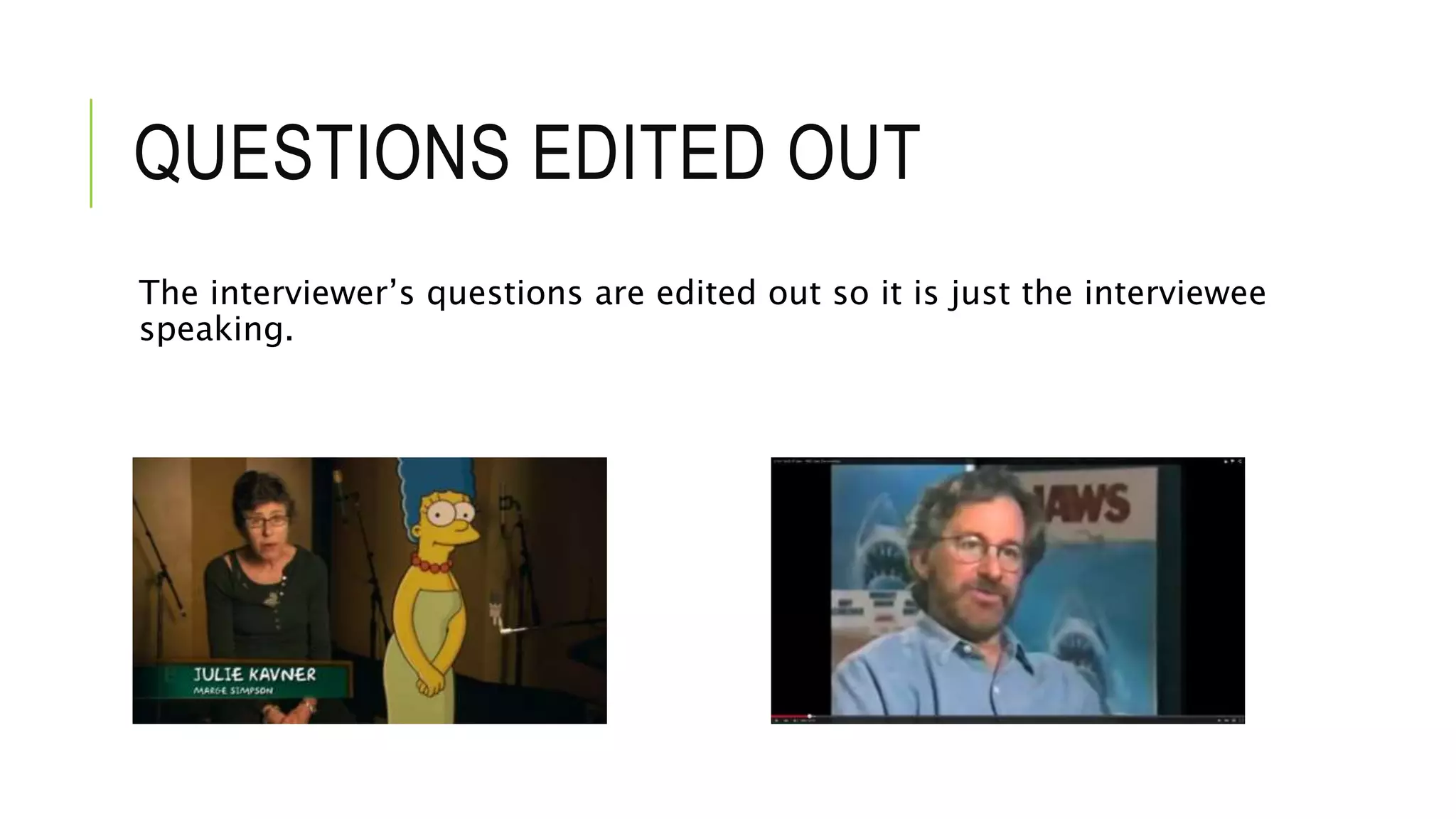
QUESTIONS EDITED OUT
The interviewer’s questions are edited out so it is just the interviewee
speaking.

Codes and conventions of interviews

  • 1.
    CODES AND CONVENTIONS OFINTERVIEWS Kate Pownall
  • 2.
    CLOSE UP/MEDIUM CLOSEUP The shot of an interview is normally in close up or medium close up. This enables the audience to see the interviewee’s facial expressions.
  • 3.
    INTERVIEWEE’S POSITIONING The intervieweeis positioned to either the left or right of the screen.
  • 4.
    RULE OF THIRDS Therule of thirds is where the screen is split into thirds and the points where the lines cross are the most interesting part of the shot. Interviews follow the rule of thirds as the interviewee is placed in the interesting part of the shot.
  • 5.
    NO DIRECT ADDRESS Ininterviews the interviewee doesn’t look at the camera; they look at the interviewer off screen.
  • 6.
    RELEVANT MISE ENSCENE In interviews there is relevant mise en scene to the topic. For example, in the Jaws documentary the interviewees are in front of shark pictures and film posters and in the Simpsons one the creators of South Park are in front of South Park posters.
  • 7.
    GRAPHICS During an interview,there will be a graphic with the interviewee’s name and their relevance to the topic. Sometimes there isn’t a graphic is the narrator introduces the interviewee instead.
  • 8.
    CAMERA IS STATIC Thecamera doesn’t move in interviews; it is static. This makes it easier to focus on what the interviewee is saying.
  • 9.
    CAMERA IS EYELEVEL In interviews the camera is eye level, to position the audience at the same level as the interviewee.
  • 10.
    CUTAWAYS During interviews, therewill sometimes be cutaways to observational footage or pictures that are relevant to what the interviewee is saying. This keeps it visually interesting.
  • 11.
    QUESTIONS EDITED OUT Theinterviewer’s questions are edited out so it is just the interviewee speaking.