The Snatch
Literature Review
Technique and Coaching Application


Damien Gubler


                                     (7)
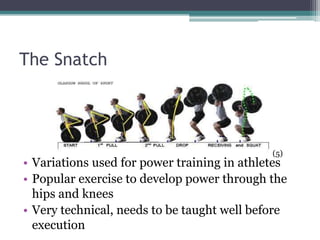
The Snatch


                                             (5)
• Variations used for power training in athletes
• Popular exercise to develop power through the
  hips and knees
• Very technical, needs to be taught well before
  execution
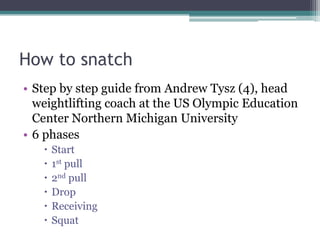
How to snatch
• Step by step guide from Andrew Tysz (4), head
  weightlifting coach at the US Olympic Education
  Center Northern Michigan University
• 6 phases
      Start
      1st pull
      2nd pull
      Drop
      Receiving
      Squat
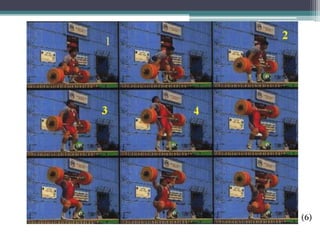
(6)
Literature 1
• A biomechanical review by German coach Klaus
  E. Bartonletz, PhD(1).
• Titled “Biomechanics of the snatch: Towards a
  higher training efficiency”
• Designed to give coaches an understanding of
  the biomechanical processes and training
  approaches to increase efficiency
The Study
• Believed not to be and original idea for a
  publication
• Shows importance in highlighting aspects of the
  lift the coach should know of and ideas to teach
• Literature not a typical study with
  participants, rather a collaboration of previously
  found info
• Written as the equivalent of a background and
  discussion
Limitations
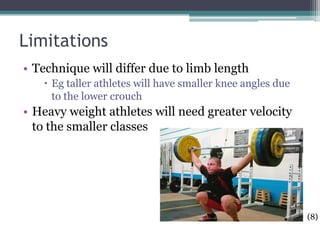
• Technique will differ due to limb length
    Eg taller athletes will have smaller knee angles due
     to the lower crouch
• Heavy weight athletes will need greater velocity
  to the smaller classes


                                                            (8)
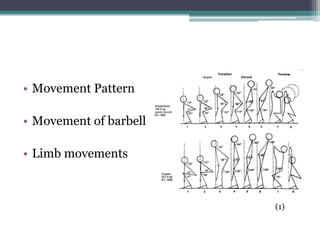
• Movement Pattern

• Movement of barbell

• Limb movements


                        (1)
Coaching help
• Determine movement path of bar by videotape
• find target bar velocity for max lift
• Calculate power at max velocity, will help to
  conserve same energy for lighter weight training
• Snatch variety needs to have common grounds
  with sporting movement
• 5-10% yearly power increase is an attainable goal
Conclusion for Coaches
• Continue with alternate max strength exercises
• Young athletes to work on overall
  strength, progression into advanced movements
• Split leg lift for specific athletes
    Baseball pitchers
    Contact sports
• Squat snatch for high leg load sports
    Rowing
    Skiing
Literature 2
• Study by Schilling et.al titled “Snatch Technique
  of Collegiate National Level Weightlifters” in
  2002 (3)

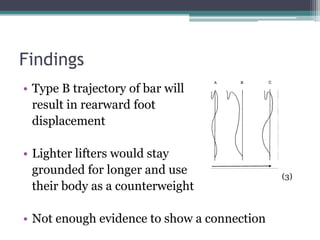
“bar trajectory during weight lifting movements
  is related to the position of the body during the
  lift and the displacement of the feet during the
  drop-under phase”
Research
• 25 male colligate athletes from 7 different weight
  classes
• Camera placed on saggital plane
• Toes manually digitized at the end of 2nd pull
• 74 total lifts recorded, comparison between
  regular and maximal lift

• Both foot displacement and bar trajectory were
  recorded
Findings
• Type B trajectory of bar will
  result in rearward foot
  displacement

• Lighter lifters would stay
  grounded for longer and use                (3)
  their body as a counterweight

• Not enough evidence to show a connection
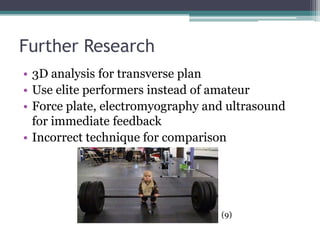
Further Research
• 3D analysis for transverse plan
• Use elite performers instead of amateur
• Force plate, electromyography and ultrasound
  for immediate feedback
• Incorrect technique for comparison


                                  (9)
Coaching Uses
• Foot and bar displacement are closely related

• Rearward displacement used by elite lifters

• When coaching snatch, emphasize the foot
  placements to make it become second nature
Summary of Coaching Implications
• Feet slightly turned out in starting position
• Body type will effect technique
• Body weight is related to velocity needs
• Hips to produce greatest power output
• Young athletes to progress into full snatch after
  strength work
• Rear foot displacement believed to be optimal
  technique
• Barbell should stay behind vertical line
References

   1-   Bartonletz, K. E. (n.d.). Biomechanics of the snatch: towards a higher training efficiency.
   Olympic Training Center Rhineland-Palatinate/Saarland, Schifferstadt, Germany ,Izquierdo,

   2- M., Häkkinen, K., Gonzalez-Badillo, J. J., Ibáñez, J., &Gorostiaga, E. M. (2002). Effects of long-
   term training specificity on maximal strength and power of the upper and lower extremities in
   athletes from different sports. European Journal of applied physiology, 87(3), 264-271.

   3- Schilling, B., Stone, M., O'Bryant, H., Fry, A., Coglianese, R., & Pierce, K. (2002). Snatch
   Technique of Collegiate National Level Weightlifters . Journal of Strength and Conditioning
   Research, 16(4), 551-555.

   4- Tysz, A. (2010). Basic performance cues for teaching the snatch and clean to non-Olympic
   weightlifting athletes. XXVIII International Symposium of Biomechanics in Sports

Pictures
           (5) http://4.bp.blogspot.com/-
   JwbwAkwgHow/TdKxCaru8YI/AAAAAAAAARE/FC3mvjL_TLI/s1600/Power-Snatch-
   Techniques.jpg
   (6)http://coachesinfo.com/index.php?option=com_content&view=article&id=223:strength-
   weightlifting&catid=68:strength-generalarticles&Itemid
   (7) http://www.bodytribe.com/wp-content/uploads/2011/02/snatch-1.jpg
   (8) http://www.leaderpost.com/sports/6228829.bin?size=620x400s
   (9) http://www.theentertainingelf.com/photos/Weightlifting-Ambition.jpg

Coaching the Snatch

  • 1.
    The Snatch Literature Review Techniqueand Coaching Application Damien Gubler (7)
  • 2.
    The Snatch (5) • Variations used for power training in athletes • Popular exercise to develop power through the hips and knees • Very technical, needs to be taught well before execution
  • 3.
    How to snatch •Step by step guide from Andrew Tysz (4), head weightlifting coach at the US Olympic Education Center Northern Michigan University • 6 phases  Start  1st pull  2nd pull  Drop  Receiving  Squat
  • 4.
  • 5.
    Literature 1 • Abiomechanical review by German coach Klaus E. Bartonletz, PhD(1). • Titled “Biomechanics of the snatch: Towards a higher training efficiency” • Designed to give coaches an understanding of the biomechanical processes and training approaches to increase efficiency
  • 6.
    The Study • Believednot to be and original idea for a publication • Shows importance in highlighting aspects of the lift the coach should know of and ideas to teach • Literature not a typical study with participants, rather a collaboration of previously found info • Written as the equivalent of a background and discussion
  • 7.
    Limitations • Technique willdiffer due to limb length  Eg taller athletes will have smaller knee angles due to the lower crouch • Heavy weight athletes will need greater velocity to the smaller classes (8)
  • 8.
    • Movement Pattern •Movement of barbell • Limb movements (1)
  • 9.
    Coaching help • Determinemovement path of bar by videotape • find target bar velocity for max lift • Calculate power at max velocity, will help to conserve same energy for lighter weight training • Snatch variety needs to have common grounds with sporting movement • 5-10% yearly power increase is an attainable goal
  • 10.
    Conclusion for Coaches •Continue with alternate max strength exercises • Young athletes to work on overall strength, progression into advanced movements • Split leg lift for specific athletes  Baseball pitchers  Contact sports • Squat snatch for high leg load sports  Rowing  Skiing
  • 11.
    Literature 2 • Studyby Schilling et.al titled “Snatch Technique of Collegiate National Level Weightlifters” in 2002 (3) “bar trajectory during weight lifting movements is related to the position of the body during the lift and the displacement of the feet during the drop-under phase”
  • 12.
    Research • 25 malecolligate athletes from 7 different weight classes • Camera placed on saggital plane • Toes manually digitized at the end of 2nd pull • 74 total lifts recorded, comparison between regular and maximal lift • Both foot displacement and bar trajectory were recorded
  • 13.
    Findings • Type Btrajectory of bar will result in rearward foot displacement • Lighter lifters would stay grounded for longer and use (3) their body as a counterweight • Not enough evidence to show a connection
  • 14.
    Further Research • 3Danalysis for transverse plan • Use elite performers instead of amateur • Force plate, electromyography and ultrasound for immediate feedback • Incorrect technique for comparison (9)
  • 15.
    Coaching Uses • Footand bar displacement are closely related • Rearward displacement used by elite lifters • When coaching snatch, emphasize the foot placements to make it become second nature
  • 16.
    Summary of CoachingImplications • Feet slightly turned out in starting position • Body type will effect technique • Body weight is related to velocity needs • Hips to produce greatest power output • Young athletes to progress into full snatch after strength work • Rear foot displacement believed to be optimal technique • Barbell should stay behind vertical line
  • 17.
    References 1- Bartonletz, K. E. (n.d.). Biomechanics of the snatch: towards a higher training efficiency. Olympic Training Center Rhineland-Palatinate/Saarland, Schifferstadt, Germany ,Izquierdo, 2- M., Häkkinen, K., Gonzalez-Badillo, J. J., Ibáñez, J., &Gorostiaga, E. M. (2002). Effects of long- term training specificity on maximal strength and power of the upper and lower extremities in athletes from different sports. European Journal of applied physiology, 87(3), 264-271. 3- Schilling, B., Stone, M., O'Bryant, H., Fry, A., Coglianese, R., & Pierce, K. (2002). Snatch Technique of Collegiate National Level Weightlifters . Journal of Strength and Conditioning Research, 16(4), 551-555. 4- Tysz, A. (2010). Basic performance cues for teaching the snatch and clean to non-Olympic weightlifting athletes. XXVIII International Symposium of Biomechanics in Sports Pictures (5) http://4.bp.blogspot.com/- JwbwAkwgHow/TdKxCaru8YI/AAAAAAAAARE/FC3mvjL_TLI/s1600/Power-Snatch- Techniques.jpg (6)http://coachesinfo.com/index.php?option=com_content&view=article&id=223:strength- weightlifting&catid=68:strength-generalarticles&Itemid (7) http://www.bodytribe.com/wp-content/uploads/2011/02/snatch-1.jpg (8) http://www.leaderpost.com/sports/6228829.bin?size=620x400s (9) http://www.theentertainingelf.com/photos/Weightlifting-Ambition.jpg