External factors that influence
career choices
• Objectives: By the end of this lesson, students will be able to:
a. Identify various external factors that influence career decisions
b. Analyze how these factors can impact career choices
c. Evaluate the importance of considering external factors in career
planning
•ACTIVITY
ACTIVITY: Career Scenario Distribution:
• Hand out one career scenario card to each group. Each card should
describe a specific career path (e.g., doctor, teacher, engineer, dentist)
and include a brief description of the career.
Activity
• Each group will brainstorm and write down the external factors that could
influence the career path assigned. These factors may include:
• Economic conditions
• Family expectations
• Educational opportunities
• Social influences
• Cultural background
• Chart Creation: Each group will create a chart summarizing their findings on
the external factors related to their career scenario.
• Presentation: Groups will present their charts to the class, explaining how
these external factors can affect career choice.
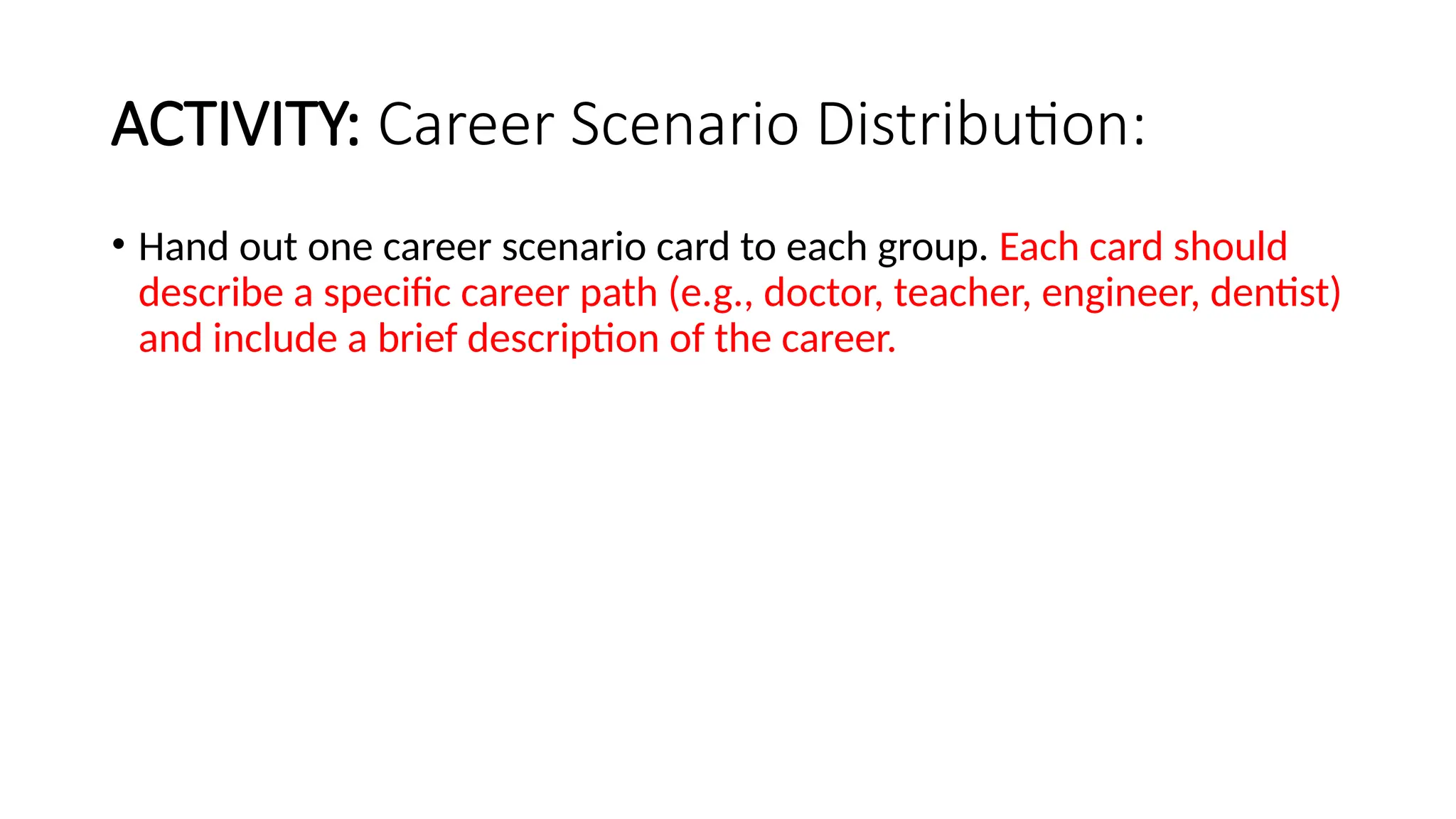
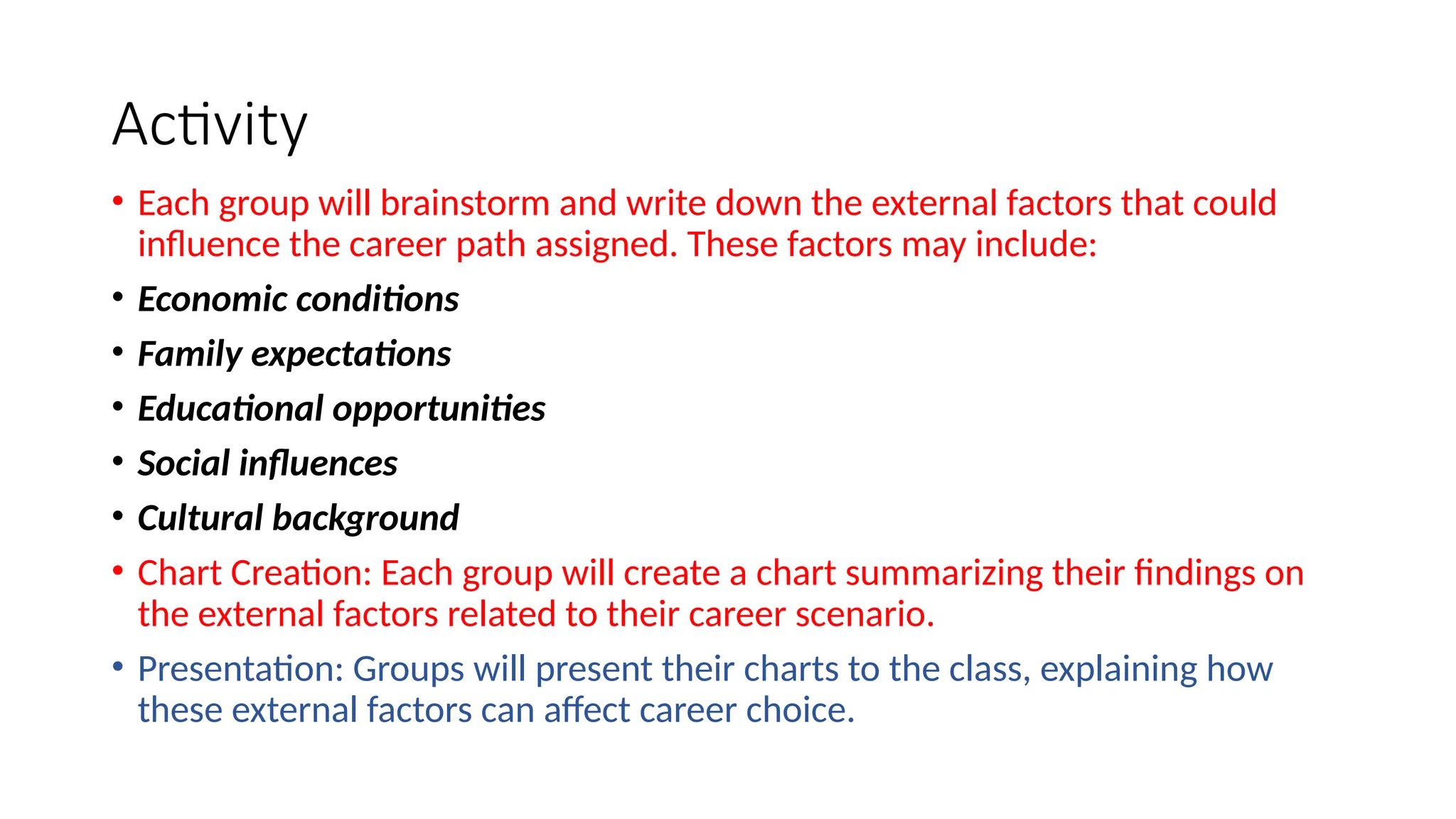
Economic Conditions:
• Economic trends, job market demand, and the availability of certain
industries or roles directly impact career choices. For example,
Unemployment Rates: During economic downturns, students might opt for
majors in healthcare or technology, which often have more consistent job
availability compared to fields like arts or humanities
Family Expectations:
• Family values, parental influence, and societal expectations can
strongly impact career choices. Some families might prioritize
traditional professions, while others encourage ambition and
innovation. The family's financial situation and support network can
also affect the feasibility of pursuing certain educational paths or
career trajectories.
Educational Opportunities:
• Access to quality education and training, along with the types of
programs available, shapes the range of career paths individuals can
pursue. A lack of funding or resources for specialized skills can limit
career prospects, while access to higher education can open doors to
a wider variety of options.
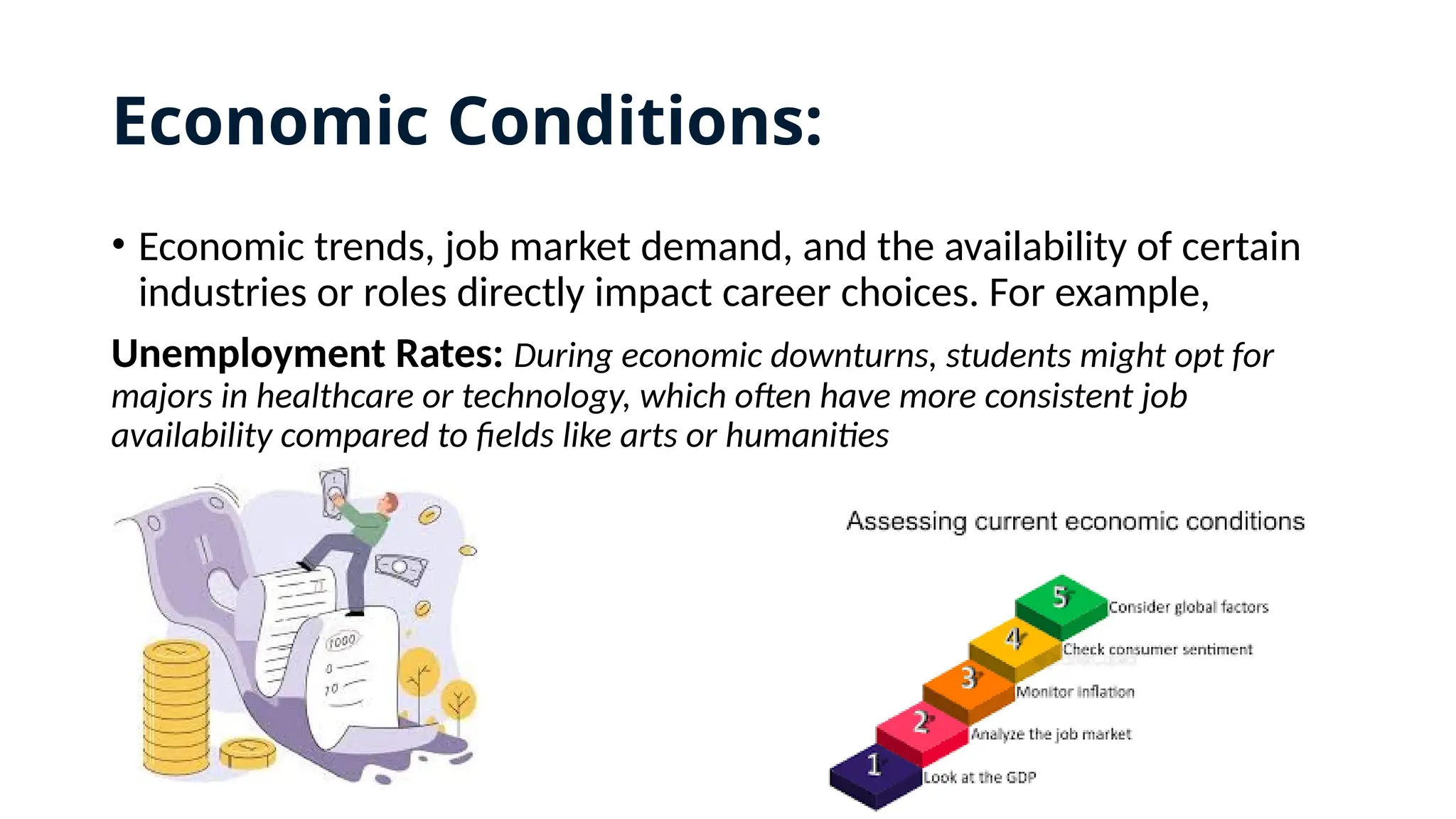
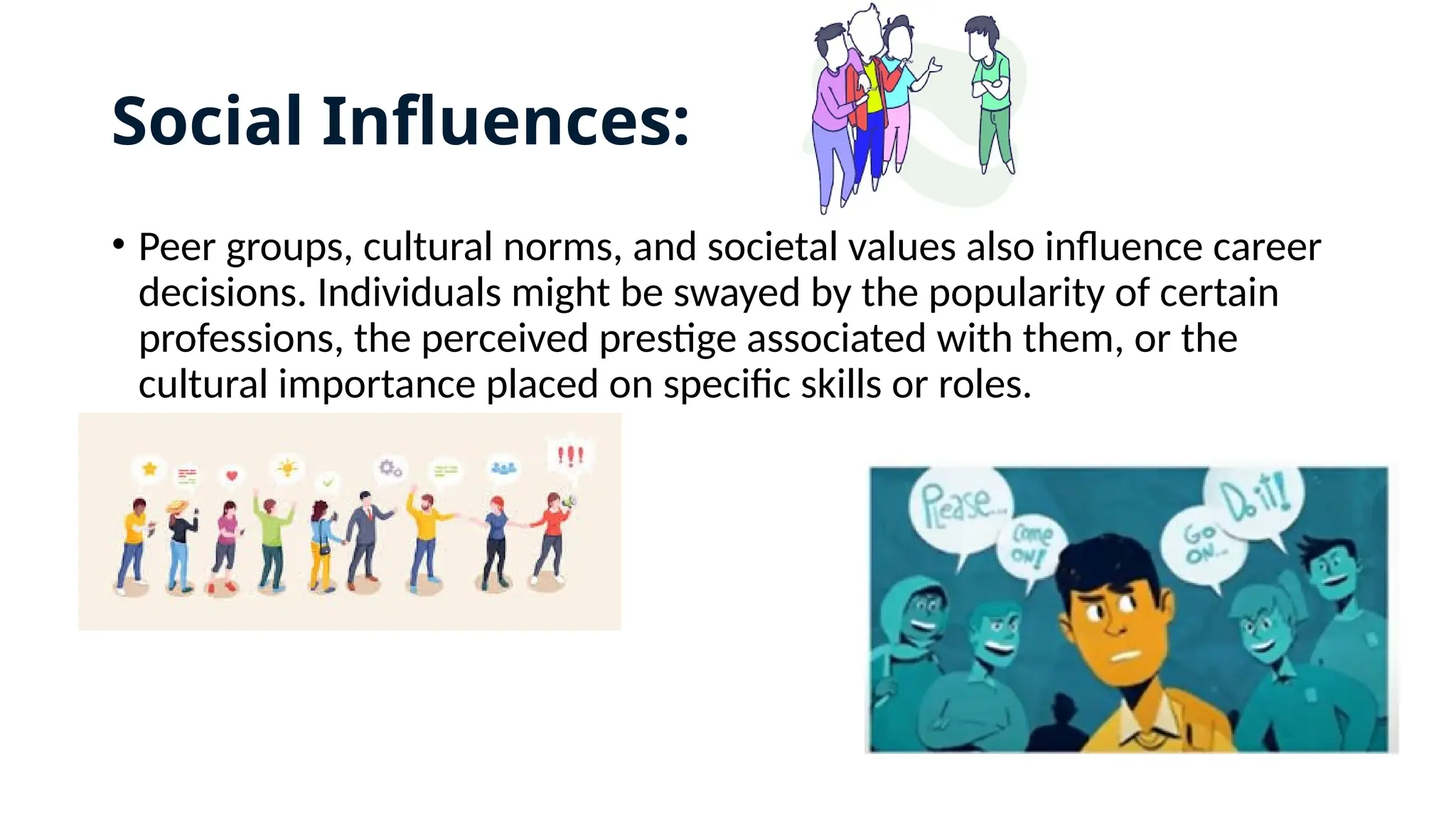
Social Influences:
• Peer groups, cultural norms, and societal values also influence career
decisions. Individuals might be swayed by the popularity of certain
professions, the perceived prestige associated with them, or the
cultural importance placed on specific skills or roles.
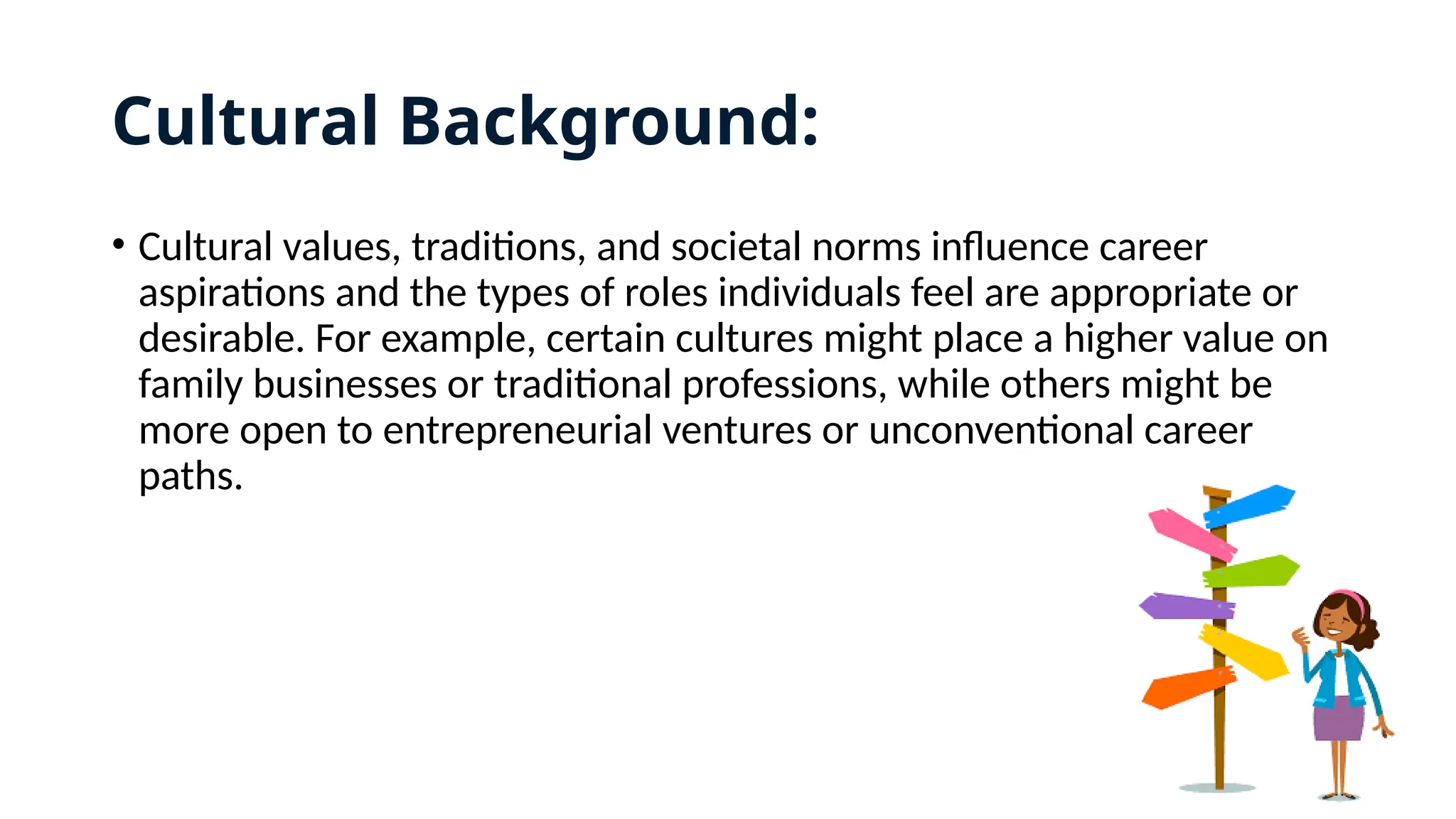
Cultural Background:
• Cultural values, traditions, and societal norms influence career
aspirations and the types of roles individuals feel are appropriate or
desirable. For example, certain cultures might place a higher value on
family businesses or traditional professions, while others might be
more open to entrepreneurial ventures or unconventional career
paths.
• 1. What were the main external factors we identified that influence
career choices?
• 2. How do these factors impact career decisions?
• 3. And why is it important to understand these factors?
•External factors are diverse and can significantly
impact career decisions.
•Understanding these factors can help individuals make
more informed career choices.
ACTIVITY #2
•Role playing scenario
Real-Life Problem:
• "Maria is a senior high school who is passionate about art but feels
pressured by her parents to pursue a career in medicine due to their
expectations. Discuss the external factors influencing Maria's decision
and how she can navigate these influences to make a choice that
aligns with her interests and values."
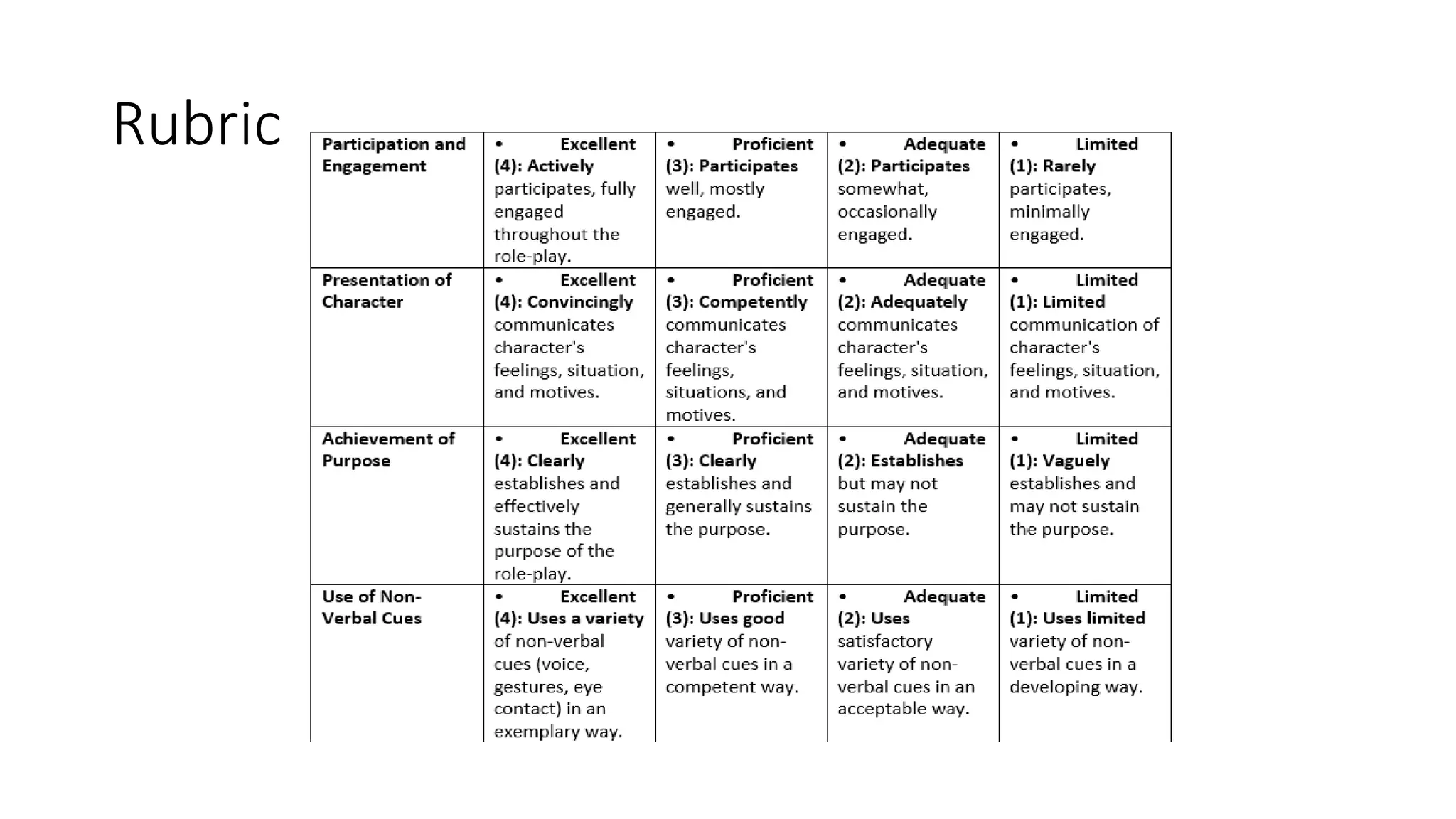
Rubric
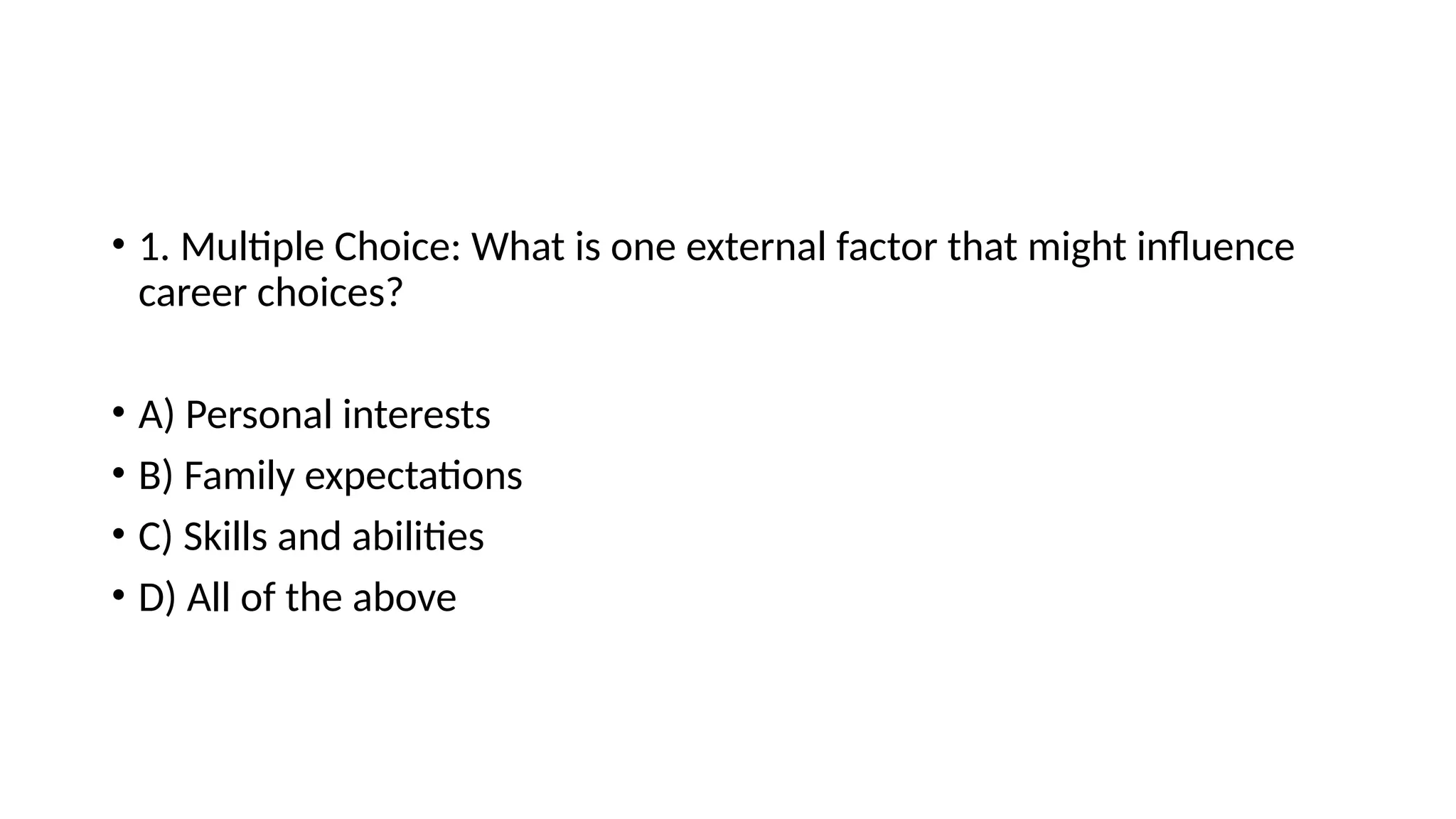
• 1. Multiple Choice: What is one external factor that might influence
career choices?
• A) Personal interests
• B) Family expectations
• C) Skills and abilities
• D) All of the above
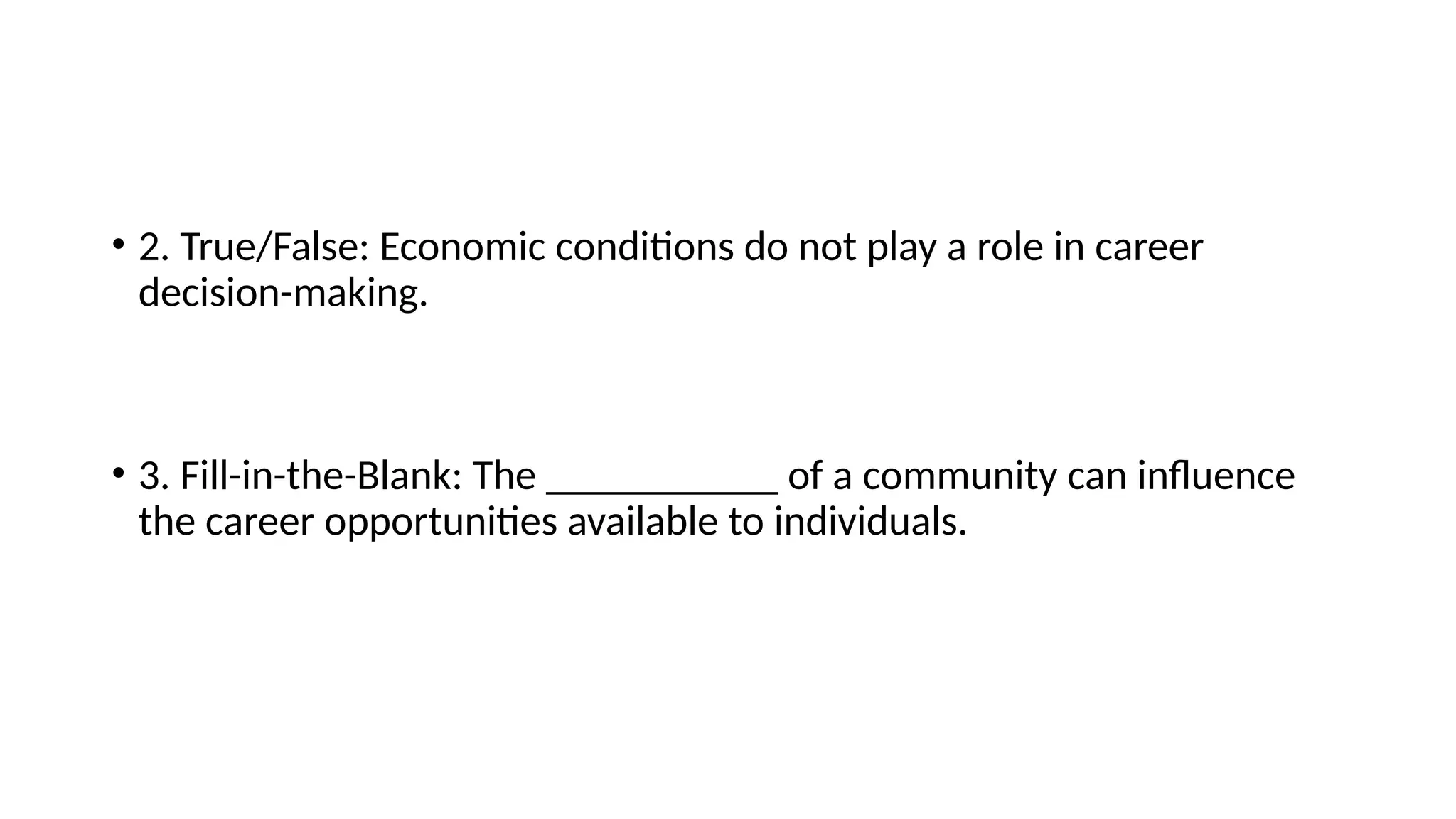
• 2. True/False: Economic conditions do not play a role in career
decision-making.
• 3. Fill-in-the-Blank: The ___________ of a community can influence
the career opportunities available to individuals.
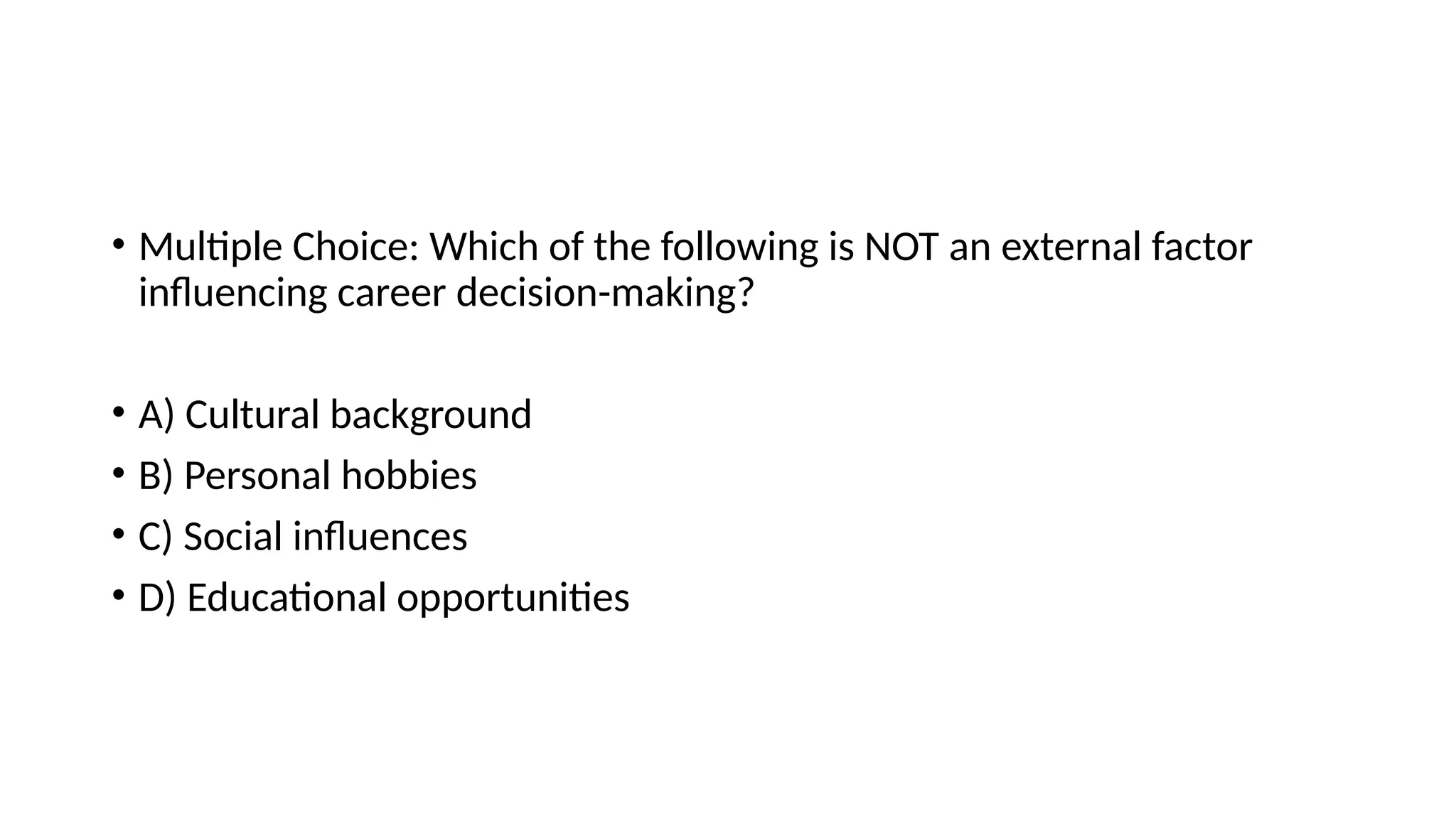
• Multiple Choice: Which of the following is NOT an external factor
influencing career decision-making?
• A) Cultural background
• B) Personal hobbies
• C) Social influences
• D) Educational opportunities

• True/False: Understanding external factors can help in making
informed career decisions.

co 4th perdev.pptx nbjgcigknlsjlbdfbsdvsd

  • 2.
    External factors thatinfluence career choices • Objectives: By the end of this lesson, students will be able to: a. Identify various external factors that influence career decisions b. Analyze how these factors can impact career choices c. Evaluate the importance of considering external factors in career planning
  • 3.
  • 4.
    ACTIVITY: Career ScenarioDistribution: • Hand out one career scenario card to each group. Each card should describe a specific career path (e.g., doctor, teacher, engineer, dentist) and include a brief description of the career.
  • 5.
    Activity • Each groupwill brainstorm and write down the external factors that could influence the career path assigned. These factors may include: • Economic conditions • Family expectations • Educational opportunities • Social influences • Cultural background • Chart Creation: Each group will create a chart summarizing their findings on the external factors related to their career scenario. • Presentation: Groups will present their charts to the class, explaining how these external factors can affect career choice.
  • 6.
    Economic Conditions: • Economictrends, job market demand, and the availability of certain industries or roles directly impact career choices. For example, Unemployment Rates: During economic downturns, students might opt for majors in healthcare or technology, which often have more consistent job availability compared to fields like arts or humanities
  • 7.
    Family Expectations: • Familyvalues, parental influence, and societal expectations can strongly impact career choices. Some families might prioritize traditional professions, while others encourage ambition and innovation. The family's financial situation and support network can also affect the feasibility of pursuing certain educational paths or career trajectories.
  • 8.
    Educational Opportunities: • Accessto quality education and training, along with the types of programs available, shapes the range of career paths individuals can pursue. A lack of funding or resources for specialized skills can limit career prospects, while access to higher education can open doors to a wider variety of options.
  • 9.
    Social Influences: • Peergroups, cultural norms, and societal values also influence career decisions. Individuals might be swayed by the popularity of certain professions, the perceived prestige associated with them, or the cultural importance placed on specific skills or roles.
  • 10.
    Cultural Background: • Culturalvalues, traditions, and societal norms influence career aspirations and the types of roles individuals feel are appropriate or desirable. For example, certain cultures might place a higher value on family businesses or traditional professions, while others might be more open to entrepreneurial ventures or unconventional career paths.
  • 11.
    • 1. Whatwere the main external factors we identified that influence career choices? • 2. How do these factors impact career decisions? • 3. And why is it important to understand these factors?
  • 12.
    •External factors arediverse and can significantly impact career decisions. •Understanding these factors can help individuals make more informed career choices.
  • 13.
  • 14.
    Real-Life Problem: • "Mariais a senior high school who is passionate about art but feels pressured by her parents to pursue a career in medicine due to their expectations. Discuss the external factors influencing Maria's decision and how she can navigate these influences to make a choice that aligns with her interests and values."
  • 15.
  • 16.
    • 1. MultipleChoice: What is one external factor that might influence career choices? • A) Personal interests • B) Family expectations • C) Skills and abilities • D) All of the above
  • 17.
    • 2. True/False:Economic conditions do not play a role in career decision-making. • 3. Fill-in-the-Blank: The ___________ of a community can influence the career opportunities available to individuals.
  • 18.
    • Multiple Choice:Which of the following is NOT an external factor influencing career decision-making? • A) Cultural background • B) Personal hobbies • C) Social influences • D) Educational opportunities
  • 19.
    • True/False: Understandingexternal factors can help in making informed career decisions.