Cloud Native & Docker
Brian Christner / 56K.Cloud
@idomyowntricks
Agenda
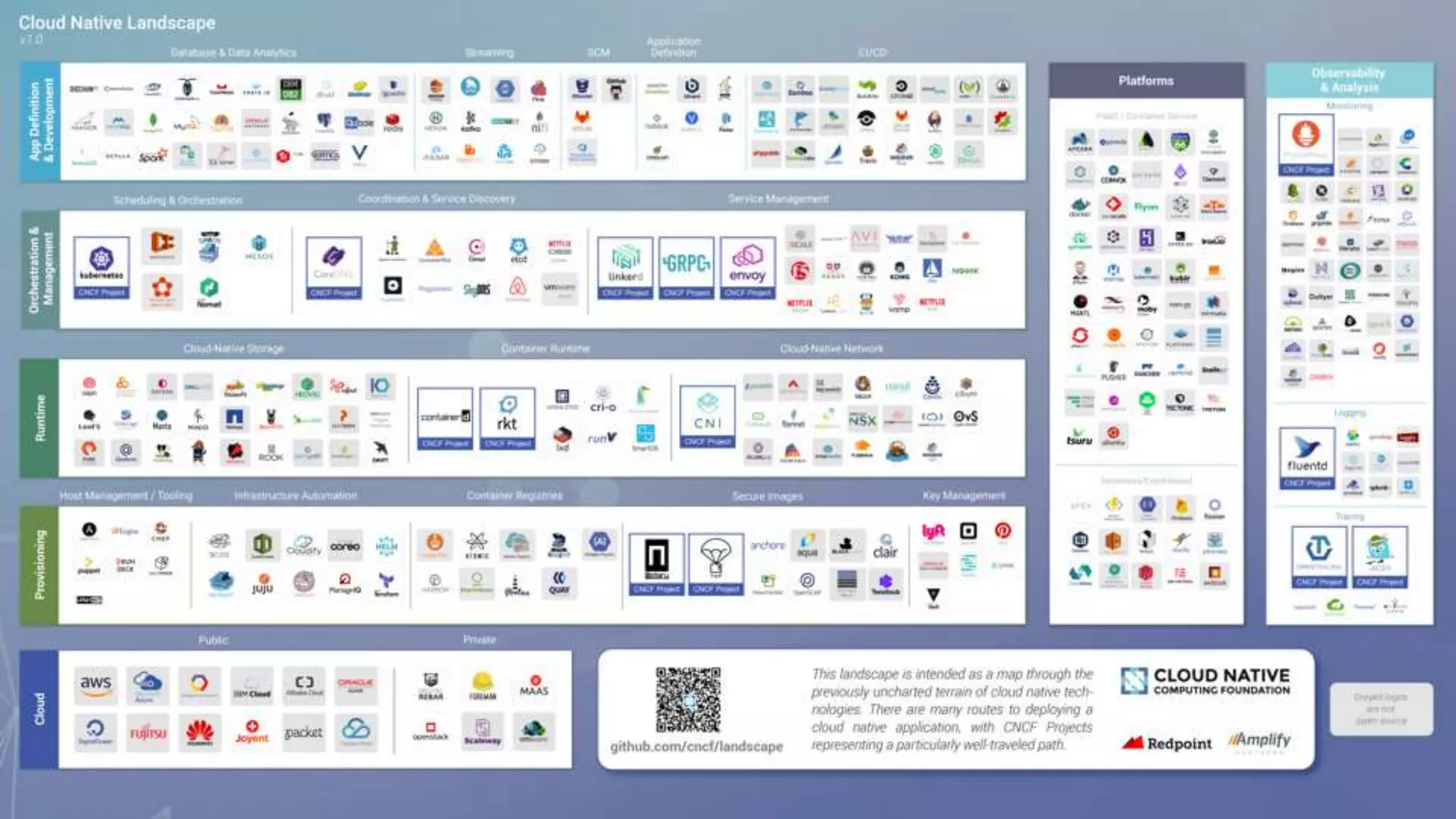
Cloud Native
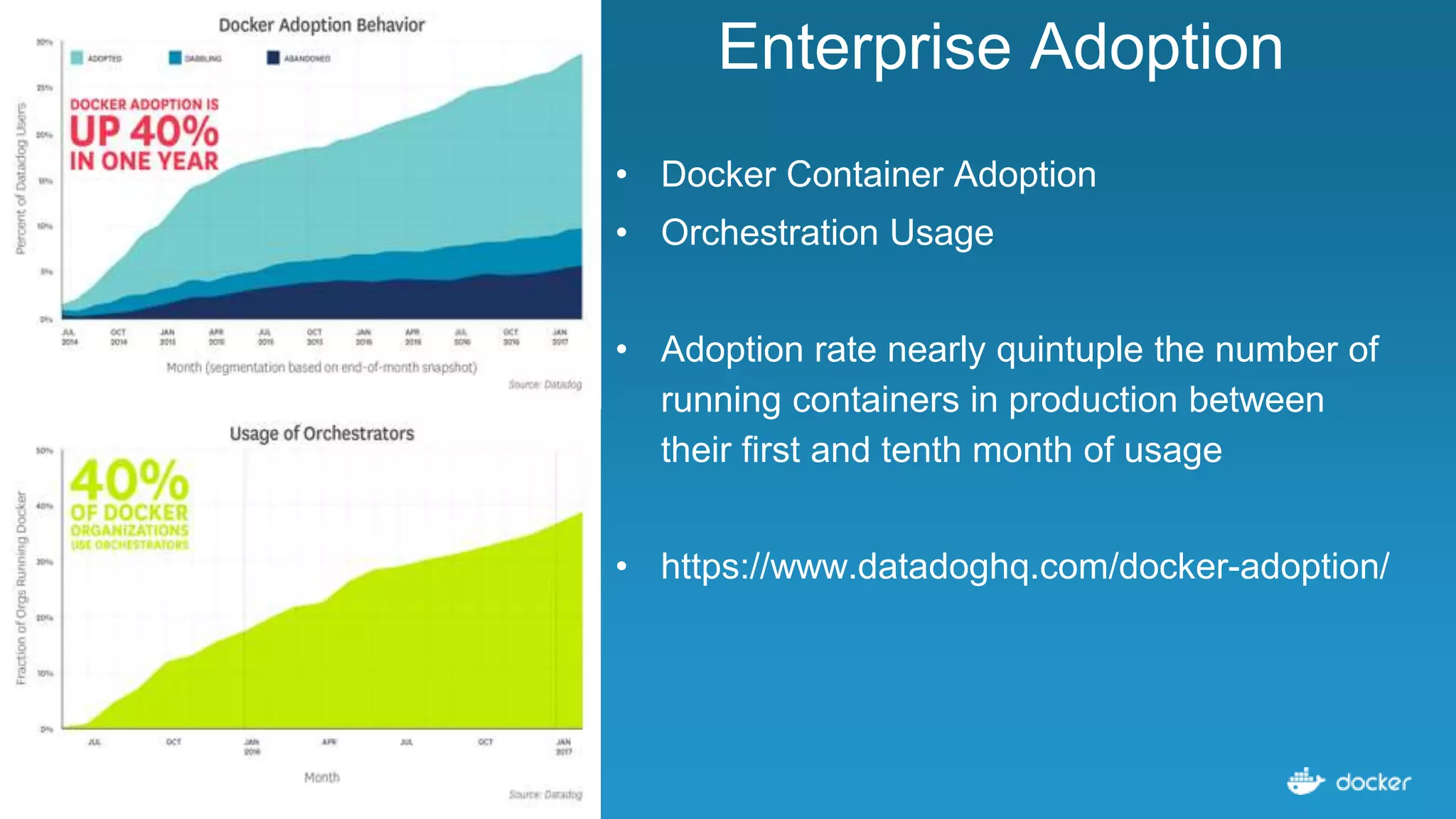
Enterprise Adoption
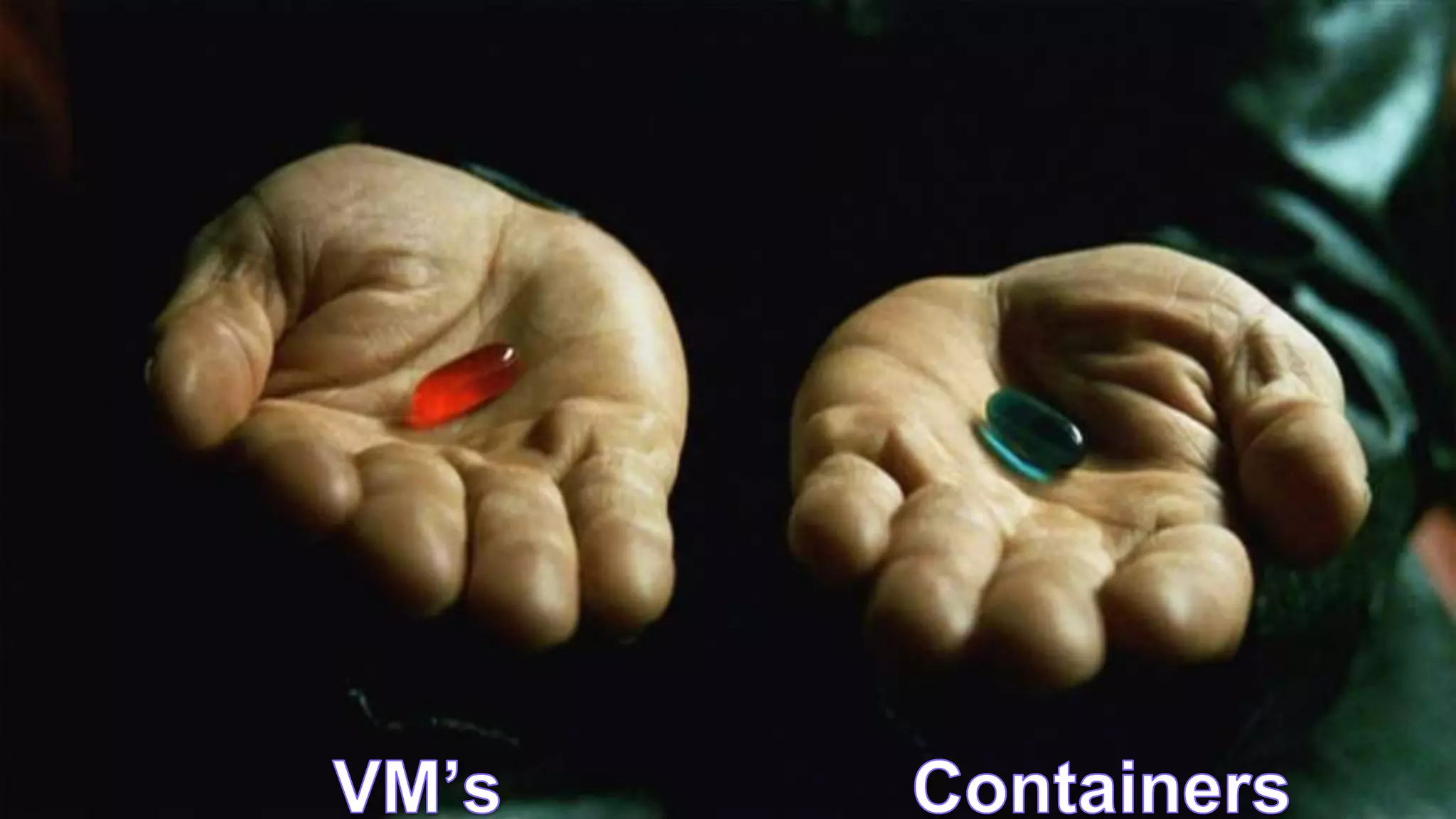
Containers vs. VM‘s
DevOps
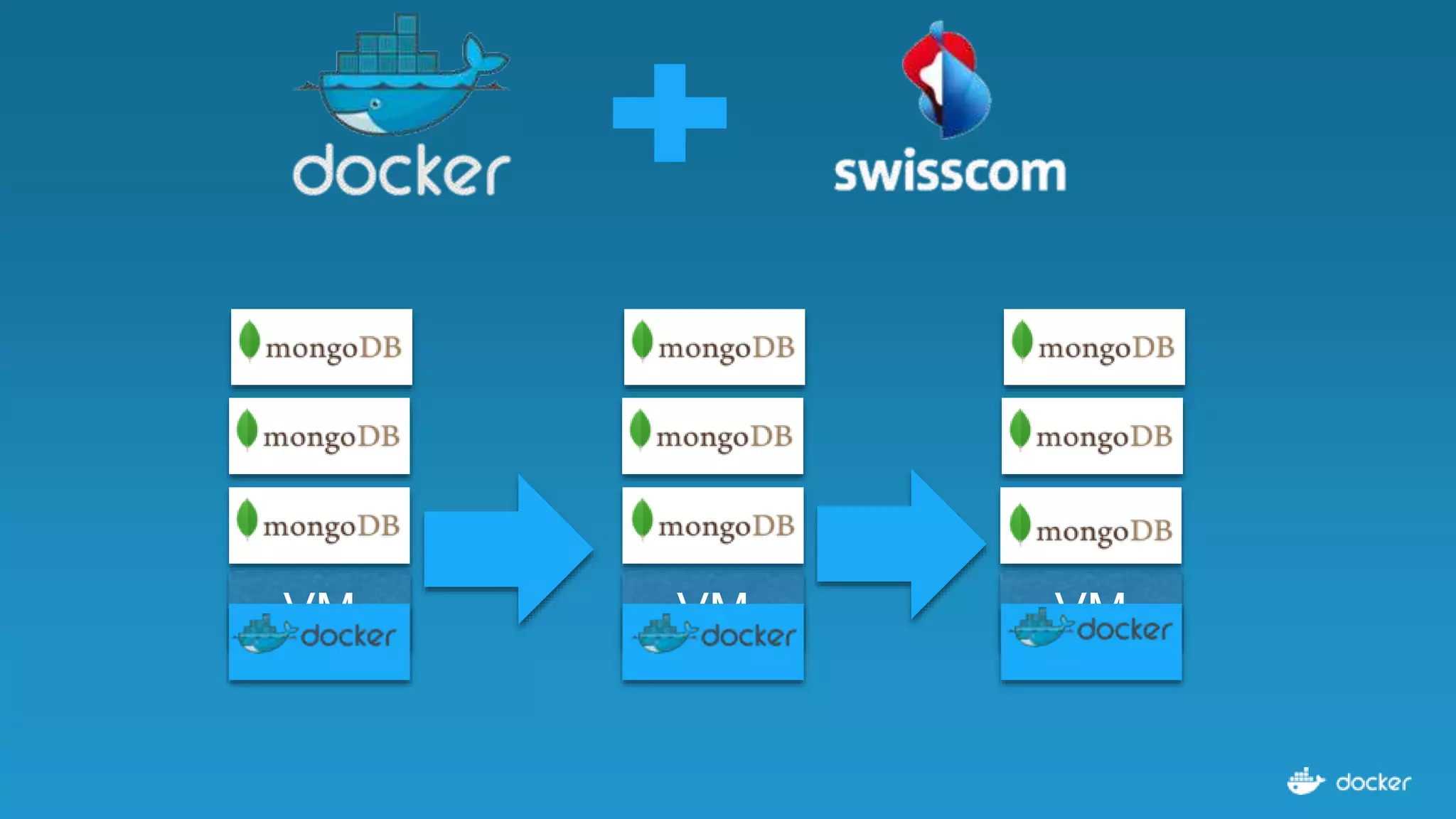
Docker & Swisscom
Demo
3
Brian Christner
Brian@56k.cloud / @idomyowntricks
● Co-Founder 56K.Cloud
● Background in Engineering, Cloud & Containers
● Docker Captain
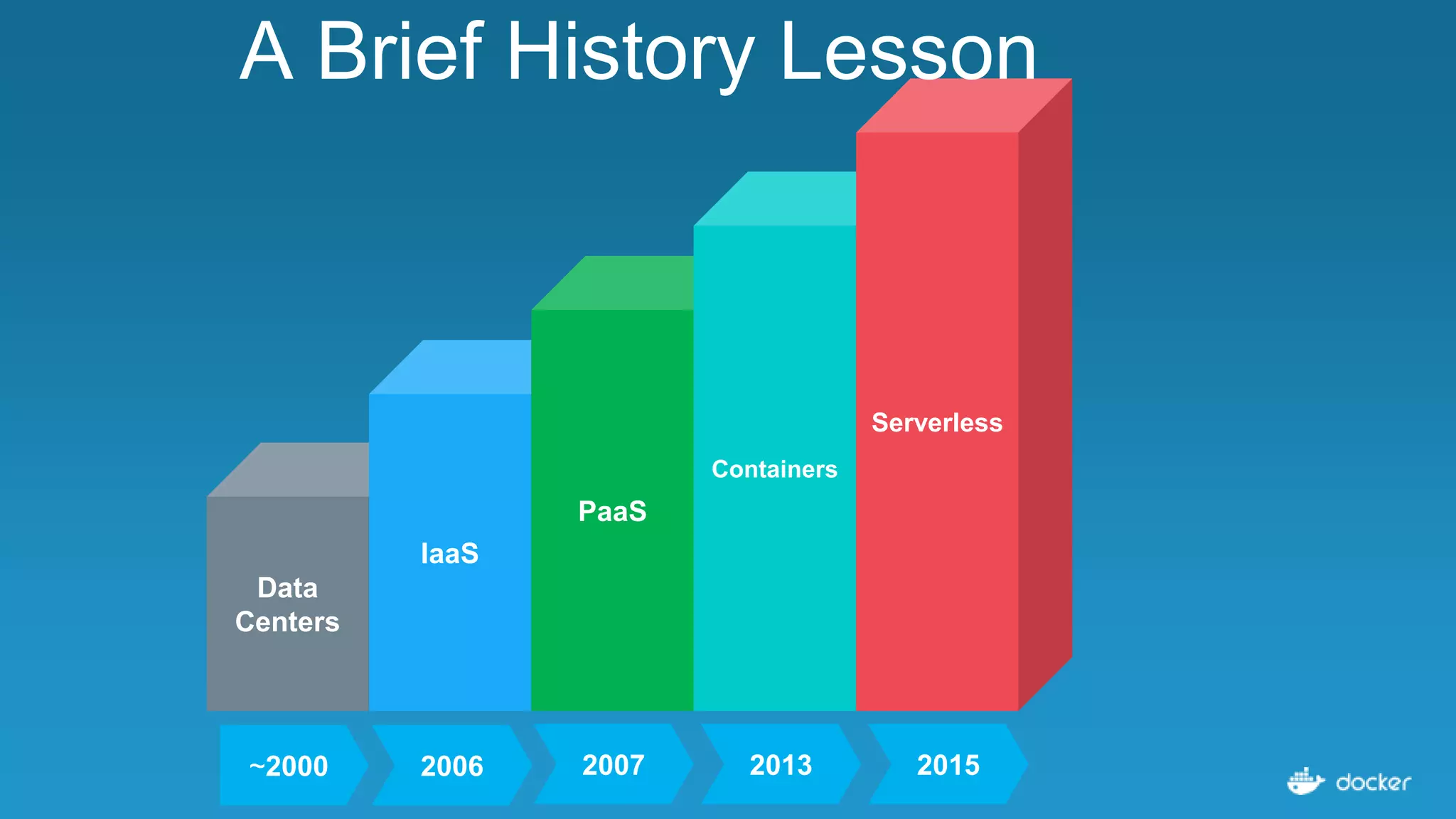
Data
Centers
IaaS
PaaS
Containers
Serverless
A Brief History Lesson
~2000 2006 2007 2013 2015
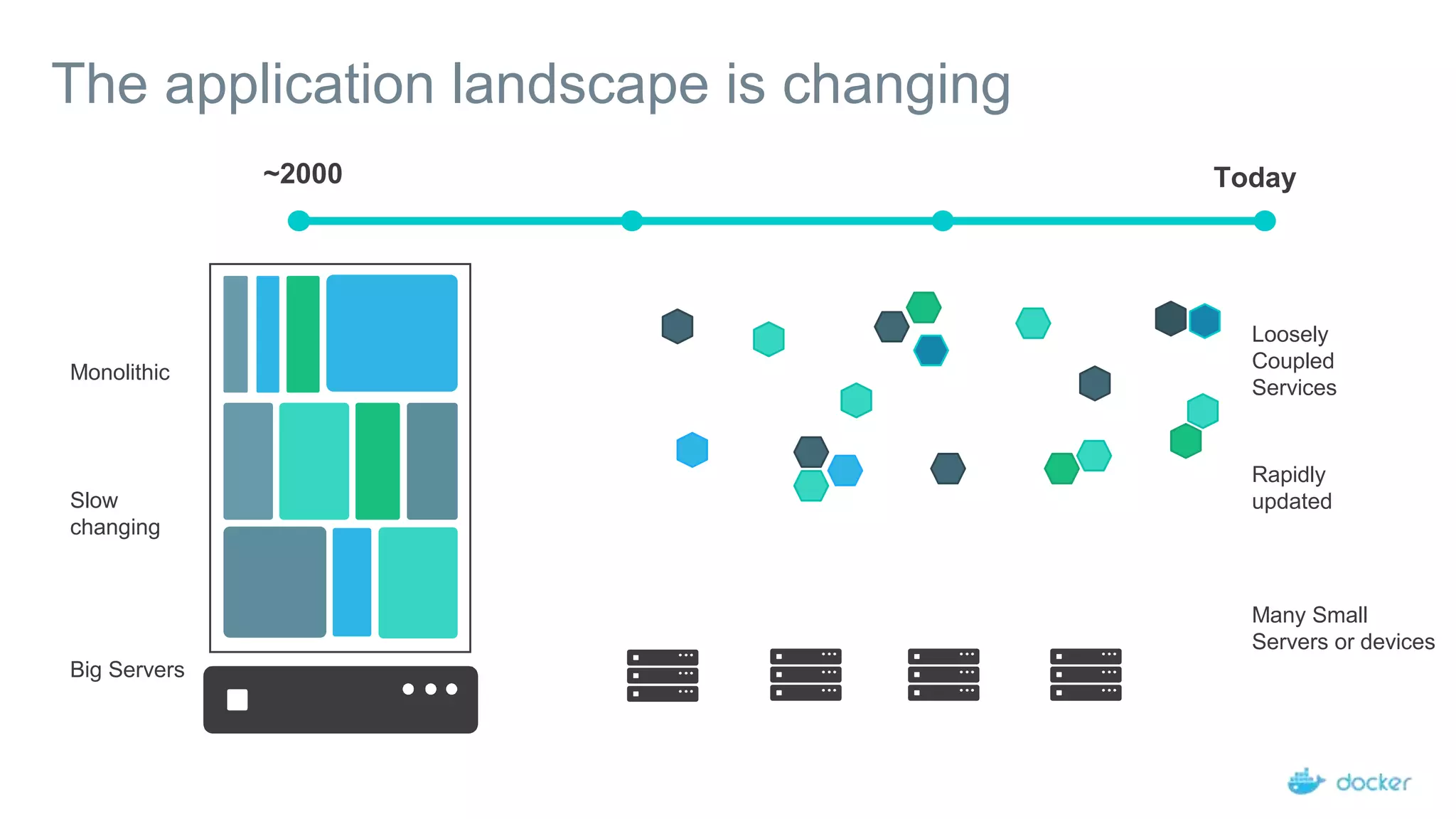
The application landscape is changing
Loosely
Coupled
Services
Many Small
Servers or devices
~2000 Today
Monolithic
Big Servers
Slow
changing
Rapidly
updated
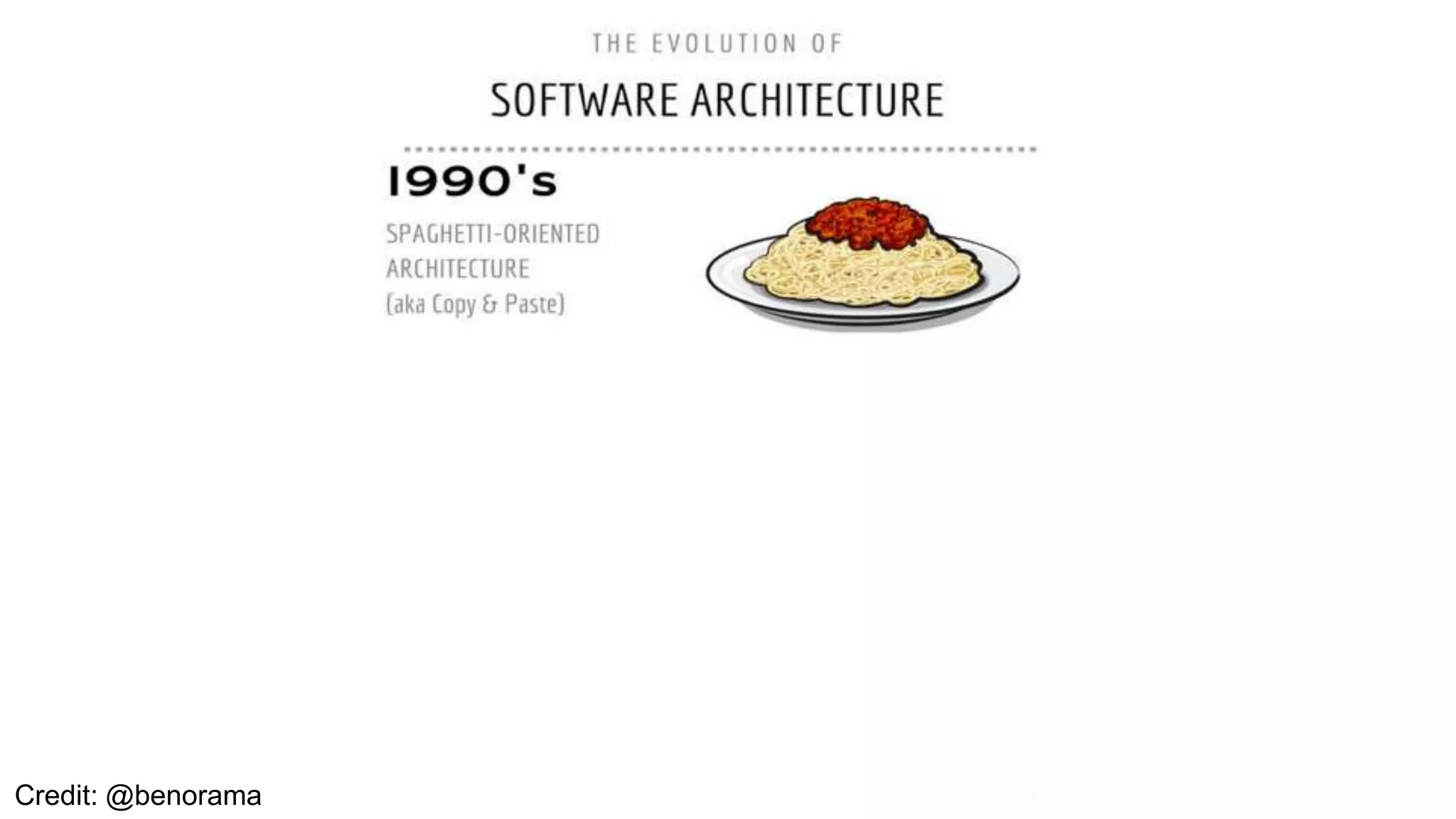
Credit: @benorama
Cloud Native Architecture
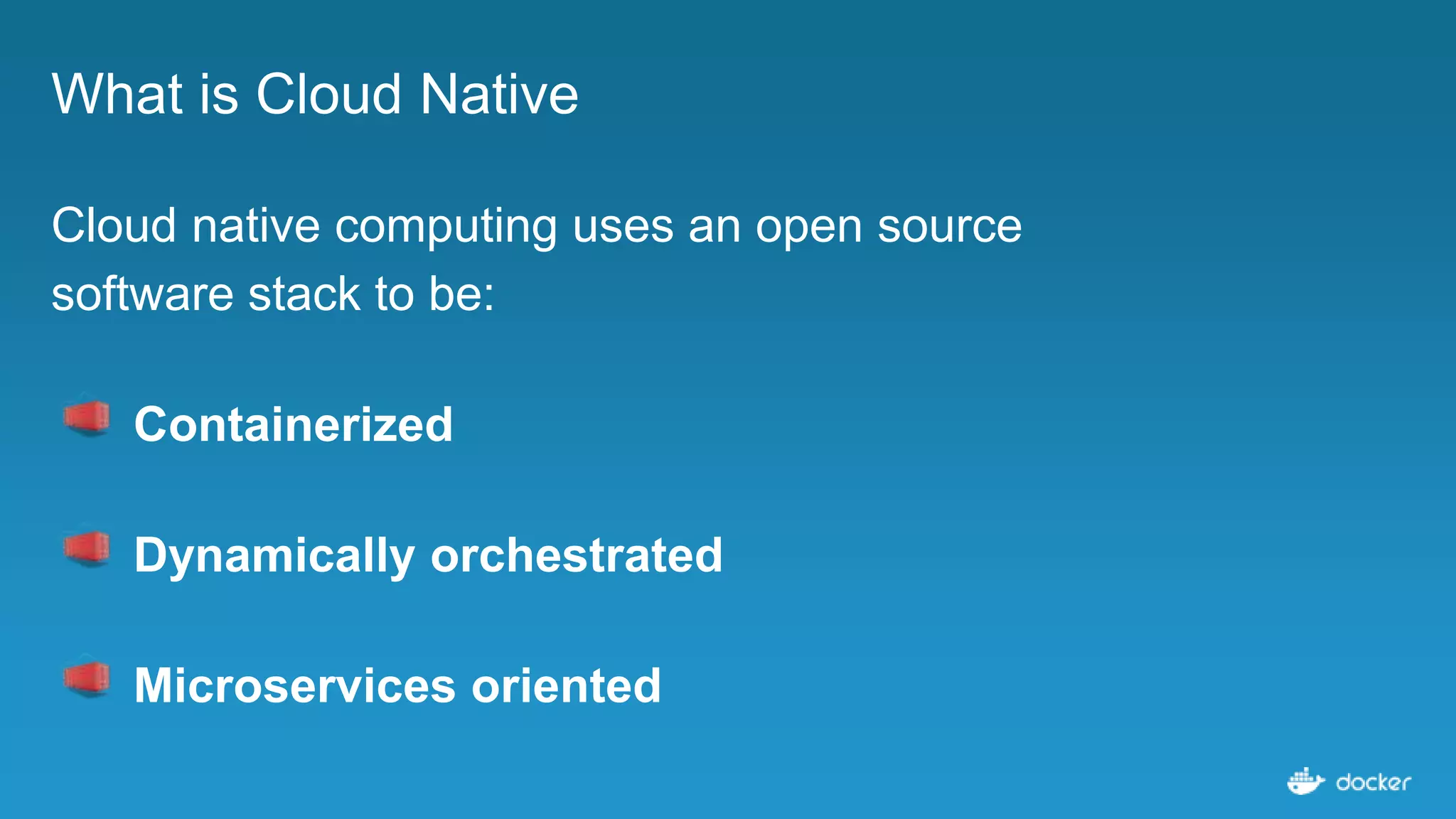
What is Cloud Native
Cloud native computing uses an open source
software stack to be:
Containerized
Dynamically orchestrated
Microservices oriented
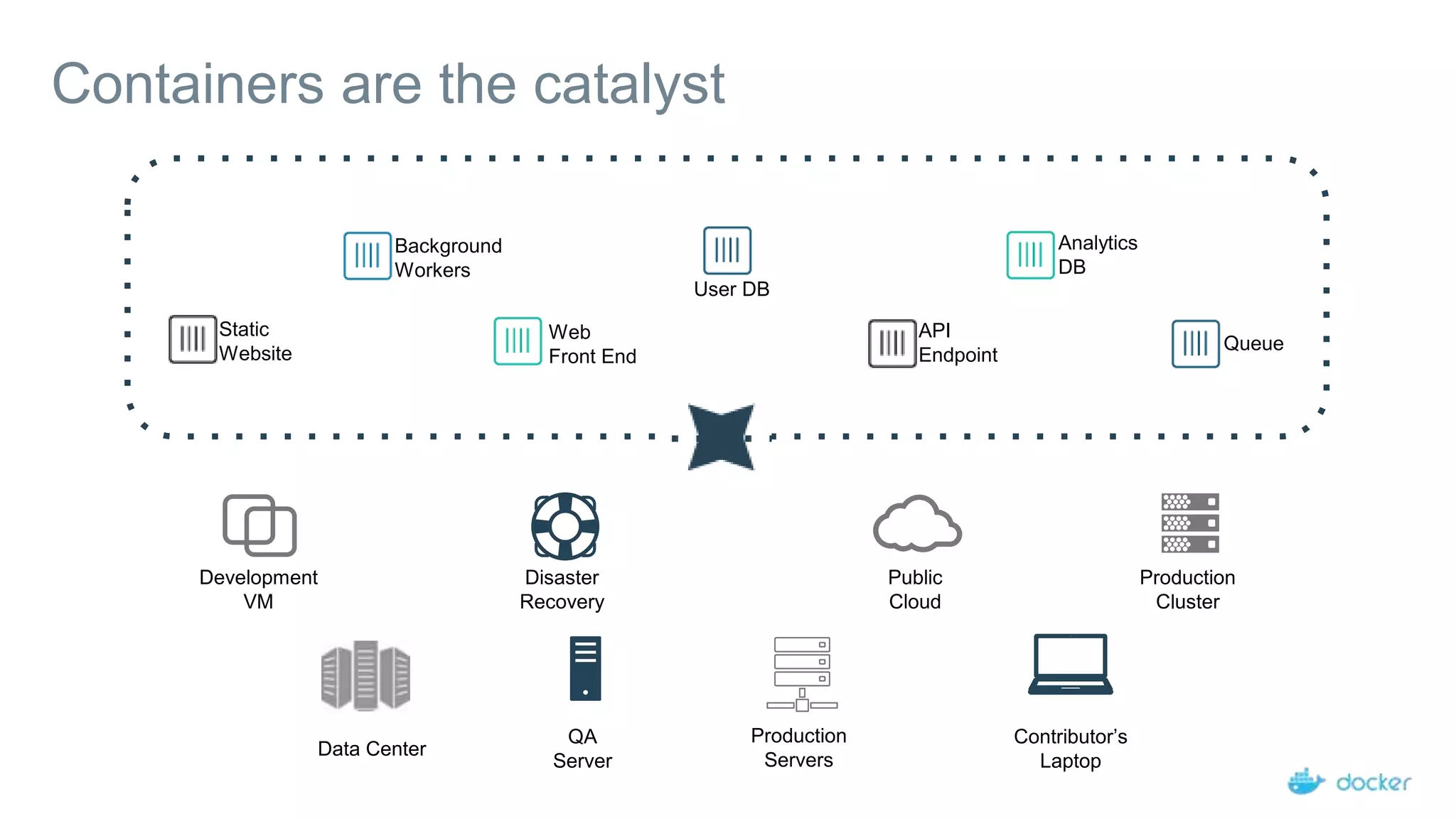
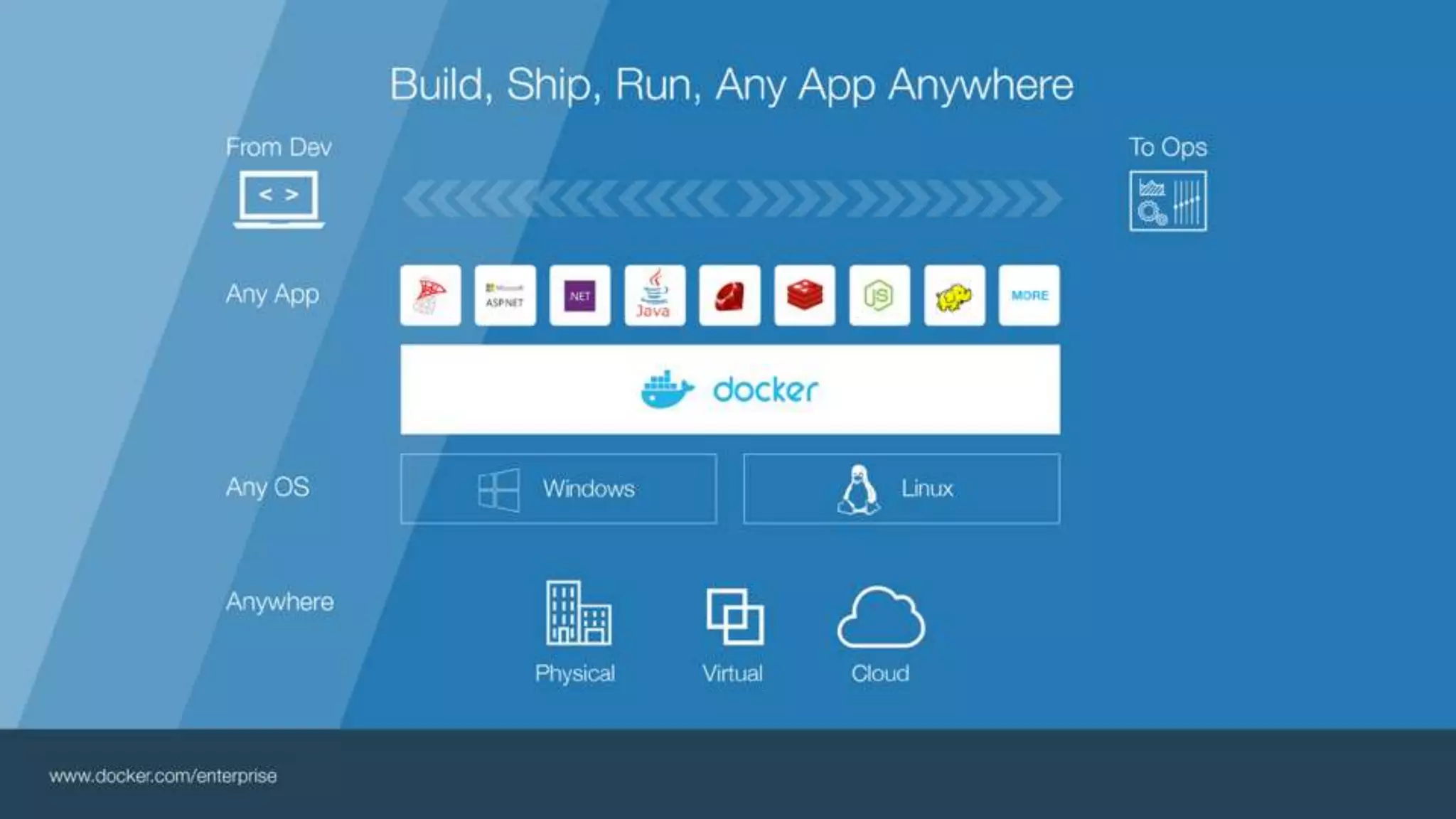
Development
VM
QA
Server
Public
Cloud
Disaster
Recovery
Contributor’s
Laptop
Production
Servers
Production
Cluster
Data Center
Containers are the catalyst
Static
Website
Web
Front End
Background
Workers
User DB
Analytics
DB
Queue
API
Endpoint
Enterprise Adoption
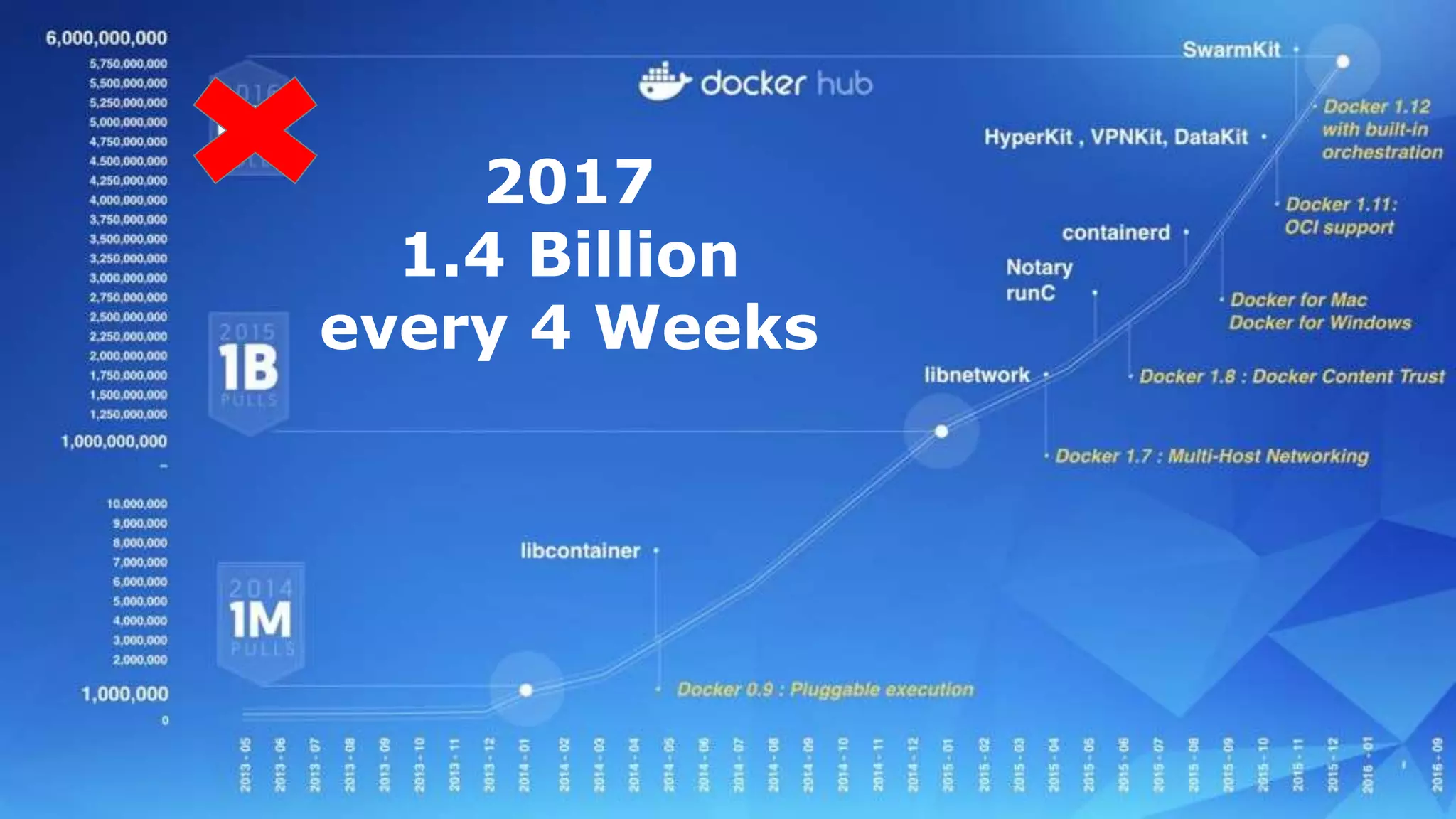
2017
1.4 Billion
every 4 Weeks
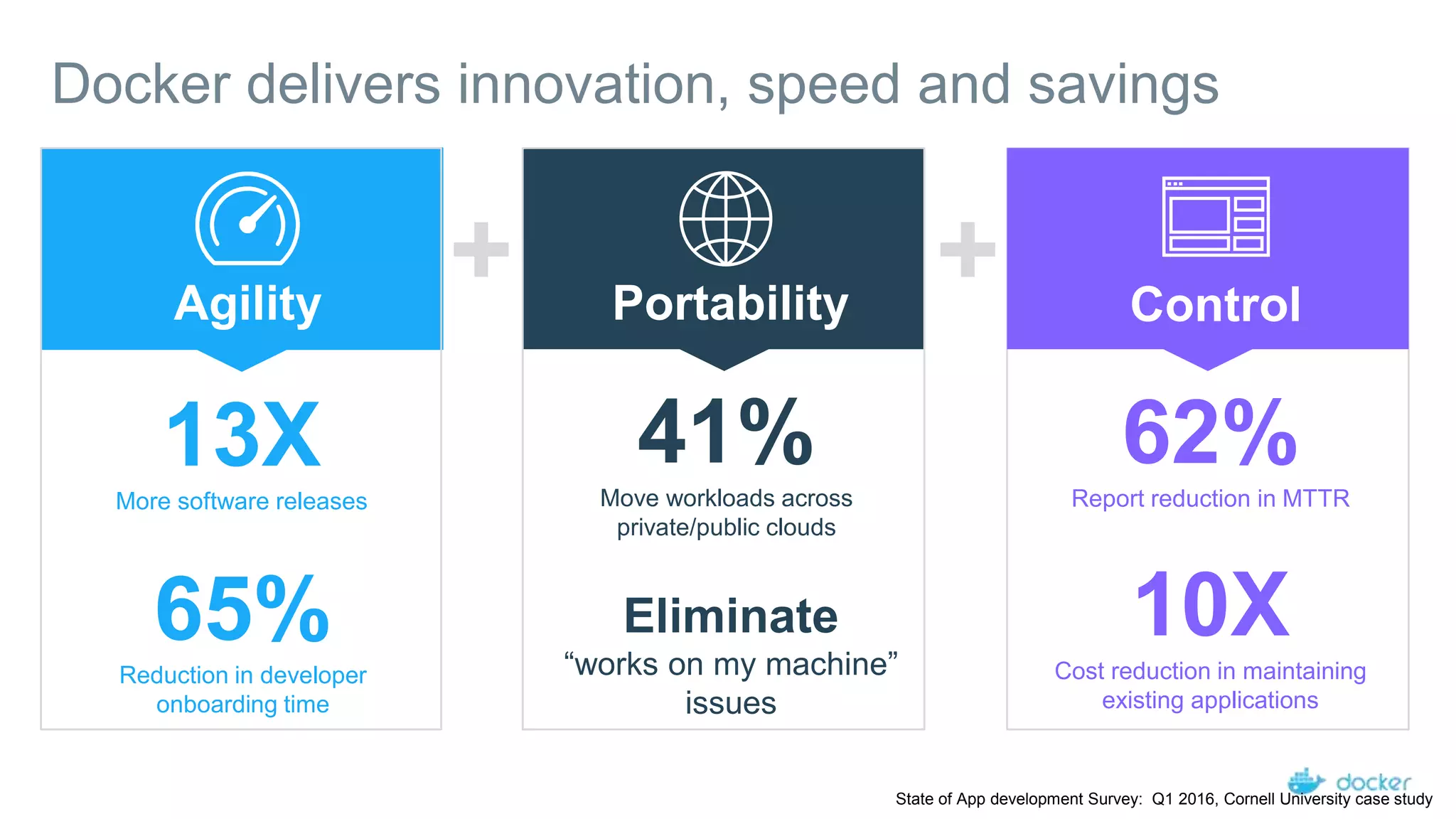
Docker delivers innovation, speed and savings
+ +Agility Portability Control
State of App development Survey: Q1 2016, Cornell University case study
13XMore software releases
62%Report reduction in MTTR
10XCost reduction in maintaining
existing applications
Eliminate
“works on my machine”
issues
41%Move workloads across
private/public clouds
65%Reduction in developer
onboarding time
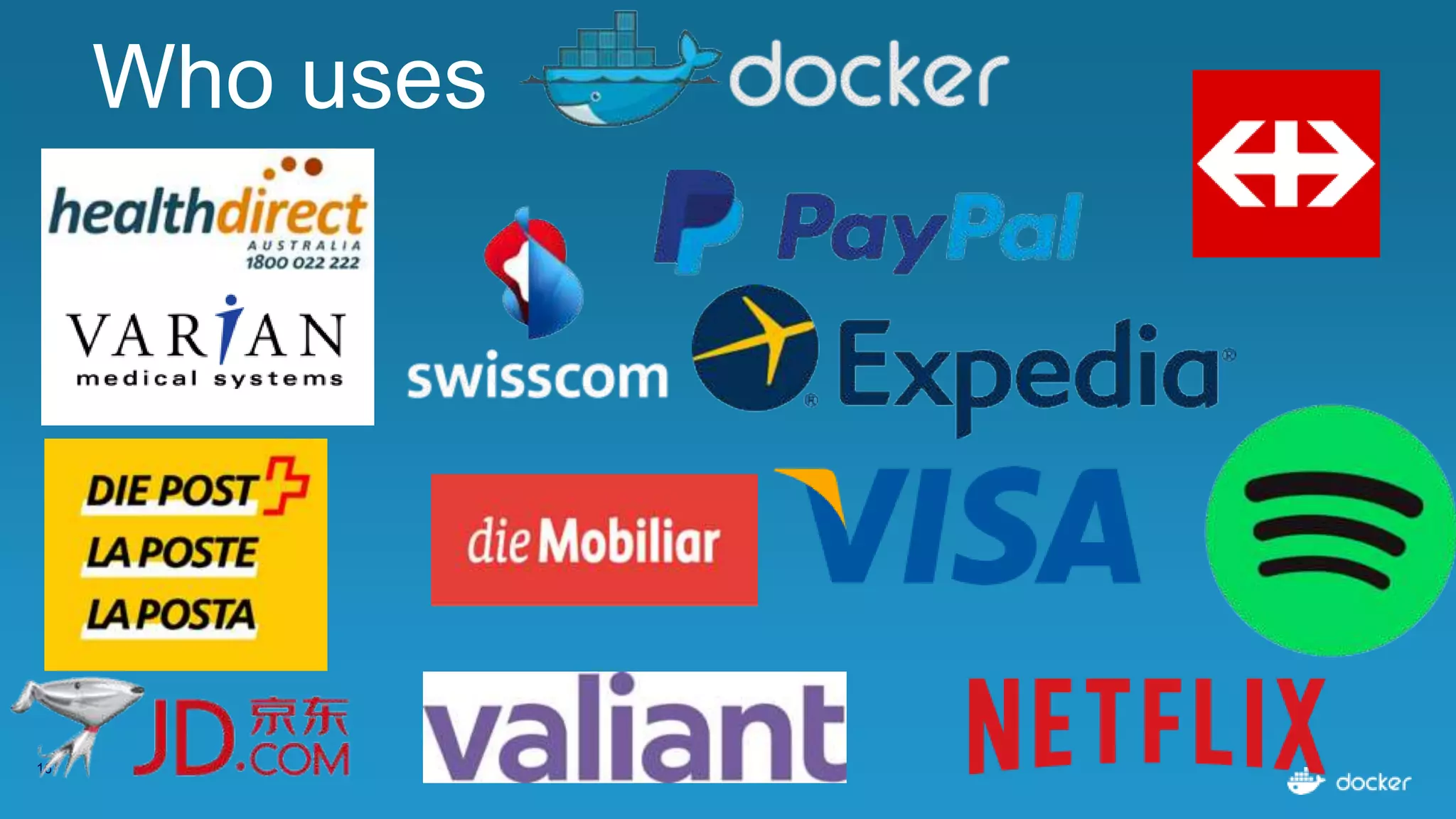
Who uses
16
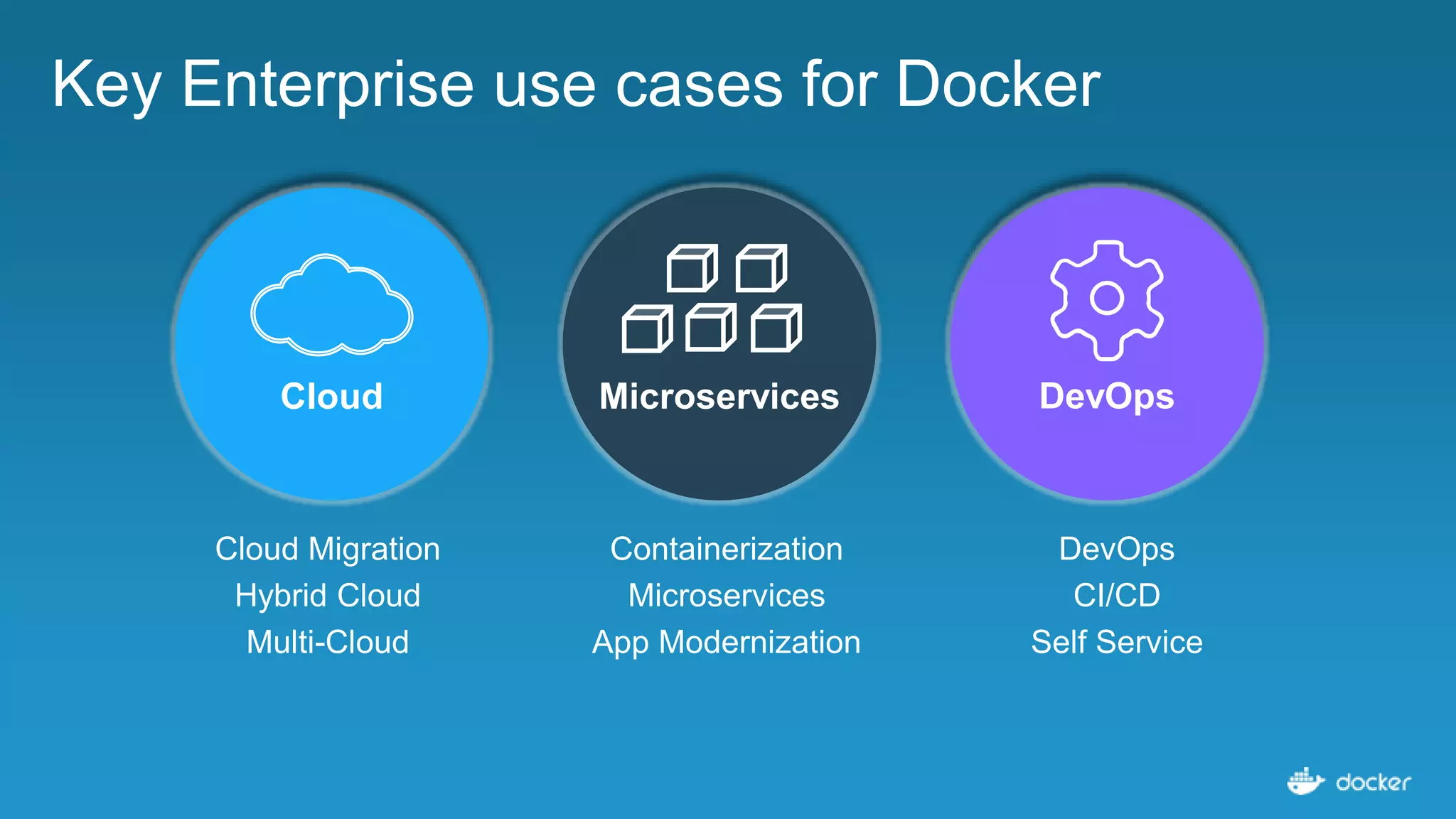
Key Enterprise use cases for Docker
Cloud Microservices
Cloud Migration
Hybrid Cloud
Multi-Cloud
Containerization
Microservices
App Modernization
DevOps
CI/CD
Self Service
DevOps
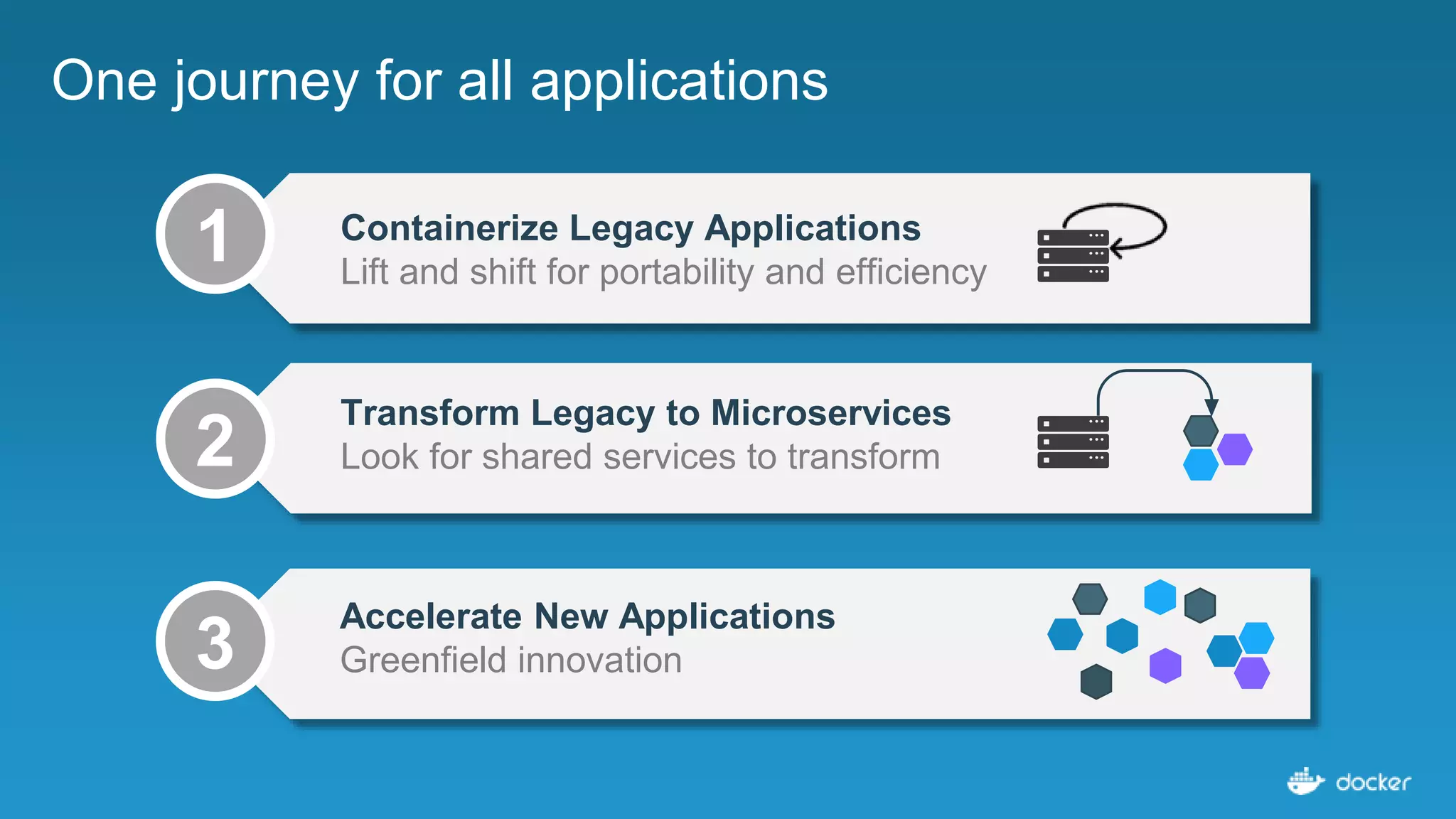
One journey for all applications
1 Containerize Legacy Applications
Lift and shift for portability and efficiency
2
3
Transform Legacy to Microservices
Look for shared services to transform
Accelerate New Applications
Greenfield innovation
• Docker Container Adoption
• Orchestration Usage
• Adoption rate nearly quintuple the number of
running containers in production between
their first and tenth month of usage
• https://www.datadoghq.com/docker-adoption/
Enterprise Adoption
Containers vs. VM’s
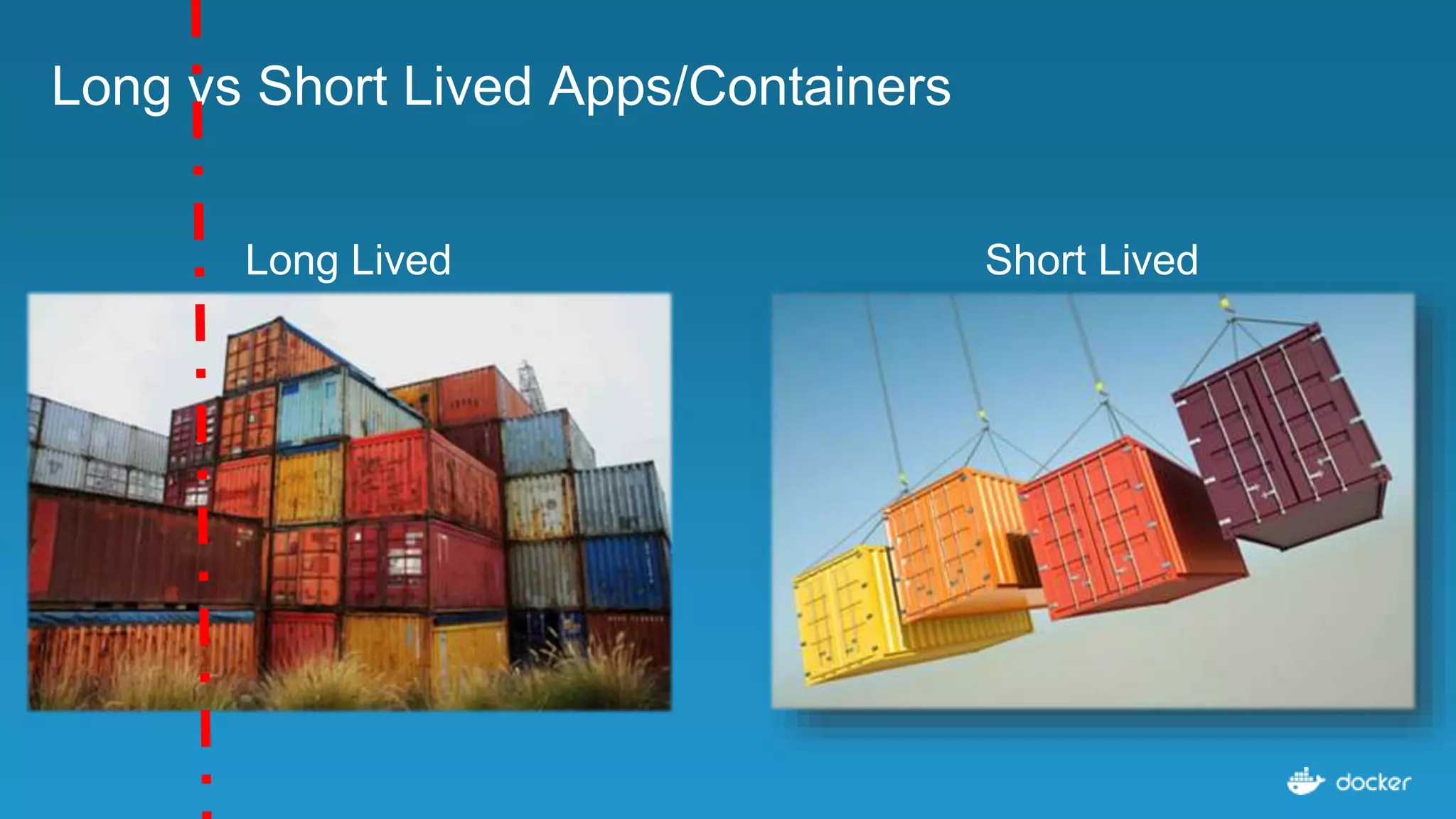
Long vs Short Lived Apps/Containers
Long Lived Short Lived
VM’s
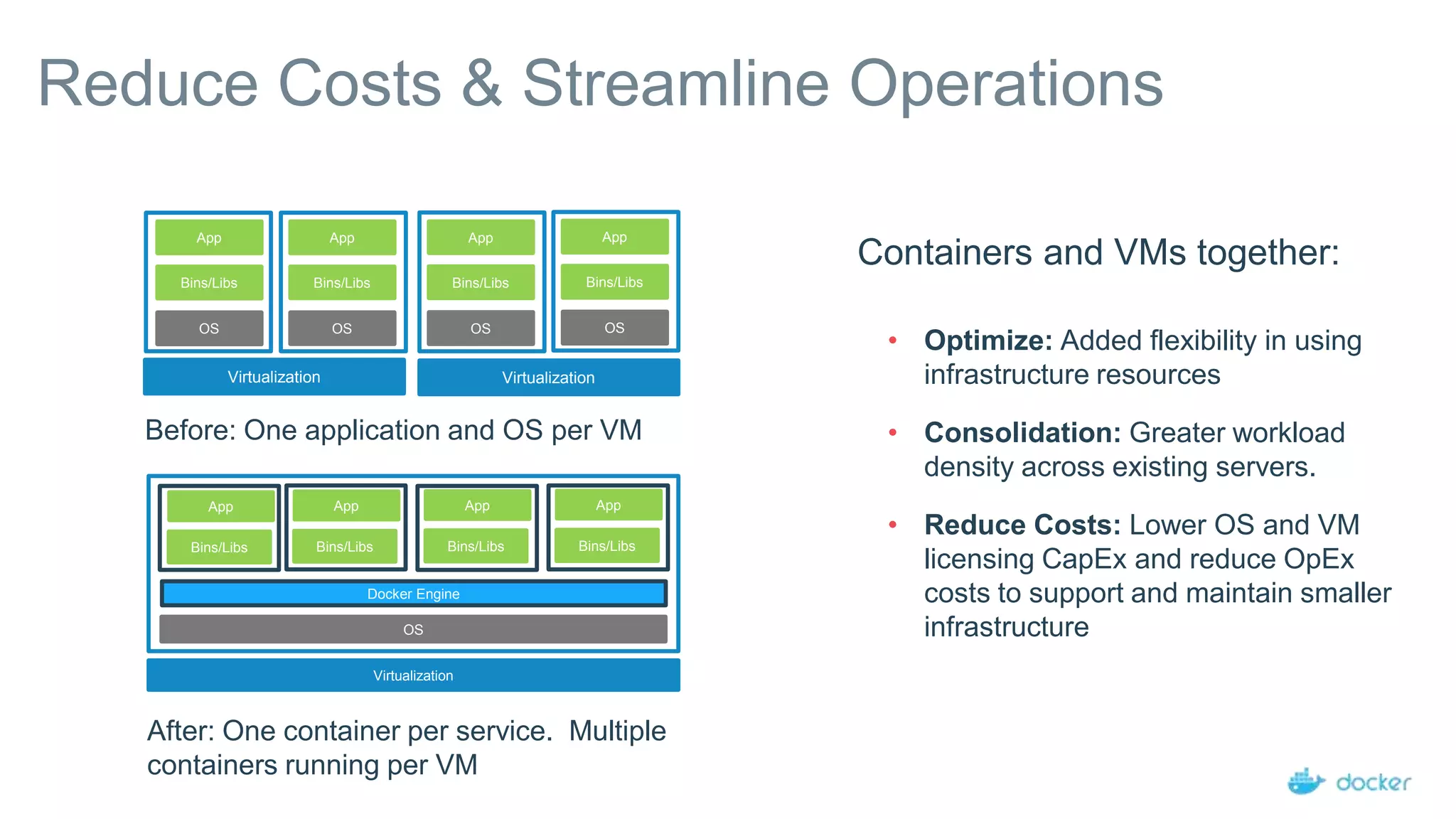
Reduce Costs & Streamline Operations
Containers and VMs together:
• Optimize: Added flexibility in using
infrastructure resources
• Consolidation: Greater workload
density across existing servers.
• Reduce Costs: Lower OS and VM
licensing CapEx and reduce OpEx
costs to support and maintain smaller
infrastructure
Before: One application and OS per VM
After: One container per service. Multiple
containers running per VM
Virtualization
Bins/Libs
App
OS
Bins/Libs
App
OS
Bins/Libs
App
OS
Virtualization
Bins/Libs
App
OS
Virtualization
OS
Bins/Libs
App
Docker Engine
Bins/Libs
App
Bins/Libs
App
Bins/Libs
App
Docker & DevOps
Portability: Frictionless across environments
Container Separation
Dan the Developer
Worries about what’s “Inside the
Container”
- Code
- Libraries
- Package Manager
- Data
All the servers look the same
Oscar the Ops Guy
Worries about what’s
“Outside the Container”
- Logging
- Monitoring
- Networking
All containers work the same way
(Start, Stop, etc)
Docker & Swisscom
VM VM VM
Docker Architecture
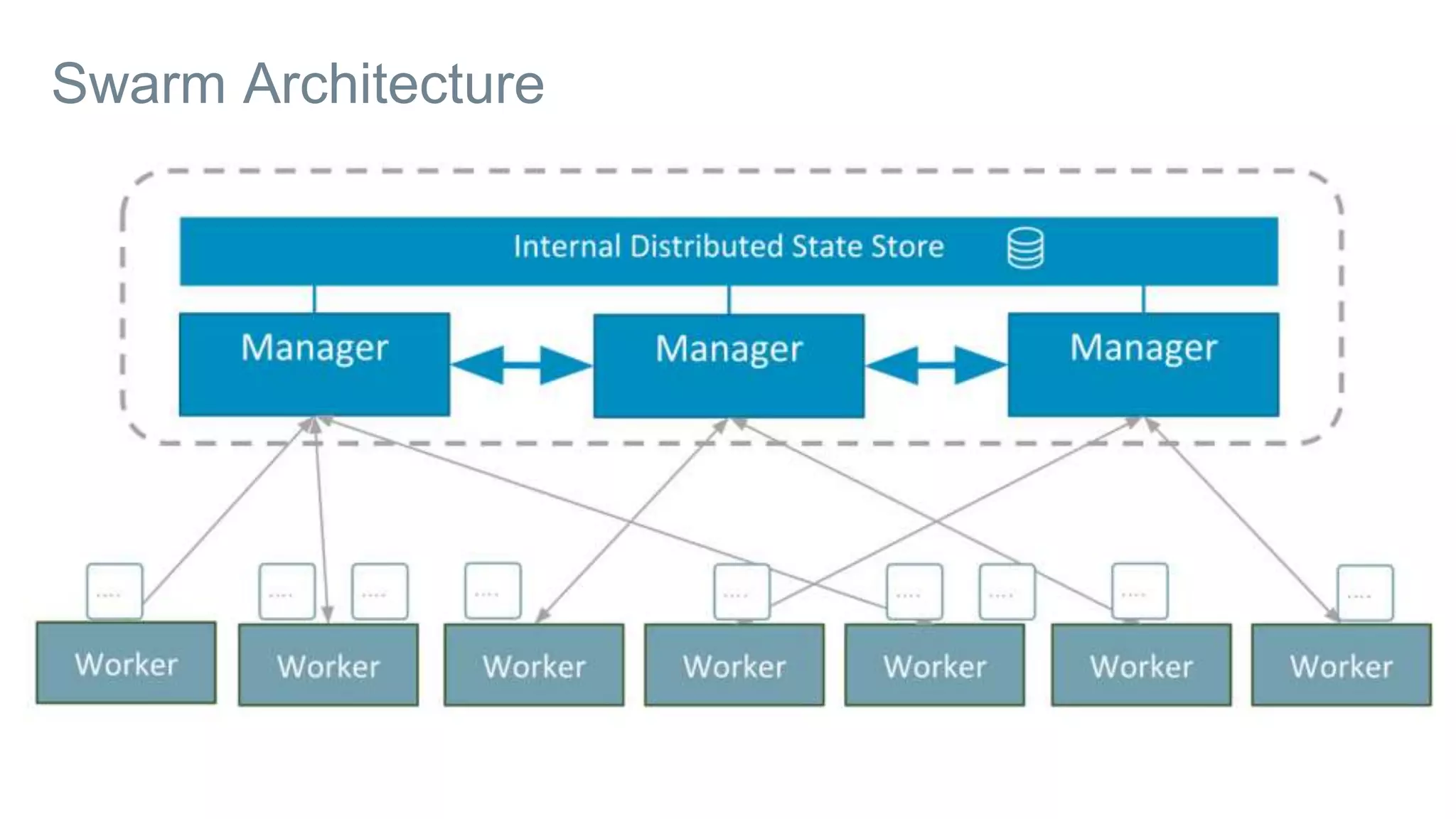
Swarm Architecture
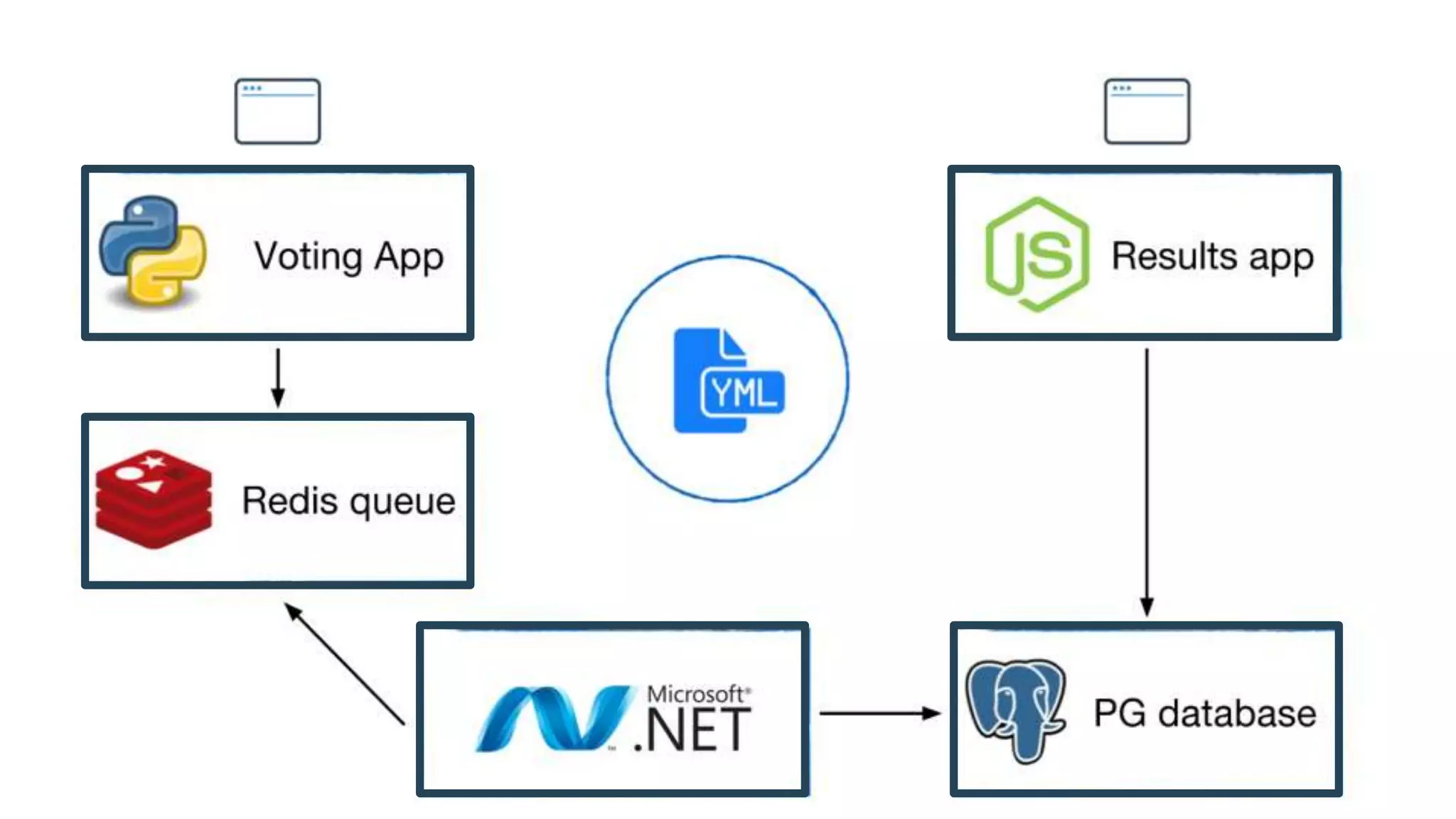
Deployment
Let’s have a
look:
DEMO
Future == Serverless
Serverless is made of Servers!
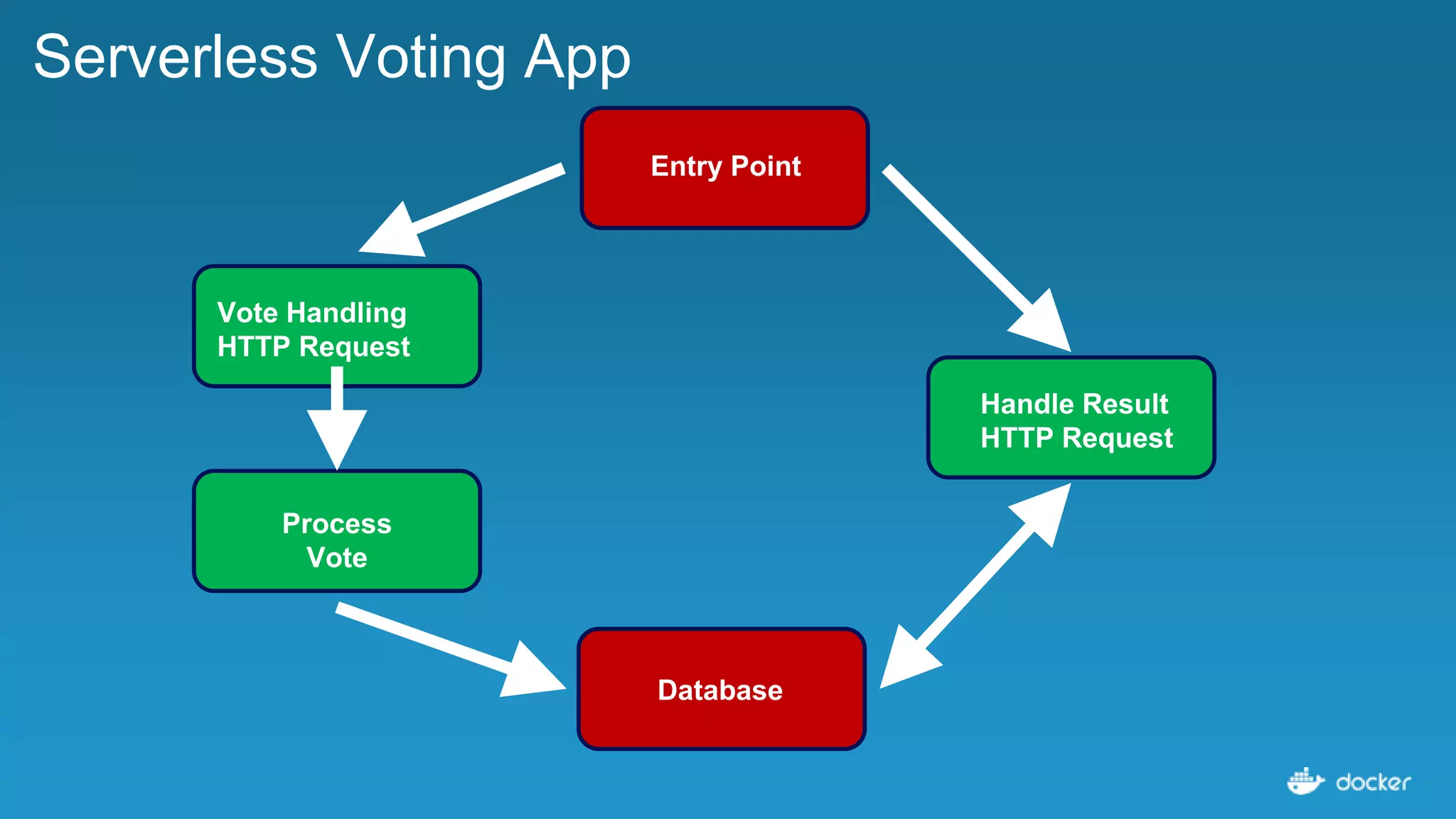
Database
Entry
Point
Entry Point
Vote Handling
HTTP Request
Process
Vote
Handle Result
HTTP Request
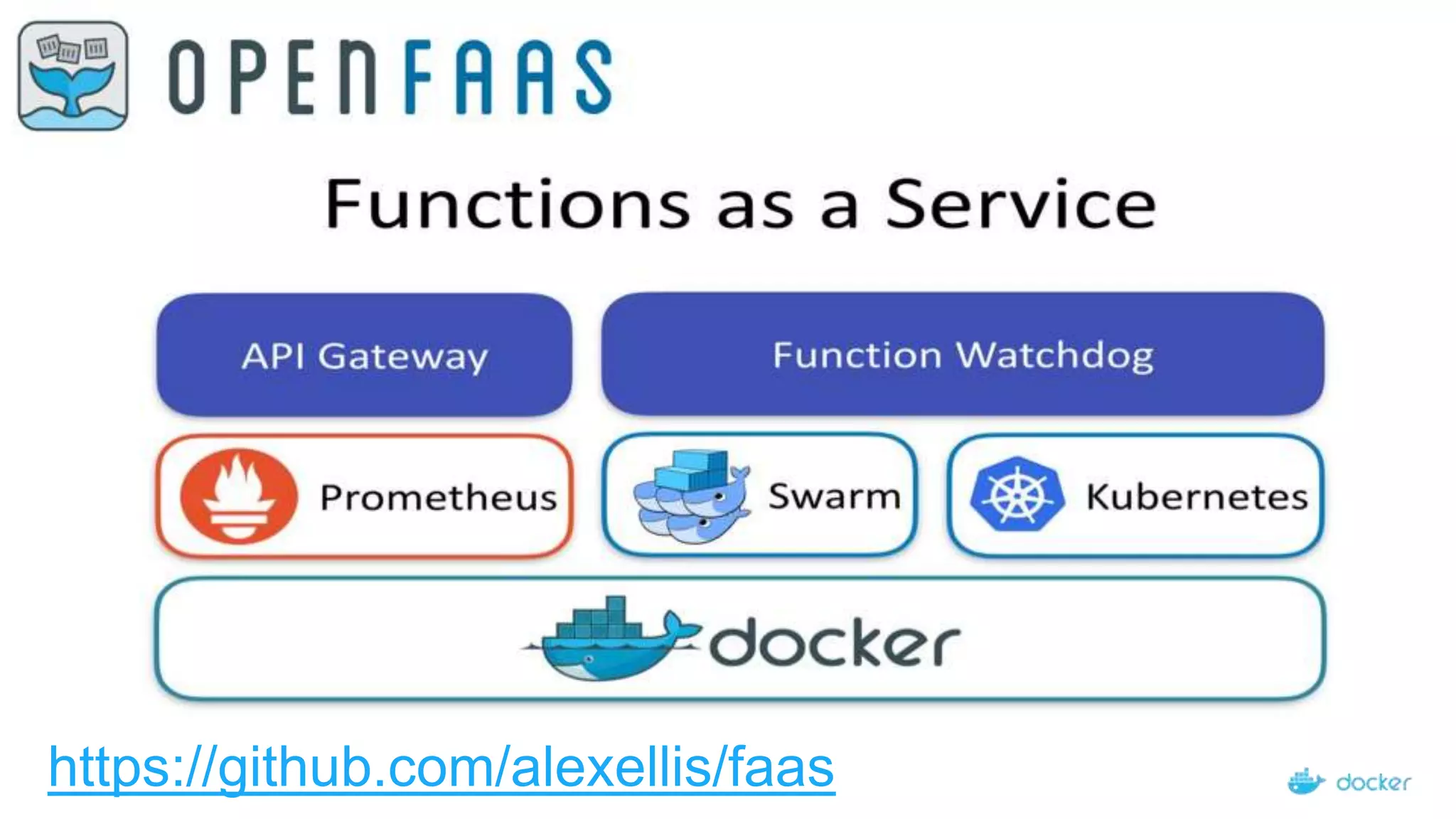
Serverless Voting App
https://github.com/alexellis/faas
Container Considerations
Security
Logging
Monitoring
Failures & Fixes at Speed
Docker Resources
@idomyowntricks / brianchristner.io / 56K.Cloud
PWD - http://play-with-docker.com
The Best Docker Resource –
http://veggiemonk.github.io/awesome-docker/
My Docker Projects –
https://github.com/vegasbrianc
Cloud Native & Docker

Cloud Native & Docker