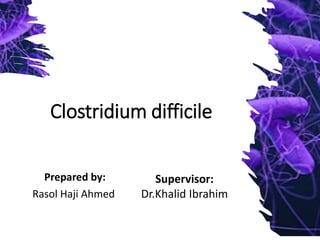
Clostridium difficile
Prepared by:
Rasol Haji Ahmed
Supervisor:
Dr.Khalid Ibrahim
outline
• Introduction
• Case and Transmission
• Pathogen
• Diseases and Complications
• Symptoms
• Prevention
• Diagnosis
Introduction
• Clostridium difficile is a Gram-positive, spore-
forming anaerobic bacillus.
• Most common cause of nosocomial diarrhea.
• Rate and severity of C. difficile-associated diarrhea
(CDAD) increasing.
• New strain of C.difficile with increased resistance
and virulence identified.
Cause and Transmission
• C. difficile bacteria can be found throughout the
environment - in soil, air, water, and human and
animal feces.
• Use of broad-spectrum antibiotics, antiviral,
antifungal, and chemotherapy drugs eliminates the
“helpful” bacteria
• Transmitted via the fecal-oral route in the
vegetative state or spores
• Rapidly multiplies and produces toxins
Pathogen
Pathogen
Diseases and Complications
• (CDAD)
• (PMC)
• Dehydration
• Kidney failure
• Bowel perforation
• Toxic megacolon
• Death
Symptoms
• Watery diarrhea
• Abdominal pain
• Fever Nausea
• Blood and pus in stool
• Foul stool odor
• Dehydration
• Weight loss
Diagnosis
• Enzyme immunoassay kits (EIA)
• Endoscopy or colonoscopy
• Computerized tomography scan
Prevention
• Hospital staff should wear disposable
gloves, gowns, wash hand sIsolate infected
patients Disinfect surfaces and
instruments with chlorine bleach Only use
antibiotics when necessary
Thank You

Clostridium difficile pptx - Rasol Sindy

  • 1.
    Clostridium difficile Prepared by: RasolHaji Ahmed Supervisor: Dr.Khalid Ibrahim
  • 2.
    outline • Introduction • Caseand Transmission • Pathogen • Diseases and Complications • Symptoms • Prevention • Diagnosis
  • 3.
    Introduction • Clostridium difficileis a Gram-positive, spore- forming anaerobic bacillus. • Most common cause of nosocomial diarrhea. • Rate and severity of C. difficile-associated diarrhea (CDAD) increasing. • New strain of C.difficile with increased resistance and virulence identified.
  • 4.
    Cause and Transmission •C. difficile bacteria can be found throughout the environment - in soil, air, water, and human and animal feces. • Use of broad-spectrum antibiotics, antiviral, antifungal, and chemotherapy drugs eliminates the “helpful” bacteria • Transmitted via the fecal-oral route in the vegetative state or spores • Rapidly multiplies and produces toxins
  • 5.
  • 6.
  • 7.
    Diseases and Complications •(CDAD) • (PMC) • Dehydration • Kidney failure • Bowel perforation • Toxic megacolon • Death
  • 8.
    Symptoms • Watery diarrhea •Abdominal pain • Fever Nausea • Blood and pus in stool • Foul stool odor • Dehydration • Weight loss
  • 9.
    Diagnosis • Enzyme immunoassaykits (EIA) • Endoscopy or colonoscopy • Computerized tomography scan
  • 10.
    Prevention • Hospital staffshould wear disposable gloves, gowns, wash hand sIsolate infected patients Disinfect surfaces and instruments with chlorine bleach Only use antibiotics when necessary
  • 11.