B1
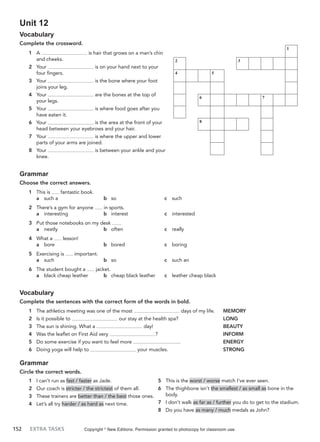
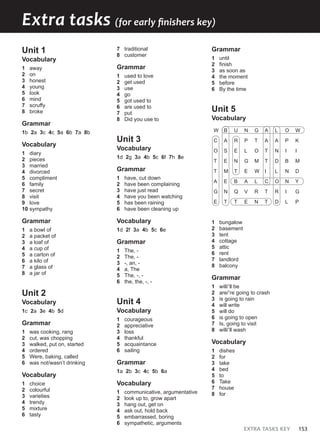
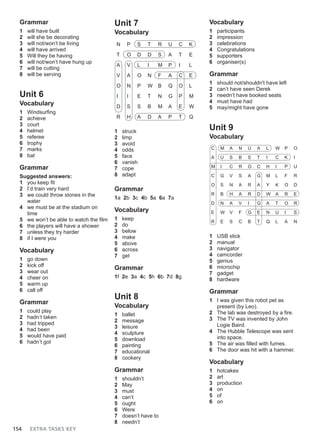
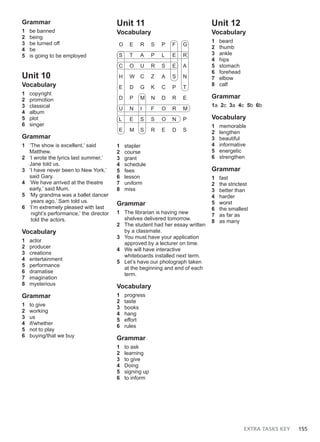
Katrina Gormley
Develop students’ English with Close-Up, a new three-level course
for B1, B1+ and B2 students. Close-Up brings English to life
through spectacular National Geographic photography and facts
carefully selected to appeal to the inquisitive minds of students.
They will discover real places, real people and real English through
a ‘Close-Up’ on the world around them.
Key features
• Unit plans at the beginning of each lesson
• Detailed lesson plans with clear instructions and the key to all
tasks from the Student’s Book
• A section of photocopiable support material at the back which
contains extra tasks for early finishers
• Recording Scripts with justification for the answers to all
listening tasks underlined
• The key and recording scripts for the Close-Up B1 Workbook
Close-Up B1 consists of:
Close-Up B1 Student’s Book with DVD
Close-Up B1 Workbook with Audio CD
Close-Up B1 Teacher’s Book
Close-Up B1 Teacher’s Resource Pack
Close-Up B1 Class Audio CDs
Close-Up B1 Interactive Whiteboard Software
TEACHER’S BOOK B1
Up
Close-
TEACHER’S
BOOK
Katrina
Gormley
Close-Up
B1
National Geographic Learning, a part of Cengage Learning, is a leading provider
of materials for English language teaching and learning throughout the world.
Visit ngl.cengage.com
Up
TEACHER’S BOOK
Close-
TEACHER’S BOOK
B1
Katrina Gormley
Up
Close-
Australia • Brazil • Japan • Korea • Mexico • Singapore • Spain • United Kingdom • United States
Printed in the United Kingdom by CPI, Antony Rowe
Print Number: 05 Print Year: 2014
Close-Up B1 Teacher’s Book
Katrina Gormley
Publisher: Jason Mann
Director of Content Development: Sarah Bideleux
Development Editor: Katharine Massey
Media Editor: Liz Hammond
Art Director: Natasa Arsenidou
Text/Cover Designer: Natasa Arsenidou
Compositor: InPraxis
National Geographic Editorial Liaison:
Leila Hishmeh
Acknowledgements
Recording and production at GFS-PRO Studio by
George Flamouridis
ISBN: 978-1-111-83456-2
National Geographic Learning
Cheriton House, North Way, Andover, Hampshire, SP10 5BE
United Kingdom
Cengage Learning is a leading provider of customized learning solutions
with office locations around the globe, including Singapore, the United
Kingdom, Australia, Mexico, Brazil and Japan. Locate your local office at:
international.cengage.com/region
Cengage Learning products are represented in Canada by
Nelson Education, Ltd.
Visit National Geographic Learning online at ngl.cengage.com
Visit our corporate website at www.cengage.com
For permission to use material from this text or product,
submit all requests online at www.cengage.com/permissions
Further permissions questions can be emailed to
permissionrequest@cengage.com
© 2012 National Geographic Learning, as part of Cengage Learning
ALL RIGHTS RESERVED. No part of this work covered by the copyright
herein may be reproduced, transmitted, stored, or used in any form
or by any means graphic, electronic, or mechanical, including but not
limited to photocopying, recording, scanning, digitizing, taping, Web
distribution, information networks, or information storage and retrieval
systems, except as permitted under Section 107 or 108 of the 1976
United States Copyright Act, without the prior written permission of the
publisher.
Photo credits
Cover image: (front cover) Drussawin Leepaisal/NGIC, (m) Kalpana Chatterjee/Your Shot/NGIC, (back cover) Shutterstock
NGIC = National Geographic Image Collection
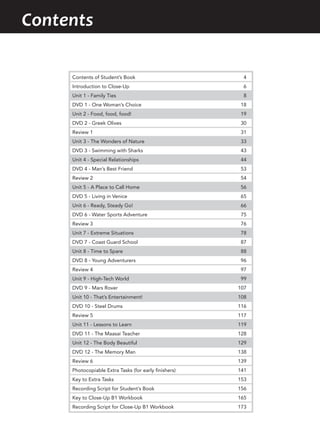
Contents
Contents of Student’s Book 4
Introduction to Close-Up 6
Unit 1 - Family Ties 8
DVD 1 - One Woman’s Choice 18
Unit 2 - Food, food, food! 19
DVD 2 - Greek Olives 30
Review 1 31
Unit 3 - The Wonders of Nature 33
DVD 3 - Swimming with Sharks 43
Unit 4 - Special Relationships 44
DVD 4 - Man’s Best Friend 53
Review 2 54
Unit 5 - A Place to Call Home 56
DVD 5 - Living in Venice 65
Unit 6 - Ready, Steady Go! 66
DVD 6 - Water Sports Adventure 75
Review 3 76
Unit 7 - Extreme Situations 78
DVD 7 - Coast Guard School 87
Unit 8 - Time to Spare 88
DVD 8 - Young Adventurers 96
Review 4 97
Unit 9 - High-Tech World 99
DVD 9 - Mars Rover 107
Unit 10 - That’s Entertainment! 108
DVD 10 - Steel Drums 116
Review 5 117
Unit 11 - Lessons to Learn 119
DVD 11 - The Maasai Teacher 128
Unit 12 - The Body Beautiful 129
DVD 12 - The Memory Man 138
Review 6 139
Photocopiable Extra Tasks (for early finishers) 141
Key to Extra Tasks 153
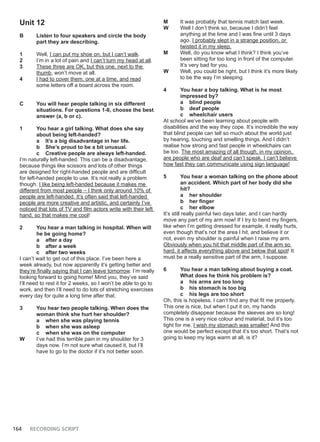
Recording Script for Student’s Book 156
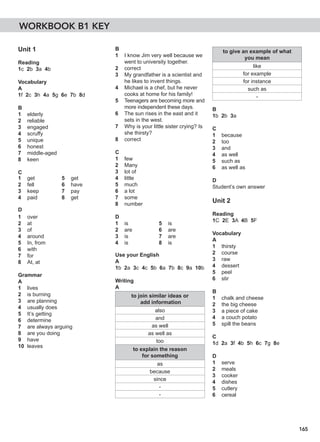
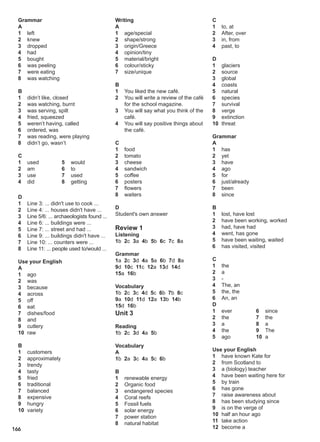
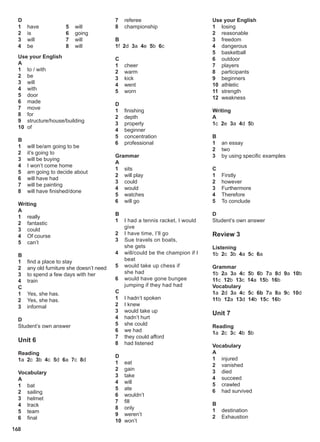
Key to Close-Up B1 Workbook 165
Recording Script for Close-Up B1 Workbook 173
4 CONTENTS
Contents
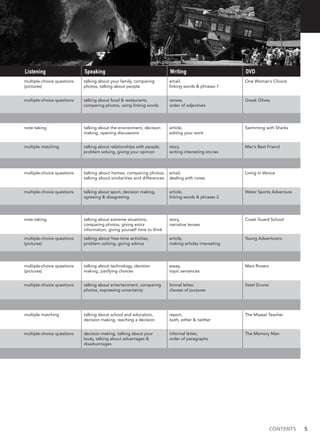
UNIT Reading Vocabulary Grammar
1 Family Ties
p 5-16
Meet the ancestors;
multiple-choice questions
family-related words,
collocations & expressions,
prepositions
present simple, present continuous,
stative verbs, countable &
uncountable nouns, quantifiers
2 Food, Food, Food!
p 17-28
An Oil for Life; missing
sentences
food-related words, phrasal
verbs, word formation
past simple, past continuous, used to
& would, be used to & get used to
REVIEW 1: Vocabulary & Grammar p 29-30
3 The Wonders of Nature
p 31-42
Cities Beneath the Sea;
multiple-choice questions
environment-related words,
prepositions, collocations &
expressions
present perfect simple, present
perfect continuous, articles
4 Special Relationships
p 43-54
Dogs in a human world;
multiple matching
relationship-related words,
word formation, phrasal verbs
relative clauses, temporals
REVIEW 2: Vocabulary & Grammar p 55-56
5 A Place to Call Home
p 57-68
The World’s Coolest
Skyscraper; missing
sentences
home-related words,
prepositions, collocations &
expressions
future simple, be going to, future
continuous, future perfect simple
6 Ready, Steady, Go!
p 69-80
Advertisements, multiple-
choice questions
sport-related words, phrasal
verbs, word formation
conditionals, wish & if only
REVIEW 3: Vocabulary & Grammar p 81-82
7 Extreme Situations
p 83-94
Survival in the Andes;
multiple-choice questions
words related to extreme
situations, prepositions,
collocations & expressions
past perfect simple, past perfect
continuous, question tags, subject &
object questions, negative questions
8 Time to Spare
p 95-106
Deep into darkness;
missing sentences
words related to free time,
word formation, phrasal verbs
modals & semi-modals, modals
perfect
REVIEW 4: Vocabulary & Grammar p 107-108
9 High-Tech World
p 109-120
They’re Watching You;
multiple-choice questions
technology-related words,
prepositions, collocations &
expressions
passive voice: tenses, by & with,
gerunds, infinitives & modal verbs
10 That’s Entertainment
p 121-132
Music to my Ears;
multiple matching
entertainment-related words,
phrasal verbs, word formation
reported speech: statements,
questions, commands, requests &
reporting verbs
REVIEW 5: Vocabulary & Grammar p 133-134
11 Lessons to Learn
p 135-146
Advertisements; multiple-
choice questions
education-related words,
collocations & expressions,
prepositions
causative, gerunds, infinitives
12 The Body Beautiful
p 147-158
Your Amazing Brain;
multiple-choice questions
body-related words, phrasal
verbs, word formation
order of adjectives, adjectives ending
in –ed and –ing, adverbs, so & such,
comparison of adjectives and adverbs
REVIEW 6: Vocabulary & Grammar p 159-160
Grammar Reference: p 161-173
Irregular Verbs: p 174-175
Writing Reference: p 176-183
Speaking Reference: p 184
Collocations and Expressions: p 185
Prepositions: p 186
Phrasal Verbs: p 187
Speaking Information: p 188
CONTENTS 5
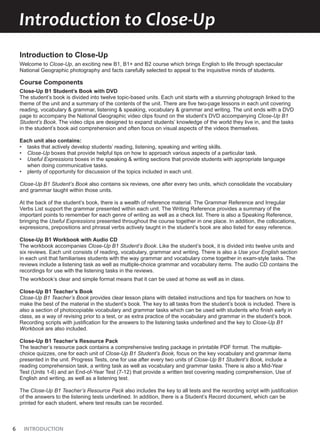
Listening Speaking Writing DVD
multiple-choice questions
(pictures)
talking about your family, comparing
photos, talking about people
email,
linking words & phrases 1
One Woman’s Choice
multiple-choice questions talking about food & restaurants,
comparing photos, using linking words
review,
order of adjectives
Greek Olives
note-taking talking about the environment, decision
making, opening discussions
article,
editing your work
Swimming with Sharks
multiple matching talking about relationships with people,
problem solving, giving your opinion
story,
writing interesting stories
Man’s Best Friend
multiple-choice questions talking about homes, comparing photos,
talking about similarities and differences
email,
dealing with notes
Living in Venice
multiple-choice questions talking about sport, decision making,
agreeing & disagreeing
article,
linking words & phrases 2
Water Sports Adventure
note-taking talking about extreme situations,
comparing photos, giving extra
information, giving yourself time to think
story,
narrative tenses
Coast Guard School
multiple-choice questions
(pictures)
talking about free-time activities,
problem solving, giving advice
article,
making articles interesting
Young Adventurers
multiple-choice questions
(pictures)
talking about technology, decision
making, justifying choices
essay,
topic sentences
Mars Rovers
multiple-choice questions talking about entertainment, comparing
photos, expressing uncertainty
formal letter,
clauses of purpose
Steel Drums
multiple matching talking about school and education,
decision making, reaching a decision
report,
both, either & neither
The Maasai Teacher
multiple-choice questions decision making, talking about your
body, talking about advantages &
disadvantages
informal letter,
order of paragraphs
The Memory Man
6 INTRODUCTION
Introduction to Close-Up
Welcome to Close-Up, an exciting new B1, B1+ and B2 course which brings English to life through spectacular
National Geographic photography and facts carefully selected to appeal to the inquisitive minds of students.
Course Components
Close-Up B1 Student’s Book with DVD
The student’s book is divided into twelve topic-based units. Each unit starts with a stunning photograph linked to the
theme of the unit and a summary of the contents of the unit. There are five two-page lessons in each unit covering
reading, vocabulary & grammar, listening & speaking, vocabulary & grammar and writing. The unit ends with a DVD
page to accompany the National Geographic video clips found on the student’s DVD accompanying Close-Up B1
Student’s Book. The video clips are designed to expand students’ knowledge of the world they live in, and the tasks
in the student’s book aid comprehension and often focus on visual aspects of the videos themselves.
Each unit also contains:
• tasks that actively develop students’ reading, listening, speaking and writing skills.
• Close-Up boxes that provide helpful tips on how to approach various aspects of a particular task.
• Useful Expressions boxes in the speaking & writing sections that provide students with appropriate language
when doing communicative tasks.
• plenty of opportunity for discussion of the topics included in each unit.
Close-Up B1 Student’s Book also contains six reviews, one after every two units, which consolidate the vocabulary
and grammar taught within those units.
At the back of the student’s book, there is a wealth of reference material. The Grammar Reference and Irregular
Verbs List support the grammar presented within each unit. The Writing Reference provides a summary of the
important points to remember for each genre of writing as well as a check list. There is also a Speaking Reference,
bringing the Useful Expressions presented throughout the course together in one place. In addition, the collocations,
expressions, prepositions and phrasal verbs actively taught in the student’s book are also listed for easy reference.
Close-Up B1 Workbook with Audio CD
The workbook accompanies Close-Up B1 Student’s Book. Like the student’s book, it is divided into twelve units and
six reviews. Each unit consists of reading, vocabulary, grammar and writing. There is also a Use your English section
in each unit that familiarises students with the way grammar and vocabulary come together in exam-style tasks. The
reviews include a listening task as well as multiple-choice grammar and vocabulary items. The audio CD contains the
recordings for use with the listening tasks in the reviews.
The workbook’s clear and simple format means that it can be used at home as well as in class.
Close-Up B1 Teacher’s Book
Close-Up B1 Teacher’s Book provides clear lesson plans with detailed instructions and tips for teachers on how to
make the best of the material in the student’s book. The key to all tasks from the student’s book is included. There is
also a section of photocopiable vocabulary and grammar tasks which can be used with students who finish early in
class, as a way of revising prior to a test, or as extra practice of the vocabulary and grammar in the student’s book.
Recording scripts with justification for the answers to the listening tasks underlined and the key to Close-Up B1
Workbook are also included.
Close-Up B1 Teacher’s Resource Pack
The teacher’s resource pack contains a comprehensive testing package in printable PDF format. The multiple-
choice quizzes, one for each unit of Close-Up B1 Student’s Book, focus on the key vocabulary and grammar items
presented in the unit. Progress Tests, one for use after every two units of Close-Up B1 Student’s Book, include a
reading comprehension task, a writing task as well as vocabulary and grammar tasks. There is also a Mid-Year
Test (Units 1-6) and an End-of-Year Test (7-12) that provide a written test covering reading comprehension, Use of
English and writing, as well as a listening test.
The Close-Up B1 Teacher’s Resource Pack also includes the key to all tests and the recording script with justification
of the answers to the listening tests underlined. In addition, there is a Student’s Record document, which can be
printed for each student, where test results can be recorded.
INTRODUCTION 7
Close-Up B1 Interactive Whiteboard Software
Close-Up B1 Interactive Whiteboard Software contains the student’s book and also the workbook. Most of the tasks
found in these books are interactive and have been developed to be easy to use by both students and teachers
alike. The DVD accompanying Close-Up B1 Student’s Book and the audio accompanying Close-Up B1 Workbook
is included in the software, as is the audio from the Close-Up B1 Class Audio CDs. The reading passages found in
the student’s book are also narrated on the interactive whiteboard software. The DVD can be played with or without
subtitles. Justification for reading comprehension and listening tasks is available at the touch of a button, as is the
key to all tasks. Close-Up B1 Interactive Whiteboard Software also contains the Content Creation Tool, which allows
teachers to create their own interactive tasks to use in class, and is compatible with any interactive whiteboard
hardware.
Close-Up B1 Audio CDs
Close-Up B1 Class Audio CDs contain the recordings for the listening tasks found in Close-Up B1 Student’s Book.
The audio CD that accompanies Close-Up B1 Workbook contains the recording for the listening tasks found in the
reviews of the workbook.
Professional actors are used in all recordings to ensure clarity and accurate intonation and pronunciation.
8 UNIT 1
Unit opener
• Ask students to look at the title of the unit and to
explain what it means (the relationships between
people in the same family).
• Ask them which other words they know that can mean
ties in this context (relationships, bonds, connections).
• Ask students to tell the rest of the class about a
relation that they have a strong bond with and
another that they don’t get on so well with.
• Ask students to look at the picture and the caption
and ask them to say how appropriate the caption is
for the picture. If they have trouble answering the
question, ask them what the picture shows (three
different hands which belong to people of different
ages – a child’s hand, a young adult’s hand and an
elderly person’s hand).
• Ask them to describe how and why people’s hands
change as they get older and what a person’s hand
can reveal about him or her.
Reading
A
• Ask students to look at the photos on the right-hand
side of the page and tell them to imagine that they
are all from a family album. Ask students to say how
the people might be related.
• Ask students to read the instructions in A and check
that they understand what they have to do. Remind
students that you will give them exactly one minute
to write down as many words as they can think of
that describe family members. Tell them when to start
and stop writing.
• Ask students to compare their lists with a partner. Then
ask a student to come up to the board to write down all
the words the other students call out.
• Correct spelling and punctuation where necessary.
Give students time to copy down the words from the
board they didn’t include in their own lists.
Suggested answers
mum, mummy, mother, dad, daddy, father, son,
daughter, gran, granny, grandma, grandmother,
grandad, grandpa, grandfather, great-grandmother,
great-grandfather, cousin, uncle, aunt, nephew,
niece, step-mother/father/brother/sister, mother/
father/brother/sister-in-law
B
• Elicit from students that by looking at old family
photos we can learn about our family’s history. Ask
students to read the title of the reading passage
(Meet the ancestors) and ask them who our
ancestors are. Allow them to read the definition in
Wordwise if necessary.
• Ask students to read the instructions in B and check
that they understand what they have to do. Give
them time to write down their answers and to check
them with a partner.
• Before students read the text, ask two or three
students to name a way that they have listed.
• Ask students to skim read the text to find any
relevant information. Explain that they don’t have
to read in detail this time round as they will have
another opportunity to read the text later on.
• Once you have discussed the ways mentioned in the
text, ask students if their answers were the same or
not. Allow them to discuss the different ways they
have mentioned.
Answers
DNA test, listening to family stories told by other
family members, genealogy, asking your relatives
about your ancestors and making a record of them
and a family tree, looking in old newspapers and
public records, looking on the Internet
Teaching Tip
Encourage students to draw on their own experience
when completing B. Allow them time to discuss how
they have learnt about their own ancestors. Give
them the opportunity to tell the class funny stories or
important information about their ancestors.
C
• Ask students to read the instructions and the options
A-C. Explain that each of the options links to the
three sections marked in the text.
• Ask students to read the text again and to match
headings A, B or C to the correct sections numbered
1, 2 and 3.
• Ask students to do the task individually, but check
answers as a class.
Unit plan
Reading: article, multiple-choice questions
Vocabulary: family-related words, collocations & expressions, prepositions
Grammar: present simple, present continuous, countable & uncountable nouns, quantifiers
Listening: multiple-choice questions (pictures)
Speaking: talking about family, comparing photos, talking about people
Writing: email, linking words & phrases 1
1
1Family Ties
UNIT 1 9
Answers
1B 2A 3C
Wordwise
• Ask students to look at the words in pink in the text and
to read the sentences they are found in again. Remind
students that when they don’t know the meaning of a
word, they should look carefully at the sentence it is
found in to try to work out its meaning from the context
it is in. Ask students to work in pairs to decide what
each of the words mean.
• Ask students to read the Wordwise box to compare
their answers with the definitions given.
Close-Up
• Draw students’ attention to the Close-Up box and tell
them that these boxes are used throughout the book
to give them tips about how to do specific tasks.
• Tell students to read the box and then ask a student
to explain what it says in his or her own words to
the rest of the class. Explain that they have already
read through the text twice, so they can now go on
to the task.
D
• Ask students to read the instructions, questions 1-4
and their options a-c. Explain anything the students
don’t understand.
• Explain to students that they should try to underline
the parts of the text that refer to each of the
questions. Point out that the questions follow the
same order as the text.
• Ask students to do the task individually, but check
answers as a class.
• Ask students to fill in the family tree in the second part
of the text about their own families. If they have any
blanks, ask them to use one of the ways mentioned in
the text to complete the blanks for the next lesson.
Answers
1a (...and if you’re wondering ..., ... a DNA test, can
show you.)
2b (Your family’s history may be ..., ... the people
you are related to.)
3c (After you’ve talked to your family members ...,
...Work down to your parents, grandparents and
great-grandparents.)
4c (Public records are usually a very good thing ...,
... birth, marriage and death certificates can be
found there.)
Get the meaning!
E
• Explain to students that the Get the meaning! feature
introduces them to new vocabulary from the reading
text.
• Ask students to look at the words in bold and to scan
the text again to find and underline them. Ask them
to say each of the words after you. Correct their
pronunciation where necessary.
• Remind them that they should always try to work out
the meaning of a word from the context it is in and
ask them to read the sentences each word is in.
• Ask students to read the instructions and check that
they understand what they have to do.
• Ask students to do the task individually, but check
answers as a class.
Answers
1 to look like somebody
2 features of the face
3 different
4 family members
5 to become an adult
6 for husband and wife
Teaching Tip
Encourage students to record new vocabulary in
their vocabulary notebooks. Explain that at this level,
it is best to record the meanings of words in English
rather than translating them into their own language.
If time allows, ask students to write a sentence of
their own with each of the words in bold in E. Ask
each student to read out one of their sentences and
check that they have used the words properly.
What do you think?
• Explain to students that they are going to discuss
some typical sayings in English about the family. Ask
them to read the three sayings and explain that nut
can have a literal meaning, ie the nut we eat, or it
can be used metaphorically to talk about someone
who is a bit crazy. Teach them the expressions
You’re nuts! and You’re crazy! and explain that they
mean the same thing.
• Ask students to work in pairs to discuss the
statements and encourage them to use their own
experience to help support their opinions, if they feel
comfortable doing this.
• Go round the class monitoring students to make sure
they are carrying out the task properly. Don’t correct
any mistakes you hear at this stage, but make a note
of any mistakes in structure and pronunciation.
• Ask each pair to give their opinions on one of the
sayings and repeat until each pair has had a turn.
• Write any structural mistakes that students made on
the board without saying who made them, and ask
students to correct them. Deal with any problems in
pronunciation that came up.
Vocabulary
A
• Ask students to read the instructions and check that
they understand what they have to do.
• Explain that the words in bold are phrasal verbs and
that they should try to work out their meaning from
the context of the sentence and not just focus on the
verb part.
• Explain to students that they should read sentences
1-6 and their meanings a-f quickly before writing any
answers.
Answers
1e 2c 3a 4b 5f 6d
10 UNIT 1
B
• Say all of the words in the yellow wordbanks to the
students and ask them to repeat them after you.
Correct their pronunciation where necessary.
• Explain that all three words in each set are the same
part of speech and elicit which ones are adjectives
(1, 2, 4, 7), verb forms (3, 5 & 6) and nouns (8).
• Ask students to read the instructions and check that
they understand what they have to do. Explain to
students that the words are similar in some way, but
that only two of the three are needed to complete the
sentences.
• Ask students to do the task individually, but check
answers as a class.
• When answers have been checked, ask students
to write sentences of their own with the words that
weren’t used in the task.
Answers
1 honest, reliable 5 take, look
2 engaged, married 6 object, mind
3 fond, keen 7 easy-going, scruffy
4 elderly, middle-aged 8 grandparents, in-laws
C
• Tell students to look at the picture and to say what
they can see. Ask them what it might tell us about
relationships between elephants.
• Say each of the words in the yellow wordbank to
the students and ask them to repeat them after you.
Correct their pronunciation where necessary.
• Ask students to skim through the text to find out how
the photo is related to the text (It shows the strong
bond that exists between elephants.) Tell students that
they should read the text from start to finish without
filling in any of the words before they do the task.
• Ask students to do the task individually, but check
answers as a class.
• When answers have been checked, ask students
which piece of information about elephants they
found most surprising.
D
• This task is designed to activate some of the
vocabulary that has been taught in this lesson (the
words in bold). Ask students to read the instructions
and the three questions. Elicit the meanings of the
phrasal verbs in bold.
• Ask students to work in pairs to discuss the questions.
• Go round the class monitoring students to make sure
they are carrying out the task properly. Don’t correct
any mistakes you hear at this stage, but make a note
of any mistakes in structure and pronunciation.
• Ask each pair to answer one of the questions out
loud and repeat until each pair has had a turn.
• Write any structural mistakes that students made on
the board without saying who made them, and ask
students to correct them. Deal with any problems in
pronunciation that came up.
• You could also activate the vocabulary in this lesson
further by asking students to work in pairs to discuss
a relative he/she is fond of and to say why and also
to discuss another relative that he/she is not very
keen on and to say why.
Encourage students to use the vocabulary from this
lesson as much as possible.
Answers
Students’ own answer
Extra Task (for early finishers)
See photocopiable material on page 141.
Grammar
Present Simple & Present Continuous
• Write the following sentences on the board and ask
students what the verbs are. Then ask them what
tenses have been used and how they differ in meaning.
- Grandpa always sits near the window. (sits;
Present Simple; This sentence talks about a habit.)
- Grandpa is sitting near the window. (is sitting;
Present Continuous; This sentence talks about
something that is happening now.)
• Revise the affirmative, negative, question forms and
short answers of these two tenses with the class.
Answers
1c 2b 3d 4a
A
• Ask students to read sentences 1-4 and uses a-d
quickly. Make sure students understand that a-d refer
to the reasons why we use the Present Simple.
• Ask students to read sentence 1 again and to find
its use in a-d and to write the answer in the box
provided. Check they have the correct answer before
they do the rest of the task.
• Ask students to do the task individually, but check
answers as a class.
Be careful!
• Ask students to look back at sentence 4 in A. Write
the word always on the board and ask them where it
would go in this sentence (The English always drink
a lot of tea.).
• Explain to students that always is an adverb of
frequency and elicit the other adverbs of frequency
(usually, often, sometimes, never).
• Read the information in Be careful! to the students.
Then write the following sentences on the board.
Ask them to write them in their notebooks using
an adverb of frequency to make them true about
themselves and/or their families.
- I am late for school.
- My dad is hungry.
- I am tired.
- My brother is naughty.
- We drive to the supermarket on Saturdays.
- I listen to CDs in my room.
- My mum plays computer games.
Answers
Students’ own answers
UNIT 1 11
B
• Ask students to read sentences 1-5 and uses a-e
quickly. Make sure students understand that a-e refer
to the reasons why we use the Present Continuous.
• Ask students to read sentence 1 again and to find its
use in a-e. They should then write the answer in the
box provided. Check they have the correct answer
before they do the rest of the task.
• Ask students to do the task individually, but check
answers as a class.
Answers
1d 2c 3b 4a 5e
Stative verbs
C
• Ask students to read the instructions and elicit that
stative verbs are verbs we use only in the simple tenses.
• Ask students to read the two sentences (a and b)
and ask them which time expression has been used
(now). Elicit that this time expression is usually used
with the Present Continuous tense.
• Ask students which sentence here is correct
and elicit that Present Simple is used because
understand is a stative verb.
Answer
b
Complete the rule
• Ask students to read through the whole rule from
start to finish once before they circle any answers.
Answers
Answers in order of appearance: continuous, states
Teaching Tip
You could expand this task by writing the following
verbs in a jumbled order on the board and asking
students what kind of verb each one is (eg emotion,
state of mind or possession).
Emotions: dislike, like, hate, love, prefer
States of the mind: appear, believe, forget, hope,
realise, seem, think, understand
Possession: belong to, have, own, possess
D
• Ask students to read the instructions and then to
discuss the two sentences in pairs.
• Check the answer as a class.
Now read the Grammar Reference on pages 161-162
with your students.
Answers
a The verb think here means believe or have an
opinion about something.
b The verb think here means consider.
E
• Read the verbs in the yellow wordbank to the
students and draw their attention to the ones that
have the word not in front of them. Elicit that these
verbs will be used in the negative form in the gaps.
Elicit that all verbs are either stative verbs or verbs
that can be both stative and action verbs.
• Ask students to read sentences 1-8 without filling in
the gaps. Encourage them to think about the general
meaning of each sentence so that they know which
word from the list might fit, in terms of meaning. Also
tell them to underline any adverbs of frequency and
time expressions and to think about which tenses
they are usually used with.
• Ask students to do the task individually, but check
answers as a class.
Answers
1 is being 5 don’t/do not look
2 love 6 know
3 are seeing 7 doesn’t/does not weigh
4 belongs 8 hear
F
• Ask students to look at the photo and say who the
girls may be and how they might be related (sisters,
cousins). Ask them to justify their answers.
• Ask students to read the text from start to finish
without filling in any answers. Ask them the questions
below about the text.
- Who are Katy and Sandy? (The writer’s/narrator’s
twin sisters.)
- What tricks do they play? (They change clothes to
confuse the others in their family.)
- What does Katy like that Sandy doesn’t? (reading)
• Remind students to pay attention to whether verbs
are stative or action, as well as to any adverbs of
frequency and time expressions used in the text.
Ask students to do the task individually, but check
answers as a class.
Answers
1 think 6 wear
2 have 7 often change
3 are 8 spends
4 don’t know 9 hates
5 are always playing 10 is reading
Extra Task (for early finishers)
See photocopiable material on page 141.
Listening
A
• As a class, remind students of words to describe hair,
(especially straight, curly, long and short) by asking
them to describe one of their classmate’s hair. Then
ask them to say if there are any students who have
similar hair or different hair, if possible. Encourage
students to use words and phrases such as both,
too, the same as and as well when describing
similarities and different to, but, whereas, however
and though to describe differences.
12 UNIT 1
• Ask students to work in pairs and to take it in turns to
describe the similarities and differences between the
two sets of pictures. One student in each pair should
describe the pictures in 1, and the other student
should describe the pictures in 2. Remind them to
use appropriate words and phrases to describe the
similarities and differences.
• Go round the class monitoring students to make
sure they are carrying out the task properly. Don’t
correct any mistakes at this stage, but make a note
of any mistakes in structure and pronunciation.
• Ask two students to tell the rest of the class about
the two sets of pictures and when they have
finished ask the rest of the class if they have
anything to add.
• Write any structural mistakes that students made on
the board without saying who made them, and ask
students to correct them. Deal with any problems in
pronunciation that came up.
Suggested answers
1 In picture a, there is a man with long straight hair
who is wearing a T-shirt. In picture b, you can see
the same man that’s in picture a. However, his hair
is different as it is short and curly. In picture c, we
see the same man again with short curly hair, but
this time he’s wearing a jacket over his a T-shirt.
2 In picture a, there are four children at a birthday
party. They are standing behind a birthday cake
and are wearing party hats. In picture b, we see
the same children, but in this picture they are
dancing. In picture c, we see the same children
again. This time they are standing by the birthday
cake, like in picture a, but this time they aren’t
wearing party hats.
Teaching Tip
Explain to students that often in multiple-choice
listening tasks they are given pictures to look at and
they must decide which one answers the question
correctly. Tell them that often these pictures are similar
in some ways, but there will be certain details that are
different in each picture. Explain that when they do this
kind of task they should always look very carefully at
the pictures before they listen so that they are aware
of which details are found in all or two of the pictures
and how each one is different.
B
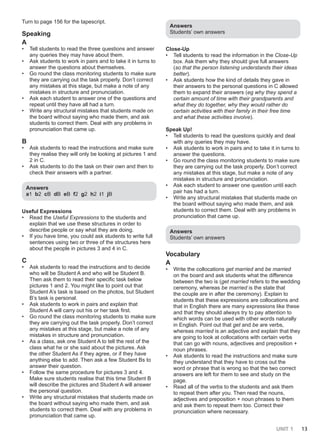
• Write how?, where? and who? on the board and
ask students to glance at the sets of pictures in B to
decide which question words might go with each set
of pictures.
• Elicit from students what each picture shows, making
sure they say violin, television, bicycle, supermarket,
car park, library, old woman, middle-aged woman
and middle-aged man.
• Ask students to do the task individually, but check
answers as a class.
Answers
1B 2C 3A
C
• Ask students to read the instructions and check
that they understand that they will be answering
questions 1-3 in task B using the three sets of
pictures A, B and C, they have just discussed. Point
out that the conversations will follow the order of the
questions, however, and not the order of the pictures.
• Go to track 2 on the Close-Up Class Audio CD and
play the recording once all the way through and ask
students to write their answers. Then ask students
to discuss their answers with a partner and to justify
any answers that are different.
• Play the recording again and ask students to check
their answers and to write any missing answers.
• Check the answers as a class and ask students to
justify their answers.
Answers
1b 2a 3a
Turn to page 156 for the tapescript.
Close-Up
• Ask students to read the information in the Close-Up
box. Tell them to look at task D quickly and ask them
what the task doesn’t have (questions). Explain that
in this task, they will only hear the question on the
recording and that a question is heard after every
conversation. Remind them that it is very important to
study each picture in each set to compare them and to
think of key words that are related to them before they
listen. This means that they will be better prepared for
the question when they hear it.
D
• Ask students to read the instructions and make sure
they understand what they have to do. Ask students
how they should mark their answers (by circling the
correct letter a, b or c, in the corresponding picture).
• Give students time to study the six sets of pictures and
answer any questions they may have about them.
• Go to track 3 on the Close-Up Class Audio CD and
play the audio for the first question and then ask
students to write their answer down before playing
it again to check the answer with the class. Ask
students to justify the correct answer before playing
the rest of the recording.
• Play the recording once all the way through, pausing
if necessary, and ask students to mark their answers.
Then ask students to discuss their answers with a
partner and to justify any answers they have that are
different.
• Check the answers as a class and ask students
to justify their answers. Play the recording again if
necessary.
Answers
1c 2b 3a 4b 5c 6a
UNIT 1 13
Turn to page 156 for the tapescript.
Speaking
A
• Tell students to read the three questions and answer
any queries they may have about them.
• Ask students to work in pairs and to take it in turns to
answer the questions about themselves.
• Go round the class monitoring students to make sure
they are carrying out the task properly. Don’t correct
any mistakes at this stage, but make a note of any
mistakes in structure and pronunciation.
• Ask each student to answer one of the questions and
repeat until they have all had a turn.
• Write any structural mistakes that students made on
the board without saying who made them, and ask
students to correct them. Deal with any problems in
pronunciation that came up.
B
• Ask students to read the instructions and make sure
they realise they will only be looking at pictures 1 and
2 in C.
• Ask students to do the task on their own and then to
check their answers with a partner.
Answers
a1 b2 cB dB eB f2 g2 h2 i1 jB
Useful Expressions
• Read the Useful Expressions to the students and
explain that we use these structures in order to
describe people or say what they are doing.
• If you have time, you could ask students to write full
sentences using two or three of the structures here
about the people in pictures 3 and 4 in C.
C
• Ask students to read the instructions and to decide
who will be Student A and who will be Student B.
Then ask them to read their specific task below
pictures 1 and 2. You might like to point out that
Student A’s task is based on the photos, but Student
B’s task is personal.
• Ask students to work in pairs and explain that
Student A will carry out his or her task first.
• Go round the class monitoring students to make sure
they are carrying out the task properly. Don’t correct
any mistakes at this stage, but make a note of any
mistakes in structure and pronunciation.
• As a class, ask one Student A to tell the rest of the
class what he or she said about the pictures. Ask
the other Student As if they agree, or if they have
anything else to add. Then ask a few Student Bs to
answer their question.
• Follow the same procedure for pictures 3 and 4.
Make sure students realise that this time Student B
will describe the pictures and Student A will answer
the personal question.
• Write any structural mistakes that students made on
the board without saying who made them, and ask
students to correct them. Deal with any problems in
pronunciation that came up.
Answers
Students’ own answers
Close-Up
• Tell students to read the information in the Close-Up
box. Ask them why they should give full answers
(so that the person listening understands their ideas
better).
• Ask students how the kind of details they gave in
their answers to the personal questions in C allowed
them to expand their answers (eg why they spend a
certain amount of time with their grandparents and
what they do together, why they would rather do
certain activities with their family in their free time
and what these activities involve).
Speak Up!
• Tell students to read the questions quickly and deal
with any queries they may have.
• Ask students to work in pairs and to take it in turns to
answer the questions.
• Go round the class monitoring students to make sure
they are carrying out the task properly. Don’t correct
any mistakes at this stage, but make a note of any
mistakes in structure and pronunciation.
• Ask each student to answer one question until each
pair has had a turn.
• Write any structural mistakes that students made on
the board without saying who made them, and ask
students to correct them. Deal with any problems in
pronunciation that came up.
Answers
Students’ own answers
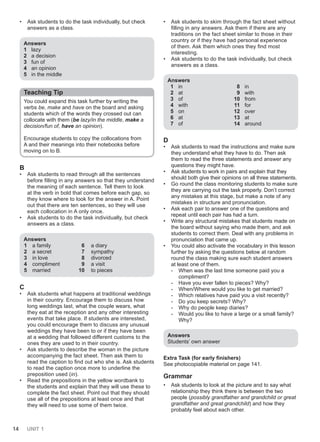
Vocabulary
A
• Write the collocations get married and be married
on the board and ask students what the difference
between the two is (get married refers to the wedding
ceremony, whereas be married is the state that
the couple are in after the ceremony). Explain to
students that these expressions are collocations and
that in English there are many expressions like these
and that they should always try to pay attention to
which words can be used with other words naturally
in English. Point out that get and be are verbs,
whereas married is an adjective and explain that they
are going to look at collocations with certain verbs
that can go with nouns, adjectives and preposition +
noun phrases.
• Ask students to read the instructions and make sure
they understand that they have to cross out the
word or phrase that is wrong so that the two correct
answers are left for them to see and study on the
page.
• Read all of the verbs to the students and ask them
to repeat them after you. Then read the nouns,
adjectives and preposition + noun phrases to them
and ask them to repeat them too. Correct their
pronunciation where necessary.
14 UNIT 1
• Ask students to do the task individually, but check
answers as a class.
Answers
1 lazy
2 a decision
3 fun of
4 an opinion
5 in the middle
Teaching Tip
You could expand this task further by writing the
verbs be, make and have on the board and asking
students which of the words they crossed out can
collocate with them (be lazy/in the middle, make a
decision/fun of, have an opinion).
Encourage students to copy the collocations from
A and their meanings into their notebooks before
moving on to B.
B
• Ask students to read through all the sentences
before filling in any answers so that they understand
the meaning of each sentence. Tell them to look
at the verb in bold that comes before each gap, so
they know where to look for the answer in A. Point
out that there are ten sentences, so they will use
each collocation in A only once.
• Ask students to do the task individually, but check
answers as a class.
Answers
1 a family 6 a diary
2 a secret 7 sympathy
3 in love 8 divorced
4 compliment 9 a visit
5 married 10 to pieces
C
• Ask students what happens at traditional weddings
in their country. Encourage them to discuss how
long weddings last, what the couple wears, what
they eat at the reception and any other interesting
events that take place. If students are interested,
you could encourage them to discuss any unusual
weddings they have been to or if they have been
at a wedding that followed different customs to the
ones they are used to in their country.
• Ask students to describe the woman in the picture
accompanying the fact sheet. Then ask them to
read the caption to find out who she is. Ask students
to read the caption once more to underline the
preposition used (in).
• Read the prepositions in the yellow wordbank to
the students and explain that they will use these to
complete the fact sheet. Point out that they should
use all of the prepositions at least once and that
they will need to use some of them twice.
• Ask students to skim through the fact sheet without
filling in any answers. Ask them if there are any
traditions on the fact sheet similar to those in their
country or if they have had personal experience
of them. Ask them which ones they find most
interesting.
• Ask students to do the task individually, but check
answers as a class.
Answers
1 in
2 at
3 of
4 with
5 on
6 at
7 of
8 in
9 with
10 from
11 for
12 over
13 at
14 around
D
• Ask students to read the instructions and make sure
they understand what they have to do. Then ask
them to read the three statements and answer any
questions they might have.
• Ask students to work in pairs and explain that they
should both give their opinions on all three statements.
• Go round the class monitoring students to make sure
they are carrying out the task properly. Don’t correct
any mistakes at this stage, but make a note of any
mistakes in structure and pronunciation.
• Ask each pair to answer one of the questions and
repeat until each pair has had a turn.
• Write any structural mistakes that students made on
the board without saying who made them, and ask
students to correct them. Deal with any problems in
pronunciation that came up.
• You could also activate the vocabulary in this lesson
further by asking the questions below at random
round the class making sure each student answers
at least one of them.
- When was the last time someone paid you a
compliment?
- Have you ever fallen to pieces? Why?
- When/Where would you like to get married?
- Which relatives have paid you a visit recently?
- Do you keep secrets? Why?
- Why do people keep diaries?
- Would you like to have a large or a small family?
Why?
Answers
Students’ own answer
Extra Task (for early finishers)
See photocopiable material on page 141.
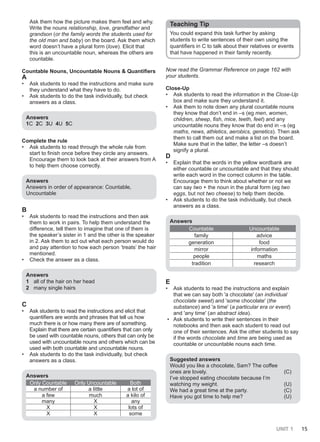
Grammar
• Ask students to look at the picture and to say what
relationship they think there is between the two
people (possibly grandfather and grandchild or great
grandfather and great grandchild) and how they
probably feel about each other.
UNIT 1 15
Ask them how the picture makes them feel and why.
Write the nouns relationship, love, grandfather and
grandson (or the family words the students used for
the old man and baby) on the board. Ask them which
word doesn’t have a plural form (love). Elicit that
this is an uncountable noun, whereas the others are
countable.
Countable Nouns, Uncountable Nouns & Quantifiers
A
• Ask students to read the instructions and make sure
they understand what they have to do.
• Ask students to do the task individually, but check
answers as a class.
Answers
1C 2C 3U 4U 5C
Complete the rule
• Ask students to read through the whole rule from
start to finish once before they circle any answers.
Encourage them to look back at their answers from A
to help them choose correctly.
Answers
Answers in order of appearance: Countable,
Uncountable
B
• Ask students to read the instructions and then ask
them to work in pairs. To help them understand the
difference, tell them to imagine that one of them is
the speaker’s sister in 1 and the other is the speaker
in 2. Ask them to act out what each person would do
and pay attention to how each person ‘treats’ the hair
mentioned.
• Check the answer as a class.
Answers
1 all of the hair on her head
2 many single hairs
C
• Ask students to read the instructions and elicit that
quantifiers are words and phrases that tell us how
much there is or how many there are of something.
Explain that there are certain quantifiers that can only
be used with countable nouns, others that can only be
used with uncountable nouns and others which can be
used with both countable and uncountable nouns.
• Ask students to do the task individually, but check
answers as a class.
Answers
Only Countable Only Uncountable Both
a number of a little a lot of
a few much a kilo of
many X any
X X lots of
X X some
Teaching Tip
You could expand this task further by asking
students to write sentences of their own using the
quantifiers in C to talk about their relatives or events
that have happened in their family recently.
Now read the Grammar Reference on page 162 with
your students.
Close-Up
• Ask students to read the information in the Close-Up
box and make sure they understand it.
• Ask them to note down any plural countable nouns
they know that don’t end in –s (eg men, women,
children, sheep, fish, mice, teeth, feet) and any
uncountable nouns they know that do end in –s (eg
maths, news, athletics, aerobics, genetics). Then ask
them to call them out and make a list on the board.
Make sure that in the latter, the letter –s doesn’t
signify a plural.
D
• Explain that the words in the yellow wordbank are
either countable or uncountable and that they should
write each word in the correct column in the table.
Encourage them to think about whether or not we
can say two + the noun in the plural form (eg two
eggs, but not two cheese) to help them decide.
• Ask students to do the task individually, but check
answers as a class.
Answers
Countable Uncountable
family advice
generation food
mirror information
people maths
tradition research
E
• Ask students to read the instructions and explain
that we can say both 'a chocolate' (an individual
chocolate sweet) and 'some chocolate' (the
substance) and 'a time' (a particular era or event)
and 'any time' (an abstract idea).
• Ask students to write their sentences in their
notebooks and then ask each student to read out
one of their sentences. Ask the other students to say
if the words chocolate and time are being used as
countable or uncountable nouns each time.
Suggested answers
Would you like a chocolate, Sam? The coffee
ones are lovely. (C)
I’ve stopped eating chocolate because I’m
watching my weight. (U)
We had a great time at the party. (C)
Have you got time to help me? (U)
16 UNIT 1
F
• Explain to students that they should read each
sentence and try to think of the word or phrase
that is missing before looking at the three options.
Then they should look at the options carefully and
pay attention to the words either side of the gap,
especially nouns (countable or uncountable), verb
forms (singular or plural) and quantifiers (used only
with countable nouns, or uncountable nouns or both).
• Ask students to do the task individually, but check
answers as a class.
Answers
1c 2a 3b 4a 5a 6c 7a 8a
Extra Task (for early finishers)
See photocopiable material on page 141.
Writing
• Ask students to read the information on linking
words and phrases. Remind them of the words and
phrases they used to discuss the sets of pictures in
the listening tasks on page 10. Point out that we use
linking words and phrases to show how two or more
ideas are linked together.
• Ask students to look at the picture in the top right
hand corner of the page and to describe it in pairs.
Encourage them to discuss who the people might be,
what they are doing, why they are doing it and how
they might be feeling. Encourage them to use linking
words and phrases wherever possible.
A
• Ask students to read each sentence carefully and to
pay attention to the overall meaning of the sentence
to see how the ideas logically relate to each other.
• Encourage them to ask themselves if the second
part of the sentence is similar in some way to the
first part, if it shows why something happens, or if
it provides examples. Tell them to pay attention to
the words that come immediately before and to pay
special attention to options that come at the start of a
sentence.
• Ask students to do the task individually, but check
answers as a class.
Answers
1 as well as 5 and
2 because 6 like
3 For example 7 as
4 since 8 as well
B
• Ask students to read the instructions and the writing
task in italics and make sure they understand what
they have to do.
• Ask students to do the task individually, but check
answers as a class.
Answers
1 I have to write an email. →
2 One of my relatives will read it.
3 I am writing to invite one of my relatives to a
special family get-together.
4 I will write in an informal way because I am
writing to a relative.
Teaching Tip
Explain to students that they should always spend
time analysing a writing task before they actually
begin writing. Encourage them to underline any
key words as they read through writing tasks and
explain that this will help them to make sure they
have understood exactly what they have to do.
Also, encourage them to keep looking back through
the writing tasks as they write, and after they have
finished a piece of writing to make sure they don’t go
off topic.
C
• Ask students to read the email quickly to answer the
questions below.
- Who has the writer written to? (her uncle)
- What family get-together is described?
(a barbecue for her dad’s birthday)
- What is special about the event? (It’s a surprise.)
• Ask students to read the instructions and make sure
they understand what they have to do. Point out that
they have to do two things here: underline examples
and explain why they have been used. Encourage
them to look back at A as they do the task.
• Ask students to do the task individually, but check
answers as a class.
Answers
Students should underline the following:
Para 1: because (to say why something happens),
as (to say why something happens)
Para 2: and (to join ideas that are similar in some
way or to add on information), as well as (to join
ideas that are similar in some way or to add on
information), also (to join ideas that are similar in
some way or to add on information)
Para 3: like (to give examples), since (to say why
something happens)
Look again!
D
• Ask students to read through the points 1-8 and
answer any questions they might have.
• Do the first one together as a class and ask them why
Rashida has dealt with the task properly (She has
written to a relative, she has made an invitation and
she has written in an informal style as the person is
familiar to her.)
• Ask students to do the task individually, but check
answers as a class.
Answers
Students should tick the following: 1, 2, 4, 6, 7, 8
UNIT 1 17
Teaching Tip
Explain to students that in order to deal with a task
properly, it’s important to consider what kind of
language is appropriate. Elicit that we write in an
informal and friendly way when we are writing to
people we know about a non-serious matter, but
that we use more formal language when we write to
someone we don’t know.
E
• Explain to students that before they begin a piece
of writing, they should plan it carefully. Ask them to
look back at the model email on page 14 and to say
how many paragraphs it has (four). Then ask them
to scan each paragraph and make a note at the side
of its main idea. Explain that each paragraph deals
with separate information. Elicit that this makes the
writing clearer for the reader to follow.
• Make sure students understand that they should
match 1-6 with a-f depending on the information in
the email. Encourage them to look at the notes they
made at the side of the paragraphs.
• Ask students to do the task individually, but check
answers as a class.
Answers
1e 2d 3a 4f 5c 6b
Close-Up
• Ask students how else Rashida could have begun
and ended her email. Ask them why she didn’t begin
Dear Mr Sam or ended Yours sincerely (They are too
formal for a personal email.).
• Ask students to read the information in the Close-Up
box and encourage them to choose expressions from
here when they come to write their own email.
F
• Ask students to read the instructions and the Useful
Expressions and check that they understand what
they have to do.
• Tell them that they have to replace one of the words
from each sentence with an appropriate one from the
Useful Expressions box.
• Ask students to do the task individually, but check as
a class.
Answers
1 CROSS OUT invite AND PUT come
2 CROSS OUT celebration AND PUT surprise
3 CROSS OUT invitations AND PUT preparations
4 CROSS OUT make AND PUT throw
5 CROSS OUT celebrating AND PUT planning
Over to you!
G
• Explain to students that the Over to you! section in
Writing introduces a task for them to write.
• Ask them to read the instructions and to underline
three things they are advised to do (make a plan,
use linking words and phrases and check their work
when they have finished).
• Now ask them to read the task they will have to do.
Remind them to underline key words and phrases in
the task. Then ask them to answer the questions in B
about their task.
- What do you have to write? (an email)
- Who will read it? (a friend)
- Why are you writing? (to invite him/her to a party)
- Will you write in a formal or informal way? Why?
(informal because you’re writing to a friend)
• If time allows, ask students to make a plan for their
email in class, but set the writing task for homework.
Plan
Greeting: Hi Steve,
Para 1: Ask Steve how he is and say why you
are writing.
Para 2: Give details about when the party is and
who will be there.
Para 3: Give more details about the party.
Para 4: Ask Steve to reply to your invitation.
Signing off: Love, Tanya
Suggested Answer
Email
Hi Steve,
How are you? I hope you are well. Everyone here is
very excited because I have done very well at school.
That’s why I’m writing as Mum and Dad want to throw
a party to celebrate. Will you be able to come?
They’re planning a big party on Friday 10th June - it’s
the day we finish school for the summer. My parents
want to invite all our relatives as well as all my friends.
Dad is also organising one of his famous barbecues
in the garden. I’m really looking forward to it.
My parents will make the necessary preparations
like cooking and decorating the house on Friday
afternoon since they have both taken the day off
work. I’ll get back around 4 o’clock, so please be
here around half past six.
Let me know if you can come. I’d really like you to be
here.
See you soon.
Love,
Tanya
Useful Expressions
• Read the Useful Expressions to the students and
ask them to repeat them after you. Correct their
pronunciation where necessary.
• Ask students to work in pairs and to practice inviting
each other to a special event using the words and
expressions here.
18 UNIT 1
General Note
The National Geographic videos can be used as an
interesting way to introduce your students to other
cultures. They are authentic National Geographic
videos, and it is not necessary for students to
understand everything they hear to benefit from them.
Some of the tasks focus on the visual aspects of the
videos, so students can concentrate more on what they
see than on what they hear. They are also a good way
to encourage your students to watch TV programmes
and films in English so that they can get used to the
sound of the language. The more students are exposed
to English, the easier it will be for them to pick up the
language.
Background Information
Flora Salonik is an educated woman who was
born and bred in the north-eastern city of Arusha in
Tanzania, Central-East Africa. Arusha is a developed
and relatively modern city which borders with the
regions of Kilimanjaro and Mara. The capital of
Tanzania is currently Dodoma and the largest city is
Dar Es Salaam.Tanzania is one of the oldest known
inhabited areas on Earth with human fossils from this
area dating back 2 million years.
Before you watch
A
• Explain to students that in this lesson they are going
to watch a DVD about a woman called Flora Salonik.
Ask them to look at the pictures on page 16 and ask
them where she might be from and what kind of life
she might lead.
• Ask students to read the questions and explain
anything they don’t understand. Then ask them to
work in pairs or small groups to ask and answer the
questions together.
• When they have finished, ask different students
at random round the class to answer each of the
questions.
• If students seem interested, give them more
information using the Background Information box
above.
Answers
Students’ own answers
While you watch
B
• Explain to students that they are now going to watch
the DVD. Tell them that the documentary is quite
short.
• Ask students to read statements 1-6 and to underline
any key words and phrases they find. Ask students to
predict what kind of choice Flora might be making.
• To check students understand where Tanzania is,
draw their attention to its position on the globe in the
top-right corner of the page.
• Play the DVD through without stopping and ask
students to make a note of their answers as they
are watching. Then ask students to compare their
answers with a partner and to justify any answers
they have that are different.
• Play the DVD a second time and ask students
to check their answers and to fill in any missing
answers. Then check answers as a class.
Answers
1T (00:14)
2T (00:21)
3F (00:51)
4F (00:59)
5T (01:15)
6F (03:12)
After you watch
C
• Explain to students that the text is a summary of the
information in the documentary. Before they read it,
ask them to work in pairs to discuss the main ideas
of the documentary.
• Ask students to read the text without filling in
any answers at this stage to see if the ideas they
mentioned are covered in the text. Also encourage
them to think about which part of speech is missing
from each gap.
• Read the words in the yellow wordbank to students
and ask them to repeat them. Correct their
pronunciation where necessary.
• Ask students to do the task individually, but check
answers as a class.
Answers
1 grew
2 languages
3 married
4 village
5 farm
6 city
7 decision
8 happy
9 stayed
10 belonged
D
• Ask students to read the questions and explain
anything they don’t understand. Then ask them to
work in pairs or small groups to ask and answer the
questions together.
• When they have finished, ask different students
at random round the class to answer each of the
questions.
Answers
Students’ own answers
One Woman’s Choice
DVD
VD
1
1
UNIT 2 19
Unit plan
Reading: article, missing sentences
Vocabulary: food-related words, phrasal verbs, word formation
Grammar: past simple, past continuous, used to & would, be used to & get used to
Listening: multiple-choice questions
Speaking: talking about food and restaurants, comparing photos, using linking words
Writing: review, order of adjectives
2
2Food, food, food!
Unit opener
• Write Food, food, food! on the board and explain to
students that this is the title of Unit 2. Give students
a minute to write down as many food-related words
in English as they can. Then write the headings
savoury, sweet and drinks on the board and ask
students to call out the words they have written
down and to say which column they should go in.
If students also mention words linked to meals,
(breakfast, lunch, etc) then create another column
with the heading meal. Elicit the words hamburger,
bun, lettuce, tomato, onion, pickle and cheese if the
students don’t mention them.
• Ask students to look at the picture on page 17 and
to discuss what they think is going on in it, in small
groups. Then ask each group to tell the rest of the
class what they decided was happening.
• Ask students to read the caption and ask them for
their reactions to the event and the hamburger.
• If students seem interested, you might like to give
them more information about the picture using the
Background Information box below.
Background Information
This event featured in the photograph took place in
Toronto, Canada on 6th
May 2010. The organisers
wanted to beat the world record for the biggest
hamburger in the world, which was previously 186
pounds in weight. The Canadians created a special grill
in order to cook the hamburger. They started cooking it
at 4 am and it was ready by noon. When the hamburger
was completely ready with its bun and fillings, it
weighed 590 pounds. Money made from the event was
given to Camp Bucko, which is a children’s charity.
Reading
• Ask students to quickly look at the three pictures on
pages 18 and 19 and ask them how they are related
(The first picture shows an olive branch with olives
which is a raw material, the second picture shows a
man pouring olive oil from a jug into a huge container
as part of the process of making olive oil, and the
third picture shows bottles of oil ready for sale and
consumption, which are the finished product.).
• Ask students if olives and olive oil are popular in their
country.
Ask them to say why people like or don’t like these
products. If they do use them, ask them how they use
them. Try to elicit uses in cooking as well as other uses
(medicine, cosmetic, etc).
A
• Ask students to read the instructions and make sure
they understand what they have to do. Encourage
them to guess if they don’t know an answer.
• Ask students to do the task individually, but check
answers as a class.
• If students seem interested, you might like to give
them more information about the picture using the
Background Information box below.
Background Information
Greeks are the largest consumers of olive oil in the
world and consume about 26 litres of olive oil per
person per year, the French consume about 1.34
litres of olive oil per person per year and in China it is
not generally used at all. Spain produces around 40-
45% of the world’s olive oil. Italy is the next biggest
producer followed by Greece. The oldest olive tree can
be found in the village of Vouves, in the Chania region
of Crete. Analysis of the trees rings has proved that it
is at least 2,000 years old. Local scientists, however,
believe it may even be up to 4,000 years old.
Answers
1c 2b 3a 4c
B
• Ask students to read the instructions and the three
choices and then answer any questions they might
have.
• Give them a minute to look at the title, photos
and first paragraph and then ask them to discuss
with a partner what they think the text is mainly
about. Ask them to pay attention to the caption that
accompanies the second picture on page 18 as this
contains a clue.
• As a class, ask students which answer they feel
is best and to justify their answer. Make sure they
mention that the title suggests oil can be used in
many ways, not just cooking, so the first choice
wouldn’t be appropriate.
20 UNIT 2
Also, they should mention that the first paragraph
gives historical information of a general nature rather
than information about particular people so this
means the third choice wouldn’t be appropriate.
Answer
the history of olive oil and why it is good for you
C
• Explain to students that they are going to read the
rest of the text to see if their answer was correct.
• Point out that there are missing sentences in the
text and tell students not to worry about this for the
moment. Explain that they should simply scan the
text to get the gist of it.
Wordwise
• Ask students to look at the words in pink in the text
and to read the sentences they are found in again.
Remind students that when they don’t know the
meaning of a word, they should look carefully at the
sentence it is found in to try to work out its meaning.
Ask students to work in pairs to decide what each of
the words mean.
• Ask students to read the Wordwise box to compare
their answers with the definitions given.
• Read each of the words to the students and
ask them to repeat them after you. Correct their
pronunciation where necessary.
• Write the words oranges, potatoes, seeds, mud,
flavour, ice, dirt and taste on the board, and ask
students which of them can collocate with the words
in Wordwise. Explain that some words in Wordwise
can collocate with more than one of these words
(cultivation of oranges/potatoes; crush seeds/ice;
harvest oranges/potatoes; scrape off mud/dirt and
enhance flavour/taste).
Close-Up
• Read the information in the Close-Up box to the
students and elicit that personal pronouns are words
like He/She/It/Your/They, etc. Explain that we use
personal pronouns after we have introduced the
person, people, thing or things they refer to. This
means that if a missing sentence contains a pronoun
then it will usually come after a part of a text where a
name is mentioned. Also, if linking words which show
sequence, contrast or agreement are used in the
missing sentence, then they should work out what
its main idea is and then find information in the text
which relates to it in the way suggested by the linking
word or phrase.
D
• Ask students to read the instructions and make sure
they understand what they have to do.
• Ask students to quickly read through sentences 1-4
and a-d and to underline any personal pronouns,
demonstrative pronouns, expressions which add
information, show contrast, agreement and sequence.
Then ask them to read sentences 1-4 again and to
think carefully about what the main ideas are and how
it relates to an idea in sentences a-d.
• Ask students to do the task individually, but check
answers as a class. Then as a class, ask students
to say which words helped them to choose their
answers.
Answers
1c 2d 3b 4a
Students’ own answers
Teaching Tip
You could expand this task further by asking
students to write follow-on sentences of their own
for sentences 1-4. Ask them to write sentences
that change the main idea completely by using
linking expressions different to those in a-d (eg I
was working all day and I didn’t eat lunch. So I was
absolutely starving by dinner time.)
E
• Ask students to read the instructions and elicit that
there are 6 sentences, but only 5 gaps so there is
one sentence that they will not need to use.
• Ask students to read sentences 1-6 and to underline
any personal pronouns, demonstrative pronouns,
expressions which add information, show contrast,
agreement and sequence that they find.
• Ask students to underline the words and phrases
from the main text and explain that they will be
important in helping them choose their answers in E
(Para 1: evidence, Para 2: the basic process; Para
4: a variety of uses; Para 5: the lowest rate of heart
disease; Para 6: enhances the lives).
• Ask students to do the task individually, but check
answers as a class.
Answers
1B 2E 3A 4D 5F
Get the meaning!
F
• Read words 1-6 to the students and ask them to say
them after you. Correct their pronunciation where
necessary. Then ask students to scan the text to find
and underline these words.
• Explain to students that they should carefully read
the sentence each word appears in, in the text to try
to understand its meaning before matching them with
definitions a-f.
• Ask students to do the task individually, but check
answers as a class.
• If time allows, ask students to write sentences of
their own using these words.
Answers
1f 2d 3a 4c 5b 6e
UNIT 2 21
What do you think?
• Ask students to read the questions and explain that
they are not expected to know the correct answer
and that the object of the task is for them to take a
guess.
• Ask them to work in pairs or small groups to discuss
possible answers. Then as a class, ask each pair or
group to answer one of the questions.
Answers
The largest sandwich weighed 5,440 lb (2,467.5
kg) and was made by Wild Woody’s Chill and Grill,
Roseville, Michigan, USA on March 17, 2005.
Coca Cola
Sara Lee Corporation made the world’s longest
hot dog, at 608.4 m in commemoration of the 1996
Summer Olympics in Atlanta.
Teaching Tip
If you have Internet access in your classroom, you
could ask students to look online to find the answers
to the questions in What do you think? once they
have made a guess and discussed their answers
with a partner.
Vocabulary
A
• Ask students to read the instructions and explain
that two out of three of the words in each item are
connected in some way that the other word isn’t.
They should circle the word that is not connected.
• Do item 1 together as a class and encourage
students to explain why the odd word out is different
before they do the rest of the task.
• Ask students to do the task individually, but check
answers as a class. Check students’ pronunciation
where necessary as you check the answers.
Answers
1 thirsty (We use ‘starving’ and ‘hungry’ when we
need food, but we use ‘thirsty’ when we need a
drink.)
2 tip (‘Dessert’ and ‘starter’ are parts of a meal,
but a ‘tip’ is money that we leave a waiter in a
restaurant or café if they have provided you with
good service.)
3 peel (We ‘cut’ and ‘chop’ food using a knife to
cut it into pieces, cubes, strips or chunks, but we
‘peel’ the skin off of a piece of fruit or vegetable in
order to eat it.)
4 stir (‘Fry’ and ‘boil’ are methods of cooking, but
‘stir’ refers to moving food around as it cooks. We
can stir food both as it boils or fries.)
5 grill (‘Bite’ and ‘chew’ are ways of eating
something, but ‘grill’ is a method of cooking.)
6 savoury (‘Tasty’ and ‘delicious’ are used to
describe something which tastes good, but
‘savoury’ is used to say that a food contains salt.)
→
7 cutlery (‘Jug’ and ‘bowl’ are used to hold liquids
and foods, but ‘cutlery’ is the collective name for
the forks, spoons and knives which we use to eat
food with.)
8 cereal (‘Vitamins’ and ‘proteins’ are substances
that food contain which are essential for our
bodies, but ‘cereal’ is a collective name for types
of food such as wheat, barley and oats.)
B
• Explain to students that the words missing from each
sentence come from A. Also, point out that some
sentences may have more than one possible answer.
• Encourage students to read through all sentences
before filling in any answers and to pay attention to
the words immediately before and after each gap.
Answers
1 fry
2 jug
3 tip
4 dessert/cereal
5 peel
6 chop/cut
7 stir
8 chew
C
• Ask students to look at the picture of the Shaolin
monk and to read the accompanying caption. Ask
them for their reaction to it and to say what it tells
us about life today (The picture shows a contrast of
lifestyles and shows us that western eating habits
have spread to traditional Asian communities.).
• Ask students to read the title of the text in C and ask
them what they expect it to be about. Ask them if
they know the history of the hamburger. Accept any
answer at this stage.
• Ask students to skim through the text without circling
any answers and ask them how many stories about
the origins of the hamburger it contains (three).
• Explain to students that they should look carefully at
the context the two options are in, in each item and
to think about the meaning of each word carefully
before circling their answer.
• Encourage students to read the text again once they
have circled their answers to make sure it reads well
with the answers they have chosen.
• Ask students to do the task individually, but check
answers as a class.
Answers
1 tasty
2 course
3 diet
4 raw
5 appetite
6 dish
7 cook
8 served
D
• Ask students to look at the expressions in bold and
to say what they all have in common (they contain
food words). Explain that in English there are many
idiomatic expressions which use words connected to
foods in some way.
22 UNIT 2
Encourage them to think about the characteristics
of each of the foods mentioned in order to find the
correct answer. You could ask the students if there
are any idiomatic expressions which contain food
words in their own language.
• Remind students to read both options carefully
before deciding.
• Ask students to do the task individually, but check
answers as a class.
Answers
1a 2b 3a 4a 5b
E
• Ask students to look at the words and phrases in
bold and elicit that they have seen all of them in
Vocabulary tasks A-D and that they can look back at
them if necessary to remind them of their meanings.
• Ask students to work in pairs to discuss the
statements.
• Go round the class monitoring students to make sure
they are carrying out the task properly. Don’t correct
any mistakes at this stage, but make a note of any
mistakes in structure and pronunciation.
• Ask some students to say which statements they
agree with and to say why and ask another to say
which ones they disagree with and to say why.
• Write any structural mistakes that students made on
the board without saying who made them, and ask
students to correct them. Deal with any problems in
pronunciation that came up.
• You could also activate the vocabulary in this lesson
further by asking students to tell a partner about their
favourite dishes/meals and to say how it is prepared
and why they like them.
Answers
Students’ own answers
Extra Task (for early finishers)
See photocopiable material on page 142.
Grammar
• Ask the questions below at random round the class.
Make sure each student answers at least one
question.
- What did you eat for dinner last night?
- Who made lunch in your house on Sunday?
- When was the last time you had pizza for dinner?
- What were you doing while your parents were
shopping for food?
- Who were you sitting next to the last time you
went to a restaurant?
• Ask students which tenses were used in the
questions they have just answered (Past Simple and
Past Continuous). Revise the affirmative, negative,
question forms and short answers of these tenses
with the class.
Past Simple
A
• Ask students to look at the verbs in bold in the
sentences in 1-3 and elicit that they are in the Past
Simple. Ask students what the infinitive form of these
verbs are (go, buy, take, cook, go out). Elicit that all
of these verbs, apart from cook, are irregular verbs.
• Ask students to read the uses of the Past Simple
in a-c and answer any questions they might have.
Explain that they should pay attention to time
expressions and time references in sentences 1-3
when matching up their answers.
• Ask students to do the task individually, but check
answers as a class.
• Once the answers have been checked, ask students
to look back at the reading text on pages 18 and 19.
Ask them to underline examples of the Past Simple
and say why they have been used (Para 1: fell –
action which started and finished in the past, began
- action which started and finished in the past; Para
4: used (olive oil) – past routines and habits, used (it)
– past routines and habits; Para 5: showed - action
which started and finished in the past; Sentence B:
occurred - action which started and finished in the
past, started - action which started and finished in the
past; Sentence F - action which started and finished
in the past).
Answers
1b 2c 3a
B
• Ask students to look at the verbs in bold in sentences
1-4 and elicit that they are all in the Past Continuous,
apart from rang in sentence 4, which is in the Past
Simple.
• Ask students what the infinitive form of each main
verb is (watch, cook, rain, blow, shake, make, chop,
ring) and elicit that the last consonant in chop is
doubled to form the present participle form. Ask them
which other verbs they know that do this (eg travel,
shop, stop, drop, hop).
• Ask students to read the uses of the Past Continuous
in a-d and answer any questions they might
have. Remind them to pay attention to any time
expressions and time references in sentences 1-4
when matching up their answers.
• Ask students to do the task individually, but check
answers as a class.
• Once the answers have been checked, ask students
to look back at the reading text on pages 18 and
19. Ask them to underline examples of the Past
Continuous and say why they have been used (Para
1 – were producing – an action that was in progress
at a specific time in the past).
• Ask students to read the information in Be careful!
and revise verbs that are stative. Remind students
that some stative verbs can also be used as action
verbs, but that their meaning changes.
Answers
1b 2d 3a 4c
UNIT 2 23
Now read the Grammar Reference on pages 162-163
with your students.
C
• Ask students to look at the picture at the bottom of
page 21 and to tell you what it shows (a pizza). Ask
students to quickly make a list of any words and
phrases that they associate with pizza (eg tomato,
cheese, flour, Italy, Friday nights, football, delicious
etc) and then ask them to compare their lists with a
partner. Make a list on the board and ask students
to talk about when they usually have pizza, which
toppings they prefer on it, whether they make it
themselves, buy ready-made ones or get takeaway
pizzas.
• Ask students which two foods they have read about
in the unit so far (olive oil and hamburgers). Elicit that
the texts dealing with them talked about the history
of these foods and explain that the text in C will talk
about the history of pizza as well.
• Ask students to read the instructions and make sure
they understand that they will only use the Past
Simple tense here. Remind them to read the text
through once before filling in any of the gaps. Ask
them to underline the regular verbs in brackets and
to circle the irregular verbs in brackets before writing
any answers. Encourage them to use the Irregular
Verb list on pages 174-175 if they need help.
• Ask students to do the task individually, but check
answers as a class.
Answers
1 Did you know
2 covered
3 developed
4 originated
5 was
6 worked
7 made
8 grated
D
• Ask students to read the instructions and make sure
they realise they will use only the Past Continuous
tense here. Ask them to look at items 3 and 6 and
elicit that they will both be in the question form.
• Explain to students that the word order will remain
the same in their sentences and that it is the verb
they must change.
• Ask students to do the task individually, but check
answers as a class.
Answers
1 The students weren’t/were not eating crisps in the
classroom this morning.
2 We weren’t/were not having lunch at one o’clock
today.
3 Were you making cupcakes all morning?
4 This time last week, we were sampling French
cheese.
5 My sister was peeling potatoes for hours this
morning.
6 Was Cathy preparing dinner on her own last
night?
E
• Ask students to read the instructions and make sure
they understand they will have to use both the Past
Simple and Past Continuous tenses here.
• Explain to students that they should read each
sentence through before writing any answers as they
must think about which tense both verbs in each
sentence will go in as one will affect the other.
• Remind students to look at the Irregular Verb list on
pages 174 and 175 and to look back at A & B on this
page and the Grammar Reference on pages 162-163
if they need any help.
Answers
1 ate, finished
2 Did Joey call, were
watching
3 cooked, was
4 were ordering,
walked
5 didn’t/did not fry,
grilled
6 was making, was
setting
7 Were they having,
started
8 Did you order, had
Extra Task (for early finishers)
See photocopiable material on page 142.
Listening
A
• Explain to students that in this part of the lesson,
they will be practising their listening skills. Explain
that in order to do well in listening tasks, they have to
be able to deal with synonyms, as often they hear an
idea expressed in one way on a recording, but see it
expressed in another way in the written or visual part
of the task in the book.
• Ask students to look at the instructions and make
sure they understand what they have to do.
• Ask students to look at the words in bold and to say
what parts of speech they are (supports – verb; took
part – verb; Approximately – adverb; signed up for
– verb). Explain that the answer they match each
sentence to will be the same part of speech and in the
same tense and form as the words in sentences 1-4.
• Ask students to do the task individually, but check
answers as a class.
Answers
1c 2a 3d 4b
Teaching Tip
Explain to students that in some multiple-choice
listening tasks, like the one they will do in this lesson,
they won’t read any questions. Instead, they will only
hear them on the recording. This means that they
must read the options very carefully before listening
and to think how they are related as well as how they
are different. This will help them to think of possible
questions that might be asked on the recording, so
they will be better prepared for the task.
24 UNIT 2
B
• Ask students to read the instructions and make sure
they understand what they have to do. Elicit that they
will listen to a chef and that he no longer works at the
restaurant he will be talking about. Ask them to bear
this in mind when looking at the three sets of options
as this will affect the possible questions and how they
will be worded.
• Tell students to do the task and then to compare
their questions with a partner. Ask them to justify any
differences.
• Check the answers as a class and ask students to
justify their answers.
Suggested Answers
1 How long did he work at the restaurant for? / How
long ago did he stop working at the restaurant?
2 What did he think were the best dishes on the
menu? / What kind of food was the restaurant
famous for? / What was his speciality?
3 Why did he leave the restaurant?
Close-Up
• Read the information in the Close-Up box to the
students and explain that in the task they will do
in C, they will hear a recording in three parts and
that each part has one or two questions with three
multiple-choice options. Explain that they will hear
the questions together at the end of each part. This
means that they will hear all the information which
refers to the two or three questions before they can
answer any questions. For this reason, they should
make notes next to each option as they listen. Elicit
that their notes should include information such as
who someone is, when something was done, what
numbers, dates, prices, etc refer to.
C
• Ask students to read the instructions and to underline
key words. Then ask them what they will listen to (an
interview), what it will be about (a restaurant festival)
and how many questions they will have to answer (7).
Then ask them to glance at the seven sets of options
and ask them how many parts the recording is divided
into (3) and how many questions each part has (Parts
I & II – 2, Part III – 3).
• Give students time to study the options for Part I and
to think about what kind of questions may be asked.
Explain that they will be given time later to look at the
options for Parts II and III, so they should ignore them
for the moment.
• Go to track 4 on the Close-Up Class Audio CD and
play the recording for Part I once all the way through
and ask students to write their answers. Then ask
students to discuss their answers with a partner and to
justify any answers they have that are different.
• Play the recording again and ask students to check
their answers and to fill in any missing answers.
• Check the answers as a class and ask students to
justify their answers.
• Do the same for Parts II & III.
• Once the answers have been checked, ask students
how the picture in the top right-hand corner of the page
relates to the listening task (It shows the London Eye.).
• Ask students to read the accompanying caption
and ask them for their reaction to it. Ask students
if they have been on the London Eye. If any have,
encourage them to tell the rest of the class about their
experience. You could also ask them if there are any
similar attractions in their country.
Answers
1c 2a 3a 4b 5c 6b 7b
Turn to pages 156-157 for the tapescript.
Speaking
A
• Ask students to work in pairs to answer the three
questions. Remind them to develop their answers
as much as possible and to avoid giving one word
answers.
• Go round the class monitoring students to make sure
they are carrying out the task properly. Don’t correct
any mistakes at this stage, but make a note of any
mistakes in structure and pronunciation.
• Ask each pair to answer one of the questions and
repeat until everyone has had a turn.
• Write any structural mistakes that students made on
the board without saying who made them, and ask
students to correct them. Deal with any problems in
pronunciation that came up.
Answers
Students’ own answers
Close-Up
• Read the information in the Close-Up box to the
students and ask them which linking words in the
box add information (and), which show contrast
(but, although, while), which show the reason why
something happens (because, so) and which show a
condition (if, when).
B
• Ask students to read the instructions and make sure
they understand they should use the linking words
they have just discussed in the Close Up box.
• Encourage students to read the whole sentence
before filling in any answers.
• Ask students to do the task individually, but check
answers as a class.
Answers
1 but
2 and
3 and/so
4 because
5 Although/While
6 When/If
Useful Expressions
• Read the Useful Expressions to the students and
explain that we use these structures in order to
describe, compare and contrast two or more photos.
• If you have time, you could ask students to write full
sentences with two or three of the structures here
about photos 1 & 3 or 2 & 4 in C.
UNIT 2 25
You could pre-teach vocabulary related to the photos
at this stage and remind students to look back at the
lists of foods they wrote for the Unit opener. Some
vocabulary that students may need to revise or learn
are courgette, cucumber, garlic, breaded chicken, a
portion of, a pasta dish, fast-food restaurant, café and
expensive/fancy/up-market restaurant.
C
• Ask students to read the instructions and to decide who
will be Student A and who will be Student B. Then ask
them to read their specific task below pictures 1 and 2.
• You might like to point out that Student A’s task is
based on the photos, but Student B’s task is personal.
• Ask students to work in pairs and explain that Student
A will carry out his or her task first.
• Go round the class monitoring students to make sure
they are carrying out the task properly. Don’t correct
any mistakes at this stage, but make a note of any
mistakes in structure and pronunciation.
• As a class, ask one Student A to tell the rest of the
class what he or she said about the pictures. Ask
the other Student As if they agree, or if they have
something else to add. Then ask a few Student Bs to
answer their question.
• Follow the same procedure for pictures 3 and 4. Make
sure that students realise that this time Student B
will describe the picture and Student A will answer a
personal question.
• Write any structural mistakes that students made on
the board without saying who made them, and ask
students to correct them. Deal with any problems in
pronunciation that came up.
Answers
Students’ own answers
Teaching Tip
When doing pair work, encourage students to work
with different students from task to task. This gives
them the opportunity to get to know all the students
in the class better and provides them with more
of an incentive to talk. Sometimes when students
talk to the same partner in every task, they can get
bored easily and do the task as quickly as possible
rather than taking time to develop and explain their
answers. Also, although changing partners can bring
some disruption when setting up a task, it can help
to avoid discipline problems during the task.
Speak Up!
• Ask students to read the questions quickly and deal
with any queries they may have. You might like to point
out the difference between a vegetarian (someone
who doesn’t eat meat or fish) and a vegan (someone
who doesn’t eat meat, fish and any other products that
come from animals).
• Ask students to work in pairs and to take it in turns to
answer the questions.
• Go round the class monitoring students to make sure
they are carrying out the task properly.
Don’t correct any mistakes at this stage, but make a
note of any mistakes in structure and pronunciation.
• Ask each student to answer one question until each
pair has had a turn.
• Write any structural mistakes that students made on
the board without saying who made them, and ask
students to correct them. Deal with any problems in
pronunciation that came up.
Answers
Students’ own answers
Vocabulary
A
• Ask students to read the instructions and check that
they understand what they have to do.
• Explain to students that they should read through
phrasal verbs 1-8 and their meanings a-h quickly
before choosing any answers.
• Ask students to do the task individually and then to
compare their answers with a partner. Then check
answers as a class.
Answers
1c 2a 3b 4d 5e 6h 7g 8f
B
• Ask students to read the instructions and make sure
they understand what they have to do. Point out that
they will use each phrasal verb once only.
• Remind students to read each sentence through
before writing any answers.
• Ask students to do the task individually and then to
compare their answers with a partner. Then check
answers as a class.
Answers
1 break, off
2 chop up
3 cut down
4 go off
5 come across
6 take in
7 eat out
8 come down
Teaching Tip
You could expand this task further by playing charades
with the class using these phrasal verbs. Split the
students into two teams and ask one team member
to act out or draw an illustration on the board for one
of the phrasal verbs without speaking at all (eg The
student could pretend to smell something that’s ‘gone
off’, look surprised as they ‘come across’ something
unusual, or draw a product and a price tag and change
the price on the tag for 'come down',). The other team
members must guess which phrasal verb is being
acted out or drawn. The other team mustn’t speak at
this stage. Two points are awarded if the first team
guess correctly. Accept only one guess from the team
as a whole. If a wrong answer is given, offer the other
team a chance to guess the phrasal verb and award
one point for a correct answer.
26 UNIT 2
C
• Ask students to look at the title of the text and ask
them what a bakery is (a place where bread and
other baked goods are made and/or sold). Elicit that
it is a noun and ask students if they know another
noun which is made from this word (baker) and elicit
that this noun refers to the person. Ask students what
the verb is (bake).
• Explain that when they come across new words, they
should make a note of its various forms as well as its
meaning. This will help to develop their knowledge of
the language.
• Write the questions below on the board and ask
students to read the text, without filling in any
answers at this stage, to answer the questions with a
partner.
- Where is the Hummingbird Bakery? (in London)
- How many branches are there at the
moment? (3)
- Who set up the first bakery? (a group of
Americans)
- Why did they set it up? (Because they couldn’t
find American-style cupcakes, pies or cakes in
London.)
- What do we call the dessert shown in the picture
beside the text? (a cupcake)
• Ask students to read the text again and this time to
work out what part of speech each of the missing
words is. Explain that they should also pay attention
to the general meaning of the sentence a word is
in and whether it is being used in a positive or a
negative way. They should also look at whether any
nouns are singular or plural as these will determine
the form of the words needed.
• Explain that they should use the word in bold on
the same line as each gap in the appropriate part
of speech. Explain that this means they will have to
change the suffix of the words and in some cases
make spelling changes. Do the first one or two
together as a class if necessary.
• Ask students to do the task individually, but check
answers as a class.
Answers
1 colourful
2 tasty
3 traditional
4 decision
5 choice
6 customers
7 mixture
8 trendy
9 brightly
10 varieties
D
• Ask students to read the instructions and the three
questions. Elicit the meanings of the expression and
phrasal verbs in bold.
• Ask students to work in pairs to discuss the
questions.
• Go round the class monitoring students to make sure
they are carrying out the task properly. Don’t correct
any mistakes at this stage, but make a note of any
mistakes in structure and pronunciation.
• Ask each pair to answer one of the questions and
repeat until each pair has had a turn.
• Write any structural mistakes that students made on
the board without saying who made them, and ask
students to correct them. Deal with any problems in
pronunciation that came up.
• You could also activate the vocabulary in this lesson
further by asking students to write a short description
like the one in C about a famous baker’s, restaurant
or café in their country. Encourage them to use the
vocabulary from this lesson in their description.
Answers
Students’ own answers
Extra Task (for early finishers)
See photocopiable material on page 142.
Grammar
• Ask the questions below at random round the class.
Make sure each student answers at least one question.
- What did you use to have for breakfast when you
were young?
- What would your family eat on special occasions
when you were young?
- Are there any foods that you cannot get used to?
- Are there any foods that you didn’t use to like but
you have now got used to?
• Explain to students that these questions use used to,
would, be used to and get used to as these are the
grammar points they will be looking at in this lesson.
Used to & Would
A
• Ask students to look at the heading and elicit that
we can use used to and would to refer to past habits
instead of the Past Simple. Elicit that we use used
to in the affirmative, but didn’t use to and Did … use
to in the negative and question forms. Also point out
that would is followed by a bare infinitive.
• Ask students to read the instructions and sentences
1 and 2. Make sure they realise that they should only
tick one sentence. Ask them to compare their answer
with a partner and to justify it. Then correct it as a
class.
Answer
Sentence 2 should be ticked.
Complete the rule
• Ask students to complete the rule below the
sentences and to look back at the sentences in order
to help them.
• Once the rule has been completed, ask students to
look back again at the reading text on pages 18 &
19. Ask them to underline examples of used to and
would in the text and ask them what other way they
could be written (Para 4: would heat – used to heat/
heated; would ‘wash’ – used to wash/washed; used
to rub – would rub/rubbed; Sentence C: would also
use – used to use/used).
UNIT 2 27
Answers
Answers in order of appearance: used to, would
Be used to & Get used to
B
• Ask students to read the heading and elicit that be
used to and get used to refer to how familiar we are
with something.
• Ask students to read the instructions and sentences
a and b. Then ask them to answer questions 1 and
2. Ask them to compare their answers with a partner
and to justify them. Then check answers as a class.
Answers
1b 2a
Complete the rules
• Ask students to complete the rules below the
sentences and to look back at the sentences in order
to help them if they need it.
Answers
Answers in order of appearance: be used to, get
used to
Now read the Grammar Reference on page 163 with
your students.
C
• Ask students to read the instructions and make sure
they understand what they have to do. Point out that
the task here only deals with used to and would.
• Ask students to read sentence 1-8 to decide on
whether each one refers to a past state or a repeated
action. Remind them that we can use used to both
for states and repeated actions in the past, but would
can only be used for repeated actions.
Answers
Sentences 1, 4, 6 & 7 should be ticked.
D
• Remind students that they should read the whole
sentence and try to guess how it could be completed.
Then they should look at the three options to decide
which one is the correct answer.
• Encourage students to look back at tasks A and B
and the Grammar Reference to help them if they
need it. Tell them to pay attention to the words
immediately before and after the gaps and in each
of the options, especially the forms and tenses of the
verbs and the preposition to, as well as the general
meaning of each sentence.
• Encourage students to read back through the
sentences putting in their answers to check that
they fit.
• Ask students to do the task individually, but check
answers as a class.
Answers
1a 2c 3c 4b 5a 6b 7a 8b
Extra Task (for early finishers)
See photocopiable material on page 142.
Writing
• Write the words colourful, tasty, traditional, trendy
and brightly-coloured on the board and remind
students that they came across these words in the
Word formation task on page 24. Elicit that all these
words are adjectives and that we use adjectives
to describe or talk about someone or something’s
character. Then ask students to read the information
on Order of adjectives. Ask students what kind of
adjectives the words on the board are (opinion: tasty/
trendy/colourful/brightly-coloured; age: traditional).
• Ask students to look at the pictures on pages 26 and
27 and to describe them in pairs. Encourage them
to discuss who the people might be, what they are
wearing and where they might be. Encourage them
to use adjectives wherever possible.
A
• Ask students to read the instructions and make sure
they understand that they have to do two things in
this task – put a tick if a sentence is correct or rewrite
the sentence correctly if it is wrong. Explain that any
errors will be in the order of the adjectives only.
• Encourage students to read each sentence through
without writing any answers. Then ask them to
underline the adjectives in each sentence and to
decide what kind of adjective each one is. Remind
them that they can look back at the information on
order of adjectives at the top of the page to help
them with the task.
• Ask students to do the task individually, but check
answers as a class.
Answers
1 The waiters were wearing nice blue uniforms.
2 √
3 Have you been to the fantastic new Chinese
restaurant?
4 √
5 The walls are decorated with interesting modern
paintings.
6 √
7 √
8 It’s worth a try if you’re hungry and thirsty.
B
• Ask students to read the instructions and the writing
task in italics and make sure they understand what
they have to do. Encourage students to underline
words and phrases in the writing task that show that
the information in the true sentences are correct.
• Ask students to do the task individually, but check
answers as a class.
28 UNIT 2
Answers
1F 2T 3F 4T 5T
C
• Ask students to read the title of the review and
ask them which words show that the review will be
positive (a wise choice).
• Ask students to read the instructions and make sure
they know what they have to do.
• Encourage students to read the review through once
without filling in any answers. Then ask them the
following questions.
- What kind of restaurant is Gino’s?(Italian)
- What did the writer eat there?(a salad and chicken
lasagne)
- Would this review encourage you to eat at Gino’s?
(Students’ own answer)
• Ask students to do the task individually, but check
answers as a class.
Answers
1 traditional old
2 new Italian
3 colourful modern
4 healthy green
5 fresh, tasty
6 fantastic small
7 lovely red cotton
8 young friendly
Look again!
D
• Ask students to read the questions 1-6 before
they read the review again so that they know what
information they need to pay attention to.
• Encourage students to underline relevant information
in the text where appropriate.
• Ask students to do the task individually, but check
answers as a class.
Answers
1 Yes, it is. The title includes the name of the
restaurant and the words wise choice mean that
the restaurant is a good choice. This lets the
reader know that the review will be a positive one.
2 by asking direct questions
3 salad: healthy, green, tasty, fresh, great; lasagne:
best, delicious
4 the size of the restaurant and how it’s decorated,
the waiters, the service, the meals available and
the prices
5 in the last paragraph
6 hungry shoppers; ie people who want something
to eat while they are out shopping
E
• Remind students that they should always make a
plan before they start writing.
• Ask them to skim through the review again and to
write the main idea of each paragraph next to it.
Then ask them to read descriptions a-d to decide
which ones are closest to their notes before going on
to do the matching task.
• Ask students to do the task individually, but check
answers as a class.
Answers
Paragraph 1: d
Paragraph 2: a
Paragraph 3: c
Paragraph 4: b
F
• Ask students if the adjectives they noted down in
item 3 in D are positive or negative (positive). Then
ask them to scan Paragraph 1 of the review to find
two negative adjectives (tasteless, processed).
• Explain that we can use positive and negative words
and phrases in our writing depending on the task we
have to do.
• Ask students to read the instructions and make sure
they understand what they have to do.
• Ask students to read the Useful Expressions before
writing any answers and explain anything they don’t
understand.
• Ask students to do the task individually and then to
compare their answers with a partner. Encourage
them to justify any answers they have that are
different.
• Check answers as a class.
Answers
Recommending
I highly recommend: P
I wouldn’t/don’t recommend: N
If you like/are a fan of …, you’ll love: P
… isn’t appropriate for: N
… isn’t the kind of place for: N
… won’t be popular with: N
… is worth a try: P
Adjectives for food
bitter: N
bland: N
burnt: N
delicious: P
disgusting: N
overdone: N
processed: N
tasty: P
tasteless: N
Adjectives for restaurants and service
colourful: P
dirty: N
horrible: N
modern: P
old-fashioned: N
poor: N
slow: N
terrible: N
rude: N
Close-Up
• Read the information in the Close-Up box to
the students and ask them why they should ask
themselves these questions (to make sure they
answer the question properly and write in an
appropriate manner).
• Remind students that they should look back at their
writing task when they have finished it to make sure
they have carried it out properly.
UNIT 2 29
Over to you!
G
• Tell students to read the instructions and the writing
task in italics. Before they begin planning, ask
students to underline key words and phrases and
ask themselves questions like the ones in the Close-
Up box about the task.
• Ask students how this task is similar and how it is
different to the task in B (It also asks for a review of
a restaurant, but this time it asks students to write a
negative review).
• Ask students to work in pairs to discuss any
restaurants they have been to that they weren’t
happy with. Encourage them to discuss the food
they had and why it wasn’t good as well as any other
information about the restaurant that they didn’t like.
Give students help with any food vocabulary they
may need but haven’t already covered in the unit.
• Give students time to make a plan for their review in
class, but set the writing task for homework.
• Encourage students to use the Writing Reference
and checklist for reviews on page 181.
Plan
Para 1: Introduce the restaurant.
Para 2: Describe the meal you ate.
Para 3: Give other details about the restaurant.
Para 4: End the review and say why you wouldn’t
recommend it.
Suggested answer
Review
The Crab: a place to stay away from!
Have you heard of The Crab, a seafood restaurant?
Well, I have. I heard about it from colleagues at
work. Some said it was a quiet traditional restaurant,
while others argued that it was noisy and old-
fashioned. I decided to check it out for myself.
I went on a Friday night and was surprised to see
that I was alone in the restaurant. I ordered a healthy
green salad as a starter and seafood pasta for my
main meal. The salad was disgusting and I couldn’t
eat it. The pasta was over-cooked and there was very
little seafood in this bland dish.
The Crab is a small dirty restaurant. It’s colourless
with very little decoration on the walls. The waiters
were slow and rude, and the service was poor.
The menu was limited and the prices were totally
unreasonable.
The quality and prices of the food, along with the
terrible service, make The Crab one of the worst
places I have ever eaten. I don’t recommend this
restaurant as a place for you and your friends to visit.
Useful Expressions
• Remind students that the words and phrases here can
be used for reviews.
Elicit that in their review, they will mainly use the ones
they marked as negative in F.
Teaching Tip
Remind students that they should read and edit their
review carefully before handing it in. Tell them they
should check for errors in spelling, grammar, syntax,
vocabulary and punctuation. They should also make
sure that the content is relevant to the task and that
they have written within the word limit given of 120-180
words.
30 UNIT 2
General Note
The National Geographic videos can be used as an
interesting way to introduce your students to other
cultures. They are authentic National Geographic videos,
and it is not necessary for students to understand
everything they hear to benefit from them. Some of
the tasks focus on the visual aspects of the videos, so
students can concentrate more on what they see than on
what they hear. They are also a good way to encourage
your students to watch TV programmes and films in
English so that they can get used to the sound of the
language. The more students are exposed to English, the
easier it will be for them to pick up the language.
Background Information
Olives have played a significant role in agriculture
and the diet in Greece for thousands of years. The
main olive growing areas in Greece are Chalcedon,
Lygourio, Crete and Kalamata. Olives are harvested
in the autumn usually using traditional hand-picking
methods without machinery. Olives which are to be
used to produce olive oil are picked when they are
at their optimum ripeness. Greece is the third largest
producer of olive oil in the world, after Spain and Italy.
Greece produces over 330,000 tons of oil per year,
and the average Greek consumes almost 24 litres of
oil per year.
Before you watch
A
• Ask students to read the statements and to underline
any key words and phrases they find.
• Ask them to do the task on their own and then
to compare their answers with a partner’s and to
discuss any answers they have that are different.
• Discuss the statements as a class without correcting
the answers until students have done B.
Answers
Students’ own answers
While you watch
B
• Explain to students that they are now going to watch
the DVD. Tell them that the documentary is quite
short.
• Ask students to focus on what is said in the
documentary regarding the statements in A and not
on their own opinions.
• To check students understand where Greece is,
draw their attention to its position on the globe in the
top-right corner of the page.
• Play the DVD all the way through without stopping
and ask students to make a note of their answers.
• Check the answers as a class.
Answers
1F 2T 3F
C
• Explain to students that they are going to watch the
DVD again. Ask them to read sentences 1-6 and
explain anything they don’t understand.
• Ask them to think about what the answers might be
before they watch again. Explain that they will hear
these exact sentences on the DVD and that they
should listen out for the specific words highlighted
in pink.
• Ask students to do the task individually, but check
answers as a class.
Answers
1 recognise (00:43)
2 been alive (01:40)
3 branch (02:04)
4 kind (02:25)
5 liquid (02:33)
6 valuable (02:51)
After you watch
D
• Explain to students that the text is a summary of the
information in the documentary. Before they read it,
ask them to work in pairs to discuss the main ideas
of the documentary.
• Ask students to read the text without filling in
any answers at this stage to see if the ideas they
mentioned are covered in the text. Also encourage
them to think about which part of speech is missing
from each gap.
• Read the words in the yellow wordbank to students
and ask them to repeat them. Correct their
pronunciation where necessary.
• Ask students to do the task individually, but check
answers as a class.
Answers
1 assume
2 incorrect
3 produce
4 account
5 ancient
6 carries
7 associated
8 health
9 evidence
10 live
E
• Ask students to read the questions and explain
anything they don’t understand. Then ask them to
work in pairs or small groups to ask and answer the
questions.
• When they have finished, ask different students
at random round the class to answer each of the
questions.
Answers
Students’ own answers
Greek Olives
2
2
DVD
REVIEW 1 31
Objectives
• To revise vocabulary and grammar from Units 1 and 2
Revision
• Explain to students that there will be a review after
every two units in Close-Up B1. Tell them that Review 1
revises the material they saw in Units 1 and 2.
• Explain to students that they can ask you for help, look
back at the units and refer to the reference sections
at the back of the book if they’re not sure about an
answer, as the review is not a test.
• Decide on how you will carry out the review. You could
ask students to do one task at a time and correct it
immediately, ask them to do all the vocabulary tasks
and correct them before moving on to the grammar
tasks, or ask them to do all the tasks and then correct
them together at the end. If you do all the tasks
together, let students know every now and again how
much time they have got left to finish the tasks.
• Ask students not to leave any answers blank and to try
to find any answers they aren’t sure about in the units
or reference sections.
• Inform students beforehand that they will have a review
in the next lesson so that they can revise for it at home.
Revise the vocabulary and grammar as a class before
students do the review.
• When checking students’ answers to the review tasks,
make a note of any problem areas in vocabulary and
grammar that they still have. Try to do extra work on
these areas so that your students progress well.
Vocabulary Revision
• Write the verbs fall, get, have, keep and pay on the
board and elicit the collocations students learnt with
these verbs in Unit 1. Remind students that there is
a list of collocations & expressions that appear in the
book on page 185 for their reference.
• Ask students to explain the difference between the
following pairs of words: look like/looks, unique/normal,
middle-aged/elderly, patient/reliable, grill/fry, starter/
main course, bowl/plate.
• Ask students to spend one minute looking at the
phrasal verbs in A on page 8 and in A on page 24. Write
the verbs bring, break (x2), come, cut, go, look, move,
pass (x2), take and turn in a column on the board.
Then write the particles away, down (x2), off (x2), in
(x2), to (x2), up (x2) and up to in another column next
to the verbs. Ask students to match the verbs with the
correct particle to form the phrasal verbs that they have
just looked at. Then revise their meanings. Remind
students that there is a list of phrasal verbs that appear
in the book on page 187 for their reference.
• Ask students to tell you in their own words about
some of the strange customs related to weddings and
marriage that they read about in Unit 1. Try to make
sure they revise in + a country, decorate with, look at,
at the end and relatives/friends of the bride/groom.
Remind students that there is a list of prepositions that
appear in the book on page 186 for their reference.
Grammar Revision
• Write the sentences below on the board and ask
students to say which tense they are in and if they
are in the affirmative, negative or question form. Then
revise all forms and uses of these tenses as well as
the time expressions used with them.
- She’s not visiting Granddad this afternoon. (Present
Continuous, negative)
- We saw the bride and groom. (Past Simple,
affirmative)
- Is Mum in the living room? (Present Simple,
question form)
- They weren’t sitting in the garden at 5 o’clock. (Past
Continuous, negative)
• Ask students what kind of verbs can’t be used in the
continuous tenses (stative verbs). Then ask them
which stative verbs they know and make a list of them
on the board. Make sure they revise know, have and
be. Then ask them which verbs can be both stative
and action verbs with a change of meaning. Make sure
they revise have, think and see.
• Write the words below on the board and ask students
to say which ones are countable and which are
uncountable.
bread (unc), cheese (unc), chocolate (unc), restaurant
(c), hamburger (c), olive (c), olive oil (c), coffee (unc),
spaghetti (unc), chef (c).
• Then ask students to write sentences of their own with
these words and quantifiers such as a/an, the, some,
any, a little, a few, much, many, etc.
• Ask students what the difference is, if any, between the
pairs of sentences below. Then revise the affirmative,
negative and question forms of would + bare infinitive,
used to, be used to and get used to.
- I used to visit Aunt Helen every Saturday.
- I would visit Aunt Helen every Saturday. (They both
mean the same as they talk about a past habit.)
- Are you used to living next door to Alice?
- Did you use to live next door to Alice? (The first
sentence asks whether someone has become
familiar with a current situation whereas the second
sentence asks whether or not a situation happened
in the past.)
Vocabulary
A
• Ask students to read the sentences without filling
in any answers at this stage and to underline any
nouns, noun phrases and adjectives after the options
in pink.
• Then ask students to choose the right option to
complete the collocations. Encourage students to
read their sentences again once they've finished to
check their answers.
Review 1
Review 1 Units ͭ & ͮ
32 REVIEW 1
Answers
1 have
2 keeps
3 pay
4 getting
5 fell
6 keep
7 paid
8 fallen
B
• Read the words in the yellow wordbank to students
and then ask them to repeat them. Correct their
pronunciation where necessary.
• Ask students which words are verbs (fry, look like),
which are nouns (main course, plate) and which are
adjectives (middle-aged, reliable, savoury, unique).
• Ask students to read the word groups 1-8 and
encourage them to think about which part of speech
the words in each group are as well as how they are
related before choosing an answer.
Answers
1 middle-aged
2 plate
3 main course
4 reliable
5 fry
6 look like
7 savoury
8 unique
C
• Read the phrasal verbs in the yellow wordbanks to
students and ask them to repeat them. Correct their
pronunciation where necessary and make sure they
stress the particle immediately after the verbs.
• Ask students to read the sentences through for gist
before filling in any answers.
Answers
1
a break up
b bring up
2
a pass away
b pass, down
3
a take in
b move in
4
a come down
b cut down
5
a go off
b break, off
6
a look up to
b turn to
D
• Ask students to read the text through once for gist
without filling in any answers.
• Encourage students to look for clues on either side of
the gaps to help them decide which prepositions are
missing.
• Encourage students to read through their completed
text once they have finished to check their answers.
Answers
1 in
2 at
3 in
4 with
5 of
6 At
7 of
Grammar
A
• Explain to students that they should read each
sentence through before filling in any answers and pay
attention to any time expressions as these will help
them decide which tense is most appropriate. They
should also look for negative adverbs and question
marks and write negative sentences or questions
accordingly.
• Encourage students to read through their sentences
once they have finished to check their answers.
• Tell students to look back at pages 9 and 21 and
Grammar References 1.1-1.4 on pages 161-162
and 2.1-2.4 on pages 162-163 for a reminder if they
need to.
Answers
1 are, are/’re always eating
2 missed, did it start
3 does not/doesn’t see, often visits
4 costs
5 know, are, do we eat
6 was making, realised, didn’t have, had
7 am/’m thinking, do you think
8 is not/isn’t, is/’s working
9 spent
10 Did the children enjoy
11 has, have
12 went, told
B
• Ask students to read the sentences carefully before
circling their answers. Tell them to think about whether
the nouns directly before or after the options in pink are
countable, uncountable, singular or plural.
• Tell students to look back at A-C on page 13 and
Grammar References 1.5-1.7 on page 162 for a
reminder if they need to.
Answers
1 the
2 is
3 loaf
4 some
5 little
6 cup
7 much
8 enjoy
C
• Ask students to read through the two sentences in
each item carefully and to underline the information
in the first sentence that is missing from the second.
Then encourage them to think how this information
could be rephrased using the word given in bold.
• Encourage students to read through the sentences
once they have finished to check that the second
sentence means the same as the first sentence and
the word in bold has been used without being changed
in any way.
• Tell students to look back at A & B on page 25 and
Grammar References 2.3-2.4 on page 163 for a
reminder if they need to.
UNIT 3 33
Answers
1 used to eat out
2 will/’ll get used to
3 is used to cooking
4 did not/didn’t use to eat
5 are not/aren’t used to looking
6 would read
Unit plan
Reading: article, multiple-choice questions
Vocabulary: environment-related words, prepositions, collocations & expressions
Grammar: present perfect simple, present perfect continuous, articles
Listening: note-taking
Speaking: talking about the environment, decision making, opening discussions
Writing: article, editing your work
3
3The Wonders of Nature
Unit opener
• Write The Wonders of Nature on the board and
explain to students that this is the title of Unit 3.
Ask students to think of places or things that they
consider to be wonders of nature.
• Ask students to turn to page 31 and to look at the
picture without reading the accompanying caption.
Ask students to guess what the picture shows and to
give their reactions to it.
• Ask students to read the caption to find out what
the picture shows. Ask students why they think
the sculpture changes with every season (The
vegetation on her body and head is different during
each season because of changes in temperature
and dampness.).
• If students seem interested, you might like to give
them more information about the picture using the
Background Information box below.
Background Information
The Mud Maid was created by artists Sue and Pete
Hill, who are from the Cornwall area. They built this
sculpture as well as another sculpture called Giant’s
Head in the Lost Gardens of Heligan in order to
enhance the woodland and the experience visitors
have of it. The Lost Gardens of Heligan were lost
for around 75 years during the twentieth century.
Due to neglect, the gardens fell into disrepair and
were forgotten about. A hurricane in 1990 revealed
a tiny hidden room, which led to restoration work
being carried out on the gardens. Today, it is a
popular destination for visitors who want to get close
to nature. Visitors can see the Northern Gardens,
Horsemoor Hide & Wildlife Project, the Wider Estate
and the Jungle. See www.heligan.com for further
information.
Reading
• Ask students to look at the picture on page 32 and
its accompanying caption. Then ask them to work
in pairs to describe the picture and to discuss their
reaction to it. To finish off, ask each pair how they
feel about what the man is doing. You could also
ask them what the effect of this action might be (the
destruction of coral reefs and underwater wildlife).
A
• Ask students to read the instructions and explain that
the short text is related to the longer text that they
will read later on.
• Tell students to look at the words in bold and elicit
that they are all nouns.
• Ask students to read the text and the four definitions.
Encourage them to read all the definitions before
filling in any answers.
• Ask students to do the task individually, but check
answers as a class.
• Once the answers have been checked, ask students
if they know the names of the tropics (Capricorn and
Cancer). If you have a world map or a globe in your
classroom, encourage students to find the tropics
and the equator on it.
Answers
1 Equator
2 Coral
3 Tropics
4 Coral reef
B
• Ask students to read the instructions and make sure
they know what they have to do.
• Explain to students that they shouldn’t worry about
words that they don’t know the meaning of at this
stage as they should only focus on finding the two
kinds of fishing mentioned.
• Tell students to look at the sub-headings in the text
and ask them which section most likely deals with
the idea of destruction (Para 4: Threats to Coral
Reefs).
• Ask students to do the task individually, but check
answers as a class.
• If students seem interested, you might like to give
them more information about coral reefs using the
Background Information box over the page.
Answer
A fishing method that involves setting off bombs in
the water to kill fish and fishing with liquid cyanide
can destroy coral reefs.
34 UNIT 3
Background Information
Coral reefs appear in shallow and well-circulated
waters. Coral, which looks like a plant or stone, is
actually an animal which takes on many forms and
colours. Coral grows at the rate of about half an inch
per year and it can often stretch for miles and be
hundreds of feet wide. The Great Barrier Reef off of
Australia covers an area of 133,000 square miles
and is made up of more than 2,900 reefs. Some reefs
date back 500 million years, but our modern lifestyles
have greatly threatened this natural life form.
Wordwise
• Ask students to look at the words in pink in the text
and to re-read the sentences they are found in again.
Remind students that when they don’t know the
meaning of a word, they should look carefully at the
sentence it is found in to work out its meaning from the
context it is in. Ask students to work in pairs to decide
what each of the words mean.
• Ask students to read the Wordwise box to compare
their answers with the definitions given.
• Read each of the words to the students and ask them
to repeat them after you. Correct their pronunciation
where necessary.
Close-Up
• Read the information in the Close-Up box to the
students and point out that the correct option is the
one that answers the question correctly according to
the text. Explain that usually the correct option will
express the idea in the text in different words, as this
is how the task tests if they have understood the main
ideas in the text. Also, tell them that options which use
the exact or similar wording as in the text might refer
to another part of the text and not actually answer the
specific question.
C
• Ask students to read the instructions and make sure
they understand what they have to do.
• Ask them to read the 5 questions and their options
before reading the text again. Encourage them to
underline the information in the text that refers to each
question as they read. Explain that they should be
able to justify each answer.
• Ask students to do the task individually, but check
answers as a class.
Answers
1c (Para 2: These undersea ecosystems do well in
the warm, shallow oceans near the Equator.)
2b (Para 1: For millions of years, trillions of coral pol-
yps have been building structures called reefs.)
3a (Para 3: Strict regulations control … with the
result that 95% of sightseers visit just 5% of the
reef.)
4a (Para 5: … have threatened coral reefs and the
life that depends on them for their home.) →
5b (Para 1: Coral polyps are truly the animals that
helped make the world. / Para 2: Living corals
reefs are remarkable ‘cities beneath the sea’,
filled with a rich variety of life. / Para 5: In recent
years, various factors have threatened coral reefs
and the life that depends on them for their home.)
Teaching Tip
You could approach this task in a different way by
first of all doing item 1 as a class and checking the
answer so that students can see the logic of the
task. Then ask students to read only the questions
in the other items and ask them to answer them in
their own words based on information in the text.
Finally, students should read through each option
to see which one is closest to their own answers
before choosing the correct option. This encourages
students to focus on the correct information and
helps them not to be distracted by the wrong options.
Get the meaning!
D
• Explain to students that the words in the a and b
options here are found in the text and that they should
try to locate them to check their answers.
• Ask students to do the task individually, but check
answers as a class.
• You might like to point out to students that threaten is a
verb, whereas threat is a noun, and that conservation
is a noun referring to the act of protecting habitats,
conservationist is a noun referring to a person who
works to protect them and that conserve is the verb.
Answers
1a 2a 3b 4a 5b 6b
What do you think?
• Ask students to read the instructions and statements
1-4 and explain any words they don’t understand.
• Ask students to work in pairs to discuss the statements
and then ask each pair to tell the rest of the class
about what they think.
• After they have done that ask students to work in pairs
again to discuss the two questions. Encourage them
to make lists and allow them to look for and/or check
information online if possible.
• If students seem interested, you might like to give
them more information about the picture using the
Background Information box below.
Answers
3 (The Great Barrier Reef is one of the seven won-
ders of the natural world, not the ancient world.)
Students’ own answers
Background Information
The Great Barrier Reef has been a UNESCO World
Heritage Site since 1981. →
UNIT 3 35
The seven wonders of the natural world are: the Au-
rora Borealis, the Grand Canyon, Paricutin, Victoria
Falls, the Great Barrier Reef, Mount Everest and the
Harbour of Rio de Janeiro.
The seven wonders of the ancient world are: the
Great Pyramid of Giza, the Hanging Gardens of Ba-
bylon, the Temple of Artemis at Ephesus, the Statue
of Zeus at Olympia, the Mausoleum of Halicarnas-
sus, the Colossus of Rhodes and the Lighthouse of
Alexandria.
Students can find a complete list of World Heritage
sites at http://whc.unesco.org.
Vocabulary
A
• Ask students to look at pictures 1-8 and to work with
a partner to take it in turns to describe what they can
see and where the pictures might have been taken.
• Read the words in the yellow wordbank to students
and ask them to repeat them. Correct their
pronunciation where necessary.
• Ask students to do the task individually, but check
answers as a class.
Answers
1 pond
2 glacier
3 valley
4 cliff
5 cave
6 coast
7 stream
8 rainforest
Β
• Read the words in the yellow wordbank to students
and ask them to repeat them. Correct their
pronunciation where necessary.
• Ask students which word in the wordbank is an adjective
(endangered) and elicit that the others are all nouns.
• Ask students to read the text to find out what it’s about
(the discovery of new species on earth).
• Then, ask students to do the task individually, but
check answers as a class.
Answers
1 endangered
2 destruction
3 planet
4 species
5 threat
6 conservation
7 extinction
Teaching Tip
You could expand this task further by teaching students
the various parts of speech of some of the words
in B. Make a table on the board with the headings
Verb, Noun and Adjective and ask students to copy
it into their notebooks. Remind them that threat is a
noun and elicit the verb threaten and the adjective
threatened. Put these words into the appropriate
column on the table on the board. Ask them to do the
same for conservation (conservationist – other noun,
conserve – verb; destruction (destroy – verb, destroyed
- adjective); endangered – (danger – noun and verb);
extinction – (extinct – adjective).
C
• Read the phrases in bold in sentences 1-8 to
students and ask them to repeat them. Correct their
pronunciation where necessary.
• Then ask students to read sentences 1-8 and a-h.
Encourage them to read all the sentences before
they fill in any answers. Tell students they should pay
attention to the personal pronouns in a-h and whether
they are singular or plural as this will help them decide
which sentence in 1-8 it logically follows on from.
• Ask students to read each pair of sentences once they
have finished to make sure the sentences make sense
together.
• Ask students to do the task individually, but check
answers as a class.
Answers
1e 2h 3b 4a 5f 6c 7g 8d
D
• Ask students to look at the words in bold and elicit that
they saw them in task A and that they can look back at
them if necessary to remember their meanings.
• Ask students to work in pairs to read and discuss the
statement.
• Go round the class monitoring students to make sure
they are carrying out the task properly. Don’t correct
any mistakes at this stage, but make a note of any
mistakes in structure and pronunciation.
• Ask which students agree with the statement and
which ones disagree. Ask them to justify their answer
and make sure they understand that if they agree,
they will agree with both parts of the statement, but if
they disagree they may agree with the first part, but
disagree with the second part.
• Write any structural mistakes that students made on
the board without saying who made them, and ask
students to correct them. Deal with any problems in
pronunciation that came up.
• You could also activate the vocabulary in this lesson
further by asking students to discuss an environmental
issue that concerns them or that they are actively
involved in. Ask them to discuss what the issue is,
what causes the problem, what effects it has on the
environment and what we can do to help it. Encourage
students to use vocabulary from this lesson in their
discussions.
Answers
Students’ own answers
Extra Task (for early finishers)
See photocopiable material on page 143.
Grammar
• Write the sentences below on the board and ask
students what the main verb in each is and which
tenses have been used.
- The group has set up a new conservation scheme.
(set up, Present Perfect Simple)
- We have been working on the coral reefs since
1980. (work, Present Perfect Continuous)
36 UNIT 3
• Revise the affirmative, negative, question forms and
short answers of the two tenses with students.
Present Perfect Simple
A
• Ask students to look at the verbs in bold in sentences
1-4 and elicit that they are in the Present Perfect
Simple. Ask students what the infinitive form of these
verbs are (win, complete, do and lose). Elicit that all
these verbs, apart from complete, have irregular past
participles.
• Ask students to read the uses of the Present Perfect
Simple in a-d and answer any questions they might
have.
• Ask students to do the task individually, but check
answers as a class.
• Once the answers have been checked, ask students
to look back at the reading text on page 32. Ask them
to underline examples of the Present Perfect Simple
and say why they have been used (Para 1: have
created - experiences and achievements; have used -
action that happened at an indefinite time in the past;
Para 5: have threatened - actions that happened in the
past but have results that affect the present; Para 8:
have survived - experiences and achievements.
Answers
1b 2a 3c 4d
Be careful!
• Write the sentence The scientist won many prizes.
on the board and ask students how the meaning is
different from sentence 1 in A (It means the scientist
won many prizes at one particular event not time in
the past that has finished, whereas ‘has won’ suggests
that the prizes were won on different occasions).
• Ask students to read the information in Be careful! and
make sure they understand it.
Present Perfect Continuous
B
• Ask students to look at the verbs in bold in the
sentences in 1-3 and elicit that they are in the Present
Perfect Continuous. Ask students what the infinitive
form of these verbs are (walk, recycle, travel).
• Ask students to read the uses of the Present Perfect
Continuous in a-c and answer any questions they
might have. Explain that they should pay attention
to any time expressions and time references in
sentences 1-3 when matching up their answers.
• Ask students to do the task individually, but check
answers as a class.
• Once the answers have been checked, ask students
to look back at the reading text on page 32. Ask
them to underline examples of the Present Perfect
Continuous and say why they have been used (Para
1: have been building - to emphasis how long actions
have been in progress for; Para 7: has been causing
- for actions that began in the past and are still in
progress or have happened repeatedly until now).
Answers
1b 2c 3a
Now read the Grammar Reference on pages 163-164
with your students.
C
• Encourage students to read through the sentences
and options before filling in any answers. Tell them
to pay attention to the words immediately before
and after the gaps as well as the tense used in
each sentence, it’s form and time expressions and
references used with this tense.
• Now ask students to fill in their answers and to read
through the sentences once they have finished to
make sure the sentences make sense.
• Ask students to do the task individually, but check
answers as a class.
Answers
1b 2a 3b 4a 5c
D
• Encourage students to read through the sentences
before circling their answers. Tell them to pay attention
to any time expressions and references in the
sentences.
• Now ask students to circle their answers and to read
through the sentences again once they have finished
to make sure they make sense.
• Ask students to do the task individually, but check
answers as a class.
Answers
1 has become
2 has caused
3 has been
4 has been drinking
5 has caught
6 haven’t finished
E
• Ask students to read the instructions and make sure
they understand that they will be dealing with three
tenses here.
• Ask them to look at the title and ask them what they
know about icebergs and if they know any important
stories from throughout history related to them.
• Ask students to skim through the text without filling in
any answers at this stage to find out when and why
the International Ice Patrol was formed (in 1914 to
give information about icebergs to ships following the
sinking of the Titanic).
• Ask students to complete the text and to pay attention
to any time expressions and references used in the
text and to which verbs are irregular. Encourage them
to look back at A and B, the Grammar Reference and
the Irregular verb list for help if necessary.
Answers
1 were
2 sank
3 lost
4 formed
5 has been giving
6 have been studying
7 have shown
8 have noticed
9 broke
UNIT 3 37
Teaching Tip
You could expand the grammar section further
here by asking students to work with a partner to
interview each other about what they have done to
help nature. Give students time to write four or five
questions to ask their partners and encourage them
to use the Present Perfect Simple and the Present
Perfect Continuous in their questions and answers
(eg Have you ever taken part in a conservation
project? Have any natural areas in your country been
destroyed in recent years? Are there any groups in
your neighbourhood that have been trying to save the
environment?). Monitor students as they interview
each other and give them any help they need. To
finish off, ask each student to tell the rest of the class
about the information they learnt from their partner.
Extra Task (for early finishers)
See photocopiable material on page 143.
Listening
• Ask students to read the caption accompanying the
picture on page 36. Then ask them to work in pairs to
discuss the picture and their reaction to it. Encourage
them to talk about what they know about the Great
White Shark. Finish off by discussing the picture as a
class and explain that in this part of the lesson they will
learn more about this animal.
A
• Explain to students that in this lesson they will be
improving their technique in blank-filling listening
tasks.
• Ask students to read the instructions and make sure
they understand what they have to do
• Ask students to tick the sentences that contain missing
words that aren’t numbers. Elicit that they should work
out what the words which aren’t numbers refer to and
that they aren’t expected to guess the actual words
• Give students a minute to write their answers and then
ask them to compare and justify them with a partner.
• Check answers as a class.
• Once the answers have been checked, you might like
to discuss which colour may be missing in 3 (grey)
with students. Then elicit what the five senses are
(smell, taste, touch, hearing and sight) and ask them
which one they think is most important to a shark and
to say why.
Answers
Students should tick 3 and 6.
3 a colour
6 a sense
B
• Explain to students that they are now going to listen to
a talk about the Great White Shark. Ask them to read
sentences 1-6 in A again and to underline any key
words in the sentences that they should listen out for.
• Encourage students to think of other ways the
information in each sentence could be phrased.
• Go to track 5 on the Close-Up Class Audio CD and
play the recording once all the way through and ask
students to write their answers. Then ask students to
discuss their answers with a partner and to justify any
answers that are different.
• Play the recording again and ask students to check
their answers and to fill in any missing answers.
• Check the answers as a class and ask students to
justify their answers.
Answers
1 4-5/four to five
2 3,200/three thousand two hundred
3 grey
4 3,000/three thousand
5 24
6 Smell
Turn to page 157 for the tapescript.
C
• Ask students to read the instructions and make sure
they understand that the numbers in a-c in C refer to
the sentences in D.
• Explain to students that they aren’t expected to guess
the specific words, but to say what kind of words or
what part of speech they are.
• Ask them to compare their answers with a partner and
to discuss how they decided on their answers.
• Check answers as a class.
Answers
a number
b noun
c verb
Students’ own answers
Close-Up
• Ask students to read the information in the Close-
Up box. Refer them back to A and elicit that their
answers were the exact words heard on the recording.
Explain that although the words round the gaps in the
sentences may paraphrase what they hear on the
recording, the ideas expressed will be the same.
• Encourage students to spend a minute thinking of
other ways the information in the sentences may be
expressed.
• Explain to students that once they have written their
answers for D, they should check that no answer has
more than 3 words. If it has, then it is wrong in some
way so they should listen more carefully the second
time round.
D
• Go to track 6 on the Close-Up Class Audio CD and
play the recording once all the way through and ask
students to write their answers. Then ask students to
discuss their answers with a partner and to justify any
answers that are different.
• Play the recording again and ask students to check
their answers and to fill in any missing answers.
38 UNIT 3
• Check the answers as a class and ask students to
justify their answers.
Answers
1 4/four
2 species
3 finding out
(information)
4 survive
5 100 million
6 in danger of
Turn to page 157 for the tapescript.
Speaking
• Ask students to look at the picture in the top right-hand
corner of page 37. Ask them what subject they think
this part of the lesson will deal with (environmental
issues).
• Ask students to write down as many environmental
problems and their consequences as possible. Then
ask them to take it in turns to read out one of their
problems to the class and ask the other students to
think of a solution to the problem or a way of reducing
its negative consequences.
A
• Ask students to read the three questions and answer
any queries they may have about them.
• Ask students to work in pairs and to take turns to
answer the questions.
• Go round the class monitoring students to make sure
they are carrying out the task properly. Don’t correct
any mistakes at this stage, but make a note of any
mistakes in structure and pronunciation.
• Ask each pair to answer one of the questions and
repeat until every pair has had a turn.
• Write any structural mistakes that students made on
the board without saying who made them, and ask
students to correct them. Deal with any problems in
pronunciation that came up.
Answers
Students’ own answers
B
• Ask students to read the instructions and make sure
they understand what they have to do.
• Ask students to read ideas 1-6 and explain anything
they don’t understand.
• Ask students to do the task individually, but check
answers as a class.
Answers
- Students should tick 2, 3 & 6.
- Students should put a cross next to 1, 4 & 5.
Close-Up
• Before students read the information in the Close-
Up box, ask them to read the instructions for C and
to underline any key words. Elicit that they will be
working in pairs to discuss ideas for projects to help
the environment and that they should choose two
projects to recommend.
Explain to students that the final decision made should
be agreed on by both students.
• Ask students to read the information in the Close-Up
box. Explain to students that in pair-work discussions,
both students should try to participate equally. They
both have the chance to put forward their views. Point
out that not only should they encourage each other
to speak, but they should also both make sure that
neither one of them dominates the discussion.
Useful Expressions
• Ask students to read the Useful Expressions before
they attempt to do the task in C.
• Point out that sometimes it can be difficult to start a
conversation naturally and that these expressions are
good ways of doing that.
C
• Ask students to look at the pictures and to spend a
minute deciding what each one shows and what kind
of project may be involved in each one.
• Elicit or pre-teach recycling bins, aluminium, beach
clean-up, pollution, campaign, cycling, planting trees
and setting up a website.
• Ask students to read the instructions again before
starting so that they know exactly what they should do.
• Go round the class monitoring students to make sure
they are carrying out the task properly. Don’t correct
any mistakes at this stage, but make a note of any
mistakes in structure and pronunciation.
• Ask each pair to answer one of the questions and
repeat until every pair has had a turn.
• Write any structural mistakes that students made on
the board without saying who made them, and ask
students to correct them. Deal with any problems in
pronunciation that came up.
Answers
Students’ own answers
Teaching Tip
Explain to students that there are no correct
answers in this kind of speaking task, but that some
answers are often more logical than others. Point
out that they should base their answers on the task
given and make sure that they have chosen the
best option for the people and situation involved.
Remind students that they should always justify their
answers in a logical way.
Speak Up!
• Ask students to read the questions quickly and deal
with any queries they may have.
• Ask students to work in pairs and to take it in turns to
answer the questions.
• Go round the class monitoring students to make sure
they are carrying out the task properly. Don’t correct
any mistakes at this stage, but make a note of any
mistakes in structure and pronunciation.
• Ask each pair to answer one question until every pair
has had a turn.
UNIT 3 39
• Write any structural mistakes that students made on
the board without saying who made them, and ask
students to correct them. Deal with any problems in
pronunciation that came up.
Answers
Students’ own answers
Vocabulary
A
• Ask students to look at the picture in the top right
corner of page 38 and the title of the text in A to
discuss how they are related. Ask students how the
picture makes them feel.
• Explain to students that in American English there is
another word for rubbish and ask if they know what it
is (garbage).
• Ask students to skim through the text without
answering any questions at this stage in order to find
out what the ‘Great Pacific Garbage Patch’ is, where it
is and how something good may come out of it (It’s a
massive island of plastic rubbish floating in the Pacific
Ocean. It extends from California to Hawaii and almost
reaches Japan. There’s a possibility the waste may be
turned into fuel one day.).
• Ask students to read the text again to decide which
option best completes each gap. Point out that all the
items are prepositions.
• Ask students to do the task individually, but check
answers as a class.
• If students seem interested, you might like to give
them more information about the picture using the
Background Information box below.
Answers
1a 2c 3b 4c 5c 6b 7c 8a 9b 10c
Background Information
The ‘Great Pacific Garbage Patch’ was discovered
in 1997 by sailor Charles Moore. His discovery
led to scientific research being carried out on this
phenomenon. It is estimated that there are 46,000
pieces of plastic per square kilometre of ocean.
Around 100 million seabirds and 100,000 marine
mammals are killed every year due to plastic in the
sea. This plastic comes from naval and commercial
ships which dump their waste into the sea as well
as from rubbish blown into the sea from the land.
As plastic is non-biodegradable, every piece that
has ever been made is still present in some form in
our environment. This means the Garbage Patch
cannot be cleaned up as there is nowhere for the
rubbish to go. The only solution to the problem is for
manufacturers to find an alternative to plastic and for
plastic rubbish to be recycled.
B
• Ask students to look at the words in bold in 1-6 and
elicit that they are all verb and noun collocations.
• Ask students to read the sentences and both options
carefully before choosing their answers.
• Ask students to do the task individually, but check
answers as a class.
Answers
1b 2b 3a 4a 5a 6a
C
• Ask students to read the instructions and make sure
they understand what they have to do.
• Explain that they will use each collocation from B
only once and that they should read all sentences for
gist before choosing any answers. Explain that they
will have to change the form of the verb be in the
collocation be on the verge of.
• Ask students to do the task individually, but check
answers as a class.
Answers
1 are on the verge of
2 bring attention to
3 do research
4 fight pollution
5 save energy
6 take action
D
• Ask students to read the instructions and make sure
they understand what they have to do. Then ask them
to read the four statements and answer any questions
they might have.
• Ask students to work in pairs and explain that they
should both give their opinions on all four statements.
• Go round the class monitoring students to make sure
they are carrying out the task properly. Don’t correct
any mistakes at this stage, but make a note of any
mistakes in structure and pronunciation.
• Ask each pair to answer one of the questions and
repeat until each pair has had a turn.
• Write any structural mistakes that students made on
the board without saying who made them, and ask
students to correct them. Deal with any problems in
pronunciation that came up.
• You could also activate the vocabulary in this lesson
further by asking students to write a sentence of their
own using the collocations from B. Tell them to include
two collocations in their sentence eg We can save
energy / do research by not using electrical appliances
so often. Then ask them to give their sentence to a
partner to circle the correct answer.
Answers
Students’ own answers
Teaching Tip
You could consolidate the vocabulary learnt in this
lesson by asking students to create a poster giving
advice about how we can help the environment. The
poster could be a list of points with advice like Save
energy – turn off lights when not in use. Students
can decorate their poster with drawings or photos.
Extra Task (for early finishers)
See photocopiable material on page 143.
40 UNIT 3
Grammar
• Write the sentence The panda is an endangered
species and environmental groups are trying their
best to save it. on the board. Ask students which
articles have been used in the sentence and to say
why they have been used (The – because 'panda' is
a singular countable noun, an – a singular countable
noun with a general meaning).
• Ask students what names we give to the articles the
and a/an in English (definite and indefinite). Elicit that
articles are found before nouns.
Articles
A
• Ask students to look at the words in bold in a-f and
elicit that they are all nouns. Remind them that the
articles will come immediately before the nouns.
Point out that some nouns might not require an
article.
• Ask students to read sentences a-f and then
questions 1-6 before writing any answers. Encourage
them to underline the articles in a-f and to note which
nouns are singular and which are plural.
• Ask students to do the task individually, but check
answers as a class.
Answers
1e 2d 3b 4a 5c 6f
Complete the rules
• Ask students to read the two rules and elicit that they
should fill in either the or a/an in each rule.
• Ask students to do the task individually, but check
answers as a class.
Answers
Answers in order of appearance:
a/an, the
Now read the Grammar Reference on pages 164-165
with your students.
B
• Before students do B, ask them to look back at the
Reading text on page 32 to find examples of when
an article is used or not used:
- with a country (Australia – Para 3)
- with a chain of islands (the Philippines – Para 6)
- with a natural feature (The Great Barrier Reef –
Para 3)
- with a superlative adjective (The biggest – Para 3
heading)
• Encourage students to read each sentence through
before writing any answers as some answers will be
dependent on other answers.
• Encourage students to look back at A and the
Grammar Reference for help if necessary while doing
the task.
• Ask students to do the task individually, but check
answers as a class.
Answers
1 an, The
2 a
3 -, the
4 the, a
5 The, -
6 the, -
7 -
8 The
9 The, the
10 an, the, the
11 -, -
12 -
13 -, the, -
14 -
C
• Ask students to look at the picture that accompanies C
and ask them what it shows (a waterfall). Ask them to
name any waterfalls that they have heard of and to say
if they know what the highest waterfall in the world is.
• Ask students to read the text, without filling in any
answers at this stage, to find out how Angel Falls got
its name (from pilot Jimmie Angel who came across
the falls while flying in the area).
• Encourage students to look back at A and the
Grammar Reference for help if necessary while doing
the task.
• Ask students to do the task individually, but check
answers as a class.
• If students seem interested, you might like to give
them more information about the picture using the
Background Information box below.
Answers
1 the
2 the
3 -
4 the
5 the
6 the
7 the
8 an
9 the
10 the
11 the
12 -
13 the
14 a
15 -/a
16 the/an
17 an
18 -
Background Information
Angel Falls is a popular tourist attraction in
Venezuela. However, it is very difficult to reach as
it is situated in isolated jungle land. Tourists must
make most of the trip by plane to Canaima Camp.
From there they travel to the Falls by boat. This can
only be done from June to December though, when
there is sufficient water in the river. President Chavez
announced in 2009 that Angel Falls should only be
referred to as Kerepakupai Meru and not be named
after the person who discovered it, as it has always
belonged to Venezuela.
Extra Task (for early finishers)
See photocopiable material on page 143.
Writing
• Write endangered species, global warming and
environmental pollution on the board and ask students
what they have in common (They are all phenomena
which negatively affect our planet.).
UNIT 3 41
Ask students to work in pairs or small groups to
discuss how these phenomena relate to each of
the three pictures on pages 40 and 41 (The first
picture shows a power station releasing toxic fumes
which cause environmental pollution. The second
picture shows a parent and baby gorilla, which is an
endangered species. The third picture shows penguins
on an ice floe which is melting due to global warming.).
Encourage them to discuss how the three pictures
might relate to each other (Environmental pollution
causes the destruction of natural habitats and can lead
to species becoming endangered or extinct. It also
causes an increase in greenhouse gases which in turn
leads to global warming.).
• Ask students what they do to help the environment
and whether their school has an environmental group.
• Tell students to read the information on editing and
deal with any problems they may have. Ask students
to give you some examples of words that sound the
same but have different spellings (eg where/wear, two/
too, be/bee, stare/stair, etc).
A
• Ask students to read the instructions and point out
that there are six sentences so they have to find six
mistakes.
• Encourage students to read the text all the way
through without making any corrections first.
• Remind students to look back at the information on
editing and to try to work out what kind of mistake
each one is.
Answers
Sentence 1 – ‘witch’ becomes ‘which’ (Spelling:
words which sound the same but have different
meanings)
Sentence 2 – ‘grow up’ becomes ‘grow’ (Vocabulary:
Phrasal verbs)
Sentence 3 – ‘have warning’ becomes ‘have been
warning’ (Grammar: tenses)
Sentence 4 – ‘off’ becomes ‘of’ (Spelling: double
letters)
Sentence 5 – ‘its’ becomes ‘it’s’ (Punctuation:
apostrophes)
Sentence 6 – ‘you can’ becomes ‘can you’
(Word order: question forms)
B
• Ask students to read the instructions and the writing
task and make sure they understand what they have
to do. Encourage students to underline any key words
and phrases in the writing task to help them answer
the questions.
• Ask students to do the task individually, but check
answers as a class.
Answers
1 an article for a school
magazine
2 a past event
3 a specific theme
4 semi-formal register
C
• Ask students to read the title of the article and ask
them which specific event the article will be about
(World Environment Day).
• Ask students to skim through the article without
correcting any mistakes at this stage to find out when
World Environment Day is, what Parkside High pupils
did on this day and how they raised £1,600 (the 5th
of June/they gave talks, had a bring and buy sale and
a concert/people paid to hear the talks, bought things
from the sale and bought tickets to the concert).
• Then ask students to read the article more carefully,
paying attention to the mistakes. Tell them to check
they have made ten corrections and compare their
answers with a partner when they have finished.
• Ask students to do the task individually, but check
answers as a class.
Answers
Paragraph 1 – ‘weather’ becomes ‘whether’, ‘effect!’
becomes ‘effect?’, ‘for help’ becomes ‘to help’
Paragraph 2 – ‘Hundred’ becomes ‘Hundreds’, ‘on
us depends’ becomes ‘depends on us’
Paragraph 3 – ‘huge succeed’ becomes ‘huge suc-
cess’, ‘there old’ becomes ‘their old’
Paragraph 4 – ‘has been’ becomes ‘was’, ‘enviro-
ment’ becomes ‘environment’
Paragraph 5 – ‘next years’’ becomes ‘next year’s’
Look again!
D
• Ask students to read sentences 1-6 before looking
back at the article to decide which ones are true and
which ones are false. Encourage them to find suitable
information in the text to justify their answers.
• Ask students to do the task individually, but check
answers as a class.
Answers
1T 2F 3T 4T 5T 6F
E
• Remind students that they should always make a plan
for their writing before they begin.
• Ask them to skim through the article again and to
write what the main idea of each paragraph is next to
it. Then ask them to read descriptions a-e to decide
which ones are closest to their notes before doing the
matching task.
• Ask students to do the task individually, but check
answers as a class.
Answers
a5 b4 c1 d2 e3
F
• Read the words and phrases in Useful Expressions
to students and ask them to repeat them after you.
Correct their pronunciation where necessary and
explain anything they don’t understand.
42 UNIT 3
• Ask students to read the instructions in F and explain
that they will complete each gap with one word.
Encourage them to read each sentence before filling
in any answers and to pay attention to the words
immediately before and after each gap.
• Ask students to do the task individually, but check
answers as a class.
Answers
1 Organic
2 action
3 endangered
4 global
5 raise
6 fuels
7 pollute
8 run out
Over to you!
Close-Up
• Read the information in the Close-Up box to the
students and explain anything they don’t understand.
If you have time, you could ask students to look back
at the model article to find examples of short, medium-
length and long sentences as well as uses of you to
speak to the reader directly.
G
• Ask students to read the instructions and the writing
task. Before they begin planning, ask students to
underline key words and phrases and ask themselves
questions like the ones in B about the task.
• Ask students how this task is similar and how it is
different to the task in B (It also asks for an article for a
school magazine about an environmental issue, but it
asks students to write about an event that took place
in their town.).
• Ask students to work in pairs to discuss any
environmental events that have taken place in the
area where they live. Encourage them to refer back
to the kinds of projects they discussed in Speaking on
page 37. Give students help with any environment-
related vocabulary they may need but haven’t already
covered in the unit.
• Give students time to make a plan for their article in
class, but set the writing task for homework.
• Encourage students to use the Writing Reference and
checklist for articles on page 180.
Plan
Para 1: Introduce the event and say when and why it
took place.
Para 2: Say where the event took place, who
attended it, and discuss one thing that
happened.
Para 3: Discuss another aspect of the event.
Para 4: Describe the best part of the event.
Para 5: End by talking about a future event.
Suggested Answer
Article
Westville conservation group raises awareness and
cash on Save the Planet Day! →
How many times have you wondered about whether
conservation groups really can help our planet?
Well, Tree Lovers have shown they really can. In
fact, on Planet Day on 8th
July, they raised over
₤1000 to help the environment.
It was a great day. Westville residents were out in
full, ready to do what they could to help. Members of
Tree Lovers gave talks about the importance of trees
and their effect on the environment.
Guests reached deep into their pockets to offer
generous donations. The buy-a-tree campaign
was also a huge success. The conservation group
auctioned off over a hundred trees which volunteers
will plant next Sunday in the town park.
The highlight of the day, though, was when
Westville’s Mayor, Tom Doyle, dressed as a giant
tree, gave the Tree Lovers a cheque for ₤500 on
behalf of the local council. All the money goes
towards preserving the trees along Westville’s high
street.
Plans are already being made for next year’s event.
Be a part of it! Mark it in your diary now!
Useful Expressions
• Remind students that the words and phrases here can
be used to talk about environmental issues.
UNIT 3 43
General Note
The National Geographic videos can be used as an
interesting way to introduce your students to other
cultures. They are authentic National Geographic
videos, and it is not necessary for students to
understand everything they hear to benefit from them.
Some of the tasks focus on the visual aspects of the
videos, so students can concentrate more on what they
see than on what they hear. They are also a good way
to encourage your students to watch TV programmes
and films in English so that they can get used to the
sound of the language. The more students are exposed
to English, the easier it will be for them to pick up the
language.
Background Information
There are around 440 different species of sharks in
the world’s oceans. They range in size from the dwarf
lantern shark which can be as small as 17 cms long
to the whale shark which can be up to 12 m long.
Most sharks live in seawater, but there are a few
species which also live in freshwater. Sharks’ teeth
are continually replaced throughout their lives and
it is estimated that some sharks go through 30,000
teeth in their lifetime.
In recent years, shark tourism has blossomed in
Florida, the Bahamas and Australasia. Diving without
a cage in shark-infested waters is an activity which
has caused a lot of controversy as many people feel
that it is too dangerous to get close to these animals
without any protection. However, supporters feel
that they are aware of and accept the possible risks
involved. In 2008, an Austrian tourist in the Bahamas
became the first person to die as a direct result of a
shark bite during an organised dive.
Before you watch
A
• Ask students to look at the picture on page 42 and
ask them what is happening in it and to tell you their
reaction.
• Ask students to read the questions and explain
anything they don’t understand. Then ask them to
work in pairs or small groups to ask and answer the
questions.
• When they have finished, ask different students
at random round the class to answer each of the
questions.
Answers
Students’ own answers
While you watch
B
• Explain to students that they are now going to watch
the DVD. Tell them that the documentary is quite short.
• Ask students to read the statements and to underline
any key words and phrases they find. Ask students
to predict what opinion most of the people on the
documentary will have of sharks.
• To check students understand where the Florida
Keys and the Bahamas are, draw their attention to
their position on the globe in the top-right corner of
the page.
• Play the DVD all the way through without stopping
and ask students to make a note of their answers.
Then ask students to compare their answers with a
partner and to justify any answers they have that are
different.
• Play the DVD a second time and ask students
to check their answers and to fill in any missing
answers. Then check answers as a class.
Answers
1F (00:27)
2T (00:51)
3F (01:03)
4T (01:48)
5F (02:12)
6T (03:39)
After you watch
C
• Explain to students that the text is a summary of the
information on the documentary. Before they read it,
ask them to work in pairs to discuss the main ideas
of the documentary.
• Ask students to read the text without filling in
any answers at this stage to see if the ideas they
mentioned are covered in the text. Also encourage
them to think about which part of speech is missing
from each gap.
• Read the words in the yellow wordbank to students
and ask them to repeat them. Correct their
pronunciation where necessary.
• Ask students to do the task individually, but check
answers as a class.
Answers
1 creatures
2 horror
3 negative
4 inaccurate
5 bite
6 think
7 confuse
8 realise
9 understand
10 afraid
D
• Ask students to read the questions and explain
anything they don’t understand. Then ask them to
work in pairs or small groups to ask and answer the
questions.
• When they have finished, ask different students
at random round the class to answer each of the
questions.
Answers
Students’ own answers
DVD
Swimming with Sharks
DV
V
V
V
V
V
VD
D
D
D
D
3
3
DVD
44 UNIT 4
Unit plan
Reading: article, multiple matching
Vocabulary: relationship-related words, word formation, phrasal verbs
Grammar: relative clauses, temporals
Listening: multiple matching
Speaking: talking about relationships with people, problem solving, giving your opinion
Writing: story, writing interesting stories
4
4Special Relationships
Unit opener
• Write Special Relationships on the board and explain
that this is the theme of Unit 4. Ask students to work
in groups to discuss any special relationships that
they have and to think of as many different kinds
of relationships as possible (eg brother and sister,
husband and wife, parent and child, teacher and
student, pet and owner, neighbours, criminal and
victim, etc).
• Ask students to turn to page 43 and to look at the
picture and read the accompanying caption. Ask
students what is unusual about the picture and for
their reaction to it.
Reading
A
• Ask students to keep their books closed and ask
them what jobs animals can do. Make a list on the
board of as many jobs as possible and write the
animals that do them by the side.
• Ask students to turn to page 44 and to discuss
pictures 1-3 with a partner to say which dogs are
‘working’.
• Ask each pair to report what they said to the class
and to justify their answers. Accept any differences
of opinion as long as students can provide a logical
explanation for their answers.
Suggested answers
All the dogs in pictures 1-3 are probably working.
The dog in 1 is probably a hunting dog. The dog in 2
is a guide dog for a blind person and the dog in 3 is
most likely a police sniffer dog.
B
• Ask students to read the instructions and encourage
them to refer back to the list of jobs that animals can
do that they made earlier to help them here. Make
sure they realise they should concentrate only on
dogs this time.
• Ask students to make a list on their own and then to
compare their list with a partner’s.
Suggested answers
guide dogs, watch/guard dogs, sniffer dogs, →
hunting dogs, sheep dogs, SAR (search-and-rescue)
dogs.
C
• Ask students to read the instructions and ask them
what information from the text they know already
(That the number of domestic dogs is increasing.).
• Ask students to look at the pictures that accompany
the text and the paragraph headings and ask them
what other information they think they will read about.
• Ask students to skim through the text to find the
answer to the question.
• Ask students to do the task individually, but check
answer as a class.
Answers
The number of domestic dogs is increasing due to
their special relationship with humans.
Close-Up
• Read the information in the Close-Up box to the
students and explain anything they don’t understand.
Explain that the task here doesn’t focus on all
paragraphs in the text, only the ones labelled A-D,
which also have a heading. Explain to students that
underlining information in the texts relating to the
questions helps them to make sure their answers
are correct. Explain that when correcting the task,
you will ask them where they found their answers.
You might also like to tell them that often multiple
matching questions can only be answered by
eliminating wrong answers.
Wordwise
• Ask students to look at the words and phrases in
pink in the text and to read the sentences they are
found in. Remind students that when they don’t
know the meaning of a word or phrase, they should
look carefully at the sentence it is in to work out its
meaning from the context it is in. Ask students to
work in pairs to decide what each of the words and
phrases mean.
• Ask students to read the Wordwise box to compare
their answers with the definitions given.
• Read each of the words to the students and
ask them to repeat them after you. Correct their
pronunciation where necessary.
UNIT 4 45
D
• Ask students to read the instructions and questions
1-11 and answer any questions they might have.
Make sure students realise that they should write
the letter A-D that corresponds to the paragraph in
the text where information relating to the question is
found.
• Point out that one question has two answers (8 & 9).
• Ask students to do the task individually, but check
answers as a class.
Answers
1 C (Jessie is a whippet that visits sick children
who are fighting deadly diseases.)
2 A (Their job is to smell and find…which could
be dangerous for crops or animals.)
3 D (Most of all, they must love to play.)
4 B (Some dogs are lucky enough to enjoy lives
of luxury.)
5 D (Search-and-rescue (SAR) dogs use their
amazing noses to find people.)
6 C (They can be trained to…and even pull
wheelchairs.)
7 B (Her owner, NancyJane Loewy, treats her
like a queen.)
8 A (…as they sniff through the crowds.)
9 C (…during their long stay in hospital.)
10 A (They’re friendly and cute, so they don’t
scare people…)
11 C (There is no reference to animal carers
using their sense of smell in C.)
Get the meaning!
E
• Read words 1-6 and a-f to the students and ask them
to repeat them after you. Correct their pronunciation
where necessary.
• Ask students to find and underline in the text
the adjectives 1-6 (dangerous - Para A, line 4;
astonishing – Para A, line 8; lovely – Para B, line 1;
strong – Para D, line 5; obedient – Para D, line 5;
beneficial – Para D, line 9) Remind them to look at
their meaning in context to help them decide which
word a-f has an opposite meaning.
• Ask students to do the task individually, but check
answers as a class.
Answers
1b 2f 3a 4c 5d 6e
What do you think?
• Ask students to work in pairs to match the animals to
the jobs. Remind them to look at the list they made
at the start of the lesson to help them, or ask them to
add these animals and jobs if they aren’t already on
their list.
• You might want to pre-teach take advantage of,
cruelty, mistreat, animal rights, etc before students
tackle the discussion question. Encourage students
to talk freely in pairs about their opinion on working
animals. Then ask each pair to tell the rest of the
class their views.
Answers
1b 2a 3c 4d
Students’ own answers
Teaching Tip
When students are discussing a sensitive matter, it’s
important not to be judgemental of their views even if
you disagree with them. If you do, students may not
feel free to speak up in class in future.
Vocabulary
A
• Read the words and phrases in bold to students
and ask them to repeat them after you. Correct their
pronunciation where necessary.
• Explain that the a and b options in each item are
possible definitions of the words and phrases in bold.
• Ask students to do the task individually, but check
answers as a class.
Answers
1b 2a 3b 4b 5a 6b 7a 8a
Teaching Tip
Encourage students to create a separate section in
their vocabulary notebooks for idiomatic expressions
like the ones in A. This will make it easier for students
to study them. Encourage them to note down phrases
in the infinitive form, to write the definition in English
as well as a sentence illustrating the use of the idiom.
Regularly ask students to revise these idioms and
give them quick quizzes on them. You might like
to point out that there is a list of collocations and
expressions on page 185 for reference.
B
• Ask students to look at the picture and read the
accompanying caption. Ask them what they know
about Mount Everest and if they know who were the
first people to reach the top.
• If students don’t know who the first people to reach
the summit were, ask them to skim through the text
without circling any answers at this stage to find out.
Also ask them to find out when they reached the
summit.
• Ask students why the title of the text is appropriate
(The passage talks about how Edmund Hillary
and Tenzing Norgay were the first to reach the
top of Mount Everest. Their success led to a new
relationship being established between mountaineers
and Sherpas as not only did Sherpas help
mountaineers, but Hillary also did all he could to
help Sherpas. In this sense, it broke the ice between
Sherpas and mountaineers. It is also appropriate in
a literal sense as Mount Everest is covered in snow
and ice.).
46 UNIT 4
• Ask students to circle the correct answers and once
they have finished to then read back through the text
to check the words they have chosen make sense.
• Ask students to do the task individually, but check
answers as a class.
Answers
1 assist
2 courageous
3 support
4 personal
5 in common
6 depend
7 rely on
8 acquaintances
9 plain sailing
10 on top of the world
11 devoted
12 thankful
C
• Ask students to look at the words in bold and elicit
that they saw them in A and B and that they can
look back at them if necessary to remember their
meanings.
• Ask students to work in pairs to discuss the
statements.
• Go round the class monitoring students to make sure
they are carrying out the task properly. Don’t correct
any mistakes at this stage, but make a note of any
mistakes in structure and pronunciation.
• As a class, ask each student which statement he/she
agrees most with and to say why.
• Write any structural mistakes that students made on
the board without saying who made them, and ask
students to correct them. Deal with any problems in
pronunciation that came up.
• You could also activate the vocabulary learnt in
this lesson further by asking students to describe a
situation they have been in which illustrates one or
more of the words and phrases in A 1-8 (eg They
could describe a time when they were fed up with
someone or something they or someone else did to
break the ice.).
Answers
Students’ own answers
Extra Task (for early finishers)
See photocopiable material on page 144.
Grammar
• Ask the following questions at random round the
class making sure all students answer at least one.
- What is the neighbourhood where you live called?
- Do you know any pets which help their owners?
- How old were you when you met your best friend?
- Is there any one in your family who has travelled
to Asia?
• Explain to students that these questions use relative
clauses and that this is the grammar point they will
be learning about at in this lesson.
Relative Clauses: defining & non-defining
A
• Ask students to read the instructions and make sure
they understand what they have to do.
• Ask students to do the task individually, but check
answers as a class.
Answers
1 when
2 where
3 who/that
4 whose
5 which/that
B
• Encourage students to read the sentences in A again
to help them find the answers in B. Explain that there
is one correct answer for each question and that the
words in 3 and 5 in A count as one answer.
• Ask students to do the task individually, but check
answers as a class.
• Explain to students that relative pronouns are words
which refer to another noun in a sentence containing
a relative clause.
Answers
a who/that
b which/that
c whose
d when
e where
C
• Ask students to read the instructions and sentences
and then discuss the difference in meaning with a
partner.
• Check answers as a class.
Answers
The first sentence gives only essential information
and could answer the question Which ball is yours?.
The second sentence gives extra information and
could answer the question Whose is that ball?.
Complete the rules.
• Ask students to read the rules and answer any
questions they have.
• Ask students to do the task individually, but check
answers as a class.
Answers in order of appearance:
Defining, Non-defining, commas
Be careful!
• Ask students to read the information in Be Careful!
and ask them what this tells us about the relative
clauses in items 3 and 5 in A (They are defining.).
• Before they move on to the tasks, ask students to
look back at the reading text on pages 44 and 45
to find and underline any relative clauses. Inform
students that some of the words they have seen in
the Grammar box as pronouns are used as other
kinds of pronouns, so they must be careful to only
underline those which are used in relative clauses.
• Ask students which relative pronouns in these
sentences could be replaced by another relative
pronoun.
UNIT 4 47
Answers
Paragraph A – These food items…which could be
dangerous for crops or animals.
‘which’ could be replaced by ‘that’.
Paragraph B – Loewy, whose husband has a high-
paying job and whose two sons are
away at university,…
Paragraph C – Jessie is a whippet that visits children
who are fighting deadly diseases.
‘that’ could be replaced by ‘who’ and
‘who’ could be replaced by ‘that’.
There are many different kinds of
animals that help people.‘that’ could
be replaced by ‘which’.
Paragraph D – Trainers look for dogs that go crazy
over a favourite toy,… . ‘that’ could
be replaced by ‘which’.
Now read the Grammar Reference on page 165 with
your students.
D
• Remind students to refer to A-C on page 47 and the
Grammar Reference if they need help with the task.
• Ask students to do the task individually, but check
answers as a class.
Answers
1 whose
2 which
3 where
4 when
5 that
6 whose
E
• Explain to students that they should read both sets
of sentences carefully to decide how the relative
pronouns in bold relate to them. Encourage them
to underline the noun that the relative pronoun will
relate to.
• Remind students that they should include commas if
a relative clause is defining.
• Ask students to do the task individually, but check
answers as a class.
Answers
1 Our family home, which was built in 1982, is
being repainted.
Our family home, which is being repainted, was
built in 1982.
2 My grandmother, who lives in the same street as
us, visits us every afternoon.
My grandmother, who visits us every afternoon,
lives in the same street as us.
3 Sydney is the city where I was born.
4 My dog, whose name is Rex, always comes
when I call him.
5 Jennifer, who is a very nice person, is my best
friend.
Jennifer, who is my best friend, is a very nice
person.
6 Your mother’s novel, which I have read, is really
interesting.
F
• Ask students to look at the title of the text and the
accompanying picture to guess what the text is about.
• Ask them to read the text without filling in any
answers at this stage to see if they were right.
• Ask students to write their answers and then read the
text again once they have filled in their answers to
make sure they make sense.
• Ask students to do the task individually, but check
answers as a class.
• If students seem interested, you might like to give
them more information about the picture using the
Background Information box below.
Answers
1 whose
2 which
3 when
4 where
5 which
Background Information
The conservation centre at Myrtle Beach Safari
was founded and is directed by Dr Bhagavan Antle.
He says that Suryia and Roscoe’s friendship gives
us hope as the two come from species that don’t
usually get on well. This shows us that it is possible
for us to get on with those who we may feel we don’t
have much in common with. Suryia was born at the
conservation centre and lives with other primates
there and also helps raise baby primates. Roscoe
has managed to make a place for himself with Suryia
and the staff at the Myrtle Beach Centre.
Teaching Tip
Encourage students to underline relative clauses
in sentences and texts that they will read in the
rest of the unit and to ask themselves whether they
are defining or non-defining, whether the relative
pronoun can be replaced by another pronoun and
what the pronoun refers to.
Extra Task (for early finishers)
See photocopiable material on page 144.
Listening
A
• Ask students to work in pairs to describe the pictures
on page 48. One student should describe the one
in the top right-hand corner and the other should
describe the picture at the bottom of the page. Ask
them to describe the people and the situation as well
as to guess what might have happened before and
after the pictures were taken.
• Ask students what kind of emotions the girl in
the top-right picture might be feeling (sad, hurt,
disappointed, etc) and explain that in this part of the
lesson they are going to deal with emotions.
• Ask students to read the instructions and make sure
they understand what they have to do.
• Ask students to do the task on their own and then to
compare their answers with a friend.
• Check answers as a class.
48 UNIT 4
Answers
respect P
fall out N
identify with P
feel ashamed N
argue N
support P
feel let down N
impressed P
embarrassing N
proud P
disappointed N
devoted P
Teaching Tip
You could expand this task further by asking
students to tell a partner about a person they
respect, have fallen out with, identify with, have
argued with, have supported, have let down or
are proud of, or about a situation where they have
felt ashamed, were impressed by something or
someone, which was embarrassing or that showed
that someone was devoted.
B
• Ask students to read the instructions and phrases
a-d. Encourage students to think of how the speakers
might express these emotions and remind them to
look at the phrases in A to see which ones could
paraphrase the phrases here.
• Elicit that students have to write a-d in the boxes
beside each speaker.
• Go to track 7 on the Close-Up Class Audio CD and
play the recording once all the way through and ask
students to write their answers. Then ask students
to discuss their answers with a partner and to justify
any answers they have that are different.
• Play the recording again and ask students to check
their answers and to fill in any missing answers.
• Check the answers as a class and ask students to
justify their answers.
Answers
1d 2b 3a 4c
Turn to pages 157 and 158 for the tapescript.
Close-Up
• Read the information in the Close-Up box to students
and explain anything they don’t understand. Remind
students of how the phrases a-d in B paraphrased
what the speakers said. Point out that in listening
tasks at this level, they are expected to be able to
work out how the way in which someone speaks, as
well as what they say, affects the answer. Explain that
when we speak, our emotions are usually obvious to
the listener. Encourage students to note down key
phrases that the speakers in C use as they listen.
C
• Ask students to read the instructions and phrases
a-d and answer any questions they might have.
Encourage students to think of how the speakers
might express these emotions and remind them to
look at the words and phrases in A to see which ones
could paraphrase the phrases here.
• Elicit that students should write a-d in the boxes
beside each speaker.
• Go to track 8 on the Close-Up Class Audio CD and
play the recording once all the way through and ask
students to write their answers. Then ask students
to discuss their answers with a partner and to justify
any answers they have that are different.
• Play the recording again and ask students to check
their answers and to fill in any missing answers.
• Check the answers as a class and ask students to
justify their answers.
Answers
1d 2a 3b 4c
Turn to page 158 for the tapescript.
Speaking
A
• Ask students to read the four questions and answer
any queries they may have.
• Ask students to work in pairs and to take it in turns to
answer the questions.
• Go round the class monitoring students to make sure
they are carrying out the task properly. Don’t correct
any mistakes at this stage, but make a note of any
mistakes in structure and pronunciation.
• Ask each pair to answer one of the questions and
repeat until they have all had a turn.
• Write any structural mistakes that students made on
the board without saying who made them, and ask
students to correct them. Deal with any problems in
pronunciation that came up.
Answers
Students’ own answers
B
• Ask students to read the instructions and factors 1-4.
• Tell students to do the task on their own and then to
compare their answers with a partner and to justify
any differences they have.
• Check the answers as a class.
Answers
Students should tick 1, 2 & 4.
Teaching Tip
Discuss why they shouldn’t have ticked 3 in B with
students. Take this opportunity to tell them that in
Speaking tasks when they are asked to give advice
they must consider the situation and the person
involved. Explain that they won’t be completing the
task properly if they only think about what they would
personally like to do.
Close-Up
• Read the information in the Close-Up box to students
and answer any questions they might have.
UNIT 4 49
• Point out to students that although there are no right or
wrong answers for task C, they must be able to provide
logical explanations for the answer(s) they give.
Useful Expressions
• Ask students to read the read the Useful Expressions
before they do C.
• Point out that these expressions will help them to
give advice and state their opinions in a helpful and
supportive way. Explain that using the imperative to
tell someone what to do wouldn’t be appropriate for
this task.
C
• Ask students to read the instructions and to decide
who will be Student A and who will be Student B.
Then ask each student to look at the corresponding
information for their role. Ask them not to look at their
partner’s information.
• Give students a minute to study their information and
give any students who need help individually, without
their partner over-hearing. Then ask students to
begin the task.
• Go round the class monitoring students to make sure
they are carrying out the task properly. Don’t correct
any mistakes at this stage, but make a note of any
mistakes in structure and pronunciation.
• Ask each pair to answer one of the questions and
repeat until everyone has had a turn.
• Write any structural mistakes that students made on
the board without saying who made them, and ask
students to correct them. Deal with any problems in
pronunciation that came up.
Answers
Students’ own answers
Speak Up!
• Ask students to read the questions quickly and deal
with any queries they may have.
• Ask students to work in pairs and to take it in turns to
answer the questions.
• Go round the class monitoring students to make sure
they are carrying out the task properly. Don’t correct
any mistakes at this stage, but make a note of any
mistakes in structure and pronunciation.
• Ask each student to answer one question until each
pair has had a turn.
• Write any structural mistakes that students made on
the board without saying who made them, and ask
students to correct them. Deal with any problems in
pronunciation that came up.
Answers
Students’ own answers
Vocabulary
A
• Remind students that when they come across new
vocabulary they should try to make a note not only of
the meaning of the word, but also of its various parts
of speech.
• Ask students to look at the table and read the words
already filled in to them and ask them to repeat them.
Correct their pronunciation where necessary.
• Ask students to do the task individually, but check
answers as a class.
Answers
Answers in order of appearance: marry, sympathy,
communicate, bored/boring, embarrass, argument
B
• Ask students to read the sentences, without filling in
any answers at this stage, to work out which part of
speech is missing from each gap. Ask them to make
a note of this before each item number and tell them
to bear this in mind when choosing their answers
from the table in A. Point out that they will use more
than one form of some of the words in the table.
• Ask students to read the sentences again, this
time for meaning and to write their answers. Once
they have finished, encourage them to read each
sentence one last time to make sure their answers
make sense.
• Ask students to do the task individually, but check
answers as a class.
Answers
1 married
2 argument
3 embarrass
4 communicate
5 sympathy
6 boring
7 argue
8 sympathetic
9 embarrassment
10 marry
C
• Read phrasal verbs 1-10 to students and ask them
to repeat them after you. Correct their pronunciation
where necessary.
• Ask students to read the meanings a-j before writing
any answers.
• Ask students to do the task individually, but check
answers as a class.
Answers
1b 2i 3h 4e 5a 6c 7j 8f 9d 10g
D
• Ask students who they confide in when they need
help. Ask them to list various problems that people
their age may have with their peers and the different
ways that they can get help.
• Ask students if they have ever read or written blogs
on the Internet asking for advice. Explain that they
are going to read three such posts on a blog now.
• Ask students to read the three blog posts without
filling in any answers at this stage to find out
what problem each person has (Lonelygirl56 is
disappointed that her and her best friend have grown
apart. Dreamyboy23 doesn’t know who to turn to
when he needs help. Shyguy100 likes a girl and
wants to date her but doesn’t know what to tell his
ex-girlfriend to back off.).
50 UNIT 4
• Point out that they may have to change the form of
the verb in some cases and that the phrasal verbs in
C which have someone will have the object written in
already.
• Ask students to do the task individually, but check
answers as a class.
Teaching Tip
You might like to point out to students that these
phrasal verbs, as well as all the phrasal verbs in the
Close-Up box are listed with their meanings on page
187 for their reference.
Answers
1 get on
2 grow apart
3 hang out
4 put, down
5 sticking up for
6 look up to
7 letting, down
8 hold back
9 make up
10 ask, out
E
• Ask students to look at the words in bold and elicit
that they saw them in C and that they can look
back at them if necessary to remind them of their
meanings.
• Ask students to work in pairs to discuss the
questions.
• Go round the class monitoring students to make sure
they are carrying out the task properly. Don’t correct
any mistakes at this stage, but make a note of any
mistakes in structure and pronunciation.
• Write any structural mistakes that students made on
the board without saying who made them, and ask
students to correct them. Deal with any problems in
pronunciation that came up.
• You could also activate the vocabulary learnt in this
lesson further by asking students to work in pairs and
to imagine that one of them has a problem with a
friend, relative, teacher, colleague or pet. The student
should explain the problem to his/her partner and say
how he/she feels about it. The other student should
then try to give him/her suitable advice. Students
should then swap roles.
Extra Task (for early finishers)
See photocopiable material on page 144.
Grammar
• Ask the following questions at random round the
class, making sure each student answers at least one.
- What will you do when you get home this evening?
- Will you do your homework before you go to your
next lesson?
- Who will you talk to when you next have a problem?
- What will you do the moment the door bell rings?
- What will you do before you hand in your
homework?
• Elicit that these questions all asked about something
in the future.
Temporals
A
• Ask students to look at the words in bold in
sentences 1-5 and ask them what they all have in
common (They all refer to time.). Explain that we call
these words temporals.
• Ask students to read the instructions and make sure
they understand that they should only underline the
verbs which come directly after these words.
• Ask students to do the task individually, but check
answers as a class.
Answers
Students should underline:
1 has
2 go
3 have finished
4 leave
5 arrives
present tenses
Complete the rule.
• Ask students to read the rule carefully and to
complete it with one word.
Teaching Tip
Point out to students that although present tenses
are used in the clauses with these temporals,
future tenses can be used in the main clause in the
sentence. You might also like to point out that until
is used to talk about an action or state that will stop
at a certain point in the future, but that as soon as is
used to talk about an action or state that will begin at
a certain point in the future.
Answers
Present
Now read the Grammar Reference on page 165 with
your students.
B
• Encourage students to read each sentence through
before circling any answers. Explain that they should
pay attention to the words immediately before and
after the options. If the options are temporals, they
should look carefully at which present tense is used
after them. If the options are verb tenses, they should
look to see if a temporal is used directly before it or if
it is part of the main clause of the sentence.
• Ask students to do the task individually, but check
answers as a class.
Answers
1 as soon as
2 finish
3 By the time
4 delivers
5 until
6 have saved
UNIT 4 51
C
• Ask students to read the main clauses and temporals
in sentences 1-6 and answer any questions they
might have.
• Ask students to complete the sentences on their own
and then to compare their answers with a partner.
• Walk round checking each student’s sentences while
they are working.
• Ask each student to read out at least one of his or
her sentences to the class and make sure the correct
tenses have been used and that the second part of
the sentence follows on logically from the first.
Answers
Students’ own answers
D
• Ask students to read the sets of sentences in 1-5 and
to underline the information in the original sentences
that is missing from the sentences they should
complete.
• Encourage students to think about how the words in
bold relate to this missing information and connect it
to the words before and after each gap.
• Encourage students to look back at the Grammar
box and the Grammar Reference if they need help
while doing the task.
• Ask students to do the task individually, but check
answers as a class.
Answers
1 will be happy when
2 for the test until
3 will soon have
finished
4 clean up after the
party
5 will feed our cat
before
Extra Task (for early finishers)
See photocopiable material on page 144.
Writing
• Ask students to work in pairs to compare and
contrast the picture on page 52 with the one on page
53. Encourage them to discuss what the pictures
show.
• Ask students to read the information on making
stories more interesting and answer any questions
they may have about what they have read.
A
• Explain to students that sentences a-h could come
from stories. Ask them to read them through carefully
before doing the task.
• Encourage students to underline the language
features or any other clues in each sentence that
show which technique is being used.
• Ask students to do the task on their own and then to
compare their answers with a partner’s.
• Check answers as a class.
Answers
1e 2c 3d 4b 5a 6h 7g 8f
B
• Ask students to read the instructions and the writing
task and make sure they understand what they have
to do.
• Ask students to do the task individually, but check
answers as a class.
Answers
1 Sally was extremely nervous.
2 nervous
3 yes
C
• Ask students to skim read the model story before
doing the task to find out which three people are
mentioned in the story and what the main event
is (Sally, Maddy and their dance teacher, a dance
competition).
• Ask students to do the task individually, but check
answers as a class.
Answers
Students should underline the following:
- descriptive adjectives – nervous, relaxed, pleased,
furious, disappointed, nasty
- dramatic opening sentence – Sally was extremely
nervous.
- descriptive adverbs – extremely, completely,
immediately, enthusiastically, rudely
- direct speech – ‘Come on!’ said Mandy. ‘We’ve got
to win!’, ‘Let’s rehearse every day after school!
- idiomatic expressions – had a lot in common,
identified with each other, hanging out, became
best friends, had their big chance
- short, dramatic sentence – Sally was extremely
nervous., Now they had their big chance.
- a twist in the story - However, when the music
started Sally froze.
- an interesting ending – And worst of all, she no
longer had a best friend.
Teaching Tip
If you think your students will struggle to find
examples of all these techniques or that you will
run out of time, assign odd-numbered techniques to
some students and even-numbered techniques to the
others. Make sure that when you check the answers,
however, that you give students plenty of time to
underline the techniques they didn’t have to look for.
Look again!
D
• Ask students to read questions 1-6 before looking
back at the article to find relevant information to
answer them. Encourage them to underline suitable
information in the text to justify their answers.
• Ask students to do the task individually, but check
answers as a class.
52 UNIT 4
Answers
1 Sally feels nervous because in five minutes she
would be competing in a dance competition.
2 Maddy and Sally met at their dance class.
3 The girls were very pleased.
4 They decided to rehearse every day after school.
5 Sally did something disappointing.
6 Maddy pushed past Sally rudely, and refused to
speak to her.
E
• Remind students that they should always make a
plan for their writing before they begin.
• Ask them to skim through the article again and to
write the main idea of each paragraph next to it.
Then ask them to read descriptions a-e to decide
which ones are closest to their notes before doing
the matching task.
• Ask students to do the task individually, but check
answers as a class.
Answers
1d 2c 3b 4e 5a
F
• Read the words and phrases in Useful Expressions
to students and ask them to repeat them after you.
Correct their pronunciation where necessary and
explain anything they don’t understand.
• Ask students to read each sentence through before
choosing any answers. Once they have chosen their
answers, ask them to look at the words and phrases
in Useful Expressions in order to check them.
• Ask students to do the task individually, but check
answers as a class.
Answers
1c 2a 3c 4b 5c 6a
Over to you!
Close-Up
• Read the information in the Close-Up box to students
and answer any questions they might have. Ask them
to spend a few minutes thinking of alternative ways
the task in B could have been dealt with. Encourage
them to think of various situations that could cause
Sally to be nervous, how they could develop the
situations and end them.
• Ask students to highlight the beginning (Paragraph
1), the middle (Paragraphs 2, 3 and 4) and the end
(Paragraph 5) in the model story in C.
G
• Ask students to read the instructions and the writing
task. Before they begin planning, ask students
to underline any key words and phrases and ask
themselves questions like Who is Alex?, Why is he
such a good friend?, Which incident showed how
good a friend he is?.
• Ask students how this task is similar and how it is
different to the task in B (It also asks for a story
beginning with a sentence given, but it asks students
to use a different opening sentence.).
• Ask students to work in pairs to discuss their
best friends. Encourage them to discuss what
characteristics make them good friends and to
discuss particular incidents which showed them
to be good friends. Give students help with any
environment-related vocabulary they may need but
haven’t already covered in the unit.
• Give students time to make a plan for their story in
class, but set the writing task for homework.
• Encourage students to use the Writing Reference
and checklist for stories on page 179.
Plan
Para 1: Set the scene and introduce the main
characters.
Para 2: Give background details about the
characters’ relationship.
Para 3: Describe the main event.
Para 4: Introduce a twist in the story.
Para 5: Bring the story to an end.
Suggested answer
Story
Alex was the best friend anyone could have. He was
a friend who would stick up for you when necessary
and was always sympathetic when you had a
problem. ‘There’s that Joe Smith, the class bully,’
Alex said. ‘Come on Tom, let’s go.’
Alex and Tom met at school a year ago. They
immediately discovered they had a lot in common,
not just that they didn’t really fit in. They identified
with each other because they were both quiet and
shy. Soon, they started hanging out and became
best friends.
When the class bully came up to them in the school
yard and challenged Tom to a fight after school that
day, Tom was terrified. ‘You’re in big trouble,’ Alex
whispered sadly.
Now Tom was facing the bully. Suddenly, Alex
stepped between them. The bully looked confused
when Alex shouted at him and pushed him back.
When the bully turned and walked away, the boys
stood staring at him in shock. Tom knew that Alex
was courageous, but he had never expected him to
act the way he had. And he also knew that he was
very lucky to have the best mate in the world.
Useful Expressions
• Remind students that the words and phrases here
can be used to talk about relationships and emotions.
UNIT 4 53
General Note
The National Geographic videos can be used as an
interesting way to introduce your students to other
cultures. They are authentic National Geographic
videos, and it is not necessary for students to
understand everything they hear to benefit from them.
Some of the tasks focus on the visual aspects of the
videos, so students can concentrate more on what they
see than on what they hear. They are also a good way
to encourage your students to watch TV programmes
and films in English so that they can get used to the
sound of the language. The more students are exposed
to English, the easier it will be for them to pick up the
language.
Background Information
The phrase ‘Man’s best friend’ reflects the important
impact that dogs have had on human societies
worldwide. Although, it is uncertain when exactly
dogs became domesticated, there is evidence of
domestication as far back as 15,000 years ago.
Dogs are important to humans for work, protection
and companionship. It is claimed that they have
played very important roles in migrations of
populations as they allowed people as far back as
12,000 years ago to travel huge distances by pulling
sledges. Today, dogs provide humans with huge
benefits and it is estimated that there are around
400 million dogs in the world today.
Before you watch
A
• Ask students to look at the title of the section and the
pictures on page 54 and elicit how they are related.
• Ask students to read the statements and to underline
any key words and phrases they find. Then ask them
to look at dogs a-d closely to decide which statement
best goes with each one.
• Ask students to do the task on their own and then to
compare their answers with a partner and to discuss
any answers they have that are different.
• Discuss the statements as a class without correcting
the answers until students have done B.
Answers
Students’ own answers
While you watch
B
• Explain to students that they are now going to watch
the DVD. Tell them that the documentary is quite
short.
• Ask students to focus on what is said on the
documentary regarding the statements in A and not
on their own opinions.
• Play the DVD all the way through without stopping
and ask students to make a note of their answers.
• Check answers as a class.
Answers
1b 2d 3c 4a
C
• Explain to students that they are going to watch the
DVD again. Ask them to read sentences 1-6 and
explain anything they don’t understand.
• Ask them to think about what the answers might be
before they listen again. Explain that they will hear
these exact sentences on the DVD and that they
should listen out for the specific words highlighted in
pink.
• Ask students to do the task individually, but check
answers as a class.
Answers
1 complex (00:18)
2 interact with (00:26)
3 1,000 (00:45)
4 talented (01:44)
5 partnership (01:59)
6 continue (02:18)
After you watch
D
• Explain to students that the text is a summary of the
information in the documentary. Before they read it,
ask them to work in pairs to discuss the main ideas
in the documentary.
• Ask students to read the text without filling in
any answers at this stage to see if the ideas they
mentioned are covered in the text. Also encourage
them to think about what part of speech is missing
from each gap.
• Read the words in the yellow wordbank to students
and ask them to repeat them. Correct their
pronunciation where necessary.
• Ask students to do the task individually, but check
answers as a class.
Answers
1 partnership
2 variety
3 powerful
4 talent
5 lost
6 illegal
7 obedient
8 unknown
9 domestic
10 beneficial
E
• Ask students to read the questions and explain
anything they don’t understand. Then ask them to
work in pairs or small groups to ask and answer the
questions.
• When they have finished, ask different students
at random round the class to answer each of the
questions.
Answers
Students’ own answers
DVD
Man’s Best Friend
DV
V
V
V
VD
D
D
D
D
4
4
DVD
54 REVIEW 2
Review 2
Review 2 Units ͯ & Ͱ
Objectives
• To revise vocabulary and grammar from Units 3 and 4
Revision
• Explain to students that Review 2 revises the
material they saw in Units 3 and 4.
• Explain to students that they can ask you for help,
look back at the units and refer to the reference
sections at the back of the book if they’re not sure
about an answer, as the review is not a test.
• Decide on how you will carry out the review. You
could ask students to do one task at a time and
correct it immediately, ask them to do all the
vocabulary tasks and correct them before moving on
to the grammar tasks, or ask them to do all the tasks
and then correct them together at the end. If you do
all the tasks together, let students know every now
and again how much time they have got left to finish
the tasks.
• Ask students not to leave any answers blank and to
try to find any answers they aren’t sure about in the
units or reference sections.
• Inform students beforehand that they will have a
review in the next lesson so that they can revise for
it. Revise the vocabulary and grammar as a class
before students do the review.
• When checking students’ answers to the review
tasks, make a note of any problem areas in
vocabulary and grammar that they still have. Try to
do extra work on these areas so that your students
progress well.
Vocabulary Revision
• Write the words below on the board and ask students
to collocate them with a noun to create a collocation
related to environmental issues: organic (food),
fossil (fuel), endangered (species), organic (food),
renewable (energy), natural (habitat).
• Ask students which phrasal verbs they remember
from Units 3 and 4. Make sure they revise look up
to, grow apart, fed up with, let down, make up, hang
out and put down. Tell them to think of a sentence for
each one and to write them in their notebooks.
• Write the words below on the board and ask students
to write them and their adjective forms in their
notebooks: appreciate (appreciative), argument
(argumentative), astonish (astonished/ing), benefit
(beneficial), communicate (communicative), courage
(courageous), irritate (irritated/ing), obey (obedient),
suspect (suspicious).
• Write the following on the board and ask students to
unscramble the words to make nouns.
QTANCIECUAAN (ACQUAINTANCE)
RAMSTE (STREAM)
TONILAGEUR (REGULATION)
STRENCAOVONI (CONSERVATION)
STOAC (COAST)
URSCEO (SOURCE)
REATHT (THREAT)
ESRACEHR (RESEARCH)
• Ask students the meaning of the words and then get
them to make sentences with the words in.
Grammar Revision
• Write the sentences below on the board and ask
students which tenses have been used and why.
- Ed has walked the length of the Amazon. (Present
Perfect Simple – experiences and achievements)
- I’ve been listening to the teacher all morning so
I’ve got a headache. (Past Perfect Continuous –
action that happened for a period of time and has
finished, but has results that affect the present)
- She has joined a conservation group. (Present
Perfect Simple – action that happened at an
indefinite time in the past)
- They have been warning us about global
warming for decades. (Past Perfect Continuous
– to emphasise how long actions have been in
progress for)
- They have just returned from an expedition.
(Present Perfect Simple – action that has just
finished)
- We can sit on this beach because they have
cleaned it up. (Present Perfect Simple – action
that happened in the past but have results that
affect the present)
- We’ve been going on eco holidays since 1991.
(Past Perfect Continuous – action that began in
the past and has happened repeatedly up to now)
• Revise the affirmative, negative and question forms
of these tenses just practised as a class.
• Write the sentences below on the board and ask
students which articles, if any, have been used and
to say why they have been used.
- Speak Japanese! (no article, language)
- The hills here are green. (definite article, specific
hills)
- Researchers love this place. (no article,
researchers in general)
- The Seine is in Paris. (definite article, name of
geographical feature)
- Have you had lunch? (no article, name of a meal)
- There’s a dog outside. (indefinite article, unspecific
dog in singular).
• Ask students to write sentences of their own with the
relative pronouns who/that, which/that, whose, when
and where. Then ask each student to read out one
sentence to the class. Make sure all the pronouns
are heard at least once.
• Write the temporals as soon as, when, until, the
moment and before on the board and ask students
what they all have in common (They are followed by
future tenses.) Then ask students to ask a partner
questions using these words.
REVIEW 2 55
Vocabulary
A
• Ask students to read the sentences without filling in
any answers at this stage and to pay attention to the
words immediately before and after the options in
pink.
• Then ask students to circle the correct option to
complete the collocations. Encourage students to
read back through their sentences to check their
answers.
Answers
1 organic
2 source
3 verge
4 renewable
5 fossil
6 eye
7 conservation
8 acquaintances
9 stream
10 regulations
11 species
12 impaired
B
• Read the words in the yellow wordbank to students
and ask them to repeat them. Correct their
pronunciation where necessary.
• Encourage students to read through the sentences
for gist before filling in any answers.
• Encourage students to read back through the
sentences again once they have finished to check
their answers.
Answers
1 obedient
2 irritated
3 astonishing
4 appreciative
5 shallow
6 communicative
7 courageous
8 argumentative
9 suspicious
10 beneficial
C
• Ask students to read through the sentences for gist
before filling in any answers.
• Encourage students to look for clues on either side of
the gaps to help them decide which prepositions are
missing.
• Encourage students to read back through the
sentences once they have finished to check their
answers.
Answers
1 up
2 at
3 apart
4 up
5 down
6 up
7 out
8 on
9 on
10 down
Grammar
A
• Ask students to read the instructions and then read
the verbs in the yellow wordbank to them and make
sure they understand their meanings.
• Encourage students to read the sentences without
filling in any answers at this stage to underline
the subjects of the missing verbs and any time
expressions. Explain that these will help them to get
the correct tense in the correct form.
• Tell students to look back at page 35 and Grammar
References 3.1-3.6 on pages 163-164 for a reminder
if they need to.
Answers
1 have been studying
2 took
3 has caused
4 began
5 has increased
6 has been doing
7 have risen
8 finished
B
• Ask students to read the sentences without filling
in any answers at this stage and to underline the
nouns after the options. Encourage them to think
about whether it is a specific, a general, a singular or
a plural noun as well as whether it is being used for
the first time in the sentence or if it’s a geographical
feature or a language.
• Encourage students to read back through the
sentences again once they have finished to check
their answers.
• Tell students to look back at page 39 and Grammar
References 3.7-3.8 on pages 164-165 for a reminder
if they need to.
Answers
1 The
2 -
3 -
4 -
5 The
6 the
7 the
8 -
9 the
10 -
C
• Encourage students to read through the sentences
and the three options before choosing any answers
to work out if the sentence is focusing on relative
clauses or temporals.
• Remind them to pay attention to the words
immediately before and after the gaps.
• Encourage students to read back through the
sentences once they have finished to check their
answers.
• Tell students to look back at pages 47 and 51 and
Grammar References 4.1-4.3 on page 165 and 4.4
on page 165 for a reminder if they need to.
Answers
1c 2c 3a 4a 5a 6b 7b 8b
56 UNIT 5
Unit plan
Reading: article, missing sentences
Vocabulary: home-related words, prepositions, collocations & expressions
Grammar: future simple, be going to, future continuous, future perfect simple
Listening: multiple-choice questions
Speaking: talking about homes, comparing photos, talking about similarities & differences
Writing: email, dealing with notes
5
5A Place to Call Home
Unit opener
• Ask students to make a note of as many words as
possible that they associate with the word ‘home’. Give
them a minute to write down their words, then ask them
to call out their words and make a note of them on the
board. Try to elicit house, (block of) flats, apartment,
skyscraper, bungalow, cottage, tent and castle.
• Ask students to turn to page 57 and to work in pairs to
describe the picture and accompanying caption.
• Encourage students who have been to this area
or who know about it to tell the others about it. Ask
students what impression this place makes on them.
• If students seem interested, you might like to give them
further information using the Background Information
box below.
Background Information
Uchisar Castle cave in Cappadocia is located in the
Nevsehir Province of central Turkey. This magnificent
area, which was designated a world heritage site in
1985, was formed by deposits from erupted volcanoes
3-9 million years ago. These deposits became eroded
by wind over time to form spectacular chimneys.
The rock was soft enough for people to dig into and to
make homes for themselves. Among the first people
to live in the rock houses were early Christians who
used Cappadocia’s underground cities as hiding
places from the Roman army. Today, the area is a
popular tourist site and consists of Aksaray-Ihlara
Valley, Goreme National Park and Open Air Museum,
Underground Cities and Soganli Valley. For more
information visit: http://travel.nationalgeographic.com/
travel/world-heritage/cappadocia.
Reading
• Ask students to look at the picture of the Petronas
Twin Towers in the top right corner of page 58 and ask
them what they know about this building. Ask them if
they would like to visit this building and why/why not?
Encourage students to compare and contrast what
they think it would be like to be inside such a building
and what it would be like to look at it from outside.
A
• Ask students to do the quiz about famous buildings in
various parts of the world.
Explain that they should guess the answers as they
aren’t expected to know them.
• Ask students to compare their answers with a partner
when they have finished. If there is Internet access in
the classroom or school, you could allow students to
go online to check their answers.
• Check answers as a class.
• Once answers have been checked, ask students which
of these facts they find the most impressive.
Answers
1c 2a 3b 4b
B
• Ask students to look at the title of the text in B and the
accompanying pictures. Ask them why the skyscraper
in the pictures might be called ‘the coolest in the world’.
Then ask them to read the introductory paragraph to
find out why. Finally, ask students what the benefit of
living in such a structure might be (Your view would
keep changing so you would never get bored of
looking at the same thing out of the window all the
time.).
• Ask students to read the instructions and the summary
sentences a-e and answer any questions they might
have.
• Ask students to skim through the text to work out what
the main idea of each paragraph is. Explain that there
are sentences missing from the text but they shouldn’t
worry about them at this stage as they don’t need
these sentences in order to do this task.
• Ask students to do the task on their own and then to
compare their answers with a partner.
• Check answers as a class.
Answers
a3 b5 c2 d1 e4
Wordwise
• Ask students to look at the pink words and phrases
in the text and to read the sentences where they are
found again. Remind students that when they don’t
know the meaning of a word or phrase, they should
look carefully at the sentence it is found in to help
work out its meaning from the context it's in. Ask
students to work in pairs to decide what each of the
words and phrases mean.
UNIT 5 57
• Ask students to read the Wordwise box to compare
their answers with the definitions given.
• Read each of the words to the students and
ask them to repeat them after you. Correct their
pronunciation where necessary.
Close-Up
• Read the information in the Close-Up box to students
and answer any questions they might have. Explain
that they should always read the text again after
they have put the sentences they have chosen in, to
check that they follow on logically from the previous
sentence and lead into the following sentence.
Remind them to look for clues such as personal
pronouns which refer to a noun mentioned previously
as these can often be important in finding the correct
answer.
C
• Ask students to read the instructions and elicit that
one of sentences A-F won’t need to be used.
• Encourage students to read sentences A-F before
they read the text again and write their answers.
• Encourage students to put a line through each
sentence they use as they are doing the task.
• Ask students to do the task individually, but check
answers as a class.
Answers
1F 2C 3D 4E 5B
Get the meaning!
D
• Ask students to skim through sentences 1-8 and
elicit that they are all definitions of words found in the
text. Point out that some definitions may have more
than one answer.
• Explain that there are no words found in the
introductory paragraph and that Paragraph 1 is the
one directly after the introductory paragraph.
• Encourage students to underline the words in the
text before writing their answers.
Answers
1 storey/floor
2 architect
3 lift
4 construction site
5 apartment/house
6 roof
7 indoor
8 ground floor
What do you think?
• Ask students to read the instructions and make sure
they understand what they have to do. Give them a
few minutes to note down any ideas related to the
three factors mentioned.
• Encourage students to look at the cross section of
Dynamic Tower and to look back at the text for ideas
if necessary.
• Ask students to work in pairs to discuss what their
skyscraper would be like in pairs before they discuss
it as a class.
Answers
Students’ own answers
Vocabulary
• Ask students to work in pairs to say what their ideal
home would be like. Remind them of the words
associated with home that they came up with for the
Unit opener and encourage them to look back at
them if necessary.
• Encourage them to talk about what their home would
look like outside and inside, how big it would be,
where it would be and any other features it would
have (eg garden, balcony, swimming pool).
• Ask each student to tell the rest of the class about
their ideal home.
A
• Read the words in the yellow wordbank to students
and ask them to repeat them. Correct their
pronunciation where necessary.
• Elicit that all the words are various places where
people can live.
• Ask students to do the task individually, but check as
a class.
• Once answers have been checked, you might like to
ask students which house 1-8 is most like the ideal
house they described to their partner and which one
is most like the house they live in now.
Answers
1 castle
2 tent
3 block of flats
4 bungalow
5 detached house
6 terraced house
7 cottage
8 semi-detached house
B
• Read the words to students and ask them to repeat
them. Correct their pronunciation where necessary.
• Explain that two of the three words in each set are
related in some way and that they should work out
how they are related in order to decide which one is
the odd one out.
• Ask students to do the task individually, but check
answers as a class.
Answers
1 vacuum (You ‘paint’ and ‘decorate’ your home
to change the way it looks, but you ‘vacuum’ the
floor/carpets in order to keep it clean.)
2 balcony (A ‘basement’ and an ‘attic’ are internal
parts of a house, but a ‘balcony’ is an external part.)
3 extension (A ‘landlord’ is someone you rent a
house from and ‘rent’ is the money you pay him
or her for it, but an ‘extension’ is an extra room
that is built on to an existing house.)
4 floor (A ‘carpet’ and a ‘rug’ are movable objects
that you put on a ‘floor’ to keep a house warm.)
5 dust (‘Sweep’ and ‘mop’ are both ways of clean-
ing floors, but ‘dust’ is when you remove dust
from surfaces such as furniture and electronic
equipment.)
6 ceiling (A ‘radiator’ is a piece of equipment which
keeps a house warm and ‘central heating’ is the
system which provides heat to radiators, but a
‘ceiling’ is the top inside surface of a room.)
58 UNIT 5
Teaching Tip
Encourage students to make a note of which part of
speech each of these words are as well as of any
other forms of the words they know. Ask them to also
note down how they are connected to homes (eg
things you can do to your home, objects/appliances
found in the home, etc).
C
• Ask students to look at the picture of a lighthouse on
page 60 and ask them what they imagine it would
be like to live in such a house. Encourage them to
discuss the advantages and disadvantages with a
partner.
• Read the words in the yellow wordbank to students
and ask them to repeat them. Correct their
pronunciation where necessary.
• Ask students to read the text all the way through
without filling in any answers to find out how living in
a lighthouse today is different to in the past (In the
past, there was no electricity and lighthouse keepers
had to keep the lamp lit. Nowadays, it is not only
lighthouse keepers and their families who live in
lighthouses, but also people who want to live in an
unusual home.).
• Ask students to do the task individually, but check
answers as a class.
Answers
1 stairs
2 market
3 estate
4 properties
5 fence
6 neighbour
D
• Ask students to look at the words and phrases in
bold and elicit that they come from A. Encourage
students to look back at the task as they discuss
their answers.
• Ask students to work in pairs and to take it in turns to
answer the questions. Encourage them to justify their
answers.
• As a class, ask each pair one of the questions and
repeat until each student has answered a question.
• You could also activate the vocabulary in this lesson
further by writing the words below on the board and
asking students to use them to ask their partners
questions about their own homes.
- how often / your parents / decorate
- who / usually / vacuum
- have got / a basement
- have got / rugs or carpets
- you / dust / your room
- what colour / like to paint / the living room
- have got / a big balcony
Extra Task (for early finishers)
See photocopiable material on page 145.
Grammar
• Ask students to look at the house in the top right-
hand corner of page 61 and to imagine that they are
going to visit it.
Ask them to work in pairs to say what it will be like
there and what they might be able to see and do there.
• Explain to students that in this part of the lesson,
they will be dealing with the Future Simple and be
going to. Revise the affirmative, negative, question
form and short answers of the Future Simple and be
going to with the class.
Future Simple
A
• Ask students to read sentences 1-7 and answer any
questions they might have. Then ask them to read
uses a-g before doing the task.
• Ask students to do the task individually, but check
answers as a class.
• Once the answers have been checked, ask students
to look back at the text on pages 58 & 59 and to
underline examples of the Future Simple tense (Para
1 –will be in Dubai, will never look; Para 2 - will be
built, will be, will weigh, will contain, will be made, will
arrive, will be, will lift; Para 3 – will consist, will have,
will be, will control, will be able to, will have; Para 4 –
will get, will provide, will have, will be, will have, will
generate; Para 5 – what will life … be like; Sentence
C – will be built; Sentence D – will be massive;
Sentence E – will make; Sentence F won’t be, will
be).
Answers
1g 2d 3f 4b 5e 6a 7c
Be careful!
• Read the information in Be careful! to the students
and elicit the difference between until and as soon
as. Remind students that the present tenses are
used in the clause containing the temporal.
Be going to
B
• Ask students to read sentences 1 & 2 and answer
any questions they might have. Then ask them to
read uses a & b before doing the task.
• Ask students to do the task individually, but check
answers as a class.
• Once the answers have been checked, ask students
to look back at the text on pages 58 & 59 to underline
examples of be going to (Introductory Para – is soon
going to change; Sentence A – is going to be).
Answers
1a 2b
Now read the Grammar Reference on pages 165-166
with your students.
C
• Ask students to read the instructions and make sure
they understand what they have to do.
• Remind students that they can refer back to A in the
Grammar box and to 5.1 in the Grammar Reference
if they need help with the task.
• Ask students to do the task individually, but check
answers as a class.
UNIT 5 59
Answers
Students’ own answers
Teaching Tip
You could give students extra practice at recognising
the uses of the Future Simple by asking them to
read their sentences from C in a mixed order to a
partner and for the partner to say which use each
sentence demonstrates. Do this before you check
the sentences as a class.
D
• Ask students to read the instructions and make sure
they realise they have to work out which tense is
appropriate in each case. Encourage them to think
about which use is demonstrated in each sentence
so that they can choose the correct tense or form.
• Remind students that they should pay attention to
what the subject of each sentence is so that they
get the verb form correct as well as to whether they
should use the affirmative, negative or question form.
• Remind students that they can refer back to
Grammar tasks A & B and to 5.1 & 5.2 in the
Grammar Reference if they need help.
Answers
1 ’ll/will be able to
2 are going to move
3 ’ll/will tidy
4 won’t/will not draw
5 ’s/is going to win
6 ’re/are going to go
7 won’t/will not buy
8 Will you close
9 is going to dig
10 will take
E
• Ask students to read the instructions and make sure
they understand that they are free to complete the
sentences with their own ideas in an appropriate
tense.
• Ask students to read the beginnings of the sentences
to decide whether they need to use the Future
Simple or be going to in each one. They should use
Future Simple for sentences 1, 3, 5 & 6 and be going
to for 2 & 4.
• Ask students to do the task individually, but check
answers as a class.
Answers
Students’ own answers
Extra Task (for early finishers)
See photocopiable material on page 145.
Listening
• Read the words in the yellow wordbank to students
and ask them to repeat them. Correct their
pronunciation where necessary.
• Encourage students to look at pictures 1-6 before
labelling the pictures.
• Ask students to do the task individually, but check
answers as a class.
Answers
1 brick
2 metal
3 concrete
4 straw
5 netting
6 bamboo
B
• Ask students to read the instructions and the words
and phrases 1-5.
• Ask students to discuss any other ways they know of
expressing the ideas in 1-5 with a partner. Remind
them that often in listening tasks they will hear ideas
they see written in the questions expressed in a
different way.
• Go to track 9 on the Close-Up Class Audio CD and
play the recording once all the way through and ask
students to write their answers. Then ask students to
compare their answers with a partner.
• Play the recording again and ask students to check
their answers and to fill in any missing answers.
• Check the answers as a class.
Answers
1 can’t afford
2 cracked
3 occur
4 effective
5 catch on
Turn to page 158 for the tapescript.
C
• Ask students to read sentences 1-5 to decide which
ones are true and which ones are false.
• Go to track 10 on the Close-Up Class Audio CD and
play the recording again and ask students to check
their answers and to fill in any missing answers.
• Check the answers as a class and ask students to
justify their answers.
Answers
1F 2F 3T 4T 5T
Turn to page 158 for the tapescript.
Close-Up
• Read the information in the Close-Up box to students
and answer any questions they might have.
• Explain that they don’t have to know every word
in the questions or on the recording and that they
should focus on understanding the general meaning.
Remind them that they should take time before they
listen to the interview in D to read the questions and
choices and to think of other ways of expressing the
main ideas so that they are well-prepared for the
interview.
D
• Ask students to read the instructions and elicit
what they already know about the person being
interviewed (his name, occupation and what he talks
about during the interview).
• Ask students to read questions 1-5 and their options
and answer any questions they might have.
60 UNIT 5
• Go to track 11 on the Close-Up Class Audio CD and
play the recording once all the way through and ask
students to write their answers. Then ask students
to discuss their answers with a partner and to justify
any answers that are different.
• Play the recording again and ask students to check
their answers and to fill in any missing answers.
• Check the answers as a class and ask students to
justify their answers.
Answers
1c 2c 3b 4b 5c
Turn to pages 158 and 159 for the tapescript.
Speaking
A
• Ask students to read the three questions and answer
any queries they may have about them.
• Ask students to work in pairs and to take it in turns to
answer the questions.
• Go round the class monitoring students to make sure
they are carrying out the task properly. Don’t correct
any mistakes at this stage, but make a note of any
mistakes in structure and pronunciation.
• Ask each pair to answer one of the questions and
repeat until each pair has had a turn.
• Write any structural mistakes that students made on
the board without saying who made them, and ask
students to correct them. Deal with any problems in
pronunciation that came up.
Answers
Students’ own answers
B
• Ask students to look at the list of features and explain
anything they don’t understand.
• Ask students which, if any, of these features they
mentioned when telling their partner about their
current home and their ideal home in A.
• Ask students to do the task individually, but check
answers as a class.
Answers
1A 2A 3A 4D 5A 6A 7A 8A 9D 10A
Useful Expressions
• Ask students to read the read the Useful Expressions
before they do C.
• Point out that these expressions will help them to
talk about the similarities and differences between
pictures in an effective and natural way.
Close-Up
• Read the information in the Close-Up box to students
and ask them to make brief notes on the similarities
and differences between the two sets of pictures in
C. Remind students of the words they learnt for types
of houses on page 60 and encourage them to use
them in their notes where appropriate.
• If time allows at the end of the lesson, you could ask
them to write full sentences using their notes here
and the expressions in Useful Expressions.
C
• Ask students to read the instructions and to decide
who will be Student A and who will be Student B.
Then ask them to read their specific task below
pictures 1 and 2.
• You might like to point out that Student A’s task is
based on the two photos, but Student B’s task is
personal.
• Ask students to work in pairs and explain that
Student A will carry out his or her task first.
• Go round the class monitoring students to make sure
they are carrying out the task properly. Don’t correct
any mistakes at this stage, but make a note of any
mistakes in structure and pronunciation.
• As a class, ask one Student A to tell the rest of the
class what he or she said about the pictures. Ask
the other Student As if they agree or if they have
something else to add. Then ask a few Student Bs to
answer their question.
• Follow the same procedure for pictures 3 and 4.
Make sure that students realise that this time Student
B will describe the picture and Student A will answer
a personal question.
• Write any structural mistakes that students made on
the board without saying who made them, and ask
students to correct them. Deal with any problems in
pronunciation that came up.
Answers
Students’ own answers
Speak Up!
• Ask students to read the questions quickly and deal
with any queries they may have.
• Ask students to work in pairs to take it in turns to
answer the questions.
• Go round the class monitoring students to make sure
they are carrying out the task properly. Don’t correct
any mistakes at this stage, but make a note of any
mistakes in structure and pronunciation.
• Ask each student to answer one question until each
pair has had a turn.
• Write any structural mistakes that students made on
the board without saying who made them, and ask
students to correct them. Deal with any problems in
pronunciation that came up.
Answers
Students’ own answers
Vocabulary
A
• Ask students to work in pairs to describe the picture in
the top right-hand corner of page 64. Encourage them
to discuss what might have happened to the house.
• Ask students to read the text without filling in any
answers at this stage to see if they were right about
what the picture shows.
UNIT 5 61
• Ask students to read the instructions and make sure
that they understand that they will use two of the
prepositions in the yellow wordbank twice.
• Ask students to do the task individually, but check
answers as a class.
• If students seem interested, you might like to give
them further information about the house using the
Background Information box below.
• Explain to students that there is a list of some of the
prepositional phrases used in Close-Up on page 186.
Answers
1 at
2 at
3 about
4 to
5 of
6 For
7 after
8 for
Background Information
Daniel Czapiewski is the businessman behind the
construction of Szymbark’s ‘upside down house’. It was
built by his own construction company in 2006. Nobody
actually lives in the house as it was designed for artistic
reasons only and it quickly became a very popular
tourist spot. Another unusual building in Poland is the
Crooked House, in Sopot, which was built in 2003.
Unlike the ‘upside down house’, the Crooked House is
functional and houses several restaurants and shops.
B
• Remind students that collocations are pairs of words
that naturally go together. Point out that make, move,
do and take are verbs, whereas the words they have to
collocate them with are either nouns or noun phrases.
• Ask students to read the instructions and make sure
they understand that they have to put a line through
the word or phrase that is wrong so that the two correct
answers are left for them to see and study on the page.
• Read all of the verbs to the students and ask them
to repeat them after you. Then read the nouns,
adjectives and preposition + noun phrases to them
and ask them to repeat them too. Correct their
pronunciation where necessary.
• Ask students to do the task individually, but check
answers as a class.
Answers
Students should cross out the following:
1 a rest
2 dinner
3 a lot of noise
4 a coffee
Teaching Tip
You could point out to students that the words
they crossed out can be collocated with other
verbs in 1-4. Ask them to decide which verbs they
can use with each one (take a rest, make dinner,
make a lot of noise, make a coffee). Encourage
students to make a list in their notebooks of
common collocations. Tell them to record each verb
separately with all the nouns, adjectives, etc they
can be collocated with listed under the verb. →
Remind them that there is a list of all collocations
and expressions found in Close-Up on page 185.
C
• Point out to students that there are eight sentences
here so they will use each of the collocations from
B once.
• Encourage students to read through all the
sentences for gist before filling in any answers.
Remind them to pay attention to the verb in bold
before each gap and to choose from the two
collocations with each verb from B.
• Ask students to do the task individually, but check
answers as a class.
Answers
1 the dishes
2 a bath
3 house
4 a mess
5 a break
6 the housework
7 your bed
8 with the times
D
• Read the expressions in bold to students and ask
them to repeat them. Correct their pronunciation
where necessary.
• Encourage students to read through sentences 1-5
and their meanings a-e before writing any answers.
• Ask students to do the task on their own and then to
compare their answers with a partner.
• Check answers as a class.
Answers
1c 2e 3d 4a 5b
E
• Ask students to look at the phrases in bold and elicit
that they come from B and D. Encourage students to
look back at the task as they discuss their answers.
• Ask students to work in pairs to take it in turn to
discuss their views with their partner. Encourage
them to justify their answers.
• As a class, ask each pair one of the questions and
repeat until each student answers a question.
• You could also activate the vocabulary in this lesson
further by asking students at random round the class
one of the questions below making sure each student
answers at least one question.
- Who do you get on like a house on fire with?
- What can you do until the cows come home?
- Who does the housework in your house?
- Do your parents move with the times?
- Have you ever moved house?
- When do you make your bed?
- Have you ever eaten somebody out of house and
home?
- Do you prefer to do the dishes or make dinner?
Answers
Students’ own answers
62 UNIT 5
Extra Task (for early finishers)
See photocopiable material on page 145.
Grammar
• Write the questions below on the board and ask
students to work in pairs to take it in turns to ask and
answer them.
- What will you be doing this time tomorrow?
- Where will you be living in ten years’ time?
- What housework will you have done by this time
tomorrow?
- How long will you have lived in your current house
by next summer?
• Elicit that these questions used the Future
Continuous and Future Perfect Tenses and revise
their affirmative, negative, question forms and short
answers with students.
Future Continuous
A
• Ask students to read each sentences 1-2 and uses
a-b before writing any answers.
• Ask students to do the task individually, but check
answers as a class.
• Once the answers have been checked, ask students
to look back at Paragraph 1 of the text on pages 58
& 59 to underline examples of the Future Continuous
(will be living, will be constantly moving).
Answers
1b 2a
Future Perfect Simple
B
• Ask students to read sentences 1 and 2 and uses a
and b before writing any answers.
• Ask students to do the task individually, but check
answers as a class.
• Once the answers have been checked, ask students
to look back at Paragraph 2 of the text on pages 58
& 59 to underline an example of the Future Perfect
Simple (will have become a reality).
Answers
1b 2a
Now read the Grammar Reference on page 166 with
your students.
C
• Read the verbs in the yellow wordbank to students
and ask them to repeat them. Correct their
pronunciation where necessary.
• Encourage students to read through all the sentences
for gist before filling in any answers. Ask them to pay
attention to whether the verbs are in the affirmative,
negative or question form.
• Point out that they will only use the Future Continuous
tense in this task. Encourage students to look back
at A and the Grammar Reference for help while doing
the task.
Answers
1 won’t be cleaning
2 won’t be having
3 Will, be going
4 will be painting
5 Will, be making
6 will be waking up
7 Will, be working
8 will be replacing
D
• As a class, ask students what they think the world will
be like in the year 2080. Encourage them to talk about
everyday life, jobs, houses, lifestyles, food, etc.
• Ask students to read the predictions in 1-6 without
filling in any answers at this stage to see if any of the
predictions they made are mentioned.
• Elicit that the Future Perfect Simple will be used
in this task. Remind students to pay attention to
whether verbs are in the affirmative, negative or
question forms. Point out that they don’t need capital
letters here are 1-6 follow on from By the year
2080… .
• Ask students to do the task individually, but check
answers as a class.
Answers
1 won’t have built
2 will have changed
3 will, have succeeded
4 will have invented
5 will, have stayed
6 will have stopped
E
• Ask students what the picture in the bottom right-
hand corner of page 65 might be (a futuristic city,
maybe on another planet) and ask them if they would
like to live in this place and to say why/why not.
• Ask students to read the text without filling in any
answers at this stage to find out how the picture is
related to it. Ask students which predictions made
by scientists in 1961 haven’t come true (People
aren’t living in space colonies, houses don’t contain
everything we need, and home computers and robots
don’t help us do the things scientists predicted.).
• Ask students to do the task individually, but check
answers as a class.
Answers
1 will we be living
2 will be living
3 will have changed
4 will have become
5 will have replaced
6 will be helping
7 will be cooking
8 won’t be doing
Teaching Tip
Give students the opportunity to use grammar points
in speaking tasks as often as possible. This will
help them to consolidate the grammar they have
learnt and help them to use it without having to stop
and think about the grammar rules. In this lesson,
for example you could encourage students to tell a
partner about the plans and arrangements they have
made for their next holiday and what they will have
achieved by the end of this term.
UNIT 5 63
Extra Task (for early finishers)
See photocopiable material on page 145.
Writing
• Ask students how often they use the Internet and what
they use it for. Ask them if they ever send emails to
friends and relatives and ask them what kind of things
they write about if they do. Explain that in this lesson,
they are going to prepare to write an email to a friend
in English.
• Read the information on dealing with notes to students
and answer any questions they might have.
• Ask students to underline the different purposes
notes can have (to apologise, to give an explanation,
to express enthusiasm, to ask for or give information,
to thank the sender, to suggest or express a
preference, to accept/decline a request or accept/
decline an invitation).
A
• Ask students to read questions 1-6 and the
accompanying notes to decide which purpose each
note has (1 to apologise and give an explanation,
2 to express enthusiasm, 3 to give information, 4 to
express a preference, 5 to give an explanation, 6 to
suggest something).
• Explain to students that they should use the ideas in
the notes to write replies to each question but they
don't necessarily have to begin their sentences with
these particular words. Elicit that the notes aren’t really
appropriate for written work.
• Ask students to do the task individually, but check
answers as a class. Accept any logical answer as
long as it expresses the idea in the notes and its main
purpose.
Suggested answers
1 I’m really sorry, but I’m going to be staying at my
grandma’s next week./I’m really sorry, but I’ve
hurt my back and I’m not allowed to lift anything.
2 You must be so excited! Imagine living on a
houseboat!
3 It would be great if you could help me clean the
new house before we move in.
4 Saturday is best for me because my uncle and
aunt are coming for lunch on Sunday.
5 I don’t think you should sell your house now as
house prices have fallen recently.
6 Why not try arranging a time that suits both of
you, so you can tidy up together?
B
• Ask students to read the writing task and elicit what
they already know about Robbie (He is moving house
and he has written an email to a friend.).
• Ask students to read the email and ask them why
Robbie has written it (to tell Kirk he’s moving and to
invite him to a housewarming party).
• Ask students to do the task individually, but check
answers as a class.
Answers
1T 2T 3F 4T 5T
Teaching Tip
Before you look at the model email, you could ask
students to decide what the purpose of each of the
notes Kirk made on Robbie’s email is (Why don’t you
…? – to suggest, Tell him Uncle Pete made it – give
information, Yes! Ask when – accept an invitation, Yes
– fantastic idea – accept a request). This will help them
to answer the questions in C and in Look Again! D.
C
• Ask students to read the instructions and make sure
they understand what they have to do.
• Ask them to read the email and not to worry about
any words and phrases they don’t know at this stage.
Encourage them to write the purpose of each reply at
the side of the underlined replies.
• Ask students to do the task individually, but check
answers as a class.
Answers
Students should underline the following:
Para 2: Why don’t you go to the local library and
look for ads for summer clubs in the area?
(giving advice/suggesting)
Para 3: My Uncle Pete made it for me. (giving
information)
Para 4: I’d love to come to your party. (accepting an
invitation)
Have you decided on a date yet? (asking for
information)
And of course I’d love to be the DJ!
(accepting a request)
Look again!
D
• Ask students to read questions 1-5 before they look
at the email again.
• Ask students to do the task on their own and then
compare their answers with a partner.
• Check answers as a class.
Answers
1 Yes, he does.
2 No, he rephrases the ideas in Robbie’s email.
3 Yes, he does. It’s informal and chatty.
4 No, he hasn’t.
5 It’s positive and enthusiastic.
E
• Remind students that they should always make a
plan for their writing before they begin.
• Ask them to skim through the article again and to
write what the main idea of each paragraph is next
to it. Then ask them to read the descriptions a-f to
decide which ones are closest to their notes before
doing the matching task.
• Ask students to do the task individually, but check
answers as a class.
64 UNIT 5
Answers
1e 2c 3d 4f 5a 6b
F
• Ask students to read the four headings and ask what
they all have in common (They are all ‘purposes’ in
writing.).
• Read the expressions in Useful Expressions to
students and ask them to repeat them. Correct their
pronunciation where necessary.
• Ask students to do the task individually, but check
answers as a class.
Answers
1 Making suggestions
2 Accepting/Rejecting
invitations
3 Expressing enthusiasm
4 Apologising
Close-Up
• Read the information in the Close-Up box to students
and answer any questions they might have. Explain
that they should cross out each of the notes in the
task as they are writing to make sure they include
them all.
Over to you!
G
• Ask students to read the instructions and the writing
task. Before they begin planning, ask students to
underline key words and phrases and to write down
the purpose of each note.
• Ask students how this task is similar and how it is
different to the task in B (It also asks for a reply to an
informal email, but it asks students to give different
kinds of information and advice.).
• Ask students to work in pairs to discuss ways in
which they could develop the notes here. Give
students help with any house-related vocabulary they
may need but haven’t already covered in the unit.
• Give students time to make a plan for their story in
class, but set the writing task for homework.
• Encourage students to use the Writing Reference
and checklist for stories on page 179.
Plan
Greeting: Hi Fiona,
Para 1: Comment on new flat.
Para 2: Supply information about your dad’s painter
and decorator.
Para 3: Answer question about where to get nice
bedroom furniture.
Para 4: Accept the request; make suggestions about
where they could go on their tour.
Signing off: See you soon, Seth
Suggested Answer
Email
Hi Fiona,
What exciting news! I’ve always wanted to live closer
to you and now we’re neighbours!
The painter and decorator we used last year were
very good at their jobs. The painter’s name is Claire
Smith and her phone number is 314-7564. The
decorator’s name is Pete Sanford and you can
contact him at doitright@hotmail.com.
About your new bedroom furniture, unfortunately, I
don’t think there are any quality furniture shops in
our area. Maybe your parents could take you into the
city? We’ll look on the Internet for more information
the next time we’re together.
I’d love to take you on a tour! There are so many things
we can do, including going to the zoo, the cinema and
the new community centre that has just opened on
Maple Avenue. It’s a great place to hang out.
Of course I’d love to come to your house for dinner
one night. When is a good time for you and your
family? Is there anything I can get you as a
flat-warming gift?
See you soon,
Seth
Useful Expressions
• Remind students that the words and phrases here
can be used to develop the ideas expressed in the
handwritten notes in the email for the writing task.
UNIT 5 65
General Note
The National Geographic videos can be used as an
interesting way to introduce your students to other
cultures. They are authentic National Geographic
videos, and it is not necessary for students to
understand everything they hear to benefit from them.
Some of the tasks focus on the visual aspects of the
videos, so students can concentrate more on what they
see than on what they hear. They are also a good way
to encourage your students to watch TV programmes
and films in English so that they can get used to the
sound of the language. The more students are exposed
to English, the easier it will be for them to pick up the
language.
Background Information
Venice is a city in northern Italy with a permanent
population of around 272,000 people. Venice is built
on 117 islands which are joined together by 177
canals. As a result, the main forms of transportation
are gondolas and vaporetti (waterbuses). There are
also hundreds of footbridges crossing the canals so
that people can get around on foot. In the middle
ages, Venice was a centre of trade and commerce
due to its access to the sea. As a result of this trade,
Venice became an extremely rich city with exquisite
buildings and works of art. Today Venice is one of
the most popular tourist destinations in the world.
Its main cultural events are the Venice Biennale, the
Carnival of Venice and the Venice Film Festival.
Before you watch
A
• Ask students to look at the picture on page 68 and
ask them if they know where it is and what they
imagine this place to be like for tourists and local
residents.
• To check students understand where Venice is,
draw their attention to its position on the globe in the
top-right corner of the page.
• Ask students to read the sentence and then to label
the picture.
• Ask students to do the task individually, but check
answers as a class.
Answers
1 gondola
2 gondolier
3 canal
While you watch
B
• Explain to students that they are now going to watch
the DVD. Tell them that the documentary is quite short.
• Ask students to read the statements and to any
underline key words and phrases they find.
Ask students who they think Fabrizio Copano and
Gino Penzo might be.
• Play the DVD the whole way through without
stopping and ask students to make a note of their
answers. Then ask students to compare their
answers with a partner and to justify any answers
they have that are different.
• Play the DVD a second time and ask students
to check their answers and to fill in any missing
answers. Then check answers as a class.
Answers
1F (00:34)
2T (00:55)
3T (01:13)
4T (01:23)
5F (02:43)
6T (03:10)
After you watch
C
• Explain to students that the text is a summary of the
information in the documentary. Before they read it,
ask them to work in pairs to discuss the main ideas
of the documentary.
• Ask students to read the text without filling in
any answers at this stage to see if the ideas they
mentioned are covered in the text. Also encourage
them to think about which part of speech is missing
from each gap.
• Read the words in the yellow wordbank to students
and ask them to repeat them. Correct their
pronunciation where necessary.
• Ask students to do the task individually, but check
answers as a class.
Answers
1 particularly
2 property
3 children
4 welcomes
5 annually
6 residents
7 tourists
8 challenges
D
• Ask students to read the questions and explain
anything they don’t understand. Then ask them to
work in pairs or small groups to ask and answer the
questions.
• When they have finished, ask different students
at random round the class to answer each of the
questions.
Suggested answer
The Venetian locals leave their city because they
can’t afford the property prices in Venice, it’s difficult
living in a city which attracts so many tourists, and it
can be hard to find a job that isn’t related to tourism.
Students’ own answers
Living in Venice
5
5
DVD
66 UNIT 6
Unit plan
Reading: advertisements, multiple-choice questions
Vocabulary: sport-related words, phrasal verbs, word formation
Grammar: conditionals, wish & if only
Listening: multiple-choice questions
Speaking: talking about sport, decision making, agreeing & disagreeing
Writing: article, linking words & phrases 2
6
6Ready, Steady, Go!
Unit opener
• Write the words Ready, Steady, Go! on the board
and ask students when they would usually hear
these words (at the beginning of a race). Explain to
students that this is the title of Unit 6 and ask them
what they expect the unit to be about (sport).
• Ask students to turn to page 69 and to look at the
picture and the accompanying caption. Ask them
to describe what’s happening in the picture with a
partner and to discuss their reaction to it. Then as
a class ask students to say how they feel about the
picture. Elicit that tortoises move extremely slowly
and that the skateboard allows it to go faster.
Reading
• Ask students if they like the sea. Encourage them to
discuss what they like or don’t like about being in or
near the sea as a class.
• Write the word seaside on the board and ask
students to write as many words of three letters or
more using the letters from this word. Give them a
minute to write down their words and then make a list
of them on the board.
Suggested answers
aid, die, sad, sea, see, ease, side, disease
A
• Ask students to look at the picture of the girl in the top
right-hand corner of page 70 and ask them what she’s
doing (canoeing/rafting).
• Ask students to read the instructions and explain that
they don’t have to come up with competitive sports only.
• Ask students to do the task on their own and then
compare the sports they have written down with a
partner.
• Check answers as a class.
Suggested answers
swimming, water polo, diving, synchronised
swimming, sailing, windsurfing, water-skiing, scuba
diving, snorkelling, canoeing, rafting
B
• Ask students to read the instructions and to decide
which two water sports they will compare.
Encourage students to use the phrases for talking
about similarities and differences in the Speaking
Reference on page 184 to help them.
• Give students about five minutes to write about the
sports they have chosen.
• Ask students to work with a partner and to take it in
turns to discuss the similarities and differences of their
chosen water sports.
• Check answers as a class.
Answers
Students’ own answers
C
• Ask students to look at the titles of the four
advertisements to see which sports they will read
about. Ask them which, if any, they mentioned while
doing A.
• Ask students to skim through each advertisement to
answer the question.
• Ask students to do the task individually, but check
answer as a class.
Answer
Scuba diving, which is mentioned in 3, is done in a
swimming pool (according to the advert).
Wordwise
• Ask students to look at the words in pink in the text
and to try to work out from the context they’re in what
they mean.
• Ask them to compare their own meanings with the
definitions in the Wordwise box.
• Explain anything students don’t understand.
Close-Up
• Ask students to read the instructions to the task in C
before they read the information in the Close-Up box.
• Elicit that this is a multiple-choice task and ask them
how it is different from previous multiple-choice
tasks they have done (It has a specific scenario
and the options are all numbers which refer to the
advertisements they have just read.).
• Read the information in the Close-Up box to students
and explain anything they don’t understand.
• Point out that in order to do this task well, they must
scan the texts to find relevant information and that they
shouldn’t re-read each one in depth.
UNIT 6 67
If, for example, there is a question about a price
or a time, they should look only at the parts
containing information about prices and times in the
advertisements and decide whether they correspond to
the question or not. Encourage them to use process of
elimination in order to get the answers correct.
Teaching Tip
Explain to students that there are two questions in D
whose answers refer to two advertisements (3 & 7).
Explain that they must be careful to make sure that
the two advertisements mentioned in the option they
choose answers the questions. Encourage them to
find one advertisement that answers the question and
then to look at the options which include this particular
advertisement. They should then check the other
advertisements it has been paired with in the options
to see which one also answers the question. Also,
point out that some advertisements have stickers
on them to attract attention to specific information.
Explain that the information on these stickers might
be important in them finding the right answer.
D
• Do the first question as a class to make sure students
understand the task. Point out that the question
doesn’t mention specific prices, but the word ‘cheaper’
tells them they should look at the prices in the
advertisements and to look for information related to
‘elderly people’ and a price which is less than what
others pay.
• Once students have found the answer, ask them
how ‘elderly people’ is expressed in the text (senior
citizens).
• Ask students to do the rest of the task individually, but
check answers as a class.
• If students seem interested, you might like to give them
further information using the Background Information
box below.
Answers
1c (… adults €120 … senior citizens €90)
2d (We offer special lessons in this thrilling sport for
12 to 16 year-olds…)
3a (Board provided for free!/Board and life jacket
provided.)
4c (All our instructors are professionals with several
years’ of experience.)
5c (Lessons are offered all year round.)
6b (As seen on TV!)
7d (Prices for five one-hour lessons …/Special offer:
5 lessons for €150)
8b (First lesson half price!)
Background Information
Paddleboarding is a sport that takes place on the sur-
face of the sea, close to the shore. It is thought to have
been founded by Thomas Edward Blake in the 1930s.
It involves kneeling on a surfboard and using your
arms to move through the water. The boards used in
paddleboarding are between 12 and 19 feet long. →
Skurfing also takes place on the surface of the water,
but far from the shore as it involves participants being
dragged by a boat like in water-skiing. However,
participants stand on a surfboard and not skiis. As
a result of being a combination of water-skiing and
surfing, the sport was given the name skurfing. The
sport is very popular in Australia, but there is some
controversy as to who founded the sport.
Get the meaning!
E
• Explain to students that all the words in pink are found
in the advertisements. Encourage them to look back at
the words to help them choose their answers.
• Remind students to read through all the sentences for
gist before circling any answers and to pay attention to
the words directly before and after the options.
Answers
1 hold
2 reasonable
3 hire
4 beginners
5 challenge
What do you think?
• Ask students to read the information and ask them if
they know of any other young people who’ve sailed
round the world (Zac Sunderland was aged 17 when
he completed his voyage on July 16th
2009, Mike
Perkham was 17 when he completed his voyage on
August 27th
2009.).
• Ask students to work in pairs and to take it in turns
asking and answering the questions. Then as a class
ask individual students to answer the questions.
• If students seem interested, you might like to give
them more information about the picture using the
Background Information box below.
Answers
Students’ own answers
Background Information
Zac Sunderland was the youngest person to sail round
the world for only a few weeks. Unfortunately for him
when Mike Perkham finished his voyage, he took over
from Sunderland as the world’s youngest person to
complete the voyage less than a couple of months
later. Jessica Watson’s voyage was more impressive
than those of Sunderland and Perkham not only was
she younger, but she completed her voyage solo
and without making any stops. Both Sunderland and
Perkham had to stop on several occasions during their
voyages for repairs and to stock up on supplies. When
Watson completed her voyage Mike Perkham went on
board her boat to congratulate her.
Vocabulary
A
• Read the words in the yellow wordbank to students
and ask them to repeat them.
68 UNIT 6
Correct their pronunciation where necessary.
• Ask students to read word groups 1-8 and encourage
them to think about what connects the words in each
group. Encourage them to think about which ones refer
to people, places, objects, sports, equipment, etc.
• Ask students to the task individually, but check
answers as a class.
Answers
1 referee
2 track
3 stick
4 cap
5 canoeing
6 final
7 team
8 tournament
Teaching Tip
You could expand this task further by asking
students to make a list of individual sports and
another list of team-sports in their notebooks. Then
ask them to say which ones are indoor, which are
outdoor and which could be either.
B
• Read the words in the yellow wordbank to students
and ask them to repeat them. Correct their
pronunciation where necessary.
• Ask students which words they wouldn’t associate with
sports (neck & worms). Explain that all these words
can be used in idiomatic expressions which are related
to sports.
• Ask students to read sentences 1-7 through for
gist before filling in any answers. Point out that the
idioms are the words in bold and that they should pay
attention to these words in order to get the correct
answer.
• Ask students to do the task individually, but check
answers as a class.
• Once answers have been checked, read the idioms to
students and ask them to repeat them. Correct their
pronunciation where necessary and explain anything
they don’t understand.
Answers
1 sails
2 race
3 neck
4 ball
5 worms
6 course
7 court
C
• Read sports 1-7 to students and ask them to repeat
them. Correct their pronunciation where necessary.
• Write the words track, water, court, course and lawn
on the board and ask students where these sports
are played (athletics – track, croquet – lawn, fishing
– water, golf – course, sailing – water, tennis – court,
horse racing – track). Explain that identifying the place
will help them to guess the correct answers in the task.
• Make sure students realise that they should match the
idioms and not the sport mentioned in the sentences in
B with the sports here.
• Ask students to do the task individually, but check
answers as a class.
Answers
1 a race against time
2 get the ball rolling
3 opening up a can of
worms
4 it’s par for the course
5 take the wind out of
my sails
6 the ball is in his court
7 were neck and neck
D
• Ask students to look at the picture in the bottom
right-hand corner of page 72. Ask them what kind of
place it is (an athletics stadium) and elicit the words
track and stand.
• Ask students if they have ever been in a stadium
like this and encourage them to talk about their
experiences either as an athlete or a spectator. Elicit
the various sports that could be played here and
make sure they mention sprinting, pole vault, triple
jump and discus throwing.
• Ask students to read the text through without circling
any answers at this stage to find an expression
which means the same as Ready, steady, go! (On
your marks, get set, go!).
• Remind students to read the text again once they
have finished, putting in their answers to make sure
they are correct.
• Ask students to the task individually, but check
answers as a class.
Answers
1 holding
2 compete
3 succeed
4 strength
5 sprint
6 line
7 pace
8 beat
9 hop
10 set
11 marks
12 win
E
• Ask students to look at the words in bold and elicit
that they come from A and D. Encourage students to
look back at the tasks as they discuss their answers.
• Ask students to work in pairs and to take it in turns to
give their views on the statements. Encourage them
to justify their answers.
• As a class, ask each student about one of the
statements and repeat until each student has had
a turn.
• You could also activate the vocabulary in this lesson
further by asking students to pick two or three of
the idioms in B. Then they should think of situations
where they could use these idioms. Ask them to start
a discussion with a partner about these situations
and to try to introduce these idioms at some point in
a natural way.
Extra Task (for early finishers)
See photocopiable material on page 146.
Grammar
• Ask the questions below at random round the class
making sure that all students answer at least one
question.
- If you could take up any sport, which would you
choose?
UNIT 6 69
- If it snows, what do you do?
- If you play basketball, what do you wear?
- If you were on the slopes, what sport would you
probably be doing?
- If your favourite team play well this season, how will
you feel?
- If it’s sunny and warm this weekend, where will you
go swimming?
• Elicit that all these questions used conditionals and
explain that you will revise the zero, first and second
conditionals in this lesson.
Conditionals: Zero, First & Second
A
• Ask students to read the sentences for the zero, first
and second conditionals and to decide which tenses
the verbs in bold are in.
• Ask students to read through the three questions
before writing any answers and then to look back at
the sentences and to bear in mind the tenses used in
each one.
• Ask students to do the task individually, but check
answers as a class.
• Once answers have been checked, ask students to
look back at the adverts on pages 70 and 71 to find
examples of the zero, first and second conditionals
(Advert 1: If you like surfing and rowing, you’ll love
this. – First conditional; If you’re fit and you love a
challenge, come along! – First conditional; Advert 2:
Would you become a skurfer if you could? – Second
conditional; Advert 3: If you want an underwater
challenge, scuba diving may be the thing for you!
– First conditional, … so you’ll be in safe hands if
you learn with us! – First conditional; Advert 4: If the
answer is ‘yes’, then give your kids the experience you
never had! – First conditional).
Answers
1 First conditional
2 Zero conditional
3 Second conditional
Be careful!
• Ask students to read the information in Be careful! and
ask them if the sentences in A have commas (yes). Ask
them to rewrite the sentences so that they don’t have
to use a comma (You stay in shape if you exercise
regularly./Josh won’t be able to help with the shopping
if he is playing football later today./I would be very fit if I
ran five kilometres every day.).
Now read the Grammar Reference on pages 166-167 with
your students.
B
• Ask students to read the first part of each sentence 1-6
and to decide which conditional appears in each one
(1 First, 2 Zero, 3 First, 4 Second, 5 Zero, 6 Second).
• Then ask students to read endings a-f to decide which
ones follow on logically from 1-6 both in terms of
general meaning and sequence of tenses.
• Ask students to the task individually, but check
answers as a class.
Answers
1e 2f 3d 4b 5a 6c
C
• Ask students to skim through each sentence to
underline the verbs that are already in the sentences
and to work out which tense they are in. Remind
them that this will help them to decide which
conditional the sentences use.
• Remind students that they can look back at A
and the Grammar Reference if they need help with
the task.
• Ask students to the task individually, but check
answers as a class.
Answers
1 beat
2 gets
3 would/’d take
4 believed
5 will/’ll compete
6 see
7 will be
8 cross
D
• Ask students to discuss how the title of the text might
be related to the accompanying picture (It shows a
woman who is using virtual reality and she may be
using it to do a sport.).
• Ask students to skim through the text without filling in
any answers at this stage to find out what advantages
virtual sports may offer (You don’t waste time going to
sports clubs, you can do outdoor sports in all weathers,
it costs less than club memberships and equipment)
and what disadvantage is mentioned (You don’t have
an experienced instructor to give you advice.).
• Explain to students that they should pay attention
to the subjects of the sentences with gaps and
to whether they need the affirmative, negative or
question forms.
• Ask students to the task individually, but check
answers as a class.
Answers
1 asked
2 comes
3 don’t have
4 is raining
5 do
6 would you set up
7 will love
Teaching Tip
You could give students more practice on
conditionals by asking them to write five or six
questions of their own using conditionals. Then
ask students to walk around the room amd ask
other students one of their questions and to answer
questions asked by their classmates. They should
only ask each classmate one question before
moving on to someone else.
Extra Task (for early finishers)
See photocopiable material on page 146.
70 UNIT 6
Listening
A
• Ask students to look at the pictures 1-6 and to
discuss what they show with a partner.
• Read the words in the yellow wordbank to students
and ask them to repeat them. Correct their
pronunciation where necessary.
• Ask students to the task individually, but check
answers as a class.
Answers
1 goal/net
2 field
3 net
4 team
5 crowd
6 finishing line
B
• Ask students to read the feelings in the yellow
wordbank and ask them to discuss situations when
they felt this way with a partner. Encourage them to
discuss why they felt this way and what they might
have said as a result.
• Ask students to read sentences 1-5 and answer any
questions they might have.
• Ask students to do the task individually, but check
answers as a class.
Answers
1 disappointed
2 relieved
3 angry
4 afraid
5 excited
Teaching Tip
Explain to students that one of the hardest things to
do in a foreign language is to express your emotions
properly. Ask them to practise expressing the emotions
mentioned in B by saying the sentences 1-5 to a
partner in a way that portrays the appropriate emotion.
Close-Up
• Read the information in the Close-Up box to students
and ask them to find questions in C which might
depend on the emotion the person expresses on
the recording (2, 3 & 5). Encourage them to pay
special attention to the speakers’ tone of voice when
listening to these items.
C
• Explain to students that they will hear six separate
conversations and that they will hear the situations,
questions and options before each conversation.
• Ask students to read questions 1-6 and their options.
Answer any questions they might have.
• Go to track 12 on the Close-Up Class Audio CD and
play the recording once the whole way through and
ask students to choose their answers. Then ask
students to compare their answers with a partner.
• Play the recording again and ask students to check
their answers and to fill in any missing answers.
• Check the answers as a class.
Answers
1c 2b 3b 4a 5b 6c
Turn to pages 159 and 160 for the tapescript.
Speaking
A
• Ask students to read the questions and answer any
queries they may have about them.
• Ask students to work in pairs and to take it in turns to
answer the questions.
• Go round the class monitoring students to make sure
they are carrying out the task properly. Don’t correct
any mistakes at this stage, but make a note of any
mistakes in structure and pronunciation.
• Ask each pair to answer one of the questions and
repeat until each pair has had a turn.
• Write any structural mistakes that students made on
the board without saying who made them, and ask
students to correct them. Deal with any problems in
pronunciation that came up.
Answers
Students’ own answers
B
• Ask students to read the instructions and factors 1-6
and answer any questions they might have.
• Point out that they have to bear in mind the needs and
expectations of a student in deciding which factors are
the most helpful.
• Ask students to do the task on their own and then to
compare their answers with a partner.
• Check answers as a class.
Answers
Students’ own answers
Useful Expressions
• Ask students to read the read the Useful Expressions
before they do C.
• Point out that these expressions help them to have an
effective discussion by agreeing and disagreeing in a
polite manner so that they can reach an agreement in
order to complete the task.
• Write the statements below on the board and ask
students to discuss them. Encourage them to use the
useful expressions during the discussion.
- Football is the most boring sport in the world.
- Going to the gym is a complete waste of time.
- Tennis is extremely exciting.
Close-Up
• Before students read the information in the Close-Up
box, ask them to read the instructions for C and to
underline any key words they find. Elicit that they will
be working in pairs to discuss sporting activities and
that they should choose two activities to recommend.
Remind students that the final decision should be
agreed on by both students.
UNIT 6 71
• Read the information in the Close-Up box to students
and explain anything they don’t understand. Remind
them that the expressions in Useful Expressions can
help them to communicate effectively.
C
• Ask students to look at the pictures and to spend a
minute deciding what each one shows and what kind of
activity may be featured in each one.
• Elicit or pre-teach: go to the gym, exercise bike,
treadmill, lift weights, go mountaineering, play football,
go jogging, go canoeing.
• Ask students to read the instructions again before
starting so that they know exactly what they should
do here.
• Go round the class monitoring students to make sure
they are carrying out the task properly. Don’t correct
any mistakes at this stage, but make a note of any
mistakes in structure and pronunciation.
• Ask each pair to answer one of the questions and
repeat until each pair has had a turn.
• Write any structural mistakes that students made on
the board without saying who made them, and ask
students to correct them. Deal with any problems in
pronunciation that came up.
Answers
Students’ own answers
Teaching Tip
While doing C encourage students to bear in mind
that it’s important for their friend to meet new people
and that he/she hasn’t got much time. They should
consider these factors during their discussion and
their final decision should reflect this.
Speak Up!
• Ask students to read the questions quickly and deal
with any queries they may have.
• Ask students to work in pairs and to take it in turns to
answer the questions.
• Go round the class monitoring students to make sure
they are carrying out the task properly. Don’t correct
any mistakes at this stage, but make a note of any
mistakes in structure and pronunciation.
• Ask each student to answer one question until
everyone has had a turn.
• Write any structural mistakes that students made on
the board without saying who made them, and ask
students to correct them. Deal with any problems in
pronunciation that came up.
Answers
Students’ own answers
Vocabulary
A
• Read the phrasal verbs in bold to students and ask
them to repeat them. Correct their pronunciation where
necessary.
• Ask students to read sentences 1-6 and to discuss with
a partner what they think the phrasal verbs may mean.
• Ask students to read through meanings a-f before they
write any answers.
• Ask students to do the task individually, but check
answers as a class.
Answers
1e 2b 3c 4d 5a 6f
B
• Ask students to read each sentence and to highlight
the part that can be replaced by one of the phrasal
verbs in A. Encourage them to look back at their
answers from A to help them here. Explain that
they may have to make slight changes to personal
pronouns.
• Ask students to do the task individually, but check
answers as a class.
Answers
1 They are going to call off the volleyball tournament.
2 England will never go down as the best football
team.
3 If I use my tennis racket all the time, it’ll wear out.
4 We always warm up first before we play tennis.
5 Don’t worry. I’ll be there to cheer you on.
6 Does the football match kick off at 7 o’clock?
Teaching Tip
You might like to remind students that these, and
all phrasal verbs featured in Close-Up, are listed on
page 187.
C
• Ask students to look at the picture accompanying C.
Ask them how it makes them feel and what is unusual
about the person in the water (He/She has no air tank/
breathing apparatus.).
• Ask students to read the text without filling in any
answers at this stage to find out why the diver hasn’t
got an air tank (because the diver is free-diving which
involves diving to great depths while holding your
breath.).
• Elicit that students have to complete the text using
another part of speech of the words in bold capitals at
the end of some lines.
• Ask students to work out what part of speech is missing
from each gap before they do the task. Encourage
them to think about whether any missing nouns will be
singular or plural.
• Ask students to do the task individually, but check
answers as a class.
Answers
1 definition
2 competitors
3 assistance
4 freedom
5 followers
6 concentration
7 depths
8 supervision
9 dangerous
10 properly
72 UNIT 6
D
• Ask students to look at the phrases in bold and elicit
that they come from A and C. Encourage students to
look back at the tasks as they discuss their answers.
• Ask students to work in pairs and to take it in turns to
answer the questions. Encourage them to justify their
answers.
• As a class, ask each pair one of the questions and
repeat until each student answers a question.
• You could also activate the vocabulary in this lesson
further by asking students to describe what they would
do if:
- they went to a match to cheer a friend on.
- they couldn’t concentrate during an important
match.
- their team was playing in the cup final and it was
called off.
- a new sporting activity turned out to be more
dangerous than they had thought.
- they didn’t have time to warm up before doing a
sporting activity.
Extra Task (for early finishers)
See photocopiable material on page 146.
Grammar
• Write the questions below on the board and then ask
them at random round the class making sure each
student answers at least one question.
- If you wanted to compete in the Olympic Games,
what would you do?
- If you wanted to go free-diving, what would you
need to buy?
- Do you wish you were in a café with your friends?
• Elicit that these questions used the Third conditional,
wish and if only and this is what they will learn in this
part of the lesson.
Third Conditional
A
• Ask students to look at the words in bold in the
sentence and to say which tense and verb form they
are in (Past Perfect & would + perfect infinitive).
• Ask students to the task individually, but check
answers as a class.
Answers
1 yes 2 no
Complete the rule.
• Ask students to read and complete the rule. Explain
that we use the Past Perfect and would + perfect
infinitive when we talk about an unreal situation in the
past or a situation that we would like to have been
different in the past.
• Ask students to do the task individually, but check
answers as a class.
• Once the answer has been checked, ask students to
look back at advertisement 4 on page 71 to find a use
of the Third conditional (If you had had the opportunity
to go windsurfing in the sea when you were a kid,
would you have taken it?).
Answers
past
Wish & If only
B
• Ask students to read sentences a-c and questions 1-3
carefully before writing any answers.
• Ask them to underline the verb forms in the sentences
and to bear in mind the forms used when choosing
their answers.
• Ask students to the task individually, but check
answers as a class.
Answers
1a,c 2b 3c
Complete the rules.
• Ask students to read and complete the rules. Point out
to students that I wish/If only I had a new tennis racket.
means that I want something that I don’t have now.
Also, explain that I wish/if only I had bought tickets for
the World Cup. means that I regret not having done
something in the past. Finally, explain to students that
we don’t use wish + noun/pronoun + would + bare
infinitive to talk about our own annoying habits.
Answers
Answers in order of appearance: present, past, would
Now read the Grammar Reference on page 167 with your
students.
C
• Ask students to read the instructions and elicit that they
will only use the third conditional here.
• Remind students that they should use the Past
Perfect in the if clause and would + perfect infinitive
in the main clause and that they should pay attention
to whether they need the affirmative, negative or
question forms.
• Remind students that the can look back at A and the
Grammar Reference if they need help with the task.
• Ask students to the task individually, but check
answers as a class.
Answers
1 had lost, would have been
2 would have won, hadn’t/had not slipped
3 Would Paul have taken, hadn’t/had not hurt
4 hadn’t gone, wouldn’t/would not have missed
5 Would you have played, had asked
6 would have taken up, hadn’t/had not stopped
D
• Ask students to skim through each sentence to work
out if it refers to a present, a past or a general situation.
Remind them that if it’s a present situation they should
use the form in Ba, if it’s a past situation to use the
form in Bb and if it’s a general, annoying situation they
should use the form in Bc.
UNIT 6 73
• Remind students that they should pay attention to
whether they need the affirmative, negative or question
forms.
• Remind students that the can look back at A in the
Grammar box and the Grammar Reference if they
need help with the task.
• Ask students to the task individually, but check
answers as a class.
Answers
1 was/were
2 had played
3 wouldn’t/would not complain
4 had got
5 had
6 wouldn’t/would not make
E
• Ask students to read the pairs of sentences and to
underline the information in the original sentences that
is missing from the second sentences.
• Encourage them to think how the words in bold relate
to the missing information and whether the sentences
talk about a present, past or general, annoying
situation.
• Remind students that the can look back at A in the
Grammar box and the Grammar Reference if they
need help with the task.
• Ask students to the task individually, but check
answers as a class.
Answers
1 had not hurt my ankle
2 liked playing/to play
3 wish I hadn’t/had not bought
4 only I hadn’t/had not dropped
5 he could take part
Teaching Tip
Give students extra practice on these forms by asking
them to work with a partner to discuss their wishes
and regrets about present and past situations they
have found themselves in. Then ask each student to
report what their partner said to the class.
Extra Task (for early finishers)
See photocopiable material on page 146.
Writing
• Read the information on Linking words & Phrases to
students and explain anything they don’t understand.
Remind them that we use these words and phrases
to organise our ideas better and to show how they
connect to each other, both when writing and speaking.
• Ask students to look at the pictures on pages 78 & 79
and elicit what activities they show (mountain biking or
off-road cycling and rock climbing).
• Ask students to work in pairs to discuss what skills
participants in these activities need and whether or not
they feel these are suitable activities for people their
age. Encourage students to use the Linking words and
Phrases listed here during their discussion.
A
• Ask students to read the instructions and make sure
they understand that sometimes they will write one
sentence and some times they will write two sentences
with the information given. Explain that not all the
words and phrases in each category will be suitable
each time so they have to think carefully about the
overall meaning.
• Ask students to do the task individually, but check
answers as a class.
Answers
1 I love doing adventurous sports. Therefore,/
Consequently, I recently took up windsurfing.
2 Firstly, individual sports require patience. Secondly,
they can help build up concentration.
3 Competitive sports can be good fun
although/,however, participants often take things
too seriously. / Competitive sports can be good fun
despite the fact that participants often take things
too seriously. / Competitive sports can be good fun.
On the other hand, participants often take things
too seriously.
4 She set a world record last year although she
wasn’t in good health. / She set a world record last
year despite the fact that she wasn’t in good health.
5 You’ll learn to do the butterfly on this course.
In addition/Moreover/Furthermore/What is more,
we’ll take you sailing.
6 Javelin throwing isn’t an appropriate sport for a ten
year old. Therefore,/Consequently,/That means he
shouldn’t be in the club.
B
• Ask students if they know what an Agony Aunt is
(A person whose job it is in a newspaper or magazine
to advise people about their problems.).
• Ask them to read the extract to find out what problem
the writer has (His/Her parents are forcing him/her to
do too many after-school activities.).
• Ask students to read the rest of the task and to
underline any key words and phrases before
answering the questions.
• Ask students to the task individually, but check
answers as a class.
Answers
1 Because his parents insist that he do various
leisure activities after school every day.
2 Students’ own answer
3 An essay
4 Is this a good thing? and How might this negatively
affect young people?
5 My opinions and specific examples
6 formal
Teaching Tip
Explain to students that the extract is given in the
task to get them thinking and to give them ideas.
They are not asked to reply to the person and offer
solutions, but to write a general essay answering the
questions in the main part of the task.
74 UNIT 6
C
• Ask students to skim through the essay to find out
what the writer’s opinion is on after-school activities
(They can be beneficial when children choose which
ones to do and how often they do them and aren’t put
under pressure by their parents.).
• Read the linking words and phrases to students and
ask them what category discussed above each one
falls into (As a result – to show a result, Finally/Firstly
– to order information, In conclusion – to summarise
ideas, Moreover – to add information and On the other
hand – to show contrast.) Remind them to bear these
uses in mind as they complete the task.
• Ask students to do the task individually, but check
answers as a class.
Answers
1 Firstly
2 Moreover
3 On the other hand
4 As a result
5 Finally
6 In conclusion
Look again!
D
• Ask students to read points 1-6 before they look at the
email again.
• Ask students to do the task on their own and then
compare their answers with a partner.
• Check answers as a class.
Answers
Students should tick: 2, 3, 4, 6
E
• Remind students that they should always make a plan
for their writing before they begin.
• Ask them to skim through the article again and to write
what the main idea is at the side of each paragraph.
Then ask them to read descriptions a-d to decide
which ones are closest to their notes before doing the
matching task.
• Ask students to do the task individually, but check
answers as a class.
Answers
a3 b1 c4 d2
F
• Read the expressions in Useful Expressions to
students and ask them to repeat them. Correct their
pronunciation where necessary and explain anything
they don’t understand.
• Ask students to do the task individually, but check
answers as a class.
Answers
1c 2a 3b 4b 5c 6a
Over to you!
G
• Ask students to read the instructions, the extract and
the task and to underline any key words and phrases.
• Encourage students to ask themselves questions
about the task like the ones in B.
• Ask students how this task is similar and how it is
different to the task in B (It also asks for a formal essay
on a serious subject affecting young people, but the
topic to discuss is different.).
• Ask students to work in pairs to discuss why some
people don’t like competitive sports and what
alternative free time activities there are for young
people to do without becoming cut off from their friends.
Give students help with any sports-related vocabulary
they may need but haven’t already covered in the unit.
• Give students time to make a plan for their story in
class, but set the writing task for homework.
• Encourage students to use the Writing Reference and
checklist for essays on page 183.
Plan
Para 1: Introduce the topic and make a general
comment on it.
Para 2: Discuss the benefits of team sports.
Para 3: Discuss the issue from the writer’s point of
view.
Para 4: Summarise the main ideas and state your
opinion.
Suggested answer
Essay
It is not uncommon for some people to dislike team
sports. This sometimes creates problems between
friends who don’t always see eye to eye on this matter.
Firstly, people can benefit from team sports. They
can develop their skills and improve general fitness.
Moreover, they can make them more disciplined than
they normally would be. For example, team sports like
hockey require dedication and hard work.
On the other hand, some people complain that team
sports cause rivalry and as a result make people too
competitive. For this reason individual sports might be
a better choice. For example, arts and crafts or fishing
are all therapeutic and allow a person to build up
concentration.
In conclusion, if people participate in team sports that
they don’t enjoy they will not benefit from them. People
must have alternatives so as to spend their free time
wisely and enjoyably.
Close-Up
• Read the information in the Close-Up box to students.
Encourage students to make notes using the ideas
they discussed with their partners about the task in G.
Remind them that they should think about how their
ideas link to one another and use appropriate linking
words and phrases.
Useful Expressions
• Remind students that the words and phrases here can
be used to talk about free time activities and to develop
ideas related to the task.
UNIT 6 75
General Note
The National Geographic videos can be used as an
interesting way to introduce your students to other
cultures. They are authentic National Geographic videos,
and it is not necessary for students to understand
everything they hear to benefit from them. Some of
the tasks focus on the visual aspects of the videos, so
students can concentrate more on what they see than on
what they hear. They are also a good way to encourage
your students to watch TV programmes and films in
English so that they can get used to the sound of the
language. The more students are exposed to English, the
easier it will be for them to pick up the language.
Background Information
Wakeboarding and kiteboarding are sports that take
place on the surface of the water. In kiteboarding a kite,
which is powered by the wind, moves the board and
the rider across the water, whereas in wakeboarding
a boat is used to drag the board and rider behind it. In
the 1990s Cory Roeseler developed a single board for
these sports, which had previously used skis. Speeds
of up to nearly 100 km per hour can be achieved by
experienced participants. In the summer of 2010, Louis
Trapper set a world kiteboarding record by travelling
2000 km over 23 days.
Before you watch
A
• Ask students to look at the picture and its
accompanying caption on page 80 and ask them if
they have ever done this, or any similar watersport
before.
• Ask students to read the questions and explain
anything they don’t understand. Then ask them to
work in pairs or small groups to ask and answer the
questions.
• When they have finished, ask different students
at random round the class to answer each of the
questions.
Answers
Students’ own answers
While you watch
B
• Explain to students that they are now going to watch
the DVD. Tell them that the documentary is quite short.
• Ask them to read sentences 1-6 and explain anything
they don’t understand.
• Ask them to think about what the answers might be
before they listen. Explain that they will hear these
exact sentences on the DVD and that they should
listen out for the specific words highlighted in pink.
To check students understand where Washington and
Oregon are, draw their attention to their position on
the globe in the top-right corner of the page.
• Play the DVD all the way through without stopping
and ask students to circle their answers. Then ask
students to compare their answers with a partner and
to justify any answers they have that are different.
• Play the DVD a second time and ask students to
check their answers and to fill in any missing answers.
Then check answers as a class.
Answers
1 uncomfortable (00:29)
2 wind (01:20)
3 divides (01:33)
4 wakeboarding (02:39)
5 17 (02:54)
6 big (03:23)
After you watch
C
• Explain to students that the text is a summary of the
information in the documentary. Before they read it,
ask them to work in pairs to discuss the main ideas of
the documentary.
• Ask students to read the text without filling in
any answers at this stage to see if the ideas they
mentioned are covered in the text. Also encourage
them to think about which part of speech is missing
from each gap.
• Read the words in the yellow wordbank to students
and ask them to repeat them. Correct their
pronunciation where necessary.
• Ask students to do the task individually, but check
answers as a class.
Answers
1 invent
2 kite
3 fly
4 behind
5 power
6 invented
7 than
8 higher
9 worried
10 launched
D
• Ask students to read the questions and explain
anything they don’t understand. Then ask them to
work in pairs or small groups to ask and answer the
questions.
• When they have finished, ask different students
at random round the class to answer each of the
questions.
Answers
Students’ own answers
Water Sports Adventure
6
6
DVD
76 REVIEW 3
Review 3
Review 3 Units ͱ & Ͳ
Objectives
• To revise vocabulary and grammar from Units 5 and 6
Revision
• Explain to students that Review 3 revises the
material they saw in Units 5 and 6.
• Explain to students that they can ask you for help
with the exercises or look back at the units or the
reference sections at the back of the book if they’re
not sure about an answer, as the review is not a test.
• Decide on how you will carry out the review. You
could ask students to do one task at a time and
correct it immediately, or ask them to do all the
vocabulary tasks and correct them before moving on
to the grammar tasks, or ask them to do all the tasks
and then correct them together at the end. If you do
all the tasks together, let students know every now
and again how much time they have got left to finish
the tasks.
• Ask students not to leave any answers blank and to
try to find any answers they aren’t sure about in the
units or reference sections.
• Inform students during the previous lesson that they
will be doing a review next time so that they can
revise for it. Revise the vocabulary and grammar as
a class before students do the review.
• When checking students’ answers to the review
tasks, make a note of any problem areas in
vocabulary and grammar that they still have. Try to
do extra work on these areas so that your students
progress well.
Vocabulary Revision
• Ask students to explain the difference between the
following pairs of words: basement/attic, storey/
balcony, dust/sweep, landlord/cottage.
• Ask students to work in pairs or small groups to make
a list of as many sports-related word as possible
and to revise their meanings. Make sure they revise
referee, court, course, pitch, track, racket, bat, helmet,
championship, tournament and race.
• Write the verbs make, move, do and take on the board
and ask students which expressions related to homes
they have learnt with these verbs (make a mess/your
bed, move house/with the times, do the housework/
the dishes, take a bath/a break). Then ask them which
other expressions they have learnt with the words
house or home in them. Make sure they revise get on
like a house on fire.
• Ask students to tell you another way of saying Ready,
Steady, Go! (On your marks, get set, go!). Then write
the following words on the board and ask them to write
down sports-related expressions using them: ball (get
the ball rolling/the ball is in his/her court), course (be
par for the course), worms (open up a can of worms),
neck (be neck and neck), race (be a race against
time), wind (take the wind out of somebody’s sails).
Grammar Revision
• Ask the questions below at random round the class
making sure each student answers at least one
question.
- Which sporting events are going to take place
this year?
- Will you have tidied your room by the weekend?
- Do you think your family will move house soon?
- How long will you have been living in your
house by the end of the year?
• Elicit that the questions above used the Future
Simple, Future Continuous, Future Perfect Simple
and be going to. Then revise the affirmative, negative
and question forms of these tenses and their uses.
• Write the sentences below on the board and ask
students to copy them into their notebooks, underline
the verbs and say which tenses have been used.
Then ask them to say which conditional is used in
each sentence.
- If the game is called off, we’ll go to the park
instead. (First conditional – If + Present Simple,
Future Simple)
- If you heat water, it boils. (Zero conditional – If +
present simple, present simple.)
- If you had asked me yesterday, I would have
come with you. (Third conditional – If + Past
Perfect, would + have + past participle)
- If I were Jane, I’d take up tennis. (Second
conditional – If + Past Simple, would + bare
infinitive)
• Revise all the possible forms and tenses used with
these conditionals and their uses.
• Ask students to write six sentences of their own
using I wish or If only about situations or events
related to homes or sport.
Vocabulary
A
• Ask students to read the instructions and explain
that two out of three of the words in each item are
connected in some way that the one other word isn’t.
They should circle the word that is not connected.
Suggested answers
1 referee (A ‘landlord’ is someone who rents a
house out, a ‘resident’ is someone who lives
somewhere, but a referee is someone who
judges sports matches.)
2 cottage (An ‘attic’ and a ‘balcony’ are parts of a
house, but a ‘cottage’ is a kind of house.)
3 hire (‘Dust’ and ‘sweep’ are ways of cleaning, but
‘hire’ means to pay money to use something for a
specific length of time.)
4 storey (A ‘pitch’ and a ‘track’ are places where
sports events take place, but a ‘storey’ is a floor
of a building.) →
REVIEW 3 77
5 helmet (A ‘racket’ and a ‘bat’ are instruments
used in sports for hitting balls with, but a ‘helmet’
is a type of protective headgear.)
6 basement (A ‘course’ and a ‘court’ are places
where sports events take place, but a ‘basement’
is the underground part of a building.)
7 race (‘Championship’ and ‘tournament’ are
sporting events that take place over a period of
time and have various sessions, but a ‘race’ is a
specific event.)
8 win (‘Achieve’ and ‘succeed’ are used when
talking about aims or goals, but ‘win’ is used to
talk about something specific such as a match or
a competition)
B
• Read the words in the yellow wordbank to students
and ask them to repeat them. Correct their
pronunciation where necessary.
• Ask students to read the sentences through for gist
before filling in any answers.
Answers
1 get
2 set
3 move
4 do
5 have
6 hold
7 go
8 make
C
• Ask students to read the through the sentences for
gist before choosing their answers.
• Encourage students to look for clues on either side
of the gaps to help them decide which words are
missing. Also tell them to think about which part of
speech is missing.
• Encourage students to read back through the
sentences once they have finished to check their
answers.
Answers
1a 2b 3c 4c 5b 6b 7b 8c 9c 10c
Grammar
A
• Encourage students to read the sentences without
filling in any answers at this stage to underline any
time expressions. Explain that these will help them to
choose the correct tense.
• Tell students to look back at pages 61 and 65 and
Grammar References 5.1-5.4 on pages 165-166 for
a reminder if they need to.
Answers
1 will/’ll be living/
staying
2 will/’ll be
3 Will, have installed/
fixed
4 will/’ll try
5 will/’ll clean
6 will/’ll have finished
7 Will, stay/be staying
8 will arrive
9 will/’ll be fixing
10 will not/won’t let
B
• Encourage students to read through the first and
second parts of the sentences before attempting to
match any answers.
• Ask them to underline the verbs and consider which
tenses they are in and which conditional might be
used in each sentence.
• Tell students to look back at pages 73 and 77 and
Grammar References 6.1-6.5 on pages 166-167 for
a reminder if they need to.
Answers
1c 2b 3e 4d 5a 6f
C
• Encourage students to read through the sentences
before filling in any answers.
• Ask them to underline the verbs and consider which
tenses they are in and which conditional might be
used in each sentence. Remind them to pay attention
to any negative adverbs and question marks that
appear and to write negative and question forms of
the verbs accordingly.
• Tell students to look back at pages 73 and 77 and
Grammar References 6.1-6.6 on pages 166-167 for
a reminder if they need to.
Answers
1 were you
2 would you buy
3 would you choose
4 had listened
5 had not/hadn’t
injured
6 had trained
7 get
8 arrive
9 did not/didn’t
have to do
10 would not/
wouldn’t fall
78 UNIT 7
Unit plan
Reading: article, multiple-choice questions
Vocabulary: words related to extreme situations, prepositions, collocations & expressions
Grammar: past perfect simple, past perfect continuous, question tags, subject & object questions,
negative questions
Listening: note-taking
Speaking: talking about extreme situations, comparing photos, giving extra information, giving yourself
time to think
Writing: story, narrative tenses
7
7Extreme Situations
Unit opener
• Write Extreme Situations on the board and ask
students to come up with situations that they think
are extreme.
• Ask students to make a note of any words they
associate with extreme situations. Give them a
minute to note down as many words as they can and
then to compare them with a partner’s. Finally, as a
class make a list of appropriate words on the board.
Try to elicit or pre-teach survival (skills/techniques),
adrenalin, exhilarating, be in danger, rescue, cope,
summit, exhausted/exhaustion, stay alive, overcome,
achieve/achievement, struggle, give up and
challenging.
• Ask students to look at the picture and the
accompanying caption on page 83. Ask them to work
in pairs to describe what is happening in the picture
and to discuss why this is an extreme situation and
how the person might be feeling. Then ask them to
report what they said to the class. Ask students if
they would like to have a go at kayaking and to say
why, or why not.
• If students seem interested, you might like to give
them further information using the Background
Information box below.
Background Information
Kayaking is a water sport in which participants sit in
a boat called a kayak facing forwards with their legs
in front of them. Kayakers use a double-sided paddle
to move through the water. Whitewater kayaking is
an extremely fast sport which takes place in rapids,
whereas kayaking generally takes place in the sea
or on lakes. Kayaks can also be used as a means
of transport during other outdoor activities such as
diving, fishing and generally exploring nature.
Reading
• Ask students if they have ever been in any extreme
or dangerous situations. If they are willing, ask them
to describe the situation, why it happened, who was
involved and how the situation was resolved.
• If students haven’t personally been involved in an
extreme situation or are reluctant to talk about it, ask
them to describe a film they have seen or a book they
have read which deals with an extreme situation.
A
• Ask students to read the instructions and to underline
the questions they must answer. Explain that they
should only read the Breaking News section at this
stage.
• Ask students to work in small groups to discuss their
answers. Then ask each group one of the questions,
but ask each group to say what they think happened
next.
Answers
- The people in the story are the crew, the
Uruguayan players, and their friends and relatives.
- They were on a plane.
- They were flying from Uruguay to Chile.
- Students’ own answers.
B
• Ask students to look at the title of the text and ask
them what this might tell us about the crash.
• Ask students to skim through the text to find out if
their predictions were correct.
• Ask students for their reactions to the story and what
the men achieved. Encourage them to say what they
think is the most surprising part of the story.
Answers
Students’ own answers
Wordwise
• Ask students to look at the words in pink in the text
and to try to work out what they mean from the
context they are in.
• Ask them to compare their own meanings with the
definitions in the Wordwise box.
Close-Up
• Ask students to read the instructions to C and to look
at the items 1-5 to see which ones are questions (2, 4
& 5) and which ones are incomplete sentences (1 & 3)
before they read the information in the Close-Up box.
• Read the information in the Close-Up box to students
and explain anything they don’t understand. Explain
that some options may be true according to the story,
but they might not complete the sentence properly.
UNIT 7 79
C
• Encourage students to underline the parts of the text
which deal with the information in the questions and
incomplete sentences as well as the information that
answers or completes them.
• Ask students to do the task individually, but check
answers as a class.
• If students seem interested, you might like to give
them further information using the Background
Information box below.
Answers
1c (Three of the passengers, … volunteered to walk
across the mountains to search for help.)
2b
3d (But Parrado had a solution: Vizintin could return
to the plane and he and Canessa would take his
food.)
4a (Soon, the first signs of human activity started to
appear…)
5c
Background Information
Following the crash of flight 571, a search party
was sent out by three countries. However, it was
unsuccessful as the plane was painted white so was
therefore camouflaged against the snow. As a result,
the search party was called off after eight days.
Immediately after the crash five people were dead and
seven people were missing. By the 24th
of October,
11 days after the crash, there were 17 dead and 27
survivors. It was on this day, the survivors heard that
the search party had been called off as they listened
to a transistor radio and they knew that the only way
to get out was to send a group of survivors for help.
On the 29th
October, an avalanche fell on part of the
remaining plane, causing the deaths of another 8
people. The survivors, who by now had no food left,
took the tough decision of cutting flesh from the dead
passengers to eat in order to keep themselves alive
until help came. The group of survivors decided to wait
until the arrival of spring and warmer weather, which
was nearly seven weeks away, before beginning the
expedition to get help.
Get the meaning!
D
• Ask students to read the instructions and make
sure they understand that the correct word for each
sentence is found in one of the other sentences.
• Read the words in bold to students and ask them
to repeat them. Correct their pronunciation where
necessary.
• Ask students to do the task individually, but check
answers as a class.
Answers
1 stream
2 remains
3 landscape
4 summit
5 blanket
6 field
7 equipment
8 solution
What do you think?
• Ask students to read the two situations and answer
any questions they might have.
• Ask students to work in pairs or small groups to
discuss how they would try to survive if they were
in those situations. Encourage them to think about
issues such as keeping warm, finding food, staying
safe and getting help.
• Ask each pair or group to tell the rest of the class
how they think they would survive in one of these
situations. You could also ask them which situation
would worry them less and to say why.
Answers
Students’ own answers
Vocabulary
A
• Ask students to read the instructions and explain that
two of the words out of the three in each item are
connected in some way that the other word isn’t. This
is the world they should circle.
• Do item 1 together as a class and encourage
students to explain why the odd word out is different
before they do the rest of the task on their own.
• Ask students to do the task individually, but
check answers as a class. Check students’
pronunciation where necessary as you check the
answers to the task.
Answers
1 die (‘Survive’ and ‘live’ mean the opposite to ‘die’.)
2 give up (‘Continue’ and ‘persist’ mean the
opposite to ‘give up’.)
3 tolerate (‘Overcome’ means to get over difficulties
and ‘succeed’ means to achieve something, but
‘tolerate’ means that you put up with something in
spite of difficulties.)
4 achieve (You ‘recover’ and ‘get well’ after an
illness, but ‘achieve’ means that you succeed in
doing something.)
5 excel at (‘Deal with’ and ‘cope with’ mean that you
get by in spite of difficulties, but ‘excel at’ means
you are extremely good at something.)
6 avoid (‘Face’ and ‘confront’ mean the opposite of
‘avoid’.)
7 prevent (‘Battle against’ and ‘struggle with’ mean
that you put up a fight in a difficult situation,
but ‘prevent’ means you stop the situation from
occurring.)
8 suffer (‘Vanish’ and ‘disappear’ mean that
something or someone goes missing, but ‘suffer’
means that someone experiences pain.)
B
• Ask students to look at the picture and the title of the
text and ask them if they know who this person is.
If they don’t, ask them what he seems to be doing
in the picture and why he might be described as
extraordinary.
• Then ask students to skim through the text to find out
what this man has achieved.
80 UNIT 7
• Read the words in the yellow wordbank to students
and ask them to repeat them. Correct their
pronunciation where necessary.
• Ask students to do the task individually, but check
answers as a class.
• If students seem interested, you might like to give
them further information using the Background
Information box below.
Answers
1 odds
2 destination
3 conditions
4 endurance
5 exhaustion
6 limits
7 co-operation
8 journey
Background Information
Following his father’s death from cancer, Ed Stafford
decided to walk from the source of the Amazon River
to its outlet at the sea in order to raise money for
cancer research. His journey started on 2nd
April 2008
and ended 860 days later on 9th
August 2010. On the
final day of his journey, he and Cho Sanchez Rivera,
who joined Ed four months into his expedition,
walked 85 kilometres and dived into the sea to mark
the end of their experience.
C
• Read the words in pink in the sentences to
students and ask them to repeat them. Correct their
pronunciation where necessary.
• Elicit that all the words are linked in some way to
survival and/or extreme situations.
• Remind students to read the sentences through
before circling their answers and to read them again
once they have finished to check their answers.
• Ask students to do the task individually, but check
answers as a class.
Answers
1 crawl
2 signalled
3 limp
4 collapsed
5 adapt
6 struck
7 protect
8 motivated
D
• Ask students to read the four questions and answer
any questions they might have.
• Ask students to work in pairs and to take it in turns
to ask and answer these questions. Then ask the
questions at random round the class making sure
each student answers at least one question.
• You could also activate the vocabulary in this lesson
further by asking students to talk in pairs about Ed
Stafford and his journey. Encourage them to use
vocabulary from A, B and C in order to do this. If you
have Internet access in the classroom or school, you
could ask them to visit www.edstafford.org in order
to find out more information about him. Alternatively,
you could ask them to discuss another explorer that
they admire.
Teaching Tip
Give your students quick vocabulary quizzes from
time to time to encourage them to revise words
and phrases from previous lessons. These quizzes
should be short and only take a few minutes. For
example, you could write jumbled up words on the
board and ask students to write them correctly in
their notebooks. You could also ask them to write
sentences using certain words or create their own
circle the odd one out style tasks.
Extra Task (for early finishers)
See photocopiable material on page 147.
Grammar
• Ask the questions below at random round the class
making sure each student answers at least one
question.
- What had you done by 10 o’clock this morning?
- What had you been doing before the lesson?
- What sports had you tried before your last birthday?
- What had you learnt by the end of the text about
the plane crash in the Andes?
- Where had the plane been travelling to when it
crashed?
• Explain to students that these questions used the Past
Perfect Simple and Past Perfect Continuous tenses
and that you will learn about these tenses in this
lesson. Revise the affirmative, negative and question
forms of these tenses with students.
Past Perfect Simple
A
• Ask students to looked at the words in bold in
sentences a and b and elicit that the Past Perfect
Simple tense has been used.
• Ask students to read the sentences carefully and to
answer questions 1 and 2.
• Ask students to do the task individually, but check
answers as a class.
Answers
1b 2a
Past Simple & Past Perfect Simple
B
• Ask students to looked at the words in bold in
sentences a and b and elicit that the Past Perfect
Simple and the Past Simple tenses have been used.
• Ask students to read the sentences carefully and to
answer questions 1 and 2.
• Ask students to do the task individually, but check
answers as a class.
Answers
1 yes
2 to emphasise which action happened first
Complete the rules.
• Encourage students to read the notes through once
before filling in any answers.
UNIT 7 81
Then ask them to read them again once they have
finished to check their answers.
• Ask students to do the task individually, but check as
a class.
• Once answers have been checked, ask students
to look back at the text on pages 84 & 85 to find
examples of the Past Perfect Simple (Para 2 – had
died, had made; Para 5 – had disappeared; Para 7 –
had happened, had all managed, had made it out).
Answers
Answers in order of appearance:
Past Simple, Past Perfect Simple
Now read the Grammar Reference on page 167 with
your students.
C
• Ask students to read the instructions and elicit that
they have to do two things here.
• Ask them to read the sentences and write which
tense or tenses should be used on the line given
after each sentence. Then ask them to compare their
answers with a partner.
• Check their answers to this part of the task before
they complete the sentences with the verbs in
brackets.
• Remind students that they can look back at A and B
and the Grammar Reference if they need help with
the task.
• Ask students to do the task individually, but check
answers as a class.
Answers
1 used/had used, B
2 had never appeared, PPS
3 watched, PS
4 heard, PS
5 hadn’t/had not eaten, PPS
6 had/had had, B
Past Perfect Continuous
D
• Ask students to look at the words in bold in
sentences 1 and 2 and elicit that the Past Perfect
Continuous tense has been used.
• Ask them to read the sentences and match them up
with uses a and b.
• Ask students to do the task individually, but check
answers as a class.
• Once answers have been checked, ask students
to look back at the text on pages 84 & 85 to
find examples of the Past Perfect Continuous
(Introduction – had been flying; Para 6 – had been
walking)
Answers
1b 2a
Now read the Grammar Reference on pages 167-168
with your students.
E
• Ask students to scan through the questions and to
underline the time references in them. Explain that
they should bear these in mind when they do the task.
• Remind students that they can look back at D and the
Grammar Reference if they need help with the task.
• Ask students to do the task individually, but check
answers as a class.
Answers
1 had finally reached
2 had been preparing
3 had been hoping
4 had managed
5 hadn’t/had not imagined
6 had been surfing
Teaching Tip
You could expand on this grammar section further by
asking students to work in pairs to stage an interview
with the surfer in the picture in the bottom left-hand
corner of page 87. One student in each pair should
be the interviewer and the other should be the surfer.
Give the ‘interviewers’ a few minutes to prepare some
questions to ask their partner. Encourage them to
use the Past Simple, Past Perfect Simple and Past
Perfect Continuous Tenses as much as possible.
When they have finished, ask the ‘interviewers’ to
report to the class what their partner said or ask a
couple of pairs to act out their ‘interview’.
Extra Task (for early finishers)
See photocopiable material on page 147.
Listening
• Ask students to look at the picture at the bottom
of page 88 and ask them what extreme situation it
shows. Encourage them to come up with as many
ideas as possible about why the man might be
walking across the desert.
A
• Read the words in the yellow wordbanks to
students and ask them to repeat them. Correct their
pronunciation where necessary.
• Ask students to read the instructions and elicit that
they should cross out the word in each set of three
that doesn’t complete the sentence so that the two
correct words are left for them to study.
• Remind students to read through the sentences
carefully and to pay attention to the words
immediately before and after the gaps as well as to
the form of the words in the boxes.
• Ask students to do the task individually, but check
answers as a class.
Answers
Students should cross out the following:
1 limits
2 incredible
3 run
4 windiest
5 success
82 UNIT 7
Close-Up
• Read the information in the Close-Up box to students
and explain anything they don’t understand.
• Ask individual students at random round the class
to spell one of the following words and ask the other
students to write them down (excellent, luggage,
doorway, challenge, swimmer, skiing).
B
• Give students a minute to practise saying the
alphabet to their partner. Then practise as a class.
Correct their pronunciation where necessary.
• Go to track 13 on the Close-Up Class Audio CD and
play the recording once all the way through and ask
students to write their answers. Then ask students to
compare their answers with a partner.
• Play the recording again and ask students to check
their answers and to fill in any missing answers.
• Check the answers as a class by asking a student to
write the words on the board as the other students
spell them out.
Answers
1 Bennett
2 Chile
3 Jigsaw
4 Cezanne
Turn to page 160 for the tapescript.
Teaching Tip
Allow students to write on the board whenever
possible. This helps to break down barriers between
the teacher and student, and gives them a sense of
being completely involved in the lesson. As a result,
it makes the classroom a friendlier place to be and
they will take part more actively in the lesson.
C
• Remind students that in note-taking listening tasks
they must write down the exact words they hear on
the recording, but that the ideas in the incomplete
sentences might be worded slightly differently to what
they hear on the recording.
• Ask students to read sentences 1-8 and to underline
any key information that they think they should listen
out for. Ask them to make a note of which part of
speech they need at the side of each sentence
• Go to track 14 on the Close-Up Class Audio CD and
play the recording once all the way through and ask
students to mark their answers. Then ask students to
compare and justify their answers with a partner.
• Play the recording again and ask students to check
their answers and to fill in any missing answers.
• Check the answers as a class.
• Once answers have been checked, you could ask
students to look at the picture at the bottom of the page
again to discuss how it is related to the recording.
You could also ask them for their reactions to this race.
Answers
1 Atacama
2 clothes and food
3 freezing
4 breathe
5 300/three hundred
6 completed
7 penguins
8 to the limits
Turn to page 160 for the tapescript.
Speaking
• Ask students to read the questions and answer any
queries they may have about them.
• Ask students to work in pairs and to take it in turns to
answer the questions.
• Go round the class monitoring students to make sure
they are carrying out the task properly. Don’t correct
any mistakes at this stage, but make a note of any
mistakes in structure and pronunciation.
• Ask each pair to answer one of the questions and
repeat until each pair has had a turn.
• Write any structural mistakes that students made on
the board without saying who made them, and ask
students to correct them. Deal with any problems in
pronunciation that came up.
Answers
Students’ own answers
B
• Ask students to read through sentences 1-5 and
answer any questions they might have.
• Ask students to do the task on their own and then
to compare their answers with a partner. Encourage
them to justify their answers to their partner.
• Check answers as a class.
Suggested answers
Students should tick the following: 1, 2, 4, 5
Useful Expressions
• Read the expressions and sentences in Useful
Expressions to students and ask them to repeat
them. Correct their pronunciation where necessary
and explain anything they don’t understand.
• Ask students which, if any, of the sentences in Giving
extra information they agree with and to say why/why
not.
Close-Up
• Read the information in the Close-Up box to students
and explain anything they don’t understand. Remind
them of the expressions in Giving yourself time to
think in Useful Expressions and encourage them to
use them in the task in C.
• You could revise the list of words associated with
extreme situations that students made in the Unit
opener before they do C and explain that they can
use them where appropriate to help them expand
their ideas.
C
• Ask students to read the instructions and to decide
who will be Student A and who will be Student B.
Then ask them to read their specific task below
pictures 1 and 2.
• You might like to point out that Student A’s task is
based on the photos, but Student B’s task is general.
UNIT 7 83
• Ask students to work in pairs and explain that
Student A will carry out his or her task first.
• Go round the class monitoring students to make sure
they are carrying out the task properly. Don’t correct
any mistakes at this stage, but make a note of any
mistakes in structure and pronunciation.
• As a class, ask one Student A to tell the rest of the
class what he or she said about the pictures. Ask
the other Student As if they agree or if they have
something else to add. Then ask a few Student Bs to
answer their question.
• Follow the same procedure for pictures 3 and 4.
Make sure that students realise that this time Student
B will describe the picture and Student A will answer
a personal question.
• You might like to remind students that in order to
compare these pictures, they should discuss their
similarities and differences. Remind them that there
is a list of useful expressions for describing photos
in the Speaking reference on page 184. Encourage
them to refer to this list if necessary.
• Write any structural mistakes that students made on
the board without saying who made them, and ask
students to correct them. Deal with any problems in
pronunciation that came up.
Answers
Students’ own answers
Teaching Tip
Explain to students that in order to deal correctly
with Student A’s part in pictures 1 & 2, and Student
B’s part in pictures 3 & 4, they must try to see things
from someone else's perspective. Encourage them
to think about what the people in 1 & 2 might enjoy
about the extreme sports shown, and what the
people in 3 & 4 might and might not like about their
jobs. This means that they should use hypothetical
language like I imagine…, He/She/They probably
feels…, It must be…, etc.
Speak Up!
• Ask students to read the questions quickly and deal
with any queries they may have.
• Ask students to call out any qualities and skills they
think are necessary to do extreme sports and make
a list of them on the board (eg determination,
courage, fearlessness, tough, strong, be good… with
your hands/at climbing/at swimming, be able not to
panic, etc.).
• Ask students to work in pairs and to take it in turns to
answer the questions.
• Go round the class monitoring students to make sure
they are carrying out the task properly. Don’t correct
any mistakes at this stage, but make a note of any
mistakes in structure and pronunciation.
• Ask each pair to answer one question until they have
all had a turn.
• Write any structural mistakes that students made on
the board without saying who made them, and ask
students to correct them. Deal with any problems in
pronunciation that came up.
Answers
Students’ own answers
Vocabulary
A
• Ask students to look at the two pictures on page 90
and to say how they might feel if they were in these
places and what they imagine the conditions there to
be like.
• Ask students to read the text without filling in any
answers at this stage to find out which extreme places
are mentioned (Mount Everest, the Sahara Desert and
the Amazon).
• Remind students that they should read all three
options for each item carefully and pay attention to the
words immediately before and after the gaps.
• Also, remind them that they should read the text again
once they have finished to check their answers.
• Ask students to do the task individually, but check
answers as a class.
Answers
1b 2a 3c 4b 5a 6c 7b 8a
Teaching Tip
You could expand this task further by asking
students to get into pairs to discuss which of these
extreme places they would most and least like to
visit. Encourage them to justify their opinions.
B
• Elicit that words 1-6 are all verbs. Read the words
and phrases a-f to students and ask them to repeat
them. Correct their pronunciation where necessary.
• Ask students to do the task individually, but check
answers as a class.
• Remind students that there is a list of all Collocations
& Expressions in Close-Up on page 185 for their
reference.
Answers
1c 2f 3a 4b 5d 6e
C
• Ask students to read the sentences and to underline
key words and phrases that give them clues to what
the missing collocation is.
• Ask students to do the task individually, but check
answers as a class.
Answers
1 do, best
2 save, life
3 keep calm
4 get lost
5 go missing/get lost
6 make, journey
D
• Ask students to work in pairs and to take it in turns to
discuss the statements.
84 UNIT 7
Encourage them to justify their answers.
• As a class, ask each pair to comment on one of the
statements and repeat until they have all answered a
question.
• You could also activate the vocabulary in this lesson
further by assigning one of the collocations in B to
every student and asking them to write a sentence
describing an extreme situation related in some way
to the collocation. Ask them to include the collocation
in the sentence in as natural a way as possible.
When students have finished ask them to read their
sentence out to the rest of the class.
Answers
Students’ own answers
Extra Task (for early finishers)
See photocopiable material on page 147.
Grammar
• Ask the following questions at random round the class
making sure each student answers at least one.
- Who holds the record for being the youngest
person to sail round the world? (Jessica Watson -
at time of going to print)
- Which mountain range did Flight 571 crash into in
1972? (The Andes)
- Flight 571 was going to Spain, wasn’t it? (No, it was
going to Santiago, Chile.)
- There were basketball players on the plane, weren’t
there? (No, there were rugby players on board.)
- Didn’t Ed Stafford walk the length of the Amazon?
(Yes, he did.)
- Wasn’t his expedition a great achievement? (Yes.)
• Explain to students that the questions you asked all
used question tags and subject, object and negative
questions. Explain that this is what they will learn in
this part of the lesson.
Question Tags
A
• Ask students to read the instructions and questions
and to discuss what they notice with a partner once
they have underlined the verbs.
• Check answers as a class.
Answers
Students should underline the following:
were rescued, weren’t
haven’t reached, have they
We use a negative question tag with an affirmative
sentence and we use an affirmative question tag with
a negative sentence. Also, we use the same auxiliary
verb in the same tense in the question tag as we use
in the main verb.
Complete the rules.
• Ask students to read the rules and bear in mind their
answers above.
• Check answers as a class.
Αnswers
Answers in order of appearance: end, negative,
affirmative
Subject & Object Questions
B
• Ask students to read the instructions and elicit that
they have to do two things in this task (underline verbs
and answer T or F.).
• Check students have underlined the correct verbs
before they move on to the second part of the task.
• Ask students to the task individually, but check
answers as a class.
Αnswers
Students should underline the following verbs:
climbed, will, try to find
1F 2T 3F 4F
Negative Questions
C
• Ask students to read questions 1 & 2 and to underline
the negative questions (Didn’t you hear, Isn’t that).
• Then ask them to read uses a & b and to match them
to the sentences.
• Ask students to do the task individually, but check
answers as a class.
Answers
1a 2b
Now read the Grammar Reference on page 168 with your
students.
D
• Ask students to read sentences 1-8 without filling
in any answers and to underline the verbs in them.
Remind them that the tense and form of the verbs
will determine the question tag used and that the
pronouns should refer to the subjects of the main
verbs.
• Encourage students to look back at A and the
Grammar Reference if they need help with the task.
• Ask students to do the task individually, but check
answers as a class.
Answers
1 didn’t they
2 wasn’t it
3 doesn’t it
4 aren’t I
5 will you
6 haven’t they
7 didn’t we
8 shall we
E
• Explain to students that they should use the
information in the sentences given to write their
questions and that sometimes they won’t use all
of the words in their questions as this will be the
information the question will ask about.
• Do the first item together as a class and check
students understand the task before they do the rest.
UNIT 7 85
• Remind students that subject questions follow the word
order used in statements, whereas object questions
follow the word order used in questions.
• Remind students to look at B and the Grammar
Reference if they need help with the task.
• Ask students to do the task individually, but check
answers as a class.
Answers
1 began the descent into a London airport, did the
pilots begin
2 needs special equipment, does a mountaineer
need
3 is taking his waterproof backpack on his trip,
backpack is Ted taking on his trip
4 is interviewing the survivor of the accident, is the
famous reporter interviewing
5 is looking for the missing hiker, is the rescuer
looking for
F
• Ask students to read the instructions and make sure
they understand that they have to write questions using
the words in brackets which would be appropriate
responses to the sentences on the previous lines.
• Remind students to look back at C and the Grammar
Reference if they need help with the task.
• Ask students to do the task individually, but check
answers as a class.
Answers
1 Isn’t she coming with us?
2 Weren’t you scared?
3 Aren’t you tired?
4 Didn’t anyone tell you about the trip today?
5 Haven’t we met somewhere?
Teaching Tip
You could expand this task further by asking students
which use of negative questions each item in C is.
(1, 2, 3 & 4 are used to express surprise and 5 is
used when we expect the listener to agree with us.)
Extra Task (for early finishers)
See photocopiable material on page 147.
Writing
• Ask students to read the information on Narrative
tenses and explain anything they don’t understand.
Remind students that these tenses are analysed in
the Grammar Reference 2.1 on pages 162 & 163, 2.2
on page 163, 7.1, 7.2 and 7.3 on pages 167 & 168.
Encourage them to revise these sections before they
do the writing task for this lesson.
• Ask students to look at the pictures on pages 92 and
93 and ask them what extreme situations they are
related to (an earthquake and a fire).
• Ask students if they have ever been in either of
these kinds of situations before and to say what they
had been doing before the event, what happened
and how they felt, and how the situation ended.
Encourage them to use narrative tenses as they
describe their experience.
A
• Ask students to read through sentences 1-8 carefully
and to underline any other verb forms that are in
them. Ask them to think about when the action
in these verbs happened in relation to the action
described by the missing verbs.
• Remind students to pay attention to the subject of
the verbs before each gap.
• Ask students to do the task individually, but check
answers as a class.
Answers
1 threw
2 had been sitting/were sitting
3 had made
4 had run/had been running
5 chased
6 were swaying, was shining
7 heard
8 kept/had kept
B
• Ask students to read the writing task and to underline
any key words before they start.
• Ask students to do the task on their own and then to
check their answers with a partner.
• Check answers as a class.
Answers
1T 2T 3F 4F 5T
C
• Ask students to skim through the story without
circling any answers at this stage to find out who
‘Everyone’ was in the story and why they were
scared to death (They are school children and they
are scared because they have just experienced an
earthquake.).
• Remind students to pay attention to the words either
side of the options in pink. Encourage them to look
back at the information on Narrative tenses and the
Grammar Reference if they need help with the task.
• Remind students to read the story again once they
have finished to check their answers.
• Ask students to do the task individually, but check
answers as a class.
Answers
1 had ever experienced
2 were screaming
3 was
4 kept
5 had passed
6 thought
7 had taken
8 had been playing
9 ran
10 explained
Look again!
D
• Ask students to read sentences 1-5 before they look
at the email again.
86 UNIT 7
• Ask students to do the task on their own and then
compare their answers with a partner.
• Check answers as a class.
Answers
1F 2T 3T 4T 5F
E
• Remind students that they should always make a plan
for their writing before they begin.
• Ask them to skim through the article once again and
to write what the main idea of each paragraph is next
to it. Then ask them to read descriptions a-e to decide
which ones are closest to their notes before doing the
matching task.
• Ask students to do the task individually, but check
answers as a class.
Answers
1e 2d 3b 4c 5a
F
• Read the expressions in Useful Expressions to
students and ask them to repeat them. Correct their
pronunciation where necessary and explain anything
they don’t understand.
• Ask students to say which tenses they could complete
each of the expressions with. If you have time, ask
them to write sentences of their own beginning with
these expressions.
• Ask students to do the task individually, but check
answers as a class.
Answers
1c 2f 3b 4a 5d 6e
Over to you!
G
• Ask students to read the instructions and the task and
to underline any key words and phrases.
• Encourage students to do the true/false task in B again
in relation to this writing task.
• Ask students how this task is similar and how it
is different to the one in B (It also asks for a story
beginning with a given sentence, but the sentence is
different this time.).
• Ask students to work in pairs to discuss the kinds of
situations that they could write about. Give students
help with any extreme situation-related vocabulary they
may need but haven’t already covered in the unit.
• Give students time to make a plan for their story in
class, but set the writing task for homework.
• Encourage students to use the Writing Reference and
checklist for stories on page 179.
Plan
Para 1: Use the sentence given and set the scene
for the story.
Para 2: Introduce the main character and an event
that creates suspense. →
Para 3: Describe reactions to the event and give
more background details.
Para 4: Introduce a plan of action.
Para 5: Describe how the plan is carried out and
what happens next.
Suggested answer
Story
At last help was on the way. Ten people were
trapped on a mountain top after the worst snowstorm
they had ever experienced. To make matters worse,
the ski instructor had a broken leg.
Some of the skiers were crying softly as snow
continued to fall. Luckily, they had some food and
water with them. ‘Everyone stay calm!’ yelled Sheila.
Sheila had never been in such an extreme situation
before, but she didn’t panic. The other skiers looked
frightened though. More than eight hours had
passed since the snowstorm and there was no sign
of anyone coming to rescue them.
All of a sudden, Sheila thought of something. During
the storm, Sheila had fallen and she remembered
seeing her mobile phone lying in the snow. She had
left there it so she wouldn’t lose the others.
As quick as lightning, Sheila ran down the mountain
to the spot where she had fallen, dug in the snow,
found the phone and saw that it was still working.
She called her dad and explained the situation.
‘Don’t worry,’ he said comfortingly. ‘A rescue team is
already on its way.’ Sheila breathed a sigh of relief.
Their ordeal was almost over.
Close-Up
• Read the information in the Close-Up box to
students and answer any questions they might have.
Encourage students to make notes by answering the
questions about the writing task here.
Useful Expressions
• Remind students that the words and phrases here
can be used to create suspense and that they should try
to include one or two of them in their stories.
Teaching Tip
Explain to students that they should try to read short
stories in English as often as possible and that this
will help them to improve their own story-writing.
UNIT 7 87
General Note
The National Geographic videos can be used as an
interesting way to introduce your students to other
cultures. They are authentic National Geographic videos,
and it is not necessary for students to understand
everything they hear to benefit from them. Some of
the tasks focus on the visual aspects of the videos, so
students can concentrate more on what they see than on
what they hear. They are also a good way to encourage
your students to watch TV programmes and films in
English so that they can get used to the sound of the
language. The more students are exposed to English, the
easier it will be for them to pick up the language.
Background Information
The US Coast Guard’s national motor lifeboat
school is the only one of its kind in the US. It is
situated at the mouth of the River Columbia at Cape
Disappointment, outside Washington. The school has
60 staff and its main function is to train and re-train
coast guards on the use of the 47 foot motor lifeboats
they use. At the moment, there are 42,000 people
on active duty in the US coast guard. Their missions
include safety at sea, search and rescue and drug
intervention as well as other law enforcement duties.
For further information, visit www.uscg.mil.
Before you watch
A
• Ask students to look at the title of the section and
the picture on page 94 and ask them how they are
related.
• Read words 1-4 to students and ask them to repeat
them. Correct their pronunciation where necessary.
• Encourage students to read through all the meanings
in a-d before they match up any answers.
• Ask students to do the task individually, but check
answers as a class.
Answers
1d 2a 3c 4b
While you watch
B
• Explain to students that they are now going to watch
the DVD. Tell them that the documentary is quite
short.
• Ask students to read the statements and to underline
any key words and phrases they find. Ask students to
predict what they are going to learn about.
• Play the DVD all the way through without stopping and
ask students to write down their answers. Then ask
students to compare their answers with a partner and
to justify any answers they have that are different.
• Play the DVD again and ask students to check their
answers and to fill in any missing answers. Then
check answers as a class.
Answers
1T (00:50)
2F (01:18)
3F (01:23)
4F (02:07)
5F (02:52)
6T (03:06)
After you watch
C
• Explain to students that the text is a summary of the
information in the documentary. Before they read it,
ask them to work in pairs to discuss the main ideas
of the documentary.
• Ask students to read the text without filling in
any answers at this stage to see if the ideas they
mentioned are covered in the text. Also encourage
them to think about which part of speech is missing
from each gap.
• Read the words in the yellow wordbank to students
and ask them to repeat them. Correct their
pronunciation where necessary.
• Ask students to do the task individually, but check
answers as a class.
Answers
1 mercy
2 violent
3 cope
4 training
5 missions
6 convinced
7 prove
8 rescue
9 satisfaction
10 tragedy
D
• Ask students to read the questions and explain
anything they don’t understand. Then ask them to
work in pairs or small groups to ask and answer the
questions.
• When they have finished, ask different students
at random round the class to answer each of the
questions.
Answers
Students’ own answers
Coast Guard School
7
7
DVD
88 UNIT 8
Unit plan
Reading: article, missing sentences
Vocabulary: words related to free time, word formation, phrasal verbs
Grammar: modals & semi-modals, modals perfect
Listening: multiple-choice questions
Speaking: talking about free-time activities, problem solving, giving advice
Writing: article, making articles interesting
8
8Time to Spare
Unit opener
• Write Time to Spare on the board and ask students
what they think it means (free/extra time). Say the
phrase and ask them to repeat it. Correct their
pronunciation if necessary.
• Ask students to turn to page 95 and ask them what
they think the unit will be about (free time activities).
• Ask students what they like to do when they have
time to spare. Make a list on the board of all the
activities they mention and then ask them if they can
think of any other free time activities that they don’t
do personally. Try to elicit listening to music, reading,
watching DVDs/TV, dancing, doing martial arts,
photography, arts and crafts, exercising, shopping
and going out for the day).
• Ask students to work in pairs or small groups to
discuss the picture and accompanying caption on
page 95. Encourage them to say why the person
looks like this and what their reaction is to him.
• Explain to students that they will learn more about
this event later on in the unit.
Reading
A
• Ask students to read the instructions and make sure
they understand that they have to put the free time
activities in order of popularity among young people
in the UK and not according to their own habits.
Encourage students to guess as it is unlikely they will
know the correct answers.
• Ask students to do the task on their own and then
to compare their answers with a partner. Encourage
them to justify their answers.
• Check answers as a class.
Answers
1 Spending time with
family/friends
2 Listening to music
3 Watching TV
4 Shopping
5 Going to the cinema
6 Going to clubs
7 Exercising
8 Eating out
9 Going out for the day
10 Reading
B
• Ask students to read the instructions and elicit that
the underlined words referred to are They, This and
It’s in sentences a-c.
• Encourage students to read the short text without
filling in any answers and then to read sentences a-c
before completing the task.
• Ask students to do the task individually, but check
answers as a class.
Answers
a They refers to People who enjoy this activity or
storm chasers.
b This refers to severe weather.
c It refers to Storm chasing.
1 c
2 a
3 b
Teaching Tip
Remind students that in reading tasks with missing
sentences, personal pronouns are often the key to
some answers. If there is a personal pronoun in the
sentence before or after a gap, they should try to
find a word that it refers to in the missing sentences.
Similarly, if there is a personal pronoun in a missing
sentence, they should try to find what it refers to in a
sentence before a gap in the text.
C
• Ask students to look at the pictures that accompany
the text as well as the title to help them decide where
the activity takes place.
• Then ask them to skim through the text to find out
if they were correct. Encourage them to read the
whole text and not to be distracted by words that
they don’t know.
Answer
inside a cave
Wordwise
• Ask students to look at the words in pink in the text
and to try to work out from the context they are in
what they mean.
• Ask them to compare their own meanings with the
definitions in the Wordwise box.
• Explain anything students don’t understand.
UNIT 8 89
Close-Up
• Read the information in the Close-Up box to students
and explain anything they don’t understand. Remind
them to make sure that personal pronouns, linking
words and phrases and ideas follow on logically with
the sentence before and after the gap. Explain that
they should also read the extra sentence to make
sure it doesn’t fit in anywhere.
D
• Ask students to read the instructions and elicit that
they won’t need to use one of the sentences A-F.
• Encourage students to read sentences A-F before
they read the text to write their answers.
• Encourage students to cross out each sentence they
use as they are doing the task.
• Ask students to do the task individually, but check
answers as a class.
• If students seem interested, you might like to give
them further information using the Background
Information box below.
Answers
1B 2E 3A 4D 5F
Background Information
Stephen Alvarez is an expedition explorer for the
National Geographic magazine. He has photographed
caves in Borneo, Mexico, Belize, Papua New
Guinea, Canada and the US, as well as high-altitude
archaeological sites in Peru, jungles in Suriname
and rain forests in Costa Rica. The pictures which
accompany the text were taken by him.
The Ora Cave is on an island called New Britain,
just off Papua New Guinea. A team of 12
adventurers, of which Alvarez was one, explored
these caves and discovered extremely fast-flowing
rapids in river caves which are probably the biggest
in the world known to date. The team’s goal was to
descend into the cave in order to follow the river to
its end. The explorers found 8 miles of river caves.
This expedition was especially risky as it was
on a small island and there was no rescue team
nearby. For further information, visit http://ngm.
nationalgeographic.com/2006/09/raging-danger/
shea-text
Get the meaning!
E
• Read the words in the yellow wordbank to students
and ask them to repeat them. Correct their
pronunciation where necessary. Elicit that they are
all verbs which describe how something or someone
moves.
• Encourage students to read all the sentences
through before filling in any answers and to read
back through their answers to check them when they
have finished.
• Ask students to do the task individually, but check
answers as a class.
Answers
1 flow
2 climb
3 crawl
4 snake
5 explore
What do you think?
• Ask students to read the two bullet points and
answer any questions they might have.
• Tell students to work in pairs or small groups to
discuss their ideas.
• As a class, make a list on the board of the possible
dangers of caving and storm chasing.
• Ask students at random if they would like to do either
of these activities and why/why not, and also at
random the two questions in the second bullet point.
Suggested answers
Caving – falling from a rope while climbing at a great
height, slipping on the damp rocks, drowning in the
water, getting trapped inside the cave, being hit by
falling rocks, getting lost, being attacked by animals
Storm chasing – being caught up in the storm and
being at its mercy, being hit by objects thrown by
the wind
Students’ own answers
Vocabulary
A
• Read the activities 1-7 to students and ask them
to repeat them. Correct their pronunciation where
necessary.
• Ask students which, if any, of these activities they do
or have done in the past.
• Encourage students to read definitions a-g before
writing any answers.
• Ask students to do the task individually, but check
answers as a class.
Answers
1d 2b 3f 4a 5e 6g 7c
B
• Read the words in the yellow wordbanks to students
and explain that some of these pairs of words contain
words which are often easily confused.
• Encourage students to read the whole sentence in
each item before writing their answers.
• Remind them to read the sentences again to check
their answers once they have finished.
• Ask students to do the task individually, but check
answers as a class.
Answers
1 fascinated, keen
2 spend, take
3 educational,
entertaining
4 surf, download
5 waste, pass
6 leisure, pastime
90 UNIT 8
C
• Ask students to look at the title of the text and the
picture and ask them how they might be related
(The picture shows a fairy and the Brothers Grimm
published a collection of fairy tales.).
• Ask students to skim through the text without filling in
any answers to see if they were right.
• Read the words in the yellow wordbank to students
and ask them to repeat them. Correct their
pronunciation where necessary.
• Ask students to do the task individually, but check
answers as a class.
Answers
1 tales
2 magic
3 message
4 publish
5 collections
6 illustrate
7 texts
8 recognise
D
• Ask students to read the four questions and answer
any questions they might have.
• Ask students to work in pairs to take it in turns
asking and answering these questions. Then ask the
questions at random round the class making sure
each student answers at least one question.
• You could also activate the vocabulary in this lesson
further by asking students to discuss which of the
situations in the sentences in B reflect their tastes
or that they agree with. You could also ask them to
discuss famous fairy tales from their culture.
Teaching Tip
Encourage students to make a note of topic-related
vocabulary together in their vocabulary notebooks.
This will make it easier for them to revise and help
them to build up their knowledge of certain themes in
English. It will also make it easier for them to speak
and write about them.
Extra Task (for early finishers)
See photocopiable material on page 148.
Grammar
• Ask the questions below at random round the class
making sure each student answers at least one
question.
- Can you play an instrument?
- What might you do this weekend?
- Where do you have to go to see a play near you?
- Were you able to swim when you were five?
- Could you open the window?
- What should I do in my spare time?
- Which needn’t you take to the gym – trainers, a
tracksuit or a newspaper?
• Elicit from students that all the questions contained
modal verbs and explain that this is what they will
learn about in this part of the lesson.
A
• Ask students to read the instructions and elicit that the
words next to each bullet point are the functions of the
modal verbs they should match with each group.
• Ask individual students to read one each of the
sentences in Group 1, then as a class decide what
the answer is and to write it in on the lines provided.
Then ask the students to go ahead and do the rest of
the task.
• Ask students to do the task individually, but check
answers as a class.
• Once answers have been checked, ask students
to look back at the text on pages 96 & 97 to find
examples of modal verbs and to say what function
they have (Introduction: can hear, can see – ability;
Para 1: can give – ability, has to climb – obligation;
Para 2: must wear – necessity/obligation, should be
– advice/suggestion; Para 4: can live – ability, must
have adapted – possibility, can’t see – ability, can
catch – ability; Para 5: can flow, can also be – ability;
Missing sentence C: could have found – possibility;
Missing sentence E: can look out for – ability;
Missing sentence F: can destroy - ability).
Answers
Group 1 possibility and certainty
Group 2 ability
Group 3 permission and request
Group 4 necessity, obligation and prohibition
Group 5 advice and suggestions
Group 6 lack of obligation or necessity
Now read the Grammar Reference on pages 168-169
with your students.
B
• Encourage students to read each sentence through
to get the gist of it and to look carefully at all three
options before choosing their answers.
• Remind students that they can look back at A in the
Grammar box and at the Grammar Reference if they
need help with the task.
• Ask students to do the task individually, but check
answers as a class.
Answers
1a 2a 3b 4b 5b 6a 7c 8c
Teaching Tip
You could expand this section further by asking
students to work in pairs or small groups make a fact
sheet for a free-time activity, such as the one in the
picture on page 99. The factsheet should describe
the activity and what you must have/don’t need for
it, where/when you can do it, how you should do it,
what you mustn’t do during the activity, as well as
any special abilities you must have to do it, etc. Go
round the class helping them with their fact sheets
and pointing out any corrections that need to be
made to modal verbs. When they have finished,
hang their fact sheets on the wall and ask them to
read each other’s whenever they have free time.
Extra Task (for early finishers)
See photocopiable material on page 148.
UNIT 8 91
Listening
A
• Ask students to read the instructions and to look
quickly at the pictures in 1-3. Elicit that they don’t
have to name the objects or places, but just to say
how they are connected.
• Ask students to do the task on their own and then to
compare their answers with a partner and to justify
any differences they have.
• Check answers as a class.
Suggested answers
1 means of transport/getting around/travelling/
journeys
2 pastimes/entertainment/spending money/going
out for the day
3 media/spending time at home/getting information
B
• Explain to students that often questions in listening
tasks ask about the thing that connects the three
pictures. As a result, ask students to use their
answers in A to help them with B.
• Encourage them to name the objects and places
in the pictures (eg car, coach, train, theatre,
shopping, restaurant, newspaper, radio, TV) as
they do this task.
• Check answers as a class.
Answers
Students’ own answers
C
• Ask students to read the instructions and make sure
they understand they will be looking back at the
pictures in A.
• Explain to students that they will hear the
conversations only once.
• Go to track 15 on the Close-Up Class Audio CD and
play the recording once all the way through and ask
students to write their answers. Check the answers
as a class and ask students to justify their answers.
Answers
1b 2b 3c
Turn to pages 160 and 161 for the tapescript.
Close-Up
• Read the information in the Close-Up box to students
and answer any questions they might have.
• Explain that information relating to all three pictures
will be heard on the recording, but the questions
might not ask about the most obvious part of the
conversation. For example, someone might express
a change in opinion or plans and the question could
either ask what the person had in mind to begin with
or what he/she decided in the end.
Teaching Tip
Encourage students to make a note next to each
picture to show the order they are mentioned in on the
recording or to show who mentions them. This will help
them to be better prepared for any surprise questions.
D
• Give students a few minutes to study the pictures
and to discuss with a partner what each one shows
as well as the similarities and differences between
them. Before listening to the recording, elicit the
times in 1, sailing, water-skiing, windsurfing, concert,
classical music, orchestra, piano recital, plain,
spotted, striped, stripe, the prices in 7, cooking,
gardening and surfing the net.
• Go to track 16 on the Close-Up Class Audio CD and
play the recording once all the way through and ask
students to mark their answers. Check the answers
as a class and ask students to justify their answers.
Answers
1c 2c 3a 4b 5a 6a 7b 8c
Turn to page 161 for the tapescript
Speaking
A
• Ask students to read the questions and answer any
queries they may have about them.
• Get students to work in pairs and to take it in turns to
answer the questions.
• Go round the class monitoring students to make sure
they are carrying out the task properly. Don’t correct
any mistakes at this stage, but make a note of any
mistakes in structure and pronunciation.
• Ask each pair to answer one of the questions and
repeat until each pair has had a turn.
• Write any structural mistakes that students made on
the board without saying who made them, and ask
students to correct them. Deal with any problems in
pronunciation that came up.
Answers
Students’ own answers
B
• Ask students what kinds of part-time jobs young people
their age could do (handing out leaflets, working in
shops/cafés, taking dogs for walks, babysitting, etc)
and why they usually do part-time jobs.
• Ask students to look at statements 1-6 and answer
any questions they might have.
• Ask students to do the task on their own and then to
compare their answers with a partner and to justify
any differences.
• Check answers as a class.
Suggested answers
1A 2D 3D 4A 5A 6A
92 UNIT 8
Useful Expressions
• Explain to students that the speaking task in this
lesson involves asking for and giving advice. Elicit
any expressions they know for giving advice and
write them on the board.
• Read the phrases for Giving advice to students and
ask them to repeat them. Correct their pronunciation
where necessary and explain anything they don’t
understand.
Close-Up
• Ask students to read the instructions in C before they
look at the Close-Up box. Point out that Student A
will have some questions to ask and Student B will
be given a table with information to help them answer
Student A’s questions.
• Read the information in the Close-Up box to students
and answer any questions they might have.
• Explain that in this task the questions will help
them to find out exactly what kind of advice is most
appropriate for their partner. Encourage them to ask
the questions in the order they appear in as this will
ensure Student B gives them the information they
need in a logical order.
C
• Ask students to read the instructions again and
to decide who will be Student A and who will be
Student B. Then ask each student to look at the
corresponding information for their role. Ask them not
to look at their partner’s information.
• Give students a minute to study their information and
give any students who need help individually, without
their partner overhearing. Then ask students to begin
the task.
• Remind students that they can refer to the Speaking
Reference on page 184 if necessary while doing
the task.
• Go round the class monitoring students to make sure
they are carrying out the task properly. Don’t correct
any mistakes at this stage, but make a note of any
mistakes in structure and pronunciation.
• Ask each pair to answer one of the questions and
repeat until each pair has had a turn.
• Write any structural mistakes that students made on
the board without saying who made them, and ask
students to correct them. Deal with any problems in
pronunciation that came up.
Answers
Students’ own answers
Teaching Tip
Encourage Student B in each pair to give replies in as
natural a way as possible. Also, remind them that they
should answer questions fully so that their partner
has all the information necessary to make a decision.
Explain that they should avoid just reading out the
information they are given to Student A. Also, they
must listen carefully in case Student A asks a question
which isn’t covered by the information given. →
If this happens, they should try to make up an
answer that fits logically with any other answers he/
she has given.
Speak Up!
• Ask students to read the questions quickly and deal
with any queries they may have.
• Ask students to work in pairs to take it in turns to
answer the questions.
• Go round the class monitoring students to make sure
they are carrying out the task properly. Don’t correct
any mistakes at this stage, but make a note of any
mistakes in structure and pronunciation.
• Ask each student to answer one question until each
pair has had a turn.
• Write any structural mistakes that students made on
the board without saying who made them, and ask
students to correct them. Deal with any problems in
pronunciation that came up.
Answers
Students’ own answers
Vocabulary
A
• Remind students that when they come across new
vocabulary they should note down its meaning as well
as its various parts of speech.
• Read the words in the table to students and ask them
to repeat them. Correct their pronunciation where
necessary.
• Elicit the difference in meaning between the two forms
of the nouns in rows 1, 2, 6 & 7 of the table. Explain
that some of the adjectives will also have more than
one form.
• Ask students to do the task individually, but check
answers as a class.
Answers
In order of appearance: celebrate, participate,
supportive/supporting, impressive/impressed,
congratulate, observe, organise
B
• Ask students to look at the picture at the bottom of the
page and asked them which beard and moustache
they find most impressive and why.
• Ask students to skim through the text and to note which
part of speech is missing from each gap and if it is a
noun to note if a plural or singular form is necessary.
• Explain to students that they might have to use more
than one form of the words in the text and that there
will be some words that won’t appear in any form.
• Remind them to read the text through again once they
have finished to make sure it makes sense.
• Ask students to do the task individually, but check
answers as a class.
• If students seem interested, you might like to give them
further information using the Background Information
box on the following page.
UNIT 8 93
Answers
1 participants
2 impressive
3 celebration
4 observe
5 organisers
6 supporters
7 celebrate
8 support
Background Information
The World Beard and Moustache Championships
probably date back to the early 1990s. Since 1995,
the event has been held every two years and
changes country each time. The event has been
held in Norway, Germany, Sweden, England and
the US. 2003 was the first year the event was held
outside Europe. Participants are judged in one of
approximately 16 categories of which range from
freestyle beards to Dali-style moustaches.
For further information on the Championship, visit
www.worldbeardchampionships.com.
C
• Read the phrasal verbs in the yellow wordbank to
students and ask them to repeat them. Correct their
pronunciation where necessary.
• Explain that they have to replace the words in bold
in the sentences with the phrasal verbs in the yellow
wordbank.
• Ask students to do the task individually, but check
answers as a class.
• Remind students that there is a list of all the phrasal
verbs in Close-Up on page 187.
Answers
1 show off
2 take to
3 take up
4 call for
5 cut out for
6 find out
D
• Ask students to look at the words in bold in the
questions and elicit that they come from task C.
• Ask students to work in pairs to take it in turns to ask
and answer the questions. Encourage them to justify
their answers.
• Then as a class ask the questions at random making
sure each student answers at least one question.
• You could also activate the vocabulary in this lesson
further by asking students to discuss any other unusual
pastimes they have heard of. Encourage them to talk
about what the participants must do, who organises the
event, whether there are any supporters or observers
and whether they feel they are cut out for this particular
activity.
Answers
Students’ own answers
Extra Task (for early finishers)
See photocopiable material on page 148.
Grammar
• Ask students to look back at page 97 at the modals
they found in task D, missing sentence C, and the first
modal in Para 4. Ask them why they are different to the
other examples they found in the text (They have the
modal verb + have + past participle). Elicit that these
examples refer to events in the past.
• Explain to students that this form is the modal perfect
and that this is what they will learn about in this part of
the lesson.
A
• Ask students to read the instructions and elicit that the
words next to each bullet point are the functions of the
modal verbs they should match with each group.
• Ask two different students to read one each of the
sentences in Group 1, then as a class to decide what
the answer is and to write it on the lines provided. Then
ask the students to do the rest of the task.
• Ask students to do the task individually, but check
answers as a class.
Answers
Group 1 past possibility
Group 2 ability and willingness to do some-
thing in the past
Group 3 certainty about the past
Group 4 criticism of past actions
Now read the Grammar Reference on page 169 with your
students.
B
• Ask students to read the instructions and the two
sentences in item 1. Elicit that the second sentence will
be based on information as it will be a deduction or a
conclusion that can be drawn from the information in
the first sentence. The second sentence will not simply
rephrase sentence 1.
• Do item 1 as a class to make sure that students
understand what they have to do.
• Remind students that they can look back at A in the
Grammar box and Grammar Reference if they need
help with the task.
• Ask students to do the task individually, but check
answers as a class.
Answers
1 must have
2 could have/would
have
3 should have
4 would have
5 can’t have/couldn’t
have
6 shouldn’t have
C
• Remind students to read through each sentence
and to look carefully at each option and the words
immediately before and after each gap before circling
any answers.
• Encourage students to read the sentences again once
they have finished to check their answers.
• Remind students that they can look back at A in the
Grammar box and Grammar Reference if they need
help with the task.
94 UNIT 8
• Ask students to do the task individually, but check
answers as a class.
Answers
1c 2a 3c 4c 5a 6b
Teaching Tip
You could expand on the grammar in this section
further by writing the situations below on the board.
Ask students to work in pairs to take it in turns to
comment on each situation to their partner using
modals.
• Your partner went out in the snow without a coat
and now she’s freezing. (You shouldn’t have gone
out in the snow without a coat.)
• Your partner says he/she saw X-Factor on TV
yesterday but it wasn’t on last night. (You can’t
have seen X-Factor yesterday on TV because it
wasn’t on last night.)
• Your partner paid a fortune for new swimming
goggles, but you could have given him/her a spare
pair that you have. (You shouldn’t have paid a
fortune for new swimming googles./I could/would
have given you a spare pair of goggles I have.)
• Your friend has just come back from a month’s
holiday in the Caribbean. (You must have had a
wonderful time in the Caribbean.)
Extra Task (for early finishers)
See photocopiable material on page 148.
Writing
• Ask students how often they read when they have
spare time. Ask them what kind of things they read
and whether or not they ever read magazines. If they
do, ask what kind of magazines they choose (teenage,
music, fashion, hobby, online, etc.).
• Ask students if their school publishes a magazine/
newspaper. If it does, ask what kind of articles are
included in it and whether they have ever written for
it. If it doesn’t, ask them if they would like one to be
published and what kind of articles they would like it
to include.
• Explain to students that they are going to learn how to
write an article in this lesson.
• Ask students to read the information on Making articles
interesting and explain anything they don’t understand.
• Ask students to come up with two or three possible
headlines for an article which could be accompanied
by the picture in the top right-hand corner of page 104.
Encourage them to use other features such as semi-
formal language, asking the reader questions, using
‘you’ and the imperative in their headlines. Write a few
of the students' examples on the board and analyse
the features each one contains.
Teaching Tip
Try to relate the material in each lesson to the students
in some way. This helps them to see how English and
the skills they are being taught are useful and relevant
to their everyday lives instead of being just a lesson.
A
• Ask students to read the instructions and point out that
both sentences in each set are well-written, but that
only one contains appropriate features like the ones
mentioned in the Make articles interesting box for such
an article. Encourage them to underline these features
in the sentences they choose so that they can justify
their answers.
• Ask students to do the task on their own and then to
compare it with a partner’s answers and to justify any
differences.
• Check answers as a class.
Answers
1a 2a 3b 4a 5b
B
• Ask students to read the writing task and to underline
any key words before doing the task.
• Ask students to do the task on their own and then to
check their answers with a partner.
• Check answers as a class.
Answers
1 an article
2 school students
3 to suggest ways young people can spend their
free time actively in winter
4 Students’ own answers
5 two or three
C
• Ask students to read the heading and sub-headings
in the yellow wordbank and elicit which one is the
heading. Then ask students what kind of activities
the sub-headings might refer to.
• Ask students to read the article without filling in any
answers at this stage to see if they were right.
• Ask students to do the task individually, but check
answers as a class.
Answers
1 Winter wonders: 3 ideas to keep the winter blues
away!
2 Act it out!
3 Create the look!
4 Keep on running!
Look again!
D
• Ask students if they do, or have done in the past, any
of the activities mentioned in the article. Ask them if
they think they are appropriate activities and which
other activities could have been suggested.
• Ask students to read points 1-8 and then to look back
at the article to help them get the right answers.
• Ask students to do the task individually, but check
answers as a class.
Αnswers
Students should tick the following:
1, 3, 5, 6 & 7
UNIT 8 95
E
• Remind students that they should always make a
plan for their writing before they begin.
• Ask them to skim through the article again and to
write what the main idea of each paragraph is next
to it. Then ask them to read the phrases in the yellow
wordbank and the incomplete sentences in order to
complete the plan.
• Ask students to do the task individually, but check
answers as a class.
Answers
1 the topic
2 joining a club
3 can do at home
4 a physical activity
5 ending the article
F
• Read the expressions in Useful Expressions to
students and ask them to repeat them. Correct their
pronunciation where necessary and explain anything
they don’t understand.
• Ask students to say which of these expressions are
used in the model article (Does the thought of …
make you want to …, Are you a …, Check related
websites …, You owe it to yourself to … .)
• Ask students to do the task individually, but check
answers as a class.
Answers
1 couch
2 appeal
3 get
4 make
5 chess
6 not
7 of
8 a go
Over to you!
G
• Ask students to read the instructions and the task
and to underline the key words and phrases.
• Encourage students to ask themselves questions like
the ones in B in relation to this task.
• Ask students how this task is similar and how it is
different to B (It also asks for an article for a school
magazine, but the topic is slightly different.).
• Ask students to work in pairs to discuss the kinds of
activities that they could write about and to say who
they would appeal to and what benefits they have.
Give students help with any vocabulary they may
need but haven’t already covered in the unit.
• Give students time to make a plan for their article in
class, but set the writing task for homework.
• Encourage students to use the Writing Reference
and checklist for articles on page 180.
Plan
Para 1: Introduce the topic of the article and say
what you will write about.
Para 2: Make a suggestion about joining a club and
give details.
Para 3: Suggest an activity that someone can do at
home and give details.
Para 4: Suggest a physical activity and give details.
→
Para 5: Encourage the reader by ending the article
on a positive note.
Suggested answer
Article
School’s out: 3 ideas to keep you busy!
Does the thought of going straight home after school
give you the ‘blahs’? Well, cheer up! Here are three
great ideas to keep you entertained in the early
evening hours.
Rock around the clock!
Join a local dance club. Even if you’re no good at
something like ballet, you can take lessons and learn
how to tango, salsa or even jive. Dance clubs are a
fantastic way to meet other teenagers.
Art for art’s sake!!
Are you a talented painter with a passion for your
art who prefers the comforts of home? Then, sketch
and paint your masterpieces where you feel most
comfortable—your house! Check related websites
for hints and tips. Who knows, you may be the next
Picasso!
Get a kick out of this!
Try martial arts if stretching, punching and kicking
appeal to you. Martial arts build up fitness and
balance and you can do them alone or in a group.
The beauty of martial arts is that they build up
concentration and teach discipline.
Go on, make the best of your after-school hours! You
owe it to yourself to do something a little bit different.
Close-Up
• Read the information in the Close-Up box to
students and answer any questions they might
have. Encourage them to use the activities and the
expressions in Useful Expressions in order to answer
the task properly. Encourage students to include a
mixture of creative and physical activities in their
articles.
Useful Expressions
• Remind students that the words and phrases here
can help them to capture and keep the reader’s
attention. Spend some time analysing these
expressions with students and make sure students
know which parts of speech and which verb forms
follow on from the expressions where appropriate.
96 UNIT 8
General Note
The National Geographic videos can be used as an
interesting way to introduce your students to other
cultures. They are authentic National Geographic videos,
and it is not necessary for students to understand
everything they hear to benefit from them. Some of
the tasks focus on the visual aspects of the videos, so
students can concentrate more on what they see than on
what they hear. They are also a good way to encourage
your students to watch TV programmes and films in
English so that they can get used to the sound of the
language. The more students are exposed to English, the
easier it will be for them to pick up the language.
Background Information
Caving is a pastime that was started by Frenchman
Edouard-Alfred Martel (1859-1938). It involves
the exploration of caves for leisure, as opposed to
speleology, which is the scientific study of caves and
their environments. Cave systems are among the last
unexplored places on Earth today. Cavers take great
care once inside a cave and always wear protective
clothing such as hard hats and waterproof overalls.
A headlamp is usually worn on their hard hats so that
they can see where they are going while keeping
their hands free.
Before you watch
A
• Ask students to look at the picture on page 106 and
ask them what the person is doing and why he might
be there.
• Read the words in the yellow wordbank to students
and then to label the picture.
• Ask students to do the task individually, but check
answers as a class.
Answers
1 caves
2 ropes
3 waterfall
4 ledge
While you watch
B
• Explain to students that they are now going to watch
the DVD. Tell them that the documentary is quite short.
• Ask them to read sentences 1-6 and explain anything
they don’t understand.
• Ask them to think about what the answers might be
before they listen again. Explain that they will hear
these exact sentences on the DVD and that they
should listen out for the specific words highlighted
in pink.
• Ask students to predict what kind of people the
documentary will be about.
• To check students understand where Virginia is, draw
their attention to its position on the globe in the top-
right corner of the page.
• Play the DVD all the way through without stopping and
ask students to write their answers. Then ask students
to compare their answers with a partner and to justify
any answers they have that are different.
• Play the DVD a second time and ask students to
check their answers and to fill in any missing answers.
Then check answers as a class.
Answers
1 ordinary (00:11)
2 option (00:57)
3 necessities (01:07)
4 drop (01:11)
5 encourages (01:42)
6 bigger (03:37)
After you watch
C
• Explain to students that the text is a summary of the
information on the documentary. Before they read it,
ask them to work in pairs to discuss the main ideas of
the documentary.
• Ask students to read the text without filling in
any answers at this stage to see if the ideas they
mentioned are covered in the text. Also encourage
them to think about what part of speech is missing
from each gap.
• Read the words in the yellow wordbank to students
and ask them to repeat them. Correct their
pronunciation where necessary.
• Ask students to do the task individually, but check
answers as a class.
Answers
1 techniques
2 descend
3 entrance
4 underground
5 choice
6 narrow
7 confidence
8 huge
9 exhilarating
D
• Ask students to read the questions and explain
anything they don’t understand. Then ask them to
work in pairs or small groups to ask and answer the
questions.
• When they have finished, ask different students
at random round the class to answer each of the
questions.
Answers
Students’ own answers
Young Adventurers
DVD
8
8
REVIEW 4 97
Review 4
Review 4 Units ͳ & ʹ
Objectives
• To revise vocabulary and grammar from Units 7 and 8
Revision
• Explain to students that the tasks in Review 4 revises
the material they saw in Units 7 and 8.
• Remind students that they can ask you for help with
the exercises, look back at the units and refer to the
reference sections at the back of the book if they’re
not sure about an answer, as the review is not a test.
• Decide on how you will carry out the review. You
could ask students to do one task at a time and
correct it immediately, or ask them to do all the
vocabulary tasks and correct them before moving on
to the grammar tasks, or ask them to do all the tasks
and then correct them together at the end. If you do
all the tasks together, let students know every now
and again how much time they have got left to finish
the tasks.
• Remind students not to leave any answers blank and
to try to find any answers they aren’t sure about in
the units or reference sections.
• Inform students in the lesson before the review that
they will have a review during the next lesson so
that they can revise for it. Revise the vocabulary and
grammar as a class before students do the review.
• When checking students’ answers to the review
tasks, make a note of any problem areas in
vocabulary and grammar that they still have. Try to
do extra work on these areas so that your students
progress well.
Vocabulary Revision
• Write the following pairs of words on the board and
ask students to explain the difference between them:
supportive/congratulatory, observation/participation,
survival/endurance, get well/battle against, confront/
vanish, persist/survive and impressive/distant.
• Ask students which collocations they know with
make and do. Make sure they mention do one’s best
and make a journey and ask them to write sentence
using these collocations.
• Ask students the questions below at random round
the class making sure each student answers at least
one question.
- Why might someone collapse?
- What makes you shiver?
- Would you find it difficult to adapt to life in the
Amazon?
- Which of your abilities do you tend to show off
about?
- Have you taken up a new hobby recently?
- What do you excel at?
- Could you cope with sub-zero temperatures?
- What job do you think you are cut out to do?
Grammar Revision
• Write the verb explore on the board and ask students
to write it in the affirmative, negative and question
forms of the Past Perfect Simple and Past Perfect
Continuous tenses. Then revise the uses of these
tenses.
• Write the following incomplete questions on the
board and ask students to complete them with a
question tag.
- You come from France, ____? (don’t you)
- The climbers didn’t reach the summit yet, ____?
(did they)
- She will come on the expedition, ____? (won’t
she)
- The plane hasn’t left yet, ____? (has it)
- Let’s set off at six o’clock, ____? (shall we)
• Write the sentences below on the board and ask
students to correct them.
- Is that not a famous explorer over there? (Isn’t that
a…)
- Which mountain they climbed? (Which mountain
did they climb?)
- Who did fall into the river? (Who fell…)
Then revise subject, object and negative questions as a
class.
• Ask students to write sentences of their own using
can for ability, may for possibility and certainty, must
for possibility and certainty, should for advice and
suggestions, have to for obligation, needn’t have for
lack of obligation and necessity, and be able to for
ability.
• Remind students that modal verbs are followed by
bare infinitives to refer to present or future, and by
the perfect infinitive to refer to the past. Also remind
them that be able to can be used in any tense.
Vocabulary
A
• Ask students to look at the words in bold and to write
which part of speech each one is next to it.
• Then ask students to read through the sentences
and to decide which part of speech is missing from
each gap. Point out that it will be a different part of
speech from the word in bold.
• Encourage students to read back through the
sentences once they have finished to check their
answers.
Answers
1 celebrity
2 participants
3 cookery
4 impressive
5 endurance
6 supportive
7 survival
8 observation(s)
9 distant
10 congratulatory
98 REVIEW 4
B
• Ask students to read through the sentences for gist
before filling in any answers.
• Encourage students to look for clues to help them
decide which prepositions are missing.
• Encourage students to read back through the
sentences once they have finished to check their
answers.
Answers
1 off
2 for
3 between
4 to
5 at
6 with
7 for
8 up
9 below
10 above
C
• Read words 1-6 and a-f to students and ask them
to repeat them. Correct their pronunciation where
necessary.
Answers
1d 2e 3a 4b 5f 6c
D
• Read the words in the yellow wordbank to students
and ask them to repeat them. Correct their
pronunciation where necessary.
• Ask students to read the sentences through for gist
before filling in any answers.
Answers
1 shiver
2 collapse
3 make
4 do
5 adapt
6 prevent
Grammar
A
• Ask students to read the instructions and encourage
them to read the text for gist before filling in any
answers and to then underline any time expressions.
Explain that these will help them to find the correct
tense.
• Tell students to look back at page 87 and Grammar
References 7.1-7.3 on pages 167-168 for a reminder
if they need to.
Answers
1 decided/tried
2 had been climbing/
exploring
3 had been climbing
4 tried
5 had not/hadn’t told
6 had had
7 was
8 managed
B
• Ask students to read through the sentences for gist
and the three options before choosing any answers.
• Encourage students to think about whether each
item tests question tags, subject/object questions or
negative questions.
• Tell students to look back at page 91 and Grammar
References 7.4-7.6 on page 168 for a reminder if
they need to.
Answers
1b 2b 3a 4c 5b 6b 7c 8b
C
• Ask students to read each pair of sentences and to
underline the information in the first sentences that
is missing from the second sentences. Then ask
them to consider how the word in bold relates to the
missing information.
• Encourage students to think about the function of
each sentence.
• Tell students to look back at pages 99 and 103 and
Grammar References 8.1-8.15 on pages 168-169 for
a reminder if they need to.
Answers
1 may be lost
2 were able to
3 should ask
4 had to wear
5 did not/didn’t need to find
6 must have reached
7 need not/needn’t have taken
UNIT 9 99
Unit plan
Reading: article, multiple-choice questions
Vocabulary: technology-related words, prepositions, collocations & expressions
Grammar: passive voice: tenses, by & with, passive voice: gerunds, infinitives & modal verbs
Listening: multiple-choice questions
Speaking: talking about technology, decision making, justifying choices
Writing: essay, topic sentences
9
9High-Tech World
Unit opener
• Write High-Tech World on the board and elicit that
tech is short for technology. Tell students you will
give them five minutes to write down as many words
of three letters or more using the letters in high-tech
world (height, the, get, got, hit, lord, word, lie, drew,
dot, dote, thigh, weight, etc).
• Explain to students that High-Tech World is the title
of Unit 9 and ask them what kind of issues they think
will be dealt with in this unit.
• Ask students to turn to page 109 and to look at the
picture and its accompanying caption. Ask them to
describe the picture in pairs and to say why these
objects may be useful. Encourage students to
discuss their reaction to the picture.
• If students seem interested, you might like to give
them further information using the Background
Information box below.
Background Information
These robotic fish are called Robopike, named after
the fish called pike. They were manufactured by
students at the Massachusetts Institute of Technology
(MIT). Scientists constructed these fish in order to
learn more about how fish propel themselves through
water and hope to solve Gray’s paradox which states
that fish don’t seem to have enough muscle to move
themselves through water. It is hoped that if we know
how fish move through water, we can create vehicles
that are able to move like fish and therefore save
energy. These robotic pike are 32 inches long and
are made of fibreglass, stainless steel, delrin and
other materials. For further information visit: http://
web.mit.edu/towtank/www/Pike/facts.html.
Reading
• Ask students to turn to page 110 and elicit that the
object in the foreground of the picture in the top
right-hand corner is a surveillance camera. Ask them
where they might see a camera like this and how it
make them feel.
A
• Ask students to read the instructions and explain
anything they don’t understand.
• Read the words and phrases next to the bullet
points and ask students to repeat them. Correct their
pronunciation where necessary.
• Ask students to work in pairs or small groups to
answer the question. Then as a class, ask each pair
or group to summarise their answers.
Answers
- Surveillance cameras can capture people committing
crimes or displaying anti-social behaviour.
- A computer can reveal where a person is, what they
are doing on the computer or Internet, and provide a
record of a person’s personal data.
- A mobile phone can reveal where a person is at any
given time, who they are in communication with and
what they are communicating about.
- A GPS can reveal where a person currently is.
Teaching Tip
You could expand the previous task further by
asking students to discuss the pictures and their
accompanying captions on pages 110 and 111. Ask
them to concentrate on the kinds of incidents that the
people carrying out surveillance with these particular
cameras would be interested in, such as car-related
crimes (eg speeding, reckless driving, joyriding,
theft), street crimes (eg vandalism, muggings,
murders, drug-dealing, theft, etc).
B
• Ask students to read the instructions and the
sentences 1-3 and explain anything they don’t
understand.
• Ask them to skim through the text and to underline
information in the text that relates to each sentence.
• Ask students to do the task on their own and then
to compare their answers with a partner. Encourage
students to justify any answers they have that are
different to their partner’s.
• Check answers as a class.
Answers
1F 2F 3T
Wordwise
• Ask students to look at the pink words in the text and
to try to work out their meaning from the context they
are in.
100 UNIT 9
• Ask them to compare their own meanings with the
definitions in the Wordwise box.
• Explain anything students don’t understand.
Close-Up
• Read the information in the Close-Up box to
students and explain anything they don’t understand.
Encourage them to cross out the options that are
clearly wrong while doing multiple-choice type
exercises so that they are left with only those
which are true based on the information in the text.
Then ask students to decide which one answers
the question or completes each statement best
according to the text.
C
• Encourage students to read all the questions and
options before they start to write their answers.
• Remind them that they should read the text more
carefully this time and underline any information in
the text relevant to each question.
• Ask students to do the task individually, but check
answers as a class.
Answers
1d (The world of surveillance that was predicted by
Orwell is already here.)
2a (With more than 4 million cameras – that’s one
camera for every 15 people – Britain has more
surveillance cameras than anywhere else in the
world.)
3b (Studies show that video surveillance has been
successful in greatly reducing crime in some
areas,…)
4c (He believes people should be asked to vote
on whether they agree or disagree with public
surveillance.)
5b (One day in France, 18-year-old Jean Francois
LeRoy was swimming…it would have taken him
as little as four minutes to die.)
Get the meaning!
D
• Ask students to scan the text to find and underline
the words in pink from this exercise. Tell them to look
at these words in context to help them decide which
one fits best.
• Remind students to read through the sentences
before circling any answers and to pay attention to
the words before and after the options. Encourage
them to read the sentences again once they have
finished to check their answers make sense.
• Ask students to do the task individually, but check
answers as a class.
• Once answers have been checked, ask students
what the words they didn't circle mean and why they
don’t complete the sentences.
Answers
1 deters
2 predict
3 install
4 Public
5 set off
What do you think?
• Ask students to read the questions and answer any
queries they might have.
• Ask students to work in pairs or small groups to
discuss their ideas.
• As a class, make a list on the board of the
advantages and disadvantages of public
surveillance. You could turn the task into a mini-
debate and ask students to form groups to argue for
and against public surveillance.
Vocabulary
A
• Ask students to cover up the words in the yellow
wordbank and to work with a partner to say what
they think each object is called in English.
• Read the words in the yellow wordbank to students
and ask them to repeat them. Correct their
pronunciation where necessary.
• Ask students to do the task individually, but check
answers as a class.
Answers
1 digital camera
2 remote control
3 GPS navigator
4 closed-circuit TV
5 batteries
6 microchip
7 camcorder
8 USB stick
B
• Read the words in the yellow wordbanks to
students and ask them to repeat them. Correct their
pronunciation where necessary.
• Make sure that students realise that they should only
use two of the words from each wordbank for each
question.
• Encourage students to read through the sentences
before writing any answers and to read them again
once they have finished to check their answers.
• Ask students to do the task individually, but check
answers as a class.
Answers
1 install, crash
2 gadget, manual
3 revolutionised,
developed
4 engineer, research
5 laboratory, test
Teaching Tip
You could expand this task further by asking
students what the words they didn’t use in sentences
1-5 mean and get them to write sentences of their
own using them.
C
• Read the words and phrases in bold to students and
ask them to repeat them. Correct their pronunciation
where necessary.
• Ask them which ones they are familiar with and
whether or not they know their meanings.
• Ask students to do the task individually, but check
answers as a class.
UNIT 9 101
Answers
1b 2b 3b 4b 5a 6a
D
• Ask students to read the four statements and answer
any questions they might have about them.
• Tell students to work in pairs to discuss the
statements. Then as a class ask students at random
to share their thoughts on one of the statements until
all students have had a turn.
• You could activate the vocabulary in this lesson
further by asking students to play a game with the
words from A. Ask them to work in pairs and to take
it in turns to describe an object from A without using
the actual words for them. They can say what each
object looks like, what it is used for and any other
information that their partner might need in order to
guess which object is being described. Encourage
students to use the words and phrases in B and C to
describe the objects.
Answers
Students’ own answers
Extra Task (for early finishers)
See photocopiable material on page 149.
Grammar
• Ask students the questions below at random round
the class making sure that each student answers at
least one question.
- Where are surveillance cameras found?
- Who are GPS navigators used by?
- Who was the television invented by?
- Why are mobile phones banned in schools?
- Were you given an iPod for your birthday?
• Elicit that the questions were all in the passive voice
and explain to students that this is what they are
going to learn about in this lesson.
The Passive Voice: Tenses
A
• Ask students to read the sentence and answer the
questions and then to compare their answers with a
partner.
• Check answers as a class.
Answers
1 active
2 Present Simple
3 They
4 cameras
B
• Ask students to read the sentence and answer the
questions and then to compare their answers with a
partner.
• Check answers as a class.
Answers
1 Cameras
2 Present Simple
3 Past Participle
Complete the rules.
• Ask students to read the rules before filling in any
answers. Encourage them to look back at the
sentences and the questions in A and B if they need
help.
• Ask students to do the task individually, but check as
a class.
Answers
Answers in order of appearance: be, object
By & With
C
• Ask students to read the sentences and questions
and elicit that the agent is the person who carried out
an action in a passive sentence.
• Ask students to do the task individually, but check
answers as a class.
• Once the answers have been checked, ask students
to look back at the text on pages 110 and 111 and to
underline examples of the passive voice. Ask them
to say which tense has been used in each example
(Para 1: was written – Past Simple, are constantly
reminded – Present Simple; Para 2: was predicted
– Past Simple, are now used – Present Simple, are
now caught – Present Simple; Para 3: has been
caught – Present Perfect Simple; Para 4: are not
actually caught – Present Simple; Para 5: has also
been used – Present Perfect Simple; Para 6: had
been installed – Past Perfect Simple; Para 7 – should
be asked – passive modal)
Answers
1 by 2 with
Now read the Grammar Reference on pages 169-170
with your students.
Teaching Tip
Ask students to look at the picture of Aibo in the
top right-hand corner of page 113. Ask them which
words could be put in between Aibo and designed
without changing the meaning (which was). Elicit that
this is a passive form. Ask students why they think
Sony have designed a robot pet, what advantages
and disadvantages it might have over a real pet and
whether or not they would like one.
D
• Ask students to read sentences 1-8 and to underline
any time expressions and references and to work out
which tense should go in each gap.
• Remind students to look at the words before and
after each gap and to pay attention to the subject
of each sentence. Encourage them to read the
sentences again once they have finished to check
their answers.
• Remind students that they can look back at the A,
B and C, the Grammar Reference and the Irregular
verbs list on pages 174-175 if they need help with
the task.
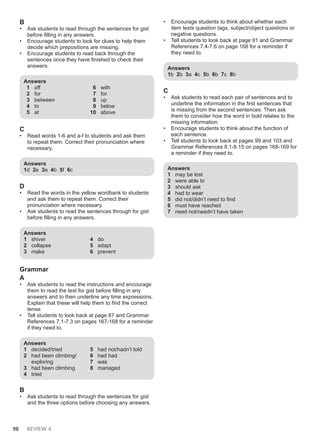
102 UNIT 9
• Ask students to do the task individually, but check
answers as a class.
Answers
1 is used
2 was damaged
3 are being carried out
4 are sent/are being sent
5 will be built/are going to be built
6 is always stored/has always been stored
7 was being tested
8 have been discovered
E
• Ask students to read the first sentence in each item
and to underline the verbs and make a note of the
tense they are in. Remind them that in passive
sentences the verb be should be in the same tense
as the main verb in the active sentence. Point out
that the subject of the verb will change and that this
may affect the form of the passive verb.
• Ask students to do the task individually, but check
answers as a class.
Answers
1 is being developed by
2 have been changed dramatically by
3 blood samples were sent to the lab by
4 will have been designed by NASA
5 will be given instructions
6 ever be answered by
Extra Task (for early finishers)
See photocopiable material on page 149.
Listening
• Ask students to look at the picture at the bottom
of page 114, read its accompanying caption and
describe to a partner what the picture shows.
Encourage students to discuss why scientists might
make robots like this and how they might be able to
help us.
A
• Remind students that in odd-one-out tasks they
should try to think about what connects the words so
that they can decide which one doesn’t relate to the
other two.
• Ask students to do the task individually, but check
answers as a class.
Answers
1 laser (‘Toy’ and ‘model’ are used to say that an
object isn’t the genuine article but a copy of it, but
a ’laser’ is a device which gives out ray of light.)
2 battery (‘Gadgets’ and ‘devices’ are instruments
that can be used to help you do something, but
‘batteries’ are used to power things.)
3 protect (‘Guess’ and ‘predict’ mean to make an
estimate about something either in the present or
future, but ‘protect’ means to make sure no harm
comes of someone or something.) →
4 fascinating (‘Necessary’ and ‘very important’ are
used to talk about something that is essential or
significant, but ‘fascinating’ means that something
is extremely interesting.)
5 attach (‘Try out’ and ‘test drive’ mean that you
use something to see how good it is, but ‘attach’
means to join one thing to another.)
6 design (‘Competitions’ and ‘races’ are kinds
of contests, but a ‘design’ is a plan for how
something should be built or made.)
B
• Ask students to read sentences 1-5 and answer any
questions they might have.
• Explain to students that the ideas in the sentences will
be heard on the recordings but that they have to listen
carefully to decide if they match what is said exactly or
just the basic idea of the recording.
• Go to track 17 on the Class Audio CD and play the
recording all the way through once and ask students
to write their answers. Then ask students to compare
their answers with a partner.
• Play the recording again and ask students to check
their answers and to fill in any missing answers.
• Check the answers as a class and ask students to
justify their answers.
Answers
1F 2F 3T 4T 5F
Turn to pages 161 and 162 for the tapescript.
Close-Up
• Ask students to read the instructions for C and to
glance at the task. Elicit that there are no questions on
the page and that there are three separate parts to it.
• Read the information in the Close-Up box to students
and explain anything they don’t understand.
C
• Explain to students that they will hear one piece of
a radio interview, then hear all the questions for that
part together, before the recording continues on to
the next part.
• Tell students to make notes next to each option so
that they remember what the information in each one
refers to when they hear the questions.
• Go to track 18 on the Class Audio CD and play the
recording once all the way through and ask students
to write their answers. Then ask students to compare
their answers with a partner.
• Play the recording again and ask students to check
their answers and to fill in any missing answers.
• Check the answers as a class and ask students to
justify their answers.
Answers
1a 2c 3c 4a 5a 6b 7a 8c
Turn to page 162 for the tapescript.
UNIT 9 103
Teaching Tip
Explain to students that they should try to listen
to English as much as possible outside of the
classroom in order to improve their listening skills.
Encourage them to watch films and TV programmes
without subtitles and to listen to radio interviews in
English whenever they can.
Speaking
• Ask students to read the questions and answer any
queries they may have about them.
• Tell students to work in pairs and to take it in turns to
answer the questions.
• Go round the class monitoring students to make sure
they are carrying out the task properly. Don’t correct
any mistakes at this stage, but make a note of any
mistakes in structure and pronunciation.
• Ask each pair to answer one of the questions and
repeat until each pair has had a turn.
• Write any structural mistakes that students made on
the board without saying who made them, and ask
students to correct them. Deal with any problems in
pronunciation that came up.
Answers
Students’ own answers
B
• Ask students to read the instructions and make sure
they understand they should rank the devices in
order of importance within the context of a school
and not according to which ones they like the best.
Encourage them to think about why each device
could be important for the school.
• Read the names of the devices out and ask students
to repeat them. Correct their pronunciation where
necessary.
• Ask students to do the task on their own and then to
compare their answers with a partner and to justify
any different answers they have.
• Check answers as a class.
Answers
Students’ own answers
Useful Expressions
• Ask students to read the instructions for C and elicit
that they will decide on the two most useful devices
shown. Also elicit that they will have to justify to their
partner why they feel the devices they choose are
most useful.
• Ask students to read the expressions for justifying
choices in Useful Expressions and explain anything
they don’t understand.
• Remind students that they should use expressions
like these in order to explain their choices to their
partner.
Close-Up
• Read the information in the Close-Up box to students
and answer any questions they might have.
• Point out that there are no right or wrong answers
for this task but that their choices must be supported
with logical reasons.
C
• Ask students to read the task again and to decide
what the devices in the pictures are. Encourage them
to look back at B if they get stuck.
• Remind students that the devices are for the school’s
media centre and ask them to spend a minute
deciding which two would be most useful and to think
of reasons why they would be useful. Also encourage
them to think about why the other devices wouldn’t
be as useful.
• Ask students to work in pairs to discuss their choices.
• Go round the class monitoring students to make sure
they are carrying out the task properly. Don’t correct
any mistakes at this stage, but make a note of any
mistakes in structure and pronunciation.
• Ask each pair to say which devices they chose and
why, and repeat until each pair has had a turn.
• Write any structural mistakes that students made on
the board without saying who made them, and ask
students to correct them. Deal with any problems in
pronunciation that came up.
Answers
Students’ own answers
Speak Up!
• Ask students to read the questions quickly and deal
with any queries they may have.
• Tell students to work in pairs and to take it in turns to
answer the questions.
• Go round the class monitoring students to make sure
they are carrying out the task properly. Don’t correct
any mistakes at this stage, but make a note of any
mistakes in structure and pronunciation.
• Ask each student to answer one question until
everyone has had a turn.
• Write any structural mistakes that students made on
the board without saying who made them, and ask
students to correct them. Deal with any problems in
pronunciation that came up.
Answers
Students’ own answers
Vocabulary
A
• Ask students to look at the picture accompanying the
text on page 116 and ask them to guess how it might
be related to technology. Accept any answers at this
stage.
• Tell students to read the text without circling any
answers to see if they guessed right.
• Ask students to do the task individually, but check
answers as a class.
• Remind students that there is a prepositions list for
their reference on page 186.
104 UNIT 9
Answers
1 on
2 about
3 to
4 under
5 for
6 on
7 on
8 with
9 of
10 in
B
• Read the expressions in bold to students and ask
them to repeat them. Correct their pronunciation
where necessary.
• Ask students to do the task individually, but check
answers as a class.
• Remind students that there is a list of collocations and
expressions on page 185 for their reference.
Answers
1b 2a 3a 4b 5a
C
• Ask students to read the sentences to decide
what part of speech can follow on from the word
immediately before the gap. Ask them to bear this in
mind as well as the general meaning of the sentence
when deciding what the answers are.
• Ask students to do the task individually, but check
answers as a class.
Answers
1 sell like hotcakes
2 of the range
3 Mass production
4 is leading the field
5 state of the art/top of the range
D
• Ask students to look at the words in bold in the
statements and elicit that they come from B.
• Ask students to work in pairs and to take it in turns to
ask and answer the questions. Encourage them to
justify their answers.
• Then as a class ask the questions at random round
the class making sure every student answers a
question.
• You could also activate the vocabulary in this lesson
further by writing the prompts below on the board
and asking students to use them to ask their partner
questions.
- you / ever / be / safari
- you / be concerned / use of surveillance cameras
- what / information / you / usually / look / on the
Internet
- what / gadget / sell like hotcakes / these days
- you / own / state of the art / device
- you / an expert / technology
Extra Task (for early finishers)
See photocopiable material on page 149.
Grammar
A
• Ask students to look at the words in bold in sentences
a-c and ask them if they are passive or active forms
(passive) and how they can tell (The verb ‘be’ is used as
an auxiliary verb and is followed by the past participle.).
• Ask students to read the sentences carefully and to
then answer the questions.
• Ask students to do the task individually, but check
answers as a class.
Answers
1c 2b 3a
Complete the rules.
• Ask students to read the rules before filling in any
answers. Encourage them to look back at the
sentences in A to help them.
• Ask students to do the task individually, but check
answers as a class.
Answers
Answers in order of appearance: being, to be, be
Now read the Grammar Reference on page 170 with
your students.
B
• Ask students to read the sentences without filling in
any answers at this stage. Ask them to underline any
modal verbs, verbs and phrases which are followed
by gerunds, and verbs which are followed by the full
infinitive in the second sentences.
• Remind students that they can look back at A, the
Grammar Reference and the Irregular verbs list on
174-175 if they need help with the task.
• Ask students to do the task individually, but check
answers as a class.
Answers
1 be delivered
2 be built
3 being given
4 being told
5 be repaired
6 be handed in
C
• Ask students to look at the picture accompanying
the text and ask them how this robot is different from
Aibo (It has human characteristics) and ask them
why they think the robot has been given human facial
features.
• Ask students to read the text without circling any
answers at this stage to find out if they were right.
• Remind students to underline any modal verbs, verbs
and phrases which are followed by gerunds, and
verbs which are followed by the full infinitive before
the gaps.
• Remind students that they can look back at A, the
Grammar Reference and the Irregular verbs list on
174-175 if they need help with the task.
• Ask students to do the task individually, but check
answers as a class.
UNIT 9 105
• If students seem interested, you might like to give
them further information using the Background
Information box below.
Answers
1a 2a 3b 4c 5a 6a
Background Information
Kismet was developed at the Massachusetts Institute
of Technology (MIT) in the late 1990s. It has become
a symbol of the development of artificial intelligence.
Kismet can show emotions through facial expressions
by moving its ears, eyelids, eyebrows, lips, head and
jaw, as well as through its voice and movements.
Extra Task (for early finishers)
See photocopiable material on page 149.
Writing
• Ask students to read the information about topic
sentences and answer any questions they might
have. Explain that a topic sentence tells the reader
what the paragraph is going to be about as it
contains the main idea.
A
• Ask students to read sentences 1-6 and to think
about whether each sentence would appear at
the beginning of a paragraph or in the body of the
paragraph. Encourage them to underline any linking
words and expressions that might give them clues to
where each sentence might come.
• Ask students to do the task on their own and then to
compare their answers with a partner’s and to justify
any different answers they might have.
• Check as a class.
Answers
1SI 2TS 3TS 4SI 5SI 6SI
Teaching Tip
You could expand this task further by asking
students which two main arguments are presented in
the sentences (those for and against surveillance).
Ask them to group the topic sentences and
supporting ideas together into two paragraphs and
to say which order they should come in to follow on
logically from each other (2, 5 & 1 and 3, 4 & 6).
B
• Ask students to read the instructions and the writing
task and to underline any key words and phrases.
• Ask students what arguments there are for and
against the statement and to say whether they agree
with it or not.
• Ask students to do the task individually, but check
answers as a class.
Answers
1 means of moving from one place to another such
as buses, taxis, trains, trams, etc
2 It might annoy others.
3 an essay
4 the arguments for and against using mobile
phones on public transport
5 yes
C
• Ask students to read topic sentences A-D and then
the rest of the essay without filling in any answers at
this stage. Ask them if the writer agrees or disagrees
with the statement (He/She mainly agrees with it.).
• Ask students to do the task individually, but check
answers as a class.
Answers
1C 2B 3D 4A
Look again!
D
• Ask students if they have changed their views about
the statement in B after reading the model essay.
• Tell students to now read sentences 1-6 and then
to look back at the article to help them find the right
answers.
• Ask students to do the task individually, but check
answers as a class.
Answers
1T 2F 3T 4F 5F 6T
E
• Remind students that they should always make a
plan for their writing before they begin.
• Ask them to skim through the essay again and to
write what the main idea of each paragraph is next
to it. Then ask them to compare their notes to the
descriptions in E before matching them to each
paragraph.
• Ask students to do the task individually, but check
answers as a class.
Answers
a3 b4 c1 d2
F
• Read the expressions in Useful Expressions to
students and ask them to repeat them. Correct their
pronunciation where necessary and explain anything
they don’t understand.
• Ask students to say which of these expressions are
used in the model essay (On the one hand,…; On
the other hand,…; Many people believe…; In my
opinion,…).
• Ask students to do the task individually, but check
answers as a class.
106 UNIT 9
Answers
1 opinion
2 majority
3 hear
4 mind
5 disagree
6 decide
7 belief
8 state
Over to you!
G
• Ask students to read the instructions and the task
and to underline the key words and phrases.
• Encourage students to ask themselves questions like
the ones in B in relation to this task.
• Ask students how this task is similar and how it is
different to the task in B (It also asks for an essay
concerning technological appliances, but the focus of
it is slightly different.).
• Ask students to work in pairs to discuss arguments
for and against the statement and to decide whether
they agree with the statement or not. Give students
help with any vocabulary they may need but haven’t
already covered in the unit.
• Give students time to make a plan for their essay in
class, but set the writing task for homework.
• Encourage students to use the Writing Reference
and checklist for essays on page 183.
Plan
Para 1: Introduce the main topic of the essay.
Para 2: Discuss the arguments I agree with.
Para 3: Discuss the arguments I disagree with.
Para 4: Sum up the main arguments and state your
opinion.
Suggested answer
Essay
Nowadays, we take MP4 players and iPods for
granted and use them everywhere we go. However,
it has been suggested that they should be banned at
school.
On the one hand, many students believe that we
should have the freedom to decide where and when
we listen to music. There are some times at school
when listening to music is a great way to pass some
time. For example, during breaks and at lunch,
students’ time is their own and they enjoy listening to
their favourite songs.
On the other hand, many teachers feel MP4 players
and iPods distract students when they are at school.
Very often students listen to music in class and don’t
pay attention to what the teacher is saying. What this
means is that students don’t learn as much as they are
supposed to.
In conclusion, MP4 players and iPods are fantastic
gadgets and can be a great source of entertainment.
→
In my opinion, they should not be banned from
school, but students must understand that there is a
time and place for everything, and class time is not
the time to be listening to music.
Close-Up
• Read the information in the Close-Up box to
students and answer any questions they might have.
Encourage them to use these expressions to help
them put their ideas in order and express themselves
properly. Remind students that they should write in
an objective manner in the body of the essay and
only directly state their own opinion in the conclusion.
Also remind them that they should use formal
language as they are writing an essay.
Useful Expressions
• Remind students that these expressions can help
them to write in the correct register for an essay.
You could spend some time discussing which
expressions are most likely to be found in topic
sentences and which ones in supporting ideas.
Make sure students realise that the expressions
under Stating your opinion should be found only in
the conclusion.
UNIT 9 107
General Note
The National Geographic videos can be used as an
interesting way to introduce your students to other
cultures. They are authentic National Geographic
videos, and it is not necessary for students to
understand everything they hear to benefit from them.
Some of the tasks focus on the visual aspects of the
videos, so students can concentrate more on what they
see than on what they hear. They are also a good way
to encourage your students to watch TV programmes
and films in English so that they can get used to the
sound of the language. The more students are exposed
to English, the easier it will be for them to pick up the
language.
Background Information
The Mars Rovers, Spirit and Opportunity, were
launched on June 10th
and July 7th
2003. They
landed on Mars on January 3rd
and 24th
2004, and
are still there to this day. The robots were launched
inside airbags which protected them while in orbit
and allowed them to land without any damage to the
machines. These airbags burst on landing. The robots
are equipped with very sophisticated machinery that
allows them to gather any necessary information about
the terrain on Mars. The robots have arms that can
move in a similar way to human arms.
Before you watch
A
• Ask students to turn to page 120 and look at the title,
the picture and its accompanying caption and ask
them what they imagine they are going to learn about
in the documentary.
• Ask students to read the questions and explain
anything they don’t understand. Then ask them to
work in pairs or small groups to ask and answer the
questions.
• When they have finished, ask different students
at random round the class to answer each of the
questions.
Answers
Students’ own answers
While you watch
B
• Explain to students that they are now going to watch
the DVD. Tell them that the documentary is quite
short.
• Ask students to read the statements and to underline
any key words and phrases they find. Ask students
how the robots might have gathered information
about Mars.
• Play the DVD all the way through and ask students
to make a note of their answers.
Then ask students to compare their answers with a
partner and to justify any answers they have that are
different.
• Play the DVD a second time and ask students
to check their answers and to fill in any missing
answers. Then check answers as a class.
Answers
1T (00:13)
2F (00:42)
3F (01:36)
4T (01:53)
5T (02:48)
6F (03:07)
After you watch
C
• Explain to students that the text is a summary of the
information in the documentary. Before they read it,
ask them to work in pairs to discuss the main ideas
in the documentary.
• Ask students to read the text without filling in
any answers at this stage to see if the ideas they
mentioned are covered in the text. Also encourage
them to think about which part of speech is missing
from each gap.
• Read the words in the yellow wordbank to students
and ask them to repeat them. Correct their
pronunciation where necessary.
• Ask students to do the task individually, but check
answers as a class.
Answers
1 whereas
2 find
3 signs
4 drive
5 rough
6 operate
7 patterns
8 alternative
9 planet
10 existed
D
• Ask students to read the questions and explain
anything they don’t understand. Then ask them to
work in pairs or small groups to ask and answer the
questions.
• When they have finished, ask different students
at random round the class to answer each of the
questions.
Answers
Students’ own answers
Mars Rover
9
9
DVD
108 UNIT 10
Unit plan
Reading: article, multiple matching
Vocabulary: entertainment-related words, phrasal verbs, word formation
Grammar: reported speech: statements, questions, commands, requests & reporting verbs
Listening: multiple-choice questions
Speaking: talking about entertainment, comparing photos, expressing uncertainty
Writing: formal letter, clauses of purpose
10
10That’s Entertainment!
Unit opener
• Write That’s Entertainment! on the board and ask
students what kind of activities they associate with
entertainment. Try to elicit listening to/playing music,
dancing, watching a film/play, listening to the radio, etc.
• Explain to students that That’s Entertainment! is the
title of Unit 10. Ask them to turn to page 121 to discuss
the picture and its accompanying caption with a
partner. Encourage them to describe the picture and
their reactions to it as well as to say how it might be
related to the theme of the unit.
• Ask each pair to report their discussion to the rest of
the class.
• If students seem interested, you might like to give them
further information using the Background Information
box below.
Background Information
Breakdance is a form of street dance. It dates back
to the 1970s where it was first practised among
Afro-American youths in New York City. 'Breaking'
is part of the hip-hop youth culture and is usually
practised to this kind of music. Participants often take
part in ‘battles’ which are like dance competitions.
These battles can either be individual or in groups
called crews, with individuals or crews competing
against one another. Among the most famous crews
are the 'Rock Steady Crew' and the 'Justice Crew'.
Teaching Tip
Ask students if they are involved in any activities
similar to breakdancing that are part of the youth cul-
ture in their country. If there are students who prac-
tise an activity, ask them to tell the rest of the class
about it and to say why they do it. If possible, ask the
student(s) to give the others a demonstration.
Reading
• Write the words string, wind and percussion on the
board and draw lines between each word to make a
table with columns. Ask students what these three
words can all refer to (kinds of instruments) and ask
them which instruments they know in each category.
Write each instrument under the correct heading on
the board to complete the table.
• Ask students which instruments are traditional in their
country and to say whether they are string, wind or
percussion instruments. Then ask them if they or any
of their relatives play any of these instruments.
A
• Ask students to look at the pictures of the four
instruments. Read out their names and ask students
to repeat them. Correct their pronunciation where
necessary.
• Elicit what kind of instrument each one is (1 bouzouki
– string, 2 steel drum – percussion, 3 bagpipes and 4
didgeridoo – wind)
• Read the countries in the yellow wordbank to
students and ask them to repeat them. Correct their
pronunciation where necessary.
• Explain that they should match the particular kind
of each instrument shown in the pictures with the
countries they originate from.
• Ask students to do the task individually, but check
answers as a class.
Answers
1 Greece
2 Trinidad & Tobago
3 Scotland
4 Australia
B
• Ask students to look at the pictures accompanying
the text and ask them if they know who any of the
people are.
• Ask them to read the instructions and point out that the
person they are looking for is one of the people in the
pictures.
• Ask students to do the task individually, but check
answers as a class.
Answers
C Assane N’Diaye
Wordwise
• Ask students to look at the words in pink in the text and
to try to work out from the context they are in what they
mean.
• Ask them to compare their own meanings with the
definitions in the Wordwise box.
UNIT 10 109
Close-Up
• Read the information in the Close-Up box to students
and explain anything they don’t understand.
• You could ask them to cover up the questions in C and
tell them to write 5 or 6 questions of their own for this
text. Remind them that if a question has two answers,
they should provide two boxes. Go round the class
helping students with their questions. Then, when they
have finished ask students to swap their questions with
a partner and to do each other’s task and finally, to
hand it back to their partner for correction.
Teaching Tip
Remind students that in multiple-matching tasks, they
should read the text once then read all the questions.
They should then scan each paragraph to find and
underline information related to each question.
C
• Ask students to read through the questions and to
underline any key words or phrases. Ask them to scan
the paragraphs to find these words and phrases or
synonyms.
• Ask students to do the task individually, but check
answers as a class.
• If students seem interested, you might like to give them
further information using the Background Information
box below.
Answers
1C (...their lives as fishermen and about working
long, hard days and earning almost no money)
2A (They started singing together in 1993 and in
1996 they released their first CD...)
3D (Brainpower had his first hit in 2000 and he
has released seven albums since then.)
4B (...Roma teens meet for a hip-hop class called
‘Rap for Peace Hip-Hop.’)
5A (Their songs...are very humorous.)
6C (...music gives Assane hope.)
7B (...the teens learn to write rap music...)
8C (Assane dreams of making a CD...)
9D (While he mainly works alone,...)
10B (...the all-female rap group Godessa...)
Background Information
Hip hop has its origins in the Afro-American community
in the South Bronx area of New York. Its name is
thought to come from the word ‘hip’ meaning ‘in the
know’ or ‘fashionable’ and ‘hop’ which is a movement.
Hip hop started in the 1970s and today it is an important
element in the youth cultures of most countries in the
world. DJ Afrika Bambaataa, one of the most influential
American hip hop DJs, said that the most important
parts of the hip hop culture are DJ-ing, MC-ing
(speaking words to music), breaking and graffiti.
Get the meaning!
D
• Read the words in the yellow wordbank to students
and ask them to repeat them. Correct their
pronunciation where necessary.
• Ask them to read the phrases and their meanings 1-6
and answer any questions they might have.
• Ask students to do the task individually, but check
answers as a class.
Answers
1 form
2 earn
3 co-operate
4 appear
5 sign
6 release
What do you think?
• Ask students to read the questions and the points and
answers any questions they might have.
• Ask students to work in pairs or small groups to
discuss their ideas.
• As a class, ask students which points they feel make
a good song and to say why. Encourage students to
discuss specific songs or types of music to support
their ideas.
• You could extend this task further by asking students
if they write or have ever written their own music. If
so, encourage them to tell the rest of the class about
their music and what was important to them when they
wrote it.
Vocabulary
A
• Read the words in the yellow wordbank to students
and ask them to repeat them. Correct their
pronunciation where necessary.
• Ask students what all the words have in common
(entertainment) and explain that they all refer to
different aspects of the entertainment industry.
• Encourage students to read all the words in the six
word groups before they write any answers and to
think about what connects the words in each set.
• Ask students to do the task individually, but check
answers as a class.
Answers
1 documentary
2 director
3 box office
4 characters
5 script
6 musician
Teaching Tip
You could expand this task further by asking
students to come up with other words related to the
entertainment industry eg other kinds of TV shows
(the news, cartoon, comedy), other people who work
on films and plays (camera operator, stuntperson,
make-up artist), as well as words generally related
to the entertainment industry (theatre, stage,
backstage, costume).
B
• Read the words in the yellow wordbank to students
and ask them to repeat them. Correct their
pronunciation where necessary.
• Elicit that all words are verbs and remind students that
they should read the sentences for gist before writing
any answers.
110 UNIT 10
Also encourage them to read the sentences again
once they have finished to check their answers.
• Ask students to do the task individually, but check
answers as a class.
Answers
1 recommend
2 review
3 clap
4 attend
5 release
6 broadcast
7 rehearse
8 entertain
C
• Remind students that they should read through the
sentences again for gist before circling any answers.
Also encourage them to read the sentences again
once they have finished to check their answers.
• Ask students to do the task individually, but check
answers as a class.
Answers
1c 2a 3b 4b 5b 6c 7a 8c 9b 10a
D
• Ask students to look at the picture on page 124 and
ask them what the person in it is doing (listening to
music and reading a book).
• Ask students to read the short text to see how it
relates to the picture.
• Ask students to discuss the text in pairs. Encourage
them to discuss all aspects, for example what kinds
of music they like and whether or not they listen to
music while studying.
• You could also activate the vocabulary in this lesson
further by asking students to discuss their favourite
films and plays. Encourage them to talk about all
aspects of the productions including the plot, acting,
soundtrack, setting, genre, etc.
Extra Task (for early finishers)
See photocopiable material on page 150.
Grammar
• Ask students to work in pairs and assign each
student a number one or two. Ask all number ones
to describe what they see in the picture on page
125 to their partner and to say what they associate
it with. Then ask all the number twos to join up with
another number one student to tell him/her what their
previous partner said.
• Elicit from students that student twos had to report
information and explain that in this part of the lesson
they will learn about reporting speech in English.
A
• Ask students to look at the words in bold in the
sentences and ask which are verbs (went, had
been), which are pronouns (I, she) and which are
time expressions (last week, the week before).
• Ask students to read the sentences carefully to
discuss the changes.
Answers
‘I’ becomes ‘she’, ‘went’ becomes ‘had been’ and
‘last week’ becomes ‘the week before’.
Complete the rules.
• Ask students to read the rules before filling in any
answers. Encourage them to look back at the
sentences in A if they need any help.
• Ask students to do the task individually, but check
answers as a class.
Answers
Answers in order of appearance: past, time
B
• Ask students to underline the reporting verbs and
then to discuss the difference in structure with a
partner.
• Check answers as a class.
Answers
The reporting verbs are ‘say’ and ‘tell’. There’s an
object after the verb ‘tell’ but not after ‘say’.
Complete the rules.
• Ask students to read the rules before filling in any
answers. Encourage them to look back at the
sentences in B if they need any help.
• Ask students to do the task individually, but check
answers as a class.
• Once the answers have been checked, ask students
to look back at the introduction and paragraph A in
the text on page 122 to find examples of reported
speech. Ask them what the people would actually
have said (‘Snoop Dogg … said that hip-hop was
what made the world go round…’ – ‘Hip-hop is what
makes the word go round.’; Hector Papadimitriou, a
15-year-old from Athens, said that he had been a fan
for two years.’ – ‘I have been a fan for two years.’).
Answers
tell
Now read the Grammar Reference on page 170-171
with your students.
C
• Ask students to look at the words in pink and
elicit that they are either verbs, pronouns or time
expressions.
• Remind them to read the sentences and to pay
attention to the words immediately before the options
and to think about what the person would actually
have said.
• Encourage them to look back at A and B and the
Grammar Reference if they need help with the task.
• Ask students to do the task individually, but check
answers as a class.
UNIT 10 111
Answers
1 said
2 she
3 following day
4 before
5 at that moment
6 her
7 you
8 told
D
• Encourage students to read the sentences carefully
before filling in any answers and to underline the
reporting verb in each new sentence.
• Ask students to think about what changes in tenses,
pronouns and time expressions are necessary in
each sentence. Also, tell them to bear in mind the
different structures that follow ‘say’ and ‘tell’.
• Encourage them to look back at A and B and the
Grammar Reference if they need help with the task.
• Ask students to do the task individually, but check
answers as a class.
Answers
1 (that) she had enjoyed the party the night before/
the previous night
2 (that) his mum didn’t like that reality show
3 us (that) we were going to visit the National Art
Gallery the next/following day
4 (that) Susan and Amanda would help her learn
her lines
5 (that) she had to finish her film review that night
6 (that) he was watching an interesting
documentary at that moment
7 me (that) Matthew had joined the drama group
the previous month
8 us (that) her grandmother had seen The Phantom
of the Opera
Extra Task (for early finishers)
See photocopiable material on page 150.
Listening
• Ask students if they have ever acted in a play or
been behind the scenes in a theatre before. If so, ask
them what it was like. If they haven’t, ask them what
they imagine it would be like.
A
• Ask students to look at the picture and to describe it
with their partners. Encourage them to discuss what the
various rooms might be and what they can see in them.
• Read words 1-5 to students and ask them to repeat
them after you. Correct their pronunciation where
necessary.
• Ask students to do the task individually, but check
answers as a class.
Answers
1e 2b 3c 4a 5d
B
• Ask students to predict the kinds of things people
might say about the things and places mentioned in
A before they listen to the recording.
• Go to track 19 on the Class Audio CD and play the
recording once all the way through and ask students
to write their answers. Ask students to discuss their
answers with a partner and then check answers as a
class.
Answers
1 stage
2 dresser
3 backstage
4 dressing room
5 costumes
Turn to page 162 for the tapescript.
Close-Up
• Read the information in the Close-Up box and
answer any questions that students might have.
• Remind students that it is important to read the
questions and the options carefully before listening
to the recording and to make notes next to each
option, so that they are better prepared to answer the
questions. You could also ask students to think about
what the answers might be before they listen.
C
• Go to track 20 on the Class Audio CD and play the
recording once all the way through and ask students
to write their answers. Then ask students to compare
their answers with a partner.
• Play the recording again and ask students to check
their answers and to fill in any missing answers.
• Check the answers as a class and ask students to
justify their answers.
Answers
1b 2b 3a 4c 5b 6b
Turn to pages 162 and 163 for the tapescript.
Teaching Tip
Encourage students not to panic if they don’t
understand or don’t catch all the information relating
to a particular question. Tell them they should move
on to the next question if this happens and then
to guess the answer to the question they missed.
There’s a one-in-three chance that they will get the
answer correct, so they shouldn’t leave any question
unanswered.
Speaking
A
• Ask students to read the questions and answer any
queries they may have about them.
• Tell students to work in pairs and to take it in turns to
answer the questions.
• Go round the class monitoring students to make sure
they are carrying out the task properly. Don’t correct
any mistakes at this stage, but make a note of any
mistakes in structure and pronunciation.
• Ask each pair to answer one of the questions and
repeat until every pair has had a turn.
112 UNIT 10
• Write any structural mistakes that students made on
the board without saying who made them, and ask
students to correct them. Deal with any problems in
pronunciation that came up.
Answers
Students’ own answers
B
• Explain to students that when they do speaking
tasks where they have to answer questions that they
should be as polite as possible.
• Ask students to read through the sets of sentences
1-4 and elicit that both sentences in each set mean
almost the same thing but that one of them isn’t
expressed very politely.
• Ask students to work in pairs and for one student
to read all the a sentences and the other to read all
the b sentences. Ask them to say the sentences in
an appropriate manner and then to decide which
sentences are the most polite.
• Elicit that polite speech avoids strong verbs and
emphatic idioms and uses softeners like a bit, quite,
rather, etc.
• Check answers as a class.
Answers
1b 2b 3a 4b
Close-Up
• Read the information in the Close-Up box to students
and answer any questions they might have.
• Ask them what kinds of expressions they can use to
express uncertainty. Explain that these expressions
help them sound more natural and polite when
speaking.
Useful Expressions
• Read the Useful Expressions for Expressing
uncertainty to students and ask them to repeat them.
Correct their pronunciation where necessary.
• Encourage students to use these phrases when they
describe the pictures in C.
C
• Ask students to read the instructions and to decide
who will be Student A and who will be Student B.
Then ask them to read their specific task below
pictures 1 and 2.
• You might like to point out that Student A’s task
is based on the photos, but Student B’s task is
personal.
• Ask students to work in pairs and explain that
Student A will carry out his or her task first.
• Go round the class monitoring students to make sure
they are carrying out the task properly. Don’t correct
any mistakes at this stage, but make a note of any
mistakes in structure and pronunciation.
• As a class, ask one Student A to tell the rest of the
class what he or she said about the pictures. Ask
the other Student As if they agree or if they have
anything else to add.
Then ask a few Student Bs to answer their question.
• Follow the same procedure for pictures 3 and 4.
Make sure that students realise that this time Student
B will describe the pictures and Student A will answer
a personal question.
• Write any structural mistakes that students made on
the board without saying who made them, and ask
students to correct them. Deal with any problems in
pronunciation that came up.
Answers
Students’ own answers
Speak Up!
• Ask students to read the questions quickly and deal
with any queries they may have.
• Tell students to work in pairs and to take it in turns to
answer the questions.
• Go round the class monitoring students to make sure
they are carrying out the task properly. Don’t correct
any mistakes at this stage, but make a note of any
mistakes in structure and pronunciation.
• Ask each pair to answer one question until every pair
has had a turn.
• Write any structural mistakes that students made on
the board without saying who made them, and ask
students to correct them. Deal with any problems in
pronunciation that came up.
Answers
Students’ own answers
Teaching Tip
You could approach the task in Speak Up! in a slightly
different way. Ask students to work in small groups
and assign a reporter to each group. Ask them to
discuss the questions and to make notes on their
answers. The reporter from each group should then
report the idea discussed to the rest of the class.
Encourage the reporters to use reported speech as
much as possible when speaking to the class.
Vocabulary
A
• Read the phrasal verbs in the yellow wordbank to
students and ask them to repeat them. Correct their
pronunciation where necessary.
• Ask students to read the sentences and to try to work
out the meaning of the words in bold and how they
relate to the phrasal verbs above.
• Explain to students that some phrasal verbs will be
split by an object pronoun.
• Ask students to do the task individually, but check
answers as a class.
Answers
1 The documentary didn’t turn out to be very good.
2 The security guards might turn me away if I don’t
have a ticket for the concert. →
UNIT 10 113
3 Can you turn on the radio as my favourite
programme is on in a minute?
4 Bob, turn down the music. It’s too loud!
5 Could you turn up the television, Mum? I can’t
hear a thing.
6 Make sure you turn off the electric guitar when
you have finished using it.
B
• Read the phrasal verbs in bold to students and ask
them to repeat them. Correct their pronunciation
where necessary.
• Ask students to read the sentences 1-6 and their
meanings a-f before writing any answers.
• Ask students to do the task individually, but check
answers as a class.
Answers
1d 2c 3a 4f 5b 6e
C
• Read the words in the yellow wordbanks to
students and ask them to repeat them. Correct their
pronunciation where necessary.
• Ask students to say which part of speech each word is
and point out that sometimes there are two noun forms
and elicit that when this happens one will refer to a
person and the other to an idea, situation or event.
• Ask students to read the sentences without filling
in any answers at this stage to decide which part of
speech is missing from each one. Make sure they
realise they won’t use one of the words in each set.
• Ask students to do the task individually, but check
answers as a class.
• Once answers have been checked, ask students
to write sentences of their own with the words that
weren’t used.
Answers
1 imagine, imagination
2 producer, production
3 actor, acting
4 entertaining, entertainment
5 mysteriously, mystery
6 creative, create
7 drama, dramatic
8 performer, performance
Teaching Tip
Remind students to pay attention to the words
before and after the gaps and elicit that a subject
pronoun before a gap signals that a verb form is
missing. Elicit that an article, an article + adjective or
a possessive pronoun signals that a noun is missing.
Also elicit that if there is a subject and a verb the
word will either be an adjective or an adverb.
D
• Elicit that the words in bold in the statements come
from C.
• Ask students to read the four statements and answer
any questions they might have.
• Ask students to work in pairs and to take it in turns
to discuss these statements. Then as a class ask
students about their views on one of the statements
at random making sure each student discusses at
least one statement.
• You could also activate the vocabulary in this lesson
further by asking students to tell their partner about
the situations below using words from the lesson.
- an event/film that didn’t end as you expected
- a time when you or someone you know was
refused admission to a place
- a band you knew would become popular
- something that you’ve become too old for
- something that you find fun and a good way to
pass the time
• You could finish the task by asking students to report
on one or two things their partner told them.
Extra Task (for early finishers)
See photocopiable material on page 150.
Grammar
• Say the sentences and questions below to students
at random round the class and then ask the student
to report what you said to another student.
- Stand up.
- Can you open the window?
- Do you like hip hop?
- What is your favourite song?
- Where do you usually go to see films?
- Do you play the guitar?
• Explain to students that in this part of the lesson
they will learn how to report questions, commands,
requests and learn reporting verbs.
A
• Ask students to read the two sets of sentences and
elicit that the second sentences in each set reports
the first sentence.
• Ask students to read questions 1-3 and make sure
they understand that direct question refers to the
question in direct speech.
• Ask students to do the task individually, but check
answers as a class.
Answers
1 yes
2 if/whether
3 no
B
• Ask students to read the two sentences and
questions before writing any answers.
• Ask students to think about what the museum
employee and the music teacher might actually have
said and how they might have said it.
• Ask students to do the task individually, but check
answers as a class.
Answers
1b 2a
114 UNIT 10
C
• Read the verbs in bold to students and elicit that
these verbs replace say and tell and give us more
information about how the person says something.
• Ask students to do the task individually, but check
answers as a class.
Answers
1 promised, advised, denied, suggested
2 full infinitive
3 gerund
Now read the Grammar Reference on page 171 with
your students.
D
• Ask students to read the sentences carefully and to
pay attention to whether the second sentences have
reporting verbs and which verb form follows them. Also
tell them to consider whether there is a question word
in the sentence in direct speech that they should use or
whether they should use if or whether.
• You might want to ask students to do 1-6 first of all and
correct answers before going on to complete 7-12.
• Ask students to do the task individually, but check
answers as a class.
• Remind students to look back at the A, B and C and
the Grammar Reference if they need help with the task.
Answers
1 to turn down the volume
2 where the concert hall was
3 to turn the music down
4 if/whether I liked hip hop music
5 not to play my drums all day
6 if/ whether we liked the film
7 spending all his money
8 not to be late
9 going to the music festival
10 to sit down
11 to buy the tickets in advance
12 to get/if I could get her a ticket for the play
Extra Task (for early finishers)
See photocopiable material on page 150.
Writing
• Read the information on Clauses of purpose to
students and answer any questions they might have.
• Write Iris went to the theatre … on the board and ask
students to come up with as many ways as possible
to complete the sentence so it says why she went
to the theatre. Encourage them to use clauses of
purpose (eg in order to see a play, for an audition, to
buy tickets, because she was bored, so that she could
see her friend who is an actor, in order pick up the torn
costumes, so as to meet the actor, etc).
• Ask students to look at the picture in the top right-hand
corner of page 130 and ask them what they can see.
Then ask them to work in pairs to discuss why people
would go to the place in the picture.
A
• Remind students to read through each sentence and
the options before circling any answers. Encourage
them to pay attention to the parts of speech before and
after each gap and to think about which part of speech
the words in the options are preceded and followed by.
• Also, remind them to read the sentences again once
they have finished to check their answers.
• Ask students to do the task individually, but check
answers as a class.
Answers
1b 2a 3b 4c 5a 6c
B
• Ask students to read the newspaper extract and the
task and to underline any key words and phrases
they find.
• Ask them how the two are related (The task asks for a
reply based on the ideas reported in the article.) and
whether the mayor’s proposal is a positive or negative
one for the students concerned (negative). Ask
students to come up with some reasons why students
might not like the mayor’s idea.
• Ask students to do the task individually, but check
answers as a class.
Answers
1T 2F 3F 4T 5T
C
• Ask students to skim through the model letter to see if
the reasons why students might object to the proposal
they mentioned above are also mentioned in the letter.
Ask them not to fill in any answers at this stage.
• Ask students to look at the words in the yellow
wordbank and elicit that they are all words and phrases
used to introduce clauses of purpose. Encourage
students to look back at the information at the top of
the page to help them with the task if they need to.
• Remind students to pay attention to the words
immediately before and after the gaps and to read
the letter again once they have finished to check
their answers.
• Ask students to do the task individually, but check
answers as a class.
Answers
1 to
2 in order
3 so that
4 for
5 as to
Look again!
D
• Ask students if they think Paula suggests a good
solution to the problem and whether they think the
mayor will change his/her mind.
• Ask students to read questions 1-6 and to then look
back at the article to help them find the right answers.
• Ask students to do the task individually, but check
answers as a class.
UNIT 10 115
Answers
1 The writer introduces herself and the reason she
is writing.
2 Yes, she does.
3 She says that students are not only interested in
pop music and that the students are concerned
about being forced to do something that they do
not want to do.
4 She has suggested that a number of seats could
be kept at each concert for students who really
wish to attend.
5 Students’ own answers
6 Yes, it is.
E
• Remind students that they should always make a plan
for their writing before they begin.
• Ask them to skim read the letter again and to write the
main idea of each paragraph next to it. Then ask them
to compare their notes to the descriptions in E before
writing the paragraph numbers.
• Ask students to do the task individually, but check
answers as a class.
Answers
a4 b2 c1 d3
F
• Read the four headings in F and the expressions in
Useful Expressions to students and ask them to repeat
them. Correct their pronunciation where necessary and
explain anything they don’t understand.
• Ask students to say which of these expressions are
used in the model letter (I am writing to inform you,…;
After reading the article in,…; …held a meeting…; We
feel…; We hope that you understand our concerns;
We would be happy to…).
• Ask students to do the task individually, but check
answers as a class.
Answers
1 Opening
2 Introducing/Discussing arguments
3 Providing solutions
4 Closing
Over to you!
G
• Ask students to read the instructions and the task and
to underline any key words and phrases they find.
• Encourage students to discuss what they have to write,
who they will write to and why they are writing.
• Ask students how this task is similar and how it is
different to the task in B (It also asks for a formal letter
to the mayor about something they disagree with, but
the topic is different.).
• Ask students to work in pairs to discuss why the
musicians might disagree with the mayor and how
they could present their arguments as well as to come
up with alternatives or solutions to the problem. Give
students help with any vocabulary they may need but
haven’t already covered in the unit.
• Give students time to make a plan for their letter in
class, but set the writing task for homework.
• Encourage students to use the Writing Reference and
checklist for letters on page 178.
Plan
Para 1: Introduce yourself and the reason why you
are writing.
Para 2: Refer to newspaper article and discuss one
reason why musicians disagree with the
proposal.
Para 3: Discuss another reason and suggest an
alternative solution.
Para 4: Summarise your arguments and propose a
future discussion.
Suggested answer
Formal letter
Dear Mayor,
I am a representative of the musicians of this town.
I am writing to inform you of the musicians’ views on
your proposal to close down the building where we
rehearse.
After reading the article in The City Times, the
musicians of the town held a meeting last week to
discuss the matter. Firstly, we would like you to know
that the musicians are not noisy when they rehearse
and that they have never been impolite to local
residents.
Furthermore, most of the musicians said at the
meeting that they are very concerned about being
forced out of their building and being prohibited from
rehearsing in any of the town’s public buildings. We
feel that the musicians will not benefit from these
proposals. Consequently, it would be better if the
mayor reconsidered prohibiting the town’s musicians
from playing in public buildings.
We hope that you understand our concerns. We
would be happy to come to your office so as to
discuss the matter further.
Yours faithfully,
Jerry Mayer
Close-Up
• Read the information in the Close-Up box to students.
Remind them that rhetorical questions and imperatives
are features that they should use in informal or semi-
formal writing and they should avoid them when writing
a formal letter. Encourage students to use full forms
like I am and not abbreviations. Also remind them that
when we don’t know the recipient’s name we end a
formal letter with Yours faithfully.
Useful Expressions
• Remind students that these expressions can help
them to write in the correct register in a formal letter.
They will also help them to structure their ideas well.
Point out that the purpose of the letter is to make the
mayor change his or her mind and the better they
express their ideas in the letter, the more likely this is
to happen.
116 UNIT 10
General Note
The National Geographic videos can be used as an
interesting way to introduce your students to other
cultures. They are authentic National Geographic videos,
and it is not necessary for students to understand
everything they hear to benefit from them. Some of
the tasks focus on the visual aspects of the videos, so
students can concentrate more on what they see than on
what they hear. They are also a good way to encourage
your students to watch TV programmes and films in
English so that they can get used to the sound of the
language. The more students are exposed to English, the
easier it will be for them to pick up the language.
Before you watch
A
• Ask students to look at the pictures and accompanying
captions on page 132 and then ask them to work in
pairs or small groups to answer the question.
• As a class, ask each pair or group to tell the others
what they said. Don’t correct them at this stage, but
ask them to listen carefully to the documentary to find
out if they were right.
Answers
Students’ own answers
While you watch
B
• Explain to students that they are now going to watch
the DVD. Tell them that the documentary is quite short.
• Ask them to read sentences 1-6 and explain anything
they don’t understand.
• Ask them to think about what the answers might be
before they listen again. Explain that they will hear
these exact sentences on the DVD and that they
should listen out for the specific words in pink.
• To check students understand where Trinidad and
Tobago is, draw their attention to its position on the
globe in the top-right corner of the page.
• Play the DVD all the way through without stopping
and ask students to make a note of their answers
while they listen. Then ask students to compare their
answers with a partner and to justify any answers they
have that are different.
• Play the DVD a second time and ask students to check
their answers and to fill in any missing answers. Then
check answers as a class.
Answers
1 popular
2 escape
3 rhythms
4 music
5 tune
6 creativity
After you watch
C
• Explain to students that the text is a summary of the
information in the documentary. Before they read it,
ask them to work in pairs to discuss the main ideas
of the documentary.
• Ask students to read the text without filling in
any answers at this stage to see if the ideas they
mentioned are covered in the text. Also encourage
them to think about what part of speech is missing
from each gap.
• Read the words in the yellow wordbank to students
and ask them to repeat them. Correct their
pronunciation where necessary.
• Ask students to do the task individually, but check
answers as a class.
Answers
1 lively
2 fills
3 backgrounds
4 invented
5 instruments
6 influenced
7 players
8 culture
9 belongs
10 share
After you watch
D
• Ask students to read the questions and explain
anything they don’t understand. Then ask them to
work in pairs or small groups to ask and answer the
questions.
• When they have finished, ask different students
at random round the class to answer each of the
questions.
Answers
To play music ‘by ear’ means that you don’t learn to
play it formally using sheet music, but that you listen
to someone else playing it and copy what you hear.
Students’ own answers
Steel Drums
DVD
10
10
REVIEW 5 117
Review 5
Review 5 Units ͵ & ͭͬ
Objectives
• To revise vocabulary and grammar from Units 9 and 10
Revision
• Explain to students that Review 5 revises the
material they saw in Units 9 and 10.
• Explain to students that they can ask you for help,
look back at the units and refer to the reference
sections at the back of the book if they’re not sure
about an answer, as the review is not a test.
• Decide on how you will carry out the review. You
could ask students to do one task at a time and
correct it immediately, ask them to do all the
vocabulary tasks and correct them before moving on
to the grammar tasks, or ask them to do all the tasks
and then correct them together at the end. If you do
all the tasks together, let students know every now
and again how much time they have got left to finish
the tasks.
• Ask students not to leave any answers blank and to
try to find any answers they aren’t sure about in the
units or the reference sections.
• Inform students beforehand that they will be doing a
review in the next lesson so that they can revise for
it at home. Revise the vocabulary and grammar as a
class before students do the review.
• When checking students’ answers to the review
tasks, make a note of any problem areas in
vocabulary and grammar that they still have. Try to
do extra work on these areas so that your students
progress well.
Vocabulary Revision
• Write digital camera on the board and ask students
to make a list of other technology and entertainment
lexical items of two or more words that they have
learnt in Units 9 and 10. Make sure they revise: USB
stick, graphic design, mass production, state of the
art, information technology, box office, closed-circuit
TV, remote control, music industry, GPS navigator,
digital camera and dressing room.
• Ask students which phrasal verbs they learnt in Unit
10 mean the following: become too old for (grow
out of), switch off (turn off), decrease the volume
(turn down), become popular (catch on), end in a
particular way (turn out), and run out of tickets for an
event (sell out).
• Ask students to tell you the difference between the
following pairs of words: install/set off, commercial/
industry, rehearse/release, gadget/field, and lead to/
log into.
Grammar Revision
• Write the sentences below on the board and ask
students if they are passive or active sentences.
- She turned on the GPS navigator. (active)
- They were painting the dressing room earlier.
(active)
- Information technology courses are offered at this
college. (passive)
- The film will be shot on location. (passive)
- We might install closed-circuit TV. (active).
• Ask students what changes we make to active
sentences in order to make them passive and elicit
that we can only make sentences which have an
object passive.
• Write the two sentences below on the board and
ask students which changes have been made in
the second sentence. Then revise all the possible
changes that happen when we report statements,
questions, orders and requests.
- ‘I’m going to buy this guitar next week.’ Jack said.
- Jack said that he was going to buy that guitar the
following week.
• Ask students what reporting verbs are and then ask
them to write reported sentences with the verbs
promise, announce, advise and suggest.
Vocabulary
A
• Read words 1-12 and a-l to students and ask them
to repeat them. Correct their pronunciation where
necessary.
Answers
1i 2g 3f 4j 5b 6k 7e 8c 9a 10h 11e 12l
B
• Read the words in the yellow wordbank to students
and then ask them to repeat them. Correct their
pronunciation where necessary.
• Ask students to read the sentences for gist before
filling in any answers.
Answers
1 release
2 lyrics
3 gadget
4 install
5 rehearse
6 field
7 industry
8 commercials
C
• Ask students to read the sentences for gist before
filling in any answers.
• Tell students to look for clues on either side of the
gaps to help them decide which words are missing.
Also encourage them to think about which part of
speech is missing.
• Encourage students to read through the sentences
again once they have finished to check their
answers.
Answers
1c 2c 3b 4a 5a 6a 7a 8b 9b 10c
118 REVIEW 5
Grammar
A
• Ask students to read each sentence for gist and to
decide whether it is in the passive or active voice.
Encourage them to circle the objects in the active
sentences and the subjects in the passive sentences
and to underline the verbs.
• Remind students that the verb tenses should remain
the same and that agents in passive sentences should
be introduced using by.
• Tell students to look back at pages 113 and 117 and
Grammar References 9.1-9.3 on pages 169-170 for a
reminder if they need to.
Answers
1 A new sound system has been installed in the
studio (by the technician).
2 A new documentary on wildlife is going to be
broadcast by the Discovery Channel.
3 All critics recommended this new film.
4 Did the director give the actors their roles last
night?
5 A new gadget may be developed by the
company next year.
6 The famous star doesn’t enjoy being followed by
fans and photographers.
7 A great number of actors admire the director.
8 A new album wasn’t being recorded by the
singer last year.
9 The company wanted to manufacture the new
device.
10 They had announced the release of the
soundtrack before 9 o’clock.
B
• Ask students to read both sentences in each item and
to underline the verbs, pronouns and time expressions
in the first sentences that will change in reported
speech.
• Also ask them to underline the reporting verbs and ask
them to pay attention to the structures that follow them.
• Tell students to look back at pages 125 and 129 and
Grammar References 10.1-10.6 on pages 170-171 for
a reminder if they need to.
Answers
1 (that) he wasn’t going to that concert that night
2 he would buy him a laptop
3 (that) the head teacher wanted to see her the
next day
4 when we were rehearsing the play
5 (that) he/she had had enough of actors not
listening to him/her
6 not to play my music so loudly
7 to have/that he/she would have the results
ready by the following month
8 if/whether she had got a signed autograph from
Rihanna
9 going and buying that new CD by Britney
Spears
10 Bob to replace that old mobile phone with a new
one
UNIT 11 119
Unit plan
Reading: advertisements, multiple-choice questions
Vocabulary: education-related words, collocations & expressions, prepositions
Grammar: causative, gerunds, infinitives
Listening: multiple matching
Speaking: talking about school and education, decision making, reaching a decision
Writing: report, both, either & neither
11
11Lessons to Learn
Unit opener
• Ask students to look at the title of Unit 11 on page
135. Ask them what they think this unit will be about
(education).
• Ask students if they know any idioms in English with
the words lesson and learn (eg to learn a lesson, to
teach someone a lesson, to learn the hard way, to be
a tough/hard lesson to learn).
• Give students one minute to write down as many
words and phrases as they can related to education.
Try to elicit the names of school subjects as well as
words like knowledge, teacher, classroom, school,
college, university, course, degree, certificate, exam,
qualifications, timetable, etc.
• Ask students to look at the picture and
accompanying caption on page 135. Ask them to
describe what it shows and how they think the boy
is feeling. Ask them to discuss what they think was
happening at the time the photo was taken.
Reading
• Ask students to look at the picture in the top right-
hand corner of page 136 and elicit that it is of a
person playing the guitar. Ask students how the
person might have learnt to play this instrument
(eg at a music school, at school, by having private
lessons, self-taught). Ask if there are any students in
the class who play the guitar. If there is, ask them to
say how they learnt to play and ask if it is possible to
learn to play an instrument at schools in their country.
A
• Refer students back to this list of school subjects
that they made in the unit opener. As a class, ask
each student about his/her favourite school subjects.
Encourage them to talk about all the aspects of the
subjects they like. Finish off by asking students if the
subjects they like best are the ones they are good at
or not.
Answers
Students’ own answers
B
• Read the subjects out to students and ask them to
repeat them.
Correct their pronunciation where necessary. Explain
anything students don’t understand.
• Ask students to work in pairs or small groups to
answer the questions. As a class, ask each pair or
group to sum up what they said about the subjects
listed.
Answers
Students’ own answers
C
• Ask students to read the instructions and the points
in 1-4. Explain anything they don’t understand.
• Tell them to look at the illustrations and title for each
advert and elicit what each one will be about.
• Elicit that in adverts this kind of information is made
to stand out in some way and is normally presented
as numbers rather than text. Ask them to bear this
in mind when scanning the adverts and encourage
them not to read the adverts too closely.
• Ask students to do the task individually, but check
answers as a class.
Answers
Students should tick all boxes.
1 (advert 2)
2 (all adverts)
3 (all adverts)
4 (adverts 1-4)
Teaching Tip
You could encourage your students to scan the
text to find the answers to C by setting a time limit
for the task. Tell them before they start looking for
information that you will give them two minutes to
find all the answers.
Wordwise
• Ask students to look at the words in pink in the text
and to try to work out what they mean from the
context they are in.
• Ask them to compare their own meanings with the
definitions in the Wordwise box.
Close-Up
• Read the information in the Close-Up box to students
and explain anything they don’t understand.
120 UNIT 11
Ask them to look at the adverts in C and ask them
what information has been included in each advert
next to or underneath the main text (Advert 1: the
speech bubble with ‘Present your enrolment card…
get half-price tickets!’; Advert 2: the speech bubble
with ‘Participants must bring their own camera.’ and
the label with ‘Sponsored by local businesses’; Advert
4: the caption with ‘No need to bring…provided by
the gallery.’ and Advert 5: the caption with ‘For more
information call Rose Mathews on 334 5878.’)
D
• Ask students to read the instructions and point out
that they should read all the questions before looking
back at the adverts.
• Then ask them to skim through the adverts paying
attention to information that relates to the questions.
• Remind students that in questions where the answer
is two adverts that they should find one advert that
answers the question, then see which other advert
or adverts it is paired with in the options and check
this, or those specific adverts to see which one also
answers the question. Explain that this will save
them time as they will avoid checking adverts which
are obviously wrong.
• Encourage students to underline information in the
adverts which relates to the questions.
• Ask students to do the task individually, but check
answers as a class.
Answers
1d 2c 3b 4c 5d 6b 7c 8d
Get the meaning!
Ε
• Ask students to read the six sentences for gist and to
decide which part of speech is missing from each gap.
• Make sure students realise that the advert number
is given in brackets and to only look at the advert
mentioned in each one for the answer.
• Ask students to do the task individually, but check
answers as a class.
Answers
1 tutors
2 Techniques
3 sign up
4 application form
5 guardian
6 portraits
What do you think?
• Ask students to read the questions and answers any
questions they might have.
• Tell students to work in pairs or small groups to
discuss their ideas.
• As a class, ask students which activities tend to be
more popular with young people in their country. Also
ask them if summer courses are common and what
kinds of subjects are usually taught.
• You could extend this task further by asking students
to write a short paragraph about the kind of things
they want to keep learning about when they leave
school.
Vocabulary
A
• Ask students to read all the words in the task before
circling any answers.
• Remind students that they should think of how the
words are connected and then to decide which one
doesn’t connect well with the other two.
• Ask students to do the task on their own and then to
compare their answers with a partner. Encourage them
to justify any answers they have that are different.
• Check as a class and correct students’ pronunciation
of words where necessary while checking.
Answers
1 exam (‘Education’ and ‘knowledge’ are abstract
words referring to the process and product of
learning, but an ‘exam’ is a specific event where a
person’s knowledge is tested.)
2 project (‘Diplomas’ and ‘certificates’ are awards
that are granted after a course of studies, but a
‘project’ is a piece of work on a specific subject.)
3 application (‘Fees’ are the money a student pays
for a course and ‘grants’ are sums of money paid
to students in order to study, but an ‘application’
is a formal procedure where someone asks to be
accepted on a course, or for a job.)
4 graduate (‘Tutors’ and ‘lecturers’ are people who
teach at further or higher education institutes, but
a ‘graduate’ is someone who has successfully
completed a further or higher education course.)
5 studies (‘Arts’ and ‘sciences’ are educational
disciplines, but ‘studies’ is a general term referring
to what a person is formally learning.)
6 uniform (A 'stapler' and a 'folder' are types of
stationery, but ‘uniforms’ are clothes usually worn
by school children.)
7 backpack (A 'timetable' and a 'schedule' are types
of programmes, but a ‘backpack’ is a kind of bag.)
8 physical education (PE) (‘Biology’ and ‘chemistry’
are science subjects, but ‘physical education’ is
sports based.)
B
• Read the words in bold to students and ask them
to repeat them. Correct their pronunciation where
necessary.
• Ask students to read through sentences 1-6 and a-f
before writing any answers.
• Point out to students that they should pay attention to
subject and object pronouns in sentences a-f and make
sure they match up with words in sentences in 1-6.
• Ask students to do the task individually, but check
answers as a class.
Answers
1c 2d 3b 4a 5e 6f
C
• Read the words in the yellow wordbanks to
students and ask them to repeat them. Correct their
pronunciation where necessary.
UNIT 11 121
• Elicit that the two words in each set are the same
part of speech and that although they may seem
similar they have important differences in meaning or
usage.
• Ask students to do the task individually, but check
answers as a class.
Answers
1 expel, behave
2 primary, secondary
3 pass, fail
4 qualifications,
courses
5 miss, lose
6 candidate, examiner
7 subject, lesson
8 accent, pronunciation
D
• Ask students to look at the picture in the bottom left-
hand corner of page 138 and elicit that it is a stack of
foreign language dictionaries and phrase books. Ask
students what kind of person would use these kinds of
books and whether they use them, how often and why.
• Ask students to read the instructions and make sure
they understand what they have to do.
• Tell them to read the bullet points and explain
anything they don’t understand.
• Ask them to do the task on their own and then to
compare their answers with a partner and to justify
any answers they have that are different.
• Check answers as a class.
• You could also activate the vocabulary in this lesson
further by encouraging students to discuss their
experience of preparing for and taking exams.
Suggested Answers
Students should complete in order of appearance:
B, T, B, T, B, T, B, T, S, S
Students’ own answers
Extra Task (for early finishers)
See photocopiable material on page 151.
Grammar
• Ask the questions below at random round the class
making sure each student answers at least one.
- Have you had your letter from the previous unit
marked yet?
- When was the last time you had one of your
lessons cancelled?
- Have any of your classmates had their hair cut
recently?
• Elicit from students that the questions used the
causative and that this is what they will learn about in
this part of the lesson.
A
• Ask students to look at the words in bold and ask
them what they have in common (They both use the
Future Simple tense and the main verb is ‘check’.)
• Ask students to read the sentences and the questions
carefully and to think about how the difference in
structure changes the meaning.
• Ask students to do the task individually, but check
answers as a class.
Answers
1b 2a
Complete the rule.
• Ask students to read the rule carefully and to look
back at sentences a and b if they need help.
• Ask students to do the task individually, but check
answers as a class.
Answer
have
B
• Ask students to read the sentences and elicit that the
position of the object is different in each one. Remind
students of the formula for the causative in the rule
above.
• Ask students to do the task individually, but check
answers as a class.
• Once the answer has been checked, elicit that in
sentence two we have the Past Perfect tense which
is used to show that one past action happened
before another past action.
Answer
Students should tick sentence 1.
Be careful!
• Ask students to read the information in Be careful!
and point out that the verb have can come in any
tense or be used after modals and semi-modals in
the causative.
• Ask students to look back at the adverts on pages
136 & 137 to find examples of the causative (Advert
2: We’ll even have your best photo framed for you
at the end.; Advert 3: Children under 16 must have
an application form signed by a parent or guardian.;
Advert 4: At the end of each course, the best two
young artists will have their portraits painted by one
of the instructors!).
Now read the Grammar Reference on pages 171-172
with your students.
C
• Ask students to read the instructions and point out
that they don’t have to add any words here, just
unscramble them.
• Ask students to read through the sentences to work
out what the main verb is and what its subject and
object are.
• Remind them of the formula for the causative and
encourage them to look back at A and B and the
Grammar Reference if they need help with the task.
• Ask students to do the task individually, but check
answers as a class.
122 UNIT 11
Answers
1 The students have had their sports class
cancelled today.
2 I will have my project graded by a teacher.
3 Are the students going to have their paintings
exhibited in the gallery?
4 The teachers had their photos taken at the end of
the year.
5 Children under 16 must have their application
signed by their parents.
6 We haven’t had our staff trained in first aid yet.
D
• Ask students to read the first sentence in each item
and to underline the object and circle the main verb.
• Remind them of the formula for the causative and
encourage them to look back at A and B and the
Grammar Reference if they need help with the task.
• Ask students to do the task individually, but check
answers as a class.
Answers
1 had his laptop stolen at school
2 has had new computers installed
3 have a new key made for me (by someone)
4 will have her essay typed for her (by a friend)
5 having a swimming pool built at our school
6 has her children driven to school every day
7 have their tests marked (by the teachers) by
Friday
8 had new desks delivered
Extra Task (for early finishers)
See photocopiable material on page 151.
Listening
• Ask students to look at the picture on the bottom half
of the page and to describe it in pairs. Encourage
them to discuss who the people might be, how they
might be feeling and what they might be doing there.
• Ask students if they have ever been on a school trip.
If they have, ask them to tell the rest of the class
where they went, what they did and what impression
the place and the activity made on them.
A
• Ask students to read the instructions and remind
them that they should always underline any key
words and phrases they find in questions and
statements in listening tasks.
• Ask students to do the task individually, but check
answers as a class.
Suggested Answers
Students should underline the following:
A Relationships, improved
B unique opportunity
C Lifelong friendships, made
D didn’t learn
E inspired, new interest
F inspired, choice of job
B
• Ask students to read the instructions and elicit that
the sentences on the left side of the table are from
C. Ask them to bear in mind the key words they had
underlined in these sentences as they do the task.
• Read the words in the yellow wordbank to students
and ask them to repeat them. Correct their
pronunciation where necessary.
• Ask students to do the task on their own and then to
compare their answers with a partner and to justify
any answers they have that are different.
• Check answers as a class.
Relationships between
people improved.
get on with, trust
He/She didn’t learn
much.
knowledge, study
It inspired his/her
choice of job.
professional, work
Close-Up
• Read the information in the Close-Up box to students
and explain anything they don’t understand. Point out
that the sentences are summaries of the main idea
of each conversation and are not taken directly from
them.
C
• Ask students to read the instructions and to elicit that
they should write a-f in the boxes provided. Explain
that they should fill in answers 1-5 in the order that
they hear them on the recording.
• Go to track 21 on the Class Audio CD and play the
recording and ask students to write their answers. Then
ask students to compare their answers with a partner.
• Play the recording again and ask students to check
their answers and to fill in any missing answers.
• Check the answers as a class and ask students to
justify their answers.
Answers
1d 2a 3e 4b 5f
Turn to page 163 for the tapescript.
Speaking
Α
• Ask students to read the questions and answer any
queries they may have about them.
• Ask students to work in pairs to take turns to answer
the questions.
• Go round the class monitoring students to make sure
they are carrying out the task properly. Don’t correct
any mistakes at this stage, but make a note of any
mistakes in structure and pronunciation.
UNIT 11 123
• Ask each pair to answer one of the questions and
repeat until everyone has had a turn.
• Write any structural mistakes that students made on
the board without saying who made them, and ask
students to correct them. Deal with any problems in
pronunciation that came up.
Answers
Students’ own answers
B
• Read the words in the yellow wordbank to students
and ask them to repeat them. Correct their
pronunciation where necessary.
• Ask students to label the pictures in C with these
words before doing the task in B.
• Ask students to do the task individually, but check
answers as a class.
Answers
1 football pitch
2 gymnasium
3 computer room
4 library
5 pool
Teaching Tip
You could expand this task further by asking
students which of these facilities they have at their
schools and whether the facilities are popular or not
and what students like or dislike about them. If there
are any facilities they don’t have, ask them if they
think they would be popular at their schools and why.
Close-Up
• Read the information in the Close-Up box to students
and explain anything they don’t understand.
• Remind students that they can look at the Speaking
Reference on page 184 if they need help with C.
Explain that the sections on Opening discussions,
Giving your opinion, Asking if someone agrees,
Agreeing, Disagreeing, Justifying choices, Talking
about advantages and disadvantages, Reaching
a decision and Giving yourself time to think will be
most helpful to them here.
Useful Expressions
• Ask students to read the expressions for reaching a
decision in Useful Expressions and explain anything
they don’t understand.
• Remind students that they should use expressions
like these in order to recap and to check that they
have agreed to the same facilities.
C
• Ask students to read the instructions and make sure
they understand what they have to do.
• Encourage students to consider the needs of all
students at the school and how they could benefit
from each facility, and explain that they shouldn’t pick
the ones that they personally would prefer.
• Point out to students that there are no right or wrong
answers here, but that they should justify their
choices using logical arguments.
• Ask students to work in pairs to carry out the task.
• Go round the class monitoring students to make sure
they are carrying out the task properly. Don’t correct
any mistakes at this stage, but make a note of any
mistakes in structure and pronunciation.
• Ask each pair to say which two facilities they chose
and to say why. Ask a student to make a note of how
many times each facility is mentioned so that the
class can see which facilities were the most popular.
• Write any structural mistakes that students made on
the board without saying who made them, and ask
students to correct them. Deal with any problems in
pronunciation that came up.
Answers
Students’ own answers
Speak Up!
• Ask students to read the questions quickly and deal
with any queries they may have.
• Tell students to work in pairs and to take it in turns to
answer the questions.
• Go round the class monitoring students to make sure
they are carrying out the task properly. Don’t correct
any mistakes at this stage, but make a note of any
mistakes in structure and pronunciation.
• Ask each student to answer one question until each
pair has had a turn.
• Write any structural mistakes that students made
on the board without saying who made them, and
ask them to correct them. Deal with any problems in
pronunciation that came up.
Answers
Students’ own answers
Vocabulary
A
• Read the expressions in bold to students and ask
them to repeat them. Correct their pronunciation
where necessary.
• Remind students to read through the sentences and
the options before circling any answers and to read
the sentences again when they’re finished to check
their answers.
• Ask students to do the task individually, but check
answers as a class.
Answers
1b 2b 3a 4a 5b 6b
B
• Ask students to read the title of the text and look at
the accompanying picture and say how they might be
related.
• Ask them why high-school students might need help
and what kind of advice they would give to students
who are nervous about going to high school.
124 UNIT 11
• Ask students to read the text without filling in any
answers at this stage to find out if the ideas they
thought of are mentioned.
• Point out to students that some of the words from the
expressions from A may already appear in the text
and they should fill in only the words that have been
missed out from each expression.
• Ask students to do the task individually, but check
answers as a class.
• Once answers have been corrected, ask students to
write sentences of their own using these expressions.
• Remind students that there is a list of all the
collocations and expressions on page 185 of Close-
Up for their reference.
Answers
1 good books
2 make progress
3 make an effort
4 break the rules
5 get the hang of
6 get a taste
C
• Ask students to read through the prepositions and
the sentences before filling in any answers.
• Ask them to underline the verbs or expressions in
each sentence which need the prepositions.
• Ask students to do the task individually, but check
answers as a class.
• Remind students that there is a list of all prepositions
on page 186 for their reference.
Answers
1 in, at
2 on
3 of, on
4 from
5 for, at
6 about
7 at
8 with
D
• Ask students to read the questions and answer any
questions they might have.
• Ask students to work in pairs and to take it in turns
asking and answering these questions. Then as a
class ask the questions at random making sure each
student answers at least one question.
• You could activate the vocabulary in this lesson further
by asking students to tell a partner about a time he/
she broke the rules, was in his/her teacher’s good
books, got the hang of something, couldn’t concentrate
on his/her work, was worried about something and
was satisfied with his/her work. As a class, ask each
student to comment on one of these situations.
Teaching Tip
Remind students that they should regularly revise
vocabulary from previous units. Over the next few
weeks, you might like to assign two units at a time
for students to revise, so that they go back through
all the material covered in Close-Up before the end
of the course.
Extra Task (for early finishers)
See photocopiable material on page 151.
Grammar
• Ask students the questions below at random round
the class making sure each student answers at least
one question.
- What are you good at doing?
- Are you glad to still be at school?
- Is it worth going to university?
- Would you rather have lessons in a classroom or
outside?
- What subject do you hate studying?
- Do you remember going to school for the first
time?
• Elicit from students that the questions used gerunds
and infinitives and explain that this is what they will
learn about in this lesson.
A
• Ask students to look at the words in bold and ask
them what form they are in (gerund) and how they
know (verb + -ing).
• Ask them to read the instructions and sentences a-e
and ask them to underline the words immediately
before the gerunds where possible and to think about
what kind of word it is.
• Ask students to do the task individually, but check
answers as a class.
Answers
1b, c, d 2a 3e 4d
B
• Ask students to look at the words in bold and ask
them what form they are in (full infinitive) and how
they know (to + verb).
• Ask them to read the instructions and sentences 1-4
and ask them to underline the words immediately
before the infinitives and to think about what kind of
word it is.
• Ask students to do the task individually, but check
answers as a class.
Answers
1c 2d 3a 4b
C
• Ask students what the difference is between a full
infinitive (with to) and a bare infinitive (without to)
before they underline the words in the sentences.
• Ask students to do the task individually, but check
answers as a class.
Answers
1 do
2 decide
3 go
4 be
Complete the rule.
• Ask students to complete the rule and to look back
at the sentences in C to help them get the right
answers. Encourage them to think about which
words appear before the bare infinitives.
UNIT 11 125
• Ask students to do the task individually, but check
answers as a class.
• Once answers have been checked, ask students to
look back at the adverts on pages 136 & 137 to find
examples of gerunds (Advert 5: becoming, making),
full infinitives (Advert 1: to know, to succeed, to miss
out; Advert 2: to know, to shoot/take/photograph/edit,
to spend; Advert 3: to attend; Advert 4: to spend;
Advert 5: to be, to set, to overcome, to help) and
bare infinitives (Advert 2: must bring; Advert 3: will
spend, will take place, will explore, must have; Advert
4: will have).
Answers
Answers in order of appearance: modal, would
rather, had better
D
• Ask students to read the two sets of sentences and
to discuss what they mean with a partner before
answering the questions.
• Check answers as a class and ask students to
explain any differences in meaning.
• Ask students if they know any other verbs that can
be followed by a gerund or an infinitive without
changing meaning (continued, love, like, start).
Answers
1a 2b
E
• Ask students to work in pairs and to discuss whether
the two sentences mean the same thing and if not,
what the difference is between them.
• Check as a class and ask students to explain the
difference between the sentences in their own words.
• Ask students if they know any other verbs that can
be followed by a gerund or an infinitive but that
change meaning (try, regret, forget, stop).
Answers
1b 2a
Now read the Grammar Reference on pages 172-173
with your students.
F
• Ask students to look at the title of the text and ask
them where they would normally find a blackboard
(in a classroom) and ask them in what ways they
think nature can be a classroom.
• Ask students to read the text without filling in any
answers at this stage and to underline verbs and
idioms before the gaps. Ask them to think about
whether they are followed by a gerund, a full infinitive
or a bare infinitive.
• Remind students that they can look back at A-E and
the Grammar Reference if they need help with the
task. Also remind them to read the text again once
they have finished to check their answers.
• Ask students to do the task individually, but check
answers as a class.
Answers
1 to go
2 to be
3 attending
4 do
5 looking
6 to study
7 counting
8 becoming
9 to teach
10 caring
Teaching Tip
You could expand this task further by asking
students to compare the educational system and
methods in their country and schools to the one
mentioned in the last exercise (Southern Cross).
Encourage them to discuss the advantages and
disadvantages of each system and to say whether
they learn better in a natural environment or in a
more formal classroom environment.
G
• Ask students to read the sentences and to underline
the words and phrases before the options before
they write their answers.
• Remind students that they can look back at A-E and
the Grammar Reference if they need help with the
task. Also remind them to read the sentences again
once they have finished to check their answers.
• Ask students to do the task individually, but check
answers as a class.
Answers
1 to go
2 studying
3 to learn
4 get
5 staying
6 to answer
7 to attend
8 training
Extra Task (for early finishers)
See photocopiable material on page 151.
Writing
• Ask students to read the information on both, either
& neither and answer any questions they might have.
• Point out that when these words are followed by a
singular noun, they will have a singular verb and
when they are followed by a plural noun, they will
have a plural verb (eg Both students are dancing./
Either book is fine with me.).
• Ask students to look at the picture and say what
kind of place it is and how it’s related to education
(It’s a library and students can gain knowledge and
do research there using books.) Elicit that today in
addition to libraries we can also use computers and
the Internet for these purposes and ask students to
compare the two with a partner. Encourage them to
use both, either and neither in their discussion.
A
• Ask students to read the sentences before circling
any answers and to pay attention to the words before
and after the options. Remind them to read the
sentences again once they have finished to check
their answers.
126 UNIT 11
• Ask students to do the task individually, but check
answers as a class.
Answers
1 either
2 Neither of
3 both
4 or
5 students
6 Neither
B
• Ask students to read the instructions and the task and
answer any questions they have.
• Tell them to underline any key words or phrases in
the task and then to check what they have underlined
before they go ahead and answer the questions.
• Ask them to think about the facilities at their own
schools and to discuss with a partner which ones they
feel could be improved and why.
• Then ask them to answer questions 1-4 with a partner.
• Check answers as a class.
Answers
Students should underline the following: survey,
facilities at your school, a report, summarising
opinions, two facilities, suggest how these facilities
could be improved
1 a report
2 pieces of equipment, rooms or services that are
provided for a certain purpose eg a gymnasium,
computer rooms, libraries, canteens, etc
3 two
4 opinions and suggestions
C
• Ask students to read the report without filling in any
answers to see which facilities the report deals with
and why students felt they could be improved on.
• Remind students to look carefully at the words before
and after the gaps and to look back at the information
about both, either & neither at the top of the page if
they need help with the task. Also remind them to read
the text again once they have finished to check their
answers.
• Ask students to do the task individually, but check
answers as a class.
Answers
1 neither
2 either
3 both
4 either
5 both
Look again!
D
• Ask students to read through the points and answer
any questions they might have.
• Encourage them to read back through the model
report in order to underline information relating to
points 1-6.
• Ask students to do the task individually, but check
answers as a class.
Answers
Students should tick the following:
1, 2, 4 & 6
E
• Remind students that they should always make a plan
for their writing before they begin.
• Ask them to skim through the report again and to write
the main idea of each paragraph next to it. Then ask
students to compare their notes to the descriptions in
E before matching the paragraphs to the descriptions.
• Ask students to do the task individually, but check
answers as a class.
Answers
1d 2a 3b 4c
F
• Read the expressions in Useful Expressions to
students and ask them to repeat them. Correct their
pronunciation where necessary and explain anything
they don’t understand.
• Ask students to say which of these expressions are
used in the model report (The aim of this report is to
present the findings…, It will also suggest…,, To sum
up, the main recommendations are…).
• Encourage students to pay attention the words before
and after the gaps and to read the sentences again
once they have finished to check their answers.
• Ask students to do the task individually, but check
answers as a class.
Answers
1b 2c 3b 4a 5c 6c 7a 8c
Over to you!
G
• Ask students to read the instructions and the task and
to underline any key words and phrases.
• Encourage students to discuss what they have to
write, why they are writing it and what the style and
tone of their writing should be.
• Ask students how this task is similar and how it is
different to the task in B (It also asks for a school-
related report, but the topic is different.).
• Ask students to work in pairs to discuss what kind of
activities they could analyse in their reports and to
come up with possible problems with them and their
solutions. Also encourage them to think about the
positive points of each activity. Give students help with
any vocabulary they may need but haven’t already
covered in the unit.
• Give students time to make a plan for their report in
class, but set the writing task for homework.
• Encourage students to use the Writing Reference and
checklist for reports on page 182.
Close-Up
• Read the information in the Close-Up box to students
and explain anything they don’t understand.
UNIT 11 127
Ask students to discuss what the positive features
were of the facilities mentioned in the model report
and discuss the language used to talk about them.
Also ask them how the problems mentioned relate to
the solutions suggested.
Plan
Para 1: State the reason for writing the report and
make reference to the survey.
Para 2: Discuss the first activity and make a
suggestion for improvement.
Para 3: Discuss the second activity and make a
suggestion for improvement.
Para 4: Bring the report to an end by summing up
the suggestions made.
Suggested answer
Report
Introduction
The aim of this report is to present the findings of
a recent survey on the after-school activities at
A.G. Baillie High School. It will also suggest some
improvements to current after-school activities.
Arts and crafts
The arts and crafts club received the most criticism
in the survey. Students believe that the materials
that are provided are neither sufficient in quantity nor
quality. As a result, the students projects are not as
good as they should be. An alternative to this could
be either students place their own orders for art
supplies or teachers check with them before placing
the orders.
Sports teams
In general, the students were impressed with all our
sports teams. They particularly appreciated that we
had new uniforms bought for all the teams last year.
However, students complained about the lack of
coaching staff for the various teams. The students
felt that more coaches should be hired.
Conclusion
To sum up, the main recommendations are to both
increase the quantity and quality of art supplies as
well as to hire more coaching staff.
Useful Expressions
• Remind students that these expressions can help
them to write in the correct register for a formal
report. They will also help them structure their report
properly and give them some ideas about the kinds
of activities they could write about.
128 UNIT 11
General Note
The National Geographic videos can be used as an
interesting way to introduce your students to other
cultures. They are authentic National Geographic videos,
and it is not necessary for students to understand
everything they hear to benefit from them. Some of
the tasks focus on the visual aspects of the videos, so
students can concentrate more on what they see than on
what they hear. They are also a good way to encourage
your students to watch TV programmes and films in
English so that they can get used to the sound of the
language. The more students are exposed to English, the
easier it will be for them to pick up the language.
Background Information
Joseph Lekuton graduated from Harvard University
in 2003 with an MA in Education Policy. He has
considerable experience as a primary school
teacher in the US. Through his work, he has become
interested in bridging the gap between American
and Kenyan cultures. As a result, he has organised
trips with his American students and their families to
Kenya, so that they can get a better understanding of
what life is like there. Lekuton is also active politically
in Kenya and has been involved in events to clean up
polluted water supplies in Kenya as well as helping to
build schools and allow Kenyan children to become
educated. One of the things he hopes that Americans
can learn from Kenyan culture is that people can
be happy without many possessions. For further
information, visit www.nationalgeographic.com/field/
explorers/joseph-lekuton.
Before you watch
A
• Ask students to read the questions and explain
anything they don’t understand. Then ask them to
work in pairs or small groups to ask and answer the
questions.
• When they have finished, ask different students
at random round the class to answer each of the
questions.
• Ask students how these questions might relate to the
picture on page 146.
Answers
Students’ own answers
While you watch
B
• Explain to students that they are now going to watch
the DVD. Tell them that the documentary is quite short.
• Ask students to read the statements and to underline
any key words and phrases they find. Ask students to
predict what kind of person Joseph Lekuton is.
• To check students understand where Kenya is, draw
their attention to its position on the globe in the top
right corner of the page.
• Play the DVD all the way through without stopping
and ask students to make a note of their answers.
Then ask students to compare their answers with a
partner and to justify any answers they have that are
different.
• Play the DVD a second time and ask students
to check their answers and to fill in any missing
answers. Then check answers as a class.
Answers
1F (00:30)
2T (00:34)
3T (01:21)
4T (01:27)
5F (01:46)
6T (02:24)
After you watch
C
• Explain to students that the text is a summary of the
information on the documentary. Before they read it,
ask them to work in pairs to discuss the main ideas
of the documentary.
• Ask students to read the text without filling in
any answers at this stage to see if the ideas they
mentioned are covered in the text. Also encourage
them to think about which part of speech is missing
from each gap.
• Read the words in the yellow wordbank to students
and ask them to repeat them. Correct their
pronunciation where necessary.
• Ask students to do the task individually, but check
answers as a class.
Answers
1 lectures
2 consists
3 skills
4 lucky
5 ability
6 teach
7 aim
8 principles
9 apply
10 project
D
• Ask students to read the questions and explain
anything they don’t understand. Then ask them to
work in pairs or small groups to ask and answer the
questions.
• When they have finished, ask different students
at random round the class to answer each of the
questions.
Answers
Students’ own answers
The Maasai Teacher
DVD
11
11
UNIT 12 129
Unit plan
Reading: article, multiple-choice questions
Vocabulary: body-related words, phrasal verbs, word formation
Grammar: order of adjectives, adjectives ending in –ed and –ing, adverbs, so & such, comparison of
adjectives and adverbs
Listening: multiple-choice questions
Speaking: talking about your body, decision making, talking about advantages & disadvantages
Writing: informal letter, order of paragraphs
12
12The Body Beautiful
Unit opener
• Write The Body Beautiful on the board and ask
students when we might use this phrase (to talk
about someone who is physically attractive). Explain
that this is the title of Unit 12.
• Write the letters and dashes below on the board and
ask students to complete words for parts of the body.
• br _ _ _ (brain), ha _ _ (hand), c _ _ f (calf),
sh _ _ _ _ _ _ (shoulder), h _ _ r _ (heart),
ch _ _ t (chest), t _ u _ _ (thumb), sk _ _ (skin),
sk _ _ _ _ _ _ (skeleton)
• Ask students to turn to page 147 and to look at the
picture and accompanying caption. Ask them to
work in pairs to describe the picture and to discuss
their reactions to it. Pre-teach rollerblades and
headphones if necessary. As a class, ask students
for their reactions to the picture.
Reading
• Ask students to look at the x-ray picture in the top
right-hand corner of page 148 and ask them what
parts of the body it shows (the spine, skull and brain).
• Ask students what function these parts of the body
provide (spine – to support body and keep it upright
and to provide a link from the rest of the body to the
brain, skull - to protect the brain and give shape to
the face, brain – to control the body, its organs and
their functions).
A
• Ask students to read the instructions and explain that
they are not expected to know the answers to the
questions in the quiz but encourage them to make
educated guesses.
• Ask students to read the questions and options and
explain anything they don’t understand.
• If there is Internet access in the classroom or school,
you could ask students to check their answers online
once they have finished.
• Ask students to do the task individually, but check
answers as a class.
Answers
1d 2a 3b 4c
B
• Ask students to glance at the text without reading it
and ask them what is unusual about it.
• Ask them to read the text and to summarise what it
says with a partner. As a class, elicit that the text is
comprehensible because the first two letters of each
word are in the correct position.
• Give students a few minutes to think of a sentence
and encourage them to write it down on a piece
of paper to make sure they spell it correctly. Then
get them to jumble up each of the words in their
sentence and remind them to keep the first and last
letters in the correct place.
• Tell students to swap sentences and ask them to
write their partner’s sentence down but this time
spelling the words correctly.
• As a class, get two or three students to write their
jumbled sentences on the board for the others to
guess what they say.
Answers
Students’ own answers
C
• Ask students to look at the title of the text, the picture
and its accompanying caption. Ask them how they
are related (The optical illusion makes the eye and
brain see and register something in a way that
makes it look different to what it really is).
• Ask students to read the instructions and brainstorm
ideas that might be suggested in the text without
saying if students are right or wrong at this stage.
• Ask them to skim the text to find out the answer.
• Ask students to do the task individually, but check
answers as a class.
Answer
The article suggests that they go and play football
and then try to do their homework again.
Wordwise
• Ask students to look at the words in pink in the text
and to try to work out what they mean from the
context they are in.
130 UNIT 12
• Ask them to compare their own meanings with the
definitions in the Wordwise box.
• Explain anything students don’t understand.
Close-Up
• Read the information in the Close-Up box to students
and explain anything they don’t understand. Explain
that this kind of question is designed to check they
have understood the text as a whole and the writer’s
purpose rather than specific details.
• Ask students to look at the last question in C and to
underline the words that relate to the kind of question
it is (what the main point of the text is). Explain that
the title of the text may also help them to get the right
answer.
D
• Ask students to read through the questions and
the options before reading the text again. Remind
them that they should use process of elimination in
questions that ask which option is NOT correct.
• Encourage students to underline any information in
the text that relates to the questions so that they can
justify their answers.
• Ask students to do the task individually, but check
answers as a class.
• If students seem interested, you might like to give
them further information using the Background
Information box below.
Answers
1c (Your brain controls every single thing you do.)
2b (No computer can come close to your brain’s
incredible ability to … coming from your eyes,
ears and other sensory organs.)
3a (Sensory neurons in your skin send this
information to your brain at a speed of more than
240 kilometres per hour.)
4b (Just as when you have a new thought or
memory, what actually happens is that the
structure of your brain changes every time you
learn.)
5d (While it is well known that any exercise … is
known about the effects of exercise on learning.)
6b
Background Information
Optical illusions can be characterised as visually
perceived images that differ from objective reality.
There are three different types of optical illusion:
literal illusions which occurs when an image is
created that is different from the object that is
creating it, physiological illusions which occur when
an image affects the eyes and brain in such a way
that it makes objects look a different colour, shape or
size or as if it’s moving, and cognitive illusions which
occur when the eyes and brains make inferences
about objects for example how far apart two objects
are or how big they are in relation to each other.
The brain, which makes up 2% of our body weight is
responsible for everything we do. →
However, the brain itself has no sensory perception
which means that if you were to cut into a live human
brain, he or she wouldn’t feel anything. There are
also many myths about the brain. For example, it
has been said that we only use 10% of our brains.
However, this has been proven to be false as
scientists have found that we use all of our brain, but
not necessarily all parts at the one time. You might like
to suggest to students to do the quizzes on the brain
at and http://science.nationalgeographic.com/science/
health-and-human-body/human-body/brain-quiz.
Teaching Tip
Encourage students to use the Internet in English to
find out information and for fun. This will allow them
to take control of their learning and increases their
contact with the language. The National Geographic
Kids site is particularly suitable for their age group
as it contains articles and facts on a wide range of
topics as well as fun activities.
Get the meaning!
E
• Read the words in the yellow wordbank to students
and ask them to repeat them. Correct their
pronunciation where necessary.
• Elicit that all the words are nouns and ask students
to find and underline the words in the text and to look
at the context they are in to help them work out their
meanings.
• Ask students to do the task individually, but check
answers as a class.
Answers
1 signals
2 mood
3 individual
4 sense
5 organs
What do you think?
• Ask students to read the instructions and the brain
teasers and explain anything they don’t understand
without giving any clues about the answer.
• Ask students to work in pairs and tell them when
their two minutes start and finish.
• As a class, ask each pair to say how they think the
man crossed the river. Then ask any students who
know any other brain teasers to try them out on the
other students as a class.
Answers
It was winter and the river was frozen over, so the
man walked across the ice.
Vocabulary
A
• Read words 1-10 to students and ask them to repeat
them. Correct their pronunciation where necessary.
• Ask students to do the task individually, but check
answers as a class.
UNIT 12 131
Answers
1j 2h 3f 4a 5c 6e 7b 8g 9i 10d
B
• Ask students what amazing facts they learnt about
the human brain in the previous lesson. Ask them if
they know any facts about other parts of the body.
• Ask students to read the options and explain any
words they don’t know.
• Remind students to read the sentences carefully while
writing their answers and to read them again once
they have finished to check their answers are correct.
• Tell students to compare their answers with a
partner and to justify any answers they have that are
different.
• Check answers as a class.
Answers
1b 2a 3c 4a 5a 6b 7a 8b
Teaching Tip
You could expand this task further by asking
students which amazing facts in B they already
knew, which ones were completely new to them and
which ones they found the most surprising.
C
• Write The eyes are the window of the soul. on the
board and ask students what this saying might
mean (You can tell how someone is feeling, or their
psychological condition by looking at their eyes.). Ask
them if they have a similar saying in their language.
• Explain that this phrase is in the text they are about
to read. Ask them to skim through the text without
filling in any answers at this stage and then ask them
to sum up in one sentence what it is about.
• Read the words in the yellow wordbank to students
and ask them to repeat them. Correct their
pronunciation where necessary.
• Ask students to do the task individually, but check
answers as a class.
• Once answers have been checked, you could ask
students to analyse the woman in the picture’s face
using information from the text.
Answers
1 features
2 personality
3 eyebrows
4 ears
5 confident
6 shy
7 thin
8 successful
D
• Ask students to read the statements and explain
anything they don’t understand.
• Ask them if they know who the people who made
these statements were Voltaire – French author and
philosopher (1694-1778), Walt Disney – American
film producer, director and businessman (1901-
1966), Salvador Dali – Spanish artist (1904-1989),
Albert Einstein – German-born physicist (1879-1955).
• Ask them to discuss which statements they agree
with and to say why and also to say why they
disagree with the other statements.
• You could also activate the vocabulary in this lesson
further by asking students to play a game with words
that appear here. Ask students to work in pairs and
to take it in turns to think of a word. Then ask them to
describe the word by saying what it is, where it is, what
it is used for, etc without using the actual word itself.
Each student must guess the other student’s words.
Extra Task (for early finishers)
See photocopiable material on page 152.
Grammar
• As a class, describe what one of the students is
wearing, without saying who it is. Give details about
the person’s clothes including what colour they are,
what materials they are made of and anything special
about them. Ask the students to guess who you are
describing.
• Ask students to get into pairs and to describe another
student to their partner and ask them to guess who it is.
• Explain to students that when we describe people
we use adjectives and that this is what they will learn
about in this part of the lesson.
A
• Read the words in bold to students and explain to
them that in English there is a set order in which
adjectives appear.
• Ask students to read the sentences and the
questions and point out that the number of lines
indicates the number of answers they need to find.
• Ask students to do the task individually, but check
answers as a class.
Answers
1 beautiful, horrible,
gorgeous
2 red, white
3 Italian
4 huge
5 straw, woollen
6 before
B
• Ask students to look at the words in bold and ask
them what part of speech they are (adjectives).
• Elicit other adjectives that have these two forms
(interested/interesting, bored/boring, etc).
• Tell students to read the sentences and complete
the rules.
• Ask students to do the task individually, but check
answers as a class.
Answers
Answers in order of appearance: -ing, -ed
C
• Ask students to read the instructions and explain that
adverbs of manner tell us how, adverbs of place tell
us where, adverbs of time tell us when, adverbs of
frequency tell us how often and adverbs of degree
tell us the extent to which something happens.
132 UNIT 12
• Tell students to read the sentences and to answer
the questions.
• Ask students to do the task individually, but check
answers as a class.
Answers
1 carefully
2 opposite
3 yesterday
4 often
5 quite
D
• Ask students to look at the words in bold and ask
them what part of speech they are (adverbs that tell
us to what degree something happens).
• Ask students to read the sentences and to answer
the questions.
• Ask students to do the task individually, but check
answers as a class.
• Once answers have been checked, ask students to
look back at the text on pages 148 and 149 to find
examples of the grammar presented here and to say
what part of speech each one is (Para 1: so amazing
– adverb that tells us to what degree something
happens + adjective describing the effect something
can have; Para 4: exactly – adverb that tells how
something happens, quickly – adverb that tells us
how something happens, rapidly - adverb that tells
us how something happens; Para: 5 – easily - adverb
that tells us how something happens; Para 6: quickly
- adverb that tells us how something happens,
surprisingly - adverb that tells us how something
happens).
Answers
1 an adjective
2 an article + a noun
Now read the Grammar Reference on page 173 with
your students.
E
• Ask students to read the adjectives in brackets
before they write any answers and to decide what
kind of adjectives they are.
• Remind students to read the sentences again once
they have finished to check their answers.
• Remind students that they can look back at A and the
Grammar Reference if they need help with the task.
• Ask students to do the task individually, but check
answers as a class.
Answers
1 lovely short blonde
2 new Italian leather
3 amazing huge marble
4 expensive pink
diamond
5 large round wooden
F
• Ask students to read the instructions and the pairs
of words. Make sure they realise that both words in
each pair should fit in to one of the two sentences in
each item.
• Remind students that they can look back at B and the
Grammar Reference if they need help with the task.
• Ask students to do the task individually, but check
answers as a class.
Answers
1 interesting, interested
2 exciting, excited
3 boring, bored
4 amazing, amazed
G
• Remind students to read the sentences through
before circling any answers and to read the
sentences again once they have finished to check
their answers.
• Remind students that they can look back at C and D
and the Grammar Reference if they need help with
the task.
• Ask students to do the task individually, but check
answers as a class.
Answers
1 always brush
2 too
3 almost
4 so
5 to the gym on
Saturdays
6 are usually
7 eat healthily
8 such a
Teaching Tip
Explain to students that their ability to use adjectives
and adverbs effectively and naturally in English can
mean the difference between being a good and a
great speaker.
Extra Task (for early finishers)
See photocopiable material on page 152.
Listening
A
• Write L, A and H on the board and ask students
which parts of the body begin with these letters.
Make sure they mention leg, arm and head.
• Ask students to read the body-related vocabulary
on the page and remind them of the task they did in
Vocabulary, A on page 150.
• Ask students to do the task on their own and then to
compare their answers with a partner and to justify
any answers they have that are different.
• Check answers as a class.
Answers
Answers in order of appearance:
L, L, H, H, A, L, A, A, H
B
• Ask students to read the instructions and explain that
the people won’t mention the actual words but will
say whereabouts on the body they are and what is
wrong with them.
UNIT 12 133
• Give students a few minutes to look at the three
words in each item and encourage them to think
about where they are on the body and what the
difference between them is.
• Go to track 22 on the Class Audio CD and play
the recording once and ask students to write their
answers. Then ask students to compare their
answers with a partner.
• Play the recording again and ask students to check
their answers and to complete any answers they
haven’t already completed.
• Check the answers as a class and ask students to
justify their answers.
Answers
1a 2c 3b 4b
Turn to page 164 for the tapescript.
Close-Up
• Read the information in the Close-Up box to
students and explain anything they don’t understand.
Ask students to find a question in C based on a
conversation between two people (3) and ask them
to underline whose opinion they’re asked about
(the woman). Explain that one or both of the wrong
options might be heard on the recording but will be
someone else’s opinion, not the woman’s.
C
• Explain to students that they will hear each question
and the three options before each conversation and
that each conversation is unrelated.
• Give students a few minutes to read the questions
and options and ask them to think of other ways the
ideas may be expressed.
• Go to track 23 on the Class Audio CD and play the
recording and ask students to write their answers.
Then ask students to compare their answers with
a partner.
• Play the recording again and ask students to check
their answers and to fill in any missing answers.
• Check the answers as a class and ask students to
justify their answers.
• Once answers have been checked, ask students to
look at the picture on the left-hand side of the page
and its accompanying caption. Ask them to describe
the picture and to discuss how we can measure
happiness.
Answers
1b 2b 3b 4b 5c 6b
Turn to page 164 for the tapescript.
Teaching Tip
Point out to students that they should pay attention
to adverbs of frequency and degree like always,
never, usually, quite, rather, etc as these can often
be the key to why an option is right or wrong.
Speaking
• Ask students to read the questions and answer any
queries they may have about them.
• Tell students to work in pairs and to take it in turns to
answer the questions.
• Go round the class monitoring students to make sure
they are carrying out the task properly. Don’t correct
any mistakes at this stage, but make a note of any
mistakes in structure and pronunciation.
• Ask each pair to answer one of the questions and
repeat until everyone has had a turn.
• Write any structural mistakes that students made on
the board without saying who made them, and ask
students to correct them. Deal with any problems in
pronunciation that came up.
Answers
Students’ own answers
Teaching Tip
Treat issues such as eating habits with great
sensitivity. If you feel students in the class may have
issues with food, try to be as discreet as possible.
B
• Ask students to read the instructions and list of ideas
and answer any questions they might have.
• Ask students to do the task on their own and then to
compare their answers with a partner and to justify
any answers they have that are different.
• Check answers as a class.
Answers
Students should tick: 2, 3, 4, 5 & 8
Students should cross: 1, 6 & 7
Close-Up
• Ask students to read the instructions in C before they
read the Close-Up box. Ask them to explain what they
have to do for this task.
• Read the information in the Close-Up box to students
and explain anything they don’t understand.
• Ask students to look at each option in C and to say
what they might refer to (taking up a physical activity
such as swimming, doing a relaxing activity like
watching TV, going to bed early, drinking lots of water,
eating balanced meals) and ask them to note one or
two advantages and disadvantages for each activity.
Useful Expressions
• Read the phrases in Useful Expressions to
students and ask them to repeat them. Correct their
pronunciation where necessary.
• Ask them if they know any other words and phrases
related to advantages and disadvantages (pros and
cons, The good/bad thing about … is, The only problem
is …, … does wonders for/is extremely beneficial, etc)
C
• Ask students to work with a partner to discuss the
options.
134 UNIT 12
• Remind students to refer to the notes they made
previously and to think about which two options they
feel would be most beneficial and the reasons why
before they start the discussion. Explain, however,
that they should listen to what their partner has to
say and explain whether they agree or disagree.
• Go round the class monitoring students to make sure
they are carrying out the task properly. Don’t correct
any mistakes at this stage, but make a note of any
mistakes in structure and pronunciation.
• Ask each pair to tell the rest of the class which
options they chose and why.
• Write any structural mistakes that students made
on the board without saying who made them, and
ask them to correct them. Deal with any problems in
pronunciation that came up.
Answers
Students’ own answers
Speak Up!
• Ask students to read the questions quickly and deal
with any queries they may have.
• Ask students to work in pairs and to take it in turns to
answer the questions.
• Go round the class monitoring students to make sure
they are carrying out the task properly. Don’t correct
any mistakes at this stage, but make a note of any
mistakes in structure and pronunciation.
• Ask each student to answer one question until each
pair has had a turn.
• Write any structural mistakes that students made on
the board without saying who made them, and ask
students to correct them. Deal with any problems in
pronunciation that came up.
Answers
Students’ own answers
Vocabulary
A
• Ask students to read the instructions and elicit that
they should cross out the wrong option each time so
that only the correct options are left.
• Read the verbs to students and ask them to repeat
them. Correct their pronunciation where necessary.
Elicit that all the verbs are related to parts of the
body or its functions.
• Ask them to decide which options are correct by how
they sound together with the verb and also to think
about what the phrasal verbs might mean.
• Ask students to do the task individually, but check
answers as a class.
Answers
Students should cross out the following:
1 over
2 against
3 together
4 of
5 around
6 across
B
• Ask students to read through all the sentences before
writing any answers.
• Point out to students that they should pay attention to
the verb in bold in each sentence and look back at the
two correct options for that verb in A.
• Remind students to read the sentences again once
they have filled them in to check their answers.
• Ask students to do the task individually, but check
answers as a class.
• Remind students that there is a list of all the phrasal
verbs in Close-Up on page 187 for their reference.
Answers
1 out of
2 away
3 off
4 out of
5 out
6 over
7 over
8 for
9 in
10 up
11 out
12 over
C
• Read the words in the yellow wordbank to students
and ask them to repeat them. Correct their
pronunciation where necessary.
• Ask students to work with a partner to decide which
part of speech each word is and check their answers
before they go on to do the rest of the task.
• Remind them that articles, possessive pronouns and
quantifiers before the gap signal a noun is missing, to
as part of an infinitive, modal verbs and auxiliary verbs
before the gap signal a verb is missing, a verb or verb
+ adjective before the gap and a noun after it signal an
adjective is missing, and an adverb of degree before a
gap may signal another adverb is needed.
• Ask students to do the task individually, but check
answers as a class.
Answers
1
a memorise (verb)
b memory (noun)
c memorable (adjective)
2
a beautician (noun)
b beautiful (adjective)
c beauty (noun)
3
a energy (noun)
b energetic (adjective)
c energetically (adverb)
4
a length (noun)
b lengthen (verb)
c long (adjective)
5
a strength (noun)
b strong (adjective)
c strengthen (verb)
6
a information (noun)
b inform (verb)
c informative (adjective)
D
• Ask students to read the statements and explain
anything they don’t understand.
• Ask them to discuss which statements they agree with
and to say why and also to say why they disagree with
the other statements.
• You could also activate the vocabulary in this lesson
further by asking students to choose one of the
statements in D and write a paragraph beginning with
this statement. Encourage them to use the phrasal
verbs from A and the words from C where possible.
UNIT 12 135
Extra Task (for early finishers)
See photocopiable material on page 152.
Grammar
• Write taller, longer, the thinnest, the highest, tidier,
smaller, the cleanest on the board and ask students
to write sentences using these words about people
or things in the classroom. Then ask each student
to read out one of their sentences making sure each
student has a turn and all the words are heard.
• Elicit from students that their sentences used
comparative and superlative forms and explain that this
is what they will learn about in this part of the lesson.
A
• Ask students to read sentences a-d and to underline
any adjectives and adverbs in them before they
answer questions 1-2.
• Ask students to answer the questions on their own
and then to compare their answers with a partner.
• Check answers as a class.
• Once answers have been checked, ask students to
look back at the text on pages 148 and 149 to find
and underline any comparative or superlative forms
(Para 3: less than, more … than; Para 4: more than).
Answers
1 b, d 2 a, c
B
• Ask students to read sentences a and b and to pay
attention to affirmative and negative forms.
• Ask students to do the task individually, but check
answers as a class.
Answers
1 Dad 2 no
Complete the rules.
• Ask students to read the rules carefully and to look
back at sentences a and b in B to help them get the
right answers.
• Ask students to do the task individually, but check
answers as a class.
Answers
Answers in order of appearance: as, as, not
Now read the Grammar Reference on page 173 with
your students.
C
• Ask students to read the instructions and explain that
they shouldn’t change the form of the words in bold
in any way.
• Ask them to read the two sentences in item 1 and
to underline the information that is missing from the
gapped sentence in the first sentence. Elicit whether
a comparative or superlative form is necessary here
(comparative) and elicit that they must use as … as
because the word given is the ordinary adjective form
and they can’t change it to later.
• Encourage students to use the same process for
each of the sentences.
• Remind students that they can look back at A and B
and the Grammar Reference if they need help with
the task.
• Ask students to do the task individually, but check
answers as a class.
Answers
1 as late as
2 is shorter than
3 try harder than
4 as far as
5 the best
6 more quickly than
7 as well as
8 the most beautifully
D
• Ask students to look at the picture of an x-ray and
ask them where they think the longest and the
smallest bones (the femur or thighbone, is the
largest and the stapes bone in the middle ear is the
smallest) in the body are.
• Ask students to read the text without filling in any
answers at this stage to see if they were right.
• Read the words in the yellow wordbank to students
and ask them which ones are comparatives (many,
more, smaller) and which ones are superlative
(longest, most, smallest).
• Remind students that they can look back at A and B
and the Grammar Reference if they need help with
the task.
• Ask students to do the task individually, but check
answers as a class.
Answers
1 smaller
2 more
3 many
4 longest
5 smallest
6 most
Extra Task (for early finishers)
See photocopiable material on page 152.
Writing
• Read the information on Order of paragraphs to
students and explain anything they don’t understand.
Explain that most kinds of writing they have been
asked to do during the course follow this structure.
A
• Ask students to read the instructions and explain that
the paragraphs they are about to read come from the
same piece of writing.
• Ask students to read the paragraphs without filling in
any answers at this stage to see what kind of text it is
(an email) and what it is about (family members who
are ill).
• Ask students to do the task individually, but check
answers as a class.
Answers
1E 2B 3M 4M
The two middle paragraphs aren’t in the correct
order as it would make more sense for Paragraph 4
to come before Paragraph 3.
136 UNIT 12
B
• Ask students to read the instructions, the task and
the programme for the museum and ask them how
the programme relates to the task (The task asks
for a letter to be written to a friend based on the
programme and notes made on it.).
• Elicit that the person who is going to write the letter
has made the notes on the programme and that
these notes will be developed in the letter.
• Ask students to do the task individually, but check
answers as a class.
Answers
Students should tick: 1, 2, 3 & 5.
C
• Ask students why someone might not be interested
in a health and fitness workshop. Then ask them to
read the model letter without filling in any answers
at this stage to find out why Henry doesn’t want to
attend the workshop advertised (He went to a similar
one a few months ago.).
• Encourage students to read the letter again in the
correct order once they have finished to check their
answers.
• Ask students to do the task individually, but check
answers as a class.
Answers
Answers in order of appearance: 2, 4, 1, 3
Look again!
D
• Ask students to read statements 1-6 and then to
scan the model letter to find any information and
ideas relating to the statements.
• Ask students to do the task on their own and then to
compare their answers with a partner and to justify
any answers they have that are different.
• Check answers as a class.
Answers
1T 2F 3T 4F 5F 6T
E
• Remind students that they should always make a
plan for their writing before they begin.
• Ask them to skim through the letter again and to
write what the main idea of each paragraph is next
to it. Then ask them to compare their notes to the
descriptions in E before writing the correct paragraph
numbers to the descriptions.
• Make sure students understand that the paragraph
numbers they should write will be the numbers that
they put the paragraphs in while doing C and not the
order that they appear on the page.
• Ask students to do the task individually, but check
answers as a class.
Answers
a2 b4 c3 d1
F
• Read the expressions in Useful Expressions to
students and ask them to repeat them. Correct their
pronunciation where necessary and explain anything
they don’t understand.
• Ask students to say which of these expressions
are used in the model letter (How are you?, Guess
what?, If you’re interested in…, Let me know which…
suits you., Could you call them…).
• Encourage students to pay attention to the words
before and after the gaps and to read the letter again
once they have finished to check their answers.
• Ask students to do the task individually, but check
answers as a class.
Answers
1 How are you
2 for sending
3 you’re interested
4 let’s go together
5 available/free on
6 suit you
7 could you call them
8 you don’t happen to
know
Over to you!
Close-Up
• Read the information in the Close-Up box to students
and explain anything they don’t understand.
• Remind students that they should deal with all the
handwritten notes that appear on the visual part of
the task.
• Also remind students that as they read their letter
again they should edit it for basic errors in spelling,
vocabulary and grammar.
G
• Ask students to read the instructions and the task and
to underline any key words and phrases they find.
• Encourage students to discuss what they have to
write, why they are writing and what the style and
tone of their writing should be.
• Ask students how this task is similar and how it is
different to the task in B (It also asks for an informal
letter about health-related activities, but the situation
is slightly different.).
• Ask students to work in pairs to discuss how they
could develop the ideas in the handwritten notes.
Give students help with any vocabulary they may
need but haven’t already covered in the unit.
• Give students time to make a plan for their letter in
class, but set the writing task for homework.
• Encourage students to use the Writing Reference
and checklist for informal letters on page 177.
Plan
Para 1: Ask about your friend and explain why you’re
writing.
Para 2: Explain when you're available and tell
your friend about the course you aren’t
interested in.
Para 3: Explain which course you’re really
interested in.
Para 4: Ask your friend to find out how you can enrol.
UNIT 12 137
Suggested answer
Letter
Hi Corrine,
How are you? Thanks for sending me the information
on the courses you’re thinking of enrolling on. Shall
we go together?
I see that there are three different courses available.
I was wondering if you are interested in all of them.
To be honest, I’d rather not sign up for the course on
nutrition as we’ve just finished a month-long project
on it at school so I’d rather opt for something a bit
different.
The course that interests me most is the one on
first aid. I’m free any day of the week, but you don’t
happen to know which days the first aid course is run
on, do you?
By the way, it doesn’t say on the leaflet how to enrol.
Could you let me know what the procedure is once
you’ve enrolled?
Write soon.
Bye,
Tara
Useful Expressions
• Remind students that the expressions in Useful
Expressions can help them to write in the correct
register for an informal letter. They will also help
them structure their letter properly and give them
some ideas about how they can develop the notes.
• Elicit from students that the expressions are informal
as they address the reader in a friendly way, using
abbreviations and question tags.
138 UNIT 12
General Note
The National Geographic videos can be used as an
interesting way to introduce your students to other
cultures. They are authentic National Geographic videos,
and it is not necessary for students to understand
everything they hear to benefit from them. Some of
the tasks focus on the visual aspects of the videos, so
students can concentrate more on what they see than on
what they hear. They are also a good way to encourage
your students to watch TV programmes and films in
English so that they can get used to the sound of the
language. The more students are exposed to English, the
easier it will be for them to pick up the language.
Background Information
Gianni Golfera’s memory has been the subject of
research and much debate amongst scientists.
In 2004, The Brain Research Bulletin concluded
that it couldn’t establish the limits of his memory.
Neurological studies carried out by scientists at the
University of San Raffaele in Milan and at the Boston
Institute for Technology have concluded that there is
no genetic link to Gianni’s memory. Instead, it is felt
that it is due to learning techniques that he has been
practising since childhood. These techniques are
based on mnemonics.
Before you watch
A
• Ask students to read the statements and explain
anything they don’t understand.
• Ask them to do the task on their own and then to
compare their answers with a partner.
• Check answers as a class.
Answers
1T 2F 3T
While you watch
B
• Explain to students that they are now going to watch
the DVD. Tell them that the documentary is quite
short.
• Ask them to think about what the answers might be
before they listen again. Explain that they will hear
these exact sentences on the DVD and that they
should listen out for the specific words in pink.
• To check students understand where Italy is, draw
their attention to its position on the globe.
• Play the DVD all the way through and ask students
to make a note of their answers. Then ask students
to compare their answers with a partner and to justify
any answers they have that are different.
• Play the DVD a second time and ask students to
check their answers and to fill in any missing answers.
Then check answers as a class.
Answers
1 art (00:16)
2 connected (00:39)
3 memory (01:00)
4 learning (02:02)
5 improve (02:33)
6 probably (03:46)
After you watch
C
• Explain to students that the text is a summary of the
information in the documentary. Before they read it,
ask them to work in pairs to discuss the main ideas of
the documentary.
• Ask students to read the text without filling in
any answers at this stage to see if the ideas they
mentioned are covered in the text. Also encourage
them to think about what part of speech is missing
from each gap.
• Read the words in the yellow wordbank to students
and ask them to repeat them. Correct their
pronunciation where necessary.
.• Ask students to do the task individually, but check
answers as a class.
Answers
1 memory
2 information
3 numbers
4 correctly
5 memorised
6 remember
7 wonder
8 genes
9 result
10 practice
After you watch
D
• Ask students to read the questions and explain
anything they don’t understand. Then ask them to
work in pairs or small groups to ask and answer the
questions.
• When they have finished, ask different students
at random round the class to answer each of the
questions.
Answers
Students’ own answers
The Memory Man
12
12
DVD
REVIEW 6 139
Review 6
Review 6 Units ͭͭ & ͭͮ
Objectives
• To revise vocabulary and grammar from Units 11
and 12
Revision
• Explain to students that Review 6 revises the
material they saw in Units 11 and 12.
• Explain to students that they can ask you for help,
look back at the units and refer to the reference
sections at the back of the book if they’re not sure
about an answer, as the review is not a test.
• Decide on how you will carry out the review. You
could ask students to do one task at a time and
correct it immediately, ask them to do all the
vocabulary tasks and correct them before moving on
to the grammar tasks, or ask them to do all the tasks
and then correct them together at the end. If you do
all the tasks together, let students know every now
and again how much time they have got left to finish
the tasks.
• Ask students not to leave any answers blank and to
try to find any answers they aren’t sure about in the
units or reference sections.
• Inform students beforehand that they will have a
review in the next lesson so that they can revise for
it at home. Revise the vocabulary and grammar as a
class before students do the review.
• When checking students’ answers to the review
tasks, make a note of any problem areas in
vocabulary and grammar that they still have. Try to
do extra work on these areas so that your students
progress well.
Vocabulary Revision
• Play a word association game with education-related
words. Say one word related to education and ask
each student in turn to say a new education-related
word that they associate with the previous word eg
graduate, university, degree, grant, etc. Try to make
sure they revise the previous words and also words
like scholarship, diploma, assignment, enrolment,
graduation, fees, expel and the names of school
subjects.
• Revise the parts of the body that students learnt in
Unit 12 and then write back on the board. Ask them
which phrasal verbs they came across with this verb
(back away/out of) and then ask them which other
body-related verbs they learnt as phrasal verbs
(hand over/out, head for/off, run out of/over, think
over/up, stand out/in). Revise the meanings of these
verbs as a class.
• Give students one minute to look over the words in
the word formation task C on page 154. Then ask
them to close their books and say each of the words
and ask them to write them down in their notebooks.
Check answers by asking students in turn to spell
one word each.
Grammar Revision
• Ask the questions below at random round the class
making sure each student answers at least one.
- When was the last time you had your teeth checked
by the dentist?
- Have you had your hair cut this month?
- Is your school going to have air conditioning
installed this summer?
- Have you ever had your arm or a leg in plaster?
• Elicit that the questions used the causative and revise
the formula and uses of the causative as a class.
• Write I’d rather see a doctor., I’m not good at
expressing my feelings., Phone the dentist’s to make
an appointment. and You should go home and rest. on
the board. Ask students which sentence has a gerund,
which has a full infinitive and which has a bare
infinitive. Ask students why these forms are used here.
Ask students to write sentences of their own using
gerunds, full infinitives and bare infinitives.
• Write the sentences below on the board and ask
students to correct them.
- My black long velvet dress doesn’t fit me anymore.
(long black velvet)
- It was so an exciting speech that we all listened
very carefully. (such an)
- Mum goes usually to the hospital on Saturdays.
(usually goes)
- The athlete has got long strong amazing legs.
(amazing long strong)
- They slowly eat their food. (eat their food slowly)
• Ask students to work in pairs to compare school
subjects. Encourage them to use comparatives,
superlatives and as + adjective + as to talk about
which subjects they are best at, which subjects they
like more than others, which subjects they have more
often, etc.
Vocabulary
A
• Ask students to read the sentences without circling any
answers at this stage and to pay attention to the words
immediately before and after the options in pink.
• Encourage students to read back through their
sentences once they have finished to check their
answers.
Answers
1 graduate
2 bones
3 made
4 yawn
5 scholarship
6 fees
7 sigh
8 subjects
9 expel
10 assignment
B
• Read the words in the yellow wordbanks to students
and then ask them to repeat them. Correct their
pronunciation where necessary.
140 REVIEW 6
• Ask students to read the sentences through before
filling in any answers for gist
Answers
1
a back out
b back away
2
a head for
b head off
3
a think over
b think up
4
a run over
b run out of
5
a stand out
b stand in
6
a hand out
b hand over
C
• Ask students to look at the words in bold after each
sentence and to write what part of speech each one
is beside it.
• Then ask students to read through the sentences
and to decide what part of speech is missing from
each gap. Point out that it must be a different part of
speech from the word in bold.
• Encourage students to read their sentences again
once they have finished to check their answers.
Answers
1 energetically
2 graduation
3 pronunciation
4 informative
5 strengthen
6 enrolment
7 beautician
8 memorable
Grammar
A
• Ask students to read the sentences for gist and to
underline any time expressions. Explain that these
will help them to get the right tense.
• Ask students to look at the words in brackets and
elicit that the objects are listed before the verb.
Remind students that the object will go between
have in the right tense and the main verb in the past
participle.
• Tell students to look back at page 139 and Grammar
Reference 11.1 on pages 171-172 for a reminder if
they need to.
Answers
1 has had his brain scanned
2 has had her hair cut
3 am/’m having my teeth cleaned
4 are having/are going to have their gym renovated
5 Does, have its classrooms painted
6 had had her eyes tested
7 Did, have the photo framed
8 had his qualifications recognised
B
• Ask students to read the sentences for gist and to
underline the words immediately before the gaps.
Encourage them to think about whether these words
are followed by a gerund, a full infinitive or a bare
infinitive.
• Encourage students to read back through the
sentences once they have finished to check their
answers.
• Tell students to look back at A-E on page 143 and
Grammar References 11.5-11.6 on pages 172-173
for a reminder if they need to.
Answers
1 coping
2 to look
3 to go
4 enrolling
5 revise
6 talking
7 call
8 being
C
• Ask students to read through the words given in each
item and try to identify what the subjects, objects
and main verbs are. Then ask them to underline any
adjectives and adverbs and to think about what order
they should be in.
• Encourage students to read through the sentences
again once they have finished to check their
answers.
• Tell students to look back at A-D on page 151 and
Grammar References 12.1-12.6 on page 173 for a
reminder if they need to.
Answers
1 I have never been allowed to choose my own
clothes.
2 I find it wonderful that children learn things so
quickly.
3 Scientists don’t know enough about the human
brain.
4 My dog’s stomach is so big that it touches the
ground.
5 The book wasn’t interesting enough to win a
prize.
6 His uncle can speak several languages fluently.
7 The scientist quickly left the lab/left the lab
quickly after lunch.
8 Whose is this horrible old blue leather bag?
D
• Ask students to read the sentences for gist and
to look for clues on both sides of the gaps to help
them decide if they need to use the comparative or
superlative form.
• Encourage students to read through the sentences
again once they have finished to check their
answers.
• Tell students to look back at A and B on page 155
and Grammar References 12.7-12.8 on page 173 for
a reminder if they need to.
Answers
1 as well as/better than
2 the earliest
3 the worst
4 prettier than/
as pretty as
5 the most intelligent
EXTRA TASKS 141
Extra tasks (for early finishers)
Unit 1
Vocabulary
Circle the correct words.
1 We were very sad when our aunt passed
down / away.
2 I’m not very keen on / in family get-togethers.
3 Jane is the most honest / reliable person I know.
She never tells lies.
4 Granddad says he feels as young / elderly as a
twenty-year-old.
5 Who do you brought / look up to more than any one
else?
6 Do you matter / mind if I sit here?
7 You shouldn’t wear arrogant / scruffy clothes to a
wedding.
8 My parents broke / turned up when I was six.
Grammar
Choose the correct answers.
1 Does water at 0o
C?
a freezes b freeze c freezing
2 We of moving house next year.
a are thinking b think c is thinking
3 Why are you interrupting me?
a today b at the moment c always
4 Is it true that French people frog’s legs?
a are eating b do eat c eat
5 They the baby at the moment.
a aren’t feeding b don’t feed c feed
6 Why living in the city?
a you hate b do you hate c hate you
7 I the dentist at 6.30 pm.
a am seeing b see c sees
8 Dad takes the dog for a walk afternoon.
a this b every c in
Vocabulary
Complete the sentences with these words.
compliment diary divorced family love married pieces secret sympathy visit
1 Jack keeps a and writes all important events in it.
2 Charlene fell to when Paul broke up with her.
3 Do you want to get in a church?
4 Is it true that two out of three married couples get ?
5 He paid her a because she looked nice.
6 I don’t want to have a until I earn enough money.
7 Martha can’t keep a so I don’t tell her anything.
8 Let’s pay a Uncle Bruce a tomorrow. We haven’t seen him for ages.
9 Claire seems to fall in with somebody new every week!
10 I have a lot of for those people who were involved in the accident.
Grammar
Complete the sentences with these words.
a bowl of a carton of a cup of a glass of a jar of a kilo of a loaf of a packet of
1 I’m having soup for lunch.
2 Shall I buy crisps?
3 We don’t need bread today.
4 Let’s have a break. Would you like
coffee?
5 There’s milk in the fridge.
6 The recipe says I need meat.
7 Would you like water with your
dinner?
8 There’s honey in the cupboard if
you want some in your tea
Copyright ©
New Editions. Permission granted to photocopy for classroom use.
142 EXTRA TASKS
Unit 2
Vocabulary
Match.
a a couch potato.
b spill the beans.
c like chalk and cheese.
d piece of cake.
e the big cheese comes to the office.
1 My sister and I are so different we’re
2 I’m always very active so I could never be
3 Angela gets very nervous when
4 Liz trusts me with her secrets because
I never
5 Gordon says learning how to cook is a
Grammar
Complete the sentences with the Past Simple or Past Continuous form of these verbs.
bake call chop cook cut not drink order put on ring start walk
1 I dinner when the door bell .
2 My sister her finger while she up the vegetables.
3 The chef into the kitchen, his apron and cooking.
4 They a pasta dish and a salad last night at the restaurant.
5 you a cake when I you?
6 Jack coffee at his desk earlier.
Vocabulary
Complete the crossword.
1 There’s so much in
this shop, I don’t know what to buy.
2 These pink, green and yellow cupcakes are
very .
3 There are 15 of pizza
on the menu.
4 The Hummingbird Bakery is very
and decorated with
brightly-coloured art.
5 Tzatziki is a delicious
of yoghurt, garlic and cucumber.
6 Yummy! These strawberries are really
.
7 Is moussaka a dish in
your country?
8 Mr Brown is a regular
at the Italian restaurant.
Grammar
Circle the correct words.
1 Harry would love / used to love school when he was
young.
2 I can’t get used / be used to living in the countryside.
3 Didn’t Mandy used / use to own a dog?
4 Would you going / go for long walks every Sunday as
a child?
5 I got used to / used eating spicy food when I was in
India.
6 We used to / are used to the new chef’s food now.
7 Gran used to putting / put a lot of salt on her food.
8 Did you use to / Would you be a waiter at the Roger’s
tavern last year?
Copyright ©
New Editions. Permission granted to photocopy for classroom use.
1 2
3 4
5
6
7
8
EXTRA TASKS 143
Unit 3
Vocabulary
Match.
a energy
b station
c warming
d fuel
e area
f food
g species
h habitat
1 fossil
2 endangered
3 renewable
4 power
5 global
6 organic
7 natural
8 conservation
Grammar
Complete the sentences with the Present Perfect Simple or Present Perfect Continuous of the verbs
in brackets.
1 Why they (cut down) all the trees in the park?
2 Residents (complain) about the rubbish for weeks now.
3 I (just read) a fascinating article on koala bears.
4 How long (you/watch) that wildlife documentary?
5 It (rain) all morning.
6 We’re tired because we (clean up) the beach for five hours now.
Vocabulary
Match.
a save energy.
b research on the panda.
c to take action.
d of extinction.
e consuming less and recycling.
f to a serious issue.
1 Giraffes aren’t on the verge
2 The article brings attention
3 Have a shower not a bath and you will
4 Let’s do some more
5 Local residents decided it was time
6 Fight pollution by
Grammar
Complete the sentences with a, an, the or -.
1 Alps are usually covered in snow.
2 hotel we’re staying at serves dinner at 7.30 pm.
3 In 1989, my dad went on expedition to Nepal.
4 John is mountain guide. job he does can be dangerous.
5 use of fossil fuels has led to global warming.
6 Students at University in town are studying behaviour of
animals in zoos.
Copyright ©
New Editions. Permission granted to photocopy for classroom use.
144 EXTRA TASKS
Unit 4
Vocabulary
Complete the sentences with the correct form of the words in bold.
1 You have to be very to be an explorer. COURAGE
2 Travelling in India made me more of my life back home. APPRECIATE
3 When we saw Niagara Falls, we were at a for words. LOSE
4 We were very for the help they gave us during our trip. THANK
5 I don’t know Fiona very well. She’s not really a friend she’s more of
an . ACQUAINT
6 We encountered many problems on our trip down the Amazon. It was far
from plain . SAIL
Grammar
Choose the correct answers.
1 There’s the man fixed our car.
a that b whose c which
2 Do you know these keys belong to?
a whose b who c that
3 That’s the park my uncle used to take me.
a that b which c where
4 1978 was the year my parents got married.
a which b where c when
5 The boy lives next door is in my class.
a where b that c whose
6 My boss, is called Shirley, is too strict.
a who b that c whose
Vocabulary
Complete the sentences using both words.
argumentative communicative
1 Mum says it’s a good thing I’m , but that I shouldn’t be so .
grow apart look up to
2 I really my sister and hope we never .
get on hang out
3 I could never with people I didn’t with.
ask out hold back
4 I really want to Penny, but I always in case she doesn’t like me.
boring embarrassed
5 The teacher me in front of the class because I said his lessons were .
arguments sympathetic
6 My parents are never when I tell them that I often get into in class.
Grammar
Circle the correct words.
1 I won’t come home by the time / until I’ve found something to wear to the party.
2 When I finish / will finish my homework, we’ll go to the park.
3 We’ll have dinner as soon as / until Peter gets home.
4 Send me an email before / the moment you hear anything.
5 Check you have your wallet by the time / before you leave home.
6 By the time / As soon as Angela turns up, the meeting will be over.
Copyright ©
New Editions. Permission granted to photocopy for classroom use.
EXTRA TASKS 145
Unit 5
Vocabulary
Circle the eight home-related words and complete the sentences.
1 Our house is a so it only has one storey.
2 Jack keeps all his tools downstairs in the
.
3 I’m looking forward to camping in a .
I love being outdoors!
4 I’d love to live in a little in the country.
5 We turned the . into an upstairs
bedroom.
6 The on this flat is £650 per month.
7 My wasn’t very happy when I told him I
was moving out.
8 It’s a nice day so let’s have lunch on the .
W B U N G A L O W
C A R P T A A P K
O S E L O T N I I
T E N G M T D B M
T M T E W I L N D
A E B A L C O N Y
G N Q V R T R I G
E T T E N T D L P
Grammar
Complete the sentences with the correct form of the Future Simple or be going to of the verbs.
be crash do open rain visit wash write
1 I think I home late tonight.
2 Be careful! You into that tree!
3 Look at the sky. I think it again.
4 Kelly promises she the essay by
tomorrow.
5 I’m sure you well in your exams.
6 The restaurant next weekend.
7 Henry
Joanna this afternoon?
8 I the car tomorrow.
It’s very dirty
Vocabulary
Circle the correct words.
1 Can you do the dinner / dishes after we’ve finished eating?
2 We weren’t prepared about / for such a heavy storm.
3 Why don’t you make / take a bath before we go out?
4 Will you please make your bed / mess before you go to school?
5 Larry’s house is very big compared at / to Grant’s.
6 Do / Take a break once you’ve cleaned the bedroom.
7 I didn’t like Penny at first, but now we get on like a home / house on fire.
8 We moved out of the neighbourhood to / for the same reason as you did.
Grammar
Complete the sentences with the correct form of the Future Continuous or Future Perfect Simple
of the verbs in brackets.
1 By winter, they (build) the house.
2 When (she/decorate) her bedroom?
3 People (not live) on Mars by 2080.
4 Aunt Patty (arrive) by the time we get
home.
5 (they/have) lunch on the balcony or in
the kitchen?
6 They (not hang up) new curtains by
Sunday.
7 Dad (cut) the grass at 6 pm.
8 Robots (serve) us dinner in 2070.
Copyright ©
New Editions. Permission granted to photocopy for classroom use.
146 EXTRA TASKS
Unit 6
Complete the crossword.
1 is my favourite water sport.
2 If you want to something you
must try very hard.
3 The tennis players left the
because it started to rain.
4 The racing driver put on his and
got into the car.
5 The gave the player a red card
and sent him off the pitch.
6 The crowd cheered as the footballer held the
in the air.
7 On your , get set, go!!
8 A baseball is made out of wood.
Grammar
Complete the sentences with your own words.
1 If you go jogging every day, .
2 If I were an athlete, .
3 If we went for a walk on the beach, .
4 Unless the coach cancels training, .
5 If Dad is watching football on TV, .
6 When the match is over, .
7 The team won’t win, .
8 I wouldn’t buy those trainers, .
Vocabulary
Complete the sentences with these phrasal verbs.
call off cheer on go down kick off warm up wear out
1 That match will as one of the worst we’ve ever played.
2 What time does the football match on Saturday?
3 You’ll your trainers if you go jogging every day!
4 Let’s go to the sports ground to our team. They need the support.
5 The aerobics instructor always tells us to properly before we begin.
6 Do you think they’ll the volleyball tournament because of the bad weather?
Grammar
Circle the correct words.
1 If only I play / could play cricket.
2 Frank wishes he hadn’t taken / wouldn’t take up golf.
3 If the runner tripped / had tripped, she wouldn’t have won.
4 Would they have lost the tournament if Lara had been / was playing?
5 If I had broken the window I would have paid / will pay for it to be fixed.
6 We would have seen the football player if we hadn’t got / didn’t get to the hotel late.
Copyright ©
New Editions. Permission granted to photocopy for classroom use.
1
2
3
4
5
6
7
8
EXTRA TASKS 147
Unit 7
Vocabulary
Circle the eight extreme situations-related words and then complete the sentences.
1 George was nearly by lightning during the storm.
2 Gail hurt her leg and had to all the way back to
camp.
3 Try to drinking the water here. It isn’t very clean.
4 We completed the expedition against all .
5 Mum always tells us we should our fears.
6 A shot was heard and the birds seemed to into
thin air.
7 How did you with being alone for so long?
8 Explorers must be able to quickly in difficult
situations.
N P S T R U C K
T O D D S A T E
A V L I M P I L
V A O N F A C E
O N P W B Q O L
I I E T N G P M
D S S B M A E W
R H A D A P T Q
Grammar
Choose the correct answers.
1 They never been surfing before.
a had b were c hadn’t
2 Until the rescuers , they had thought they wouldn’t survive.
a had arrived b arrived c had been arriving
3 you take a torch with you when you went camping?
a Had b Were c Did
4 Helen for hours when her bicycle broke.
a cycled b had been cycling c had cycled
5 They rock climbing so they were exhausted.
a had been b had c did
6 bungee jumping before today?
a Had you been b Did you go c Had you been going
Vocabulary
Complete the sentences with these words.
above across below do get keep make
1 In an emergency, you must try to
calm.
2 We should all try to our best at
school.
3 It was the coldest day that winter with temperatures
well freezing.
4 I’d love to a journey to Peru.
5 How many metres sea level is
this village?
6 The Sahara Desert stretches
North Africa.
7 Take a map so that you don’t
lost.
Grammar
Match.
1 You climbed Mount Everest,
2 Who told you
3 They haven’t reached the summit yet,
4 Who did they give
5 Isn’t that the most beautiful sight
6 Let’s head off at dawn,
7 I’m the leader of the expedition,
8 Didn’t they take
a have they?
b shall we?
c the rucksacks to?
d aren’t I?
e about the earthquake?
f didn’t you?
g supplies with them?
h you have seen?
Copyright ©
New Editions. Permission granted to photocopy for classroom use.
148 EXTRA TASKS
Unit 8
Vocabulary
1 I love dancing, but doesn’t really
appeal to me.
2 Didn’t you get the I sent you the
other day?
3 What do you do in your time?
4 I like making things out of stone so I think I’ll sign up
for a class.
5 You shouldn’t films from the
Internet. It’s against the law.
6 I did a great of some flowers in
my art class today.
7 Not only was the TV show entertaining it was
as well.
8 Ben made a cheese pie in his
class earlier.
Grammar
Circle the correct words.
1 You shouldn’t / needn’t go swimming because you have just eaten.
2 May / Should I go the park, please mum?
3 You must / can be exhausted after your long journey.
4 Barry can’t / must have gone to the gym because it’s closed today.
5 We ought / should to relax more.
6 Were / Could you able to ride a bike when you were three?
7 Sharon doesn’t have to / couldn’t babysit if she has other plans.
8 You may not / needn’t bring any food with you as we have made plenty.
Vocabulary
Complete the sentences with the correct form of the words in bold.
1 All in the competition should be here by 9 am. PARTICIPATE
2 Did the new martial arts teacher make a good on you? IMPRESS
3 What kind of traditional do people have in your country? CELEBRATE
4 on winning the first prize! CONGRATULATE
5 How many turned up to cheer on the team? SUPPORT
6 If you have a problem, please speak to the of the event. ORGANISE
Grammar
Complete the second sentences so that they have a similar meaning to the first sentences using the words
in bold.
1 It was wrong of Joan to leave the rest of the group. should
Joan the rest of the group.
2 It’s impossible that you saw Derek because he’s in France. seen
You because he’s in France.
3 They booked seats in advance but the theatre was empty. have
They in advance because the theatre was empty.
4 I’m sure you had a fabulous time at the funfair. must
You a fabulous time at the funfair.
5 It’s possible they went to the library. gone
They to the library.
Copyright ©
New Editions. Permission granted to photocopy for classroom use.
1
2
3 4
5
6
7
8
EXTRA TASKS 149
Unit 9
Vocabulary
Find eight technology-related words and then complete the sentences.
1 You should make a back-up copy of your work on your
.
2 I always read the when I’m installing new
appliances.
3 I’d be lost without my GPS .
4 Gary filmed the performance on his .
5 Steve is a computer . He knows everything
about them.
6 We wouldn’t have computers if the hadn’t
been invented.
7 My new E-Reader is my favourite ever.
8 The mouse, keyboard and monitor are all computer
.
C M A N U A L W P O
A U S B S T I C K I
M I C R O C H I P U
C U V S A G M L F R
O S N A R A Y K O D
R R H A R D W A R E
D N A V I G A T O R
E W V F G E N U I S
R E S C B T Q L A N
Grammar
Change the sentences into the passive voice.
1 Leo gave me this robot pet as a present.
2 A fire destroyed the lab.
3 John Logie Baird invented the TV.
4 They sent the Hubble Telescope into space.
5 Fumes filled the air.
6 He hit the door with a hammer.
Vocabulary
The words in bold are wrong. Write the correct words.
1 These new gadgets are selling like ranges.
2 Wow! You’re new stereo is state of the field!
3 Mass hotcakes has led to a reduction in good quality products.
4 Diana is an expert of technology.
5 Why don’t we buy a laptop instead at a PC?
6 You rely too much for your GPS navigator.
Grammar
Circle the correct words.
1 Mobile phones must ban / be banned from schools.
2 Jack imagines that being / to be served meals by a robot is great.
3 Can the DVD player turn off / be turned off with the remote control?
4 Does the research project have to being / be handed in today?
5 A new information technology teacher is going to be employed / is employing next term.
Copyright ©
New Editions. Permission granted to photocopy for classroom use.
150 EXTRA TASKS
Unit 10
Vocabulary
Circle the odd ones out.
1 composer singer copyright
2 stage box office promotion
3 classical witty talented
4 lines album lyrics
5 beat plot rhythm
6 singer producer director
Grammar
Change the reported speech into direct speech.
1 Matthew said that the show was excellent.
2 Jane told us that she had written the lyrics the previous summer.
3 Gary said that he has never been to New York.
4 Mum said that we had arrived at the theatre earlier.
5 Sam told us that her grandma had been a ballet dancer years ago.
6 The director told the actors that she was extremely pleased with the previous night’s performance.
Vocabulary
Complete the sentences with the correct form of the words in bold.
1 Henry is going to drama school because he wants to become an . ACT
2 Who is the of the film you’re working on? PRODUCE
3 These costumes are beautiful . CREATE
4 What is your favourite form of ? ENTERTAIN
5 Sandra Bullock won an award for her in the film. PERFORM
6 The film will the life of a famous footballer. DRAMA
7 You have to have a great to become a filmmaker. IMAGINE
8 Nicole Kidman played a very character in the film. MYSTERY
Grammar
The words in bold are wrong. Write the correct words.
1 They promised giving me front row seats.
2 Clark denied to work for another company.
3 The band advised we to stay after the show.
4 The interviewer asked the musician did he enjoy making the CD.
5 The teacher told us to not play with the instruments.
6 I suggested if we bought his latest track.
Copyright ©
New Editions. Permission granted to photocopy for classroom use.
EXTRA TASKS 151
Unit 11
Vocabulary
Find eight education-related words and then complete the sentences.
1 You use a to join pages together.
2 Kelly has enrolled on a cookery .
3 If you are lucky, you might be given a to help pay for
your studies.
4 Do you have a very busy this year?
5 The at English universities are extremely expensive.
6 I’ve got a French this afternoon.
7 We have to wear a at out school.
8 Did you any questions on the exam?
O E R S P F G
S T A P L E R
C O U R S E A
H W C Z A S N
E D G K C P T
D P M N D R E
U N I F O R M
L E S S O N P
E M S R E D S
Grammar
Write sentences using these words. Use the causative form in the tenses or forms shown in brackets.
1 The librarian / deliver / new shelves / tomorrow (Present Continuous)
2 The student / write / her essay / by a classmate (Past Simple)
3 You / approve / your application / by a lecture / on time (must)
4 We / install / interactive whiteboards / next term (Future Simple)
5 Let’s / take / our photograph / at the beginning and end of each term (imperative)
Vocabulary
Complete the sentences with these words.
books effort hang progress rules taste
1 I always make fast when I concentrate on a subject.
2 Bob hated geography at first, but he’s got a for it now.
3 Jane is always in the teacher’s good .
4 Don’t worry, after a few lessons, you’ll get the of pottery.
5 Why don’t you make an at school? You’re so lazy.
6 If you break the , you’ll be sent home from school.
Grammar
Complete the sentences with the gerund or infinitive form of the verbs in brackets.
1 I’m too proud (ask) the tutor for help.
2 Do you remember (learn) about the human body?
3 The lecturer is too sick (give) the lecture today.
4 (do) experiments is part of this course.
5 Is it worth (sign up) for the sculpture course at the local college?
6 We called the students (inform) them the class had been cancelled.
Copyright ©
New Editions. Permission granted to photocopy for classroom use.
152 EXTRA TASKS
Unit 12
Vocabulary
Complete the crossword.
1 A is hair that grows on a man’s chin
and cheeks.
2 Your is on your hand next to your
four fingers.
3 Your is the bone where your foot
joins your leg.
4 Your are the bones at the top of
your legs.
5 Your is where food goes after you
have eaten it.
6 Your is the area at the front of your
head between your eyebrows and your hair.
7 Your is where the upper and lower
parts of your arms are joined.
8 Your is between your ankle and your
knee.
Grammar
Choose the correct answers.
1 This is fantastic book.
a such a b so c such
2 There’s a gym for anyone in sports.
a interesting b interest c interested
3 Put those notebooks on my desk .
a neatly b often c really
4 What a lesson!
a bore b bored c boring
5 Exercising is important.
a such b so c such an
6 The student bought a jacket.
a black cheap leather b cheap black leather c leather cheap black
Vocabulary
Complete the sentences with the correct form of the words in bold.
1 The athletics meeting was one of the most days of my life. MEMORY
2 Is it possible to our stay at the health spa? LONG
3 The sun is shining. What a day! BEAUTY
4 Was the leaflet on First Aid very ? INFORM
5 Do some exercise if you want to feel more . ENERGY
6 Doing yoga will help to your muscles. STRONG
Grammar
Circle the correct words.
1 I can’t run as fast / faster as Jade.
2 Our coach is stricter / the strictest of them all.
3 These trainers are better than / the best those ones.
4 Let’s all try harder / as hard as next time.
5 This is the worst / worse match I’ve ever seen.
6 The thighbone isn’t the smallest / as small as bone in the
body.
7 I don’t walk as far as / further you do to get to the stadium.
8 Do you have as many / much medals as John?
Copyright ©
New Editions. Permission granted to photocopy for classroom use.
1
2 3
4 5
6 7
8
EXTRA TASKS KEY 153
Extra tasks (for early finishers key)
Unit 1
Vocabulary
1 away
2 on
3 honest
4 young
5 look
6 mind
7 scruffy
8 broke
Grammar
1b 2a 3c 4c 5a 6b 7a 8b
Vocabulary
1 diary
2 pieces
3 married
4 divorced
5 compliment
6 family
7 secret
8 visit
9 love
10 sympathy
Grammar
1 a bowl of
2 a packet of
3 a loaf of
4 a cup of
5 a carton of
6 a kilo of
7 a glass of
8 a jar of
Unit 2
Vocabulary
1c 2a 3e 4b 5d
Grammar
1 was cooking, rang
2 cut, was chopping
3 walked, put on, started
4 ordered
5 Were, baking, called
6 was not/wasn’t drinking
Vocabulary
1 choice
2 colourful
3 varieties
4 trendy
5 mixture
6 tasty
7 traditional
8 customer
Grammar
1 used to love
2 get used
3 use
4 go
5 got used to
6 are used to
7 put
8 Did you use to
Unit 3
Vocabulary
1d 2g 3a 4b 5c 6f 7h 8e
Grammar
1 have, cut down
2 have been complaining
3 have just read
4 have you been watching
5 has been raining
6 have been cleaning up
Vocabulary
1d 2f 3a 4b 5c 6e
Grammar
1 The, -
2 The, -
3 -, an, -
4 a, The
5 The, -, -
6 the, the, -, -
Unit 4
Vocabulary
1 courageous
2 appreciative
3 loss
4 thankful
5 acquaintance
6 sailing
Grammar
1a 2b 3c 4c 5b 6a
Vocabulary
1 communicative, argumentative
2 look up to, grow apart
3 hang out, get on
4 ask out, hold back
5 embarrassed, boring
6 sympathetic, arguments
Grammar
1 until
2 finish
3 as soon as
4 the moment
5 before
6 By the time
Unit 5
Vocabulary
W B U N G A L O W
C A R P T A A P K
O S E L O T N I I
T E N G M T D B M
T M T E W I L N D
A E B A L C O N Y
G N Q V R T R I G
E T T E N T D L P
1 bungalow
2 basement
3 tent
4 cottage
5 attic
6 rent
7 landlord
8 balcony
Grammar
1 will/’ll be
2 are/’re going to crash
3 is going to rain
4 will write
5 will do
6 is going to open
7 Is, going to visit
8 will/’ll wash
Vocabulary
1 dishes
2 for
3 take
4 bed
5 to
6 Take
7 house
8 for
154 EXTRA TASKS KEY
Grammar
1 will have built
2 will she be decorating
3 will not/won’t be living
4 will have arrived
5 Will they be having
6 will not/won’t have hung up
7 will be cutting
8 will be serving
Unit 6
Vocabulary
1 Windsurfing
2 achieve
3 court
4 helmet
5 referee
6 trophy
7 marks
8 bat
Grammar
Suggested answers:
1 you keep fit
2 I’d train very hard
3 we could throw stones in the
water
4 we must be at the stadium on
time
5 we won’t be able to watch the film
6 the players will have a shower
7 unless they try harder
8 if I were you
Vocabulary
1 go down
2 kick off
3 wear out
4 cheer on
5 warm up
6 call off
Grammar
1 could play
2 hadn’t taken
3 had tripped
4 had been
5 would have paid
6 hadn’t got
Unit 7
Vocabulary
N P S T R U C K
T O D D S A T E
A V L I M P I L
V A O N F A C E
O N P W B Q O L
I I E T N G P M
D S S B M A E W
R H A D A P T Q
1 struck
2 limp
3 avoid
4 odds
5 face
6 vanish
7 cope
8 adapt
Grammar
1a 2b 3c 4b 5a 6a 7a
Vocabulary
1 keep
2 do
3 below
4 make
5 above
6 across
7 get
Grammar
1f 2e 3a 4c 5h 6b 7d 8g
Unit 8
Vocabulary
1 ballet
2 message
3 leisure
4 sculpture
5 download
6 painting
7 educational
8 cookery
Grammar
1 shouldn’t
2 May
3 must
4 can’t
5 ought
6 Were
7 doesn’t have to
8 needn’t
Vocabulary
1 participants
2 impression
3 celebrations
4 Congratulations
5 supporters
6 organiser(s)
Grammar
1 should not/shouldn't have left
2 can’t have seen Derek
3 needn’t have booked seats
4 must have had
5 may/might have gone
Unit 9
Vocabulary
C M A N U A L W P O
A U S B S T I C K I
M I C R O C H I P U
C G V S A G M L F R
O S N A R A Y K O D
R B H A R D W A R E
D N A V I G A T O R
E W V F G E N U I S
R E S C B T Q L A N
1 USB stick
2 manual
3 navigator
4 camcorder
5 genius
6 microchip
7 gadget
8 hardware
Grammar
1 I was given this robot pet as
present (by Leo).
2 The lab was destroyed by a fire.
3 The TV was invented by John
Logie Baird.
4 The Hubble Telescope was sent
into space.
5 The air was filled with fumes.
6 The door was hit with a hammer.
Vocabulary
1 hotcakes
2 art
3 production
4 on
5 of
6 on
EXTRA TASKS KEY 155
Grammar
1 be banned
2 being
3 be turned off
4 be
5 is going to be employed
Unit 10
Vocabulary
1 copyright
2 promotion
3 classical
4 album
5 plot
6 singer
Grammar
1 ‘The show is excellent,’ said
Matthew.
2 ‘I wrote the lyrics last summer,’
Jane told us.
3 ‘I have never been to New York,’
said Gary.
4 ‘We have arrived at the theatre
early,’ said Mum.
5 ‘My grandma was a ballet dancer
years ago,’ Sam told us.
6 ‘I’m extremely pleased with last
night’s performance,’ the director
told the actors.
Vocabulary
1 actor
2 producer
3 creations
4 entertainment
5 performance
6 dramatise
7 imagination
8 mysterious
Grammar
1 to give
2 working
3 us
4 if/whether
5 not to play
6 buying/that we buy
Unit 11
Vocabulary
O E R S P F G
S T A P L E R
C O U R S E A
H W C Z A S N
E D G K C P T
D P M N D R E
U N I F O R M
L E S S O N P
E M S R E D S
1 stapler
2 course
3 grant
4 schedule
5 fees
6 lesson
7 uniform
8 miss
Grammar
1 The librarian is having new
shelves delivered tomorrow.
2 The student had her essay written
by a classmate.
3 You must have your application
approved by a lecturer on time.
4 We will have interactive
whiteboards installed next term.
5 Let’s have our photograph taken
at the beginning and end of each
term.
Vocabulary
1 progress
2 taste
3 books
4 hang
5 effort
6 rules
Grammar
1 to ask
2 learning
3 to give
4 Doing
5 signing up
6 to inform
Unit 12
Vocabulary
1 beard
2 thumb
3 ankle
4 hips
5 stomach
6 forehead
7 elbow
8 calf
Grammar
1a 2c 3a 4c 5b 6b
Vocabulary
1 memorable
2 lengthen
3 beautiful
4 informative
5 energetic
6 strengthen
Grammar
1 fast
2 the strictest
3 better than
4 harder
5 worst
6 the smallest
7 as far as
8 as many
156 RECORDING SCRIPT
Recording Script Student’s Book B1
Unit 1
C Now listen to the three conversations and
circle the correct answers (a, b or c) in B.
1
M Did you remember to go to the library yesterday?
F I did, but I was late because I bumped into my
cousin before I got there.
M Yes, she told me. She said she met you in the
car park on her way to the supermarket.
F That’s right. Of course she had to show me her
new car!
N Where did the woman bump into her cousin?
2
F So you finally met your niece yesterday. Who
does she take after?
M Well, she doesn’t look like her dad at all. I
suppose she does look a bit like her mother,
but overall I think she looks most like her
grandmother.
N Who does the man’s niece take after?
3
M I wish my daughter would spend a bit more time
outside. She should be riding her bicycle or
something.
F Well, at least she’s doing something creative.
Practising the violin is much better than just
sitting watching TV.
M You’re right, but sometimes I’d like a little peace
and quiet!
N How does the man’s daughter spend her free
time?
D You will hear six short conversations. After
each one, you will be asked a question about
what you have heard. Choose a, b or c to
give the correct answer. You will hear each
conversation only once.
1
M Here they come now. Is your sister the one with
the long hair?
F No, my sister’s got short, curly hair.
M Is she wearing shorts?
F Yes, that’s her!
N Which woman is her sister?
2
F Have you seen the new neighbours yet?
M Not to speak to, but I saw them arrive in their car
yesterday.
F Did you say they’ve got twin girls, or is it twin
boys they’ve got?
M Neither. They’ve got a boy and a girl.
N Which picture shows the neighbours’
children?
3
M What time do I need to leave to collect your
grandma from the station?
F Well, her train is arriving at 2.30, and it takes
about 40 minutes to drive there, so you should
leave at about 1.50.
M Oh, I’d planned to leave just after 2.00, but you’re
right, I’ll give myself more time to make sure I’m
not late.
N What time will the man leave?
4
F Did you hear that my cousin Sophie and her
husband are going to move to London?
M Oh really? They seemed so happy here in
Brighton. I thought they were going to stay. Do
they come from London, then?
F No, they’re from Oxford originally.
N Where do Sophie and Dan live now?
5
M Do you want to come for a picnic in the park this
Saturday?
F Oh, I’m sorry, but I’m going to see my niece and
nephew. They live a long way away and I’m
travelling up on Friday. We could go on Sunday
though...
M OK. I’ll get some things at the market on
Saturday morning.
F That would be great, thanks!
N When will they have their picnic?
6
M I’m a bit scared of your father! He looks very
serious.
F Oh, don’t worry, that’s just because you haven’t
met him before.
M So he’s not always like that?
F Not at all! He’s actually very friendly and relaxed.
N What did the man think of his friend’s father?
Unit 2
C You will hear part of a radio interview about a
restaurant festival. You will hear the interview
in several parts. After each part, you will hear
some questions about that part. Choose the
best answers from the three answer choices
(a, b or c). There will be 7 questions.
Part I
INT Good evening, and welcome to the Food
Programme. With me in the studio tonight is
Faye Wallis, who’s food editor with the London
Journal newspaper. Tonight we’re talking about
the London Restaurant Festival, a two-week-long
event celebrating eating out.
FAYE Hello John. Well, the London Restaurant Festival
is all about helping people learn about and try out
some of the fantastic restaurants in the city. The
festival started in 2009, when over 450 restaurants
RECORDING SCRIPT 157
took part. This year the organisers are hoping that
around 800 restaurants will sign up.
1 Who is Faye Wallis?
2 Approximately how many restaurants took
part in the festival’s first year?
Part II
FAYE All the restaurants will be preparing a special
menu to show off their chefs’ skills and favourite
dishes. There will be four different price-ranges of
menu, starting at under £10 per person through
to over £25 per person. This means that all kinds
of restaurants can take part, and everyone can
enjoy the festival.
One of the nice things about the festival is that
as well as promoting restaurants and providing
fantastic meals, it also raises money for charity.
For every restaurant that signs up through the
festival website, the organisers will donate £5
to Streetsmart, which helps people living on the
streets.
3 How much will the cheapest menu cost?
4 How does the festival support charity work?
Part III
INT What else will be happening during the festival?
FAYE Well, an interesting part of it is the ‘Gourmet
Odyssey’. The idea is that you eat each course
of a 3-course lunch in a different restaurant!
Traditional London buses will transport diners
between the three restaurants, and in each
restaurant you get to meet the chefs! There are
4 different routes to choose from, and the whole
event costs £135 per person. If you prefer to walk
rather than take the bus, there’s also a walking
version of the Odyssey which follows the same
programme, but you only pay £95.
But the most exciting part of the festival is
‘Dinner on the London Eye’! Each night, one of
the London Eye capsules will become a unique
dining room. As you dine, the wheel goes round
– very slowly! – and you get an amazing view of
London. Each night, the meal will be cooked by a
different famous chef. On one night, the chef will
be Gordon Ramsay, and this meal will be sold by
auction. The money raised from the auction will
go to the Streetsmart charity.
5 What is true about the Gourmet Odyssey?
6 How much does the walking version of the
Gourmet Odyssey cost?
7 What is not true about ‘Dinner on the London
Eye’?
Unit 3
B Now listen and complete the notes in A.
Great White Sharks are approximately 4 to 5
metres long. However, the biggest Great White
ever recorded was 7 metres long and weighed
3,200 kilograms. Despite its name, most of
the body of a Great White Shark is grey. Great
Whites’ teeth are extremely sharp, and each
shark has around 3,000 of them! They normally
swim quite slowly, but they can reach up to 24
kilometres per hour when necessary. Sharks’
sight and hearing are less important than their
sense of smell, which is extremely sensitive.
D You will hear an interview with a scientist who
studies sharks. For questions 1-6, complete
the sentences.
INT Good afternoon and welcome to Wildlife Watch.
Today we’re talking about sharks, and with me
in the studio is Claire Pierson, who is a marine
biologist. Welcome, Claire.
CP Thanks Jeremy.
INT So Claire, since the film ‘Jaws’, we tend to think
of sharks as a terrifying threat to humans. Is this
fair?
CP Well, not as much as you’d think. Shark attacks
on humans receive a lot of publicity but are in
fact extremely rare. In 2008, for example, there
were 59 recorded shark attacks on people, but
only four of those people died. Sharks don’t
actually eat people – they’d much rather eat a fat
seal or dolphin. You are more likely to be struck
by lightning or to drown in the bath than to be
killed by a shark. Another thing to remember
is that there are over 360 species of shark,
and only 4 of those have been known to attack
humans.
INT So why do some sharks attack people?
CP We think that when a shark attacks, either it has
mistaken the person for a seal or similar animal
or, more likely, it is just investigating what the
person is. We think that sharks are interested
in finding out information about objects in the
sea, and as they don’t have hands, they do
this by biting the object. In most cases, sharks
take one bite of a human and then swim away
uninterested. That’s why most human victims
survive.
INT So why don’t sharks eat humans once they’ve
attacked them?
CP Probably because humans have got too many
bones and not enough fat!
INT You’ve been researching shark numbers for 20
years. Are all species of shark endangered?
CP No, but many species are. Compared with the 59
shark attacks on humans that I mentioned earlier,
humans kill around 100 million sharks every year.
That’s an incredible number. Sharks are killed for
sport, by mistake by fishermen, or deliberately
for certain expensive foods. The food industry
uses methods which are also extremely cruel.
So many sharks are killed that many species are
now in danger of extinction.
INT That’s very sad news, Claire. Let’s hope things will
change and shark populations will recover soon.
CP Let’s hope so, Jeremy.
Unit 4
B Listen to four people talking and match them
to how they feel.
158 RECORDING SCRIPT
Speaker 1
I’m feeling really down in the dumps right now. I feel let
down by my colleagues and nothing’s going right.
Speaker 2
I used to be really close friends with a girl I met at
college, but recently we fell out over something stupid
and we don’t seem to agree on anything any more.
Speaker 3
My new boss is great! She’s really easy-going, even
when there’s a huge problem, and I think it’s amazing
how she copes with everything! I’m sure I’d be the
opposite!
Speaker 4
My friend Helen and I have got a lot in common and we
always understand how the other one feels, because
we’ve been through a lot of similar experiences.
C You will hear four people talking about their
parents. For questions 1-4, choose from the
list a-d the way each person feels about his/
her parents. Use each letter only once.
Speaker 1
My parents are quite amazing really. My father was an
Olympic athlete when he was younger and my mother
was a professional opera singer. So as children we were
always going to watch them, and it was very exciting for
my brother and me. But I’m really impressed that they are
both still very active in the fields of sport and music. They
spend lots of time and energy helping other people to
develop their own talents, and I really admire them for that.
Unfortunately I don’t have either of their talents myself!
Speaker 2
My parents embarrass me all the time! They always
want to be involved in everything I’m doing. When
my classmates phone me, my parents often answer
the phone and start chatting to them. Other parents
don’t do that! I can’t drive yet, so Mum or Dad have to
drive me everywhere and then they want to chat to my
friends too! My friends laugh at me. I can’t wait until I’ve
learnt to drive! It’s very kind of my parents to help me,
of course, but it’s just so embarrassing when they are
always there!
Speaker 3
I’m fed up with my parents. My brother and I don’t have
much in common, and we don’t really get on. If we
argue, my parents always stick up for him. He wants
to be an architect like Dad, you see, but I want to be
a musician. I think my parents feel proud of him but
disappointed in me. They’re always keen to help him
with his studies and his career but they don’t seem to
care about me. It really makes me feel depressed.
Speaker 4
My husband travels a lot for his job so most of the
time I look after our two children myself. It’s not easy
for me because I work full time but I also have to do
everything for the children, so I don’t get a lot of free
time. Fortunately my parents live nearby and are
happy to help, which is fantastic for me as it means I
can sometimes go out and see my friends or go to the
cinema and so on. My parents are great because they
are devoted to the children and I can rely on them to
keep them safe. Without Mum and Dad, my life would
be very difficult.
Unit 5
B Listen to the speakers and write the words or
phrases you hear that mean the same as the
words below.
1 I really want to move house, but I can’t afford any
of the nice places I’ve seen.
2 The glass in my kitchen window has cracked. I’ll
have to ask the landlord to send somebody round.
3 Am I imagining things, or do fires in houses seem
to occur more often these days?
4 The heating system in my house is very effective.
We often have to switch it off because we get so
warm!
5 I didn’t think that his designs would ever catch
on, but everybody’s copying them now!
C Now listen to the speakers again and decide
whether the sentences below are T (true) or F
(false).
1 I really want to move house, but I can’t afford any
of the nice places I’ve seen.
2 The glass in my kitchen window has cracked. I’ll
have to ask the landlord to send somebody round.
3 Am I imagining things, or do fires in houses seem
to occur more often these days?
4 The heating system in my house is very effective.
We often have to switch it off because we get so
warm!
5 I didn’t think that his designs would ever catch
on, but everybody’s copying them now!
D You will hear a radio interview with engineer
Robert Weston about protecting buildings
from earthquakes. For questions 1-5, choose
the best answer (a, b or c).
INT Now, earthquakes have been in the news
recently and today I’m going to be talking
to Robert Weston, who’s a lecturer in
engineering at the University of Manchester.
Robert, tell us about the latest research into
building design.
ROBERT Thanks Kelly. Well, as we all know,
earthquakes can cause thousands of deaths.
The one that occurred in Haiti in January
2010 killed over 200,000 people. The reason
such high numbers of people were killed
however is not the earthquake itself, but
the fact that so many buildings collapsed,
crushing and trapping people. What interests
me and other researchers is how we can
build houses in developing countries that
don’t collapse during strong earthquakes.
INT Buildings in richer countries are already
constructed according to building regulations
RECORDING SCRIPT 159
to make them earthquake-proof, aren’t they?
ROBERT That’s right. Modern concrete buildings are
strengthened with steel, but this technique is
expensive and many poorer countries don’t
have the money for it. That’s why engineers
are looking at cheap solutions to keep
buildings standing.
INT So what sort of techniques are being
developed?
ROBERT Well, one technique is to use more suitable
building materials. In Haiti, roofs are often
made of heavy concrete which collapses
easily, but research has shown that metal
roofs supported on wood are stronger. We
need to use materials that are as light as
possible, because these are less likely to
fall when the ground is shaking. In Pakistan,
walls can be made from straw…
INT Straw?! Really?
ROBERT That’s right. The straw is firmly pressed into
blocks and then held together with plastic
netting. This is on the inside of the wall of
course – the outside of the wall is painted
and looks completely normal. In Peru walls
are often made from a kind of brick, which is
locally-produced and cheap, but these walls
crack and collapse very easily. Again, plastic
netting can be used to hold these walls
together so that people can escape.
INT Are any other local materials being tested in
other countries?
ROBERT Yes. In India researchers have found that
concrete can be strengthened using bamboo
instead of metal. In Indonesia they’re testing
whether they can protect houses from
underneath, by building them on top of old
tyres filled with sand.
INT Using cheap and natural materials is great,
but do these local materials actually work?
ROBERT Generally, yes. Some of them are not as
effective as more expensive methods, but
they’re better than nothing and something
that the countries can afford.
INT So do you think these new ideas will catch on
in these countries?
ROBERT Well I hope so, but so far progress has been
slow. Some of these new types of houses
have been built, but sadly many millions of
people are still at risk.
INT Well, let’s hope that many more houses will
be made safer in the future. Robert, many
thanks for joining us today.
ROBERT My pleasure.
Unit 6
C You will hear people talking in six different
situations. For questions 1-6, choose the best
answer (a, b or c).
1 You hear a young man talking. Which sport
does he do?
a volleyball
b basketball
c beach volleyball
Well, it’s basically the same as volleyball except it’s
done in a nicer location! There are two members in
each team and the idea is to hit the ball over the net so
that it touches the ground before the other team gets
the chance to hit it back. I love the outdoors and fresh
air so I couldn’t play an indoor game like basketball. I’d
hate that. And playing this game I can swim in the sea
straight afterwards!
2 You hear a coach talking to a basketball team.
What is he trying to do?
a congratulate them
b encourage them
c criticise them
OK team, well we’ve reached a good stage in the
competition and you’ve been playing really well so far,
but there’s still a long way to go before the final. In last
night’s match I saw some good teamwork and excellent
goals but you were slow-moving in places and you
missed a few chances. We can win this cup, but you’ve
got to keep up the good work and be just that bit better
to beat the other teams. I know you can do it, and I
know you know you can do it, so let’s see it! You’re all
talented and determined and I believe in every one of
you. Let’s go!
3 You hear two people talking at a sports
ground. How do they both feel?
a angry
b disappointed
c relieved
M Oh no, I don’t believe it. They’re coming off the
field because of rain! We’ve only seen half an
hour’s play!
F Oh no! I wish we hadn’t arrived late!
M Well, we didn’t know they were going to stop
playing at 12 o’clock, did we? There should have
been several more hours of play today.
F I know, it’s unbelievable. We’re very unlucky. Do
you think the rain will stop soon?
M I don’t think so. Look at those huge black clouds.
F What a shame!
4 You hear a radio commentator talking about a
rowing event. Which team wins the race?
a the British team
b the American team
c the French team
Well, this is an incredibly close contest between the
British and the American teams for first place! For the
last 500 m those two teams have been way ahead.
There’s also going to be a battle for third place though,
as the French team is neck & neck with the Italians.
Back to the first two teams though, and as we head into
the final 20 m, the Americans are just in front, but no, at
the finishing line it’s Great Britain who take first place,
with the Americans just half a second behind!
5 You hear two teenagers talking about a football
lesson at school. How does the boy feel?
a He hates playing football.
b He wants to play indoor football.
c He wants to play outdoor football.
B Oh no, we’ve got football again this afternoon,
haven’t we?
160 RECORDING SCRIPT
G Yes, what’s the matter? I thought you liked football.
B Not in this weather! It’s wet and freezing cold
outside. I don’t mind if we can play inside – in
fact, that’s quite fun – but I think they’re going to
make us play out on the field today.
G Oh, come on, the fresh air will do you good!
B Well, I won’t have much choice, will I? But I hope
we’ll be back inside again next week.
6 You hear an interviewer talking to a tennis
player. Where are they?
a in a TV studio
b in a hotel
c on a tennis court
INT Helena, how are you feeling after that amazing
victory?
H Right now, exhausted John! But of course, I’m
delighted. There’s an amazing atmosphere here
and this fantastic crowd helped me all the way
through the match. It was very tough and at
times I wondered if I could do it, but this arena is
becoming my lucky place and I’m even getting
used to doing the TV interviews!
INT Well, I’m sure there’ll be many more of those to
come, Helena. Congratulations, and now go and
get some rest!
Unit 7
B Practise saying the alphabet with your
partner, then listen and write down the words
that are spelt.
1 My name is Mr Bennett. That’s B-E-double N-E-
double T.
2 He lives in Chile. That’s C-H-I-L-E.
3 The shop is in Jigsaw Lane. That’s J-I-G-S-A-W.
4 This was painted by Paul Cezanne. That’s C-E-
Z-A-double N-E.
C You will hear part of a television report about
a race held in extreme parts of the world. For
questions 1-8, complete the sentences.
I’m standing in the Atacama Desert, in Chile, South
America. That’s A-T-A-C-A-M-A. It’s not the sort of place
most people would choose to come to, and yet this
spot is the start of one of the most challenging races in
the world – the Four Deserts Race. Competitors in this
incredible event race through 4 deserts in 4 different
continents! Let’s take a look at what the runners are
going to face.
Each part of the race is 250 kilometres long and lasts
7 days. Runners will be given tents and medical care,
but they’ll have to carry all their own clothes and food.
Here in the Atacama Desert, the landscape is rough
and stony, and the temperature is around 32 degrees
Celsius. It’s the driest place on earth. It’s so empty and
dry that it’s been used in films to represent the planet
Mars! An easy place to run? I don’t think so!
After the Atacama Desert run in March, the next desert
race is in June, and this time it’s through the Gobi
Desert in China. Remember we said that you have to
carry your own clothes? This becomes difficult in this
desert, because it can be boiling hot during the day
but well below freezing at night. There can be very
strong winds and even snow in the mountains. You
need lots of different kinds of clothes to cope with those
temperatures!
After Atacama and Gobi comes the famous Sahara
Desert in Egypt. This is the hottest place on earth,
but as well as that, the main problem is sand. It’s
everywhere! Strong winds can blow the sand into
sandstorms and it can be difficult to breathe, so you
have to cover your head. As well as being the hottest
desert on earth, the Sahara is also the biggest desert.
Fortunately the competitors in the race only have to
cross a very small part of it, but I don’t think it’ll feel
small to them!
The final desert that competitors have to endure might
come as a bit of a surprise – it’s Antarctica! You might
think that deserts are always hot and sandy, but this
one is covered in snow and ice. It’s the coldest and
windiest place on the planet, where wind speeds can
reach 300 kilometres per hour. Imagine battling against
these conditions for a week! Only competitors who have
successfully completed at least two of the other desert
races can enter this final challenge.
Despite the tough conditions though, competitors
will have the chance to see some amazing wildlife in
Antarctica. They’ll see penguins, seals and whales,
and in fact some of the penguins might even join them
on their route! The difference between this desert race
and the others is that in Antarctica, athletes don’t sleep
in tents, but on a ship that travels with them, and their
food is provided. During the day though, the competitors
have to overcome the extreme conditions and push their
bodies to the limits. But one thing’s for sure, although all
four of these deserts are extremely tough environments,
they’re also incredibly beautiful and are an experience
the competitors will never forget.
Unit 8
C Now listen to the conversations and see if
you were right. Circle the pictures in A (a, b or
c) that answer the questions you hear.
1
M So have you decided how you’re going to travel
to your holiday resort yet?
W Well, I think we’ll probably take the train, because
we can sleep on the train overnight.
M What about going by coach? That would be
much cheaper.
W Yes, but it takes longer and it’s not so
comfortable. The other thing I don’t want to do is
drive. Although we can stop the car whenever we
want, driving is so tiring.
N Which means of transport is not very
comfortable?
2
F I’m so looking forward to spending tomorrow with
Elizabeth.
M What have you got planned?
F Well, in the evening we’re going to the theatre,
but before that we’ve got a day of shopping
planned. We’ll be tired after all that shopping so
I’ve booked a table in her favourite restaurant for
RECORDING SCRIPT 161
dinner before the play starts.
M Wow, that is a busy day!
N What will they do first?
3
M Can you please turn the television off and come
and help me make dinner?
F I’m just trying to catch up on the day’s news!
M Well, OK then, we can have the radio on while
we’re cooking. That’s my favourite way of
catching up with the latest stories.
F I don’t like having the radio on while I’m cooking.
If you won’t let me watch television, I’ll have to go
and buy a newspaper later.
N How does the man prefer to catch up on the
news?
D You will hear eight short conversations. After
each one, you will be asked a question about
what you have heard. Choose a, b or c to
give the correct answer. You will hear each
conversation only once.
1
M What time does your choir practice start tonight?
F Seven-thirty.
M Are you sure? I thought you said it was starting at
8 tonight, because there’s a wedding in the hall
at 7 o’clock.
F Goodness, you’re right! I’m glad you remembered
that, otherwise I’d have been waiting around for
half an hour before it started.
N What time does her choir practice start
tonight?
2
F Have you heard what Tom took up on his
holiday?
M Well, he said he wanted to try windsurfing, so I
guess it was that.
F No, apparently there wasn’t any windsurfing
available there, so he tried water-skiing instead,
and he loved it.
M Really? I know they do sailing there, and I’d have
thought that would be more his cup of tea.
N Which sport did Tom originally want to try?
3
M I think I’ll buy my sister tickets to a concert for her
birthday.
F That’s a nice idea. What sort of concert? A pop
concert? Some great bands are playing in town
next month.
M I was thinking about an orchestra actually. She
loves classical music because she plays the
violin. There’s also a famous pianist giving a
piano recital, which she might enjoy.
F Mmm, both of those sound nice.
N Which type of concert is the man not
considering?
4
F Which bikini do you think I should buy? I really
like the striped one.
M Well, personally I think the spotted one suits you
best.
F Really? What do you think of this plain one?
M Well, it’s OK, but it’s not as nice as the spotted one.
N Which bikini does the man prefer?
5
M Ooh, look at that bird! I don’t think I’ve seen that
one in the garden before.
F No, it’s got a black head and a stripe down its
back. Mm, I’ll look it up in the book. Right ... let
me see. Is this it?
M No, that one’s got 3 stripes. The one in the
garden has only got one stripe.
F Ah, it must be this one then.
N Which bird can they see in the garden?
6
F I can’t find my tennis racket. Have you seen it?
M Well, last time I saw it, it was on the bed.
F No, I moved it from there and I thought I’d left it
on the chair.
M Ah, I can see it now. It’s on the table, under your
jacket.
N Where was the tennis racket first?
7
M I’m thinking of joining a gym, but it’s so
expensive.
F Really? Mine’s only £30 a month. I don’t think
that’s too bad.
M £30 a month? The one I asked at was £50 a
month, but I think a lot’s included in the price.
F Goodness! That’s £20 a month more! It had
better be good for that price!
N How much does the woman pay per month
for her gym membership?
8
F I went to visit Granny today. She really is an
amazing woman.
M Well, I know she likes cooking. What delicious
thing had she cooked this time?
F Actually, believe it or not, she’d been surfing the
Internet all afternoon.
M I don’t believe it! Normally, if she’s not cooking,
she’s gardening, like normal grannies! I’m glad
she’s moving with the times though!
N What had Granny been doing this afternoon?
Unit 9
B Listen to these people talking and write T
(true) or F (false).
1 I’ve started a course in electronics at my local
college, but I don’t think it’s right for me really.
It’s aimed at people who want to become
professional engineers, but I just thought it would
be useful at home.
2 I’m thinking of buying a mountain bike, but
they’re very expensive and I want to try one out
first. Luckily my neighbour says I can test drive
his to see if I like it.
3 Oh why are these new gadgets so complicated?
It says here that it’s an energy-saving device, but
162 RECORDING SCRIPT
it won’t be using any energy at all if I can’t work
out how to switch it on!
4 We’re always being told at school how important
science and technology are, and they want more
girls to study them, but I’m just not interested in
that kind of thing.
5 I made a model boat last year. It was pretty cool
– it was powered by a battery and controlled by a
remote control, until I crashed it! I want to make a
solar-powered one this time.
C You will hear a radio interview about a
technology fair. You will hear the interview in
several parts. After each part, you will hear
some questions about that part. Choose the
best answers from the three answer choices
(a, b or c). There will be 8 questions.
Part I
INT Hello, I’m John Jameson reporting from the New
World family technology fair. The fair’s on over
the weekend, that’s today and tomorrow, from
10 am until 6 pm. It’s only 10.30 and already the
hall’s filling up. I’m going to ask Julia Swanly, one
of the fair’s organisers, what’s on offer. Hi Julia.
JULIA Hello and welcome to the fair! Well, the New
World family technology fair is now in its 4th
year,
and getting more successful every year. Last
year around 5,000 people visited the fair, and this
year we’re expecting around 10,000. Of course,
you don’t have to be a scientist or an engineer
to come to the fair – in fact, you don’t even need
to be interested in science and technology. The
fair has something for everyone. You’ll see over
4,000 useful, fascinating and fun things that you
might want to use in your own life. And what’s
more, you don’t just look at them; you can make
your own gadgets, try things out and enter
competitions too!
1 When is the fair running?
2 How many people are predicted to visit the
fair this year?
3 Who is the fair aimed at?
Part II
INT So, tell us about some of the things you can see
and do here, Julia.
JULIA Well, one section features solar-powered toys
and models. These models – planes, helicopters
and cars for example – have a solar panel
attached to them. Some of them work only when
they’re in the light, and stop when they’re in the
shade; others have a back-up battery so they
can keep working even when they’re not in direct
light. Here at the fair you can buy one ready-
made, or you can build your own, and we’ve got
competitions for the best or craziest design and
races to find the fastest solar-powered model car!
4 What is true of the models that Julia
mentions?
5 What are there competitions for?
Part III
INT Sounds like fun! Is everything at the fair eco-
friendly?
JULIA Well, that’s not the aim of the fair, and some
things here are not specifically ‘green’, but with
the need to protect the environment, it turns out
that a lot of the new technology here is eco-
friendly anyway. We’ve also got water-powered
gadgets and there are areas where kids can
have fun building their own robots. Most of the
robot, like the body and head, legs, eyes, etc can
be made using a range of recycled materials, and
then you can make it move with a battery or a
motor.
On a more serious note, we’ve also got new
technology to help protect your house or car
from crime, energy-saving devices, the latest
entertainment and music developments and a
special feature on battery-powered bikes! We’ve
created an area where you can test them out
before you buy, something you don’t often get the
chance to do.
INT Julia, thanks very much for talking to me. I’m
sure there’s a lot more …
6 What does Julia say about new technology at
the fair?
7 What do children make from recycled
materials?
8 What opportunity is the fair offering to people
interested in battery-powered bikes?
Unit 10
B Listen to five people talking and write the
words from A that they are talking about.
1 The feeling you get when you’re standing there is
magical. When you feel the heat of the lights and
know all those people are watching you, it’s very
exciting.
2 I couldn’t do it without her to be honest! She’s
very organised and makes sure I don’t forget
anything I need.
3 I think working here is much more fun than being
out at the front. We do all the interesting stuff that
the audience doesn’t see!
4 Mine’s always terribly messy, I’m afraid! I’m lucky
that I’m not sharing with anyone else, or they’d
complain. It starts off tidy, but by the end of the
performance, my clothes and make-up seem to
be everywhere!
5 I’m very lucky because in this play I’m wearing
some beautiful things, especially some lovely
long dresses. It’s great to wear styles you don’t
normally have the chance to wear.
C You will hear an interview with someone who
works in a theatre. For questions 1-6, choose
the best answer (a, b or c).
INT Welcome back to ‘What’s On?’ and tonight
we’re continuing our series of interviews with
people who work in show business. Today’s
guest is Adele Crawford, who works as a
theatre dresser. Adele, tell us what the job of
a dresser is all about.
ADELE Well, basically a dresser is responsible for
getting the actors into the right costume at
RECORDING SCRIPT 163
the right time! We help them put on their
costumes before the show starts, we carry
out quick changes with them during the show
and we help them take the costumes off at
the end of the performance. We also have to
report any damage to costumes, so that they
can be mended, although we don’t mend
them ourselves.
INT How much help do the actors need? I
mean, can’t they usually dress and undress
themselves?!
ADELE Well, of course, often they can, but it depends
on the type of play. Period costumes, that’s
costume designs from the past, not modern
styles, are often quite difficult to get on and
off – they might have buttons for example
that the actor himself can’t see or reach,
or just so many tiny buttons that it’s very
difficult. Often the actor will be wearing lots of
clothes, so it’s just much quicker if someone
else can help with that.
INT Is a dresser busy throughout a performance?
ADELE It depends on the play. Sometimes
we’re extremely busy, if there are a lot of
characters, meaning a lot of costumes and
changes. Characters like soldiers require a
lot of pieces of costume and a lot of time.
In shows with fewer costume changes, or
modern costumes, there can be very little for
us to do and it gets very boring!
INT Tell us about quick changes. I imagine they
can be quite scary!
ADELE Sometimes, yes! Quick changes are when
the actor doesn’t have time to go back to
his or her dressing room but has to change
very quickly right next to the stage. It usually
happens in a dark corner or a little sort of
tent that’s been put up specially. The dresser
has to have all the bits of the costume ready,
and must know exactly what to do, in the
correct order. You must keep very calm, as
one mistake can be a disaster, but you must
be able to act very quickly, even though you
often can’t see very well! We also have to
carry scissors all the time in case something
gets stuck and we have to cut it off!
INT So do you enjoy your job, Adele?
ADELE Oh yes, I love it! As I’ve said it can be quite
scary sometimes, but I don’t mind that, so
long as it all goes OK! The atmosphere
backstage is great, as everyone has to work
together. The only bad thing is that you can’t
do anything else in the evenings, because
you’re always at the theatre!
INT Well, it sounds like a fascinating job and
we’ll be talking to Adele again after this
commercial break ...
Unit 11
C You will hear five people talking about a
school trip. For questions 1-5, choose from
the list (a-f) how each person feels about the
trip they went on. There is one extra letter
which you do not need to use.
Speaker 1
Last year I went on a school trip to France. It was for
students studying French and we all stayed with a
different French family. The idea was that we’d learn
about French life and culture, and of course improve
our language skills. I think my French is quite good, but
I couldn’t understand anything my French family said!
They were very unhelpful and I had a horrible time. My
sister was on the same trip, with a different family, and I
spent one day with them. I could understand everything
they said, and I had a lovely time that day. I don’t think
my knowledge of French improved much on that trip
though! I was just very unlucky!
Speaker 2
The best school trip I ever went on was the outdoor
adventure week we had when I was 14. We all stayed
together in a hostel, and for many of us it was the first
time we’d stayed away from home. That was quite scary
in itself, but we also went canoeing, mountain climbing,
and we even walked through a wood in the dark – that
was scary! We had to be quite brave and learn to help
and trust each other. The best thing was that we started
to get on with our teachers better. We finally understood
that they were real people with personalities, not just
teachers!
Speaker 3
When I was around 15, my school organised a trip to
Russia, and I decided to go because I wanted to see a
place that was completely different from my country. I
must admit there were some things about the trip that
I hated – it was freezing cold, and I didn’t like the food,
and at first I just wanted to come home! But the places
we visited were fantastic, I learnt a lot about Russia’s
fascinating history, and I really enjoyed experiencing
such a different culture. In fact it was the start of my love
of travelling and exploring the world, which I’ve really
enjoyed doing in my free time ever since.
Speaker 4
Last year I went with the school on a skiing trip. We had
an amazing time. It was great because it was something
that many of us would never normally be able to do
because it’s expensive, but the school helped us with
the cost. For lots of us it was the first time we’d been
abroad, so it was a fantastic experience. We had to do
training to become fitter and stronger before we went,
and of course we all learnt to ski! I doubt I’ll ever be able
to afford to go skiing again, so I’m really grateful to the
school for giving us this chance.
Speaker 5
One of the best experiences for me was a music
weekend that my school provided. It was for pupils who
had been playing an instrument for quite a while or who
were thinking of working as musicians in the future. We
joined pupils from other schools and formed a whole
orchestra. We had excellent tutors and at the end of the
weekend we gave a concert. The standard of instruction
was so high that I think I learnt more in that weekend
than in the previous year of music lessons! We felt like
professional musicians and after that weekend I decided
that playing the violin was what I wanted to do as my
career.
164 RECORDING SCRIPT
Unit 12
B Listen to four speakers and circle the body
part they are describing.
1 Well, I can put my shoe on, but I can’t walk.
2 I’m in a lot of pain and I can’t turn my head at all.
3 These three are OK, but this one, next to the
thumb, won’t move at all.
4 I had to cover them, one at a time, and read
some letters off a board across the room.
C You will hear people talking in six different
situations. For questions 1-6, choose the best
answer (a, b or c).
1 You hear a girl talking. What does she say
about being left-handed?
a It’s a big disadvantage in her life.
b She’s proud to be a bit unusual.
c Creative people are always left-handed.
I’m naturally left-handed. This can be a disadvantage,
because things like scissors and lots of other things
are designed for right-handed people and are difficult
for left-handed people to use. It’s not really a problem
though. I like being left-handed because it makes me
different from most people – I think only around 10% of
people are left-handed. It’s often said that left-handed
people are more creative and artistic, and certainly I’ve
noticed that lots of TV and film actors write with their left
hand, so that makes me cool!
2 You hear a man talking in hospital. When will
he be going home?
a after a day
b after a week
c after two weeks
I can’t wait to get out of this place. I’ve been here a
week already, but now apparently it’s getting better and
they’re finally saying that I can leave tomorrow. I’m really
looking forward to going home! Mind you, they’ve said
I’ll need to rest it for 2 weeks, so I won’t be able to go to
work, and then I’ll need to do lots of stretching exercises
every day for quite a long time after that.
3 You hear two people talking. When does the
woman think she hurt her shoulder?
a when she was playing tennis
b when she was asleep
c when she was on the computer
W I’ve had this terrible pain in my shoulder for 3
days now. I’m not sure what caused it, but I’ll
have to go to the doctor if it’s not better soon.
M It was probably that tennis match last week.
W Well I don’t think so, because I didn’t feel
anything at the time and I was fine until 3 days
ago. I probably slept in a strange position, or
twisted it in my sleep.
M Well, do you know what I think? I think you’ve
been sitting for too long in front of the computer.
It’s very bad for you.
W Well, you could be right, but I think it’s more likely
to be the way I’m sleeping.
4 You hear a boy talking. What is he most
impressed by?
a blind people
b deaf people
c wheelchair users
At school we’ve been learning about people with
disabilities and the way they cope. It’s incredible the way
that blind people can tell so much about the world just
by hearing, touching and smelling things. And I didn’t
realise how strong and fast people in wheelchairs can
be too. The most amazing of all though, in my opinion,
are people who are deaf and can’t speak. I can’t believe
how fast they can communicate using sign language!
5 You hear a woman talking on the phone about
an accident. Which part of her body did she
hit?
a her shoulder
b her finger
c her elbow
It’s still really painful two days later, and I can hardly
move any part of my arm now! If I try to bend my fingers,
like when I’m getting dressed for example, it really hurts,
even though that’s not the area I hit, and believe it or
not, even my shoulder is painful when I raise my arm.
Obviously when you hit that middle part of the arm so
hard, it affects everything above and below that spot! It
must be a really sensitive part of the arm, I suppose.
6 You hear a man talking about buying a coat.
What does he think his problem is?
a his arms are too long
b his stomach is too big
c his legs are too short
Oh, this is hopeless. I can’t find any that fit me properly.
This one is nice, but when I put it on, my hands
completely disappear because the sleeves are so long!
This one is a very nice colour and material, but it’s too
tight for me. I wish my stomach was smaller! And this
one would be perfect except that it’s too short. That’s not
going to keep my legs warm at all, is it?
165
Unit 1
Reading
1c 2b 3a 4b
Vocabulary
A
1f 2c 3h 4a 5g 6e 7b 8d
B
1 elderly
2 reliable
3 engaged
4 scruffy
5 unique
6 honest
7 middle-aged
8 keen
C
1 get
2 fell
3 keep
4 paid
5 get
6 have
7 pay
8 get
D
1 over
2 at
3 of
4 around
5 In, from
6 with
7 for
8 At, at
Grammar
A
1 lives
2 is burning
3 are planning
4 usually does
5 It’s getting
6 determine
7 are always arguing
8 are you doing
9 have
10 leaves
B
1 I know Jim very well because we
went to university together.
2 correct
3 My grandfather is a scientist and
he likes to invent things.
4 Michael is a chef, but he never
cooks at home for his family!
5 Teenagers are becoming more and
more independent these days.
6 The sun rises in the east and it
sets in the west.
7 Why is your little sister crying? Is
she thirsty?
8 correct
C
1 few
2 Many
3 lot of
4 little
5 much
6 a lot
7 some
8 number
D
1 is
2 are
3 is
4 is
5 is
6 are
7 are
8 is
Use your English
A
1b 2a 3c 4c 5b 6a 7b 8c 9a 10b
Writing
A
to join similar ideas or
add information
also
and
as well
as well as
too
to explain the reason
for something
as
because
since
-
-
to give an example of what
you mean
like
for example
for instance
such as
-
B
1b 2b 3a
C
1 because
2 too
3 and
4 as well
5 such as
6 as well as
D
Student’s own answer
Unit 2
Reading
1C 2E 3A 4B 5F
Vocabulary
A
1 thirsty
2 course
3 raw
4 dessert
5 peel
6 stir
B
1 chalk and cheese
2 the big cheese
3 a piece of cake
4 a couch potato
5 spill the beans
C
1d 2a 3f 4b 5h 6c 7g 8e
D
1 serve
2 meals
3 cooker
4 dishes
5 cutlery
6 cereal
WORKBOOK B1 KEY
166
Grammar
A
1 left
2 knew
3 dropped
4 had
5 bought
6 was peeling
7 were eating
8 was watching
B
1 didn’t like, closed
2 was watching, burnt
3 was serving, spilt
4 fried, squeezed
5 weren’t having, called
6 ordered, was
7 was reading, were playing
8 didn’t go, wasn’t
C
1 used
2 am
3 use
4 did
5 would
6 to
7 used
8 getting
D
1 Line 3: ... didn't use to cook ...
2 Line 4: ... houses didn't have ...
3 Line 5/6: ... archaeologists found ...
4 Line 6: ... buildings were ...
5 Line 7: ... street and had ...
6 Line 9: ... buildings didn't have ...
7 Line 10: ... counters were ...
8 Line 11: ... people used to/would ...
Use your English
A
1 ago
2 was
3 because
4 across
5 off
6 eat
7 dishes/food
8 and
9 cutlery
10 raw
B
1 customers
2 approximately
3 trendy
4 tasty
5 fried
6 traditional
7 balanced
8 expensive
9 hungry
10 variety
Writing
A
1 age/special
2 shape/strong
3 origin/Greece
4 opinion/tiny
5 material/bright
6 colour/sticky
7 size/unique
B
1 You liked the new café.
2 You will write a review of the café
for the school magazine.
3 You will say what you think of the
café.
4 You will say positive things about
the café.
C
1 food
2 tomato
3 cheese
4 sandwich
5 coffee
6 posters
7 flowers
8 waiters
D
Student's own answer
Review 1
Listening
1b 2c 3a 4b 5b 6c 7c 8a
Grammar
1a 2c 3d 4a 5a 6b 7d 8a
9d 10c 11c 12a 13d 14d
15a 16b
Vocabulary
1b 2c 3c 4d 5c 6b 7b 8c
9a 10d 11d 12a 13b 14b
15d 16b
Unit 3
Reading
1b 2c 3d 4a 5b
Vocabulary
A
1b 2a 3c 4a 5c 6b
B
1 renewable energy
2 Organic food
3 endangered species
4 Coral reefs
5 Fossil fuels
6 solar energy
7 power station
8 natural habitat
C
1 to, at
2 After, over
3 in, from
4 past, to
D
1 glaciers
2 source
3 global
4 coasts
5 natural
6 species
7 survival
8 verge
9 extinction
10 threat
Grammar
A
1 has
2 yet
3 have
4 ago
5 for
6 just/already
7 been
8 since
B
1 lost, have lost
2 have been working, worked
3 had, have had
4 went, has gone
5 have been waiting, waited
6 has visited, visited
C
1 the
2 a
3 -
4 The, an
5 the, the
6 An, an
D
1 ever
2 the
3 a
4 the
5 ago
6 since
7 the
8 a
9 The
10 a
Use your English
1 have known Kate for
2 from Scotland to
3 a (biology) teacher
4 have been waiting here for
5 by train
6 has gone
7 raise awareness about
8 has been studying since
9 is on the verge of
10 half an hour ago
11 take action
12 become a
167
Writing
A
1 punctuation, no question mark
2 word order, ‘has just planted’
3 grammar, tense should be past
simple
4 spelling, ‘their’ not ‘there’
5 vocabulary, ‘do’ not ‘make’
collocates with ‘research’
B
1T 2T 3T 4F
C
1 Para 1: Have you ever been
annoyed (word order)
2 Para 1: Do you want to enjoy a
clean beach? (punctuation)
3 Para 1: ... teachers cleaned up
... (grammar)
4 Para 2: Many people (spelling,
irregular plural)
5 Para 3: … put the rubbish into
(vocabulary, prepositions)]
D
Student’s own answer
Unit 4
Reading
1D 2B 3A 4B 5C 6D 7C 8A 9B
10A
Vocabulary
A
1 strong
2 astonishing
3 beneficial
4 lovely
5 dangerous
6 obedient
7 courageous
8 thankful
B
1 getting
2 identify
3 have
4 hang
5 spend
6 break
7 support
8 rely
C
1 sympathetic
2 argumentative
3 marriage
4 boredom
5 embarrassing
6 communication
D
1 made up
2 look up to
3 stick up for
4 let you down
5 ask Mary out
6 held back
7 grow apart
8 put pupils down
Grammar
A
1c 2b 3b 4c 5a 6c
B
1 correct
2 The bus which ...
3 My friend, whose ...
4 ... a place where ...
5 correct
6 ... the time of year when ...
7 correct
8 The café, which ...
C
1b 2b 3a 4b 5a 6a
D
1 that/which
2 where
3 the moment
4 which
5 until
Use your English
1d 2a 3c 4d 5b 6a 7c 8b 9a 10d
Writing
A
1 descriptive adjectives and
adverbs
2 direct speech
3 twist
4 short dramatic sentences
5 idiomatic expressions
6 a dramatic opening sentence
B
1F 2T 3T
C
1 Mike and Greg
2 They met at high school and are
best friends.
3 in a music shop
4 to buy a birthday present
5 Greg tries to steal a CD.
6 Mike threatens to tell the shop
assistant.
7 Greg leaves the shop angrily and
Mike thinks their friendship is over.
D
Student's own answer
Review 2
Listening
1 university library
2 history of art
3 activities
4 courage
5 in common
6 horseriding
Grammar
1b 2d 3c 4d 5d 6c 7b 8c 9b 10c
11d 12c 13a 14b 15a 16a
Vocabulary
1b 2a 3b 4c 5d 6b 7c 8d 9b 10c
11b 12a 13d 14d 15d 16b
Unit 5
Reading
1F 2A 3D 4B 5C
Vocabulary
A
1a 2a 3c 4a 5c 6a
B
1 block of flats
2 terraced house
3 bungalow
4 detached house
5 semi-detached house
6 cottage
7 castle
8 tent
C
1 house
2 house, home
3 home
4 house
5 home
6 home
D
1 do
2 having
3 make
4 taking
5 make
6 do
7 move
8 take
Grammar
A
1 isn’t going to drive
2 won’t have planted
3 are going to hurt
4 will be painting
5 will have cleaned up
6 will help
7 won’t be going
8 won’t pay
B
1d 2f 3b 4c 5a 6h 7e 8g
C
1 is going to fall
2 as soon as they find
3 will have lived/will have been living
4 will be moving
5 won’t pay
6 will have spent
168
D
1 have
2 is
3 will
4 be
5 will
6 going
7 will
8 will
Use your English
A
1 to / with
2 be
3 will
4 with
5 door
6 made
7 move
8 for
9 structure/house/building
10 of
B
1 will be/am going to be
2 it’s going to
3 will be buying
4 I won’t come home
5 am going to decide about
6 will have had
7 will be painting
8 will have finished/done
Writing
A
1 really
2 fantastic
3 could
4 Of course
5 can’t
B
1 find a place to stay
2 any old furniture she doesn’t need
3 to spend a few days with her
4 train
C
1 Yes, she has.
2 Yes, she has.
3 informal
D
Student’s own answer
Unit 6
Reading
1a 2c 3b 4c 5d 6a 7c 8d
Vocabulary
A
1 bat
2 sailing
3 helmet
4 track
5 team
6 final
7 referee
8 championship
B
1f 2d 3a 4e 5b 6c
C
1 cheer
2 warm
3 kick
4 went
5 worn
D
1 finishing
2 depth
3 properly
4 beginner
5 concentration
6 professional
Grammar
A
1 sits
2 will play
3 could
4 would
5 watches
6 will go
B
1 I had a tennis racket, I would
give
2 I have time, I’ll go
3 Sue travels on boats,
she gets
4 will/could be the champion if I
beat
5 would take up chess if
she had
6 would have gone bungee
jumping if they had had
C
1 I hadn’t spoken
2 I knew
3 would take up
4 hadn’t hurt
5 she could
6 we had
7 they could afford
8 had listened
D
1 eat
2 gain
3 take
4 will
5 ate
6 wouldn’t
7 fill
8 only
9 weren’t
10 won’t
Use your English
1 losing
2 reasonable
3 freedom
4 dangerous
5 basketball
6 outdoor
7 players
8 participants
9 beginners
10 athletic
11 strength
12 weakness
Writing
A
1c 2e 3a 4d 5b
B
1 an essay
2 two
3 by using specific examples
C
1 Firstly
2 however
3 Furthermore
4 Therefore
5 To conclude
D
Student’s own answer
Review 3
Listening
1b 2c 3b 4a 5c 6a
Grammar
1b 2a 3a 4c 5b 6b 7a 8d 9a 10b
11c 12b 13c 14a 15b 16b
Vocabulary
1a 2d 3a 4c 5c 6b 7a 8a 9c 10d
11b 12a 13d 14b 15c 16b
Unit 7
Reading
1a 2c 3c 4b 5b
Vocabulary
A
1 injured
2 vanished
3 died
4 succeed
5 crawled
6 had survived
B
1 destination
2 Exhaustion
169
3 landscape
4 journey
5 co-operation
6 summit
7 Endurance
8 Odds
C
1 across
2 Over
3 about
4 over
5 below
6 on
7 in
8 above
D
1 got
2 made
3 saved
4 keep
5 gone
6 do
Grammar
A
1 had been walking
2 had never visited
3 saw
4 had reached
5 entered
6 had been hiking
7 heard
8 picked up
B
1 had been walking
2 she had been running
3 (had) had lunch before
4 after she (had) put up
5 had (already) packed her bag
6 had been waiting
C
1 do
2 could
3 won’t
4 isn’t
5 will
6 didn’t
7 shall
8 aren’t
D
1 Who wrote Lord of the Flies?
2 What do Ralph and Piggy find?
3 What do they use to light a fire?
4 Who rescues them?
Use your English
1b 2a 3c 4d 5a 6a 7c 8b 9c 10a
Writing
A
1 Past Simple
2 Past Perfect Continuous
3 Past Perfect Simple
4 Past Continuous
B
1 yes
2 scared
3 try to find their way/a solution
C
1 Fred got lost in the jungle.
2 Fred heard something that
scared him.
3 Fred hid behind a tree.
4 Fred came up with a plan.
5 Fred managed to escape.
D
Student’s own answer
Unit 8
Reading
1F 2C 3E 4B 5D
Vocabulary
A
1 martial arts
2 sculpture
3 photography
4 painting
5 drama
6 cookery
7 ballet
B
1 spend
2 entertaining
3 surf
4 pastime
5 waste
6 keen
C
1f 2d 3a 4b 5c 6e
D
1 observe
2 magic
3 impressive
4 educational
5 celebrate
6 collection
Grammar
A
1 mustn’t
2 could
3 wasn’t able to
4 May
5 ought to
6 has to
7 may
8 must
B
1 Can
2 could
3 doesn’t have to
4 shouldn’t
5 needn’t
6 isn’t able to
7 must
8 can’t
C
1 Michelle may/might/could have
gone home.
2 Bernie would/could have given
you the money.
3 Mr Bigglesworth can’t/couldn’t
have got a cat.
4 Mark must have broken the vase.
5 You should/ought to have bought
your sister a birthday present.
6 The children shouldn’t have left
the house.
D
1 can
2 have to
3 is able to
4 may
5 should
6 could
Use your English
A
1 by
2 take/find
3 which
4 They
5 can
6 have
7 must
8 for
9 able
10 find
B
1 impressive
2 organised
3 Suddenly
4 entertainment
5 participation
6 educational
7 supporters
8 strongly
9 daily
10 observers
Writing
A
Paragraph 2 is better because it is
semi-formal and catchy.
Paragraph 1 is too informal and is off
topic.
B
1 an article
2 locals
3 make suggestions
4 two or three
C
1 Keep them happy!
2 Read on
3 Who doesn’t enjoy a yummy, rich
chocolate cake?
4 That’s right!
5 don’t let them down
170
6 Dance till you drop
7 See?
D
Student’s own answer
Review 4
Listening
1c 2a 3c 4a 5b 6c 7a 8a
Grammar
1b 2d 3b 4b 5b 6d 7a 8b 9b 10c
11d 12d 13d 14a 15a 16a
Vocabulary
1b 2d 3b 4b 5c 6d 7b 8c 9d 10d
11a 12d 13c 14b 15d 16c
Unit 9
Reading
1d 2b 3a 4c 5b
Vocabulary
A
1 closed-circuit TV
2 GPS navigator
3 USB stick
4 microchip
5 battery
6 database
7 Research
8 camcorder
B
1 on
2 about
3 on
4 with
5 to
6 for
C
1 information technology
2 graphic design
3 computer literate
4 back-up copy
5 digital camera
6 remote control
D
1 threat
2 revolutionised
3 developed
4 progress
5 engineers
6 experimented
7 instead
8 successful
Grammar
A
1 are often used
2 will be borrowed
3 is being fixed
4 won’t be tested
5 was being sent
6 was developed
B
1 will be presented
2 were told
3 is being installed
4 wasn’t informed
5 are used
6 hasn’t been cleaned
7 was bought
8 had been repaired
C
1 The computers mustn’t be
touched.
2 The modem has to be replaced.
3 Can the problem be fixed?
4 It needn’t be/doesn’t need to be
installed now.
5 I remember being told the
answer.
6 She doesn’t like being disagreed
with.
7 He ought to be told the truth.
8 I expect to be informed.
D
1 by
2 been
3 be
4 is
5 are
6 can
7 being
8 have
Use your English
1 are not/aren’t cleaned
2 does not/doesn’t like being told
3 can be delivered
4 new software was ordered
5 had to be replaced
6 was asked to do
7 has been trained
8 we were given
9 the chemicals are mixed
10 will be reconnected
11 ought to be thrown
12 had not/hadn’t been done
Writing
A
1 It is a common belief
2 In conclusion
3 On the one hand
B
1 negative
2 both
3 four
C
1T 2T 3F 4F
D
Student’s own answer
Unit 10
Reading
1C 2/3 B/D 4A 5D 6C 7B 8/9 A/B
10A
Vocabulary
A
1 commercial
2 show
3 series
4 actors
5 director
6 script
7 lines
8 performance
9 drama
10 entertainment
B
1 soap operas
2 dressing room
3 classical music
4 music scene
5 box office
C
1 out
2 down/off
3 out
4 out
5 away
6 down
7 on
8 of
D
1 acting
2 creative
3 entertaining
4 mysterious
5 production
6 imaginative
Grammar
A
1 told me
2 sent
3 had heard
4 said
5 was
6 told
7 his
8 informed
B
1 Jim told me I could borrow his
CDs.
2 They said they would go to the
theatre the following/next day.
3 Robert said that he had seen
the film the day before / the
previous day.
171
4 Mr Hogg told his students they
would be putting on a play.
5 I told Matilda that her book
wouldn't be published.
6 Serena said she had to get
tickets for the opera
C
1 He asked the paparazzi why they
were following him.
2 Adam asked who he could invite
to the premiere.
3 She asked me where the stage
was.
4 Robbie asked whether he could
borrow my camera.
5 Lucy asked why no one had
clapped.
6 Matthew asked me how he could
get to the theatre.
7 She asked whether I had seen
the film.
8 Sheila asked if I could buy her a
ticket.
D
1 promised to take
2 advised me to buy
3 denied taking
4 suggested filming
5 advised her to find
6 denied breaking
7 suggested buying
8 promised to pose
Use your English
1a 2c 3c 4a 5a 6d 7b 8c 9a 10d
Writing
A
1 in
2 because
3 so
4 that
5 for
6 to
B
1 a letter
2 theatre director
3 give your opinion
C
in order to
so that
because
so as to
D
Student’s own answer
Review 5
Listening
1c 2b 3b 4a 5c 6a 7c 8b
Grammar
1c 2d 3c 4c 5a 6b 7b 8b 9b 10c
11a 12c 13c 14a 15b 16c
Vocabulary
1b 2c 3d 4d 5c 6d 7b 8a 9a 10b
11b 12b 13c 14d 15c 16b
Unit 11
Reading
1a 2c 3a 4c 5d 6b 7a 8b
Vocabulary
A
1 education
2 fees
3 graduates
4 primary
5 timetable
6 candidate
7 accent
8 subject
B
1 assignment
2 sciences
3 arts
4 folder
5 diploma
6 enrolment
7 scholarship
8 uniform
C
1 make
2 break
3 got
4 make
5 in
6 get
D
1 about
2 at
3 from
4 for
5 at
6 on
7 with
8 on
Grammar
A
1 is having
2 had
3 painted
4 has had
5 sent
6 will be having
B
1 am getting
2 got
3 was getting
4 get
5 were getting
6 are getting
7 is getting
8 will get/am getting
C
1 to go
2 help
3 doing
4 buying
5 to finish
6 studying
7 to learn
8 borrow
D
1 Line 4: ... wanted to study ...
2 Line 5: ... to be accepted ...
3 Line 6: Following his ...
4 Line 7: ... by revising ...
5 Line 7: ... mustn't leave ...
6 Line 9: ... started to look/looking ...
7 Line 10: ... easy to read ...
8 Line 10: After studying ...
Use your English
A
1 other
2 go
3 of
4 ago
5 be/stay
6 to
7 on
8 about
9 do
10 lot
B
1 am having the book delivered
2 interested in going
3 agreed to help me
4 were getting the computer fixed
5 ought to buy
6 too scared to look at
7 had the chemistry lab painted
8 Studying all night is not
Writing
A
1 nor
2 Both
3 Both of/Either of/Neither of
4 both of/neither of
5 or
6 either
B
1 students
2 two opinions
3 suggestions for improvement
C
1 books are old or in bad condition
and noisy study area
2 buy more new books and move
the study area
D
Student’s own answer
Unit 12
Reading
1d 2a 3c 4d 5b 6b
Vocabulary
A
1 forehead
2 elbow
3 stomach
4 thumb
5 shoulder
6 ankle
7 calf
8 thigh
B
1 blink
2 sneeze
3 cough
4 yawn
5 sigh
6 breathe
7 bite
8 laugh
C
1 backed away
2 headed for
3 run out of
4 thinking up
5 stand out
6 handing out
D
1 neck
2 chest
3 beard
4 eyebrows
5 cheek
6 eyelid
7 features
8 blood
Grammar
A
1 The celebrity wore a beautiful
long purple dress.
2 correct
3 Tom's got a cute little black and
white bulldog.
4 correct
5 correct
6 The old man drove a sporty red
Italian car.
B
1 fascinated
2 interesting
3 entertaining
4 frightened
5 tiring
6 boring
7 surprised
8 exhausted
C
1 such
2 such
3 so
4 so
5 such
6 so
D
1 most fascinating
2 certainly
3 simply
4 seriously
5 stronger
6 amazing
Use your English
1 highly
2 personality
3 beautiful
4 lengthen
5 creations
6 totally
7 definitely
8 satisfied
9 particularly
10 lovely
Writing
A
1 one
2 two
3 one
B
1 Modern sculpture
2 French painters and Local
photographers
3 Local photographers
C
1 yes
2 yes
3 yes
4 no
D
Student’s own answer
Review 6
Listening
1e 2f 3a 4b 5d
Grammar
1b 2c 3d 4a 5b 6d 7a 8a 9d 10d
11b 12a 13c 14b 15d 16c
Vocabulary
1b 2c 3b 4a 5d 6d 7d 8b 9a 10b
11c 12d 13d 14b 15b 16a
172
173
Review 1
A You will hear eight short conversations. After each
one, you will be asked a question about what you
have heard. Choose a, b or c to give the correct
answer. You will hear each conversation only once.
1
M Shall we have a starter? The soup, perhaps?
F You go ahead, but I won’t. I always leave room for
dessert.
M I never eat dessert, I’m not keen on it. Oh, I almost
forgot, do you want a drink?
F Not right now, I was drinking coffee all morning at
work.
N What does the woman want?
2
M How do we cook this?
F Look at the instructions on the packet.
M Hang on a minute, let me get my glasses... OK, let’s
see. It says here it can be baked or fried. How do I
turn on the oven?
F Here, let me do it.
N Which cooking method is NOT an option?
3
M Hi Sue, what are you cooking? Fish, as it’s Friday?
F It’s true, I usually eat fish on Fridays, but today I’m
having spaghetti.
M And you aren’t making your usual salad, either. Why’s
that?
F Well my niece is coming for lunch and she’s not keen
on fish or salad.
N What are they having for lunch?
4
M Let’s see, we need lots of eggs for this recipe. Have
we got any?
F There are only a few left. I’m going to the supermarket.
I can get some.
M We also need a few cherries and some flour.
F There are lots of cherries in the fridge and a bag of
flour in the cupboard.
N What do they need to buy?
5
F Waiter!
M Yes? Is everything all right with your meal?
F The food is great, but this cutlery is dirty.
M I’m sorry, I’ll bring you some more. Do you need
anything else? Can I bring you a little bread?
F No, we’re fine, thanks.
N What will the waiter bring them?
6
F What are you cooking your mum and dad for dinner
tonight?
M Well, first I thought about Indian food, and then Italian.
But as Mum doesn’t like spicy food and Dad hates
pasta, I think it’ll have to be the good old fish and chips!
N Which type of food are they eating tonight?
7
M These are great, really tasty. Would you like some?
F No thanks, I don’t usually eat that sort of thing.
M Why? Are you on a diet?
F No, but I don’t like to eat a lot of salt.
N What does the man offer the woman?
8
M Which is your son? Is he the one drinking lemonade?
F No, that’s my nephew. My son’s sitting next to the
birthday cake, eating an ice cream. It’s always the
same; he didn’t want to eat the sandwich I made him
for lunch, but he loves sweet things.
M Yeah, all kids are the same.
N Which child is the woman’s son?
Review 2
A You will hear a student called Kate talking about
her relationships with others at university. For
questions 1-6, complete the sentences.
My two university years so far have been very different.
In my first year I studied very hard. I was very keen to
be a good student and to get good grades. I spent all
my free time studying, either at home or in the university
library. Also I was living at home in my first year, I mean
with my parents, which I now think was a big mistake.
The result was that I made hardly any friends in the first
year. At first I didn’t mind that, because as I said, I was
concentrating on my studies and I was devoted to my
subject, which is the history of art. I was also rather shy,
and I’d always found it difficult to meet new people and
make friends. However, towards the end of my first year
I started hearing from my old school friends how much
fun they were having at their universities, and what great
friends they had made and new activities they’d started
doing. I started to realise that I was missing out on an
awful lot!
The biggest decision I had to make was where to live
for my second year. I knew that I needed to move out of
my parents’ home, and into a house with other students,
but it took me a lot of courage to do that. At first I found
it difficult to break the ice with the other students, but
they were amazingly kind and helpful and didn’t put me
down. We were all strangers when we met, but we soon
discovered that we had a lot in common and we all get on
really well. I met other friends through them and I became
much more communicative in general. Since then, my
university life has been completely different. I still study
hard and enjoy my subject, of course, but I’ve been going
out a lot more and I’ve joined several clubs and taken
up some new activities like dancing and horseriding. I’ve
made a lot of great friends too. For the last year I’ve been
a different person and I’m so much happier.
RECORDING SCRIPT WORKBOOK B1
174
My advice to all students is live with other students from
the very first year, and don’t be shy! Remember that
everyone feels the same when they don’t know anybody,
so don’t hold back – smile and talk to everyone and see
how much fun you can have!
Review 3
A You will hear people talking in 6 different
situations. For questions 1-6, choose the best
answer (a, b or c).
1 You hear a man talking about an advertisement for
a house. What kind of place is it?
a a quiet detached house
b an old semi-detached house
c a big terraced house
Listen to this. ‘Big family house for sale, five bedrooms,
with large garden and attractive patio. Very close
to schools and shops. Quiet location with parking
for residents. Needs renovation’. If it’s quite big, it’s
detached, right? Let’s see, no it says it’s semi-detached.
Hmm, I think we’ll go and have a look, but first I’ll call the
estate agent.
2 You hear an estate agent showing a woman
around a flat. How does the woman feel?
a interested
b excited
c disappointed
M So, this is the living room, which as you can see is
large and comfortable.
F It’s a bit dark!
M OK, well the view from the window is wonderful.
F All I can see is the neighbour’s balcony! That’s not a
terribly exciting view, is it?
M Well let’s go through to the kitchen, which I’m sure
you’ll agree is very modern.
F Hmm. If I’d known it was so small, I wouldn’t have
been interested. How can I cook in here! It looked
much bigger in the photo.
M The bathroom isn’t finished yet, but it’s going to be
fantastic.
F Er, well, maybe you have some other properties to
show me...
3 You hear a woman talking to a man about her new
house. What is her problem?
a the location
b the neighbours
c the decoration
M So how do you like your new home?
F Oh, it’s a great place to be, so close to the centre of town.
M Yes. If I lived here, I’d go out every night! Oh and I just
love the way you’ve decorated it.
F Isn’t it wonderful? A friend of mine is an interior
designer and he gave me some ideas.
M Is that your music? It’s a bit loud, isn’t it?
F No, it’s the people on the floor above. They have noisy
parties every weekend. If only the estate agent had
told me about that.
4 You hear a man talking to a woman about his
home. What is he planning to do?
a make his house bigger
b move house
c decorate the kitchen
F Hi, is this a bad time to call?
M Well, actually, it’s a bit crazy at the moment. The
builders are here and I’m helping them.
F Oh, is that the renovation of the kitchen that you were
talking about?
M No, we’re building an extension, so there’ll be more
space for the kids. It’ll be great when it’s finished.
F Oh, aren’t you going to move, then?
M No, it would break our hearts if we moved. We love
this place too much.
5 You hear a man giving instructions. Where is the
party?
a in the basement
b in the attic
c on the ground floor
You’re in the wrong place, I’m afraid. The party’s in my
cousin’s flat. He lives in this building too, but you’re three
floors too high! Take the lift down to the ground floor.
When you come out of the lift, you’ll see some stairs
leading down to the basement, but don’t go down them.
From the lift, turn right and the party is in the flat next to
the main entrance of the building.
6 You hear a conversation between a landlord and a
tenant. When will he repair the central heating?
a before next month
b at the end of December
c next weekend
M Oh hello, have you come to pay the rent for October?
F Yes. I’m sorry it’s a little late.
M It’s two weeks late, you’re supposed to pay on the first
day of the month.
F I know, but I was away, and now I’m back, but the
radiators still don’t work.
M Don’t worry. I’ll have repaired the central heating by
the end of the month.
F Let’s hope this warm weather continues for the next
two weeks, then.
Review 4
A You will hear eight short conversations. After each
one, you will be asked a question about what you
have heard. Choose a, b or c to give the correct
answer. You will hear each conversation only once.
1
F Look at this programme about base jumping.
M Oh, is that when people jump off bridges tied to a long
piece of elastic rope?
F No, that’s bungee jumping. This is much more
dangerous, they jump off tall buildings and they use
parachutes.
N What is the woman watching?
2
F Do you want to come canoeing with us at the weekend?
175
M I might, how much does it cost?
F Well, for each person, the coach there and back is ten
euros, hiring the canoe costs another ten euros for the
day and you can hire a wetsuit for five euros.
M OK, I think I’ll come, but I’d rather wear my own
wetsuit, so I won’t need to hire one.
N How much will the man pay to go on the canoeing
trip?
3
F Look at this picture of a woman who swam across the
English Channel. She was swimming for over fourteen
hours. She started in Dover, England, and finished in
France.
M Didn’t she wear a wetsuit or flippers?
F No, it’s the rules. They mustn’t wear anything except a
swimsuit, a swimming cap and goggles. Nothing that
could help them go faster is allowed.
N Which woman can they see in the picture?
4
M I’m thinking of booking a horse-riding holiday this
summer. I used to ride a lot as a child. I loved it, but
I had to stop because my parents couldn’t afford the
lessons any more. It was very expensive.
F I’m a bit frightened of horses. Aren’t you afraid of
falling off and getting injured?
M Not really. A horse kicked me once, which was quite
painful, but it didn’t stop me riding because I loved it
so much.
N Why did he stop horseriding when he was younger?
5
M Oh this is funny! I bet you’ve never heard of ‘extreme
ironing’, have you?
F No, what on earth is that?
M Well, if you look at this website you’ll see people
ironing shirts in the most unusual places, like up a
mountain. Look!
F Oh yes, and in this one he’s even under water! Hilarious!
N Which picture are they NOT talking about?
6
F So how did your survival weekend go?
M It was OK, but I got really hungry. We weren’t allowed
to take any food; we had to look for things to eat in the
forest. We ate a lot of ‘chicken of the woods’.
F Oh, I’ve heard of that. It’s a kind of mushroom, isn’t it?
M Yes, it’s a type of mushroom that grows on trees and
tastes a bit like chicken.
N What did the man eat?
7
F We need a good tent for this expedition.
M Yes, and what else? You’ve got a sleeping bag,
haven’t you?
F Not for temperatures below freezing. I’d better buy a
new one. I’ll get one like yours, because yours is really
good. You don’t need new boots, do you?
M No, I’d prefer to spend our money on a new tent.
N What are they going to buy?
8
M Did you hear that they found the young man who got
lost in Australia?
F Oh that’s great news. Was he OK?
M Well he had been missing for several days. His family
hadn’t heard from him since Monday. So when they
found him, three days later, Thursday it was, he was
suffering from exhaustion. The poor thing hadn’t eaten
anything since Tuesday either.
F I still think he shouldn’t have gone out there all alone.
N When was the last time the young man had talked
to his family?
Review 5
A You will hear an interview with someone who is
talking about new technology. For questions 1-8,
choose the best answer (a, b or c).
INT Today we’re looking at e-readers and Ron is in the
studio to tell us more. So Ron, what exactly is an
e-reader?
RON An e-reader is a small, electronic gadget which we
can use to read and store electronic books. These
books are usually downloaded onto a computer
and then moved onto the e-reader. These little
gadgets are about the same size as a paperback
book, but slimmer, so they can be carried around in
your bag.
INT But why do people want to read electronic books
instead of paper books? It must be more expensive
for a start…
RON It’s true that an e-reader is still an expensive
gadget; prices range from around 100 to 300 euros.
Electronic books cost about the same as traditional
books, but some e-readers give you a number of
books free. The biggest advantage, though, is that
instead of carrying around countless books, all the
books you own can be stored on one small gadget,
which only weighs a few hundred grams.
INT Well, that is convenient. How many books can be
put on an e-reader?
RON Well, a top e-reader can store up to 3,500 books.
That’s more books than I could read in a lifetime!
And it’s not only for books, you can also download
electronic magazines and newspapers. E-readers
have many of the same features as traditional
books. Some people want to write notes while
they are reading, for example, and you can do
that. They have more features than paper books,
though. One is that the size of the print can often
be changed. It can be made bigger, which makes
it easier to read. Some also allow you to listen to
the book being read! So it’s very useful if you love
reading and you travel a lot, or perhaps you are
running out of space on your bookshelves.
INT Are there times when an e-reader wouldn’t be a
good idea?
RON Well, I remember when I was studying; I sometimes
wanted to have many different textbooks open at
the same time on my desk. You can’t do that with an
e-reader. And if you like reading in the bath or the
176
pool, for instance, this gadget is not recommended,
because it could be damaged by water.
INT One nice thing about traditional paper books is
that if you have enjoyed a book, you can lend it to
a friend. I don’t imagine you can do that with an
e-reader.
RON Well, you’d be surprised! There is one e-reader
that lets you lend a book you have downloaded to
another person with the same gadget for free. But
you can only lend it once and for two weeks only.
INT I imagine if you’re someone who loses things
easily, it might not be the best idea either!
RON Well, no! It’s certainly easier to replace a single
book than a whole electronic library!
INT And is it difficult to read from these gadgets?
RON Well, people were concerned about this in the
past, but the screens have been improved in
recent years. Now e-books can be read even in
bright sunshine. You do have to buy and recharge
the batteries of course, but as they only need
recharging after several thousand page turns, that’s
really not a problem.
INT Well, thanks Ron, at least now listeners know what
to look for. I think I’ll stick with my paperbacks for a
little longer though!
Review 6
A You will hear five people talking about the subject
of beauty. For questions 1-5, choose from the list
(a-f) how each person feels about beauty. There is
one extra letter which you do not need to use.
Speaker 1
Of course it’s true that the idea of beauty we have today
is very different from the ideas people had in the past.
You only have to look at old pictures to see how people
in different times found some features, which are not
thought of as attractive today, beautiful. For example, in
previous centuries people in some countries kept their
skin as white as possible, but today many people like to
get a suntan. In the past, a suntan was considered ugly
because it showed that a person had to work in the fields,
but now it’s a sign that people have enough leisure time
to lie around in the sun!
Speaker 2
As a scientist, I think it’s interesting that a beautiful face
seems to be something that human beings recognise
all over the world. Some research was done to prove
this. Researchers showed pictures of a lot of different
faces to people from different countries and cultures.
Surprisingly, the scientists found that everyone, no matter
where they came from, had the same opinion about which
faces were attractive and which were not. I think that’s
very interesting, especially as people’s features are very
different in different parts of the world.
Speaker 3
I think people pay too much attention to their appearance.
Some people really suffer to look good. There are people
everywhere who have their bodies changed in really
dramatic ways. This has always happened… I mean, long
ago in China women had their feet bound so that they
stopped growing. Their feet were so tiny that it was often
difficult for them to walk. They had this done because
they thought that smaller feet were more beautiful.
Nowadays, though, people in many cultures just spend a
lot of time and money on expensive beauty treatments,
especially when they think they’re not as young as they
used to be. I find it quite ridiculous.
Speaker 4
I think people should stop worrying about the way they
look and concentrate on what is inside them. People pay
so much attention to what models and celebrities look like
and try to copy them, but in my opinion they shouldn’t even
be trying. Having a perfect face or body doesn’t make you
a nice person, and doesn’t necessarily even make you
attractive as a person. It’s what your personality is like that
counts – what you do and say, and the effect you have on
the people around you. A person who smiles a lot and is
happy and kind is much more attractive than someone who
has classic beauty, but is miserable or unpleasant.
Speaker 5
I’m a photographer and I’ve met lots of beautiful people,
but I’d much rather take pictures of people who are less
beautiful. I mean, the most interesting pictures I’ve taken
are of people who are creative, people like musicians,
writers and artists. They often have very distinctive faces
and really stand out. Anyone can look fantastic if they
have their hair and make up done by the best people
in the industry and their portrait taken by a talented
photographer, but does that make it an interesting
picture? Not necessarily.
B1
Katrina Gormley
Develop students’ English with Close-Up, a new three-level course
for B1, B1+ and B2 students. Close-Up brings English to life
through spectacular National Geographic photography and facts
carefully selected to appeal to the inquisitive minds of students.
They will discover real places, real people and real English through
a ‘Close-Up’ on the world around them.
Key features
• Unit plans at the beginning of each lesson
• Detailed lesson plans with clear instructions and the key to all
tasks from the Student’s Book
• A section of photocopiable support material at the back which
contains extra tasks for early finishers
• Recording Scripts with justification for the answers to all
listening tasks underlined
• The key and recording scripts for the Close-Up B1 Workbook
Close-Up B1 consists of:
Close-Up B1 Student’s Book with DVD
Close-Up B1 Workbook with Audio CD
Close-Up B1 Teacher’s Book
Close-Up B1 Teacher’s Resource Pack
Close-Up B1 Class Audio CDs
Close-Up B1 Interactive Whiteboard Software
TEACHER’S BOOK B1
Up
Close-
TEACHER’S
BOOK
Katrina
Gormley
Close-Up
B1
National Geographic Learning, a part of Cengage Learning, is a leading provider
of materials for English language teaching and learning throughout the world.
Visit ngl.cengage.com
Up
TEACHER’S BOOK
Close-

close up b1 teacher's book

  • 1.
    B1 Katrina Gormley Develop students’English with Close-Up, a new three-level course for B1, B1+ and B2 students. Close-Up brings English to life through spectacular National Geographic photography and facts carefully selected to appeal to the inquisitive minds of students. They will discover real places, real people and real English through a ‘Close-Up’ on the world around them. Key features • Unit plans at the beginning of each lesson • Detailed lesson plans with clear instructions and the key to all tasks from the Student’s Book • A section of photocopiable support material at the back which contains extra tasks for early finishers • Recording Scripts with justification for the answers to all listening tasks underlined • The key and recording scripts for the Close-Up B1 Workbook Close-Up B1 consists of: Close-Up B1 Student’s Book with DVD Close-Up B1 Workbook with Audio CD Close-Up B1 Teacher’s Book Close-Up B1 Teacher’s Resource Pack Close-Up B1 Class Audio CDs Close-Up B1 Interactive Whiteboard Software TEACHER’S BOOK B1 Up Close- TEACHER’S BOOK Katrina Gormley Close-Up B1 National Geographic Learning, a part of Cengage Learning, is a leading provider of materials for English language teaching and learning throughout the world. Visit ngl.cengage.com Up TEACHER’S BOOK Close-
  • 2.
    TEACHER’S BOOK B1 Katrina Gormley Up Close- Australia• Brazil • Japan • Korea • Mexico • Singapore • Spain • United Kingdom • United States Australia • Brazil • Japan • Korea • Mexico • Singapore • Spain • United Kingdom • United States
  • 3.
    Printed in theUnited Kingdom by CPI, Antony Rowe Print Number: 05 Print Year: 2014 Close-Up B1 Teacher’s Book Katrina Gormley Publisher: Jason Mann Director of Content Development: Sarah Bideleux Development Editor: Katharine Massey Media Editor: Liz Hammond Art Director: Natasa Arsenidou Text/Cover Designer: Natasa Arsenidou Compositor: InPraxis National Geographic Editorial Liaison: Leila Hishmeh Acknowledgements Recording and production at GFS-PRO Studio by George Flamouridis ISBN: 978-1-111-83456-2 National Geographic Learning Cheriton House, North Way, Andover, Hampshire, SP10 5BE United Kingdom Cengage Learning is a leading provider of customized learning solutions with office locations around the globe, including Singapore, the United Kingdom, Australia, Mexico, Brazil and Japan. Locate your local office at: international.cengage.com/region Cengage Learning products are represented in Canada by Nelson Education, Ltd. Visit National Geographic Learning online at ngl.cengage.com Visit our corporate website at www.cengage.com For permission to use material from this text or product, submit all requests online at www.cengage.com/permissions Further permissions questions can be emailed to permissionrequest@cengage.com © 2012 National Geographic Learning, as part of Cengage Learning ALL RIGHTS RESERVED. No part of this work covered by the copyright herein may be reproduced, transmitted, stored, or used in any form or by any means graphic, electronic, or mechanical, including but not limited to photocopying, recording, scanning, digitizing, taping, Web distribution, information networks, or information storage and retrieval systems, except as permitted under Section 107 or 108 of the 1976 United States Copyright Act, without the prior written permission of the publisher. Photo credits Cover image: (front cover) Drussawin Leepaisal/NGIC, (m) Kalpana Chatterjee/Your Shot/NGIC, (back cover) Shutterstock NGIC = National Geographic Image Collection
  • 4.
    Contents Contents of Student’sBook 4 Introduction to Close-Up 6 Unit 1 - Family Ties 8 DVD 1 - One Woman’s Choice 18 Unit 2 - Food, food, food! 19 DVD 2 - Greek Olives 30 Review 1 31 Unit 3 - The Wonders of Nature 33 DVD 3 - Swimming with Sharks 43 Unit 4 - Special Relationships 44 DVD 4 - Man’s Best Friend 53 Review 2 54 Unit 5 - A Place to Call Home 56 DVD 5 - Living in Venice 65 Unit 6 - Ready, Steady Go! 66 DVD 6 - Water Sports Adventure 75 Review 3 76 Unit 7 - Extreme Situations 78 DVD 7 - Coast Guard School 87 Unit 8 - Time to Spare 88 DVD 8 - Young Adventurers 96 Review 4 97 Unit 9 - High-Tech World 99 DVD 9 - Mars Rover 107 Unit 10 - That’s Entertainment! 108 DVD 10 - Steel Drums 116 Review 5 117 Unit 11 - Lessons to Learn 119 DVD 11 - The Maasai Teacher 128 Unit 12 - The Body Beautiful 129 DVD 12 - The Memory Man 138 Review 6 139 Photocopiable Extra Tasks (for early finishers) 141 Key to Extra Tasks 153 Recording Script for Student’s Book 156 Key to Close-Up B1 Workbook 165 Recording Script for Close-Up B1 Workbook 173
  • 5.
    4 CONTENTS Contents UNIT ReadingVocabulary Grammar 1 Family Ties p 5-16 Meet the ancestors; multiple-choice questions family-related words, collocations & expressions, prepositions present simple, present continuous, stative verbs, countable & uncountable nouns, quantifiers 2 Food, Food, Food! p 17-28 An Oil for Life; missing sentences food-related words, phrasal verbs, word formation past simple, past continuous, used to & would, be used to & get used to REVIEW 1: Vocabulary & Grammar p 29-30 3 The Wonders of Nature p 31-42 Cities Beneath the Sea; multiple-choice questions environment-related words, prepositions, collocations & expressions present perfect simple, present perfect continuous, articles 4 Special Relationships p 43-54 Dogs in a human world; multiple matching relationship-related words, word formation, phrasal verbs relative clauses, temporals REVIEW 2: Vocabulary & Grammar p 55-56 5 A Place to Call Home p 57-68 The World’s Coolest Skyscraper; missing sentences home-related words, prepositions, collocations & expressions future simple, be going to, future continuous, future perfect simple 6 Ready, Steady, Go! p 69-80 Advertisements, multiple- choice questions sport-related words, phrasal verbs, word formation conditionals, wish & if only REVIEW 3: Vocabulary & Grammar p 81-82 7 Extreme Situations p 83-94 Survival in the Andes; multiple-choice questions words related to extreme situations, prepositions, collocations & expressions past perfect simple, past perfect continuous, question tags, subject & object questions, negative questions 8 Time to Spare p 95-106 Deep into darkness; missing sentences words related to free time, word formation, phrasal verbs modals & semi-modals, modals perfect REVIEW 4: Vocabulary & Grammar p 107-108 9 High-Tech World p 109-120 They’re Watching You; multiple-choice questions technology-related words, prepositions, collocations & expressions passive voice: tenses, by & with, gerunds, infinitives & modal verbs 10 That’s Entertainment p 121-132 Music to my Ears; multiple matching entertainment-related words, phrasal verbs, word formation reported speech: statements, questions, commands, requests & reporting verbs REVIEW 5: Vocabulary & Grammar p 133-134 11 Lessons to Learn p 135-146 Advertisements; multiple- choice questions education-related words, collocations & expressions, prepositions causative, gerunds, infinitives 12 The Body Beautiful p 147-158 Your Amazing Brain; multiple-choice questions body-related words, phrasal verbs, word formation order of adjectives, adjectives ending in –ed and –ing, adverbs, so & such, comparison of adjectives and adverbs REVIEW 6: Vocabulary & Grammar p 159-160 Grammar Reference: p 161-173 Irregular Verbs: p 174-175 Writing Reference: p 176-183 Speaking Reference: p 184 Collocations and Expressions: p 185 Prepositions: p 186 Phrasal Verbs: p 187 Speaking Information: p 188
  • 6.
    CONTENTS 5 Listening SpeakingWriting DVD multiple-choice questions (pictures) talking about your family, comparing photos, talking about people email, linking words & phrases 1 One Woman’s Choice multiple-choice questions talking about food & restaurants, comparing photos, using linking words review, order of adjectives Greek Olives note-taking talking about the environment, decision making, opening discussions article, editing your work Swimming with Sharks multiple matching talking about relationships with people, problem solving, giving your opinion story, writing interesting stories Man’s Best Friend multiple-choice questions talking about homes, comparing photos, talking about similarities and differences email, dealing with notes Living in Venice multiple-choice questions talking about sport, decision making, agreeing & disagreeing article, linking words & phrases 2 Water Sports Adventure note-taking talking about extreme situations, comparing photos, giving extra information, giving yourself time to think story, narrative tenses Coast Guard School multiple-choice questions (pictures) talking about free-time activities, problem solving, giving advice article, making articles interesting Young Adventurers multiple-choice questions (pictures) talking about technology, decision making, justifying choices essay, topic sentences Mars Rovers multiple-choice questions talking about entertainment, comparing photos, expressing uncertainty formal letter, clauses of purpose Steel Drums multiple matching talking about school and education, decision making, reaching a decision report, both, either & neither The Maasai Teacher multiple-choice questions decision making, talking about your body, talking about advantages & disadvantages informal letter, order of paragraphs The Memory Man
  • 7.
    6 INTRODUCTION Introduction toClose-Up Introduction to Close-Up Welcome to Close-Up, an exciting new B1, B1+ and B2 course which brings English to life through spectacular National Geographic photography and facts carefully selected to appeal to the inquisitive minds of students. Course Components Close-Up B1 Student’s Book with DVD The student’s book is divided into twelve topic-based units. Each unit starts with a stunning photograph linked to the theme of the unit and a summary of the contents of the unit. There are five two-page lessons in each unit covering reading, vocabulary & grammar, listening & speaking, vocabulary & grammar and writing. The unit ends with a DVD page to accompany the National Geographic video clips found on the student’s DVD accompanying Close-Up B1 Student’s Book. The video clips are designed to expand students’ knowledge of the world they live in, and the tasks in the student’s book aid comprehension and often focus on visual aspects of the videos themselves. Each unit also contains: • tasks that actively develop students’ reading, listening, speaking and writing skills. • Close-Up boxes that provide helpful tips on how to approach various aspects of a particular task. • Useful Expressions boxes in the speaking & writing sections that provide students with appropriate language when doing communicative tasks. • plenty of opportunity for discussion of the topics included in each unit. Close-Up B1 Student’s Book also contains six reviews, one after every two units, which consolidate the vocabulary and grammar taught within those units. At the back of the student’s book, there is a wealth of reference material. The Grammar Reference and Irregular Verbs List support the grammar presented within each unit. The Writing Reference provides a summary of the important points to remember for each genre of writing as well as a check list. There is also a Speaking Reference, bringing the Useful Expressions presented throughout the course together in one place. In addition, the collocations, expressions, prepositions and phrasal verbs actively taught in the student’s book are also listed for easy reference. Close-Up B1 Workbook with Audio CD The workbook accompanies Close-Up B1 Student’s Book. Like the student’s book, it is divided into twelve units and six reviews. Each unit consists of reading, vocabulary, grammar and writing. There is also a Use your English section in each unit that familiarises students with the way grammar and vocabulary come together in exam-style tasks. The reviews include a listening task as well as multiple-choice grammar and vocabulary items. The audio CD contains the recordings for use with the listening tasks in the reviews. The workbook’s clear and simple format means that it can be used at home as well as in class. Close-Up B1 Teacher’s Book Close-Up B1 Teacher’s Book provides clear lesson plans with detailed instructions and tips for teachers on how to make the best of the material in the student’s book. The key to all tasks from the student’s book is included. There is also a section of photocopiable vocabulary and grammar tasks which can be used with students who finish early in class, as a way of revising prior to a test, or as extra practice of the vocabulary and grammar in the student’s book. Recording scripts with justification for the answers to the listening tasks underlined and the key to Close-Up B1 Workbook are also included. Close-Up B1 Teacher’s Resource Pack The teacher’s resource pack contains a comprehensive testing package in printable PDF format. The multiple- choice quizzes, one for each unit of Close-Up B1 Student’s Book, focus on the key vocabulary and grammar items presented in the unit. Progress Tests, one for use after every two units of Close-Up B1 Student’s Book, include a reading comprehension task, a writing task as well as vocabulary and grammar tasks. There is also a Mid-Year Test (Units 1-6) and an End-of-Year Test (7-12) that provide a written test covering reading comprehension, Use of English and writing, as well as a listening test. The Close-Up B1 Teacher’s Resource Pack also includes the key to all tests and the recording script with justification of the answers to the listening tests underlined. In addition, there is a Student’s Record document, which can be printed for each student, where test results can be recorded.
  • 8.
    INTRODUCTION 7 Close-Up B1Interactive Whiteboard Software Close-Up B1 Interactive Whiteboard Software contains the student’s book and also the workbook. Most of the tasks found in these books are interactive and have been developed to be easy to use by both students and teachers alike. The DVD accompanying Close-Up B1 Student’s Book and the audio accompanying Close-Up B1 Workbook is included in the software, as is the audio from the Close-Up B1 Class Audio CDs. The reading passages found in the student’s book are also narrated on the interactive whiteboard software. The DVD can be played with or without subtitles. Justification for reading comprehension and listening tasks is available at the touch of a button, as is the key to all tasks. Close-Up B1 Interactive Whiteboard Software also contains the Content Creation Tool, which allows teachers to create their own interactive tasks to use in class, and is compatible with any interactive whiteboard hardware. Close-Up B1 Audio CDs Close-Up B1 Class Audio CDs contain the recordings for the listening tasks found in Close-Up B1 Student’s Book. The audio CD that accompanies Close-Up B1 Workbook contains the recording for the listening tasks found in the reviews of the workbook. Professional actors are used in all recordings to ensure clarity and accurate intonation and pronunciation.
  • 9.
    8 UNIT 1 Unitopener • Ask students to look at the title of the unit and to explain what it means (the relationships between people in the same family). • Ask them which other words they know that can mean ties in this context (relationships, bonds, connections). • Ask students to tell the rest of the class about a relation that they have a strong bond with and another that they don’t get on so well with. • Ask students to look at the picture and the caption and ask them to say how appropriate the caption is for the picture. If they have trouble answering the question, ask them what the picture shows (three different hands which belong to people of different ages – a child’s hand, a young adult’s hand and an elderly person’s hand). • Ask them to describe how and why people’s hands change as they get older and what a person’s hand can reveal about him or her. Reading A • Ask students to look at the photos on the right-hand side of the page and tell them to imagine that they are all from a family album. Ask students to say how the people might be related. • Ask students to read the instructions in A and check that they understand what they have to do. Remind students that you will give them exactly one minute to write down as many words as they can think of that describe family members. Tell them when to start and stop writing. • Ask students to compare their lists with a partner. Then ask a student to come up to the board to write down all the words the other students call out. • Correct spelling and punctuation where necessary. Give students time to copy down the words from the board they didn’t include in their own lists. Suggested answers mum, mummy, mother, dad, daddy, father, son, daughter, gran, granny, grandma, grandmother, grandad, grandpa, grandfather, great-grandmother, great-grandfather, cousin, uncle, aunt, nephew, niece, step-mother/father/brother/sister, mother/ father/brother/sister-in-law B • Elicit from students that by looking at old family photos we can learn about our family’s history. Ask students to read the title of the reading passage (Meet the ancestors) and ask them who our ancestors are. Allow them to read the definition in Wordwise if necessary. • Ask students to read the instructions in B and check that they understand what they have to do. Give them time to write down their answers and to check them with a partner. • Before students read the text, ask two or three students to name a way that they have listed. • Ask students to skim read the text to find any relevant information. Explain that they don’t have to read in detail this time round as they will have another opportunity to read the text later on. • Once you have discussed the ways mentioned in the text, ask students if their answers were the same or not. Allow them to discuss the different ways they have mentioned. Answers DNA test, listening to family stories told by other family members, genealogy, asking your relatives about your ancestors and making a record of them and a family tree, looking in old newspapers and public records, looking on the Internet Teaching Tip Encourage students to draw on their own experience when completing B. Allow them time to discuss how they have learnt about their own ancestors. Give them the opportunity to tell the class funny stories or important information about their ancestors. C • Ask students to read the instructions and the options A-C. Explain that each of the options links to the three sections marked in the text. • Ask students to read the text again and to match headings A, B or C to the correct sections numbered 1, 2 and 3. • Ask students to do the task individually, but check answers as a class. Unit plan Reading: article, multiple-choice questions Vocabulary: family-related words, collocations & expressions, prepositions Grammar: present simple, present continuous, countable & uncountable nouns, quantifiers Listening: multiple-choice questions (pictures) Speaking: talking about family, comparing photos, talking about people Writing: email, linking words & phrases 1 1 1Family Ties
  • 10.
    UNIT 1 9 Answers 1B2A 3C Wordwise • Ask students to look at the words in pink in the text and to read the sentences they are found in again. Remind students that when they don’t know the meaning of a word, they should look carefully at the sentence it is found in to try to work out its meaning from the context it is in. Ask students to work in pairs to decide what each of the words mean. • Ask students to read the Wordwise box to compare their answers with the definitions given. Close-Up • Draw students’ attention to the Close-Up box and tell them that these boxes are used throughout the book to give them tips about how to do specific tasks. • Tell students to read the box and then ask a student to explain what it says in his or her own words to the rest of the class. Explain that they have already read through the text twice, so they can now go on to the task. D • Ask students to read the instructions, questions 1-4 and their options a-c. Explain anything the students don’t understand. • Explain to students that they should try to underline the parts of the text that refer to each of the questions. Point out that the questions follow the same order as the text. • Ask students to do the task individually, but check answers as a class. • Ask students to fill in the family tree in the second part of the text about their own families. If they have any blanks, ask them to use one of the ways mentioned in the text to complete the blanks for the next lesson. Answers 1a (...and if you’re wondering ..., ... a DNA test, can show you.) 2b (Your family’s history may be ..., ... the people you are related to.) 3c (After you’ve talked to your family members ..., ...Work down to your parents, grandparents and great-grandparents.) 4c (Public records are usually a very good thing ..., ... birth, marriage and death certificates can be found there.) Get the meaning! E • Explain to students that the Get the meaning! feature introduces them to new vocabulary from the reading text. • Ask students to look at the words in bold and to scan the text again to find and underline them. Ask them to say each of the words after you. Correct their pronunciation where necessary. • Remind them that they should always try to work out the meaning of a word from the context it is in and ask them to read the sentences each word is in. • Ask students to read the instructions and check that they understand what they have to do. • Ask students to do the task individually, but check answers as a class. Answers 1 to look like somebody 2 features of the face 3 different 4 family members 5 to become an adult 6 for husband and wife Teaching Tip Encourage students to record new vocabulary in their vocabulary notebooks. Explain that at this level, it is best to record the meanings of words in English rather than translating them into their own language. If time allows, ask students to write a sentence of their own with each of the words in bold in E. Ask each student to read out one of their sentences and check that they have used the words properly. What do you think? • Explain to students that they are going to discuss some typical sayings in English about the family. Ask them to read the three sayings and explain that nut can have a literal meaning, ie the nut we eat, or it can be used metaphorically to talk about someone who is a bit crazy. Teach them the expressions You’re nuts! and You’re crazy! and explain that they mean the same thing. • Ask students to work in pairs to discuss the statements and encourage them to use their own experience to help support their opinions, if they feel comfortable doing this. • Go round the class monitoring students to make sure they are carrying out the task properly. Don’t correct any mistakes you hear at this stage, but make a note of any mistakes in structure and pronunciation. • Ask each pair to give their opinions on one of the sayings and repeat until each pair has had a turn. • Write any structural mistakes that students made on the board without saying who made them, and ask students to correct them. Deal with any problems in pronunciation that came up. Vocabulary A • Ask students to read the instructions and check that they understand what they have to do. • Explain that the words in bold are phrasal verbs and that they should try to work out their meaning from the context of the sentence and not just focus on the verb part. • Explain to students that they should read sentences 1-6 and their meanings a-f quickly before writing any answers. Answers 1e 2c 3a 4b 5f 6d
  • 11.
    10 UNIT 1 B •Say all of the words in the yellow wordbanks to the students and ask them to repeat them after you. Correct their pronunciation where necessary. • Explain that all three words in each set are the same part of speech and elicit which ones are adjectives (1, 2, 4, 7), verb forms (3, 5 & 6) and nouns (8). • Ask students to read the instructions and check that they understand what they have to do. Explain to students that the words are similar in some way, but that only two of the three are needed to complete the sentences. • Ask students to do the task individually, but check answers as a class. • When answers have been checked, ask students to write sentences of their own with the words that weren’t used in the task. Answers 1 honest, reliable 5 take, look 2 engaged, married 6 object, mind 3 fond, keen 7 easy-going, scruffy 4 elderly, middle-aged 8 grandparents, in-laws C • Tell students to look at the picture and to say what they can see. Ask them what it might tell us about relationships between elephants. • Say each of the words in the yellow wordbank to the students and ask them to repeat them after you. Correct their pronunciation where necessary. • Ask students to skim through the text to find out how the photo is related to the text (It shows the strong bond that exists between elephants.) Tell students that they should read the text from start to finish without filling in any of the words before they do the task. • Ask students to do the task individually, but check answers as a class. • When answers have been checked, ask students which piece of information about elephants they found most surprising. D • This task is designed to activate some of the vocabulary that has been taught in this lesson (the words in bold). Ask students to read the instructions and the three questions. Elicit the meanings of the phrasal verbs in bold. • Ask students to work in pairs to discuss the questions. • Go round the class monitoring students to make sure they are carrying out the task properly. Don’t correct any mistakes you hear at this stage, but make a note of any mistakes in structure and pronunciation. • Ask each pair to answer one of the questions out loud and repeat until each pair has had a turn. • Write any structural mistakes that students made on the board without saying who made them, and ask students to correct them. Deal with any problems in pronunciation that came up. • You could also activate the vocabulary in this lesson further by asking students to work in pairs to discuss a relative he/she is fond of and to say why and also to discuss another relative that he/she is not very keen on and to say why. Encourage students to use the vocabulary from this lesson as much as possible. Answers Students’ own answer Extra Task (for early finishers) See photocopiable material on page 141. Grammar Present Simple & Present Continuous • Write the following sentences on the board and ask students what the verbs are. Then ask them what tenses have been used and how they differ in meaning. - Grandpa always sits near the window. (sits; Present Simple; This sentence talks about a habit.) - Grandpa is sitting near the window. (is sitting; Present Continuous; This sentence talks about something that is happening now.) • Revise the affirmative, negative, question forms and short answers of these two tenses with the class. Answers 1c 2b 3d 4a A • Ask students to read sentences 1-4 and uses a-d quickly. Make sure students understand that a-d refer to the reasons why we use the Present Simple. • Ask students to read sentence 1 again and to find its use in a-d and to write the answer in the box provided. Check they have the correct answer before they do the rest of the task. • Ask students to do the task individually, but check answers as a class. Be careful! • Ask students to look back at sentence 4 in A. Write the word always on the board and ask them where it would go in this sentence (The English always drink a lot of tea.). • Explain to students that always is an adverb of frequency and elicit the other adverbs of frequency (usually, often, sometimes, never). • Read the information in Be careful! to the students. Then write the following sentences on the board. Ask them to write them in their notebooks using an adverb of frequency to make them true about themselves and/or their families. - I am late for school. - My dad is hungry. - I am tired. - My brother is naughty. - We drive to the supermarket on Saturdays. - I listen to CDs in my room. - My mum plays computer games. Answers Students’ own answers
  • 12.
    UNIT 1 11 B •Ask students to read sentences 1-5 and uses a-e quickly. Make sure students understand that a-e refer to the reasons why we use the Present Continuous. • Ask students to read sentence 1 again and to find its use in a-e. They should then write the answer in the box provided. Check they have the correct answer before they do the rest of the task. • Ask students to do the task individually, but check answers as a class. Answers 1d 2c 3b 4a 5e Stative verbs C • Ask students to read the instructions and elicit that stative verbs are verbs we use only in the simple tenses. • Ask students to read the two sentences (a and b) and ask them which time expression has been used (now). Elicit that this time expression is usually used with the Present Continuous tense. • Ask students which sentence here is correct and elicit that Present Simple is used because understand is a stative verb. Answer b Complete the rule • Ask students to read through the whole rule from start to finish once before they circle any answers. Answers Answers in order of appearance: continuous, states Teaching Tip You could expand this task by writing the following verbs in a jumbled order on the board and asking students what kind of verb each one is (eg emotion, state of mind or possession). Emotions: dislike, like, hate, love, prefer States of the mind: appear, believe, forget, hope, realise, seem, think, understand Possession: belong to, have, own, possess D • Ask students to read the instructions and then to discuss the two sentences in pairs. • Check the answer as a class. Now read the Grammar Reference on pages 161-162 with your students. Answers a The verb think here means believe or have an opinion about something. b The verb think here means consider. E • Read the verbs in the yellow wordbank to the students and draw their attention to the ones that have the word not in front of them. Elicit that these verbs will be used in the negative form in the gaps. Elicit that all verbs are either stative verbs or verbs that can be both stative and action verbs. • Ask students to read sentences 1-8 without filling in the gaps. Encourage them to think about the general meaning of each sentence so that they know which word from the list might fit, in terms of meaning. Also tell them to underline any adverbs of frequency and time expressions and to think about which tenses they are usually used with. • Ask students to do the task individually, but check answers as a class. Answers 1 is being 5 don’t/do not look 2 love 6 know 3 are seeing 7 doesn’t/does not weigh 4 belongs 8 hear F • Ask students to look at the photo and say who the girls may be and how they might be related (sisters, cousins). Ask them to justify their answers. • Ask students to read the text from start to finish without filling in any answers. Ask them the questions below about the text. - Who are Katy and Sandy? (The writer’s/narrator’s twin sisters.) - What tricks do they play? (They change clothes to confuse the others in their family.) - What does Katy like that Sandy doesn’t? (reading) • Remind students to pay attention to whether verbs are stative or action, as well as to any adverbs of frequency and time expressions used in the text. Ask students to do the task individually, but check answers as a class. Answers 1 think 6 wear 2 have 7 often change 3 are 8 spends 4 don’t know 9 hates 5 are always playing 10 is reading Extra Task (for early finishers) See photocopiable material on page 141. Listening A • As a class, remind students of words to describe hair, (especially straight, curly, long and short) by asking them to describe one of their classmate’s hair. Then ask them to say if there are any students who have similar hair or different hair, if possible. Encourage students to use words and phrases such as both, too, the same as and as well when describing similarities and different to, but, whereas, however and though to describe differences.
  • 13.
    12 UNIT 1 •Ask students to work in pairs and to take it in turns to describe the similarities and differences between the two sets of pictures. One student in each pair should describe the pictures in 1, and the other student should describe the pictures in 2. Remind them to use appropriate words and phrases to describe the similarities and differences. • Go round the class monitoring students to make sure they are carrying out the task properly. Don’t correct any mistakes at this stage, but make a note of any mistakes in structure and pronunciation. • Ask two students to tell the rest of the class about the two sets of pictures and when they have finished ask the rest of the class if they have anything to add. • Write any structural mistakes that students made on the board without saying who made them, and ask students to correct them. Deal with any problems in pronunciation that came up. Suggested answers 1 In picture a, there is a man with long straight hair who is wearing a T-shirt. In picture b, you can see the same man that’s in picture a. However, his hair is different as it is short and curly. In picture c, we see the same man again with short curly hair, but this time he’s wearing a jacket over his a T-shirt. 2 In picture a, there are four children at a birthday party. They are standing behind a birthday cake and are wearing party hats. In picture b, we see the same children, but in this picture they are dancing. In picture c, we see the same children again. This time they are standing by the birthday cake, like in picture a, but this time they aren’t wearing party hats. Teaching Tip Explain to students that often in multiple-choice listening tasks they are given pictures to look at and they must decide which one answers the question correctly. Tell them that often these pictures are similar in some ways, but there will be certain details that are different in each picture. Explain that when they do this kind of task they should always look very carefully at the pictures before they listen so that they are aware of which details are found in all or two of the pictures and how each one is different. B • Write how?, where? and who? on the board and ask students to glance at the sets of pictures in B to decide which question words might go with each set of pictures. • Elicit from students what each picture shows, making sure they say violin, television, bicycle, supermarket, car park, library, old woman, middle-aged woman and middle-aged man. • Ask students to do the task individually, but check answers as a class. Answers 1B 2C 3A C • Ask students to read the instructions and check that they understand that they will be answering questions 1-3 in task B using the three sets of pictures A, B and C, they have just discussed. Point out that the conversations will follow the order of the questions, however, and not the order of the pictures. • Go to track 2 on the Close-Up Class Audio CD and play the recording once all the way through and ask students to write their answers. Then ask students to discuss their answers with a partner and to justify any answers that are different. • Play the recording again and ask students to check their answers and to write any missing answers. • Check the answers as a class and ask students to justify their answers. Answers 1b 2a 3a Turn to page 156 for the tapescript. Close-Up • Ask students to read the information in the Close-Up box. Tell them to look at task D quickly and ask them what the task doesn’t have (questions). Explain that in this task, they will only hear the question on the recording and that a question is heard after every conversation. Remind them that it is very important to study each picture in each set to compare them and to think of key words that are related to them before they listen. This means that they will be better prepared for the question when they hear it. D • Ask students to read the instructions and make sure they understand what they have to do. Ask students how they should mark their answers (by circling the correct letter a, b or c, in the corresponding picture). • Give students time to study the six sets of pictures and answer any questions they may have about them. • Go to track 3 on the Close-Up Class Audio CD and play the audio for the first question and then ask students to write their answer down before playing it again to check the answer with the class. Ask students to justify the correct answer before playing the rest of the recording. • Play the recording once all the way through, pausing if necessary, and ask students to mark their answers. Then ask students to discuss their answers with a partner and to justify any answers they have that are different. • Check the answers as a class and ask students to justify their answers. Play the recording again if necessary. Answers 1c 2b 3a 4b 5c 6a
  • 14.
    UNIT 1 13 Turnto page 156 for the tapescript. Speaking A • Tell students to read the three questions and answer any queries they may have about them. • Ask students to work in pairs and to take it in turns to answer the questions about themselves. • Go round the class monitoring students to make sure they are carrying out the task properly. Don’t correct any mistakes at this stage, but make a note of any mistakes in structure and pronunciation. • Ask each student to answer one of the questions and repeat until they have all had a turn. • Write any structural mistakes that students made on the board without saying who made them, and ask students to correct them. Deal with any problems in pronunciation that came up. B • Ask students to read the instructions and make sure they realise they will only be looking at pictures 1 and 2 in C. • Ask students to do the task on their own and then to check their answers with a partner. Answers a1 b2 cB dB eB f2 g2 h2 i1 jB Useful Expressions • Read the Useful Expressions to the students and explain that we use these structures in order to describe people or say what they are doing. • If you have time, you could ask students to write full sentences using two or three of the structures here about the people in pictures 3 and 4 in C. C • Ask students to read the instructions and to decide who will be Student A and who will be Student B. Then ask them to read their specific task below pictures 1 and 2. You might like to point out that Student A’s task is based on the photos, but Student B’s task is personal. • Ask students to work in pairs and explain that Student A will carry out his or her task first. • Go round the class monitoring students to make sure they are carrying out the task properly. Don’t correct any mistakes at this stage, but make a note of any mistakes in structure and pronunciation. • As a class, ask one Student A to tell the rest of the class what he or she said about the pictures. Ask the other Student As if they agree, or if they have anything else to add. Then ask a few Student Bs to answer their question. • Follow the same procedure for pictures 3 and 4. Make sure students realise that this time Student B will describe the pictures and Student A will answer the personal question. • Write any structural mistakes that students made on the board without saying who made them, and ask students to correct them. Deal with any problems in pronunciation that came up. Answers Students’ own answers Close-Up • Tell students to read the information in the Close-Up box. Ask them why they should give full answers (so that the person listening understands their ideas better). • Ask students how the kind of details they gave in their answers to the personal questions in C allowed them to expand their answers (eg why they spend a certain amount of time with their grandparents and what they do together, why they would rather do certain activities with their family in their free time and what these activities involve). Speak Up! • Tell students to read the questions quickly and deal with any queries they may have. • Ask students to work in pairs and to take it in turns to answer the questions. • Go round the class monitoring students to make sure they are carrying out the task properly. Don’t correct any mistakes at this stage, but make a note of any mistakes in structure and pronunciation. • Ask each student to answer one question until each pair has had a turn. • Write any structural mistakes that students made on the board without saying who made them, and ask students to correct them. Deal with any problems in pronunciation that came up. Answers Students’ own answers Vocabulary A • Write the collocations get married and be married on the board and ask students what the difference between the two is (get married refers to the wedding ceremony, whereas be married is the state that the couple are in after the ceremony). Explain to students that these expressions are collocations and that in English there are many expressions like these and that they should always try to pay attention to which words can be used with other words naturally in English. Point out that get and be are verbs, whereas married is an adjective and explain that they are going to look at collocations with certain verbs that can go with nouns, adjectives and preposition + noun phrases. • Ask students to read the instructions and make sure they understand that they have to cross out the word or phrase that is wrong so that the two correct answers are left for them to see and study on the page. • Read all of the verbs to the students and ask them to repeat them after you. Then read the nouns, adjectives and preposition + noun phrases to them and ask them to repeat them too. Correct their pronunciation where necessary.
  • 15.
    14 UNIT 1 •Ask students to do the task individually, but check answers as a class. Answers 1 lazy 2 a decision 3 fun of 4 an opinion 5 in the middle Teaching Tip You could expand this task further by writing the verbs be, make and have on the board and asking students which of the words they crossed out can collocate with them (be lazy/in the middle, make a decision/fun of, have an opinion). Encourage students to copy the collocations from A and their meanings into their notebooks before moving on to B. B • Ask students to read through all the sentences before filling in any answers so that they understand the meaning of each sentence. Tell them to look at the verb in bold that comes before each gap, so they know where to look for the answer in A. Point out that there are ten sentences, so they will use each collocation in A only once. • Ask students to do the task individually, but check answers as a class. Answers 1 a family 6 a diary 2 a secret 7 sympathy 3 in love 8 divorced 4 compliment 9 a visit 5 married 10 to pieces C • Ask students what happens at traditional weddings in their country. Encourage them to discuss how long weddings last, what the couple wears, what they eat at the reception and any other interesting events that take place. If students are interested, you could encourage them to discuss any unusual weddings they have been to or if they have been at a wedding that followed different customs to the ones they are used to in their country. • Ask students to describe the woman in the picture accompanying the fact sheet. Then ask them to read the caption to find out who she is. Ask students to read the caption once more to underline the preposition used (in). • Read the prepositions in the yellow wordbank to the students and explain that they will use these to complete the fact sheet. Point out that they should use all of the prepositions at least once and that they will need to use some of them twice. • Ask students to skim through the fact sheet without filling in any answers. Ask them if there are any traditions on the fact sheet similar to those in their country or if they have had personal experience of them. Ask them which ones they find most interesting. • Ask students to do the task individually, but check answers as a class. Answers 1 in 2 at 3 of 4 with 5 on 6 at 7 of 8 in 9 with 10 from 11 for 12 over 13 at 14 around D • Ask students to read the instructions and make sure they understand what they have to do. Then ask them to read the three statements and answer any questions they might have. • Ask students to work in pairs and explain that they should both give their opinions on all three statements. • Go round the class monitoring students to make sure they are carrying out the task properly. Don’t correct any mistakes at this stage, but make a note of any mistakes in structure and pronunciation. • Ask each pair to answer one of the questions and repeat until each pair has had a turn. • Write any structural mistakes that students made on the board without saying who made them, and ask students to correct them. Deal with any problems in pronunciation that came up. • You could also activate the vocabulary in this lesson further by asking the questions below at random round the class making sure each student answers at least one of them. - When was the last time someone paid you a compliment? - Have you ever fallen to pieces? Why? - When/Where would you like to get married? - Which relatives have paid you a visit recently? - Do you keep secrets? Why? - Why do people keep diaries? - Would you like to have a large or a small family? Why? Answers Students’ own answer Extra Task (for early finishers) See photocopiable material on page 141. Grammar • Ask students to look at the picture and to say what relationship they think there is between the two people (possibly grandfather and grandchild or great grandfather and great grandchild) and how they probably feel about each other.
  • 16.
    UNIT 1 15 Askthem how the picture makes them feel and why. Write the nouns relationship, love, grandfather and grandson (or the family words the students used for the old man and baby) on the board. Ask them which word doesn’t have a plural form (love). Elicit that this is an uncountable noun, whereas the others are countable. Countable Nouns, Uncountable Nouns & Quantifiers A • Ask students to read the instructions and make sure they understand what they have to do. • Ask students to do the task individually, but check answers as a class. Answers 1C 2C 3U 4U 5C Complete the rule • Ask students to read through the whole rule from start to finish once before they circle any answers. Encourage them to look back at their answers from A to help them choose correctly. Answers Answers in order of appearance: Countable, Uncountable B • Ask students to read the instructions and then ask them to work in pairs. To help them understand the difference, tell them to imagine that one of them is the speaker’s sister in 1 and the other is the speaker in 2. Ask them to act out what each person would do and pay attention to how each person ‘treats’ the hair mentioned. • Check the answer as a class. Answers 1 all of the hair on her head 2 many single hairs C • Ask students to read the instructions and elicit that quantifiers are words and phrases that tell us how much there is or how many there are of something. Explain that there are certain quantifiers that can only be used with countable nouns, others that can only be used with uncountable nouns and others which can be used with both countable and uncountable nouns. • Ask students to do the task individually, but check answers as a class. Answers Only Countable Only Uncountable Both a number of a little a lot of a few much a kilo of many X any X X lots of X X some Teaching Tip You could expand this task further by asking students to write sentences of their own using the quantifiers in C to talk about their relatives or events that have happened in their family recently. Now read the Grammar Reference on page 162 with your students. Close-Up • Ask students to read the information in the Close-Up box and make sure they understand it. • Ask them to note down any plural countable nouns they know that don’t end in –s (eg men, women, children, sheep, fish, mice, teeth, feet) and any uncountable nouns they know that do end in –s (eg maths, news, athletics, aerobics, genetics). Then ask them to call them out and make a list on the board. Make sure that in the latter, the letter –s doesn’t signify a plural. D • Explain that the words in the yellow wordbank are either countable or uncountable and that they should write each word in the correct column in the table. Encourage them to think about whether or not we can say two + the noun in the plural form (eg two eggs, but not two cheese) to help them decide. • Ask students to do the task individually, but check answers as a class. Answers Countable Uncountable family advice generation food mirror information people maths tradition research E • Ask students to read the instructions and explain that we can say both 'a chocolate' (an individual chocolate sweet) and 'some chocolate' (the substance) and 'a time' (a particular era or event) and 'any time' (an abstract idea). • Ask students to write their sentences in their notebooks and then ask each student to read out one of their sentences. Ask the other students to say if the words chocolate and time are being used as countable or uncountable nouns each time. Suggested answers Would you like a chocolate, Sam? The coffee ones are lovely. (C) I’ve stopped eating chocolate because I’m watching my weight. (U) We had a great time at the party. (C) Have you got time to help me? (U)
  • 17.
    16 UNIT 1 F •Explain to students that they should read each sentence and try to think of the word or phrase that is missing before looking at the three options. Then they should look at the options carefully and pay attention to the words either side of the gap, especially nouns (countable or uncountable), verb forms (singular or plural) and quantifiers (used only with countable nouns, or uncountable nouns or both). • Ask students to do the task individually, but check answers as a class. Answers 1c 2a 3b 4a 5a 6c 7a 8a Extra Task (for early finishers) See photocopiable material on page 141. Writing • Ask students to read the information on linking words and phrases. Remind them of the words and phrases they used to discuss the sets of pictures in the listening tasks on page 10. Point out that we use linking words and phrases to show how two or more ideas are linked together. • Ask students to look at the picture in the top right hand corner of the page and to describe it in pairs. Encourage them to discuss who the people might be, what they are doing, why they are doing it and how they might be feeling. Encourage them to use linking words and phrases wherever possible. A • Ask students to read each sentence carefully and to pay attention to the overall meaning of the sentence to see how the ideas logically relate to each other. • Encourage them to ask themselves if the second part of the sentence is similar in some way to the first part, if it shows why something happens, or if it provides examples. Tell them to pay attention to the words that come immediately before and to pay special attention to options that come at the start of a sentence. • Ask students to do the task individually, but check answers as a class. Answers 1 as well as 5 and 2 because 6 like 3 For example 7 as 4 since 8 as well B • Ask students to read the instructions and the writing task in italics and make sure they understand what they have to do. • Ask students to do the task individually, but check answers as a class. Answers 1 I have to write an email. → 2 One of my relatives will read it. 3 I am writing to invite one of my relatives to a special family get-together. 4 I will write in an informal way because I am writing to a relative. Teaching Tip Explain to students that they should always spend time analysing a writing task before they actually begin writing. Encourage them to underline any key words as they read through writing tasks and explain that this will help them to make sure they have understood exactly what they have to do. Also, encourage them to keep looking back through the writing tasks as they write, and after they have finished a piece of writing to make sure they don’t go off topic. C • Ask students to read the email quickly to answer the questions below. - Who has the writer written to? (her uncle) - What family get-together is described? (a barbecue for her dad’s birthday) - What is special about the event? (It’s a surprise.) • Ask students to read the instructions and make sure they understand what they have to do. Point out that they have to do two things here: underline examples and explain why they have been used. Encourage them to look back at A as they do the task. • Ask students to do the task individually, but check answers as a class. Answers Students should underline the following: Para 1: because (to say why something happens), as (to say why something happens) Para 2: and (to join ideas that are similar in some way or to add on information), as well as (to join ideas that are similar in some way or to add on information), also (to join ideas that are similar in some way or to add on information) Para 3: like (to give examples), since (to say why something happens) Look again! D • Ask students to read through the points 1-8 and answer any questions they might have. • Do the first one together as a class and ask them why Rashida has dealt with the task properly (She has written to a relative, she has made an invitation and she has written in an informal style as the person is familiar to her.) • Ask students to do the task individually, but check answers as a class. Answers Students should tick the following: 1, 2, 4, 6, 7, 8
  • 18.
    UNIT 1 17 TeachingTip Explain to students that in order to deal with a task properly, it’s important to consider what kind of language is appropriate. Elicit that we write in an informal and friendly way when we are writing to people we know about a non-serious matter, but that we use more formal language when we write to someone we don’t know. E • Explain to students that before they begin a piece of writing, they should plan it carefully. Ask them to look back at the model email on page 14 and to say how many paragraphs it has (four). Then ask them to scan each paragraph and make a note at the side of its main idea. Explain that each paragraph deals with separate information. Elicit that this makes the writing clearer for the reader to follow. • Make sure students understand that they should match 1-6 with a-f depending on the information in the email. Encourage them to look at the notes they made at the side of the paragraphs. • Ask students to do the task individually, but check answers as a class. Answers 1e 2d 3a 4f 5c 6b Close-Up • Ask students how else Rashida could have begun and ended her email. Ask them why she didn’t begin Dear Mr Sam or ended Yours sincerely (They are too formal for a personal email.). • Ask students to read the information in the Close-Up box and encourage them to choose expressions from here when they come to write their own email. F • Ask students to read the instructions and the Useful Expressions and check that they understand what they have to do. • Tell them that they have to replace one of the words from each sentence with an appropriate one from the Useful Expressions box. • Ask students to do the task individually, but check as a class. Answers 1 CROSS OUT invite AND PUT come 2 CROSS OUT celebration AND PUT surprise 3 CROSS OUT invitations AND PUT preparations 4 CROSS OUT make AND PUT throw 5 CROSS OUT celebrating AND PUT planning Over to you! G • Explain to students that the Over to you! section in Writing introduces a task for them to write. • Ask them to read the instructions and to underline three things they are advised to do (make a plan, use linking words and phrases and check their work when they have finished). • Now ask them to read the task they will have to do. Remind them to underline key words and phrases in the task. Then ask them to answer the questions in B about their task. - What do you have to write? (an email) - Who will read it? (a friend) - Why are you writing? (to invite him/her to a party) - Will you write in a formal or informal way? Why? (informal because you’re writing to a friend) • If time allows, ask students to make a plan for their email in class, but set the writing task for homework. Plan Greeting: Hi Steve, Para 1: Ask Steve how he is and say why you are writing. Para 2: Give details about when the party is and who will be there. Para 3: Give more details about the party. Para 4: Ask Steve to reply to your invitation. Signing off: Love, Tanya Suggested Answer Email Hi Steve, How are you? I hope you are well. Everyone here is very excited because I have done very well at school. That’s why I’m writing as Mum and Dad want to throw a party to celebrate. Will you be able to come? They’re planning a big party on Friday 10th June - it’s the day we finish school for the summer. My parents want to invite all our relatives as well as all my friends. Dad is also organising one of his famous barbecues in the garden. I’m really looking forward to it. My parents will make the necessary preparations like cooking and decorating the house on Friday afternoon since they have both taken the day off work. I’ll get back around 4 o’clock, so please be here around half past six. Let me know if you can come. I’d really like you to be here. See you soon. Love, Tanya Useful Expressions • Read the Useful Expressions to the students and ask them to repeat them after you. Correct their pronunciation where necessary. • Ask students to work in pairs and to practice inviting each other to a special event using the words and expressions here.
  • 19.
    18 UNIT 1 GeneralNote The National Geographic videos can be used as an interesting way to introduce your students to other cultures. They are authentic National Geographic videos, and it is not necessary for students to understand everything they hear to benefit from them. Some of the tasks focus on the visual aspects of the videos, so students can concentrate more on what they see than on what they hear. They are also a good way to encourage your students to watch TV programmes and films in English so that they can get used to the sound of the language. The more students are exposed to English, the easier it will be for them to pick up the language. Background Information Flora Salonik is an educated woman who was born and bred in the north-eastern city of Arusha in Tanzania, Central-East Africa. Arusha is a developed and relatively modern city which borders with the regions of Kilimanjaro and Mara. The capital of Tanzania is currently Dodoma and the largest city is Dar Es Salaam.Tanzania is one of the oldest known inhabited areas on Earth with human fossils from this area dating back 2 million years. Before you watch A • Explain to students that in this lesson they are going to watch a DVD about a woman called Flora Salonik. Ask them to look at the pictures on page 16 and ask them where she might be from and what kind of life she might lead. • Ask students to read the questions and explain anything they don’t understand. Then ask them to work in pairs or small groups to ask and answer the questions together. • When they have finished, ask different students at random round the class to answer each of the questions. • If students seem interested, give them more information using the Background Information box above. Answers Students’ own answers While you watch B • Explain to students that they are now going to watch the DVD. Tell them that the documentary is quite short. • Ask students to read statements 1-6 and to underline any key words and phrases they find. Ask students to predict what kind of choice Flora might be making. • To check students understand where Tanzania is, draw their attention to its position on the globe in the top-right corner of the page. • Play the DVD through without stopping and ask students to make a note of their answers as they are watching. Then ask students to compare their answers with a partner and to justify any answers they have that are different. • Play the DVD a second time and ask students to check their answers and to fill in any missing answers. Then check answers as a class. Answers 1T (00:14) 2T (00:21) 3F (00:51) 4F (00:59) 5T (01:15) 6F (03:12) After you watch C • Explain to students that the text is a summary of the information in the documentary. Before they read it, ask them to work in pairs to discuss the main ideas of the documentary. • Ask students to read the text without filling in any answers at this stage to see if the ideas they mentioned are covered in the text. Also encourage them to think about which part of speech is missing from each gap. • Read the words in the yellow wordbank to students and ask them to repeat them. Correct their pronunciation where necessary. • Ask students to do the task individually, but check answers as a class. Answers 1 grew 2 languages 3 married 4 village 5 farm 6 city 7 decision 8 happy 9 stayed 10 belonged D • Ask students to read the questions and explain anything they don’t understand. Then ask them to work in pairs or small groups to ask and answer the questions together. • When they have finished, ask different students at random round the class to answer each of the questions. Answers Students’ own answers One Woman’s Choice DVD VD 1 1
  • 20.
    UNIT 2 19 Unitplan Reading: article, missing sentences Vocabulary: food-related words, phrasal verbs, word formation Grammar: past simple, past continuous, used to & would, be used to & get used to Listening: multiple-choice questions Speaking: talking about food and restaurants, comparing photos, using linking words Writing: review, order of adjectives 2 2Food, food, food! Unit opener • Write Food, food, food! on the board and explain to students that this is the title of Unit 2. Give students a minute to write down as many food-related words in English as they can. Then write the headings savoury, sweet and drinks on the board and ask students to call out the words they have written down and to say which column they should go in. If students also mention words linked to meals, (breakfast, lunch, etc) then create another column with the heading meal. Elicit the words hamburger, bun, lettuce, tomato, onion, pickle and cheese if the students don’t mention them. • Ask students to look at the picture on page 17 and to discuss what they think is going on in it, in small groups. Then ask each group to tell the rest of the class what they decided was happening. • Ask students to read the caption and ask them for their reactions to the event and the hamburger. • If students seem interested, you might like to give them more information about the picture using the Background Information box below. Background Information This event featured in the photograph took place in Toronto, Canada on 6th May 2010. The organisers wanted to beat the world record for the biggest hamburger in the world, which was previously 186 pounds in weight. The Canadians created a special grill in order to cook the hamburger. They started cooking it at 4 am and it was ready by noon. When the hamburger was completely ready with its bun and fillings, it weighed 590 pounds. Money made from the event was given to Camp Bucko, which is a children’s charity. Reading • Ask students to quickly look at the three pictures on pages 18 and 19 and ask them how they are related (The first picture shows an olive branch with olives which is a raw material, the second picture shows a man pouring olive oil from a jug into a huge container as part of the process of making olive oil, and the third picture shows bottles of oil ready for sale and consumption, which are the finished product.). • Ask students if olives and olive oil are popular in their country. Ask them to say why people like or don’t like these products. If they do use them, ask them how they use them. Try to elicit uses in cooking as well as other uses (medicine, cosmetic, etc). A • Ask students to read the instructions and make sure they understand what they have to do. Encourage them to guess if they don’t know an answer. • Ask students to do the task individually, but check answers as a class. • If students seem interested, you might like to give them more information about the picture using the Background Information box below. Background Information Greeks are the largest consumers of olive oil in the world and consume about 26 litres of olive oil per person per year, the French consume about 1.34 litres of olive oil per person per year and in China it is not generally used at all. Spain produces around 40- 45% of the world’s olive oil. Italy is the next biggest producer followed by Greece. The oldest olive tree can be found in the village of Vouves, in the Chania region of Crete. Analysis of the trees rings has proved that it is at least 2,000 years old. Local scientists, however, believe it may even be up to 4,000 years old. Answers 1c 2b 3a 4c B • Ask students to read the instructions and the three choices and then answer any questions they might have. • Give them a minute to look at the title, photos and first paragraph and then ask them to discuss with a partner what they think the text is mainly about. Ask them to pay attention to the caption that accompanies the second picture on page 18 as this contains a clue. • As a class, ask students which answer they feel is best and to justify their answer. Make sure they mention that the title suggests oil can be used in many ways, not just cooking, so the first choice wouldn’t be appropriate.
  • 21.
    20 UNIT 2 Also,they should mention that the first paragraph gives historical information of a general nature rather than information about particular people so this means the third choice wouldn’t be appropriate. Answer the history of olive oil and why it is good for you C • Explain to students that they are going to read the rest of the text to see if their answer was correct. • Point out that there are missing sentences in the text and tell students not to worry about this for the moment. Explain that they should simply scan the text to get the gist of it. Wordwise • Ask students to look at the words in pink in the text and to read the sentences they are found in again. Remind students that when they don’t know the meaning of a word, they should look carefully at the sentence it is found in to try to work out its meaning. Ask students to work in pairs to decide what each of the words mean. • Ask students to read the Wordwise box to compare their answers with the definitions given. • Read each of the words to the students and ask them to repeat them after you. Correct their pronunciation where necessary. • Write the words oranges, potatoes, seeds, mud, flavour, ice, dirt and taste on the board, and ask students which of them can collocate with the words in Wordwise. Explain that some words in Wordwise can collocate with more than one of these words (cultivation of oranges/potatoes; crush seeds/ice; harvest oranges/potatoes; scrape off mud/dirt and enhance flavour/taste). Close-Up • Read the information in the Close-Up box to the students and elicit that personal pronouns are words like He/She/It/Your/They, etc. Explain that we use personal pronouns after we have introduced the person, people, thing or things they refer to. This means that if a missing sentence contains a pronoun then it will usually come after a part of a text where a name is mentioned. Also, if linking words which show sequence, contrast or agreement are used in the missing sentence, then they should work out what its main idea is and then find information in the text which relates to it in the way suggested by the linking word or phrase. D • Ask students to read the instructions and make sure they understand what they have to do. • Ask students to quickly read through sentences 1-4 and a-d and to underline any personal pronouns, demonstrative pronouns, expressions which add information, show contrast, agreement and sequence. Then ask them to read sentences 1-4 again and to think carefully about what the main ideas are and how it relates to an idea in sentences a-d. • Ask students to do the task individually, but check answers as a class. Then as a class, ask students to say which words helped them to choose their answers. Answers 1c 2d 3b 4a Students’ own answers Teaching Tip You could expand this task further by asking students to write follow-on sentences of their own for sentences 1-4. Ask them to write sentences that change the main idea completely by using linking expressions different to those in a-d (eg I was working all day and I didn’t eat lunch. So I was absolutely starving by dinner time.) E • Ask students to read the instructions and elicit that there are 6 sentences, but only 5 gaps so there is one sentence that they will not need to use. • Ask students to read sentences 1-6 and to underline any personal pronouns, demonstrative pronouns, expressions which add information, show contrast, agreement and sequence that they find. • Ask students to underline the words and phrases from the main text and explain that they will be important in helping them choose their answers in E (Para 1: evidence, Para 2: the basic process; Para 4: a variety of uses; Para 5: the lowest rate of heart disease; Para 6: enhances the lives). • Ask students to do the task individually, but check answers as a class. Answers 1B 2E 3A 4D 5F Get the meaning! F • Read words 1-6 to the students and ask them to say them after you. Correct their pronunciation where necessary. Then ask students to scan the text to find and underline these words. • Explain to students that they should carefully read the sentence each word appears in, in the text to try to understand its meaning before matching them with definitions a-f. • Ask students to do the task individually, but check answers as a class. • If time allows, ask students to write sentences of their own using these words. Answers 1f 2d 3a 4c 5b 6e
  • 22.
    UNIT 2 21 Whatdo you think? • Ask students to read the questions and explain that they are not expected to know the correct answer and that the object of the task is for them to take a guess. • Ask them to work in pairs or small groups to discuss possible answers. Then as a class, ask each pair or group to answer one of the questions. Answers The largest sandwich weighed 5,440 lb (2,467.5 kg) and was made by Wild Woody’s Chill and Grill, Roseville, Michigan, USA on March 17, 2005. Coca Cola Sara Lee Corporation made the world’s longest hot dog, at 608.4 m in commemoration of the 1996 Summer Olympics in Atlanta. Teaching Tip If you have Internet access in your classroom, you could ask students to look online to find the answers to the questions in What do you think? once they have made a guess and discussed their answers with a partner. Vocabulary A • Ask students to read the instructions and explain that two out of three of the words in each item are connected in some way that the other word isn’t. They should circle the word that is not connected. • Do item 1 together as a class and encourage students to explain why the odd word out is different before they do the rest of the task. • Ask students to do the task individually, but check answers as a class. Check students’ pronunciation where necessary as you check the answers. Answers 1 thirsty (We use ‘starving’ and ‘hungry’ when we need food, but we use ‘thirsty’ when we need a drink.) 2 tip (‘Dessert’ and ‘starter’ are parts of a meal, but a ‘tip’ is money that we leave a waiter in a restaurant or café if they have provided you with good service.) 3 peel (We ‘cut’ and ‘chop’ food using a knife to cut it into pieces, cubes, strips or chunks, but we ‘peel’ the skin off of a piece of fruit or vegetable in order to eat it.) 4 stir (‘Fry’ and ‘boil’ are methods of cooking, but ‘stir’ refers to moving food around as it cooks. We can stir food both as it boils or fries.) 5 grill (‘Bite’ and ‘chew’ are ways of eating something, but ‘grill’ is a method of cooking.) 6 savoury (‘Tasty’ and ‘delicious’ are used to describe something which tastes good, but ‘savoury’ is used to say that a food contains salt.) → 7 cutlery (‘Jug’ and ‘bowl’ are used to hold liquids and foods, but ‘cutlery’ is the collective name for the forks, spoons and knives which we use to eat food with.) 8 cereal (‘Vitamins’ and ‘proteins’ are substances that food contain which are essential for our bodies, but ‘cereal’ is a collective name for types of food such as wheat, barley and oats.) B • Explain to students that the words missing from each sentence come from A. Also, point out that some sentences may have more than one possible answer. • Encourage students to read through all sentences before filling in any answers and to pay attention to the words immediately before and after each gap. Answers 1 fry 2 jug 3 tip 4 dessert/cereal 5 peel 6 chop/cut 7 stir 8 chew C • Ask students to look at the picture of the Shaolin monk and to read the accompanying caption. Ask them for their reaction to it and to say what it tells us about life today (The picture shows a contrast of lifestyles and shows us that western eating habits have spread to traditional Asian communities.). • Ask students to read the title of the text in C and ask them what they expect it to be about. Ask them if they know the history of the hamburger. Accept any answer at this stage. • Ask students to skim through the text without circling any answers and ask them how many stories about the origins of the hamburger it contains (three). • Explain to students that they should look carefully at the context the two options are in, in each item and to think about the meaning of each word carefully before circling their answer. • Encourage students to read the text again once they have circled their answers to make sure it reads well with the answers they have chosen. • Ask students to do the task individually, but check answers as a class. Answers 1 tasty 2 course 3 diet 4 raw 5 appetite 6 dish 7 cook 8 served D • Ask students to look at the expressions in bold and to say what they all have in common (they contain food words). Explain that in English there are many idiomatic expressions which use words connected to foods in some way.
  • 23.
    22 UNIT 2 Encouragethem to think about the characteristics of each of the foods mentioned in order to find the correct answer. You could ask the students if there are any idiomatic expressions which contain food words in their own language. • Remind students to read both options carefully before deciding. • Ask students to do the task individually, but check answers as a class. Answers 1a 2b 3a 4a 5b E • Ask students to look at the words and phrases in bold and elicit that they have seen all of them in Vocabulary tasks A-D and that they can look back at them if necessary to remind them of their meanings. • Ask students to work in pairs to discuss the statements. • Go round the class monitoring students to make sure they are carrying out the task properly. Don’t correct any mistakes at this stage, but make a note of any mistakes in structure and pronunciation. • Ask some students to say which statements they agree with and to say why and ask another to say which ones they disagree with and to say why. • Write any structural mistakes that students made on the board without saying who made them, and ask students to correct them. Deal with any problems in pronunciation that came up. • You could also activate the vocabulary in this lesson further by asking students to tell a partner about their favourite dishes/meals and to say how it is prepared and why they like them. Answers Students’ own answers Extra Task (for early finishers) See photocopiable material on page 142. Grammar • Ask the questions below at random round the class. Make sure each student answers at least one question. - What did you eat for dinner last night? - Who made lunch in your house on Sunday? - When was the last time you had pizza for dinner? - What were you doing while your parents were shopping for food? - Who were you sitting next to the last time you went to a restaurant? • Ask students which tenses were used in the questions they have just answered (Past Simple and Past Continuous). Revise the affirmative, negative, question forms and short answers of these tenses with the class. Past Simple A • Ask students to look at the verbs in bold in the sentences in 1-3 and elicit that they are in the Past Simple. Ask students what the infinitive form of these verbs are (go, buy, take, cook, go out). Elicit that all of these verbs, apart from cook, are irregular verbs. • Ask students to read the uses of the Past Simple in a-c and answer any questions they might have. Explain that they should pay attention to time expressions and time references in sentences 1-3 when matching up their answers. • Ask students to do the task individually, but check answers as a class. • Once the answers have been checked, ask students to look back at the reading text on pages 18 and 19. Ask them to underline examples of the Past Simple and say why they have been used (Para 1: fell – action which started and finished in the past, began - action which started and finished in the past; Para 4: used (olive oil) – past routines and habits, used (it) – past routines and habits; Para 5: showed - action which started and finished in the past; Sentence B: occurred - action which started and finished in the past, started - action which started and finished in the past; Sentence F - action which started and finished in the past). Answers 1b 2c 3a B • Ask students to look at the verbs in bold in sentences 1-4 and elicit that they are all in the Past Continuous, apart from rang in sentence 4, which is in the Past Simple. • Ask students what the infinitive form of each main verb is (watch, cook, rain, blow, shake, make, chop, ring) and elicit that the last consonant in chop is doubled to form the present participle form. Ask them which other verbs they know that do this (eg travel, shop, stop, drop, hop). • Ask students to read the uses of the Past Continuous in a-d and answer any questions they might have. Remind them to pay attention to any time expressions and time references in sentences 1-4 when matching up their answers. • Ask students to do the task individually, but check answers as a class. • Once the answers have been checked, ask students to look back at the reading text on pages 18 and 19. Ask them to underline examples of the Past Continuous and say why they have been used (Para 1 – were producing – an action that was in progress at a specific time in the past). • Ask students to read the information in Be careful! and revise verbs that are stative. Remind students that some stative verbs can also be used as action verbs, but that their meaning changes. Answers 1b 2d 3a 4c
  • 24.
    UNIT 2 23 Nowread the Grammar Reference on pages 162-163 with your students. C • Ask students to look at the picture at the bottom of page 21 and to tell you what it shows (a pizza). Ask students to quickly make a list of any words and phrases that they associate with pizza (eg tomato, cheese, flour, Italy, Friday nights, football, delicious etc) and then ask them to compare their lists with a partner. Make a list on the board and ask students to talk about when they usually have pizza, which toppings they prefer on it, whether they make it themselves, buy ready-made ones or get takeaway pizzas. • Ask students which two foods they have read about in the unit so far (olive oil and hamburgers). Elicit that the texts dealing with them talked about the history of these foods and explain that the text in C will talk about the history of pizza as well. • Ask students to read the instructions and make sure they understand that they will only use the Past Simple tense here. Remind them to read the text through once before filling in any of the gaps. Ask them to underline the regular verbs in brackets and to circle the irregular verbs in brackets before writing any answers. Encourage them to use the Irregular Verb list on pages 174-175 if they need help. • Ask students to do the task individually, but check answers as a class. Answers 1 Did you know 2 covered 3 developed 4 originated 5 was 6 worked 7 made 8 grated D • Ask students to read the instructions and make sure they realise they will use only the Past Continuous tense here. Ask them to look at items 3 and 6 and elicit that they will both be in the question form. • Explain to students that the word order will remain the same in their sentences and that it is the verb they must change. • Ask students to do the task individually, but check answers as a class. Answers 1 The students weren’t/were not eating crisps in the classroom this morning. 2 We weren’t/were not having lunch at one o’clock today. 3 Were you making cupcakes all morning? 4 This time last week, we were sampling French cheese. 5 My sister was peeling potatoes for hours this morning. 6 Was Cathy preparing dinner on her own last night? E • Ask students to read the instructions and make sure they understand they will have to use both the Past Simple and Past Continuous tenses here. • Explain to students that they should read each sentence through before writing any answers as they must think about which tense both verbs in each sentence will go in as one will affect the other. • Remind students to look at the Irregular Verb list on pages 174 and 175 and to look back at A & B on this page and the Grammar Reference on pages 162-163 if they need any help. Answers 1 ate, finished 2 Did Joey call, were watching 3 cooked, was 4 were ordering, walked 5 didn’t/did not fry, grilled 6 was making, was setting 7 Were they having, started 8 Did you order, had Extra Task (for early finishers) See photocopiable material on page 142. Listening A • Explain to students that in this part of the lesson, they will be practising their listening skills. Explain that in order to do well in listening tasks, they have to be able to deal with synonyms, as often they hear an idea expressed in one way on a recording, but see it expressed in another way in the written or visual part of the task in the book. • Ask students to look at the instructions and make sure they understand what they have to do. • Ask students to look at the words in bold and to say what parts of speech they are (supports – verb; took part – verb; Approximately – adverb; signed up for – verb). Explain that the answer they match each sentence to will be the same part of speech and in the same tense and form as the words in sentences 1-4. • Ask students to do the task individually, but check answers as a class. Answers 1c 2a 3d 4b Teaching Tip Explain to students that in some multiple-choice listening tasks, like the one they will do in this lesson, they won’t read any questions. Instead, they will only hear them on the recording. This means that they must read the options very carefully before listening and to think how they are related as well as how they are different. This will help them to think of possible questions that might be asked on the recording, so they will be better prepared for the task.
  • 25.
    24 UNIT 2 B •Ask students to read the instructions and make sure they understand what they have to do. Elicit that they will listen to a chef and that he no longer works at the restaurant he will be talking about. Ask them to bear this in mind when looking at the three sets of options as this will affect the possible questions and how they will be worded. • Tell students to do the task and then to compare their questions with a partner. Ask them to justify any differences. • Check the answers as a class and ask students to justify their answers. Suggested Answers 1 How long did he work at the restaurant for? / How long ago did he stop working at the restaurant? 2 What did he think were the best dishes on the menu? / What kind of food was the restaurant famous for? / What was his speciality? 3 Why did he leave the restaurant? Close-Up • Read the information in the Close-Up box to the students and explain that in the task they will do in C, they will hear a recording in three parts and that each part has one or two questions with three multiple-choice options. Explain that they will hear the questions together at the end of each part. This means that they will hear all the information which refers to the two or three questions before they can answer any questions. For this reason, they should make notes next to each option as they listen. Elicit that their notes should include information such as who someone is, when something was done, what numbers, dates, prices, etc refer to. C • Ask students to read the instructions and to underline key words. Then ask them what they will listen to (an interview), what it will be about (a restaurant festival) and how many questions they will have to answer (7). Then ask them to glance at the seven sets of options and ask them how many parts the recording is divided into (3) and how many questions each part has (Parts I & II – 2, Part III – 3). • Give students time to study the options for Part I and to think about what kind of questions may be asked. Explain that they will be given time later to look at the options for Parts II and III, so they should ignore them for the moment. • Go to track 4 on the Close-Up Class Audio CD and play the recording for Part I once all the way through and ask students to write their answers. Then ask students to discuss their answers with a partner and to justify any answers they have that are different. • Play the recording again and ask students to check their answers and to fill in any missing answers. • Check the answers as a class and ask students to justify their answers. • Do the same for Parts II & III. • Once the answers have been checked, ask students how the picture in the top right-hand corner of the page relates to the listening task (It shows the London Eye.). • Ask students to read the accompanying caption and ask them for their reaction to it. Ask students if they have been on the London Eye. If any have, encourage them to tell the rest of the class about their experience. You could also ask them if there are any similar attractions in their country. Answers 1c 2a 3a 4b 5c 6b 7b Turn to pages 156-157 for the tapescript. Speaking A • Ask students to work in pairs to answer the three questions. Remind them to develop their answers as much as possible and to avoid giving one word answers. • Go round the class monitoring students to make sure they are carrying out the task properly. Don’t correct any mistakes at this stage, but make a note of any mistakes in structure and pronunciation. • Ask each pair to answer one of the questions and repeat until everyone has had a turn. • Write any structural mistakes that students made on the board without saying who made them, and ask students to correct them. Deal with any problems in pronunciation that came up. Answers Students’ own answers Close-Up • Read the information in the Close-Up box to the students and ask them which linking words in the box add information (and), which show contrast (but, although, while), which show the reason why something happens (because, so) and which show a condition (if, when). B • Ask students to read the instructions and make sure they understand they should use the linking words they have just discussed in the Close Up box. • Encourage students to read the whole sentence before filling in any answers. • Ask students to do the task individually, but check answers as a class. Answers 1 but 2 and 3 and/so 4 because 5 Although/While 6 When/If Useful Expressions • Read the Useful Expressions to the students and explain that we use these structures in order to describe, compare and contrast two or more photos. • If you have time, you could ask students to write full sentences with two or three of the structures here about photos 1 & 3 or 2 & 4 in C.
  • 26.
    UNIT 2 25 Youcould pre-teach vocabulary related to the photos at this stage and remind students to look back at the lists of foods they wrote for the Unit opener. Some vocabulary that students may need to revise or learn are courgette, cucumber, garlic, breaded chicken, a portion of, a pasta dish, fast-food restaurant, café and expensive/fancy/up-market restaurant. C • Ask students to read the instructions and to decide who will be Student A and who will be Student B. Then ask them to read their specific task below pictures 1 and 2. • You might like to point out that Student A’s task is based on the photos, but Student B’s task is personal. • Ask students to work in pairs and explain that Student A will carry out his or her task first. • Go round the class monitoring students to make sure they are carrying out the task properly. Don’t correct any mistakes at this stage, but make a note of any mistakes in structure and pronunciation. • As a class, ask one Student A to tell the rest of the class what he or she said about the pictures. Ask the other Student As if they agree, or if they have something else to add. Then ask a few Student Bs to answer their question. • Follow the same procedure for pictures 3 and 4. Make sure that students realise that this time Student B will describe the picture and Student A will answer a personal question. • Write any structural mistakes that students made on the board without saying who made them, and ask students to correct them. Deal with any problems in pronunciation that came up. Answers Students’ own answers Teaching Tip When doing pair work, encourage students to work with different students from task to task. This gives them the opportunity to get to know all the students in the class better and provides them with more of an incentive to talk. Sometimes when students talk to the same partner in every task, they can get bored easily and do the task as quickly as possible rather than taking time to develop and explain their answers. Also, although changing partners can bring some disruption when setting up a task, it can help to avoid discipline problems during the task. Speak Up! • Ask students to read the questions quickly and deal with any queries they may have. You might like to point out the difference between a vegetarian (someone who doesn’t eat meat or fish) and a vegan (someone who doesn’t eat meat, fish and any other products that come from animals). • Ask students to work in pairs and to take it in turns to answer the questions. • Go round the class monitoring students to make sure they are carrying out the task properly. Don’t correct any mistakes at this stage, but make a note of any mistakes in structure and pronunciation. • Ask each student to answer one question until each pair has had a turn. • Write any structural mistakes that students made on the board without saying who made them, and ask students to correct them. Deal with any problems in pronunciation that came up. Answers Students’ own answers Vocabulary A • Ask students to read the instructions and check that they understand what they have to do. • Explain to students that they should read through phrasal verbs 1-8 and their meanings a-h quickly before choosing any answers. • Ask students to do the task individually and then to compare their answers with a partner. Then check answers as a class. Answers 1c 2a 3b 4d 5e 6h 7g 8f B • Ask students to read the instructions and make sure they understand what they have to do. Point out that they will use each phrasal verb once only. • Remind students to read each sentence through before writing any answers. • Ask students to do the task individually and then to compare their answers with a partner. Then check answers as a class. Answers 1 break, off 2 chop up 3 cut down 4 go off 5 come across 6 take in 7 eat out 8 come down Teaching Tip You could expand this task further by playing charades with the class using these phrasal verbs. Split the students into two teams and ask one team member to act out or draw an illustration on the board for one of the phrasal verbs without speaking at all (eg The student could pretend to smell something that’s ‘gone off’, look surprised as they ‘come across’ something unusual, or draw a product and a price tag and change the price on the tag for 'come down',). The other team members must guess which phrasal verb is being acted out or drawn. The other team mustn’t speak at this stage. Two points are awarded if the first team guess correctly. Accept only one guess from the team as a whole. If a wrong answer is given, offer the other team a chance to guess the phrasal verb and award one point for a correct answer.
  • 27.
    26 UNIT 2 C •Ask students to look at the title of the text and ask them what a bakery is (a place where bread and other baked goods are made and/or sold). Elicit that it is a noun and ask students if they know another noun which is made from this word (baker) and elicit that this noun refers to the person. Ask students what the verb is (bake). • Explain that when they come across new words, they should make a note of its various forms as well as its meaning. This will help to develop their knowledge of the language. • Write the questions below on the board and ask students to read the text, without filling in any answers at this stage, to answer the questions with a partner. - Where is the Hummingbird Bakery? (in London) - How many branches are there at the moment? (3) - Who set up the first bakery? (a group of Americans) - Why did they set it up? (Because they couldn’t find American-style cupcakes, pies or cakes in London.) - What do we call the dessert shown in the picture beside the text? (a cupcake) • Ask students to read the text again and this time to work out what part of speech each of the missing words is. Explain that they should also pay attention to the general meaning of the sentence a word is in and whether it is being used in a positive or a negative way. They should also look at whether any nouns are singular or plural as these will determine the form of the words needed. • Explain that they should use the word in bold on the same line as each gap in the appropriate part of speech. Explain that this means they will have to change the suffix of the words and in some cases make spelling changes. Do the first one or two together as a class if necessary. • Ask students to do the task individually, but check answers as a class. Answers 1 colourful 2 tasty 3 traditional 4 decision 5 choice 6 customers 7 mixture 8 trendy 9 brightly 10 varieties D • Ask students to read the instructions and the three questions. Elicit the meanings of the expression and phrasal verbs in bold. • Ask students to work in pairs to discuss the questions. • Go round the class monitoring students to make sure they are carrying out the task properly. Don’t correct any mistakes at this stage, but make a note of any mistakes in structure and pronunciation. • Ask each pair to answer one of the questions and repeat until each pair has had a turn. • Write any structural mistakes that students made on the board without saying who made them, and ask students to correct them. Deal with any problems in pronunciation that came up. • You could also activate the vocabulary in this lesson further by asking students to write a short description like the one in C about a famous baker’s, restaurant or café in their country. Encourage them to use the vocabulary from this lesson in their description. Answers Students’ own answers Extra Task (for early finishers) See photocopiable material on page 142. Grammar • Ask the questions below at random round the class. Make sure each student answers at least one question. - What did you use to have for breakfast when you were young? - What would your family eat on special occasions when you were young? - Are there any foods that you cannot get used to? - Are there any foods that you didn’t use to like but you have now got used to? • Explain to students that these questions use used to, would, be used to and get used to as these are the grammar points they will be looking at in this lesson. Used to & Would A • Ask students to look at the heading and elicit that we can use used to and would to refer to past habits instead of the Past Simple. Elicit that we use used to in the affirmative, but didn’t use to and Did … use to in the negative and question forms. Also point out that would is followed by a bare infinitive. • Ask students to read the instructions and sentences 1 and 2. Make sure they realise that they should only tick one sentence. Ask them to compare their answer with a partner and to justify it. Then correct it as a class. Answer Sentence 2 should be ticked. Complete the rule • Ask students to complete the rule below the sentences and to look back at the sentences in order to help them. • Once the rule has been completed, ask students to look back again at the reading text on pages 18 & 19. Ask them to underline examples of used to and would in the text and ask them what other way they could be written (Para 4: would heat – used to heat/ heated; would ‘wash’ – used to wash/washed; used to rub – would rub/rubbed; Sentence C: would also use – used to use/used).
  • 28.
    UNIT 2 27 Answers Answersin order of appearance: used to, would Be used to & Get used to B • Ask students to read the heading and elicit that be used to and get used to refer to how familiar we are with something. • Ask students to read the instructions and sentences a and b. Then ask them to answer questions 1 and 2. Ask them to compare their answers with a partner and to justify them. Then check answers as a class. Answers 1b 2a Complete the rules • Ask students to complete the rules below the sentences and to look back at the sentences in order to help them if they need it. Answers Answers in order of appearance: be used to, get used to Now read the Grammar Reference on page 163 with your students. C • Ask students to read the instructions and make sure they understand what they have to do. Point out that the task here only deals with used to and would. • Ask students to read sentence 1-8 to decide on whether each one refers to a past state or a repeated action. Remind them that we can use used to both for states and repeated actions in the past, but would can only be used for repeated actions. Answers Sentences 1, 4, 6 & 7 should be ticked. D • Remind students that they should read the whole sentence and try to guess how it could be completed. Then they should look at the three options to decide which one is the correct answer. • Encourage students to look back at tasks A and B and the Grammar Reference to help them if they need it. Tell them to pay attention to the words immediately before and after the gaps and in each of the options, especially the forms and tenses of the verbs and the preposition to, as well as the general meaning of each sentence. • Encourage students to read back through the sentences putting in their answers to check that they fit. • Ask students to do the task individually, but check answers as a class. Answers 1a 2c 3c 4b 5a 6b 7a 8b Extra Task (for early finishers) See photocopiable material on page 142. Writing • Write the words colourful, tasty, traditional, trendy and brightly-coloured on the board and remind students that they came across these words in the Word formation task on page 24. Elicit that all these words are adjectives and that we use adjectives to describe or talk about someone or something’s character. Then ask students to read the information on Order of adjectives. Ask students what kind of adjectives the words on the board are (opinion: tasty/ trendy/colourful/brightly-coloured; age: traditional). • Ask students to look at the pictures on pages 26 and 27 and to describe them in pairs. Encourage them to discuss who the people might be, what they are wearing and where they might be. Encourage them to use adjectives wherever possible. A • Ask students to read the instructions and make sure they understand that they have to do two things in this task – put a tick if a sentence is correct or rewrite the sentence correctly if it is wrong. Explain that any errors will be in the order of the adjectives only. • Encourage students to read each sentence through without writing any answers. Then ask them to underline the adjectives in each sentence and to decide what kind of adjective each one is. Remind them that they can look back at the information on order of adjectives at the top of the page to help them with the task. • Ask students to do the task individually, but check answers as a class. Answers 1 The waiters were wearing nice blue uniforms. 2 √ 3 Have you been to the fantastic new Chinese restaurant? 4 √ 5 The walls are decorated with interesting modern paintings. 6 √ 7 √ 8 It’s worth a try if you’re hungry and thirsty. B • Ask students to read the instructions and the writing task in italics and make sure they understand what they have to do. Encourage students to underline words and phrases in the writing task that show that the information in the true sentences are correct. • Ask students to do the task individually, but check answers as a class.
  • 29.
    28 UNIT 2 Answers 1F2T 3F 4T 5T C • Ask students to read the title of the review and ask them which words show that the review will be positive (a wise choice). • Ask students to read the instructions and make sure they know what they have to do. • Encourage students to read the review through once without filling in any answers. Then ask them the following questions. - What kind of restaurant is Gino’s?(Italian) - What did the writer eat there?(a salad and chicken lasagne) - Would this review encourage you to eat at Gino’s? (Students’ own answer) • Ask students to do the task individually, but check answers as a class. Answers 1 traditional old 2 new Italian 3 colourful modern 4 healthy green 5 fresh, tasty 6 fantastic small 7 lovely red cotton 8 young friendly Look again! D • Ask students to read the questions 1-6 before they read the review again so that they know what information they need to pay attention to. • Encourage students to underline relevant information in the text where appropriate. • Ask students to do the task individually, but check answers as a class. Answers 1 Yes, it is. The title includes the name of the restaurant and the words wise choice mean that the restaurant is a good choice. This lets the reader know that the review will be a positive one. 2 by asking direct questions 3 salad: healthy, green, tasty, fresh, great; lasagne: best, delicious 4 the size of the restaurant and how it’s decorated, the waiters, the service, the meals available and the prices 5 in the last paragraph 6 hungry shoppers; ie people who want something to eat while they are out shopping E • Remind students that they should always make a plan before they start writing. • Ask them to skim through the review again and to write the main idea of each paragraph next to it. Then ask them to read descriptions a-d to decide which ones are closest to their notes before going on to do the matching task. • Ask students to do the task individually, but check answers as a class. Answers Paragraph 1: d Paragraph 2: a Paragraph 3: c Paragraph 4: b F • Ask students if the adjectives they noted down in item 3 in D are positive or negative (positive). Then ask them to scan Paragraph 1 of the review to find two negative adjectives (tasteless, processed). • Explain that we can use positive and negative words and phrases in our writing depending on the task we have to do. • Ask students to read the instructions and make sure they understand what they have to do. • Ask students to read the Useful Expressions before writing any answers and explain anything they don’t understand. • Ask students to do the task individually and then to compare their answers with a partner. Encourage them to justify any answers they have that are different. • Check answers as a class. Answers Recommending I highly recommend: P I wouldn’t/don’t recommend: N If you like/are a fan of …, you’ll love: P … isn’t appropriate for: N … isn’t the kind of place for: N … won’t be popular with: N … is worth a try: P Adjectives for food bitter: N bland: N burnt: N delicious: P disgusting: N overdone: N processed: N tasty: P tasteless: N Adjectives for restaurants and service colourful: P dirty: N horrible: N modern: P old-fashioned: N poor: N slow: N terrible: N rude: N Close-Up • Read the information in the Close-Up box to the students and ask them why they should ask themselves these questions (to make sure they answer the question properly and write in an appropriate manner). • Remind students that they should look back at their writing task when they have finished it to make sure they have carried it out properly.
  • 30.
    UNIT 2 29 Overto you! G • Tell students to read the instructions and the writing task in italics. Before they begin planning, ask students to underline key words and phrases and ask themselves questions like the ones in the Close- Up box about the task. • Ask students how this task is similar and how it is different to the task in B (It also asks for a review of a restaurant, but this time it asks students to write a negative review). • Ask students to work in pairs to discuss any restaurants they have been to that they weren’t happy with. Encourage them to discuss the food they had and why it wasn’t good as well as any other information about the restaurant that they didn’t like. Give students help with any food vocabulary they may need but haven’t already covered in the unit. • Give students time to make a plan for their review in class, but set the writing task for homework. • Encourage students to use the Writing Reference and checklist for reviews on page 181. Plan Para 1: Introduce the restaurant. Para 2: Describe the meal you ate. Para 3: Give other details about the restaurant. Para 4: End the review and say why you wouldn’t recommend it. Suggested answer Review The Crab: a place to stay away from! Have you heard of The Crab, a seafood restaurant? Well, I have. I heard about it from colleagues at work. Some said it was a quiet traditional restaurant, while others argued that it was noisy and old- fashioned. I decided to check it out for myself. I went on a Friday night and was surprised to see that I was alone in the restaurant. I ordered a healthy green salad as a starter and seafood pasta for my main meal. The salad was disgusting and I couldn’t eat it. The pasta was over-cooked and there was very little seafood in this bland dish. The Crab is a small dirty restaurant. It’s colourless with very little decoration on the walls. The waiters were slow and rude, and the service was poor. The menu was limited and the prices were totally unreasonable. The quality and prices of the food, along with the terrible service, make The Crab one of the worst places I have ever eaten. I don’t recommend this restaurant as a place for you and your friends to visit. Useful Expressions • Remind students that the words and phrases here can be used for reviews. Elicit that in their review, they will mainly use the ones they marked as negative in F. Teaching Tip Remind students that they should read and edit their review carefully before handing it in. Tell them they should check for errors in spelling, grammar, syntax, vocabulary and punctuation. They should also make sure that the content is relevant to the task and that they have written within the word limit given of 120-180 words.
  • 31.
    30 UNIT 2 GeneralNote The National Geographic videos can be used as an interesting way to introduce your students to other cultures. They are authentic National Geographic videos, and it is not necessary for students to understand everything they hear to benefit from them. Some of the tasks focus on the visual aspects of the videos, so students can concentrate more on what they see than on what they hear. They are also a good way to encourage your students to watch TV programmes and films in English so that they can get used to the sound of the language. The more students are exposed to English, the easier it will be for them to pick up the language. Background Information Olives have played a significant role in agriculture and the diet in Greece for thousands of years. The main olive growing areas in Greece are Chalcedon, Lygourio, Crete and Kalamata. Olives are harvested in the autumn usually using traditional hand-picking methods without machinery. Olives which are to be used to produce olive oil are picked when they are at their optimum ripeness. Greece is the third largest producer of olive oil in the world, after Spain and Italy. Greece produces over 330,000 tons of oil per year, and the average Greek consumes almost 24 litres of oil per year. Before you watch A • Ask students to read the statements and to underline any key words and phrases they find. • Ask them to do the task on their own and then to compare their answers with a partner’s and to discuss any answers they have that are different. • Discuss the statements as a class without correcting the answers until students have done B. Answers Students’ own answers While you watch B • Explain to students that they are now going to watch the DVD. Tell them that the documentary is quite short. • Ask students to focus on what is said in the documentary regarding the statements in A and not on their own opinions. • To check students understand where Greece is, draw their attention to its position on the globe in the top-right corner of the page. • Play the DVD all the way through without stopping and ask students to make a note of their answers. • Check the answers as a class. Answers 1F 2T 3F C • Explain to students that they are going to watch the DVD again. Ask them to read sentences 1-6 and explain anything they don’t understand. • Ask them to think about what the answers might be before they watch again. Explain that they will hear these exact sentences on the DVD and that they should listen out for the specific words highlighted in pink. • Ask students to do the task individually, but check answers as a class. Answers 1 recognise (00:43) 2 been alive (01:40) 3 branch (02:04) 4 kind (02:25) 5 liquid (02:33) 6 valuable (02:51) After you watch D • Explain to students that the text is a summary of the information in the documentary. Before they read it, ask them to work in pairs to discuss the main ideas of the documentary. • Ask students to read the text without filling in any answers at this stage to see if the ideas they mentioned are covered in the text. Also encourage them to think about which part of speech is missing from each gap. • Read the words in the yellow wordbank to students and ask them to repeat them. Correct their pronunciation where necessary. • Ask students to do the task individually, but check answers as a class. Answers 1 assume 2 incorrect 3 produce 4 account 5 ancient 6 carries 7 associated 8 health 9 evidence 10 live E • Ask students to read the questions and explain anything they don’t understand. Then ask them to work in pairs or small groups to ask and answer the questions. • When they have finished, ask different students at random round the class to answer each of the questions. Answers Students’ own answers Greek Olives 2 2 DVD
  • 32.
    REVIEW 1 31 Objectives •To revise vocabulary and grammar from Units 1 and 2 Revision • Explain to students that there will be a review after every two units in Close-Up B1. Tell them that Review 1 revises the material they saw in Units 1 and 2. • Explain to students that they can ask you for help, look back at the units and refer to the reference sections at the back of the book if they’re not sure about an answer, as the review is not a test. • Decide on how you will carry out the review. You could ask students to do one task at a time and correct it immediately, ask them to do all the vocabulary tasks and correct them before moving on to the grammar tasks, or ask them to do all the tasks and then correct them together at the end. If you do all the tasks together, let students know every now and again how much time they have got left to finish the tasks. • Ask students not to leave any answers blank and to try to find any answers they aren’t sure about in the units or reference sections. • Inform students beforehand that they will have a review in the next lesson so that they can revise for it at home. Revise the vocabulary and grammar as a class before students do the review. • When checking students’ answers to the review tasks, make a note of any problem areas in vocabulary and grammar that they still have. Try to do extra work on these areas so that your students progress well. Vocabulary Revision • Write the verbs fall, get, have, keep and pay on the board and elicit the collocations students learnt with these verbs in Unit 1. Remind students that there is a list of collocations & expressions that appear in the book on page 185 for their reference. • Ask students to explain the difference between the following pairs of words: look like/looks, unique/normal, middle-aged/elderly, patient/reliable, grill/fry, starter/ main course, bowl/plate. • Ask students to spend one minute looking at the phrasal verbs in A on page 8 and in A on page 24. Write the verbs bring, break (x2), come, cut, go, look, move, pass (x2), take and turn in a column on the board. Then write the particles away, down (x2), off (x2), in (x2), to (x2), up (x2) and up to in another column next to the verbs. Ask students to match the verbs with the correct particle to form the phrasal verbs that they have just looked at. Then revise their meanings. Remind students that there is a list of phrasal verbs that appear in the book on page 187 for their reference. • Ask students to tell you in their own words about some of the strange customs related to weddings and marriage that they read about in Unit 1. Try to make sure they revise in + a country, decorate with, look at, at the end and relatives/friends of the bride/groom. Remind students that there is a list of prepositions that appear in the book on page 186 for their reference. Grammar Revision • Write the sentences below on the board and ask students to say which tense they are in and if they are in the affirmative, negative or question form. Then revise all forms and uses of these tenses as well as the time expressions used with them. - She’s not visiting Granddad this afternoon. (Present Continuous, negative) - We saw the bride and groom. (Past Simple, affirmative) - Is Mum in the living room? (Present Simple, question form) - They weren’t sitting in the garden at 5 o’clock. (Past Continuous, negative) • Ask students what kind of verbs can’t be used in the continuous tenses (stative verbs). Then ask them which stative verbs they know and make a list of them on the board. Make sure they revise know, have and be. Then ask them which verbs can be both stative and action verbs with a change of meaning. Make sure they revise have, think and see. • Write the words below on the board and ask students to say which ones are countable and which are uncountable. bread (unc), cheese (unc), chocolate (unc), restaurant (c), hamburger (c), olive (c), olive oil (c), coffee (unc), spaghetti (unc), chef (c). • Then ask students to write sentences of their own with these words and quantifiers such as a/an, the, some, any, a little, a few, much, many, etc. • Ask students what the difference is, if any, between the pairs of sentences below. Then revise the affirmative, negative and question forms of would + bare infinitive, used to, be used to and get used to. - I used to visit Aunt Helen every Saturday. - I would visit Aunt Helen every Saturday. (They both mean the same as they talk about a past habit.) - Are you used to living next door to Alice? - Did you use to live next door to Alice? (The first sentence asks whether someone has become familiar with a current situation whereas the second sentence asks whether or not a situation happened in the past.) Vocabulary A • Ask students to read the sentences without filling in any answers at this stage and to underline any nouns, noun phrases and adjectives after the options in pink. • Then ask students to choose the right option to complete the collocations. Encourage students to read their sentences again once they've finished to check their answers. Review 1 Review 1 Units ͭ & ͮ
  • 33.
    32 REVIEW 1 Answers 1have 2 keeps 3 pay 4 getting 5 fell 6 keep 7 paid 8 fallen B • Read the words in the yellow wordbank to students and then ask them to repeat them. Correct their pronunciation where necessary. • Ask students which words are verbs (fry, look like), which are nouns (main course, plate) and which are adjectives (middle-aged, reliable, savoury, unique). • Ask students to read the word groups 1-8 and encourage them to think about which part of speech the words in each group are as well as how they are related before choosing an answer. Answers 1 middle-aged 2 plate 3 main course 4 reliable 5 fry 6 look like 7 savoury 8 unique C • Read the phrasal verbs in the yellow wordbanks to students and ask them to repeat them. Correct their pronunciation where necessary and make sure they stress the particle immediately after the verbs. • Ask students to read the sentences through for gist before filling in any answers. Answers 1 a break up b bring up 2 a pass away b pass, down 3 a take in b move in 4 a come down b cut down 5 a go off b break, off 6 a look up to b turn to D • Ask students to read the text through once for gist without filling in any answers. • Encourage students to look for clues on either side of the gaps to help them decide which prepositions are missing. • Encourage students to read through their completed text once they have finished to check their answers. Answers 1 in 2 at 3 in 4 with 5 of 6 At 7 of Grammar A • Explain to students that they should read each sentence through before filling in any answers and pay attention to any time expressions as these will help them decide which tense is most appropriate. They should also look for negative adverbs and question marks and write negative sentences or questions accordingly. • Encourage students to read through their sentences once they have finished to check their answers. • Tell students to look back at pages 9 and 21 and Grammar References 1.1-1.4 on pages 161-162 and 2.1-2.4 on pages 162-163 for a reminder if they need to. Answers 1 are, are/’re always eating 2 missed, did it start 3 does not/doesn’t see, often visits 4 costs 5 know, are, do we eat 6 was making, realised, didn’t have, had 7 am/’m thinking, do you think 8 is not/isn’t, is/’s working 9 spent 10 Did the children enjoy 11 has, have 12 went, told B • Ask students to read the sentences carefully before circling their answers. Tell them to think about whether the nouns directly before or after the options in pink are countable, uncountable, singular or plural. • Tell students to look back at A-C on page 13 and Grammar References 1.5-1.7 on page 162 for a reminder if they need to. Answers 1 the 2 is 3 loaf 4 some 5 little 6 cup 7 much 8 enjoy C • Ask students to read through the two sentences in each item carefully and to underline the information in the first sentence that is missing from the second. Then encourage them to think how this information could be rephrased using the word given in bold. • Encourage students to read through the sentences once they have finished to check that the second sentence means the same as the first sentence and the word in bold has been used without being changed in any way. • Tell students to look back at A & B on page 25 and Grammar References 2.3-2.4 on page 163 for a reminder if they need to.
  • 34.
    UNIT 3 33 Answers 1used to eat out 2 will/’ll get used to 3 is used to cooking 4 did not/didn’t use to eat 5 are not/aren’t used to looking 6 would read Unit plan Reading: article, multiple-choice questions Vocabulary: environment-related words, prepositions, collocations & expressions Grammar: present perfect simple, present perfect continuous, articles Listening: note-taking Speaking: talking about the environment, decision making, opening discussions Writing: article, editing your work 3 3The Wonders of Nature Unit opener • Write The Wonders of Nature on the board and explain to students that this is the title of Unit 3. Ask students to think of places or things that they consider to be wonders of nature. • Ask students to turn to page 31 and to look at the picture without reading the accompanying caption. Ask students to guess what the picture shows and to give their reactions to it. • Ask students to read the caption to find out what the picture shows. Ask students why they think the sculpture changes with every season (The vegetation on her body and head is different during each season because of changes in temperature and dampness.). • If students seem interested, you might like to give them more information about the picture using the Background Information box below. Background Information The Mud Maid was created by artists Sue and Pete Hill, who are from the Cornwall area. They built this sculpture as well as another sculpture called Giant’s Head in the Lost Gardens of Heligan in order to enhance the woodland and the experience visitors have of it. The Lost Gardens of Heligan were lost for around 75 years during the twentieth century. Due to neglect, the gardens fell into disrepair and were forgotten about. A hurricane in 1990 revealed a tiny hidden room, which led to restoration work being carried out on the gardens. Today, it is a popular destination for visitors who want to get close to nature. Visitors can see the Northern Gardens, Horsemoor Hide & Wildlife Project, the Wider Estate and the Jungle. See www.heligan.com for further information. Reading • Ask students to look at the picture on page 32 and its accompanying caption. Then ask them to work in pairs to describe the picture and to discuss their reaction to it. To finish off, ask each pair how they feel about what the man is doing. You could also ask them what the effect of this action might be (the destruction of coral reefs and underwater wildlife). A • Ask students to read the instructions and explain that the short text is related to the longer text that they will read later on. • Tell students to look at the words in bold and elicit that they are all nouns. • Ask students to read the text and the four definitions. Encourage them to read all the definitions before filling in any answers. • Ask students to do the task individually, but check answers as a class. • Once the answers have been checked, ask students if they know the names of the tropics (Capricorn and Cancer). If you have a world map or a globe in your classroom, encourage students to find the tropics and the equator on it. Answers 1 Equator 2 Coral 3 Tropics 4 Coral reef B • Ask students to read the instructions and make sure they know what they have to do. • Explain to students that they shouldn’t worry about words that they don’t know the meaning of at this stage as they should only focus on finding the two kinds of fishing mentioned. • Tell students to look at the sub-headings in the text and ask them which section most likely deals with the idea of destruction (Para 4: Threats to Coral Reefs). • Ask students to do the task individually, but check answers as a class. • If students seem interested, you might like to give them more information about coral reefs using the Background Information box over the page. Answer A fishing method that involves setting off bombs in the water to kill fish and fishing with liquid cyanide can destroy coral reefs.
  • 35.
    34 UNIT 3 BackgroundInformation Coral reefs appear in shallow and well-circulated waters. Coral, which looks like a plant or stone, is actually an animal which takes on many forms and colours. Coral grows at the rate of about half an inch per year and it can often stretch for miles and be hundreds of feet wide. The Great Barrier Reef off of Australia covers an area of 133,000 square miles and is made up of more than 2,900 reefs. Some reefs date back 500 million years, but our modern lifestyles have greatly threatened this natural life form. Wordwise • Ask students to look at the words in pink in the text and to re-read the sentences they are found in again. Remind students that when they don’t know the meaning of a word, they should look carefully at the sentence it is found in to work out its meaning from the context it is in. Ask students to work in pairs to decide what each of the words mean. • Ask students to read the Wordwise box to compare their answers with the definitions given. • Read each of the words to the students and ask them to repeat them after you. Correct their pronunciation where necessary. Close-Up • Read the information in the Close-Up box to the students and point out that the correct option is the one that answers the question correctly according to the text. Explain that usually the correct option will express the idea in the text in different words, as this is how the task tests if they have understood the main ideas in the text. Also, tell them that options which use the exact or similar wording as in the text might refer to another part of the text and not actually answer the specific question. C • Ask students to read the instructions and make sure they understand what they have to do. • Ask them to read the 5 questions and their options before reading the text again. Encourage them to underline the information in the text that refers to each question as they read. Explain that they should be able to justify each answer. • Ask students to do the task individually, but check answers as a class. Answers 1c (Para 2: These undersea ecosystems do well in the warm, shallow oceans near the Equator.) 2b (Para 1: For millions of years, trillions of coral pol- yps have been building structures called reefs.) 3a (Para 3: Strict regulations control … with the result that 95% of sightseers visit just 5% of the reef.) 4a (Para 5: … have threatened coral reefs and the life that depends on them for their home.) → 5b (Para 1: Coral polyps are truly the animals that helped make the world. / Para 2: Living corals reefs are remarkable ‘cities beneath the sea’, filled with a rich variety of life. / Para 5: In recent years, various factors have threatened coral reefs and the life that depends on them for their home.) Teaching Tip You could approach this task in a different way by first of all doing item 1 as a class and checking the answer so that students can see the logic of the task. Then ask students to read only the questions in the other items and ask them to answer them in their own words based on information in the text. Finally, students should read through each option to see which one is closest to their own answers before choosing the correct option. This encourages students to focus on the correct information and helps them not to be distracted by the wrong options. Get the meaning! D • Explain to students that the words in the a and b options here are found in the text and that they should try to locate them to check their answers. • Ask students to do the task individually, but check answers as a class. • You might like to point out to students that threaten is a verb, whereas threat is a noun, and that conservation is a noun referring to the act of protecting habitats, conservationist is a noun referring to a person who works to protect them and that conserve is the verb. Answers 1a 2a 3b 4a 5b 6b What do you think? • Ask students to read the instructions and statements 1-4 and explain any words they don’t understand. • Ask students to work in pairs to discuss the statements and then ask each pair to tell the rest of the class about what they think. • After they have done that ask students to work in pairs again to discuss the two questions. Encourage them to make lists and allow them to look for and/or check information online if possible. • If students seem interested, you might like to give them more information about the picture using the Background Information box below. Answers 3 (The Great Barrier Reef is one of the seven won- ders of the natural world, not the ancient world.) Students’ own answers Background Information The Great Barrier Reef has been a UNESCO World Heritage Site since 1981. →
  • 36.
    UNIT 3 35 Theseven wonders of the natural world are: the Au- rora Borealis, the Grand Canyon, Paricutin, Victoria Falls, the Great Barrier Reef, Mount Everest and the Harbour of Rio de Janeiro. The seven wonders of the ancient world are: the Great Pyramid of Giza, the Hanging Gardens of Ba- bylon, the Temple of Artemis at Ephesus, the Statue of Zeus at Olympia, the Mausoleum of Halicarnas- sus, the Colossus of Rhodes and the Lighthouse of Alexandria. Students can find a complete list of World Heritage sites at http://whc.unesco.org. Vocabulary A • Ask students to look at pictures 1-8 and to work with a partner to take it in turns to describe what they can see and where the pictures might have been taken. • Read the words in the yellow wordbank to students and ask them to repeat them. Correct their pronunciation where necessary. • Ask students to do the task individually, but check answers as a class. Answers 1 pond 2 glacier 3 valley 4 cliff 5 cave 6 coast 7 stream 8 rainforest Β • Read the words in the yellow wordbank to students and ask them to repeat them. Correct their pronunciation where necessary. • Ask students which word in the wordbank is an adjective (endangered) and elicit that the others are all nouns. • Ask students to read the text to find out what it’s about (the discovery of new species on earth). • Then, ask students to do the task individually, but check answers as a class. Answers 1 endangered 2 destruction 3 planet 4 species 5 threat 6 conservation 7 extinction Teaching Tip You could expand this task further by teaching students the various parts of speech of some of the words in B. Make a table on the board with the headings Verb, Noun and Adjective and ask students to copy it into their notebooks. Remind them that threat is a noun and elicit the verb threaten and the adjective threatened. Put these words into the appropriate column on the table on the board. Ask them to do the same for conservation (conservationist – other noun, conserve – verb; destruction (destroy – verb, destroyed - adjective); endangered – (danger – noun and verb); extinction – (extinct – adjective). C • Read the phrases in bold in sentences 1-8 to students and ask them to repeat them. Correct their pronunciation where necessary. • Then ask students to read sentences 1-8 and a-h. Encourage them to read all the sentences before they fill in any answers. Tell students they should pay attention to the personal pronouns in a-h and whether they are singular or plural as this will help them decide which sentence in 1-8 it logically follows on from. • Ask students to read each pair of sentences once they have finished to make sure the sentences make sense together. • Ask students to do the task individually, but check answers as a class. Answers 1e 2h 3b 4a 5f 6c 7g 8d D • Ask students to look at the words in bold and elicit that they saw them in task A and that they can look back at them if necessary to remember their meanings. • Ask students to work in pairs to read and discuss the statement. • Go round the class monitoring students to make sure they are carrying out the task properly. Don’t correct any mistakes at this stage, but make a note of any mistakes in structure and pronunciation. • Ask which students agree with the statement and which ones disagree. Ask them to justify their answer and make sure they understand that if they agree, they will agree with both parts of the statement, but if they disagree they may agree with the first part, but disagree with the second part. • Write any structural mistakes that students made on the board without saying who made them, and ask students to correct them. Deal with any problems in pronunciation that came up. • You could also activate the vocabulary in this lesson further by asking students to discuss an environmental issue that concerns them or that they are actively involved in. Ask them to discuss what the issue is, what causes the problem, what effects it has on the environment and what we can do to help it. Encourage students to use vocabulary from this lesson in their discussions. Answers Students’ own answers Extra Task (for early finishers) See photocopiable material on page 143. Grammar • Write the sentences below on the board and ask students what the main verb in each is and which tenses have been used. - The group has set up a new conservation scheme. (set up, Present Perfect Simple) - We have been working on the coral reefs since 1980. (work, Present Perfect Continuous)
  • 37.
    36 UNIT 3 •Revise the affirmative, negative, question forms and short answers of the two tenses with students. Present Perfect Simple A • Ask students to look at the verbs in bold in sentences 1-4 and elicit that they are in the Present Perfect Simple. Ask students what the infinitive form of these verbs are (win, complete, do and lose). Elicit that all these verbs, apart from complete, have irregular past participles. • Ask students to read the uses of the Present Perfect Simple in a-d and answer any questions they might have. • Ask students to do the task individually, but check answers as a class. • Once the answers have been checked, ask students to look back at the reading text on page 32. Ask them to underline examples of the Present Perfect Simple and say why they have been used (Para 1: have created - experiences and achievements; have used - action that happened at an indefinite time in the past; Para 5: have threatened - actions that happened in the past but have results that affect the present; Para 8: have survived - experiences and achievements. Answers 1b 2a 3c 4d Be careful! • Write the sentence The scientist won many prizes. on the board and ask students how the meaning is different from sentence 1 in A (It means the scientist won many prizes at one particular event not time in the past that has finished, whereas ‘has won’ suggests that the prizes were won on different occasions). • Ask students to read the information in Be careful! and make sure they understand it. Present Perfect Continuous B • Ask students to look at the verbs in bold in the sentences in 1-3 and elicit that they are in the Present Perfect Continuous. Ask students what the infinitive form of these verbs are (walk, recycle, travel). • Ask students to read the uses of the Present Perfect Continuous in a-c and answer any questions they might have. Explain that they should pay attention to any time expressions and time references in sentences 1-3 when matching up their answers. • Ask students to do the task individually, but check answers as a class. • Once the answers have been checked, ask students to look back at the reading text on page 32. Ask them to underline examples of the Present Perfect Continuous and say why they have been used (Para 1: have been building - to emphasis how long actions have been in progress for; Para 7: has been causing - for actions that began in the past and are still in progress or have happened repeatedly until now). Answers 1b 2c 3a Now read the Grammar Reference on pages 163-164 with your students. C • Encourage students to read through the sentences and options before filling in any answers. Tell them to pay attention to the words immediately before and after the gaps as well as the tense used in each sentence, it’s form and time expressions and references used with this tense. • Now ask students to fill in their answers and to read through the sentences once they have finished to make sure the sentences make sense. • Ask students to do the task individually, but check answers as a class. Answers 1b 2a 3b 4a 5c D • Encourage students to read through the sentences before circling their answers. Tell them to pay attention to any time expressions and references in the sentences. • Now ask students to circle their answers and to read through the sentences again once they have finished to make sure they make sense. • Ask students to do the task individually, but check answers as a class. Answers 1 has become 2 has caused 3 has been 4 has been drinking 5 has caught 6 haven’t finished E • Ask students to read the instructions and make sure they understand that they will be dealing with three tenses here. • Ask them to look at the title and ask them what they know about icebergs and if they know any important stories from throughout history related to them. • Ask students to skim through the text without filling in any answers at this stage to find out when and why the International Ice Patrol was formed (in 1914 to give information about icebergs to ships following the sinking of the Titanic). • Ask students to complete the text and to pay attention to any time expressions and references used in the text and to which verbs are irregular. Encourage them to look back at A and B, the Grammar Reference and the Irregular verb list for help if necessary. Answers 1 were 2 sank 3 lost 4 formed 5 has been giving 6 have been studying 7 have shown 8 have noticed 9 broke
  • 38.
    UNIT 3 37 TeachingTip You could expand the grammar section further here by asking students to work with a partner to interview each other about what they have done to help nature. Give students time to write four or five questions to ask their partners and encourage them to use the Present Perfect Simple and the Present Perfect Continuous in their questions and answers (eg Have you ever taken part in a conservation project? Have any natural areas in your country been destroyed in recent years? Are there any groups in your neighbourhood that have been trying to save the environment?). Monitor students as they interview each other and give them any help they need. To finish off, ask each student to tell the rest of the class about the information they learnt from their partner. Extra Task (for early finishers) See photocopiable material on page 143. Listening • Ask students to read the caption accompanying the picture on page 36. Then ask them to work in pairs to discuss the picture and their reaction to it. Encourage them to talk about what they know about the Great White Shark. Finish off by discussing the picture as a class and explain that in this part of the lesson they will learn more about this animal. A • Explain to students that in this lesson they will be improving their technique in blank-filling listening tasks. • Ask students to read the instructions and make sure they understand what they have to do • Ask students to tick the sentences that contain missing words that aren’t numbers. Elicit that they should work out what the words which aren’t numbers refer to and that they aren’t expected to guess the actual words • Give students a minute to write their answers and then ask them to compare and justify them with a partner. • Check answers as a class. • Once the answers have been checked, you might like to discuss which colour may be missing in 3 (grey) with students. Then elicit what the five senses are (smell, taste, touch, hearing and sight) and ask them which one they think is most important to a shark and to say why. Answers Students should tick 3 and 6. 3 a colour 6 a sense B • Explain to students that they are now going to listen to a talk about the Great White Shark. Ask them to read sentences 1-6 in A again and to underline any key words in the sentences that they should listen out for. • Encourage students to think of other ways the information in each sentence could be phrased. • Go to track 5 on the Close-Up Class Audio CD and play the recording once all the way through and ask students to write their answers. Then ask students to discuss their answers with a partner and to justify any answers that are different. • Play the recording again and ask students to check their answers and to fill in any missing answers. • Check the answers as a class and ask students to justify their answers. Answers 1 4-5/four to five 2 3,200/three thousand two hundred 3 grey 4 3,000/three thousand 5 24 6 Smell Turn to page 157 for the tapescript. C • Ask students to read the instructions and make sure they understand that the numbers in a-c in C refer to the sentences in D. • Explain to students that they aren’t expected to guess the specific words, but to say what kind of words or what part of speech they are. • Ask them to compare their answers with a partner and to discuss how they decided on their answers. • Check answers as a class. Answers a number b noun c verb Students’ own answers Close-Up • Ask students to read the information in the Close- Up box. Refer them back to A and elicit that their answers were the exact words heard on the recording. Explain that although the words round the gaps in the sentences may paraphrase what they hear on the recording, the ideas expressed will be the same. • Encourage students to spend a minute thinking of other ways the information in the sentences may be expressed. • Explain to students that once they have written their answers for D, they should check that no answer has more than 3 words. If it has, then it is wrong in some way so they should listen more carefully the second time round. D • Go to track 6 on the Close-Up Class Audio CD and play the recording once all the way through and ask students to write their answers. Then ask students to discuss their answers with a partner and to justify any answers that are different. • Play the recording again and ask students to check their answers and to fill in any missing answers.
  • 39.
    38 UNIT 3 •Check the answers as a class and ask students to justify their answers. Answers 1 4/four 2 species 3 finding out (information) 4 survive 5 100 million 6 in danger of Turn to page 157 for the tapescript. Speaking • Ask students to look at the picture in the top right-hand corner of page 37. Ask them what subject they think this part of the lesson will deal with (environmental issues). • Ask students to write down as many environmental problems and their consequences as possible. Then ask them to take it in turns to read out one of their problems to the class and ask the other students to think of a solution to the problem or a way of reducing its negative consequences. A • Ask students to read the three questions and answer any queries they may have about them. • Ask students to work in pairs and to take turns to answer the questions. • Go round the class monitoring students to make sure they are carrying out the task properly. Don’t correct any mistakes at this stage, but make a note of any mistakes in structure and pronunciation. • Ask each pair to answer one of the questions and repeat until every pair has had a turn. • Write any structural mistakes that students made on the board without saying who made them, and ask students to correct them. Deal with any problems in pronunciation that came up. Answers Students’ own answers B • Ask students to read the instructions and make sure they understand what they have to do. • Ask students to read ideas 1-6 and explain anything they don’t understand. • Ask students to do the task individually, but check answers as a class. Answers - Students should tick 2, 3 & 6. - Students should put a cross next to 1, 4 & 5. Close-Up • Before students read the information in the Close- Up box, ask them to read the instructions for C and to underline any key words. Elicit that they will be working in pairs to discuss ideas for projects to help the environment and that they should choose two projects to recommend. Explain to students that the final decision made should be agreed on by both students. • Ask students to read the information in the Close-Up box. Explain to students that in pair-work discussions, both students should try to participate equally. They both have the chance to put forward their views. Point out that not only should they encourage each other to speak, but they should also both make sure that neither one of them dominates the discussion. Useful Expressions • Ask students to read the Useful Expressions before they attempt to do the task in C. • Point out that sometimes it can be difficult to start a conversation naturally and that these expressions are good ways of doing that. C • Ask students to look at the pictures and to spend a minute deciding what each one shows and what kind of project may be involved in each one. • Elicit or pre-teach recycling bins, aluminium, beach clean-up, pollution, campaign, cycling, planting trees and setting up a website. • Ask students to read the instructions again before starting so that they know exactly what they should do. • Go round the class monitoring students to make sure they are carrying out the task properly. Don’t correct any mistakes at this stage, but make a note of any mistakes in structure and pronunciation. • Ask each pair to answer one of the questions and repeat until every pair has had a turn. • Write any structural mistakes that students made on the board without saying who made them, and ask students to correct them. Deal with any problems in pronunciation that came up. Answers Students’ own answers Teaching Tip Explain to students that there are no correct answers in this kind of speaking task, but that some answers are often more logical than others. Point out that they should base their answers on the task given and make sure that they have chosen the best option for the people and situation involved. Remind students that they should always justify their answers in a logical way. Speak Up! • Ask students to read the questions quickly and deal with any queries they may have. • Ask students to work in pairs and to take it in turns to answer the questions. • Go round the class monitoring students to make sure they are carrying out the task properly. Don’t correct any mistakes at this stage, but make a note of any mistakes in structure and pronunciation. • Ask each pair to answer one question until every pair has had a turn.
  • 40.
    UNIT 3 39 •Write any structural mistakes that students made on the board without saying who made them, and ask students to correct them. Deal with any problems in pronunciation that came up. Answers Students’ own answers Vocabulary A • Ask students to look at the picture in the top right corner of page 38 and the title of the text in A to discuss how they are related. Ask students how the picture makes them feel. • Explain to students that in American English there is another word for rubbish and ask if they know what it is (garbage). • Ask students to skim through the text without answering any questions at this stage in order to find out what the ‘Great Pacific Garbage Patch’ is, where it is and how something good may come out of it (It’s a massive island of plastic rubbish floating in the Pacific Ocean. It extends from California to Hawaii and almost reaches Japan. There’s a possibility the waste may be turned into fuel one day.). • Ask students to read the text again to decide which option best completes each gap. Point out that all the items are prepositions. • Ask students to do the task individually, but check answers as a class. • If students seem interested, you might like to give them more information about the picture using the Background Information box below. Answers 1a 2c 3b 4c 5c 6b 7c 8a 9b 10c Background Information The ‘Great Pacific Garbage Patch’ was discovered in 1997 by sailor Charles Moore. His discovery led to scientific research being carried out on this phenomenon. It is estimated that there are 46,000 pieces of plastic per square kilometre of ocean. Around 100 million seabirds and 100,000 marine mammals are killed every year due to plastic in the sea. This plastic comes from naval and commercial ships which dump their waste into the sea as well as from rubbish blown into the sea from the land. As plastic is non-biodegradable, every piece that has ever been made is still present in some form in our environment. This means the Garbage Patch cannot be cleaned up as there is nowhere for the rubbish to go. The only solution to the problem is for manufacturers to find an alternative to plastic and for plastic rubbish to be recycled. B • Ask students to look at the words in bold in 1-6 and elicit that they are all verb and noun collocations. • Ask students to read the sentences and both options carefully before choosing their answers. • Ask students to do the task individually, but check answers as a class. Answers 1b 2b 3a 4a 5a 6a C • Ask students to read the instructions and make sure they understand what they have to do. • Explain that they will use each collocation from B only once and that they should read all sentences for gist before choosing any answers. Explain that they will have to change the form of the verb be in the collocation be on the verge of. • Ask students to do the task individually, but check answers as a class. Answers 1 are on the verge of 2 bring attention to 3 do research 4 fight pollution 5 save energy 6 take action D • Ask students to read the instructions and make sure they understand what they have to do. Then ask them to read the four statements and answer any questions they might have. • Ask students to work in pairs and explain that they should both give their opinions on all four statements. • Go round the class monitoring students to make sure they are carrying out the task properly. Don’t correct any mistakes at this stage, but make a note of any mistakes in structure and pronunciation. • Ask each pair to answer one of the questions and repeat until each pair has had a turn. • Write any structural mistakes that students made on the board without saying who made them, and ask students to correct them. Deal with any problems in pronunciation that came up. • You could also activate the vocabulary in this lesson further by asking students to write a sentence of their own using the collocations from B. Tell them to include two collocations in their sentence eg We can save energy / do research by not using electrical appliances so often. Then ask them to give their sentence to a partner to circle the correct answer. Answers Students’ own answers Teaching Tip You could consolidate the vocabulary learnt in this lesson by asking students to create a poster giving advice about how we can help the environment. The poster could be a list of points with advice like Save energy – turn off lights when not in use. Students can decorate their poster with drawings or photos. Extra Task (for early finishers) See photocopiable material on page 143.
  • 41.
    40 UNIT 3 Grammar •Write the sentence The panda is an endangered species and environmental groups are trying their best to save it. on the board. Ask students which articles have been used in the sentence and to say why they have been used (The – because 'panda' is a singular countable noun, an – a singular countable noun with a general meaning). • Ask students what names we give to the articles the and a/an in English (definite and indefinite). Elicit that articles are found before nouns. Articles A • Ask students to look at the words in bold in a-f and elicit that they are all nouns. Remind them that the articles will come immediately before the nouns. Point out that some nouns might not require an article. • Ask students to read sentences a-f and then questions 1-6 before writing any answers. Encourage them to underline the articles in a-f and to note which nouns are singular and which are plural. • Ask students to do the task individually, but check answers as a class. Answers 1e 2d 3b 4a 5c 6f Complete the rules • Ask students to read the two rules and elicit that they should fill in either the or a/an in each rule. • Ask students to do the task individually, but check answers as a class. Answers Answers in order of appearance: a/an, the Now read the Grammar Reference on pages 164-165 with your students. B • Before students do B, ask them to look back at the Reading text on page 32 to find examples of when an article is used or not used: - with a country (Australia – Para 3) - with a chain of islands (the Philippines – Para 6) - with a natural feature (The Great Barrier Reef – Para 3) - with a superlative adjective (The biggest – Para 3 heading) • Encourage students to read each sentence through before writing any answers as some answers will be dependent on other answers. • Encourage students to look back at A and the Grammar Reference for help if necessary while doing the task. • Ask students to do the task individually, but check answers as a class. Answers 1 an, The 2 a 3 -, the 4 the, a 5 The, - 6 the, - 7 - 8 The 9 The, the 10 an, the, the 11 -, - 12 - 13 -, the, - 14 - C • Ask students to look at the picture that accompanies C and ask them what it shows (a waterfall). Ask them to name any waterfalls that they have heard of and to say if they know what the highest waterfall in the world is. • Ask students to read the text, without filling in any answers at this stage, to find out how Angel Falls got its name (from pilot Jimmie Angel who came across the falls while flying in the area). • Encourage students to look back at A and the Grammar Reference for help if necessary while doing the task. • Ask students to do the task individually, but check answers as a class. • If students seem interested, you might like to give them more information about the picture using the Background Information box below. Answers 1 the 2 the 3 - 4 the 5 the 6 the 7 the 8 an 9 the 10 the 11 the 12 - 13 the 14 a 15 -/a 16 the/an 17 an 18 - Background Information Angel Falls is a popular tourist attraction in Venezuela. However, it is very difficult to reach as it is situated in isolated jungle land. Tourists must make most of the trip by plane to Canaima Camp. From there they travel to the Falls by boat. This can only be done from June to December though, when there is sufficient water in the river. President Chavez announced in 2009 that Angel Falls should only be referred to as Kerepakupai Meru and not be named after the person who discovered it, as it has always belonged to Venezuela. Extra Task (for early finishers) See photocopiable material on page 143. Writing • Write endangered species, global warming and environmental pollution on the board and ask students what they have in common (They are all phenomena which negatively affect our planet.).
  • 42.
    UNIT 3 41 Askstudents to work in pairs or small groups to discuss how these phenomena relate to each of the three pictures on pages 40 and 41 (The first picture shows a power station releasing toxic fumes which cause environmental pollution. The second picture shows a parent and baby gorilla, which is an endangered species. The third picture shows penguins on an ice floe which is melting due to global warming.). Encourage them to discuss how the three pictures might relate to each other (Environmental pollution causes the destruction of natural habitats and can lead to species becoming endangered or extinct. It also causes an increase in greenhouse gases which in turn leads to global warming.). • Ask students what they do to help the environment and whether their school has an environmental group. • Tell students to read the information on editing and deal with any problems they may have. Ask students to give you some examples of words that sound the same but have different spellings (eg where/wear, two/ too, be/bee, stare/stair, etc). A • Ask students to read the instructions and point out that there are six sentences so they have to find six mistakes. • Encourage students to read the text all the way through without making any corrections first. • Remind students to look back at the information on editing and to try to work out what kind of mistake each one is. Answers Sentence 1 – ‘witch’ becomes ‘which’ (Spelling: words which sound the same but have different meanings) Sentence 2 – ‘grow up’ becomes ‘grow’ (Vocabulary: Phrasal verbs) Sentence 3 – ‘have warning’ becomes ‘have been warning’ (Grammar: tenses) Sentence 4 – ‘off’ becomes ‘of’ (Spelling: double letters) Sentence 5 – ‘its’ becomes ‘it’s’ (Punctuation: apostrophes) Sentence 6 – ‘you can’ becomes ‘can you’ (Word order: question forms) B • Ask students to read the instructions and the writing task and make sure they understand what they have to do. Encourage students to underline any key words and phrases in the writing task to help them answer the questions. • Ask students to do the task individually, but check answers as a class. Answers 1 an article for a school magazine 2 a past event 3 a specific theme 4 semi-formal register C • Ask students to read the title of the article and ask them which specific event the article will be about (World Environment Day). • Ask students to skim through the article without correcting any mistakes at this stage to find out when World Environment Day is, what Parkside High pupils did on this day and how they raised £1,600 (the 5th of June/they gave talks, had a bring and buy sale and a concert/people paid to hear the talks, bought things from the sale and bought tickets to the concert). • Then ask students to read the article more carefully, paying attention to the mistakes. Tell them to check they have made ten corrections and compare their answers with a partner when they have finished. • Ask students to do the task individually, but check answers as a class. Answers Paragraph 1 – ‘weather’ becomes ‘whether’, ‘effect!’ becomes ‘effect?’, ‘for help’ becomes ‘to help’ Paragraph 2 – ‘Hundred’ becomes ‘Hundreds’, ‘on us depends’ becomes ‘depends on us’ Paragraph 3 – ‘huge succeed’ becomes ‘huge suc- cess’, ‘there old’ becomes ‘their old’ Paragraph 4 – ‘has been’ becomes ‘was’, ‘enviro- ment’ becomes ‘environment’ Paragraph 5 – ‘next years’’ becomes ‘next year’s’ Look again! D • Ask students to read sentences 1-6 before looking back at the article to decide which ones are true and which ones are false. Encourage them to find suitable information in the text to justify their answers. • Ask students to do the task individually, but check answers as a class. Answers 1T 2F 3T 4T 5T 6F E • Remind students that they should always make a plan for their writing before they begin. • Ask them to skim through the article again and to write what the main idea of each paragraph is next to it. Then ask them to read descriptions a-e to decide which ones are closest to their notes before doing the matching task. • Ask students to do the task individually, but check answers as a class. Answers a5 b4 c1 d2 e3 F • Read the words and phrases in Useful Expressions to students and ask them to repeat them after you. Correct their pronunciation where necessary and explain anything they don’t understand.
  • 43.
    42 UNIT 3 •Ask students to read the instructions in F and explain that they will complete each gap with one word. Encourage them to read each sentence before filling in any answers and to pay attention to the words immediately before and after each gap. • Ask students to do the task individually, but check answers as a class. Answers 1 Organic 2 action 3 endangered 4 global 5 raise 6 fuels 7 pollute 8 run out Over to you! Close-Up • Read the information in the Close-Up box to the students and explain anything they don’t understand. If you have time, you could ask students to look back at the model article to find examples of short, medium- length and long sentences as well as uses of you to speak to the reader directly. G • Ask students to read the instructions and the writing task. Before they begin planning, ask students to underline key words and phrases and ask themselves questions like the ones in B about the task. • Ask students how this task is similar and how it is different to the task in B (It also asks for an article for a school magazine about an environmental issue, but it asks students to write about an event that took place in their town.). • Ask students to work in pairs to discuss any environmental events that have taken place in the area where they live. Encourage them to refer back to the kinds of projects they discussed in Speaking on page 37. Give students help with any environment- related vocabulary they may need but haven’t already covered in the unit. • Give students time to make a plan for their article in class, but set the writing task for homework. • Encourage students to use the Writing Reference and checklist for articles on page 180. Plan Para 1: Introduce the event and say when and why it took place. Para 2: Say where the event took place, who attended it, and discuss one thing that happened. Para 3: Discuss another aspect of the event. Para 4: Describe the best part of the event. Para 5: End by talking about a future event. Suggested Answer Article Westville conservation group raises awareness and cash on Save the Planet Day! → How many times have you wondered about whether conservation groups really can help our planet? Well, Tree Lovers have shown they really can. In fact, on Planet Day on 8th July, they raised over ₤1000 to help the environment. It was a great day. Westville residents were out in full, ready to do what they could to help. Members of Tree Lovers gave talks about the importance of trees and their effect on the environment. Guests reached deep into their pockets to offer generous donations. The buy-a-tree campaign was also a huge success. The conservation group auctioned off over a hundred trees which volunteers will plant next Sunday in the town park. The highlight of the day, though, was when Westville’s Mayor, Tom Doyle, dressed as a giant tree, gave the Tree Lovers a cheque for ₤500 on behalf of the local council. All the money goes towards preserving the trees along Westville’s high street. Plans are already being made for next year’s event. Be a part of it! Mark it in your diary now! Useful Expressions • Remind students that the words and phrases here can be used to talk about environmental issues.
  • 44.
    UNIT 3 43 GeneralNote The National Geographic videos can be used as an interesting way to introduce your students to other cultures. They are authentic National Geographic videos, and it is not necessary for students to understand everything they hear to benefit from them. Some of the tasks focus on the visual aspects of the videos, so students can concentrate more on what they see than on what they hear. They are also a good way to encourage your students to watch TV programmes and films in English so that they can get used to the sound of the language. The more students are exposed to English, the easier it will be for them to pick up the language. Background Information There are around 440 different species of sharks in the world’s oceans. They range in size from the dwarf lantern shark which can be as small as 17 cms long to the whale shark which can be up to 12 m long. Most sharks live in seawater, but there are a few species which also live in freshwater. Sharks’ teeth are continually replaced throughout their lives and it is estimated that some sharks go through 30,000 teeth in their lifetime. In recent years, shark tourism has blossomed in Florida, the Bahamas and Australasia. Diving without a cage in shark-infested waters is an activity which has caused a lot of controversy as many people feel that it is too dangerous to get close to these animals without any protection. However, supporters feel that they are aware of and accept the possible risks involved. In 2008, an Austrian tourist in the Bahamas became the first person to die as a direct result of a shark bite during an organised dive. Before you watch A • Ask students to look at the picture on page 42 and ask them what is happening in it and to tell you their reaction. • Ask students to read the questions and explain anything they don’t understand. Then ask them to work in pairs or small groups to ask and answer the questions. • When they have finished, ask different students at random round the class to answer each of the questions. Answers Students’ own answers While you watch B • Explain to students that they are now going to watch the DVD. Tell them that the documentary is quite short. • Ask students to read the statements and to underline any key words and phrases they find. Ask students to predict what opinion most of the people on the documentary will have of sharks. • To check students understand where the Florida Keys and the Bahamas are, draw their attention to their position on the globe in the top-right corner of the page. • Play the DVD all the way through without stopping and ask students to make a note of their answers. Then ask students to compare their answers with a partner and to justify any answers they have that are different. • Play the DVD a second time and ask students to check their answers and to fill in any missing answers. Then check answers as a class. Answers 1F (00:27) 2T (00:51) 3F (01:03) 4T (01:48) 5F (02:12) 6T (03:39) After you watch C • Explain to students that the text is a summary of the information on the documentary. Before they read it, ask them to work in pairs to discuss the main ideas of the documentary. • Ask students to read the text without filling in any answers at this stage to see if the ideas they mentioned are covered in the text. Also encourage them to think about which part of speech is missing from each gap. • Read the words in the yellow wordbank to students and ask them to repeat them. Correct their pronunciation where necessary. • Ask students to do the task individually, but check answers as a class. Answers 1 creatures 2 horror 3 negative 4 inaccurate 5 bite 6 think 7 confuse 8 realise 9 understand 10 afraid D • Ask students to read the questions and explain anything they don’t understand. Then ask them to work in pairs or small groups to ask and answer the questions. • When they have finished, ask different students at random round the class to answer each of the questions. Answers Students’ own answers DVD Swimming with Sharks DV V V V V V VD D D D D 3 3 DVD
  • 45.
    44 UNIT 4 Unitplan Reading: article, multiple matching Vocabulary: relationship-related words, word formation, phrasal verbs Grammar: relative clauses, temporals Listening: multiple matching Speaking: talking about relationships with people, problem solving, giving your opinion Writing: story, writing interesting stories 4 4Special Relationships Unit opener • Write Special Relationships on the board and explain that this is the theme of Unit 4. Ask students to work in groups to discuss any special relationships that they have and to think of as many different kinds of relationships as possible (eg brother and sister, husband and wife, parent and child, teacher and student, pet and owner, neighbours, criminal and victim, etc). • Ask students to turn to page 43 and to look at the picture and read the accompanying caption. Ask students what is unusual about the picture and for their reaction to it. Reading A • Ask students to keep their books closed and ask them what jobs animals can do. Make a list on the board of as many jobs as possible and write the animals that do them by the side. • Ask students to turn to page 44 and to discuss pictures 1-3 with a partner to say which dogs are ‘working’. • Ask each pair to report what they said to the class and to justify their answers. Accept any differences of opinion as long as students can provide a logical explanation for their answers. Suggested answers All the dogs in pictures 1-3 are probably working. The dog in 1 is probably a hunting dog. The dog in 2 is a guide dog for a blind person and the dog in 3 is most likely a police sniffer dog. B • Ask students to read the instructions and encourage them to refer back to the list of jobs that animals can do that they made earlier to help them here. Make sure they realise they should concentrate only on dogs this time. • Ask students to make a list on their own and then to compare their list with a partner’s. Suggested answers guide dogs, watch/guard dogs, sniffer dogs, → hunting dogs, sheep dogs, SAR (search-and-rescue) dogs. C • Ask students to read the instructions and ask them what information from the text they know already (That the number of domestic dogs is increasing.). • Ask students to look at the pictures that accompany the text and the paragraph headings and ask them what other information they think they will read about. • Ask students to skim through the text to find the answer to the question. • Ask students to do the task individually, but check answer as a class. Answers The number of domestic dogs is increasing due to their special relationship with humans. Close-Up • Read the information in the Close-Up box to the students and explain anything they don’t understand. Explain that the task here doesn’t focus on all paragraphs in the text, only the ones labelled A-D, which also have a heading. Explain to students that underlining information in the texts relating to the questions helps them to make sure their answers are correct. Explain that when correcting the task, you will ask them where they found their answers. You might also like to tell them that often multiple matching questions can only be answered by eliminating wrong answers. Wordwise • Ask students to look at the words and phrases in pink in the text and to read the sentences they are found in. Remind students that when they don’t know the meaning of a word or phrase, they should look carefully at the sentence it is in to work out its meaning from the context it is in. Ask students to work in pairs to decide what each of the words and phrases mean. • Ask students to read the Wordwise box to compare their answers with the definitions given. • Read each of the words to the students and ask them to repeat them after you. Correct their pronunciation where necessary.
  • 46.
    UNIT 4 45 D •Ask students to read the instructions and questions 1-11 and answer any questions they might have. Make sure students realise that they should write the letter A-D that corresponds to the paragraph in the text where information relating to the question is found. • Point out that one question has two answers (8 & 9). • Ask students to do the task individually, but check answers as a class. Answers 1 C (Jessie is a whippet that visits sick children who are fighting deadly diseases.) 2 A (Their job is to smell and find…which could be dangerous for crops or animals.) 3 D (Most of all, they must love to play.) 4 B (Some dogs are lucky enough to enjoy lives of luxury.) 5 D (Search-and-rescue (SAR) dogs use their amazing noses to find people.) 6 C (They can be trained to…and even pull wheelchairs.) 7 B (Her owner, NancyJane Loewy, treats her like a queen.) 8 A (…as they sniff through the crowds.) 9 C (…during their long stay in hospital.) 10 A (They’re friendly and cute, so they don’t scare people…) 11 C (There is no reference to animal carers using their sense of smell in C.) Get the meaning! E • Read words 1-6 and a-f to the students and ask them to repeat them after you. Correct their pronunciation where necessary. • Ask students to find and underline in the text the adjectives 1-6 (dangerous - Para A, line 4; astonishing – Para A, line 8; lovely – Para B, line 1; strong – Para D, line 5; obedient – Para D, line 5; beneficial – Para D, line 9) Remind them to look at their meaning in context to help them decide which word a-f has an opposite meaning. • Ask students to do the task individually, but check answers as a class. Answers 1b 2f 3a 4c 5d 6e What do you think? • Ask students to work in pairs to match the animals to the jobs. Remind them to look at the list they made at the start of the lesson to help them, or ask them to add these animals and jobs if they aren’t already on their list. • You might want to pre-teach take advantage of, cruelty, mistreat, animal rights, etc before students tackle the discussion question. Encourage students to talk freely in pairs about their opinion on working animals. Then ask each pair to tell the rest of the class their views. Answers 1b 2a 3c 4d Students’ own answers Teaching Tip When students are discussing a sensitive matter, it’s important not to be judgemental of their views even if you disagree with them. If you do, students may not feel free to speak up in class in future. Vocabulary A • Read the words and phrases in bold to students and ask them to repeat them after you. Correct their pronunciation where necessary. • Explain that the a and b options in each item are possible definitions of the words and phrases in bold. • Ask students to do the task individually, but check answers as a class. Answers 1b 2a 3b 4b 5a 6b 7a 8a Teaching Tip Encourage students to create a separate section in their vocabulary notebooks for idiomatic expressions like the ones in A. This will make it easier for students to study them. Encourage them to note down phrases in the infinitive form, to write the definition in English as well as a sentence illustrating the use of the idiom. Regularly ask students to revise these idioms and give them quick quizzes on them. You might like to point out that there is a list of collocations and expressions on page 185 for reference. B • Ask students to look at the picture and read the accompanying caption. Ask them what they know about Mount Everest and if they know who were the first people to reach the top. • If students don’t know who the first people to reach the summit were, ask them to skim through the text without circling any answers at this stage to find out. Also ask them to find out when they reached the summit. • Ask students why the title of the text is appropriate (The passage talks about how Edmund Hillary and Tenzing Norgay were the first to reach the top of Mount Everest. Their success led to a new relationship being established between mountaineers and Sherpas as not only did Sherpas help mountaineers, but Hillary also did all he could to help Sherpas. In this sense, it broke the ice between Sherpas and mountaineers. It is also appropriate in a literal sense as Mount Everest is covered in snow and ice.).
  • 47.
    46 UNIT 4 •Ask students to circle the correct answers and once they have finished to then read back through the text to check the words they have chosen make sense. • Ask students to do the task individually, but check answers as a class. Answers 1 assist 2 courageous 3 support 4 personal 5 in common 6 depend 7 rely on 8 acquaintances 9 plain sailing 10 on top of the world 11 devoted 12 thankful C • Ask students to look at the words in bold and elicit that they saw them in A and B and that they can look back at them if necessary to remember their meanings. • Ask students to work in pairs to discuss the statements. • Go round the class monitoring students to make sure they are carrying out the task properly. Don’t correct any mistakes at this stage, but make a note of any mistakes in structure and pronunciation. • As a class, ask each student which statement he/she agrees most with and to say why. • Write any structural mistakes that students made on the board without saying who made them, and ask students to correct them. Deal with any problems in pronunciation that came up. • You could also activate the vocabulary learnt in this lesson further by asking students to describe a situation they have been in which illustrates one or more of the words and phrases in A 1-8 (eg They could describe a time when they were fed up with someone or something they or someone else did to break the ice.). Answers Students’ own answers Extra Task (for early finishers) See photocopiable material on page 144. Grammar • Ask the following questions at random round the class making sure all students answer at least one. - What is the neighbourhood where you live called? - Do you know any pets which help their owners? - How old were you when you met your best friend? - Is there any one in your family who has travelled to Asia? • Explain to students that these questions use relative clauses and that this is the grammar point they will be learning about at in this lesson. Relative Clauses: defining & non-defining A • Ask students to read the instructions and make sure they understand what they have to do. • Ask students to do the task individually, but check answers as a class. Answers 1 when 2 where 3 who/that 4 whose 5 which/that B • Encourage students to read the sentences in A again to help them find the answers in B. Explain that there is one correct answer for each question and that the words in 3 and 5 in A count as one answer. • Ask students to do the task individually, but check answers as a class. • Explain to students that relative pronouns are words which refer to another noun in a sentence containing a relative clause. Answers a who/that b which/that c whose d when e where C • Ask students to read the instructions and sentences and then discuss the difference in meaning with a partner. • Check answers as a class. Answers The first sentence gives only essential information and could answer the question Which ball is yours?. The second sentence gives extra information and could answer the question Whose is that ball?. Complete the rules. • Ask students to read the rules and answer any questions they have. • Ask students to do the task individually, but check answers as a class. Answers in order of appearance: Defining, Non-defining, commas Be careful! • Ask students to read the information in Be Careful! and ask them what this tells us about the relative clauses in items 3 and 5 in A (They are defining.). • Before they move on to the tasks, ask students to look back at the reading text on pages 44 and 45 to find and underline any relative clauses. Inform students that some of the words they have seen in the Grammar box as pronouns are used as other kinds of pronouns, so they must be careful to only underline those which are used in relative clauses. • Ask students which relative pronouns in these sentences could be replaced by another relative pronoun.
  • 48.
    UNIT 4 47 Answers ParagraphA – These food items…which could be dangerous for crops or animals. ‘which’ could be replaced by ‘that’. Paragraph B – Loewy, whose husband has a high- paying job and whose two sons are away at university,… Paragraph C – Jessie is a whippet that visits children who are fighting deadly diseases. ‘that’ could be replaced by ‘who’ and ‘who’ could be replaced by ‘that’. There are many different kinds of animals that help people.‘that’ could be replaced by ‘which’. Paragraph D – Trainers look for dogs that go crazy over a favourite toy,… . ‘that’ could be replaced by ‘which’. Now read the Grammar Reference on page 165 with your students. D • Remind students to refer to A-C on page 47 and the Grammar Reference if they need help with the task. • Ask students to do the task individually, but check answers as a class. Answers 1 whose 2 which 3 where 4 when 5 that 6 whose E • Explain to students that they should read both sets of sentences carefully to decide how the relative pronouns in bold relate to them. Encourage them to underline the noun that the relative pronoun will relate to. • Remind students that they should include commas if a relative clause is defining. • Ask students to do the task individually, but check answers as a class. Answers 1 Our family home, which was built in 1982, is being repainted. Our family home, which is being repainted, was built in 1982. 2 My grandmother, who lives in the same street as us, visits us every afternoon. My grandmother, who visits us every afternoon, lives in the same street as us. 3 Sydney is the city where I was born. 4 My dog, whose name is Rex, always comes when I call him. 5 Jennifer, who is a very nice person, is my best friend. Jennifer, who is my best friend, is a very nice person. 6 Your mother’s novel, which I have read, is really interesting. F • Ask students to look at the title of the text and the accompanying picture to guess what the text is about. • Ask them to read the text without filling in any answers at this stage to see if they were right. • Ask students to write their answers and then read the text again once they have filled in their answers to make sure they make sense. • Ask students to do the task individually, but check answers as a class. • If students seem interested, you might like to give them more information about the picture using the Background Information box below. Answers 1 whose 2 which 3 when 4 where 5 which Background Information The conservation centre at Myrtle Beach Safari was founded and is directed by Dr Bhagavan Antle. He says that Suryia and Roscoe’s friendship gives us hope as the two come from species that don’t usually get on well. This shows us that it is possible for us to get on with those who we may feel we don’t have much in common with. Suryia was born at the conservation centre and lives with other primates there and also helps raise baby primates. Roscoe has managed to make a place for himself with Suryia and the staff at the Myrtle Beach Centre. Teaching Tip Encourage students to underline relative clauses in sentences and texts that they will read in the rest of the unit and to ask themselves whether they are defining or non-defining, whether the relative pronoun can be replaced by another pronoun and what the pronoun refers to. Extra Task (for early finishers) See photocopiable material on page 144. Listening A • Ask students to work in pairs to describe the pictures on page 48. One student should describe the one in the top right-hand corner and the other should describe the picture at the bottom of the page. Ask them to describe the people and the situation as well as to guess what might have happened before and after the pictures were taken. • Ask students what kind of emotions the girl in the top-right picture might be feeling (sad, hurt, disappointed, etc) and explain that in this part of the lesson they are going to deal with emotions. • Ask students to read the instructions and make sure they understand what they have to do. • Ask students to do the task on their own and then to compare their answers with a friend. • Check answers as a class.
  • 49.
    48 UNIT 4 Answers respectP fall out N identify with P feel ashamed N argue N support P feel let down N impressed P embarrassing N proud P disappointed N devoted P Teaching Tip You could expand this task further by asking students to tell a partner about a person they respect, have fallen out with, identify with, have argued with, have supported, have let down or are proud of, or about a situation where they have felt ashamed, were impressed by something or someone, which was embarrassing or that showed that someone was devoted. B • Ask students to read the instructions and phrases a-d. Encourage students to think of how the speakers might express these emotions and remind them to look at the phrases in A to see which ones could paraphrase the phrases here. • Elicit that students have to write a-d in the boxes beside each speaker. • Go to track 7 on the Close-Up Class Audio CD and play the recording once all the way through and ask students to write their answers. Then ask students to discuss their answers with a partner and to justify any answers they have that are different. • Play the recording again and ask students to check their answers and to fill in any missing answers. • Check the answers as a class and ask students to justify their answers. Answers 1d 2b 3a 4c Turn to pages 157 and 158 for the tapescript. Close-Up • Read the information in the Close-Up box to students and explain anything they don’t understand. Remind students of how the phrases a-d in B paraphrased what the speakers said. Point out that in listening tasks at this level, they are expected to be able to work out how the way in which someone speaks, as well as what they say, affects the answer. Explain that when we speak, our emotions are usually obvious to the listener. Encourage students to note down key phrases that the speakers in C use as they listen. C • Ask students to read the instructions and phrases a-d and answer any questions they might have. Encourage students to think of how the speakers might express these emotions and remind them to look at the words and phrases in A to see which ones could paraphrase the phrases here. • Elicit that students should write a-d in the boxes beside each speaker. • Go to track 8 on the Close-Up Class Audio CD and play the recording once all the way through and ask students to write their answers. Then ask students to discuss their answers with a partner and to justify any answers they have that are different. • Play the recording again and ask students to check their answers and to fill in any missing answers. • Check the answers as a class and ask students to justify their answers. Answers 1d 2a 3b 4c Turn to page 158 for the tapescript. Speaking A • Ask students to read the four questions and answer any queries they may have. • Ask students to work in pairs and to take it in turns to answer the questions. • Go round the class monitoring students to make sure they are carrying out the task properly. Don’t correct any mistakes at this stage, but make a note of any mistakes in structure and pronunciation. • Ask each pair to answer one of the questions and repeat until they have all had a turn. • Write any structural mistakes that students made on the board without saying who made them, and ask students to correct them. Deal with any problems in pronunciation that came up. Answers Students’ own answers B • Ask students to read the instructions and factors 1-4. • Tell students to do the task on their own and then to compare their answers with a partner and to justify any differences they have. • Check the answers as a class. Answers Students should tick 1, 2 & 4. Teaching Tip Discuss why they shouldn’t have ticked 3 in B with students. Take this opportunity to tell them that in Speaking tasks when they are asked to give advice they must consider the situation and the person involved. Explain that they won’t be completing the task properly if they only think about what they would personally like to do. Close-Up • Read the information in the Close-Up box to students and answer any questions they might have.
  • 50.
    UNIT 4 49 •Point out to students that although there are no right or wrong answers for task C, they must be able to provide logical explanations for the answer(s) they give. Useful Expressions • Ask students to read the read the Useful Expressions before they do C. • Point out that these expressions will help them to give advice and state their opinions in a helpful and supportive way. Explain that using the imperative to tell someone what to do wouldn’t be appropriate for this task. C • Ask students to read the instructions and to decide who will be Student A and who will be Student B. Then ask each student to look at the corresponding information for their role. Ask them not to look at their partner’s information. • Give students a minute to study their information and give any students who need help individually, without their partner over-hearing. Then ask students to begin the task. • Go round the class monitoring students to make sure they are carrying out the task properly. Don’t correct any mistakes at this stage, but make a note of any mistakes in structure and pronunciation. • Ask each pair to answer one of the questions and repeat until everyone has had a turn. • Write any structural mistakes that students made on the board without saying who made them, and ask students to correct them. Deal with any problems in pronunciation that came up. Answers Students’ own answers Speak Up! • Ask students to read the questions quickly and deal with any queries they may have. • Ask students to work in pairs and to take it in turns to answer the questions. • Go round the class monitoring students to make sure they are carrying out the task properly. Don’t correct any mistakes at this stage, but make a note of any mistakes in structure and pronunciation. • Ask each student to answer one question until each pair has had a turn. • Write any structural mistakes that students made on the board without saying who made them, and ask students to correct them. Deal with any problems in pronunciation that came up. Answers Students’ own answers Vocabulary A • Remind students that when they come across new vocabulary they should try to make a note not only of the meaning of the word, but also of its various parts of speech. • Ask students to look at the table and read the words already filled in to them and ask them to repeat them. Correct their pronunciation where necessary. • Ask students to do the task individually, but check answers as a class. Answers Answers in order of appearance: marry, sympathy, communicate, bored/boring, embarrass, argument B • Ask students to read the sentences, without filling in any answers at this stage, to work out which part of speech is missing from each gap. Ask them to make a note of this before each item number and tell them to bear this in mind when choosing their answers from the table in A. Point out that they will use more than one form of some of the words in the table. • Ask students to read the sentences again, this time for meaning and to write their answers. Once they have finished, encourage them to read each sentence one last time to make sure their answers make sense. • Ask students to do the task individually, but check answers as a class. Answers 1 married 2 argument 3 embarrass 4 communicate 5 sympathy 6 boring 7 argue 8 sympathetic 9 embarrassment 10 marry C • Read phrasal verbs 1-10 to students and ask them to repeat them after you. Correct their pronunciation where necessary. • Ask students to read the meanings a-j before writing any answers. • Ask students to do the task individually, but check answers as a class. Answers 1b 2i 3h 4e 5a 6c 7j 8f 9d 10g D • Ask students who they confide in when they need help. Ask them to list various problems that people their age may have with their peers and the different ways that they can get help. • Ask students if they have ever read or written blogs on the Internet asking for advice. Explain that they are going to read three such posts on a blog now. • Ask students to read the three blog posts without filling in any answers at this stage to find out what problem each person has (Lonelygirl56 is disappointed that her and her best friend have grown apart. Dreamyboy23 doesn’t know who to turn to when he needs help. Shyguy100 likes a girl and wants to date her but doesn’t know what to tell his ex-girlfriend to back off.).
  • 51.
    50 UNIT 4 •Point out that they may have to change the form of the verb in some cases and that the phrasal verbs in C which have someone will have the object written in already. • Ask students to do the task individually, but check answers as a class. Teaching Tip You might like to point out to students that these phrasal verbs, as well as all the phrasal verbs in the Close-Up box are listed with their meanings on page 187 for their reference. Answers 1 get on 2 grow apart 3 hang out 4 put, down 5 sticking up for 6 look up to 7 letting, down 8 hold back 9 make up 10 ask, out E • Ask students to look at the words in bold and elicit that they saw them in C and that they can look back at them if necessary to remind them of their meanings. • Ask students to work in pairs to discuss the questions. • Go round the class monitoring students to make sure they are carrying out the task properly. Don’t correct any mistakes at this stage, but make a note of any mistakes in structure and pronunciation. • Write any structural mistakes that students made on the board without saying who made them, and ask students to correct them. Deal with any problems in pronunciation that came up. • You could also activate the vocabulary learnt in this lesson further by asking students to work in pairs and to imagine that one of them has a problem with a friend, relative, teacher, colleague or pet. The student should explain the problem to his/her partner and say how he/she feels about it. The other student should then try to give him/her suitable advice. Students should then swap roles. Extra Task (for early finishers) See photocopiable material on page 144. Grammar • Ask the following questions at random round the class, making sure each student answers at least one. - What will you do when you get home this evening? - Will you do your homework before you go to your next lesson? - Who will you talk to when you next have a problem? - What will you do the moment the door bell rings? - What will you do before you hand in your homework? • Elicit that these questions all asked about something in the future. Temporals A • Ask students to look at the words in bold in sentences 1-5 and ask them what they all have in common (They all refer to time.). Explain that we call these words temporals. • Ask students to read the instructions and make sure they understand that they should only underline the verbs which come directly after these words. • Ask students to do the task individually, but check answers as a class. Answers Students should underline: 1 has 2 go 3 have finished 4 leave 5 arrives present tenses Complete the rule. • Ask students to read the rule carefully and to complete it with one word. Teaching Tip Point out to students that although present tenses are used in the clauses with these temporals, future tenses can be used in the main clause in the sentence. You might also like to point out that until is used to talk about an action or state that will stop at a certain point in the future, but that as soon as is used to talk about an action or state that will begin at a certain point in the future. Answers Present Now read the Grammar Reference on page 165 with your students. B • Encourage students to read each sentence through before circling any answers. Explain that they should pay attention to the words immediately before and after the options. If the options are temporals, they should look carefully at which present tense is used after them. If the options are verb tenses, they should look to see if a temporal is used directly before it or if it is part of the main clause of the sentence. • Ask students to do the task individually, but check answers as a class. Answers 1 as soon as 2 finish 3 By the time 4 delivers 5 until 6 have saved
  • 52.
    UNIT 4 51 C •Ask students to read the main clauses and temporals in sentences 1-6 and answer any questions they might have. • Ask students to complete the sentences on their own and then to compare their answers with a partner. • Walk round checking each student’s sentences while they are working. • Ask each student to read out at least one of his or her sentences to the class and make sure the correct tenses have been used and that the second part of the sentence follows on logically from the first. Answers Students’ own answers D • Ask students to read the sets of sentences in 1-5 and to underline the information in the original sentences that is missing from the sentences they should complete. • Encourage students to think about how the words in bold relate to this missing information and connect it to the words before and after each gap. • Encourage students to look back at the Grammar box and the Grammar Reference if they need help while doing the task. • Ask students to do the task individually, but check answers as a class. Answers 1 will be happy when 2 for the test until 3 will soon have finished 4 clean up after the party 5 will feed our cat before Extra Task (for early finishers) See photocopiable material on page 144. Writing • Ask students to work in pairs to compare and contrast the picture on page 52 with the one on page 53. Encourage them to discuss what the pictures show. • Ask students to read the information on making stories more interesting and answer any questions they may have about what they have read. A • Explain to students that sentences a-h could come from stories. Ask them to read them through carefully before doing the task. • Encourage students to underline the language features or any other clues in each sentence that show which technique is being used. • Ask students to do the task on their own and then to compare their answers with a partner’s. • Check answers as a class. Answers 1e 2c 3d 4b 5a 6h 7g 8f B • Ask students to read the instructions and the writing task and make sure they understand what they have to do. • Ask students to do the task individually, but check answers as a class. Answers 1 Sally was extremely nervous. 2 nervous 3 yes C • Ask students to skim read the model story before doing the task to find out which three people are mentioned in the story and what the main event is (Sally, Maddy and their dance teacher, a dance competition). • Ask students to do the task individually, but check answers as a class. Answers Students should underline the following: - descriptive adjectives – nervous, relaxed, pleased, furious, disappointed, nasty - dramatic opening sentence – Sally was extremely nervous. - descriptive adverbs – extremely, completely, immediately, enthusiastically, rudely - direct speech – ‘Come on!’ said Mandy. ‘We’ve got to win!’, ‘Let’s rehearse every day after school! - idiomatic expressions – had a lot in common, identified with each other, hanging out, became best friends, had their big chance - short, dramatic sentence – Sally was extremely nervous., Now they had their big chance. - a twist in the story - However, when the music started Sally froze. - an interesting ending – And worst of all, she no longer had a best friend. Teaching Tip If you think your students will struggle to find examples of all these techniques or that you will run out of time, assign odd-numbered techniques to some students and even-numbered techniques to the others. Make sure that when you check the answers, however, that you give students plenty of time to underline the techniques they didn’t have to look for. Look again! D • Ask students to read questions 1-6 before looking back at the article to find relevant information to answer them. Encourage them to underline suitable information in the text to justify their answers. • Ask students to do the task individually, but check answers as a class.
  • 53.
    52 UNIT 4 Answers 1Sally feels nervous because in five minutes she would be competing in a dance competition. 2 Maddy and Sally met at their dance class. 3 The girls were very pleased. 4 They decided to rehearse every day after school. 5 Sally did something disappointing. 6 Maddy pushed past Sally rudely, and refused to speak to her. E • Remind students that they should always make a plan for their writing before they begin. • Ask them to skim through the article again and to write the main idea of each paragraph next to it. Then ask them to read descriptions a-e to decide which ones are closest to their notes before doing the matching task. • Ask students to do the task individually, but check answers as a class. Answers 1d 2c 3b 4e 5a F • Read the words and phrases in Useful Expressions to students and ask them to repeat them after you. Correct their pronunciation where necessary and explain anything they don’t understand. • Ask students to read each sentence through before choosing any answers. Once they have chosen their answers, ask them to look at the words and phrases in Useful Expressions in order to check them. • Ask students to do the task individually, but check answers as a class. Answers 1c 2a 3c 4b 5c 6a Over to you! Close-Up • Read the information in the Close-Up box to students and answer any questions they might have. Ask them to spend a few minutes thinking of alternative ways the task in B could have been dealt with. Encourage them to think of various situations that could cause Sally to be nervous, how they could develop the situations and end them. • Ask students to highlight the beginning (Paragraph 1), the middle (Paragraphs 2, 3 and 4) and the end (Paragraph 5) in the model story in C. G • Ask students to read the instructions and the writing task. Before they begin planning, ask students to underline any key words and phrases and ask themselves questions like Who is Alex?, Why is he such a good friend?, Which incident showed how good a friend he is?. • Ask students how this task is similar and how it is different to the task in B (It also asks for a story beginning with a sentence given, but it asks students to use a different opening sentence.). • Ask students to work in pairs to discuss their best friends. Encourage them to discuss what characteristics make them good friends and to discuss particular incidents which showed them to be good friends. Give students help with any environment-related vocabulary they may need but haven’t already covered in the unit. • Give students time to make a plan for their story in class, but set the writing task for homework. • Encourage students to use the Writing Reference and checklist for stories on page 179. Plan Para 1: Set the scene and introduce the main characters. Para 2: Give background details about the characters’ relationship. Para 3: Describe the main event. Para 4: Introduce a twist in the story. Para 5: Bring the story to an end. Suggested answer Story Alex was the best friend anyone could have. He was a friend who would stick up for you when necessary and was always sympathetic when you had a problem. ‘There’s that Joe Smith, the class bully,’ Alex said. ‘Come on Tom, let’s go.’ Alex and Tom met at school a year ago. They immediately discovered they had a lot in common, not just that they didn’t really fit in. They identified with each other because they were both quiet and shy. Soon, they started hanging out and became best friends. When the class bully came up to them in the school yard and challenged Tom to a fight after school that day, Tom was terrified. ‘You’re in big trouble,’ Alex whispered sadly. Now Tom was facing the bully. Suddenly, Alex stepped between them. The bully looked confused when Alex shouted at him and pushed him back. When the bully turned and walked away, the boys stood staring at him in shock. Tom knew that Alex was courageous, but he had never expected him to act the way he had. And he also knew that he was very lucky to have the best mate in the world. Useful Expressions • Remind students that the words and phrases here can be used to talk about relationships and emotions.
  • 54.
    UNIT 4 53 GeneralNote The National Geographic videos can be used as an interesting way to introduce your students to other cultures. They are authentic National Geographic videos, and it is not necessary for students to understand everything they hear to benefit from them. Some of the tasks focus on the visual aspects of the videos, so students can concentrate more on what they see than on what they hear. They are also a good way to encourage your students to watch TV programmes and films in English so that they can get used to the sound of the language. The more students are exposed to English, the easier it will be for them to pick up the language. Background Information The phrase ‘Man’s best friend’ reflects the important impact that dogs have had on human societies worldwide. Although, it is uncertain when exactly dogs became domesticated, there is evidence of domestication as far back as 15,000 years ago. Dogs are important to humans for work, protection and companionship. It is claimed that they have played very important roles in migrations of populations as they allowed people as far back as 12,000 years ago to travel huge distances by pulling sledges. Today, dogs provide humans with huge benefits and it is estimated that there are around 400 million dogs in the world today. Before you watch A • Ask students to look at the title of the section and the pictures on page 54 and elicit how they are related. • Ask students to read the statements and to underline any key words and phrases they find. Then ask them to look at dogs a-d closely to decide which statement best goes with each one. • Ask students to do the task on their own and then to compare their answers with a partner and to discuss any answers they have that are different. • Discuss the statements as a class without correcting the answers until students have done B. Answers Students’ own answers While you watch B • Explain to students that they are now going to watch the DVD. Tell them that the documentary is quite short. • Ask students to focus on what is said on the documentary regarding the statements in A and not on their own opinions. • Play the DVD all the way through without stopping and ask students to make a note of their answers. • Check answers as a class. Answers 1b 2d 3c 4a C • Explain to students that they are going to watch the DVD again. Ask them to read sentences 1-6 and explain anything they don’t understand. • Ask them to think about what the answers might be before they listen again. Explain that they will hear these exact sentences on the DVD and that they should listen out for the specific words highlighted in pink. • Ask students to do the task individually, but check answers as a class. Answers 1 complex (00:18) 2 interact with (00:26) 3 1,000 (00:45) 4 talented (01:44) 5 partnership (01:59) 6 continue (02:18) After you watch D • Explain to students that the text is a summary of the information in the documentary. Before they read it, ask them to work in pairs to discuss the main ideas in the documentary. • Ask students to read the text without filling in any answers at this stage to see if the ideas they mentioned are covered in the text. Also encourage them to think about what part of speech is missing from each gap. • Read the words in the yellow wordbank to students and ask them to repeat them. Correct their pronunciation where necessary. • Ask students to do the task individually, but check answers as a class. Answers 1 partnership 2 variety 3 powerful 4 talent 5 lost 6 illegal 7 obedient 8 unknown 9 domestic 10 beneficial E • Ask students to read the questions and explain anything they don’t understand. Then ask them to work in pairs or small groups to ask and answer the questions. • When they have finished, ask different students at random round the class to answer each of the questions. Answers Students’ own answers DVD Man’s Best Friend DV V V V VD D D D D 4 4 DVD
  • 55.
    54 REVIEW 2 Review2 Review 2 Units ͯ & Ͱ Objectives • To revise vocabulary and grammar from Units 3 and 4 Revision • Explain to students that Review 2 revises the material they saw in Units 3 and 4. • Explain to students that they can ask you for help, look back at the units and refer to the reference sections at the back of the book if they’re not sure about an answer, as the review is not a test. • Decide on how you will carry out the review. You could ask students to do one task at a time and correct it immediately, ask them to do all the vocabulary tasks and correct them before moving on to the grammar tasks, or ask them to do all the tasks and then correct them together at the end. If you do all the tasks together, let students know every now and again how much time they have got left to finish the tasks. • Ask students not to leave any answers blank and to try to find any answers they aren’t sure about in the units or reference sections. • Inform students beforehand that they will have a review in the next lesson so that they can revise for it. Revise the vocabulary and grammar as a class before students do the review. • When checking students’ answers to the review tasks, make a note of any problem areas in vocabulary and grammar that they still have. Try to do extra work on these areas so that your students progress well. Vocabulary Revision • Write the words below on the board and ask students to collocate them with a noun to create a collocation related to environmental issues: organic (food), fossil (fuel), endangered (species), organic (food), renewable (energy), natural (habitat). • Ask students which phrasal verbs they remember from Units 3 and 4. Make sure they revise look up to, grow apart, fed up with, let down, make up, hang out and put down. Tell them to think of a sentence for each one and to write them in their notebooks. • Write the words below on the board and ask students to write them and their adjective forms in their notebooks: appreciate (appreciative), argument (argumentative), astonish (astonished/ing), benefit (beneficial), communicate (communicative), courage (courageous), irritate (irritated/ing), obey (obedient), suspect (suspicious). • Write the following on the board and ask students to unscramble the words to make nouns. QTANCIECUAAN (ACQUAINTANCE) RAMSTE (STREAM) TONILAGEUR (REGULATION) STRENCAOVONI (CONSERVATION) STOAC (COAST) URSCEO (SOURCE) REATHT (THREAT) ESRACEHR (RESEARCH) • Ask students the meaning of the words and then get them to make sentences with the words in. Grammar Revision • Write the sentences below on the board and ask students which tenses have been used and why. - Ed has walked the length of the Amazon. (Present Perfect Simple – experiences and achievements) - I’ve been listening to the teacher all morning so I’ve got a headache. (Past Perfect Continuous – action that happened for a period of time and has finished, but has results that affect the present) - She has joined a conservation group. (Present Perfect Simple – action that happened at an indefinite time in the past) - They have been warning us about global warming for decades. (Past Perfect Continuous – to emphasise how long actions have been in progress for) - They have just returned from an expedition. (Present Perfect Simple – action that has just finished) - We can sit on this beach because they have cleaned it up. (Present Perfect Simple – action that happened in the past but have results that affect the present) - We’ve been going on eco holidays since 1991. (Past Perfect Continuous – action that began in the past and has happened repeatedly up to now) • Revise the affirmative, negative and question forms of these tenses just practised as a class. • Write the sentences below on the board and ask students which articles, if any, have been used and to say why they have been used. - Speak Japanese! (no article, language) - The hills here are green. (definite article, specific hills) - Researchers love this place. (no article, researchers in general) - The Seine is in Paris. (definite article, name of geographical feature) - Have you had lunch? (no article, name of a meal) - There’s a dog outside. (indefinite article, unspecific dog in singular). • Ask students to write sentences of their own with the relative pronouns who/that, which/that, whose, when and where. Then ask each student to read out one sentence to the class. Make sure all the pronouns are heard at least once. • Write the temporals as soon as, when, until, the moment and before on the board and ask students what they all have in common (They are followed by future tenses.) Then ask students to ask a partner questions using these words.
  • 56.
    REVIEW 2 55 Vocabulary A •Ask students to read the sentences without filling in any answers at this stage and to pay attention to the words immediately before and after the options in pink. • Then ask students to circle the correct option to complete the collocations. Encourage students to read back through their sentences to check their answers. Answers 1 organic 2 source 3 verge 4 renewable 5 fossil 6 eye 7 conservation 8 acquaintances 9 stream 10 regulations 11 species 12 impaired B • Read the words in the yellow wordbank to students and ask them to repeat them. Correct their pronunciation where necessary. • Encourage students to read through the sentences for gist before filling in any answers. • Encourage students to read back through the sentences again once they have finished to check their answers. Answers 1 obedient 2 irritated 3 astonishing 4 appreciative 5 shallow 6 communicative 7 courageous 8 argumentative 9 suspicious 10 beneficial C • Ask students to read through the sentences for gist before filling in any answers. • Encourage students to look for clues on either side of the gaps to help them decide which prepositions are missing. • Encourage students to read back through the sentences once they have finished to check their answers. Answers 1 up 2 at 3 apart 4 up 5 down 6 up 7 out 8 on 9 on 10 down Grammar A • Ask students to read the instructions and then read the verbs in the yellow wordbank to them and make sure they understand their meanings. • Encourage students to read the sentences without filling in any answers at this stage to underline the subjects of the missing verbs and any time expressions. Explain that these will help them to get the correct tense in the correct form. • Tell students to look back at page 35 and Grammar References 3.1-3.6 on pages 163-164 for a reminder if they need to. Answers 1 have been studying 2 took 3 has caused 4 began 5 has increased 6 has been doing 7 have risen 8 finished B • Ask students to read the sentences without filling in any answers at this stage and to underline the nouns after the options. Encourage them to think about whether it is a specific, a general, a singular or a plural noun as well as whether it is being used for the first time in the sentence or if it’s a geographical feature or a language. • Encourage students to read back through the sentences again once they have finished to check their answers. • Tell students to look back at page 39 and Grammar References 3.7-3.8 on pages 164-165 for a reminder if they need to. Answers 1 The 2 - 3 - 4 - 5 The 6 the 7 the 8 - 9 the 10 - C • Encourage students to read through the sentences and the three options before choosing any answers to work out if the sentence is focusing on relative clauses or temporals. • Remind them to pay attention to the words immediately before and after the gaps. • Encourage students to read back through the sentences once they have finished to check their answers. • Tell students to look back at pages 47 and 51 and Grammar References 4.1-4.3 on page 165 and 4.4 on page 165 for a reminder if they need to. Answers 1c 2c 3a 4a 5a 6b 7b 8b
  • 57.
    56 UNIT 5 Unitplan Reading: article, missing sentences Vocabulary: home-related words, prepositions, collocations & expressions Grammar: future simple, be going to, future continuous, future perfect simple Listening: multiple-choice questions Speaking: talking about homes, comparing photos, talking about similarities & differences Writing: email, dealing with notes 5 5A Place to Call Home Unit opener • Ask students to make a note of as many words as possible that they associate with the word ‘home’. Give them a minute to write down their words, then ask them to call out their words and make a note of them on the board. Try to elicit house, (block of) flats, apartment, skyscraper, bungalow, cottage, tent and castle. • Ask students to turn to page 57 and to work in pairs to describe the picture and accompanying caption. • Encourage students who have been to this area or who know about it to tell the others about it. Ask students what impression this place makes on them. • If students seem interested, you might like to give them further information using the Background Information box below. Background Information Uchisar Castle cave in Cappadocia is located in the Nevsehir Province of central Turkey. This magnificent area, which was designated a world heritage site in 1985, was formed by deposits from erupted volcanoes 3-9 million years ago. These deposits became eroded by wind over time to form spectacular chimneys. The rock was soft enough for people to dig into and to make homes for themselves. Among the first people to live in the rock houses were early Christians who used Cappadocia’s underground cities as hiding places from the Roman army. Today, the area is a popular tourist site and consists of Aksaray-Ihlara Valley, Goreme National Park and Open Air Museum, Underground Cities and Soganli Valley. For more information visit: http://travel.nationalgeographic.com/ travel/world-heritage/cappadocia. Reading • Ask students to look at the picture of the Petronas Twin Towers in the top right corner of page 58 and ask them what they know about this building. Ask them if they would like to visit this building and why/why not? Encourage students to compare and contrast what they think it would be like to be inside such a building and what it would be like to look at it from outside. A • Ask students to do the quiz about famous buildings in various parts of the world. Explain that they should guess the answers as they aren’t expected to know them. • Ask students to compare their answers with a partner when they have finished. If there is Internet access in the classroom or school, you could allow students to go online to check their answers. • Check answers as a class. • Once answers have been checked, ask students which of these facts they find the most impressive. Answers 1c 2a 3b 4b B • Ask students to look at the title of the text in B and the accompanying pictures. Ask them why the skyscraper in the pictures might be called ‘the coolest in the world’. Then ask them to read the introductory paragraph to find out why. Finally, ask students what the benefit of living in such a structure might be (Your view would keep changing so you would never get bored of looking at the same thing out of the window all the time.). • Ask students to read the instructions and the summary sentences a-e and answer any questions they might have. • Ask students to skim through the text to work out what the main idea of each paragraph is. Explain that there are sentences missing from the text but they shouldn’t worry about them at this stage as they don’t need these sentences in order to do this task. • Ask students to do the task on their own and then to compare their answers with a partner. • Check answers as a class. Answers a3 b5 c2 d1 e4 Wordwise • Ask students to look at the pink words and phrases in the text and to read the sentences where they are found again. Remind students that when they don’t know the meaning of a word or phrase, they should look carefully at the sentence it is found in to help work out its meaning from the context it's in. Ask students to work in pairs to decide what each of the words and phrases mean.
  • 58.
    UNIT 5 57 •Ask students to read the Wordwise box to compare their answers with the definitions given. • Read each of the words to the students and ask them to repeat them after you. Correct their pronunciation where necessary. Close-Up • Read the information in the Close-Up box to students and answer any questions they might have. Explain that they should always read the text again after they have put the sentences they have chosen in, to check that they follow on logically from the previous sentence and lead into the following sentence. Remind them to look for clues such as personal pronouns which refer to a noun mentioned previously as these can often be important in finding the correct answer. C • Ask students to read the instructions and elicit that one of sentences A-F won’t need to be used. • Encourage students to read sentences A-F before they read the text again and write their answers. • Encourage students to put a line through each sentence they use as they are doing the task. • Ask students to do the task individually, but check answers as a class. Answers 1F 2C 3D 4E 5B Get the meaning! D • Ask students to skim through sentences 1-8 and elicit that they are all definitions of words found in the text. Point out that some definitions may have more than one answer. • Explain that there are no words found in the introductory paragraph and that Paragraph 1 is the one directly after the introductory paragraph. • Encourage students to underline the words in the text before writing their answers. Answers 1 storey/floor 2 architect 3 lift 4 construction site 5 apartment/house 6 roof 7 indoor 8 ground floor What do you think? • Ask students to read the instructions and make sure they understand what they have to do. Give them a few minutes to note down any ideas related to the three factors mentioned. • Encourage students to look at the cross section of Dynamic Tower and to look back at the text for ideas if necessary. • Ask students to work in pairs to discuss what their skyscraper would be like in pairs before they discuss it as a class. Answers Students’ own answers Vocabulary • Ask students to work in pairs to say what their ideal home would be like. Remind them of the words associated with home that they came up with for the Unit opener and encourage them to look back at them if necessary. • Encourage them to talk about what their home would look like outside and inside, how big it would be, where it would be and any other features it would have (eg garden, balcony, swimming pool). • Ask each student to tell the rest of the class about their ideal home. A • Read the words in the yellow wordbank to students and ask them to repeat them. Correct their pronunciation where necessary. • Elicit that all the words are various places where people can live. • Ask students to do the task individually, but check as a class. • Once answers have been checked, you might like to ask students which house 1-8 is most like the ideal house they described to their partner and which one is most like the house they live in now. Answers 1 castle 2 tent 3 block of flats 4 bungalow 5 detached house 6 terraced house 7 cottage 8 semi-detached house B • Read the words to students and ask them to repeat them. Correct their pronunciation where necessary. • Explain that two of the three words in each set are related in some way and that they should work out how they are related in order to decide which one is the odd one out. • Ask students to do the task individually, but check answers as a class. Answers 1 vacuum (You ‘paint’ and ‘decorate’ your home to change the way it looks, but you ‘vacuum’ the floor/carpets in order to keep it clean.) 2 balcony (A ‘basement’ and an ‘attic’ are internal parts of a house, but a ‘balcony’ is an external part.) 3 extension (A ‘landlord’ is someone you rent a house from and ‘rent’ is the money you pay him or her for it, but an ‘extension’ is an extra room that is built on to an existing house.) 4 floor (A ‘carpet’ and a ‘rug’ are movable objects that you put on a ‘floor’ to keep a house warm.) 5 dust (‘Sweep’ and ‘mop’ are both ways of clean- ing floors, but ‘dust’ is when you remove dust from surfaces such as furniture and electronic equipment.) 6 ceiling (A ‘radiator’ is a piece of equipment which keeps a house warm and ‘central heating’ is the system which provides heat to radiators, but a ‘ceiling’ is the top inside surface of a room.)
  • 59.
    58 UNIT 5 TeachingTip Encourage students to make a note of which part of speech each of these words are as well as of any other forms of the words they know. Ask them to also note down how they are connected to homes (eg things you can do to your home, objects/appliances found in the home, etc). C • Ask students to look at the picture of a lighthouse on page 60 and ask them what they imagine it would be like to live in such a house. Encourage them to discuss the advantages and disadvantages with a partner. • Read the words in the yellow wordbank to students and ask them to repeat them. Correct their pronunciation where necessary. • Ask students to read the text all the way through without filling in any answers to find out how living in a lighthouse today is different to in the past (In the past, there was no electricity and lighthouse keepers had to keep the lamp lit. Nowadays, it is not only lighthouse keepers and their families who live in lighthouses, but also people who want to live in an unusual home.). • Ask students to do the task individually, but check answers as a class. Answers 1 stairs 2 market 3 estate 4 properties 5 fence 6 neighbour D • Ask students to look at the words and phrases in bold and elicit that they come from A. Encourage students to look back at the task as they discuss their answers. • Ask students to work in pairs and to take it in turns to answer the questions. Encourage them to justify their answers. • As a class, ask each pair one of the questions and repeat until each student has answered a question. • You could also activate the vocabulary in this lesson further by writing the words below on the board and asking students to use them to ask their partners questions about their own homes. - how often / your parents / decorate - who / usually / vacuum - have got / a basement - have got / rugs or carpets - you / dust / your room - what colour / like to paint / the living room - have got / a big balcony Extra Task (for early finishers) See photocopiable material on page 145. Grammar • Ask students to look at the house in the top right- hand corner of page 61 and to imagine that they are going to visit it. Ask them to work in pairs to say what it will be like there and what they might be able to see and do there. • Explain to students that in this part of the lesson, they will be dealing with the Future Simple and be going to. Revise the affirmative, negative, question form and short answers of the Future Simple and be going to with the class. Future Simple A • Ask students to read sentences 1-7 and answer any questions they might have. Then ask them to read uses a-g before doing the task. • Ask students to do the task individually, but check answers as a class. • Once the answers have been checked, ask students to look back at the text on pages 58 & 59 and to underline examples of the Future Simple tense (Para 1 –will be in Dubai, will never look; Para 2 - will be built, will be, will weigh, will contain, will be made, will arrive, will be, will lift; Para 3 – will consist, will have, will be, will control, will be able to, will have; Para 4 – will get, will provide, will have, will be, will have, will generate; Para 5 – what will life … be like; Sentence C – will be built; Sentence D – will be massive; Sentence E – will make; Sentence F won’t be, will be). Answers 1g 2d 3f 4b 5e 6a 7c Be careful! • Read the information in Be careful! to the students and elicit the difference between until and as soon as. Remind students that the present tenses are used in the clause containing the temporal. Be going to B • Ask students to read sentences 1 & 2 and answer any questions they might have. Then ask them to read uses a & b before doing the task. • Ask students to do the task individually, but check answers as a class. • Once the answers have been checked, ask students to look back at the text on pages 58 & 59 to underline examples of be going to (Introductory Para – is soon going to change; Sentence A – is going to be). Answers 1a 2b Now read the Grammar Reference on pages 165-166 with your students. C • Ask students to read the instructions and make sure they understand what they have to do. • Remind students that they can refer back to A in the Grammar box and to 5.1 in the Grammar Reference if they need help with the task. • Ask students to do the task individually, but check answers as a class.
  • 60.
    UNIT 5 59 Answers Students’own answers Teaching Tip You could give students extra practice at recognising the uses of the Future Simple by asking them to read their sentences from C in a mixed order to a partner and for the partner to say which use each sentence demonstrates. Do this before you check the sentences as a class. D • Ask students to read the instructions and make sure they realise they have to work out which tense is appropriate in each case. Encourage them to think about which use is demonstrated in each sentence so that they can choose the correct tense or form. • Remind students that they should pay attention to what the subject of each sentence is so that they get the verb form correct as well as to whether they should use the affirmative, negative or question form. • Remind students that they can refer back to Grammar tasks A & B and to 5.1 & 5.2 in the Grammar Reference if they need help. Answers 1 ’ll/will be able to 2 are going to move 3 ’ll/will tidy 4 won’t/will not draw 5 ’s/is going to win 6 ’re/are going to go 7 won’t/will not buy 8 Will you close 9 is going to dig 10 will take E • Ask students to read the instructions and make sure they understand that they are free to complete the sentences with their own ideas in an appropriate tense. • Ask students to read the beginnings of the sentences to decide whether they need to use the Future Simple or be going to in each one. They should use Future Simple for sentences 1, 3, 5 & 6 and be going to for 2 & 4. • Ask students to do the task individually, but check answers as a class. Answers Students’ own answers Extra Task (for early finishers) See photocopiable material on page 145. Listening • Read the words in the yellow wordbank to students and ask them to repeat them. Correct their pronunciation where necessary. • Encourage students to look at pictures 1-6 before labelling the pictures. • Ask students to do the task individually, but check answers as a class. Answers 1 brick 2 metal 3 concrete 4 straw 5 netting 6 bamboo B • Ask students to read the instructions and the words and phrases 1-5. • Ask students to discuss any other ways they know of expressing the ideas in 1-5 with a partner. Remind them that often in listening tasks they will hear ideas they see written in the questions expressed in a different way. • Go to track 9 on the Close-Up Class Audio CD and play the recording once all the way through and ask students to write their answers. Then ask students to compare their answers with a partner. • Play the recording again and ask students to check their answers and to fill in any missing answers. • Check the answers as a class. Answers 1 can’t afford 2 cracked 3 occur 4 effective 5 catch on Turn to page 158 for the tapescript. C • Ask students to read sentences 1-5 to decide which ones are true and which ones are false. • Go to track 10 on the Close-Up Class Audio CD and play the recording again and ask students to check their answers and to fill in any missing answers. • Check the answers as a class and ask students to justify their answers. Answers 1F 2F 3T 4T 5T Turn to page 158 for the tapescript. Close-Up • Read the information in the Close-Up box to students and answer any questions they might have. • Explain that they don’t have to know every word in the questions or on the recording and that they should focus on understanding the general meaning. Remind them that they should take time before they listen to the interview in D to read the questions and choices and to think of other ways of expressing the main ideas so that they are well-prepared for the interview. D • Ask students to read the instructions and elicit what they already know about the person being interviewed (his name, occupation and what he talks about during the interview). • Ask students to read questions 1-5 and their options and answer any questions they might have.
  • 61.
    60 UNIT 5 •Go to track 11 on the Close-Up Class Audio CD and play the recording once all the way through and ask students to write their answers. Then ask students to discuss their answers with a partner and to justify any answers that are different. • Play the recording again and ask students to check their answers and to fill in any missing answers. • Check the answers as a class and ask students to justify their answers. Answers 1c 2c 3b 4b 5c Turn to pages 158 and 159 for the tapescript. Speaking A • Ask students to read the three questions and answer any queries they may have about them. • Ask students to work in pairs and to take it in turns to answer the questions. • Go round the class monitoring students to make sure they are carrying out the task properly. Don’t correct any mistakes at this stage, but make a note of any mistakes in structure and pronunciation. • Ask each pair to answer one of the questions and repeat until each pair has had a turn. • Write any structural mistakes that students made on the board without saying who made them, and ask students to correct them. Deal with any problems in pronunciation that came up. Answers Students’ own answers B • Ask students to look at the list of features and explain anything they don’t understand. • Ask students which, if any, of these features they mentioned when telling their partner about their current home and their ideal home in A. • Ask students to do the task individually, but check answers as a class. Answers 1A 2A 3A 4D 5A 6A 7A 8A 9D 10A Useful Expressions • Ask students to read the read the Useful Expressions before they do C. • Point out that these expressions will help them to talk about the similarities and differences between pictures in an effective and natural way. Close-Up • Read the information in the Close-Up box to students and ask them to make brief notes on the similarities and differences between the two sets of pictures in C. Remind students of the words they learnt for types of houses on page 60 and encourage them to use them in their notes where appropriate. • If time allows at the end of the lesson, you could ask them to write full sentences using their notes here and the expressions in Useful Expressions. C • Ask students to read the instructions and to decide who will be Student A and who will be Student B. Then ask them to read their specific task below pictures 1 and 2. • You might like to point out that Student A’s task is based on the two photos, but Student B’s task is personal. • Ask students to work in pairs and explain that Student A will carry out his or her task first. • Go round the class monitoring students to make sure they are carrying out the task properly. Don’t correct any mistakes at this stage, but make a note of any mistakes in structure and pronunciation. • As a class, ask one Student A to tell the rest of the class what he or she said about the pictures. Ask the other Student As if they agree or if they have something else to add. Then ask a few Student Bs to answer their question. • Follow the same procedure for pictures 3 and 4. Make sure that students realise that this time Student B will describe the picture and Student A will answer a personal question. • Write any structural mistakes that students made on the board without saying who made them, and ask students to correct them. Deal with any problems in pronunciation that came up. Answers Students’ own answers Speak Up! • Ask students to read the questions quickly and deal with any queries they may have. • Ask students to work in pairs to take it in turns to answer the questions. • Go round the class monitoring students to make sure they are carrying out the task properly. Don’t correct any mistakes at this stage, but make a note of any mistakes in structure and pronunciation. • Ask each student to answer one question until each pair has had a turn. • Write any structural mistakes that students made on the board without saying who made them, and ask students to correct them. Deal with any problems in pronunciation that came up. Answers Students’ own answers Vocabulary A • Ask students to work in pairs to describe the picture in the top right-hand corner of page 64. Encourage them to discuss what might have happened to the house. • Ask students to read the text without filling in any answers at this stage to see if they were right about what the picture shows.
  • 62.
    UNIT 5 61 •Ask students to read the instructions and make sure that they understand that they will use two of the prepositions in the yellow wordbank twice. • Ask students to do the task individually, but check answers as a class. • If students seem interested, you might like to give them further information about the house using the Background Information box below. • Explain to students that there is a list of some of the prepositional phrases used in Close-Up on page 186. Answers 1 at 2 at 3 about 4 to 5 of 6 For 7 after 8 for Background Information Daniel Czapiewski is the businessman behind the construction of Szymbark’s ‘upside down house’. It was built by his own construction company in 2006. Nobody actually lives in the house as it was designed for artistic reasons only and it quickly became a very popular tourist spot. Another unusual building in Poland is the Crooked House, in Sopot, which was built in 2003. Unlike the ‘upside down house’, the Crooked House is functional and houses several restaurants and shops. B • Remind students that collocations are pairs of words that naturally go together. Point out that make, move, do and take are verbs, whereas the words they have to collocate them with are either nouns or noun phrases. • Ask students to read the instructions and make sure they understand that they have to put a line through the word or phrase that is wrong so that the two correct answers are left for them to see and study on the page. • Read all of the verbs to the students and ask them to repeat them after you. Then read the nouns, adjectives and preposition + noun phrases to them and ask them to repeat them too. Correct their pronunciation where necessary. • Ask students to do the task individually, but check answers as a class. Answers Students should cross out the following: 1 a rest 2 dinner 3 a lot of noise 4 a coffee Teaching Tip You could point out to students that the words they crossed out can be collocated with other verbs in 1-4. Ask them to decide which verbs they can use with each one (take a rest, make dinner, make a lot of noise, make a coffee). Encourage students to make a list in their notebooks of common collocations. Tell them to record each verb separately with all the nouns, adjectives, etc they can be collocated with listed under the verb. → Remind them that there is a list of all collocations and expressions found in Close-Up on page 185. C • Point out to students that there are eight sentences here so they will use each of the collocations from B once. • Encourage students to read through all the sentences for gist before filling in any answers. Remind them to pay attention to the verb in bold before each gap and to choose from the two collocations with each verb from B. • Ask students to do the task individually, but check answers as a class. Answers 1 the dishes 2 a bath 3 house 4 a mess 5 a break 6 the housework 7 your bed 8 with the times D • Read the expressions in bold to students and ask them to repeat them. Correct their pronunciation where necessary. • Encourage students to read through sentences 1-5 and their meanings a-e before writing any answers. • Ask students to do the task on their own and then to compare their answers with a partner. • Check answers as a class. Answers 1c 2e 3d 4a 5b E • Ask students to look at the phrases in bold and elicit that they come from B and D. Encourage students to look back at the task as they discuss their answers. • Ask students to work in pairs to take it in turn to discuss their views with their partner. Encourage them to justify their answers. • As a class, ask each pair one of the questions and repeat until each student answers a question. • You could also activate the vocabulary in this lesson further by asking students at random round the class one of the questions below making sure each student answers at least one question. - Who do you get on like a house on fire with? - What can you do until the cows come home? - Who does the housework in your house? - Do your parents move with the times? - Have you ever moved house? - When do you make your bed? - Have you ever eaten somebody out of house and home? - Do you prefer to do the dishes or make dinner? Answers Students’ own answers
  • 63.
    62 UNIT 5 ExtraTask (for early finishers) See photocopiable material on page 145. Grammar • Write the questions below on the board and ask students to work in pairs to take it in turns to ask and answer them. - What will you be doing this time tomorrow? - Where will you be living in ten years’ time? - What housework will you have done by this time tomorrow? - How long will you have lived in your current house by next summer? • Elicit that these questions used the Future Continuous and Future Perfect Tenses and revise their affirmative, negative, question forms and short answers with students. Future Continuous A • Ask students to read each sentences 1-2 and uses a-b before writing any answers. • Ask students to do the task individually, but check answers as a class. • Once the answers have been checked, ask students to look back at Paragraph 1 of the text on pages 58 & 59 to underline examples of the Future Continuous (will be living, will be constantly moving). Answers 1b 2a Future Perfect Simple B • Ask students to read sentences 1 and 2 and uses a and b before writing any answers. • Ask students to do the task individually, but check answers as a class. • Once the answers have been checked, ask students to look back at Paragraph 2 of the text on pages 58 & 59 to underline an example of the Future Perfect Simple (will have become a reality). Answers 1b 2a Now read the Grammar Reference on page 166 with your students. C • Read the verbs in the yellow wordbank to students and ask them to repeat them. Correct their pronunciation where necessary. • Encourage students to read through all the sentences for gist before filling in any answers. Ask them to pay attention to whether the verbs are in the affirmative, negative or question form. • Point out that they will only use the Future Continuous tense in this task. Encourage students to look back at A and the Grammar Reference for help while doing the task. Answers 1 won’t be cleaning 2 won’t be having 3 Will, be going 4 will be painting 5 Will, be making 6 will be waking up 7 Will, be working 8 will be replacing D • As a class, ask students what they think the world will be like in the year 2080. Encourage them to talk about everyday life, jobs, houses, lifestyles, food, etc. • Ask students to read the predictions in 1-6 without filling in any answers at this stage to see if any of the predictions they made are mentioned. • Elicit that the Future Perfect Simple will be used in this task. Remind students to pay attention to whether verbs are in the affirmative, negative or question forms. Point out that they don’t need capital letters here are 1-6 follow on from By the year 2080… . • Ask students to do the task individually, but check answers as a class. Answers 1 won’t have built 2 will have changed 3 will, have succeeded 4 will have invented 5 will, have stayed 6 will have stopped E • Ask students what the picture in the bottom right- hand corner of page 65 might be (a futuristic city, maybe on another planet) and ask them if they would like to live in this place and to say why/why not. • Ask students to read the text without filling in any answers at this stage to find out how the picture is related to it. Ask students which predictions made by scientists in 1961 haven’t come true (People aren’t living in space colonies, houses don’t contain everything we need, and home computers and robots don’t help us do the things scientists predicted.). • Ask students to do the task individually, but check answers as a class. Answers 1 will we be living 2 will be living 3 will have changed 4 will have become 5 will have replaced 6 will be helping 7 will be cooking 8 won’t be doing Teaching Tip Give students the opportunity to use grammar points in speaking tasks as often as possible. This will help them to consolidate the grammar they have learnt and help them to use it without having to stop and think about the grammar rules. In this lesson, for example you could encourage students to tell a partner about the plans and arrangements they have made for their next holiday and what they will have achieved by the end of this term.
  • 64.
    UNIT 5 63 ExtraTask (for early finishers) See photocopiable material on page 145. Writing • Ask students how often they use the Internet and what they use it for. Ask them if they ever send emails to friends and relatives and ask them what kind of things they write about if they do. Explain that in this lesson, they are going to prepare to write an email to a friend in English. • Read the information on dealing with notes to students and answer any questions they might have. • Ask students to underline the different purposes notes can have (to apologise, to give an explanation, to express enthusiasm, to ask for or give information, to thank the sender, to suggest or express a preference, to accept/decline a request or accept/ decline an invitation). A • Ask students to read questions 1-6 and the accompanying notes to decide which purpose each note has (1 to apologise and give an explanation, 2 to express enthusiasm, 3 to give information, 4 to express a preference, 5 to give an explanation, 6 to suggest something). • Explain to students that they should use the ideas in the notes to write replies to each question but they don't necessarily have to begin their sentences with these particular words. Elicit that the notes aren’t really appropriate for written work. • Ask students to do the task individually, but check answers as a class. Accept any logical answer as long as it expresses the idea in the notes and its main purpose. Suggested answers 1 I’m really sorry, but I’m going to be staying at my grandma’s next week./I’m really sorry, but I’ve hurt my back and I’m not allowed to lift anything. 2 You must be so excited! Imagine living on a houseboat! 3 It would be great if you could help me clean the new house before we move in. 4 Saturday is best for me because my uncle and aunt are coming for lunch on Sunday. 5 I don’t think you should sell your house now as house prices have fallen recently. 6 Why not try arranging a time that suits both of you, so you can tidy up together? B • Ask students to read the writing task and elicit what they already know about Robbie (He is moving house and he has written an email to a friend.). • Ask students to read the email and ask them why Robbie has written it (to tell Kirk he’s moving and to invite him to a housewarming party). • Ask students to do the task individually, but check answers as a class. Answers 1T 2T 3F 4T 5T Teaching Tip Before you look at the model email, you could ask students to decide what the purpose of each of the notes Kirk made on Robbie’s email is (Why don’t you …? – to suggest, Tell him Uncle Pete made it – give information, Yes! Ask when – accept an invitation, Yes – fantastic idea – accept a request). This will help them to answer the questions in C and in Look Again! D. C • Ask students to read the instructions and make sure they understand what they have to do. • Ask them to read the email and not to worry about any words and phrases they don’t know at this stage. Encourage them to write the purpose of each reply at the side of the underlined replies. • Ask students to do the task individually, but check answers as a class. Answers Students should underline the following: Para 2: Why don’t you go to the local library and look for ads for summer clubs in the area? (giving advice/suggesting) Para 3: My Uncle Pete made it for me. (giving information) Para 4: I’d love to come to your party. (accepting an invitation) Have you decided on a date yet? (asking for information) And of course I’d love to be the DJ! (accepting a request) Look again! D • Ask students to read questions 1-5 before they look at the email again. • Ask students to do the task on their own and then compare their answers with a partner. • Check answers as a class. Answers 1 Yes, he does. 2 No, he rephrases the ideas in Robbie’s email. 3 Yes, he does. It’s informal and chatty. 4 No, he hasn’t. 5 It’s positive and enthusiastic. E • Remind students that they should always make a plan for their writing before they begin. • Ask them to skim through the article again and to write what the main idea of each paragraph is next to it. Then ask them to read the descriptions a-f to decide which ones are closest to their notes before doing the matching task. • Ask students to do the task individually, but check answers as a class.
  • 65.
    64 UNIT 5 Answers 1e2c 3d 4f 5a 6b F • Ask students to read the four headings and ask what they all have in common (They are all ‘purposes’ in writing.). • Read the expressions in Useful Expressions to students and ask them to repeat them. Correct their pronunciation where necessary. • Ask students to do the task individually, but check answers as a class. Answers 1 Making suggestions 2 Accepting/Rejecting invitations 3 Expressing enthusiasm 4 Apologising Close-Up • Read the information in the Close-Up box to students and answer any questions they might have. Explain that they should cross out each of the notes in the task as they are writing to make sure they include them all. Over to you! G • Ask students to read the instructions and the writing task. Before they begin planning, ask students to underline key words and phrases and to write down the purpose of each note. • Ask students how this task is similar and how it is different to the task in B (It also asks for a reply to an informal email, but it asks students to give different kinds of information and advice.). • Ask students to work in pairs to discuss ways in which they could develop the notes here. Give students help with any house-related vocabulary they may need but haven’t already covered in the unit. • Give students time to make a plan for their story in class, but set the writing task for homework. • Encourage students to use the Writing Reference and checklist for stories on page 179. Plan Greeting: Hi Fiona, Para 1: Comment on new flat. Para 2: Supply information about your dad’s painter and decorator. Para 3: Answer question about where to get nice bedroom furniture. Para 4: Accept the request; make suggestions about where they could go on their tour. Signing off: See you soon, Seth Suggested Answer Email Hi Fiona, What exciting news! I’ve always wanted to live closer to you and now we’re neighbours! The painter and decorator we used last year were very good at their jobs. The painter’s name is Claire Smith and her phone number is 314-7564. The decorator’s name is Pete Sanford and you can contact him at doitright@hotmail.com. About your new bedroom furniture, unfortunately, I don’t think there are any quality furniture shops in our area. Maybe your parents could take you into the city? We’ll look on the Internet for more information the next time we’re together. I’d love to take you on a tour! There are so many things we can do, including going to the zoo, the cinema and the new community centre that has just opened on Maple Avenue. It’s a great place to hang out. Of course I’d love to come to your house for dinner one night. When is a good time for you and your family? Is there anything I can get you as a flat-warming gift? See you soon, Seth Useful Expressions • Remind students that the words and phrases here can be used to develop the ideas expressed in the handwritten notes in the email for the writing task.
  • 66.
    UNIT 5 65 GeneralNote The National Geographic videos can be used as an interesting way to introduce your students to other cultures. They are authentic National Geographic videos, and it is not necessary for students to understand everything they hear to benefit from them. Some of the tasks focus on the visual aspects of the videos, so students can concentrate more on what they see than on what they hear. They are also a good way to encourage your students to watch TV programmes and films in English so that they can get used to the sound of the language. The more students are exposed to English, the easier it will be for them to pick up the language. Background Information Venice is a city in northern Italy with a permanent population of around 272,000 people. Venice is built on 117 islands which are joined together by 177 canals. As a result, the main forms of transportation are gondolas and vaporetti (waterbuses). There are also hundreds of footbridges crossing the canals so that people can get around on foot. In the middle ages, Venice was a centre of trade and commerce due to its access to the sea. As a result of this trade, Venice became an extremely rich city with exquisite buildings and works of art. Today Venice is one of the most popular tourist destinations in the world. Its main cultural events are the Venice Biennale, the Carnival of Venice and the Venice Film Festival. Before you watch A • Ask students to look at the picture on page 68 and ask them if they know where it is and what they imagine this place to be like for tourists and local residents. • To check students understand where Venice is, draw their attention to its position on the globe in the top-right corner of the page. • Ask students to read the sentence and then to label the picture. • Ask students to do the task individually, but check answers as a class. Answers 1 gondola 2 gondolier 3 canal While you watch B • Explain to students that they are now going to watch the DVD. Tell them that the documentary is quite short. • Ask students to read the statements and to any underline key words and phrases they find. Ask students who they think Fabrizio Copano and Gino Penzo might be. • Play the DVD the whole way through without stopping and ask students to make a note of their answers. Then ask students to compare their answers with a partner and to justify any answers they have that are different. • Play the DVD a second time and ask students to check their answers and to fill in any missing answers. Then check answers as a class. Answers 1F (00:34) 2T (00:55) 3T (01:13) 4T (01:23) 5F (02:43) 6T (03:10) After you watch C • Explain to students that the text is a summary of the information in the documentary. Before they read it, ask them to work in pairs to discuss the main ideas of the documentary. • Ask students to read the text without filling in any answers at this stage to see if the ideas they mentioned are covered in the text. Also encourage them to think about which part of speech is missing from each gap. • Read the words in the yellow wordbank to students and ask them to repeat them. Correct their pronunciation where necessary. • Ask students to do the task individually, but check answers as a class. Answers 1 particularly 2 property 3 children 4 welcomes 5 annually 6 residents 7 tourists 8 challenges D • Ask students to read the questions and explain anything they don’t understand. Then ask them to work in pairs or small groups to ask and answer the questions. • When they have finished, ask different students at random round the class to answer each of the questions. Suggested answer The Venetian locals leave their city because they can’t afford the property prices in Venice, it’s difficult living in a city which attracts so many tourists, and it can be hard to find a job that isn’t related to tourism. Students’ own answers Living in Venice 5 5 DVD
  • 67.
    66 UNIT 6 Unitplan Reading: advertisements, multiple-choice questions Vocabulary: sport-related words, phrasal verbs, word formation Grammar: conditionals, wish & if only Listening: multiple-choice questions Speaking: talking about sport, decision making, agreeing & disagreeing Writing: article, linking words & phrases 2 6 6Ready, Steady, Go! Unit opener • Write the words Ready, Steady, Go! on the board and ask students when they would usually hear these words (at the beginning of a race). Explain to students that this is the title of Unit 6 and ask them what they expect the unit to be about (sport). • Ask students to turn to page 69 and to look at the picture and the accompanying caption. Ask them to describe what’s happening in the picture with a partner and to discuss their reaction to it. Then as a class ask students to say how they feel about the picture. Elicit that tortoises move extremely slowly and that the skateboard allows it to go faster. Reading • Ask students if they like the sea. Encourage them to discuss what they like or don’t like about being in or near the sea as a class. • Write the word seaside on the board and ask students to write as many words of three letters or more using the letters from this word. Give them a minute to write down their words and then make a list of them on the board. Suggested answers aid, die, sad, sea, see, ease, side, disease A • Ask students to look at the picture of the girl in the top right-hand corner of page 70 and ask them what she’s doing (canoeing/rafting). • Ask students to read the instructions and explain that they don’t have to come up with competitive sports only. • Ask students to do the task on their own and then compare the sports they have written down with a partner. • Check answers as a class. Suggested answers swimming, water polo, diving, synchronised swimming, sailing, windsurfing, water-skiing, scuba diving, snorkelling, canoeing, rafting B • Ask students to read the instructions and to decide which two water sports they will compare. Encourage students to use the phrases for talking about similarities and differences in the Speaking Reference on page 184 to help them. • Give students about five minutes to write about the sports they have chosen. • Ask students to work with a partner and to take it in turns to discuss the similarities and differences of their chosen water sports. • Check answers as a class. Answers Students’ own answers C • Ask students to look at the titles of the four advertisements to see which sports they will read about. Ask them which, if any, they mentioned while doing A. • Ask students to skim through each advertisement to answer the question. • Ask students to do the task individually, but check answer as a class. Answer Scuba diving, which is mentioned in 3, is done in a swimming pool (according to the advert). Wordwise • Ask students to look at the words in pink in the text and to try to work out from the context they’re in what they mean. • Ask them to compare their own meanings with the definitions in the Wordwise box. • Explain anything students don’t understand. Close-Up • Ask students to read the instructions to the task in C before they read the information in the Close-Up box. • Elicit that this is a multiple-choice task and ask them how it is different from previous multiple-choice tasks they have done (It has a specific scenario and the options are all numbers which refer to the advertisements they have just read.). • Read the information in the Close-Up box to students and explain anything they don’t understand. • Point out that in order to do this task well, they must scan the texts to find relevant information and that they shouldn’t re-read each one in depth.
  • 68.
    UNIT 6 67 If,for example, there is a question about a price or a time, they should look only at the parts containing information about prices and times in the advertisements and decide whether they correspond to the question or not. Encourage them to use process of elimination in order to get the answers correct. Teaching Tip Explain to students that there are two questions in D whose answers refer to two advertisements (3 & 7). Explain that they must be careful to make sure that the two advertisements mentioned in the option they choose answers the questions. Encourage them to find one advertisement that answers the question and then to look at the options which include this particular advertisement. They should then check the other advertisements it has been paired with in the options to see which one also answers the question. Also, point out that some advertisements have stickers on them to attract attention to specific information. Explain that the information on these stickers might be important in them finding the right answer. D • Do the first question as a class to make sure students understand the task. Point out that the question doesn’t mention specific prices, but the word ‘cheaper’ tells them they should look at the prices in the advertisements and to look for information related to ‘elderly people’ and a price which is less than what others pay. • Once students have found the answer, ask them how ‘elderly people’ is expressed in the text (senior citizens). • Ask students to do the rest of the task individually, but check answers as a class. • If students seem interested, you might like to give them further information using the Background Information box below. Answers 1c (… adults €120 … senior citizens €90) 2d (We offer special lessons in this thrilling sport for 12 to 16 year-olds…) 3a (Board provided for free!/Board and life jacket provided.) 4c (All our instructors are professionals with several years’ of experience.) 5c (Lessons are offered all year round.) 6b (As seen on TV!) 7d (Prices for five one-hour lessons …/Special offer: 5 lessons for €150) 8b (First lesson half price!) Background Information Paddleboarding is a sport that takes place on the sur- face of the sea, close to the shore. It is thought to have been founded by Thomas Edward Blake in the 1930s. It involves kneeling on a surfboard and using your arms to move through the water. The boards used in paddleboarding are between 12 and 19 feet long. → Skurfing also takes place on the surface of the water, but far from the shore as it involves participants being dragged by a boat like in water-skiing. However, participants stand on a surfboard and not skiis. As a result of being a combination of water-skiing and surfing, the sport was given the name skurfing. The sport is very popular in Australia, but there is some controversy as to who founded the sport. Get the meaning! E • Explain to students that all the words in pink are found in the advertisements. Encourage them to look back at the words to help them choose their answers. • Remind students to read through all the sentences for gist before circling any answers and to pay attention to the words directly before and after the options. Answers 1 hold 2 reasonable 3 hire 4 beginners 5 challenge What do you think? • Ask students to read the information and ask them if they know of any other young people who’ve sailed round the world (Zac Sunderland was aged 17 when he completed his voyage on July 16th 2009, Mike Perkham was 17 when he completed his voyage on August 27th 2009.). • Ask students to work in pairs and to take it in turns asking and answering the questions. Then as a class ask individual students to answer the questions. • If students seem interested, you might like to give them more information about the picture using the Background Information box below. Answers Students’ own answers Background Information Zac Sunderland was the youngest person to sail round the world for only a few weeks. Unfortunately for him when Mike Perkham finished his voyage, he took over from Sunderland as the world’s youngest person to complete the voyage less than a couple of months later. Jessica Watson’s voyage was more impressive than those of Sunderland and Perkham not only was she younger, but she completed her voyage solo and without making any stops. Both Sunderland and Perkham had to stop on several occasions during their voyages for repairs and to stock up on supplies. When Watson completed her voyage Mike Perkham went on board her boat to congratulate her. Vocabulary A • Read the words in the yellow wordbank to students and ask them to repeat them.
  • 69.
    68 UNIT 6 Correcttheir pronunciation where necessary. • Ask students to read word groups 1-8 and encourage them to think about what connects the words in each group. Encourage them to think about which ones refer to people, places, objects, sports, equipment, etc. • Ask students to the task individually, but check answers as a class. Answers 1 referee 2 track 3 stick 4 cap 5 canoeing 6 final 7 team 8 tournament Teaching Tip You could expand this task further by asking students to make a list of individual sports and another list of team-sports in their notebooks. Then ask them to say which ones are indoor, which are outdoor and which could be either. B • Read the words in the yellow wordbank to students and ask them to repeat them. Correct their pronunciation where necessary. • Ask students which words they wouldn’t associate with sports (neck & worms). Explain that all these words can be used in idiomatic expressions which are related to sports. • Ask students to read sentences 1-7 through for gist before filling in any answers. Point out that the idioms are the words in bold and that they should pay attention to these words in order to get the correct answer. • Ask students to do the task individually, but check answers as a class. • Once answers have been checked, read the idioms to students and ask them to repeat them. Correct their pronunciation where necessary and explain anything they don’t understand. Answers 1 sails 2 race 3 neck 4 ball 5 worms 6 course 7 court C • Read sports 1-7 to students and ask them to repeat them. Correct their pronunciation where necessary. • Write the words track, water, court, course and lawn on the board and ask students where these sports are played (athletics – track, croquet – lawn, fishing – water, golf – course, sailing – water, tennis – court, horse racing – track). Explain that identifying the place will help them to guess the correct answers in the task. • Make sure students realise that they should match the idioms and not the sport mentioned in the sentences in B with the sports here. • Ask students to do the task individually, but check answers as a class. Answers 1 a race against time 2 get the ball rolling 3 opening up a can of worms 4 it’s par for the course 5 take the wind out of my sails 6 the ball is in his court 7 were neck and neck D • Ask students to look at the picture in the bottom right-hand corner of page 72. Ask them what kind of place it is (an athletics stadium) and elicit the words track and stand. • Ask students if they have ever been in a stadium like this and encourage them to talk about their experiences either as an athlete or a spectator. Elicit the various sports that could be played here and make sure they mention sprinting, pole vault, triple jump and discus throwing. • Ask students to read the text through without circling any answers at this stage to find an expression which means the same as Ready, steady, go! (On your marks, get set, go!). • Remind students to read the text again once they have finished, putting in their answers to make sure they are correct. • Ask students to the task individually, but check answers as a class. Answers 1 holding 2 compete 3 succeed 4 strength 5 sprint 6 line 7 pace 8 beat 9 hop 10 set 11 marks 12 win E • Ask students to look at the words in bold and elicit that they come from A and D. Encourage students to look back at the tasks as they discuss their answers. • Ask students to work in pairs and to take it in turns to give their views on the statements. Encourage them to justify their answers. • As a class, ask each student about one of the statements and repeat until each student has had a turn. • You could also activate the vocabulary in this lesson further by asking students to pick two or three of the idioms in B. Then they should think of situations where they could use these idioms. Ask them to start a discussion with a partner about these situations and to try to introduce these idioms at some point in a natural way. Extra Task (for early finishers) See photocopiable material on page 146. Grammar • Ask the questions below at random round the class making sure that all students answer at least one question. - If you could take up any sport, which would you choose?
  • 70.
    UNIT 6 69 -If it snows, what do you do? - If you play basketball, what do you wear? - If you were on the slopes, what sport would you probably be doing? - If your favourite team play well this season, how will you feel? - If it’s sunny and warm this weekend, where will you go swimming? • Elicit that all these questions used conditionals and explain that you will revise the zero, first and second conditionals in this lesson. Conditionals: Zero, First & Second A • Ask students to read the sentences for the zero, first and second conditionals and to decide which tenses the verbs in bold are in. • Ask students to read through the three questions before writing any answers and then to look back at the sentences and to bear in mind the tenses used in each one. • Ask students to do the task individually, but check answers as a class. • Once answers have been checked, ask students to look back at the adverts on pages 70 and 71 to find examples of the zero, first and second conditionals (Advert 1: If you like surfing and rowing, you’ll love this. – First conditional; If you’re fit and you love a challenge, come along! – First conditional; Advert 2: Would you become a skurfer if you could? – Second conditional; Advert 3: If you want an underwater challenge, scuba diving may be the thing for you! – First conditional, … so you’ll be in safe hands if you learn with us! – First conditional; Advert 4: If the answer is ‘yes’, then give your kids the experience you never had! – First conditional). Answers 1 First conditional 2 Zero conditional 3 Second conditional Be careful! • Ask students to read the information in Be careful! and ask them if the sentences in A have commas (yes). Ask them to rewrite the sentences so that they don’t have to use a comma (You stay in shape if you exercise regularly./Josh won’t be able to help with the shopping if he is playing football later today./I would be very fit if I ran five kilometres every day.). Now read the Grammar Reference on pages 166-167 with your students. B • Ask students to read the first part of each sentence 1-6 and to decide which conditional appears in each one (1 First, 2 Zero, 3 First, 4 Second, 5 Zero, 6 Second). • Then ask students to read endings a-f to decide which ones follow on logically from 1-6 both in terms of general meaning and sequence of tenses. • Ask students to the task individually, but check answers as a class. Answers 1e 2f 3d 4b 5a 6c C • Ask students to skim through each sentence to underline the verbs that are already in the sentences and to work out which tense they are in. Remind them that this will help them to decide which conditional the sentences use. • Remind students that they can look back at A and the Grammar Reference if they need help with the task. • Ask students to the task individually, but check answers as a class. Answers 1 beat 2 gets 3 would/’d take 4 believed 5 will/’ll compete 6 see 7 will be 8 cross D • Ask students to discuss how the title of the text might be related to the accompanying picture (It shows a woman who is using virtual reality and she may be using it to do a sport.). • Ask students to skim through the text without filling in any answers at this stage to find out what advantages virtual sports may offer (You don’t waste time going to sports clubs, you can do outdoor sports in all weathers, it costs less than club memberships and equipment) and what disadvantage is mentioned (You don’t have an experienced instructor to give you advice.). • Explain to students that they should pay attention to the subjects of the sentences with gaps and to whether they need the affirmative, negative or question forms. • Ask students to the task individually, but check answers as a class. Answers 1 asked 2 comes 3 don’t have 4 is raining 5 do 6 would you set up 7 will love Teaching Tip You could give students more practice on conditionals by asking them to write five or six questions of their own using conditionals. Then ask students to walk around the room amd ask other students one of their questions and to answer questions asked by their classmates. They should only ask each classmate one question before moving on to someone else. Extra Task (for early finishers) See photocopiable material on page 146.
  • 71.
    70 UNIT 6 Listening A •Ask students to look at the pictures 1-6 and to discuss what they show with a partner. • Read the words in the yellow wordbank to students and ask them to repeat them. Correct their pronunciation where necessary. • Ask students to the task individually, but check answers as a class. Answers 1 goal/net 2 field 3 net 4 team 5 crowd 6 finishing line B • Ask students to read the feelings in the yellow wordbank and ask them to discuss situations when they felt this way with a partner. Encourage them to discuss why they felt this way and what they might have said as a result. • Ask students to read sentences 1-5 and answer any questions they might have. • Ask students to do the task individually, but check answers as a class. Answers 1 disappointed 2 relieved 3 angry 4 afraid 5 excited Teaching Tip Explain to students that one of the hardest things to do in a foreign language is to express your emotions properly. Ask them to practise expressing the emotions mentioned in B by saying the sentences 1-5 to a partner in a way that portrays the appropriate emotion. Close-Up • Read the information in the Close-Up box to students and ask them to find questions in C which might depend on the emotion the person expresses on the recording (2, 3 & 5). Encourage them to pay special attention to the speakers’ tone of voice when listening to these items. C • Explain to students that they will hear six separate conversations and that they will hear the situations, questions and options before each conversation. • Ask students to read questions 1-6 and their options. Answer any questions they might have. • Go to track 12 on the Close-Up Class Audio CD and play the recording once the whole way through and ask students to choose their answers. Then ask students to compare their answers with a partner. • Play the recording again and ask students to check their answers and to fill in any missing answers. • Check the answers as a class. Answers 1c 2b 3b 4a 5b 6c Turn to pages 159 and 160 for the tapescript. Speaking A • Ask students to read the questions and answer any queries they may have about them. • Ask students to work in pairs and to take it in turns to answer the questions. • Go round the class monitoring students to make sure they are carrying out the task properly. Don’t correct any mistakes at this stage, but make a note of any mistakes in structure and pronunciation. • Ask each pair to answer one of the questions and repeat until each pair has had a turn. • Write any structural mistakes that students made on the board without saying who made them, and ask students to correct them. Deal with any problems in pronunciation that came up. Answers Students’ own answers B • Ask students to read the instructions and factors 1-6 and answer any questions they might have. • Point out that they have to bear in mind the needs and expectations of a student in deciding which factors are the most helpful. • Ask students to do the task on their own and then to compare their answers with a partner. • Check answers as a class. Answers Students’ own answers Useful Expressions • Ask students to read the read the Useful Expressions before they do C. • Point out that these expressions help them to have an effective discussion by agreeing and disagreeing in a polite manner so that they can reach an agreement in order to complete the task. • Write the statements below on the board and ask students to discuss them. Encourage them to use the useful expressions during the discussion. - Football is the most boring sport in the world. - Going to the gym is a complete waste of time. - Tennis is extremely exciting. Close-Up • Before students read the information in the Close-Up box, ask them to read the instructions for C and to underline any key words they find. Elicit that they will be working in pairs to discuss sporting activities and that they should choose two activities to recommend. Remind students that the final decision should be agreed on by both students.
  • 72.
    UNIT 6 71 •Read the information in the Close-Up box to students and explain anything they don’t understand. Remind them that the expressions in Useful Expressions can help them to communicate effectively. C • Ask students to look at the pictures and to spend a minute deciding what each one shows and what kind of activity may be featured in each one. • Elicit or pre-teach: go to the gym, exercise bike, treadmill, lift weights, go mountaineering, play football, go jogging, go canoeing. • Ask students to read the instructions again before starting so that they know exactly what they should do here. • Go round the class monitoring students to make sure they are carrying out the task properly. Don’t correct any mistakes at this stage, but make a note of any mistakes in structure and pronunciation. • Ask each pair to answer one of the questions and repeat until each pair has had a turn. • Write any structural mistakes that students made on the board without saying who made them, and ask students to correct them. Deal with any problems in pronunciation that came up. Answers Students’ own answers Teaching Tip While doing C encourage students to bear in mind that it’s important for their friend to meet new people and that he/she hasn’t got much time. They should consider these factors during their discussion and their final decision should reflect this. Speak Up! • Ask students to read the questions quickly and deal with any queries they may have. • Ask students to work in pairs and to take it in turns to answer the questions. • Go round the class monitoring students to make sure they are carrying out the task properly. Don’t correct any mistakes at this stage, but make a note of any mistakes in structure and pronunciation. • Ask each student to answer one question until everyone has had a turn. • Write any structural mistakes that students made on the board without saying who made them, and ask students to correct them. Deal with any problems in pronunciation that came up. Answers Students’ own answers Vocabulary A • Read the phrasal verbs in bold to students and ask them to repeat them. Correct their pronunciation where necessary. • Ask students to read sentences 1-6 and to discuss with a partner what they think the phrasal verbs may mean. • Ask students to read through meanings a-f before they write any answers. • Ask students to do the task individually, but check answers as a class. Answers 1e 2b 3c 4d 5a 6f B • Ask students to read each sentence and to highlight the part that can be replaced by one of the phrasal verbs in A. Encourage them to look back at their answers from A to help them here. Explain that they may have to make slight changes to personal pronouns. • Ask students to do the task individually, but check answers as a class. Answers 1 They are going to call off the volleyball tournament. 2 England will never go down as the best football team. 3 If I use my tennis racket all the time, it’ll wear out. 4 We always warm up first before we play tennis. 5 Don’t worry. I’ll be there to cheer you on. 6 Does the football match kick off at 7 o’clock? Teaching Tip You might like to remind students that these, and all phrasal verbs featured in Close-Up, are listed on page 187. C • Ask students to look at the picture accompanying C. Ask them how it makes them feel and what is unusual about the person in the water (He/She has no air tank/ breathing apparatus.). • Ask students to read the text without filling in any answers at this stage to find out why the diver hasn’t got an air tank (because the diver is free-diving which involves diving to great depths while holding your breath.). • Elicit that students have to complete the text using another part of speech of the words in bold capitals at the end of some lines. • Ask students to work out what part of speech is missing from each gap before they do the task. Encourage them to think about whether any missing nouns will be singular or plural. • Ask students to do the task individually, but check answers as a class. Answers 1 definition 2 competitors 3 assistance 4 freedom 5 followers 6 concentration 7 depths 8 supervision 9 dangerous 10 properly
  • 73.
    72 UNIT 6 D •Ask students to look at the phrases in bold and elicit that they come from A and C. Encourage students to look back at the tasks as they discuss their answers. • Ask students to work in pairs and to take it in turns to answer the questions. Encourage them to justify their answers. • As a class, ask each pair one of the questions and repeat until each student answers a question. • You could also activate the vocabulary in this lesson further by asking students to describe what they would do if: - they went to a match to cheer a friend on. - they couldn’t concentrate during an important match. - their team was playing in the cup final and it was called off. - a new sporting activity turned out to be more dangerous than they had thought. - they didn’t have time to warm up before doing a sporting activity. Extra Task (for early finishers) See photocopiable material on page 146. Grammar • Write the questions below on the board and then ask them at random round the class making sure each student answers at least one question. - If you wanted to compete in the Olympic Games, what would you do? - If you wanted to go free-diving, what would you need to buy? - Do you wish you were in a café with your friends? • Elicit that these questions used the Third conditional, wish and if only and this is what they will learn in this part of the lesson. Third Conditional A • Ask students to look at the words in bold in the sentence and to say which tense and verb form they are in (Past Perfect & would + perfect infinitive). • Ask students to the task individually, but check answers as a class. Answers 1 yes 2 no Complete the rule. • Ask students to read and complete the rule. Explain that we use the Past Perfect and would + perfect infinitive when we talk about an unreal situation in the past or a situation that we would like to have been different in the past. • Ask students to do the task individually, but check answers as a class. • Once the answer has been checked, ask students to look back at advertisement 4 on page 71 to find a use of the Third conditional (If you had had the opportunity to go windsurfing in the sea when you were a kid, would you have taken it?). Answers past Wish & If only B • Ask students to read sentences a-c and questions 1-3 carefully before writing any answers. • Ask them to underline the verb forms in the sentences and to bear in mind the forms used when choosing their answers. • Ask students to the task individually, but check answers as a class. Answers 1a,c 2b 3c Complete the rules. • Ask students to read and complete the rules. Point out to students that I wish/If only I had a new tennis racket. means that I want something that I don’t have now. Also, explain that I wish/if only I had bought tickets for the World Cup. means that I regret not having done something in the past. Finally, explain to students that we don’t use wish + noun/pronoun + would + bare infinitive to talk about our own annoying habits. Answers Answers in order of appearance: present, past, would Now read the Grammar Reference on page 167 with your students. C • Ask students to read the instructions and elicit that they will only use the third conditional here. • Remind students that they should use the Past Perfect in the if clause and would + perfect infinitive in the main clause and that they should pay attention to whether they need the affirmative, negative or question forms. • Remind students that the can look back at A and the Grammar Reference if they need help with the task. • Ask students to the task individually, but check answers as a class. Answers 1 had lost, would have been 2 would have won, hadn’t/had not slipped 3 Would Paul have taken, hadn’t/had not hurt 4 hadn’t gone, wouldn’t/would not have missed 5 Would you have played, had asked 6 would have taken up, hadn’t/had not stopped D • Ask students to skim through each sentence to work out if it refers to a present, a past or a general situation. Remind them that if it’s a present situation they should use the form in Ba, if it’s a past situation to use the form in Bb and if it’s a general, annoying situation they should use the form in Bc.
  • 74.
    UNIT 6 73 •Remind students that they should pay attention to whether they need the affirmative, negative or question forms. • Remind students that the can look back at A in the Grammar box and the Grammar Reference if they need help with the task. • Ask students to the task individually, but check answers as a class. Answers 1 was/were 2 had played 3 wouldn’t/would not complain 4 had got 5 had 6 wouldn’t/would not make E • Ask students to read the pairs of sentences and to underline the information in the original sentences that is missing from the second sentences. • Encourage them to think how the words in bold relate to the missing information and whether the sentences talk about a present, past or general, annoying situation. • Remind students that the can look back at A in the Grammar box and the Grammar Reference if they need help with the task. • Ask students to the task individually, but check answers as a class. Answers 1 had not hurt my ankle 2 liked playing/to play 3 wish I hadn’t/had not bought 4 only I hadn’t/had not dropped 5 he could take part Teaching Tip Give students extra practice on these forms by asking them to work with a partner to discuss their wishes and regrets about present and past situations they have found themselves in. Then ask each student to report what their partner said to the class. Extra Task (for early finishers) See photocopiable material on page 146. Writing • Read the information on Linking words & Phrases to students and explain anything they don’t understand. Remind them that we use these words and phrases to organise our ideas better and to show how they connect to each other, both when writing and speaking. • Ask students to look at the pictures on pages 78 & 79 and elicit what activities they show (mountain biking or off-road cycling and rock climbing). • Ask students to work in pairs to discuss what skills participants in these activities need and whether or not they feel these are suitable activities for people their age. Encourage students to use the Linking words and Phrases listed here during their discussion. A • Ask students to read the instructions and make sure they understand that sometimes they will write one sentence and some times they will write two sentences with the information given. Explain that not all the words and phrases in each category will be suitable each time so they have to think carefully about the overall meaning. • Ask students to do the task individually, but check answers as a class. Answers 1 I love doing adventurous sports. Therefore,/ Consequently, I recently took up windsurfing. 2 Firstly, individual sports require patience. Secondly, they can help build up concentration. 3 Competitive sports can be good fun although/,however, participants often take things too seriously. / Competitive sports can be good fun despite the fact that participants often take things too seriously. / Competitive sports can be good fun. On the other hand, participants often take things too seriously. 4 She set a world record last year although she wasn’t in good health. / She set a world record last year despite the fact that she wasn’t in good health. 5 You’ll learn to do the butterfly on this course. In addition/Moreover/Furthermore/What is more, we’ll take you sailing. 6 Javelin throwing isn’t an appropriate sport for a ten year old. Therefore,/Consequently,/That means he shouldn’t be in the club. B • Ask students if they know what an Agony Aunt is (A person whose job it is in a newspaper or magazine to advise people about their problems.). • Ask them to read the extract to find out what problem the writer has (His/Her parents are forcing him/her to do too many after-school activities.). • Ask students to read the rest of the task and to underline any key words and phrases before answering the questions. • Ask students to the task individually, but check answers as a class. Answers 1 Because his parents insist that he do various leisure activities after school every day. 2 Students’ own answer 3 An essay 4 Is this a good thing? and How might this negatively affect young people? 5 My opinions and specific examples 6 formal Teaching Tip Explain to students that the extract is given in the task to get them thinking and to give them ideas. They are not asked to reply to the person and offer solutions, but to write a general essay answering the questions in the main part of the task.
  • 75.
    74 UNIT 6 C •Ask students to skim through the essay to find out what the writer’s opinion is on after-school activities (They can be beneficial when children choose which ones to do and how often they do them and aren’t put under pressure by their parents.). • Read the linking words and phrases to students and ask them what category discussed above each one falls into (As a result – to show a result, Finally/Firstly – to order information, In conclusion – to summarise ideas, Moreover – to add information and On the other hand – to show contrast.) Remind them to bear these uses in mind as they complete the task. • Ask students to do the task individually, but check answers as a class. Answers 1 Firstly 2 Moreover 3 On the other hand 4 As a result 5 Finally 6 In conclusion Look again! D • Ask students to read points 1-6 before they look at the email again. • Ask students to do the task on their own and then compare their answers with a partner. • Check answers as a class. Answers Students should tick: 2, 3, 4, 6 E • Remind students that they should always make a plan for their writing before they begin. • Ask them to skim through the article again and to write what the main idea is at the side of each paragraph. Then ask them to read descriptions a-d to decide which ones are closest to their notes before doing the matching task. • Ask students to do the task individually, but check answers as a class. Answers a3 b1 c4 d2 F • Read the expressions in Useful Expressions to students and ask them to repeat them. Correct their pronunciation where necessary and explain anything they don’t understand. • Ask students to do the task individually, but check answers as a class. Answers 1c 2a 3b 4b 5c 6a Over to you! G • Ask students to read the instructions, the extract and the task and to underline any key words and phrases. • Encourage students to ask themselves questions about the task like the ones in B. • Ask students how this task is similar and how it is different to the task in B (It also asks for a formal essay on a serious subject affecting young people, but the topic to discuss is different.). • Ask students to work in pairs to discuss why some people don’t like competitive sports and what alternative free time activities there are for young people to do without becoming cut off from their friends. Give students help with any sports-related vocabulary they may need but haven’t already covered in the unit. • Give students time to make a plan for their story in class, but set the writing task for homework. • Encourage students to use the Writing Reference and checklist for essays on page 183. Plan Para 1: Introduce the topic and make a general comment on it. Para 2: Discuss the benefits of team sports. Para 3: Discuss the issue from the writer’s point of view. Para 4: Summarise the main ideas and state your opinion. Suggested answer Essay It is not uncommon for some people to dislike team sports. This sometimes creates problems between friends who don’t always see eye to eye on this matter. Firstly, people can benefit from team sports. They can develop their skills and improve general fitness. Moreover, they can make them more disciplined than they normally would be. For example, team sports like hockey require dedication and hard work. On the other hand, some people complain that team sports cause rivalry and as a result make people too competitive. For this reason individual sports might be a better choice. For example, arts and crafts or fishing are all therapeutic and allow a person to build up concentration. In conclusion, if people participate in team sports that they don’t enjoy they will not benefit from them. People must have alternatives so as to spend their free time wisely and enjoyably. Close-Up • Read the information in the Close-Up box to students. Encourage students to make notes using the ideas they discussed with their partners about the task in G. Remind them that they should think about how their ideas link to one another and use appropriate linking words and phrases. Useful Expressions • Remind students that the words and phrases here can be used to talk about free time activities and to develop ideas related to the task.
  • 76.
    UNIT 6 75 GeneralNote The National Geographic videos can be used as an interesting way to introduce your students to other cultures. They are authentic National Geographic videos, and it is not necessary for students to understand everything they hear to benefit from them. Some of the tasks focus on the visual aspects of the videos, so students can concentrate more on what they see than on what they hear. They are also a good way to encourage your students to watch TV programmes and films in English so that they can get used to the sound of the language. The more students are exposed to English, the easier it will be for them to pick up the language. Background Information Wakeboarding and kiteboarding are sports that take place on the surface of the water. In kiteboarding a kite, which is powered by the wind, moves the board and the rider across the water, whereas in wakeboarding a boat is used to drag the board and rider behind it. In the 1990s Cory Roeseler developed a single board for these sports, which had previously used skis. Speeds of up to nearly 100 km per hour can be achieved by experienced participants. In the summer of 2010, Louis Trapper set a world kiteboarding record by travelling 2000 km over 23 days. Before you watch A • Ask students to look at the picture and its accompanying caption on page 80 and ask them if they have ever done this, or any similar watersport before. • Ask students to read the questions and explain anything they don’t understand. Then ask them to work in pairs or small groups to ask and answer the questions. • When they have finished, ask different students at random round the class to answer each of the questions. Answers Students’ own answers While you watch B • Explain to students that they are now going to watch the DVD. Tell them that the documentary is quite short. • Ask them to read sentences 1-6 and explain anything they don’t understand. • Ask them to think about what the answers might be before they listen. Explain that they will hear these exact sentences on the DVD and that they should listen out for the specific words highlighted in pink. To check students understand where Washington and Oregon are, draw their attention to their position on the globe in the top-right corner of the page. • Play the DVD all the way through without stopping and ask students to circle their answers. Then ask students to compare their answers with a partner and to justify any answers they have that are different. • Play the DVD a second time and ask students to check their answers and to fill in any missing answers. Then check answers as a class. Answers 1 uncomfortable (00:29) 2 wind (01:20) 3 divides (01:33) 4 wakeboarding (02:39) 5 17 (02:54) 6 big (03:23) After you watch C • Explain to students that the text is a summary of the information in the documentary. Before they read it, ask them to work in pairs to discuss the main ideas of the documentary. • Ask students to read the text without filling in any answers at this stage to see if the ideas they mentioned are covered in the text. Also encourage them to think about which part of speech is missing from each gap. • Read the words in the yellow wordbank to students and ask them to repeat them. Correct their pronunciation where necessary. • Ask students to do the task individually, but check answers as a class. Answers 1 invent 2 kite 3 fly 4 behind 5 power 6 invented 7 than 8 higher 9 worried 10 launched D • Ask students to read the questions and explain anything they don’t understand. Then ask them to work in pairs or small groups to ask and answer the questions. • When they have finished, ask different students at random round the class to answer each of the questions. Answers Students’ own answers Water Sports Adventure 6 6 DVD
  • 77.
    76 REVIEW 3 Review3 Review 3 Units ͱ & Ͳ Objectives • To revise vocabulary and grammar from Units 5 and 6 Revision • Explain to students that Review 3 revises the material they saw in Units 5 and 6. • Explain to students that they can ask you for help with the exercises or look back at the units or the reference sections at the back of the book if they’re not sure about an answer, as the review is not a test. • Decide on how you will carry out the review. You could ask students to do one task at a time and correct it immediately, or ask them to do all the vocabulary tasks and correct them before moving on to the grammar tasks, or ask them to do all the tasks and then correct them together at the end. If you do all the tasks together, let students know every now and again how much time they have got left to finish the tasks. • Ask students not to leave any answers blank and to try to find any answers they aren’t sure about in the units or reference sections. • Inform students during the previous lesson that they will be doing a review next time so that they can revise for it. Revise the vocabulary and grammar as a class before students do the review. • When checking students’ answers to the review tasks, make a note of any problem areas in vocabulary and grammar that they still have. Try to do extra work on these areas so that your students progress well. Vocabulary Revision • Ask students to explain the difference between the following pairs of words: basement/attic, storey/ balcony, dust/sweep, landlord/cottage. • Ask students to work in pairs or small groups to make a list of as many sports-related word as possible and to revise their meanings. Make sure they revise referee, court, course, pitch, track, racket, bat, helmet, championship, tournament and race. • Write the verbs make, move, do and take on the board and ask students which expressions related to homes they have learnt with these verbs (make a mess/your bed, move house/with the times, do the housework/ the dishes, take a bath/a break). Then ask them which other expressions they have learnt with the words house or home in them. Make sure they revise get on like a house on fire. • Ask students to tell you another way of saying Ready, Steady, Go! (On your marks, get set, go!). Then write the following words on the board and ask them to write down sports-related expressions using them: ball (get the ball rolling/the ball is in his/her court), course (be par for the course), worms (open up a can of worms), neck (be neck and neck), race (be a race against time), wind (take the wind out of somebody’s sails). Grammar Revision • Ask the questions below at random round the class making sure each student answers at least one question. - Which sporting events are going to take place this year? - Will you have tidied your room by the weekend? - Do you think your family will move house soon? - How long will you have been living in your house by the end of the year? • Elicit that the questions above used the Future Simple, Future Continuous, Future Perfect Simple and be going to. Then revise the affirmative, negative and question forms of these tenses and their uses. • Write the sentences below on the board and ask students to copy them into their notebooks, underline the verbs and say which tenses have been used. Then ask them to say which conditional is used in each sentence. - If the game is called off, we’ll go to the park instead. (First conditional – If + Present Simple, Future Simple) - If you heat water, it boils. (Zero conditional – If + present simple, present simple.) - If you had asked me yesterday, I would have come with you. (Third conditional – If + Past Perfect, would + have + past participle) - If I were Jane, I’d take up tennis. (Second conditional – If + Past Simple, would + bare infinitive) • Revise all the possible forms and tenses used with these conditionals and their uses. • Ask students to write six sentences of their own using I wish or If only about situations or events related to homes or sport. Vocabulary A • Ask students to read the instructions and explain that two out of three of the words in each item are connected in some way that the one other word isn’t. They should circle the word that is not connected. Suggested answers 1 referee (A ‘landlord’ is someone who rents a house out, a ‘resident’ is someone who lives somewhere, but a referee is someone who judges sports matches.) 2 cottage (An ‘attic’ and a ‘balcony’ are parts of a house, but a ‘cottage’ is a kind of house.) 3 hire (‘Dust’ and ‘sweep’ are ways of cleaning, but ‘hire’ means to pay money to use something for a specific length of time.) 4 storey (A ‘pitch’ and a ‘track’ are places where sports events take place, but a ‘storey’ is a floor of a building.) →
  • 78.
    REVIEW 3 77 5helmet (A ‘racket’ and a ‘bat’ are instruments used in sports for hitting balls with, but a ‘helmet’ is a type of protective headgear.) 6 basement (A ‘course’ and a ‘court’ are places where sports events take place, but a ‘basement’ is the underground part of a building.) 7 race (‘Championship’ and ‘tournament’ are sporting events that take place over a period of time and have various sessions, but a ‘race’ is a specific event.) 8 win (‘Achieve’ and ‘succeed’ are used when talking about aims or goals, but ‘win’ is used to talk about something specific such as a match or a competition) B • Read the words in the yellow wordbank to students and ask them to repeat them. Correct their pronunciation where necessary. • Ask students to read the sentences through for gist before filling in any answers. Answers 1 get 2 set 3 move 4 do 5 have 6 hold 7 go 8 make C • Ask students to read the through the sentences for gist before choosing their answers. • Encourage students to look for clues on either side of the gaps to help them decide which words are missing. Also tell them to think about which part of speech is missing. • Encourage students to read back through the sentences once they have finished to check their answers. Answers 1a 2b 3c 4c 5b 6b 7b 8c 9c 10c Grammar A • Encourage students to read the sentences without filling in any answers at this stage to underline any time expressions. Explain that these will help them to choose the correct tense. • Tell students to look back at pages 61 and 65 and Grammar References 5.1-5.4 on pages 165-166 for a reminder if they need to. Answers 1 will/’ll be living/ staying 2 will/’ll be 3 Will, have installed/ fixed 4 will/’ll try 5 will/’ll clean 6 will/’ll have finished 7 Will, stay/be staying 8 will arrive 9 will/’ll be fixing 10 will not/won’t let B • Encourage students to read through the first and second parts of the sentences before attempting to match any answers. • Ask them to underline the verbs and consider which tenses they are in and which conditional might be used in each sentence. • Tell students to look back at pages 73 and 77 and Grammar References 6.1-6.5 on pages 166-167 for a reminder if they need to. Answers 1c 2b 3e 4d 5a 6f C • Encourage students to read through the sentences before filling in any answers. • Ask them to underline the verbs and consider which tenses they are in and which conditional might be used in each sentence. Remind them to pay attention to any negative adverbs and question marks that appear and to write negative and question forms of the verbs accordingly. • Tell students to look back at pages 73 and 77 and Grammar References 6.1-6.6 on pages 166-167 for a reminder if they need to. Answers 1 were you 2 would you buy 3 would you choose 4 had listened 5 had not/hadn’t injured 6 had trained 7 get 8 arrive 9 did not/didn’t have to do 10 would not/ wouldn’t fall
  • 79.
    78 UNIT 7 Unitplan Reading: article, multiple-choice questions Vocabulary: words related to extreme situations, prepositions, collocations & expressions Grammar: past perfect simple, past perfect continuous, question tags, subject & object questions, negative questions Listening: note-taking Speaking: talking about extreme situations, comparing photos, giving extra information, giving yourself time to think Writing: story, narrative tenses 7 7Extreme Situations Unit opener • Write Extreme Situations on the board and ask students to come up with situations that they think are extreme. • Ask students to make a note of any words they associate with extreme situations. Give them a minute to note down as many words as they can and then to compare them with a partner’s. Finally, as a class make a list of appropriate words on the board. Try to elicit or pre-teach survival (skills/techniques), adrenalin, exhilarating, be in danger, rescue, cope, summit, exhausted/exhaustion, stay alive, overcome, achieve/achievement, struggle, give up and challenging. • Ask students to look at the picture and the accompanying caption on page 83. Ask them to work in pairs to describe what is happening in the picture and to discuss why this is an extreme situation and how the person might be feeling. Then ask them to report what they said to the class. Ask students if they would like to have a go at kayaking and to say why, or why not. • If students seem interested, you might like to give them further information using the Background Information box below. Background Information Kayaking is a water sport in which participants sit in a boat called a kayak facing forwards with their legs in front of them. Kayakers use a double-sided paddle to move through the water. Whitewater kayaking is an extremely fast sport which takes place in rapids, whereas kayaking generally takes place in the sea or on lakes. Kayaks can also be used as a means of transport during other outdoor activities such as diving, fishing and generally exploring nature. Reading • Ask students if they have ever been in any extreme or dangerous situations. If they are willing, ask them to describe the situation, why it happened, who was involved and how the situation was resolved. • If students haven’t personally been involved in an extreme situation or are reluctant to talk about it, ask them to describe a film they have seen or a book they have read which deals with an extreme situation. A • Ask students to read the instructions and to underline the questions they must answer. Explain that they should only read the Breaking News section at this stage. • Ask students to work in small groups to discuss their answers. Then ask each group one of the questions, but ask each group to say what they think happened next. Answers - The people in the story are the crew, the Uruguayan players, and their friends and relatives. - They were on a plane. - They were flying from Uruguay to Chile. - Students’ own answers. B • Ask students to look at the title of the text and ask them what this might tell us about the crash. • Ask students to skim through the text to find out if their predictions were correct. • Ask students for their reactions to the story and what the men achieved. Encourage them to say what they think is the most surprising part of the story. Answers Students’ own answers Wordwise • Ask students to look at the words in pink in the text and to try to work out what they mean from the context they are in. • Ask them to compare their own meanings with the definitions in the Wordwise box. Close-Up • Ask students to read the instructions to C and to look at the items 1-5 to see which ones are questions (2, 4 & 5) and which ones are incomplete sentences (1 & 3) before they read the information in the Close-Up box. • Read the information in the Close-Up box to students and explain anything they don’t understand. Explain that some options may be true according to the story, but they might not complete the sentence properly.
  • 80.
    UNIT 7 79 C •Encourage students to underline the parts of the text which deal with the information in the questions and incomplete sentences as well as the information that answers or completes them. • Ask students to do the task individually, but check answers as a class. • If students seem interested, you might like to give them further information using the Background Information box below. Answers 1c (Three of the passengers, … volunteered to walk across the mountains to search for help.) 2b 3d (But Parrado had a solution: Vizintin could return to the plane and he and Canessa would take his food.) 4a (Soon, the first signs of human activity started to appear…) 5c Background Information Following the crash of flight 571, a search party was sent out by three countries. However, it was unsuccessful as the plane was painted white so was therefore camouflaged against the snow. As a result, the search party was called off after eight days. Immediately after the crash five people were dead and seven people were missing. By the 24th of October, 11 days after the crash, there were 17 dead and 27 survivors. It was on this day, the survivors heard that the search party had been called off as they listened to a transistor radio and they knew that the only way to get out was to send a group of survivors for help. On the 29th October, an avalanche fell on part of the remaining plane, causing the deaths of another 8 people. The survivors, who by now had no food left, took the tough decision of cutting flesh from the dead passengers to eat in order to keep themselves alive until help came. The group of survivors decided to wait until the arrival of spring and warmer weather, which was nearly seven weeks away, before beginning the expedition to get help. Get the meaning! D • Ask students to read the instructions and make sure they understand that the correct word for each sentence is found in one of the other sentences. • Read the words in bold to students and ask them to repeat them. Correct their pronunciation where necessary. • Ask students to do the task individually, but check answers as a class. Answers 1 stream 2 remains 3 landscape 4 summit 5 blanket 6 field 7 equipment 8 solution What do you think? • Ask students to read the two situations and answer any questions they might have. • Ask students to work in pairs or small groups to discuss how they would try to survive if they were in those situations. Encourage them to think about issues such as keeping warm, finding food, staying safe and getting help. • Ask each pair or group to tell the rest of the class how they think they would survive in one of these situations. You could also ask them which situation would worry them less and to say why. Answers Students’ own answers Vocabulary A • Ask students to read the instructions and explain that two of the words out of the three in each item are connected in some way that the other word isn’t. This is the world they should circle. • Do item 1 together as a class and encourage students to explain why the odd word out is different before they do the rest of the task on their own. • Ask students to do the task individually, but check answers as a class. Check students’ pronunciation where necessary as you check the answers to the task. Answers 1 die (‘Survive’ and ‘live’ mean the opposite to ‘die’.) 2 give up (‘Continue’ and ‘persist’ mean the opposite to ‘give up’.) 3 tolerate (‘Overcome’ means to get over difficulties and ‘succeed’ means to achieve something, but ‘tolerate’ means that you put up with something in spite of difficulties.) 4 achieve (You ‘recover’ and ‘get well’ after an illness, but ‘achieve’ means that you succeed in doing something.) 5 excel at (‘Deal with’ and ‘cope with’ mean that you get by in spite of difficulties, but ‘excel at’ means you are extremely good at something.) 6 avoid (‘Face’ and ‘confront’ mean the opposite of ‘avoid’.) 7 prevent (‘Battle against’ and ‘struggle with’ mean that you put up a fight in a difficult situation, but ‘prevent’ means you stop the situation from occurring.) 8 suffer (‘Vanish’ and ‘disappear’ mean that something or someone goes missing, but ‘suffer’ means that someone experiences pain.) B • Ask students to look at the picture and the title of the text and ask them if they know who this person is. If they don’t, ask them what he seems to be doing in the picture and why he might be described as extraordinary. • Then ask students to skim through the text to find out what this man has achieved.
  • 81.
    80 UNIT 7 •Read the words in the yellow wordbank to students and ask them to repeat them. Correct their pronunciation where necessary. • Ask students to do the task individually, but check answers as a class. • If students seem interested, you might like to give them further information using the Background Information box below. Answers 1 odds 2 destination 3 conditions 4 endurance 5 exhaustion 6 limits 7 co-operation 8 journey Background Information Following his father’s death from cancer, Ed Stafford decided to walk from the source of the Amazon River to its outlet at the sea in order to raise money for cancer research. His journey started on 2nd April 2008 and ended 860 days later on 9th August 2010. On the final day of his journey, he and Cho Sanchez Rivera, who joined Ed four months into his expedition, walked 85 kilometres and dived into the sea to mark the end of their experience. C • Read the words in pink in the sentences to students and ask them to repeat them. Correct their pronunciation where necessary. • Elicit that all the words are linked in some way to survival and/or extreme situations. • Remind students to read the sentences through before circling their answers and to read them again once they have finished to check their answers. • Ask students to do the task individually, but check answers as a class. Answers 1 crawl 2 signalled 3 limp 4 collapsed 5 adapt 6 struck 7 protect 8 motivated D • Ask students to read the four questions and answer any questions they might have. • Ask students to work in pairs and to take it in turns to ask and answer these questions. Then ask the questions at random round the class making sure each student answers at least one question. • You could also activate the vocabulary in this lesson further by asking students to talk in pairs about Ed Stafford and his journey. Encourage them to use vocabulary from A, B and C in order to do this. If you have Internet access in the classroom or school, you could ask them to visit www.edstafford.org in order to find out more information about him. Alternatively, you could ask them to discuss another explorer that they admire. Teaching Tip Give your students quick vocabulary quizzes from time to time to encourage them to revise words and phrases from previous lessons. These quizzes should be short and only take a few minutes. For example, you could write jumbled up words on the board and ask students to write them correctly in their notebooks. You could also ask them to write sentences using certain words or create their own circle the odd one out style tasks. Extra Task (for early finishers) See photocopiable material on page 147. Grammar • Ask the questions below at random round the class making sure each student answers at least one question. - What had you done by 10 o’clock this morning? - What had you been doing before the lesson? - What sports had you tried before your last birthday? - What had you learnt by the end of the text about the plane crash in the Andes? - Where had the plane been travelling to when it crashed? • Explain to students that these questions used the Past Perfect Simple and Past Perfect Continuous tenses and that you will learn about these tenses in this lesson. Revise the affirmative, negative and question forms of these tenses with students. Past Perfect Simple A • Ask students to looked at the words in bold in sentences a and b and elicit that the Past Perfect Simple tense has been used. • Ask students to read the sentences carefully and to answer questions 1 and 2. • Ask students to do the task individually, but check answers as a class. Answers 1b 2a Past Simple & Past Perfect Simple B • Ask students to looked at the words in bold in sentences a and b and elicit that the Past Perfect Simple and the Past Simple tenses have been used. • Ask students to read the sentences carefully and to answer questions 1 and 2. • Ask students to do the task individually, but check answers as a class. Answers 1 yes 2 to emphasise which action happened first Complete the rules. • Encourage students to read the notes through once before filling in any answers.
  • 82.
    UNIT 7 81 Thenask them to read them again once they have finished to check their answers. • Ask students to do the task individually, but check as a class. • Once answers have been checked, ask students to look back at the text on pages 84 & 85 to find examples of the Past Perfect Simple (Para 2 – had died, had made; Para 5 – had disappeared; Para 7 – had happened, had all managed, had made it out). Answers Answers in order of appearance: Past Simple, Past Perfect Simple Now read the Grammar Reference on page 167 with your students. C • Ask students to read the instructions and elicit that they have to do two things here. • Ask them to read the sentences and write which tense or tenses should be used on the line given after each sentence. Then ask them to compare their answers with a partner. • Check their answers to this part of the task before they complete the sentences with the verbs in brackets. • Remind students that they can look back at A and B and the Grammar Reference if they need help with the task. • Ask students to do the task individually, but check answers as a class. Answers 1 used/had used, B 2 had never appeared, PPS 3 watched, PS 4 heard, PS 5 hadn’t/had not eaten, PPS 6 had/had had, B Past Perfect Continuous D • Ask students to look at the words in bold in sentences 1 and 2 and elicit that the Past Perfect Continuous tense has been used. • Ask them to read the sentences and match them up with uses a and b. • Ask students to do the task individually, but check answers as a class. • Once answers have been checked, ask students to look back at the text on pages 84 & 85 to find examples of the Past Perfect Continuous (Introduction – had been flying; Para 6 – had been walking) Answers 1b 2a Now read the Grammar Reference on pages 167-168 with your students. E • Ask students to scan through the questions and to underline the time references in them. Explain that they should bear these in mind when they do the task. • Remind students that they can look back at D and the Grammar Reference if they need help with the task. • Ask students to do the task individually, but check answers as a class. Answers 1 had finally reached 2 had been preparing 3 had been hoping 4 had managed 5 hadn’t/had not imagined 6 had been surfing Teaching Tip You could expand on this grammar section further by asking students to work in pairs to stage an interview with the surfer in the picture in the bottom left-hand corner of page 87. One student in each pair should be the interviewer and the other should be the surfer. Give the ‘interviewers’ a few minutes to prepare some questions to ask their partner. Encourage them to use the Past Simple, Past Perfect Simple and Past Perfect Continuous Tenses as much as possible. When they have finished, ask the ‘interviewers’ to report to the class what their partner said or ask a couple of pairs to act out their ‘interview’. Extra Task (for early finishers) See photocopiable material on page 147. Listening • Ask students to look at the picture at the bottom of page 88 and ask them what extreme situation it shows. Encourage them to come up with as many ideas as possible about why the man might be walking across the desert. A • Read the words in the yellow wordbanks to students and ask them to repeat them. Correct their pronunciation where necessary. • Ask students to read the instructions and elicit that they should cross out the word in each set of three that doesn’t complete the sentence so that the two correct words are left for them to study. • Remind students to read through the sentences carefully and to pay attention to the words immediately before and after the gaps as well as to the form of the words in the boxes. • Ask students to do the task individually, but check answers as a class. Answers Students should cross out the following: 1 limits 2 incredible 3 run 4 windiest 5 success
  • 83.
    82 UNIT 7 Close-Up •Read the information in the Close-Up box to students and explain anything they don’t understand. • Ask individual students at random round the class to spell one of the following words and ask the other students to write them down (excellent, luggage, doorway, challenge, swimmer, skiing). B • Give students a minute to practise saying the alphabet to their partner. Then practise as a class. Correct their pronunciation where necessary. • Go to track 13 on the Close-Up Class Audio CD and play the recording once all the way through and ask students to write their answers. Then ask students to compare their answers with a partner. • Play the recording again and ask students to check their answers and to fill in any missing answers. • Check the answers as a class by asking a student to write the words on the board as the other students spell them out. Answers 1 Bennett 2 Chile 3 Jigsaw 4 Cezanne Turn to page 160 for the tapescript. Teaching Tip Allow students to write on the board whenever possible. This helps to break down barriers between the teacher and student, and gives them a sense of being completely involved in the lesson. As a result, it makes the classroom a friendlier place to be and they will take part more actively in the lesson. C • Remind students that in note-taking listening tasks they must write down the exact words they hear on the recording, but that the ideas in the incomplete sentences might be worded slightly differently to what they hear on the recording. • Ask students to read sentences 1-8 and to underline any key information that they think they should listen out for. Ask them to make a note of which part of speech they need at the side of each sentence • Go to track 14 on the Close-Up Class Audio CD and play the recording once all the way through and ask students to mark their answers. Then ask students to compare and justify their answers with a partner. • Play the recording again and ask students to check their answers and to fill in any missing answers. • Check the answers as a class. • Once answers have been checked, you could ask students to look at the picture at the bottom of the page again to discuss how it is related to the recording. You could also ask them for their reactions to this race. Answers 1 Atacama 2 clothes and food 3 freezing 4 breathe 5 300/three hundred 6 completed 7 penguins 8 to the limits Turn to page 160 for the tapescript. Speaking • Ask students to read the questions and answer any queries they may have about them. • Ask students to work in pairs and to take it in turns to answer the questions. • Go round the class monitoring students to make sure they are carrying out the task properly. Don’t correct any mistakes at this stage, but make a note of any mistakes in structure and pronunciation. • Ask each pair to answer one of the questions and repeat until each pair has had a turn. • Write any structural mistakes that students made on the board without saying who made them, and ask students to correct them. Deal with any problems in pronunciation that came up. Answers Students’ own answers B • Ask students to read through sentences 1-5 and answer any questions they might have. • Ask students to do the task on their own and then to compare their answers with a partner. Encourage them to justify their answers to their partner. • Check answers as a class. Suggested answers Students should tick the following: 1, 2, 4, 5 Useful Expressions • Read the expressions and sentences in Useful Expressions to students and ask them to repeat them. Correct their pronunciation where necessary and explain anything they don’t understand. • Ask students which, if any, of the sentences in Giving extra information they agree with and to say why/why not. Close-Up • Read the information in the Close-Up box to students and explain anything they don’t understand. Remind them of the expressions in Giving yourself time to think in Useful Expressions and encourage them to use them in the task in C. • You could revise the list of words associated with extreme situations that students made in the Unit opener before they do C and explain that they can use them where appropriate to help them expand their ideas. C • Ask students to read the instructions and to decide who will be Student A and who will be Student B. Then ask them to read their specific task below pictures 1 and 2. • You might like to point out that Student A’s task is based on the photos, but Student B’s task is general.
  • 84.
    UNIT 7 83 •Ask students to work in pairs and explain that Student A will carry out his or her task first. • Go round the class monitoring students to make sure they are carrying out the task properly. Don’t correct any mistakes at this stage, but make a note of any mistakes in structure and pronunciation. • As a class, ask one Student A to tell the rest of the class what he or she said about the pictures. Ask the other Student As if they agree or if they have something else to add. Then ask a few Student Bs to answer their question. • Follow the same procedure for pictures 3 and 4. Make sure that students realise that this time Student B will describe the picture and Student A will answer a personal question. • You might like to remind students that in order to compare these pictures, they should discuss their similarities and differences. Remind them that there is a list of useful expressions for describing photos in the Speaking reference on page 184. Encourage them to refer to this list if necessary. • Write any structural mistakes that students made on the board without saying who made them, and ask students to correct them. Deal with any problems in pronunciation that came up. Answers Students’ own answers Teaching Tip Explain to students that in order to deal correctly with Student A’s part in pictures 1 & 2, and Student B’s part in pictures 3 & 4, they must try to see things from someone else's perspective. Encourage them to think about what the people in 1 & 2 might enjoy about the extreme sports shown, and what the people in 3 & 4 might and might not like about their jobs. This means that they should use hypothetical language like I imagine…, He/She/They probably feels…, It must be…, etc. Speak Up! • Ask students to read the questions quickly and deal with any queries they may have. • Ask students to call out any qualities and skills they think are necessary to do extreme sports and make a list of them on the board (eg determination, courage, fearlessness, tough, strong, be good… with your hands/at climbing/at swimming, be able not to panic, etc.). • Ask students to work in pairs and to take it in turns to answer the questions. • Go round the class monitoring students to make sure they are carrying out the task properly. Don’t correct any mistakes at this stage, but make a note of any mistakes in structure and pronunciation. • Ask each pair to answer one question until they have all had a turn. • Write any structural mistakes that students made on the board without saying who made them, and ask students to correct them. Deal with any problems in pronunciation that came up. Answers Students’ own answers Vocabulary A • Ask students to look at the two pictures on page 90 and to say how they might feel if they were in these places and what they imagine the conditions there to be like. • Ask students to read the text without filling in any answers at this stage to find out which extreme places are mentioned (Mount Everest, the Sahara Desert and the Amazon). • Remind students that they should read all three options for each item carefully and pay attention to the words immediately before and after the gaps. • Also, remind them that they should read the text again once they have finished to check their answers. • Ask students to do the task individually, but check answers as a class. Answers 1b 2a 3c 4b 5a 6c 7b 8a Teaching Tip You could expand this task further by asking students to get into pairs to discuss which of these extreme places they would most and least like to visit. Encourage them to justify their opinions. B • Elicit that words 1-6 are all verbs. Read the words and phrases a-f to students and ask them to repeat them. Correct their pronunciation where necessary. • Ask students to do the task individually, but check answers as a class. • Remind students that there is a list of all Collocations & Expressions in Close-Up on page 185 for their reference. Answers 1c 2f 3a 4b 5d 6e C • Ask students to read the sentences and to underline key words and phrases that give them clues to what the missing collocation is. • Ask students to do the task individually, but check answers as a class. Answers 1 do, best 2 save, life 3 keep calm 4 get lost 5 go missing/get lost 6 make, journey D • Ask students to work in pairs and to take it in turns to discuss the statements.
  • 85.
    84 UNIT 7 Encouragethem to justify their answers. • As a class, ask each pair to comment on one of the statements and repeat until they have all answered a question. • You could also activate the vocabulary in this lesson further by assigning one of the collocations in B to every student and asking them to write a sentence describing an extreme situation related in some way to the collocation. Ask them to include the collocation in the sentence in as natural a way as possible. When students have finished ask them to read their sentence out to the rest of the class. Answers Students’ own answers Extra Task (for early finishers) See photocopiable material on page 147. Grammar • Ask the following questions at random round the class making sure each student answers at least one. - Who holds the record for being the youngest person to sail round the world? (Jessica Watson - at time of going to print) - Which mountain range did Flight 571 crash into in 1972? (The Andes) - Flight 571 was going to Spain, wasn’t it? (No, it was going to Santiago, Chile.) - There were basketball players on the plane, weren’t there? (No, there were rugby players on board.) - Didn’t Ed Stafford walk the length of the Amazon? (Yes, he did.) - Wasn’t his expedition a great achievement? (Yes.) • Explain to students that the questions you asked all used question tags and subject, object and negative questions. Explain that this is what they will learn in this part of the lesson. Question Tags A • Ask students to read the instructions and questions and to discuss what they notice with a partner once they have underlined the verbs. • Check answers as a class. Answers Students should underline the following: were rescued, weren’t haven’t reached, have they We use a negative question tag with an affirmative sentence and we use an affirmative question tag with a negative sentence. Also, we use the same auxiliary verb in the same tense in the question tag as we use in the main verb. Complete the rules. • Ask students to read the rules and bear in mind their answers above. • Check answers as a class. Αnswers Answers in order of appearance: end, negative, affirmative Subject & Object Questions B • Ask students to read the instructions and elicit that they have to do two things in this task (underline verbs and answer T or F.). • Check students have underlined the correct verbs before they move on to the second part of the task. • Ask students to the task individually, but check answers as a class. Αnswers Students should underline the following verbs: climbed, will, try to find 1F 2T 3F 4F Negative Questions C • Ask students to read questions 1 & 2 and to underline the negative questions (Didn’t you hear, Isn’t that). • Then ask them to read uses a & b and to match them to the sentences. • Ask students to do the task individually, but check answers as a class. Answers 1a 2b Now read the Grammar Reference on page 168 with your students. D • Ask students to read sentences 1-8 without filling in any answers and to underline the verbs in them. Remind them that the tense and form of the verbs will determine the question tag used and that the pronouns should refer to the subjects of the main verbs. • Encourage students to look back at A and the Grammar Reference if they need help with the task. • Ask students to do the task individually, but check answers as a class. Answers 1 didn’t they 2 wasn’t it 3 doesn’t it 4 aren’t I 5 will you 6 haven’t they 7 didn’t we 8 shall we E • Explain to students that they should use the information in the sentences given to write their questions and that sometimes they won’t use all of the words in their questions as this will be the information the question will ask about. • Do the first item together as a class and check students understand the task before they do the rest.
  • 86.
    UNIT 7 85 •Remind students that subject questions follow the word order used in statements, whereas object questions follow the word order used in questions. • Remind students to look at B and the Grammar Reference if they need help with the task. • Ask students to do the task individually, but check answers as a class. Answers 1 began the descent into a London airport, did the pilots begin 2 needs special equipment, does a mountaineer need 3 is taking his waterproof backpack on his trip, backpack is Ted taking on his trip 4 is interviewing the survivor of the accident, is the famous reporter interviewing 5 is looking for the missing hiker, is the rescuer looking for F • Ask students to read the instructions and make sure they understand that they have to write questions using the words in brackets which would be appropriate responses to the sentences on the previous lines. • Remind students to look back at C and the Grammar Reference if they need help with the task. • Ask students to do the task individually, but check answers as a class. Answers 1 Isn’t she coming with us? 2 Weren’t you scared? 3 Aren’t you tired? 4 Didn’t anyone tell you about the trip today? 5 Haven’t we met somewhere? Teaching Tip You could expand this task further by asking students which use of negative questions each item in C is. (1, 2, 3 & 4 are used to express surprise and 5 is used when we expect the listener to agree with us.) Extra Task (for early finishers) See photocopiable material on page 147. Writing • Ask students to read the information on Narrative tenses and explain anything they don’t understand. Remind students that these tenses are analysed in the Grammar Reference 2.1 on pages 162 & 163, 2.2 on page 163, 7.1, 7.2 and 7.3 on pages 167 & 168. Encourage them to revise these sections before they do the writing task for this lesson. • Ask students to look at the pictures on pages 92 and 93 and ask them what extreme situations they are related to (an earthquake and a fire). • Ask students if they have ever been in either of these kinds of situations before and to say what they had been doing before the event, what happened and how they felt, and how the situation ended. Encourage them to use narrative tenses as they describe their experience. A • Ask students to read through sentences 1-8 carefully and to underline any other verb forms that are in them. Ask them to think about when the action in these verbs happened in relation to the action described by the missing verbs. • Remind students to pay attention to the subject of the verbs before each gap. • Ask students to do the task individually, but check answers as a class. Answers 1 threw 2 had been sitting/were sitting 3 had made 4 had run/had been running 5 chased 6 were swaying, was shining 7 heard 8 kept/had kept B • Ask students to read the writing task and to underline any key words before they start. • Ask students to do the task on their own and then to check their answers with a partner. • Check answers as a class. Answers 1T 2T 3F 4F 5T C • Ask students to skim through the story without circling any answers at this stage to find out who ‘Everyone’ was in the story and why they were scared to death (They are school children and they are scared because they have just experienced an earthquake.). • Remind students to pay attention to the words either side of the options in pink. Encourage them to look back at the information on Narrative tenses and the Grammar Reference if they need help with the task. • Remind students to read the story again once they have finished to check their answers. • Ask students to do the task individually, but check answers as a class. Answers 1 had ever experienced 2 were screaming 3 was 4 kept 5 had passed 6 thought 7 had taken 8 had been playing 9 ran 10 explained Look again! D • Ask students to read sentences 1-5 before they look at the email again.
  • 87.
    86 UNIT 7 •Ask students to do the task on their own and then compare their answers with a partner. • Check answers as a class. Answers 1F 2T 3T 4T 5F E • Remind students that they should always make a plan for their writing before they begin. • Ask them to skim through the article once again and to write what the main idea of each paragraph is next to it. Then ask them to read descriptions a-e to decide which ones are closest to their notes before doing the matching task. • Ask students to do the task individually, but check answers as a class. Answers 1e 2d 3b 4c 5a F • Read the expressions in Useful Expressions to students and ask them to repeat them. Correct their pronunciation where necessary and explain anything they don’t understand. • Ask students to say which tenses they could complete each of the expressions with. If you have time, ask them to write sentences of their own beginning with these expressions. • Ask students to do the task individually, but check answers as a class. Answers 1c 2f 3b 4a 5d 6e Over to you! G • Ask students to read the instructions and the task and to underline any key words and phrases. • Encourage students to do the true/false task in B again in relation to this writing task. • Ask students how this task is similar and how it is different to the one in B (It also asks for a story beginning with a given sentence, but the sentence is different this time.). • Ask students to work in pairs to discuss the kinds of situations that they could write about. Give students help with any extreme situation-related vocabulary they may need but haven’t already covered in the unit. • Give students time to make a plan for their story in class, but set the writing task for homework. • Encourage students to use the Writing Reference and checklist for stories on page 179. Plan Para 1: Use the sentence given and set the scene for the story. Para 2: Introduce the main character and an event that creates suspense. → Para 3: Describe reactions to the event and give more background details. Para 4: Introduce a plan of action. Para 5: Describe how the plan is carried out and what happens next. Suggested answer Story At last help was on the way. Ten people were trapped on a mountain top after the worst snowstorm they had ever experienced. To make matters worse, the ski instructor had a broken leg. Some of the skiers were crying softly as snow continued to fall. Luckily, they had some food and water with them. ‘Everyone stay calm!’ yelled Sheila. Sheila had never been in such an extreme situation before, but she didn’t panic. The other skiers looked frightened though. More than eight hours had passed since the snowstorm and there was no sign of anyone coming to rescue them. All of a sudden, Sheila thought of something. During the storm, Sheila had fallen and she remembered seeing her mobile phone lying in the snow. She had left there it so she wouldn’t lose the others. As quick as lightning, Sheila ran down the mountain to the spot where she had fallen, dug in the snow, found the phone and saw that it was still working. She called her dad and explained the situation. ‘Don’t worry,’ he said comfortingly. ‘A rescue team is already on its way.’ Sheila breathed a sigh of relief. Their ordeal was almost over. Close-Up • Read the information in the Close-Up box to students and answer any questions they might have. Encourage students to make notes by answering the questions about the writing task here. Useful Expressions • Remind students that the words and phrases here can be used to create suspense and that they should try to include one or two of them in their stories. Teaching Tip Explain to students that they should try to read short stories in English as often as possible and that this will help them to improve their own story-writing.
  • 88.
    UNIT 7 87 GeneralNote The National Geographic videos can be used as an interesting way to introduce your students to other cultures. They are authentic National Geographic videos, and it is not necessary for students to understand everything they hear to benefit from them. Some of the tasks focus on the visual aspects of the videos, so students can concentrate more on what they see than on what they hear. They are also a good way to encourage your students to watch TV programmes and films in English so that they can get used to the sound of the language. The more students are exposed to English, the easier it will be for them to pick up the language. Background Information The US Coast Guard’s national motor lifeboat school is the only one of its kind in the US. It is situated at the mouth of the River Columbia at Cape Disappointment, outside Washington. The school has 60 staff and its main function is to train and re-train coast guards on the use of the 47 foot motor lifeboats they use. At the moment, there are 42,000 people on active duty in the US coast guard. Their missions include safety at sea, search and rescue and drug intervention as well as other law enforcement duties. For further information, visit www.uscg.mil. Before you watch A • Ask students to look at the title of the section and the picture on page 94 and ask them how they are related. • Read words 1-4 to students and ask them to repeat them. Correct their pronunciation where necessary. • Encourage students to read through all the meanings in a-d before they match up any answers. • Ask students to do the task individually, but check answers as a class. Answers 1d 2a 3c 4b While you watch B • Explain to students that they are now going to watch the DVD. Tell them that the documentary is quite short. • Ask students to read the statements and to underline any key words and phrases they find. Ask students to predict what they are going to learn about. • Play the DVD all the way through without stopping and ask students to write down their answers. Then ask students to compare their answers with a partner and to justify any answers they have that are different. • Play the DVD again and ask students to check their answers and to fill in any missing answers. Then check answers as a class. Answers 1T (00:50) 2F (01:18) 3F (01:23) 4F (02:07) 5F (02:52) 6T (03:06) After you watch C • Explain to students that the text is a summary of the information in the documentary. Before they read it, ask them to work in pairs to discuss the main ideas of the documentary. • Ask students to read the text without filling in any answers at this stage to see if the ideas they mentioned are covered in the text. Also encourage them to think about which part of speech is missing from each gap. • Read the words in the yellow wordbank to students and ask them to repeat them. Correct their pronunciation where necessary. • Ask students to do the task individually, but check answers as a class. Answers 1 mercy 2 violent 3 cope 4 training 5 missions 6 convinced 7 prove 8 rescue 9 satisfaction 10 tragedy D • Ask students to read the questions and explain anything they don’t understand. Then ask them to work in pairs or small groups to ask and answer the questions. • When they have finished, ask different students at random round the class to answer each of the questions. Answers Students’ own answers Coast Guard School 7 7 DVD
  • 89.
    88 UNIT 8 Unitplan Reading: article, missing sentences Vocabulary: words related to free time, word formation, phrasal verbs Grammar: modals & semi-modals, modals perfect Listening: multiple-choice questions Speaking: talking about free-time activities, problem solving, giving advice Writing: article, making articles interesting 8 8Time to Spare Unit opener • Write Time to Spare on the board and ask students what they think it means (free/extra time). Say the phrase and ask them to repeat it. Correct their pronunciation if necessary. • Ask students to turn to page 95 and ask them what they think the unit will be about (free time activities). • Ask students what they like to do when they have time to spare. Make a list on the board of all the activities they mention and then ask them if they can think of any other free time activities that they don’t do personally. Try to elicit listening to music, reading, watching DVDs/TV, dancing, doing martial arts, photography, arts and crafts, exercising, shopping and going out for the day). • Ask students to work in pairs or small groups to discuss the picture and accompanying caption on page 95. Encourage them to say why the person looks like this and what their reaction is to him. • Explain to students that they will learn more about this event later on in the unit. Reading A • Ask students to read the instructions and make sure they understand that they have to put the free time activities in order of popularity among young people in the UK and not according to their own habits. Encourage students to guess as it is unlikely they will know the correct answers. • Ask students to do the task on their own and then to compare their answers with a partner. Encourage them to justify their answers. • Check answers as a class. Answers 1 Spending time with family/friends 2 Listening to music 3 Watching TV 4 Shopping 5 Going to the cinema 6 Going to clubs 7 Exercising 8 Eating out 9 Going out for the day 10 Reading B • Ask students to read the instructions and elicit that the underlined words referred to are They, This and It’s in sentences a-c. • Encourage students to read the short text without filling in any answers and then to read sentences a-c before completing the task. • Ask students to do the task individually, but check answers as a class. Answers a They refers to People who enjoy this activity or storm chasers. b This refers to severe weather. c It refers to Storm chasing. 1 c 2 a 3 b Teaching Tip Remind students that in reading tasks with missing sentences, personal pronouns are often the key to some answers. If there is a personal pronoun in the sentence before or after a gap, they should try to find a word that it refers to in the missing sentences. Similarly, if there is a personal pronoun in a missing sentence, they should try to find what it refers to in a sentence before a gap in the text. C • Ask students to look at the pictures that accompany the text as well as the title to help them decide where the activity takes place. • Then ask them to skim through the text to find out if they were correct. Encourage them to read the whole text and not to be distracted by words that they don’t know. Answer inside a cave Wordwise • Ask students to look at the words in pink in the text and to try to work out from the context they are in what they mean. • Ask them to compare their own meanings with the definitions in the Wordwise box. • Explain anything students don’t understand.
  • 90.
    UNIT 8 89 Close-Up •Read the information in the Close-Up box to students and explain anything they don’t understand. Remind them to make sure that personal pronouns, linking words and phrases and ideas follow on logically with the sentence before and after the gap. Explain that they should also read the extra sentence to make sure it doesn’t fit in anywhere. D • Ask students to read the instructions and elicit that they won’t need to use one of the sentences A-F. • Encourage students to read sentences A-F before they read the text to write their answers. • Encourage students to cross out each sentence they use as they are doing the task. • Ask students to do the task individually, but check answers as a class. • If students seem interested, you might like to give them further information using the Background Information box below. Answers 1B 2E 3A 4D 5F Background Information Stephen Alvarez is an expedition explorer for the National Geographic magazine. He has photographed caves in Borneo, Mexico, Belize, Papua New Guinea, Canada and the US, as well as high-altitude archaeological sites in Peru, jungles in Suriname and rain forests in Costa Rica. The pictures which accompany the text were taken by him. The Ora Cave is on an island called New Britain, just off Papua New Guinea. A team of 12 adventurers, of which Alvarez was one, explored these caves and discovered extremely fast-flowing rapids in river caves which are probably the biggest in the world known to date. The team’s goal was to descend into the cave in order to follow the river to its end. The explorers found 8 miles of river caves. This expedition was especially risky as it was on a small island and there was no rescue team nearby. For further information, visit http://ngm. nationalgeographic.com/2006/09/raging-danger/ shea-text Get the meaning! E • Read the words in the yellow wordbank to students and ask them to repeat them. Correct their pronunciation where necessary. Elicit that they are all verbs which describe how something or someone moves. • Encourage students to read all the sentences through before filling in any answers and to read back through their answers to check them when they have finished. • Ask students to do the task individually, but check answers as a class. Answers 1 flow 2 climb 3 crawl 4 snake 5 explore What do you think? • Ask students to read the two bullet points and answer any questions they might have. • Tell students to work in pairs or small groups to discuss their ideas. • As a class, make a list on the board of the possible dangers of caving and storm chasing. • Ask students at random if they would like to do either of these activities and why/why not, and also at random the two questions in the second bullet point. Suggested answers Caving – falling from a rope while climbing at a great height, slipping on the damp rocks, drowning in the water, getting trapped inside the cave, being hit by falling rocks, getting lost, being attacked by animals Storm chasing – being caught up in the storm and being at its mercy, being hit by objects thrown by the wind Students’ own answers Vocabulary A • Read the activities 1-7 to students and ask them to repeat them. Correct their pronunciation where necessary. • Ask students which, if any, of these activities they do or have done in the past. • Encourage students to read definitions a-g before writing any answers. • Ask students to do the task individually, but check answers as a class. Answers 1d 2b 3f 4a 5e 6g 7c B • Read the words in the yellow wordbanks to students and explain that some of these pairs of words contain words which are often easily confused. • Encourage students to read the whole sentence in each item before writing their answers. • Remind them to read the sentences again to check their answers once they have finished. • Ask students to do the task individually, but check answers as a class. Answers 1 fascinated, keen 2 spend, take 3 educational, entertaining 4 surf, download 5 waste, pass 6 leisure, pastime
  • 91.
    90 UNIT 8 C •Ask students to look at the title of the text and the picture and ask them how they might be related (The picture shows a fairy and the Brothers Grimm published a collection of fairy tales.). • Ask students to skim through the text without filling in any answers to see if they were right. • Read the words in the yellow wordbank to students and ask them to repeat them. Correct their pronunciation where necessary. • Ask students to do the task individually, but check answers as a class. Answers 1 tales 2 magic 3 message 4 publish 5 collections 6 illustrate 7 texts 8 recognise D • Ask students to read the four questions and answer any questions they might have. • Ask students to work in pairs to take it in turns asking and answering these questions. Then ask the questions at random round the class making sure each student answers at least one question. • You could also activate the vocabulary in this lesson further by asking students to discuss which of the situations in the sentences in B reflect their tastes or that they agree with. You could also ask them to discuss famous fairy tales from their culture. Teaching Tip Encourage students to make a note of topic-related vocabulary together in their vocabulary notebooks. This will make it easier for them to revise and help them to build up their knowledge of certain themes in English. It will also make it easier for them to speak and write about them. Extra Task (for early finishers) See photocopiable material on page 148. Grammar • Ask the questions below at random round the class making sure each student answers at least one question. - Can you play an instrument? - What might you do this weekend? - Where do you have to go to see a play near you? - Were you able to swim when you were five? - Could you open the window? - What should I do in my spare time? - Which needn’t you take to the gym – trainers, a tracksuit or a newspaper? • Elicit from students that all the questions contained modal verbs and explain that this is what they will learn about in this part of the lesson. A • Ask students to read the instructions and elicit that the words next to each bullet point are the functions of the modal verbs they should match with each group. • Ask individual students to read one each of the sentences in Group 1, then as a class decide what the answer is and to write it in on the lines provided. Then ask the students to go ahead and do the rest of the task. • Ask students to do the task individually, but check answers as a class. • Once answers have been checked, ask students to look back at the text on pages 96 & 97 to find examples of modal verbs and to say what function they have (Introduction: can hear, can see – ability; Para 1: can give – ability, has to climb – obligation; Para 2: must wear – necessity/obligation, should be – advice/suggestion; Para 4: can live – ability, must have adapted – possibility, can’t see – ability, can catch – ability; Para 5: can flow, can also be – ability; Missing sentence C: could have found – possibility; Missing sentence E: can look out for – ability; Missing sentence F: can destroy - ability). Answers Group 1 possibility and certainty Group 2 ability Group 3 permission and request Group 4 necessity, obligation and prohibition Group 5 advice and suggestions Group 6 lack of obligation or necessity Now read the Grammar Reference on pages 168-169 with your students. B • Encourage students to read each sentence through to get the gist of it and to look carefully at all three options before choosing their answers. • Remind students that they can look back at A in the Grammar box and at the Grammar Reference if they need help with the task. • Ask students to do the task individually, but check answers as a class. Answers 1a 2a 3b 4b 5b 6a 7c 8c Teaching Tip You could expand this section further by asking students to work in pairs or small groups make a fact sheet for a free-time activity, such as the one in the picture on page 99. The factsheet should describe the activity and what you must have/don’t need for it, where/when you can do it, how you should do it, what you mustn’t do during the activity, as well as any special abilities you must have to do it, etc. Go round the class helping them with their fact sheets and pointing out any corrections that need to be made to modal verbs. When they have finished, hang their fact sheets on the wall and ask them to read each other’s whenever they have free time. Extra Task (for early finishers) See photocopiable material on page 148.
  • 92.
    UNIT 8 91 Listening A •Ask students to read the instructions and to look quickly at the pictures in 1-3. Elicit that they don’t have to name the objects or places, but just to say how they are connected. • Ask students to do the task on their own and then to compare their answers with a partner and to justify any differences they have. • Check answers as a class. Suggested answers 1 means of transport/getting around/travelling/ journeys 2 pastimes/entertainment/spending money/going out for the day 3 media/spending time at home/getting information B • Explain to students that often questions in listening tasks ask about the thing that connects the three pictures. As a result, ask students to use their answers in A to help them with B. • Encourage them to name the objects and places in the pictures (eg car, coach, train, theatre, shopping, restaurant, newspaper, radio, TV) as they do this task. • Check answers as a class. Answers Students’ own answers C • Ask students to read the instructions and make sure they understand they will be looking back at the pictures in A. • Explain to students that they will hear the conversations only once. • Go to track 15 on the Close-Up Class Audio CD and play the recording once all the way through and ask students to write their answers. Check the answers as a class and ask students to justify their answers. Answers 1b 2b 3c Turn to pages 160 and 161 for the tapescript. Close-Up • Read the information in the Close-Up box to students and answer any questions they might have. • Explain that information relating to all three pictures will be heard on the recording, but the questions might not ask about the most obvious part of the conversation. For example, someone might express a change in opinion or plans and the question could either ask what the person had in mind to begin with or what he/she decided in the end. Teaching Tip Encourage students to make a note next to each picture to show the order they are mentioned in on the recording or to show who mentions them. This will help them to be better prepared for any surprise questions. D • Give students a few minutes to study the pictures and to discuss with a partner what each one shows as well as the similarities and differences between them. Before listening to the recording, elicit the times in 1, sailing, water-skiing, windsurfing, concert, classical music, orchestra, piano recital, plain, spotted, striped, stripe, the prices in 7, cooking, gardening and surfing the net. • Go to track 16 on the Close-Up Class Audio CD and play the recording once all the way through and ask students to mark their answers. Check the answers as a class and ask students to justify their answers. Answers 1c 2c 3a 4b 5a 6a 7b 8c Turn to page 161 for the tapescript Speaking A • Ask students to read the questions and answer any queries they may have about them. • Get students to work in pairs and to take it in turns to answer the questions. • Go round the class monitoring students to make sure they are carrying out the task properly. Don’t correct any mistakes at this stage, but make a note of any mistakes in structure and pronunciation. • Ask each pair to answer one of the questions and repeat until each pair has had a turn. • Write any structural mistakes that students made on the board without saying who made them, and ask students to correct them. Deal with any problems in pronunciation that came up. Answers Students’ own answers B • Ask students what kinds of part-time jobs young people their age could do (handing out leaflets, working in shops/cafés, taking dogs for walks, babysitting, etc) and why they usually do part-time jobs. • Ask students to look at statements 1-6 and answer any questions they might have. • Ask students to do the task on their own and then to compare their answers with a partner and to justify any differences. • Check answers as a class. Suggested answers 1A 2D 3D 4A 5A 6A
  • 93.
    92 UNIT 8 UsefulExpressions • Explain to students that the speaking task in this lesson involves asking for and giving advice. Elicit any expressions they know for giving advice and write them on the board. • Read the phrases for Giving advice to students and ask them to repeat them. Correct their pronunciation where necessary and explain anything they don’t understand. Close-Up • Ask students to read the instructions in C before they look at the Close-Up box. Point out that Student A will have some questions to ask and Student B will be given a table with information to help them answer Student A’s questions. • Read the information in the Close-Up box to students and answer any questions they might have. • Explain that in this task the questions will help them to find out exactly what kind of advice is most appropriate for their partner. Encourage them to ask the questions in the order they appear in as this will ensure Student B gives them the information they need in a logical order. C • Ask students to read the instructions again and to decide who will be Student A and who will be Student B. Then ask each student to look at the corresponding information for their role. Ask them not to look at their partner’s information. • Give students a minute to study their information and give any students who need help individually, without their partner overhearing. Then ask students to begin the task. • Remind students that they can refer to the Speaking Reference on page 184 if necessary while doing the task. • Go round the class monitoring students to make sure they are carrying out the task properly. Don’t correct any mistakes at this stage, but make a note of any mistakes in structure and pronunciation. • Ask each pair to answer one of the questions and repeat until each pair has had a turn. • Write any structural mistakes that students made on the board without saying who made them, and ask students to correct them. Deal with any problems in pronunciation that came up. Answers Students’ own answers Teaching Tip Encourage Student B in each pair to give replies in as natural a way as possible. Also, remind them that they should answer questions fully so that their partner has all the information necessary to make a decision. Explain that they should avoid just reading out the information they are given to Student A. Also, they must listen carefully in case Student A asks a question which isn’t covered by the information given. → If this happens, they should try to make up an answer that fits logically with any other answers he/ she has given. Speak Up! • Ask students to read the questions quickly and deal with any queries they may have. • Ask students to work in pairs to take it in turns to answer the questions. • Go round the class monitoring students to make sure they are carrying out the task properly. Don’t correct any mistakes at this stage, but make a note of any mistakes in structure and pronunciation. • Ask each student to answer one question until each pair has had a turn. • Write any structural mistakes that students made on the board without saying who made them, and ask students to correct them. Deal with any problems in pronunciation that came up. Answers Students’ own answers Vocabulary A • Remind students that when they come across new vocabulary they should note down its meaning as well as its various parts of speech. • Read the words in the table to students and ask them to repeat them. Correct their pronunciation where necessary. • Elicit the difference in meaning between the two forms of the nouns in rows 1, 2, 6 & 7 of the table. Explain that some of the adjectives will also have more than one form. • Ask students to do the task individually, but check answers as a class. Answers In order of appearance: celebrate, participate, supportive/supporting, impressive/impressed, congratulate, observe, organise B • Ask students to look at the picture at the bottom of the page and asked them which beard and moustache they find most impressive and why. • Ask students to skim through the text and to note which part of speech is missing from each gap and if it is a noun to note if a plural or singular form is necessary. • Explain to students that they might have to use more than one form of the words in the text and that there will be some words that won’t appear in any form. • Remind them to read the text through again once they have finished to make sure it makes sense. • Ask students to do the task individually, but check answers as a class. • If students seem interested, you might like to give them further information using the Background Information box on the following page.
  • 94.
    UNIT 8 93 Answers 1participants 2 impressive 3 celebration 4 observe 5 organisers 6 supporters 7 celebrate 8 support Background Information The World Beard and Moustache Championships probably date back to the early 1990s. Since 1995, the event has been held every two years and changes country each time. The event has been held in Norway, Germany, Sweden, England and the US. 2003 was the first year the event was held outside Europe. Participants are judged in one of approximately 16 categories of which range from freestyle beards to Dali-style moustaches. For further information on the Championship, visit www.worldbeardchampionships.com. C • Read the phrasal verbs in the yellow wordbank to students and ask them to repeat them. Correct their pronunciation where necessary. • Explain that they have to replace the words in bold in the sentences with the phrasal verbs in the yellow wordbank. • Ask students to do the task individually, but check answers as a class. • Remind students that there is a list of all the phrasal verbs in Close-Up on page 187. Answers 1 show off 2 take to 3 take up 4 call for 5 cut out for 6 find out D • Ask students to look at the words in bold in the questions and elicit that they come from task C. • Ask students to work in pairs to take it in turns to ask and answer the questions. Encourage them to justify their answers. • Then as a class ask the questions at random making sure each student answers at least one question. • You could also activate the vocabulary in this lesson further by asking students to discuss any other unusual pastimes they have heard of. Encourage them to talk about what the participants must do, who organises the event, whether there are any supporters or observers and whether they feel they are cut out for this particular activity. Answers Students’ own answers Extra Task (for early finishers) See photocopiable material on page 148. Grammar • Ask students to look back at page 97 at the modals they found in task D, missing sentence C, and the first modal in Para 4. Ask them why they are different to the other examples they found in the text (They have the modal verb + have + past participle). Elicit that these examples refer to events in the past. • Explain to students that this form is the modal perfect and that this is what they will learn about in this part of the lesson. A • Ask students to read the instructions and elicit that the words next to each bullet point are the functions of the modal verbs they should match with each group. • Ask two different students to read one each of the sentences in Group 1, then as a class to decide what the answer is and to write it on the lines provided. Then ask the students to do the rest of the task. • Ask students to do the task individually, but check answers as a class. Answers Group 1 past possibility Group 2 ability and willingness to do some- thing in the past Group 3 certainty about the past Group 4 criticism of past actions Now read the Grammar Reference on page 169 with your students. B • Ask students to read the instructions and the two sentences in item 1. Elicit that the second sentence will be based on information as it will be a deduction or a conclusion that can be drawn from the information in the first sentence. The second sentence will not simply rephrase sentence 1. • Do item 1 as a class to make sure that students understand what they have to do. • Remind students that they can look back at A in the Grammar box and Grammar Reference if they need help with the task. • Ask students to do the task individually, but check answers as a class. Answers 1 must have 2 could have/would have 3 should have 4 would have 5 can’t have/couldn’t have 6 shouldn’t have C • Remind students to read through each sentence and to look carefully at each option and the words immediately before and after each gap before circling any answers. • Encourage students to read the sentences again once they have finished to check their answers. • Remind students that they can look back at A in the Grammar box and Grammar Reference if they need help with the task.
  • 95.
    94 UNIT 8 •Ask students to do the task individually, but check answers as a class. Answers 1c 2a 3c 4c 5a 6b Teaching Tip You could expand on the grammar in this section further by writing the situations below on the board. Ask students to work in pairs to take it in turns to comment on each situation to their partner using modals. • Your partner went out in the snow without a coat and now she’s freezing. (You shouldn’t have gone out in the snow without a coat.) • Your partner says he/she saw X-Factor on TV yesterday but it wasn’t on last night. (You can’t have seen X-Factor yesterday on TV because it wasn’t on last night.) • Your partner paid a fortune for new swimming goggles, but you could have given him/her a spare pair that you have. (You shouldn’t have paid a fortune for new swimming googles./I could/would have given you a spare pair of goggles I have.) • Your friend has just come back from a month’s holiday in the Caribbean. (You must have had a wonderful time in the Caribbean.) Extra Task (for early finishers) See photocopiable material on page 148. Writing • Ask students how often they read when they have spare time. Ask them what kind of things they read and whether or not they ever read magazines. If they do, ask what kind of magazines they choose (teenage, music, fashion, hobby, online, etc.). • Ask students if their school publishes a magazine/ newspaper. If it does, ask what kind of articles are included in it and whether they have ever written for it. If it doesn’t, ask them if they would like one to be published and what kind of articles they would like it to include. • Explain to students that they are going to learn how to write an article in this lesson. • Ask students to read the information on Making articles interesting and explain anything they don’t understand. • Ask students to come up with two or three possible headlines for an article which could be accompanied by the picture in the top right-hand corner of page 104. Encourage them to use other features such as semi- formal language, asking the reader questions, using ‘you’ and the imperative in their headlines. Write a few of the students' examples on the board and analyse the features each one contains. Teaching Tip Try to relate the material in each lesson to the students in some way. This helps them to see how English and the skills they are being taught are useful and relevant to their everyday lives instead of being just a lesson. A • Ask students to read the instructions and point out that both sentences in each set are well-written, but that only one contains appropriate features like the ones mentioned in the Make articles interesting box for such an article. Encourage them to underline these features in the sentences they choose so that they can justify their answers. • Ask students to do the task on their own and then to compare it with a partner’s answers and to justify any differences. • Check answers as a class. Answers 1a 2a 3b 4a 5b B • Ask students to read the writing task and to underline any key words before doing the task. • Ask students to do the task on their own and then to check their answers with a partner. • Check answers as a class. Answers 1 an article 2 school students 3 to suggest ways young people can spend their free time actively in winter 4 Students’ own answers 5 two or three C • Ask students to read the heading and sub-headings in the yellow wordbank and elicit which one is the heading. Then ask students what kind of activities the sub-headings might refer to. • Ask students to read the article without filling in any answers at this stage to see if they were right. • Ask students to do the task individually, but check answers as a class. Answers 1 Winter wonders: 3 ideas to keep the winter blues away! 2 Act it out! 3 Create the look! 4 Keep on running! Look again! D • Ask students if they do, or have done in the past, any of the activities mentioned in the article. Ask them if they think they are appropriate activities and which other activities could have been suggested. • Ask students to read points 1-8 and then to look back at the article to help them get the right answers. • Ask students to do the task individually, but check answers as a class. Αnswers Students should tick the following: 1, 3, 5, 6 & 7
  • 96.
    UNIT 8 95 E •Remind students that they should always make a plan for their writing before they begin. • Ask them to skim through the article again and to write what the main idea of each paragraph is next to it. Then ask them to read the phrases in the yellow wordbank and the incomplete sentences in order to complete the plan. • Ask students to do the task individually, but check answers as a class. Answers 1 the topic 2 joining a club 3 can do at home 4 a physical activity 5 ending the article F • Read the expressions in Useful Expressions to students and ask them to repeat them. Correct their pronunciation where necessary and explain anything they don’t understand. • Ask students to say which of these expressions are used in the model article (Does the thought of … make you want to …, Are you a …, Check related websites …, You owe it to yourself to … .) • Ask students to do the task individually, but check answers as a class. Answers 1 couch 2 appeal 3 get 4 make 5 chess 6 not 7 of 8 a go Over to you! G • Ask students to read the instructions and the task and to underline the key words and phrases. • Encourage students to ask themselves questions like the ones in B in relation to this task. • Ask students how this task is similar and how it is different to B (It also asks for an article for a school magazine, but the topic is slightly different.). • Ask students to work in pairs to discuss the kinds of activities that they could write about and to say who they would appeal to and what benefits they have. Give students help with any vocabulary they may need but haven’t already covered in the unit. • Give students time to make a plan for their article in class, but set the writing task for homework. • Encourage students to use the Writing Reference and checklist for articles on page 180. Plan Para 1: Introduce the topic of the article and say what you will write about. Para 2: Make a suggestion about joining a club and give details. Para 3: Suggest an activity that someone can do at home and give details. Para 4: Suggest a physical activity and give details. → Para 5: Encourage the reader by ending the article on a positive note. Suggested answer Article School’s out: 3 ideas to keep you busy! Does the thought of going straight home after school give you the ‘blahs’? Well, cheer up! Here are three great ideas to keep you entertained in the early evening hours. Rock around the clock! Join a local dance club. Even if you’re no good at something like ballet, you can take lessons and learn how to tango, salsa or even jive. Dance clubs are a fantastic way to meet other teenagers. Art for art’s sake!! Are you a talented painter with a passion for your art who prefers the comforts of home? Then, sketch and paint your masterpieces where you feel most comfortable—your house! Check related websites for hints and tips. Who knows, you may be the next Picasso! Get a kick out of this! Try martial arts if stretching, punching and kicking appeal to you. Martial arts build up fitness and balance and you can do them alone or in a group. The beauty of martial arts is that they build up concentration and teach discipline. Go on, make the best of your after-school hours! You owe it to yourself to do something a little bit different. Close-Up • Read the information in the Close-Up box to students and answer any questions they might have. Encourage them to use the activities and the expressions in Useful Expressions in order to answer the task properly. Encourage students to include a mixture of creative and physical activities in their articles. Useful Expressions • Remind students that the words and phrases here can help them to capture and keep the reader’s attention. Spend some time analysing these expressions with students and make sure students know which parts of speech and which verb forms follow on from the expressions where appropriate.
  • 97.
    96 UNIT 8 GeneralNote The National Geographic videos can be used as an interesting way to introduce your students to other cultures. They are authentic National Geographic videos, and it is not necessary for students to understand everything they hear to benefit from them. Some of the tasks focus on the visual aspects of the videos, so students can concentrate more on what they see than on what they hear. They are also a good way to encourage your students to watch TV programmes and films in English so that they can get used to the sound of the language. The more students are exposed to English, the easier it will be for them to pick up the language. Background Information Caving is a pastime that was started by Frenchman Edouard-Alfred Martel (1859-1938). It involves the exploration of caves for leisure, as opposed to speleology, which is the scientific study of caves and their environments. Cave systems are among the last unexplored places on Earth today. Cavers take great care once inside a cave and always wear protective clothing such as hard hats and waterproof overalls. A headlamp is usually worn on their hard hats so that they can see where they are going while keeping their hands free. Before you watch A • Ask students to look at the picture on page 106 and ask them what the person is doing and why he might be there. • Read the words in the yellow wordbank to students and then to label the picture. • Ask students to do the task individually, but check answers as a class. Answers 1 caves 2 ropes 3 waterfall 4 ledge While you watch B • Explain to students that they are now going to watch the DVD. Tell them that the documentary is quite short. • Ask them to read sentences 1-6 and explain anything they don’t understand. • Ask them to think about what the answers might be before they listen again. Explain that they will hear these exact sentences on the DVD and that they should listen out for the specific words highlighted in pink. • Ask students to predict what kind of people the documentary will be about. • To check students understand where Virginia is, draw their attention to its position on the globe in the top- right corner of the page. • Play the DVD all the way through without stopping and ask students to write their answers. Then ask students to compare their answers with a partner and to justify any answers they have that are different. • Play the DVD a second time and ask students to check their answers and to fill in any missing answers. Then check answers as a class. Answers 1 ordinary (00:11) 2 option (00:57) 3 necessities (01:07) 4 drop (01:11) 5 encourages (01:42) 6 bigger (03:37) After you watch C • Explain to students that the text is a summary of the information on the documentary. Before they read it, ask them to work in pairs to discuss the main ideas of the documentary. • Ask students to read the text without filling in any answers at this stage to see if the ideas they mentioned are covered in the text. Also encourage them to think about what part of speech is missing from each gap. • Read the words in the yellow wordbank to students and ask them to repeat them. Correct their pronunciation where necessary. • Ask students to do the task individually, but check answers as a class. Answers 1 techniques 2 descend 3 entrance 4 underground 5 choice 6 narrow 7 confidence 8 huge 9 exhilarating D • Ask students to read the questions and explain anything they don’t understand. Then ask them to work in pairs or small groups to ask and answer the questions. • When they have finished, ask different students at random round the class to answer each of the questions. Answers Students’ own answers Young Adventurers DVD 8 8
  • 98.
    REVIEW 4 97 Review4 Review 4 Units ͳ & ʹ Objectives • To revise vocabulary and grammar from Units 7 and 8 Revision • Explain to students that the tasks in Review 4 revises the material they saw in Units 7 and 8. • Remind students that they can ask you for help with the exercises, look back at the units and refer to the reference sections at the back of the book if they’re not sure about an answer, as the review is not a test. • Decide on how you will carry out the review. You could ask students to do one task at a time and correct it immediately, or ask them to do all the vocabulary tasks and correct them before moving on to the grammar tasks, or ask them to do all the tasks and then correct them together at the end. If you do all the tasks together, let students know every now and again how much time they have got left to finish the tasks. • Remind students not to leave any answers blank and to try to find any answers they aren’t sure about in the units or reference sections. • Inform students in the lesson before the review that they will have a review during the next lesson so that they can revise for it. Revise the vocabulary and grammar as a class before students do the review. • When checking students’ answers to the review tasks, make a note of any problem areas in vocabulary and grammar that they still have. Try to do extra work on these areas so that your students progress well. Vocabulary Revision • Write the following pairs of words on the board and ask students to explain the difference between them: supportive/congratulatory, observation/participation, survival/endurance, get well/battle against, confront/ vanish, persist/survive and impressive/distant. • Ask students which collocations they know with make and do. Make sure they mention do one’s best and make a journey and ask them to write sentence using these collocations. • Ask students the questions below at random round the class making sure each student answers at least one question. - Why might someone collapse? - What makes you shiver? - Would you find it difficult to adapt to life in the Amazon? - Which of your abilities do you tend to show off about? - Have you taken up a new hobby recently? - What do you excel at? - Could you cope with sub-zero temperatures? - What job do you think you are cut out to do? Grammar Revision • Write the verb explore on the board and ask students to write it in the affirmative, negative and question forms of the Past Perfect Simple and Past Perfect Continuous tenses. Then revise the uses of these tenses. • Write the following incomplete questions on the board and ask students to complete them with a question tag. - You come from France, ____? (don’t you) - The climbers didn’t reach the summit yet, ____? (did they) - She will come on the expedition, ____? (won’t she) - The plane hasn’t left yet, ____? (has it) - Let’s set off at six o’clock, ____? (shall we) • Write the sentences below on the board and ask students to correct them. - Is that not a famous explorer over there? (Isn’t that a…) - Which mountain they climbed? (Which mountain did they climb?) - Who did fall into the river? (Who fell…) Then revise subject, object and negative questions as a class. • Ask students to write sentences of their own using can for ability, may for possibility and certainty, must for possibility and certainty, should for advice and suggestions, have to for obligation, needn’t have for lack of obligation and necessity, and be able to for ability. • Remind students that modal verbs are followed by bare infinitives to refer to present or future, and by the perfect infinitive to refer to the past. Also remind them that be able to can be used in any tense. Vocabulary A • Ask students to look at the words in bold and to write which part of speech each one is next to it. • Then ask students to read through the sentences and to decide which part of speech is missing from each gap. Point out that it will be a different part of speech from the word in bold. • Encourage students to read back through the sentences once they have finished to check their answers. Answers 1 celebrity 2 participants 3 cookery 4 impressive 5 endurance 6 supportive 7 survival 8 observation(s) 9 distant 10 congratulatory
  • 99.
    98 REVIEW 4 B •Ask students to read through the sentences for gist before filling in any answers. • Encourage students to look for clues to help them decide which prepositions are missing. • Encourage students to read back through the sentences once they have finished to check their answers. Answers 1 off 2 for 3 between 4 to 5 at 6 with 7 for 8 up 9 below 10 above C • Read words 1-6 and a-f to students and ask them to repeat them. Correct their pronunciation where necessary. Answers 1d 2e 3a 4b 5f 6c D • Read the words in the yellow wordbank to students and ask them to repeat them. Correct their pronunciation where necessary. • Ask students to read the sentences through for gist before filling in any answers. Answers 1 shiver 2 collapse 3 make 4 do 5 adapt 6 prevent Grammar A • Ask students to read the instructions and encourage them to read the text for gist before filling in any answers and to then underline any time expressions. Explain that these will help them to find the correct tense. • Tell students to look back at page 87 and Grammar References 7.1-7.3 on pages 167-168 for a reminder if they need to. Answers 1 decided/tried 2 had been climbing/ exploring 3 had been climbing 4 tried 5 had not/hadn’t told 6 had had 7 was 8 managed B • Ask students to read through the sentences for gist and the three options before choosing any answers. • Encourage students to think about whether each item tests question tags, subject/object questions or negative questions. • Tell students to look back at page 91 and Grammar References 7.4-7.6 on page 168 for a reminder if they need to. Answers 1b 2b 3a 4c 5b 6b 7c 8b C • Ask students to read each pair of sentences and to underline the information in the first sentences that is missing from the second sentences. Then ask them to consider how the word in bold relates to the missing information. • Encourage students to think about the function of each sentence. • Tell students to look back at pages 99 and 103 and Grammar References 8.1-8.15 on pages 168-169 for a reminder if they need to. Answers 1 may be lost 2 were able to 3 should ask 4 had to wear 5 did not/didn’t need to find 6 must have reached 7 need not/needn’t have taken
  • 100.
    UNIT 9 99 Unitplan Reading: article, multiple-choice questions Vocabulary: technology-related words, prepositions, collocations & expressions Grammar: passive voice: tenses, by & with, passive voice: gerunds, infinitives & modal verbs Listening: multiple-choice questions Speaking: talking about technology, decision making, justifying choices Writing: essay, topic sentences 9 9High-Tech World Unit opener • Write High-Tech World on the board and elicit that tech is short for technology. Tell students you will give them five minutes to write down as many words of three letters or more using the letters in high-tech world (height, the, get, got, hit, lord, word, lie, drew, dot, dote, thigh, weight, etc). • Explain to students that High-Tech World is the title of Unit 9 and ask them what kind of issues they think will be dealt with in this unit. • Ask students to turn to page 109 and to look at the picture and its accompanying caption. Ask them to describe the picture in pairs and to say why these objects may be useful. Encourage students to discuss their reaction to the picture. • If students seem interested, you might like to give them further information using the Background Information box below. Background Information These robotic fish are called Robopike, named after the fish called pike. They were manufactured by students at the Massachusetts Institute of Technology (MIT). Scientists constructed these fish in order to learn more about how fish propel themselves through water and hope to solve Gray’s paradox which states that fish don’t seem to have enough muscle to move themselves through water. It is hoped that if we know how fish move through water, we can create vehicles that are able to move like fish and therefore save energy. These robotic pike are 32 inches long and are made of fibreglass, stainless steel, delrin and other materials. For further information visit: http:// web.mit.edu/towtank/www/Pike/facts.html. Reading • Ask students to turn to page 110 and elicit that the object in the foreground of the picture in the top right-hand corner is a surveillance camera. Ask them where they might see a camera like this and how it make them feel. A • Ask students to read the instructions and explain anything they don’t understand. • Read the words and phrases next to the bullet points and ask students to repeat them. Correct their pronunciation where necessary. • Ask students to work in pairs or small groups to answer the question. Then as a class, ask each pair or group to summarise their answers. Answers - Surveillance cameras can capture people committing crimes or displaying anti-social behaviour. - A computer can reveal where a person is, what they are doing on the computer or Internet, and provide a record of a person’s personal data. - A mobile phone can reveal where a person is at any given time, who they are in communication with and what they are communicating about. - A GPS can reveal where a person currently is. Teaching Tip You could expand the previous task further by asking students to discuss the pictures and their accompanying captions on pages 110 and 111. Ask them to concentrate on the kinds of incidents that the people carrying out surveillance with these particular cameras would be interested in, such as car-related crimes (eg speeding, reckless driving, joyriding, theft), street crimes (eg vandalism, muggings, murders, drug-dealing, theft, etc). B • Ask students to read the instructions and the sentences 1-3 and explain anything they don’t understand. • Ask them to skim through the text and to underline information in the text that relates to each sentence. • Ask students to do the task on their own and then to compare their answers with a partner. Encourage students to justify any answers they have that are different to their partner’s. • Check answers as a class. Answers 1F 2F 3T Wordwise • Ask students to look at the pink words in the text and to try to work out their meaning from the context they are in.
  • 101.
    100 UNIT 9 •Ask them to compare their own meanings with the definitions in the Wordwise box. • Explain anything students don’t understand. Close-Up • Read the information in the Close-Up box to students and explain anything they don’t understand. Encourage them to cross out the options that are clearly wrong while doing multiple-choice type exercises so that they are left with only those which are true based on the information in the text. Then ask students to decide which one answers the question or completes each statement best according to the text. C • Encourage students to read all the questions and options before they start to write their answers. • Remind them that they should read the text more carefully this time and underline any information in the text relevant to each question. • Ask students to do the task individually, but check answers as a class. Answers 1d (The world of surveillance that was predicted by Orwell is already here.) 2a (With more than 4 million cameras – that’s one camera for every 15 people – Britain has more surveillance cameras than anywhere else in the world.) 3b (Studies show that video surveillance has been successful in greatly reducing crime in some areas,…) 4c (He believes people should be asked to vote on whether they agree or disagree with public surveillance.) 5b (One day in France, 18-year-old Jean Francois LeRoy was swimming…it would have taken him as little as four minutes to die.) Get the meaning! D • Ask students to scan the text to find and underline the words in pink from this exercise. Tell them to look at these words in context to help them decide which one fits best. • Remind students to read through the sentences before circling any answers and to pay attention to the words before and after the options. Encourage them to read the sentences again once they have finished to check their answers make sense. • Ask students to do the task individually, but check answers as a class. • Once answers have been checked, ask students what the words they didn't circle mean and why they don’t complete the sentences. Answers 1 deters 2 predict 3 install 4 Public 5 set off What do you think? • Ask students to read the questions and answer any queries they might have. • Ask students to work in pairs or small groups to discuss their ideas. • As a class, make a list on the board of the advantages and disadvantages of public surveillance. You could turn the task into a mini- debate and ask students to form groups to argue for and against public surveillance. Vocabulary A • Ask students to cover up the words in the yellow wordbank and to work with a partner to say what they think each object is called in English. • Read the words in the yellow wordbank to students and ask them to repeat them. Correct their pronunciation where necessary. • Ask students to do the task individually, but check answers as a class. Answers 1 digital camera 2 remote control 3 GPS navigator 4 closed-circuit TV 5 batteries 6 microchip 7 camcorder 8 USB stick B • Read the words in the yellow wordbanks to students and ask them to repeat them. Correct their pronunciation where necessary. • Make sure that students realise that they should only use two of the words from each wordbank for each question. • Encourage students to read through the sentences before writing any answers and to read them again once they have finished to check their answers. • Ask students to do the task individually, but check answers as a class. Answers 1 install, crash 2 gadget, manual 3 revolutionised, developed 4 engineer, research 5 laboratory, test Teaching Tip You could expand this task further by asking students what the words they didn’t use in sentences 1-5 mean and get them to write sentences of their own using them. C • Read the words and phrases in bold to students and ask them to repeat them. Correct their pronunciation where necessary. • Ask them which ones they are familiar with and whether or not they know their meanings. • Ask students to do the task individually, but check answers as a class.
  • 102.
    UNIT 9 101 Answers 1b2b 3b 4b 5a 6a D • Ask students to read the four statements and answer any questions they might have about them. • Tell students to work in pairs to discuss the statements. Then as a class ask students at random to share their thoughts on one of the statements until all students have had a turn. • You could activate the vocabulary in this lesson further by asking students to play a game with the words from A. Ask them to work in pairs and to take it in turns to describe an object from A without using the actual words for them. They can say what each object looks like, what it is used for and any other information that their partner might need in order to guess which object is being described. Encourage students to use the words and phrases in B and C to describe the objects. Answers Students’ own answers Extra Task (for early finishers) See photocopiable material on page 149. Grammar • Ask students the questions below at random round the class making sure that each student answers at least one question. - Where are surveillance cameras found? - Who are GPS navigators used by? - Who was the television invented by? - Why are mobile phones banned in schools? - Were you given an iPod for your birthday? • Elicit that the questions were all in the passive voice and explain to students that this is what they are going to learn about in this lesson. The Passive Voice: Tenses A • Ask students to read the sentence and answer the questions and then to compare their answers with a partner. • Check answers as a class. Answers 1 active 2 Present Simple 3 They 4 cameras B • Ask students to read the sentence and answer the questions and then to compare their answers with a partner. • Check answers as a class. Answers 1 Cameras 2 Present Simple 3 Past Participle Complete the rules. • Ask students to read the rules before filling in any answers. Encourage them to look back at the sentences and the questions in A and B if they need help. • Ask students to do the task individually, but check as a class. Answers Answers in order of appearance: be, object By & With C • Ask students to read the sentences and questions and elicit that the agent is the person who carried out an action in a passive sentence. • Ask students to do the task individually, but check answers as a class. • Once the answers have been checked, ask students to look back at the text on pages 110 and 111 and to underline examples of the passive voice. Ask them to say which tense has been used in each example (Para 1: was written – Past Simple, are constantly reminded – Present Simple; Para 2: was predicted – Past Simple, are now used – Present Simple, are now caught – Present Simple; Para 3: has been caught – Present Perfect Simple; Para 4: are not actually caught – Present Simple; Para 5: has also been used – Present Perfect Simple; Para 6: had been installed – Past Perfect Simple; Para 7 – should be asked – passive modal) Answers 1 by 2 with Now read the Grammar Reference on pages 169-170 with your students. Teaching Tip Ask students to look at the picture of Aibo in the top right-hand corner of page 113. Ask them which words could be put in between Aibo and designed without changing the meaning (which was). Elicit that this is a passive form. Ask students why they think Sony have designed a robot pet, what advantages and disadvantages it might have over a real pet and whether or not they would like one. D • Ask students to read sentences 1-8 and to underline any time expressions and references and to work out which tense should go in each gap. • Remind students to look at the words before and after each gap and to pay attention to the subject of each sentence. Encourage them to read the sentences again once they have finished to check their answers. • Remind students that they can look back at the A, B and C, the Grammar Reference and the Irregular verbs list on pages 174-175 if they need help with the task.
  • 103.
    102 UNIT 9 •Ask students to do the task individually, but check answers as a class. Answers 1 is used 2 was damaged 3 are being carried out 4 are sent/are being sent 5 will be built/are going to be built 6 is always stored/has always been stored 7 was being tested 8 have been discovered E • Ask students to read the first sentence in each item and to underline the verbs and make a note of the tense they are in. Remind them that in passive sentences the verb be should be in the same tense as the main verb in the active sentence. Point out that the subject of the verb will change and that this may affect the form of the passive verb. • Ask students to do the task individually, but check answers as a class. Answers 1 is being developed by 2 have been changed dramatically by 3 blood samples were sent to the lab by 4 will have been designed by NASA 5 will be given instructions 6 ever be answered by Extra Task (for early finishers) See photocopiable material on page 149. Listening • Ask students to look at the picture at the bottom of page 114, read its accompanying caption and describe to a partner what the picture shows. Encourage students to discuss why scientists might make robots like this and how they might be able to help us. A • Remind students that in odd-one-out tasks they should try to think about what connects the words so that they can decide which one doesn’t relate to the other two. • Ask students to do the task individually, but check answers as a class. Answers 1 laser (‘Toy’ and ‘model’ are used to say that an object isn’t the genuine article but a copy of it, but a ’laser’ is a device which gives out ray of light.) 2 battery (‘Gadgets’ and ‘devices’ are instruments that can be used to help you do something, but ‘batteries’ are used to power things.) 3 protect (‘Guess’ and ‘predict’ mean to make an estimate about something either in the present or future, but ‘protect’ means to make sure no harm comes of someone or something.) → 4 fascinating (‘Necessary’ and ‘very important’ are used to talk about something that is essential or significant, but ‘fascinating’ means that something is extremely interesting.) 5 attach (‘Try out’ and ‘test drive’ mean that you use something to see how good it is, but ‘attach’ means to join one thing to another.) 6 design (‘Competitions’ and ‘races’ are kinds of contests, but a ‘design’ is a plan for how something should be built or made.) B • Ask students to read sentences 1-5 and answer any questions they might have. • Explain to students that the ideas in the sentences will be heard on the recordings but that they have to listen carefully to decide if they match what is said exactly or just the basic idea of the recording. • Go to track 17 on the Class Audio CD and play the recording all the way through once and ask students to write their answers. Then ask students to compare their answers with a partner. • Play the recording again and ask students to check their answers and to fill in any missing answers. • Check the answers as a class and ask students to justify their answers. Answers 1F 2F 3T 4T 5F Turn to pages 161 and 162 for the tapescript. Close-Up • Ask students to read the instructions for C and to glance at the task. Elicit that there are no questions on the page and that there are three separate parts to it. • Read the information in the Close-Up box to students and explain anything they don’t understand. C • Explain to students that they will hear one piece of a radio interview, then hear all the questions for that part together, before the recording continues on to the next part. • Tell students to make notes next to each option so that they remember what the information in each one refers to when they hear the questions. • Go to track 18 on the Class Audio CD and play the recording once all the way through and ask students to write their answers. Then ask students to compare their answers with a partner. • Play the recording again and ask students to check their answers and to fill in any missing answers. • Check the answers as a class and ask students to justify their answers. Answers 1a 2c 3c 4a 5a 6b 7a 8c Turn to page 162 for the tapescript.
  • 104.
    UNIT 9 103 TeachingTip Explain to students that they should try to listen to English as much as possible outside of the classroom in order to improve their listening skills. Encourage them to watch films and TV programmes without subtitles and to listen to radio interviews in English whenever they can. Speaking • Ask students to read the questions and answer any queries they may have about them. • Tell students to work in pairs and to take it in turns to answer the questions. • Go round the class monitoring students to make sure they are carrying out the task properly. Don’t correct any mistakes at this stage, but make a note of any mistakes in structure and pronunciation. • Ask each pair to answer one of the questions and repeat until each pair has had a turn. • Write any structural mistakes that students made on the board without saying who made them, and ask students to correct them. Deal with any problems in pronunciation that came up. Answers Students’ own answers B • Ask students to read the instructions and make sure they understand they should rank the devices in order of importance within the context of a school and not according to which ones they like the best. Encourage them to think about why each device could be important for the school. • Read the names of the devices out and ask students to repeat them. Correct their pronunciation where necessary. • Ask students to do the task on their own and then to compare their answers with a partner and to justify any different answers they have. • Check answers as a class. Answers Students’ own answers Useful Expressions • Ask students to read the instructions for C and elicit that they will decide on the two most useful devices shown. Also elicit that they will have to justify to their partner why they feel the devices they choose are most useful. • Ask students to read the expressions for justifying choices in Useful Expressions and explain anything they don’t understand. • Remind students that they should use expressions like these in order to explain their choices to their partner. Close-Up • Read the information in the Close-Up box to students and answer any questions they might have. • Point out that there are no right or wrong answers for this task but that their choices must be supported with logical reasons. C • Ask students to read the task again and to decide what the devices in the pictures are. Encourage them to look back at B if they get stuck. • Remind students that the devices are for the school’s media centre and ask them to spend a minute deciding which two would be most useful and to think of reasons why they would be useful. Also encourage them to think about why the other devices wouldn’t be as useful. • Ask students to work in pairs to discuss their choices. • Go round the class monitoring students to make sure they are carrying out the task properly. Don’t correct any mistakes at this stage, but make a note of any mistakes in structure and pronunciation. • Ask each pair to say which devices they chose and why, and repeat until each pair has had a turn. • Write any structural mistakes that students made on the board without saying who made them, and ask students to correct them. Deal with any problems in pronunciation that came up. Answers Students’ own answers Speak Up! • Ask students to read the questions quickly and deal with any queries they may have. • Tell students to work in pairs and to take it in turns to answer the questions. • Go round the class monitoring students to make sure they are carrying out the task properly. Don’t correct any mistakes at this stage, but make a note of any mistakes in structure and pronunciation. • Ask each student to answer one question until everyone has had a turn. • Write any structural mistakes that students made on the board without saying who made them, and ask students to correct them. Deal with any problems in pronunciation that came up. Answers Students’ own answers Vocabulary A • Ask students to look at the picture accompanying the text on page 116 and ask them to guess how it might be related to technology. Accept any answers at this stage. • Tell students to read the text without circling any answers to see if they guessed right. • Ask students to do the task individually, but check answers as a class. • Remind students that there is a prepositions list for their reference on page 186.
  • 105.
    104 UNIT 9 Answers 1on 2 about 3 to 4 under 5 for 6 on 7 on 8 with 9 of 10 in B • Read the expressions in bold to students and ask them to repeat them. Correct their pronunciation where necessary. • Ask students to do the task individually, but check answers as a class. • Remind students that there is a list of collocations and expressions on page 185 for their reference. Answers 1b 2a 3a 4b 5a C • Ask students to read the sentences to decide what part of speech can follow on from the word immediately before the gap. Ask them to bear this in mind as well as the general meaning of the sentence when deciding what the answers are. • Ask students to do the task individually, but check answers as a class. Answers 1 sell like hotcakes 2 of the range 3 Mass production 4 is leading the field 5 state of the art/top of the range D • Ask students to look at the words in bold in the statements and elicit that they come from B. • Ask students to work in pairs and to take it in turns to ask and answer the questions. Encourage them to justify their answers. • Then as a class ask the questions at random round the class making sure every student answers a question. • You could also activate the vocabulary in this lesson further by writing the prompts below on the board and asking students to use them to ask their partner questions. - you / ever / be / safari - you / be concerned / use of surveillance cameras - what / information / you / usually / look / on the Internet - what / gadget / sell like hotcakes / these days - you / own / state of the art / device - you / an expert / technology Extra Task (for early finishers) See photocopiable material on page 149. Grammar A • Ask students to look at the words in bold in sentences a-c and ask them if they are passive or active forms (passive) and how they can tell (The verb ‘be’ is used as an auxiliary verb and is followed by the past participle.). • Ask students to read the sentences carefully and to then answer the questions. • Ask students to do the task individually, but check answers as a class. Answers 1c 2b 3a Complete the rules. • Ask students to read the rules before filling in any answers. Encourage them to look back at the sentences in A to help them. • Ask students to do the task individually, but check answers as a class. Answers Answers in order of appearance: being, to be, be Now read the Grammar Reference on page 170 with your students. B • Ask students to read the sentences without filling in any answers at this stage. Ask them to underline any modal verbs, verbs and phrases which are followed by gerunds, and verbs which are followed by the full infinitive in the second sentences. • Remind students that they can look back at A, the Grammar Reference and the Irregular verbs list on 174-175 if they need help with the task. • Ask students to do the task individually, but check answers as a class. Answers 1 be delivered 2 be built 3 being given 4 being told 5 be repaired 6 be handed in C • Ask students to look at the picture accompanying the text and ask them how this robot is different from Aibo (It has human characteristics) and ask them why they think the robot has been given human facial features. • Ask students to read the text without circling any answers at this stage to find out if they were right. • Remind students to underline any modal verbs, verbs and phrases which are followed by gerunds, and verbs which are followed by the full infinitive before the gaps. • Remind students that they can look back at A, the Grammar Reference and the Irregular verbs list on 174-175 if they need help with the task. • Ask students to do the task individually, but check answers as a class.
  • 106.
    UNIT 9 105 •If students seem interested, you might like to give them further information using the Background Information box below. Answers 1a 2a 3b 4c 5a 6a Background Information Kismet was developed at the Massachusetts Institute of Technology (MIT) in the late 1990s. It has become a symbol of the development of artificial intelligence. Kismet can show emotions through facial expressions by moving its ears, eyelids, eyebrows, lips, head and jaw, as well as through its voice and movements. Extra Task (for early finishers) See photocopiable material on page 149. Writing • Ask students to read the information about topic sentences and answer any questions they might have. Explain that a topic sentence tells the reader what the paragraph is going to be about as it contains the main idea. A • Ask students to read sentences 1-6 and to think about whether each sentence would appear at the beginning of a paragraph or in the body of the paragraph. Encourage them to underline any linking words and expressions that might give them clues to where each sentence might come. • Ask students to do the task on their own and then to compare their answers with a partner’s and to justify any different answers they might have. • Check as a class. Answers 1SI 2TS 3TS 4SI 5SI 6SI Teaching Tip You could expand this task further by asking students which two main arguments are presented in the sentences (those for and against surveillance). Ask them to group the topic sentences and supporting ideas together into two paragraphs and to say which order they should come in to follow on logically from each other (2, 5 & 1 and 3, 4 & 6). B • Ask students to read the instructions and the writing task and to underline any key words and phrases. • Ask students what arguments there are for and against the statement and to say whether they agree with it or not. • Ask students to do the task individually, but check answers as a class. Answers 1 means of moving from one place to another such as buses, taxis, trains, trams, etc 2 It might annoy others. 3 an essay 4 the arguments for and against using mobile phones on public transport 5 yes C • Ask students to read topic sentences A-D and then the rest of the essay without filling in any answers at this stage. Ask them if the writer agrees or disagrees with the statement (He/She mainly agrees with it.). • Ask students to do the task individually, but check answers as a class. Answers 1C 2B 3D 4A Look again! D • Ask students if they have changed their views about the statement in B after reading the model essay. • Tell students to now read sentences 1-6 and then to look back at the article to help them find the right answers. • Ask students to do the task individually, but check answers as a class. Answers 1T 2F 3T 4F 5F 6T E • Remind students that they should always make a plan for their writing before they begin. • Ask them to skim through the essay again and to write what the main idea of each paragraph is next to it. Then ask them to compare their notes to the descriptions in E before matching them to each paragraph. • Ask students to do the task individually, but check answers as a class. Answers a3 b4 c1 d2 F • Read the expressions in Useful Expressions to students and ask them to repeat them. Correct their pronunciation where necessary and explain anything they don’t understand. • Ask students to say which of these expressions are used in the model essay (On the one hand,…; On the other hand,…; Many people believe…; In my opinion,…). • Ask students to do the task individually, but check answers as a class.
  • 107.
    106 UNIT 9 Answers 1opinion 2 majority 3 hear 4 mind 5 disagree 6 decide 7 belief 8 state Over to you! G • Ask students to read the instructions and the task and to underline the key words and phrases. • Encourage students to ask themselves questions like the ones in B in relation to this task. • Ask students how this task is similar and how it is different to the task in B (It also asks for an essay concerning technological appliances, but the focus of it is slightly different.). • Ask students to work in pairs to discuss arguments for and against the statement and to decide whether they agree with the statement or not. Give students help with any vocabulary they may need but haven’t already covered in the unit. • Give students time to make a plan for their essay in class, but set the writing task for homework. • Encourage students to use the Writing Reference and checklist for essays on page 183. Plan Para 1: Introduce the main topic of the essay. Para 2: Discuss the arguments I agree with. Para 3: Discuss the arguments I disagree with. Para 4: Sum up the main arguments and state your opinion. Suggested answer Essay Nowadays, we take MP4 players and iPods for granted and use them everywhere we go. However, it has been suggested that they should be banned at school. On the one hand, many students believe that we should have the freedom to decide where and when we listen to music. There are some times at school when listening to music is a great way to pass some time. For example, during breaks and at lunch, students’ time is their own and they enjoy listening to their favourite songs. On the other hand, many teachers feel MP4 players and iPods distract students when they are at school. Very often students listen to music in class and don’t pay attention to what the teacher is saying. What this means is that students don’t learn as much as they are supposed to. In conclusion, MP4 players and iPods are fantastic gadgets and can be a great source of entertainment. → In my opinion, they should not be banned from school, but students must understand that there is a time and place for everything, and class time is not the time to be listening to music. Close-Up • Read the information in the Close-Up box to students and answer any questions they might have. Encourage them to use these expressions to help them put their ideas in order and express themselves properly. Remind students that they should write in an objective manner in the body of the essay and only directly state their own opinion in the conclusion. Also remind them that they should use formal language as they are writing an essay. Useful Expressions • Remind students that these expressions can help them to write in the correct register for an essay. You could spend some time discussing which expressions are most likely to be found in topic sentences and which ones in supporting ideas. Make sure students realise that the expressions under Stating your opinion should be found only in the conclusion.
  • 108.
    UNIT 9 107 GeneralNote The National Geographic videos can be used as an interesting way to introduce your students to other cultures. They are authentic National Geographic videos, and it is not necessary for students to understand everything they hear to benefit from them. Some of the tasks focus on the visual aspects of the videos, so students can concentrate more on what they see than on what they hear. They are also a good way to encourage your students to watch TV programmes and films in English so that they can get used to the sound of the language. The more students are exposed to English, the easier it will be for them to pick up the language. Background Information The Mars Rovers, Spirit and Opportunity, were launched on June 10th and July 7th 2003. They landed on Mars on January 3rd and 24th 2004, and are still there to this day. The robots were launched inside airbags which protected them while in orbit and allowed them to land without any damage to the machines. These airbags burst on landing. The robots are equipped with very sophisticated machinery that allows them to gather any necessary information about the terrain on Mars. The robots have arms that can move in a similar way to human arms. Before you watch A • Ask students to turn to page 120 and look at the title, the picture and its accompanying caption and ask them what they imagine they are going to learn about in the documentary. • Ask students to read the questions and explain anything they don’t understand. Then ask them to work in pairs or small groups to ask and answer the questions. • When they have finished, ask different students at random round the class to answer each of the questions. Answers Students’ own answers While you watch B • Explain to students that they are now going to watch the DVD. Tell them that the documentary is quite short. • Ask students to read the statements and to underline any key words and phrases they find. Ask students how the robots might have gathered information about Mars. • Play the DVD all the way through and ask students to make a note of their answers. Then ask students to compare their answers with a partner and to justify any answers they have that are different. • Play the DVD a second time and ask students to check their answers and to fill in any missing answers. Then check answers as a class. Answers 1T (00:13) 2F (00:42) 3F (01:36) 4T (01:53) 5T (02:48) 6F (03:07) After you watch C • Explain to students that the text is a summary of the information in the documentary. Before they read it, ask them to work in pairs to discuss the main ideas in the documentary. • Ask students to read the text without filling in any answers at this stage to see if the ideas they mentioned are covered in the text. Also encourage them to think about which part of speech is missing from each gap. • Read the words in the yellow wordbank to students and ask them to repeat them. Correct their pronunciation where necessary. • Ask students to do the task individually, but check answers as a class. Answers 1 whereas 2 find 3 signs 4 drive 5 rough 6 operate 7 patterns 8 alternative 9 planet 10 existed D • Ask students to read the questions and explain anything they don’t understand. Then ask them to work in pairs or small groups to ask and answer the questions. • When they have finished, ask different students at random round the class to answer each of the questions. Answers Students’ own answers Mars Rover 9 9 DVD
  • 109.
    108 UNIT 10 Unitplan Reading: article, multiple matching Vocabulary: entertainment-related words, phrasal verbs, word formation Grammar: reported speech: statements, questions, commands, requests & reporting verbs Listening: multiple-choice questions Speaking: talking about entertainment, comparing photos, expressing uncertainty Writing: formal letter, clauses of purpose 10 10That’s Entertainment! Unit opener • Write That’s Entertainment! on the board and ask students what kind of activities they associate with entertainment. Try to elicit listening to/playing music, dancing, watching a film/play, listening to the radio, etc. • Explain to students that That’s Entertainment! is the title of Unit 10. Ask them to turn to page 121 to discuss the picture and its accompanying caption with a partner. Encourage them to describe the picture and their reactions to it as well as to say how it might be related to the theme of the unit. • Ask each pair to report their discussion to the rest of the class. • If students seem interested, you might like to give them further information using the Background Information box below. Background Information Breakdance is a form of street dance. It dates back to the 1970s where it was first practised among Afro-American youths in New York City. 'Breaking' is part of the hip-hop youth culture and is usually practised to this kind of music. Participants often take part in ‘battles’ which are like dance competitions. These battles can either be individual or in groups called crews, with individuals or crews competing against one another. Among the most famous crews are the 'Rock Steady Crew' and the 'Justice Crew'. Teaching Tip Ask students if they are involved in any activities similar to breakdancing that are part of the youth cul- ture in their country. If there are students who prac- tise an activity, ask them to tell the rest of the class about it and to say why they do it. If possible, ask the student(s) to give the others a demonstration. Reading • Write the words string, wind and percussion on the board and draw lines between each word to make a table with columns. Ask students what these three words can all refer to (kinds of instruments) and ask them which instruments they know in each category. Write each instrument under the correct heading on the board to complete the table. • Ask students which instruments are traditional in their country and to say whether they are string, wind or percussion instruments. Then ask them if they or any of their relatives play any of these instruments. A • Ask students to look at the pictures of the four instruments. Read out their names and ask students to repeat them. Correct their pronunciation where necessary. • Elicit what kind of instrument each one is (1 bouzouki – string, 2 steel drum – percussion, 3 bagpipes and 4 didgeridoo – wind) • Read the countries in the yellow wordbank to students and ask them to repeat them. Correct their pronunciation where necessary. • Explain that they should match the particular kind of each instrument shown in the pictures with the countries they originate from. • Ask students to do the task individually, but check answers as a class. Answers 1 Greece 2 Trinidad & Tobago 3 Scotland 4 Australia B • Ask students to look at the pictures accompanying the text and ask them if they know who any of the people are. • Ask them to read the instructions and point out that the person they are looking for is one of the people in the pictures. • Ask students to do the task individually, but check answers as a class. Answers C Assane N’Diaye Wordwise • Ask students to look at the words in pink in the text and to try to work out from the context they are in what they mean. • Ask them to compare their own meanings with the definitions in the Wordwise box.
  • 110.
    UNIT 10 109 Close-Up •Read the information in the Close-Up box to students and explain anything they don’t understand. • You could ask them to cover up the questions in C and tell them to write 5 or 6 questions of their own for this text. Remind them that if a question has two answers, they should provide two boxes. Go round the class helping students with their questions. Then, when they have finished ask students to swap their questions with a partner and to do each other’s task and finally, to hand it back to their partner for correction. Teaching Tip Remind students that in multiple-matching tasks, they should read the text once then read all the questions. They should then scan each paragraph to find and underline information related to each question. C • Ask students to read through the questions and to underline any key words or phrases. Ask them to scan the paragraphs to find these words and phrases or synonyms. • Ask students to do the task individually, but check answers as a class. • If students seem interested, you might like to give them further information using the Background Information box below. Answers 1C (...their lives as fishermen and about working long, hard days and earning almost no money) 2A (They started singing together in 1993 and in 1996 they released their first CD...) 3D (Brainpower had his first hit in 2000 and he has released seven albums since then.) 4B (...Roma teens meet for a hip-hop class called ‘Rap for Peace Hip-Hop.’) 5A (Their songs...are very humorous.) 6C (...music gives Assane hope.) 7B (...the teens learn to write rap music...) 8C (Assane dreams of making a CD...) 9D (While he mainly works alone,...) 10B (...the all-female rap group Godessa...) Background Information Hip hop has its origins in the Afro-American community in the South Bronx area of New York. Its name is thought to come from the word ‘hip’ meaning ‘in the know’ or ‘fashionable’ and ‘hop’ which is a movement. Hip hop started in the 1970s and today it is an important element in the youth cultures of most countries in the world. DJ Afrika Bambaataa, one of the most influential American hip hop DJs, said that the most important parts of the hip hop culture are DJ-ing, MC-ing (speaking words to music), breaking and graffiti. Get the meaning! D • Read the words in the yellow wordbank to students and ask them to repeat them. Correct their pronunciation where necessary. • Ask them to read the phrases and their meanings 1-6 and answer any questions they might have. • Ask students to do the task individually, but check answers as a class. Answers 1 form 2 earn 3 co-operate 4 appear 5 sign 6 release What do you think? • Ask students to read the questions and the points and answers any questions they might have. • Ask students to work in pairs or small groups to discuss their ideas. • As a class, ask students which points they feel make a good song and to say why. Encourage students to discuss specific songs or types of music to support their ideas. • You could extend this task further by asking students if they write or have ever written their own music. If so, encourage them to tell the rest of the class about their music and what was important to them when they wrote it. Vocabulary A • Read the words in the yellow wordbank to students and ask them to repeat them. Correct their pronunciation where necessary. • Ask students what all the words have in common (entertainment) and explain that they all refer to different aspects of the entertainment industry. • Encourage students to read all the words in the six word groups before they write any answers and to think about what connects the words in each set. • Ask students to do the task individually, but check answers as a class. Answers 1 documentary 2 director 3 box office 4 characters 5 script 6 musician Teaching Tip You could expand this task further by asking students to come up with other words related to the entertainment industry eg other kinds of TV shows (the news, cartoon, comedy), other people who work on films and plays (camera operator, stuntperson, make-up artist), as well as words generally related to the entertainment industry (theatre, stage, backstage, costume). B • Read the words in the yellow wordbank to students and ask them to repeat them. Correct their pronunciation where necessary. • Elicit that all words are verbs and remind students that they should read the sentences for gist before writing any answers.
  • 111.
    110 UNIT 10 Alsoencourage them to read the sentences again once they have finished to check their answers. • Ask students to do the task individually, but check answers as a class. Answers 1 recommend 2 review 3 clap 4 attend 5 release 6 broadcast 7 rehearse 8 entertain C • Remind students that they should read through the sentences again for gist before circling any answers. Also encourage them to read the sentences again once they have finished to check their answers. • Ask students to do the task individually, but check answers as a class. Answers 1c 2a 3b 4b 5b 6c 7a 8c 9b 10a D • Ask students to look at the picture on page 124 and ask them what the person in it is doing (listening to music and reading a book). • Ask students to read the short text to see how it relates to the picture. • Ask students to discuss the text in pairs. Encourage them to discuss all aspects, for example what kinds of music they like and whether or not they listen to music while studying. • You could also activate the vocabulary in this lesson further by asking students to discuss their favourite films and plays. Encourage them to talk about all aspects of the productions including the plot, acting, soundtrack, setting, genre, etc. Extra Task (for early finishers) See photocopiable material on page 150. Grammar • Ask students to work in pairs and assign each student a number one or two. Ask all number ones to describe what they see in the picture on page 125 to their partner and to say what they associate it with. Then ask all the number twos to join up with another number one student to tell him/her what their previous partner said. • Elicit from students that student twos had to report information and explain that in this part of the lesson they will learn about reporting speech in English. A • Ask students to look at the words in bold in the sentences and ask which are verbs (went, had been), which are pronouns (I, she) and which are time expressions (last week, the week before). • Ask students to read the sentences carefully to discuss the changes. Answers ‘I’ becomes ‘she’, ‘went’ becomes ‘had been’ and ‘last week’ becomes ‘the week before’. Complete the rules. • Ask students to read the rules before filling in any answers. Encourage them to look back at the sentences in A if they need any help. • Ask students to do the task individually, but check answers as a class. Answers Answers in order of appearance: past, time B • Ask students to underline the reporting verbs and then to discuss the difference in structure with a partner. • Check answers as a class. Answers The reporting verbs are ‘say’ and ‘tell’. There’s an object after the verb ‘tell’ but not after ‘say’. Complete the rules. • Ask students to read the rules before filling in any answers. Encourage them to look back at the sentences in B if they need any help. • Ask students to do the task individually, but check answers as a class. • Once the answers have been checked, ask students to look back at the introduction and paragraph A in the text on page 122 to find examples of reported speech. Ask them what the people would actually have said (‘Snoop Dogg … said that hip-hop was what made the world go round…’ – ‘Hip-hop is what makes the word go round.’; Hector Papadimitriou, a 15-year-old from Athens, said that he had been a fan for two years.’ – ‘I have been a fan for two years.’). Answers tell Now read the Grammar Reference on page 170-171 with your students. C • Ask students to look at the words in pink and elicit that they are either verbs, pronouns or time expressions. • Remind them to read the sentences and to pay attention to the words immediately before the options and to think about what the person would actually have said. • Encourage them to look back at A and B and the Grammar Reference if they need help with the task. • Ask students to do the task individually, but check answers as a class.
  • 112.
    UNIT 10 111 Answers 1said 2 she 3 following day 4 before 5 at that moment 6 her 7 you 8 told D • Encourage students to read the sentences carefully before filling in any answers and to underline the reporting verb in each new sentence. • Ask students to think about what changes in tenses, pronouns and time expressions are necessary in each sentence. Also, tell them to bear in mind the different structures that follow ‘say’ and ‘tell’. • Encourage them to look back at A and B and the Grammar Reference if they need help with the task. • Ask students to do the task individually, but check answers as a class. Answers 1 (that) she had enjoyed the party the night before/ the previous night 2 (that) his mum didn’t like that reality show 3 us (that) we were going to visit the National Art Gallery the next/following day 4 (that) Susan and Amanda would help her learn her lines 5 (that) she had to finish her film review that night 6 (that) he was watching an interesting documentary at that moment 7 me (that) Matthew had joined the drama group the previous month 8 us (that) her grandmother had seen The Phantom of the Opera Extra Task (for early finishers) See photocopiable material on page 150. Listening • Ask students if they have ever acted in a play or been behind the scenes in a theatre before. If so, ask them what it was like. If they haven’t, ask them what they imagine it would be like. A • Ask students to look at the picture and to describe it with their partners. Encourage them to discuss what the various rooms might be and what they can see in them. • Read words 1-5 to students and ask them to repeat them after you. Correct their pronunciation where necessary. • Ask students to do the task individually, but check answers as a class. Answers 1e 2b 3c 4a 5d B • Ask students to predict the kinds of things people might say about the things and places mentioned in A before they listen to the recording. • Go to track 19 on the Class Audio CD and play the recording once all the way through and ask students to write their answers. Ask students to discuss their answers with a partner and then check answers as a class. Answers 1 stage 2 dresser 3 backstage 4 dressing room 5 costumes Turn to page 162 for the tapescript. Close-Up • Read the information in the Close-Up box and answer any questions that students might have. • Remind students that it is important to read the questions and the options carefully before listening to the recording and to make notes next to each option, so that they are better prepared to answer the questions. You could also ask students to think about what the answers might be before they listen. C • Go to track 20 on the Class Audio CD and play the recording once all the way through and ask students to write their answers. Then ask students to compare their answers with a partner. • Play the recording again and ask students to check their answers and to fill in any missing answers. • Check the answers as a class and ask students to justify their answers. Answers 1b 2b 3a 4c 5b 6b Turn to pages 162 and 163 for the tapescript. Teaching Tip Encourage students not to panic if they don’t understand or don’t catch all the information relating to a particular question. Tell them they should move on to the next question if this happens and then to guess the answer to the question they missed. There’s a one-in-three chance that they will get the answer correct, so they shouldn’t leave any question unanswered. Speaking A • Ask students to read the questions and answer any queries they may have about them. • Tell students to work in pairs and to take it in turns to answer the questions. • Go round the class monitoring students to make sure they are carrying out the task properly. Don’t correct any mistakes at this stage, but make a note of any mistakes in structure and pronunciation. • Ask each pair to answer one of the questions and repeat until every pair has had a turn.
  • 113.
    112 UNIT 10 •Write any structural mistakes that students made on the board without saying who made them, and ask students to correct them. Deal with any problems in pronunciation that came up. Answers Students’ own answers B • Explain to students that when they do speaking tasks where they have to answer questions that they should be as polite as possible. • Ask students to read through the sets of sentences 1-4 and elicit that both sentences in each set mean almost the same thing but that one of them isn’t expressed very politely. • Ask students to work in pairs and for one student to read all the a sentences and the other to read all the b sentences. Ask them to say the sentences in an appropriate manner and then to decide which sentences are the most polite. • Elicit that polite speech avoids strong verbs and emphatic idioms and uses softeners like a bit, quite, rather, etc. • Check answers as a class. Answers 1b 2b 3a 4b Close-Up • Read the information in the Close-Up box to students and answer any questions they might have. • Ask them what kinds of expressions they can use to express uncertainty. Explain that these expressions help them sound more natural and polite when speaking. Useful Expressions • Read the Useful Expressions for Expressing uncertainty to students and ask them to repeat them. Correct their pronunciation where necessary. • Encourage students to use these phrases when they describe the pictures in C. C • Ask students to read the instructions and to decide who will be Student A and who will be Student B. Then ask them to read their specific task below pictures 1 and 2. • You might like to point out that Student A’s task is based on the photos, but Student B’s task is personal. • Ask students to work in pairs and explain that Student A will carry out his or her task first. • Go round the class monitoring students to make sure they are carrying out the task properly. Don’t correct any mistakes at this stage, but make a note of any mistakes in structure and pronunciation. • As a class, ask one Student A to tell the rest of the class what he or she said about the pictures. Ask the other Student As if they agree or if they have anything else to add. Then ask a few Student Bs to answer their question. • Follow the same procedure for pictures 3 and 4. Make sure that students realise that this time Student B will describe the pictures and Student A will answer a personal question. • Write any structural mistakes that students made on the board without saying who made them, and ask students to correct them. Deal with any problems in pronunciation that came up. Answers Students’ own answers Speak Up! • Ask students to read the questions quickly and deal with any queries they may have. • Tell students to work in pairs and to take it in turns to answer the questions. • Go round the class monitoring students to make sure they are carrying out the task properly. Don’t correct any mistakes at this stage, but make a note of any mistakes in structure and pronunciation. • Ask each pair to answer one question until every pair has had a turn. • Write any structural mistakes that students made on the board without saying who made them, and ask students to correct them. Deal with any problems in pronunciation that came up. Answers Students’ own answers Teaching Tip You could approach the task in Speak Up! in a slightly different way. Ask students to work in small groups and assign a reporter to each group. Ask them to discuss the questions and to make notes on their answers. The reporter from each group should then report the idea discussed to the rest of the class. Encourage the reporters to use reported speech as much as possible when speaking to the class. Vocabulary A • Read the phrasal verbs in the yellow wordbank to students and ask them to repeat them. Correct their pronunciation where necessary. • Ask students to read the sentences and to try to work out the meaning of the words in bold and how they relate to the phrasal verbs above. • Explain to students that some phrasal verbs will be split by an object pronoun. • Ask students to do the task individually, but check answers as a class. Answers 1 The documentary didn’t turn out to be very good. 2 The security guards might turn me away if I don’t have a ticket for the concert. →
  • 114.
    UNIT 10 113 3Can you turn on the radio as my favourite programme is on in a minute? 4 Bob, turn down the music. It’s too loud! 5 Could you turn up the television, Mum? I can’t hear a thing. 6 Make sure you turn off the electric guitar when you have finished using it. B • Read the phrasal verbs in bold to students and ask them to repeat them. Correct their pronunciation where necessary. • Ask students to read the sentences 1-6 and their meanings a-f before writing any answers. • Ask students to do the task individually, but check answers as a class. Answers 1d 2c 3a 4f 5b 6e C • Read the words in the yellow wordbanks to students and ask them to repeat them. Correct their pronunciation where necessary. • Ask students to say which part of speech each word is and point out that sometimes there are two noun forms and elicit that when this happens one will refer to a person and the other to an idea, situation or event. • Ask students to read the sentences without filling in any answers at this stage to decide which part of speech is missing from each one. Make sure they realise they won’t use one of the words in each set. • Ask students to do the task individually, but check answers as a class. • Once answers have been checked, ask students to write sentences of their own with the words that weren’t used. Answers 1 imagine, imagination 2 producer, production 3 actor, acting 4 entertaining, entertainment 5 mysteriously, mystery 6 creative, create 7 drama, dramatic 8 performer, performance Teaching Tip Remind students to pay attention to the words before and after the gaps and elicit that a subject pronoun before a gap signals that a verb form is missing. Elicit that an article, an article + adjective or a possessive pronoun signals that a noun is missing. Also elicit that if there is a subject and a verb the word will either be an adjective or an adverb. D • Elicit that the words in bold in the statements come from C. • Ask students to read the four statements and answer any questions they might have. • Ask students to work in pairs and to take it in turns to discuss these statements. Then as a class ask students about their views on one of the statements at random making sure each student discusses at least one statement. • You could also activate the vocabulary in this lesson further by asking students to tell their partner about the situations below using words from the lesson. - an event/film that didn’t end as you expected - a time when you or someone you know was refused admission to a place - a band you knew would become popular - something that you’ve become too old for - something that you find fun and a good way to pass the time • You could finish the task by asking students to report on one or two things their partner told them. Extra Task (for early finishers) See photocopiable material on page 150. Grammar • Say the sentences and questions below to students at random round the class and then ask the student to report what you said to another student. - Stand up. - Can you open the window? - Do you like hip hop? - What is your favourite song? - Where do you usually go to see films? - Do you play the guitar? • Explain to students that in this part of the lesson they will learn how to report questions, commands, requests and learn reporting verbs. A • Ask students to read the two sets of sentences and elicit that the second sentences in each set reports the first sentence. • Ask students to read questions 1-3 and make sure they understand that direct question refers to the question in direct speech. • Ask students to do the task individually, but check answers as a class. Answers 1 yes 2 if/whether 3 no B • Ask students to read the two sentences and questions before writing any answers. • Ask students to think about what the museum employee and the music teacher might actually have said and how they might have said it. • Ask students to do the task individually, but check answers as a class. Answers 1b 2a
  • 115.
    114 UNIT 10 C •Read the verbs in bold to students and elicit that these verbs replace say and tell and give us more information about how the person says something. • Ask students to do the task individually, but check answers as a class. Answers 1 promised, advised, denied, suggested 2 full infinitive 3 gerund Now read the Grammar Reference on page 171 with your students. D • Ask students to read the sentences carefully and to pay attention to whether the second sentences have reporting verbs and which verb form follows them. Also tell them to consider whether there is a question word in the sentence in direct speech that they should use or whether they should use if or whether. • You might want to ask students to do 1-6 first of all and correct answers before going on to complete 7-12. • Ask students to do the task individually, but check answers as a class. • Remind students to look back at the A, B and C and the Grammar Reference if they need help with the task. Answers 1 to turn down the volume 2 where the concert hall was 3 to turn the music down 4 if/whether I liked hip hop music 5 not to play my drums all day 6 if/ whether we liked the film 7 spending all his money 8 not to be late 9 going to the music festival 10 to sit down 11 to buy the tickets in advance 12 to get/if I could get her a ticket for the play Extra Task (for early finishers) See photocopiable material on page 150. Writing • Read the information on Clauses of purpose to students and answer any questions they might have. • Write Iris went to the theatre … on the board and ask students to come up with as many ways as possible to complete the sentence so it says why she went to the theatre. Encourage them to use clauses of purpose (eg in order to see a play, for an audition, to buy tickets, because she was bored, so that she could see her friend who is an actor, in order pick up the torn costumes, so as to meet the actor, etc). • Ask students to look at the picture in the top right-hand corner of page 130 and ask them what they can see. Then ask them to work in pairs to discuss why people would go to the place in the picture. A • Remind students to read through each sentence and the options before circling any answers. Encourage them to pay attention to the parts of speech before and after each gap and to think about which part of speech the words in the options are preceded and followed by. • Also, remind them to read the sentences again once they have finished to check their answers. • Ask students to do the task individually, but check answers as a class. Answers 1b 2a 3b 4c 5a 6c B • Ask students to read the newspaper extract and the task and to underline any key words and phrases they find. • Ask them how the two are related (The task asks for a reply based on the ideas reported in the article.) and whether the mayor’s proposal is a positive or negative one for the students concerned (negative). Ask students to come up with some reasons why students might not like the mayor’s idea. • Ask students to do the task individually, but check answers as a class. Answers 1T 2F 3F 4T 5T C • Ask students to skim through the model letter to see if the reasons why students might object to the proposal they mentioned above are also mentioned in the letter. Ask them not to fill in any answers at this stage. • Ask students to look at the words in the yellow wordbank and elicit that they are all words and phrases used to introduce clauses of purpose. Encourage students to look back at the information at the top of the page to help them with the task if they need to. • Remind students to pay attention to the words immediately before and after the gaps and to read the letter again once they have finished to check their answers. • Ask students to do the task individually, but check answers as a class. Answers 1 to 2 in order 3 so that 4 for 5 as to Look again! D • Ask students if they think Paula suggests a good solution to the problem and whether they think the mayor will change his/her mind. • Ask students to read questions 1-6 and to then look back at the article to help them find the right answers. • Ask students to do the task individually, but check answers as a class.
  • 116.
    UNIT 10 115 Answers 1The writer introduces herself and the reason she is writing. 2 Yes, she does. 3 She says that students are not only interested in pop music and that the students are concerned about being forced to do something that they do not want to do. 4 She has suggested that a number of seats could be kept at each concert for students who really wish to attend. 5 Students’ own answers 6 Yes, it is. E • Remind students that they should always make a plan for their writing before they begin. • Ask them to skim read the letter again and to write the main idea of each paragraph next to it. Then ask them to compare their notes to the descriptions in E before writing the paragraph numbers. • Ask students to do the task individually, but check answers as a class. Answers a4 b2 c1 d3 F • Read the four headings in F and the expressions in Useful Expressions to students and ask them to repeat them. Correct their pronunciation where necessary and explain anything they don’t understand. • Ask students to say which of these expressions are used in the model letter (I am writing to inform you,…; After reading the article in,…; …held a meeting…; We feel…; We hope that you understand our concerns; We would be happy to…). • Ask students to do the task individually, but check answers as a class. Answers 1 Opening 2 Introducing/Discussing arguments 3 Providing solutions 4 Closing Over to you! G • Ask students to read the instructions and the task and to underline any key words and phrases they find. • Encourage students to discuss what they have to write, who they will write to and why they are writing. • Ask students how this task is similar and how it is different to the task in B (It also asks for a formal letter to the mayor about something they disagree with, but the topic is different.). • Ask students to work in pairs to discuss why the musicians might disagree with the mayor and how they could present their arguments as well as to come up with alternatives or solutions to the problem. Give students help with any vocabulary they may need but haven’t already covered in the unit. • Give students time to make a plan for their letter in class, but set the writing task for homework. • Encourage students to use the Writing Reference and checklist for letters on page 178. Plan Para 1: Introduce yourself and the reason why you are writing. Para 2: Refer to newspaper article and discuss one reason why musicians disagree with the proposal. Para 3: Discuss another reason and suggest an alternative solution. Para 4: Summarise your arguments and propose a future discussion. Suggested answer Formal letter Dear Mayor, I am a representative of the musicians of this town. I am writing to inform you of the musicians’ views on your proposal to close down the building where we rehearse. After reading the article in The City Times, the musicians of the town held a meeting last week to discuss the matter. Firstly, we would like you to know that the musicians are not noisy when they rehearse and that they have never been impolite to local residents. Furthermore, most of the musicians said at the meeting that they are very concerned about being forced out of their building and being prohibited from rehearsing in any of the town’s public buildings. We feel that the musicians will not benefit from these proposals. Consequently, it would be better if the mayor reconsidered prohibiting the town’s musicians from playing in public buildings. We hope that you understand our concerns. We would be happy to come to your office so as to discuss the matter further. Yours faithfully, Jerry Mayer Close-Up • Read the information in the Close-Up box to students. Remind them that rhetorical questions and imperatives are features that they should use in informal or semi- formal writing and they should avoid them when writing a formal letter. Encourage students to use full forms like I am and not abbreviations. Also remind them that when we don’t know the recipient’s name we end a formal letter with Yours faithfully. Useful Expressions • Remind students that these expressions can help them to write in the correct register in a formal letter. They will also help them to structure their ideas well. Point out that the purpose of the letter is to make the mayor change his or her mind and the better they express their ideas in the letter, the more likely this is to happen.
  • 117.
    116 UNIT 10 GeneralNote The National Geographic videos can be used as an interesting way to introduce your students to other cultures. They are authentic National Geographic videos, and it is not necessary for students to understand everything they hear to benefit from them. Some of the tasks focus on the visual aspects of the videos, so students can concentrate more on what they see than on what they hear. They are also a good way to encourage your students to watch TV programmes and films in English so that they can get used to the sound of the language. The more students are exposed to English, the easier it will be for them to pick up the language. Before you watch A • Ask students to look at the pictures and accompanying captions on page 132 and then ask them to work in pairs or small groups to answer the question. • As a class, ask each pair or group to tell the others what they said. Don’t correct them at this stage, but ask them to listen carefully to the documentary to find out if they were right. Answers Students’ own answers While you watch B • Explain to students that they are now going to watch the DVD. Tell them that the documentary is quite short. • Ask them to read sentences 1-6 and explain anything they don’t understand. • Ask them to think about what the answers might be before they listen again. Explain that they will hear these exact sentences on the DVD and that they should listen out for the specific words in pink. • To check students understand where Trinidad and Tobago is, draw their attention to its position on the globe in the top-right corner of the page. • Play the DVD all the way through without stopping and ask students to make a note of their answers while they listen. Then ask students to compare their answers with a partner and to justify any answers they have that are different. • Play the DVD a second time and ask students to check their answers and to fill in any missing answers. Then check answers as a class. Answers 1 popular 2 escape 3 rhythms 4 music 5 tune 6 creativity After you watch C • Explain to students that the text is a summary of the information in the documentary. Before they read it, ask them to work in pairs to discuss the main ideas of the documentary. • Ask students to read the text without filling in any answers at this stage to see if the ideas they mentioned are covered in the text. Also encourage them to think about what part of speech is missing from each gap. • Read the words in the yellow wordbank to students and ask them to repeat them. Correct their pronunciation where necessary. • Ask students to do the task individually, but check answers as a class. Answers 1 lively 2 fills 3 backgrounds 4 invented 5 instruments 6 influenced 7 players 8 culture 9 belongs 10 share After you watch D • Ask students to read the questions and explain anything they don’t understand. Then ask them to work in pairs or small groups to ask and answer the questions. • When they have finished, ask different students at random round the class to answer each of the questions. Answers To play music ‘by ear’ means that you don’t learn to play it formally using sheet music, but that you listen to someone else playing it and copy what you hear. Students’ own answers Steel Drums DVD 10 10
  • 118.
    REVIEW 5 117 Review5 Review 5 Units ͵ & ͭͬ Objectives • To revise vocabulary and grammar from Units 9 and 10 Revision • Explain to students that Review 5 revises the material they saw in Units 9 and 10. • Explain to students that they can ask you for help, look back at the units and refer to the reference sections at the back of the book if they’re not sure about an answer, as the review is not a test. • Decide on how you will carry out the review. You could ask students to do one task at a time and correct it immediately, ask them to do all the vocabulary tasks and correct them before moving on to the grammar tasks, or ask them to do all the tasks and then correct them together at the end. If you do all the tasks together, let students know every now and again how much time they have got left to finish the tasks. • Ask students not to leave any answers blank and to try to find any answers they aren’t sure about in the units or the reference sections. • Inform students beforehand that they will be doing a review in the next lesson so that they can revise for it at home. Revise the vocabulary and grammar as a class before students do the review. • When checking students’ answers to the review tasks, make a note of any problem areas in vocabulary and grammar that they still have. Try to do extra work on these areas so that your students progress well. Vocabulary Revision • Write digital camera on the board and ask students to make a list of other technology and entertainment lexical items of two or more words that they have learnt in Units 9 and 10. Make sure they revise: USB stick, graphic design, mass production, state of the art, information technology, box office, closed-circuit TV, remote control, music industry, GPS navigator, digital camera and dressing room. • Ask students which phrasal verbs they learnt in Unit 10 mean the following: become too old for (grow out of), switch off (turn off), decrease the volume (turn down), become popular (catch on), end in a particular way (turn out), and run out of tickets for an event (sell out). • Ask students to tell you the difference between the following pairs of words: install/set off, commercial/ industry, rehearse/release, gadget/field, and lead to/ log into. Grammar Revision • Write the sentences below on the board and ask students if they are passive or active sentences. - She turned on the GPS navigator. (active) - They were painting the dressing room earlier. (active) - Information technology courses are offered at this college. (passive) - The film will be shot on location. (passive) - We might install closed-circuit TV. (active). • Ask students what changes we make to active sentences in order to make them passive and elicit that we can only make sentences which have an object passive. • Write the two sentences below on the board and ask students which changes have been made in the second sentence. Then revise all the possible changes that happen when we report statements, questions, orders and requests. - ‘I’m going to buy this guitar next week.’ Jack said. - Jack said that he was going to buy that guitar the following week. • Ask students what reporting verbs are and then ask them to write reported sentences with the verbs promise, announce, advise and suggest. Vocabulary A • Read words 1-12 and a-l to students and ask them to repeat them. Correct their pronunciation where necessary. Answers 1i 2g 3f 4j 5b 6k 7e 8c 9a 10h 11e 12l B • Read the words in the yellow wordbank to students and then ask them to repeat them. Correct their pronunciation where necessary. • Ask students to read the sentences for gist before filling in any answers. Answers 1 release 2 lyrics 3 gadget 4 install 5 rehearse 6 field 7 industry 8 commercials C • Ask students to read the sentences for gist before filling in any answers. • Tell students to look for clues on either side of the gaps to help them decide which words are missing. Also encourage them to think about which part of speech is missing. • Encourage students to read through the sentences again once they have finished to check their answers. Answers 1c 2c 3b 4a 5a 6a 7a 8b 9b 10c
  • 119.
    118 REVIEW 5 Grammar A •Ask students to read each sentence for gist and to decide whether it is in the passive or active voice. Encourage them to circle the objects in the active sentences and the subjects in the passive sentences and to underline the verbs. • Remind students that the verb tenses should remain the same and that agents in passive sentences should be introduced using by. • Tell students to look back at pages 113 and 117 and Grammar References 9.1-9.3 on pages 169-170 for a reminder if they need to. Answers 1 A new sound system has been installed in the studio (by the technician). 2 A new documentary on wildlife is going to be broadcast by the Discovery Channel. 3 All critics recommended this new film. 4 Did the director give the actors their roles last night? 5 A new gadget may be developed by the company next year. 6 The famous star doesn’t enjoy being followed by fans and photographers. 7 A great number of actors admire the director. 8 A new album wasn’t being recorded by the singer last year. 9 The company wanted to manufacture the new device. 10 They had announced the release of the soundtrack before 9 o’clock. B • Ask students to read both sentences in each item and to underline the verbs, pronouns and time expressions in the first sentences that will change in reported speech. • Also ask them to underline the reporting verbs and ask them to pay attention to the structures that follow them. • Tell students to look back at pages 125 and 129 and Grammar References 10.1-10.6 on pages 170-171 for a reminder if they need to. Answers 1 (that) he wasn’t going to that concert that night 2 he would buy him a laptop 3 (that) the head teacher wanted to see her the next day 4 when we were rehearsing the play 5 (that) he/she had had enough of actors not listening to him/her 6 not to play my music so loudly 7 to have/that he/she would have the results ready by the following month 8 if/whether she had got a signed autograph from Rihanna 9 going and buying that new CD by Britney Spears 10 Bob to replace that old mobile phone with a new one
  • 120.
    UNIT 11 119 Unitplan Reading: advertisements, multiple-choice questions Vocabulary: education-related words, collocations & expressions, prepositions Grammar: causative, gerunds, infinitives Listening: multiple matching Speaking: talking about school and education, decision making, reaching a decision Writing: report, both, either & neither 11 11Lessons to Learn Unit opener • Ask students to look at the title of Unit 11 on page 135. Ask them what they think this unit will be about (education). • Ask students if they know any idioms in English with the words lesson and learn (eg to learn a lesson, to teach someone a lesson, to learn the hard way, to be a tough/hard lesson to learn). • Give students one minute to write down as many words and phrases as they can related to education. Try to elicit the names of school subjects as well as words like knowledge, teacher, classroom, school, college, university, course, degree, certificate, exam, qualifications, timetable, etc. • Ask students to look at the picture and accompanying caption on page 135. Ask them to describe what it shows and how they think the boy is feeling. Ask them to discuss what they think was happening at the time the photo was taken. Reading • Ask students to look at the picture in the top right- hand corner of page 136 and elicit that it is of a person playing the guitar. Ask students how the person might have learnt to play this instrument (eg at a music school, at school, by having private lessons, self-taught). Ask if there are any students in the class who play the guitar. If there is, ask them to say how they learnt to play and ask if it is possible to learn to play an instrument at schools in their country. A • Refer students back to this list of school subjects that they made in the unit opener. As a class, ask each student about his/her favourite school subjects. Encourage them to talk about all the aspects of the subjects they like. Finish off by asking students if the subjects they like best are the ones they are good at or not. Answers Students’ own answers B • Read the subjects out to students and ask them to repeat them. Correct their pronunciation where necessary. Explain anything students don’t understand. • Ask students to work in pairs or small groups to answer the questions. As a class, ask each pair or group to sum up what they said about the subjects listed. Answers Students’ own answers C • Ask students to read the instructions and the points in 1-4. Explain anything they don’t understand. • Tell them to look at the illustrations and title for each advert and elicit what each one will be about. • Elicit that in adverts this kind of information is made to stand out in some way and is normally presented as numbers rather than text. Ask them to bear this in mind when scanning the adverts and encourage them not to read the adverts too closely. • Ask students to do the task individually, but check answers as a class. Answers Students should tick all boxes. 1 (advert 2) 2 (all adverts) 3 (all adverts) 4 (adverts 1-4) Teaching Tip You could encourage your students to scan the text to find the answers to C by setting a time limit for the task. Tell them before they start looking for information that you will give them two minutes to find all the answers. Wordwise • Ask students to look at the words in pink in the text and to try to work out what they mean from the context they are in. • Ask them to compare their own meanings with the definitions in the Wordwise box. Close-Up • Read the information in the Close-Up box to students and explain anything they don’t understand.
  • 121.
    120 UNIT 11 Askthem to look at the adverts in C and ask them what information has been included in each advert next to or underneath the main text (Advert 1: the speech bubble with ‘Present your enrolment card… get half-price tickets!’; Advert 2: the speech bubble with ‘Participants must bring their own camera.’ and the label with ‘Sponsored by local businesses’; Advert 4: the caption with ‘No need to bring…provided by the gallery.’ and Advert 5: the caption with ‘For more information call Rose Mathews on 334 5878.’) D • Ask students to read the instructions and point out that they should read all the questions before looking back at the adverts. • Then ask them to skim through the adverts paying attention to information that relates to the questions. • Remind students that in questions where the answer is two adverts that they should find one advert that answers the question, then see which other advert or adverts it is paired with in the options and check this, or those specific adverts to see which one also answers the question. Explain that this will save them time as they will avoid checking adverts which are obviously wrong. • Encourage students to underline information in the adverts which relates to the questions. • Ask students to do the task individually, but check answers as a class. Answers 1d 2c 3b 4c 5d 6b 7c 8d Get the meaning! Ε • Ask students to read the six sentences for gist and to decide which part of speech is missing from each gap. • Make sure students realise that the advert number is given in brackets and to only look at the advert mentioned in each one for the answer. • Ask students to do the task individually, but check answers as a class. Answers 1 tutors 2 Techniques 3 sign up 4 application form 5 guardian 6 portraits What do you think? • Ask students to read the questions and answers any questions they might have. • Tell students to work in pairs or small groups to discuss their ideas. • As a class, ask students which activities tend to be more popular with young people in their country. Also ask them if summer courses are common and what kinds of subjects are usually taught. • You could extend this task further by asking students to write a short paragraph about the kind of things they want to keep learning about when they leave school. Vocabulary A • Ask students to read all the words in the task before circling any answers. • Remind students that they should think of how the words are connected and then to decide which one doesn’t connect well with the other two. • Ask students to do the task on their own and then to compare their answers with a partner. Encourage them to justify any answers they have that are different. • Check as a class and correct students’ pronunciation of words where necessary while checking. Answers 1 exam (‘Education’ and ‘knowledge’ are abstract words referring to the process and product of learning, but an ‘exam’ is a specific event where a person’s knowledge is tested.) 2 project (‘Diplomas’ and ‘certificates’ are awards that are granted after a course of studies, but a ‘project’ is a piece of work on a specific subject.) 3 application (‘Fees’ are the money a student pays for a course and ‘grants’ are sums of money paid to students in order to study, but an ‘application’ is a formal procedure where someone asks to be accepted on a course, or for a job.) 4 graduate (‘Tutors’ and ‘lecturers’ are people who teach at further or higher education institutes, but a ‘graduate’ is someone who has successfully completed a further or higher education course.) 5 studies (‘Arts’ and ‘sciences’ are educational disciplines, but ‘studies’ is a general term referring to what a person is formally learning.) 6 uniform (A 'stapler' and a 'folder' are types of stationery, but ‘uniforms’ are clothes usually worn by school children.) 7 backpack (A 'timetable' and a 'schedule' are types of programmes, but a ‘backpack’ is a kind of bag.) 8 physical education (PE) (‘Biology’ and ‘chemistry’ are science subjects, but ‘physical education’ is sports based.) B • Read the words in bold to students and ask them to repeat them. Correct their pronunciation where necessary. • Ask students to read through sentences 1-6 and a-f before writing any answers. • Point out to students that they should pay attention to subject and object pronouns in sentences a-f and make sure they match up with words in sentences in 1-6. • Ask students to do the task individually, but check answers as a class. Answers 1c 2d 3b 4a 5e 6f C • Read the words in the yellow wordbanks to students and ask them to repeat them. Correct their pronunciation where necessary.
  • 122.
    UNIT 11 121 •Elicit that the two words in each set are the same part of speech and that although they may seem similar they have important differences in meaning or usage. • Ask students to do the task individually, but check answers as a class. Answers 1 expel, behave 2 primary, secondary 3 pass, fail 4 qualifications, courses 5 miss, lose 6 candidate, examiner 7 subject, lesson 8 accent, pronunciation D • Ask students to look at the picture in the bottom left- hand corner of page 138 and elicit that it is a stack of foreign language dictionaries and phrase books. Ask students what kind of person would use these kinds of books and whether they use them, how often and why. • Ask students to read the instructions and make sure they understand what they have to do. • Tell them to read the bullet points and explain anything they don’t understand. • Ask them to do the task on their own and then to compare their answers with a partner and to justify any answers they have that are different. • Check answers as a class. • You could also activate the vocabulary in this lesson further by encouraging students to discuss their experience of preparing for and taking exams. Suggested Answers Students should complete in order of appearance: B, T, B, T, B, T, B, T, S, S Students’ own answers Extra Task (for early finishers) See photocopiable material on page 151. Grammar • Ask the questions below at random round the class making sure each student answers at least one. - Have you had your letter from the previous unit marked yet? - When was the last time you had one of your lessons cancelled? - Have any of your classmates had their hair cut recently? • Elicit from students that the questions used the causative and that this is what they will learn about in this part of the lesson. A • Ask students to look at the words in bold and ask them what they have in common (They both use the Future Simple tense and the main verb is ‘check’.) • Ask students to read the sentences and the questions carefully and to think about how the difference in structure changes the meaning. • Ask students to do the task individually, but check answers as a class. Answers 1b 2a Complete the rule. • Ask students to read the rule carefully and to look back at sentences a and b if they need help. • Ask students to do the task individually, but check answers as a class. Answer have B • Ask students to read the sentences and elicit that the position of the object is different in each one. Remind students of the formula for the causative in the rule above. • Ask students to do the task individually, but check answers as a class. • Once the answer has been checked, elicit that in sentence two we have the Past Perfect tense which is used to show that one past action happened before another past action. Answer Students should tick sentence 1. Be careful! • Ask students to read the information in Be careful! and point out that the verb have can come in any tense or be used after modals and semi-modals in the causative. • Ask students to look back at the adverts on pages 136 & 137 to find examples of the causative (Advert 2: We’ll even have your best photo framed for you at the end.; Advert 3: Children under 16 must have an application form signed by a parent or guardian.; Advert 4: At the end of each course, the best two young artists will have their portraits painted by one of the instructors!). Now read the Grammar Reference on pages 171-172 with your students. C • Ask students to read the instructions and point out that they don’t have to add any words here, just unscramble them. • Ask students to read through the sentences to work out what the main verb is and what its subject and object are. • Remind them of the formula for the causative and encourage them to look back at A and B and the Grammar Reference if they need help with the task. • Ask students to do the task individually, but check answers as a class.
  • 123.
    122 UNIT 11 Answers 1The students have had their sports class cancelled today. 2 I will have my project graded by a teacher. 3 Are the students going to have their paintings exhibited in the gallery? 4 The teachers had their photos taken at the end of the year. 5 Children under 16 must have their application signed by their parents. 6 We haven’t had our staff trained in first aid yet. D • Ask students to read the first sentence in each item and to underline the object and circle the main verb. • Remind them of the formula for the causative and encourage them to look back at A and B and the Grammar Reference if they need help with the task. • Ask students to do the task individually, but check answers as a class. Answers 1 had his laptop stolen at school 2 has had new computers installed 3 have a new key made for me (by someone) 4 will have her essay typed for her (by a friend) 5 having a swimming pool built at our school 6 has her children driven to school every day 7 have their tests marked (by the teachers) by Friday 8 had new desks delivered Extra Task (for early finishers) See photocopiable material on page 151. Listening • Ask students to look at the picture on the bottom half of the page and to describe it in pairs. Encourage them to discuss who the people might be, how they might be feeling and what they might be doing there. • Ask students if they have ever been on a school trip. If they have, ask them to tell the rest of the class where they went, what they did and what impression the place and the activity made on them. A • Ask students to read the instructions and remind them that they should always underline any key words and phrases they find in questions and statements in listening tasks. • Ask students to do the task individually, but check answers as a class. Suggested Answers Students should underline the following: A Relationships, improved B unique opportunity C Lifelong friendships, made D didn’t learn E inspired, new interest F inspired, choice of job B • Ask students to read the instructions and elicit that the sentences on the left side of the table are from C. Ask them to bear in mind the key words they had underlined in these sentences as they do the task. • Read the words in the yellow wordbank to students and ask them to repeat them. Correct their pronunciation where necessary. • Ask students to do the task on their own and then to compare their answers with a partner and to justify any answers they have that are different. • Check answers as a class. Relationships between people improved. get on with, trust He/She didn’t learn much. knowledge, study It inspired his/her choice of job. professional, work Close-Up • Read the information in the Close-Up box to students and explain anything they don’t understand. Point out that the sentences are summaries of the main idea of each conversation and are not taken directly from them. C • Ask students to read the instructions and to elicit that they should write a-f in the boxes provided. Explain that they should fill in answers 1-5 in the order that they hear them on the recording. • Go to track 21 on the Class Audio CD and play the recording and ask students to write their answers. Then ask students to compare their answers with a partner. • Play the recording again and ask students to check their answers and to fill in any missing answers. • Check the answers as a class and ask students to justify their answers. Answers 1d 2a 3e 4b 5f Turn to page 163 for the tapescript. Speaking Α • Ask students to read the questions and answer any queries they may have about them. • Ask students to work in pairs to take turns to answer the questions. • Go round the class monitoring students to make sure they are carrying out the task properly. Don’t correct any mistakes at this stage, but make a note of any mistakes in structure and pronunciation.
  • 124.
    UNIT 11 123 •Ask each pair to answer one of the questions and repeat until everyone has had a turn. • Write any structural mistakes that students made on the board without saying who made them, and ask students to correct them. Deal with any problems in pronunciation that came up. Answers Students’ own answers B • Read the words in the yellow wordbank to students and ask them to repeat them. Correct their pronunciation where necessary. • Ask students to label the pictures in C with these words before doing the task in B. • Ask students to do the task individually, but check answers as a class. Answers 1 football pitch 2 gymnasium 3 computer room 4 library 5 pool Teaching Tip You could expand this task further by asking students which of these facilities they have at their schools and whether the facilities are popular or not and what students like or dislike about them. If there are any facilities they don’t have, ask them if they think they would be popular at their schools and why. Close-Up • Read the information in the Close-Up box to students and explain anything they don’t understand. • Remind students that they can look at the Speaking Reference on page 184 if they need help with C. Explain that the sections on Opening discussions, Giving your opinion, Asking if someone agrees, Agreeing, Disagreeing, Justifying choices, Talking about advantages and disadvantages, Reaching a decision and Giving yourself time to think will be most helpful to them here. Useful Expressions • Ask students to read the expressions for reaching a decision in Useful Expressions and explain anything they don’t understand. • Remind students that they should use expressions like these in order to recap and to check that they have agreed to the same facilities. C • Ask students to read the instructions and make sure they understand what they have to do. • Encourage students to consider the needs of all students at the school and how they could benefit from each facility, and explain that they shouldn’t pick the ones that they personally would prefer. • Point out to students that there are no right or wrong answers here, but that they should justify their choices using logical arguments. • Ask students to work in pairs to carry out the task. • Go round the class monitoring students to make sure they are carrying out the task properly. Don’t correct any mistakes at this stage, but make a note of any mistakes in structure and pronunciation. • Ask each pair to say which two facilities they chose and to say why. Ask a student to make a note of how many times each facility is mentioned so that the class can see which facilities were the most popular. • Write any structural mistakes that students made on the board without saying who made them, and ask students to correct them. Deal with any problems in pronunciation that came up. Answers Students’ own answers Speak Up! • Ask students to read the questions quickly and deal with any queries they may have. • Tell students to work in pairs and to take it in turns to answer the questions. • Go round the class monitoring students to make sure they are carrying out the task properly. Don’t correct any mistakes at this stage, but make a note of any mistakes in structure and pronunciation. • Ask each student to answer one question until each pair has had a turn. • Write any structural mistakes that students made on the board without saying who made them, and ask them to correct them. Deal with any problems in pronunciation that came up. Answers Students’ own answers Vocabulary A • Read the expressions in bold to students and ask them to repeat them. Correct their pronunciation where necessary. • Remind students to read through the sentences and the options before circling any answers and to read the sentences again when they’re finished to check their answers. • Ask students to do the task individually, but check answers as a class. Answers 1b 2b 3a 4a 5b 6b B • Ask students to read the title of the text and look at the accompanying picture and say how they might be related. • Ask them why high-school students might need help and what kind of advice they would give to students who are nervous about going to high school.
  • 125.
    124 UNIT 11 •Ask students to read the text without filling in any answers at this stage to find out if the ideas they thought of are mentioned. • Point out to students that some of the words from the expressions from A may already appear in the text and they should fill in only the words that have been missed out from each expression. • Ask students to do the task individually, but check answers as a class. • Once answers have been corrected, ask students to write sentences of their own using these expressions. • Remind students that there is a list of all the collocations and expressions on page 185 of Close- Up for their reference. Answers 1 good books 2 make progress 3 make an effort 4 break the rules 5 get the hang of 6 get a taste C • Ask students to read through the prepositions and the sentences before filling in any answers. • Ask them to underline the verbs or expressions in each sentence which need the prepositions. • Ask students to do the task individually, but check answers as a class. • Remind students that there is a list of all prepositions on page 186 for their reference. Answers 1 in, at 2 on 3 of, on 4 from 5 for, at 6 about 7 at 8 with D • Ask students to read the questions and answer any questions they might have. • Ask students to work in pairs and to take it in turns asking and answering these questions. Then as a class ask the questions at random making sure each student answers at least one question. • You could activate the vocabulary in this lesson further by asking students to tell a partner about a time he/ she broke the rules, was in his/her teacher’s good books, got the hang of something, couldn’t concentrate on his/her work, was worried about something and was satisfied with his/her work. As a class, ask each student to comment on one of these situations. Teaching Tip Remind students that they should regularly revise vocabulary from previous units. Over the next few weeks, you might like to assign two units at a time for students to revise, so that they go back through all the material covered in Close-Up before the end of the course. Extra Task (for early finishers) See photocopiable material on page 151. Grammar • Ask students the questions below at random round the class making sure each student answers at least one question. - What are you good at doing? - Are you glad to still be at school? - Is it worth going to university? - Would you rather have lessons in a classroom or outside? - What subject do you hate studying? - Do you remember going to school for the first time? • Elicit from students that the questions used gerunds and infinitives and explain that this is what they will learn about in this lesson. A • Ask students to look at the words in bold and ask them what form they are in (gerund) and how they know (verb + -ing). • Ask them to read the instructions and sentences a-e and ask them to underline the words immediately before the gerunds where possible and to think about what kind of word it is. • Ask students to do the task individually, but check answers as a class. Answers 1b, c, d 2a 3e 4d B • Ask students to look at the words in bold and ask them what form they are in (full infinitive) and how they know (to + verb). • Ask them to read the instructions and sentences 1-4 and ask them to underline the words immediately before the infinitives and to think about what kind of word it is. • Ask students to do the task individually, but check answers as a class. Answers 1c 2d 3a 4b C • Ask students what the difference is between a full infinitive (with to) and a bare infinitive (without to) before they underline the words in the sentences. • Ask students to do the task individually, but check answers as a class. Answers 1 do 2 decide 3 go 4 be Complete the rule. • Ask students to complete the rule and to look back at the sentences in C to help them get the right answers. Encourage them to think about which words appear before the bare infinitives.
  • 126.
    UNIT 11 125 •Ask students to do the task individually, but check answers as a class. • Once answers have been checked, ask students to look back at the adverts on pages 136 & 137 to find examples of gerunds (Advert 5: becoming, making), full infinitives (Advert 1: to know, to succeed, to miss out; Advert 2: to know, to shoot/take/photograph/edit, to spend; Advert 3: to attend; Advert 4: to spend; Advert 5: to be, to set, to overcome, to help) and bare infinitives (Advert 2: must bring; Advert 3: will spend, will take place, will explore, must have; Advert 4: will have). Answers Answers in order of appearance: modal, would rather, had better D • Ask students to read the two sets of sentences and to discuss what they mean with a partner before answering the questions. • Check answers as a class and ask students to explain any differences in meaning. • Ask students if they know any other verbs that can be followed by a gerund or an infinitive without changing meaning (continued, love, like, start). Answers 1a 2b E • Ask students to work in pairs and to discuss whether the two sentences mean the same thing and if not, what the difference is between them. • Check as a class and ask students to explain the difference between the sentences in their own words. • Ask students if they know any other verbs that can be followed by a gerund or an infinitive but that change meaning (try, regret, forget, stop). Answers 1b 2a Now read the Grammar Reference on pages 172-173 with your students. F • Ask students to look at the title of the text and ask them where they would normally find a blackboard (in a classroom) and ask them in what ways they think nature can be a classroom. • Ask students to read the text without filling in any answers at this stage and to underline verbs and idioms before the gaps. Ask them to think about whether they are followed by a gerund, a full infinitive or a bare infinitive. • Remind students that they can look back at A-E and the Grammar Reference if they need help with the task. Also remind them to read the text again once they have finished to check their answers. • Ask students to do the task individually, but check answers as a class. Answers 1 to go 2 to be 3 attending 4 do 5 looking 6 to study 7 counting 8 becoming 9 to teach 10 caring Teaching Tip You could expand this task further by asking students to compare the educational system and methods in their country and schools to the one mentioned in the last exercise (Southern Cross). Encourage them to discuss the advantages and disadvantages of each system and to say whether they learn better in a natural environment or in a more formal classroom environment. G • Ask students to read the sentences and to underline the words and phrases before the options before they write their answers. • Remind students that they can look back at A-E and the Grammar Reference if they need help with the task. Also remind them to read the sentences again once they have finished to check their answers. • Ask students to do the task individually, but check answers as a class. Answers 1 to go 2 studying 3 to learn 4 get 5 staying 6 to answer 7 to attend 8 training Extra Task (for early finishers) See photocopiable material on page 151. Writing • Ask students to read the information on both, either & neither and answer any questions they might have. • Point out that when these words are followed by a singular noun, they will have a singular verb and when they are followed by a plural noun, they will have a plural verb (eg Both students are dancing./ Either book is fine with me.). • Ask students to look at the picture and say what kind of place it is and how it’s related to education (It’s a library and students can gain knowledge and do research there using books.) Elicit that today in addition to libraries we can also use computers and the Internet for these purposes and ask students to compare the two with a partner. Encourage them to use both, either and neither in their discussion. A • Ask students to read the sentences before circling any answers and to pay attention to the words before and after the options. Remind them to read the sentences again once they have finished to check their answers.
  • 127.
    126 UNIT 11 •Ask students to do the task individually, but check answers as a class. Answers 1 either 2 Neither of 3 both 4 or 5 students 6 Neither B • Ask students to read the instructions and the task and answer any questions they have. • Tell them to underline any key words or phrases in the task and then to check what they have underlined before they go ahead and answer the questions. • Ask them to think about the facilities at their own schools and to discuss with a partner which ones they feel could be improved and why. • Then ask them to answer questions 1-4 with a partner. • Check answers as a class. Answers Students should underline the following: survey, facilities at your school, a report, summarising opinions, two facilities, suggest how these facilities could be improved 1 a report 2 pieces of equipment, rooms or services that are provided for a certain purpose eg a gymnasium, computer rooms, libraries, canteens, etc 3 two 4 opinions and suggestions C • Ask students to read the report without filling in any answers to see which facilities the report deals with and why students felt they could be improved on. • Remind students to look carefully at the words before and after the gaps and to look back at the information about both, either & neither at the top of the page if they need help with the task. Also remind them to read the text again once they have finished to check their answers. • Ask students to do the task individually, but check answers as a class. Answers 1 neither 2 either 3 both 4 either 5 both Look again! D • Ask students to read through the points and answer any questions they might have. • Encourage them to read back through the model report in order to underline information relating to points 1-6. • Ask students to do the task individually, but check answers as a class. Answers Students should tick the following: 1, 2, 4 & 6 E • Remind students that they should always make a plan for their writing before they begin. • Ask them to skim through the report again and to write the main idea of each paragraph next to it. Then ask students to compare their notes to the descriptions in E before matching the paragraphs to the descriptions. • Ask students to do the task individually, but check answers as a class. Answers 1d 2a 3b 4c F • Read the expressions in Useful Expressions to students and ask them to repeat them. Correct their pronunciation where necessary and explain anything they don’t understand. • Ask students to say which of these expressions are used in the model report (The aim of this report is to present the findings…, It will also suggest…,, To sum up, the main recommendations are…). • Encourage students to pay attention the words before and after the gaps and to read the sentences again once they have finished to check their answers. • Ask students to do the task individually, but check answers as a class. Answers 1b 2c 3b 4a 5c 6c 7a 8c Over to you! G • Ask students to read the instructions and the task and to underline any key words and phrases. • Encourage students to discuss what they have to write, why they are writing it and what the style and tone of their writing should be. • Ask students how this task is similar and how it is different to the task in B (It also asks for a school- related report, but the topic is different.). • Ask students to work in pairs to discuss what kind of activities they could analyse in their reports and to come up with possible problems with them and their solutions. Also encourage them to think about the positive points of each activity. Give students help with any vocabulary they may need but haven’t already covered in the unit. • Give students time to make a plan for their report in class, but set the writing task for homework. • Encourage students to use the Writing Reference and checklist for reports on page 182. Close-Up • Read the information in the Close-Up box to students and explain anything they don’t understand.
  • 128.
    UNIT 11 127 Askstudents to discuss what the positive features were of the facilities mentioned in the model report and discuss the language used to talk about them. Also ask them how the problems mentioned relate to the solutions suggested. Plan Para 1: State the reason for writing the report and make reference to the survey. Para 2: Discuss the first activity and make a suggestion for improvement. Para 3: Discuss the second activity and make a suggestion for improvement. Para 4: Bring the report to an end by summing up the suggestions made. Suggested answer Report Introduction The aim of this report is to present the findings of a recent survey on the after-school activities at A.G. Baillie High School. It will also suggest some improvements to current after-school activities. Arts and crafts The arts and crafts club received the most criticism in the survey. Students believe that the materials that are provided are neither sufficient in quantity nor quality. As a result, the students projects are not as good as they should be. An alternative to this could be either students place their own orders for art supplies or teachers check with them before placing the orders. Sports teams In general, the students were impressed with all our sports teams. They particularly appreciated that we had new uniforms bought for all the teams last year. However, students complained about the lack of coaching staff for the various teams. The students felt that more coaches should be hired. Conclusion To sum up, the main recommendations are to both increase the quantity and quality of art supplies as well as to hire more coaching staff. Useful Expressions • Remind students that these expressions can help them to write in the correct register for a formal report. They will also help them structure their report properly and give them some ideas about the kinds of activities they could write about.
  • 129.
    128 UNIT 11 GeneralNote The National Geographic videos can be used as an interesting way to introduce your students to other cultures. They are authentic National Geographic videos, and it is not necessary for students to understand everything they hear to benefit from them. Some of the tasks focus on the visual aspects of the videos, so students can concentrate more on what they see than on what they hear. They are also a good way to encourage your students to watch TV programmes and films in English so that they can get used to the sound of the language. The more students are exposed to English, the easier it will be for them to pick up the language. Background Information Joseph Lekuton graduated from Harvard University in 2003 with an MA in Education Policy. He has considerable experience as a primary school teacher in the US. Through his work, he has become interested in bridging the gap between American and Kenyan cultures. As a result, he has organised trips with his American students and their families to Kenya, so that they can get a better understanding of what life is like there. Lekuton is also active politically in Kenya and has been involved in events to clean up polluted water supplies in Kenya as well as helping to build schools and allow Kenyan children to become educated. One of the things he hopes that Americans can learn from Kenyan culture is that people can be happy without many possessions. For further information, visit www.nationalgeographic.com/field/ explorers/joseph-lekuton. Before you watch A • Ask students to read the questions and explain anything they don’t understand. Then ask them to work in pairs or small groups to ask and answer the questions. • When they have finished, ask different students at random round the class to answer each of the questions. • Ask students how these questions might relate to the picture on page 146. Answers Students’ own answers While you watch B • Explain to students that they are now going to watch the DVD. Tell them that the documentary is quite short. • Ask students to read the statements and to underline any key words and phrases they find. Ask students to predict what kind of person Joseph Lekuton is. • To check students understand where Kenya is, draw their attention to its position on the globe in the top right corner of the page. • Play the DVD all the way through without stopping and ask students to make a note of their answers. Then ask students to compare their answers with a partner and to justify any answers they have that are different. • Play the DVD a second time and ask students to check their answers and to fill in any missing answers. Then check answers as a class. Answers 1F (00:30) 2T (00:34) 3T (01:21) 4T (01:27) 5F (01:46) 6T (02:24) After you watch C • Explain to students that the text is a summary of the information on the documentary. Before they read it, ask them to work in pairs to discuss the main ideas of the documentary. • Ask students to read the text without filling in any answers at this stage to see if the ideas they mentioned are covered in the text. Also encourage them to think about which part of speech is missing from each gap. • Read the words in the yellow wordbank to students and ask them to repeat them. Correct their pronunciation where necessary. • Ask students to do the task individually, but check answers as a class. Answers 1 lectures 2 consists 3 skills 4 lucky 5 ability 6 teach 7 aim 8 principles 9 apply 10 project D • Ask students to read the questions and explain anything they don’t understand. Then ask them to work in pairs or small groups to ask and answer the questions. • When they have finished, ask different students at random round the class to answer each of the questions. Answers Students’ own answers The Maasai Teacher DVD 11 11
  • 130.
    UNIT 12 129 Unitplan Reading: article, multiple-choice questions Vocabulary: body-related words, phrasal verbs, word formation Grammar: order of adjectives, adjectives ending in –ed and –ing, adverbs, so & such, comparison of adjectives and adverbs Listening: multiple-choice questions Speaking: talking about your body, decision making, talking about advantages & disadvantages Writing: informal letter, order of paragraphs 12 12The Body Beautiful Unit opener • Write The Body Beautiful on the board and ask students when we might use this phrase (to talk about someone who is physically attractive). Explain that this is the title of Unit 12. • Write the letters and dashes below on the board and ask students to complete words for parts of the body. • br _ _ _ (brain), ha _ _ (hand), c _ _ f (calf), sh _ _ _ _ _ _ (shoulder), h _ _ r _ (heart), ch _ _ t (chest), t _ u _ _ (thumb), sk _ _ (skin), sk _ _ _ _ _ _ (skeleton) • Ask students to turn to page 147 and to look at the picture and accompanying caption. Ask them to work in pairs to describe the picture and to discuss their reactions to it. Pre-teach rollerblades and headphones if necessary. As a class, ask students for their reactions to the picture. Reading • Ask students to look at the x-ray picture in the top right-hand corner of page 148 and ask them what parts of the body it shows (the spine, skull and brain). • Ask students what function these parts of the body provide (spine – to support body and keep it upright and to provide a link from the rest of the body to the brain, skull - to protect the brain and give shape to the face, brain – to control the body, its organs and their functions). A • Ask students to read the instructions and explain that they are not expected to know the answers to the questions in the quiz but encourage them to make educated guesses. • Ask students to read the questions and options and explain anything they don’t understand. • If there is Internet access in the classroom or school, you could ask students to check their answers online once they have finished. • Ask students to do the task individually, but check answers as a class. Answers 1d 2a 3b 4c B • Ask students to glance at the text without reading it and ask them what is unusual about it. • Ask them to read the text and to summarise what it says with a partner. As a class, elicit that the text is comprehensible because the first two letters of each word are in the correct position. • Give students a few minutes to think of a sentence and encourage them to write it down on a piece of paper to make sure they spell it correctly. Then get them to jumble up each of the words in their sentence and remind them to keep the first and last letters in the correct place. • Tell students to swap sentences and ask them to write their partner’s sentence down but this time spelling the words correctly. • As a class, get two or three students to write their jumbled sentences on the board for the others to guess what they say. Answers Students’ own answers C • Ask students to look at the title of the text, the picture and its accompanying caption. Ask them how they are related (The optical illusion makes the eye and brain see and register something in a way that makes it look different to what it really is). • Ask students to read the instructions and brainstorm ideas that might be suggested in the text without saying if students are right or wrong at this stage. • Ask them to skim the text to find out the answer. • Ask students to do the task individually, but check answers as a class. Answer The article suggests that they go and play football and then try to do their homework again. Wordwise • Ask students to look at the words in pink in the text and to try to work out what they mean from the context they are in.
  • 131.
    130 UNIT 12 •Ask them to compare their own meanings with the definitions in the Wordwise box. • Explain anything students don’t understand. Close-Up • Read the information in the Close-Up box to students and explain anything they don’t understand. Explain that this kind of question is designed to check they have understood the text as a whole and the writer’s purpose rather than specific details. • Ask students to look at the last question in C and to underline the words that relate to the kind of question it is (what the main point of the text is). Explain that the title of the text may also help them to get the right answer. D • Ask students to read through the questions and the options before reading the text again. Remind them that they should use process of elimination in questions that ask which option is NOT correct. • Encourage students to underline any information in the text that relates to the questions so that they can justify their answers. • Ask students to do the task individually, but check answers as a class. • If students seem interested, you might like to give them further information using the Background Information box below. Answers 1c (Your brain controls every single thing you do.) 2b (No computer can come close to your brain’s incredible ability to … coming from your eyes, ears and other sensory organs.) 3a (Sensory neurons in your skin send this information to your brain at a speed of more than 240 kilometres per hour.) 4b (Just as when you have a new thought or memory, what actually happens is that the structure of your brain changes every time you learn.) 5d (While it is well known that any exercise … is known about the effects of exercise on learning.) 6b Background Information Optical illusions can be characterised as visually perceived images that differ from objective reality. There are three different types of optical illusion: literal illusions which occurs when an image is created that is different from the object that is creating it, physiological illusions which occur when an image affects the eyes and brain in such a way that it makes objects look a different colour, shape or size or as if it’s moving, and cognitive illusions which occur when the eyes and brains make inferences about objects for example how far apart two objects are or how big they are in relation to each other. The brain, which makes up 2% of our body weight is responsible for everything we do. → However, the brain itself has no sensory perception which means that if you were to cut into a live human brain, he or she wouldn’t feel anything. There are also many myths about the brain. For example, it has been said that we only use 10% of our brains. However, this has been proven to be false as scientists have found that we use all of our brain, but not necessarily all parts at the one time. You might like to suggest to students to do the quizzes on the brain at and http://science.nationalgeographic.com/science/ health-and-human-body/human-body/brain-quiz. Teaching Tip Encourage students to use the Internet in English to find out information and for fun. This will allow them to take control of their learning and increases their contact with the language. The National Geographic Kids site is particularly suitable for their age group as it contains articles and facts on a wide range of topics as well as fun activities. Get the meaning! E • Read the words in the yellow wordbank to students and ask them to repeat them. Correct their pronunciation where necessary. • Elicit that all the words are nouns and ask students to find and underline the words in the text and to look at the context they are in to help them work out their meanings. • Ask students to do the task individually, but check answers as a class. Answers 1 signals 2 mood 3 individual 4 sense 5 organs What do you think? • Ask students to read the instructions and the brain teasers and explain anything they don’t understand without giving any clues about the answer. • Ask students to work in pairs and tell them when their two minutes start and finish. • As a class, ask each pair to say how they think the man crossed the river. Then ask any students who know any other brain teasers to try them out on the other students as a class. Answers It was winter and the river was frozen over, so the man walked across the ice. Vocabulary A • Read words 1-10 to students and ask them to repeat them. Correct their pronunciation where necessary. • Ask students to do the task individually, but check answers as a class.
  • 132.
    UNIT 12 131 Answers 1j2h 3f 4a 5c 6e 7b 8g 9i 10d B • Ask students what amazing facts they learnt about the human brain in the previous lesson. Ask them if they know any facts about other parts of the body. • Ask students to read the options and explain any words they don’t know. • Remind students to read the sentences carefully while writing their answers and to read them again once they have finished to check their answers are correct. • Tell students to compare their answers with a partner and to justify any answers they have that are different. • Check answers as a class. Answers 1b 2a 3c 4a 5a 6b 7a 8b Teaching Tip You could expand this task further by asking students which amazing facts in B they already knew, which ones were completely new to them and which ones they found the most surprising. C • Write The eyes are the window of the soul. on the board and ask students what this saying might mean (You can tell how someone is feeling, or their psychological condition by looking at their eyes.). Ask them if they have a similar saying in their language. • Explain that this phrase is in the text they are about to read. Ask them to skim through the text without filling in any answers at this stage and then ask them to sum up in one sentence what it is about. • Read the words in the yellow wordbank to students and ask them to repeat them. Correct their pronunciation where necessary. • Ask students to do the task individually, but check answers as a class. • Once answers have been checked, you could ask students to analyse the woman in the picture’s face using information from the text. Answers 1 features 2 personality 3 eyebrows 4 ears 5 confident 6 shy 7 thin 8 successful D • Ask students to read the statements and explain anything they don’t understand. • Ask them if they know who the people who made these statements were Voltaire – French author and philosopher (1694-1778), Walt Disney – American film producer, director and businessman (1901- 1966), Salvador Dali – Spanish artist (1904-1989), Albert Einstein – German-born physicist (1879-1955). • Ask them to discuss which statements they agree with and to say why and also to say why they disagree with the other statements. • You could also activate the vocabulary in this lesson further by asking students to play a game with words that appear here. Ask students to work in pairs and to take it in turns to think of a word. Then ask them to describe the word by saying what it is, where it is, what it is used for, etc without using the actual word itself. Each student must guess the other student’s words. Extra Task (for early finishers) See photocopiable material on page 152. Grammar • As a class, describe what one of the students is wearing, without saying who it is. Give details about the person’s clothes including what colour they are, what materials they are made of and anything special about them. Ask the students to guess who you are describing. • Ask students to get into pairs and to describe another student to their partner and ask them to guess who it is. • Explain to students that when we describe people we use adjectives and that this is what they will learn about in this part of the lesson. A • Read the words in bold to students and explain to them that in English there is a set order in which adjectives appear. • Ask students to read the sentences and the questions and point out that the number of lines indicates the number of answers they need to find. • Ask students to do the task individually, but check answers as a class. Answers 1 beautiful, horrible, gorgeous 2 red, white 3 Italian 4 huge 5 straw, woollen 6 before B • Ask students to look at the words in bold and ask them what part of speech they are (adjectives). • Elicit other adjectives that have these two forms (interested/interesting, bored/boring, etc). • Tell students to read the sentences and complete the rules. • Ask students to do the task individually, but check answers as a class. Answers Answers in order of appearance: -ing, -ed C • Ask students to read the instructions and explain that adverbs of manner tell us how, adverbs of place tell us where, adverbs of time tell us when, adverbs of frequency tell us how often and adverbs of degree tell us the extent to which something happens.
  • 133.
    132 UNIT 12 •Tell students to read the sentences and to answer the questions. • Ask students to do the task individually, but check answers as a class. Answers 1 carefully 2 opposite 3 yesterday 4 often 5 quite D • Ask students to look at the words in bold and ask them what part of speech they are (adverbs that tell us to what degree something happens). • Ask students to read the sentences and to answer the questions. • Ask students to do the task individually, but check answers as a class. • Once answers have been checked, ask students to look back at the text on pages 148 and 149 to find examples of the grammar presented here and to say what part of speech each one is (Para 1: so amazing – adverb that tells us to what degree something happens + adjective describing the effect something can have; Para 4: exactly – adverb that tells how something happens, quickly – adverb that tells us how something happens, rapidly - adverb that tells us how something happens; Para: 5 – easily - adverb that tells us how something happens; Para 6: quickly - adverb that tells us how something happens, surprisingly - adverb that tells us how something happens). Answers 1 an adjective 2 an article + a noun Now read the Grammar Reference on page 173 with your students. E • Ask students to read the adjectives in brackets before they write any answers and to decide what kind of adjectives they are. • Remind students to read the sentences again once they have finished to check their answers. • Remind students that they can look back at A and the Grammar Reference if they need help with the task. • Ask students to do the task individually, but check answers as a class. Answers 1 lovely short blonde 2 new Italian leather 3 amazing huge marble 4 expensive pink diamond 5 large round wooden F • Ask students to read the instructions and the pairs of words. Make sure they realise that both words in each pair should fit in to one of the two sentences in each item. • Remind students that they can look back at B and the Grammar Reference if they need help with the task. • Ask students to do the task individually, but check answers as a class. Answers 1 interesting, interested 2 exciting, excited 3 boring, bored 4 amazing, amazed G • Remind students to read the sentences through before circling any answers and to read the sentences again once they have finished to check their answers. • Remind students that they can look back at C and D and the Grammar Reference if they need help with the task. • Ask students to do the task individually, but check answers as a class. Answers 1 always brush 2 too 3 almost 4 so 5 to the gym on Saturdays 6 are usually 7 eat healthily 8 such a Teaching Tip Explain to students that their ability to use adjectives and adverbs effectively and naturally in English can mean the difference between being a good and a great speaker. Extra Task (for early finishers) See photocopiable material on page 152. Listening A • Write L, A and H on the board and ask students which parts of the body begin with these letters. Make sure they mention leg, arm and head. • Ask students to read the body-related vocabulary on the page and remind them of the task they did in Vocabulary, A on page 150. • Ask students to do the task on their own and then to compare their answers with a partner and to justify any answers they have that are different. • Check answers as a class. Answers Answers in order of appearance: L, L, H, H, A, L, A, A, H B • Ask students to read the instructions and explain that the people won’t mention the actual words but will say whereabouts on the body they are and what is wrong with them.
  • 134.
    UNIT 12 133 •Give students a few minutes to look at the three words in each item and encourage them to think about where they are on the body and what the difference between them is. • Go to track 22 on the Class Audio CD and play the recording once and ask students to write their answers. Then ask students to compare their answers with a partner. • Play the recording again and ask students to check their answers and to complete any answers they haven’t already completed. • Check the answers as a class and ask students to justify their answers. Answers 1a 2c 3b 4b Turn to page 164 for the tapescript. Close-Up • Read the information in the Close-Up box to students and explain anything they don’t understand. Ask students to find a question in C based on a conversation between two people (3) and ask them to underline whose opinion they’re asked about (the woman). Explain that one or both of the wrong options might be heard on the recording but will be someone else’s opinion, not the woman’s. C • Explain to students that they will hear each question and the three options before each conversation and that each conversation is unrelated. • Give students a few minutes to read the questions and options and ask them to think of other ways the ideas may be expressed. • Go to track 23 on the Class Audio CD and play the recording and ask students to write their answers. Then ask students to compare their answers with a partner. • Play the recording again and ask students to check their answers and to fill in any missing answers. • Check the answers as a class and ask students to justify their answers. • Once answers have been checked, ask students to look at the picture on the left-hand side of the page and its accompanying caption. Ask them to describe the picture and to discuss how we can measure happiness. Answers 1b 2b 3b 4b 5c 6b Turn to page 164 for the tapescript. Teaching Tip Point out to students that they should pay attention to adverbs of frequency and degree like always, never, usually, quite, rather, etc as these can often be the key to why an option is right or wrong. Speaking • Ask students to read the questions and answer any queries they may have about them. • Tell students to work in pairs and to take it in turns to answer the questions. • Go round the class monitoring students to make sure they are carrying out the task properly. Don’t correct any mistakes at this stage, but make a note of any mistakes in structure and pronunciation. • Ask each pair to answer one of the questions and repeat until everyone has had a turn. • Write any structural mistakes that students made on the board without saying who made them, and ask students to correct them. Deal with any problems in pronunciation that came up. Answers Students’ own answers Teaching Tip Treat issues such as eating habits with great sensitivity. If you feel students in the class may have issues with food, try to be as discreet as possible. B • Ask students to read the instructions and list of ideas and answer any questions they might have. • Ask students to do the task on their own and then to compare their answers with a partner and to justify any answers they have that are different. • Check answers as a class. Answers Students should tick: 2, 3, 4, 5 & 8 Students should cross: 1, 6 & 7 Close-Up • Ask students to read the instructions in C before they read the Close-Up box. Ask them to explain what they have to do for this task. • Read the information in the Close-Up box to students and explain anything they don’t understand. • Ask students to look at each option in C and to say what they might refer to (taking up a physical activity such as swimming, doing a relaxing activity like watching TV, going to bed early, drinking lots of water, eating balanced meals) and ask them to note one or two advantages and disadvantages for each activity. Useful Expressions • Read the phrases in Useful Expressions to students and ask them to repeat them. Correct their pronunciation where necessary. • Ask them if they know any other words and phrases related to advantages and disadvantages (pros and cons, The good/bad thing about … is, The only problem is …, … does wonders for/is extremely beneficial, etc) C • Ask students to work with a partner to discuss the options.
  • 135.
    134 UNIT 12 •Remind students to refer to the notes they made previously and to think about which two options they feel would be most beneficial and the reasons why before they start the discussion. Explain, however, that they should listen to what their partner has to say and explain whether they agree or disagree. • Go round the class monitoring students to make sure they are carrying out the task properly. Don’t correct any mistakes at this stage, but make a note of any mistakes in structure and pronunciation. • Ask each pair to tell the rest of the class which options they chose and why. • Write any structural mistakes that students made on the board without saying who made them, and ask them to correct them. Deal with any problems in pronunciation that came up. Answers Students’ own answers Speak Up! • Ask students to read the questions quickly and deal with any queries they may have. • Ask students to work in pairs and to take it in turns to answer the questions. • Go round the class monitoring students to make sure they are carrying out the task properly. Don’t correct any mistakes at this stage, but make a note of any mistakes in structure and pronunciation. • Ask each student to answer one question until each pair has had a turn. • Write any structural mistakes that students made on the board without saying who made them, and ask students to correct them. Deal with any problems in pronunciation that came up. Answers Students’ own answers Vocabulary A • Ask students to read the instructions and elicit that they should cross out the wrong option each time so that only the correct options are left. • Read the verbs to students and ask them to repeat them. Correct their pronunciation where necessary. Elicit that all the verbs are related to parts of the body or its functions. • Ask them to decide which options are correct by how they sound together with the verb and also to think about what the phrasal verbs might mean. • Ask students to do the task individually, but check answers as a class. Answers Students should cross out the following: 1 over 2 against 3 together 4 of 5 around 6 across B • Ask students to read through all the sentences before writing any answers. • Point out to students that they should pay attention to the verb in bold in each sentence and look back at the two correct options for that verb in A. • Remind students to read the sentences again once they have filled them in to check their answers. • Ask students to do the task individually, but check answers as a class. • Remind students that there is a list of all the phrasal verbs in Close-Up on page 187 for their reference. Answers 1 out of 2 away 3 off 4 out of 5 out 6 over 7 over 8 for 9 in 10 up 11 out 12 over C • Read the words in the yellow wordbank to students and ask them to repeat them. Correct their pronunciation where necessary. • Ask students to work with a partner to decide which part of speech each word is and check their answers before they go on to do the rest of the task. • Remind them that articles, possessive pronouns and quantifiers before the gap signal a noun is missing, to as part of an infinitive, modal verbs and auxiliary verbs before the gap signal a verb is missing, a verb or verb + adjective before the gap and a noun after it signal an adjective is missing, and an adverb of degree before a gap may signal another adverb is needed. • Ask students to do the task individually, but check answers as a class. Answers 1 a memorise (verb) b memory (noun) c memorable (adjective) 2 a beautician (noun) b beautiful (adjective) c beauty (noun) 3 a energy (noun) b energetic (adjective) c energetically (adverb) 4 a length (noun) b lengthen (verb) c long (adjective) 5 a strength (noun) b strong (adjective) c strengthen (verb) 6 a information (noun) b inform (verb) c informative (adjective) D • Ask students to read the statements and explain anything they don’t understand. • Ask them to discuss which statements they agree with and to say why and also to say why they disagree with the other statements. • You could also activate the vocabulary in this lesson further by asking students to choose one of the statements in D and write a paragraph beginning with this statement. Encourage them to use the phrasal verbs from A and the words from C where possible.
  • 136.
    UNIT 12 135 ExtraTask (for early finishers) See photocopiable material on page 152. Grammar • Write taller, longer, the thinnest, the highest, tidier, smaller, the cleanest on the board and ask students to write sentences using these words about people or things in the classroom. Then ask each student to read out one of their sentences making sure each student has a turn and all the words are heard. • Elicit from students that their sentences used comparative and superlative forms and explain that this is what they will learn about in this part of the lesson. A • Ask students to read sentences a-d and to underline any adjectives and adverbs in them before they answer questions 1-2. • Ask students to answer the questions on their own and then to compare their answers with a partner. • Check answers as a class. • Once answers have been checked, ask students to look back at the text on pages 148 and 149 to find and underline any comparative or superlative forms (Para 3: less than, more … than; Para 4: more than). Answers 1 b, d 2 a, c B • Ask students to read sentences a and b and to pay attention to affirmative and negative forms. • Ask students to do the task individually, but check answers as a class. Answers 1 Dad 2 no Complete the rules. • Ask students to read the rules carefully and to look back at sentences a and b in B to help them get the right answers. • Ask students to do the task individually, but check answers as a class. Answers Answers in order of appearance: as, as, not Now read the Grammar Reference on page 173 with your students. C • Ask students to read the instructions and explain that they shouldn’t change the form of the words in bold in any way. • Ask them to read the two sentences in item 1 and to underline the information that is missing from the gapped sentence in the first sentence. Elicit whether a comparative or superlative form is necessary here (comparative) and elicit that they must use as … as because the word given is the ordinary adjective form and they can’t change it to later. • Encourage students to use the same process for each of the sentences. • Remind students that they can look back at A and B and the Grammar Reference if they need help with the task. • Ask students to do the task individually, but check answers as a class. Answers 1 as late as 2 is shorter than 3 try harder than 4 as far as 5 the best 6 more quickly than 7 as well as 8 the most beautifully D • Ask students to look at the picture of an x-ray and ask them where they think the longest and the smallest bones (the femur or thighbone, is the largest and the stapes bone in the middle ear is the smallest) in the body are. • Ask students to read the text without filling in any answers at this stage to see if they were right. • Read the words in the yellow wordbank to students and ask them which ones are comparatives (many, more, smaller) and which ones are superlative (longest, most, smallest). • Remind students that they can look back at A and B and the Grammar Reference if they need help with the task. • Ask students to do the task individually, but check answers as a class. Answers 1 smaller 2 more 3 many 4 longest 5 smallest 6 most Extra Task (for early finishers) See photocopiable material on page 152. Writing • Read the information on Order of paragraphs to students and explain anything they don’t understand. Explain that most kinds of writing they have been asked to do during the course follow this structure. A • Ask students to read the instructions and explain that the paragraphs they are about to read come from the same piece of writing. • Ask students to read the paragraphs without filling in any answers at this stage to see what kind of text it is (an email) and what it is about (family members who are ill). • Ask students to do the task individually, but check answers as a class. Answers 1E 2B 3M 4M The two middle paragraphs aren’t in the correct order as it would make more sense for Paragraph 4 to come before Paragraph 3.
  • 137.
    136 UNIT 12 B •Ask students to read the instructions, the task and the programme for the museum and ask them how the programme relates to the task (The task asks for a letter to be written to a friend based on the programme and notes made on it.). • Elicit that the person who is going to write the letter has made the notes on the programme and that these notes will be developed in the letter. • Ask students to do the task individually, but check answers as a class. Answers Students should tick: 1, 2, 3 & 5. C • Ask students why someone might not be interested in a health and fitness workshop. Then ask them to read the model letter without filling in any answers at this stage to find out why Henry doesn’t want to attend the workshop advertised (He went to a similar one a few months ago.). • Encourage students to read the letter again in the correct order once they have finished to check their answers. • Ask students to do the task individually, but check answers as a class. Answers Answers in order of appearance: 2, 4, 1, 3 Look again! D • Ask students to read statements 1-6 and then to scan the model letter to find any information and ideas relating to the statements. • Ask students to do the task on their own and then to compare their answers with a partner and to justify any answers they have that are different. • Check answers as a class. Answers 1T 2F 3T 4F 5F 6T E • Remind students that they should always make a plan for their writing before they begin. • Ask them to skim through the letter again and to write what the main idea of each paragraph is next to it. Then ask them to compare their notes to the descriptions in E before writing the correct paragraph numbers to the descriptions. • Make sure students understand that the paragraph numbers they should write will be the numbers that they put the paragraphs in while doing C and not the order that they appear on the page. • Ask students to do the task individually, but check answers as a class. Answers a2 b4 c3 d1 F • Read the expressions in Useful Expressions to students and ask them to repeat them. Correct their pronunciation where necessary and explain anything they don’t understand. • Ask students to say which of these expressions are used in the model letter (How are you?, Guess what?, If you’re interested in…, Let me know which… suits you., Could you call them…). • Encourage students to pay attention to the words before and after the gaps and to read the letter again once they have finished to check their answers. • Ask students to do the task individually, but check answers as a class. Answers 1 How are you 2 for sending 3 you’re interested 4 let’s go together 5 available/free on 6 suit you 7 could you call them 8 you don’t happen to know Over to you! Close-Up • Read the information in the Close-Up box to students and explain anything they don’t understand. • Remind students that they should deal with all the handwritten notes that appear on the visual part of the task. • Also remind students that as they read their letter again they should edit it for basic errors in spelling, vocabulary and grammar. G • Ask students to read the instructions and the task and to underline any key words and phrases they find. • Encourage students to discuss what they have to write, why they are writing and what the style and tone of their writing should be. • Ask students how this task is similar and how it is different to the task in B (It also asks for an informal letter about health-related activities, but the situation is slightly different.). • Ask students to work in pairs to discuss how they could develop the ideas in the handwritten notes. Give students help with any vocabulary they may need but haven’t already covered in the unit. • Give students time to make a plan for their letter in class, but set the writing task for homework. • Encourage students to use the Writing Reference and checklist for informal letters on page 177. Plan Para 1: Ask about your friend and explain why you’re writing. Para 2: Explain when you're available and tell your friend about the course you aren’t interested in. Para 3: Explain which course you’re really interested in. Para 4: Ask your friend to find out how you can enrol.
  • 138.
    UNIT 12 137 Suggestedanswer Letter Hi Corrine, How are you? Thanks for sending me the information on the courses you’re thinking of enrolling on. Shall we go together? I see that there are three different courses available. I was wondering if you are interested in all of them. To be honest, I’d rather not sign up for the course on nutrition as we’ve just finished a month-long project on it at school so I’d rather opt for something a bit different. The course that interests me most is the one on first aid. I’m free any day of the week, but you don’t happen to know which days the first aid course is run on, do you? By the way, it doesn’t say on the leaflet how to enrol. Could you let me know what the procedure is once you’ve enrolled? Write soon. Bye, Tara Useful Expressions • Remind students that the expressions in Useful Expressions can help them to write in the correct register for an informal letter. They will also help them structure their letter properly and give them some ideas about how they can develop the notes. • Elicit from students that the expressions are informal as they address the reader in a friendly way, using abbreviations and question tags.
  • 139.
    138 UNIT 12 GeneralNote The National Geographic videos can be used as an interesting way to introduce your students to other cultures. They are authentic National Geographic videos, and it is not necessary for students to understand everything they hear to benefit from them. Some of the tasks focus on the visual aspects of the videos, so students can concentrate more on what they see than on what they hear. They are also a good way to encourage your students to watch TV programmes and films in English so that they can get used to the sound of the language. The more students are exposed to English, the easier it will be for them to pick up the language. Background Information Gianni Golfera’s memory has been the subject of research and much debate amongst scientists. In 2004, The Brain Research Bulletin concluded that it couldn’t establish the limits of his memory. Neurological studies carried out by scientists at the University of San Raffaele in Milan and at the Boston Institute for Technology have concluded that there is no genetic link to Gianni’s memory. Instead, it is felt that it is due to learning techniques that he has been practising since childhood. These techniques are based on mnemonics. Before you watch A • Ask students to read the statements and explain anything they don’t understand. • Ask them to do the task on their own and then to compare their answers with a partner. • Check answers as a class. Answers 1T 2F 3T While you watch B • Explain to students that they are now going to watch the DVD. Tell them that the documentary is quite short. • Ask them to think about what the answers might be before they listen again. Explain that they will hear these exact sentences on the DVD and that they should listen out for the specific words in pink. • To check students understand where Italy is, draw their attention to its position on the globe. • Play the DVD all the way through and ask students to make a note of their answers. Then ask students to compare their answers with a partner and to justify any answers they have that are different. • Play the DVD a second time and ask students to check their answers and to fill in any missing answers. Then check answers as a class. Answers 1 art (00:16) 2 connected (00:39) 3 memory (01:00) 4 learning (02:02) 5 improve (02:33) 6 probably (03:46) After you watch C • Explain to students that the text is a summary of the information in the documentary. Before they read it, ask them to work in pairs to discuss the main ideas of the documentary. • Ask students to read the text without filling in any answers at this stage to see if the ideas they mentioned are covered in the text. Also encourage them to think about what part of speech is missing from each gap. • Read the words in the yellow wordbank to students and ask them to repeat them. Correct their pronunciation where necessary. .• Ask students to do the task individually, but check answers as a class. Answers 1 memory 2 information 3 numbers 4 correctly 5 memorised 6 remember 7 wonder 8 genes 9 result 10 practice After you watch D • Ask students to read the questions and explain anything they don’t understand. Then ask them to work in pairs or small groups to ask and answer the questions. • When they have finished, ask different students at random round the class to answer each of the questions. Answers Students’ own answers The Memory Man 12 12 DVD
  • 140.
    REVIEW 6 139 Review6 Review 6 Units ͭͭ & ͭͮ Objectives • To revise vocabulary and grammar from Units 11 and 12 Revision • Explain to students that Review 6 revises the material they saw in Units 11 and 12. • Explain to students that they can ask you for help, look back at the units and refer to the reference sections at the back of the book if they’re not sure about an answer, as the review is not a test. • Decide on how you will carry out the review. You could ask students to do one task at a time and correct it immediately, ask them to do all the vocabulary tasks and correct them before moving on to the grammar tasks, or ask them to do all the tasks and then correct them together at the end. If you do all the tasks together, let students know every now and again how much time they have got left to finish the tasks. • Ask students not to leave any answers blank and to try to find any answers they aren’t sure about in the units or reference sections. • Inform students beforehand that they will have a review in the next lesson so that they can revise for it at home. Revise the vocabulary and grammar as a class before students do the review. • When checking students’ answers to the review tasks, make a note of any problem areas in vocabulary and grammar that they still have. Try to do extra work on these areas so that your students progress well. Vocabulary Revision • Play a word association game with education-related words. Say one word related to education and ask each student in turn to say a new education-related word that they associate with the previous word eg graduate, university, degree, grant, etc. Try to make sure they revise the previous words and also words like scholarship, diploma, assignment, enrolment, graduation, fees, expel and the names of school subjects. • Revise the parts of the body that students learnt in Unit 12 and then write back on the board. Ask them which phrasal verbs they came across with this verb (back away/out of) and then ask them which other body-related verbs they learnt as phrasal verbs (hand over/out, head for/off, run out of/over, think over/up, stand out/in). Revise the meanings of these verbs as a class. • Give students one minute to look over the words in the word formation task C on page 154. Then ask them to close their books and say each of the words and ask them to write them down in their notebooks. Check answers by asking students in turn to spell one word each. Grammar Revision • Ask the questions below at random round the class making sure each student answers at least one. - When was the last time you had your teeth checked by the dentist? - Have you had your hair cut this month? - Is your school going to have air conditioning installed this summer? - Have you ever had your arm or a leg in plaster? • Elicit that the questions used the causative and revise the formula and uses of the causative as a class. • Write I’d rather see a doctor., I’m not good at expressing my feelings., Phone the dentist’s to make an appointment. and You should go home and rest. on the board. Ask students which sentence has a gerund, which has a full infinitive and which has a bare infinitive. Ask students why these forms are used here. Ask students to write sentences of their own using gerunds, full infinitives and bare infinitives. • Write the sentences below on the board and ask students to correct them. - My black long velvet dress doesn’t fit me anymore. (long black velvet) - It was so an exciting speech that we all listened very carefully. (such an) - Mum goes usually to the hospital on Saturdays. (usually goes) - The athlete has got long strong amazing legs. (amazing long strong) - They slowly eat their food. (eat their food slowly) • Ask students to work in pairs to compare school subjects. Encourage them to use comparatives, superlatives and as + adjective + as to talk about which subjects they are best at, which subjects they like more than others, which subjects they have more often, etc. Vocabulary A • Ask students to read the sentences without circling any answers at this stage and to pay attention to the words immediately before and after the options in pink. • Encourage students to read back through their sentences once they have finished to check their answers. Answers 1 graduate 2 bones 3 made 4 yawn 5 scholarship 6 fees 7 sigh 8 subjects 9 expel 10 assignment B • Read the words in the yellow wordbanks to students and then ask them to repeat them. Correct their pronunciation where necessary.
  • 141.
    140 REVIEW 6 •Ask students to read the sentences through before filling in any answers for gist Answers 1 a back out b back away 2 a head for b head off 3 a think over b think up 4 a run over b run out of 5 a stand out b stand in 6 a hand out b hand over C • Ask students to look at the words in bold after each sentence and to write what part of speech each one is beside it. • Then ask students to read through the sentences and to decide what part of speech is missing from each gap. Point out that it must be a different part of speech from the word in bold. • Encourage students to read their sentences again once they have finished to check their answers. Answers 1 energetically 2 graduation 3 pronunciation 4 informative 5 strengthen 6 enrolment 7 beautician 8 memorable Grammar A • Ask students to read the sentences for gist and to underline any time expressions. Explain that these will help them to get the right tense. • Ask students to look at the words in brackets and elicit that the objects are listed before the verb. Remind students that the object will go between have in the right tense and the main verb in the past participle. • Tell students to look back at page 139 and Grammar Reference 11.1 on pages 171-172 for a reminder if they need to. Answers 1 has had his brain scanned 2 has had her hair cut 3 am/’m having my teeth cleaned 4 are having/are going to have their gym renovated 5 Does, have its classrooms painted 6 had had her eyes tested 7 Did, have the photo framed 8 had his qualifications recognised B • Ask students to read the sentences for gist and to underline the words immediately before the gaps. Encourage them to think about whether these words are followed by a gerund, a full infinitive or a bare infinitive. • Encourage students to read back through the sentences once they have finished to check their answers. • Tell students to look back at A-E on page 143 and Grammar References 11.5-11.6 on pages 172-173 for a reminder if they need to. Answers 1 coping 2 to look 3 to go 4 enrolling 5 revise 6 talking 7 call 8 being C • Ask students to read through the words given in each item and try to identify what the subjects, objects and main verbs are. Then ask them to underline any adjectives and adverbs and to think about what order they should be in. • Encourage students to read through the sentences again once they have finished to check their answers. • Tell students to look back at A-D on page 151 and Grammar References 12.1-12.6 on page 173 for a reminder if they need to. Answers 1 I have never been allowed to choose my own clothes. 2 I find it wonderful that children learn things so quickly. 3 Scientists don’t know enough about the human brain. 4 My dog’s stomach is so big that it touches the ground. 5 The book wasn’t interesting enough to win a prize. 6 His uncle can speak several languages fluently. 7 The scientist quickly left the lab/left the lab quickly after lunch. 8 Whose is this horrible old blue leather bag? D • Ask students to read the sentences for gist and to look for clues on both sides of the gaps to help them decide if they need to use the comparative or superlative form. • Encourage students to read through the sentences again once they have finished to check their answers. • Tell students to look back at A and B on page 155 and Grammar References 12.7-12.8 on page 173 for a reminder if they need to. Answers 1 as well as/better than 2 the earliest 3 the worst 4 prettier than/ as pretty as 5 the most intelligent
  • 142.
    EXTRA TASKS 141 Extratasks (for early finishers) Unit 1 Vocabulary Circle the correct words. 1 We were very sad when our aunt passed down / away. 2 I’m not very keen on / in family get-togethers. 3 Jane is the most honest / reliable person I know. She never tells lies. 4 Granddad says he feels as young / elderly as a twenty-year-old. 5 Who do you brought / look up to more than any one else? 6 Do you matter / mind if I sit here? 7 You shouldn’t wear arrogant / scruffy clothes to a wedding. 8 My parents broke / turned up when I was six. Grammar Choose the correct answers. 1 Does water at 0o C? a freezes b freeze c freezing 2 We of moving house next year. a are thinking b think c is thinking 3 Why are you interrupting me? a today b at the moment c always 4 Is it true that French people frog’s legs? a are eating b do eat c eat 5 They the baby at the moment. a aren’t feeding b don’t feed c feed 6 Why living in the city? a you hate b do you hate c hate you 7 I the dentist at 6.30 pm. a am seeing b see c sees 8 Dad takes the dog for a walk afternoon. a this b every c in Vocabulary Complete the sentences with these words. compliment diary divorced family love married pieces secret sympathy visit 1 Jack keeps a and writes all important events in it. 2 Charlene fell to when Paul broke up with her. 3 Do you want to get in a church? 4 Is it true that two out of three married couples get ? 5 He paid her a because she looked nice. 6 I don’t want to have a until I earn enough money. 7 Martha can’t keep a so I don’t tell her anything. 8 Let’s pay a Uncle Bruce a tomorrow. We haven’t seen him for ages. 9 Claire seems to fall in with somebody new every week! 10 I have a lot of for those people who were involved in the accident. Grammar Complete the sentences with these words. a bowl of a carton of a cup of a glass of a jar of a kilo of a loaf of a packet of 1 I’m having soup for lunch. 2 Shall I buy crisps? 3 We don’t need bread today. 4 Let’s have a break. Would you like coffee? 5 There’s milk in the fridge. 6 The recipe says I need meat. 7 Would you like water with your dinner? 8 There’s honey in the cupboard if you want some in your tea Copyright © New Editions. Permission granted to photocopy for classroom use.
  • 143.
    142 EXTRA TASKS Unit2 Vocabulary Match. a a couch potato. b spill the beans. c like chalk and cheese. d piece of cake. e the big cheese comes to the office. 1 My sister and I are so different we’re 2 I’m always very active so I could never be 3 Angela gets very nervous when 4 Liz trusts me with her secrets because I never 5 Gordon says learning how to cook is a Grammar Complete the sentences with the Past Simple or Past Continuous form of these verbs. bake call chop cook cut not drink order put on ring start walk 1 I dinner when the door bell . 2 My sister her finger while she up the vegetables. 3 The chef into the kitchen, his apron and cooking. 4 They a pasta dish and a salad last night at the restaurant. 5 you a cake when I you? 6 Jack coffee at his desk earlier. Vocabulary Complete the crossword. 1 There’s so much in this shop, I don’t know what to buy. 2 These pink, green and yellow cupcakes are very . 3 There are 15 of pizza on the menu. 4 The Hummingbird Bakery is very and decorated with brightly-coloured art. 5 Tzatziki is a delicious of yoghurt, garlic and cucumber. 6 Yummy! These strawberries are really . 7 Is moussaka a dish in your country? 8 Mr Brown is a regular at the Italian restaurant. Grammar Circle the correct words. 1 Harry would love / used to love school when he was young. 2 I can’t get used / be used to living in the countryside. 3 Didn’t Mandy used / use to own a dog? 4 Would you going / go for long walks every Sunday as a child? 5 I got used to / used eating spicy food when I was in India. 6 We used to / are used to the new chef’s food now. 7 Gran used to putting / put a lot of salt on her food. 8 Did you use to / Would you be a waiter at the Roger’s tavern last year? Copyright © New Editions. Permission granted to photocopy for classroom use. 1 2 3 4 5 6 7 8
  • 144.
    EXTRA TASKS 143 Unit3 Vocabulary Match. a energy b station c warming d fuel e area f food g species h habitat 1 fossil 2 endangered 3 renewable 4 power 5 global 6 organic 7 natural 8 conservation Grammar Complete the sentences with the Present Perfect Simple or Present Perfect Continuous of the verbs in brackets. 1 Why they (cut down) all the trees in the park? 2 Residents (complain) about the rubbish for weeks now. 3 I (just read) a fascinating article on koala bears. 4 How long (you/watch) that wildlife documentary? 5 It (rain) all morning. 6 We’re tired because we (clean up) the beach for five hours now. Vocabulary Match. a save energy. b research on the panda. c to take action. d of extinction. e consuming less and recycling. f to a serious issue. 1 Giraffes aren’t on the verge 2 The article brings attention 3 Have a shower not a bath and you will 4 Let’s do some more 5 Local residents decided it was time 6 Fight pollution by Grammar Complete the sentences with a, an, the or -. 1 Alps are usually covered in snow. 2 hotel we’re staying at serves dinner at 7.30 pm. 3 In 1989, my dad went on expedition to Nepal. 4 John is mountain guide. job he does can be dangerous. 5 use of fossil fuels has led to global warming. 6 Students at University in town are studying behaviour of animals in zoos. Copyright © New Editions. Permission granted to photocopy for classroom use.
  • 145.
    144 EXTRA TASKS Unit4 Vocabulary Complete the sentences with the correct form of the words in bold. 1 You have to be very to be an explorer. COURAGE 2 Travelling in India made me more of my life back home. APPRECIATE 3 When we saw Niagara Falls, we were at a for words. LOSE 4 We were very for the help they gave us during our trip. THANK 5 I don’t know Fiona very well. She’s not really a friend she’s more of an . ACQUAINT 6 We encountered many problems on our trip down the Amazon. It was far from plain . SAIL Grammar Choose the correct answers. 1 There’s the man fixed our car. a that b whose c which 2 Do you know these keys belong to? a whose b who c that 3 That’s the park my uncle used to take me. a that b which c where 4 1978 was the year my parents got married. a which b where c when 5 The boy lives next door is in my class. a where b that c whose 6 My boss, is called Shirley, is too strict. a who b that c whose Vocabulary Complete the sentences using both words. argumentative communicative 1 Mum says it’s a good thing I’m , but that I shouldn’t be so . grow apart look up to 2 I really my sister and hope we never . get on hang out 3 I could never with people I didn’t with. ask out hold back 4 I really want to Penny, but I always in case she doesn’t like me. boring embarrassed 5 The teacher me in front of the class because I said his lessons were . arguments sympathetic 6 My parents are never when I tell them that I often get into in class. Grammar Circle the correct words. 1 I won’t come home by the time / until I’ve found something to wear to the party. 2 When I finish / will finish my homework, we’ll go to the park. 3 We’ll have dinner as soon as / until Peter gets home. 4 Send me an email before / the moment you hear anything. 5 Check you have your wallet by the time / before you leave home. 6 By the time / As soon as Angela turns up, the meeting will be over. Copyright © New Editions. Permission granted to photocopy for classroom use.
  • 146.
    EXTRA TASKS 145 Unit5 Vocabulary Circle the eight home-related words and complete the sentences. 1 Our house is a so it only has one storey. 2 Jack keeps all his tools downstairs in the . 3 I’m looking forward to camping in a . I love being outdoors! 4 I’d love to live in a little in the country. 5 We turned the . into an upstairs bedroom. 6 The on this flat is £650 per month. 7 My wasn’t very happy when I told him I was moving out. 8 It’s a nice day so let’s have lunch on the . W B U N G A L O W C A R P T A A P K O S E L O T N I I T E N G M T D B M T M T E W I L N D A E B A L C O N Y G N Q V R T R I G E T T E N T D L P Grammar Complete the sentences with the correct form of the Future Simple or be going to of the verbs. be crash do open rain visit wash write 1 I think I home late tonight. 2 Be careful! You into that tree! 3 Look at the sky. I think it again. 4 Kelly promises she the essay by tomorrow. 5 I’m sure you well in your exams. 6 The restaurant next weekend. 7 Henry Joanna this afternoon? 8 I the car tomorrow. It’s very dirty Vocabulary Circle the correct words. 1 Can you do the dinner / dishes after we’ve finished eating? 2 We weren’t prepared about / for such a heavy storm. 3 Why don’t you make / take a bath before we go out? 4 Will you please make your bed / mess before you go to school? 5 Larry’s house is very big compared at / to Grant’s. 6 Do / Take a break once you’ve cleaned the bedroom. 7 I didn’t like Penny at first, but now we get on like a home / house on fire. 8 We moved out of the neighbourhood to / for the same reason as you did. Grammar Complete the sentences with the correct form of the Future Continuous or Future Perfect Simple of the verbs in brackets. 1 By winter, they (build) the house. 2 When (she/decorate) her bedroom? 3 People (not live) on Mars by 2080. 4 Aunt Patty (arrive) by the time we get home. 5 (they/have) lunch on the balcony or in the kitchen? 6 They (not hang up) new curtains by Sunday. 7 Dad (cut) the grass at 6 pm. 8 Robots (serve) us dinner in 2070. Copyright © New Editions. Permission granted to photocopy for classroom use.
  • 147.
    146 EXTRA TASKS Unit6 Complete the crossword. 1 is my favourite water sport. 2 If you want to something you must try very hard. 3 The tennis players left the because it started to rain. 4 The racing driver put on his and got into the car. 5 The gave the player a red card and sent him off the pitch. 6 The crowd cheered as the footballer held the in the air. 7 On your , get set, go!! 8 A baseball is made out of wood. Grammar Complete the sentences with your own words. 1 If you go jogging every day, . 2 If I were an athlete, . 3 If we went for a walk on the beach, . 4 Unless the coach cancels training, . 5 If Dad is watching football on TV, . 6 When the match is over, . 7 The team won’t win, . 8 I wouldn’t buy those trainers, . Vocabulary Complete the sentences with these phrasal verbs. call off cheer on go down kick off warm up wear out 1 That match will as one of the worst we’ve ever played. 2 What time does the football match on Saturday? 3 You’ll your trainers if you go jogging every day! 4 Let’s go to the sports ground to our team. They need the support. 5 The aerobics instructor always tells us to properly before we begin. 6 Do you think they’ll the volleyball tournament because of the bad weather? Grammar Circle the correct words. 1 If only I play / could play cricket. 2 Frank wishes he hadn’t taken / wouldn’t take up golf. 3 If the runner tripped / had tripped, she wouldn’t have won. 4 Would they have lost the tournament if Lara had been / was playing? 5 If I had broken the window I would have paid / will pay for it to be fixed. 6 We would have seen the football player if we hadn’t got / didn’t get to the hotel late. Copyright © New Editions. Permission granted to photocopy for classroom use. 1 2 3 4 5 6 7 8
  • 148.
    EXTRA TASKS 147 Unit7 Vocabulary Circle the eight extreme situations-related words and then complete the sentences. 1 George was nearly by lightning during the storm. 2 Gail hurt her leg and had to all the way back to camp. 3 Try to drinking the water here. It isn’t very clean. 4 We completed the expedition against all . 5 Mum always tells us we should our fears. 6 A shot was heard and the birds seemed to into thin air. 7 How did you with being alone for so long? 8 Explorers must be able to quickly in difficult situations. N P S T R U C K T O D D S A T E A V L I M P I L V A O N F A C E O N P W B Q O L I I E T N G P M D S S B M A E W R H A D A P T Q Grammar Choose the correct answers. 1 They never been surfing before. a had b were c hadn’t 2 Until the rescuers , they had thought they wouldn’t survive. a had arrived b arrived c had been arriving 3 you take a torch with you when you went camping? a Had b Were c Did 4 Helen for hours when her bicycle broke. a cycled b had been cycling c had cycled 5 They rock climbing so they were exhausted. a had been b had c did 6 bungee jumping before today? a Had you been b Did you go c Had you been going Vocabulary Complete the sentences with these words. above across below do get keep make 1 In an emergency, you must try to calm. 2 We should all try to our best at school. 3 It was the coldest day that winter with temperatures well freezing. 4 I’d love to a journey to Peru. 5 How many metres sea level is this village? 6 The Sahara Desert stretches North Africa. 7 Take a map so that you don’t lost. Grammar Match. 1 You climbed Mount Everest, 2 Who told you 3 They haven’t reached the summit yet, 4 Who did they give 5 Isn’t that the most beautiful sight 6 Let’s head off at dawn, 7 I’m the leader of the expedition, 8 Didn’t they take a have they? b shall we? c the rucksacks to? d aren’t I? e about the earthquake? f didn’t you? g supplies with them? h you have seen? Copyright © New Editions. Permission granted to photocopy for classroom use.
  • 149.
    148 EXTRA TASKS Unit8 Vocabulary 1 I love dancing, but doesn’t really appeal to me. 2 Didn’t you get the I sent you the other day? 3 What do you do in your time? 4 I like making things out of stone so I think I’ll sign up for a class. 5 You shouldn’t films from the Internet. It’s against the law. 6 I did a great of some flowers in my art class today. 7 Not only was the TV show entertaining it was as well. 8 Ben made a cheese pie in his class earlier. Grammar Circle the correct words. 1 You shouldn’t / needn’t go swimming because you have just eaten. 2 May / Should I go the park, please mum? 3 You must / can be exhausted after your long journey. 4 Barry can’t / must have gone to the gym because it’s closed today. 5 We ought / should to relax more. 6 Were / Could you able to ride a bike when you were three? 7 Sharon doesn’t have to / couldn’t babysit if she has other plans. 8 You may not / needn’t bring any food with you as we have made plenty. Vocabulary Complete the sentences with the correct form of the words in bold. 1 All in the competition should be here by 9 am. PARTICIPATE 2 Did the new martial arts teacher make a good on you? IMPRESS 3 What kind of traditional do people have in your country? CELEBRATE 4 on winning the first prize! CONGRATULATE 5 How many turned up to cheer on the team? SUPPORT 6 If you have a problem, please speak to the of the event. ORGANISE Grammar Complete the second sentences so that they have a similar meaning to the first sentences using the words in bold. 1 It was wrong of Joan to leave the rest of the group. should Joan the rest of the group. 2 It’s impossible that you saw Derek because he’s in France. seen You because he’s in France. 3 They booked seats in advance but the theatre was empty. have They in advance because the theatre was empty. 4 I’m sure you had a fabulous time at the funfair. must You a fabulous time at the funfair. 5 It’s possible they went to the library. gone They to the library. Copyright © New Editions. Permission granted to photocopy for classroom use. 1 2 3 4 5 6 7 8
  • 150.
    EXTRA TASKS 149 Unit9 Vocabulary Find eight technology-related words and then complete the sentences. 1 You should make a back-up copy of your work on your . 2 I always read the when I’m installing new appliances. 3 I’d be lost without my GPS . 4 Gary filmed the performance on his . 5 Steve is a computer . He knows everything about them. 6 We wouldn’t have computers if the hadn’t been invented. 7 My new E-Reader is my favourite ever. 8 The mouse, keyboard and monitor are all computer . C M A N U A L W P O A U S B S T I C K I M I C R O C H I P U C U V S A G M L F R O S N A R A Y K O D R R H A R D W A R E D N A V I G A T O R E W V F G E N U I S R E S C B T Q L A N Grammar Change the sentences into the passive voice. 1 Leo gave me this robot pet as a present. 2 A fire destroyed the lab. 3 John Logie Baird invented the TV. 4 They sent the Hubble Telescope into space. 5 Fumes filled the air. 6 He hit the door with a hammer. Vocabulary The words in bold are wrong. Write the correct words. 1 These new gadgets are selling like ranges. 2 Wow! You’re new stereo is state of the field! 3 Mass hotcakes has led to a reduction in good quality products. 4 Diana is an expert of technology. 5 Why don’t we buy a laptop instead at a PC? 6 You rely too much for your GPS navigator. Grammar Circle the correct words. 1 Mobile phones must ban / be banned from schools. 2 Jack imagines that being / to be served meals by a robot is great. 3 Can the DVD player turn off / be turned off with the remote control? 4 Does the research project have to being / be handed in today? 5 A new information technology teacher is going to be employed / is employing next term. Copyright © New Editions. Permission granted to photocopy for classroom use.
  • 151.
    150 EXTRA TASKS Unit10 Vocabulary Circle the odd ones out. 1 composer singer copyright 2 stage box office promotion 3 classical witty talented 4 lines album lyrics 5 beat plot rhythm 6 singer producer director Grammar Change the reported speech into direct speech. 1 Matthew said that the show was excellent. 2 Jane told us that she had written the lyrics the previous summer. 3 Gary said that he has never been to New York. 4 Mum said that we had arrived at the theatre earlier. 5 Sam told us that her grandma had been a ballet dancer years ago. 6 The director told the actors that she was extremely pleased with the previous night’s performance. Vocabulary Complete the sentences with the correct form of the words in bold. 1 Henry is going to drama school because he wants to become an . ACT 2 Who is the of the film you’re working on? PRODUCE 3 These costumes are beautiful . CREATE 4 What is your favourite form of ? ENTERTAIN 5 Sandra Bullock won an award for her in the film. PERFORM 6 The film will the life of a famous footballer. DRAMA 7 You have to have a great to become a filmmaker. IMAGINE 8 Nicole Kidman played a very character in the film. MYSTERY Grammar The words in bold are wrong. Write the correct words. 1 They promised giving me front row seats. 2 Clark denied to work for another company. 3 The band advised we to stay after the show. 4 The interviewer asked the musician did he enjoy making the CD. 5 The teacher told us to not play with the instruments. 6 I suggested if we bought his latest track. Copyright © New Editions. Permission granted to photocopy for classroom use.
  • 152.
    EXTRA TASKS 151 Unit11 Vocabulary Find eight education-related words and then complete the sentences. 1 You use a to join pages together. 2 Kelly has enrolled on a cookery . 3 If you are lucky, you might be given a to help pay for your studies. 4 Do you have a very busy this year? 5 The at English universities are extremely expensive. 6 I’ve got a French this afternoon. 7 We have to wear a at out school. 8 Did you any questions on the exam? O E R S P F G S T A P L E R C O U R S E A H W C Z A S N E D G K C P T D P M N D R E U N I F O R M L E S S O N P E M S R E D S Grammar Write sentences using these words. Use the causative form in the tenses or forms shown in brackets. 1 The librarian / deliver / new shelves / tomorrow (Present Continuous) 2 The student / write / her essay / by a classmate (Past Simple) 3 You / approve / your application / by a lecture / on time (must) 4 We / install / interactive whiteboards / next term (Future Simple) 5 Let’s / take / our photograph / at the beginning and end of each term (imperative) Vocabulary Complete the sentences with these words. books effort hang progress rules taste 1 I always make fast when I concentrate on a subject. 2 Bob hated geography at first, but he’s got a for it now. 3 Jane is always in the teacher’s good . 4 Don’t worry, after a few lessons, you’ll get the of pottery. 5 Why don’t you make an at school? You’re so lazy. 6 If you break the , you’ll be sent home from school. Grammar Complete the sentences with the gerund or infinitive form of the verbs in brackets. 1 I’m too proud (ask) the tutor for help. 2 Do you remember (learn) about the human body? 3 The lecturer is too sick (give) the lecture today. 4 (do) experiments is part of this course. 5 Is it worth (sign up) for the sculpture course at the local college? 6 We called the students (inform) them the class had been cancelled. Copyright © New Editions. Permission granted to photocopy for classroom use.
  • 153.
    152 EXTRA TASKS Unit12 Vocabulary Complete the crossword. 1 A is hair that grows on a man’s chin and cheeks. 2 Your is on your hand next to your four fingers. 3 Your is the bone where your foot joins your leg. 4 Your are the bones at the top of your legs. 5 Your is where food goes after you have eaten it. 6 Your is the area at the front of your head between your eyebrows and your hair. 7 Your is where the upper and lower parts of your arms are joined. 8 Your is between your ankle and your knee. Grammar Choose the correct answers. 1 This is fantastic book. a such a b so c such 2 There’s a gym for anyone in sports. a interesting b interest c interested 3 Put those notebooks on my desk . a neatly b often c really 4 What a lesson! a bore b bored c boring 5 Exercising is important. a such b so c such an 6 The student bought a jacket. a black cheap leather b cheap black leather c leather cheap black Vocabulary Complete the sentences with the correct form of the words in bold. 1 The athletics meeting was one of the most days of my life. MEMORY 2 Is it possible to our stay at the health spa? LONG 3 The sun is shining. What a day! BEAUTY 4 Was the leaflet on First Aid very ? INFORM 5 Do some exercise if you want to feel more . ENERGY 6 Doing yoga will help to your muscles. STRONG Grammar Circle the correct words. 1 I can’t run as fast / faster as Jade. 2 Our coach is stricter / the strictest of them all. 3 These trainers are better than / the best those ones. 4 Let’s all try harder / as hard as next time. 5 This is the worst / worse match I’ve ever seen. 6 The thighbone isn’t the smallest / as small as bone in the body. 7 I don’t walk as far as / further you do to get to the stadium. 8 Do you have as many / much medals as John? Copyright © New Editions. Permission granted to photocopy for classroom use. 1 2 3 4 5 6 7 8
  • 154.
    EXTRA TASKS KEY153 Extra tasks (for early finishers key) Unit 1 Vocabulary 1 away 2 on 3 honest 4 young 5 look 6 mind 7 scruffy 8 broke Grammar 1b 2a 3c 4c 5a 6b 7a 8b Vocabulary 1 diary 2 pieces 3 married 4 divorced 5 compliment 6 family 7 secret 8 visit 9 love 10 sympathy Grammar 1 a bowl of 2 a packet of 3 a loaf of 4 a cup of 5 a carton of 6 a kilo of 7 a glass of 8 a jar of Unit 2 Vocabulary 1c 2a 3e 4b 5d Grammar 1 was cooking, rang 2 cut, was chopping 3 walked, put on, started 4 ordered 5 Were, baking, called 6 was not/wasn’t drinking Vocabulary 1 choice 2 colourful 3 varieties 4 trendy 5 mixture 6 tasty 7 traditional 8 customer Grammar 1 used to love 2 get used 3 use 4 go 5 got used to 6 are used to 7 put 8 Did you use to Unit 3 Vocabulary 1d 2g 3a 4b 5c 6f 7h 8e Grammar 1 have, cut down 2 have been complaining 3 have just read 4 have you been watching 5 has been raining 6 have been cleaning up Vocabulary 1d 2f 3a 4b 5c 6e Grammar 1 The, - 2 The, - 3 -, an, - 4 a, The 5 The, -, - 6 the, the, -, - Unit 4 Vocabulary 1 courageous 2 appreciative 3 loss 4 thankful 5 acquaintance 6 sailing Grammar 1a 2b 3c 4c 5b 6a Vocabulary 1 communicative, argumentative 2 look up to, grow apart 3 hang out, get on 4 ask out, hold back 5 embarrassed, boring 6 sympathetic, arguments Grammar 1 until 2 finish 3 as soon as 4 the moment 5 before 6 By the time Unit 5 Vocabulary W B U N G A L O W C A R P T A A P K O S E L O T N I I T E N G M T D B M T M T E W I L N D A E B A L C O N Y G N Q V R T R I G E T T E N T D L P 1 bungalow 2 basement 3 tent 4 cottage 5 attic 6 rent 7 landlord 8 balcony Grammar 1 will/’ll be 2 are/’re going to crash 3 is going to rain 4 will write 5 will do 6 is going to open 7 Is, going to visit 8 will/’ll wash Vocabulary 1 dishes 2 for 3 take 4 bed 5 to 6 Take 7 house 8 for
  • 155.
    154 EXTRA TASKSKEY Grammar 1 will have built 2 will she be decorating 3 will not/won’t be living 4 will have arrived 5 Will they be having 6 will not/won’t have hung up 7 will be cutting 8 will be serving Unit 6 Vocabulary 1 Windsurfing 2 achieve 3 court 4 helmet 5 referee 6 trophy 7 marks 8 bat Grammar Suggested answers: 1 you keep fit 2 I’d train very hard 3 we could throw stones in the water 4 we must be at the stadium on time 5 we won’t be able to watch the film 6 the players will have a shower 7 unless they try harder 8 if I were you Vocabulary 1 go down 2 kick off 3 wear out 4 cheer on 5 warm up 6 call off Grammar 1 could play 2 hadn’t taken 3 had tripped 4 had been 5 would have paid 6 hadn’t got Unit 7 Vocabulary N P S T R U C K T O D D S A T E A V L I M P I L V A O N F A C E O N P W B Q O L I I E T N G P M D S S B M A E W R H A D A P T Q 1 struck 2 limp 3 avoid 4 odds 5 face 6 vanish 7 cope 8 adapt Grammar 1a 2b 3c 4b 5a 6a 7a Vocabulary 1 keep 2 do 3 below 4 make 5 above 6 across 7 get Grammar 1f 2e 3a 4c 5h 6b 7d 8g Unit 8 Vocabulary 1 ballet 2 message 3 leisure 4 sculpture 5 download 6 painting 7 educational 8 cookery Grammar 1 shouldn’t 2 May 3 must 4 can’t 5 ought 6 Were 7 doesn’t have to 8 needn’t Vocabulary 1 participants 2 impression 3 celebrations 4 Congratulations 5 supporters 6 organiser(s) Grammar 1 should not/shouldn't have left 2 can’t have seen Derek 3 needn’t have booked seats 4 must have had 5 may/might have gone Unit 9 Vocabulary C M A N U A L W P O A U S B S T I C K I M I C R O C H I P U C G V S A G M L F R O S N A R A Y K O D R B H A R D W A R E D N A V I G A T O R E W V F G E N U I S R E S C B T Q L A N 1 USB stick 2 manual 3 navigator 4 camcorder 5 genius 6 microchip 7 gadget 8 hardware Grammar 1 I was given this robot pet as present (by Leo). 2 The lab was destroyed by a fire. 3 The TV was invented by John Logie Baird. 4 The Hubble Telescope was sent into space. 5 The air was filled with fumes. 6 The door was hit with a hammer. Vocabulary 1 hotcakes 2 art 3 production 4 on 5 of 6 on
  • 156.
    EXTRA TASKS KEY155 Grammar 1 be banned 2 being 3 be turned off 4 be 5 is going to be employed Unit 10 Vocabulary 1 copyright 2 promotion 3 classical 4 album 5 plot 6 singer Grammar 1 ‘The show is excellent,’ said Matthew. 2 ‘I wrote the lyrics last summer,’ Jane told us. 3 ‘I have never been to New York,’ said Gary. 4 ‘We have arrived at the theatre early,’ said Mum. 5 ‘My grandma was a ballet dancer years ago,’ Sam told us. 6 ‘I’m extremely pleased with last night’s performance,’ the director told the actors. Vocabulary 1 actor 2 producer 3 creations 4 entertainment 5 performance 6 dramatise 7 imagination 8 mysterious Grammar 1 to give 2 working 3 us 4 if/whether 5 not to play 6 buying/that we buy Unit 11 Vocabulary O E R S P F G S T A P L E R C O U R S E A H W C Z A S N E D G K C P T D P M N D R E U N I F O R M L E S S O N P E M S R E D S 1 stapler 2 course 3 grant 4 schedule 5 fees 6 lesson 7 uniform 8 miss Grammar 1 The librarian is having new shelves delivered tomorrow. 2 The student had her essay written by a classmate. 3 You must have your application approved by a lecturer on time. 4 We will have interactive whiteboards installed next term. 5 Let’s have our photograph taken at the beginning and end of each term. Vocabulary 1 progress 2 taste 3 books 4 hang 5 effort 6 rules Grammar 1 to ask 2 learning 3 to give 4 Doing 5 signing up 6 to inform Unit 12 Vocabulary 1 beard 2 thumb 3 ankle 4 hips 5 stomach 6 forehead 7 elbow 8 calf Grammar 1a 2c 3a 4c 5b 6b Vocabulary 1 memorable 2 lengthen 3 beautiful 4 informative 5 energetic 6 strengthen Grammar 1 fast 2 the strictest 3 better than 4 harder 5 worst 6 the smallest 7 as far as 8 as many
  • 157.
    156 RECORDING SCRIPT RecordingScript Student’s Book B1 Unit 1 C Now listen to the three conversations and circle the correct answers (a, b or c) in B. 1 M Did you remember to go to the library yesterday? F I did, but I was late because I bumped into my cousin before I got there. M Yes, she told me. She said she met you in the car park on her way to the supermarket. F That’s right. Of course she had to show me her new car! N Where did the woman bump into her cousin? 2 F So you finally met your niece yesterday. Who does she take after? M Well, she doesn’t look like her dad at all. I suppose she does look a bit like her mother, but overall I think she looks most like her grandmother. N Who does the man’s niece take after? 3 M I wish my daughter would spend a bit more time outside. She should be riding her bicycle or something. F Well, at least she’s doing something creative. Practising the violin is much better than just sitting watching TV. M You’re right, but sometimes I’d like a little peace and quiet! N How does the man’s daughter spend her free time? D You will hear six short conversations. After each one, you will be asked a question about what you have heard. Choose a, b or c to give the correct answer. You will hear each conversation only once. 1 M Here they come now. Is your sister the one with the long hair? F No, my sister’s got short, curly hair. M Is she wearing shorts? F Yes, that’s her! N Which woman is her sister? 2 F Have you seen the new neighbours yet? M Not to speak to, but I saw them arrive in their car yesterday. F Did you say they’ve got twin girls, or is it twin boys they’ve got? M Neither. They’ve got a boy and a girl. N Which picture shows the neighbours’ children? 3 M What time do I need to leave to collect your grandma from the station? F Well, her train is arriving at 2.30, and it takes about 40 minutes to drive there, so you should leave at about 1.50. M Oh, I’d planned to leave just after 2.00, but you’re right, I’ll give myself more time to make sure I’m not late. N What time will the man leave? 4 F Did you hear that my cousin Sophie and her husband are going to move to London? M Oh really? They seemed so happy here in Brighton. I thought they were going to stay. Do they come from London, then? F No, they’re from Oxford originally. N Where do Sophie and Dan live now? 5 M Do you want to come for a picnic in the park this Saturday? F Oh, I’m sorry, but I’m going to see my niece and nephew. They live a long way away and I’m travelling up on Friday. We could go on Sunday though... M OK. I’ll get some things at the market on Saturday morning. F That would be great, thanks! N When will they have their picnic? 6 M I’m a bit scared of your father! He looks very serious. F Oh, don’t worry, that’s just because you haven’t met him before. M So he’s not always like that? F Not at all! He’s actually very friendly and relaxed. N What did the man think of his friend’s father? Unit 2 C You will hear part of a radio interview about a restaurant festival. You will hear the interview in several parts. After each part, you will hear some questions about that part. Choose the best answers from the three answer choices (a, b or c). There will be 7 questions. Part I INT Good evening, and welcome to the Food Programme. With me in the studio tonight is Faye Wallis, who’s food editor with the London Journal newspaper. Tonight we’re talking about the London Restaurant Festival, a two-week-long event celebrating eating out. FAYE Hello John. Well, the London Restaurant Festival is all about helping people learn about and try out some of the fantastic restaurants in the city. The festival started in 2009, when over 450 restaurants
  • 158.
    RECORDING SCRIPT 157 tookpart. This year the organisers are hoping that around 800 restaurants will sign up. 1 Who is Faye Wallis? 2 Approximately how many restaurants took part in the festival’s first year? Part II FAYE All the restaurants will be preparing a special menu to show off their chefs’ skills and favourite dishes. There will be four different price-ranges of menu, starting at under £10 per person through to over £25 per person. This means that all kinds of restaurants can take part, and everyone can enjoy the festival. One of the nice things about the festival is that as well as promoting restaurants and providing fantastic meals, it also raises money for charity. For every restaurant that signs up through the festival website, the organisers will donate £5 to Streetsmart, which helps people living on the streets. 3 How much will the cheapest menu cost? 4 How does the festival support charity work? Part III INT What else will be happening during the festival? FAYE Well, an interesting part of it is the ‘Gourmet Odyssey’. The idea is that you eat each course of a 3-course lunch in a different restaurant! Traditional London buses will transport diners between the three restaurants, and in each restaurant you get to meet the chefs! There are 4 different routes to choose from, and the whole event costs £135 per person. If you prefer to walk rather than take the bus, there’s also a walking version of the Odyssey which follows the same programme, but you only pay £95. But the most exciting part of the festival is ‘Dinner on the London Eye’! Each night, one of the London Eye capsules will become a unique dining room. As you dine, the wheel goes round – very slowly! – and you get an amazing view of London. Each night, the meal will be cooked by a different famous chef. On one night, the chef will be Gordon Ramsay, and this meal will be sold by auction. The money raised from the auction will go to the Streetsmart charity. 5 What is true about the Gourmet Odyssey? 6 How much does the walking version of the Gourmet Odyssey cost? 7 What is not true about ‘Dinner on the London Eye’? Unit 3 B Now listen and complete the notes in A. Great White Sharks are approximately 4 to 5 metres long. However, the biggest Great White ever recorded was 7 metres long and weighed 3,200 kilograms. Despite its name, most of the body of a Great White Shark is grey. Great Whites’ teeth are extremely sharp, and each shark has around 3,000 of them! They normally swim quite slowly, but they can reach up to 24 kilometres per hour when necessary. Sharks’ sight and hearing are less important than their sense of smell, which is extremely sensitive. D You will hear an interview with a scientist who studies sharks. For questions 1-6, complete the sentences. INT Good afternoon and welcome to Wildlife Watch. Today we’re talking about sharks, and with me in the studio is Claire Pierson, who is a marine biologist. Welcome, Claire. CP Thanks Jeremy. INT So Claire, since the film ‘Jaws’, we tend to think of sharks as a terrifying threat to humans. Is this fair? CP Well, not as much as you’d think. Shark attacks on humans receive a lot of publicity but are in fact extremely rare. In 2008, for example, there were 59 recorded shark attacks on people, but only four of those people died. Sharks don’t actually eat people – they’d much rather eat a fat seal or dolphin. You are more likely to be struck by lightning or to drown in the bath than to be killed by a shark. Another thing to remember is that there are over 360 species of shark, and only 4 of those have been known to attack humans. INT So why do some sharks attack people? CP We think that when a shark attacks, either it has mistaken the person for a seal or similar animal or, more likely, it is just investigating what the person is. We think that sharks are interested in finding out information about objects in the sea, and as they don’t have hands, they do this by biting the object. In most cases, sharks take one bite of a human and then swim away uninterested. That’s why most human victims survive. INT So why don’t sharks eat humans once they’ve attacked them? CP Probably because humans have got too many bones and not enough fat! INT You’ve been researching shark numbers for 20 years. Are all species of shark endangered? CP No, but many species are. Compared with the 59 shark attacks on humans that I mentioned earlier, humans kill around 100 million sharks every year. That’s an incredible number. Sharks are killed for sport, by mistake by fishermen, or deliberately for certain expensive foods. The food industry uses methods which are also extremely cruel. So many sharks are killed that many species are now in danger of extinction. INT That’s very sad news, Claire. Let’s hope things will change and shark populations will recover soon. CP Let’s hope so, Jeremy. Unit 4 B Listen to four people talking and match them to how they feel.
  • 159.
    158 RECORDING SCRIPT Speaker1 I’m feeling really down in the dumps right now. I feel let down by my colleagues and nothing’s going right. Speaker 2 I used to be really close friends with a girl I met at college, but recently we fell out over something stupid and we don’t seem to agree on anything any more. Speaker 3 My new boss is great! She’s really easy-going, even when there’s a huge problem, and I think it’s amazing how she copes with everything! I’m sure I’d be the opposite! Speaker 4 My friend Helen and I have got a lot in common and we always understand how the other one feels, because we’ve been through a lot of similar experiences. C You will hear four people talking about their parents. For questions 1-4, choose from the list a-d the way each person feels about his/ her parents. Use each letter only once. Speaker 1 My parents are quite amazing really. My father was an Olympic athlete when he was younger and my mother was a professional opera singer. So as children we were always going to watch them, and it was very exciting for my brother and me. But I’m really impressed that they are both still very active in the fields of sport and music. They spend lots of time and energy helping other people to develop their own talents, and I really admire them for that. Unfortunately I don’t have either of their talents myself! Speaker 2 My parents embarrass me all the time! They always want to be involved in everything I’m doing. When my classmates phone me, my parents often answer the phone and start chatting to them. Other parents don’t do that! I can’t drive yet, so Mum or Dad have to drive me everywhere and then they want to chat to my friends too! My friends laugh at me. I can’t wait until I’ve learnt to drive! It’s very kind of my parents to help me, of course, but it’s just so embarrassing when they are always there! Speaker 3 I’m fed up with my parents. My brother and I don’t have much in common, and we don’t really get on. If we argue, my parents always stick up for him. He wants to be an architect like Dad, you see, but I want to be a musician. I think my parents feel proud of him but disappointed in me. They’re always keen to help him with his studies and his career but they don’t seem to care about me. It really makes me feel depressed. Speaker 4 My husband travels a lot for his job so most of the time I look after our two children myself. It’s not easy for me because I work full time but I also have to do everything for the children, so I don’t get a lot of free time. Fortunately my parents live nearby and are happy to help, which is fantastic for me as it means I can sometimes go out and see my friends or go to the cinema and so on. My parents are great because they are devoted to the children and I can rely on them to keep them safe. Without Mum and Dad, my life would be very difficult. Unit 5 B Listen to the speakers and write the words or phrases you hear that mean the same as the words below. 1 I really want to move house, but I can’t afford any of the nice places I’ve seen. 2 The glass in my kitchen window has cracked. I’ll have to ask the landlord to send somebody round. 3 Am I imagining things, or do fires in houses seem to occur more often these days? 4 The heating system in my house is very effective. We often have to switch it off because we get so warm! 5 I didn’t think that his designs would ever catch on, but everybody’s copying them now! C Now listen to the speakers again and decide whether the sentences below are T (true) or F (false). 1 I really want to move house, but I can’t afford any of the nice places I’ve seen. 2 The glass in my kitchen window has cracked. I’ll have to ask the landlord to send somebody round. 3 Am I imagining things, or do fires in houses seem to occur more often these days? 4 The heating system in my house is very effective. We often have to switch it off because we get so warm! 5 I didn’t think that his designs would ever catch on, but everybody’s copying them now! D You will hear a radio interview with engineer Robert Weston about protecting buildings from earthquakes. For questions 1-5, choose the best answer (a, b or c). INT Now, earthquakes have been in the news recently and today I’m going to be talking to Robert Weston, who’s a lecturer in engineering at the University of Manchester. Robert, tell us about the latest research into building design. ROBERT Thanks Kelly. Well, as we all know, earthquakes can cause thousands of deaths. The one that occurred in Haiti in January 2010 killed over 200,000 people. The reason such high numbers of people were killed however is not the earthquake itself, but the fact that so many buildings collapsed, crushing and trapping people. What interests me and other researchers is how we can build houses in developing countries that don’t collapse during strong earthquakes. INT Buildings in richer countries are already constructed according to building regulations
  • 160.
    RECORDING SCRIPT 159 tomake them earthquake-proof, aren’t they? ROBERT That’s right. Modern concrete buildings are strengthened with steel, but this technique is expensive and many poorer countries don’t have the money for it. That’s why engineers are looking at cheap solutions to keep buildings standing. INT So what sort of techniques are being developed? ROBERT Well, one technique is to use more suitable building materials. In Haiti, roofs are often made of heavy concrete which collapses easily, but research has shown that metal roofs supported on wood are stronger. We need to use materials that are as light as possible, because these are less likely to fall when the ground is shaking. In Pakistan, walls can be made from straw… INT Straw?! Really? ROBERT That’s right. The straw is firmly pressed into blocks and then held together with plastic netting. This is on the inside of the wall of course – the outside of the wall is painted and looks completely normal. In Peru walls are often made from a kind of brick, which is locally-produced and cheap, but these walls crack and collapse very easily. Again, plastic netting can be used to hold these walls together so that people can escape. INT Are any other local materials being tested in other countries? ROBERT Yes. In India researchers have found that concrete can be strengthened using bamboo instead of metal. In Indonesia they’re testing whether they can protect houses from underneath, by building them on top of old tyres filled with sand. INT Using cheap and natural materials is great, but do these local materials actually work? ROBERT Generally, yes. Some of them are not as effective as more expensive methods, but they’re better than nothing and something that the countries can afford. INT So do you think these new ideas will catch on in these countries? ROBERT Well I hope so, but so far progress has been slow. Some of these new types of houses have been built, but sadly many millions of people are still at risk. INT Well, let’s hope that many more houses will be made safer in the future. Robert, many thanks for joining us today. ROBERT My pleasure. Unit 6 C You will hear people talking in six different situations. For questions 1-6, choose the best answer (a, b or c). 1 You hear a young man talking. Which sport does he do? a volleyball b basketball c beach volleyball Well, it’s basically the same as volleyball except it’s done in a nicer location! There are two members in each team and the idea is to hit the ball over the net so that it touches the ground before the other team gets the chance to hit it back. I love the outdoors and fresh air so I couldn’t play an indoor game like basketball. I’d hate that. And playing this game I can swim in the sea straight afterwards! 2 You hear a coach talking to a basketball team. What is he trying to do? a congratulate them b encourage them c criticise them OK team, well we’ve reached a good stage in the competition and you’ve been playing really well so far, but there’s still a long way to go before the final. In last night’s match I saw some good teamwork and excellent goals but you were slow-moving in places and you missed a few chances. We can win this cup, but you’ve got to keep up the good work and be just that bit better to beat the other teams. I know you can do it, and I know you know you can do it, so let’s see it! You’re all talented and determined and I believe in every one of you. Let’s go! 3 You hear two people talking at a sports ground. How do they both feel? a angry b disappointed c relieved M Oh no, I don’t believe it. They’re coming off the field because of rain! We’ve only seen half an hour’s play! F Oh no! I wish we hadn’t arrived late! M Well, we didn’t know they were going to stop playing at 12 o’clock, did we? There should have been several more hours of play today. F I know, it’s unbelievable. We’re very unlucky. Do you think the rain will stop soon? M I don’t think so. Look at those huge black clouds. F What a shame! 4 You hear a radio commentator talking about a rowing event. Which team wins the race? a the British team b the American team c the French team Well, this is an incredibly close contest between the British and the American teams for first place! For the last 500 m those two teams have been way ahead. There’s also going to be a battle for third place though, as the French team is neck & neck with the Italians. Back to the first two teams though, and as we head into the final 20 m, the Americans are just in front, but no, at the finishing line it’s Great Britain who take first place, with the Americans just half a second behind! 5 You hear two teenagers talking about a football lesson at school. How does the boy feel? a He hates playing football. b He wants to play indoor football. c He wants to play outdoor football. B Oh no, we’ve got football again this afternoon, haven’t we?
  • 161.
    160 RECORDING SCRIPT GYes, what’s the matter? I thought you liked football. B Not in this weather! It’s wet and freezing cold outside. I don’t mind if we can play inside – in fact, that’s quite fun – but I think they’re going to make us play out on the field today. G Oh, come on, the fresh air will do you good! B Well, I won’t have much choice, will I? But I hope we’ll be back inside again next week. 6 You hear an interviewer talking to a tennis player. Where are they? a in a TV studio b in a hotel c on a tennis court INT Helena, how are you feeling after that amazing victory? H Right now, exhausted John! But of course, I’m delighted. There’s an amazing atmosphere here and this fantastic crowd helped me all the way through the match. It was very tough and at times I wondered if I could do it, but this arena is becoming my lucky place and I’m even getting used to doing the TV interviews! INT Well, I’m sure there’ll be many more of those to come, Helena. Congratulations, and now go and get some rest! Unit 7 B Practise saying the alphabet with your partner, then listen and write down the words that are spelt. 1 My name is Mr Bennett. That’s B-E-double N-E- double T. 2 He lives in Chile. That’s C-H-I-L-E. 3 The shop is in Jigsaw Lane. That’s J-I-G-S-A-W. 4 This was painted by Paul Cezanne. That’s C-E- Z-A-double N-E. C You will hear part of a television report about a race held in extreme parts of the world. For questions 1-8, complete the sentences. I’m standing in the Atacama Desert, in Chile, South America. That’s A-T-A-C-A-M-A. It’s not the sort of place most people would choose to come to, and yet this spot is the start of one of the most challenging races in the world – the Four Deserts Race. Competitors in this incredible event race through 4 deserts in 4 different continents! Let’s take a look at what the runners are going to face. Each part of the race is 250 kilometres long and lasts 7 days. Runners will be given tents and medical care, but they’ll have to carry all their own clothes and food. Here in the Atacama Desert, the landscape is rough and stony, and the temperature is around 32 degrees Celsius. It’s the driest place on earth. It’s so empty and dry that it’s been used in films to represent the planet Mars! An easy place to run? I don’t think so! After the Atacama Desert run in March, the next desert race is in June, and this time it’s through the Gobi Desert in China. Remember we said that you have to carry your own clothes? This becomes difficult in this desert, because it can be boiling hot during the day but well below freezing at night. There can be very strong winds and even snow in the mountains. You need lots of different kinds of clothes to cope with those temperatures! After Atacama and Gobi comes the famous Sahara Desert in Egypt. This is the hottest place on earth, but as well as that, the main problem is sand. It’s everywhere! Strong winds can blow the sand into sandstorms and it can be difficult to breathe, so you have to cover your head. As well as being the hottest desert on earth, the Sahara is also the biggest desert. Fortunately the competitors in the race only have to cross a very small part of it, but I don’t think it’ll feel small to them! The final desert that competitors have to endure might come as a bit of a surprise – it’s Antarctica! You might think that deserts are always hot and sandy, but this one is covered in snow and ice. It’s the coldest and windiest place on the planet, where wind speeds can reach 300 kilometres per hour. Imagine battling against these conditions for a week! Only competitors who have successfully completed at least two of the other desert races can enter this final challenge. Despite the tough conditions though, competitors will have the chance to see some amazing wildlife in Antarctica. They’ll see penguins, seals and whales, and in fact some of the penguins might even join them on their route! The difference between this desert race and the others is that in Antarctica, athletes don’t sleep in tents, but on a ship that travels with them, and their food is provided. During the day though, the competitors have to overcome the extreme conditions and push their bodies to the limits. But one thing’s for sure, although all four of these deserts are extremely tough environments, they’re also incredibly beautiful and are an experience the competitors will never forget. Unit 8 C Now listen to the conversations and see if you were right. Circle the pictures in A (a, b or c) that answer the questions you hear. 1 M So have you decided how you’re going to travel to your holiday resort yet? W Well, I think we’ll probably take the train, because we can sleep on the train overnight. M What about going by coach? That would be much cheaper. W Yes, but it takes longer and it’s not so comfortable. The other thing I don’t want to do is drive. Although we can stop the car whenever we want, driving is so tiring. N Which means of transport is not very comfortable? 2 F I’m so looking forward to spending tomorrow with Elizabeth. M What have you got planned? F Well, in the evening we’re going to the theatre, but before that we’ve got a day of shopping planned. We’ll be tired after all that shopping so I’ve booked a table in her favourite restaurant for
  • 162.
    RECORDING SCRIPT 161 dinnerbefore the play starts. M Wow, that is a busy day! N What will they do first? 3 M Can you please turn the television off and come and help me make dinner? F I’m just trying to catch up on the day’s news! M Well, OK then, we can have the radio on while we’re cooking. That’s my favourite way of catching up with the latest stories. F I don’t like having the radio on while I’m cooking. If you won’t let me watch television, I’ll have to go and buy a newspaper later. N How does the man prefer to catch up on the news? D You will hear eight short conversations. After each one, you will be asked a question about what you have heard. Choose a, b or c to give the correct answer. You will hear each conversation only once. 1 M What time does your choir practice start tonight? F Seven-thirty. M Are you sure? I thought you said it was starting at 8 tonight, because there’s a wedding in the hall at 7 o’clock. F Goodness, you’re right! I’m glad you remembered that, otherwise I’d have been waiting around for half an hour before it started. N What time does her choir practice start tonight? 2 F Have you heard what Tom took up on his holiday? M Well, he said he wanted to try windsurfing, so I guess it was that. F No, apparently there wasn’t any windsurfing available there, so he tried water-skiing instead, and he loved it. M Really? I know they do sailing there, and I’d have thought that would be more his cup of tea. N Which sport did Tom originally want to try? 3 M I think I’ll buy my sister tickets to a concert for her birthday. F That’s a nice idea. What sort of concert? A pop concert? Some great bands are playing in town next month. M I was thinking about an orchestra actually. She loves classical music because she plays the violin. There’s also a famous pianist giving a piano recital, which she might enjoy. F Mmm, both of those sound nice. N Which type of concert is the man not considering? 4 F Which bikini do you think I should buy? I really like the striped one. M Well, personally I think the spotted one suits you best. F Really? What do you think of this plain one? M Well, it’s OK, but it’s not as nice as the spotted one. N Which bikini does the man prefer? 5 M Ooh, look at that bird! I don’t think I’ve seen that one in the garden before. F No, it’s got a black head and a stripe down its back. Mm, I’ll look it up in the book. Right ... let me see. Is this it? M No, that one’s got 3 stripes. The one in the garden has only got one stripe. F Ah, it must be this one then. N Which bird can they see in the garden? 6 F I can’t find my tennis racket. Have you seen it? M Well, last time I saw it, it was on the bed. F No, I moved it from there and I thought I’d left it on the chair. M Ah, I can see it now. It’s on the table, under your jacket. N Where was the tennis racket first? 7 M I’m thinking of joining a gym, but it’s so expensive. F Really? Mine’s only £30 a month. I don’t think that’s too bad. M £30 a month? The one I asked at was £50 a month, but I think a lot’s included in the price. F Goodness! That’s £20 a month more! It had better be good for that price! N How much does the woman pay per month for her gym membership? 8 F I went to visit Granny today. She really is an amazing woman. M Well, I know she likes cooking. What delicious thing had she cooked this time? F Actually, believe it or not, she’d been surfing the Internet all afternoon. M I don’t believe it! Normally, if she’s not cooking, she’s gardening, like normal grannies! I’m glad she’s moving with the times though! N What had Granny been doing this afternoon? Unit 9 B Listen to these people talking and write T (true) or F (false). 1 I’ve started a course in electronics at my local college, but I don’t think it’s right for me really. It’s aimed at people who want to become professional engineers, but I just thought it would be useful at home. 2 I’m thinking of buying a mountain bike, but they’re very expensive and I want to try one out first. Luckily my neighbour says I can test drive his to see if I like it. 3 Oh why are these new gadgets so complicated? It says here that it’s an energy-saving device, but
  • 163.
    162 RECORDING SCRIPT itwon’t be using any energy at all if I can’t work out how to switch it on! 4 We’re always being told at school how important science and technology are, and they want more girls to study them, but I’m just not interested in that kind of thing. 5 I made a model boat last year. It was pretty cool – it was powered by a battery and controlled by a remote control, until I crashed it! I want to make a solar-powered one this time. C You will hear a radio interview about a technology fair. You will hear the interview in several parts. After each part, you will hear some questions about that part. Choose the best answers from the three answer choices (a, b or c). There will be 8 questions. Part I INT Hello, I’m John Jameson reporting from the New World family technology fair. The fair’s on over the weekend, that’s today and tomorrow, from 10 am until 6 pm. It’s only 10.30 and already the hall’s filling up. I’m going to ask Julia Swanly, one of the fair’s organisers, what’s on offer. Hi Julia. JULIA Hello and welcome to the fair! Well, the New World family technology fair is now in its 4th year, and getting more successful every year. Last year around 5,000 people visited the fair, and this year we’re expecting around 10,000. Of course, you don’t have to be a scientist or an engineer to come to the fair – in fact, you don’t even need to be interested in science and technology. The fair has something for everyone. You’ll see over 4,000 useful, fascinating and fun things that you might want to use in your own life. And what’s more, you don’t just look at them; you can make your own gadgets, try things out and enter competitions too! 1 When is the fair running? 2 How many people are predicted to visit the fair this year? 3 Who is the fair aimed at? Part II INT So, tell us about some of the things you can see and do here, Julia. JULIA Well, one section features solar-powered toys and models. These models – planes, helicopters and cars for example – have a solar panel attached to them. Some of them work only when they’re in the light, and stop when they’re in the shade; others have a back-up battery so they can keep working even when they’re not in direct light. Here at the fair you can buy one ready- made, or you can build your own, and we’ve got competitions for the best or craziest design and races to find the fastest solar-powered model car! 4 What is true of the models that Julia mentions? 5 What are there competitions for? Part III INT Sounds like fun! Is everything at the fair eco- friendly? JULIA Well, that’s not the aim of the fair, and some things here are not specifically ‘green’, but with the need to protect the environment, it turns out that a lot of the new technology here is eco- friendly anyway. We’ve also got water-powered gadgets and there are areas where kids can have fun building their own robots. Most of the robot, like the body and head, legs, eyes, etc can be made using a range of recycled materials, and then you can make it move with a battery or a motor. On a more serious note, we’ve also got new technology to help protect your house or car from crime, energy-saving devices, the latest entertainment and music developments and a special feature on battery-powered bikes! We’ve created an area where you can test them out before you buy, something you don’t often get the chance to do. INT Julia, thanks very much for talking to me. I’m sure there’s a lot more … 6 What does Julia say about new technology at the fair? 7 What do children make from recycled materials? 8 What opportunity is the fair offering to people interested in battery-powered bikes? Unit 10 B Listen to five people talking and write the words from A that they are talking about. 1 The feeling you get when you’re standing there is magical. When you feel the heat of the lights and know all those people are watching you, it’s very exciting. 2 I couldn’t do it without her to be honest! She’s very organised and makes sure I don’t forget anything I need. 3 I think working here is much more fun than being out at the front. We do all the interesting stuff that the audience doesn’t see! 4 Mine’s always terribly messy, I’m afraid! I’m lucky that I’m not sharing with anyone else, or they’d complain. It starts off tidy, but by the end of the performance, my clothes and make-up seem to be everywhere! 5 I’m very lucky because in this play I’m wearing some beautiful things, especially some lovely long dresses. It’s great to wear styles you don’t normally have the chance to wear. C You will hear an interview with someone who works in a theatre. For questions 1-6, choose the best answer (a, b or c). INT Welcome back to ‘What’s On?’ and tonight we’re continuing our series of interviews with people who work in show business. Today’s guest is Adele Crawford, who works as a theatre dresser. Adele, tell us what the job of a dresser is all about. ADELE Well, basically a dresser is responsible for getting the actors into the right costume at
  • 164.
    RECORDING SCRIPT 163 theright time! We help them put on their costumes before the show starts, we carry out quick changes with them during the show and we help them take the costumes off at the end of the performance. We also have to report any damage to costumes, so that they can be mended, although we don’t mend them ourselves. INT How much help do the actors need? I mean, can’t they usually dress and undress themselves?! ADELE Well, of course, often they can, but it depends on the type of play. Period costumes, that’s costume designs from the past, not modern styles, are often quite difficult to get on and off – they might have buttons for example that the actor himself can’t see or reach, or just so many tiny buttons that it’s very difficult. Often the actor will be wearing lots of clothes, so it’s just much quicker if someone else can help with that. INT Is a dresser busy throughout a performance? ADELE It depends on the play. Sometimes we’re extremely busy, if there are a lot of characters, meaning a lot of costumes and changes. Characters like soldiers require a lot of pieces of costume and a lot of time. In shows with fewer costume changes, or modern costumes, there can be very little for us to do and it gets very boring! INT Tell us about quick changes. I imagine they can be quite scary! ADELE Sometimes, yes! Quick changes are when the actor doesn’t have time to go back to his or her dressing room but has to change very quickly right next to the stage. It usually happens in a dark corner or a little sort of tent that’s been put up specially. The dresser has to have all the bits of the costume ready, and must know exactly what to do, in the correct order. You must keep very calm, as one mistake can be a disaster, but you must be able to act very quickly, even though you often can’t see very well! We also have to carry scissors all the time in case something gets stuck and we have to cut it off! INT So do you enjoy your job, Adele? ADELE Oh yes, I love it! As I’ve said it can be quite scary sometimes, but I don’t mind that, so long as it all goes OK! The atmosphere backstage is great, as everyone has to work together. The only bad thing is that you can’t do anything else in the evenings, because you’re always at the theatre! INT Well, it sounds like a fascinating job and we’ll be talking to Adele again after this commercial break ... Unit 11 C You will hear five people talking about a school trip. For questions 1-5, choose from the list (a-f) how each person feels about the trip they went on. There is one extra letter which you do not need to use. Speaker 1 Last year I went on a school trip to France. It was for students studying French and we all stayed with a different French family. The idea was that we’d learn about French life and culture, and of course improve our language skills. I think my French is quite good, but I couldn’t understand anything my French family said! They were very unhelpful and I had a horrible time. My sister was on the same trip, with a different family, and I spent one day with them. I could understand everything they said, and I had a lovely time that day. I don’t think my knowledge of French improved much on that trip though! I was just very unlucky! Speaker 2 The best school trip I ever went on was the outdoor adventure week we had when I was 14. We all stayed together in a hostel, and for many of us it was the first time we’d stayed away from home. That was quite scary in itself, but we also went canoeing, mountain climbing, and we even walked through a wood in the dark – that was scary! We had to be quite brave and learn to help and trust each other. The best thing was that we started to get on with our teachers better. We finally understood that they were real people with personalities, not just teachers! Speaker 3 When I was around 15, my school organised a trip to Russia, and I decided to go because I wanted to see a place that was completely different from my country. I must admit there were some things about the trip that I hated – it was freezing cold, and I didn’t like the food, and at first I just wanted to come home! But the places we visited were fantastic, I learnt a lot about Russia’s fascinating history, and I really enjoyed experiencing such a different culture. In fact it was the start of my love of travelling and exploring the world, which I’ve really enjoyed doing in my free time ever since. Speaker 4 Last year I went with the school on a skiing trip. We had an amazing time. It was great because it was something that many of us would never normally be able to do because it’s expensive, but the school helped us with the cost. For lots of us it was the first time we’d been abroad, so it was a fantastic experience. We had to do training to become fitter and stronger before we went, and of course we all learnt to ski! I doubt I’ll ever be able to afford to go skiing again, so I’m really grateful to the school for giving us this chance. Speaker 5 One of the best experiences for me was a music weekend that my school provided. It was for pupils who had been playing an instrument for quite a while or who were thinking of working as musicians in the future. We joined pupils from other schools and formed a whole orchestra. We had excellent tutors and at the end of the weekend we gave a concert. The standard of instruction was so high that I think I learnt more in that weekend than in the previous year of music lessons! We felt like professional musicians and after that weekend I decided that playing the violin was what I wanted to do as my career.
  • 165.
    164 RECORDING SCRIPT Unit12 B Listen to four speakers and circle the body part they are describing. 1 Well, I can put my shoe on, but I can’t walk. 2 I’m in a lot of pain and I can’t turn my head at all. 3 These three are OK, but this one, next to the thumb, won’t move at all. 4 I had to cover them, one at a time, and read some letters off a board across the room. C You will hear people talking in six different situations. For questions 1-6, choose the best answer (a, b or c). 1 You hear a girl talking. What does she say about being left-handed? a It’s a big disadvantage in her life. b She’s proud to be a bit unusual. c Creative people are always left-handed. I’m naturally left-handed. This can be a disadvantage, because things like scissors and lots of other things are designed for right-handed people and are difficult for left-handed people to use. It’s not really a problem though. I like being left-handed because it makes me different from most people – I think only around 10% of people are left-handed. It’s often said that left-handed people are more creative and artistic, and certainly I’ve noticed that lots of TV and film actors write with their left hand, so that makes me cool! 2 You hear a man talking in hospital. When will he be going home? a after a day b after a week c after two weeks I can’t wait to get out of this place. I’ve been here a week already, but now apparently it’s getting better and they’re finally saying that I can leave tomorrow. I’m really looking forward to going home! Mind you, they’ve said I’ll need to rest it for 2 weeks, so I won’t be able to go to work, and then I’ll need to do lots of stretching exercises every day for quite a long time after that. 3 You hear two people talking. When does the woman think she hurt her shoulder? a when she was playing tennis b when she was asleep c when she was on the computer W I’ve had this terrible pain in my shoulder for 3 days now. I’m not sure what caused it, but I’ll have to go to the doctor if it’s not better soon. M It was probably that tennis match last week. W Well I don’t think so, because I didn’t feel anything at the time and I was fine until 3 days ago. I probably slept in a strange position, or twisted it in my sleep. M Well, do you know what I think? I think you’ve been sitting for too long in front of the computer. It’s very bad for you. W Well, you could be right, but I think it’s more likely to be the way I’m sleeping. 4 You hear a boy talking. What is he most impressed by? a blind people b deaf people c wheelchair users At school we’ve been learning about people with disabilities and the way they cope. It’s incredible the way that blind people can tell so much about the world just by hearing, touching and smelling things. And I didn’t realise how strong and fast people in wheelchairs can be too. The most amazing of all though, in my opinion, are people who are deaf and can’t speak. I can’t believe how fast they can communicate using sign language! 5 You hear a woman talking on the phone about an accident. Which part of her body did she hit? a her shoulder b her finger c her elbow It’s still really painful two days later, and I can hardly move any part of my arm now! If I try to bend my fingers, like when I’m getting dressed for example, it really hurts, even though that’s not the area I hit, and believe it or not, even my shoulder is painful when I raise my arm. Obviously when you hit that middle part of the arm so hard, it affects everything above and below that spot! It must be a really sensitive part of the arm, I suppose. 6 You hear a man talking about buying a coat. What does he think his problem is? a his arms are too long b his stomach is too big c his legs are too short Oh, this is hopeless. I can’t find any that fit me properly. This one is nice, but when I put it on, my hands completely disappear because the sleeves are so long! This one is a very nice colour and material, but it’s too tight for me. I wish my stomach was smaller! And this one would be perfect except that it’s too short. That’s not going to keep my legs warm at all, is it?
  • 166.
    165 Unit 1 Reading 1c 2b3a 4b Vocabulary A 1f 2c 3h 4a 5g 6e 7b 8d B 1 elderly 2 reliable 3 engaged 4 scruffy 5 unique 6 honest 7 middle-aged 8 keen C 1 get 2 fell 3 keep 4 paid 5 get 6 have 7 pay 8 get D 1 over 2 at 3 of 4 around 5 In, from 6 with 7 for 8 At, at Grammar A 1 lives 2 is burning 3 are planning 4 usually does 5 It’s getting 6 determine 7 are always arguing 8 are you doing 9 have 10 leaves B 1 I know Jim very well because we went to university together. 2 correct 3 My grandfather is a scientist and he likes to invent things. 4 Michael is a chef, but he never cooks at home for his family! 5 Teenagers are becoming more and more independent these days. 6 The sun rises in the east and it sets in the west. 7 Why is your little sister crying? Is she thirsty? 8 correct C 1 few 2 Many 3 lot of 4 little 5 much 6 a lot 7 some 8 number D 1 is 2 are 3 is 4 is 5 is 6 are 7 are 8 is Use your English A 1b 2a 3c 4c 5b 6a 7b 8c 9a 10b Writing A to join similar ideas or add information also and as well as well as too to explain the reason for something as because since - - to give an example of what you mean like for example for instance such as - B 1b 2b 3a C 1 because 2 too 3 and 4 as well 5 such as 6 as well as D Student’s own answer Unit 2 Reading 1C 2E 3A 4B 5F Vocabulary A 1 thirsty 2 course 3 raw 4 dessert 5 peel 6 stir B 1 chalk and cheese 2 the big cheese 3 a piece of cake 4 a couch potato 5 spill the beans C 1d 2a 3f 4b 5h 6c 7g 8e D 1 serve 2 meals 3 cooker 4 dishes 5 cutlery 6 cereal WORKBOOK B1 KEY
  • 167.
    166 Grammar A 1 left 2 knew 3dropped 4 had 5 bought 6 was peeling 7 were eating 8 was watching B 1 didn’t like, closed 2 was watching, burnt 3 was serving, spilt 4 fried, squeezed 5 weren’t having, called 6 ordered, was 7 was reading, were playing 8 didn’t go, wasn’t C 1 used 2 am 3 use 4 did 5 would 6 to 7 used 8 getting D 1 Line 3: ... didn't use to cook ... 2 Line 4: ... houses didn't have ... 3 Line 5/6: ... archaeologists found ... 4 Line 6: ... buildings were ... 5 Line 7: ... street and had ... 6 Line 9: ... buildings didn't have ... 7 Line 10: ... counters were ... 8 Line 11: ... people used to/would ... Use your English A 1 ago 2 was 3 because 4 across 5 off 6 eat 7 dishes/food 8 and 9 cutlery 10 raw B 1 customers 2 approximately 3 trendy 4 tasty 5 fried 6 traditional 7 balanced 8 expensive 9 hungry 10 variety Writing A 1 age/special 2 shape/strong 3 origin/Greece 4 opinion/tiny 5 material/bright 6 colour/sticky 7 size/unique B 1 You liked the new café. 2 You will write a review of the café for the school magazine. 3 You will say what you think of the café. 4 You will say positive things about the café. C 1 food 2 tomato 3 cheese 4 sandwich 5 coffee 6 posters 7 flowers 8 waiters D Student's own answer Review 1 Listening 1b 2c 3a 4b 5b 6c 7c 8a Grammar 1a 2c 3d 4a 5a 6b 7d 8a 9d 10c 11c 12a 13d 14d 15a 16b Vocabulary 1b 2c 3c 4d 5c 6b 7b 8c 9a 10d 11d 12a 13b 14b 15d 16b Unit 3 Reading 1b 2c 3d 4a 5b Vocabulary A 1b 2a 3c 4a 5c 6b B 1 renewable energy 2 Organic food 3 endangered species 4 Coral reefs 5 Fossil fuels 6 solar energy 7 power station 8 natural habitat C 1 to, at 2 After, over 3 in, from 4 past, to D 1 glaciers 2 source 3 global 4 coasts 5 natural 6 species 7 survival 8 verge 9 extinction 10 threat Grammar A 1 has 2 yet 3 have 4 ago 5 for 6 just/already 7 been 8 since B 1 lost, have lost 2 have been working, worked 3 had, have had 4 went, has gone 5 have been waiting, waited 6 has visited, visited C 1 the 2 a 3 - 4 The, an 5 the, the 6 An, an D 1 ever 2 the 3 a 4 the 5 ago 6 since 7 the 8 a 9 The 10 a Use your English 1 have known Kate for 2 from Scotland to 3 a (biology) teacher 4 have been waiting here for 5 by train 6 has gone 7 raise awareness about 8 has been studying since 9 is on the verge of 10 half an hour ago 11 take action 12 become a
  • 168.
    167 Writing A 1 punctuation, noquestion mark 2 word order, ‘has just planted’ 3 grammar, tense should be past simple 4 spelling, ‘their’ not ‘there’ 5 vocabulary, ‘do’ not ‘make’ collocates with ‘research’ B 1T 2T 3T 4F C 1 Para 1: Have you ever been annoyed (word order) 2 Para 1: Do you want to enjoy a clean beach? (punctuation) 3 Para 1: ... teachers cleaned up ... (grammar) 4 Para 2: Many people (spelling, irregular plural) 5 Para 3: … put the rubbish into (vocabulary, prepositions)] D Student’s own answer Unit 4 Reading 1D 2B 3A 4B 5C 6D 7C 8A 9B 10A Vocabulary A 1 strong 2 astonishing 3 beneficial 4 lovely 5 dangerous 6 obedient 7 courageous 8 thankful B 1 getting 2 identify 3 have 4 hang 5 spend 6 break 7 support 8 rely C 1 sympathetic 2 argumentative 3 marriage 4 boredom 5 embarrassing 6 communication D 1 made up 2 look up to 3 stick up for 4 let you down 5 ask Mary out 6 held back 7 grow apart 8 put pupils down Grammar A 1c 2b 3b 4c 5a 6c B 1 correct 2 The bus which ... 3 My friend, whose ... 4 ... a place where ... 5 correct 6 ... the time of year when ... 7 correct 8 The café, which ... C 1b 2b 3a 4b 5a 6a D 1 that/which 2 where 3 the moment 4 which 5 until Use your English 1d 2a 3c 4d 5b 6a 7c 8b 9a 10d Writing A 1 descriptive adjectives and adverbs 2 direct speech 3 twist 4 short dramatic sentences 5 idiomatic expressions 6 a dramatic opening sentence B 1F 2T 3T C 1 Mike and Greg 2 They met at high school and are best friends. 3 in a music shop 4 to buy a birthday present 5 Greg tries to steal a CD. 6 Mike threatens to tell the shop assistant. 7 Greg leaves the shop angrily and Mike thinks their friendship is over. D Student's own answer Review 2 Listening 1 university library 2 history of art 3 activities 4 courage 5 in common 6 horseriding Grammar 1b 2d 3c 4d 5d 6c 7b 8c 9b 10c 11d 12c 13a 14b 15a 16a Vocabulary 1b 2a 3b 4c 5d 6b 7c 8d 9b 10c 11b 12a 13d 14d 15d 16b Unit 5 Reading 1F 2A 3D 4B 5C Vocabulary A 1a 2a 3c 4a 5c 6a B 1 block of flats 2 terraced house 3 bungalow 4 detached house 5 semi-detached house 6 cottage 7 castle 8 tent C 1 house 2 house, home 3 home 4 house 5 home 6 home D 1 do 2 having 3 make 4 taking 5 make 6 do 7 move 8 take Grammar A 1 isn’t going to drive 2 won’t have planted 3 are going to hurt 4 will be painting 5 will have cleaned up 6 will help 7 won’t be going 8 won’t pay B 1d 2f 3b 4c 5a 6h 7e 8g C 1 is going to fall 2 as soon as they find 3 will have lived/will have been living 4 will be moving 5 won’t pay 6 will have spent
  • 169.
    168 D 1 have 2 is 3will 4 be 5 will 6 going 7 will 8 will Use your English A 1 to / with 2 be 3 will 4 with 5 door 6 made 7 move 8 for 9 structure/house/building 10 of B 1 will be/am going to be 2 it’s going to 3 will be buying 4 I won’t come home 5 am going to decide about 6 will have had 7 will be painting 8 will have finished/done Writing A 1 really 2 fantastic 3 could 4 Of course 5 can’t B 1 find a place to stay 2 any old furniture she doesn’t need 3 to spend a few days with her 4 train C 1 Yes, she has. 2 Yes, she has. 3 informal D Student’s own answer Unit 6 Reading 1a 2c 3b 4c 5d 6a 7c 8d Vocabulary A 1 bat 2 sailing 3 helmet 4 track 5 team 6 final 7 referee 8 championship B 1f 2d 3a 4e 5b 6c C 1 cheer 2 warm 3 kick 4 went 5 worn D 1 finishing 2 depth 3 properly 4 beginner 5 concentration 6 professional Grammar A 1 sits 2 will play 3 could 4 would 5 watches 6 will go B 1 I had a tennis racket, I would give 2 I have time, I’ll go 3 Sue travels on boats, she gets 4 will/could be the champion if I beat 5 would take up chess if she had 6 would have gone bungee jumping if they had had C 1 I hadn’t spoken 2 I knew 3 would take up 4 hadn’t hurt 5 she could 6 we had 7 they could afford 8 had listened D 1 eat 2 gain 3 take 4 will 5 ate 6 wouldn’t 7 fill 8 only 9 weren’t 10 won’t Use your English 1 losing 2 reasonable 3 freedom 4 dangerous 5 basketball 6 outdoor 7 players 8 participants 9 beginners 10 athletic 11 strength 12 weakness Writing A 1c 2e 3a 4d 5b B 1 an essay 2 two 3 by using specific examples C 1 Firstly 2 however 3 Furthermore 4 Therefore 5 To conclude D Student’s own answer Review 3 Listening 1b 2c 3b 4a 5c 6a Grammar 1b 2a 3a 4c 5b 6b 7a 8d 9a 10b 11c 12b 13c 14a 15b 16b Vocabulary 1a 2d 3a 4c 5c 6b 7a 8a 9c 10d 11b 12a 13d 14b 15c 16b Unit 7 Reading 1a 2c 3c 4b 5b Vocabulary A 1 injured 2 vanished 3 died 4 succeed 5 crawled 6 had survived B 1 destination 2 Exhaustion
  • 170.
    169 3 landscape 4 journey 5co-operation 6 summit 7 Endurance 8 Odds C 1 across 2 Over 3 about 4 over 5 below 6 on 7 in 8 above D 1 got 2 made 3 saved 4 keep 5 gone 6 do Grammar A 1 had been walking 2 had never visited 3 saw 4 had reached 5 entered 6 had been hiking 7 heard 8 picked up B 1 had been walking 2 she had been running 3 (had) had lunch before 4 after she (had) put up 5 had (already) packed her bag 6 had been waiting C 1 do 2 could 3 won’t 4 isn’t 5 will 6 didn’t 7 shall 8 aren’t D 1 Who wrote Lord of the Flies? 2 What do Ralph and Piggy find? 3 What do they use to light a fire? 4 Who rescues them? Use your English 1b 2a 3c 4d 5a 6a 7c 8b 9c 10a Writing A 1 Past Simple 2 Past Perfect Continuous 3 Past Perfect Simple 4 Past Continuous B 1 yes 2 scared 3 try to find their way/a solution C 1 Fred got lost in the jungle. 2 Fred heard something that scared him. 3 Fred hid behind a tree. 4 Fred came up with a plan. 5 Fred managed to escape. D Student’s own answer Unit 8 Reading 1F 2C 3E 4B 5D Vocabulary A 1 martial arts 2 sculpture 3 photography 4 painting 5 drama 6 cookery 7 ballet B 1 spend 2 entertaining 3 surf 4 pastime 5 waste 6 keen C 1f 2d 3a 4b 5c 6e D 1 observe 2 magic 3 impressive 4 educational 5 celebrate 6 collection Grammar A 1 mustn’t 2 could 3 wasn’t able to 4 May 5 ought to 6 has to 7 may 8 must B 1 Can 2 could 3 doesn’t have to 4 shouldn’t 5 needn’t 6 isn’t able to 7 must 8 can’t C 1 Michelle may/might/could have gone home. 2 Bernie would/could have given you the money. 3 Mr Bigglesworth can’t/couldn’t have got a cat. 4 Mark must have broken the vase. 5 You should/ought to have bought your sister a birthday present. 6 The children shouldn’t have left the house. D 1 can 2 have to 3 is able to 4 may 5 should 6 could Use your English A 1 by 2 take/find 3 which 4 They 5 can 6 have 7 must 8 for 9 able 10 find B 1 impressive 2 organised 3 Suddenly 4 entertainment 5 participation 6 educational 7 supporters 8 strongly 9 daily 10 observers Writing A Paragraph 2 is better because it is semi-formal and catchy. Paragraph 1 is too informal and is off topic. B 1 an article 2 locals 3 make suggestions 4 two or three C 1 Keep them happy! 2 Read on 3 Who doesn’t enjoy a yummy, rich chocolate cake? 4 That’s right! 5 don’t let them down
  • 171.
    170 6 Dance tillyou drop 7 See? D Student’s own answer Review 4 Listening 1c 2a 3c 4a 5b 6c 7a 8a Grammar 1b 2d 3b 4b 5b 6d 7a 8b 9b 10c 11d 12d 13d 14a 15a 16a Vocabulary 1b 2d 3b 4b 5c 6d 7b 8c 9d 10d 11a 12d 13c 14b 15d 16c Unit 9 Reading 1d 2b 3a 4c 5b Vocabulary A 1 closed-circuit TV 2 GPS navigator 3 USB stick 4 microchip 5 battery 6 database 7 Research 8 camcorder B 1 on 2 about 3 on 4 with 5 to 6 for C 1 information technology 2 graphic design 3 computer literate 4 back-up copy 5 digital camera 6 remote control D 1 threat 2 revolutionised 3 developed 4 progress 5 engineers 6 experimented 7 instead 8 successful Grammar A 1 are often used 2 will be borrowed 3 is being fixed 4 won’t be tested 5 was being sent 6 was developed B 1 will be presented 2 were told 3 is being installed 4 wasn’t informed 5 are used 6 hasn’t been cleaned 7 was bought 8 had been repaired C 1 The computers mustn’t be touched. 2 The modem has to be replaced. 3 Can the problem be fixed? 4 It needn’t be/doesn’t need to be installed now. 5 I remember being told the answer. 6 She doesn’t like being disagreed with. 7 He ought to be told the truth. 8 I expect to be informed. D 1 by 2 been 3 be 4 is 5 are 6 can 7 being 8 have Use your English 1 are not/aren’t cleaned 2 does not/doesn’t like being told 3 can be delivered 4 new software was ordered 5 had to be replaced 6 was asked to do 7 has been trained 8 we were given 9 the chemicals are mixed 10 will be reconnected 11 ought to be thrown 12 had not/hadn’t been done Writing A 1 It is a common belief 2 In conclusion 3 On the one hand B 1 negative 2 both 3 four C 1T 2T 3F 4F D Student’s own answer Unit 10 Reading 1C 2/3 B/D 4A 5D 6C 7B 8/9 A/B 10A Vocabulary A 1 commercial 2 show 3 series 4 actors 5 director 6 script 7 lines 8 performance 9 drama 10 entertainment B 1 soap operas 2 dressing room 3 classical music 4 music scene 5 box office C 1 out 2 down/off 3 out 4 out 5 away 6 down 7 on 8 of D 1 acting 2 creative 3 entertaining 4 mysterious 5 production 6 imaginative Grammar A 1 told me 2 sent 3 had heard 4 said 5 was 6 told 7 his 8 informed B 1 Jim told me I could borrow his CDs. 2 They said they would go to the theatre the following/next day. 3 Robert said that he had seen the film the day before / the previous day.
  • 172.
    171 4 Mr Hoggtold his students they would be putting on a play. 5 I told Matilda that her book wouldn't be published. 6 Serena said she had to get tickets for the opera C 1 He asked the paparazzi why they were following him. 2 Adam asked who he could invite to the premiere. 3 She asked me where the stage was. 4 Robbie asked whether he could borrow my camera. 5 Lucy asked why no one had clapped. 6 Matthew asked me how he could get to the theatre. 7 She asked whether I had seen the film. 8 Sheila asked if I could buy her a ticket. D 1 promised to take 2 advised me to buy 3 denied taking 4 suggested filming 5 advised her to find 6 denied breaking 7 suggested buying 8 promised to pose Use your English 1a 2c 3c 4a 5a 6d 7b 8c 9a 10d Writing A 1 in 2 because 3 so 4 that 5 for 6 to B 1 a letter 2 theatre director 3 give your opinion C in order to so that because so as to D Student’s own answer Review 5 Listening 1c 2b 3b 4a 5c 6a 7c 8b Grammar 1c 2d 3c 4c 5a 6b 7b 8b 9b 10c 11a 12c 13c 14a 15b 16c Vocabulary 1b 2c 3d 4d 5c 6d 7b 8a 9a 10b 11b 12b 13c 14d 15c 16b Unit 11 Reading 1a 2c 3a 4c 5d 6b 7a 8b Vocabulary A 1 education 2 fees 3 graduates 4 primary 5 timetable 6 candidate 7 accent 8 subject B 1 assignment 2 sciences 3 arts 4 folder 5 diploma 6 enrolment 7 scholarship 8 uniform C 1 make 2 break 3 got 4 make 5 in 6 get D 1 about 2 at 3 from 4 for 5 at 6 on 7 with 8 on Grammar A 1 is having 2 had 3 painted 4 has had 5 sent 6 will be having B 1 am getting 2 got 3 was getting 4 get 5 were getting 6 are getting 7 is getting 8 will get/am getting C 1 to go 2 help 3 doing 4 buying 5 to finish 6 studying 7 to learn 8 borrow D 1 Line 4: ... wanted to study ... 2 Line 5: ... to be accepted ... 3 Line 6: Following his ... 4 Line 7: ... by revising ... 5 Line 7: ... mustn't leave ... 6 Line 9: ... started to look/looking ... 7 Line 10: ... easy to read ... 8 Line 10: After studying ... Use your English A 1 other 2 go 3 of 4 ago 5 be/stay 6 to 7 on 8 about 9 do 10 lot B 1 am having the book delivered 2 interested in going 3 agreed to help me 4 were getting the computer fixed 5 ought to buy 6 too scared to look at 7 had the chemistry lab painted 8 Studying all night is not Writing A 1 nor 2 Both 3 Both of/Either of/Neither of 4 both of/neither of 5 or 6 either B 1 students 2 two opinions 3 suggestions for improvement C 1 books are old or in bad condition and noisy study area 2 buy more new books and move the study area
  • 173.
    D Student’s own answer Unit12 Reading 1d 2a 3c 4d 5b 6b Vocabulary A 1 forehead 2 elbow 3 stomach 4 thumb 5 shoulder 6 ankle 7 calf 8 thigh B 1 blink 2 sneeze 3 cough 4 yawn 5 sigh 6 breathe 7 bite 8 laugh C 1 backed away 2 headed for 3 run out of 4 thinking up 5 stand out 6 handing out D 1 neck 2 chest 3 beard 4 eyebrows 5 cheek 6 eyelid 7 features 8 blood Grammar A 1 The celebrity wore a beautiful long purple dress. 2 correct 3 Tom's got a cute little black and white bulldog. 4 correct 5 correct 6 The old man drove a sporty red Italian car. B 1 fascinated 2 interesting 3 entertaining 4 frightened 5 tiring 6 boring 7 surprised 8 exhausted C 1 such 2 such 3 so 4 so 5 such 6 so D 1 most fascinating 2 certainly 3 simply 4 seriously 5 stronger 6 amazing Use your English 1 highly 2 personality 3 beautiful 4 lengthen 5 creations 6 totally 7 definitely 8 satisfied 9 particularly 10 lovely Writing A 1 one 2 two 3 one B 1 Modern sculpture 2 French painters and Local photographers 3 Local photographers C 1 yes 2 yes 3 yes 4 no D Student’s own answer Review 6 Listening 1e 2f 3a 4b 5d Grammar 1b 2c 3d 4a 5b 6d 7a 8a 9d 10d 11b 12a 13c 14b 15d 16c Vocabulary 1b 2c 3b 4a 5d 6d 7d 8b 9a 10b 11c 12d 13d 14b 15b 16a 172
  • 174.
    173 Review 1 A Youwill hear eight short conversations. After each one, you will be asked a question about what you have heard. Choose a, b or c to give the correct answer. You will hear each conversation only once. 1 M Shall we have a starter? The soup, perhaps? F You go ahead, but I won’t. I always leave room for dessert. M I never eat dessert, I’m not keen on it. Oh, I almost forgot, do you want a drink? F Not right now, I was drinking coffee all morning at work. N What does the woman want? 2 M How do we cook this? F Look at the instructions on the packet. M Hang on a minute, let me get my glasses... OK, let’s see. It says here it can be baked or fried. How do I turn on the oven? F Here, let me do it. N Which cooking method is NOT an option? 3 M Hi Sue, what are you cooking? Fish, as it’s Friday? F It’s true, I usually eat fish on Fridays, but today I’m having spaghetti. M And you aren’t making your usual salad, either. Why’s that? F Well my niece is coming for lunch and she’s not keen on fish or salad. N What are they having for lunch? 4 M Let’s see, we need lots of eggs for this recipe. Have we got any? F There are only a few left. I’m going to the supermarket. I can get some. M We also need a few cherries and some flour. F There are lots of cherries in the fridge and a bag of flour in the cupboard. N What do they need to buy? 5 F Waiter! M Yes? Is everything all right with your meal? F The food is great, but this cutlery is dirty. M I’m sorry, I’ll bring you some more. Do you need anything else? Can I bring you a little bread? F No, we’re fine, thanks. N What will the waiter bring them? 6 F What are you cooking your mum and dad for dinner tonight? M Well, first I thought about Indian food, and then Italian. But as Mum doesn’t like spicy food and Dad hates pasta, I think it’ll have to be the good old fish and chips! N Which type of food are they eating tonight? 7 M These are great, really tasty. Would you like some? F No thanks, I don’t usually eat that sort of thing. M Why? Are you on a diet? F No, but I don’t like to eat a lot of salt. N What does the man offer the woman? 8 M Which is your son? Is he the one drinking lemonade? F No, that’s my nephew. My son’s sitting next to the birthday cake, eating an ice cream. It’s always the same; he didn’t want to eat the sandwich I made him for lunch, but he loves sweet things. M Yeah, all kids are the same. N Which child is the woman’s son? Review 2 A You will hear a student called Kate talking about her relationships with others at university. For questions 1-6, complete the sentences. My two university years so far have been very different. In my first year I studied very hard. I was very keen to be a good student and to get good grades. I spent all my free time studying, either at home or in the university library. Also I was living at home in my first year, I mean with my parents, which I now think was a big mistake. The result was that I made hardly any friends in the first year. At first I didn’t mind that, because as I said, I was concentrating on my studies and I was devoted to my subject, which is the history of art. I was also rather shy, and I’d always found it difficult to meet new people and make friends. However, towards the end of my first year I started hearing from my old school friends how much fun they were having at their universities, and what great friends they had made and new activities they’d started doing. I started to realise that I was missing out on an awful lot! The biggest decision I had to make was where to live for my second year. I knew that I needed to move out of my parents’ home, and into a house with other students, but it took me a lot of courage to do that. At first I found it difficult to break the ice with the other students, but they were amazingly kind and helpful and didn’t put me down. We were all strangers when we met, but we soon discovered that we had a lot in common and we all get on really well. I met other friends through them and I became much more communicative in general. Since then, my university life has been completely different. I still study hard and enjoy my subject, of course, but I’ve been going out a lot more and I’ve joined several clubs and taken up some new activities like dancing and horseriding. I’ve made a lot of great friends too. For the last year I’ve been a different person and I’m so much happier. RECORDING SCRIPT WORKBOOK B1
  • 175.
    174 My advice toall students is live with other students from the very first year, and don’t be shy! Remember that everyone feels the same when they don’t know anybody, so don’t hold back – smile and talk to everyone and see how much fun you can have! Review 3 A You will hear people talking in 6 different situations. For questions 1-6, choose the best answer (a, b or c). 1 You hear a man talking about an advertisement for a house. What kind of place is it? a a quiet detached house b an old semi-detached house c a big terraced house Listen to this. ‘Big family house for sale, five bedrooms, with large garden and attractive patio. Very close to schools and shops. Quiet location with parking for residents. Needs renovation’. If it’s quite big, it’s detached, right? Let’s see, no it says it’s semi-detached. Hmm, I think we’ll go and have a look, but first I’ll call the estate agent. 2 You hear an estate agent showing a woman around a flat. How does the woman feel? a interested b excited c disappointed M So, this is the living room, which as you can see is large and comfortable. F It’s a bit dark! M OK, well the view from the window is wonderful. F All I can see is the neighbour’s balcony! That’s not a terribly exciting view, is it? M Well let’s go through to the kitchen, which I’m sure you’ll agree is very modern. F Hmm. If I’d known it was so small, I wouldn’t have been interested. How can I cook in here! It looked much bigger in the photo. M The bathroom isn’t finished yet, but it’s going to be fantastic. F Er, well, maybe you have some other properties to show me... 3 You hear a woman talking to a man about her new house. What is her problem? a the location b the neighbours c the decoration M So how do you like your new home? F Oh, it’s a great place to be, so close to the centre of town. M Yes. If I lived here, I’d go out every night! Oh and I just love the way you’ve decorated it. F Isn’t it wonderful? A friend of mine is an interior designer and he gave me some ideas. M Is that your music? It’s a bit loud, isn’t it? F No, it’s the people on the floor above. They have noisy parties every weekend. If only the estate agent had told me about that. 4 You hear a man talking to a woman about his home. What is he planning to do? a make his house bigger b move house c decorate the kitchen F Hi, is this a bad time to call? M Well, actually, it’s a bit crazy at the moment. The builders are here and I’m helping them. F Oh, is that the renovation of the kitchen that you were talking about? M No, we’re building an extension, so there’ll be more space for the kids. It’ll be great when it’s finished. F Oh, aren’t you going to move, then? M No, it would break our hearts if we moved. We love this place too much. 5 You hear a man giving instructions. Where is the party? a in the basement b in the attic c on the ground floor You’re in the wrong place, I’m afraid. The party’s in my cousin’s flat. He lives in this building too, but you’re three floors too high! Take the lift down to the ground floor. When you come out of the lift, you’ll see some stairs leading down to the basement, but don’t go down them. From the lift, turn right and the party is in the flat next to the main entrance of the building. 6 You hear a conversation between a landlord and a tenant. When will he repair the central heating? a before next month b at the end of December c next weekend M Oh hello, have you come to pay the rent for October? F Yes. I’m sorry it’s a little late. M It’s two weeks late, you’re supposed to pay on the first day of the month. F I know, but I was away, and now I’m back, but the radiators still don’t work. M Don’t worry. I’ll have repaired the central heating by the end of the month. F Let’s hope this warm weather continues for the next two weeks, then. Review 4 A You will hear eight short conversations. After each one, you will be asked a question about what you have heard. Choose a, b or c to give the correct answer. You will hear each conversation only once. 1 F Look at this programme about base jumping. M Oh, is that when people jump off bridges tied to a long piece of elastic rope? F No, that’s bungee jumping. This is much more dangerous, they jump off tall buildings and they use parachutes. N What is the woman watching? 2 F Do you want to come canoeing with us at the weekend?
  • 176.
    175 M I might,how much does it cost? F Well, for each person, the coach there and back is ten euros, hiring the canoe costs another ten euros for the day and you can hire a wetsuit for five euros. M OK, I think I’ll come, but I’d rather wear my own wetsuit, so I won’t need to hire one. N How much will the man pay to go on the canoeing trip? 3 F Look at this picture of a woman who swam across the English Channel. She was swimming for over fourteen hours. She started in Dover, England, and finished in France. M Didn’t she wear a wetsuit or flippers? F No, it’s the rules. They mustn’t wear anything except a swimsuit, a swimming cap and goggles. Nothing that could help them go faster is allowed. N Which woman can they see in the picture? 4 M I’m thinking of booking a horse-riding holiday this summer. I used to ride a lot as a child. I loved it, but I had to stop because my parents couldn’t afford the lessons any more. It was very expensive. F I’m a bit frightened of horses. Aren’t you afraid of falling off and getting injured? M Not really. A horse kicked me once, which was quite painful, but it didn’t stop me riding because I loved it so much. N Why did he stop horseriding when he was younger? 5 M Oh this is funny! I bet you’ve never heard of ‘extreme ironing’, have you? F No, what on earth is that? M Well, if you look at this website you’ll see people ironing shirts in the most unusual places, like up a mountain. Look! F Oh yes, and in this one he’s even under water! Hilarious! N Which picture are they NOT talking about? 6 F So how did your survival weekend go? M It was OK, but I got really hungry. We weren’t allowed to take any food; we had to look for things to eat in the forest. We ate a lot of ‘chicken of the woods’. F Oh, I’ve heard of that. It’s a kind of mushroom, isn’t it? M Yes, it’s a type of mushroom that grows on trees and tastes a bit like chicken. N What did the man eat? 7 F We need a good tent for this expedition. M Yes, and what else? You’ve got a sleeping bag, haven’t you? F Not for temperatures below freezing. I’d better buy a new one. I’ll get one like yours, because yours is really good. You don’t need new boots, do you? M No, I’d prefer to spend our money on a new tent. N What are they going to buy? 8 M Did you hear that they found the young man who got lost in Australia? F Oh that’s great news. Was he OK? M Well he had been missing for several days. His family hadn’t heard from him since Monday. So when they found him, three days later, Thursday it was, he was suffering from exhaustion. The poor thing hadn’t eaten anything since Tuesday either. F I still think he shouldn’t have gone out there all alone. N When was the last time the young man had talked to his family? Review 5 A You will hear an interview with someone who is talking about new technology. For questions 1-8, choose the best answer (a, b or c). INT Today we’re looking at e-readers and Ron is in the studio to tell us more. So Ron, what exactly is an e-reader? RON An e-reader is a small, electronic gadget which we can use to read and store electronic books. These books are usually downloaded onto a computer and then moved onto the e-reader. These little gadgets are about the same size as a paperback book, but slimmer, so they can be carried around in your bag. INT But why do people want to read electronic books instead of paper books? It must be more expensive for a start… RON It’s true that an e-reader is still an expensive gadget; prices range from around 100 to 300 euros. Electronic books cost about the same as traditional books, but some e-readers give you a number of books free. The biggest advantage, though, is that instead of carrying around countless books, all the books you own can be stored on one small gadget, which only weighs a few hundred grams. INT Well, that is convenient. How many books can be put on an e-reader? RON Well, a top e-reader can store up to 3,500 books. That’s more books than I could read in a lifetime! And it’s not only for books, you can also download electronic magazines and newspapers. E-readers have many of the same features as traditional books. Some people want to write notes while they are reading, for example, and you can do that. They have more features than paper books, though. One is that the size of the print can often be changed. It can be made bigger, which makes it easier to read. Some also allow you to listen to the book being read! So it’s very useful if you love reading and you travel a lot, or perhaps you are running out of space on your bookshelves. INT Are there times when an e-reader wouldn’t be a good idea? RON Well, I remember when I was studying; I sometimes wanted to have many different textbooks open at the same time on my desk. You can’t do that with an e-reader. And if you like reading in the bath or the
  • 177.
    176 pool, for instance,this gadget is not recommended, because it could be damaged by water. INT One nice thing about traditional paper books is that if you have enjoyed a book, you can lend it to a friend. I don’t imagine you can do that with an e-reader. RON Well, you’d be surprised! There is one e-reader that lets you lend a book you have downloaded to another person with the same gadget for free. But you can only lend it once and for two weeks only. INT I imagine if you’re someone who loses things easily, it might not be the best idea either! RON Well, no! It’s certainly easier to replace a single book than a whole electronic library! INT And is it difficult to read from these gadgets? RON Well, people were concerned about this in the past, but the screens have been improved in recent years. Now e-books can be read even in bright sunshine. You do have to buy and recharge the batteries of course, but as they only need recharging after several thousand page turns, that’s really not a problem. INT Well, thanks Ron, at least now listeners know what to look for. I think I’ll stick with my paperbacks for a little longer though! Review 6 A You will hear five people talking about the subject of beauty. For questions 1-5, choose from the list (a-f) how each person feels about beauty. There is one extra letter which you do not need to use. Speaker 1 Of course it’s true that the idea of beauty we have today is very different from the ideas people had in the past. You only have to look at old pictures to see how people in different times found some features, which are not thought of as attractive today, beautiful. For example, in previous centuries people in some countries kept their skin as white as possible, but today many people like to get a suntan. In the past, a suntan was considered ugly because it showed that a person had to work in the fields, but now it’s a sign that people have enough leisure time to lie around in the sun! Speaker 2 As a scientist, I think it’s interesting that a beautiful face seems to be something that human beings recognise all over the world. Some research was done to prove this. Researchers showed pictures of a lot of different faces to people from different countries and cultures. Surprisingly, the scientists found that everyone, no matter where they came from, had the same opinion about which faces were attractive and which were not. I think that’s very interesting, especially as people’s features are very different in different parts of the world. Speaker 3 I think people pay too much attention to their appearance. Some people really suffer to look good. There are people everywhere who have their bodies changed in really dramatic ways. This has always happened… I mean, long ago in China women had their feet bound so that they stopped growing. Their feet were so tiny that it was often difficult for them to walk. They had this done because they thought that smaller feet were more beautiful. Nowadays, though, people in many cultures just spend a lot of time and money on expensive beauty treatments, especially when they think they’re not as young as they used to be. I find it quite ridiculous. Speaker 4 I think people should stop worrying about the way they look and concentrate on what is inside them. People pay so much attention to what models and celebrities look like and try to copy them, but in my opinion they shouldn’t even be trying. Having a perfect face or body doesn’t make you a nice person, and doesn’t necessarily even make you attractive as a person. It’s what your personality is like that counts – what you do and say, and the effect you have on the people around you. A person who smiles a lot and is happy and kind is much more attractive than someone who has classic beauty, but is miserable or unpleasant. Speaker 5 I’m a photographer and I’ve met lots of beautiful people, but I’d much rather take pictures of people who are less beautiful. I mean, the most interesting pictures I’ve taken are of people who are creative, people like musicians, writers and artists. They often have very distinctive faces and really stand out. Anyone can look fantastic if they have their hair and make up done by the best people in the industry and their portrait taken by a talented photographer, but does that make it an interesting picture? Not necessarily.
  • 178.
    B1 Katrina Gormley Develop students’English with Close-Up, a new three-level course for B1, B1+ and B2 students. Close-Up brings English to life through spectacular National Geographic photography and facts carefully selected to appeal to the inquisitive minds of students. They will discover real places, real people and real English through a ‘Close-Up’ on the world around them. Key features • Unit plans at the beginning of each lesson • Detailed lesson plans with clear instructions and the key to all tasks from the Student’s Book • A section of photocopiable support material at the back which contains extra tasks for early finishers • Recording Scripts with justification for the answers to all listening tasks underlined • The key and recording scripts for the Close-Up B1 Workbook Close-Up B1 consists of: Close-Up B1 Student’s Book with DVD Close-Up B1 Workbook with Audio CD Close-Up B1 Teacher’s Book Close-Up B1 Teacher’s Resource Pack Close-Up B1 Class Audio CDs Close-Up B1 Interactive Whiteboard Software TEACHER’S BOOK B1 Up Close- TEACHER’S BOOK Katrina Gormley Close-Up B1 National Geographic Learning, a part of Cengage Learning, is a leading provider of materials for English language teaching and learning throughout the world. Visit ngl.cengage.com Up TEACHER’S BOOK Close-