OUTLINE
1. Introduction onClinical decision making
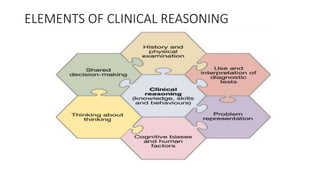
• Elements of clinical decision making/Reasoning
• How to reduce errors in clinical decision making
2. Clinical therapeutics
3. Good prescribing
3.
1-CLINICAL DECISION MAKING
•This is the process in healthcare where the therapists use evidence-
based practice to identify client goals, relevant abilities, impairments,
and formulate a plan of care based on examination and evaluation.
Clinical decision making is also known as clinical reasoning
• it is estimated that diagnosis is wrong 10%–15% of the time in specialties
such as emergency medicine, internal medicine and general practice
4.
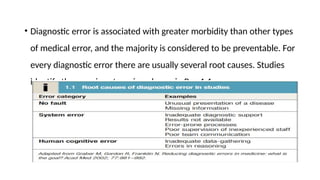
• Diagnostic erroris associated with greater morbidity than other types
of medical error, and the majority is considered to be preventable. For
every diagnostic error there are usually several root causes. Studies
identify three main categories, shown in Box 1.1
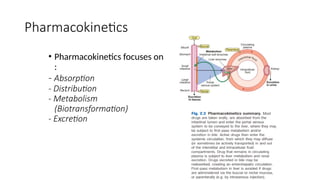
5.
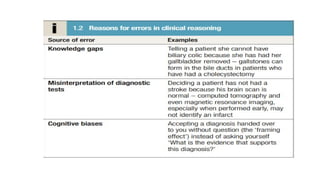
• Human cognitiveerror occurs when the clinician has all the
information necessary to make the diagnosis, but then makes the
wrong diagnosis. Why does this happen? Three main reasons have
been identified:
• knowledge gaps
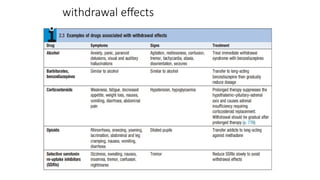
• misinterpretation of diagnostic tests
• cognitive biases.
HISTORY AND PHYSICALEXAMINATION
• Taking a history and performing a physical examination may seem
obvious, but these are sometimes carried out inadequately.
• This is the ‘unpacking principle’: failure to unpack all the available
information means things can be missed and lead to error
9.
Contn.
• History remainsthe most important part of the clinical decision-making
process.
• Studies show that physicians make a diagnosis in 70%–90% of cases from
the history alone.
• It is important to remember that the history is explored not only with the
patient, but also (and with consent if required) from all available sources
if necessary: for example, paramedic and emergency department notes,
eye-witnesses, relatives and/or carers.
10.
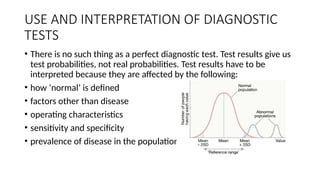
USE AND INTERPRETATIONOF DIAGNOSTIC
TESTS
• There is no such thing as a perfect diagnostic test. Test results give us
test probabilities, not real probabilities. Test results have to be
interpreted because they are affected by the following:
• how ‘normal’ is defined
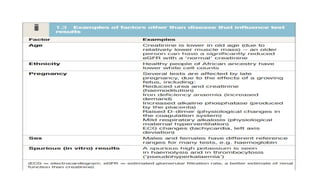
• factors other than disease
• operating characteristics
• sensitivity and specificity
• prevalence of disease in the population
12.
PROBLEM REPRESENTATION
• Aproblem representation refers to how information about a problem is mentally
organised. Studies show that expert clinicians spend far more time on defining a
problem before trying to solve it
• The ability to synthesise all the available information and encapsulate it into a problem
representation using precise medical language is an important skill that helps to
organise and retrieve knowledge from long-term memory relevant to the case and is
associated with significantly higher diagnostic accuracy, particularly in complex cases
13.
COGNITIVE BIASES
• Cognitivebiases are subconscious errors that lead to inaccurate judgement and illogical
interpretation of information. They are prevalent in everyday life; as the famous saying
goes, ‘to error is to human’.
• Clinicians use both type 1 and type 2 thinking, and both types are important in clinical
decision-making
• humans have a fast, intuitive, pattern-recognising way of thinking which uses little cognitive
effort (known as type 1 thinking) and a more deliberate, analytical one which engages our
working memory (known as type 2 thinking). This is known as ‘dual process theory’
14.
THINKING ABOUT THINKING
•Being aware of and being able to think about one’s own thinking (also
known as metacognition).
• This can be as simple as asking, ‘What is the evidence for this
diagnosis?
• What else could it be?’
• Reflection is most effective when the case is more complex
15.
SHARED DECISION MAKING
•Shared decision-making refers to the fact that clinical reasoning does
not necessarily take place solely within a clinician’s head.
• Good decision-making is often shared with patients, relatives and
carers, within teams, and by using guidelines, clinical prediction rules
and other decision aids.
16.
• Integral toall of this is the ability to engage in optimal decision-
making behaviours:
• involving the patient and/or carers in the diagnostic and management
process,
• listening to others, following evidence-based guidelines,
• asking for help when needed, and using clear communication,
especially when handing over care
17.
REDUCING ERRORS INCLINICAL DECISION
MAKING
• Deliberate practice
• Take appropriate history and examination
• Cognitive debiasing strategies
• Problem representation and differential diagnosis
• Mnemonics and checklist
• Redflags and ROWS(ruleout worst case scenarios)
18.
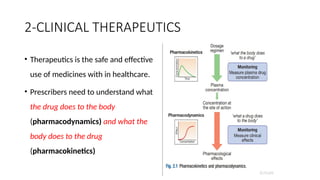
2-CLINICAL THERAPEUTICS
• Therapeuticsis the safe and effective
use of medicines with in healthcare.
• Prescribers need to understand what
the drug does to the body
(pharmacodynamics) and what the
body does to the drug
(pharmacokinetics)
19.
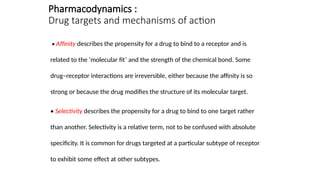
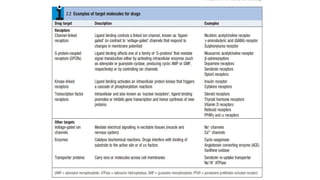
Pharmacodynamics :
Drug targetsand mechanisms of action
• Affinity describes the propensity for a drug to bind to a receptor and is
related to the ‘molecular fit’ and the strength of the chemical bond. Some
drug–receptor interactions are irreversible, either because the affinity is so
strong or because the drug modifies the structure of its molecular target.
• Selectivity describes the propensity for a drug to bind to one target rather
than another. Selectivity is a relative term, not to be confused with absolute
specificity. It is common for drugs targeted at a particular subtype of receptor
to exhibit some effect at other subtypes.
20.
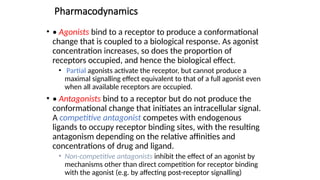
Pharmacodynamics
• • Agonistsbind to a receptor to produce a conformational
change that is coupled to a biological response. As agonist
concentration increases, so does the proportion of
receptors occupied, and hence the biological effect.
• Partial agonists activate the receptor, but cannot produce a
maximal signalling effect equivalent to that of a full agonist even
when all available receptors are occupied.
• • Antagonists bind to a receptor but do not produce the
conformational change that initiates an intracellular signal.
A competitive antagonist competes with endogenous
ligands to occupy receptor binding sites, with the resulting
antagonism depending on the relative affinities and
concentrations of drug and ligand.
• Non-competitive antagonists inhibit the effect of an agonist by
mechanisms other than direct competition for receptor binding
with the agonist (e.g. by affecting post-receptor signalling)
22.
Pharmacodynamics : Dose–response
relationships
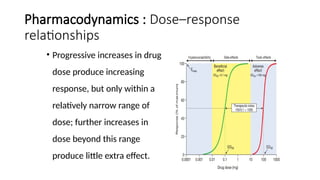
•Progressive increases in drug
dose produce increasing
response, but only within a
relatively narrow range of
dose; further increases in
dose beyond this range
produce little extra effect.
23.
Dose–response relationships
•Efficacy describesthe extent to which a drug can produce a target-specific
response when all available receptors or binding sites are occupied(i.e. Emax
on the dose–response curve). (e.g. loop diuretics induce a greater diuresis
than thiazide diuretics and therefore have greater therapeutic efficacy).
• Potency describes the amount of drug required for a given response. More
potent drugs produce biological effects at lower doses, so they have a lower
ED50.
24.
Therapeutic index
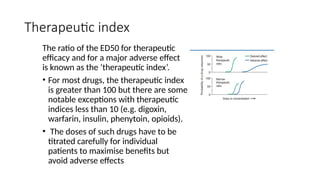
The ratioof the ED50 for therapeutic
efficacy and for a major adverse effect
is known as the ‘therapeutic index’.
• For most drugs, the therapeutic index
is greater than 100 but there are some
notable exceptions with therapeutic
indices less than 10 (e.g. digoxin,
warfarin, insulin, phenytoin, opioids).
• The doses of such drugs have to be
titrated carefully for individual
patients to maximise benefits but
avoid adverse effects
25.
Desensitisation and withdrawaleffects
• Desensitisation refers to the common situation in which the biological response to
a drug diminishes when it is given continuously or repeatedly.
• It may be possible to restore the response by increasing the dose of the drug but,
in some cases, the tissues may become completely refractory to its effect.
• Tachyphylaxis describes desensitisation that occurs very rapidly, sometimes with
the initial dose. This rapid loss of response implies depletion of chemicals that may
be necessary for the pharmacological actions of the drug (e.g. a stored
neurotransmitter released from a nerve terminal) or receptor phosphorylation.
• Tolerance describes a more gradual loss of response to a drug that occurs over days
or weeks. This slower change implies changes in receptor numbers or the
development of counter-regulatory physiological changes that offset the actions of
the drug (e.g. accumulation of salt and water in response to vasodilator therapy).
• Drug resistance is a term normally reserved for describing the loss of effectiveness
of an antimicrobial or cancer chemotherapy drug.
• In addition to these pharmacodynamic causes of desensitisation, reduced response
may be the consequence of lower plasma and tissue drug concentrations as a
result of altered pharmacokinetics
• When drugs induce chemical, hormonal and physiological changes that offset their
actions, discontinuation may allow these changes to cause ‘rebound’ withdrawal
effects
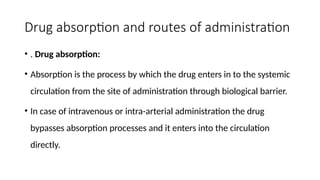
Drug absorption androutes of administration
• . Drug absorption:
• Absorption is the process by which the drug enters in to the systemic
circulation from the site of administration through biological barrier.
• In case of intravenous or intra-arterial administration the drug
bypasses absorption processes and it enters into the circulation
directly.
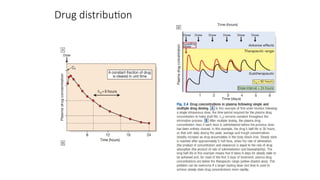
Drug distribution
• Distributionis the process by which drug molecules transfer into and out of the
blood stream.
• This is influenced by the drug’s molecular size and lipid solubility, the extent to
which it binds to proteins in plasma, its susceptibility to drug transporters
expressed on cell surfaces, and its binding to its molecular target and to other
cellular proteins (which can be irreversible).
• Most drugs diffuse passively across capillary walls down a concentration gradient
into the interstitial fluid until the concentration of free drug molecules in the
interstitial fluid is equal to that in the plasma.
Drug elimination
Drug metabolism
•Metabolism is the process by which drugs are chemically altered from a lipid-
soluble form suitable for absorption and distribution to a more water-soluble form
that is necessary for excretion.
• Some drugs, known as ‘pro-drugs’, are inactive in the form in which they are
administered, but are converted to an active metabolite in vivo.
• Phase I metabolism involves oxidation, reduction or hydrolysis to make drug
molecules suitable for phase II reactions or for excretion.
• Oxidation is much the commonest form of phase I reaction and chiefly involves
members of the cytochrome P450 family of membranebound enzymes in the
endoplasmic reticulum of hepatocytes.
• Phase II metabolism involves combining phase I metabolites with an endogenous
substrate to form an inactive conjugate that is much more water-soluble.
• Reactions include glucuronidation, sulphation, acetylation or methylation, and
conjugation with glutathione. This is necessary to enable renal excretion because
lipidsoluble metabolites will simply diffuse back into the body after glomerular
filtration
33.
Drug elimination
• Renalexcretion is the usual route of elimination for drugs or their metabolites that are of low
molecular weight and sufficiently water-soluble to avoid reabsorption from the renal tubule.
• Drugs bound to plasma proteins are not filtered by the glomeruli. The pH of the urine is more
acidic than that of plasma, so that some drugs (e.g. salicylates) become un-ionised and tend to
be reabsorbed.
• Alkalination of the urine can hasten excretion (e.g. after a salicylate overdose).
• For some drugs, active secretion into the proximal tubule lumen, rather than glomerular
filtration, is the predominant mechanism of excretion (e.g. methotrexate, penicillin).
• Faecal excretion is the predominant route of elimination for drugs with high molecular weight,
including those that are excreted in the bile after conjugation with glucuronide in the liver, and
any drugs that are not absorbed after enteral administration.
34.
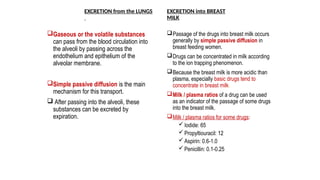
Passage of thedrugs into breast milk occurs
generally by simple passive diffusion in
breast feeding women.
Drugs can be concentrated in milk according
to the ion trapping phenomenon.
Because the breast milk is more acidic than
plasma, especially basic drugs tend to
concentrate in breast milk.
Milk / plasma ratios of a drug can be used
as an indicator of the passage of some drugs
into the breast milk.
Milk / plasma ratios for some drugs:
Iodide: 65
Propyltiouracil: 12
Aspirin: 0.6-1.0
Penicillin: 0.1-0.25
Gaseous or the volatile substances
can pass from the blood circulation into
the alveoli by passing across the
endothelium and epithelium of the
alveolar membrane.
Simple passive diffusion is the main
mechanism for this transport.
After passing into the alveoli, these
substances can be excreted by
expiration.
EXCRETION from the LUNGS EXCRETION into BREAST
MILK
35.
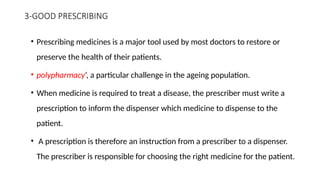
3-GOOD PRESCRIBING
• Prescribingmedicines is a major tool used by most doctors to restore or
preserve the health of their patients.
• polypharmacy’, a particular challenge in the ageing population.
• When medicine is required to treat a disease, the prescriber must write a
prescription to inform the dispenser which medicine to dispense to the
patient.
• A prescription is therefore an instruction from a prescriber to a dispenser.
The prescriber is responsible for choosing the right medicine for the patient.
37.
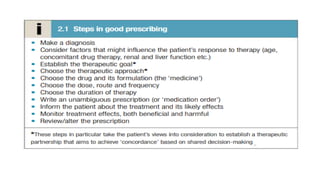
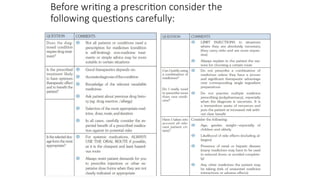
Before writing aprescrition consider the
following questions carefully:
38.
Placebo is amedicineor procedure prescribed for the psychological
benefit to the patient rather than for any physiological effect
• Avoid placebos whenever possible. Instead, spend some time
reassuring and educating the patient. Use home remedies when
possible (e.g., honey for cough in adults and children above 1 year).
39.
Controlled medicine prescriptions
Thesemedicines are covered by the provisions of the National Drug Policy and Authority Act 1993, which should be consulted
for details of the appropriate legal requirements as stipulated
• Morphine injection
• Morphine oral solution
• Papaveretum + hyoscine injection
• Pethidine injection
• Codeine
• Tramadol
• Diazepam injection
• These are all medicines of potential abuse that may result in dependence. All procedures involving them should be carefully
recorded in the appropriate record books.
• They may only be prescribed by authorised prescribers who must observe the following legal requirements:
40.
• Prescriptions mustbe in the prescriber’s own handwriting, with a
signature, date and the prescriber’s address
• Prescriptions must state the name and address of the patient
• Prescriptions must state the total amount of the product to be supplied in
words and figures
• It is an offence for a prescriber to issue and for a pharmacy to dispense
prescriptions for controlled medicines unless they are in full compliance
with the requirements of the law.
41.
Prescribing in childrenand the elderly
• In these guidelines, paediatric medicine doses are usually given according to body weight and
not age, and are therefore expressed as mg/kg.
• The main reason for this is that children of the same age may vary significantly in weight.
• Thus, it is safer and more accurate to prescribe medicines according to body weight.
Moreover, this should encourage the good practice of weighing children whenever possible
• However, as a guide to prescribing by weight when a weighing scale is not available, the
weight-for-age charts can be used as an estimate for children from 1-24 months and 2-15
years, respectively.
• Always use lean/ideal body weight for children who are overweight/obese to avoid giving
them overdoses.
• Note: Paediatric doses calculated using mg/kg should not exceed the normal adult dose.
42.
Prescribing in childrenand the elderly
• In the case of some medicines that have a wide therapeutic range and a
good safety profile, dosages are given for age ranges for easy reference.
• Prescriptions in the elderly also need additional attention because the
elderly are more prone to side effects; they are more likely to take several
medications (polypharmacy) with possible interactions, and they often have
co-morbidities that can affect their response to medicines.
• Reduced doses and careful monitoring are always advised, and specific
warnings have been added for some medicines
43.
Medicine interactions
• Beforeprescribing any medicine, take care to avoid problems of
interactions with other medicines by obtaining details of any other
medication that the patient is taking
Note on interactions with alcohol.
• If a prescribed medicine interacts with alcohol (for example,
metronidazole, diazepam, anti-diabetic medicines, and tricyclic
antidepressants), caution the patient to avoid taking alcoholic drinks
during the course of treatment and for 48 hours afterwards.
44.
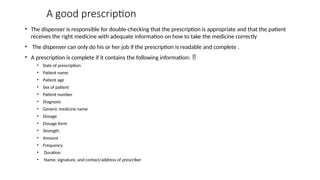
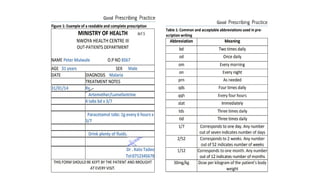
A good prescription
•The dispenser is responsible for double-checking that the prescription is appropriate and that the patient
receives the right medicine with adequate information on how to take the medicine correctly
• The dispenser can only do his or her job if the prescription is readable and complete .
• A prescription is complete if it contains the following information:
• Date of prescription
• Patient name
• Patient age
• Sex of patient
• Patient number
• Diagnosis
• Generic medicine name
• Dosage
• Dosage form
• Strength
• Amount
• Frequency
• Duration
• Name, signature, and contact/address of prescriber
46.
Patient counselling
• Explainthe diagnosis and the likely cause of the disease or condition and discuss the proposed
approach to treatment ~
• Describe the prescribed medicine therapy in detail.
• Give advice on how to contribute to the success of the treatment (for example, rest, diet, fluids
and other lifestyle changes) and how to avoid the same problem in future
• Ensure the patient or caretaker fully understands the information and advice provided—ask him
or her to repeat key points
• For health conditions that require self-care, proper advice should be given to the patient on self-
awareness, self-testing and self-management.
• Ensure the patient is satisfied with the proposed treatment and has an opportunity to raise any
ƒ
problems or queries with you
47.
REFERENCES
• Davidson’s Principlesand practices of Medicine
24th
edition
• Uganda clinical guidelines 2023
• Practical guidelines for dispensing for higer level
centers 2015
• Essential medicines and Health supplies list EMHSL
Editor's Notes
#22 Fig. 2.2 Dose–response curve. The green curve represents the beneficial effect of the drug. The maximum response on the curve is the Emax and the dose (or concentration) producing half this value (Emax/2) is the ED50 (or EC50). The red curve illustrates the dose–response relationship for the most important adverse effect of this drug. This occurs at much higher doses; the ratio between the ED50 for the adverse effect and that for the beneficial effect is the ‘therapeutic index’, which indicates how much margin there is for prescribers when choosing a dose that will provide beneficial effects without also causing this adverse effect. Adverse effects that occur at doses above the therapeutic range (yellow area) are normally called ‘toxic effects’, while those occurring within the therapeutic range are ‘side-effects’ and those below it are ‘hypersusceptibility effects’.
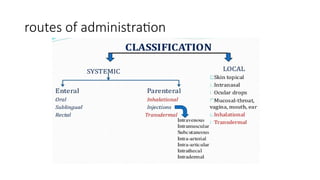
#28 Enteral administration These routes involve administration via the gastrointestinal tract: • Oral. This is the commonest route of administration because it is simple, convenient and readily used by patients to self-administer their medicines. Absorption after an oral dose is a complex process that depends on the drug being swallowed, surviving exposure to gastric acid, avoiding unacceptable food binding, being absorbed across the small bowel mucosa into the portal venous system, and surviving metabolism by gut wall or liver enzymes (‘first-pass metabolism’). As a consequence, absorption is frequently incomplete following oral administration. The term ‘bioavailability’ describes the proportion of the dose that reaches the systemic circulation intact. • Buccal, intranasal and sublingual (SL). These routes have the advantage of enabling rapid absorption into the systemic circulation without the uncertainties associated with oral administration (e.g. organic nitrates for angina pectoris, triptans for migraine, opioid analgesics). • Rectal (PR). The rectal mucosa is occasionally used as a site of drug administration when the oral route is compromised because of nausea and vomiting or unconsciousness (e.g. diazepam in status epilepticus).
Parenteral administration
These routes avoid absorption via the gastrointestinal tract and first-pass metabolism in the liver: • Intravenous (IV). The IV route enables all of a dose to enter the systemic circulation reliably, without any concerns about absorption or first-pass metabolism (i.e. the dose is 100% bioavailable), and rapidly achieve a high plasma concentration. It is ideal for very ill patients when a rapid, certain effect is critical to outcome (e.g. benzylpenicillin for meningococcal meningitis). • Intramuscular (IM). IM administration is easier to achieve than the IV route (e.g. adrenaline (epinephrine) for acute anaphylaxis) but absorption is less predictable and depends on muscle blood flow. • Subcutaneous (SC). The SC route is ideal for drugs that have to be administered parenterally because of low oral bioavailability, are absorbed well from subcutaneous fat, and might ideally be injected by patients themselves (e.g. insulin, heparin). • Transdermal. A transdermal patch can enable a drug to be absorbed through the skin and into the circulation (e.g. oestrogens, testosterone, nicotine, nitrates).
Other routes of administration
• Topical application of a drug involves direct administration to the site of action (e.g. skin, eye, ear). This has the advantage of achieving sufficient concentration at this site while minimising systemic exposure and the risk of adverse effects elsewhere. • Inhaled (INH) administration allows drugs to be delivered directly to a target in the respiratory tree, usually the small airways (e.g. salbutamol, beclometasone).
However, a significant proportion of the inhaled dose may be absorbed from the lung or is swallowed and can reach the systemic circulation. The most common mode of delivery is the metered-dose inhaler but its success depends on some degree of manual dexterity and timing (see Fig. 19.23, p. 670). Patients who find these difficult may use a ‘spacer’ device to improve drug delivery. A special mode of inhaled delivery is via a nebulised solution created by using pressurised oxygen or air to break up solutions and suspensions into small aerosol droplets that can be directly inhaled from the mouthpiece of the device.
#32 Examples of prodrugs : clopidogrel (thiol derivative) , codeine(morphine), enalapril (enalaprilat) , L dopa( dopamine) , aspirin
#33 1. RENAL EXCRETION
2. NON RENAL EXCRETION
BILIARY EXCRETION
EXCRETION from the LUNGS
EXCRETION into BREAST MILK
ARTIFICIAL EXCRETION WAYS
Drugs and metabolites are excreted from the kidneys by 2 ways.
a) Glomerular filtration
b) Tubular secretion
Tubular reabsorption is not an excretion way; however there is no doubt that it effects the excretion of drugs from the body by the kidney.
#35 Medicines contain drugs (the specific chemical substances with pharmacological effects), either alone or in combination, in a formulation mixed with other ingredients.
The beneficial effects of medicines must be weighed against their cost and the risks of adverse drug reactions and interactions, often caused by injudicious prescribing decisions and by prescribing errors.
#37 Pregnancy and breastfeeding: only use medicines in pregnancy if the expected benefit to the mother is greater than any risk to the foetus/ baby and avoid all medicines if possible during the first trimester (the first three months of pregnancy) ~ Likely degree of adherence to treatment (simpler, shorter dosage regimes increase the chance of ~ the patient correctly following pre




![CTEV [ clubfoot] DR ARUN LAL ,DR MOHAMED ASHRAF travancore medical college k...](https://cdn.slidesharecdn.com/ss_thumbnails/ctevclubfootdrarunlaldrmohamedashraftravancoremedicalcollegekollamkeralaindia-260208063247-18fc466c-thumbnail.jpg?width=640&height=640&fit=bounds)
![PERI-PROSTHETIC FRACTURE NAIL-PLATE CONSTRUCT [NPC].pptx](https://cdn.slidesharecdn.com/ss_thumbnails/drarunkumardrmohamedashrafperiprostheticfrasturenail-plateconstructnpc-260209164459-7e9d15a1-thumbnail.jpg?width=640&height=640&fit=bounds)

