Made by Mariam Aftab
Information of weather and
climate
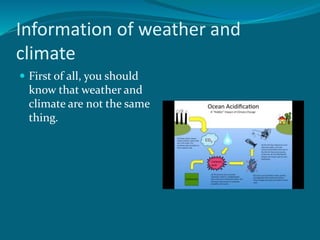
 First of all, you should
know that weather and
climate are not the same
thing.
Weather
 Weather is;
 Short term
 Limited area
 Can change rapidly
 Difficult to predict
 Look that the weather
outside the house.
Climate
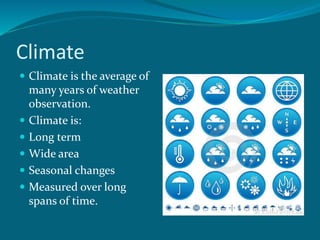
 Climate is the average of
many years of weather
observation.
 Climate is:
 Long term
 Wide area
 Seasonal changes
 Measured over long
spans of time.
Facts
 ABIOTIC FACTORS
 Latitude
 Altitude
 Ocean Current
 Topography
 Solar Radiation
 Evaporation
 Volcanic Activity
 Orbital Variation
 BOITIC FACTORS
 Transpiration
 Respiration
 Photosynthesis
 Decomposition
 Digestion
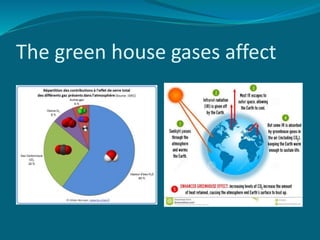
The green house gases affect
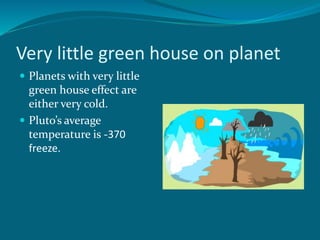
Very little green house on planet
 Planets with very little
green house effect are
either very cold.
 Pluto’s average
temperature is -370
freeze.
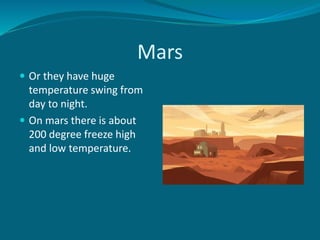
Mars
 Or they have huge
temperature swing from
day to night.
 On mars there is about
200 degree freeze high
and low temperature.
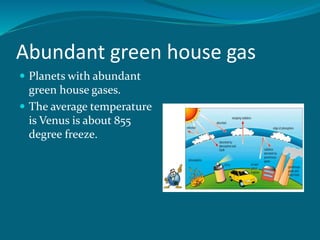
Abundant green house gas
 Planets with abundant
green house gases.
 The average temperature
is Venus is about 855
degree freeze.
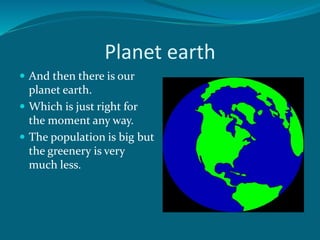
Planet earth
 And then there is our
planet earth.
 Which is just right for
the moment any way.
 The population is big but
the greenery is very
much less.
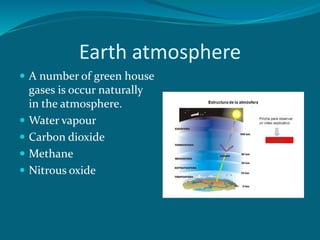
Earth atmosphere
 A number of green house
gases is occur naturally
in the atmosphere.
 Water vapour
 Carbon dioxide
 Methane
 Nitrous oxide
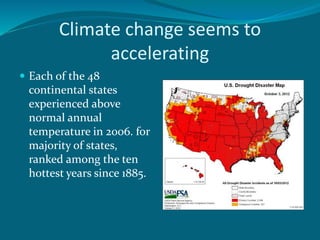
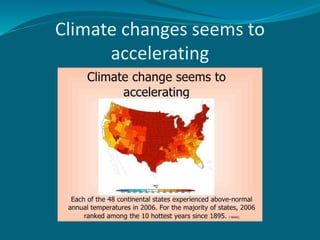
Climate change seems to
accelerating
 Each of the 48
continental states
experienced above
normal annual
temperature in 2006. for
majority of states,
ranked among the ten
hottest years since 1885.
Earth atmosphere
 With no green house gases at all in it atmosphere,
scientist estimate that Earth’s average atmosphere
temperature would about-18 degree, or about 0 degree
freeze .
Global warming
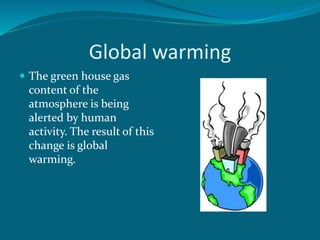
 The green house gas
content of the
atmosphere is being
alerted by human
activity. The result of this
change is global
warming.
Climate change
 It is now more certain than ever, base on many line of
evidence, that human are changing the climate. The
atmosphere and the ocean have warmed accompanied
by sea level rise, a strong decline in Arctic sea ice, and
other climate related changes. The evidence is clear.
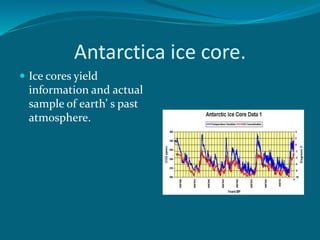
Antarctica ice core.
 Ice cores yield
information and actual
sample of earth’ s past
atmosphere.
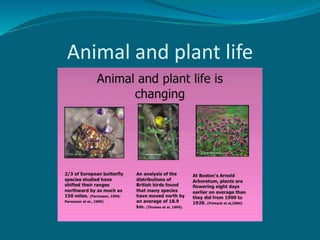
Animal and plant life
Climate changes seems to
accelerating
Carbon Dioxide
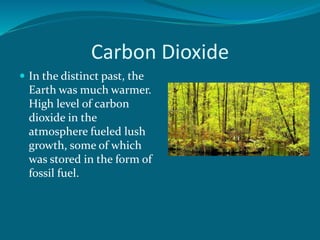
 In the distinct past, the
Earth was much warmer.
High level of carbon
dioxide in the
atmosphere fueled lush
growth, some of which
was stored in the form of
fossil fuel.
Methane
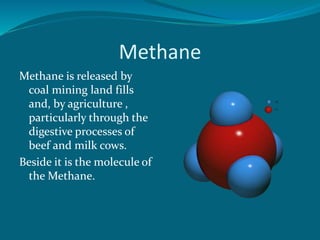
Methane is released by
coal mining land fills
and, by agriculture ,
particularly through the
digestive processes of
beef and milk cows.
Beside it is the molecule of
the Methane.
Nitrous oxide
 Nitrous oxide is produced by cars , by fossil fuel and
used for electricity, and by agriculture.
what can be don to save the earth
 First we admit that climate change is everyone
problem. No agency, government, or scientist can “fix
it” for us. We are all in this together.
 We got here because of our lifestyle .
 So are lifestyle has to change.

Heating and Cooling
 Install programmable
thermostats.
 Check and repair
weather stripping on
door and windows.
 Adjust your clothing
instead of thermostats.
 Keeps furnace and AC
filters clean.
 Consider closing of off
unused rooms.
 Install insulated drapes.
Conserve hot water
 Take shorter shower.
 Install low flow shower heads.
 Install a blanket on your water heater.
 Insolate hot water on your pipes.
 Wash launder y from cold water.
 Fix leaky faucet.

Climate change and you

  • 1.
  • 2.
    Information of weatherand climate  First of all, you should know that weather and climate are not the same thing.
  • 3.
    Weather  Weather is; Short term  Limited area  Can change rapidly  Difficult to predict  Look that the weather outside the house.
  • 4.
    Climate  Climate isthe average of many years of weather observation.  Climate is:  Long term  Wide area  Seasonal changes  Measured over long spans of time.
  • 5.
    Facts  ABIOTIC FACTORS Latitude  Altitude  Ocean Current  Topography  Solar Radiation  Evaporation  Volcanic Activity  Orbital Variation  BOITIC FACTORS  Transpiration  Respiration  Photosynthesis  Decomposition  Digestion
  • 6.
    The green housegases affect
  • 7.
    Very little greenhouse on planet  Planets with very little green house effect are either very cold.  Pluto’s average temperature is -370 freeze.
  • 8.
    Mars  Or theyhave huge temperature swing from day to night.  On mars there is about 200 degree freeze high and low temperature.
  • 9.
    Abundant green housegas  Planets with abundant green house gases.  The average temperature is Venus is about 855 degree freeze.
  • 10.
    Planet earth  Andthen there is our planet earth.  Which is just right for the moment any way.  The population is big but the greenery is very much less.
  • 11.
    Earth atmosphere  Anumber of green house gases is occur naturally in the atmosphere.  Water vapour  Carbon dioxide  Methane  Nitrous oxide
  • 12.
    Climate change seemsto accelerating  Each of the 48 continental states experienced above normal annual temperature in 2006. for majority of states, ranked among the ten hottest years since 1885.
  • 13.
    Earth atmosphere  Withno green house gases at all in it atmosphere, scientist estimate that Earth’s average atmosphere temperature would about-18 degree, or about 0 degree freeze .
  • 14.
    Global warming  Thegreen house gas content of the atmosphere is being alerted by human activity. The result of this change is global warming.
  • 15.
    Climate change  Itis now more certain than ever, base on many line of evidence, that human are changing the climate. The atmosphere and the ocean have warmed accompanied by sea level rise, a strong decline in Arctic sea ice, and other climate related changes. The evidence is clear.
  • 16.
    Antarctica ice core. Ice cores yield information and actual sample of earth’ s past atmosphere.
  • 17.
  • 18.
    Climate changes seemsto accelerating
  • 19.
    Carbon Dioxide  Inthe distinct past, the Earth was much warmer. High level of carbon dioxide in the atmosphere fueled lush growth, some of which was stored in the form of fossil fuel.
  • 20.
    Methane Methane is releasedby coal mining land fills and, by agriculture , particularly through the digestive processes of beef and milk cows. Beside it is the molecule of the Methane.
  • 21.
    Nitrous oxide  Nitrousoxide is produced by cars , by fossil fuel and used for electricity, and by agriculture.
  • 22.
    what can bedon to save the earth  First we admit that climate change is everyone problem. No agency, government, or scientist can “fix it” for us. We are all in this together.  We got here because of our lifestyle .  So are lifestyle has to change. 
  • 23.
    Heating and Cooling Install programmable thermostats.  Check and repair weather stripping on door and windows.  Adjust your clothing instead of thermostats.  Keeps furnace and AC filters clean.  Consider closing of off unused rooms.  Install insulated drapes.
  • 24.
    Conserve hot water Take shorter shower.  Install low flow shower heads.  Install a blanket on your water heater.  Insolate hot water on your pipes.  Wash launder y from cold water.  Fix leaky faucet.