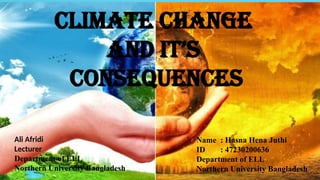
Climate Change
and It’s
Consequences
Name : Hasna Hena Juthi
ID : 47230200636
Department of ELL
Northern University Bangladesh
Ali Afridi
Lecturer
Department of ELL
Northern University Bangladesh
Climate change is one of the biggest crises
facing humanity.
Climate change means the change in the
climatic activities & in atmospheric levels.
Climate Change
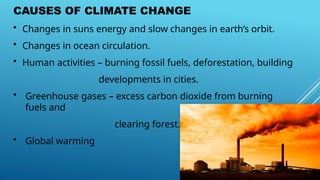
CAUSES OF CLIMATE CHANGE
• Changes in suns energy and slow changes in earth’s orbit.
• Changes in ocean circulation.
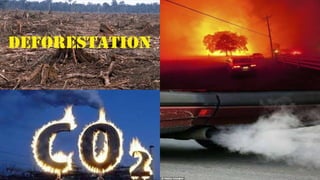
• Human activities – burning fossil fuels, deforestation, building
developments in cities.
• Greenhouse gases – excess carbon dioxide from burning
fuels and
clearing forest.
• Global warming
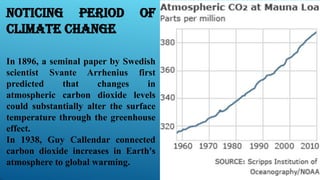
Noticing Period of
Climate Change
In 1896, a seminal paper by Swedish
scientist Svante Arrhenius first
predicted that changes in
atmospheric carbon dioxide levels
could substantially alter the surface
temperature through the greenhouse
effect.
In 1938, Guy Callendar connected
carbon dioxide increases in Earth's
atmosphere to global warming.
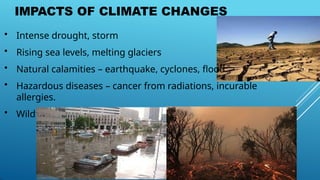
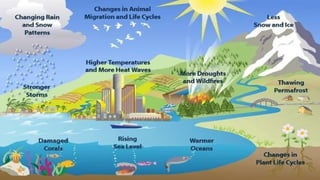
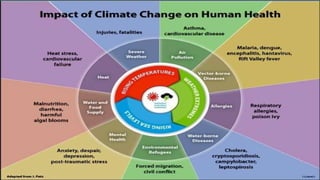
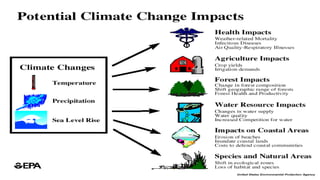
IMPACTS OF CLIMATE CHANGES
• Intense drought, storm
• Rising sea levels, melting glaciers
• Natural calamities – earthquake, cyclones, flood
• Hazardous diseases – cancer from radiations, incurable
allergies.
• Wildfires
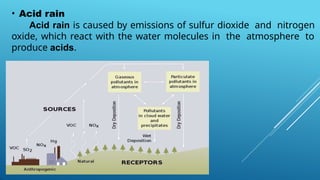
• Acid rain
Acid rain is caused by emissions of sulfur dioxide and nitrogen
oxide, which react with the water molecules in the atmosphere to
produce acids.
Conclusion
• Helps people and nature adapt to a changing climate
• Advances policies to fight climate change- ( COP Paris by UNFCCC )
• Combats deforestation
• Introduce automobiles with new fuel system which reduces 90% pollution
• Engages with businesses to reduce carbon emissions
• Protecting forests
• Make others aware about the problem
• Invest in renewable energies
Thank
You

Climate Change and it's Consequence .pptx

  • 1.
    Climate Change and It’s Consequences Name: Hasna Hena Juthi ID : 47230200636 Department of ELL Northern University Bangladesh Ali Afridi Lecturer Department of ELL Northern University Bangladesh
  • 2.
    Climate change isone of the biggest crises facing humanity. Climate change means the change in the climatic activities & in atmospheric levels. Climate Change
  • 3.
    CAUSES OF CLIMATECHANGE • Changes in suns energy and slow changes in earth’s orbit. • Changes in ocean circulation. • Human activities – burning fossil fuels, deforestation, building developments in cities. • Greenhouse gases – excess carbon dioxide from burning fuels and clearing forest. • Global warming
  • 5.
    Noticing Period of ClimateChange In 1896, a seminal paper by Swedish scientist Svante Arrhenius first predicted that changes in atmospheric carbon dioxide levels could substantially alter the surface temperature through the greenhouse effect. In 1938, Guy Callendar connected carbon dioxide increases in Earth's atmosphere to global warming.
  • 6.
    IMPACTS OF CLIMATECHANGES • Intense drought, storm • Rising sea levels, melting glaciers • Natural calamities – earthquake, cyclones, flood • Hazardous diseases – cancer from radiations, incurable allergies. • Wildfires
  • 7.
    • Acid rain Acidrain is caused by emissions of sulfur dioxide and nitrogen oxide, which react with the water molecules in the atmosphere to produce acids.
  • 12.
    Conclusion • Helps peopleand nature adapt to a changing climate • Advances policies to fight climate change- ( COP Paris by UNFCCC ) • Combats deforestation • Introduce automobiles with new fuel system which reduces 90% pollution • Engages with businesses to reduce carbon emissions • Protecting forests • Make others aware about the problem • Invest in renewable energies
  • 13.