Will Dobud MSW
Charles Sturt University
“The therapist is a co-adventurer, exploring the
landscape and encountering multiple vantage
points while crossing the terrain of the client’s
theory of change. When stuck along the way,
we join clients in looking for and exploring
alternate routes on their own maps. In the
process clients uncover trails we never
dreamed existed.”
(Duncan, Miller, & Sparks, 2004, p.
136)
Client Directed Adventure
Therapy
• Relational vs. Medical Model
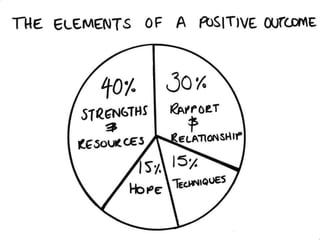
• What works in therapy
• What is Client-Directed, Outcome-
Informed?
• The Adventure Therapy Experience
A Bit About Me
BSW – University of Maryland – Baltimore
County
MSW – Charles Sturt University
Phd (Cand.) – Charles Sturt University
-Run a small program True North Expeditions,
Inc.
-South Australian Representative for AABAT
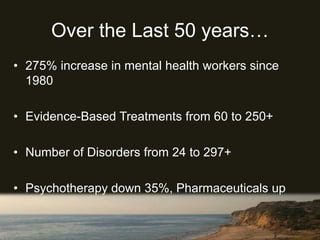
Over the Last 50 years…
• 275% increase in mental health workers since
1980
• Evidence-Based Treatments from 60 to 250+
• Number of Disorders from 24 to 297+
• Psychotherapy down 35%, Pharmaceuticals up
75%
Here’s why…
• National Conference of Charities and Corrections
(1915)
• National Institute of Mental Health (USA) says “no
diagnosis, no research”
• Competence of service deliver vs. Outcome
The View of the Medical Model
Proper Diagnosis + Prescriptive Intervention =
Effective Treatment
Targeted Diagnostic Groups + Evidenced
Based Treatments = Symptom Reduction
The Killer D’s
• Mental Disorders to not have the boundaries of an
illness like diabetes or the flu
• Homosexuality was a “Mental Disorder” until 1973
• Attribution Creep…
• No correlation between diagnosis and outcome
Which Treatment Works Best?
• Human Affairs International Study
• Wampold et al. (1997)
• Elkin et al. (1989)
• Lambert (2013)
• Miller, Hubble, Duncan (2008)
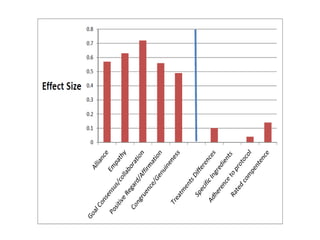
Specific Factors vs. Common Factors
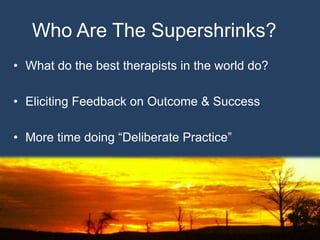
Who Are The Supershrinks?
• What do the best therapists in the world do?
• Eliciting Feedback on Outcome & Success
• More time doing “Deliberate Practice”
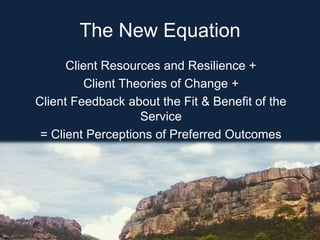
The New Equation
Client Resources and Resilience +
Client Theories of Change +
Client Feedback about the Fit & Benefit of the
Service
= Client Perceptions of Preferred Outcomes
What is Client-Directed?
• Clients are critics of therapy performance
• Therapeutic Relationship is an ongoing process
• Accepting the client’s goals
• Tailor fitting the tasks (procedures) of therapy
What is Outcome-Informed?
• Product Oriented vs. Consumer Oriented
• Tracking Outcome
• Bringing Results to Light
• Failing Successfully
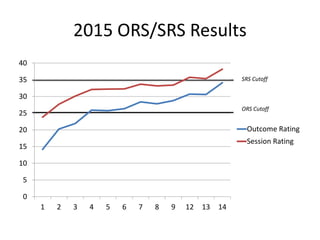
0
5
10
15
20
25
30
35
40
1 2 3 4 5 6 7 8 9 12 13 14
Outcome Rating
Session Rating
2015 ORS/SRS Results
SRS Cutoff
ORS Cutoff
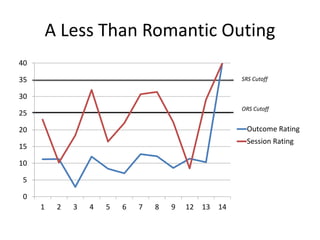
0
5
10
15
20
25
30
35
40
1 2 3 4 5 6 7 8 9 12 13 14
Outcome Rating
Session Rating
A Less Than Romantic Outing
SRS Cutoff
ORS Cutoff
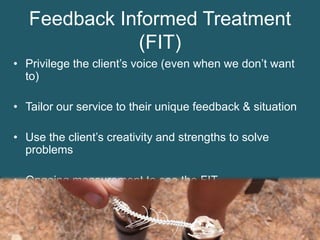
Feedback Informed Treatment
(FIT)
• Privilege the client’s voice (even when we don’t want
to)
• Tailor our service to their unique feedback & situation
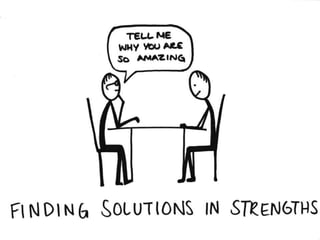
• Use the client’s creativity and strengths to solve
problems
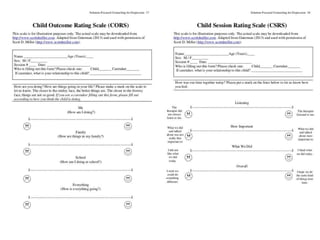
• Ongoing measurement to see the FIT
“…clients whose therapists had access to outcome
and alliance information were less likely to
deteriorate, more likely to stay longer, and twice as
likely to achieve a clinically significant change.”
(Miller, Mee-Lee, Plum, & Hubble, 2005,
p. 47)
Definition of Adventure Therapy
“the prescriptive use of adventure experiences
provided by mental health professionals, often
conducted in natural settings that kinesthetically
engage clients of cognitive, affective, and behavioral
levels”.
(Gass, Gillis, & Russell, 2012,
p. 1)
“Bush Adventure Therapy is a diverse field of practice
combining adventure and outdoor environments with
the intention to achieve therapeutic outcomes for
those involved.”
Quality of Participation
• Tailored Facilitation Focussing on Engagement
• “Connection Before Correction”
• Increase relationship through collaboration
• Debriefing: What can I do better next time?
References
Ardito, R. B., & Rabellino, D. (2011). Therapeutic alliance and outcomes of psychotherapy: Historical excurus, measurements, and
prospects for research. Frontiers in Psychology, 2, 1-11.
Asay, T. P., & Lambert, M. J. (1999). The empirical case for the common factors of therapy: Quantitative findings. In M. A. Hubble,
B. L. Duncan, & S. D. Miller (Eds.), The heart and soul of change: What works in therapy (pp. 33-56). Washington, DC: American
Psychological Association.
Duncan, B. L., Miller, S. D., & Sparks, J. A. (2004). The heroic client: A revolutionary way to improve effectiveness through client-
directed, outcome-informed therapy. San Francisco, CA: Jossey-Bass.
Duncan, B. L., Miller, S. D., & Sparks, J. A. (2007). Common factors and the uncommon heroism of youth. Psychotherapy in
Australia, 13(2), 34-43.
Duncan, B. L., Sparks, J. A., Murphy, J. J., & Miller, S. D. (2007). Just say 'no' to drugs as a first treatment for child problems.
Psychotherapy in Australia, 13(4), 32-40.
Duncan, B. L., Miller, S. D., Sparks, J. A., Claud, D. A., Reynolds, L. R., Brown, J., & Johnson, L. D. (2003). The session rating scale:
Preliminary psychometric properties of a "working" alliance measure. Journal of Brief Therapy, 3(1), 3-12.
Garcia, J. A., & Weisz, J. R. (2002). When youth mental health care stops: Therapeutic relationship problems and other reasons for
ending youth outpatient treatment. Journal of Consulting and Clinical Psychology, 70(2), 439-443.
Gass, M. A., Gillis, H. L., & Russell, K. C. (2012). Adventure therapy: Theory, research, and practice. New York: Routledge.
Lambert, M. J. (2013). The efficacy and effectiveness of psychotherapy. In M. J. Lambert (Ed.), Bergin and Garfield's handbook of
psychotherapy and behavior change (6th ed., pp. 169-218). Hoboken, NJ: Wiley.
Madsen, W. C. (2009). Collaborative helping: A practice framework for family-centered services. Family Process, 48, 103-116.
ReferencesMiller, S. D., & Duncan, B. L. (2000). Paradigm lost: From model-driven to client-directed, outcome-informed clinical work. Journal
of Systemic Therapies, 19(1), 20-24.
Miller, S. D., Hubble, M. A., & Duncan, B. L. (2008). Supershrinks: What is the secret of their success? Psychotherapy in Australia,
14(4), 14-22.
Miller, S. D., Duncan, B. L., Brown, J., Sorrell, R., & Chalk, M. B. (2006). Using formal client feedback to improve retention and
outcome: Making ongoing, real-time assessment feasible. . Journal of Brief Therapy, 5(1), 5-22.
Miller, S. D., & Duncan, B. L. (2000). The outcome rating scale. Chicago, IL: Authors.
Miller, S. D., Mee-Lee, D., Plum, B., & Hubble, M. A. (2005). Making Treatment Count: Client-Directed, Outcome-Informed Clinical
Work with Problem Drinkers. Psychotherapy in Australia, 11(4), 42-56.
Orlinsky, D. E., Grawe, K., & Parks, B. K. (1994). Process and outcome in psychotherapy - noch einmal. In A. E. Bergin & S. L.
Garfield (Eds.), Handbook of psychotherapy and behavior change. (4th ed., pp. 270-378). New York: Wiley.
Robinson, L. A., Berman, J. S., & Neimeyer, R. A. (1990). Psychotherapy for the treatment of depression: A comprehensive review
of controlled outcome research. Psychological Bulletin, 30-49.
Rodwell, M. K. (1987). Naturalistic inquiry: An alternative model for social work assessment. Social Service Review, 61(2), 231-246.
Rogers, C. R. (1961). On becoming a person. Boston, MA: Houghton Mifflin Company.
Rosenhan, D. L. (1973). On being sane in insane places. Science, 179(4070), 250-258.

Robinson, L. A., Berman, J. S., & Neimeyer, R. A. (1990). Psychotherapy for the treatment of depression: A comprehensive review
of controlled outcome research. Psychological Bulletin, 30-49.
Wampold, B. E. (1997). Methodological problems in identifying efficacious psychotherapies. Psychotherapy Research, 7(1), 21-43.

Client-Directed Adventure Therapy

  • 1.
    Will Dobud MSW CharlesSturt University
  • 2.
    “The therapist isa co-adventurer, exploring the landscape and encountering multiple vantage points while crossing the terrain of the client’s theory of change. When stuck along the way, we join clients in looking for and exploring alternate routes on their own maps. In the process clients uncover trails we never dreamed existed.” (Duncan, Miller, & Sparks, 2004, p. 136)
  • 3.
    Client Directed Adventure Therapy •Relational vs. Medical Model • What works in therapy • What is Client-Directed, Outcome- Informed? • The Adventure Therapy Experience
  • 4.
    A Bit AboutMe BSW – University of Maryland – Baltimore County MSW – Charles Sturt University Phd (Cand.) – Charles Sturt University -Run a small program True North Expeditions, Inc. -South Australian Representative for AABAT
  • 18.
    Over the Last50 years… • 275% increase in mental health workers since 1980 • Evidence-Based Treatments from 60 to 250+ • Number of Disorders from 24 to 297+ • Psychotherapy down 35%, Pharmaceuticals up 75%
  • 19.
    Here’s why… • NationalConference of Charities and Corrections (1915) • National Institute of Mental Health (USA) says “no diagnosis, no research” • Competence of service deliver vs. Outcome
  • 20.
    The View ofthe Medical Model Proper Diagnosis + Prescriptive Intervention = Effective Treatment Targeted Diagnostic Groups + Evidenced Based Treatments = Symptom Reduction
  • 21.
    The Killer D’s •Mental Disorders to not have the boundaries of an illness like diabetes or the flu • Homosexuality was a “Mental Disorder” until 1973 • Attribution Creep… • No correlation between diagnosis and outcome
  • 22.
    Which Treatment WorksBest? • Human Affairs International Study • Wampold et al. (1997) • Elkin et al. (1989) • Lambert (2013) • Miller, Hubble, Duncan (2008) Specific Factors vs. Common Factors
  • 24.
    Who Are TheSupershrinks? • What do the best therapists in the world do? • Eliciting Feedback on Outcome & Success • More time doing “Deliberate Practice”
  • 26.
    The New Equation ClientResources and Resilience + Client Theories of Change + Client Feedback about the Fit & Benefit of the Service = Client Perceptions of Preferred Outcomes
  • 28.
    What is Client-Directed? •Clients are critics of therapy performance • Therapeutic Relationship is an ongoing process • Accepting the client’s goals • Tailor fitting the tasks (procedures) of therapy
  • 30.
    What is Outcome-Informed? •Product Oriented vs. Consumer Oriented • Tracking Outcome • Bringing Results to Light • Failing Successfully
  • 33.
    0 5 10 15 20 25 30 35 40 1 2 34 5 6 7 8 9 12 13 14 Outcome Rating Session Rating 2015 ORS/SRS Results SRS Cutoff ORS Cutoff
  • 34.
    0 5 10 15 20 25 30 35 40 1 2 34 5 6 7 8 9 12 13 14 Outcome Rating Session Rating A Less Than Romantic Outing SRS Cutoff ORS Cutoff
  • 35.
    Feedback Informed Treatment (FIT) •Privilege the client’s voice (even when we don’t want to) • Tailor our service to their unique feedback & situation • Use the client’s creativity and strengths to solve problems • Ongoing measurement to see the FIT
  • 36.
    “…clients whose therapistshad access to outcome and alliance information were less likely to deteriorate, more likely to stay longer, and twice as likely to achieve a clinically significant change.” (Miller, Mee-Lee, Plum, & Hubble, 2005, p. 47)
  • 38.
    Definition of AdventureTherapy “the prescriptive use of adventure experiences provided by mental health professionals, often conducted in natural settings that kinesthetically engage clients of cognitive, affective, and behavioral levels”. (Gass, Gillis, & Russell, 2012, p. 1) “Bush Adventure Therapy is a diverse field of practice combining adventure and outdoor environments with the intention to achieve therapeutic outcomes for those involved.”
  • 39.
    Quality of Participation •Tailored Facilitation Focussing on Engagement • “Connection Before Correction” • Increase relationship through collaboration • Debriefing: What can I do better next time?
  • 48.
    References Ardito, R. B.,& Rabellino, D. (2011). Therapeutic alliance and outcomes of psychotherapy: Historical excurus, measurements, and prospects for research. Frontiers in Psychology, 2, 1-11. Asay, T. P., & Lambert, M. J. (1999). The empirical case for the common factors of therapy: Quantitative findings. In M. A. Hubble, B. L. Duncan, & S. D. Miller (Eds.), The heart and soul of change: What works in therapy (pp. 33-56). Washington, DC: American Psychological Association. Duncan, B. L., Miller, S. D., & Sparks, J. A. (2004). The heroic client: A revolutionary way to improve effectiveness through client- directed, outcome-informed therapy. San Francisco, CA: Jossey-Bass. Duncan, B. L., Miller, S. D., & Sparks, J. A. (2007). Common factors and the uncommon heroism of youth. Psychotherapy in Australia, 13(2), 34-43. Duncan, B. L., Sparks, J. A., Murphy, J. J., & Miller, S. D. (2007). Just say 'no' to drugs as a first treatment for child problems. Psychotherapy in Australia, 13(4), 32-40. Duncan, B. L., Miller, S. D., Sparks, J. A., Claud, D. A., Reynolds, L. R., Brown, J., & Johnson, L. D. (2003). The session rating scale: Preliminary psychometric properties of a "working" alliance measure. Journal of Brief Therapy, 3(1), 3-12. Garcia, J. A., & Weisz, J. R. (2002). When youth mental health care stops: Therapeutic relationship problems and other reasons for ending youth outpatient treatment. Journal of Consulting and Clinical Psychology, 70(2), 439-443. Gass, M. A., Gillis, H. L., & Russell, K. C. (2012). Adventure therapy: Theory, research, and practice. New York: Routledge. Lambert, M. J. (2013). The efficacy and effectiveness of psychotherapy. In M. J. Lambert (Ed.), Bergin and Garfield's handbook of psychotherapy and behavior change (6th ed., pp. 169-218). Hoboken, NJ: Wiley. Madsen, W. C. (2009). Collaborative helping: A practice framework for family-centered services. Family Process, 48, 103-116.
  • 49.
    ReferencesMiller, S. D.,& Duncan, B. L. (2000). Paradigm lost: From model-driven to client-directed, outcome-informed clinical work. Journal of Systemic Therapies, 19(1), 20-24. Miller, S. D., Hubble, M. A., & Duncan, B. L. (2008). Supershrinks: What is the secret of their success? Psychotherapy in Australia, 14(4), 14-22. Miller, S. D., Duncan, B. L., Brown, J., Sorrell, R., & Chalk, M. B. (2006). Using formal client feedback to improve retention and outcome: Making ongoing, real-time assessment feasible. . Journal of Brief Therapy, 5(1), 5-22. Miller, S. D., & Duncan, B. L. (2000). The outcome rating scale. Chicago, IL: Authors. Miller, S. D., Mee-Lee, D., Plum, B., & Hubble, M. A. (2005). Making Treatment Count: Client-Directed, Outcome-Informed Clinical Work with Problem Drinkers. Psychotherapy in Australia, 11(4), 42-56. Orlinsky, D. E., Grawe, K., & Parks, B. K. (1994). Process and outcome in psychotherapy - noch einmal. In A. E. Bergin & S. L. Garfield (Eds.), Handbook of psychotherapy and behavior change. (4th ed., pp. 270-378). New York: Wiley. Robinson, L. A., Berman, J. S., & Neimeyer, R. A. (1990). Psychotherapy for the treatment of depression: A comprehensive review of controlled outcome research. Psychological Bulletin, 30-49. Rodwell, M. K. (1987). Naturalistic inquiry: An alternative model for social work assessment. Social Service Review, 61(2), 231-246. Rogers, C. R. (1961). On becoming a person. Boston, MA: Houghton Mifflin Company. Rosenhan, D. L. (1973). On being sane in insane places. Science, 179(4070), 250-258. Robinson, L. A., Berman, J. S., & Neimeyer, R. A. (1990). Psychotherapy for the treatment of depression: A comprehensive review of controlled outcome research. Psychological Bulletin, 30-49. Wampold, B. E. (1997). Methodological problems in identifying efficacious psychotherapies. Psychotherapy Research, 7(1), 21-43.

Editor's Notes

  • #2 Contact Information: Will Dobud, MSW – 0477161768 – info@willdobud.com
  • #3 Duncan, B. L., Miller, S. D., & Sparks, J. A. (2004). The heroic client: A revolutionary way to improve effectiveness through client-directed, outcome-informed therapy. San Francisco, CA: Jossey-Bass.
  • #4 About this presentation
  • #5 About Me
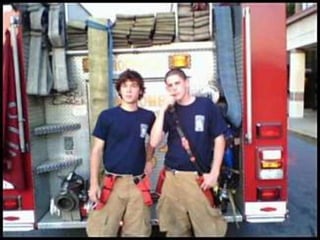
  • #6 Rockville Volunteer Fire Department (2006)
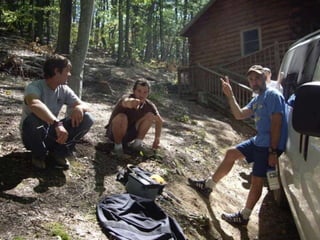
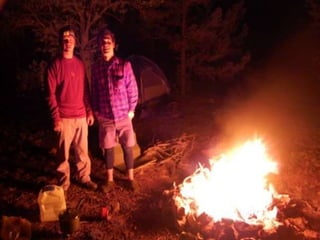
  • #7 West Virginia Wilderness Therapy
  • #8 West Virginia Wilderness Therapy
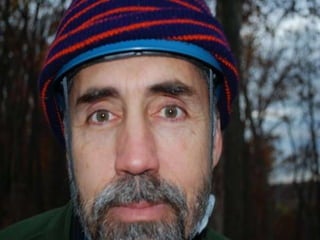
  • #9 Brooke Brody, LCSW – Mentor, Guru
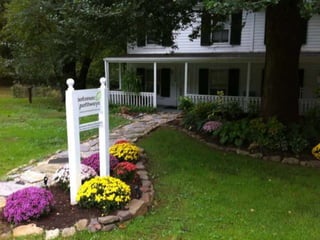
  • #10 We started building follow-up program Potomac Pathways
  • #11 Arizona Adventure Therapy
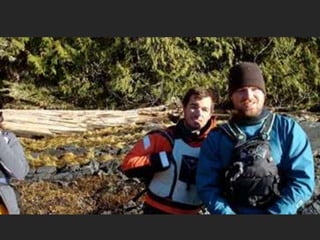
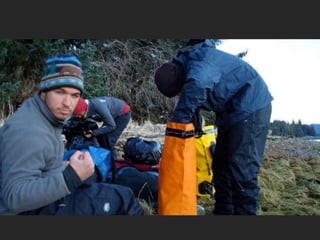
  • #12 Alaska Wilderness Therapy
  • #13 Alaska Wilderness Therapy
  • #14 Marrying the lovely Renee
  • #15 Came to Australia
  • #16 Working in South Australia
  • #17 Growing True North Expeditions with Emily
  • #18 The Stalemate of Mental Health
  • #19 Duncan, B. L., Miller, S. D., & Sparks, J. A. (2004). The heroic client: A revolutionary way to improve effectiveness through client-directed, outcome informed therapy. San Francisco, CA: Jossey-Bass. Duncan, B. L., Sparks, J. A., Murphy, J. J., & Miller, S. D. (2007). Just say 'no' to drugs as a first treatment for child problems. Psychotherapy in Australia, 13(4), 32-40.
  • #20 Miller, S. D., & Duncan, B. L. (2000). Paradigm lost: From model-driven to client-directed, outcome-informed clinical work. Journal of Systemic Therapies, 19(1), 20-24. Rodwell, M. K. (1987). Naturalistic inquiry: An alternative model for social work assessment. Social Service Review, 61(2), 231-246.
  • #21 Duncan, B. L., Miller, S. D., & Sparks, J. A. (2004). The heroic client: A revolutionary way to improve effectiveness through client-directed, outcome informed therapy. San Francisco, CA: Jossey-Bass.
  • #22 Duncan, B. L., Miller, S. D., & Sparks, J. A. (2004). The heroic client: A revolutionary way to improve effectiveness through client-directed, outcome informed therapy. San Francisco, CA: Jossey-Bass. Robinson, L. A., Berman, J. S., & Neimeyer, R. A. (1990). Psychotherapy for the treatment of depression: A comprehensive review of controlled outcome research. Psychological Bulletin, 30-49. Rosenhan, D. L. (1973). On being sane in insane places. Science, 179(4070), 250-258.
  • #23 Lambert, M. J. (2013). The efficacy and effectiveness of psychotherapy. In M. J. Lambert (Ed.), Bergin and Garfield's handbook of psychotherapy and behavior change (6th ed., pp. 169-218). Hoboken, NJ: Wiley. Miller, S. D., Hubble, M. A., & Duncan, B. L. (2008). Supershrinks: What is the secret of their success? Psychotherapy in Australia, 14(4), 14-22. Robinson, L. A., Berman, J. S., & Neimeyer, R. A. (1990). Psychotherapy for the treatment of depression: A comprehensive review of controlled outcome research. Psychological Bulletin, 30-49. Wampold, B. E. (1997). Methodological problems in identifying efficacious psychotherapies. Psychotherapy Research, 7(1), 21-43.
  • #24 Asay, T. P., & Lambert, M. J. (1999). The empirical case for the common factors of therapy: Quantitative findings. In M. A. Hubble, B. L. Duncan, & S. D. Miller (Eds.), The heart and soul of change: What works in therapy (pp. 33-56). Washington, DC: American Psychological Association. Duncan, B. L., Miller, S. D., & Sparks, J. A. (2007). Common factors and the uncommon heroism of youth. Psychotherapy in Australia, 13(2), 34-43.
  • #25 Miller, S. D., Hubble, M. A., & Duncan, B. L. (2008). Supershrinks: What is the secret of their success? Psychotherapy in Australia, 14(4), 14-22.
  • #26 Miller, S. D., Duncan, B. L., Brown, J., Sorrell, R., & Chalk, M. B. (2006). Using formal client feedback to improve retention and outcome: Making ongoing, real-time assessment feasible. . Journal of Brief Therapy, 5(1), 5-22. Miller, S. D., Hubble, M. A., & Duncan, B. L. (2008). Supershrinks: What is the secret of their success? Psychotherapy in Australia, 14(4), 14-22.
  • #27 Miller, S. D., Hubble, M. A., & Duncan, B. L. (2008). Supershrinks: What is the secret of their success? Psychotherapy in Australia, 14(4), 14-22.
  • #28 Client-Directed, Outcome-Informed Therapy
  • #29 Ardito, R. B., & Rabellino, D. (2011). Therapeutic alliance and outcomes of psychotherapy: Historical excurus, measurements, and prospects for research. Frontiers in Psychology, 2, 1-11. Duncan, B. L., Miller, S. D., & Sparks, J. A. (2004). The heroic client: A revolutionary way to improve effectiveness through client-directed, outcome informed therapy. San Francisco, CA: Jossey-Bass.
  • #30 Duncan, B. L., Miller, S. D., & Sparks, J. A. (2004). The heroic client: A revolutionary way to improve effectiveness through client-directed, outcome informed therapy. San Francisco, CA: Jossey-Bass. Garcia, J. A., & Weisz, J. R. (2002). When youth mental health care stops: Therapeutic relationship problems and other reasons for ending youth outpatient treatment. Journal of Consulting and Clinical Psychology, 70(2), 439-443. Rogers, C. R. (1961). On becoming a person. Boston, MA: Houghton Mifflin Company.
  • #31 Duncan, B. L., Miller, S. D., & Sparks, J. A. (2004). The heroic client: A revolutionary way to improve effectiveness through client-directed, outcome informed therapy. San Francisco, CA: Jossey-Bass.
  • #32 Miller, S. D., & Duncan, B. L. (2000). The outcome rating scale. Chicago, IL: Authors. Duncan, B. L., Miller, S. D., Sparks, J. A., Claud, D. A., Reynolds, L. R., Brown, J., & Johnson, L. D. (2003). The session rating scale: Preliminary psychometric properties of a "working" alliance measure. Journal of Brief Therapy, 3(1), 3-12.
  • #33 Duncan, B. L., Miller, S. D., & Sparks, J. A. (2004). The heroic client: A revolutionary way to improve effectiveness through client-directed, outcome informed therapy. San Francisco, CA: Jossey-Bass.
  • #34 2015 Expedition ORS/SRS Average (N=49)
  • #35 One 18 Year Old Girl’s Expedition Scores (She scored a 40 on the last day to be nice)
  • #36 Miller, S. D., Duncan, B. L., Brown, J., Sorrell, R., & Chalk, M. B. (2006). Using formal client feedback to improve retention and outcome: Making ongoing, real-time assessment feasible. . Journal of Brief Therapy, 5(1), 5-22.
  • #37 Miller, S. D., Mee-Lee, D., Plum, B., & Hubble, M. A. (2005). Making Treatment Count: Client-Directed, Outcome-Informed Clinical Work with Problem Drinkers. Psychotherapy in Australia, 11(4), 42-56.
  • #38 How to Incorporate Client-Directed Approaches to Adventure Therapy
  • #39 Gass, M. A., Gillis, H. L., & Russell, K. C. (2012). Adventure therapy: Theory, research, and practice. New York: Routledge. Orlinsky, D. E., Grawe, K., & Parks, B. K. (1994). Process and outcome in psychotherapy - noch einmal. In A. E. Bergin & S. L. Garfield (Eds.), Handbook of psychotherapy and behavior change. (4th ed., pp. 270-378). New York: Wiley.
  • #40 Madsen, W. C. (2009). Collaborative helping: A practice framework for family-centered services. Family Process, 48, 103-116. Orlinsky, D. E., Grawe, K., & Parks, B. K. (1994). Process and outcome in psychotherapy - noch einmal. In A. E. Bergin & S. L. Garfield (Eds.), Handbook of psychotherapy and behavior change. (4th ed., pp. 270-378). New York: Wiley.
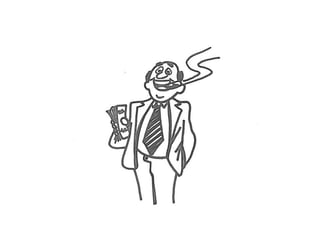
  • #41 The Metaphor of a Car Salesman
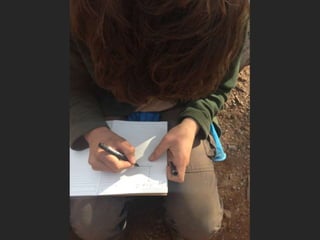
  • #42 Using Your Client’s Creativity to Locate Solutions
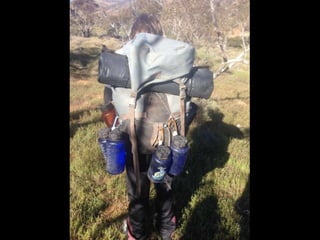
  • #43 Child from Foster Care Carrying the Weight of an Entire Group
  • #44 The Urge to Help Those Around Her
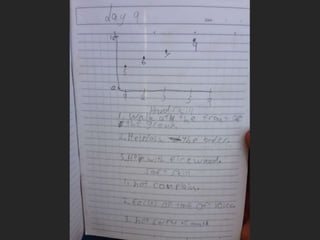
  • #45 Using Client Strengths for Problem Solving
  • #46 Using Client Strengths for Problem Solving
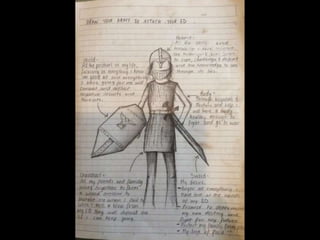
  • #47 Heroic Clients are the Agents of Change
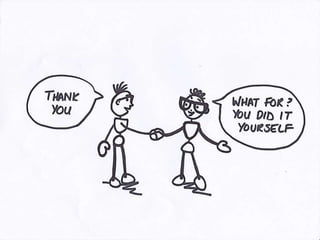
  • #48 Thank You
  • #49 References
  • #50 References