WEST BENGAL UNIVERSITY OF ANIMAL AND FISHERY SCIENCES
FACULTY OF FISHERY SCIENCES
A SEMINAR ON
CLIENT SIDE
PROCESSING
SUBMITTED TO:
DR. BISWARUP SAHA
DEPT. OF FEX
SUBMITTED BY :
AGNIVA PRADHAN
SUKALPA MANDAL
DEPT OF FNT
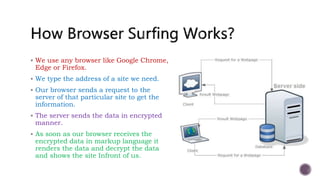
 We use any browser like Google Chrome,
Edge or Firefox.
 We type the address of a site we need.
 Our browser sends a request to the
server of that particular site to get the
information.
 The server sends the data in encrypted
manner.
 As soon as our browser receives the
encrypted data in markup language it
renders the data and decrypt the data
and shows the site Infront of us.
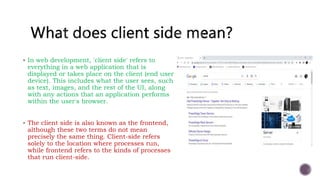
 In web development, 'client side' refers to
everything in a web application that is
displayed or takes place on the client (end user
device). This includes what the user sees, such
as text, images, and the rest of the UI, along
with any actions that an application performs
within the user's browser.
 The client side is also known as the frontend,
although these two terms do not mean
precisely the same thing. Client-side refers
solely to the location where processes run,
while frontend refers to the kinds of processes
that run client-side.
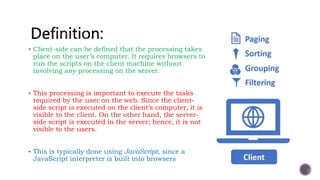
 Client-side can be defined that the processing takes
place on the user’s computer. It requires browsers to
run the scripts on the client machine without
involving any processing on the server.
 This processing is important to execute the tasks
required by the user on the web. Since the client-
side script is executed on the client’s computer, it is
visible to the client. On the other hand, the server-
side script is executed in the server; hence, it is not
visible to the users.
 This is typically done using JavaScript, since a
JavaScript interpreter is built into browsers
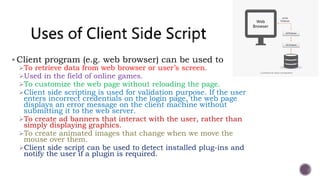
 Client program (e.g. web browser) can be used to
To retrieve data from web browser or user’s screen.
Used in the field of online games.
To customize the web page without reloading the page.
Client side scripting is used for validation purpose. If the user
enters incorrect credentials on the login page, the web page
displays an error message on the client machine without
submitting it to the web server.
To create ad banners that interact with the user, rather than
simply displaying graphics.
To create animated images that change when we move the
mouse over them.
Client side script can be used to detect installed plug-ins and
notify the user if a plugin is required.
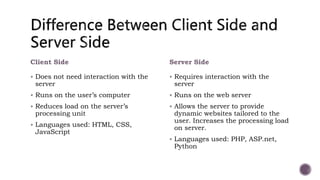
Client Side
 Does not need interaction with the
server
 Runs on the user’s computer
 Reduces load on the server’s
processing unit
 Languages used: HTML, CSS,
JavaScript
Server Side
 Requires interaction with the
server
 Runs on the web server
 Allows the server to provide
dynamic websites tailored to the
user. Increases the processing load
on server.
 Languages used: PHP, ASP.net,
Python
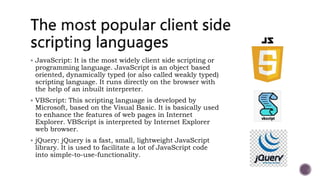
 JavaScript: It is the most widely client side scripting or
programming language. JavaScript is an object based
oriented, dynamically typed (or also called weakly typed)
scripting language. It runs directly on the browser with
the help of an inbuilt interpreter.
 VBScript: This scripting language is developed by
Microsoft, based on the Visual Basic. It is basically used
to enhance the features of web pages in Internet
Explorer. VBScript is interpreted by Internet Explorer
web browser.
 jQuery: jQuery is a fast, small, lightweight JavaScript
library. It is used to facilitate a lot of JavaScript code
into simple-to-use-functionality.
 Malicious HTML tags embedded in web request can cause the server
to generate malformed pages. It can be dangerous if run on the server
side.
 Malicious code can be sent to the server from the attackers in a
discussion group website.
 An attacker can send a file to a client and encourage him to post it to
the server. The file may contain malicious code that can hack the
website.
 When a client visits a website, a small text file called a cookie is often
placed in the client’s computer. At the next visiting, the web server
scans that cookie. If it found on the computer, the attacker can use
the cookie data to trigger the download of malicious code.
 Speed -faster because the data is on the client and does not
need to move across the internet.
 The client side scripting language is quite easy to learn and use.
 The main advantage of client side scripting is that it is
lightweight and relatively easy to implement (syntax not too
complex).
 Security -data can’t be intercepted on the client in the way it can
when it moves across the internet.
 Browser respond immediately when user presses any key,
mouse movement, clicks, etc.
 Browser specific – different browsers process scripts in different
ways, therefore the web page owner can’t be sure how their web
page will appear on screen.
 The main disadvantage of client side scripting is that it is
unsecure because the code is sent as is to the client and,
therefore, visible to it if the client looks at the sources of his web
page. In short, code is usually visible.
 Computer speed- the web page owner is reliant on the processor
speed of the client’s computer; so if this is slow then the
processing will be slow.
 The web application based on the heavy JavaScript can be
complicated to debug and maintain.
 Client side scripting is a process in which the code along
with HTML web page is sent to the client by the server.
Here, the code refers to the script.
 In other simple words, client side scripting is a process in
which scripts are executed by browsers without connecting
the server.
 The code executes on the browser of client’s computer
either during the loading of web page or after the web page
has been loaded.
 https://www.educative.io/answers/client-side-vs-server-
side#:~:text=Client%2Dside%20means%20that%20the,place%20on%20a%20
web%20server.
 https://www.dcs.bbk.ac.uk/~ptw/teaching/IWT/client/notes.html
 https://www.cloudflare.com/learning/serverless/glossary/client-side-vs-
server-side/
 https://www.pragimtech.com/blog/blazor-webAssembly/web-application-
client-vs-server-side-processing/
 https://www.seguetech.com/client-server-side-code/
CLIENT SIDE PROCESSING.pptx

CLIENT SIDE PROCESSING.pptx

  • 1.
    WEST BENGAL UNIVERSITYOF ANIMAL AND FISHERY SCIENCES FACULTY OF FISHERY SCIENCES A SEMINAR ON CLIENT SIDE PROCESSING SUBMITTED TO: DR. BISWARUP SAHA DEPT. OF FEX SUBMITTED BY : AGNIVA PRADHAN SUKALPA MANDAL DEPT OF FNT
  • 2.
     We useany browser like Google Chrome, Edge or Firefox.  We type the address of a site we need.  Our browser sends a request to the server of that particular site to get the information.  The server sends the data in encrypted manner.  As soon as our browser receives the encrypted data in markup language it renders the data and decrypt the data and shows the site Infront of us.
  • 3.
     In webdevelopment, 'client side' refers to everything in a web application that is displayed or takes place on the client (end user device). This includes what the user sees, such as text, images, and the rest of the UI, along with any actions that an application performs within the user's browser.  The client side is also known as the frontend, although these two terms do not mean precisely the same thing. Client-side refers solely to the location where processes run, while frontend refers to the kinds of processes that run client-side.
  • 4.
     Client-side canbe defined that the processing takes place on the user’s computer. It requires browsers to run the scripts on the client machine without involving any processing on the server.  This processing is important to execute the tasks required by the user on the web. Since the client- side script is executed on the client’s computer, it is visible to the client. On the other hand, the server- side script is executed in the server; hence, it is not visible to the users.  This is typically done using JavaScript, since a JavaScript interpreter is built into browsers
  • 5.
     Client program(e.g. web browser) can be used to To retrieve data from web browser or user’s screen. Used in the field of online games. To customize the web page without reloading the page. Client side scripting is used for validation purpose. If the user enters incorrect credentials on the login page, the web page displays an error message on the client machine without submitting it to the web server. To create ad banners that interact with the user, rather than simply displaying graphics. To create animated images that change when we move the mouse over them. Client side script can be used to detect installed plug-ins and notify the user if a plugin is required.
  • 6.
    Client Side  Doesnot need interaction with the server  Runs on the user’s computer  Reduces load on the server’s processing unit  Languages used: HTML, CSS, JavaScript Server Side  Requires interaction with the server  Runs on the web server  Allows the server to provide dynamic websites tailored to the user. Increases the processing load on server.  Languages used: PHP, ASP.net, Python
  • 7.
     JavaScript: Itis the most widely client side scripting or programming language. JavaScript is an object based oriented, dynamically typed (or also called weakly typed) scripting language. It runs directly on the browser with the help of an inbuilt interpreter.  VBScript: This scripting language is developed by Microsoft, based on the Visual Basic. It is basically used to enhance the features of web pages in Internet Explorer. VBScript is interpreted by Internet Explorer web browser.  jQuery: jQuery is a fast, small, lightweight JavaScript library. It is used to facilitate a lot of JavaScript code into simple-to-use-functionality.
  • 8.
     Malicious HTMLtags embedded in web request can cause the server to generate malformed pages. It can be dangerous if run on the server side.  Malicious code can be sent to the server from the attackers in a discussion group website.  An attacker can send a file to a client and encourage him to post it to the server. The file may contain malicious code that can hack the website.  When a client visits a website, a small text file called a cookie is often placed in the client’s computer. At the next visiting, the web server scans that cookie. If it found on the computer, the attacker can use the cookie data to trigger the download of malicious code.
  • 9.
     Speed -fasterbecause the data is on the client and does not need to move across the internet.  The client side scripting language is quite easy to learn and use.  The main advantage of client side scripting is that it is lightweight and relatively easy to implement (syntax not too complex).  Security -data can’t be intercepted on the client in the way it can when it moves across the internet.  Browser respond immediately when user presses any key, mouse movement, clicks, etc.
  • 10.
     Browser specific– different browsers process scripts in different ways, therefore the web page owner can’t be sure how their web page will appear on screen.  The main disadvantage of client side scripting is that it is unsecure because the code is sent as is to the client and, therefore, visible to it if the client looks at the sources of his web page. In short, code is usually visible.  Computer speed- the web page owner is reliant on the processor speed of the client’s computer; so if this is slow then the processing will be slow.  The web application based on the heavy JavaScript can be complicated to debug and maintain.
  • 11.
     Client sidescripting is a process in which the code along with HTML web page is sent to the client by the server. Here, the code refers to the script.  In other simple words, client side scripting is a process in which scripts are executed by browsers without connecting the server.  The code executes on the browser of client’s computer either during the loading of web page or after the web page has been loaded.
  • 12.
     https://www.educative.io/answers/client-side-vs-server- side#:~:text=Client%2Dside%20means%20that%20the,place%20on%20a%20 web%20server.  https://www.dcs.bbk.ac.uk/~ptw/teaching/IWT/client/notes.html https://www.cloudflare.com/learning/serverless/glossary/client-side-vs- server-side/  https://www.pragimtech.com/blog/blazor-webAssembly/web-application- client-vs-server-side-processing/  https://www.seguetech.com/client-server-side-code/