Larson 1
Liberal Arts College Background Information
A liberal arts education has long provided a unique learning experience. According to the Association
of American Colleges and Universities (AACU), a liberal arts education is:
An approach to college learning that empowers individuals and prepares them to deal with
complexity, diversity, and change. This approach emphasizes broad knowledge of the wider
world (e.g., science, culture, and society) as well as in-depth achievement in a specific field of
interest. It helps students develop a sense of social responsibility; strong intellectual and
practical skills that span all major fields of study, such as communication, analytical, and
problem-solving skills; and the demonstrated ability to apply knowledge and skills in real-
world settings.” (AACU)
In the last couple of decades, however, there has been a noticeable shift in how liberal arts colleges
operate in order to stay relevant in higher education. This shift is owing to a variety of factors
including the cost of a residential education, competition from cheaper education providers, and a shift
in the job market to more of a service-based economy (Baker et al.). Further, students have become
more focused on their financial stability than on developing the common core principles that the liberal
arts promote, such as “breadth of awareness and appreciation, clarity and precision of thought and
communication, critical analysis, honing of moral and ethical sensibilities” (Shoenberg 2009, 56). As a
result, liberal arts colleges have been forced to reconsider the type of education they provide in order to
remain relevant and competitive.
This shift was well documented in a study published by the Association of American Colleges and
Universities. In a previous study conducted in 1990 by David Breneman, 212 institutions were
classified as “true liberal arts colleges.” In 2012, AACU found that only 130 of those schools meet the
requirements to be considered a “true liberal arts college.” Among other things, the survey took into
account the number of degrees awarded by category as well as the field in which they were given. The
institutions that are no longer considered true liberal arts colleges experienced identity shifts that
ranged in severity. On one end of the spectrum, some colleges faced steep fiscal challenges that
resulted in eventually being subsumed by larger universities (Baker et al.). From 2010 to 2013, 37
colleges were forced to merge, which is more than triple the number from 2006 to 2009 (Bloomberg
Business). On the less dramatic end, many colleges experienced what is known as “mission creep,”
Larson 2
which is defined as “the tendency of institutions to introduce higher-level programs” (Aldersley 1995,
51). Many of these colleges now offer a wider range of academic programs that include more
vocational offerings. Regardless, many of these colleges still define themselves as liberal arts colleges,
making for a less precise definition of what can be considered a liberal arts college. There are fewer
and fewer institutions that have been able to continue putting a heavy emphasis on the arts and
sciences. Further, “the influence of this sector may be diminishing . . . as their numbers decrease and
their educational focus becomes less clear” (Baker et al.). This type of change within the industry calls
for a reevaluation of how liberal arts colleges like Luther College operate.
Despite the caution that surrounds the liberal arts degree, there are still plenty of success stories that
come out of liberal arts colleges. In fact, Luther boasts a very high job placement rate following
graduation. Looking at the class of 2014, 99% of graduates were employed full-time or part-time,
attending graduate or professional school, volunteering, or intentionally not seeking employment. Of
these people, 81% of Luther graduates in 2014 were employed in something that was related to their
career goals. Statistics like these seem to contradict the skepticism surrounding the liberal arts, since a
liberal arts degree proves to have continued value in the job market. This begs the question, then, of
how colleges are marketing their institutions in order to attract prospective students. Are they
emphasizing the right things and deemphasizing others that aren’t as important to prospective
students?
In a recent article, Kimberly Whitler of Forbes magazine states that “It’s arguable that there is no
industry where the marketing function is in a greater state of flux than higher education.” She
emphasizes the importance of including cabinet-level marketers as part of a college’s faculty. These
types of positions are very important in the processes of recruiting better-quality faculty, admitting
higher-quality students, and increasing fundraising.
Understanding all aspects of college marketing is crucial to standing out in the very competitive
market of higher education, where liberal arts colleges are often at an immediate disadvantage given
their high tuition. During 2014, the average cost to attend a four-year private institution came to just
over $42,000. Compare this price to the $19,000 it costs on average for an in-state student to attend a
public four-year college (collegeboard). Students are increasingly skeptical that they will experience a
significant enough return on their investment when they have cheaper options available. As a result,
more and more prospective students pursue alternative routes of higher education, like a public or
Larson 3
online education. For example, 6.7 million students—32% of total higher-ed enrollment—took at least
one online course through a university during the fall of 2011 (usnews). The increase in demand for
online classes has led colleges to switch curriculums. As a result, 62.4% of the colleges surveyed in
2012 offered fully online degree programs, up from just 32.5% in 2002 (usnews). If liberal arts
colleges want to stay competitive, they need to enact a perception change in order to draw students
back in.
It is crucial to keep in mind that changing the perceptions of prospective students is different from
changing the mission and focus of an institution. As mentioned earlier, Luther has had success with
graduate placement and producing students who are prepared for life after college. Beyond Luther,
according to U.S. Census data from 2010 and 2011, at peak earning ages (56–60), liberal arts majors
earn $2,000 more than people with professional or pre-professional degrees (InsideHigherEd). Further,
a survey of 400 employers conducted by the Conference Board, Corporate Voices for Working
Families, the Partnership for 21st Century Skills, and the Society for Human Resource Management
found that skills that come out of a liberal arts education like oral communication, critical thinking, and
creativity were valued more than skills such as reading comprehension and mathematics. Despite the
facts that point to a liberal arts education providing a solid platform for students to excel after
graduation, there is still quite a bit of skepticism surrounding the return on investment a student will
get.
There is no question that a liberal arts education still holds great value in today’s marketplace.
However, the struggle lies in trying to communicate this to prospective students, who may be turned
off by certain aspects of the liberal arts. From “mission creep” to merging or closing doors, many
colleges are having to adjust in order to remain competitive, and Luther, too, needs to reevaluate what
the customer is truly looking for in order to remain a top liberal arts college.
Providing the best college experience
Jeffrey J. Selingo, author of College Unbound, talks in great detail about students maximizing their
college experience in order to help form the skills needed to succeed in the workforce. He states the
following three activities as essential when preparing for a future career:
1. Seek Passionate Faculty Members
Larson 4
According to Selingo, “Finding passionate, engaged professors is critically important in the
first year of college, when it is easy to remain anonymous in large lecture classes” (150).
Luther College has limited large lecture classes and boasts an average class size of 19
(luther.edu). Further, the overall student-to-faculty ratio at Luther is just 12:1 (luther.edu).
Numbers like these promote an environment that is very conducive to students and faculty
forming relationships that go beyond the classroom.
2. Dive Deep into a Research Project
At Luther College, students have the opportunity to conduct long-term undergraduate academic
research. Selingo states, “studies over the years have found that undergraduate research
stimulates critical thinking, gives students a better understanding of what they learned from a
lecture, allows them to work in situations with uncertain results, and provides a sense of
accomplishment” (152). Not only do Luther students have the opportunity to apply for grants
for research projects that include faculty-student collaborative research, but they also must
complete a senior paper before graduation. Students in all fields at Luther are given the
opportunity to expand their education through the form of research.
3. Go on a Transformative Global Experience
During a typical Luther J-term, 350-400 students travel to various locations around the world
on one of approximately two dozen faculty-led courses (luther.edu). These numbers don’t even
include the numerous semester- and year-long programs available to Luther students.
According to Selingo, “there is a growing recognition that overseas study in college helps in the
global job market” (153). More than two-thirds of Luther students will have study-abroad
experience before they graduate (luther.edu).
Clearly, Luther College excels in the areas that Selingo identifies as being key to preparation for the
workforce, and each of these areas plays a role in providing a truly engaging college experience. But
how many prospective students prioritize these areas when looking at colleges? These experiences may
prove vital during their time at college, but if prospective students don’t take them into account when
considering which college to attend, there is no need to emphasize them in a marketing campaign. This
begs the question, then, of what is truly important to a student when they evaluate various colleges.
Larson 5
Methodology
According to the Luther College Admissions Department, which provided input for this study in the
spring of 2015, there is a clear need to gather more information about the college decision process.
Admissions personnel identified specific questions they wanted to ask and information they wanted to
gather from prospective students. Qualtrics was used as the survey platform, and for best results, each
prospective student who visited campus over the summer was asked in person, rather than via email, to
participate in the survey. For agreeing to participate, prospective students were awarded coupons for a
free coffee or cookie at Oneota Market. The survey was launched at the completion of the 2014–15
academic year through a link in a post-visit email. It was also sent out to a pool of 84 students who
visited Luther in June for a preview day.
In addition, following the ROAD days at Luther, a mass email was sent to 655 accepted students who
matriculated at Luther in the fall of 2015. This survey gained 260 responses, a 40% response rate. This
survey asked the same questions as the prospective-student survey, only phrased using past-tense
verbs. This survey was also distributed to an additional 12 current Luther students. This population of
students was held to a minimum owing to the increased time separation from when they made their
college decision.
On-campus interviews and tours were also conducted as part of this study. Prospective students and
parents were asked upon arrival if they had time and would be willing to participate in a brief
interview. Each prospective student had at least one parent accompanying him or her on the visit. The
questions asked during these interviews were very similar to those on the online surveys in order to
allow for ease of data analysis. However, given the nature of an in-person interview, prospective
students and parents were able to give more in-depth answers to questions that would normally be
phrased in a multiple-choice format. Additionally, prospective students were asked various questions
throughout tours of campus. The tours provided a more informal environment in which to gather
information.
Finally, an online survey was sent out to 134 Luther employees who were chosen at random. This
survey yielded 56 responses, a 42% response rate. The population included professors from various
departments, administrators, and coaches. The questions asked on this survey were similar to those on
the survey for prospective students but were phrased in way that reflected an employee’s perspective.
Larson 6
Aside from data gathering through the various survey methods, extensive research on the topic of
liberal arts was conducted for this study. Sources included various newspaper articles, higher-ed
journals, books, and online articles. In addition, Luther’s Accepted Student was consulted in order to
draw comparisons between ASR data and this data, as well as to confirm findings.
During the last week of July, all surveys were closed, and data analysis, which relies on Qualtrics
tools, was started.
Larson 7
Findings
1. Cost
It is no surprise that cost plays a substantial role in the college decision of many students. When
prospective students were asked which overall factors will be most important in developing a list of
schools to which they will apply, 52% of respondents checked “availability of grants and scholarships”
and 48% said “total cost to you after financial aid” (see fig. 1). These two options were the two most-
checked options of the list of 21 options.
Figure 1. Responses by a
pool of 70 prospective
students when asked:
“Which of the following
factors will be the most
important to you when
developing a list of
schools to which you will
apply?”
Larson 8
Further, the same question was asked of accepted students (AS) who will be incoming first-years in
2015. Figure 2 shows that “availability of grants and scholarships” was checked by 43% of
respondents, making it the third most-checked option behind “small class sizes” and “good academic
reputation.”
Figure 2. Responses by a pool of 266 accepted students when asked: “Which of the following factors
were the most important to you when developing a list of schools to which you will apply?”
When asked the question concerning proper fit, both groups of survey participants again rated cost
highly. As shown in figure 3, prospective students considered the financial aspect of college as the
most important factor in achieving proper fit. Similarly, accepted students rated the financial aspect as
the third most important factor when finding the proper fit. In the open-ended portion of this question,
where students were allowed the opportunity to define what “fit” means to them, many used the words
“feel,” “comfortable,” or, as one student wrote, it “just felt right.” In the multiple-choice portion for
accepted students, answers like “friendliness of the campus community” and “helpfulness of the
Larson 9
campus community” were rated as the top two aspects for finding a college with a proper fit. However,
the financial aspect was rated just a few points behind these two answers.
Students were asked the open-ended question first, which allowed them to answer without seeing any
prewritten options, which may have encouraged more emotive and immeasurable responses. However,
when the survey respondents were given a specific set of options, it became clear that financials are
still very important. While students may say they are looking for a college with the right “fit,”
according to this data, financials also play a role in the “fit” portion of the decision.
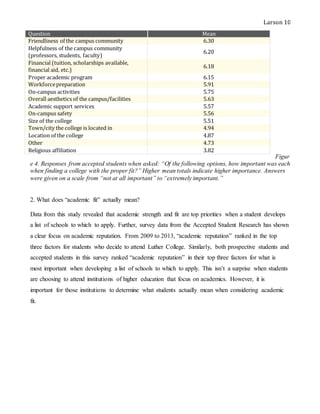
Figure 3. Responses from prospective students when asked: “Of the following options, how important
was each when finding a college with the proper fit?” Higher mean totals indicate higher importance.
Answers were given on a scale from “not at all important” to “extremely important.”
A prime example of these findings is the accepted student who answered the open-ended portion of the
“fit” question with “I just had a feeling!” However, when the same student was given the list of options
and told to rank the importance of them, she rated “financial” as extremely important. Of the 13
options available, she ranked only one other option as extremely important. So no matter how good a
feeling this student had about Luther and its campus during her visit, it is clear that her decision came
down to specific aspects like financials.
Question Mean
Financial (tuition, scholarships
available, financial aid, etc.)
6.35
Proper academic program 6.32
Helpfulness of the campus community
(professors, students, faculty)
6.21
Friendliness of the campus
community
6.16
Workforcepreparation 6.02
On-campus safety 5.91
On-campus activities 5.77
Academic support services 5.74
Overall aesthetics of the
campus/facilities
5.61
Size of the college 5.42
Location of the college 5.26
Town/city the college is located in 5.18
Other 4.00
Religious affiliation 3.81
Larson 10
Figur
e 4. Responses from accepted students when asked: “Of the following options, how important was each
when finding a college with the proper fit?” Higher mean totals indicate higher importance. Answers
were given on a scale from “not at all important” to “extremely important.”
2. What does “academic fit” actually mean?
Data from this study revealed that academic strength and fit are top priorities when a student develops
a list of schools to which to apply. Further, survey data from the Accepted Student Research has shown
a clear focus on academic reputation. From 2009 to 2013, “academic reputation” ranked in the top
three factors for students who decide to attend Luther College. Similarly, both prospective students and
accepted students in this survey ranked “academic reputation” in their top three factors for what is
most important when developing a list of schools to which to apply. This isn’t a surprise when students
are choosing to attend institutions of higher education that focus on academics. However, it is
important for those institutions to determine what students actually mean when considering academic
fit.
Question Mean
Friendliness of the campus community 6.30
Helpfulness of the campus community
(professors, students, faculty)
6.20
Financial (tuition, scholarships available,
financial aid, etc.)
6.18
Proper academic program 6.15
Workforcepreparation 5.91
On-campus activities 5.75
Overall aesthetics of the campus/facilities 5.63
Academic support services 5.57
On-campus safety 5.56
Size of the college 5.51
Town/city the college is located in 4.94
Location of the college 4.87
Other 4.73
Religious affiliation 3.82
Larson 11
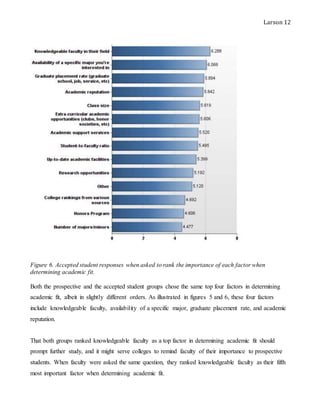
Figure 5. Prospective student responses when asked to rank the importance of each factor when
determining academic fit.
Larson 12
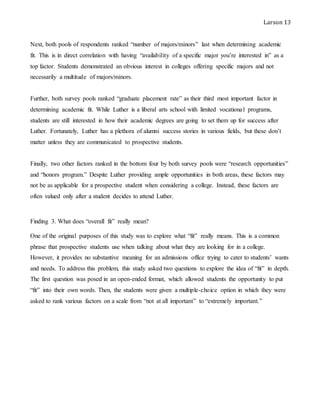
Figure 6. Accepted student responses when asked to rank the importance of each factor when
determining academic fit.
Both the prospective and the accepted student groups chose the same top four factors in determining
academic fit, albeit in slightly different orders. As illustrated in figures 5 and 6, these four factors
include knowledgeable faculty, availability of a specific major, graduate placement rate, and academic
reputation.
That both groups ranked knowledgeable faculty as a top factor in determining academic fit should
prompt further study, and it might serve colleges to remind faculty of their importance to prospective
students. When faculty were asked the same question, they ranked knowledgeable faculty as their fifth
most important factor when determining academic fit.
Larson 13
Next, both pools of respondents ranked “number of majors/minors” last when determining academic
fit. This is in direct correlation with having “availability of a specific major you’re interested in” as a
top factor. Students demonstrated an obvious interest in colleges offering specific majors and not
necessarily a multitude of majors/minors.
Further, both survey pools ranked “graduate placement rate” as their third most important factor in
determining academic fit. While Luther is a liberal arts school with limited vocational programs,
students are still interested in how their academic degrees are going to set them up for success after
Luther. Fortunately, Luther has a plethora of alumni success stories in various fields, but these don’t
matter unless they are communicated to prospective students.
Finally, two other factors ranked in the bottom four by both survey pools were “research opportunities”
and “honors program.” Despite Luther providing ample opportunities in both areas, these factors may
not be as applicable for a prospective student when considering a college. Instead, these factors are
often valued only after a student decides to attend Luther.
Finding 3. What does “overall fit” really mean?
One of the original purposes of this study was to explore what “fit” really means. This is a common
phrase that prospective students use when talking about what they are looking for in a college.
However, it provides no substantive meaning for an admissions office trying to cater to students’ wants
and needs. To address this problem, this study asked two questions to explore the idea of “fit” in depth.
The first question was posed in an open-ended format, which allowed students the opportunity to put
“fit” into their own words. Then, the students were given a multiple-choice option in which they were
asked to rank various factors on a scale from “not at all important” to “extremely important.”
Larson 14
Figures 7 and 8. Responses students (prospective students on left, accepted students on right) gave
when asked: “Of the following options, how important was each when finding a college with the
proper fit?” Higher mean totals indicate higher importance. Answers were given on a scale from “not
at all important” to “extremely important.”
Notably, students still ranked the financial aspect high even when the question was aimed at
determining fit. However, both pools ranked “friendliness of the campus community” and “helpfulness
of the campus community” in their top four factors. While measuring the friendliness or helpfulness of
a campus is difficult, these qualities are obviously very important to students and need to be taken into
consideration in appealing to prospective students.
Finding 4. How are we communicating with students? The admissions counselor and the Luther
website are very important.
Beyond trying to develop a deeper understanding of why students choose the college they do, this
study explored the communication aspect of how students are acquiring the information that helps
them make their college decision. Students were asked questions about which sources they used to
obtain information about Luther’s academics, then they were asked which of those sources were
helpful. Further, questions specific to the Luther website were asked to find out which web pages
prospective students were utilizing to gather information.
Question Mean
Financial (tuition, scholarships available,
financial aid, etc.)
6.35
Proper academic program 6.32
Helpfulness of the campus community
(professors, students, faculty)
6.21
Friendliness of the campus community 6.16
Workforcepreparation 6.02
On-campus safety 5.91
On-campus activities 5.77
Academic support services 5.74
Overall aesthetics of the campus/facilities 5.61
Size of the college 5.42
Location of the college 5.26
Town/city the college is located in 5.18
Other 4.00
Religious affiliation 3.81
Question Mean
Friendliness of the campus community 6.30
Helpfulness of the campus community
(professors, students, faculty)
6.20
Financial (tuition, scholarships available,
financial aid, etc.)
6.18
Proper academic program 6.15
Workforcepreparation 5.91
On-campus activities 5.75
Overall aesthetics of the campus/facilities 5.63
Academic support services 5.57
On-campus safety 5.56
Size of the college 5.51
Town/city the college is located in 4.94
Location of the college 4.87
Other 4.73
Religious affiliation
3.82
Larson 15
The top graph on the left illustrates the
responses given by prospective
students and the bottom graph
represents responses from accepted
students when asked the question: “Did
you use this source to obtain
information about Luther’s
academics?” Students were able to
answer either yes or no. The graphs
display the percent frequency for
students answering yes to any of the
available options.
Both prospective and admitted students
most frequently used the Luther
website and admissions counselor to
gather information concerning Luther’s
academics.
In both scenarios, high school
guidance counselors were incredibly
underused in obtaining information
about Luther’s academics. It is unclear
whether this is owing to guidance counselors who lack knowledge or to students who don’t seek out
this resource. In either case, this is something to consider, given that this is a human resource that is
available to high school students on a daily basis.
Larson 16
As a follow-up to the original
question about which sources
students used to obtain knowledge
about Luther’s academics, students
were then asked which of these
sources were actually helpful. Not
only do students use the Luther
website and admissions counselors
as their primary resources, but they
also rank them as the most helpful.
Again, the high school guidance
counselor was a highly underused
resource for learning information
about Luther’s academics. Along
with this, guidance counselors were
ranked the least helpful when they
were sought out for information.
Meetings with professors were
given very average reviews.
Prospective students ranked them
as the seventh most helpful
resource for information on
Luther’s academics, while accepted students ranked them as the fifth most helpful.
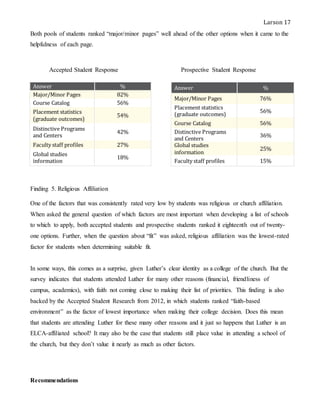
The final question students were asked had to do with the specific pages that are found under the
“Academics” page on the Luther website. The options listed in the tables below are the main subpages
that a person can navigate through from the main “Academics” page on the Luther website. Students
were asked which of these pages were helpful in finding out information about Luther’s academics.
Larson 17
Both pools of students ranked “major/minor pages” well ahead of the other options when it came to the
helpfulness of each page.
Accepted Student Response Prospective Student Response
Finding 5. Religious Affiliation
One of the factors that was consistently rated very low by students was religious or church affiliation.
When asked the general question of which factors are most important when developing a list of schools
to which to apply, both accepted students and prospective students ranked it eighteenth out of twenty-
one options. Further, when the question about “fit” was asked, religious affiliation was the lowest-rated
factor for students when determining suitable fit.
In some ways, this comes as a surprise, given Luther’s clear identity as a college of the church. But the
survey indicates that students attended Luther for many other reasons (financial, friendliness of
campus, academics), with faith not coming close to making their list of priorities. This finding is also
backed by the Accepted Student Research from 2012, in which students ranked “faith-based
environment” as the factor of lowest importance when making their college decision. Does this mean
that students are attending Luther for these many other reasons and it just so happens that Luther is an
ELCA-affiliated school? It may also be the case that students still place value in attending a school of
the church, but they don’t value it nearly as much as other factors.
Recommendations
Answer %
Major/Minor Pages 82%
Course Catalog 56%
Placement statistics
(graduate outcomes)
54%
Distinctive Programs
and Centers
42%
Faculty staff profiles 27%
Global studies
information
18%
Answer %
Major/Minor Pages 76%
Placement statistics
(graduate outcomes)
56%
Course Catalog 56%
Distinctive Programs
and Centers
36%
Global studies
information
25%
Faculty staff profiles 15%
Larson 18
1. Cost
As discussed in this study’s first finding, students are definitely taking into consideration the financial
aspect of college as one of their top priorities. Currently, the comprehensive fee to attend Luther is
$46,590. While there are plenty of scholarships to reduce this sticker price considerably, many students
may still need to take out loans, which sets them up for leaving Luther with debt.
Students need to know why it is so expensive to attend Luther, and they also need to know where their
money is going. From there, hopefully the college can explain that it is worth it to attend Luther
despite the cost. Something that goes along with this is the fact that students ranked “knowledgeable
faculty in their field” very high on their list when determining academic fit. Thus, it is important to
explain that Luther has a very low number of adjunct and visiting professors, and 97% of Luther’s full-
time faculty hold the highest degree in their field. As a result, more money is needed to compensate
these professors.
Further, proper communication is crucial in order to prevent students from being scared off by the
sight of the $46,000 sticker price. Students need to know that 98% of Luther students receive financial
assistance and that 75% of students have a work-study position that can help cut the costs.
2. Faculty importance
This study’s second finding reported that both prospective and accepted students strongly prioritize
having knowledgeable faculty when making their college decision. Many tour guides are able to give
an excellent overview of what Luther has to offer. Sometimes, a tour guide’s academic interest falls
directly in line with a prospective student’s interest, and they are able to offer a lot of information
concerning a specific area of study. However, 32% of accepted students and 33% of prospective
students said that meeting with a faculty member was their preferred method of learning about
Luther’s academics. These meetings can be crucial for a student, especially given how much emphasis
students put on specific major/minor programs when applying to schools.
Further, as mentioned in finding #5, faculty were given very average reviews when it came to the
helpfulness of these meetings as sources of information about Luther’s academics. Given the
importance of these meetings for students, this is an inconsistency that should be addressed.
Larson 19
Finally, faculty/staff profiles were ranked low when it came to the helpfulness of these web pages on
the “Academics” portion of the Luther website. Again, students emphasized in these surveys how
important faculty are in their decision, and providing them with ample information in the faculty/staff
profiles may be more important than originally thought.
3. Tour guides informed about majors/minors
Students are interested in knowing about specific areas of study, so matching appropriate tour guides
with certain students is important. Many times, a tour is a student’s first impression of campus and of
the major/minor they are interested in. The Admissions Department is very intentional about matching
the interests of tour guides with prospective students. However, this data is a reminder of how
important this practice is. Further, there will still be many times when finding a perfect match is hard.
As a result, making sure tour guides are well versed in a number of topics, including various
majors/minors that don’t include their own, will help in providing the most informative tour possible.
This is especially important for tours that take place in summer, when students are less likely to be able
to meet with a professor from the department of their interest.
4. Graduate placement rate
Both prospective students and accepted students communicated that graduate placement rate was their
third most important factor when determining academic fit. Despite being a liberal arts school with
limited vocational programs, students still put emphasis on knowing that a Luther education will set
them up for success after college. As a result, Luther needs to better communicate the success rates of
students and properly direct them to resources that showcase Luther graduates’ success.
5. Faith
Because students don’t seem to prioritize Luther’s ELCA affiliation, it’s important to reevaluate how
best to identify and market Luther to students. The ASR data and this study’s surveys show a
consistent pattern of students putting very little emphasis on attending school in a faith-based
environment. As a result, a distinct effort must be made to decide how Luther College identifies itself
with the church. Obviously, this will require a conversation among multiple groups on campus,
including College Ministries, Admissions, and the student body.
On the Luther website, it states that “we think offering a rigorous academic program in the context of a
faith tradition is the best way for you to discover your life’s meanings and commitments. . . . At Luther
Larson 20
College, faith is encountered, not imposed. We don’t tell you what to believe or what values you
should hold. That’s work you need to do. We’re here to help you grow in understanding and wisdom.”
Despite how great this sounds, students still consistently rated “faith-based environment” very low on
their priorities in this study and in previous years’ ASR surveys. It will be important going forward to
frame this relationship with the church in the proper context while still maintaining our identity as a
college.
In the survey sent to faculty members, the last question allowed them to write in areas they believed
should be marketed more or less to students. Not once did a respondent mention anything having to do
with marketing a faith-based environment. At first glance, one might assume that this means all 60
respondents believe that Luther is marketing its faith-based environment perfectly. It is more likely
that Luther faculty also believe that a faith-based learning environment isn’t high on a student’s list of
priorities. In fact, faculty ranked “religious affiliation” as the lowest factor that students consider when
looking for a college with the proper “fit.” It’s possible that Luther’s identity with the church is
marketed to students inconsistently and isn’t talked about enough on campus. But Luther cannot both
emphasize faith-based learning because it’s part of our identity but also deemphasize it because
students don’t see it as valuable. There are obvious inconsistencies that need to be addressed in order
for students to truly understand how Luther identifies itself with the church.
Further, since most students gain their first impression of a school through a campus tour, tour guides
need better training on how to address Luther as a college of the church. Faith is a very personal thing,
and each student has his or her own story to go along with it. There is nothing wrong with that.
However, Luther must make sure there is a consistent story being told by tour guides when it comes to
Luther as a college of the church.
6. Fit
This study’s third finding explored what students actually mean when they say they are looking for a
school with the right “fit.” It turns out that students still take financials into consideration when finding
a school with the right fit. However, also high on the list were factors like the “friendliness of the
campus community” and “helpfulness of the campus community.” Factors like these are problematic
when it comes to marketing. There are obvious things that a college can control, like hiring friendly
and helpful tour guides, providing a proper welcome in the Admissions Office, and giving an excellent
overall visit experience. But things like low student-to-faculty ratio and small class sizes can also play
Larson 21
a role in the “helpfulness” of the campus community. So can making sure that students know about
resources on campus, like RAs, Health Service, and Student Support Services.
In-person interviews conducted with parents and students over the course of this study revealed a
common theme among parents of making sure their child had a smooth transition into the college
lifestyle. The resources already listed, along with many others, can be vital when a student is making
this transition. Thus, it is important that students are aware of the multitude of resources that will help
them feel welcome from the first day they step on campus. There isn’t much Admissions can do to
control how a student perceives the friendliness of everyday students that a prospective student
encounters during their visit. However, there are things that can be pointed out or talked about to make
sure students know they won’t be alone during their college journey and that there is no better place to
feel welcome than at a small liberal arts school like Luther College.
Next Steps
This study gathered online survey responses from more than four hundred individuals and conducted
interviews or gave tours to more than twenty prospective students and their parents, but there is still
room to dig deeper. Further study could help answer various questions about why students make the
college decision they do. However, this research adds new information to the dialogue about how
Luther properly markets itself to prospective students.
Further research could narrow questions down even further in the hopes of getting very specific
answers. For example, students put emphasis on the friendliness and helpfulness of a campus as it
relates to finding a college with the right “fit.” Therefore, it might make sense to explore these two
factors in depth in order to truly grasp how students are prioritizing. On the other side of the spectrum,
the religious aspect of college was consistently ranked low, but why is that? Further surveys and
interviews with students would be necessary to answer these important questions.
For now, these findings and recommendations still have some value in focusing Luther’s marketing
efforts. Many of the recommendations suggest improved or more intentional communication about
certain aspects of the college. What isn’t included in these recommendations is anything remotely
close to the aforementioned “mission creep.” Luther is still succeeding in recruiting students, but that
doesn’t mean adjustments can’t be made to maintain this success or to attract higher-quality students.
Larson 22
Larson 23
Citations
Aldersley, S. F. 1995. “‘Upward Drift’ Is Alive and Well: Research/Doctoral Model Still Attractive to
Institutions.”Change 27 (5): 50–56.
Baker, Vicki, Roger Baldwin, and Sumedha Bakker. "Where Are They Now? Revisiting Breneman's
Study of Liberal Arts Colleges." Association of American Colleges & Universities. 2 Aug. 2012. Web.
15 Aug. 2015.
Cohen, Steve. "What Colleges Don't Know About Admissions." The Chronicle of Higher Education.
21 Sept. 2009. Web. 15 Aug. 2015.
Freeland, Richard. "Liberal Education and Effective Practice: The Necessary Revolution in
Undergraduate Education." Association of American Colleges & Universities. 22 Jan. 2009. Web. 15
Aug. 2015.
Grasgreen, Allie. "To See How Liberal Arts Grads Really Fare, Report Examines Long-term Data |
InsideHigherEd." To See How Liberal Arts Grads Really Fare, Report Examines Long-term Data |
InsideHigherEd. 22 Jan. 2014. Web. 15 Aug. 2015.
Pascarella, R. T., G. C. Wolniak, T. A. Seifert, T. M. Cruce, and C. F. Blaich, eds. 2005. “Liberal Arts
Colleges and Liberal Arts Education: New Evidence on Impacts.” ASHE Higher Education Report 31,
no. 3.
McDonald, Michael. "Small U.S. Colleges Battle Death Spiral as Enrollment Drops." Bloomberg.com.
Bloomberg, 14 Apr. 2014. Web. 16 July 2015.
Selingo, Jeffrey J. College (un)bound: The Future of Higher Education and What It Means for
Students. Print.
Sheehy, Kelsey. "Online Course Enrollment Climbs for 10th Straight Year." U.S. News. 8 Jan. 2013.
Web. 15 Aug. 2015.
Shoenberg, R. 2009. “How Not to Defend Liberal Arts Colleges.”Liberal Education 95 (1): 56–9.
"Trends in College Pricing." - Trends in Higher Education. Web. 15 Aug. 2015.
"What Is a 21st Century Liberal Education?" Association of American Colleges & Universities. 18
Apr. 2014. Web. 15 Aug. 2015.
Whitler, Kimberly. Forbes. Forbes Magazine, 4 June 2015. Web. 15 Aug. 2015.

CLEAN.final draft (2)

  • 1.
    Larson 1 Liberal ArtsCollege Background Information A liberal arts education has long provided a unique learning experience. According to the Association of American Colleges and Universities (AACU), a liberal arts education is: An approach to college learning that empowers individuals and prepares them to deal with complexity, diversity, and change. This approach emphasizes broad knowledge of the wider world (e.g., science, culture, and society) as well as in-depth achievement in a specific field of interest. It helps students develop a sense of social responsibility; strong intellectual and practical skills that span all major fields of study, such as communication, analytical, and problem-solving skills; and the demonstrated ability to apply knowledge and skills in real- world settings.” (AACU) In the last couple of decades, however, there has been a noticeable shift in how liberal arts colleges operate in order to stay relevant in higher education. This shift is owing to a variety of factors including the cost of a residential education, competition from cheaper education providers, and a shift in the job market to more of a service-based economy (Baker et al.). Further, students have become more focused on their financial stability than on developing the common core principles that the liberal arts promote, such as “breadth of awareness and appreciation, clarity and precision of thought and communication, critical analysis, honing of moral and ethical sensibilities” (Shoenberg 2009, 56). As a result, liberal arts colleges have been forced to reconsider the type of education they provide in order to remain relevant and competitive. This shift was well documented in a study published by the Association of American Colleges and Universities. In a previous study conducted in 1990 by David Breneman, 212 institutions were classified as “true liberal arts colleges.” In 2012, AACU found that only 130 of those schools meet the requirements to be considered a “true liberal arts college.” Among other things, the survey took into account the number of degrees awarded by category as well as the field in which they were given. The institutions that are no longer considered true liberal arts colleges experienced identity shifts that ranged in severity. On one end of the spectrum, some colleges faced steep fiscal challenges that resulted in eventually being subsumed by larger universities (Baker et al.). From 2010 to 2013, 37 colleges were forced to merge, which is more than triple the number from 2006 to 2009 (Bloomberg Business). On the less dramatic end, many colleges experienced what is known as “mission creep,”
  • 2.
    Larson 2 which isdefined as “the tendency of institutions to introduce higher-level programs” (Aldersley 1995, 51). Many of these colleges now offer a wider range of academic programs that include more vocational offerings. Regardless, many of these colleges still define themselves as liberal arts colleges, making for a less precise definition of what can be considered a liberal arts college. There are fewer and fewer institutions that have been able to continue putting a heavy emphasis on the arts and sciences. Further, “the influence of this sector may be diminishing . . . as their numbers decrease and their educational focus becomes less clear” (Baker et al.). This type of change within the industry calls for a reevaluation of how liberal arts colleges like Luther College operate. Despite the caution that surrounds the liberal arts degree, there are still plenty of success stories that come out of liberal arts colleges. In fact, Luther boasts a very high job placement rate following graduation. Looking at the class of 2014, 99% of graduates were employed full-time or part-time, attending graduate or professional school, volunteering, or intentionally not seeking employment. Of these people, 81% of Luther graduates in 2014 were employed in something that was related to their career goals. Statistics like these seem to contradict the skepticism surrounding the liberal arts, since a liberal arts degree proves to have continued value in the job market. This begs the question, then, of how colleges are marketing their institutions in order to attract prospective students. Are they emphasizing the right things and deemphasizing others that aren’t as important to prospective students? In a recent article, Kimberly Whitler of Forbes magazine states that “It’s arguable that there is no industry where the marketing function is in a greater state of flux than higher education.” She emphasizes the importance of including cabinet-level marketers as part of a college’s faculty. These types of positions are very important in the processes of recruiting better-quality faculty, admitting higher-quality students, and increasing fundraising. Understanding all aspects of college marketing is crucial to standing out in the very competitive market of higher education, where liberal arts colleges are often at an immediate disadvantage given their high tuition. During 2014, the average cost to attend a four-year private institution came to just over $42,000. Compare this price to the $19,000 it costs on average for an in-state student to attend a public four-year college (collegeboard). Students are increasingly skeptical that they will experience a significant enough return on their investment when they have cheaper options available. As a result, more and more prospective students pursue alternative routes of higher education, like a public or
  • 3.
    Larson 3 online education.For example, 6.7 million students—32% of total higher-ed enrollment—took at least one online course through a university during the fall of 2011 (usnews). The increase in demand for online classes has led colleges to switch curriculums. As a result, 62.4% of the colleges surveyed in 2012 offered fully online degree programs, up from just 32.5% in 2002 (usnews). If liberal arts colleges want to stay competitive, they need to enact a perception change in order to draw students back in. It is crucial to keep in mind that changing the perceptions of prospective students is different from changing the mission and focus of an institution. As mentioned earlier, Luther has had success with graduate placement and producing students who are prepared for life after college. Beyond Luther, according to U.S. Census data from 2010 and 2011, at peak earning ages (56–60), liberal arts majors earn $2,000 more than people with professional or pre-professional degrees (InsideHigherEd). Further, a survey of 400 employers conducted by the Conference Board, Corporate Voices for Working Families, the Partnership for 21st Century Skills, and the Society for Human Resource Management found that skills that come out of a liberal arts education like oral communication, critical thinking, and creativity were valued more than skills such as reading comprehension and mathematics. Despite the facts that point to a liberal arts education providing a solid platform for students to excel after graduation, there is still quite a bit of skepticism surrounding the return on investment a student will get. There is no question that a liberal arts education still holds great value in today’s marketplace. However, the struggle lies in trying to communicate this to prospective students, who may be turned off by certain aspects of the liberal arts. From “mission creep” to merging or closing doors, many colleges are having to adjust in order to remain competitive, and Luther, too, needs to reevaluate what the customer is truly looking for in order to remain a top liberal arts college. Providing the best college experience Jeffrey J. Selingo, author of College Unbound, talks in great detail about students maximizing their college experience in order to help form the skills needed to succeed in the workforce. He states the following three activities as essential when preparing for a future career: 1. Seek Passionate Faculty Members
  • 4.
    Larson 4 According toSelingo, “Finding passionate, engaged professors is critically important in the first year of college, when it is easy to remain anonymous in large lecture classes” (150). Luther College has limited large lecture classes and boasts an average class size of 19 (luther.edu). Further, the overall student-to-faculty ratio at Luther is just 12:1 (luther.edu). Numbers like these promote an environment that is very conducive to students and faculty forming relationships that go beyond the classroom. 2. Dive Deep into a Research Project At Luther College, students have the opportunity to conduct long-term undergraduate academic research. Selingo states, “studies over the years have found that undergraduate research stimulates critical thinking, gives students a better understanding of what they learned from a lecture, allows them to work in situations with uncertain results, and provides a sense of accomplishment” (152). Not only do Luther students have the opportunity to apply for grants for research projects that include faculty-student collaborative research, but they also must complete a senior paper before graduation. Students in all fields at Luther are given the opportunity to expand their education through the form of research. 3. Go on a Transformative Global Experience During a typical Luther J-term, 350-400 students travel to various locations around the world on one of approximately two dozen faculty-led courses (luther.edu). These numbers don’t even include the numerous semester- and year-long programs available to Luther students. According to Selingo, “there is a growing recognition that overseas study in college helps in the global job market” (153). More than two-thirds of Luther students will have study-abroad experience before they graduate (luther.edu). Clearly, Luther College excels in the areas that Selingo identifies as being key to preparation for the workforce, and each of these areas plays a role in providing a truly engaging college experience. But how many prospective students prioritize these areas when looking at colleges? These experiences may prove vital during their time at college, but if prospective students don’t take them into account when considering which college to attend, there is no need to emphasize them in a marketing campaign. This begs the question, then, of what is truly important to a student when they evaluate various colleges.
  • 5.
    Larson 5 Methodology According tothe Luther College Admissions Department, which provided input for this study in the spring of 2015, there is a clear need to gather more information about the college decision process. Admissions personnel identified specific questions they wanted to ask and information they wanted to gather from prospective students. Qualtrics was used as the survey platform, and for best results, each prospective student who visited campus over the summer was asked in person, rather than via email, to participate in the survey. For agreeing to participate, prospective students were awarded coupons for a free coffee or cookie at Oneota Market. The survey was launched at the completion of the 2014–15 academic year through a link in a post-visit email. It was also sent out to a pool of 84 students who visited Luther in June for a preview day. In addition, following the ROAD days at Luther, a mass email was sent to 655 accepted students who matriculated at Luther in the fall of 2015. This survey gained 260 responses, a 40% response rate. This survey asked the same questions as the prospective-student survey, only phrased using past-tense verbs. This survey was also distributed to an additional 12 current Luther students. This population of students was held to a minimum owing to the increased time separation from when they made their college decision. On-campus interviews and tours were also conducted as part of this study. Prospective students and parents were asked upon arrival if they had time and would be willing to participate in a brief interview. Each prospective student had at least one parent accompanying him or her on the visit. The questions asked during these interviews were very similar to those on the online surveys in order to allow for ease of data analysis. However, given the nature of an in-person interview, prospective students and parents were able to give more in-depth answers to questions that would normally be phrased in a multiple-choice format. Additionally, prospective students were asked various questions throughout tours of campus. The tours provided a more informal environment in which to gather information. Finally, an online survey was sent out to 134 Luther employees who were chosen at random. This survey yielded 56 responses, a 42% response rate. The population included professors from various departments, administrators, and coaches. The questions asked on this survey were similar to those on the survey for prospective students but were phrased in way that reflected an employee’s perspective.
  • 6.
    Larson 6 Aside fromdata gathering through the various survey methods, extensive research on the topic of liberal arts was conducted for this study. Sources included various newspaper articles, higher-ed journals, books, and online articles. In addition, Luther’s Accepted Student was consulted in order to draw comparisons between ASR data and this data, as well as to confirm findings. During the last week of July, all surveys were closed, and data analysis, which relies on Qualtrics tools, was started.
  • 7.
    Larson 7 Findings 1. Cost Itis no surprise that cost plays a substantial role in the college decision of many students. When prospective students were asked which overall factors will be most important in developing a list of schools to which they will apply, 52% of respondents checked “availability of grants and scholarships” and 48% said “total cost to you after financial aid” (see fig. 1). These two options were the two most- checked options of the list of 21 options. Figure 1. Responses by a pool of 70 prospective students when asked: “Which of the following factors will be the most important to you when developing a list of schools to which you will apply?”
  • 8.
    Larson 8 Further, thesame question was asked of accepted students (AS) who will be incoming first-years in 2015. Figure 2 shows that “availability of grants and scholarships” was checked by 43% of respondents, making it the third most-checked option behind “small class sizes” and “good academic reputation.” Figure 2. Responses by a pool of 266 accepted students when asked: “Which of the following factors were the most important to you when developing a list of schools to which you will apply?” When asked the question concerning proper fit, both groups of survey participants again rated cost highly. As shown in figure 3, prospective students considered the financial aspect of college as the most important factor in achieving proper fit. Similarly, accepted students rated the financial aspect as the third most important factor when finding the proper fit. In the open-ended portion of this question, where students were allowed the opportunity to define what “fit” means to them, many used the words “feel,” “comfortable,” or, as one student wrote, it “just felt right.” In the multiple-choice portion for accepted students, answers like “friendliness of the campus community” and “helpfulness of the
  • 9.
    Larson 9 campus community”were rated as the top two aspects for finding a college with a proper fit. However, the financial aspect was rated just a few points behind these two answers. Students were asked the open-ended question first, which allowed them to answer without seeing any prewritten options, which may have encouraged more emotive and immeasurable responses. However, when the survey respondents were given a specific set of options, it became clear that financials are still very important. While students may say they are looking for a college with the right “fit,” according to this data, financials also play a role in the “fit” portion of the decision. Figure 3. Responses from prospective students when asked: “Of the following options, how important was each when finding a college with the proper fit?” Higher mean totals indicate higher importance. Answers were given on a scale from “not at all important” to “extremely important.” A prime example of these findings is the accepted student who answered the open-ended portion of the “fit” question with “I just had a feeling!” However, when the same student was given the list of options and told to rank the importance of them, she rated “financial” as extremely important. Of the 13 options available, she ranked only one other option as extremely important. So no matter how good a feeling this student had about Luther and its campus during her visit, it is clear that her decision came down to specific aspects like financials. Question Mean Financial (tuition, scholarships available, financial aid, etc.) 6.35 Proper academic program 6.32 Helpfulness of the campus community (professors, students, faculty) 6.21 Friendliness of the campus community 6.16 Workforcepreparation 6.02 On-campus safety 5.91 On-campus activities 5.77 Academic support services 5.74 Overall aesthetics of the campus/facilities 5.61 Size of the college 5.42 Location of the college 5.26 Town/city the college is located in 5.18 Other 4.00 Religious affiliation 3.81
  • 10.
    Larson 10 Figur e 4.Responses from accepted students when asked: “Of the following options, how important was each when finding a college with the proper fit?” Higher mean totals indicate higher importance. Answers were given on a scale from “not at all important” to “extremely important.” 2. What does “academic fit” actually mean? Data from this study revealed that academic strength and fit are top priorities when a student develops a list of schools to which to apply. Further, survey data from the Accepted Student Research has shown a clear focus on academic reputation. From 2009 to 2013, “academic reputation” ranked in the top three factors for students who decide to attend Luther College. Similarly, both prospective students and accepted students in this survey ranked “academic reputation” in their top three factors for what is most important when developing a list of schools to which to apply. This isn’t a surprise when students are choosing to attend institutions of higher education that focus on academics. However, it is important for those institutions to determine what students actually mean when considering academic fit. Question Mean Friendliness of the campus community 6.30 Helpfulness of the campus community (professors, students, faculty) 6.20 Financial (tuition, scholarships available, financial aid, etc.) 6.18 Proper academic program 6.15 Workforcepreparation 5.91 On-campus activities 5.75 Overall aesthetics of the campus/facilities 5.63 Academic support services 5.57 On-campus safety 5.56 Size of the college 5.51 Town/city the college is located in 4.94 Location of the college 4.87 Other 4.73 Religious affiliation 3.82
  • 11.
    Larson 11 Figure 5.Prospective student responses when asked to rank the importance of each factor when determining academic fit.
  • 12.
    Larson 12 Figure 6.Accepted student responses when asked to rank the importance of each factor when determining academic fit. Both the prospective and the accepted student groups chose the same top four factors in determining academic fit, albeit in slightly different orders. As illustrated in figures 5 and 6, these four factors include knowledgeable faculty, availability of a specific major, graduate placement rate, and academic reputation. That both groups ranked knowledgeable faculty as a top factor in determining academic fit should prompt further study, and it might serve colleges to remind faculty of their importance to prospective students. When faculty were asked the same question, they ranked knowledgeable faculty as their fifth most important factor when determining academic fit.

  • 13.
    Larson 13 Next, bothpools of respondents ranked “number of majors/minors” last when determining academic fit. This is in direct correlation with having “availability of a specific major you’re interested in” as a top factor. Students demonstrated an obvious interest in colleges offering specific majors and not necessarily a multitude of majors/minors. Further, both survey pools ranked “graduate placement rate” as their third most important factor in determining academic fit. While Luther is a liberal arts school with limited vocational programs, students are still interested in how their academic degrees are going to set them up for success after Luther. Fortunately, Luther has a plethora of alumni success stories in various fields, but these don’t matter unless they are communicated to prospective students. Finally, two other factors ranked in the bottom four by both survey pools were “research opportunities” and “honors program.” Despite Luther providing ample opportunities in both areas, these factors may not be as applicable for a prospective student when considering a college. Instead, these factors are often valued only after a student decides to attend Luther. Finding 3. What does “overall fit” really mean? One of the original purposes of this study was to explore what “fit” really means. This is a common phrase that prospective students use when talking about what they are looking for in a college. However, it provides no substantive meaning for an admissions office trying to cater to students’ wants and needs. To address this problem, this study asked two questions to explore the idea of “fit” in depth. The first question was posed in an open-ended format, which allowed students the opportunity to put “fit” into their own words. Then, the students were given a multiple-choice option in which they were asked to rank various factors on a scale from “not at all important” to “extremely important.”
  • 14.
    Larson 14 Figures 7and 8. Responses students (prospective students on left, accepted students on right) gave when asked: “Of the following options, how important was each when finding a college with the proper fit?” Higher mean totals indicate higher importance. Answers were given on a scale from “not at all important” to “extremely important.” Notably, students still ranked the financial aspect high even when the question was aimed at determining fit. However, both pools ranked “friendliness of the campus community” and “helpfulness of the campus community” in their top four factors. While measuring the friendliness or helpfulness of a campus is difficult, these qualities are obviously very important to students and need to be taken into consideration in appealing to prospective students. Finding 4. How are we communicating with students? The admissions counselor and the Luther website are very important. Beyond trying to develop a deeper understanding of why students choose the college they do, this study explored the communication aspect of how students are acquiring the information that helps them make their college decision. Students were asked questions about which sources they used to obtain information about Luther’s academics, then they were asked which of those sources were helpful. Further, questions specific to the Luther website were asked to find out which web pages prospective students were utilizing to gather information. Question Mean Financial (tuition, scholarships available, financial aid, etc.) 6.35 Proper academic program 6.32 Helpfulness of the campus community (professors, students, faculty) 6.21 Friendliness of the campus community 6.16 Workforcepreparation 6.02 On-campus safety 5.91 On-campus activities 5.77 Academic support services 5.74 Overall aesthetics of the campus/facilities 5.61 Size of the college 5.42 Location of the college 5.26 Town/city the college is located in 5.18 Other 4.00 Religious affiliation 3.81 Question Mean Friendliness of the campus community 6.30 Helpfulness of the campus community (professors, students, faculty) 6.20 Financial (tuition, scholarships available, financial aid, etc.) 6.18 Proper academic program 6.15 Workforcepreparation 5.91 On-campus activities 5.75 Overall aesthetics of the campus/facilities 5.63 Academic support services 5.57 On-campus safety 5.56 Size of the college 5.51 Town/city the college is located in 4.94 Location of the college 4.87 Other 4.73 Religious affiliation 3.82
  • 15.
    Larson 15 The topgraph on the left illustrates the responses given by prospective students and the bottom graph represents responses from accepted students when asked the question: “Did you use this source to obtain information about Luther’s academics?” Students were able to answer either yes or no. The graphs display the percent frequency for students answering yes to any of the available options. Both prospective and admitted students most frequently used the Luther website and admissions counselor to gather information concerning Luther’s academics. In both scenarios, high school guidance counselors were incredibly underused in obtaining information about Luther’s academics. It is unclear whether this is owing to guidance counselors who lack knowledge or to students who don’t seek out this resource. In either case, this is something to consider, given that this is a human resource that is available to high school students on a daily basis.
  • 16.
    Larson 16 As afollow-up to the original question about which sources students used to obtain knowledge about Luther’s academics, students were then asked which of these sources were actually helpful. Not only do students use the Luther website and admissions counselors as their primary resources, but they also rank them as the most helpful. Again, the high school guidance counselor was a highly underused resource for learning information about Luther’s academics. Along with this, guidance counselors were ranked the least helpful when they were sought out for information. Meetings with professors were given very average reviews. Prospective students ranked them as the seventh most helpful resource for information on Luther’s academics, while accepted students ranked them as the fifth most helpful. The final question students were asked had to do with the specific pages that are found under the “Academics” page on the Luther website. The options listed in the tables below are the main subpages that a person can navigate through from the main “Academics” page on the Luther website. Students were asked which of these pages were helpful in finding out information about Luther’s academics.
  • 17.
    Larson 17 Both poolsof students ranked “major/minor pages” well ahead of the other options when it came to the helpfulness of each page. Accepted Student Response Prospective Student Response Finding 5. Religious Affiliation One of the factors that was consistently rated very low by students was religious or church affiliation. When asked the general question of which factors are most important when developing a list of schools to which to apply, both accepted students and prospective students ranked it eighteenth out of twenty- one options. Further, when the question about “fit” was asked, religious affiliation was the lowest-rated factor for students when determining suitable fit. In some ways, this comes as a surprise, given Luther’s clear identity as a college of the church. But the survey indicates that students attended Luther for many other reasons (financial, friendliness of campus, academics), with faith not coming close to making their list of priorities. This finding is also backed by the Accepted Student Research from 2012, in which students ranked “faith-based environment” as the factor of lowest importance when making their college decision. Does this mean that students are attending Luther for these many other reasons and it just so happens that Luther is an ELCA-affiliated school? It may also be the case that students still place value in attending a school of the church, but they don’t value it nearly as much as other factors. Recommendations Answer % Major/Minor Pages 82% Course Catalog 56% Placement statistics (graduate outcomes) 54% Distinctive Programs and Centers 42% Faculty staff profiles 27% Global studies information 18% Answer % Major/Minor Pages 76% Placement statistics (graduate outcomes) 56% Course Catalog 56% Distinctive Programs and Centers 36% Global studies information 25% Faculty staff profiles 15%
  • 18.
    Larson 18 1. Cost Asdiscussed in this study’s first finding, students are definitely taking into consideration the financial aspect of college as one of their top priorities. Currently, the comprehensive fee to attend Luther is $46,590. While there are plenty of scholarships to reduce this sticker price considerably, many students may still need to take out loans, which sets them up for leaving Luther with debt. Students need to know why it is so expensive to attend Luther, and they also need to know where their money is going. From there, hopefully the college can explain that it is worth it to attend Luther despite the cost. Something that goes along with this is the fact that students ranked “knowledgeable faculty in their field” very high on their list when determining academic fit. Thus, it is important to explain that Luther has a very low number of adjunct and visiting professors, and 97% of Luther’s full- time faculty hold the highest degree in their field. As a result, more money is needed to compensate these professors. Further, proper communication is crucial in order to prevent students from being scared off by the sight of the $46,000 sticker price. Students need to know that 98% of Luther students receive financial assistance and that 75% of students have a work-study position that can help cut the costs. 2. Faculty importance This study’s second finding reported that both prospective and accepted students strongly prioritize having knowledgeable faculty when making their college decision. Many tour guides are able to give an excellent overview of what Luther has to offer. Sometimes, a tour guide’s academic interest falls directly in line with a prospective student’s interest, and they are able to offer a lot of information concerning a specific area of study. However, 32% of accepted students and 33% of prospective students said that meeting with a faculty member was their preferred method of learning about Luther’s academics. These meetings can be crucial for a student, especially given how much emphasis students put on specific major/minor programs when applying to schools. Further, as mentioned in finding #5, faculty were given very average reviews when it came to the helpfulness of these meetings as sources of information about Luther’s academics. Given the importance of these meetings for students, this is an inconsistency that should be addressed.
  • 19.
    Larson 19 Finally, faculty/staffprofiles were ranked low when it came to the helpfulness of these web pages on the “Academics” portion of the Luther website. Again, students emphasized in these surveys how important faculty are in their decision, and providing them with ample information in the faculty/staff profiles may be more important than originally thought. 3. Tour guides informed about majors/minors Students are interested in knowing about specific areas of study, so matching appropriate tour guides with certain students is important. Many times, a tour is a student’s first impression of campus and of the major/minor they are interested in. The Admissions Department is very intentional about matching the interests of tour guides with prospective students. However, this data is a reminder of how important this practice is. Further, there will still be many times when finding a perfect match is hard. As a result, making sure tour guides are well versed in a number of topics, including various majors/minors that don’t include their own, will help in providing the most informative tour possible. This is especially important for tours that take place in summer, when students are less likely to be able to meet with a professor from the department of their interest. 4. Graduate placement rate Both prospective students and accepted students communicated that graduate placement rate was their third most important factor when determining academic fit. Despite being a liberal arts school with limited vocational programs, students still put emphasis on knowing that a Luther education will set them up for success after college. As a result, Luther needs to better communicate the success rates of students and properly direct them to resources that showcase Luther graduates’ success. 5. Faith Because students don’t seem to prioritize Luther’s ELCA affiliation, it’s important to reevaluate how best to identify and market Luther to students. The ASR data and this study’s surveys show a consistent pattern of students putting very little emphasis on attending school in a faith-based environment. As a result, a distinct effort must be made to decide how Luther College identifies itself with the church. Obviously, this will require a conversation among multiple groups on campus, including College Ministries, Admissions, and the student body. On the Luther website, it states that “we think offering a rigorous academic program in the context of a faith tradition is the best way for you to discover your life’s meanings and commitments. . . . At Luther
  • 20.
    Larson 20 College, faithis encountered, not imposed. We don’t tell you what to believe or what values you should hold. That’s work you need to do. We’re here to help you grow in understanding and wisdom.” Despite how great this sounds, students still consistently rated “faith-based environment” very low on their priorities in this study and in previous years’ ASR surveys. It will be important going forward to frame this relationship with the church in the proper context while still maintaining our identity as a college. In the survey sent to faculty members, the last question allowed them to write in areas they believed should be marketed more or less to students. Not once did a respondent mention anything having to do with marketing a faith-based environment. At first glance, one might assume that this means all 60 respondents believe that Luther is marketing its faith-based environment perfectly. It is more likely that Luther faculty also believe that a faith-based learning environment isn’t high on a student’s list of priorities. In fact, faculty ranked “religious affiliation” as the lowest factor that students consider when looking for a college with the proper “fit.” It’s possible that Luther’s identity with the church is marketed to students inconsistently and isn’t talked about enough on campus. But Luther cannot both emphasize faith-based learning because it’s part of our identity but also deemphasize it because students don’t see it as valuable. There are obvious inconsistencies that need to be addressed in order for students to truly understand how Luther identifies itself with the church. Further, since most students gain their first impression of a school through a campus tour, tour guides need better training on how to address Luther as a college of the church. Faith is a very personal thing, and each student has his or her own story to go along with it. There is nothing wrong with that. However, Luther must make sure there is a consistent story being told by tour guides when it comes to Luther as a college of the church. 6. Fit This study’s third finding explored what students actually mean when they say they are looking for a school with the right “fit.” It turns out that students still take financials into consideration when finding a school with the right fit. However, also high on the list were factors like the “friendliness of the campus community” and “helpfulness of the campus community.” Factors like these are problematic when it comes to marketing. There are obvious things that a college can control, like hiring friendly and helpful tour guides, providing a proper welcome in the Admissions Office, and giving an excellent overall visit experience. But things like low student-to-faculty ratio and small class sizes can also play
  • 21.
    Larson 21 a rolein the “helpfulness” of the campus community. So can making sure that students know about resources on campus, like RAs, Health Service, and Student Support Services. In-person interviews conducted with parents and students over the course of this study revealed a common theme among parents of making sure their child had a smooth transition into the college lifestyle. The resources already listed, along with many others, can be vital when a student is making this transition. Thus, it is important that students are aware of the multitude of resources that will help them feel welcome from the first day they step on campus. There isn’t much Admissions can do to control how a student perceives the friendliness of everyday students that a prospective student encounters during their visit. However, there are things that can be pointed out or talked about to make sure students know they won’t be alone during their college journey and that there is no better place to feel welcome than at a small liberal arts school like Luther College. Next Steps This study gathered online survey responses from more than four hundred individuals and conducted interviews or gave tours to more than twenty prospective students and their parents, but there is still room to dig deeper. Further study could help answer various questions about why students make the college decision they do. However, this research adds new information to the dialogue about how Luther properly markets itself to prospective students. Further research could narrow questions down even further in the hopes of getting very specific answers. For example, students put emphasis on the friendliness and helpfulness of a campus as it relates to finding a college with the right “fit.” Therefore, it might make sense to explore these two factors in depth in order to truly grasp how students are prioritizing. On the other side of the spectrum, the religious aspect of college was consistently ranked low, but why is that? Further surveys and interviews with students would be necessary to answer these important questions. For now, these findings and recommendations still have some value in focusing Luther’s marketing efforts. Many of the recommendations suggest improved or more intentional communication about certain aspects of the college. What isn’t included in these recommendations is anything remotely close to the aforementioned “mission creep.” Luther is still succeeding in recruiting students, but that doesn’t mean adjustments can’t be made to maintain this success or to attract higher-quality students.
  • 22.
  • 23.
    Larson 23 Citations Aldersley, S.F. 1995. “‘Upward Drift’ Is Alive and Well: Research/Doctoral Model Still Attractive to Institutions.”Change 27 (5): 50–56. Baker, Vicki, Roger Baldwin, and Sumedha Bakker. "Where Are They Now? Revisiting Breneman's Study of Liberal Arts Colleges." Association of American Colleges & Universities. 2 Aug. 2012. Web. 15 Aug. 2015. Cohen, Steve. "What Colleges Don't Know About Admissions." The Chronicle of Higher Education. 21 Sept. 2009. Web. 15 Aug. 2015. Freeland, Richard. "Liberal Education and Effective Practice: The Necessary Revolution in Undergraduate Education." Association of American Colleges & Universities. 22 Jan. 2009. Web. 15 Aug. 2015. Grasgreen, Allie. "To See How Liberal Arts Grads Really Fare, Report Examines Long-term Data | InsideHigherEd." To See How Liberal Arts Grads Really Fare, Report Examines Long-term Data | InsideHigherEd. 22 Jan. 2014. Web. 15 Aug. 2015. Pascarella, R. T., G. C. Wolniak, T. A. Seifert, T. M. Cruce, and C. F. Blaich, eds. 2005. “Liberal Arts Colleges and Liberal Arts Education: New Evidence on Impacts.” ASHE Higher Education Report 31, no. 3. McDonald, Michael. "Small U.S. Colleges Battle Death Spiral as Enrollment Drops." Bloomberg.com. Bloomberg, 14 Apr. 2014. Web. 16 July 2015. Selingo, Jeffrey J. College (un)bound: The Future of Higher Education and What It Means for Students. Print. Sheehy, Kelsey. "Online Course Enrollment Climbs for 10th Straight Year." U.S. News. 8 Jan. 2013. Web. 15 Aug. 2015. Shoenberg, R. 2009. “How Not to Defend Liberal Arts Colleges.”Liberal Education 95 (1): 56–9. "Trends in College Pricing." - Trends in Higher Education. Web. 15 Aug. 2015. "What Is a 21st Century Liberal Education?" Association of American Colleges & Universities. 18 Apr. 2014. Web. 15 Aug. 2015. Whitler, Kimberly. Forbes. Forbes Magazine, 4 June 2015. Web. 15 Aug. 2015.