WOMEN EXPERTS IN THE MEDIA:
A POWERFUL TOOL TO OVERCOME
L’ART POUR L’ARTISM
Claudia Ritter
The Sofia Foundation
Ljubljana
6 February 2015
https://www.youtube.com/watch?v=XqHYzYn3WZw
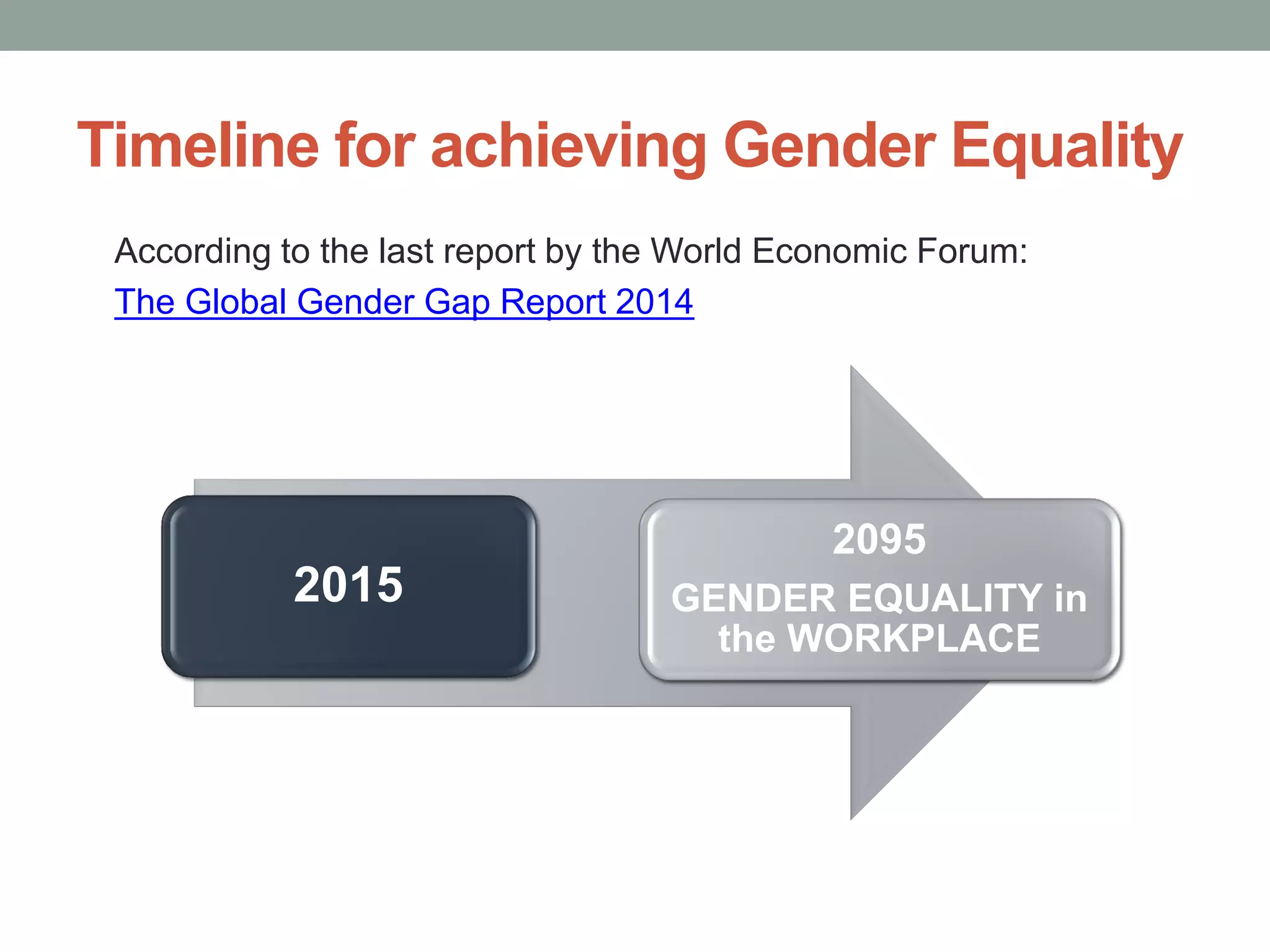
Timeline for achieving Gender Equality
According to the last report by the World Economic Forum:
The Global Gender Gap Report 2014
2015
2095
GENDER EQUALITY in
the WORKPLACE
Women and Media
EIGE: lack of exposure of women as subject matter
experts (SMEs) to the media contributes to
perpetuating stereotypes about their competences in
decision-making roles
• We do not ‘see’ and hear enough women in the media
• If the ‘other half’ is missing  half of the voices are
missing
• Responsibility of the media in reflecting diversity:
societies are diverse in terms of sex, race, age…
Women and Media: Some data
• The Global Media Monitoring Project 2010: "women are
repeatedly under-represented as experts in the media:
81% of experts and 82% of spokespersons in the media
are men. Conversely, women represent respectively 19%
of experts and 18% of spokespersons.”
• In 2011, the 59-nation study on women’s employment in
news companies to date, entitled «Global Report on the
Status of Women in the New Media», conducted with
the International Women’s Media Foundation,
illustrated that men hold three quarters of the positions in
both top management and governance
• In a study from the UK-based « Women in Journalism »
group, conducted in 2012, showed that of all the opinion
articles published in the British media in 2012 only 27%
were by a woman. 84% of news quotes are from men,
and men represent 84% of people referred to.
• The “Status of Women in the US Media 2014” report
(by the Women’s Media Center): in 214 newspaper stories
with male journalists’ bylines, male sources were quoted
four times more than female sources.
Women and Media: Some data
In Slovenia (data by Meta’s List Institute)
Monthly analysis of the 7 most watched TV info shows on
Slovenian TV channels as well measuring the percentage
of women and men experts invitated to be guests on their
show (some shows are daily, some published on a weekly
basis)
Result: on average the ration is 80 % of guests are men
and 20 % women
(December 2014)
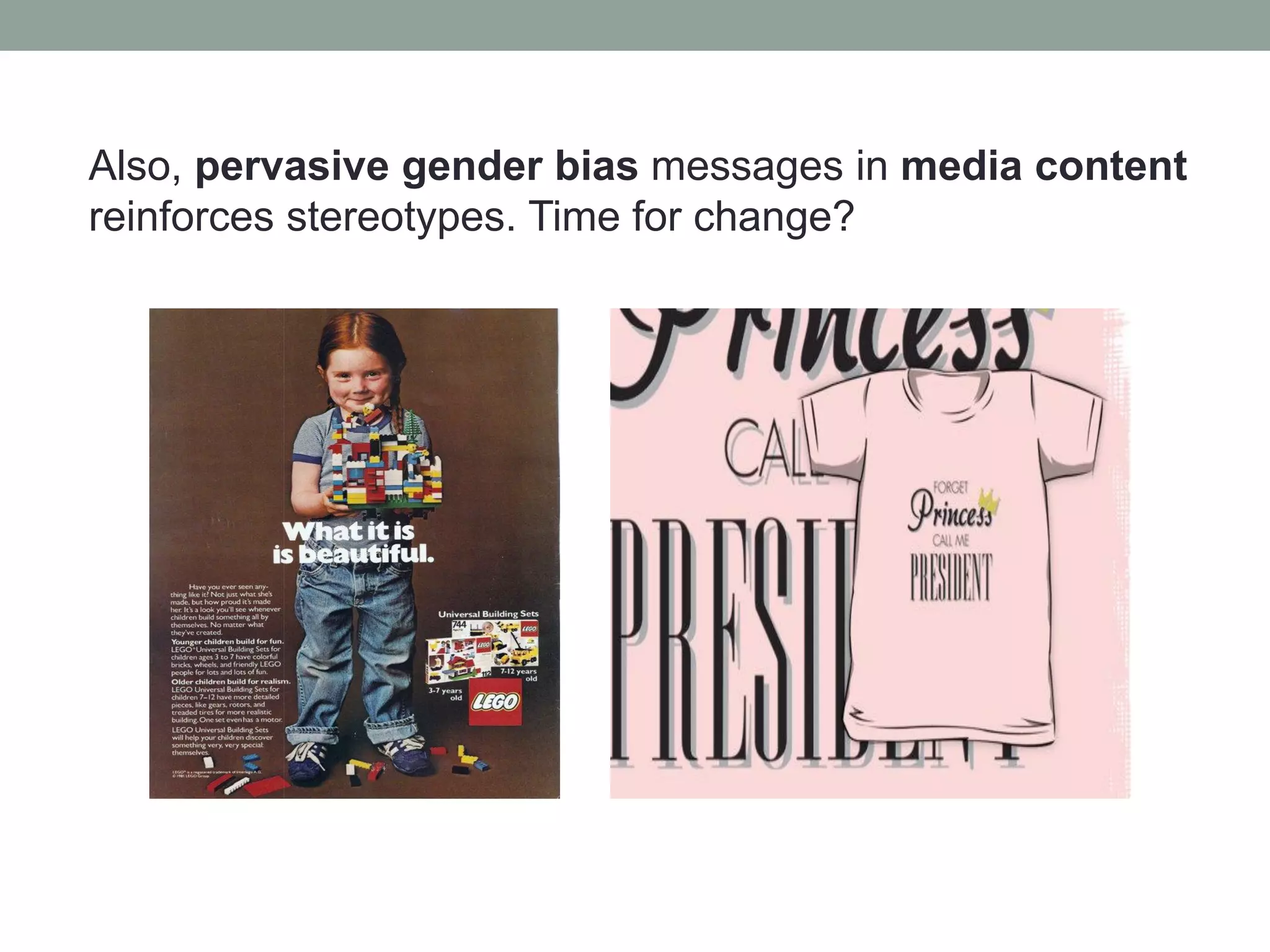
Also, pervasive gender bias messages in media content
reinforces stereotypes. Time for change?
Why is it not being addressed?
Lack of data
• Lack of more data and methologies for research
• Lack of funding for collection of data
• Lack of interest and awareness
Why is it not being addressed?
• Women’s lack of confidence:
Is it because women don’t speak out enough?
“I can’t do that”
“I don’t have time”
“I’m not qualified enough”
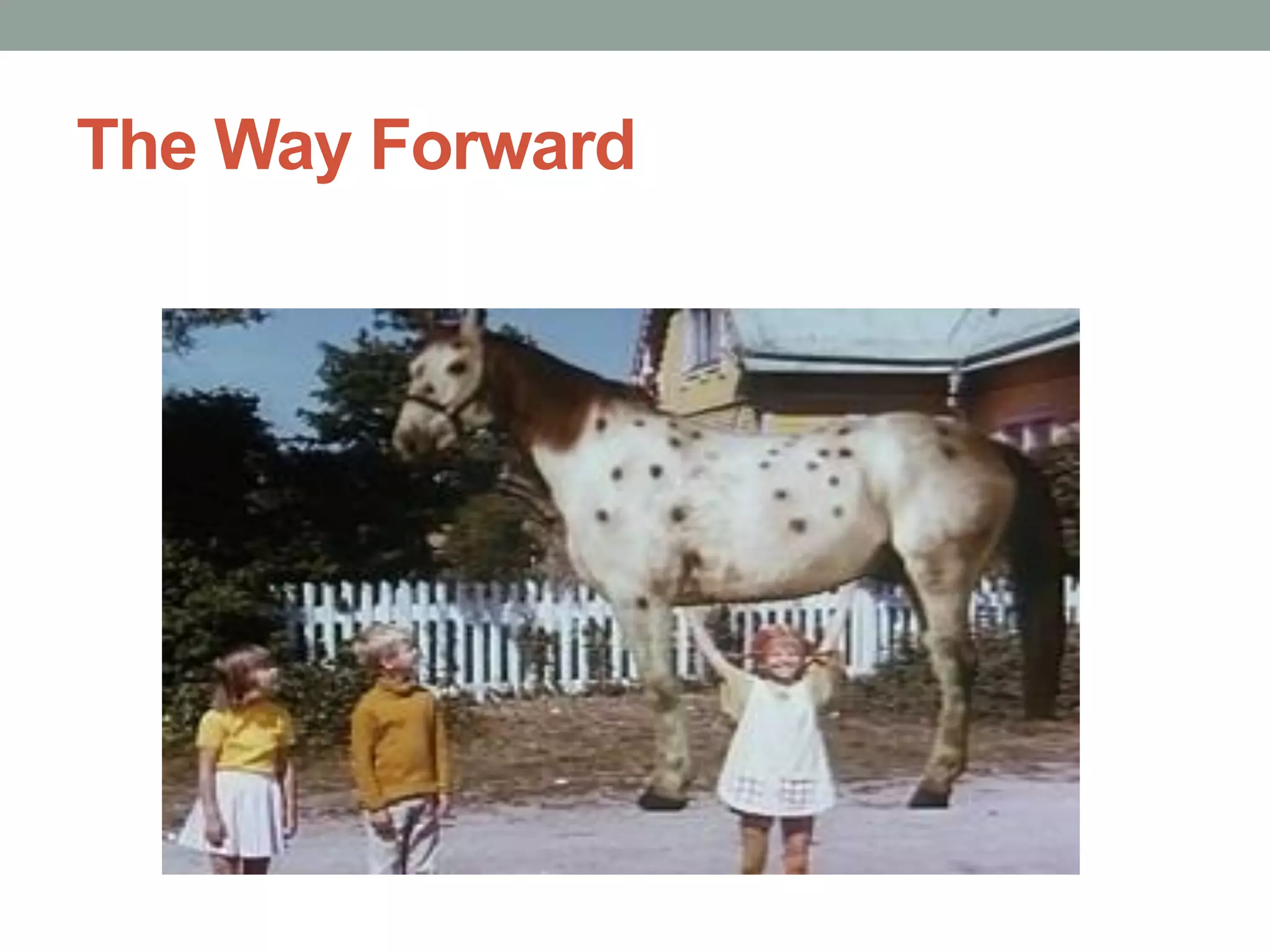
The Way Forward
Strategies and Actions
Advocacy
• Definition of clear targets, setting strategies
• Better data collection, new methologies and
specific research
• Lobby national parliamentarians, Members of the
European Parliament, National Equal Opportunities
Institutions
Use existing resources and initiatives:
• Alliances between like-minded organisations. Connect
to networks e.g. Meta’s List Institute/the Sofia
Foundation with other like-minded organisations/other
groups working on the topic of gender equality, women
in media…
• Networking: Promote/talk/exchange about initiatives
who are paving the way
• Find allies within the media TO:
• (i) Talk about the issue
• (ii) Put women onto their panels
Use existing resources and initiatives:
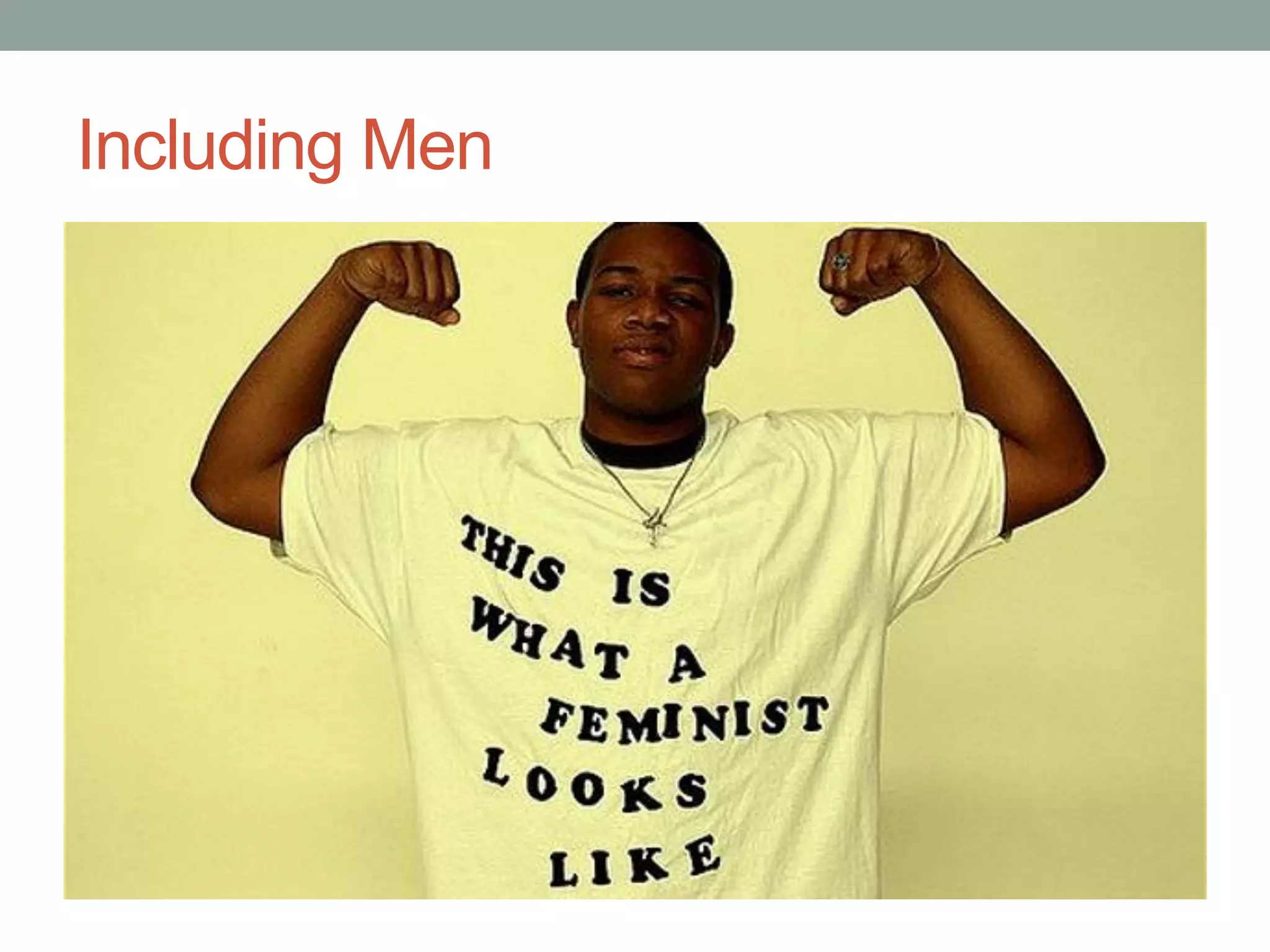
• Engage Male Allies
• Galvanise momentum of international campaigns
such as the UN HeforShe campaign
• Create spaces for debate such as this conference to
bring organisations together
• Collaboration: Use projects such as Accelerate! to
coordinate actions/exchange information/reflect on
the subject
Including Men
Some examples of initiatives on women’s portrayal
• The Bedtchel test: The Bechdel test is now used as an indicator of
gender bias in all forms of fiction
• The Global Media Monitoring Project: The Global Media Monitoring
Project is the largest and longest longitudinal study on the gender in
the world’s media. It is also the largest advocacy initiative in the
world on changing the representation of women in the media The
Women’s Room (UK)
• Geena Davis’s Institute on Gender in Media: Seejane: The Institute
is the only research-based organisation working within the media and
entertainment industry to engage, educate, and influence the need for
gender balance, reducing stereotyping and creating a wide variety of
female characters for entertainment targeting children 11 and under
Advocating women in the media
• The Sofia Foundation (BE): A non-profit organisation
headquartered in Brussels. We help accelerate women’s
participation in economic, political and social governance
across Europe. Our objective is twofold: first, to complement
EU action engaging accomplished women leaders on boards of
organisations, and second, to promote women as experts in
the information media.
• Meta’s List Institute(SL):The institute was founded to
empower women’s voices in the public shpere, to raise visibility
on questions important to young, professional women, to fight
for bigger participation of capable women in public life, and to
achieve gender equality also in business life.
Advocating women in the media
• Women on Air (IE): Community of like-minded women
and men who want to hear and see more women on the
airwaves
• Femmes de Valeur (UK): Radio programme celebrating
the journey of inspirational women
• Women’s Media Center (US): The Women's Media
Center has the goal of making women visible and
powerful in the media
Coordinated actions at different levels
2015: Moment to tap into initiatives by addressing advocay
groups, generating synergies, coordinating actions…
 EUROPEAN LEVEL:
European Commission: New Strategy for Equality between
Women and Men (by the end of 2015)
European Institute for Gender Equality (EIGE): EuroGender is
EIGE’s main consultation platform as well as a collaboration
platform that allows all of its 10.000 users to exchange
resources, knowledge and good practices on gender equality.
European Parliament: Engage MEPs at the begining of their
term
 WORLDWIDE
UN Beijing+20 - Platform for Action: Critical area of concern
#10: more than 150 countries have submitted reports to the UN
UN HeforShe Campaign: An initiative to mobilise men and boys
in the movement for gender equality.
As part of the campaign - UN Impact 10x10x10 Initiative: One-
year pilot effort that aims to engage governments, corporations
and universities as instruments of change positioned within
some of the communities that most need to address deficiencies
in women's empowerment and gender equality
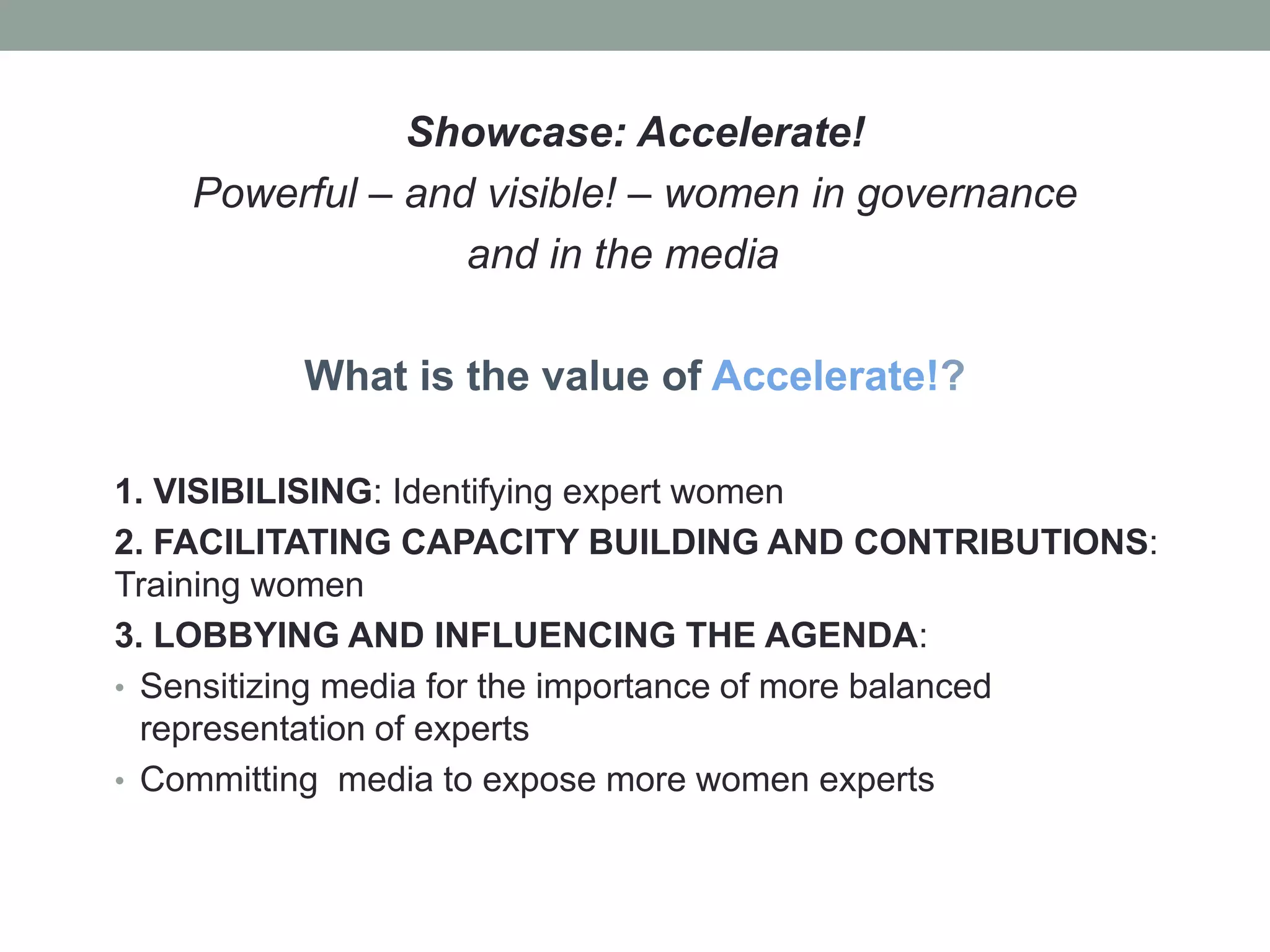
Showcase: Accelerate!
Powerful – and visible! – women in governance
and in the media
What is the value of Accelerate!?
1. VISIBILISING: Identifying expert women
2. FACILITATING CAPACITY BUILDING AND CONTRIBUTIONS:
Training women
3. LOBBYING AND INFLUENCING THE AGENDA:
• Sensitizing media for the importance of more balanced
representation of experts
• Committing media to expose more women experts
“What is not mentioned does not
exist”
George Steiner
Thank you!

Claudia Ritter Include.All 2015

  • 1.
    WOMEN EXPERTS INTHE MEDIA: A POWERFUL TOOL TO OVERCOME L’ART POUR L’ARTISM Claudia Ritter The Sofia Foundation Ljubljana 6 February 2015
  • 2.
  • 3.
    Timeline for achievingGender Equality According to the last report by the World Economic Forum: The Global Gender Gap Report 2014 2015 2095 GENDER EQUALITY in the WORKPLACE
  • 4.
    Women and Media EIGE:lack of exposure of women as subject matter experts (SMEs) to the media contributes to perpetuating stereotypes about their competences in decision-making roles • We do not ‘see’ and hear enough women in the media • If the ‘other half’ is missing  half of the voices are missing • Responsibility of the media in reflecting diversity: societies are diverse in terms of sex, race, age…
  • 5.
    Women and Media:Some data • The Global Media Monitoring Project 2010: "women are repeatedly under-represented as experts in the media: 81% of experts and 82% of spokespersons in the media are men. Conversely, women represent respectively 19% of experts and 18% of spokespersons.” • In 2011, the 59-nation study on women’s employment in news companies to date, entitled «Global Report on the Status of Women in the New Media», conducted with the International Women’s Media Foundation, illustrated that men hold three quarters of the positions in both top management and governance
  • 6.
    • In astudy from the UK-based « Women in Journalism » group, conducted in 2012, showed that of all the opinion articles published in the British media in 2012 only 27% were by a woman. 84% of news quotes are from men, and men represent 84% of people referred to. • The “Status of Women in the US Media 2014” report (by the Women’s Media Center): in 214 newspaper stories with male journalists’ bylines, male sources were quoted four times more than female sources. Women and Media: Some data
  • 7.
    Women and Media:Some data In Slovenia (data by Meta’s List Institute) Monthly analysis of the 7 most watched TV info shows on Slovenian TV channels as well measuring the percentage of women and men experts invitated to be guests on their show (some shows are daily, some published on a weekly basis) Result: on average the ration is 80 % of guests are men and 20 % women (December 2014)
  • 8.
    Also, pervasive genderbias messages in media content reinforces stereotypes. Time for change?
  • 9.
    Why is itnot being addressed? Lack of data • Lack of more data and methologies for research • Lack of funding for collection of data • Lack of interest and awareness
  • 10.
    Why is itnot being addressed? • Women’s lack of confidence: Is it because women don’t speak out enough? “I can’t do that” “I don’t have time” “I’m not qualified enough”
  • 11.
  • 12.
    Strategies and Actions Advocacy •Definition of clear targets, setting strategies • Better data collection, new methologies and specific research • Lobby national parliamentarians, Members of the European Parliament, National Equal Opportunities Institutions
  • 13.
    Use existing resourcesand initiatives: • Alliances between like-minded organisations. Connect to networks e.g. Meta’s List Institute/the Sofia Foundation with other like-minded organisations/other groups working on the topic of gender equality, women in media… • Networking: Promote/talk/exchange about initiatives who are paving the way • Find allies within the media TO: • (i) Talk about the issue • (ii) Put women onto their panels
  • 14.
    Use existing resourcesand initiatives: • Engage Male Allies • Galvanise momentum of international campaigns such as the UN HeforShe campaign • Create spaces for debate such as this conference to bring organisations together • Collaboration: Use projects such as Accelerate! to coordinate actions/exchange information/reflect on the subject
  • 15.
  • 16.
    Some examples ofinitiatives on women’s portrayal • The Bedtchel test: The Bechdel test is now used as an indicator of gender bias in all forms of fiction • The Global Media Monitoring Project: The Global Media Monitoring Project is the largest and longest longitudinal study on the gender in the world’s media. It is also the largest advocacy initiative in the world on changing the representation of women in the media The Women’s Room (UK) • Geena Davis’s Institute on Gender in Media: Seejane: The Institute is the only research-based organisation working within the media and entertainment industry to engage, educate, and influence the need for gender balance, reducing stereotyping and creating a wide variety of female characters for entertainment targeting children 11 and under
  • 17.
    Advocating women inthe media • The Sofia Foundation (BE): A non-profit organisation headquartered in Brussels. We help accelerate women’s participation in economic, political and social governance across Europe. Our objective is twofold: first, to complement EU action engaging accomplished women leaders on boards of organisations, and second, to promote women as experts in the information media. • Meta’s List Institute(SL):The institute was founded to empower women’s voices in the public shpere, to raise visibility on questions important to young, professional women, to fight for bigger participation of capable women in public life, and to achieve gender equality also in business life.
  • 18.
    Advocating women inthe media • Women on Air (IE): Community of like-minded women and men who want to hear and see more women on the airwaves • Femmes de Valeur (UK): Radio programme celebrating the journey of inspirational women • Women’s Media Center (US): The Women's Media Center has the goal of making women visible and powerful in the media
  • 19.
    Coordinated actions atdifferent levels 2015: Moment to tap into initiatives by addressing advocay groups, generating synergies, coordinating actions…  EUROPEAN LEVEL: European Commission: New Strategy for Equality between Women and Men (by the end of 2015) European Institute for Gender Equality (EIGE): EuroGender is EIGE’s main consultation platform as well as a collaboration platform that allows all of its 10.000 users to exchange resources, knowledge and good practices on gender equality. European Parliament: Engage MEPs at the begining of their term
  • 20.
     WORLDWIDE UN Beijing+20- Platform for Action: Critical area of concern #10: more than 150 countries have submitted reports to the UN UN HeforShe Campaign: An initiative to mobilise men and boys in the movement for gender equality. As part of the campaign - UN Impact 10x10x10 Initiative: One- year pilot effort that aims to engage governments, corporations and universities as instruments of change positioned within some of the communities that most need to address deficiencies in women's empowerment and gender equality
  • 21.
    Showcase: Accelerate! Powerful –and visible! – women in governance and in the media What is the value of Accelerate!? 1. VISIBILISING: Identifying expert women 2. FACILITATING CAPACITY BUILDING AND CONTRIBUTIONS: Training women 3. LOBBYING AND INFLUENCING THE AGENDA: • Sensitizing media for the importance of more balanced representation of experts • Committing media to expose more women experts
  • 22.
    “What is notmentioned does not exist” George Steiner
  • 23.