Class II cavity preparation
Karam Ahmed
MSc operative dentistry
Lec.6
• Occlusal outline form (occlusal step)
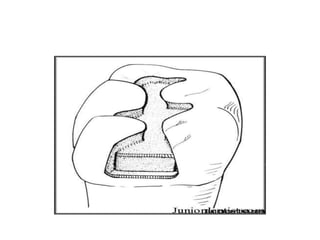
The occlusal outline form of a Class II tooth
preparation for amalgam is similar to that for the
Class I tooth preparation.
Proximal outline form (proximal box )
• The objectives for extension of proximal
margins are to:
• Include all caries, faults, or existing restorative
material.
• Establish (ideally) not more than 0.5 mm
clearance with the adjacent proximal surface
facially, lingually, and gingivally
• Occasionally, it is permissible not to extend
the outline of the proximal box facially or
lingually beyond the proximal contact to
conserve tooth structure
• Resistance form
• (1) the pulpal and gingival walls being
relatively flat and perpendicular to forces
directed with the long axis of the tooth
• (2) restricting extension of the walls to allow
strong cusps and ridge areas to remain with
sufficient dentin support
• (3) restricting the occlusal outline form
(where possible) to areas receiving minimal
occlusal contact.
• (4) the reverse curve optimizing the strength
of both the amalgam and tooth structure at
the junction of the occlusal step and proximal
box
• (5) slightly rounding the internal line angles to
reduce stress concentration in tooth structure
(automatically created by bur design).
• (6) providing enough thickness of restorative
material to prevent its fracture under
mastication.
Retention form
• Maintaining the bur parallel to the long axis of
the tooth crown creates facial, lingual, and
distal walls with a slight occlusal convergence
During development of the distal pit area of
the preparation, extension to include any
distofacial and distolingual developmental
fissures radiating from the pit may be
indicated.
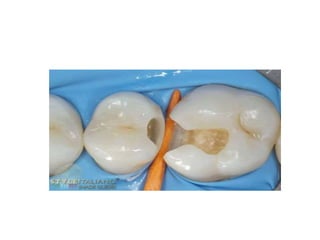
• The distal pit area (in this example) provides
dovetail retention form, which may prevent
mesial displacement of the completed
restoration.
• The proximal ditch cut should be sufficiently deep
into dentin (i.e., 0.5 to 0.6 mm) that retention
locks, if deemed necessary, can be prepared into
the axiolingual and axiofacial line angles without
undermining the proximal enamel.
Secondary resistance and retention
forms
• Secondary resistance form in final tooth
preparation involves both resistance of the
remaining tooth structure against fracture
from oblique forces and resistance of
restorative material against fracture.
• The occlusal convergence of the facial and
lingual walls and the dovetail design (if
needed) provide sufficient retention form to
the occlusal portion of the tooth preparation.
• To enhance retention form of the proximal
portion, proximal locks may be indicated to
counter proximal displacement
Finishing external walls
• Use the mesial gingival margin trimmer to
establish a slight cavosurface bevel at the
gingival margin
• When the gingival margin is positioned
gingival to the cementoenamel junction (CEJ)
on the tooth root, the bevel is not indicated.
Box-only preparation
• When restoring a small, cavitated, proximal
lesion in a tooth with neither occlusal fissures
nor a previously inserted occlusal restoration,
a proximal box preparation without an
occlusal step has been recommended.
• To maximize retention, preparations with
facial and lingual walls that almost oppose
each other are recommended.
• As in the typical preparation, the facial and
lingual proximal walls converge occlusally
Retention locks are necessary in box-only
preparations .
The End

Class-II-cavity-preparation.pptx

  • 1.
    Class II cavitypreparation Karam Ahmed MSc operative dentistry Lec.6
  • 2.
    • Occlusal outlineform (occlusal step) The occlusal outline form of a Class II tooth preparation for amalgam is similar to that for the Class I tooth preparation.
  • 5.
    Proximal outline form(proximal box ) • The objectives for extension of proximal margins are to: • Include all caries, faults, or existing restorative material. • Establish (ideally) not more than 0.5 mm clearance with the adjacent proximal surface facially, lingually, and gingivally
  • 6.
    • Occasionally, itis permissible not to extend the outline of the proximal box facially or lingually beyond the proximal contact to conserve tooth structure
  • 8.
    • Resistance form •(1) the pulpal and gingival walls being relatively flat and perpendicular to forces directed with the long axis of the tooth • (2) restricting extension of the walls to allow strong cusps and ridge areas to remain with sufficient dentin support
  • 9.
    • (3) restrictingthe occlusal outline form (where possible) to areas receiving minimal occlusal contact. • (4) the reverse curve optimizing the strength of both the amalgam and tooth structure at the junction of the occlusal step and proximal box
  • 10.
    • (5) slightlyrounding the internal line angles to reduce stress concentration in tooth structure (automatically created by bur design). • (6) providing enough thickness of restorative material to prevent its fracture under mastication.
  • 11.
    Retention form • Maintainingthe bur parallel to the long axis of the tooth crown creates facial, lingual, and distal walls with a slight occlusal convergence During development of the distal pit area of the preparation, extension to include any distofacial and distolingual developmental fissures radiating from the pit may be indicated.
  • 12.
    • The distalpit area (in this example) provides dovetail retention form, which may prevent mesial displacement of the completed restoration. • The proximal ditch cut should be sufficiently deep into dentin (i.e., 0.5 to 0.6 mm) that retention locks, if deemed necessary, can be prepared into the axiolingual and axiofacial line angles without undermining the proximal enamel.
  • 13.
    Secondary resistance andretention forms • Secondary resistance form in final tooth preparation involves both resistance of the remaining tooth structure against fracture from oblique forces and resistance of restorative material against fracture.
  • 14.
    • The occlusalconvergence of the facial and lingual walls and the dovetail design (if needed) provide sufficient retention form to the occlusal portion of the tooth preparation. • To enhance retention form of the proximal portion, proximal locks may be indicated to counter proximal displacement
  • 15.
    Finishing external walls •Use the mesial gingival margin trimmer to establish a slight cavosurface bevel at the gingival margin • When the gingival margin is positioned gingival to the cementoenamel junction (CEJ) on the tooth root, the bevel is not indicated.
  • 16.
    Box-only preparation • Whenrestoring a small, cavitated, proximal lesion in a tooth with neither occlusal fissures nor a previously inserted occlusal restoration, a proximal box preparation without an occlusal step has been recommended.
  • 18.
    • To maximizeretention, preparations with facial and lingual walls that almost oppose each other are recommended. • As in the typical preparation, the facial and lingual proximal walls converge occlusally Retention locks are necessary in box-only preparations .
  • 19.