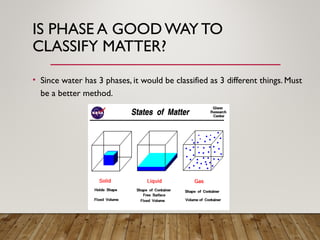
IS PHASE AGOOD WAY TO
CLASSIFY MATTER?
• Since water has 3 phases, it would be classified as 3 different things. Must
be a better method.
12.
MATTER
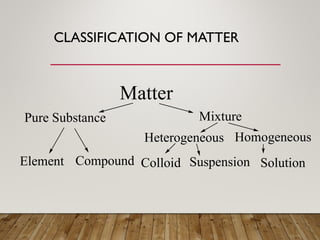
• Can bedivided into mixtures and pure substances. A
pure substance is made of one kind of material having
definite properties.
• Guess which is a mixture and which is a pure
substance?
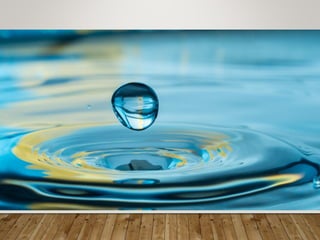
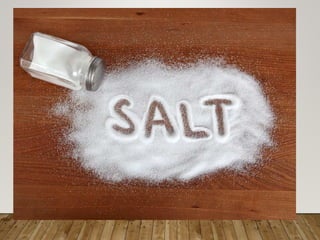
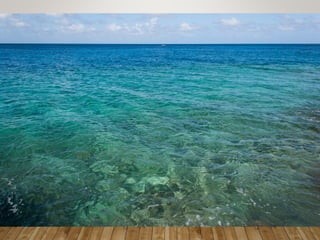
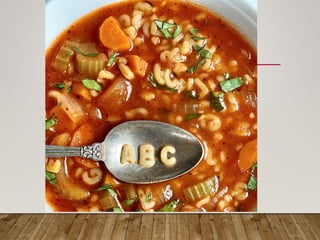
• Water, salt, sea water, concrete, alphabet soup, air, soup, coffee, oxygen.
13.
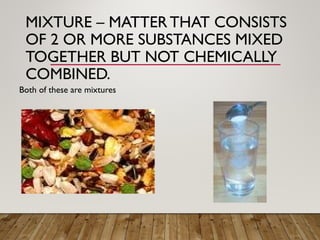
MIXTURE – MATTERTHAT CONSISTS
OF 2 OR MORE SUBSTANCES MIXED
TOGETHER BUT NOT CHEMICALLY
COMBINED.
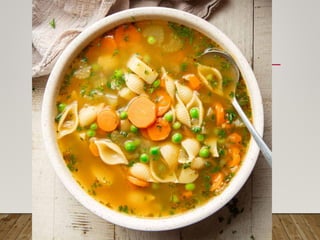
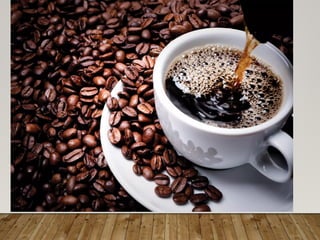
Both of these are mixtures
14.
TWO TYPES OFMIXTURES
• Heterogeneous – A mixture that does not appear to be the
same throughout. The “least-mixed of mixtures”.
• Examples:
• Homogeneous – A mixture that appears to be the same
throughout. A “well-mixed mixture”.
• Examples:
15.
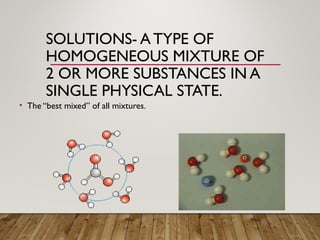
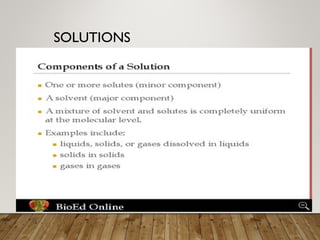
SOLUTIONS- A TYPEOF
HOMOGENEOUS MIXTURE OF
2 OR MORE SUBSTANCES IN A
SINGLE PHYSICAL STATE.
• The “best mixed” of all mixtures.
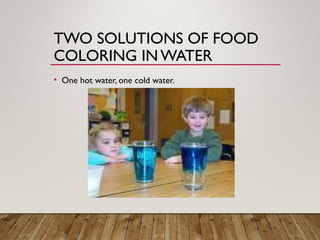
TWO SOLUTIONS OFFOOD
COLORING IN WATER
• One hot water, one cold water.
18.
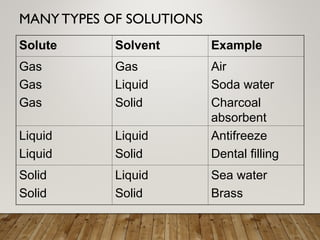
MANYTYPES OF SOLUTIONS
SoluteSolvent Example
Gas
Gas
Gas
Gas
Liquid
Solid
Air
Soda water
Charcoal
absorbent
Liquid
Liquid
Liquid
Solid
Antifreeze
Dental filling
Solid
Solid
Liquid
Solid
Sea water
Brass
19.
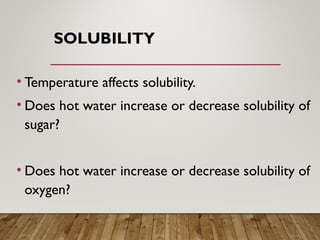
SOLUBILITY
• Temperature affectssolubility.
• Does hot water increase or decrease solubility of
sugar?
• Does hot water increase or decrease solubility of
oxygen?
20.
NEEDTO KNOW!
• Alloy– solution of 2 or more metals
• Solute – Substance that is dissolved
• Solvent – Substance that does the dissolving
• Insoluble – Does not dissolve in a particular solvent
PURE SUBSTANCE
• Sameproperties throughout
• Made of only one kind of material
• All particles are the same
23.
ELEMENTS
• Simplest typeof pure substance
• Each element is associated with an atom
• Smallest part of an element that has the
properties of the element is an atom
24.
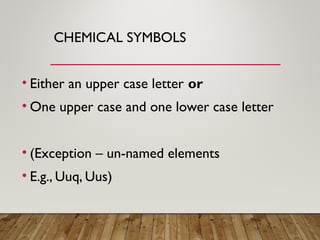
CHEMICAL SYMBOLS
• Eitheran upper case letter or
• One upper case and one lower case letter
• (Exception – un-named elements
• E.g., Uuq, Uus)
25.
COMPOUNDS
• Pure substancesmade of more than one element
• Properties of elements that make up a
compound are different from the compound
itself