Population Studies: The
Human Dimension of
Geography
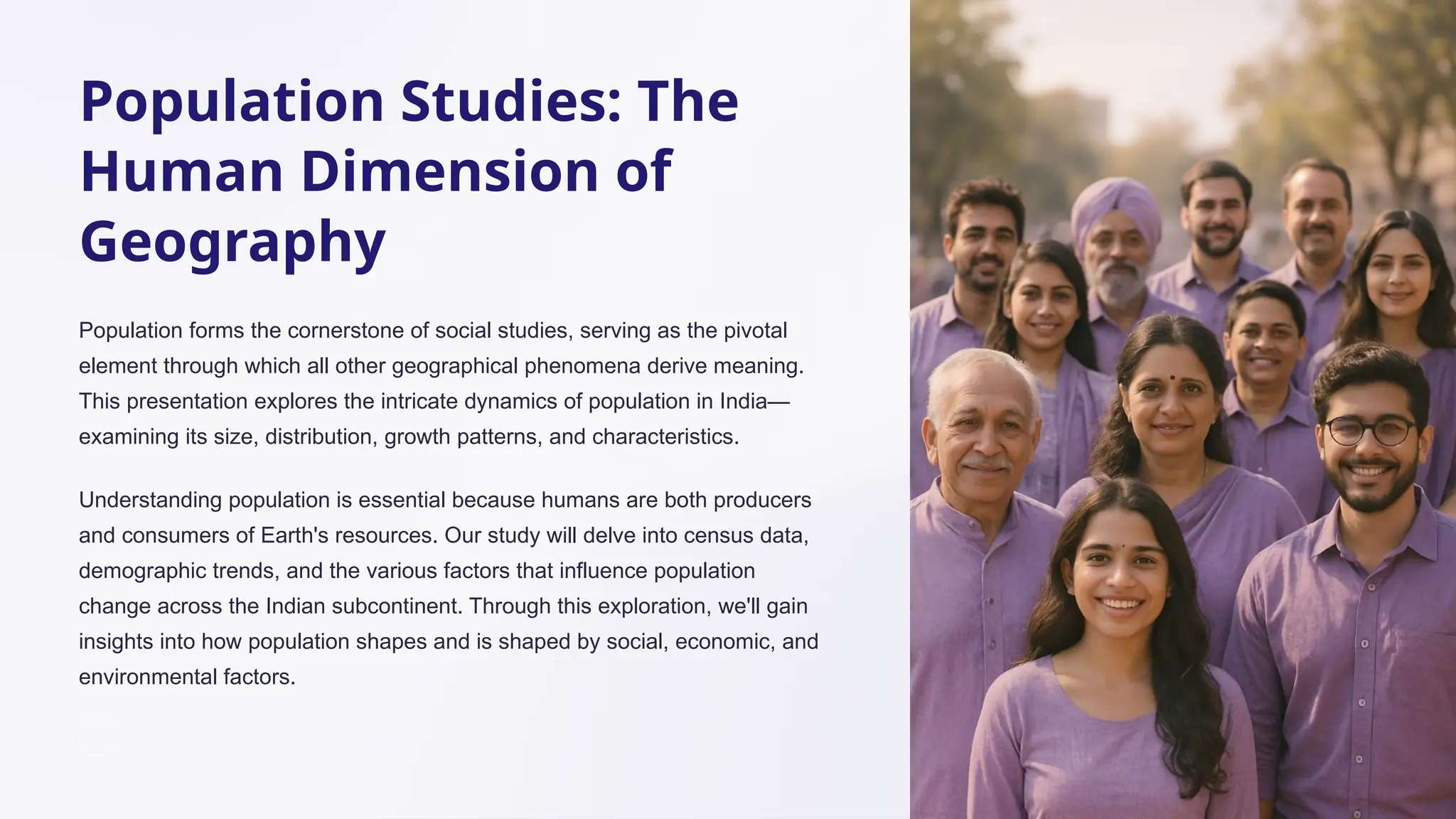
Population forms the cornerstone of social studies, serving as the pivotal
element through which all other geographical phenomena derive meaning.
This presentation explores the intricate dynamics of population in India—
examining its size, distribution, growth patterns, and characteristics.
Understanding population is essential because humans are both producers
and consumers of Earth's resources. Our study will delve into census data,
demographic trends, and the various factors that influence population
change across the Indian subcontinent. Through this exploration, we'll gain
insights into how population shapes and is shaped by social, economic, and
environmental factors.
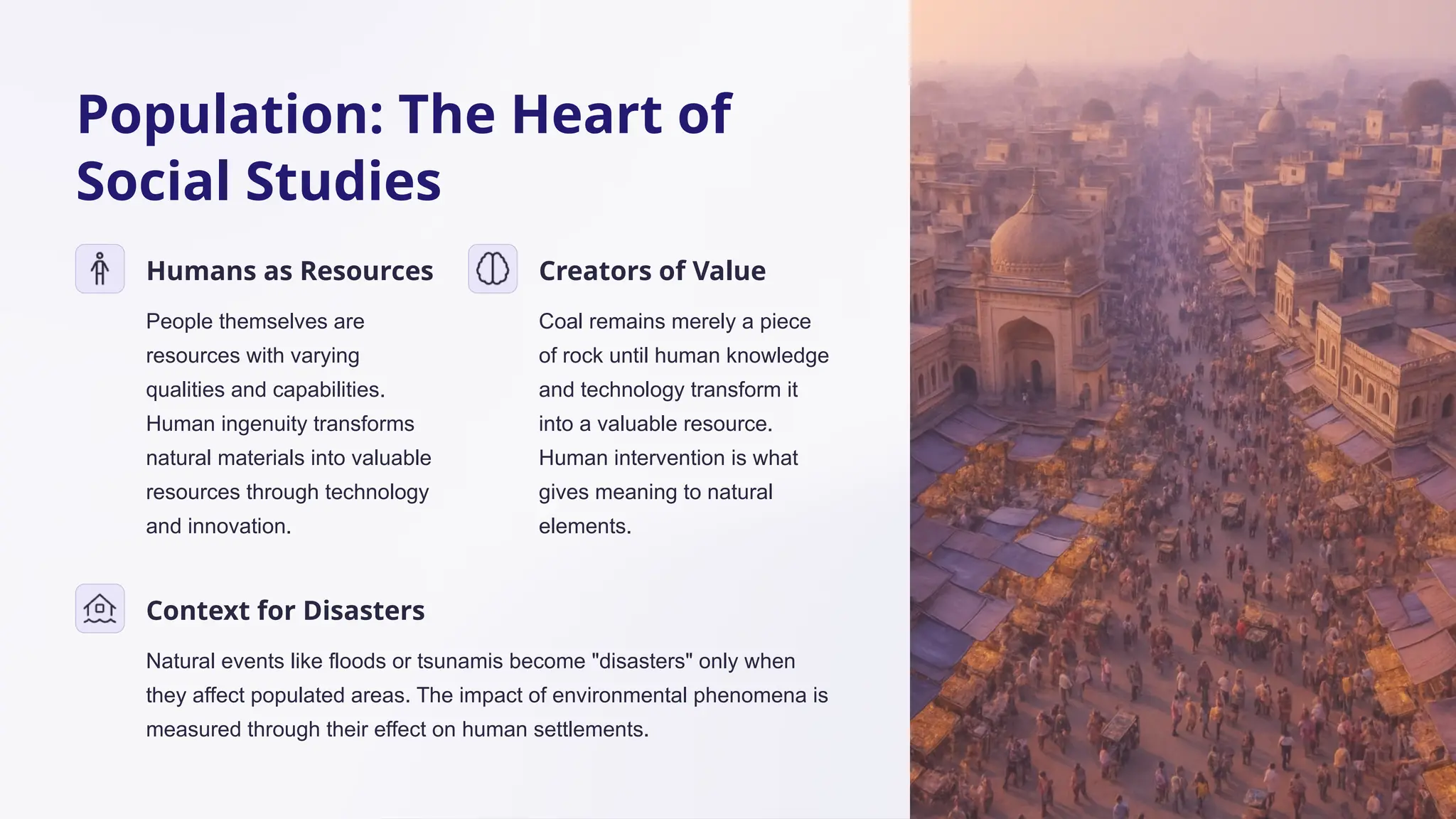
Population: The Heart of
Social Studies
Humans as Resources
People themselves are
resources with varying
qualities and capabilities.
Human ingenuity transforms
natural materials into valuable
resources through technology
and innovation.
Creators of Value
Coal remains merely a piece
of rock until human knowledge
and technology transform it
into a valuable resource.
Human intervention is what
gives meaning to natural
elements.
Context for Disasters
Natural events like floods or tsunamis become "disasters" only when
they affect populated areas. The impact of environmental phenomena is
measured through their effect on human settlements.
The Significance of Population Studies
Reference Point
Population serves as the point of reference from which all other
geographical elements are observed and derive their
significance. Resources, calamities, and disasters have
meaning only in relation to human beings.
The study of population provides the essential backdrop for
understanding environmental interactions and resource
utilization patterns.
Key Demographic Questions
• How many people live in a country?
• Where do they live and why?
• How are their numbers changing?
• What are their characteristics?
Answering these questions allows us to understand population
dynamics and their implications for resource management and
development planning.
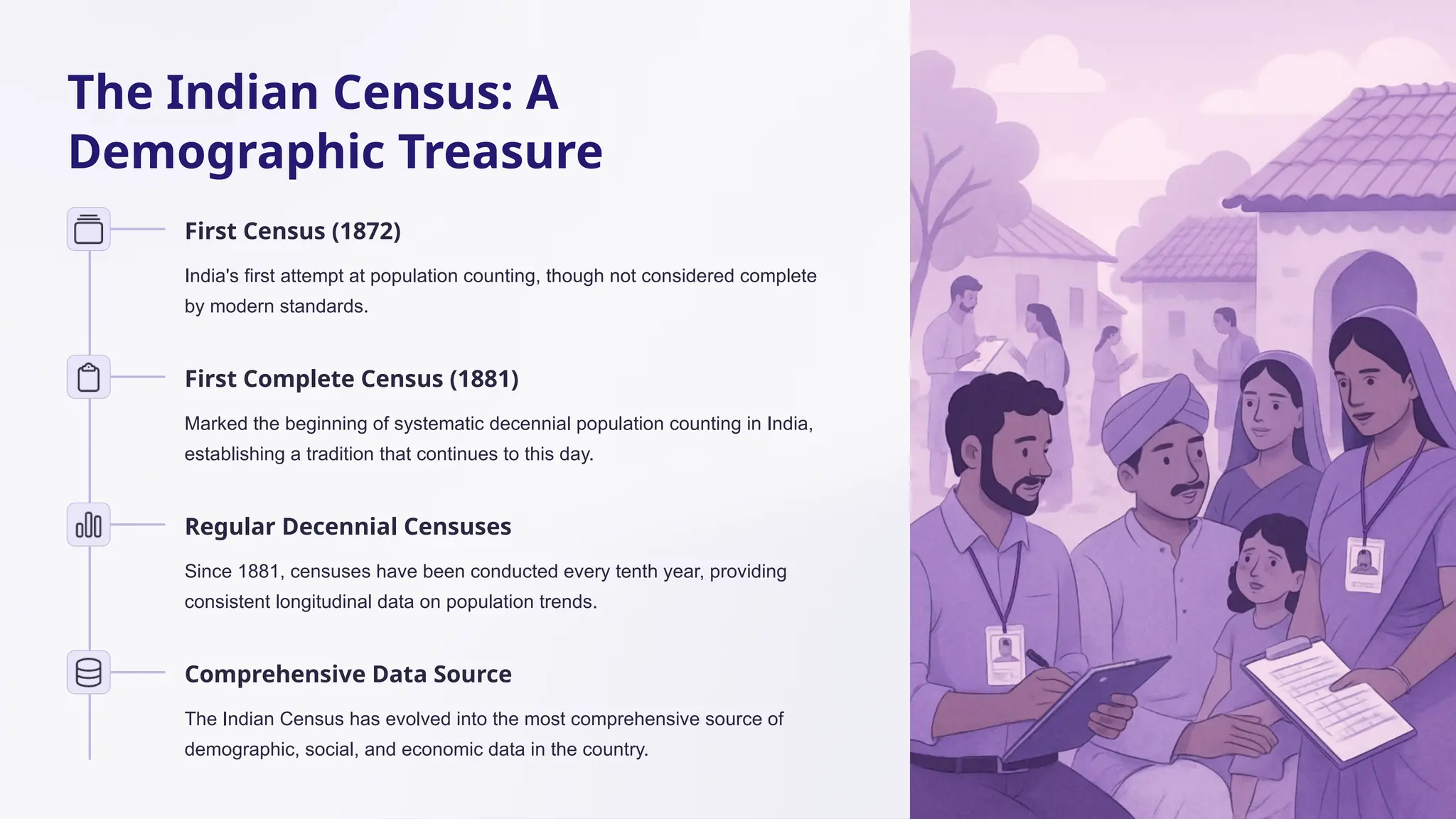
The Indian Census: A
Demographic Treasure
First Census (1872)
India's first attempt at population counting, though not considered complete
by modern standards.
First Complete Census (1881)
Marked the beginning of systematic decennial population counting in India,
establishing a tradition that continues to this day.
Regular Decennial Censuses
Since 1881, censuses have been conducted every tenth year, providing
consistent longitudinal data on population trends.
Comprehensive Data Source
The Indian Census has evolved into the most comprehensive source of
demographic, social, and economic data in the country.
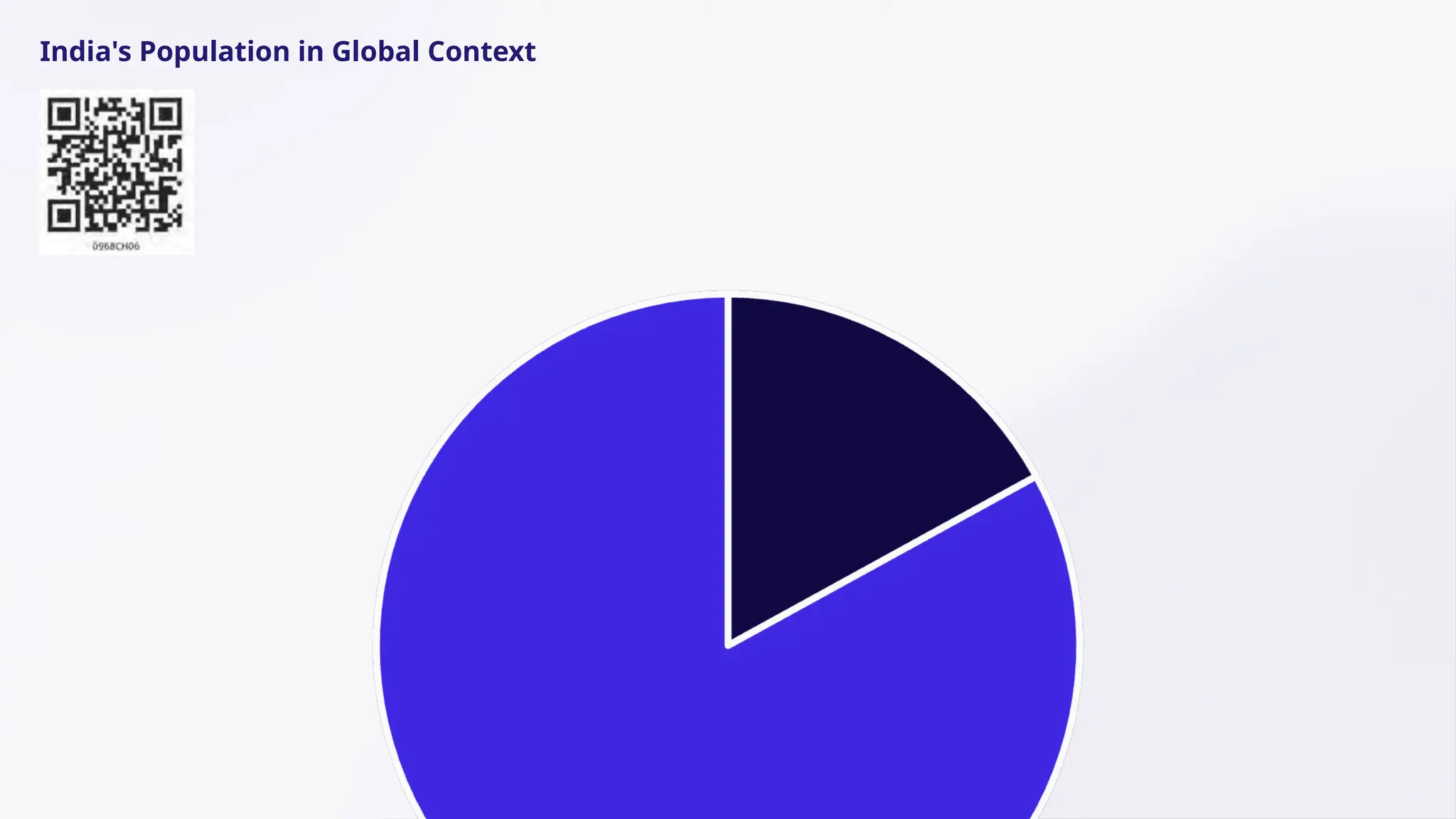
India's Population in Global Context
India's Population Size: The Numbers
1.21B
Total Population (2011)
India's population according to the 2011 Census
17%
Global Share
Percentage of world population in India
2.4%
Land Area
India's share of global land area
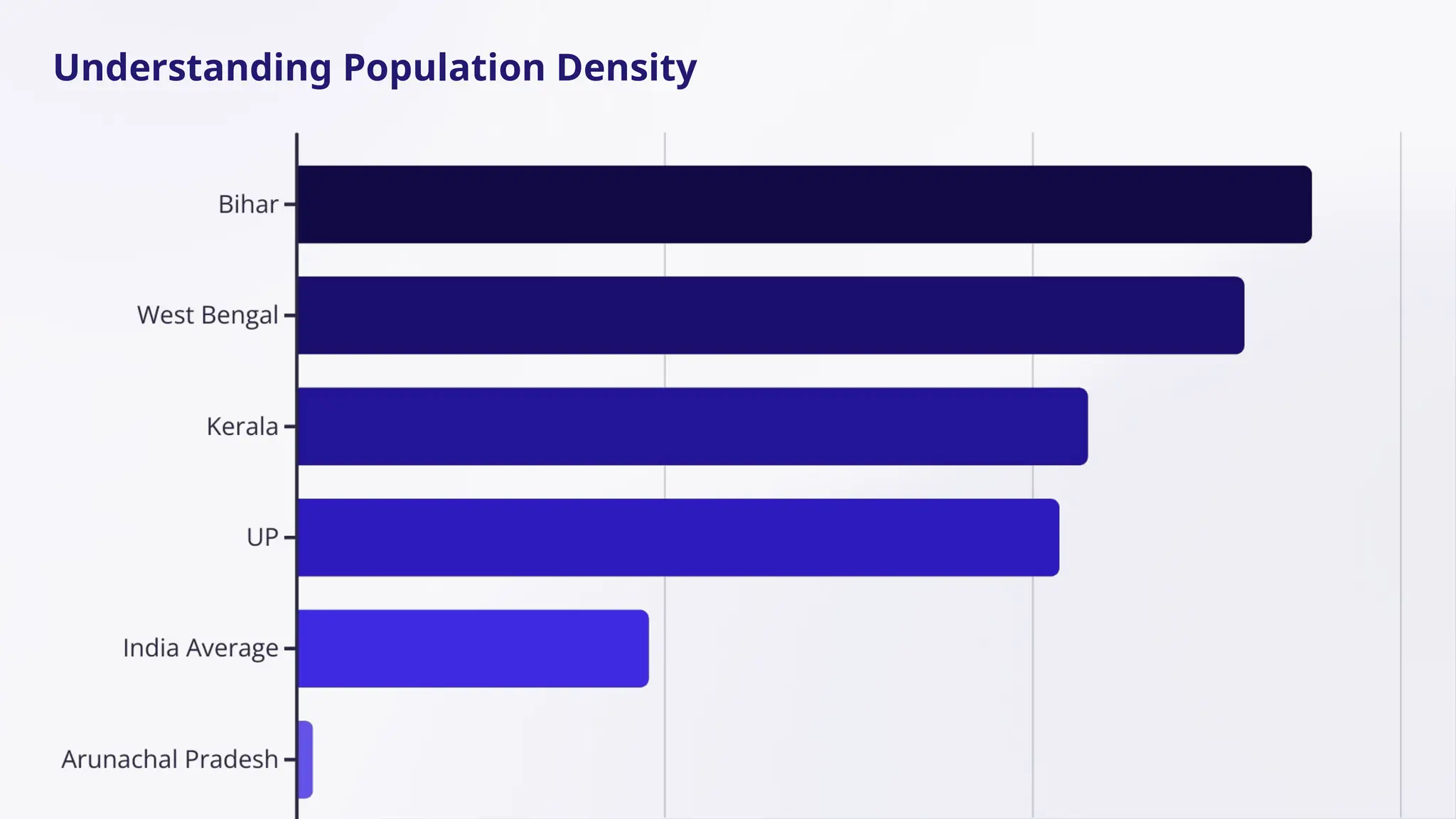
382
Population Density
People per square kilometer (2011)
India's demographic weight continues to grow, with implications for resource distribution, economic development, and environmental sustainability. The stark contrast between
India's share of global population and its share of global land area highlights the population pressure on resources.
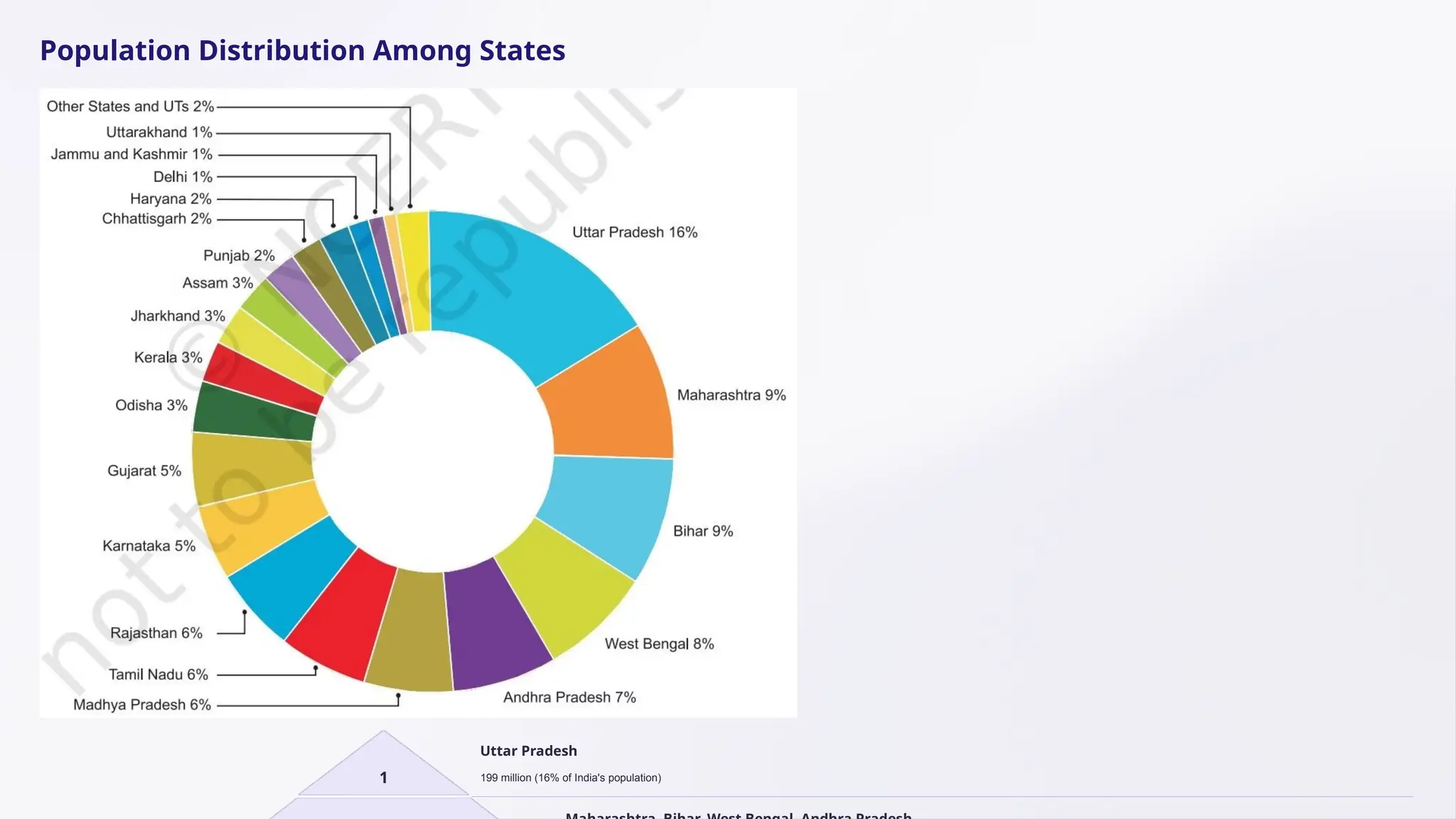
Population Distribution Among States
1
Uttar Pradesh
199 million (16% of India's population)
Understanding Population Density
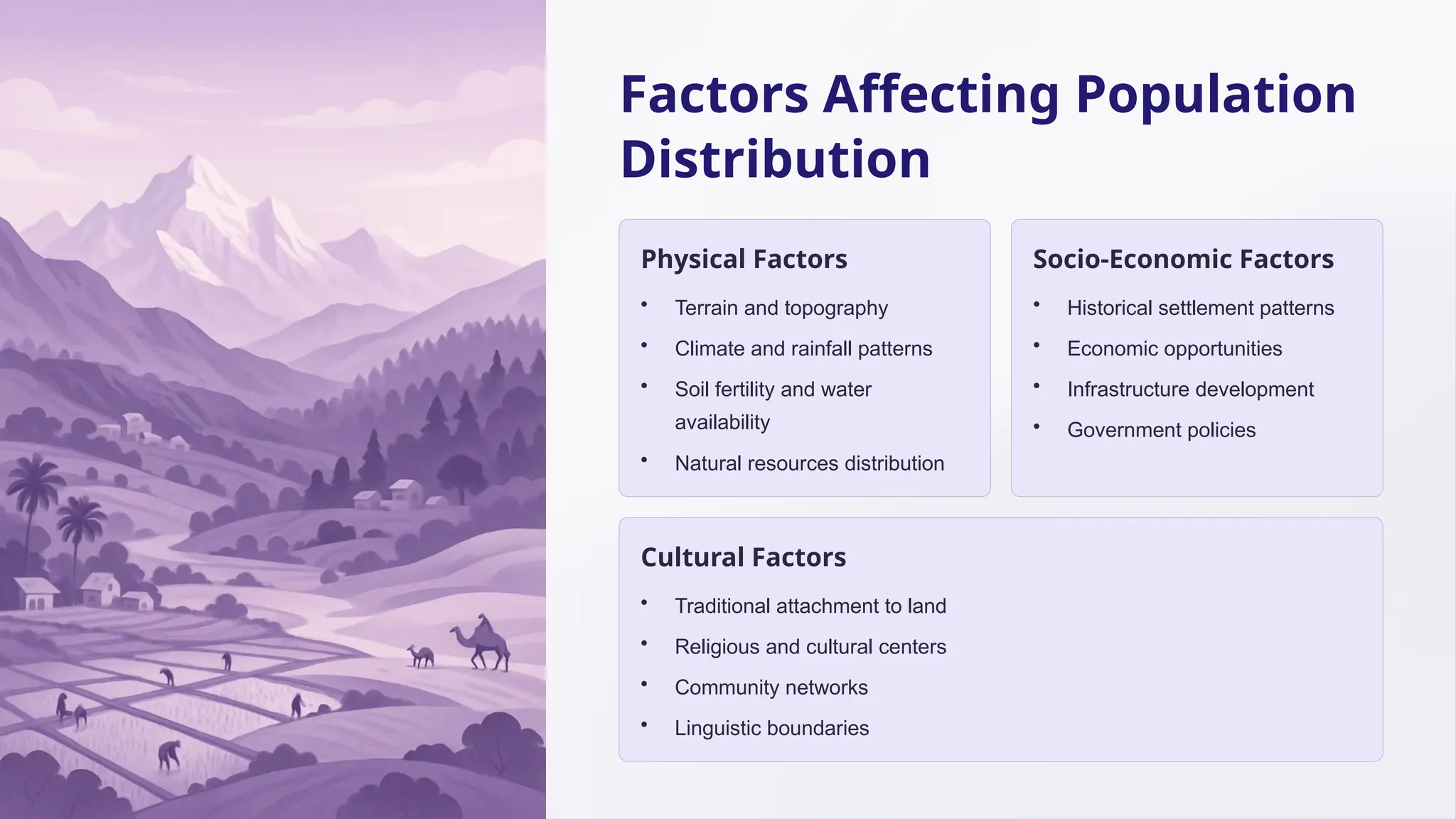
Factors Affecting Population
Distribution
Physical Factors
• Terrain and topography
• Climate and rainfall patterns
• Soil fertility and water
availability
• Natural resources distribution
Socio-Economic Factors
• Historical settlement patterns
• Economic opportunities
• Infrastructure development
• Government policies
Cultural Factors
• Traditional attachment to land
• Religious and cultural centers
• Community networks
• Linguistic boundaries
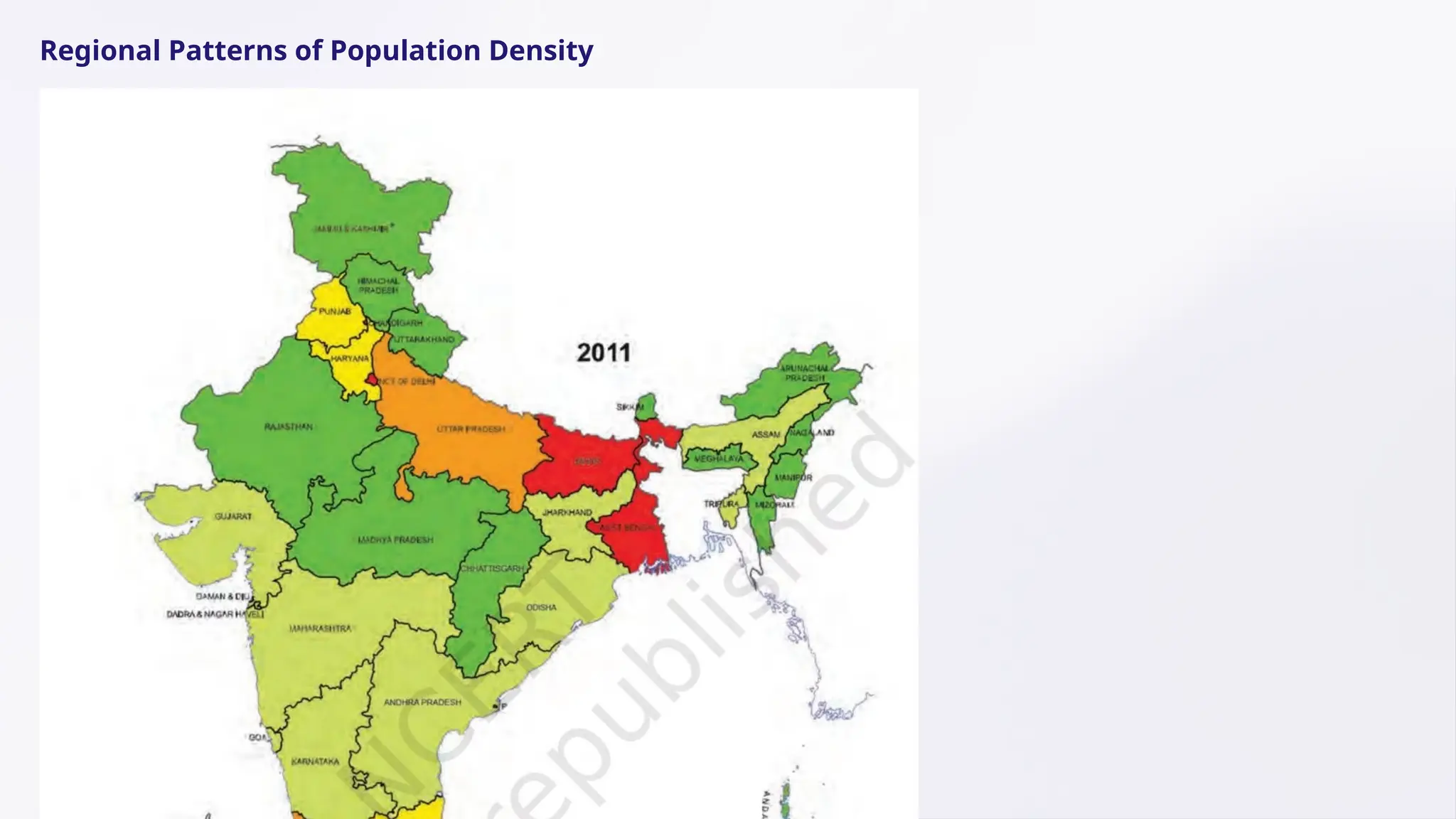
Regional Patterns of Population Density
Activity: Mapping State
Population Densities
Identify Low-Density States
Find states with population densities below 250 persons per square
km on the map. Consider factors like rugged terrain, unfavorable
climate, and accessibility.
Analyze Geographic Features
Examine how hilly terrain, rocky landscapes, and moderate to low
rainfall influence settlement patterns in peninsular states.
Locate High-Density Northern States
Identify the three states in the Northern Plains with the highest
population densities and analyze their geographical advantages.
Population as a Dynamic Phenomenon
Births
Addition of new individuals through
reproduction, measured as birth rate
(live births per 1,000 population)
Deaths
Reduction in population through
mortality, measured as death rate
(deaths per 1,000 population)
Migration
Movement of people across regions
and territories, both internal and
international
Population Change
The net result of births, deaths, and
migration, producing continuous
demographic shifts
Population is not static but constantly changing in numbers, distribution, and composition. The continuous interaction of births,
deaths, and migrations creates a dynamic demographic landscape that shapes social and economic structures.
Understanding Population Growth
1 Definition of Growth
Population growth refers to the change in the number of
inhabitants of a country or territory during a specific
period, typically measured over decades in census data
or annually in estimates.
2 Absolute Growth
The magnitude of increase measured in absolute
numbers added during a specific period. Calculated by
subtracting the earlier population (e.g., 2001) from the
later population (e.g., 2011).
3 Growth Rate
The pace of population increase expressed as a
percentage change per year. A growth rate of 2% means
that in a given year, there was an increase of two
persons for every 100 persons in the base population.
4 Implications of Growth
Understanding both absolute growth and growth rates is
essential for planning infrastructure, resource allocation,
and social services to meet population needs.
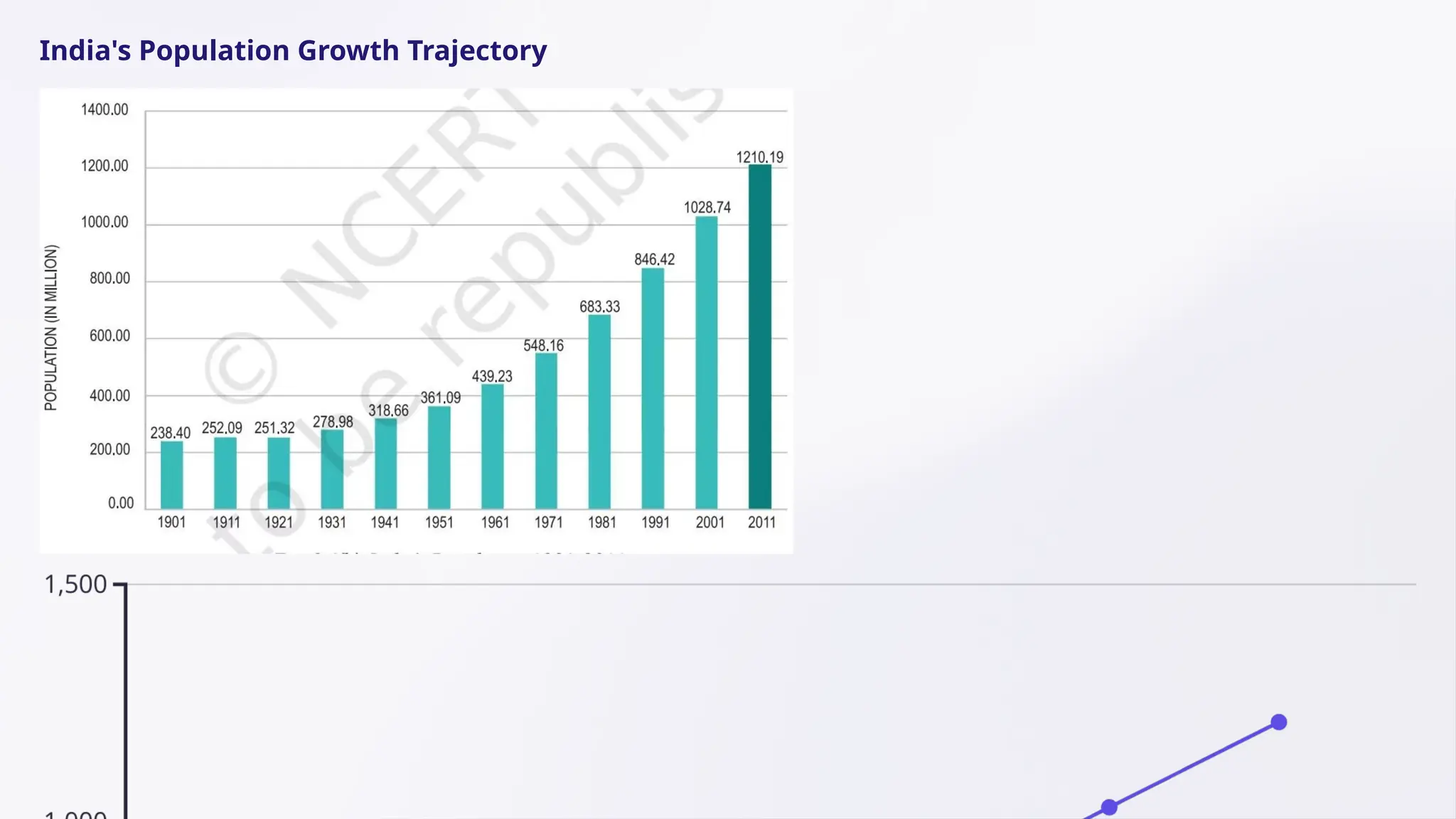
India's Population Growth Trajectory
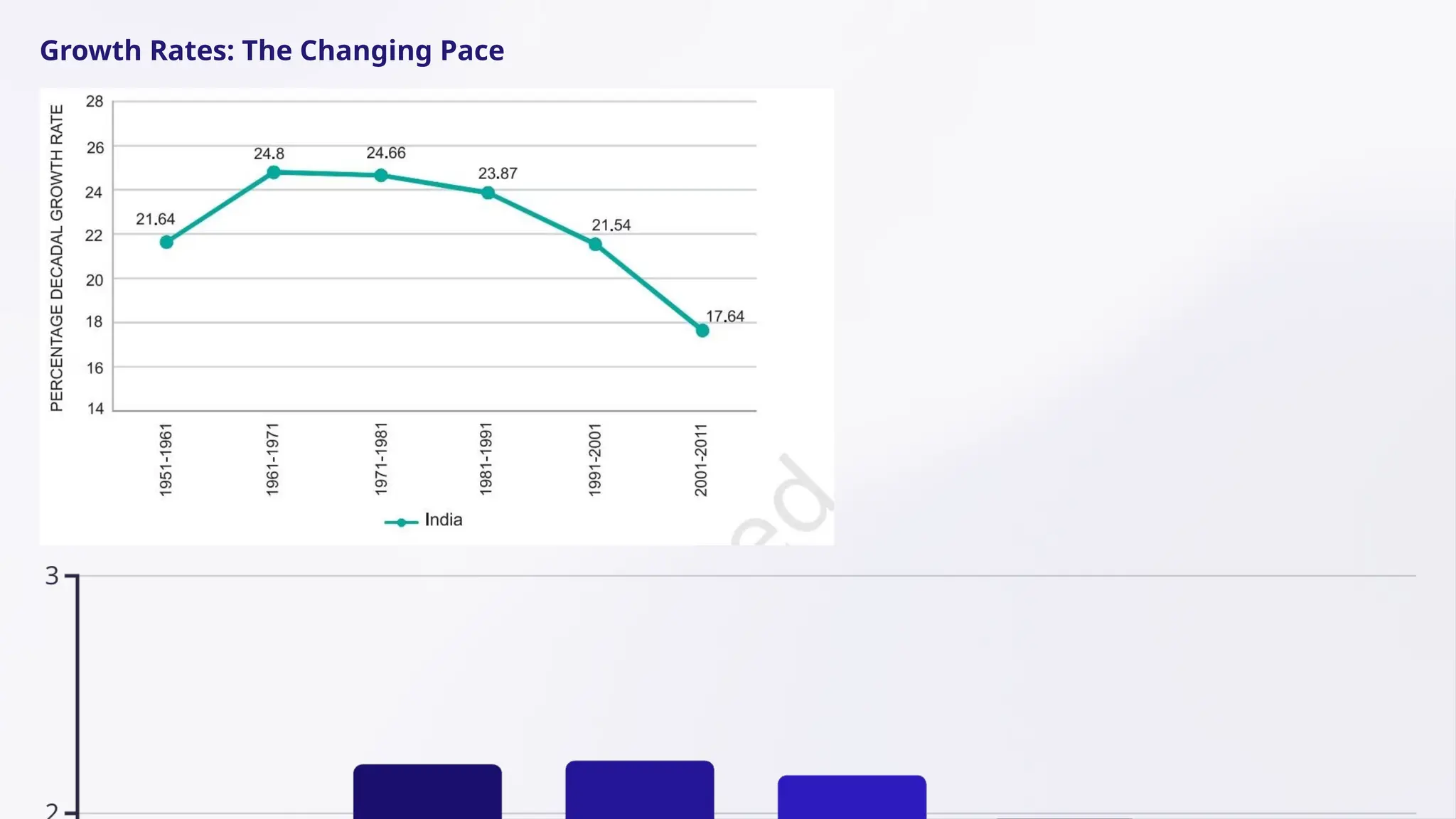
Growth Rates: The Changing Pace
The Paradox of Declining Rates and Increasing
Numbers
Declining Growth Rate
Annual growth percentage has fallen from 2.22% to 1.64%
Increasing Absolute Numbers
Each decade adds 180+ million people despite lower rates
Base Population Effect
Lower rates applied to larger population still yield massive growth
Despite the declining growth rate, the absolute number of people added each decade remains enormous. This paradox occurs because the lower
growth rate applies to an increasingly larger base population. When more than a billion people increase even at a rate of 1.64%, the absolute
addition is substantial—181.46 million people were added between 2001 and 2011 alone.
Birth Rate: A Key Component of Growth
Definition
Birth rate refers to the number of live
births per thousand persons in a year, a
vital demographic indicator reflecting
fertility patterns in a population.
Historical Trend
India has historically maintained high birth
rates, though they have been declining
gradually since the 1980s due to
improved education, urbanization, and
family planning.
Growth Component
Birth rate is a major component of
population growth because in India, birth
rates have consistently exceeded death
rates, creating a substantial natural
increase in population.
The birth rate reflects complex social, economic, and cultural factors including age at marriage, use of contraception, educational
levels (especially female education), economic status, and cultural preferences regarding family size. Government policies have
increasingly focused on lowering birth rates through voluntary family planning.
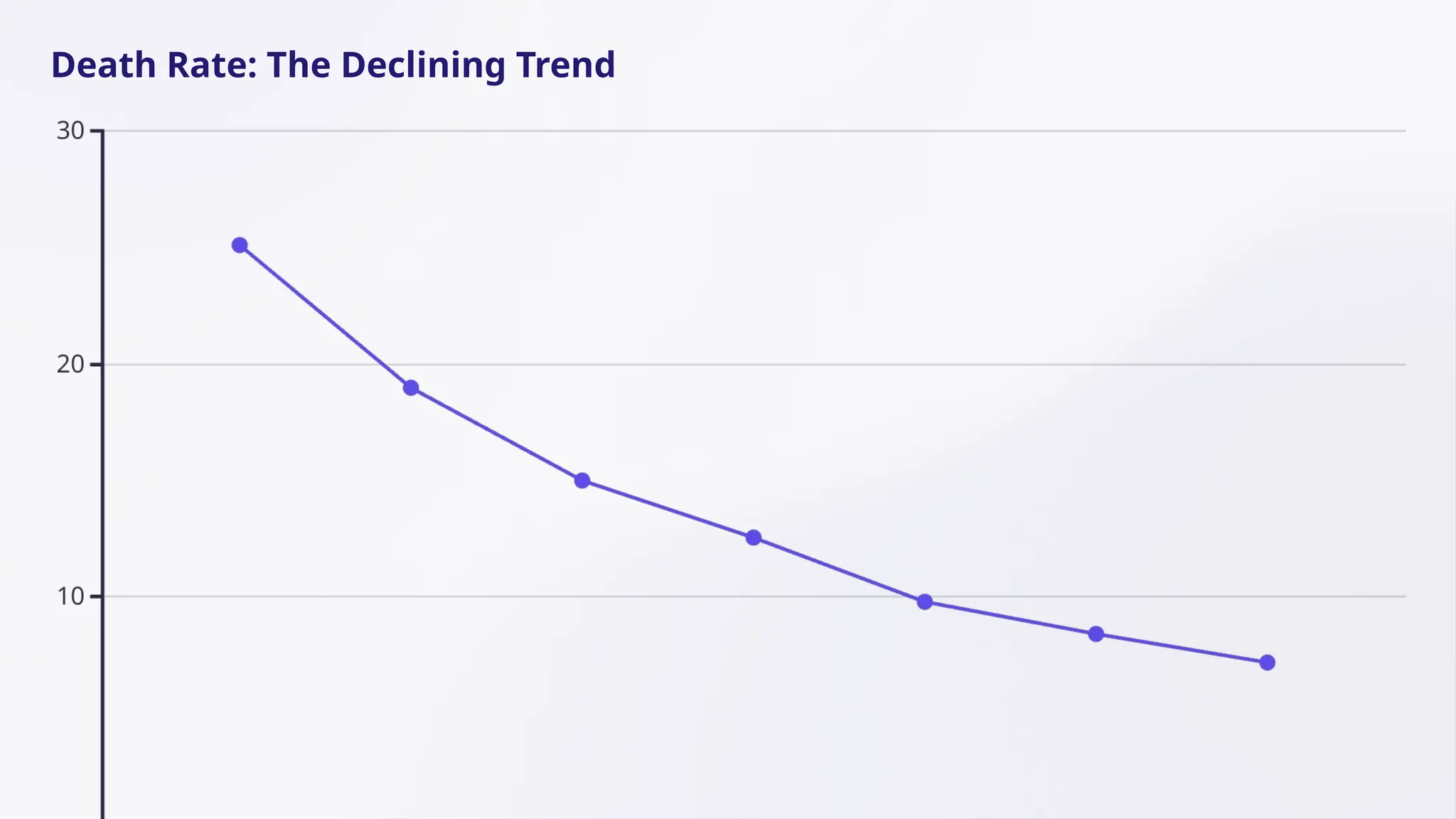
Death Rate: The Declining Trend
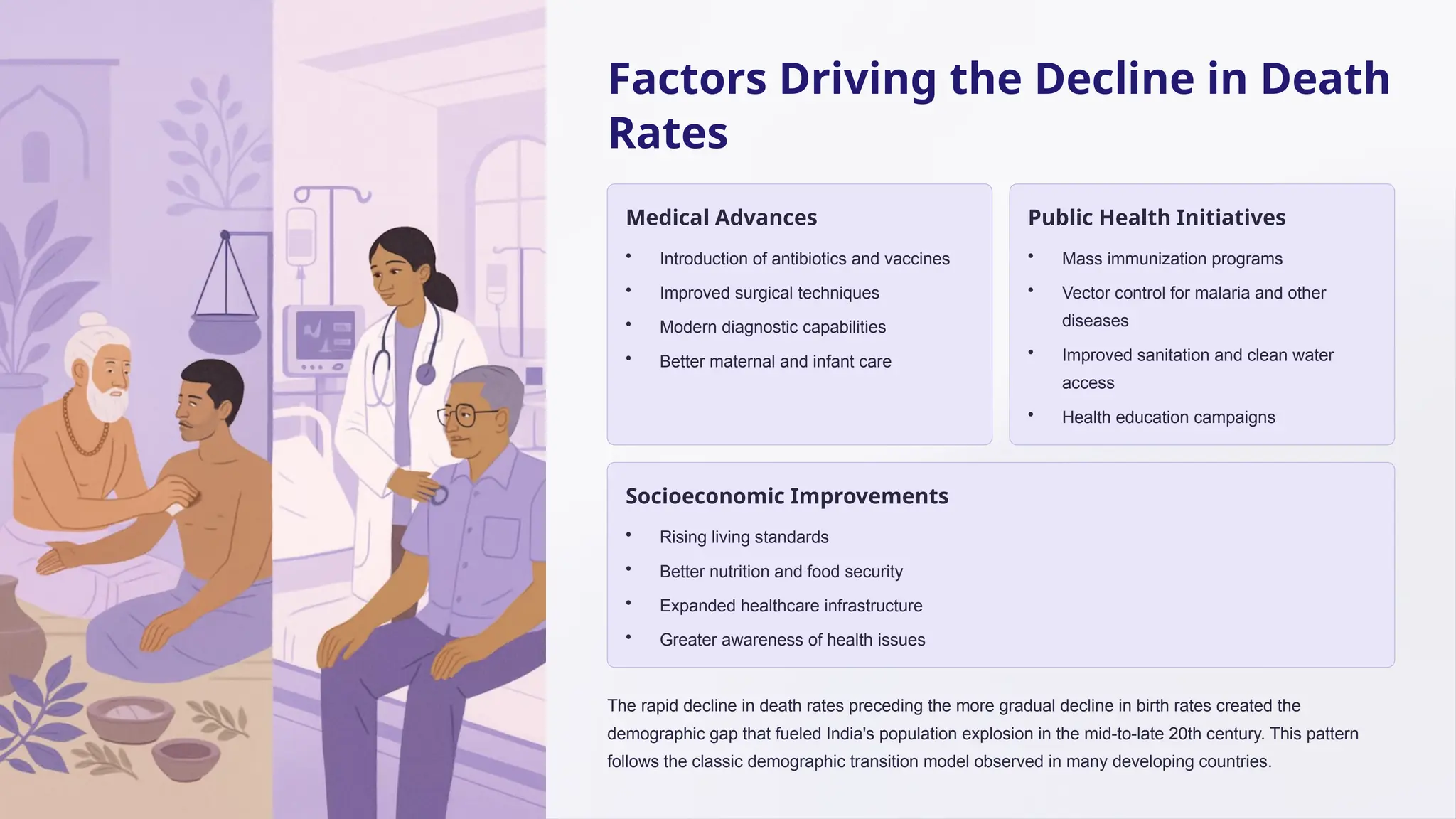
Factors Driving the Decline in Death
Rates
Medical Advances
• Introduction of antibiotics and vaccines
• Improved surgical techniques
• Modern diagnostic capabilities
• Better maternal and infant care
Public Health Initiatives
• Mass immunization programs
• Vector control for malaria and other
diseases
• Improved sanitation and clean water
access
• Health education campaigns
Socioeconomic Improvements
• Rising living standards
• Better nutrition and food security
• Expanded healthcare infrastructure
• Greater awareness of health issues
The rapid decline in death rates preceding the more gradual decline in birth rates created the
demographic gap that fueled India's population explosion in the mid-to-late 20th century. This pattern
follows the classic demographic transition model observed in many developing countries.
Birth Rates vs. Death Rates: The Natural Increase
Natural Increase Defined
The natural increase of population is the difference between
birth rates and death rates, representing the growth that occurs
from reproduction alone, without accounting for migration.
When birth rates exceed death rates, a population experiences
natural growth. The wider the gap between the two rates, the
faster the natural increase.
India's Demographic Transition
India has been going through the demographic transition where
death rates declined rapidly first, followed by a more gradual
decline in birth rates. This created a substantial gap between
the two rates.
In the 1950s-70s, death rates fell dramatically while birth rates
remained high, creating a period of rapid population growth.
Since the 1980s, birth rates have also begun declining,
gradually narrowing the gap.
The relationship between birth and death rates explains the fundamental dynamics of India's population growth. As the gap between
these rates narrows, the rate of natural increase slows, though absolute numbers continue to grow due to the large base population
and population momentum.
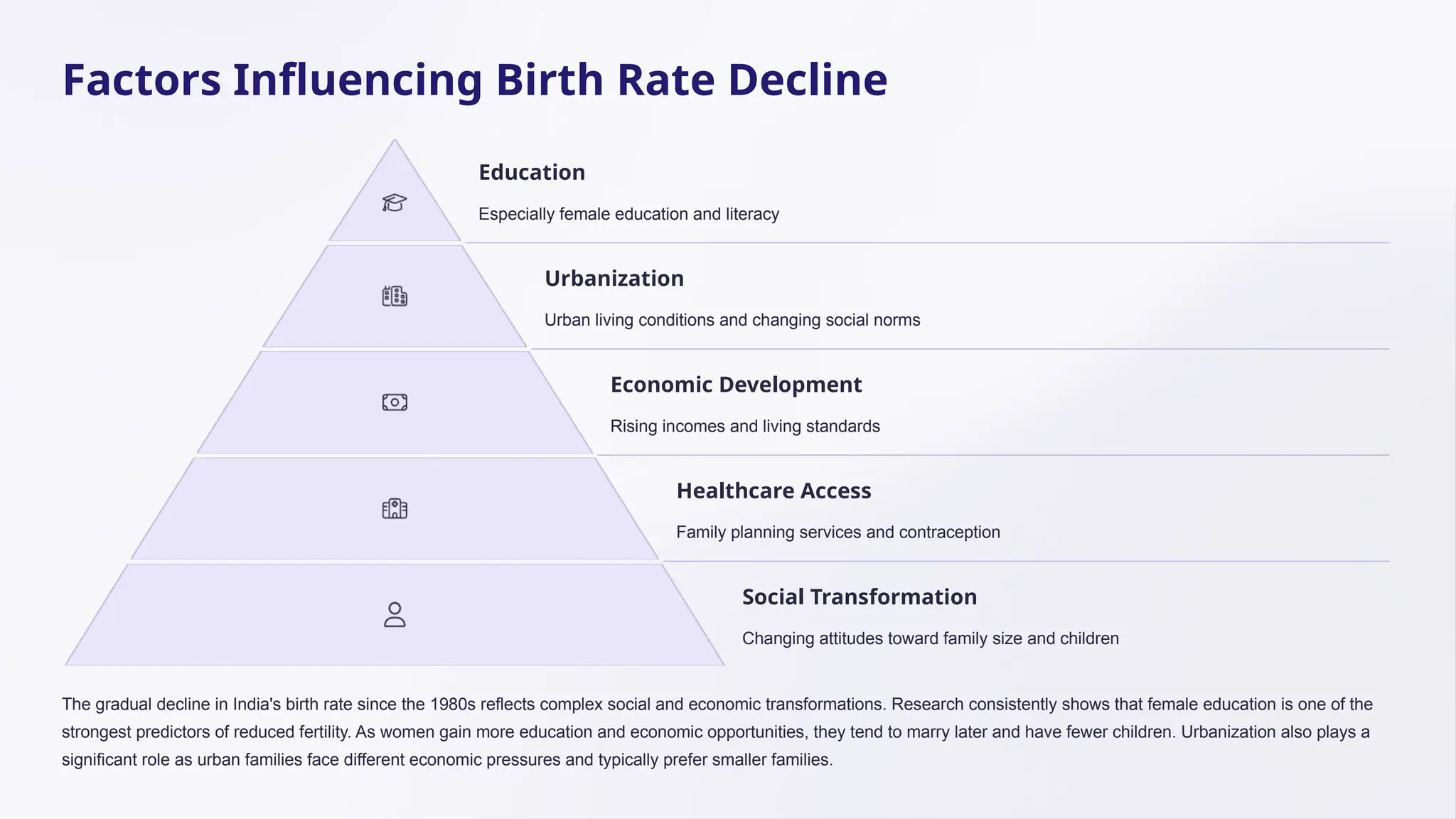
Factors Influencing Birth Rate Decline
Education
Especially female education and literacy
Urbanization
Urban living conditions and changing social norms
Economic Development
Rising incomes and living standards
Healthcare Access
Family planning services and contraception
Social Transformation
Changing attitudes toward family size and children
The gradual decline in India's birth rate since the 1980s reflects complex social and economic transformations. Research consistently shows that female education is one of the
strongest predictors of reduced fertility. As women gain more education and economic opportunities, they tend to marry later and have fewer children. Urbanization also plays a
significant role as urban families face different economic pressures and typically prefer smaller families.
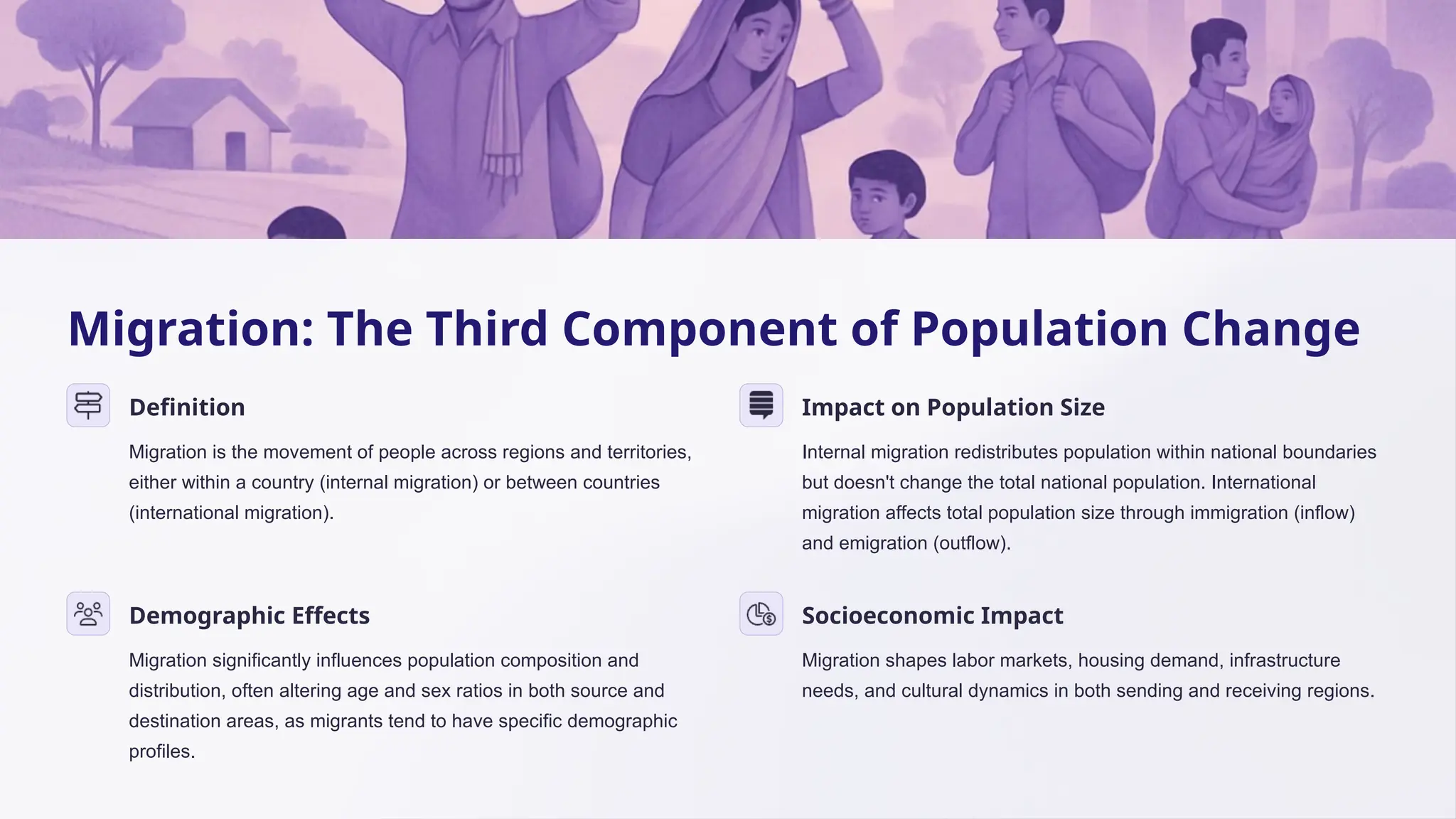
Migration: The Third Component of Population Change
Definition
Migration is the movement of people across regions and territories,
either within a country (internal migration) or between countries
(international migration).
Impact on Population Size
Internal migration redistributes population within national boundaries
but doesn't change the total national population. International
migration affects total population size through immigration (inflow)
and emigration (outflow).
Demographic Effects
Migration significantly influences population composition and
distribution, often altering age and sex ratios in both source and
destination areas, as migrants tend to have specific demographic
profiles.
Socioeconomic Impact
Migration shapes labor markets, housing demand, infrastructure
needs, and cultural dynamics in both sending and receiving regions.
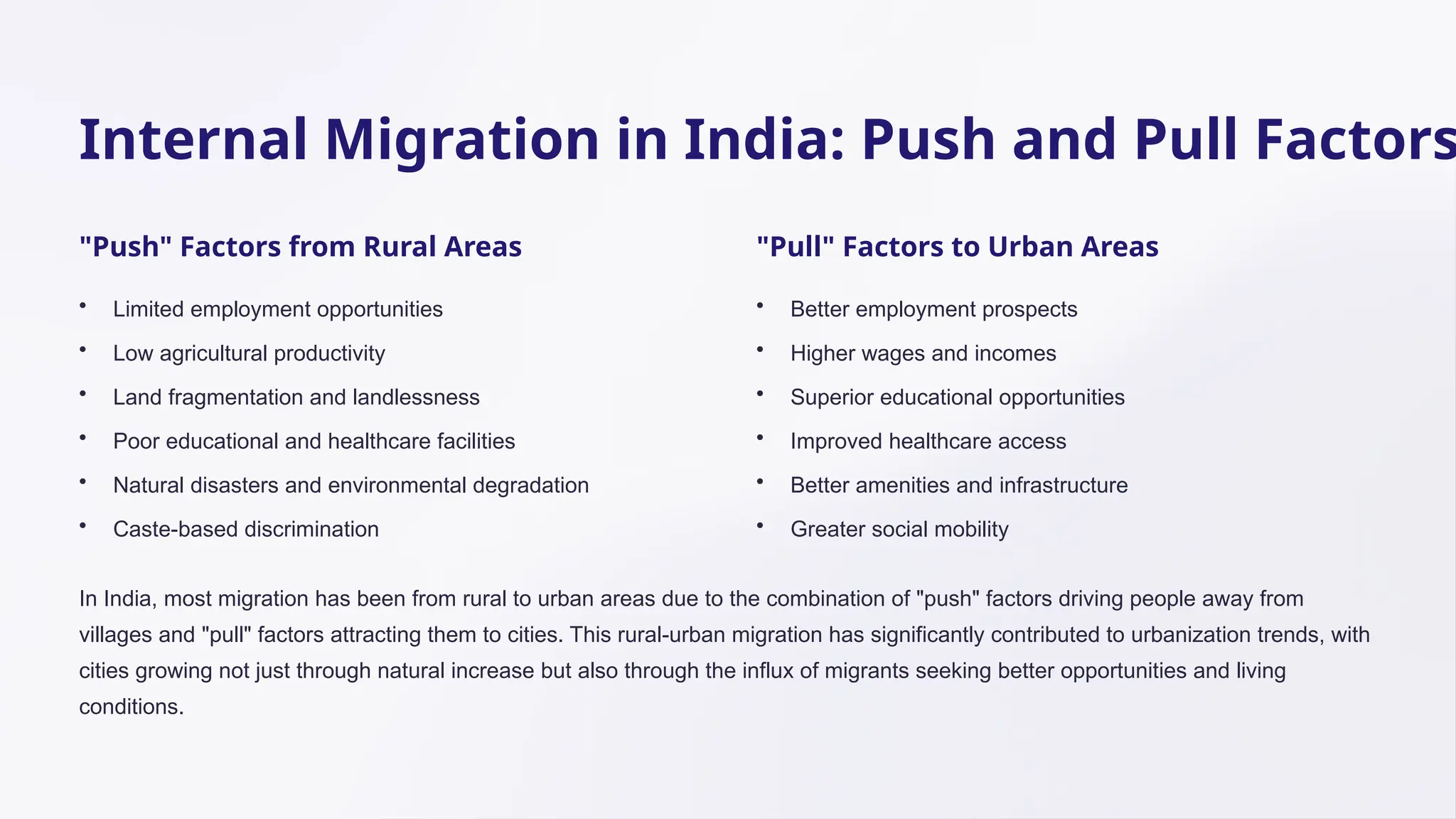
Internal Migration in India: Push and Pull Factors
"Push" Factors from Rural Areas
• Limited employment opportunities
• Low agricultural productivity
• Land fragmentation and landlessness
• Poor educational and healthcare facilities
• Natural disasters and environmental degradation
• Caste-based discrimination
"Pull" Factors to Urban Areas
• Better employment prospects
• Higher wages and incomes
• Superior educational opportunities
• Improved healthcare access
• Better amenities and infrastructure
• Greater social mobility
In India, most migration has been from rural to urban areas due to the combination of "push" factors driving people away from
villages and "pull" factors attracting them to cities. This rural-urban migration has significantly contributed to urbanization trends, with
cities growing not just through natural increase but also through the influx of migrants seeking better opportunities and living
conditions.
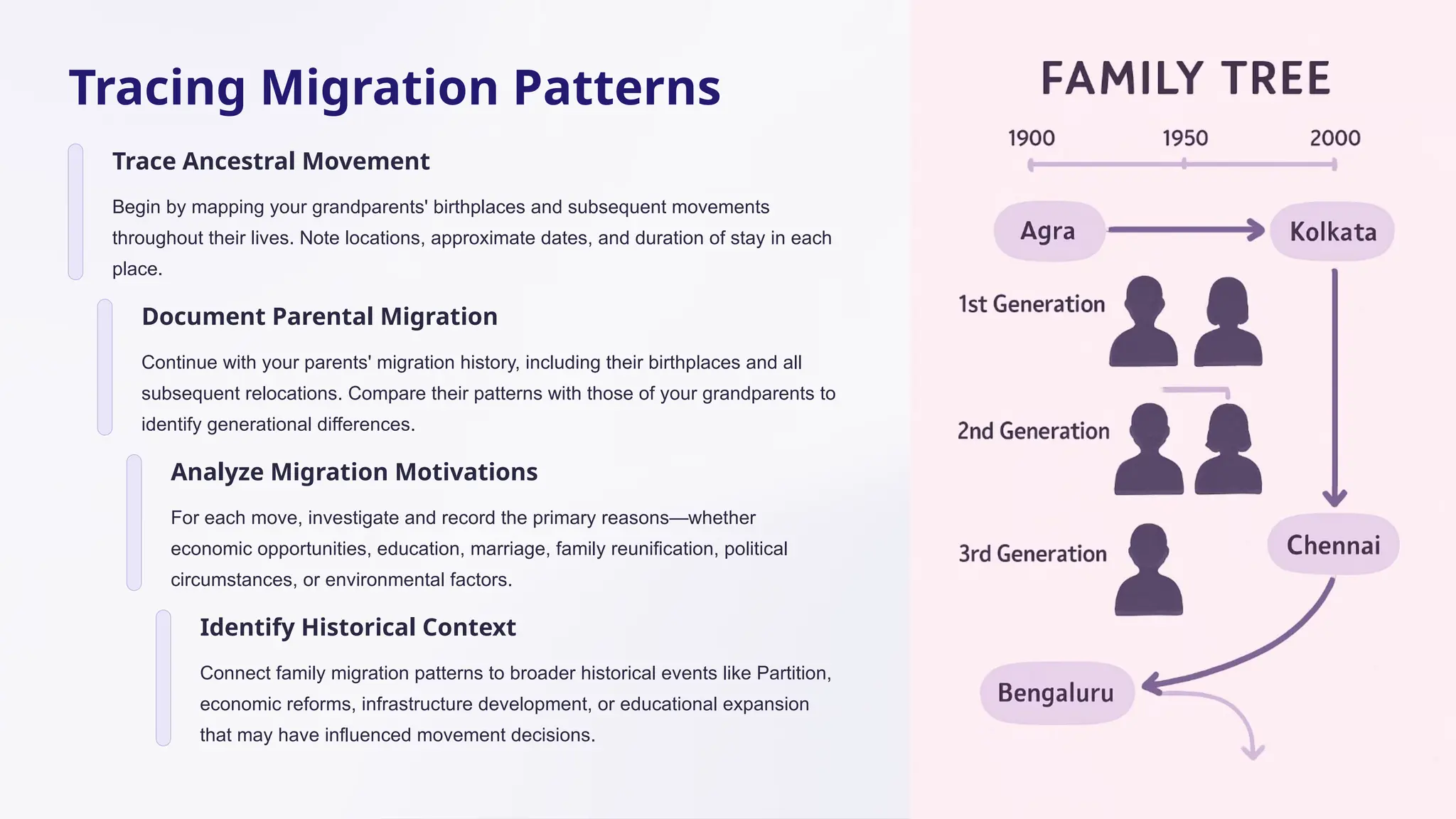
Tracing Migration Patterns
Trace Ancestral Movement
Begin by mapping your grandparents' birthplaces and subsequent movements
throughout their lives. Note locations, approximate dates, and duration of stay in each
place.
Document Parental Migration
Continue with your parents' migration history, including their birthplaces and all
subsequent relocations. Compare their patterns with those of your grandparents to
identify generational differences.
Analyze Migration Motivations
For each move, investigate and record the primary reasons—whether
economic opportunities, education, marriage, family reunification, political
circumstances, or environmental factors.
Identify Historical Context
Connect family migration patterns to broader historical events like Partition,
economic reforms, infrastructure development, or educational expansion
that may have influenced movement decisions.
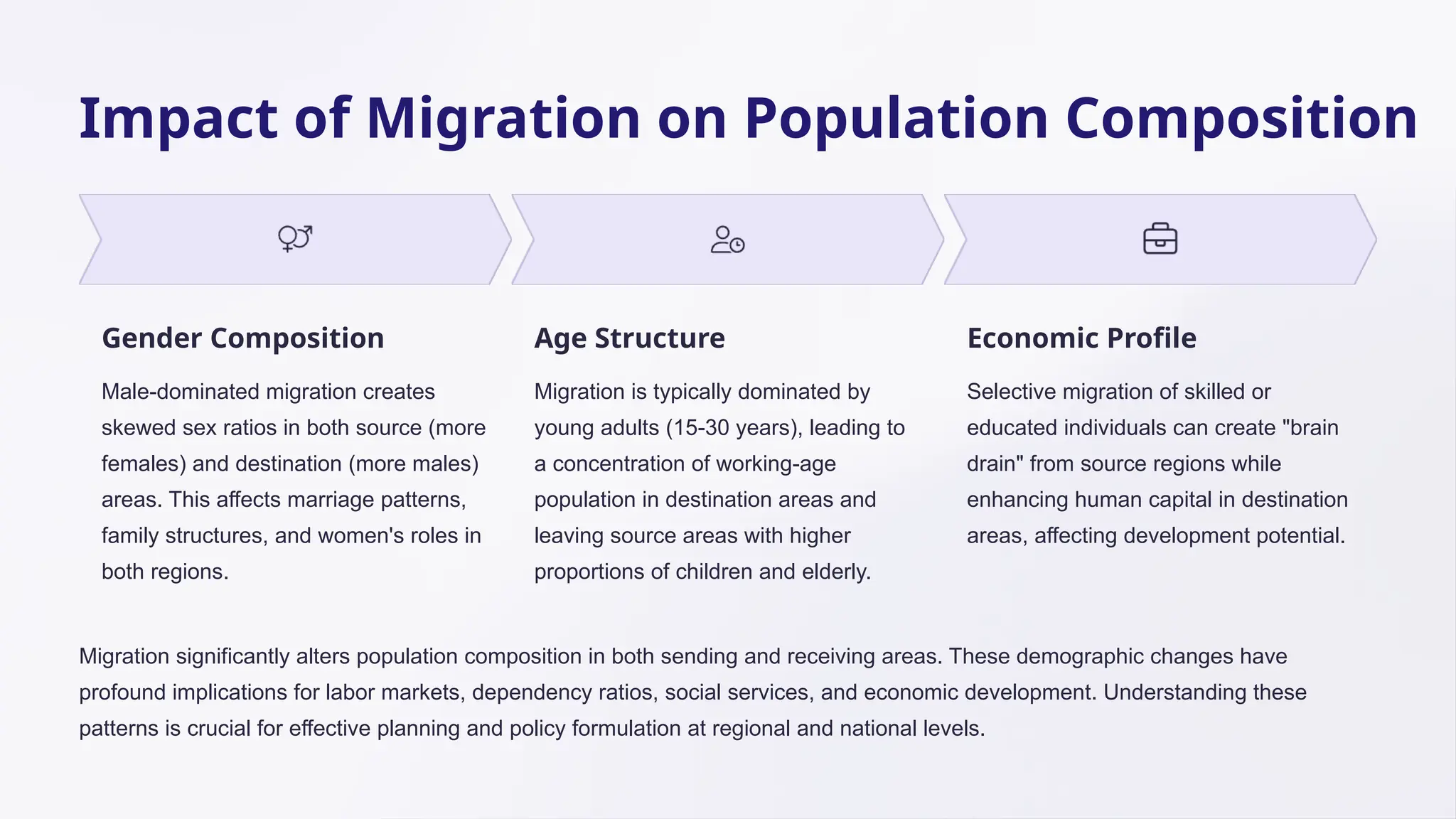
Impact of Migration on Population Composition
Gender Composition
Male-dominated migration creates
skewed sex ratios in both source (more
females) and destination (more males)
areas. This affects marriage patterns,
family structures, and women's roles in
both regions.
Age Structure
Migration is typically dominated by
young adults (15-30 years), leading to
a concentration of working-age
population in destination areas and
leaving source areas with higher
proportions of children and elderly.
Economic Profile
Selective migration of skilled or
educated individuals can create "brain
drain" from source regions while
enhancing human capital in destination
areas, affecting development potential.
Migration significantly alters population composition in both sending and receiving areas. These demographic changes have
profound implications for labor markets, dependency ratios, social services, and economic development. Understanding these
patterns is crucial for effective planning and policy formulation at regional and national levels.
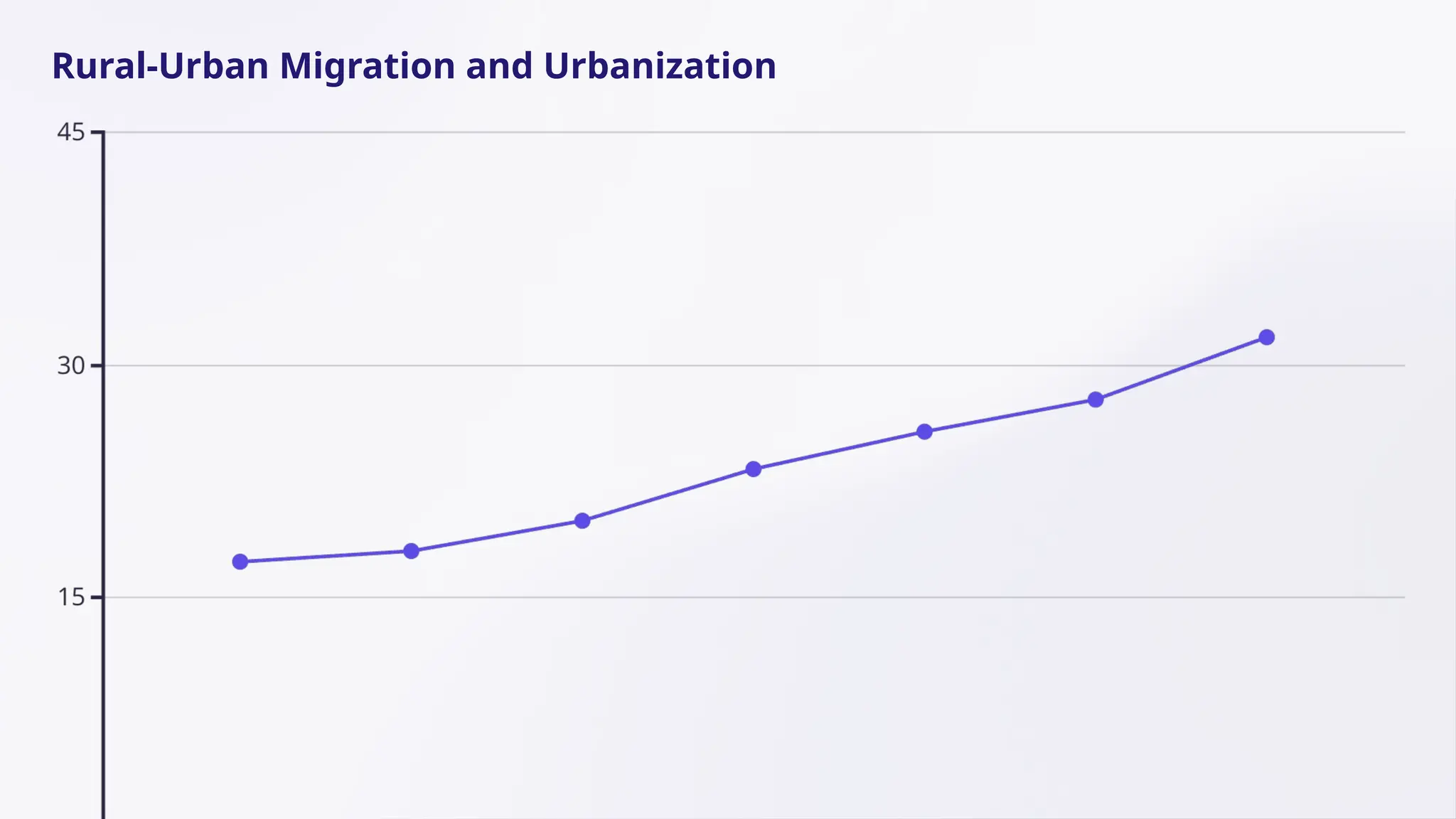
Rural-Urban Migration and Urbanization
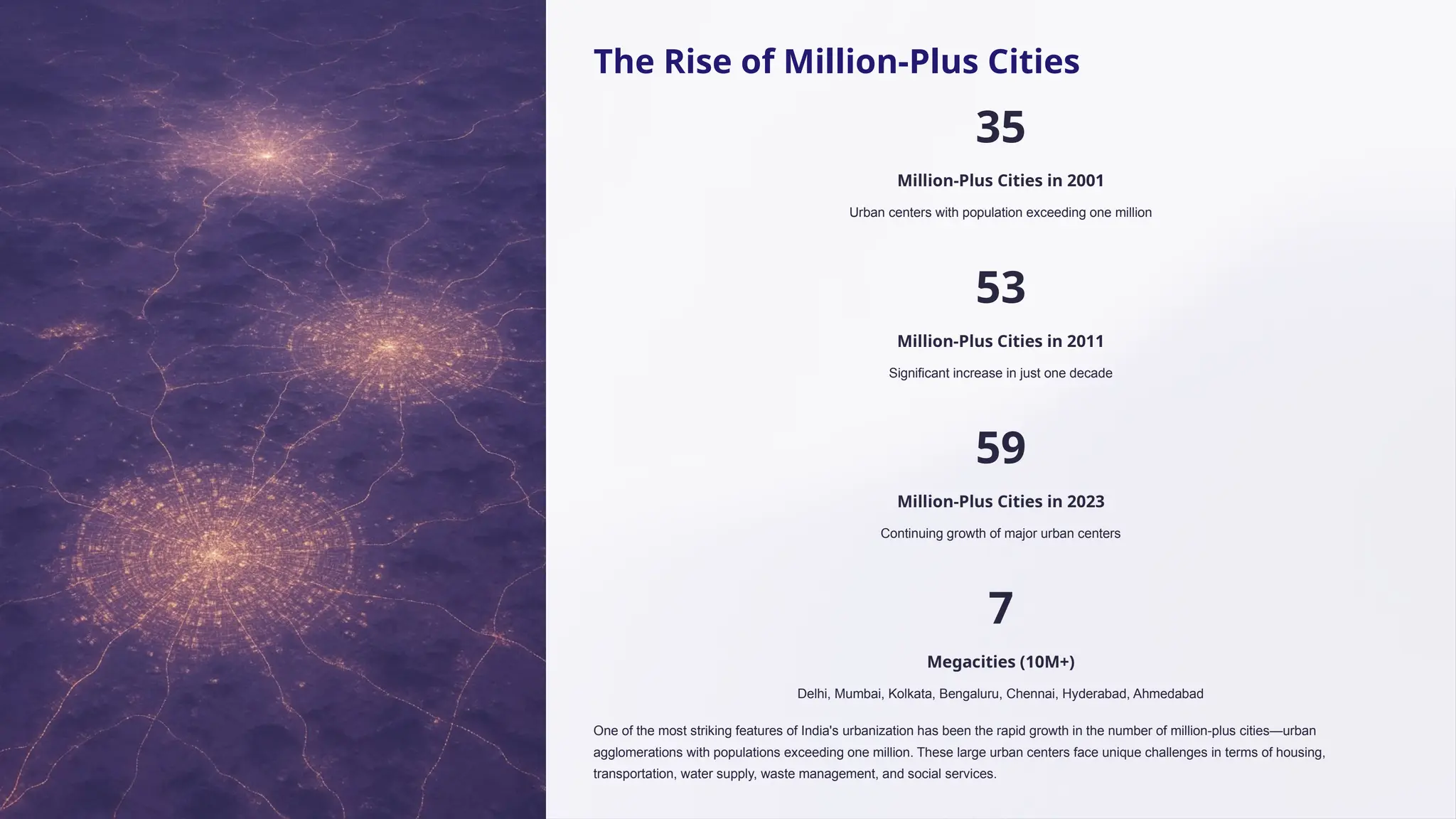
The Rise of Million-Plus Cities
35
Million-Plus Cities in 2001
Urban centers with population exceeding one million
53
Million-Plus Cities in 2011
Significant increase in just one decade
59
Million-Plus Cities in 2023
Continuing growth of major urban centers
7
Megacities (10M+)
Delhi, Mumbai, Kolkata, Bengaluru, Chennai, Hyderabad, Ahmedabad
One of the most striking features of India's urbanization has been the rapid growth in the number of million-plus cities—urban
agglomerations with populations exceeding one million. These large urban centers face unique challenges in terms of housing,
transportation, water supply, waste management, and social services.
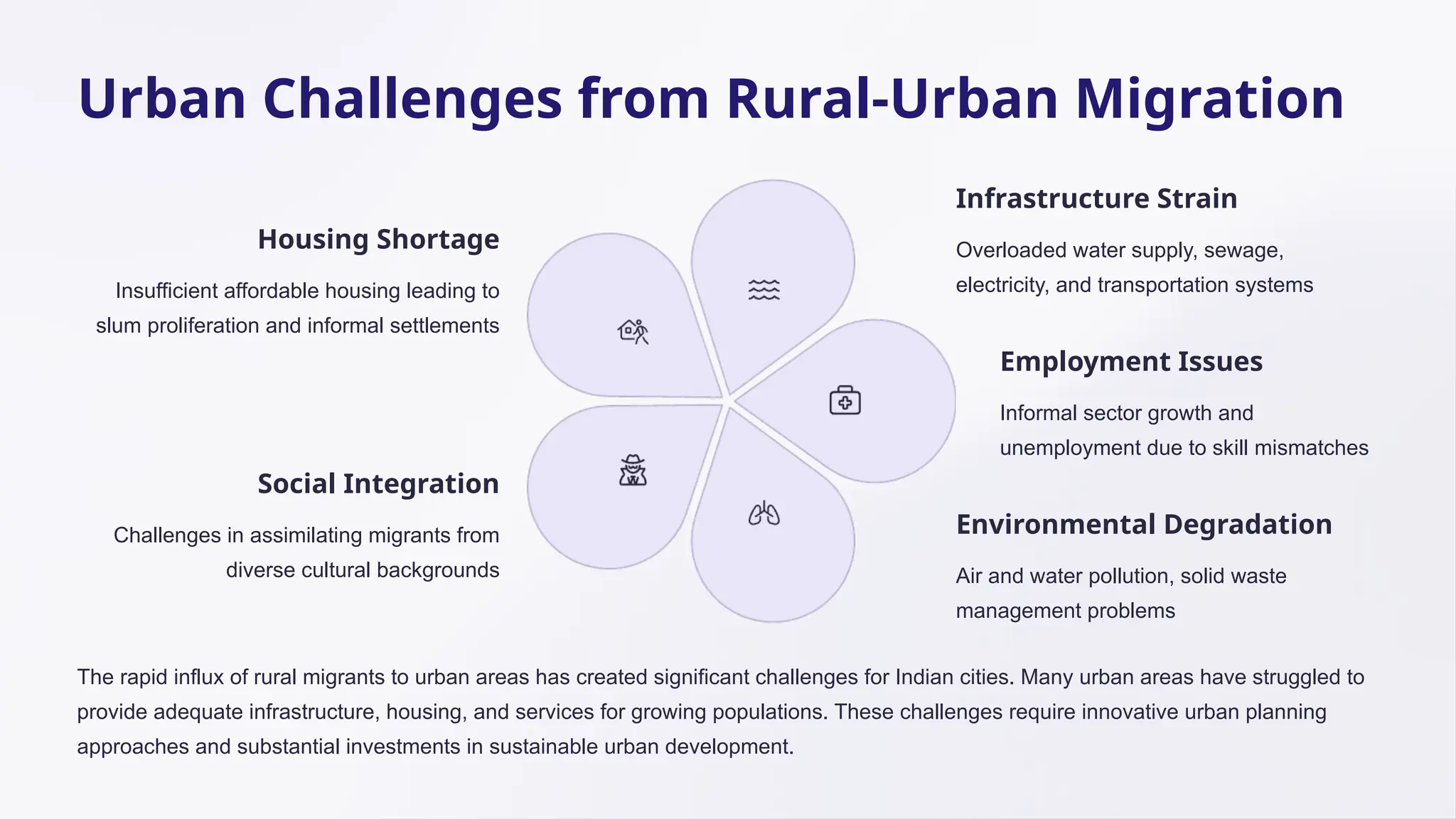
Urban Challenges from Rural-Urban Migration
Housing Shortage
Insufficient affordable housing leading to
slum proliferation and informal settlements
Infrastructure Strain
Overloaded water supply, sewage,
electricity, and transportation systems
Employment Issues
Informal sector growth and
unemployment due to skill mismatches
Environmental Degradation
Air and water pollution, solid waste
management problems
Social Integration
Challenges in assimilating migrants from
diverse cultural backgrounds
The rapid influx of rural migrants to urban areas has created significant challenges for Indian cities. Many urban areas have struggled to
provide adequate infrastructure, housing, and services for growing populations. These challenges require innovative urban planning
approaches and substantial investments in sustainable urban development.
Migration and Regional Development Disparities
Source Regions: Development Challenges
Areas with high outmigration often face developmental
challenges that can be exacerbated by the departure of
working-age individuals. These regions may experience:
• Depleted human capital and workforce
• Aging population and higher dependency ratios
• Reduced entrepreneurship and investment
• Diminished tax base for local infrastructure
Destination Regions: Growth Opportunities
Areas receiving migrants often benefit from population influx,
though not without challenges. These regions typically
experience:
• Expanded labor force and consumer markets
• Enhanced human capital and skills diversity
• Increased entrepreneurship and innovation
• Greater cultural diversity and dynamism
Migration both reflects and reinforces regional development disparities in India. More developed states and urban areas typically
attract migrants from less developed regions, potentially widening the development gap. However, remittances from migrants can
also provide vital financial support to source regions, creating complex economic linkages between sending and receiving areas.
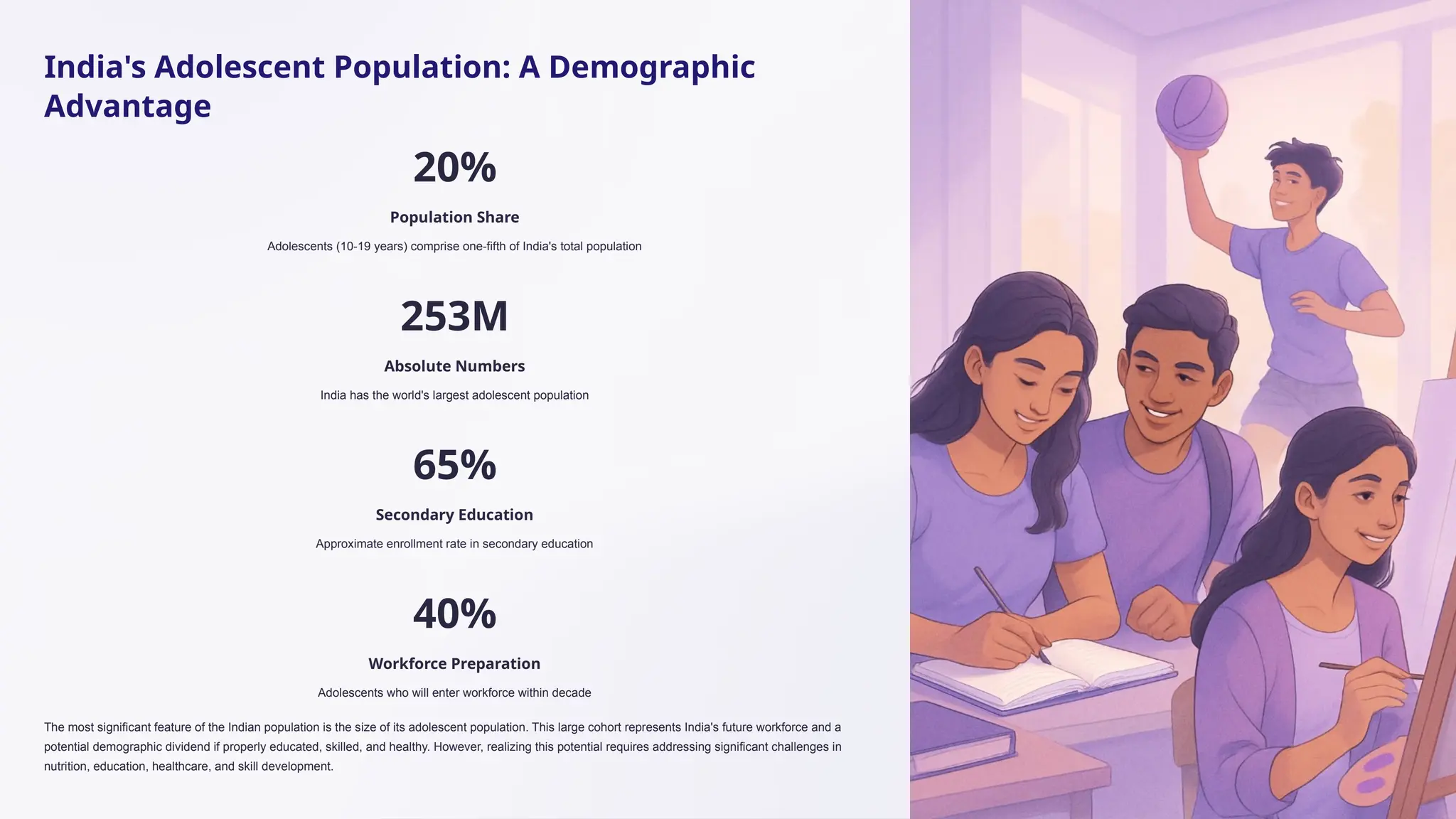
India's Adolescent Population: A Demographic
Advantage
20%
Population Share
Adolescents (10-19 years) comprise one-fifth of India's total population
253M
Absolute Numbers
India has the world's largest adolescent population
65%
Secondary Education
Approximate enrollment rate in secondary education
40%
Workforce Preparation
Adolescents who will enter workforce within decade
The most significant feature of the Indian population is the size of its adolescent population. This large cohort represents India's future workforce and a
potential demographic dividend if properly educated, skilled, and healthy. However, realizing this potential requires addressing significant challenges in
nutrition, education, healthcare, and skill development.
Nutritional Challenges for Adolescents
Higher Nutritional
Requirements
Adolescents have increased
nutritional needs due to rapid
physical growth and development.
During this period, they gain up to
50% of adult weight and more
than 20% of adult height, requiring
substantial nutritional support.
Inadequate Diet
In India, the diet available to many
adolescents is inadequate in all
essential nutrients. Economic
constraints, food insecurity, and
traditional dietary practices often
limit access to balanced nutrition.
Anaemia Prevalence
A large number of adolescent girls
suffer from anaemia, with
prevalence rates of 40-60% in
different regions. This condition
affects cognitive development,
academic performance, and
reproductive health.
Poor nutrition during adolescence can lead to stunted growth, compromised cognitive development, and reduced immune function.
The nutritional status of adolescent girls is particularly important as it affects not only their own health but also the health of their
future children, creating an intergenerational cycle of malnutrition that must be addressed through targeted interventions.
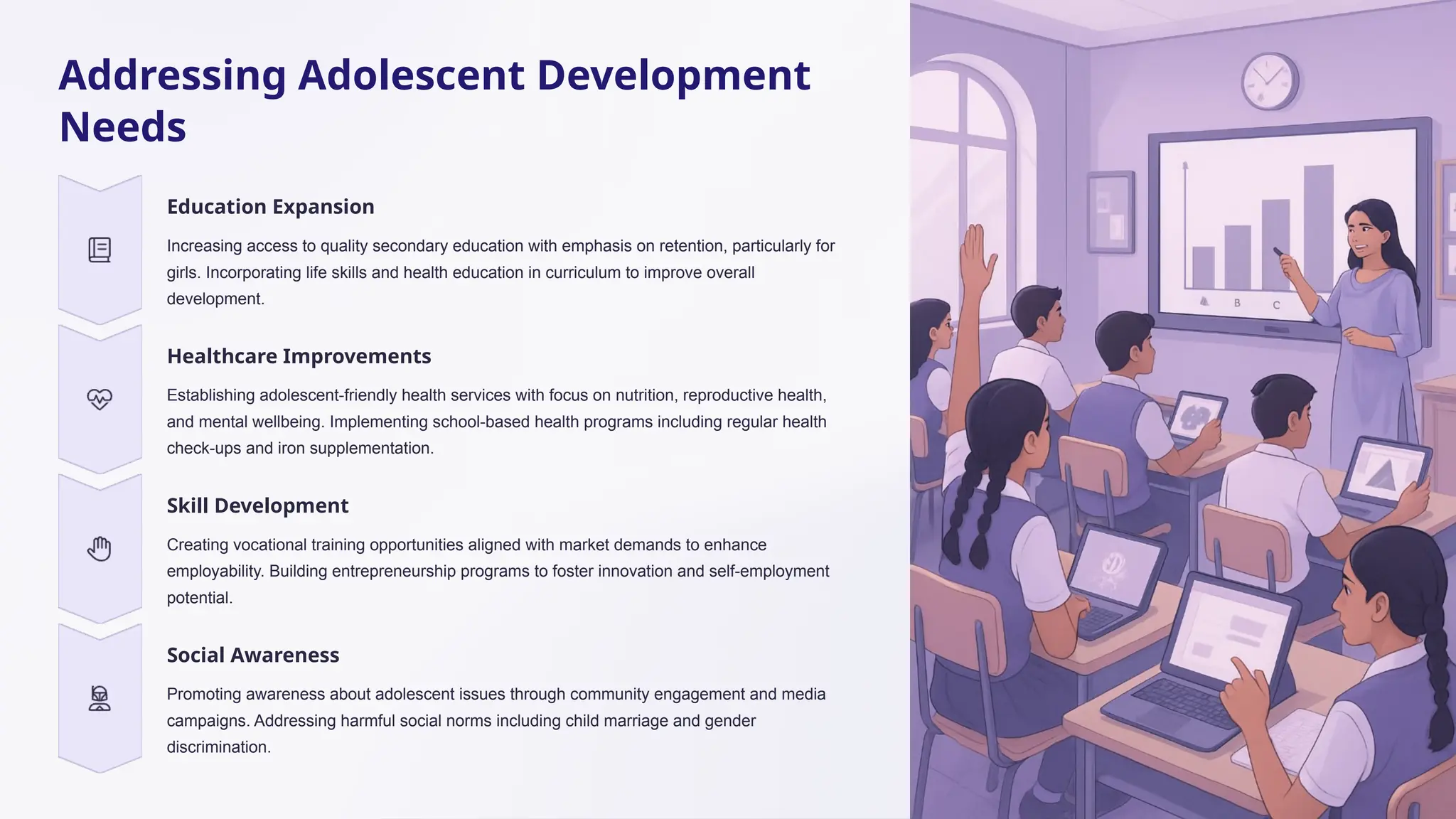
Addressing Adolescent Development
Needs
Education Expansion
Increasing access to quality secondary education with emphasis on retention, particularly for
girls. Incorporating life skills and health education in curriculum to improve overall
development.
Healthcare Improvements
Establishing adolescent-friendly health services with focus on nutrition, reproductive health,
and mental wellbeing. Implementing school-based health programs including regular health
check-ups and iron supplementation.
Skill Development
Creating vocational training opportunities aligned with market demands to enhance
employability. Building entrepreneurship programs to foster innovation and self-employment
potential.
Social Awareness
Promoting awareness about adolescent issues through community engagement and media
campaigns. Addressing harmful social norms including child marriage and gender
discrimination.
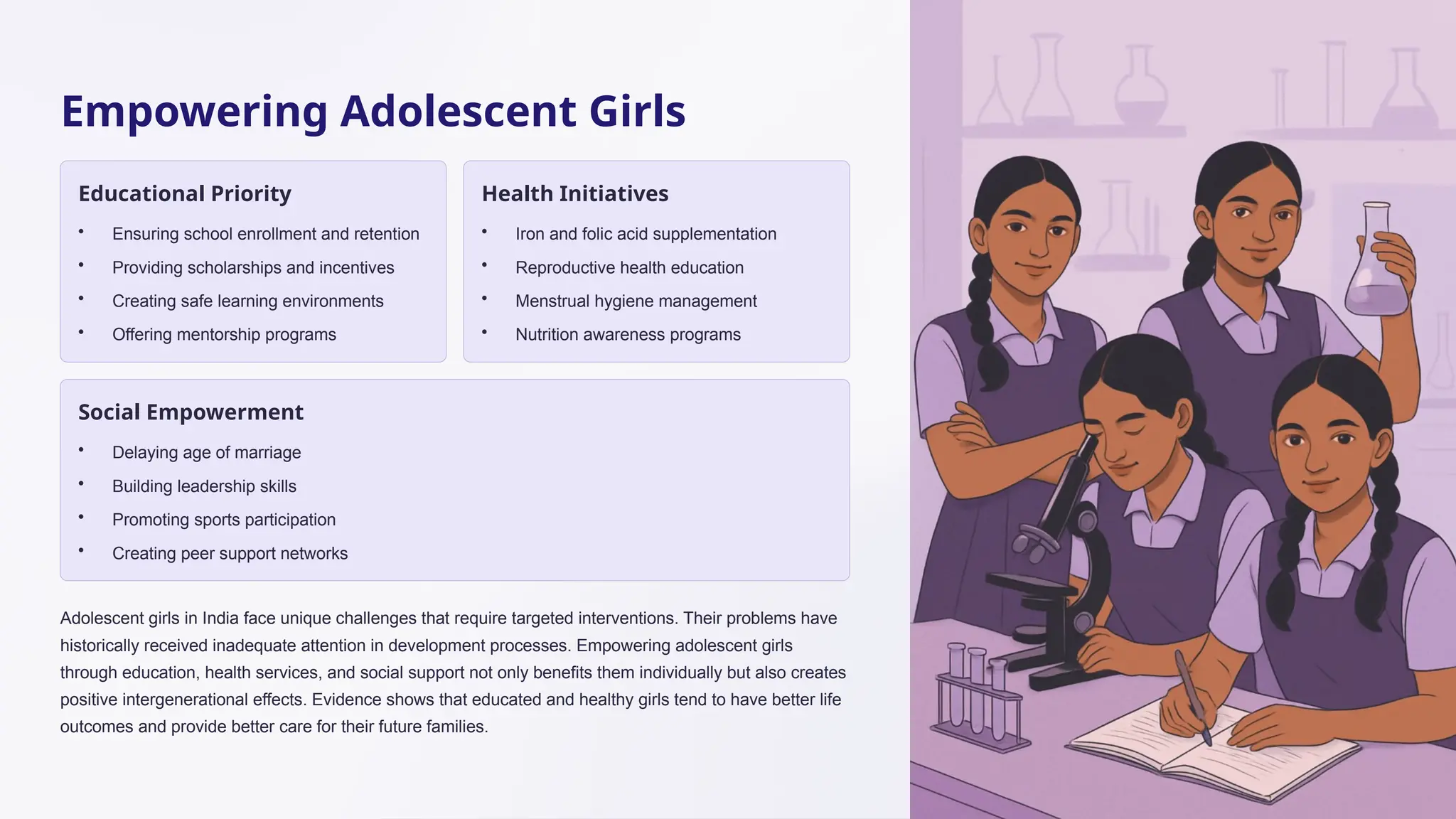
Empowering Adolescent Girls
Educational Priority
• Ensuring school enrollment and retention
• Providing scholarships and incentives
• Creating safe learning environments
• Offering mentorship programs
Health Initiatives
• Iron and folic acid supplementation
• Reproductive health education
• Menstrual hygiene management
• Nutrition awareness programs
Social Empowerment
• Delaying age of marriage
• Building leadership skills
• Promoting sports participation
• Creating peer support networks
Adolescent girls in India face unique challenges that require targeted interventions. Their problems have
historically received inadequate attention in development processes. Empowering adolescent girls
through education, health services, and social support not only benefits them individually but also creates
positive intergenerational effects. Evidence shows that educated and healthy girls tend to have better life
outcomes and provide better care for their future families.
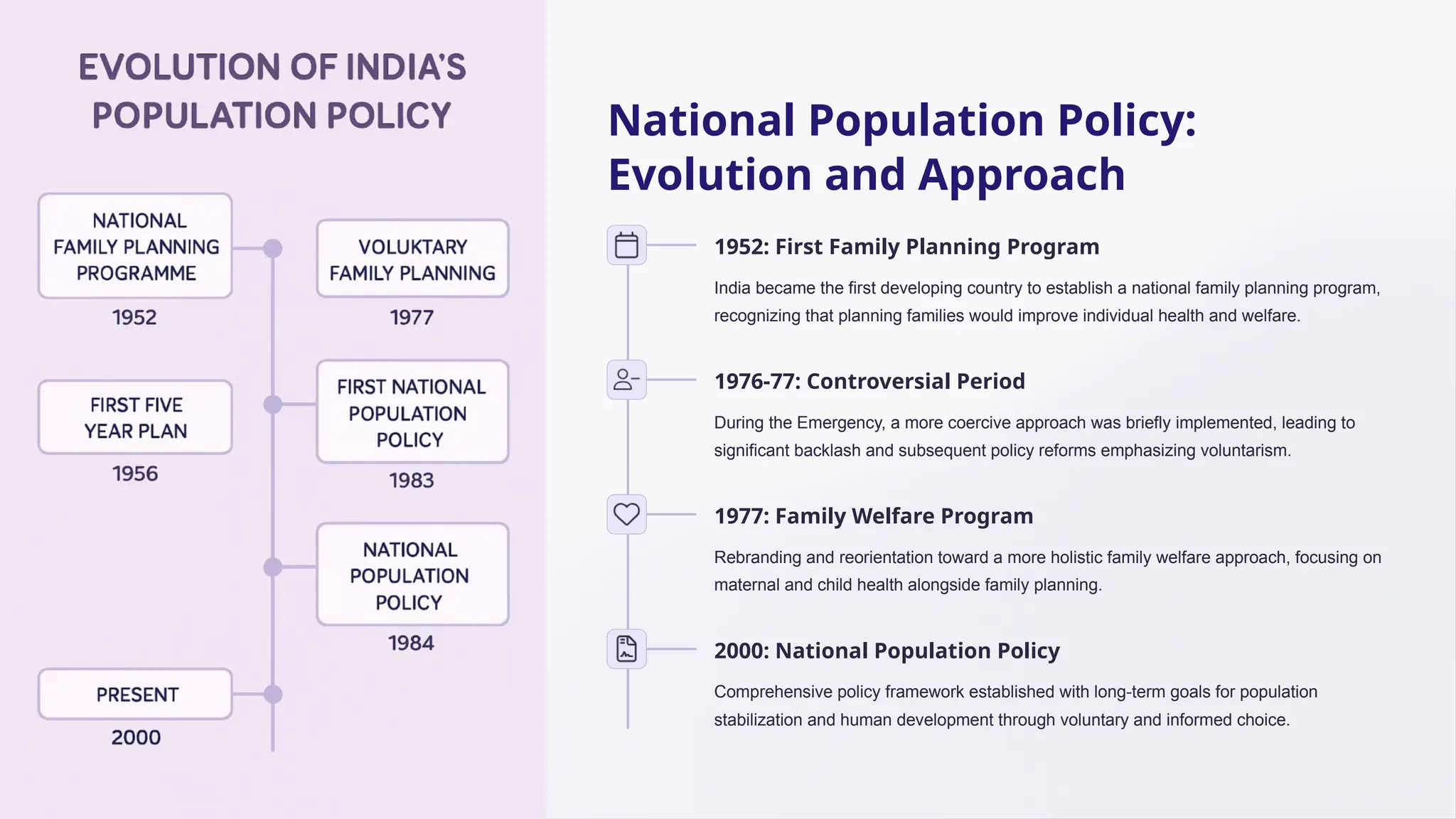
National Population Policy:
Evolution and Approach
1952: First Family Planning Program
India became the first developing country to establish a national family planning program,
recognizing that planning families would improve individual health and welfare.
1976-77: Controversial Period
During the Emergency, a more coercive approach was briefly implemented, leading to
significant backlash and subsequent policy reforms emphasizing voluntarism.
1977: Family Welfare Program
Rebranding and reorientation toward a more holistic family welfare approach, focusing on
maternal and child health alongside family planning.
2000: National Population Policy
Comprehensive policy framework established with long-term goals for population
stabilization and human development through voluntary and informed choice.
National Population Policy 2000: Key Objectives
Universal Education
Providing free and compulsory school education up to
age 14, recognizing education's crucial role in informed
reproductive choices and overall development.
Reduced Infant Mortality
Bringing infant mortality rate below 30 per 1,000 live
births, addressing a key factor in fertility decisions as
families have fewer children when child survival
improves.
Universal Immunization
Achieving universal immunization of children against all
vaccine-preventable diseases to improve child survival
and health outcomes.
Delayed Marriage
Promoting delayed marriage for girls, not earlier than age
18, recognizing early marriage's role in early childbearing
and high fertility.
The National Population Policy 2000 marked a significant shift from narrowly focused family planning targets to a more
comprehensive approach addressing broader social determinants of population growth. The policy emphasizes voluntary
participation, informed choice, and convergence of service delivery at the village level to ensure accessibility and effectiveness.
People-Centered Approach to Family Welfare
Individual Choice
Respecting personal reproductive
decisions without coercion 1
Informed Decisions
Providing comprehensive information
on reproductive options
Quality Services
Ensuring accessible, affordable, and
high-quality healthcare
Gender Equity
Addressing women's empowerment
and reproductive rights
Child-Centered
Focusing on the health and wellbeing
of children
The NPP 2000 made family welfare a genuinely people-centered program by shifting from demographic targets to a focus on
reproductive health and rights. This approach recognizes that sustainable population stabilization comes from empowering
individuals to make their own informed choices about family size, supported by accessible services and enabling social conditions.
Achievements of Population Policy Implementation
Regional Variations in Demographic Transition
India shows significant regional variations in demographic transition, with southern states like Kerala and Tamil Nadu having already
achieved below-replacement fertility levels, while some northern states like Bihar and Uttar Pradesh still have relatively high fertility
rates. These variations reflect differences in social development, education levels (especially female literacy), healthcare access,
and economic conditions. Understanding these regional differences is crucial for tailoring population policies to specific contexts.
Future Demographic Challenges
Aging Population
• Increasing proportion of elderly citizens
• Growing need for geriatric healthcare
• Pension and social security demands
• Changing dependency ratios
Urban Population Growth
• Continued rapid urbanization
• Infrastructure and housing pressure
• Urban employment challenges
• Environmental sustainability concerns
Regional Disparities
• Uneven demographic transition
• Internal migration pressures
• Resource allocation tensions
• Differential policy needs
As India progresses through its demographic transition, new challenges emerge that require forward-
looking policies. The most significant future challenge will be managing an aging population as fertility
rates decline while life expectancy increases. This demographic shift will require substantial adjustments
in healthcare systems, pension programs, and social support structures.
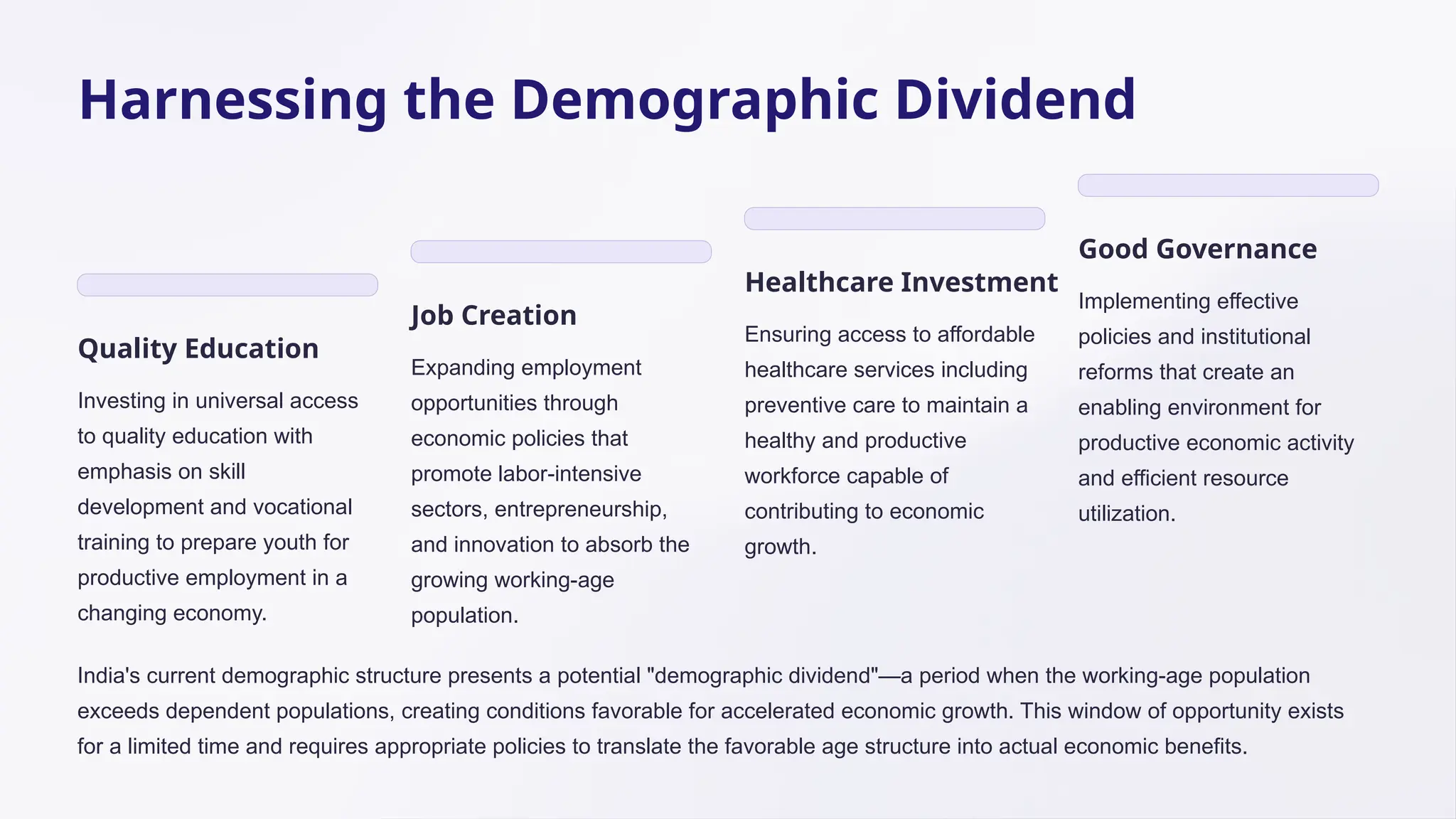
Harnessing the Demographic Dividend
Quality Education
Investing in universal access
to quality education with
emphasis on skill
development and vocational
training to prepare youth for
productive employment in a
changing economy.
Job Creation
Expanding employment
opportunities through
economic policies that
promote labor-intensive
sectors, entrepreneurship,
and innovation to absorb the
growing working-age
population.
Healthcare Investment
Ensuring access to affordable
healthcare services including
preventive care to maintain a
healthy and productive
workforce capable of
contributing to economic
growth.
Good Governance
Implementing effective
policies and institutional
reforms that create an
enabling environment for
productive economic activity
and efficient resource
utilization.
India's current demographic structure presents a potential "demographic dividend"—a period when the working-age population
exceeds dependent populations, creating conditions favorable for accelerated economic growth. This window of opportunity exists
for a limited time and requires appropriate policies to translate the favorable age structure into actual economic benefits.
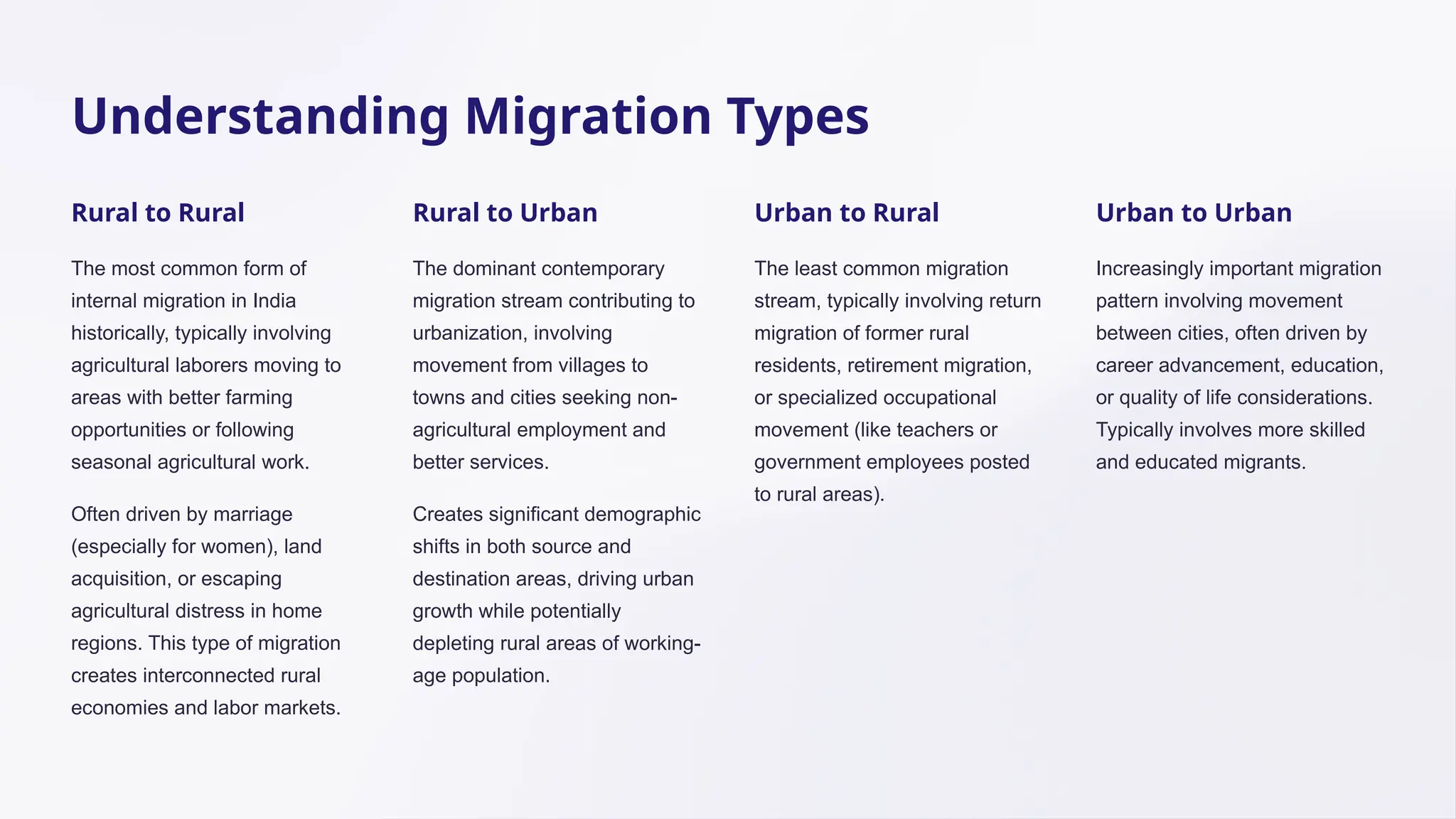
Understanding Migration Types
Rural to Rural
The most common form of
internal migration in India
historically, typically involving
agricultural laborers moving to
areas with better farming
opportunities or following
seasonal agricultural work.
Often driven by marriage
(especially for women), land
acquisition, or escaping
agricultural distress in home
regions. This type of migration
creates interconnected rural
economies and labor markets.
Rural to Urban
The dominant contemporary
migration stream contributing to
urbanization, involving
movement from villages to
towns and cities seeking non-
agricultural employment and
better services.
Creates significant demographic
shifts in both source and
destination areas, driving urban
growth while potentially
depleting rural areas of working-
age population.
Urban to Rural
The least common migration
stream, typically involving return
migration of former rural
residents, retirement migration,
or specialized occupational
movement (like teachers or
government employees posted
to rural areas).
Urban to Urban
Increasingly important migration
pattern involving movement
between cities, often driven by
career advancement, education,
or quality of life considerations.
Typically involves more skilled
and educated migrants.
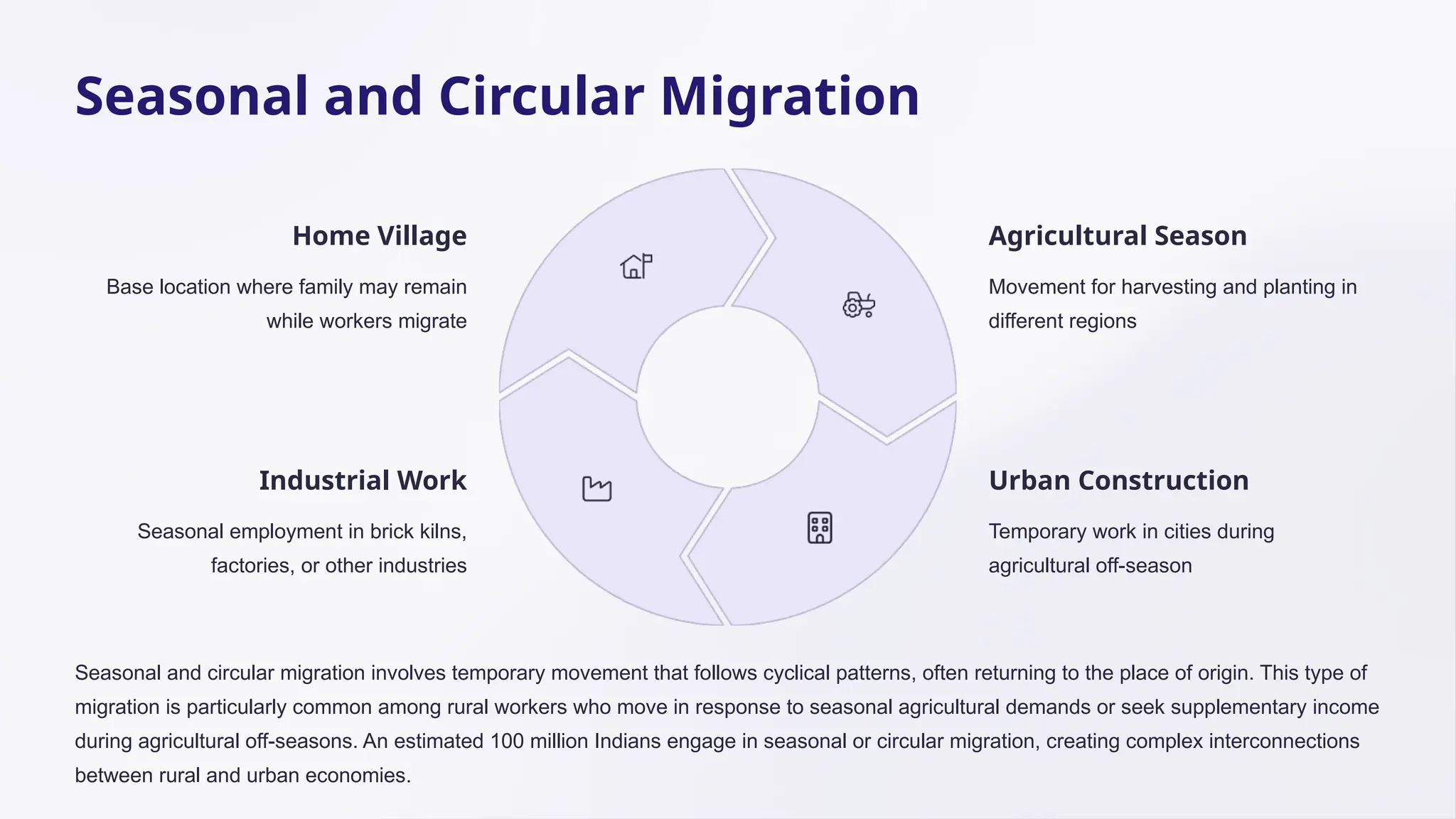
Seasonal and Circular Migration
Home Village
Base location where family may remain
while workers migrate
Agricultural Season
Movement for harvesting and planting in
different regions
Urban Construction
Temporary work in cities during
agricultural off-season
Industrial Work
Seasonal employment in brick kilns,
factories, or other industries
Seasonal and circular migration involves temporary movement that follows cyclical patterns, often returning to the place of origin. This type of
migration is particularly common among rural workers who move in response to seasonal agricultural demands or seek supplementary income
during agricultural off-seasons. An estimated 100 million Indians engage in seasonal or circular migration, creating complex interconnections
between rural and urban economies.
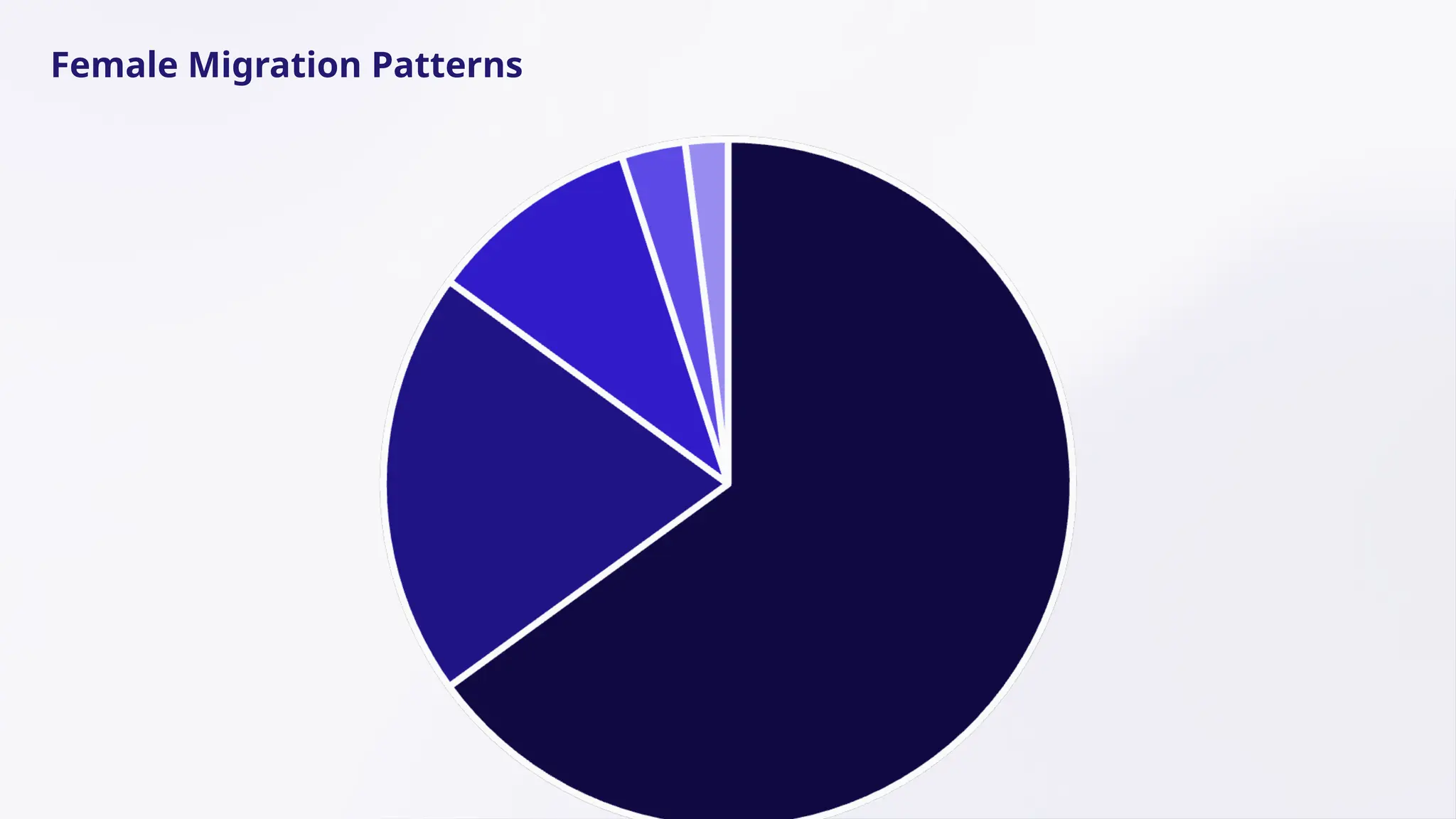
Female Migration Patterns
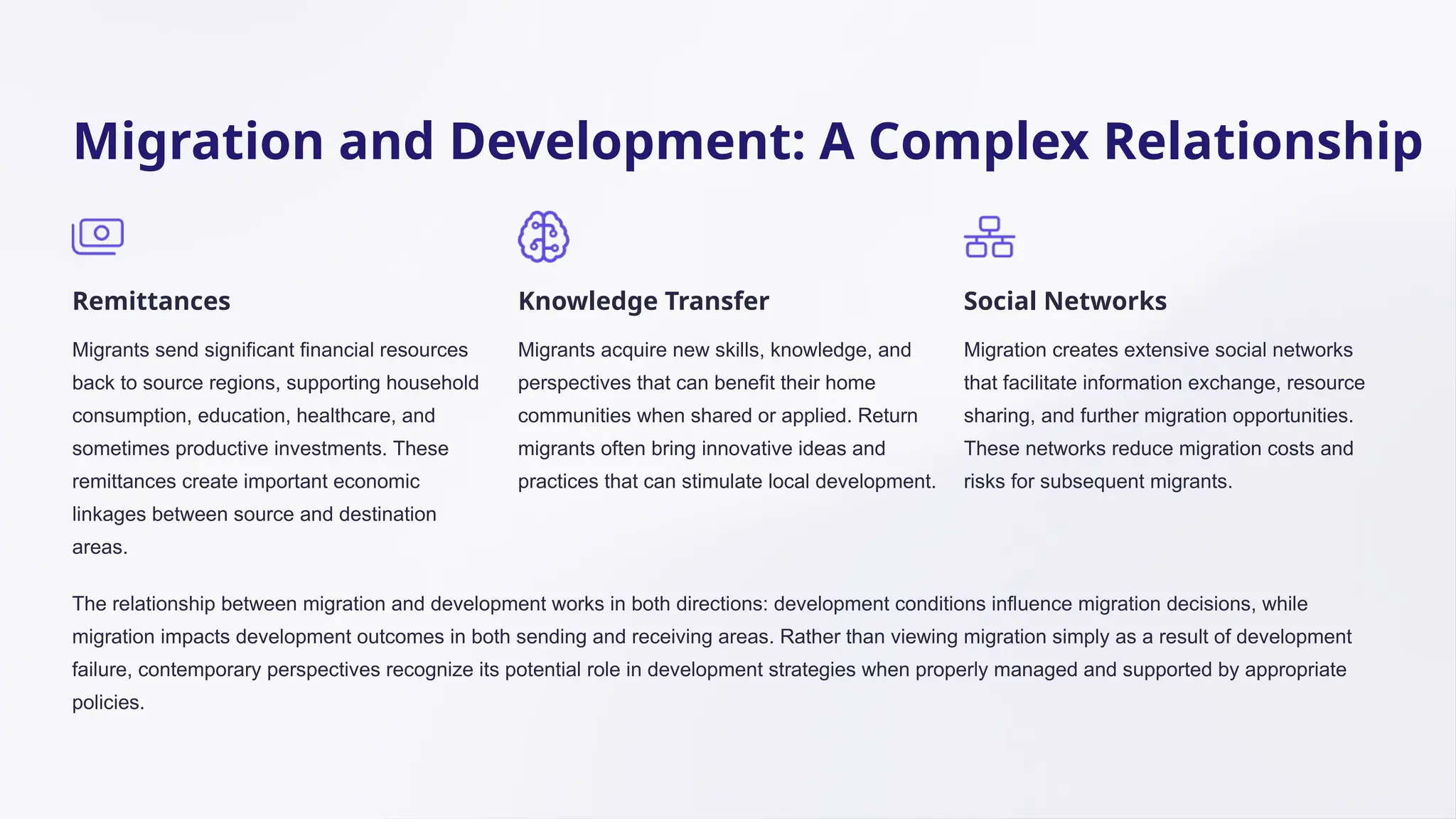
Migration and Development: A Complex Relationship
Remittances
Migrants send significant financial resources
back to source regions, supporting household
consumption, education, healthcare, and
sometimes productive investments. These
remittances create important economic
linkages between source and destination
areas.
Knowledge Transfer
Migrants acquire new skills, knowledge, and
perspectives that can benefit their home
communities when shared or applied. Return
migrants often bring innovative ideas and
practices that can stimulate local development.
Social Networks
Migration creates extensive social networks
that facilitate information exchange, resource
sharing, and further migration opportunities.
These networks reduce migration costs and
risks for subsequent migrants.
The relationship between migration and development works in both directions: development conditions influence migration decisions, while
migration impacts development outcomes in both sending and receiving areas. Rather than viewing migration simply as a result of development
failure, contemporary perspectives recognize its potential role in development strategies when properly managed and supported by appropriate
policies.
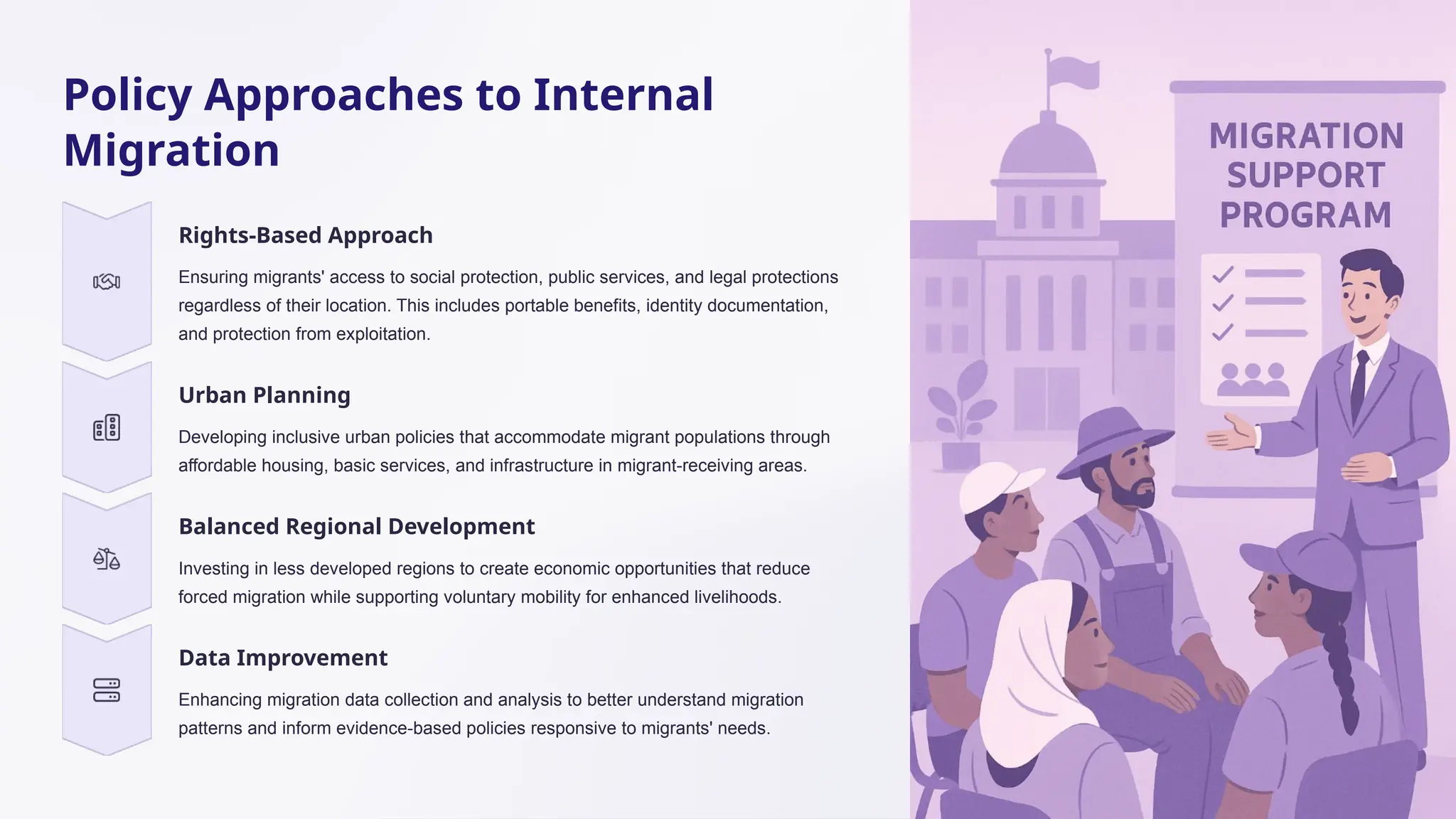
Policy Approaches to Internal
Migration
Rights-Based Approach
Ensuring migrants' access to social protection, public services, and legal protections
regardless of their location. This includes portable benefits, identity documentation,
and protection from exploitation.
Urban Planning
Developing inclusive urban policies that accommodate migrant populations through
affordable housing, basic services, and infrastructure in migrant-receiving areas.
Balanced Regional Development
Investing in less developed regions to create economic opportunities that reduce
forced migration while supporting voluntary mobility for enhanced livelihoods.
Data Improvement
Enhancing migration data collection and analysis to better understand migration
patterns and inform evidence-based policies responsive to migrants' needs.
Understanding Population Change vs. Growth
Population Growth
Population growth refers specifically to the increase in the
number of individuals in a population over a given period. It is
typically expressed in absolute numbers or as a percentage
increase.
Growth focuses solely on quantitative expansion—the net
addition to population size resulting from the excess of births
over deaths (natural increase) plus net migration. A positive
growth rate indicates an expanding population, while a
negative rate indicates a declining population.
Population Change
Population change encompasses all alterations in a
population's characteristics, including but not limited to
numerical growth. It includes changes in distribution,
composition, and structure.
Change incorporates qualitative transformations such as shifts
in age structure, sex ratio, rural-urban distribution, occupational
patterns, educational status, and other demographic
characteristics. A population can undergo significant change
even with minimal growth.
While population growth is a component of population change, the latter is a broader concept that provides a more comprehensive
understanding of demographic dynamics. Analyzing both growth and change is essential for effective planning and policy
development, as each offers distinct insights into population trends and their implications.
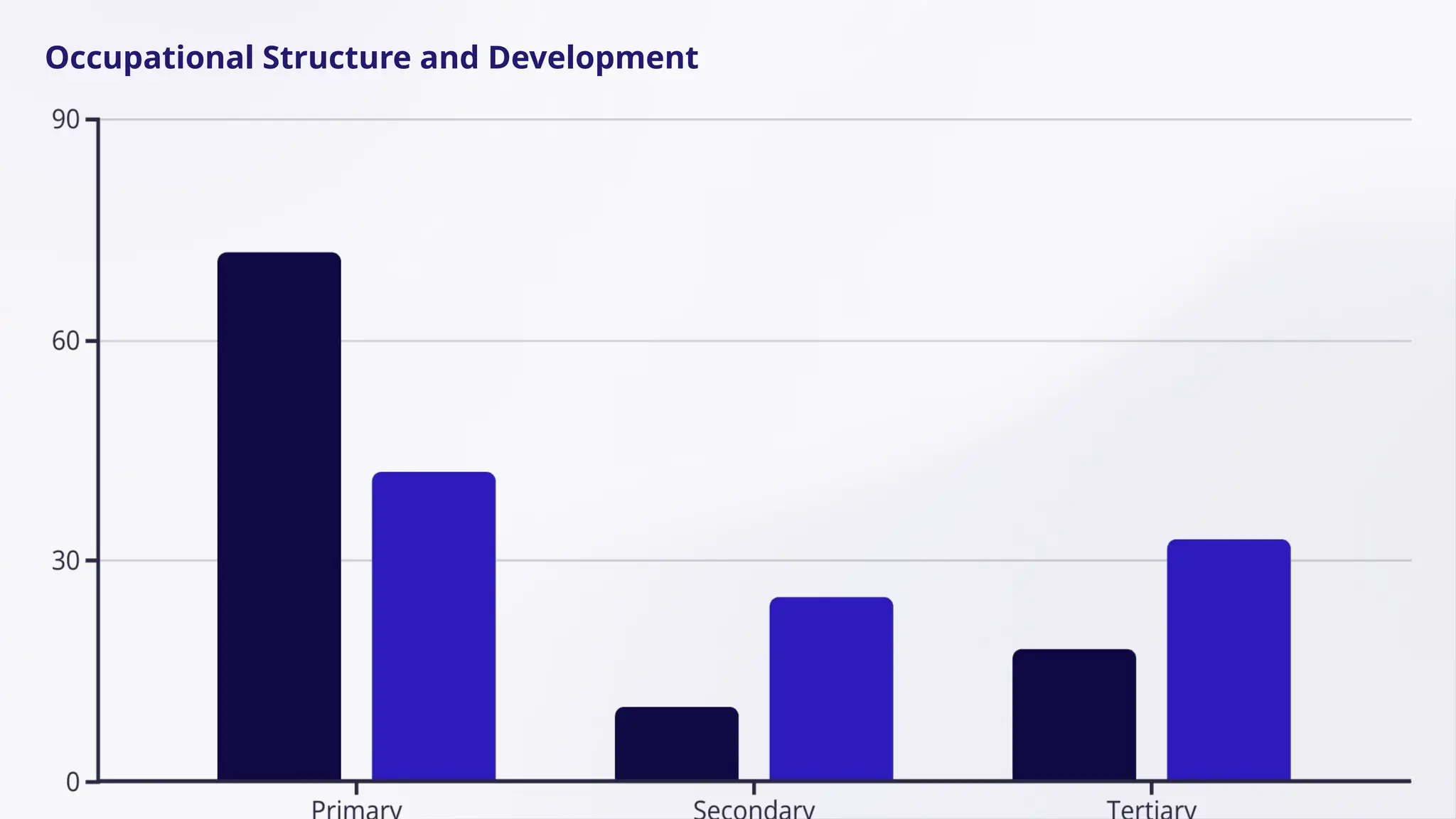
Occupational Structure and Development
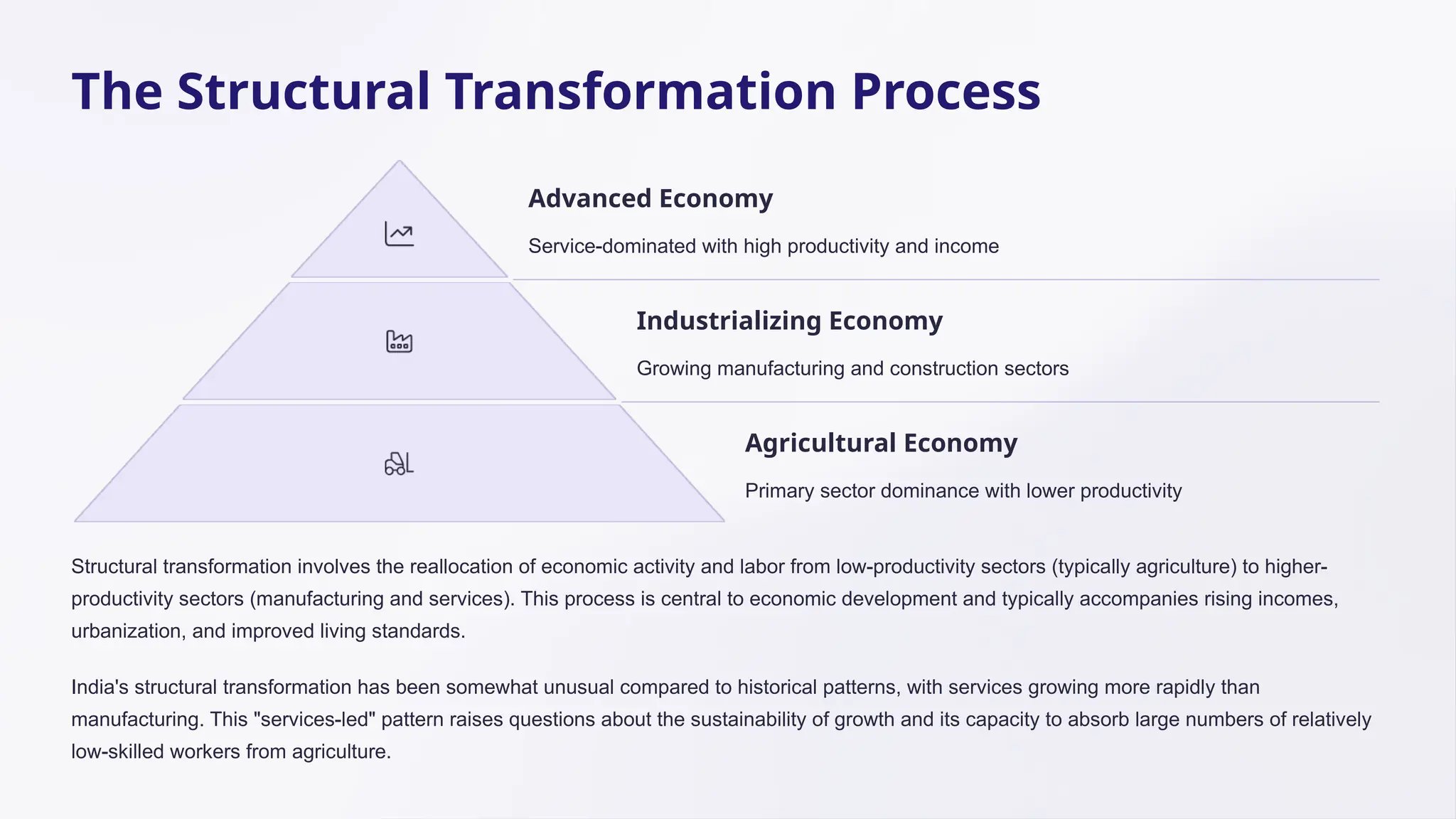
The Structural Transformation Process
Advanced Economy
Service-dominated with high productivity and income
Industrializing Economy
Growing manufacturing and construction sectors
Agricultural Economy
Primary sector dominance with lower productivity
Structural transformation involves the reallocation of economic activity and labor from low-productivity sectors (typically agriculture) to higher-
productivity sectors (manufacturing and services). This process is central to economic development and typically accompanies rising incomes,
urbanization, and improved living standards.
India's structural transformation has been somewhat unusual compared to historical patterns, with services growing more rapidly than
manufacturing. This "services-led" pattern raises questions about the sustainability of growth and its capacity to absorb large numbers of relatively
low-skilled workers from agriculture.
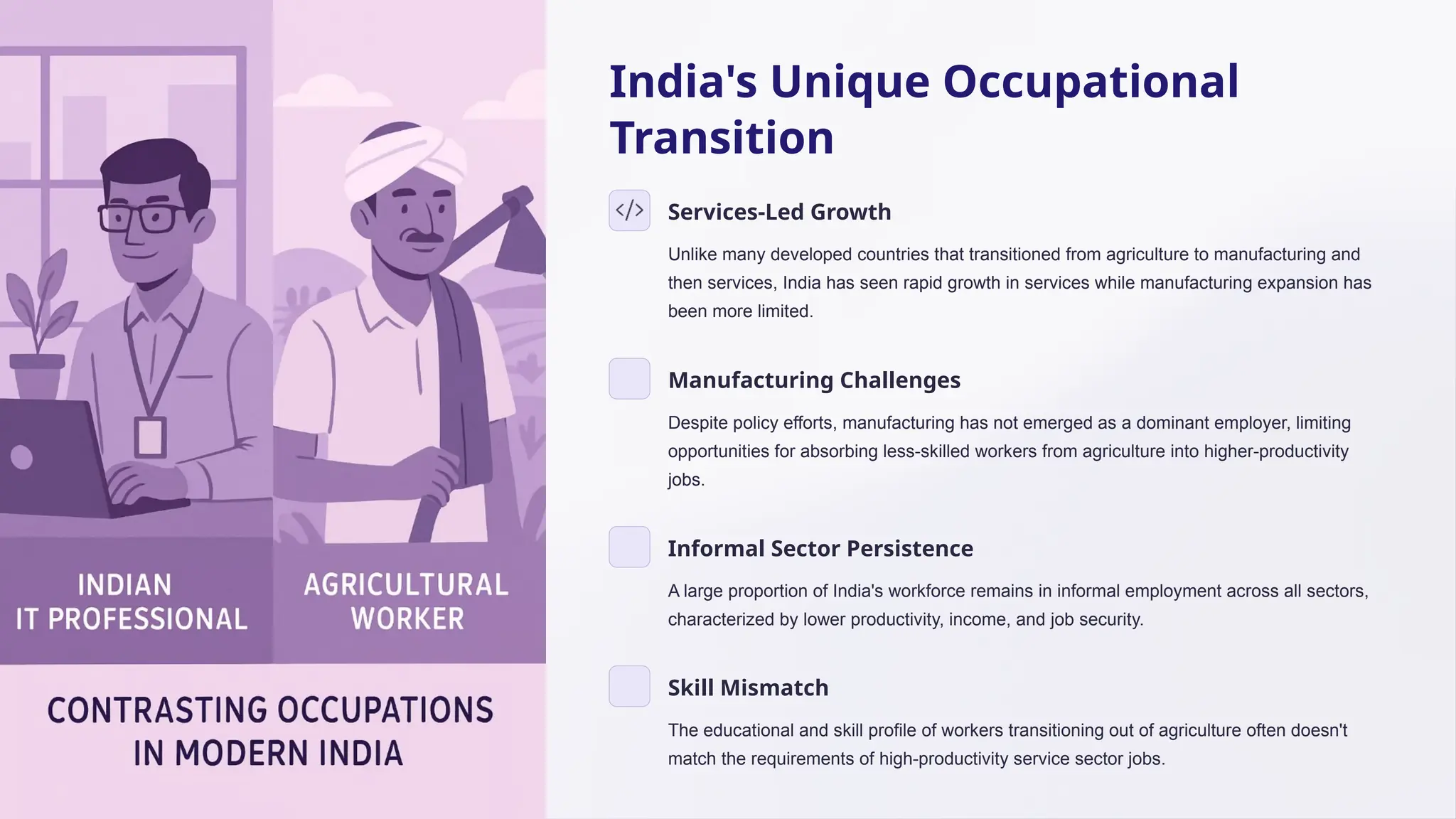
India's Unique Occupational
Transition
Services-Led Growth
Unlike many developed countries that transitioned from agriculture to manufacturing and
then services, India has seen rapid growth in services while manufacturing expansion has
been more limited.
Manufacturing Challenges
Despite policy efforts, manufacturing has not emerged as a dominant employer, limiting
opportunities for absorbing less-skilled workers from agriculture into higher-productivity
jobs.
Informal Sector Persistence
A large proportion of India's workforce remains in informal employment across all sectors,
characterized by lower productivity, income, and job security.
Skill Mismatch
The educational and skill profile of workers transitioning out of agriculture often doesn't
match the requirements of high-productivity service sector jobs.
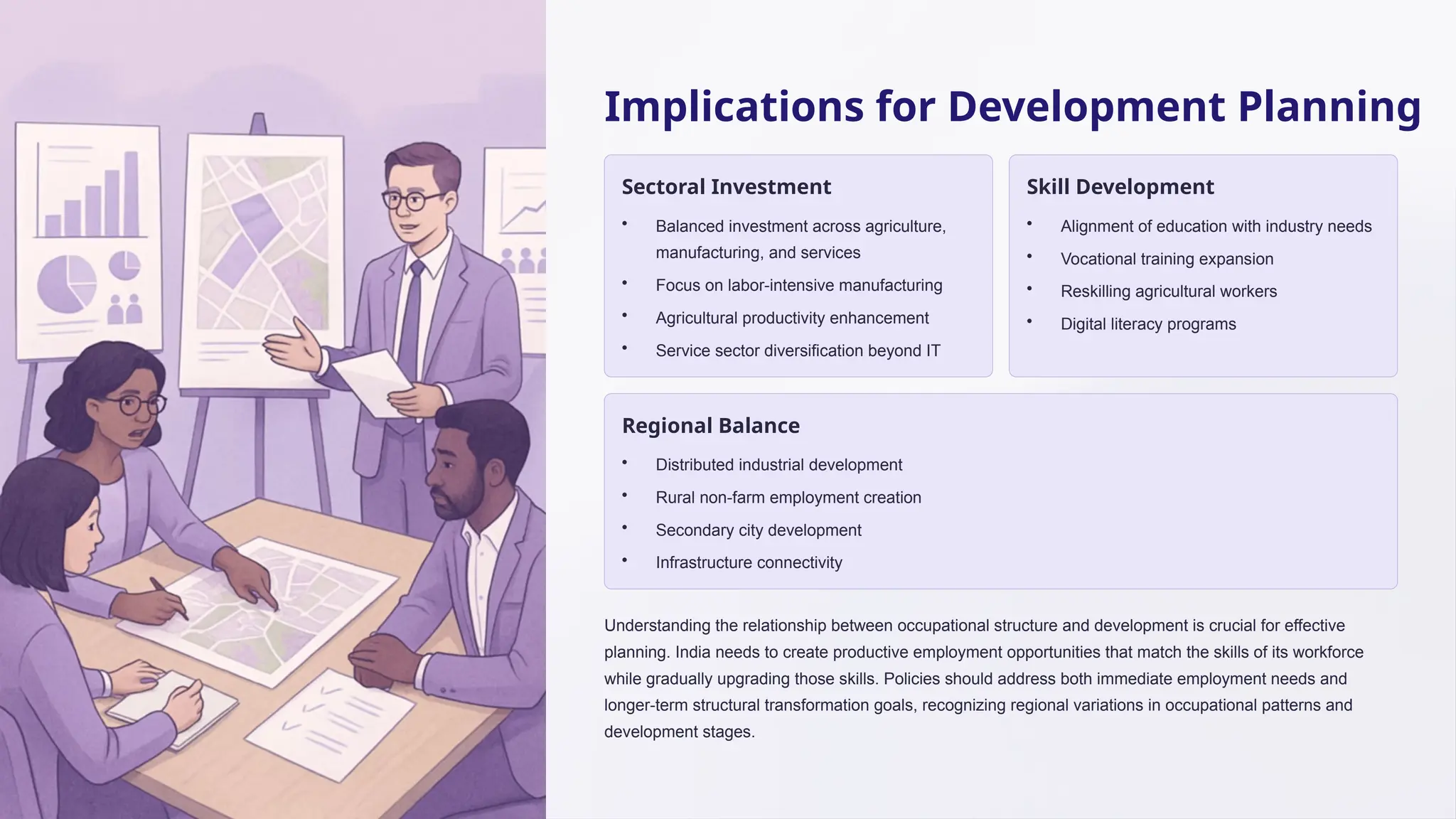
Implications for Development Planning
Sectoral Investment
• Balanced investment across agriculture,
manufacturing, and services
• Focus on labor-intensive manufacturing
• Agricultural productivity enhancement
• Service sector diversification beyond IT
Skill Development
• Alignment of education with industry needs
• Vocational training expansion
• Reskilling agricultural workers
• Digital literacy programs
Regional Balance
• Distributed industrial development
• Rural non-farm employment creation
• Secondary city development
• Infrastructure connectivity
Understanding the relationship between occupational structure and development is crucial for effective
planning. India needs to create productive employment opportunities that match the skills of its workforce
while gradually upgrading those skills. Policies should address both immediate employment needs and
longer-term structural transformation goals, recognizing regional variations in occupational patterns and
development stages.
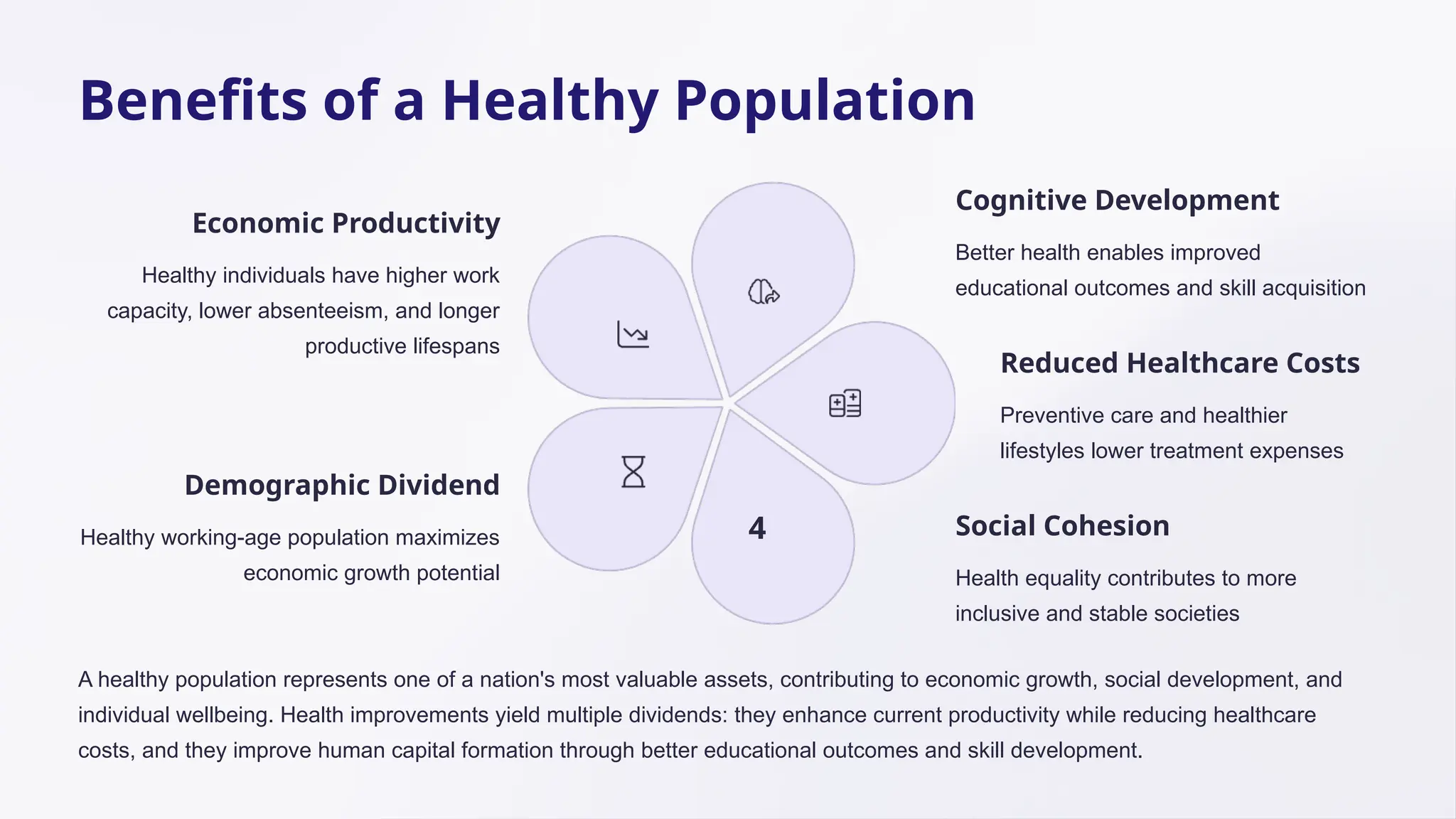
Benefits of a Healthy Population
Economic Productivity
Healthy individuals have higher work
capacity, lower absenteeism, and longer
productive lifespans
Cognitive Development
Better health enables improved
educational outcomes and skill acquisition
Reduced Healthcare Costs
Preventive care and healthier
lifestyles lower treatment expenses
Social Cohesion
Health equality contributes to more
inclusive and stable societies
4
Demographic Dividend
Healthy working-age population maximizes
economic growth potential
A healthy population represents one of a nation's most valuable assets, contributing to economic growth, social development, and
individual wellbeing. Health improvements yield multiple dividends: they enhance current productivity while reducing healthcare
costs, and they improve human capital formation through better educational outcomes and skill development.
Health and Economic Development
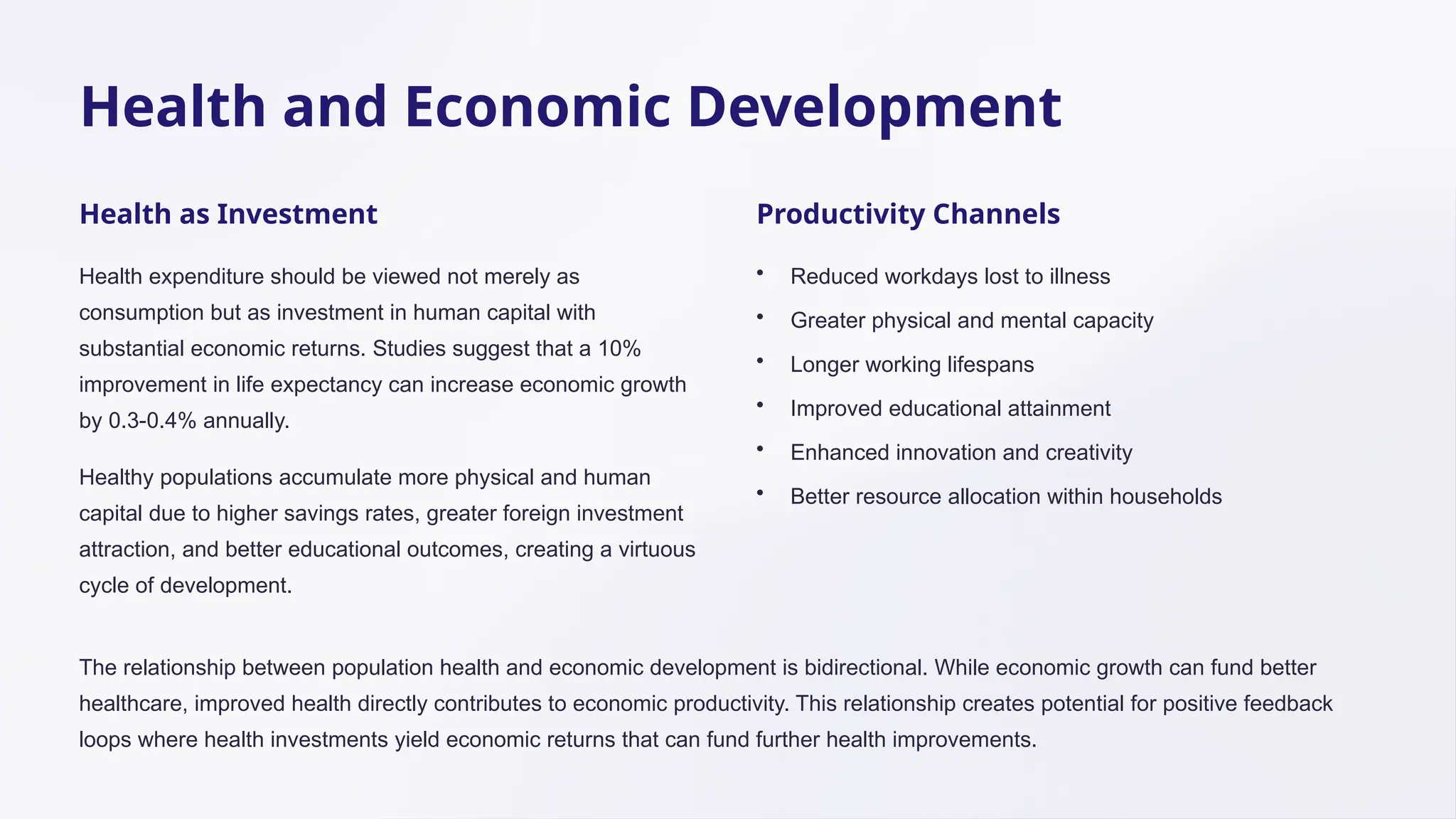
Health as Investment
Health expenditure should be viewed not merely as
consumption but as investment in human capital with
substantial economic returns. Studies suggest that a 10%
improvement in life expectancy can increase economic growth
by 0.3-0.4% annually.
Healthy populations accumulate more physical and human
capital due to higher savings rates, greater foreign investment
attraction, and better educational outcomes, creating a virtuous
cycle of development.
Productivity Channels
• Reduced workdays lost to illness
• Greater physical and mental capacity
• Longer working lifespans
• Improved educational attainment
• Enhanced innovation and creativity
• Better resource allocation within households
The relationship between population health and economic development is bidirectional. While economic growth can fund better
healthcare, improved health directly contributes to economic productivity. This relationship creates potential for positive feedback
loops where health investments yield economic returns that can fund further health improvements.
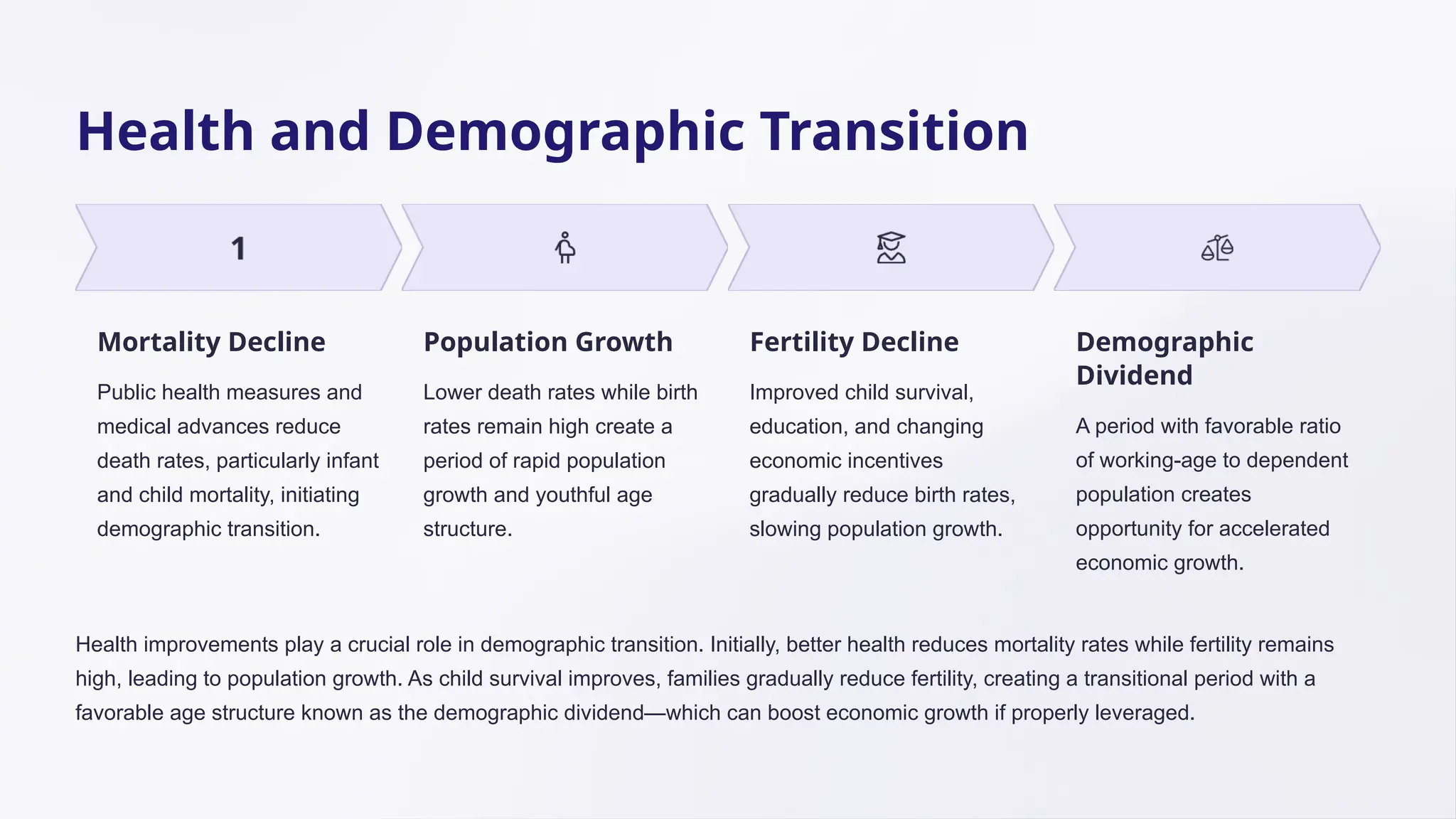
Health and Demographic Transition
Mortality Decline
Public health measures and
medical advances reduce
death rates, particularly infant
and child mortality, initiating
demographic transition.
Population Growth
Lower death rates while birth
rates remain high create a
period of rapid population
growth and youthful age
structure.
Fertility Decline
Improved child survival,
education, and changing
economic incentives
gradually reduce birth rates,
slowing population growth.
Demographic
Dividend
A period with favorable ratio
of working-age to dependent
population creates
opportunity for accelerated
economic growth.
Health improvements play a crucial role in demographic transition. Initially, better health reduces mortality rates while fertility remains
high, leading to population growth. As child survival improves, families gradually reduce fertility, creating a transitional period with a
favorable age structure known as the demographic dividend—which can boost economic growth if properly leveraged.
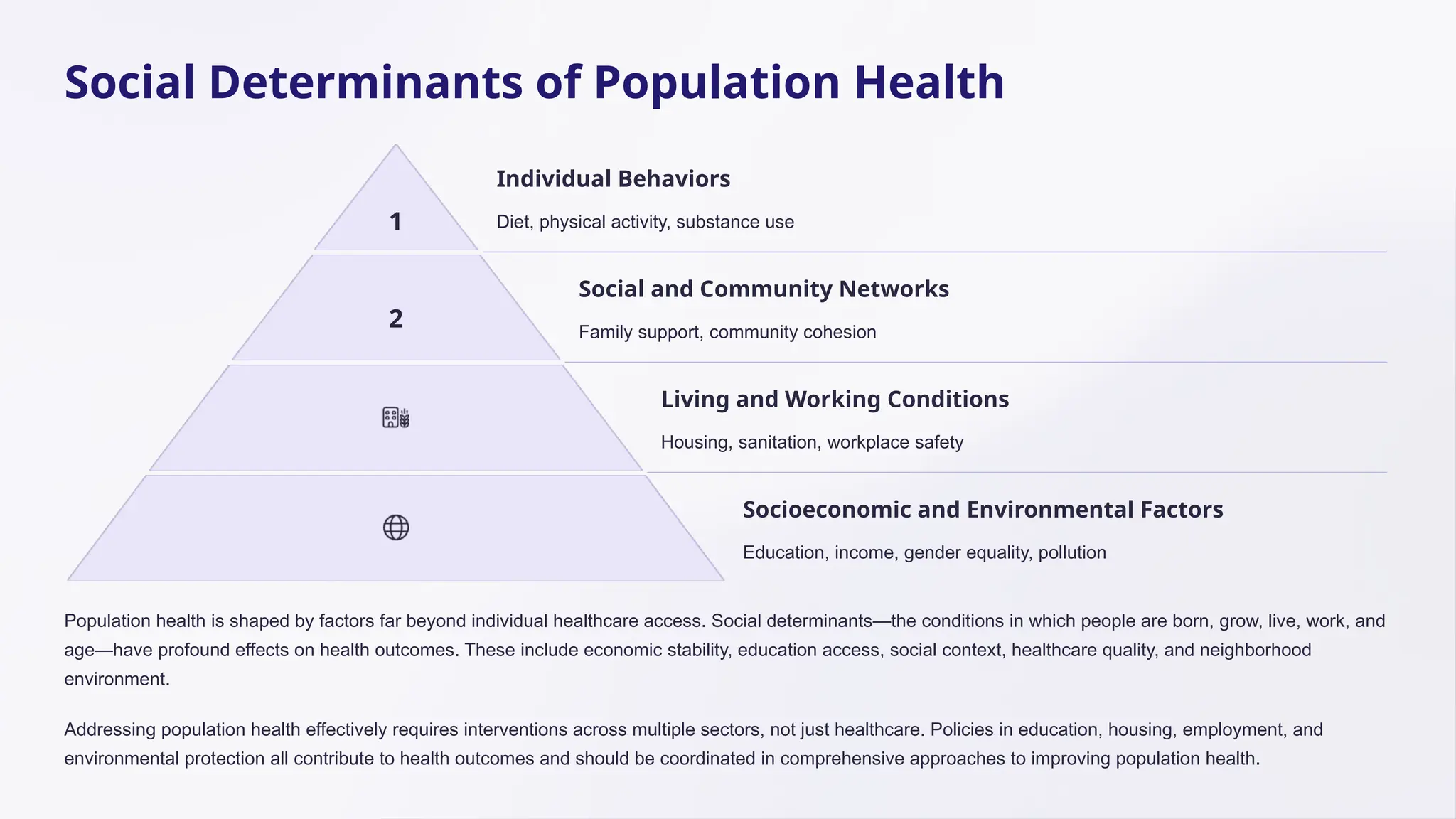
Social Determinants of Population Health
1
Individual Behaviors
Diet, physical activity, substance use
2
Social and Community Networks
Family support, community cohesion
Living and Working Conditions
Housing, sanitation, workplace safety
Socioeconomic and Environmental Factors
Education, income, gender equality, pollution
Population health is shaped by factors far beyond individual healthcare access. Social determinants—the conditions in which people are born, grow, live, work, and
age—have profound effects on health outcomes. These include economic stability, education access, social context, healthcare quality, and neighborhood
environment.
Addressing population health effectively requires interventions across multiple sectors, not just healthcare. Policies in education, housing, employment, and
environmental protection all contribute to health outcomes and should be coordinated in comprehensive approaches to improving population health.
Health Equity and Population Development
Equitable Access
Health equity ensures all population segments have fair
opportunities to achieve their full health potential
regardless of social, economic, or geographic
circumstances.
Reduced Disparities
Addressing health inequities between regions, income
groups, genders, and social categories enhances overall
population health and wellbeing outcomes.
Inclusive Development
Health equity contributes to more inclusive economic
growth by enabling broader participation in productive
activities across all population groups.
Sustainable Progress
Reducing health inequities creates more sustainable
development by preventing the concentration of health
burdens among disadvantaged groups.
In India, significant health disparities exist across states, between rural and urban areas, and among different socioeconomic
groups. Addressing these inequities is essential not only for ethical reasons but also for maximizing the development benefits of a
healthy population. Health equity ensures that all segments of society can contribute to and benefit from economic and social
progress.
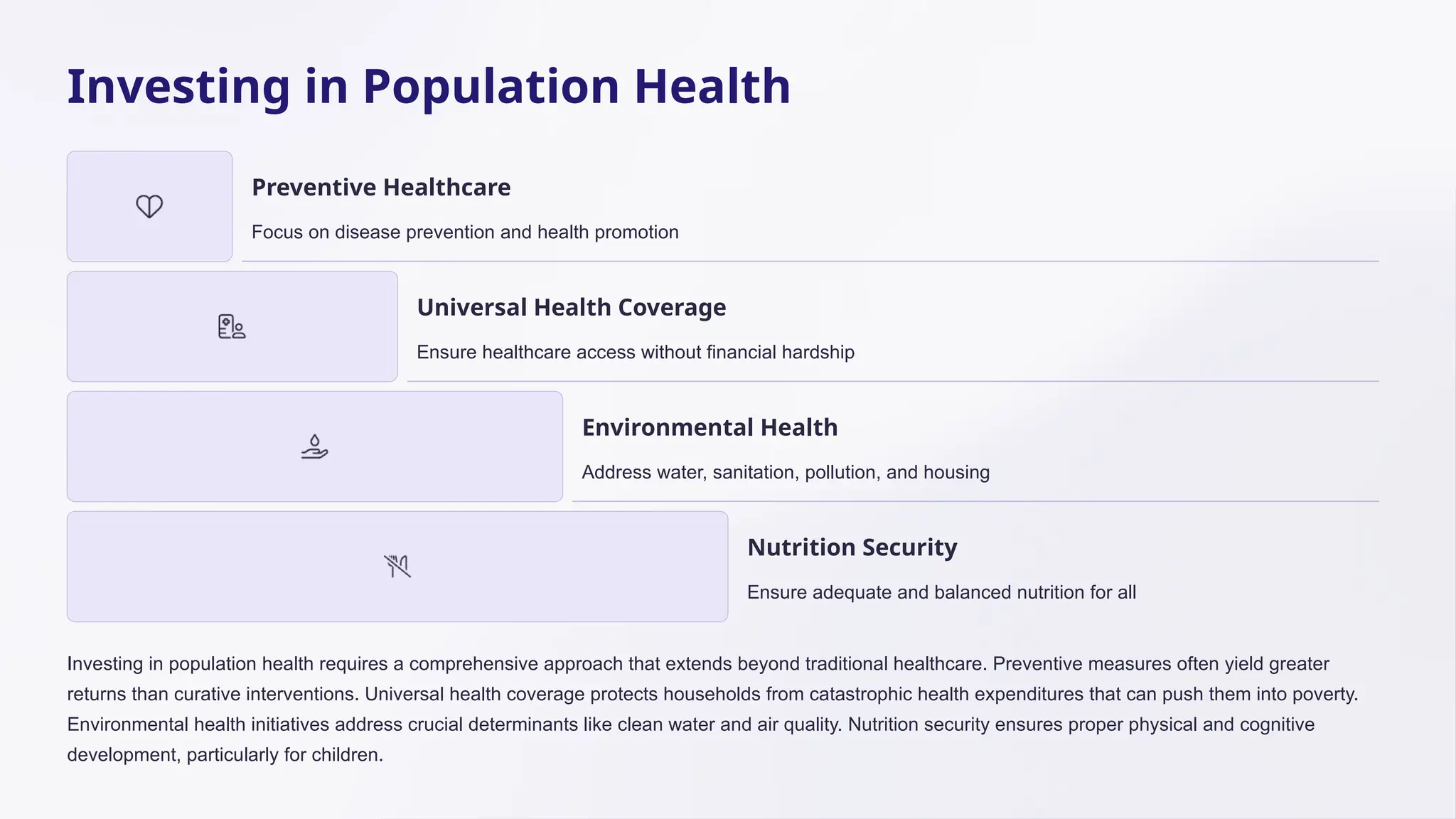
Investing in Population Health
Preventive Healthcare
Focus on disease prevention and health promotion
Universal Health Coverage
Ensure healthcare access without financial hardship
Environmental Health
Address water, sanitation, pollution, and housing
Nutrition Security
Ensure adequate and balanced nutrition for all
Investing in population health requires a comprehensive approach that extends beyond traditional healthcare. Preventive measures often yield greater
returns than curative interventions. Universal health coverage protects households from catastrophic health expenditures that can push them into poverty.
Environmental health initiatives address crucial determinants like clean water and air quality. Nutrition security ensures proper physical and cognitive
development, particularly for children.
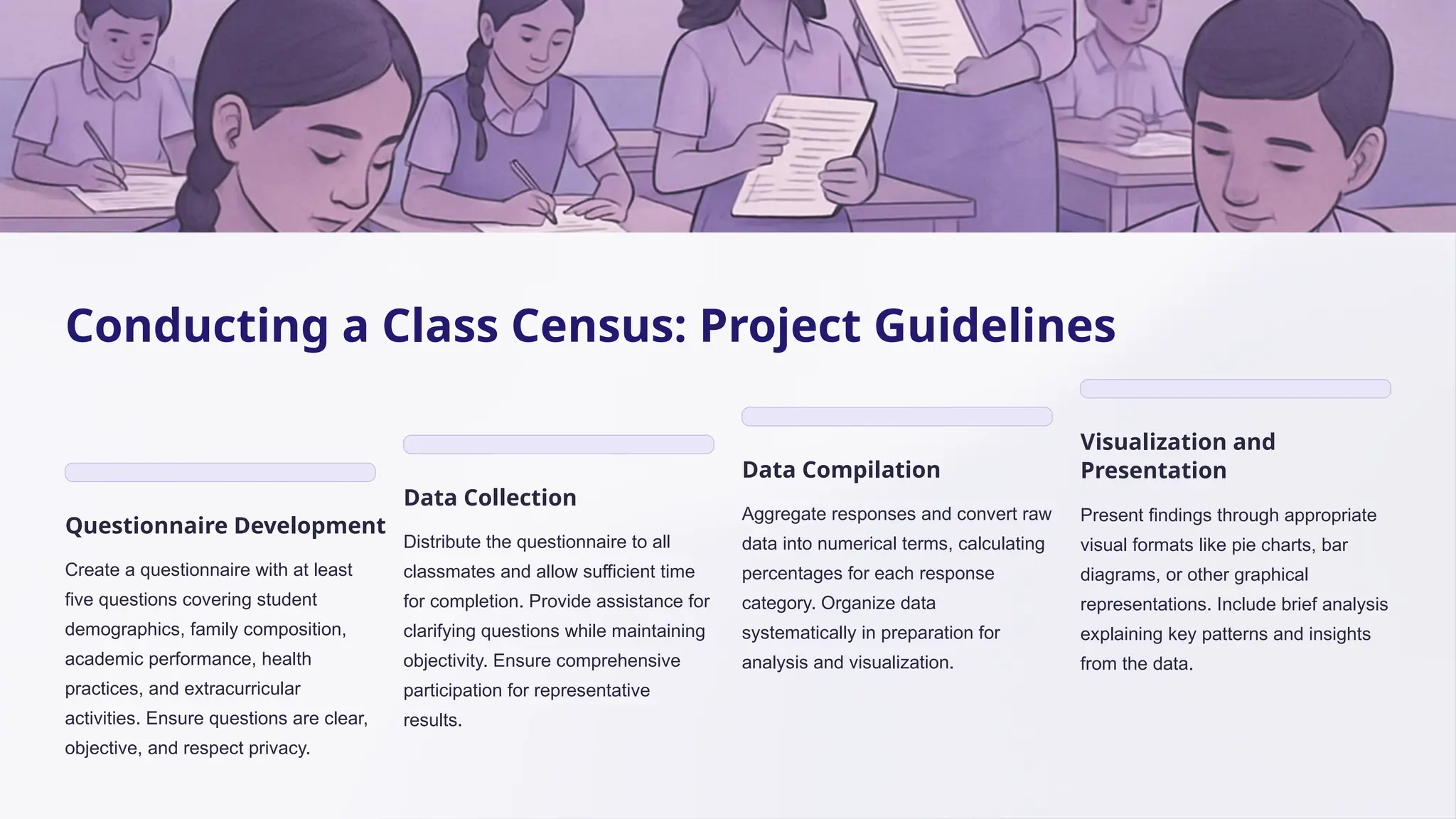
Conducting a Class Census: Project Guidelines
Questionnaire Development
Create a questionnaire with at least
five questions covering student
demographics, family composition,
academic performance, health
practices, and extracurricular
activities. Ensure questions are clear,
objective, and respect privacy.
Data Collection
Distribute the questionnaire to all
classmates and allow sufficient time
for completion. Provide assistance for
clarifying questions while maintaining
objectivity. Ensure comprehensive
participation for representative
results.
Data Compilation
Aggregate responses and convert raw
data into numerical terms, calculating
percentages for each response
category. Organize data
systematically in preparation for
analysis and visualization.
Visualization and
Presentation
Present findings through appropriate
visual formats like pie charts, bar
diagrams, or other graphical
representations. Include brief analysis
explaining key patterns and insights
from the data.
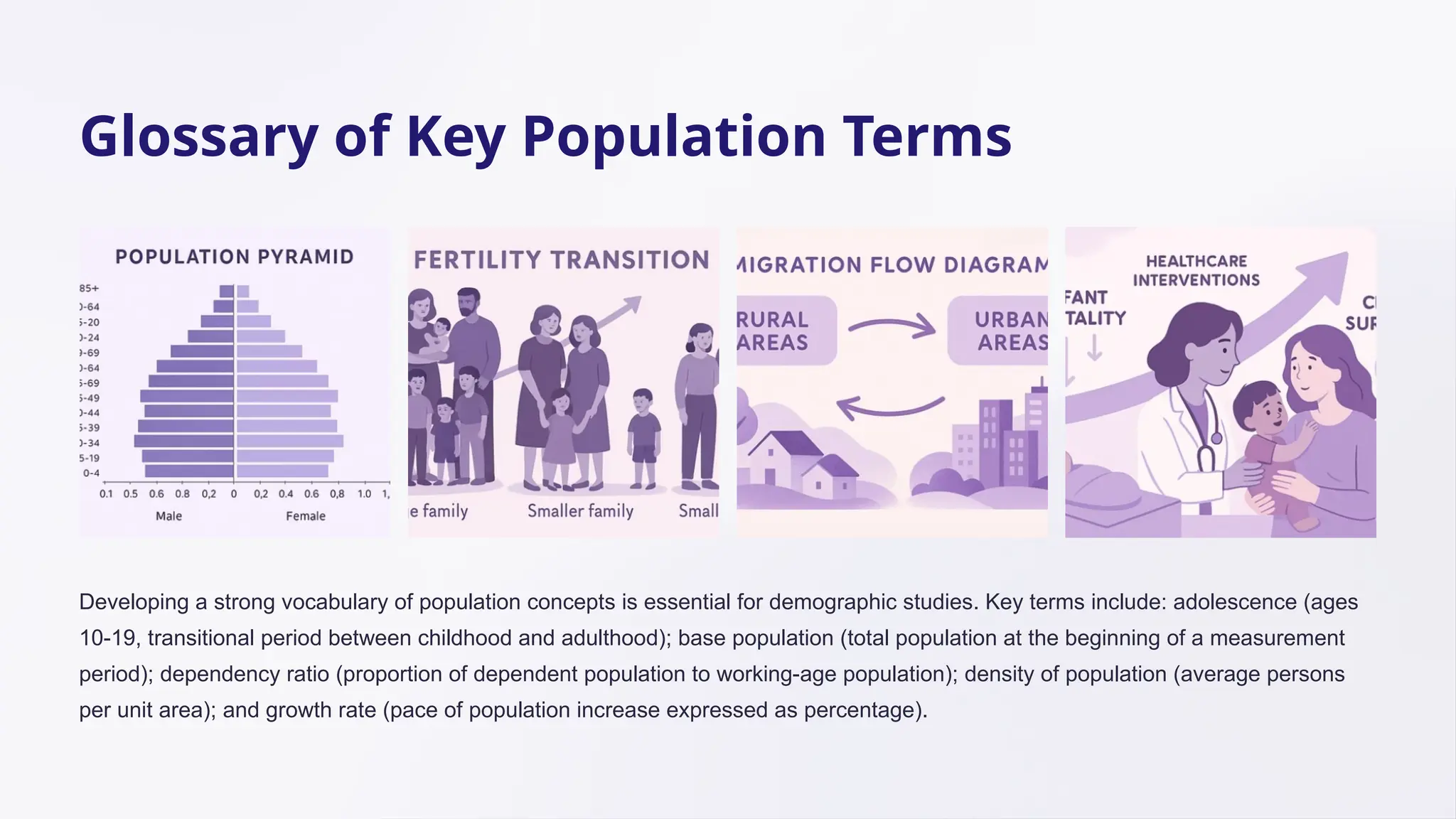
Glossary of Key Population Terms
Developing a strong vocabulary of population concepts is essential for demographic studies. Key terms include: adolescence (ages
10-19, transitional period between childhood and adulthood); base population (total population at the beginning of a measurement
period); dependency ratio (proportion of dependent population to working-age population); density of population (average persons
per unit area); and growth rate (pace of population increase expressed as percentage).
Extended Population Glossary
Demographic Terms
Birth rate: Live births per 1,000
population annually
Death rate: Deaths per 1,000
population annually
Life expectancy: Average years one is
expected to live
Sex ratio: Number of females per 1,000
males
Literacy: Ability to read and write with
understanding at age 7+
Migration Terms
Immigration: Movement into a
country/region
Emigration: Movement out of a
country/region
Internal migration: Movement within
national boundaries
Net migration: Difference between in-
migration and out-migration
Geographic Terms
Alluvial plain: Land made of fine
materials deposited by rivers
Biome: Plant communities in areas with
similar climatic conditions
Ecosystem: Physical environment and
its organisms
Relief: Differences in elevation of land
surface
Population Studies: Beyond the Numbers
Human Dimension
Population studies
ultimately concern
people—their lives,
challenges, aspirations,
and potential. Beyond
statistics, demographics
reveal human stories
and social patterns.
Environmental
Interface
Population dynamics
fundamentally shape
how humans interact
with their environment,
affecting resource
utilization, settlement
patterns, and ecological
impacts.
Development
Context
Understanding
population trends is
essential for sustainable
development planning,
as people are both the
agents and beneficiaries
of development
processes.
Future
Possibilities
Population studies help
us anticipate future
needs and opportunities,
enabling proactive rather
than reactive
approaches to
demographic change.
As we conclude our exploration of population studies, we recognize that demography is not merely about counting people but understanding
the complex interplay of social, economic, cultural, and environmental factors that shape human lives. Population is indeed the pivotal element
in social studies—the lens through which we can better comprehend our collective past, present, and future.
CLASS-IX GEOGRAPHY PPT CHAPTER-6 Population.pptx

  • 1.
    Population Studies: The HumanDimension of Geography Population forms the cornerstone of social studies, serving as the pivotal element through which all other geographical phenomena derive meaning. This presentation explores the intricate dynamics of population in India— examining its size, distribution, growth patterns, and characteristics. Understanding population is essential because humans are both producers and consumers of Earth's resources. Our study will delve into census data, demographic trends, and the various factors that influence population change across the Indian subcontinent. Through this exploration, we'll gain insights into how population shapes and is shaped by social, economic, and environmental factors.
  • 2.
    Population: The Heartof Social Studies Humans as Resources People themselves are resources with varying qualities and capabilities. Human ingenuity transforms natural materials into valuable resources through technology and innovation. Creators of Value Coal remains merely a piece of rock until human knowledge and technology transform it into a valuable resource. Human intervention is what gives meaning to natural elements. Context for Disasters Natural events like floods or tsunamis become "disasters" only when they affect populated areas. The impact of environmental phenomena is measured through their effect on human settlements.
  • 3.
    The Significance ofPopulation Studies Reference Point Population serves as the point of reference from which all other geographical elements are observed and derive their significance. Resources, calamities, and disasters have meaning only in relation to human beings. The study of population provides the essential backdrop for understanding environmental interactions and resource utilization patterns. Key Demographic Questions • How many people live in a country? • Where do they live and why? • How are their numbers changing? • What are their characteristics? Answering these questions allows us to understand population dynamics and their implications for resource management and development planning.
  • 4.
    The Indian Census:A Demographic Treasure First Census (1872) India's first attempt at population counting, though not considered complete by modern standards. First Complete Census (1881) Marked the beginning of systematic decennial population counting in India, establishing a tradition that continues to this day. Regular Decennial Censuses Since 1881, censuses have been conducted every tenth year, providing consistent longitudinal data on population trends. Comprehensive Data Source The Indian Census has evolved into the most comprehensive source of demographic, social, and economic data in the country.
  • 5.
    India's Population inGlobal Context
  • 6.
    India's Population Size:The Numbers 1.21B Total Population (2011) India's population according to the 2011 Census 17% Global Share Percentage of world population in India 2.4% Land Area India's share of global land area 382 Population Density People per square kilometer (2011) India's demographic weight continues to grow, with implications for resource distribution, economic development, and environmental sustainability. The stark contrast between India's share of global population and its share of global land area highlights the population pressure on resources.
  • 7.
    Population Distribution AmongStates 1 Uttar Pradesh 199 million (16% of India's population)
  • 8.
  • 9.
    Factors Affecting Population Distribution PhysicalFactors • Terrain and topography • Climate and rainfall patterns • Soil fertility and water availability • Natural resources distribution Socio-Economic Factors • Historical settlement patterns • Economic opportunities • Infrastructure development • Government policies Cultural Factors • Traditional attachment to land • Religious and cultural centers • Community networks • Linguistic boundaries
  • 10.
    Regional Patterns ofPopulation Density
  • 11.
    Activity: Mapping State PopulationDensities Identify Low-Density States Find states with population densities below 250 persons per square km on the map. Consider factors like rugged terrain, unfavorable climate, and accessibility. Analyze Geographic Features Examine how hilly terrain, rocky landscapes, and moderate to low rainfall influence settlement patterns in peninsular states. Locate High-Density Northern States Identify the three states in the Northern Plains with the highest population densities and analyze their geographical advantages.
  • 12.
    Population as aDynamic Phenomenon Births Addition of new individuals through reproduction, measured as birth rate (live births per 1,000 population) Deaths Reduction in population through mortality, measured as death rate (deaths per 1,000 population) Migration Movement of people across regions and territories, both internal and international Population Change The net result of births, deaths, and migration, producing continuous demographic shifts Population is not static but constantly changing in numbers, distribution, and composition. The continuous interaction of births, deaths, and migrations creates a dynamic demographic landscape that shapes social and economic structures.
  • 13.
    Understanding Population Growth 1Definition of Growth Population growth refers to the change in the number of inhabitants of a country or territory during a specific period, typically measured over decades in census data or annually in estimates. 2 Absolute Growth The magnitude of increase measured in absolute numbers added during a specific period. Calculated by subtracting the earlier population (e.g., 2001) from the later population (e.g., 2011). 3 Growth Rate The pace of population increase expressed as a percentage change per year. A growth rate of 2% means that in a given year, there was an increase of two persons for every 100 persons in the base population. 4 Implications of Growth Understanding both absolute growth and growth rates is essential for planning infrastructure, resource allocation, and social services to meet population needs.
  • 14.
  • 15.
    Growth Rates: TheChanging Pace
  • 16.
    The Paradox ofDeclining Rates and Increasing Numbers Declining Growth Rate Annual growth percentage has fallen from 2.22% to 1.64% Increasing Absolute Numbers Each decade adds 180+ million people despite lower rates Base Population Effect Lower rates applied to larger population still yield massive growth Despite the declining growth rate, the absolute number of people added each decade remains enormous. This paradox occurs because the lower growth rate applies to an increasingly larger base population. When more than a billion people increase even at a rate of 1.64%, the absolute addition is substantial—181.46 million people were added between 2001 and 2011 alone.
  • 17.
    Birth Rate: AKey Component of Growth Definition Birth rate refers to the number of live births per thousand persons in a year, a vital demographic indicator reflecting fertility patterns in a population. Historical Trend India has historically maintained high birth rates, though they have been declining gradually since the 1980s due to improved education, urbanization, and family planning. Growth Component Birth rate is a major component of population growth because in India, birth rates have consistently exceeded death rates, creating a substantial natural increase in population. The birth rate reflects complex social, economic, and cultural factors including age at marriage, use of contraception, educational levels (especially female education), economic status, and cultural preferences regarding family size. Government policies have increasingly focused on lowering birth rates through voluntary family planning.
  • 18.
    Death Rate: TheDeclining Trend
  • 19.
    Factors Driving theDecline in Death Rates Medical Advances • Introduction of antibiotics and vaccines • Improved surgical techniques • Modern diagnostic capabilities • Better maternal and infant care Public Health Initiatives • Mass immunization programs • Vector control for malaria and other diseases • Improved sanitation and clean water access • Health education campaigns Socioeconomic Improvements • Rising living standards • Better nutrition and food security • Expanded healthcare infrastructure • Greater awareness of health issues The rapid decline in death rates preceding the more gradual decline in birth rates created the demographic gap that fueled India's population explosion in the mid-to-late 20th century. This pattern follows the classic demographic transition model observed in many developing countries.
  • 20.
    Birth Rates vs.Death Rates: The Natural Increase Natural Increase Defined The natural increase of population is the difference between birth rates and death rates, representing the growth that occurs from reproduction alone, without accounting for migration. When birth rates exceed death rates, a population experiences natural growth. The wider the gap between the two rates, the faster the natural increase. India's Demographic Transition India has been going through the demographic transition where death rates declined rapidly first, followed by a more gradual decline in birth rates. This created a substantial gap between the two rates. In the 1950s-70s, death rates fell dramatically while birth rates remained high, creating a period of rapid population growth. Since the 1980s, birth rates have also begun declining, gradually narrowing the gap. The relationship between birth and death rates explains the fundamental dynamics of India's population growth. As the gap between these rates narrows, the rate of natural increase slows, though absolute numbers continue to grow due to the large base population and population momentum.
  • 21.
    Factors Influencing BirthRate Decline Education Especially female education and literacy Urbanization Urban living conditions and changing social norms Economic Development Rising incomes and living standards Healthcare Access Family planning services and contraception Social Transformation Changing attitudes toward family size and children The gradual decline in India's birth rate since the 1980s reflects complex social and economic transformations. Research consistently shows that female education is one of the strongest predictors of reduced fertility. As women gain more education and economic opportunities, they tend to marry later and have fewer children. Urbanization also plays a significant role as urban families face different economic pressures and typically prefer smaller families.
  • 22.
    Migration: The ThirdComponent of Population Change Definition Migration is the movement of people across regions and territories, either within a country (internal migration) or between countries (international migration). Impact on Population Size Internal migration redistributes population within national boundaries but doesn't change the total national population. International migration affects total population size through immigration (inflow) and emigration (outflow). Demographic Effects Migration significantly influences population composition and distribution, often altering age and sex ratios in both source and destination areas, as migrants tend to have specific demographic profiles. Socioeconomic Impact Migration shapes labor markets, housing demand, infrastructure needs, and cultural dynamics in both sending and receiving regions.
  • 23.
    Internal Migration inIndia: Push and Pull Factors "Push" Factors from Rural Areas • Limited employment opportunities • Low agricultural productivity • Land fragmentation and landlessness • Poor educational and healthcare facilities • Natural disasters and environmental degradation • Caste-based discrimination "Pull" Factors to Urban Areas • Better employment prospects • Higher wages and incomes • Superior educational opportunities • Improved healthcare access • Better amenities and infrastructure • Greater social mobility In India, most migration has been from rural to urban areas due to the combination of "push" factors driving people away from villages and "pull" factors attracting them to cities. This rural-urban migration has significantly contributed to urbanization trends, with cities growing not just through natural increase but also through the influx of migrants seeking better opportunities and living conditions.
  • 24.
    Tracing Migration Patterns TraceAncestral Movement Begin by mapping your grandparents' birthplaces and subsequent movements throughout their lives. Note locations, approximate dates, and duration of stay in each place. Document Parental Migration Continue with your parents' migration history, including their birthplaces and all subsequent relocations. Compare their patterns with those of your grandparents to identify generational differences. Analyze Migration Motivations For each move, investigate and record the primary reasons—whether economic opportunities, education, marriage, family reunification, political circumstances, or environmental factors. Identify Historical Context Connect family migration patterns to broader historical events like Partition, economic reforms, infrastructure development, or educational expansion that may have influenced movement decisions.
  • 25.
    Impact of Migrationon Population Composition Gender Composition Male-dominated migration creates skewed sex ratios in both source (more females) and destination (more males) areas. This affects marriage patterns, family structures, and women's roles in both regions. Age Structure Migration is typically dominated by young adults (15-30 years), leading to a concentration of working-age population in destination areas and leaving source areas with higher proportions of children and elderly. Economic Profile Selective migration of skilled or educated individuals can create "brain drain" from source regions while enhancing human capital in destination areas, affecting development potential. Migration significantly alters population composition in both sending and receiving areas. These demographic changes have profound implications for labor markets, dependency ratios, social services, and economic development. Understanding these patterns is crucial for effective planning and policy formulation at regional and national levels.
  • 26.
  • 27.
    The Rise ofMillion-Plus Cities 35 Million-Plus Cities in 2001 Urban centers with population exceeding one million 53 Million-Plus Cities in 2011 Significant increase in just one decade 59 Million-Plus Cities in 2023 Continuing growth of major urban centers 7 Megacities (10M+) Delhi, Mumbai, Kolkata, Bengaluru, Chennai, Hyderabad, Ahmedabad One of the most striking features of India's urbanization has been the rapid growth in the number of million-plus cities—urban agglomerations with populations exceeding one million. These large urban centers face unique challenges in terms of housing, transportation, water supply, waste management, and social services.
  • 28.
    Urban Challenges fromRural-Urban Migration Housing Shortage Insufficient affordable housing leading to slum proliferation and informal settlements Infrastructure Strain Overloaded water supply, sewage, electricity, and transportation systems Employment Issues Informal sector growth and unemployment due to skill mismatches Environmental Degradation Air and water pollution, solid waste management problems Social Integration Challenges in assimilating migrants from diverse cultural backgrounds The rapid influx of rural migrants to urban areas has created significant challenges for Indian cities. Many urban areas have struggled to provide adequate infrastructure, housing, and services for growing populations. These challenges require innovative urban planning approaches and substantial investments in sustainable urban development.
  • 29.
    Migration and RegionalDevelopment Disparities Source Regions: Development Challenges Areas with high outmigration often face developmental challenges that can be exacerbated by the departure of working-age individuals. These regions may experience: • Depleted human capital and workforce • Aging population and higher dependency ratios • Reduced entrepreneurship and investment • Diminished tax base for local infrastructure Destination Regions: Growth Opportunities Areas receiving migrants often benefit from population influx, though not without challenges. These regions typically experience: • Expanded labor force and consumer markets • Enhanced human capital and skills diversity • Increased entrepreneurship and innovation • Greater cultural diversity and dynamism Migration both reflects and reinforces regional development disparities in India. More developed states and urban areas typically attract migrants from less developed regions, potentially widening the development gap. However, remittances from migrants can also provide vital financial support to source regions, creating complex economic linkages between sending and receiving areas.
  • 30.
    India's Adolescent Population:A Demographic Advantage 20% Population Share Adolescents (10-19 years) comprise one-fifth of India's total population 253M Absolute Numbers India has the world's largest adolescent population 65% Secondary Education Approximate enrollment rate in secondary education 40% Workforce Preparation Adolescents who will enter workforce within decade The most significant feature of the Indian population is the size of its adolescent population. This large cohort represents India's future workforce and a potential demographic dividend if properly educated, skilled, and healthy. However, realizing this potential requires addressing significant challenges in nutrition, education, healthcare, and skill development.
  • 31.
    Nutritional Challenges forAdolescents Higher Nutritional Requirements Adolescents have increased nutritional needs due to rapid physical growth and development. During this period, they gain up to 50% of adult weight and more than 20% of adult height, requiring substantial nutritional support. Inadequate Diet In India, the diet available to many adolescents is inadequate in all essential nutrients. Economic constraints, food insecurity, and traditional dietary practices often limit access to balanced nutrition. Anaemia Prevalence A large number of adolescent girls suffer from anaemia, with prevalence rates of 40-60% in different regions. This condition affects cognitive development, academic performance, and reproductive health. Poor nutrition during adolescence can lead to stunted growth, compromised cognitive development, and reduced immune function. The nutritional status of adolescent girls is particularly important as it affects not only their own health but also the health of their future children, creating an intergenerational cycle of malnutrition that must be addressed through targeted interventions.
  • 32.
    Addressing Adolescent Development Needs EducationExpansion Increasing access to quality secondary education with emphasis on retention, particularly for girls. Incorporating life skills and health education in curriculum to improve overall development. Healthcare Improvements Establishing adolescent-friendly health services with focus on nutrition, reproductive health, and mental wellbeing. Implementing school-based health programs including regular health check-ups and iron supplementation. Skill Development Creating vocational training opportunities aligned with market demands to enhance employability. Building entrepreneurship programs to foster innovation and self-employment potential. Social Awareness Promoting awareness about adolescent issues through community engagement and media campaigns. Addressing harmful social norms including child marriage and gender discrimination.
  • 33.
    Empowering Adolescent Girls EducationalPriority • Ensuring school enrollment and retention • Providing scholarships and incentives • Creating safe learning environments • Offering mentorship programs Health Initiatives • Iron and folic acid supplementation • Reproductive health education • Menstrual hygiene management • Nutrition awareness programs Social Empowerment • Delaying age of marriage • Building leadership skills • Promoting sports participation • Creating peer support networks Adolescent girls in India face unique challenges that require targeted interventions. Their problems have historically received inadequate attention in development processes. Empowering adolescent girls through education, health services, and social support not only benefits them individually but also creates positive intergenerational effects. Evidence shows that educated and healthy girls tend to have better life outcomes and provide better care for their future families.
  • 34.
    National Population Policy: Evolutionand Approach 1952: First Family Planning Program India became the first developing country to establish a national family planning program, recognizing that planning families would improve individual health and welfare. 1976-77: Controversial Period During the Emergency, a more coercive approach was briefly implemented, leading to significant backlash and subsequent policy reforms emphasizing voluntarism. 1977: Family Welfare Program Rebranding and reorientation toward a more holistic family welfare approach, focusing on maternal and child health alongside family planning. 2000: National Population Policy Comprehensive policy framework established with long-term goals for population stabilization and human development through voluntary and informed choice.
  • 35.
    National Population Policy2000: Key Objectives Universal Education Providing free and compulsory school education up to age 14, recognizing education's crucial role in informed reproductive choices and overall development. Reduced Infant Mortality Bringing infant mortality rate below 30 per 1,000 live births, addressing a key factor in fertility decisions as families have fewer children when child survival improves. Universal Immunization Achieving universal immunization of children against all vaccine-preventable diseases to improve child survival and health outcomes. Delayed Marriage Promoting delayed marriage for girls, not earlier than age 18, recognizing early marriage's role in early childbearing and high fertility. The National Population Policy 2000 marked a significant shift from narrowly focused family planning targets to a more comprehensive approach addressing broader social determinants of population growth. The policy emphasizes voluntary participation, informed choice, and convergence of service delivery at the village level to ensure accessibility and effectiveness.
  • 36.
    People-Centered Approach toFamily Welfare Individual Choice Respecting personal reproductive decisions without coercion 1 Informed Decisions Providing comprehensive information on reproductive options Quality Services Ensuring accessible, affordable, and high-quality healthcare Gender Equity Addressing women's empowerment and reproductive rights Child-Centered Focusing on the health and wellbeing of children The NPP 2000 made family welfare a genuinely people-centered program by shifting from demographic targets to a focus on reproductive health and rights. This approach recognizes that sustainable population stabilization comes from empowering individuals to make their own informed choices about family size, supported by accessible services and enabling social conditions.
  • 37.
    Achievements of PopulationPolicy Implementation
  • 38.
    Regional Variations inDemographic Transition India shows significant regional variations in demographic transition, with southern states like Kerala and Tamil Nadu having already achieved below-replacement fertility levels, while some northern states like Bihar and Uttar Pradesh still have relatively high fertility rates. These variations reflect differences in social development, education levels (especially female literacy), healthcare access, and economic conditions. Understanding these regional differences is crucial for tailoring population policies to specific contexts.
  • 39.
    Future Demographic Challenges AgingPopulation • Increasing proportion of elderly citizens • Growing need for geriatric healthcare • Pension and social security demands • Changing dependency ratios Urban Population Growth • Continued rapid urbanization • Infrastructure and housing pressure • Urban employment challenges • Environmental sustainability concerns Regional Disparities • Uneven demographic transition • Internal migration pressures • Resource allocation tensions • Differential policy needs As India progresses through its demographic transition, new challenges emerge that require forward- looking policies. The most significant future challenge will be managing an aging population as fertility rates decline while life expectancy increases. This demographic shift will require substantial adjustments in healthcare systems, pension programs, and social support structures.
  • 40.
    Harnessing the DemographicDividend Quality Education Investing in universal access to quality education with emphasis on skill development and vocational training to prepare youth for productive employment in a changing economy. Job Creation Expanding employment opportunities through economic policies that promote labor-intensive sectors, entrepreneurship, and innovation to absorb the growing working-age population. Healthcare Investment Ensuring access to affordable healthcare services including preventive care to maintain a healthy and productive workforce capable of contributing to economic growth. Good Governance Implementing effective policies and institutional reforms that create an enabling environment for productive economic activity and efficient resource utilization. India's current demographic structure presents a potential "demographic dividend"—a period when the working-age population exceeds dependent populations, creating conditions favorable for accelerated economic growth. This window of opportunity exists for a limited time and requires appropriate policies to translate the favorable age structure into actual economic benefits.
  • 41.
    Understanding Migration Types Ruralto Rural The most common form of internal migration in India historically, typically involving agricultural laborers moving to areas with better farming opportunities or following seasonal agricultural work. Often driven by marriage (especially for women), land acquisition, or escaping agricultural distress in home regions. This type of migration creates interconnected rural economies and labor markets. Rural to Urban The dominant contemporary migration stream contributing to urbanization, involving movement from villages to towns and cities seeking non- agricultural employment and better services. Creates significant demographic shifts in both source and destination areas, driving urban growth while potentially depleting rural areas of working- age population. Urban to Rural The least common migration stream, typically involving return migration of former rural residents, retirement migration, or specialized occupational movement (like teachers or government employees posted to rural areas). Urban to Urban Increasingly important migration pattern involving movement between cities, often driven by career advancement, education, or quality of life considerations. Typically involves more skilled and educated migrants.
  • 42.
    Seasonal and CircularMigration Home Village Base location where family may remain while workers migrate Agricultural Season Movement for harvesting and planting in different regions Urban Construction Temporary work in cities during agricultural off-season Industrial Work Seasonal employment in brick kilns, factories, or other industries Seasonal and circular migration involves temporary movement that follows cyclical patterns, often returning to the place of origin. This type of migration is particularly common among rural workers who move in response to seasonal agricultural demands or seek supplementary income during agricultural off-seasons. An estimated 100 million Indians engage in seasonal or circular migration, creating complex interconnections between rural and urban economies.
  • 43.
  • 44.
    Migration and Development:A Complex Relationship Remittances Migrants send significant financial resources back to source regions, supporting household consumption, education, healthcare, and sometimes productive investments. These remittances create important economic linkages between source and destination areas. Knowledge Transfer Migrants acquire new skills, knowledge, and perspectives that can benefit their home communities when shared or applied. Return migrants often bring innovative ideas and practices that can stimulate local development. Social Networks Migration creates extensive social networks that facilitate information exchange, resource sharing, and further migration opportunities. These networks reduce migration costs and risks for subsequent migrants. The relationship between migration and development works in both directions: development conditions influence migration decisions, while migration impacts development outcomes in both sending and receiving areas. Rather than viewing migration simply as a result of development failure, contemporary perspectives recognize its potential role in development strategies when properly managed and supported by appropriate policies.
  • 45.
    Policy Approaches toInternal Migration Rights-Based Approach Ensuring migrants' access to social protection, public services, and legal protections regardless of their location. This includes portable benefits, identity documentation, and protection from exploitation. Urban Planning Developing inclusive urban policies that accommodate migrant populations through affordable housing, basic services, and infrastructure in migrant-receiving areas. Balanced Regional Development Investing in less developed regions to create economic opportunities that reduce forced migration while supporting voluntary mobility for enhanced livelihoods. Data Improvement Enhancing migration data collection and analysis to better understand migration patterns and inform evidence-based policies responsive to migrants' needs.
  • 46.
    Understanding Population Changevs. Growth Population Growth Population growth refers specifically to the increase in the number of individuals in a population over a given period. It is typically expressed in absolute numbers or as a percentage increase. Growth focuses solely on quantitative expansion—the net addition to population size resulting from the excess of births over deaths (natural increase) plus net migration. A positive growth rate indicates an expanding population, while a negative rate indicates a declining population. Population Change Population change encompasses all alterations in a population's characteristics, including but not limited to numerical growth. It includes changes in distribution, composition, and structure. Change incorporates qualitative transformations such as shifts in age structure, sex ratio, rural-urban distribution, occupational patterns, educational status, and other demographic characteristics. A population can undergo significant change even with minimal growth. While population growth is a component of population change, the latter is a broader concept that provides a more comprehensive understanding of demographic dynamics. Analyzing both growth and change is essential for effective planning and policy development, as each offers distinct insights into population trends and their implications.
  • 47.
  • 48.
    The Structural TransformationProcess Advanced Economy Service-dominated with high productivity and income Industrializing Economy Growing manufacturing and construction sectors Agricultural Economy Primary sector dominance with lower productivity Structural transformation involves the reallocation of economic activity and labor from low-productivity sectors (typically agriculture) to higher- productivity sectors (manufacturing and services). This process is central to economic development and typically accompanies rising incomes, urbanization, and improved living standards. India's structural transformation has been somewhat unusual compared to historical patterns, with services growing more rapidly than manufacturing. This "services-led" pattern raises questions about the sustainability of growth and its capacity to absorb large numbers of relatively low-skilled workers from agriculture.
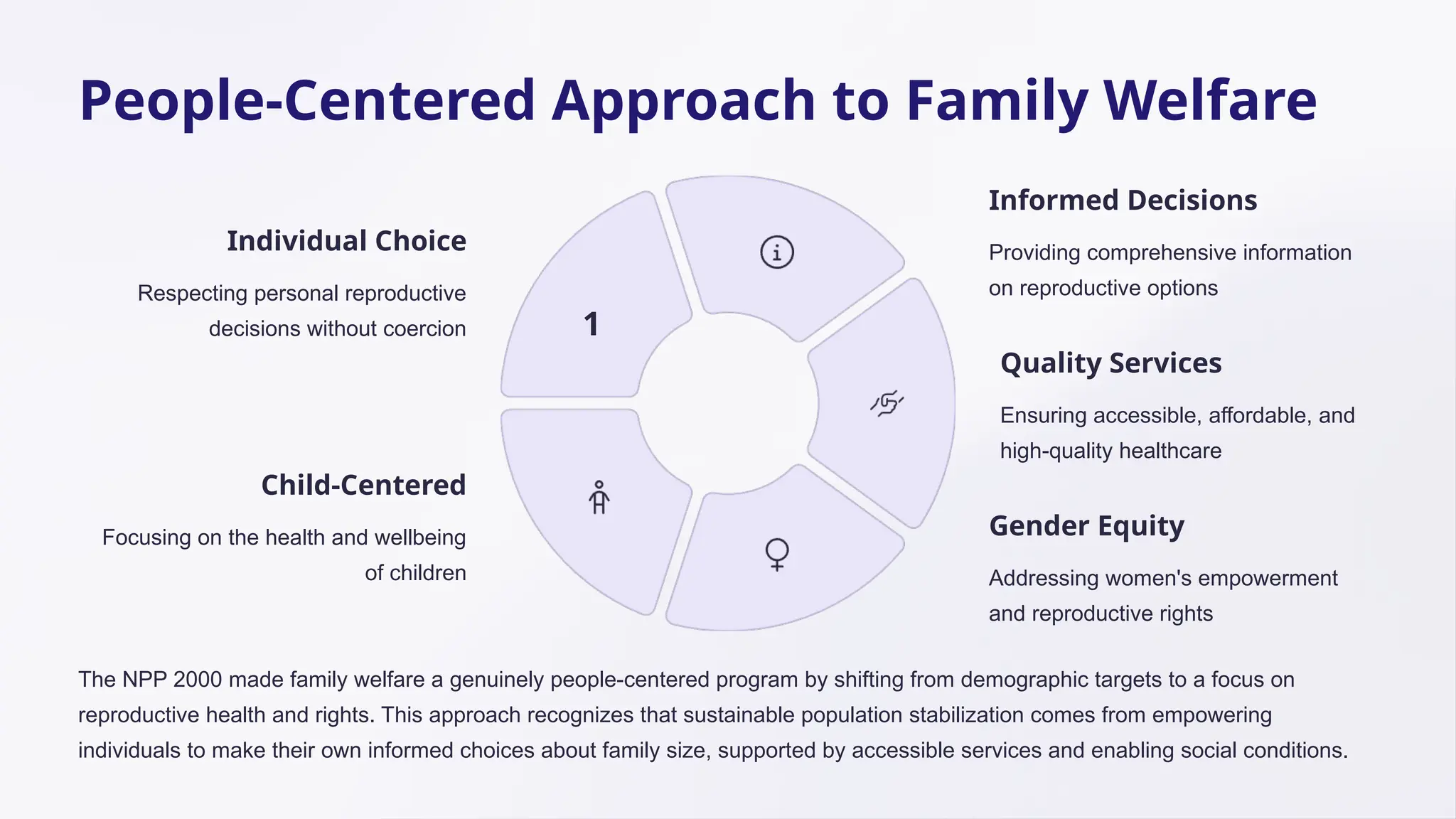
  • 49.
    India's Unique Occupational Transition Services-LedGrowth Unlike many developed countries that transitioned from agriculture to manufacturing and then services, India has seen rapid growth in services while manufacturing expansion has been more limited. Manufacturing Challenges Despite policy efforts, manufacturing has not emerged as a dominant employer, limiting opportunities for absorbing less-skilled workers from agriculture into higher-productivity jobs. Informal Sector Persistence A large proportion of India's workforce remains in informal employment across all sectors, characterized by lower productivity, income, and job security. Skill Mismatch The educational and skill profile of workers transitioning out of agriculture often doesn't match the requirements of high-productivity service sector jobs.
  • 50.
    Implications for DevelopmentPlanning Sectoral Investment • Balanced investment across agriculture, manufacturing, and services • Focus on labor-intensive manufacturing • Agricultural productivity enhancement • Service sector diversification beyond IT Skill Development • Alignment of education with industry needs • Vocational training expansion • Reskilling agricultural workers • Digital literacy programs Regional Balance • Distributed industrial development • Rural non-farm employment creation • Secondary city development • Infrastructure connectivity Understanding the relationship between occupational structure and development is crucial for effective planning. India needs to create productive employment opportunities that match the skills of its workforce while gradually upgrading those skills. Policies should address both immediate employment needs and longer-term structural transformation goals, recognizing regional variations in occupational patterns and development stages.
  • 51.
    Benefits of aHealthy Population Economic Productivity Healthy individuals have higher work capacity, lower absenteeism, and longer productive lifespans Cognitive Development Better health enables improved educational outcomes and skill acquisition Reduced Healthcare Costs Preventive care and healthier lifestyles lower treatment expenses Social Cohesion Health equality contributes to more inclusive and stable societies 4 Demographic Dividend Healthy working-age population maximizes economic growth potential A healthy population represents one of a nation's most valuable assets, contributing to economic growth, social development, and individual wellbeing. Health improvements yield multiple dividends: they enhance current productivity while reducing healthcare costs, and they improve human capital formation through better educational outcomes and skill development.
  • 52.
    Health and EconomicDevelopment Health as Investment Health expenditure should be viewed not merely as consumption but as investment in human capital with substantial economic returns. Studies suggest that a 10% improvement in life expectancy can increase economic growth by 0.3-0.4% annually. Healthy populations accumulate more physical and human capital due to higher savings rates, greater foreign investment attraction, and better educational outcomes, creating a virtuous cycle of development. Productivity Channels • Reduced workdays lost to illness • Greater physical and mental capacity • Longer working lifespans • Improved educational attainment • Enhanced innovation and creativity • Better resource allocation within households The relationship between population health and economic development is bidirectional. While economic growth can fund better healthcare, improved health directly contributes to economic productivity. This relationship creates potential for positive feedback loops where health investments yield economic returns that can fund further health improvements.
  • 53.
    Health and DemographicTransition Mortality Decline Public health measures and medical advances reduce death rates, particularly infant and child mortality, initiating demographic transition. Population Growth Lower death rates while birth rates remain high create a period of rapid population growth and youthful age structure. Fertility Decline Improved child survival, education, and changing economic incentives gradually reduce birth rates, slowing population growth. Demographic Dividend A period with favorable ratio of working-age to dependent population creates opportunity for accelerated economic growth. Health improvements play a crucial role in demographic transition. Initially, better health reduces mortality rates while fertility remains high, leading to population growth. As child survival improves, families gradually reduce fertility, creating a transitional period with a favorable age structure known as the demographic dividend—which can boost economic growth if properly leveraged.
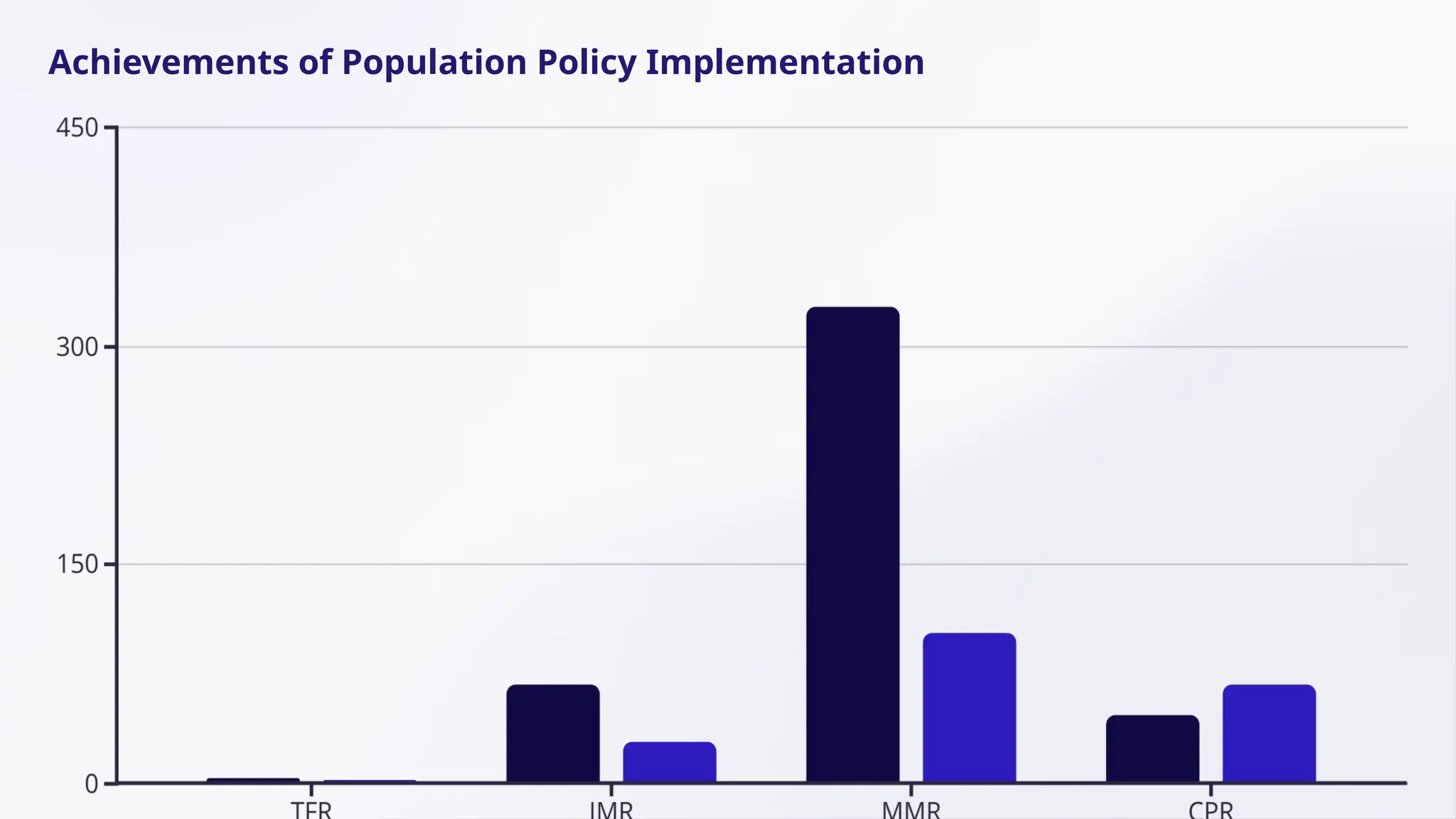
  • 54.
    Social Determinants ofPopulation Health 1 Individual Behaviors Diet, physical activity, substance use 2 Social and Community Networks Family support, community cohesion Living and Working Conditions Housing, sanitation, workplace safety Socioeconomic and Environmental Factors Education, income, gender equality, pollution Population health is shaped by factors far beyond individual healthcare access. Social determinants—the conditions in which people are born, grow, live, work, and age—have profound effects on health outcomes. These include economic stability, education access, social context, healthcare quality, and neighborhood environment. Addressing population health effectively requires interventions across multiple sectors, not just healthcare. Policies in education, housing, employment, and environmental protection all contribute to health outcomes and should be coordinated in comprehensive approaches to improving population health.
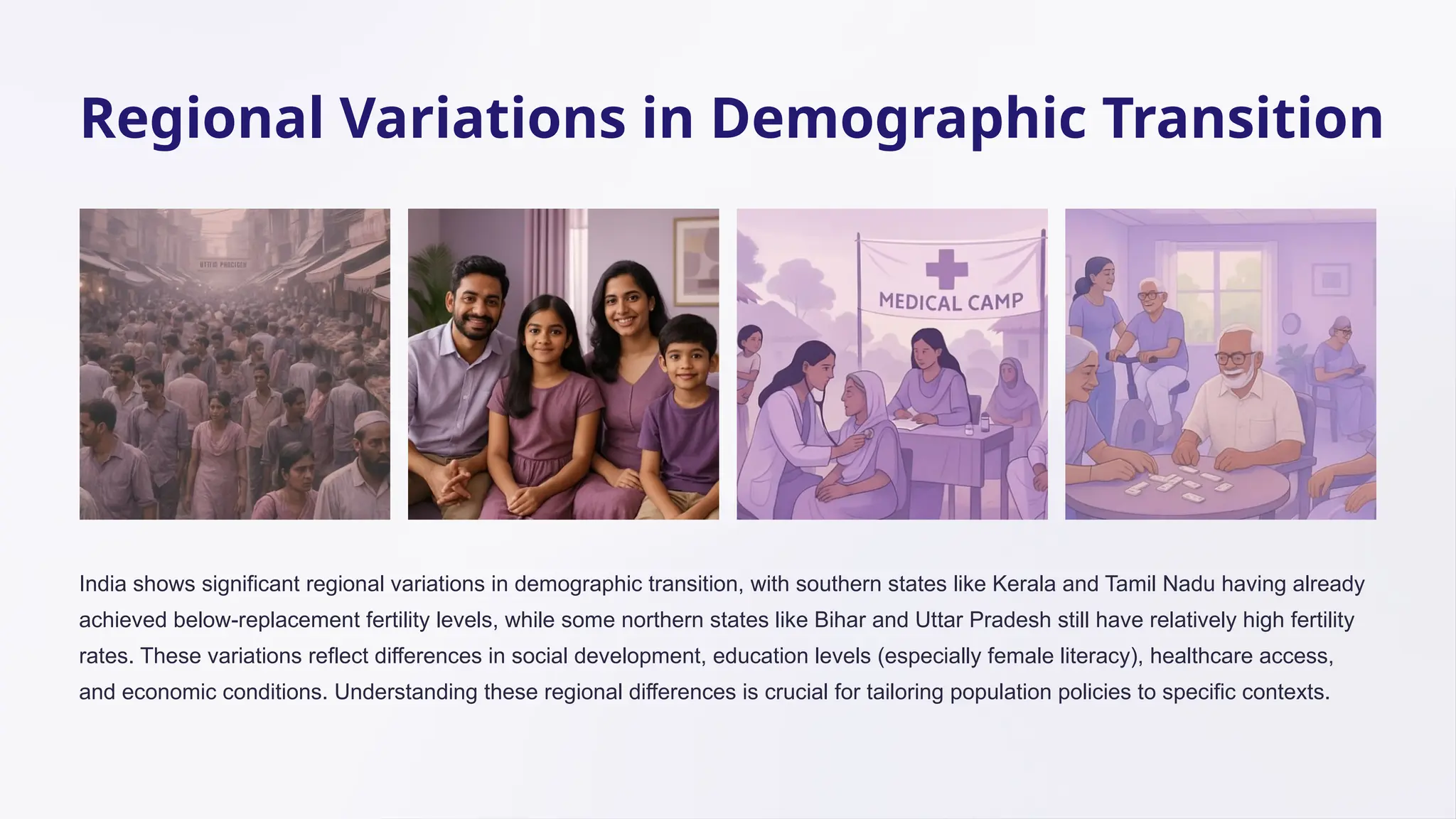
  • 55.
    Health Equity andPopulation Development Equitable Access Health equity ensures all population segments have fair opportunities to achieve their full health potential regardless of social, economic, or geographic circumstances. Reduced Disparities Addressing health inequities between regions, income groups, genders, and social categories enhances overall population health and wellbeing outcomes. Inclusive Development Health equity contributes to more inclusive economic growth by enabling broader participation in productive activities across all population groups. Sustainable Progress Reducing health inequities creates more sustainable development by preventing the concentration of health burdens among disadvantaged groups. In India, significant health disparities exist across states, between rural and urban areas, and among different socioeconomic groups. Addressing these inequities is essential not only for ethical reasons but also for maximizing the development benefits of a healthy population. Health equity ensures that all segments of society can contribute to and benefit from economic and social progress.
  • 56.
    Investing in PopulationHealth Preventive Healthcare Focus on disease prevention and health promotion Universal Health Coverage Ensure healthcare access without financial hardship Environmental Health Address water, sanitation, pollution, and housing Nutrition Security Ensure adequate and balanced nutrition for all Investing in population health requires a comprehensive approach that extends beyond traditional healthcare. Preventive measures often yield greater returns than curative interventions. Universal health coverage protects households from catastrophic health expenditures that can push them into poverty. Environmental health initiatives address crucial determinants like clean water and air quality. Nutrition security ensures proper physical and cognitive development, particularly for children.
  • 57.
    Conducting a ClassCensus: Project Guidelines Questionnaire Development Create a questionnaire with at least five questions covering student demographics, family composition, academic performance, health practices, and extracurricular activities. Ensure questions are clear, objective, and respect privacy. Data Collection Distribute the questionnaire to all classmates and allow sufficient time for completion. Provide assistance for clarifying questions while maintaining objectivity. Ensure comprehensive participation for representative results. Data Compilation Aggregate responses and convert raw data into numerical terms, calculating percentages for each response category. Organize data systematically in preparation for analysis and visualization. Visualization and Presentation Present findings through appropriate visual formats like pie charts, bar diagrams, or other graphical representations. Include brief analysis explaining key patterns and insights from the data.
  • 58.
    Glossary of KeyPopulation Terms Developing a strong vocabulary of population concepts is essential for demographic studies. Key terms include: adolescence (ages 10-19, transitional period between childhood and adulthood); base population (total population at the beginning of a measurement period); dependency ratio (proportion of dependent population to working-age population); density of population (average persons per unit area); and growth rate (pace of population increase expressed as percentage).
  • 59.
    Extended Population Glossary DemographicTerms Birth rate: Live births per 1,000 population annually Death rate: Deaths per 1,000 population annually Life expectancy: Average years one is expected to live Sex ratio: Number of females per 1,000 males Literacy: Ability to read and write with understanding at age 7+ Migration Terms Immigration: Movement into a country/region Emigration: Movement out of a country/region Internal migration: Movement within national boundaries Net migration: Difference between in- migration and out-migration Geographic Terms Alluvial plain: Land made of fine materials deposited by rivers Biome: Plant communities in areas with similar climatic conditions Ecosystem: Physical environment and its organisms Relief: Differences in elevation of land surface
  • 60.
    Population Studies: Beyondthe Numbers Human Dimension Population studies ultimately concern people—their lives, challenges, aspirations, and potential. Beyond statistics, demographics reveal human stories and social patterns. Environmental Interface Population dynamics fundamentally shape how humans interact with their environment, affecting resource utilization, settlement patterns, and ecological impacts. Development Context Understanding population trends is essential for sustainable development planning, as people are both the agents and beneficiaries of development processes. Future Possibilities Population studies help us anticipate future needs and opportunities, enabling proactive rather than reactive approaches to demographic change. As we conclude our exploration of population studies, we recognize that demography is not merely about counting people but understanding the complex interplay of social, economic, cultural, and environmental factors that shape human lives. Population is indeed the pivotal element in social studies—the lens through which we can better comprehend our collective past, present, and future.