CLASS
ACTIONS.
Dra Adela Pérez del Viso
Colegio de abogados de San Luis. 2012
CLASS ACTION.
A CLASS SUIT or REPRESENTATIVE ACTION.
IN WHICH A LARGE GROUP OF PEOPLE
COLLECTIVELY BRING A CLAIM TO COURT
OR IN WHICH A CLASS OF DEFENDANTS IS
BEING SUED.
THIS FORM: ORIGINATED IN THE U.S.
THEY ARE GOVERNED BY: FEDERAL RULES
of CIVIL PROCEDURE RULE.
May be brought in FEDERAL
COURTS. (class of plaintiffs citizen of
a State different from any defendant, or
plaintiffs from a foreign state).
FEDERAL COURT: if the case
exceeds 5.000.000 dollars.
SOME OTHER CASES: brought in
STATE COURTS.
Typically Federal C.:more favorable for
defendants and State C.: more for
plaintiffs.
CLASS ACTION FAIRNESS ACT of
2005: MORE THAN 5 MILLION:
FEDERAL CASE.
PROCEDURE:
--FILE SUIT with one or several
named plaintiffs on behalf of a
proposed class.
Typically: an action on the part of a
business or a particular product defect
or policy that applied to all proposed
class members.
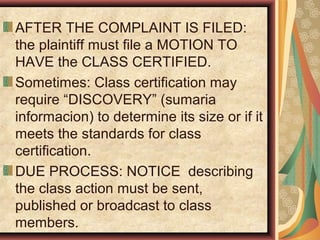
AFTER THE COMPLAINT IS FILED:
the plaintiff must file a MOTION TO
HAVE the CLASS CERTIFIED.
Sometimes: Class certification may
require “DISCOVERY” (sumaria
informacion) to determine its size or if it
meets the standards for class
certification.
DUE PROCESS: NOTICE describing
the class action must be sent,
published or broadcast to class
members.
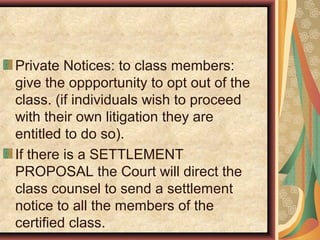
Private Notices: to class members:
give the oppportunity to opt out of the
class. (if individuals wish to proceed
with their own litigation they are
entitled to do so).
If there is a SETTLEMENT
PROPOSAL the Court will direct the
class counsel to send a settlement
notice to all the members of the
certified class.
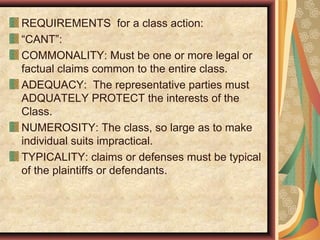
REQUIREMENTS for a class action:
“CANT”:
COMMONALITY: Must be one or more legal or
factual claims common to the entire class.
ADEQUACY: The representative parties must
ADQUATELY PROTECT the interests of the
Class.
NUMEROSITY: The class, so large as to make
individual suits impractical.
TYPICALITY: claims or defenses must be typical
of the plaintiffs or defendants.
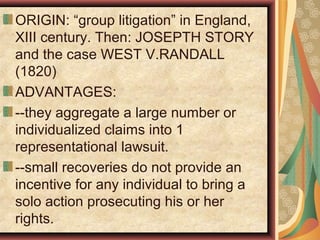
ORIGIN: “group litigation” in England,
XIII century. Then: JOSEPTH STORY
and the case WEST V.RANDALL
(1820)
ADVANTAGES:
--they aggregate a large number or
individualized claims into 1
representational lawsuit.
--small recoveries do not provide an
incentive for any individual to bring a
solo action prosecuting his or her
rights.
HELPS CHANGING BEHAVIOUR of a
class of which the defendant is a
member. Ex: LANDEROS V FLOOR:
encourage doctors to report child abuse.
IN LIMITED FUND CASES: a class
action ensures that all plaintiffs receive
relief and that early –filing plaintiffs do
not raid the fund of all its assets before
others may be compensated.
FINALLY, A CLASS ACTION
AVOIDS THE SITUATION WHERE
DIFFERENT COURT RULINGS
COULD CREATE “INCOMPATIBLE
STANDARDS” of conduct for the
defendant to follow.
CLOSING ARGUMENT.
CLOSING ARGUMENT.
THE CLOSING ARGUMENT: Tells
the Court:
“THE COURT SHOULD CONSIDER”
THE COURT MUST EVALUATE
WHETHER A REASONABLY
PRUDENT PERSON…
THE COURT MUST DETERMINE
THE CREDIBILITY OF WITNESSES..
CLOSING ARGUMENT.
EXAMPLE OF PERSUASIVE TEXT.
WE USE PERSUASIVE LANGUAGE
in Court, or Negotiating a contract, or
writing a memo proposing a course of
action to a client, or in a discussion.
KEY ELEMENTS:
A) clear statements. B) Supported by
evidences. C) REBUTTAL (argue
against) OF OPPOSING
STANDPOINTS OR ARGUMENTS.
CLOSING ARGUMENT:
IN THE CLOSING ARGUMENT, KEY
POINTS NEED TO BE STRESSED
MORE.
TWO WAYS TO EMPHASISE
IDEAS: A) BEGINNING THE
SENTENCE WITH A PHRASE THAT
SIGNALS IMPORTANCE. (see also
pg.69)
B) STRESS INTONATION
CLOSING ARGUMENT:
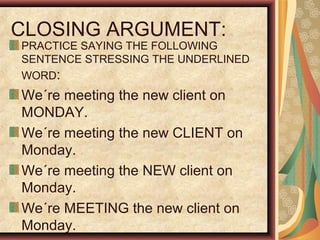
PRACTICE SAYING THE FOLLOWING
SENTENCE STRESSING THE UNDERLINED
WORD:
We´re meeting the new client on
MONDAY.
We´re meeting the new CLIENT on
Monday.
We´re meeting the NEW client on
Monday.
We´re MEETING the new client on
Monday.
MEMORANDUMS: Informative
and “Giving Advice” memo.
Memo: INFORMAL WAY OF
COMMUNICATION.
In Legal English: memorandums or
memos: more formal.
On page 70: An INFORMATIVE
MEMO.
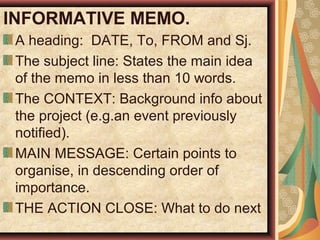
INFORMATIVE MEMO.
A heading: DATE, To, FROM and Sj.
The subject line: States the main idea
of the memo in less than 10 words.
The CONTEXT: Background info about
the project (e.g.an event previously
notified).
MAIN MESSAGE: Certain points to
organise, in descending order of
importance.
THE ACTION CLOSE: What to do next
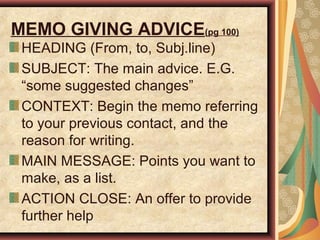
MEMO GIVING ADVICE(pg 100)
HEADING (From, to, Subj.line)
SUBJECT: The main advice. E.G.
“some suggested changes”
CONTEXT: Begin the memo referring
to your previous contact, and the
reason for writing.
MAIN MESSAGE: Points you want to
make, as a list.
ACTION CLOSE: An offer to provide
further help

Class actions, closing argument and memos

  • 1.
    CLASS ACTIONS. Dra Adela Pérezdel Viso Colegio de abogados de San Luis. 2012
  • 2.
    CLASS ACTION. A CLASSSUIT or REPRESENTATIVE ACTION. IN WHICH A LARGE GROUP OF PEOPLE COLLECTIVELY BRING A CLAIM TO COURT OR IN WHICH A CLASS OF DEFENDANTS IS BEING SUED. THIS FORM: ORIGINATED IN THE U.S. THEY ARE GOVERNED BY: FEDERAL RULES of CIVIL PROCEDURE RULE.
  • 3.
    May be broughtin FEDERAL COURTS. (class of plaintiffs citizen of a State different from any defendant, or plaintiffs from a foreign state). FEDERAL COURT: if the case exceeds 5.000.000 dollars. SOME OTHER CASES: brought in STATE COURTS. Typically Federal C.:more favorable for defendants and State C.: more for plaintiffs.
  • 4.
    CLASS ACTION FAIRNESSACT of 2005: MORE THAN 5 MILLION: FEDERAL CASE. PROCEDURE: --FILE SUIT with one or several named plaintiffs on behalf of a proposed class. Typically: an action on the part of a business or a particular product defect or policy that applied to all proposed class members.
  • 5.
    AFTER THE COMPLAINTIS FILED: the plaintiff must file a MOTION TO HAVE the CLASS CERTIFIED. Sometimes: Class certification may require “DISCOVERY” (sumaria informacion) to determine its size or if it meets the standards for class certification. DUE PROCESS: NOTICE describing the class action must be sent, published or broadcast to class members.
  • 6.
    Private Notices: toclass members: give the oppportunity to opt out of the class. (if individuals wish to proceed with their own litigation they are entitled to do so). If there is a SETTLEMENT PROPOSAL the Court will direct the class counsel to send a settlement notice to all the members of the certified class.
  • 7.
    REQUIREMENTS for aclass action: “CANT”: COMMONALITY: Must be one or more legal or factual claims common to the entire class. ADEQUACY: The representative parties must ADQUATELY PROTECT the interests of the Class. NUMEROSITY: The class, so large as to make individual suits impractical. TYPICALITY: claims or defenses must be typical of the plaintiffs or defendants.
  • 8.
    ORIGIN: “group litigation”in England, XIII century. Then: JOSEPTH STORY and the case WEST V.RANDALL (1820) ADVANTAGES: --they aggregate a large number or individualized claims into 1 representational lawsuit. --small recoveries do not provide an incentive for any individual to bring a solo action prosecuting his or her rights.
  • 9.
    HELPS CHANGING BEHAVIOURof a class of which the defendant is a member. Ex: LANDEROS V FLOOR: encourage doctors to report child abuse. IN LIMITED FUND CASES: a class action ensures that all plaintiffs receive relief and that early –filing plaintiffs do not raid the fund of all its assets before others may be compensated.
  • 10.
    FINALLY, A CLASSACTION AVOIDS THE SITUATION WHERE DIFFERENT COURT RULINGS COULD CREATE “INCOMPATIBLE STANDARDS” of conduct for the defendant to follow.
  • 11.
  • 12.
    CLOSING ARGUMENT. THE CLOSINGARGUMENT: Tells the Court: “THE COURT SHOULD CONSIDER” THE COURT MUST EVALUATE WHETHER A REASONABLY PRUDENT PERSON… THE COURT MUST DETERMINE THE CREDIBILITY OF WITNESSES..
  • 13.
    CLOSING ARGUMENT. EXAMPLE OFPERSUASIVE TEXT. WE USE PERSUASIVE LANGUAGE in Court, or Negotiating a contract, or writing a memo proposing a course of action to a client, or in a discussion. KEY ELEMENTS: A) clear statements. B) Supported by evidences. C) REBUTTAL (argue against) OF OPPOSING STANDPOINTS OR ARGUMENTS.
  • 14.
    CLOSING ARGUMENT: IN THECLOSING ARGUMENT, KEY POINTS NEED TO BE STRESSED MORE. TWO WAYS TO EMPHASISE IDEAS: A) BEGINNING THE SENTENCE WITH A PHRASE THAT SIGNALS IMPORTANCE. (see also pg.69) B) STRESS INTONATION
  • 15.
    CLOSING ARGUMENT: PRACTICE SAYINGTHE FOLLOWING SENTENCE STRESSING THE UNDERLINED WORD: We´re meeting the new client on MONDAY. We´re meeting the new CLIENT on Monday. We´re meeting the NEW client on Monday. We´re MEETING the new client on Monday.
  • 16.
    MEMORANDUMS: Informative and “GivingAdvice” memo. Memo: INFORMAL WAY OF COMMUNICATION. In Legal English: memorandums or memos: more formal. On page 70: An INFORMATIVE MEMO.
  • 17.
    INFORMATIVE MEMO. A heading:DATE, To, FROM and Sj. The subject line: States the main idea of the memo in less than 10 words. The CONTEXT: Background info about the project (e.g.an event previously notified). MAIN MESSAGE: Certain points to organise, in descending order of importance. THE ACTION CLOSE: What to do next
  • 18.
    MEMO GIVING ADVICE(pg100) HEADING (From, to, Subj.line) SUBJECT: The main advice. E.G. “some suggested changes” CONTEXT: Begin the memo referring to your previous contact, and the reason for writing. MAIN MESSAGE: Points you want to make, as a list. ACTION CLOSE: An offer to provide further help