Trial Courts: Civil CasesTrial Courts: Civil Cases
Cases, Actors, Processes, andCases, Actors, Processes, and
LitigationLitigation
Purposes of Civil CourtsPurposes of Civil Courts
 Offer RemediesOffer Remedies
 DamagesDamages
 RestitutionRestitution
 CoercionCoercion
 DeclarationDeclaration
 Dispute ResolutionDispute Resolution
 Behavior ModificationBehavior Modification
Types of Civil CasesTypes of Civil Cases
 Contract CasesContract Cases
 Personal Injury (Tort Law)Personal Injury (Tort Law)
 Automobile InjuryAutomobile Injury
 Malpractice SuitsMalpractice Suits
 Product LiabilityProduct Liability
 http://today.msnbc.msn.com/id/25258522/http://today.msnbc.msn.com/id/25258522/
 Domestic Relations (Family Law)Domestic Relations (Family Law)
 Marriage, divorce, child custody, alimony, andMarriage, divorce, child custody, alimony, and
children’s rightschildren’s rights
 Estate or Probate CasesEstate or Probate Cases
 Real PropertyReal Property
Participants in Civil CasesParticipants in Civil Cases
 JudgesJudges
 LawyersLawyers
 PartiesParties
 Party CapabilityParty Capability
 Individuals versus OrganizationsIndividuals versus Organizations
 One-shotters versus Repeat PlayersOne-shotters versus Repeat Players
 Galanter 1974Galanter 1974
Civil Court ProceduresCivil Court Procedures
 1. Pleading Stage1. Pleading Stage
 2. Discovery2. Discovery
 3. Pre-trial Motions3. Pre-trial Motions
 Motion to QuashMotion to Quash
 Motion to StrikeMotion to Strike
 Motion to Make More DefiniteMotion to Make More Definite
 4. Pre-trial Conference4. Pre-trial Conference
Civil Trial ProcessCivil Trial Process
 5. Trial5. Trial
 1. Selection of Jury1. Selection of Jury
 2. Opening Statements2. Opening Statements
 3. Presentation of Plaintiff’s Case3. Presentation of Plaintiff’s Case
 4. Motion for Directed Verdict4. Motion for Directed Verdict
 5. Presentation of Defendant’s Case5. Presentation of Defendant’s Case
 6. Plaintiff’s Rebuttal6. Plaintiff’s Rebuttal
 7. Answer to Plaintiff’s Rebuttal7. Answer to Plaintiff’s Rebuttal
Civil Trial Process (cont’d)Civil Trial Process (cont’d)
 8. Closing Arguments8. Closing Arguments
 9. Instructions to the Jury9. Instructions to the Jury
 10. The Verdict10. The Verdict
 6. Post-trial Motions6. Post-trial Motions
 7. Judgment and Executions7. Judgment and Executions
 8. Appeal8. Appeal
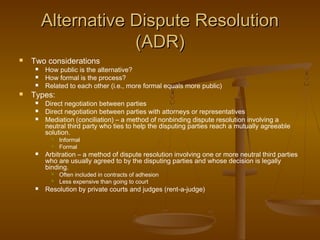
Alternative Dispute ResolutionAlternative Dispute Resolution
(ADR)(ADR)
 Two considerations
 How public is the alternative?
 How formal is the process?
 Related to each other (i.e., more formal equals more public)
 Types:
 Direct negotiation between parties
 Direct negotiation between parties with attorneys or representatives
 Mediation (conciliation) – a method of nonbinding dispute resolution involving a
neutral third party who ties to help the disputing parties reach a mutually agreeable
solution.
 Informal
 Formal
 Arbitration – a method of dispute resolution involving one or more neutral third parties
who are usually agreed to by the disputing parties and whose decision is legally
binding.
 Often included in contracts of adhesion
 Less expensive than going to court
 Resolution by private courts and judges (rent-a-judge)
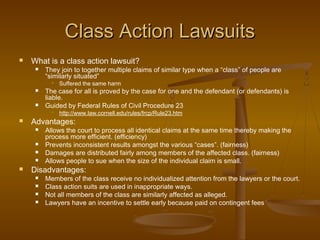
Class Action LawsuitsClass Action Lawsuits
 What is a class action lawsuit?
 They join to together multiple claims of similar type when a “class” of people are
“similarly situated”
 Suffered the same harm
 The case for all is proved by the case for one and the defendant (or defendants) is
liable.
 Guided by Federal Rules of Civil Procedure 23
 http://www.law.cornell.edu/rules/frcp/Rule23.htm
 Advantages:
 Allows the court to process all identical claims at the same time thereby making the
process more efficient. (efficiency)
 Prevents inconsistent results amongst the various “cases”. (fairness)
 Damages are distributed fairly among members of the affected class. (fairness)
 Allows people to sue when the size of the individual claim is small.
 Disadvantages:
 Members of the class receive no individualized attention from the lawyers or the court.
 Class action suits are used in inappropriate ways.
 Not all members of the class are similarly affected as alleged.
 Lawyers have an incentive to settle early because paid on contingent fees
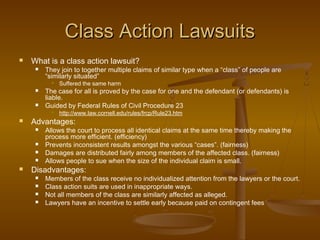
Class Action LawsuitsClass Action Lawsuits
 What is a class action lawsuit?
 They join to together multiple claims of similar type when a “class” of people are
“similarly situated”
 Suffered the same harm
 The case for all is proved by the case for one and the defendant (or defendants) is
liable.
 Guided by Federal Rules of Civil Procedure 23
 http://www.law.cornell.edu/rules/frcp/Rule23.htm
 Advantages:
 Allows the court to process all identical claims at the same time thereby making the
process more efficient. (efficiency)
 Prevents inconsistent results amongst the various “cases”. (fairness)
 Damages are distributed fairly among members of the affected class. (fairness)
 Allows people to sue when the size of the individual claim is small.
 Disadvantages:
 Members of the class receive no individualized attention from the lawyers or the court.
 Class action suits are used in inappropriate ways.
 Not all members of the class are similarly affected as alleged.
 Lawyers have an incentive to settle early because paid on contingent fees

Trial Courts - Civil Cases

  • 1.
    Trial Courts: CivilCasesTrial Courts: Civil Cases Cases, Actors, Processes, andCases, Actors, Processes, and LitigationLitigation
  • 2.
    Purposes of CivilCourtsPurposes of Civil Courts  Offer RemediesOffer Remedies  DamagesDamages  RestitutionRestitution  CoercionCoercion  DeclarationDeclaration  Dispute ResolutionDispute Resolution  Behavior ModificationBehavior Modification
  • 3.
    Types of CivilCasesTypes of Civil Cases  Contract CasesContract Cases  Personal Injury (Tort Law)Personal Injury (Tort Law)  Automobile InjuryAutomobile Injury  Malpractice SuitsMalpractice Suits  Product LiabilityProduct Liability  http://today.msnbc.msn.com/id/25258522/http://today.msnbc.msn.com/id/25258522/  Domestic Relations (Family Law)Domestic Relations (Family Law)  Marriage, divorce, child custody, alimony, andMarriage, divorce, child custody, alimony, and children’s rightschildren’s rights  Estate or Probate CasesEstate or Probate Cases  Real PropertyReal Property
  • 4.
    Participants in CivilCasesParticipants in Civil Cases  JudgesJudges  LawyersLawyers  PartiesParties  Party CapabilityParty Capability  Individuals versus OrganizationsIndividuals versus Organizations  One-shotters versus Repeat PlayersOne-shotters versus Repeat Players  Galanter 1974Galanter 1974
  • 5.
    Civil Court ProceduresCivilCourt Procedures  1. Pleading Stage1. Pleading Stage  2. Discovery2. Discovery  3. Pre-trial Motions3. Pre-trial Motions  Motion to QuashMotion to Quash  Motion to StrikeMotion to Strike  Motion to Make More DefiniteMotion to Make More Definite  4. Pre-trial Conference4. Pre-trial Conference
  • 6.
    Civil Trial ProcessCivilTrial Process  5. Trial5. Trial  1. Selection of Jury1. Selection of Jury  2. Opening Statements2. Opening Statements  3. Presentation of Plaintiff’s Case3. Presentation of Plaintiff’s Case  4. Motion for Directed Verdict4. Motion for Directed Verdict  5. Presentation of Defendant’s Case5. Presentation of Defendant’s Case  6. Plaintiff’s Rebuttal6. Plaintiff’s Rebuttal  7. Answer to Plaintiff’s Rebuttal7. Answer to Plaintiff’s Rebuttal
  • 7.
    Civil Trial Process(cont’d)Civil Trial Process (cont’d)  8. Closing Arguments8. Closing Arguments  9. Instructions to the Jury9. Instructions to the Jury  10. The Verdict10. The Verdict  6. Post-trial Motions6. Post-trial Motions  7. Judgment and Executions7. Judgment and Executions  8. Appeal8. Appeal
  • 8.
    Alternative Dispute ResolutionAlternativeDispute Resolution (ADR)(ADR)  Two considerations  How public is the alternative?  How formal is the process?  Related to each other (i.e., more formal equals more public)  Types:  Direct negotiation between parties  Direct negotiation between parties with attorneys or representatives  Mediation (conciliation) – a method of nonbinding dispute resolution involving a neutral third party who ties to help the disputing parties reach a mutually agreeable solution.  Informal  Formal  Arbitration – a method of dispute resolution involving one or more neutral third parties who are usually agreed to by the disputing parties and whose decision is legally binding.  Often included in contracts of adhesion  Less expensive than going to court  Resolution by private courts and judges (rent-a-judge)
  • 9.
    Class Action LawsuitsClassAction Lawsuits  What is a class action lawsuit?  They join to together multiple claims of similar type when a “class” of people are “similarly situated”  Suffered the same harm  The case for all is proved by the case for one and the defendant (or defendants) is liable.  Guided by Federal Rules of Civil Procedure 23  http://www.law.cornell.edu/rules/frcp/Rule23.htm  Advantages:  Allows the court to process all identical claims at the same time thereby making the process more efficient. (efficiency)  Prevents inconsistent results amongst the various “cases”. (fairness)  Damages are distributed fairly among members of the affected class. (fairness)  Allows people to sue when the size of the individual claim is small.  Disadvantages:  Members of the class receive no individualized attention from the lawyers or the court.  Class action suits are used in inappropriate ways.  Not all members of the class are similarly affected as alleged.  Lawyers have an incentive to settle early because paid on contingent fees
  • 10.
    Class Action LawsuitsClassAction Lawsuits  What is a class action lawsuit?  They join to together multiple claims of similar type when a “class” of people are “similarly situated”  Suffered the same harm  The case for all is proved by the case for one and the defendant (or defendants) is liable.  Guided by Federal Rules of Civil Procedure 23  http://www.law.cornell.edu/rules/frcp/Rule23.htm  Advantages:  Allows the court to process all identical claims at the same time thereby making the process more efficient. (efficiency)  Prevents inconsistent results amongst the various “cases”. (fairness)  Damages are distributed fairly among members of the affected class. (fairness)  Allows people to sue when the size of the individual claim is small.  Disadvantages:  Members of the class receive no individualized attention from the lawyers or the court.  Class action suits are used in inappropriate ways.  Not all members of the class are similarly affected as alleged.  Lawyers have an incentive to settle early because paid on contingent fees