This document provides information about organic fertilizers, including their history, types, sources, and benefits. Some key points:
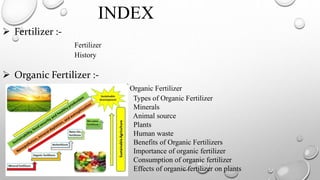
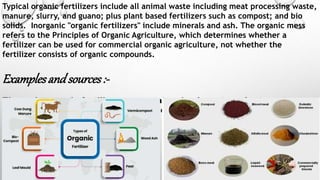
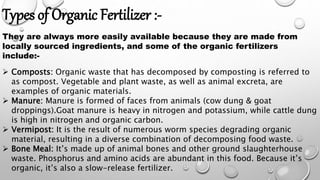
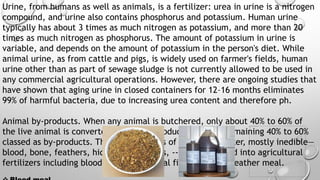
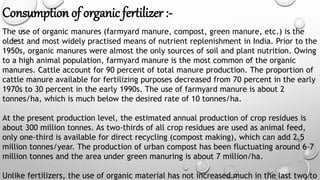
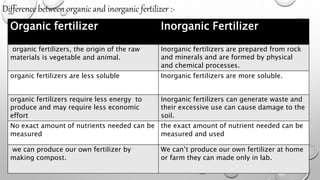
- Organic fertilizers include animal and plant waste products that supply nutrients to soils and plants. Common types are manure, compost, bone meal and seaweed.
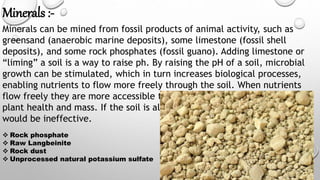
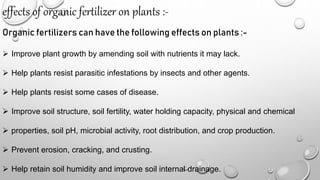
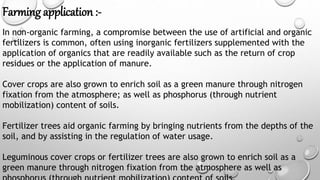
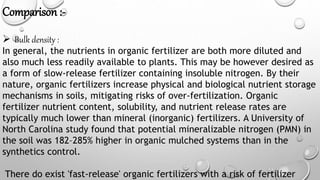
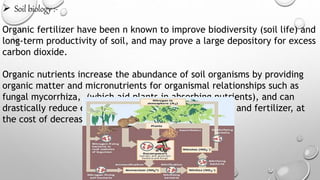
- Sources include animal manures and byproducts, sewage sludge, plant residues, and minerals. Benefits are improving soil structure, releasing nutrients slowly, and being more environmentally friendly than synthetic fertilizers.
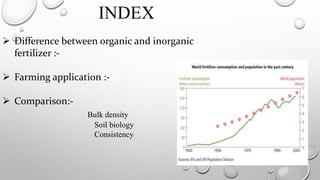
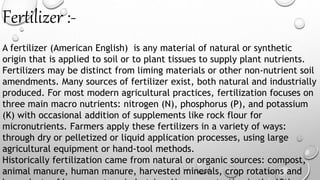
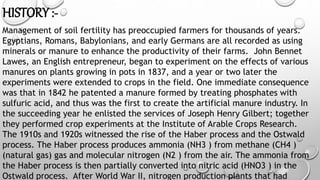
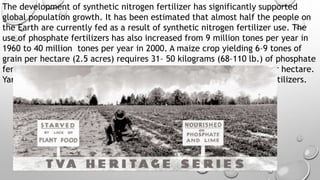
- Historically, fertilization came from natural sources like manure and compost. The development of synthetic nitrogen fertilizers in the 1900s significantly increased global food production but also had environmental impacts.


![Cells and Organs of immune system [Autosaved].pptx](https://cdn.slidesharecdn.com/ss_thumbnails/cellsandorgansofimmunesystemautosaved-260123152717-ea0cb261-thumbnail.jpg?width=640&height=640&fit=bounds)


