Beyond Borders:
An Exploration of
International Museum Partnerships
Clara Elizabeth Hatcher
“By choosing not to be more engaged
internationally, American museums miss the
opportunity to contextualize and appreciate the
rich cultural connections that have always existed
between the United States and the rest of the
world… I hope by sharing what I have learned on
my travels, I can help other Americans better
appreciate what it means not only to be an
American but to be an American in the global
culture of the 21st century.”
–Lonnie G. Bunch III
Methodology
 Literature Review
 10 Interviews
 Case Studies
Methodology
 Literature Review
 10 Interviews
 Case Studies
Methodology
 Literature Review
 10 Interviews
 Case Studies
Methodology
 Literature Review
 10 Interviews
 Case Studies
Challenges
• Altering the status quo
• Language barriers
• Cultural assumptions
• Lack of funding and staff support
• Lack of control
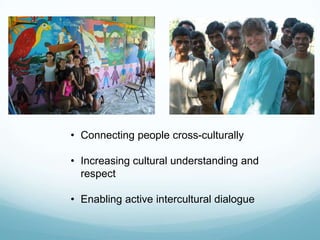
• Connecting people cross-culturally
• Increasing cultural understanding and
respect
• Enabling active intercultural dialogue
• Cultivate essential skills and
characteristics
• Research, plan and prepare
• Document and evaluate
• Communicate internally and
externally
Recommendations
Product
“It is more than clear that people have to learn to
work together, to reflect, to imagine, to understand
different world views and approaches, to develop
the human capacities necessary to create
alternative, shared models capable of addressing
global challenges.”
–Mary Ann Devlieg
Beyond Borders:
An Exploration of
International Museum Partnerships
Clara Elizabeth Hatcher
chatcher@famsf.org

Clara hatcher presentation 6.21.13

  • 3.
    Beyond Borders: An Explorationof International Museum Partnerships Clara Elizabeth Hatcher
  • 4.
    “By choosing notto be more engaged internationally, American museums miss the opportunity to contextualize and appreciate the rich cultural connections that have always existed between the United States and the rest of the world… I hope by sharing what I have learned on my travels, I can help other Americans better appreciate what it means not only to be an American but to be an American in the global culture of the 21st century.” –Lonnie G. Bunch III
  • 7.
    Methodology  Literature Review 10 Interviews  Case Studies
  • 8.
    Methodology  Literature Review 10 Interviews  Case Studies
  • 9.
    Methodology  Literature Review 10 Interviews  Case Studies
  • 10.
    Methodology  Literature Review 10 Interviews  Case Studies
  • 15.
    Challenges • Altering thestatus quo • Language barriers • Cultural assumptions • Lack of funding and staff support • Lack of control
  • 16.
    • Connecting peoplecross-culturally • Increasing cultural understanding and respect • Enabling active intercultural dialogue
  • 18.
    • Cultivate essentialskills and characteristics • Research, plan and prepare • Document and evaluate • Communicate internally and externally Recommendations
  • 19.
  • 20.
    “It is morethan clear that people have to learn to work together, to reflect, to imagine, to understand different world views and approaches, to develop the human capacities necessary to create alternative, shared models capable of addressing global challenges.” –Mary Ann Devlieg
  • 22.
    Beyond Borders: An Explorationof International Museum Partnerships Clara Elizabeth Hatcher chatcher@famsf.org

Editor's Notes

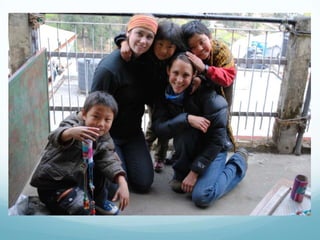
  • #2 Three years ago, in the Himalayan mountains of northern India, I applied for graduate school. Teaching art classes to Tibetan refugee children with an organization called Art Refuge, I came to realize the ability of arts organizations and community-serving museums to provide people with a universal language, as well as a unique way to connect cross-culturally.
  • #3 During that time,I was on leave from the de Young Museum here in the Bay Area, and I became curious as to whether a partnership with a museum could help Art Refuge, and organizations like it, be more sustainable. Also considering the benefits such partnerships could bring museums in the US, I sensed a growing passion for the important role cross-cultural exchange can play in broadening perspectives and helping people become better global citizens.
  • #4 Motivated to investigate these curiosities, I pursued an education at JFK University, and I ultimately completed a master’s project focusing on international museum partnerships.
  • #5 Educator, historian, and museum director Lonnie Bunch states in his book, Call the Lost Dream Back: Essays on History, Race and Museums:[Read quote]By choosing not to be more engaged internationally, American museums miss the opportunity to contextualize and appreciate the rich cultural connections that have always existed between the United States and the rest of the world… I hope by sharing what I have learned on my travels, I can help other Americans better appreciate what it means not only to be an American but to be an American in the global culture of the 21st century.” – Lonnie G. Bunch IIIGlobalization, cultural integration, technology development, and access to information are rapidly transforming the world around us.
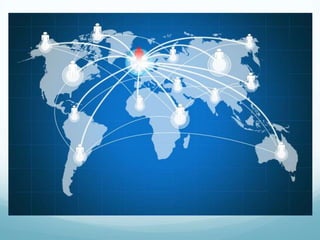
  • #6 With increased globalization, subsidiaries of multi-national companies are sprouting up around the world. Companies are outsourcing jobs and importing goods on a global scale. Professionals in numerous fields are crowdsourcing ideas, knowledge, and skills. We are no longer only members of a local or national community—we are members of a global community. People around the world need to work together, across country borders and cultural differences to come up with solutions to common problems.
  • #7 Museums have an incredible potential to be agents for social change, community leaders, and promoters of cross-cultural understanding. Richard Sandell explains in his book, Museums, Prejudice and the Reframing of Differencethat because of their history of objectivity, museums are regarded as more trustworthy resources of information than other forms of media (Sandell, 2007, p. 105−106). Driven by these concepts, my master’s project explores partnerships between museums and educational nonprofits abroad, highlighting what characteristics and leadership skills are required, how partnerships are initiated, how they take shape, and how they are maintained over time. I outline the potential benefits and risks these relationships hold, and determine if they can help facilitate cultural understanding.
  • #8 My master’s project methodologyincluded:A literature review of both historical and current thinking in literature focusing on international museum partnershipsInterviews with 10 different professionals who have participated in cross-cultural partnerships. The group I interviewed contained museum professionals, independent consultants, administrators, an international arts festival professional, and an educational nonprofit professional. In my interview pool I aimed for diversity of experience and perspective. Lastly, I conducted three in-depth case studies…
  • #9 First, with the International Museum of Women, who last year partnered with four organizations: Every Mother Counts, the White Ribbon Alliance, CARE,and the Global Fund for Women. And now is currently in partnership with the Women's Museum of Denmark in Aarhus, Denmark;the Ayala Museum in Manila, Philippines; and theMuseum of Islamic Civilization in Sharjah, United Arab Emirates…
  • #10 My second case study was the Portland Art Museum, currently in partnership with the MuseoNacional de San Carlos in Mexico City…
  • #11 And my third case study was the Chabot Space and Science Center, currently in partnership with the Hong Kong Space Museum.My case studies well supplemented my literature review and interviews, by powerfully illustrating three ways in which international partnership can take place.
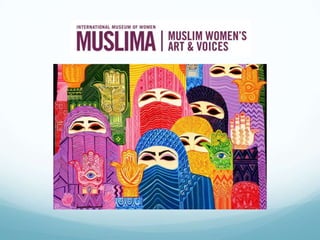
  • #12 For each of their annual exhibitions, the International Museum of Women seeks to form multiple international partnerships, in multiple countries. This year’s partnership is based around this year’s exhibition theme: Muslima: Muslim Women Art & Voices. Partners co-create exhibition content, programs, and help provide advocacy opportunities.
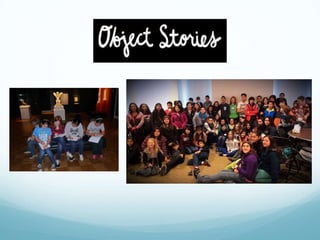
  • #13 The Portland Art Museum and the MuseoNacional de San Carlos partnered with the Spanish Immersion program at Mount Tabor Middle School in Portland, and the Instituto Piaget in Mexico City for theObject Stories Exchange program.The program involves 51 students at the Instituto Piaget and 60 students at the Mount Taber Middle School.The collaboration included providing teachers at both schools with tailored curriculum and lesson plans about object stories, workshops for students taught by trained teaching artists and writers, and opportunities for students to choose their own personal object, craft an object story, and create an object story poster.
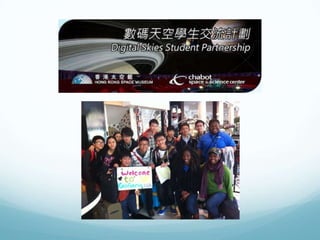
  • #14 The Chabot Space and Science Center and the Hong Kong Space Museum partnered for the Digital Skies Student Partnership which connects nine students from Oakland and nine students from Hong Kong in cross-cultural teams to compare and contrast astronomy in the U.S. and in China. Together, students research, develop, and create content for planetarium programs and interactive presentations to their local communities and schools. Students also participate in career development workshops that highlight career paths in astronomy and space sciences.Regularly noted during my case studies, and throughout my research, was that the catalyst for the most successful partnerships was a pre-existing relationship between at least two of the stake-holders involved with the partnership agreement. My interviewees and case study participants also reinforced the importance of maintaining a relationship with a partner once it is formed.
  • #15 My research helped identify key characteristics and leadership qualities necessary for successful international partnerships including the cultural agility described by Paula Caliguiri, David Lepak, and Jaime Bonache in their book, Managing the Global Workforce (2011). The adaptability and flexibility involved with cultural agility was reinforced throughout my interviews and case studies. Also reinforced was the importance of considering multiple perspectives, as described by Lee Bolman and Terrence Deal in their Four Frame Model, outlined in their book, Reframing Organizations: Artistry, Choice, and Leadership (2008). The important use of Emotional Intelligence described by Daniel Goleman in Primal Leadership (2002) and the “Five Practices of Exemplary Leadership” outlined by James Kouzes and Barry Posner in The Leadership Challenge (2007), continuously resonated throughout all of my research. My findings revealed that exemplary leadership also means being committed, communicative, trustworthy, inclusive, empowering, innovative, risk-taking, and positive. Part of being inclusive and empowering others requires asking questions, soliciting feedback, and most importantly, listening to others’ responses. By practicing these characteristics leaders will help international partnerships to flourish, evolve, maintain relevancy, and strengthen the commitment of partnership participants.
  • #16 Along with the need for specific leadership skills, common challenges and risks of international partnership were continuously revealed throughout my research. Fear of altering the status quo, language barriers, cultural assumptions, and lack of funding and staff support were concerns repeatedly expressed throughout my literature review, interviews, and case studies. Having a lack of control was a frequently reoccurring challenge. Political turmoil, natural disasters, the unanticipated reactions of geographically distant partners posedthreats to anticipated outcomes. I considered these obstacles when devising my recommendations for this project.
  • #17 Despite numerous challenges and risks involved, my research continuously revealed that benefits outweigh any drawbacks involved in international partnerships. My research reinforced that international museum partnerships are invaluable tools in connecting people cross-culturally, increasing cultural understanding, and better enabling people to participate in respectful intercultural dialogue. In the United Arab Emirates, international museum partnership exchanges helped contribute to the strengthening and diversifying of economies, at the Chabot Space and Science Center, cross-cultural exchange helped reinforce science learning.
  • #18 My research confirmed that international museum partnership is certainly not a new phenomenon. The value of such partnerships is illustrated in the U.S. State Department’s Global Partnership Initiative, launched in 2009, and organizations like the International Council of Museums (ICOM), the Institute of Museum and Library Services (IMLS) and the United Nations Educational, Scientific and Cultural Organization (UNESCO). These have in part helped the increasingly growing importance of museums facilitating international exchange. With similar motivation, the American Alliance of Museums founded the Museums Connect grant program in 1998 with aims to “[strengthen] connections and cultural understanding between people in the United States and abroad through collaborative and innovative projects facilitated by museums” My research indicated the growing trend in museums to no longer solely focus on stewardship of collections, or attending to a singular homogeneous audience—but to serve evolving goals responding to social and global issues. These goals require museums to demonstrate outreach, to measure their impact, and to develop new working practices to reflect these trends (Sandell, 2007, p. 5). [The Department Initiative’s goals apply to museum partnerships, partnerships in academia, and in health]
  • #19 Recommendations resulting from my master’s project include suggestions for how to foster the characteristics in museum professionals necessary for successful international partnerships.Cultivation of these characteristics will better prepare museum professionals for the obstacles that may arise during international collaborations. I also include guidelines for appropriate coaches, training sessions, and translators to help with the research, planning, and preparation involved in international partnership. I additionally outline suggestions for documenting and communicating about important international partnership efforts internally and externally in order to leverage support and funding.
  • #20 To disseminate the findings and recommendations of this master’s project, I helped organize a panel discussion for Emergence, the San Francisco Bay Area Emerging Arts Professionals (EAP) annual event that was held on June 3 (2013). The aim of the event is for attendees to gather and discuss challenging and urgent issues for next generation arts and culture workers. For this event, I invited Clare Winterton, the Executive Director of the International Museum of Women to speak with three other panelists about the importance of fostering diversity in the arts. The panel helped illuminate, in part, that museums have unique abilities to champion multiple cultural perspectives and encourage meaningful cross-cultural dialogue.For an additional product, I submitted asession proposal for the 2014 California Association of Museums (CAM) annual conference.I proposed tofacilitate a conversation with three panelists:Catherine King, Vice President of Exhibitions and Programs at the International Museum of Women;Diane Evans, Executive Director of the Sonoma County Museum; and Lisa Hoover, Youth Development Manager at the Chabot Space and Science Center.Through guided discussion, I propose we explore the potential benefits and risks these relationships hold, and illustrate how they help museums better serve both their local, and global communities. For a third product, I was recently invited to discuss my master’s project research at the 2014 National Art Education Association annual conference with the Portland Art Museum. I am currently in the planning phase with my colleagues in Portland, and greatly look forward to advocating for international museum partnerships with them.
  • #21 The goal for my products, and this master’s project is to inspire further dialogue about the potential of these partnerships, and to initiate further brainstorming about how obstacles to partnerships might be overcome.I aim to communicate the important role international museum exchanges can play in enriching our local and global communities. As a result, I hope this work will generate increased prioritization and interest in such partnerships, so we may all more actively participate in the vibrant global culture of the 21st century.
  • #22 During my time at JFK University, and throughout my master’s project work, I have explored the potential of museums to function as social change agents, to address global social concerns, and to foster cultural understanding.I strongly believe that museums have the power, the privilege, and the responsibility to change the world. I have learned that international partnership is one excellent way to do so.
  • #23 [The end]